

The DOI matches its Crossref record; 124 of the 124 references it cites were found in a registry or an index.
The Role of the Microbiome-Brain-Gut Axis in the Pathogenesis of Depressive Disorder
Open accessAbstract
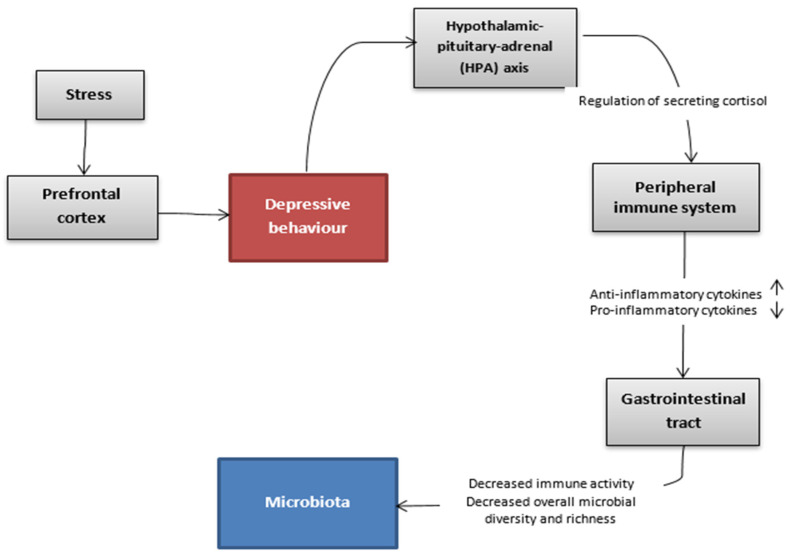
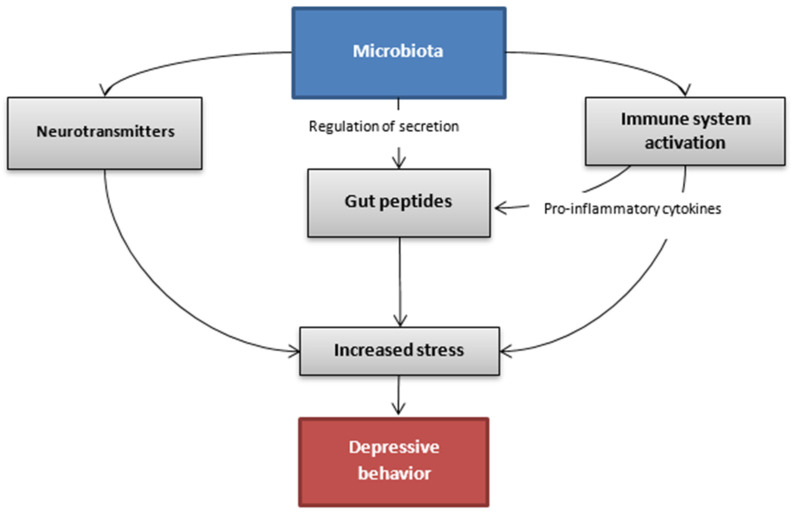
The role of gut microbiota and its association with the central nervous system via the microbiome-brain-gut axis has been widely discussed in the literature. The aim of this review is to investigate the impact of gut microbiota on the development of depression and underlying molecular mechanisms. There are two possible pathways in which this interaction might occur. The first one suggests that depressive disorder could lead to dysbiosis and one of the causes may be the influence on the hypothalamic-pituitary-adrenal (HPA) axis. The second one considers if changes in the composition of gut microbiota might cause depressive disorder. The mechanisms that could be responsible for this interaction include the secretion of neurotransmitters, gut peptides and the activation of the immune system. However, current knowledge on this topic does not allow for us to state an unambiguous conclusion, and future studies that take into consideration more precise stress-measurement methods are needed to further explore direct mechanisms of the interaction between gut microbiota and mental health.
Overview
The claims and statistics of this paper haven’t been checked yet.
Run the check — free, no account needed. It reads the open-access text and checks the sources it cites.
Integrity signals
Registry
Cites
Statistics
Figures
Verification
Claims the paper makes
The claims and statistics of this paper haven’t been checked yet.
Run the check — free, no account needed. It reads the open-access text and checks the sources it cites.
Claims other papers make about this one
Each is checked against this paper’s own text: does it say what the citing paper says it does?
In the citing paper
“Examples of these metabolic products include SCFAs, which are produced by Lactobacillus, Bifidobacterium, and Prevotella [93].”
From The Gut–Brain–Microbiota Connection and Its Role in Autism Spectrum Disorders (2025) · cites this paper as [93]
Self-check
Percentages, sums and reported differences re-computed from the paper’s own numbers.
The self-check needs the paper’s full text.
Citations
Cites
1 retracted
Gut Microbiome Dysbiosis and Depression: a Comprehensive Review
Capuco, A., Urits, I., Hasoon, J. J., Chun, R., Gerald, B., Wang, J. K., Ngo, A. L., Simopoulos, T. T., Kaye, A. D., Colontonio, M. M., et al. (2020) · Current Pain and Headache Reports · doi:10.1007/s11916-020-00871-x · Cited by 49
RetractedGhrelin is a growth-hormone-releasing acylated peptide from stomach
Kojima, M., Hosoda, H., Date, Y., Nakazato, M., Matsuo, H., & Kangawa, K. (1999) · Nature · doi:10.1038/45230 · Cited by 8,479
Changes of Intestinal Functions in Liver Cirrhosis
Fukui, H., & Wiest, R. (2016) · Inflammatory Intestinal Diseases · doi:10.1159/000444436 · Cited by 6,820
Protective and Damaging Effects of Stress Mediators
McEwen, B. S. (1998) · New England Journal of Medicine · doi:10.1056/nejm199801153380307 · Cited by 6,733 · cited 1×
“Corticotropin, in turn, stimulates adrenocorticotropin, which is the direct stimuli for the adrenal gland and its glucocorticoids [78].”
BackgroundDiversity, stability and resilience of the human gut microbiota
Lozupone, C. A., Stombaugh, J. I., Gordon, J. I., Jansson, J. K., & Knight, R. (2012) · Nature · doi:10.1038/nature11550 · Cited by 5,533
Host-Bacterial Mutualism in the Human Intestine
Bäckhed, F., Ley, R. E., Sonnenburg, J. L., Peterson, D. A., & Gordon, J. I. (2005) · Science · doi:10.1126/science.1104816 · Cited by 5,277
Richness of human gut microbiome correlates with metabolic markers
Le Chatelier, E., Nielsen, T., Qin, J., Prifti, E., Hildebrand, F., Falony, G., Almeida, M., Arumugam, M., Batto, J.-M., Kennedy, S., et al. (2013) · Nature · doi:10.1038/nature12506 · Cited by 4,662
Malhi, G. S., & Mann, J. J. (2018) · The Lancet · doi:10.1016/s0140-6736(18)31948-2 · Cited by 4,099
Formation of short chain fatty acids by the gut microbiota and their impact on human metabolism
Morrison, D. J., & Preston, T. (2016) · Gut Microbes · doi:10.1080/19490976.2015.1134082 · Cited by 3,781
Energy contributions of volatile fatty acids from the gastrointestinal tract in various species
Bergman, E. N. (1990) · Physiological Reviews · doi:10.1152/physrev.1990.70.2.567 · Cited by 2,750
Research works printed but not linked: 2
- Bains, N., and Abdijadid, S. (2021). Major Depressive Disorder. StatPearls, StatPearls Publishing. Available online: http://www.ncbi.nlm.nih.gov/books/NBK559078/.
- Selye, H. (1978). The Stress of Life, McGraw-Hill.
Cited by
Sorted by citations
Gut microbiota and its metabolites in depression: from pathogenesis to treatment
Liu, L., Wang, H., Chen, X., Zhang, Y., Zhang, H., & Xie, P. (2023) · EBioMedicine · doi:10.1016/j.ebiom.2023.104527 · Cited by 749
Bertollo, A. G., Santos, C. F., Bagatini, M. D., & Ignácio, Z. M. (2025) · Frontiers in Neuroscience · doi:10.3389/fnins.2025.1541075 · Cited by 183
Jiao, W., Lin, J., Deng, Y., Ji, Y., Liang, C., Wei, S., Xi, J., & Yan, F. (2025) · Journal of Neuroinflammation · doi:10.1186/s12974-024-03312-3 · Cited by 132
Akkermansia muciniphila in neuropsychiatric disorders: friend or foe?
Lei, W., Cheng, Y., Gao, J., Liu, X., Shao, L., Kong, Q., Zheng, N., Ling, Z., & Hu, W. (2023) · Frontiers in Cellular and Infection Microbiology · doi:10.3389/fcimb.2023.1224155 · Cited by 104
Zhong, H., Xu, J., Yang, M., Hussain, M., Liu, X., Feng, F., & Guan, R. (2023) · Nutrients · doi:10.3390/nu15030496 · Cited by 78
The Role of Probiotics and Their Metabolites in the Treatment of Depression
Jach, M. E., Serefko, A., Szopa, A., Sajnaga, E., Golczyk, H., Santos, L. S., Borowicz, K. K., & Sieniawska, E. (2023) · Molecules · doi:10.3390/molecules28073213 · Cited by 75
Modulating the Microbiome for Crohn’s Disease Treatment
Gowen, R., Gamal, A., Martino, L. D., McCormick, T. S., & Ghannoum, M. A. (2023) · Gastroenterology · doi:10.1053/j.gastro.2023.01.017 · Cited by 70
Johnson, D., Letchumanan, V., Thum, C. C., Thurairajasingam, S., & Lee, L. (2023) · Nutrients · doi:10.3390/nu15061382 · Cited by 72
Tanaka, M., Szabó, Á., & Vécsei, L. (2024) · International Journal of Molecular Sciences · doi:10.3390/ijms252312767 · Cited by 65
Psychobiotics and the Microbiota–Gut–Brain Axis: Where Do We Go from Here?
Binda, S., Tremblay, A., Iqbal, U., Kassem, O., Barz, M. L., Thomas, V., Bronner, S., Perrot, T. S., Ismail, N., & Parker, J. A. (2024) · Microorganisms · doi:10.3390/microorganisms12040634 · Cited by 62
Effects of gut microbiota on neurodegenerative diseases
Khatoon, S., Kalam, N., Rashid, S., & Bano, G. (2023) · Frontiers in Aging Neuroscience · doi:10.3389/fnagi.2023.1145241 · Cited by 55
Depression and obesity: Focus on factors and mechanistic links
Selman, A., Dai, J., Driskill, J., Reddy, A. P., & Reddy, P. H. (2024) · Biochimica et Biophysica Acta (BBA) - Molecular Basis of Disease · doi:10.1016/j.bbadis.2024.167561 · Cited by 48
The Gut–Brain–Microbiota Connection and Its Role in Autism Spectrum Disorders
Młynarska, E., Barszcz, E., Budny, E., Gajewska, A., Kopeć, K., Wasiak, J., Rysz, J., & Franczyk, B. (2025) · Nutrients · doi:10.3390/nu17071135 · Cited by 44
Self-citationGut microbiome-gut brain axis-depression: interconnection
Patel, R. A., Panche, A. N., & Harke, S. N. (2024) · The World Journal of Biological Psychiatry · doi:10.1080/15622975.2024.2436854 · Cited by 46
Acupuncture treatment for post-stroke depression: Intestinal microbiota and its role
Jiang, H., Deng, S., Zhang, J., Chen, J., Li, B., Zhu, W., Zhang, M., Zhang, C., & Meng, Z. (2023) · Frontiers in Neuroscience · doi:10.3389/fnins.2023.1146946 · Cited by 41
Tokarek, J., Budny, E., Saar, M., Kućmierz, J., Młynarska, E., Rysz, J., & Franczyk, B. (2023) · International Journal of Molecular Sciences · doi:10.3390/ijms24021377 · Cited by 41
Self-citationMao, Q., Zhang, H., Zhang, Z., Lu, Y., Pan, J., Guo, D., Huang, L., Tian, H., & Ma, K. (2024) · Phytomedicine · doi:10.1016/j.phymed.2024.155510 · Cited by 39
Shen, C., Wang, K., Wang, H., Gao, Y., Nie, K., Jiang, X., Su, H., Tang, Y., Lu, F., Dong, H., et al. (2024) · Pharmacological Research · doi:10.1016/j.phrs.2024.107090 · Cited by 37
The role of gut microbiota in the pathogenesis and treatment of postpartum depression
Zhang, S., Lu, B., & Wang, G. (2023) · Annals of General Psychiatry · doi:10.1186/s12991-023-00469-8 · Cited by 34
Mitochondrial dynamics dysfunction: Unraveling the hidden link to depression
Chen, H., Lu, M., Lyu, Q., Shi, L., Zhou, C., Li, M., Feng, S., Liang, X., Zhou, X., & Ren, L. (2024) · Biomedicine & Pharmacotherapy · doi:10.1016/j.biopha.2024.116656 · Cited by 34
Wang, X., Wang, H., Yu, Q., Fu, S., Yang, Z., Ye, Q., Lin, F., & Cai, G. (2023) · Journal of Affective Disorders · doi:10.1016/j.jad.2023.10.015 · Cited by 33
Lee, Y.-B., Cho, Y., & Kim, J.-K. (2024) · Biomedicine & Pharmacotherapy · doi:10.1016/j.biopha.2024.117748 · Cited by 31
Chen, H., Kan, Q., Zhao, L., Ye, G., He, X., Tang, H., Shi, F., Zou, Y., Liang, X., Song, X., et al. (2023) · Biomedicine & Pharmacotherapy · doi:10.1016/j.biopha.2023.114525 · Cited by 29
Panda, S. S., Nayak, A., Shah, S., & Aich, P. (2023) · Metabolites · doi:10.3390/metabo13040488 · Cited by 27
Zhang, Z., Li, Q., Zhang, S., Liu, Y., Lu, G., Wen, Q., Cui, B., Zhang, F., & Zhang, F. (2023) · Progress in Neuro-Psychopharmacology and Biological Psychiatry · doi:10.1016/j.pnpbp.2023.110839 · Cited by 24
Rowshan, N., Anjomshoa, M., Farahzad, A., Bijad, E., & Amini-Khoei, H. (2024) · International Journal of Developmental Neuroscience · doi:10.1002/jdn.10329 · Cited by 22
Zhou, M., Niu, B., Ma, J., Ge, Y., Han, Y., Wu, W., & Yue, C. (2025) · Frontiers in Microbiology · doi:10.3389/fmicb.2025.1535455 · Cited by 23
Zheng, J., & Lin, T. (2025) · Frontiers in Immunology · doi:10.3389/fimmu.2025.1629944 · Cited by 22
Kim, J. H., Choi, Y., Lee, S.-M., & Oh, M. S. (2024) · Biomolecules & Therapeutics · doi:10.4062/biomolther.2024.215 · Cited by 22
Altered gut microbiota in temporal lobe epilepsy with anxiety disorders
Wei, S., Mai, Y., Hu, L., Zheng, R., Zheng, D., Chen, W.-R., Cai, Y., & Wang, J. (2023) · Frontiers in Microbiology · doi:10.3389/fmicb.2023.1165787 · Cited by 20
Post stroke depression: pathogenesis and molecular mechanisms of natural product-based interventions
Gao, H., Sai, Y., Shang, R., Zhong, X., Kong, L., Liu, J., & Wang, K. (2025) · Frontiers in Pharmacology · doi:10.3389/fphar.2025.1595160 · Cited by 19
Guo, Z., Long, T., Yao, J., Li, Y., Xiao, L., & Chen, M. (2024) · Frontiers in Pharmacology · doi:10.3389/fphar.2024.1337876 · Cited by 19
Ruohan, Z., Ruting, W., Hongxi, W., Zhenjin, H., Jiale, L., Rongxin, Z., Jiang, F., & Yuanbo, S. (2025) · Frontiers in Microbiology · doi:10.3389/fmicb.2025.1664800 · Cited by 18
Nhu, N. T., Chen, D. Y. T., Yang, Y. S. H., Lo, Y., & Kang, J. (2023) · Journal of Pain · doi:10.1016/j.jpain.2023.10.015 · Cited by 18
Fang, Y., Li, Y., Liao, X. D., Deng, J., Wang, Q., Liang, J., & Yan, B. (2023) · Journal of Medicinal Food · doi:10.1089/jmf.2023.k.0050 · Cited by 17
The Gut-Brain Axis and Mental Health: How Diet Shapes Our Cognitive and Emotional Well-Being
Patil, S., & Mehdi, S. S. (2025) · Cureus · doi:10.7759/cureus.88420 · Cited by 19
Liang, L., Li, S., Huang, Y., Zhou, J., Xiong, D., Li, S., Li, H., Zhu, B., Li, X., Ning, Y., et al. (2024) · NeuroImage Clinical · doi:10.1016/j.nicl.2024.103567 · Cited by 15
Sun, Y., Fan, C., & Lei, D. (2024) · Journal of Affective Disorders · doi:10.1016/j.jad.2024.07.057 · Cited by 13
Young Adults with Major Depression Show Altered Microbiome
Chen, M., Wang, P., Xie, X., Nie, Z., Xu, S., Zhang, N., Wang, W. J., Yao, L., & Liu, Z. (2023) · Neuroscience · doi:10.1016/j.neuroscience.2023.05.002 · Cited by 13
Anagnostopoulou, L., Ktenopoulos, N., Apostolos, A., Fragoulis, C., Vlachakis, P. K., Karakasis, P., Sagris, Μ., Milaras, N., Drakopoulou, M. I., Synetos, A. G., et al. (2026) · Diabetes/Metabolism Research and Reviews · doi:10.1002/dmrr.70167 · Cited by 14
Unraveling the gut microbiota-brain axis: Mechanisms, pathophysiology, and therapeutic opportunities
Jiang, C., Nageeb, W. M., Batool, S., Hashish, A., Alkhawagah, S. M., Ibrahim, H. A. A., Zhu, W., Che, C., Li, X., Jin, M., et al. (2026) · iScience · doi:10.1016/j.isci.2026.116224 · Cited by 12
Yang, X., Gui, T., Zhang, S., Wang, T., Chen, X., Ren, H., Xu, C., He, D., & Yao, L. (2025) · Stroke · doi:10.1161/strokeaha.124.048697 · Cited by 12
Progress on the mechanism of intestinal microbiota against colorectal cancer
Xing, G., Cui, Y., Guo, Z., Han, B., & Zhao, G. (2025) · Frontiers in Cellular and Infection Microbiology · doi:10.3389/fcimb.2025.1565103 · Cited by 12
Molecular Processes Involved in the Shared Pathways between Cardiovascular Diseases and Diabetes
Tokarek, J., Budny, E., Saar, M., Stańczak, K., Wojtanowska, E., Młynarska, E., Rysz, J., & Franczyk, B. (2023) · Biomedicines · doi:10.3390/biomedicines11102611 · Cited by 12
Self-citationJing, W., Bi, C., Fang, Z., Qian, C., Chen, J., Yu, J., Tian, G., Ye, M., & Liu, Z. (2023) · Biomedicine & Pharmacotherapy · doi:10.1016/j.biopha.2023.114855 · Cited by 11
Mallik, B., Mishra, T. K., Dubey, P., Kesheri, M., & Kanchan, S. (2024) · Springer eBooks · doi:10.1007/978-981-97-1769-9_10 · Cited by 11
Fu, Z., Liu, C., Kim, M., Liu, Y.-D., Wang, Y., Fu, Y.-M., Yang, J.-W., & Yang, N. (2024) · Chinese Medicine · doi:10.1186/s13020-024-01028-3 · Cited by 11
Wang, X.-Y., He, S.-S., Zhou, M., Li, X., Wang, C., Zhao, Y., Xue, C., & Che, H. (2024) · Marine Drugs · doi:10.3390/md22020076 · Cited by 11
Tea and Its Active Ingredients in Preventing and Alleviating Depression: A Comprehensive Review
Xiao, S., Li, Y., Jiang, H., Hou, S., Wang, Y., Wang, D., & Teng, J. (2025) · Foods · doi:10.3390/foods14122054 · Cited by 10
GPR55: Physiological functions and therapeutic potential in depression
Miao, Y., Cheng, Y.-Y., & Guan, W. (2025) · Biochemical Pharmacology · doi:10.1016/j.bcp.2025.117113 · Cited by 10
Murthy, M. K. (2025) · Neuroscience · doi:10.1016/j.neuroscience.2025.08.009 · Cited by 13
Chen, M., Huang, H., Jiang, Q., & Wu, Y. (2024) · Journal of Affective Disorders · doi:10.1016/j.jad.2024.09.127 · Cited by 9
Impact of the gut microbiota-Th17 cell axis on inflammatory depression
Jia, X., Wang, J., Ren, D., Zhang, K., Zhang, H., Jin, T., & Wu, S. (2024) · Frontiers in Psychiatry · doi:10.3389/fpsyt.2024.1509191 · Cited by 9
Ru, C., Song, A., Jiang, J., Qiaolongbatu, X., Wu, Z., Qian, F., Shen, S., Zhang, L., Wang, Z., Zhao, W., et al. (2025) · Biotechnology and Applied Biochemistry · doi:10.1002/bab.70043 · Cited by 9
Farhan, M., & Faisal, M. (2024) · Life · doi:10.3390/life14101342 · Cited by 9
He, B., Cui, R., Hu, T., & Wu, H. (2025) · Journal of Agricultural and Food Chemistry · doi:10.1021/acs.jafc.5c00825 · Cited by 9
Zhang, G., Shang, R., Zhong, X., Lv, S., Yi, Y., Lu, Y., Xu, Z., Wang, Y., & Teng, J. (2025) · Phytomedicine · doi:10.1016/j.phymed.2025.156394 · Cited by 7
Sarkar, S., Maparu, K., & Aran, K. R. (2025) · Probiotics and Antimicrobial Proteins · doi:10.1007/s12602-025-10703-2 · Cited by 7
Gut microbiota: A bridge between depression and cardiovascular disease-A narrative review
Mu, X., Feng, L., Li, H., & Sun, Y. (2025) · The Microbe · doi:10.1016/j.microb.2025.100292 · Cited by 6
Sun, Z., Qiu, C., An, Y.-Q., Yan, Z., & Li, C. (2025) · Biomedical Chromatography · doi:10.1002/bmc.70219 · Cited by 6
Wang, L., Zhang, S., Liu, Y., Li, D., Tian, G., Li, X., & Li, Y. (2026) · Scientific Reports · doi:10.1038/s41598-026-41801-y · Cited by 7
Microbiota and depressive disorders – a review
Kosyra, K., Drabczyk, M., Marczyńska, Z., Zyśk, A., & MAGDA, I. (2024) · Journal of Education Health and Sport · doi:10.12775/jehs.2024.60.013 · Cited by 7
Jia, P., Liu, X.-R., Wu, M., Li, Y., Zhang, L., & Pei, D. (2024) · Journal of Visualized Experiments · doi:10.3791/66512 · Cited by 6
Jin, D., Lv, T., Zhang, C.-Y., & Hu, Y. (2025) · BMC Cancer · doi:10.1186/s12885-025-13699-8 · Cited by 6
Prenatal Stress and Ethanol Exposure: Microbiota-Induced Immune Dysregulation and Psychiatric Risks
Camarini, R., Marianno, P., Hanampa-Maquera, M., Oliveira, S. D. S., & Câmara, N. O. S. (2024) · International Journal of Molecular Sciences · doi:10.3390/ijms25189776 · Cited by 5
The Role of Various Types of Diets in the Treatments of Depressive Disorders
Lis, A., Maj, P., Świętek, A., & Romuk, E. B. (2025) · Medicina · doi:10.3390/medicina61101737 · Cited by 5
Xu, W., Zhang, G., Liu, Q., Zhang, S., Zhao, M., Bai, X., Liu, H., Duan, W., Bai, J., Chen, Y., et al. (2025) · Psychiatry Research · doi:10.1016/j.psychres.2025.116781 · Cited by 5
Zhang, C., Ma, M.-H., Li, K., Xu, S., & Liu, Y. (2025) · Nutrition & Metabolism · doi:10.1186/s12986-025-00976-3 · Cited by 4
Liao, X., Li, H., Han, K., Long, J., Liu, Y., Tang, Z., Chen, J., Liu, H., & Zhang, H. (2026) · Journal of Translational Medicine · doi:10.1186/s12967-026-07754-6 · Cited by 4
Neurodevelopmental and Neuropsychiatric Disorders
Traetta, M. E., Filho, A. M. C., Akinluyi, E. T., & Tremblay, M. (2024) · Advances in neurobiology · doi:10.1007/978-3-031-55529-9_26 · Cited by 4
da Silva, L. E., Martins, D. F., de Oliveira, M. P., Stenier, M. R., Fernandes, B. B., Willemann, S. D. S., de Souza, G., Vieira, W. F., Hewitson, A., Cidral‐Filho, F. J., et al. (2025) · Lasers in Medical Science · doi:10.1007/s10103-025-04319-9 · Cited by 5
Goischke, H.-K. (2023) · Exploration of neuroscience · doi:10.37349/en.2023.00020 · Cited by 4
Vitamin B12 and Affective Disorders: A Focus on the Gut-Brain Axis
Xu, C. N., Kong, L., Mou, T., Tang, A., Hu, S. S., & Lai, J. (2025) · ALPHA PSYCHIATRY · doi:10.31083/ap49138 · Cited by 3
Wu, T., Xing, H., Wu, T., Xie, X., Ji, L., Wang, W., Zhang, X., Zhang, Y., Jiang, C., & Bao, T. (2026) · Neuropsychiatric Disease and Treatment · doi:10.2147/ndt.s591429 · Cited by 3
Xu, T., Roy, S. P., Hadia, R., Annu, Bhowmik, S., & Panchal, A. (2026) · Frontiers in Pharmacology · doi:10.3389/fphar.2026.1826681 · Cited by 3
Rajkumar, R. P. (2023) · Diseases · doi:10.3390/diseases11030116 · Cited by 3
Grafakou, M.-E., Pferschy‐Wenzig, E., Aziz-Kalbhenn, H., Kelber, O., Moissl‐Eichinger, C., & Bauer, R. (2025) · Biomedicine & Pharmacotherapy · doi:10.1016/j.biopha.2025.118111 · Cited by 3
Guillén, J. M. B. (2023) · American Journal of Psychiatry and Neuroscience · doi:10.11648/j.ajpn.20231101.12 · Cited by 3
Zhu, T., Yang, Y., Hu, C., Ma, L., Sheng, J., Chang, R., Liao, Y., Wang, L., Zhu, Y., Zhao, M., et al. (2024) · Toxicon · doi:10.1016/j.toxicon.2024.107850 · Cited by 3
The Association of the Oral Microbiota with Cognitive Functioning in Adolescence
Naumova, O. Y., Dobrynin, P. V., Khafizova, G. V., & Grigorenko, E. L. (2024) · Genes · doi:10.3390/genes15101263 · Cited by 4
Disease Dynamics: Insights from Microbiome and Multi-Omics Analysis
Mishra, T., Tiwari, P. B., Rezaei, A. R., Mallik, B., Kanchan, S., & Kesheri, M. (2025) · Springer eBooks · doi:10.1007/978-981-96-7067-3_3 · Cited by 2
Zhou, Y., Yu, J., Qi, L., Tan, H., & Xiao, J. (2025) · Journal of Affective Disorders · doi:10.1016/j.jad.2025.120523 · Cited by 2
Sivamaruthi, B. S., Kesika, P., Chaiyasut, C., & Varman, D. R. (2026) · Frontiers in Microbiology · doi:10.3389/fmicb.2026.1750377 · Cited by 3
Dutta, S., Dutta, T. K., Nanda, P. K., Dhar, P., Das, A. K., & Bhunia, A. K. (2026) · Probiotics and Antimicrobial Proteins · doi:10.1007/s12602-026-11136-1 · Cited by 2
Ciaușu-Sliwa, D., Capotă, R., Bostănaru, A.-C., Năstasă, V., & Mareș, M. (2026) · International Journal of Molecular Sciences · doi:10.3390/ijms27146246 · Cited by 2
Balasundaram, P., Dubli, K., Aleman, F., Rinku, C., Vettrivelan, S., Kaur, A., Kapoor, R., Hubert, C., Singh, R., Kapoor, A., et al. (2025) · Microbiology Research · doi:10.3390/microbiolres16090197 · Cited by 2
Sun, W., Wan, K., Gui, J., Jin, G., & Shuai, L. (2024) · Frontiers in Microbiology · doi:10.3389/fmicb.2024.1361439 · Cited by 2
Li, T., Fang, L., Chen, X., He, Y., Pang, X., Lin, L., Chen, H., Su, Y., Huang, Y., Guo, Y., et al. (2025) · Children · doi:10.3390/children12121644 · Cited by 1
Guo, R., Li, Y., Chen, X., Lou, H., Wang, M., & Yu, S. Y. (2025) · Behavioural Brain Research · doi:10.1016/j.bbr.2025.115825 · Cited by 1
Pharmacological effects and multi-system synergistic mechanisms of verbascoside
Rao, L. S., Zeng, D., & Wang, Y. (2025) · Pharmacological Research - Natural Products · doi:10.1016/j.prenap.2025.100479 · Cited by 1
Research progress on the microbiota-gut-brain axis in autism spectrum disorder: a narrative review
Qin, S., Lin, Y., Chen, Y., Yao, S., Zhou, D., Zhang, C., Yan, J., He, Y., & Zhou, Y. (2026) · Frontiers in Microbiology · doi:10.3389/fmicb.2026.1824546 · Cited by 1
The gut microbiota in development and treatment of depression
Wilczek, N. A., Bogucka, J., Brzyska, A., Sielwanowska, W. E., Syzdoł, B., & Piecewicz‐Szczęsna, H. (2023) · European Journal of Clinical and Experimental Medicine · doi:10.15584/ejcem.2023.4.23 · Cited by 1
Elos entre Diabetes Mellitus, Disbiose intestinal e Depressão: Revisão integrativa
Ribeiro, E. A., Gomes, M. J. F., & Brito, L. M. S. (2023) · Amazônia Science & Health · doi:10.18606/2318-1419/amazonia.sci.health.v11n3p105-117
Reho, O. Y. (2023) · Україна Здоров’я нації · doi:10.32782/2077-6594/2023.4/05
THE ROLE OF GUT MICROBIOTA IN THE PATHOGENESIS OF DEPRESSION - CURRENT STATE OF KNOWLEDGE
Zaleszczyk, A., Oświeczyńska, K., Kasprzak, A., & Jędrzejewska-Rzezak, P. (2025) · International Journal of Innovative Technologies in Social Science · doi:10.31435/ijitss.3(47).2025.3592
NON-PHARMACOLOGICAL INTERVENTIONS IN SCHIZOPHRENIA - SYSTEMATIC REVIEW
Gadzinowska, J., Tomaszewska, A., Lewandowska, A., Szpila, G., Andrzejczyk, A., Kokoszka, M., Chodór, M., Feret, K., Stopyra, M., & Nafalska, N. (2025) · International Journal of Innovative Technologies in Social Science · doi:10.31435/ijitss.3(47).2025.3820
Self-citationAlonso, V. R. Z., & Prado, R. D. C. G. G. (2025) · Revista Contemporânea · doi:10.56083/rcv5n10-038
Efejene, I. O., Ben‐Azu, B., Eduviere, A. T., Esuku, D. T., Chijioke, B. S., Chidebe, E. O., Moses, A. S., Iwhiwhu, P., Omogbiya, I. A., Ajayi, A. M., et al. (2026) · International Journal of Developmental Neuroscience · doi:10.1002/jdn.70095
Intestinal Flora and Depression: Interaction Mechanisms and Therapeutic Prospects
Zhang, H.-R., & Yang, Y.-T. (2026) · Pharmacopsychiatry · doi:10.1055/a-2784-3589
Metadata
- Authors
- Młynarska, E., Gadzinowska, J., Tokarek, J., Forycka, J., Szuman, A., Franczyk, B., & Rysz, J.
- Affiliations
- Medical University of Lodz (PL)
- Corresponding author
- Młynarska, Ewelina
- Venue
- Nutrients
- Publisher
- MDPI AG
- Published
- 2022-05-04
- Volume
- 14
- Issue
- 9
- Pages
- 1921
- ISSN
- 2072-6643 (ISSN-L)
- PMC
- PMC9105444
- OpenAlex
- W4225384750
- Cited by
- 109
- References
- 123
- Citations by year
- 2026: 22 · 2025: 35 · 2024: 26 · 2023: 26
- FWCI
- 2.27
- Type
- journal article
- Language
- en
- Open access
- gold
- doi.org
- Licence
- Locations
- Nutrients (publishedVersion, cc-by)
- PubMed Central (publishedVersion, cc-by)
- PubMed (publishedVersion)
- DOAJ (DOAJ: Directory of Open Access Journals) (submittedVersion, cc-by-sa)
- Topics
- Life Sciences › Biochemistry, Genetics and Molecular Biology › Molecular Biology › Gut microbiota and health
- Life Sciences › Neuroscience › Biological Psychiatry › Tryptophan and brain disorders
- Health Sciences › Medicine › Gastroenterology › Gastrointestinal motility and disorders
- Keywords
- gut microbiota, depression, dysbiosis, hypothalamic-pituitary-adrenal axis, neurotransmitters, gut peptides, immune activation, stress, mental health
- MeSH terms
- Gastrointestinal Microbiome, Brain-Gut Axis, Brain, Depressive Disorder, Humans, Pituitary-Adrenal System, Dysbiosis
About these checks
Registry, retraction, Cites and statistics results are computed, not judged, with one exception: a printed reference that no index lists is read once by a model before it counts as a citation error. Claims are extracted by a model and kept only when their quote appears verbatim in the text; each cited source is then checked, with a model’s help, for whether it says what the claim relies on. Those verdicts can be wrong — read the claim’s quote and the cited source before relying on one.
Statistics and arithmetic are recomputed, not judged.
Confidence bands are shown only for fields calibrated on our annotated test set. None is calibrated yet, so no band is shown.
What counts as a claim ›How we measure confidence ›How we check this ›
Are you an author, or do you see a problem with this page? Request a review
