

The DOI matches its Crossref record; 124 of the 124 references it cites were found in a registry or an index.
The Role of the Microbiome-Brain-Gut Axis in the Pathogenesis of Depressive Disorder
Open accessAbstract
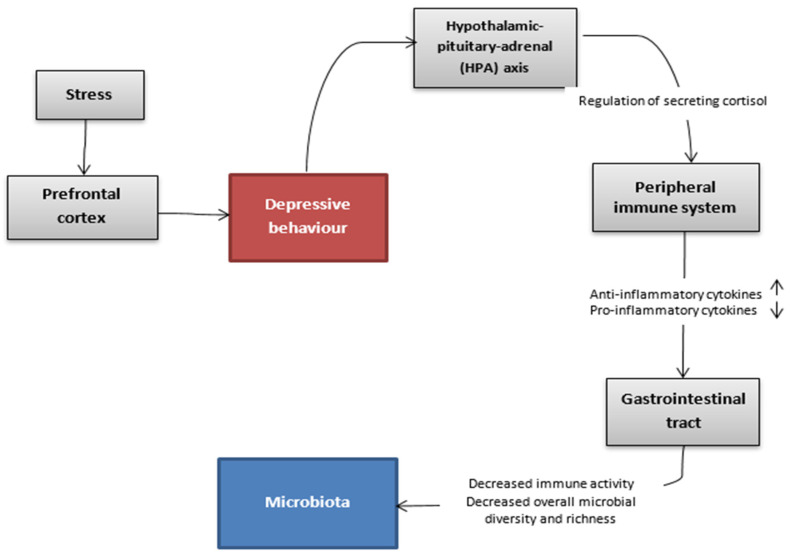
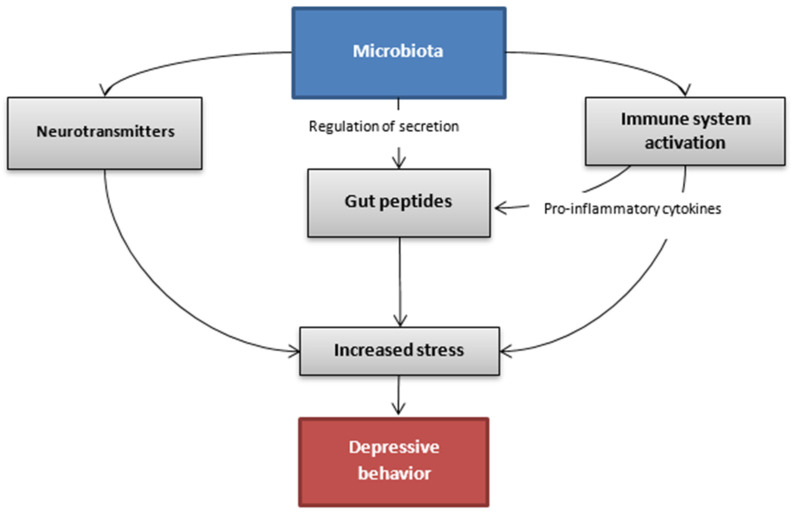
The role of gut microbiota and its association with the central nervous system via the microbiome-brain-gut axis has been widely discussed in the literature. The aim of this review is to investigate the impact of gut microbiota on the development of depression and underlying molecular mechanisms. There are two possible pathways in which this interaction might occur. The first one suggests that depressive disorder could lead to dysbiosis and one of the causes may be the influence on the hypothalamic-pituitary-adrenal (HPA) axis. The second one considers if changes in the composition of gut microbiota might cause depressive disorder. The mechanisms that could be responsible for this interaction include the secretion of neurotransmitters, gut peptides and the activation of the immune system. However, current knowledge on this topic does not allow for us to state an unambiguous conclusion, and future studies that take into consideration more precise stress-measurement methods are needed to further explore direct mechanisms of the interaction between gut microbiota and mental health.
Overview
The claims and statistics of this paper haven’t been checked yet.
Run the check — free, no account needed. It reads the open-access text and checks the sources it cites.
Integrity signals
Registry
Cites
Statistics
Figures
Verification
Claims the paper makes
The claims and statistics of this paper haven’t been checked yet.
Run the check — free, no account needed. It reads the open-access text and checks the sources it cites.
Claims other papers make about this one
Each is checked against this paper’s own text: does it say what the citing paper says it does?
In the citing paper
“Examples of these metabolic products include SCFAs, which are produced by Lactobacillus, Bifidobacterium, and Prevotella [93].”
From The Gut–Brain–Microbiota Connection and Its Role in Autism Spectrum Disorders (2025) · cites this paper as [93]
Self-check
Percentages, sums and reported differences re-computed from the paper’s own numbers.
The self-check needs the paper’s full text.
Citations
Cites
1 retracted
Gut Microbiome Dysbiosis and Depression: a Comprehensive Review
Capuco, A., Urits, I., Hasoon, J. J., Chun, R., Gerald, B., Wang, J. K., Ngo, A. L., Simopoulos, T. T., Kaye, A. D., Colontonio, M. M., et al. (2020) · Current Pain and Headache Reports · doi:10.1007/s11916-020-00871-x · Cited by 49
RetractedGhrelin is a growth-hormone-releasing acylated peptide from stomach
Kojima, M., Hosoda, H., Date, Y., Nakazato, M., Matsuo, H., & Kangawa, K. (1999) · Nature · doi:10.1038/45230 · Cited by 8,479
Changes of Intestinal Functions in Liver Cirrhosis
Fukui, H., & Wiest, R. (2016) · Inflammatory Intestinal Diseases · doi:10.1159/000444436 · Cited by 6,820
Protective and Damaging Effects of Stress Mediators
McEwen, B. S. (1998) · New England Journal of Medicine · doi:10.1056/nejm199801153380307 · Cited by 6,733 · cited 1×
“Corticotropin, in turn, stimulates adrenocorticotropin, which is the direct stimuli for the adrenal gland and its glucocorticoids [78].”
BackgroundDiversity, stability and resilience of the human gut microbiota
Lozupone, C. A., Stombaugh, J. I., Gordon, J. I., Jansson, J. K., & Knight, R. (2012) · Nature · doi:10.1038/nature11550 · Cited by 5,533
Host-Bacterial Mutualism in the Human Intestine
Bäckhed, F., Ley, R. E., Sonnenburg, J. L., Peterson, D. A., & Gordon, J. I. (2005) · Science · doi:10.1126/science.1104816 · Cited by 5,277
Richness of human gut microbiome correlates with metabolic markers
Le Chatelier, E., Nielsen, T., Qin, J., Prifti, E., Hildebrand, F., Falony, G., Almeida, M., Arumugam, M., Batto, J.-M., Kennedy, S., et al. (2013) · Nature · doi:10.1038/nature12506 · Cited by 4,662
Malhi, G. S., & Mann, J. J. (2018) · The Lancet · doi:10.1016/s0140-6736(18)31948-2 · Cited by 4,099
Formation of short chain fatty acids by the gut microbiota and their impact on human metabolism
Morrison, D. J., & Preston, T. (2016) · Gut Microbes · doi:10.1080/19490976.2015.1134082 · Cited by 3,781
Energy contributions of volatile fatty acids from the gastrointestinal tract in various species
Bergman, E. N. (1990) · Physiological Reviews · doi:10.1152/physrev.1990.70.2.567 · Cited by 2,750
Altered fecal microbiota composition in patients with major depressive disorder
Jiang, H., Ling, Z., Zhang, Y., Mao, H., Ma, Z., Yin, Y., Wang, W., Tang, W., Tan, Z., Shi, J., et al. (2015) · Brain, Behavior, and Immunity · doi:10.1016/j.bbi.2015.03.016 · Cited by 2,275
Diet–microbiota interactions as moderators of human metabolism
Sonnenburg, J. L., & Bäckhed, F. (2016) · Nature · doi:10.1038/nature18846 · Cited by 2,257
Louis, P., & Flint, H. J. (2009) · FEMS Microbiology Letters · doi:10.1111/j.1574-6968.2009.01514.x · Cited by 2,179
Microbial Influences in Inflammatory Bowel Diseases
Sartor, R. B. (2008) · Gastroenterology · doi:10.1053/j.gastro.2007.11.059 · Cited by 1,927
The Firmicutes/Bacteroidetes ratio of the human microbiota changes with age
Mariat, D., Firmesse, O., Levenez, F., Guimarăes, V., Sokol, H., Doré, J., Corthier, G., & Furet, J.-P. (2009) · BMC Microbiology · doi:10.1186/1471-2180-9-123 · Cited by 1,755
Kelly, J. R., Borre, Y., O' Brien, C., Patterson, E., El Aidy, S., Deane, J., Kennedy, P. J., Beers, S., Scott, K., Moloney, G., et al. (2016) · Journal of Psychiatric Research · doi:10.1016/j.jpsychires.2016.07.019 · Cited by 1,683
The gut microbiome in atherosclerotic cardiovascular disease
Jie, Z., Xia, H., Zhong, S.-L., Feng, Q., Li, S., Liang, S., Zhong, H., Liu, Z., Gao, Y., Zhao, H., et al. (2017) · Nature Communications · doi:10.1038/s41467-017-00900-1 · Cited by 1,638
Hippocampal volume and depression: a meta-analysis of MRI studies
Videbech, P., & Ravnkilde, B. (2004) · American Journal of Psychiatry · doi:10.1176/appi.ajp.161.11.1957 · Cited by 1,590
A standardized protocol for repeated social defeat stress in mice
Golden, S. A., Covington, H. E., Berton, O., & Russo, S. J. (2011) · Nature Protocols · doi:10.1038/nprot.2011.361 · Cited by 1,581
Gut/brain axis and the microbiota
Mayer, E. A., Tillisch, K., & Gupta, A. (2015) · Journal of Clinical Investigation · doi:10.1172/jci76304 · Cited by 1,503
An insight into gut microbiota and its functionalities
Adak, A., & Khan, M. R. (2019) · Cellular and Molecular Life Sciences · doi:10.1007/s00018-018-2943-4 · Cited by 1,485
Peripheral cytokine and chemokine alterations in depression: a meta‐analysis of 82 studies
Köhler, C. A., Freitas, T. H., Maes, M., de Andrade, N. Q., Liu, C. S., Fernandes, B. S., Stubbs, B., Solmi, M., Veronese, N., Herrmann, N., et al. (2017) · Acta Psychiatrica Scandinavica · doi:10.1111/acps.12698 · Cited by 1,443
Gut microbiota in the pathogenesis of inflammatory bowel disease
Nishida, A., Inoüe, R., Inatomi, O., Bamba, S., Naito, Y., & Andoh, A. (2017) · Clinical Journal of Gastroenterology · doi:10.1007/s12328-017-0813-5 · Cited by 1,440
Chronic stress, glucocorticoid receptor resistance, inflammation, and disease risk
Cohen, S., Janicki-Deverts, D., Doyle, W. J., Miller, G. E., Frank, E., Rabin, B. S., & Turner, R. B. (2012) · Proceedings of the National Academy of Sciences · doi:10.1073/pnas.1118355109 · Cited by 1,419
Epidemiology of suicide and the psychiatric perspective
Bachmann, S. (2018) · International Journal of Environmental Research and Public Health · doi:10.3390/ijerph15071425 · Cited by 1,377
Human gut microbiota/microbiome in health and diseases: a review
Gomaa, E. Z. (2020) · Antonie van Leeuwenhoek · doi:10.1007/s10482-020-01474-7 · Cited by 1,294
Mental health: a world of depression
Smith, K. (2014) · Nature · doi:10.1038/515180a · Cited by 1,148
Bailey, M. T., Dowd, S. E., Galley, J. D., Hufnagle, A. R., Allen, R. G., & Lyte, M. (2011) · Brain, Behavior, and Immunity · doi:10.1016/j.bbi.2010.10.023 · Cited by 1,123
Chu, D. M., Ma, J., Prince, A. L., Antony, K. M., Seferovic, M. D., & Aagaard, K. M. (2017) · Nature Medicine · doi:10.1038/nm.4272 · Cited by 1,063
Correlation between the human fecal microbiota and depression
Naseribafrouei, A., Hestad, K., Avershina, E., Sekelja, M., Linløkken, A., Wilson, R., & Rudi, K. (2014) · Neurogastroenterology & Motility · doi:10.1111/nmo.12378 · Cited by 1,044
New evidences on the altered gut microbiota in autism spectrum disorders
Strati, F., Cavalieri, D., Albanese, D., De Felice, C., Donati, C., Hayek, J., Jousson, O., Leoncini, S., Renzi, D., Calabrò, A., et al. (2017) · Microbiome · doi:10.1186/s40168-017-0242-1 · Cited by 1,040
Koenigs, M., & Grafman, J. (2009) · Behavioural Brain Research · doi:10.1016/j.bbr.2009.03.004 · Cited by 956 · cited 1×
“The dysfunction of the prefrontal cortex in humans embraced hyperactivity in ventral-medial and hypoactivity in dorsolateral areas [57].”
BackgroundDuncan, S. H., Belenguer, A., Holtrop, G., Johnstone, A. M., Flint, H. J., & Lobley, G. E. (2007) · Applied and Environmental Microbiology · doi:10.1128/aem.02340-06 · Cited by 941
Keller, J., Gomez, R., Williams, G., Lembke, A., Lazzeroni, L., Murphy, G. M., & Schatzberg, A. F. (2017) · Molecular Psychiatry · doi:10.1038/mp.2016.120 · Cited by 922
An irritable bowel syndrome subtype defined by species-specific alterations in faecal microbiota
Jeffery, I. B., O'Toole, P. W., Öhman, L., Claesson, M. J., Deane, J., Quigley, E. M. M., & Simrén, M. (2012) · Gut · doi:10.1136/gutjnl-2011-301501 · Cited by 835
Pinto-Sanchez, M. I., Hall, G. B., Ghajar, K., Nardelli, A., Bolino, C., Lau, J. T., Martin, F.-P., Cominetti, O., Welsh, C., Rieder, A., et al. (2017) · Gastroenterology · doi:10.1053/j.gastro.2017.05.003 · Cited by 821
Perturbations in Gut Microbiota Composition in Psychiatric Disorders
Nikolova, V. L., Smith, M. R. B., Hall, L. J., Cleare, A. J., Stone, J. M., & Young, A. H. (2021) · JAMA Psychiatry · doi:10.1001/jamapsychiatry.2021.2573 · Cited by 777
Akkasheh, G., Kashani-Poor, Z., Tajabadi-Ebrahimi, M., Jafari, P., Akbari, H., Taghizadeh, M., Memarzadeh, M. R., Asemi, Z., & Esmaillzadeh, A. (2016) · Nutrition · doi:10.1016/j.nut.2015.09.003 · Cited by 767
The olfactory bulbectomised rat as a model of depression
Song, C., & Leonard, B. E. (2005) · Neuroscience & Biobehavioral Reviews · doi:10.1016/j.neubiorev.2005.03.010 · Cited by 730
Anxiety, depression, and the microbiome: A role for gut peptides
Lach, G., Schellekens, H., Dinan, T. G., & Cryan, J. F. (2018) · Neurotherapeutics · doi:10.1007/s13311-017-0585-0 · Cited by 573 · cited 3×
“Moreover, both hypothalamic-pituitary-adrenal (HPA) axis and gut peptides might be involved in this communication system [6,7].”
BackgroundLiu, R. T., Walsh, R. F. L., & Sheehan, A. E. (2019) · Neuroscience & Biobehavioral Reviews · doi:10.1016/j.neubiorev.2019.03.023 · Cited by 564
Selye, H. (1955) · Science · doi:10.1126/science.122.3171.625 · Cited by 541
Brain structure alterations in depression: Psychoradiological evidence
Zhang, F., Peng, W. J., Sweeney, J. A., Jia, Z., & Gong, Q. (2018) · CNS Neuroscience & Therapeutics · doi:10.1111/cns.12835 · Cited by 507
Neuropeptide Y: a stressful review
Reichmann, F., & Holzer, P. (2016) · Neuropeptides · doi:10.1016/j.npep.2015.09.008 · Cited by 490
The effects of probiotics on depressive symptoms in humans: a systematic review
Wallace, C. J. K., & Milev, R. (2017) · Annals of General Psychiatry · doi:10.1186/s12991-017-0138-2 · Cited by 471
Nishino, K., Nishida, A., Inoüe, R., Kawada, Y., Ohno, M., Sakai, S., Inatomi, O., Bamba, S., Sugimoto, M., Kawahara, M., et al. (2017) · Journal of Gastroenterology · doi:10.1007/s00535-017-1384-4 · Cited by 465
Dendritic Spines in Depression: What We Learned from Animal Models
Qiao, H., Li, M.-X., Xu, C. S., Chen, H.-B., An, S.-C., & Ma, X. (2016) · Neural Plasticity · doi:10.1155/2016/8056370 · Cited by 463
Mikulska, J., Juszczyk, G., Gawrońska-Grzywacz, M., & Herbet, M. (2021) · Brain Sciences · doi:10.3390/brainsci11101298 · Cited by 450
Early-life gut microbiome composition and milk allergy resolution
Bunyavanich, S., Shen, N., Grishin, A. V., Wood, R. A., Burks, W. A., Dawson, P. M., Jones, S. M., Leung, D. Y. M., Sampson, H. A., Sicherer, S. H., et al. (2016) · Journal of Allergy and Clinical Immunology · doi:10.1016/j.jaci.2016.03.041 · Cited by 446
Gut microbiome and type 2 diabetes: where we are and where to go?
Sharma, S., & Tripathi, P. (2018) · The Journal of Nutritional Biochemistry · doi:10.1016/j.jnutbio.2018.10.003 · Cited by 446
The Gut as the Motor of Multiple Organ Dysfunction in Critical Illness
Klingensmith, N. J., & Coopersmith, C. M. (2016) · Critical Care Clinics · doi:10.1016/j.ccc.2015.11.004 · Cited by 429
The HPA – Immune Axis and the Immunomodulatory Actions of Glucocorticoids in the Brain
Bellavance, M.-A., & Rivest, S. (2014) · Frontiers in Immunology · doi:10.3389/fimmu.2014.00136 · Cited by 419
Gut microbiota in autism and mood disorders
Mangiola, F. (2016) · World Journal of Gastroenterology · doi:10.3748/wjg.v22.i1.361 · Cited by 413
Galley, J. D., Nelson, M. C., Yu, Z., Dowd, S. E., Walter, J., Kumar, P., Lyte, M., & Bailey, M. T. (2014) · BMC Microbiology · doi:10.1186/1471-2180-14-189 · Cited by 411
Gut bacteria in health and disease.
Quigley, E. M. M. (2013) · Europe PMC (PubMed Central) · Cited by 394
Gut microbiome and depression: what we know and what we need to know
Winter, G., Hart, R. A., Charlesworth, R. P. G., & Sharpley, C. F. (2018) · Reviews in the Neurosciences · doi:10.1515/revneuro-2017-0072 · Cited by 394
Gastrointestinal Illness and the Biopsychosocial Model
Drossman, D. A. (1998) · Psychosomatic Medicine · doi:10.1097/00006842-199805000-00007 · Cited by 388
Proinflammatory cytokines in the prefrontal cortex of teenage suicide victims
Pandey, G. N., Rizavi, H. S., Ren, X., Fareed, J., Hoppensteadt, D. A., Roberts, R. C., Conley, R. R., & Dwivedi, Y. (2012) · Journal of Psychiatric Research · doi:10.1016/j.jpsychires.2011.08.006 · Cited by 378
Gut microbiota and major depressive disorder: a systematic review and meta-analysis
Sanada, K., Nakajima, S., Kurokawa, S., Barceló-Soler, A., Ikuse, D., Hirata, A., Yoshizawa, A., Tomizawa, Y., Salas-Valero, M., Noda, Y., et al. (2020) · Journal of Affective Disorders · doi:10.1016/j.jad.2020.01.102 · Cited by 372
Gut microbiota: a new path to treat obesity
Muscogiuri, G., Cantone, E., Cassarano, S., Tuccinardi, D., Barrea, L., Savastano, S., & Colao, A. (2019) · International Journal of Obesity Supplements · doi:10.1038/s41367-019-0011-7 · Cited by 370
Yu, M., Jia, H., Zhou, C., Yang, Y., Zhao, Y., Yang, M., & Zou, Z. (2017) · Journal of Pharmaceutical and Biomedical Analysis · doi:10.1016/j.jpba.2017.02.008 · Cited by 369
A meta-analysis of the use of probiotics to alleviate depressive symptoms
Ng, Q. X., Peters, C., Ho, C. Y. X., Lim, D. Y., & Yeo, W.-S. (2018) · Journal of Affective Disorders · doi:10.1016/j.jad.2017.11.063 · Cited by 357
Portune, K. J., Beaumont, M., Davila, A.-M., Tomé, D., Blachier, F., & Sanz, Y. (2016) · Trends in Food Science & Technology · doi:10.1016/j.tifs.2016.08.011 · Cited by 356
Somatic symptoms in depression
Kapfhammer, H. (2006) · Dialogues in Clinical Neuroscience · doi:10.31887/dcns.2006.8.2/hpkapfhammer · Cited by 348
Marx, W., McGuinness, A. J., Rocks, T., Ruusunen, A. A., Cleminson, J. R., Walker, A. J., Gomes‐da‐Costa, S., Lane, M. M., Sanches, M., Díaz, A. P., et al. (2020) · Molecular Psychiatry · doi:10.1038/s41380-020-00951-9 · Cited by 339
Chevalier, G., Siopi, E., Guenin‐Macé, L., Pascal, M., Laval, T., Rifflet, A., Boneca, I. G., Demangel, C., Colsch, B., Pruvost, A., et al. (2020) · Nature Communications · doi:10.1038/s41467-020-19931-2 · Cited by 337
Bailey, M. T., Dowd, S. E., Parry, N. M. A., Galley, J. D., Schauer, D. B., & Lyte, M. (2010) · Infection and Immunity · doi:10.1128/iai.00862-09 · Cited by 335
Rapid sensing of circulating ghrelin by hypothalamic appetite-modifying neurons
Schaeffer, M., Langlet, F., Lafont, C., Molino, F., Hodson, D. J., Roux, T., Lamarque, L., Verdié, P., Bourrier, E., Dehouck, B., et al. (2013) · Proceedings of the National Academy of Sciences · doi:10.1073/pnas.1212137110 · Cited by 325
Altered colonic function and microbiota profile in a mouse model of chronic depression
Park, A. J., Collins, J., Blennerhassett, P. A., Ghia, J., Verdu, E. F., Berčík, P., & Collins, S. M. (2013) · Neurogastroenterology & Motility · doi:10.1111/nmo.12153 · Cited by 306
Bangsgaard Bendtsen, K. M., Krych, L., Sørensen, D. B., Pang, W., Nielsen, D. S., Josefsen, K., Hansen, L. H., Sørensen, S. J., & Hansen, A. K. (2012) · PLoS ONE · doi:10.1371/journal.pone.0046231 · Cited by 299
Structural & functional consequences of chronic psychosocial stress on the microbiome & host
Bharwani, A., Mian, M. F., Foster, J. A., Surette, M. G., Bienenstock, J., & Forsythe, P. (2016) · Psychoneuroendocrinology · doi:10.1016/j.psyneuen.2015.10.001 · Cited by 293
Revisit gut microbiota and its impact on human health and disease
Ding, R., Goh, W.-R., Wu, R., Yue, X., Luo, X. G., Khine, W. W. T., Wu, J., & Lee, Y. K. (2019) · Journal of Food and Drug Analysis · doi:10.1016/j.jfda.2018.12.012 · Cited by 287
Labus, J. S., Hollister, E. B., Jacobs, J., Kirbach, K., Oezguen, N., Gupta, A., Acosta, J., Luna, R. A., Aagaard, K., Versalovic, J., et al. (2017) · Microbiome · doi:10.1186/s40168-017-0260-z · Cited by 284
Pirbaglou, M., Katz, J., de Souza, R. J., Stearns, J. C., Motamed, M., & Ritvo, P. (2016) · Nutrition Research · doi:10.1016/j.nutres.2016.06.009 · Cited by 270
Hoban, A. E., Moloney, R. D., Golubeva, A. V., McVey Neufeld, K. A., O’Sullivan, O., Patterson, E., Stanton, C., Dinan, T. G., Clarke, G., & Cryan, J. F. (2016) · Neuroscience · doi:10.1016/j.neuroscience.2016.10.003 · Cited by 270
Clinical and Biochemical Manifestations of Depression: Relation to the Neurobiology of Stress
Gold, P. W., Machado-Vieira, R., & Pavlatou, M. G. (2015) · Neural Plasticity · doi:10.1155/2015/581976 · Cited by 259 · cited 1×
“Some of them confirmed the occurence of suicidal thoughts or thoughts of harming themselves [75].”
BackgroundKrych, Ł., Hansen, C. H. F., Hansen, A. K., van den Berg, F. W. J., & Nielsen, D. S. (2013) · PLoS ONE · doi:10.1371/journal.pone.0062578 · Cited by 256
Turnbull, A. V., & Rivier, C. (1997) · Experimental Biology and Medicine · doi:10.3181/00379727-215-44108 · Cited by 256
Thompson, A. L., Monteagudo-Mera, A., Cadenas, M. B., Lampl, M., & Azcárate-Peril, M. A. (2015) · Frontiers in Cellular and Infection Microbiology · doi:10.3389/fcimb.2015.00003 · Cited by 244
Early-life home environment and risk of asthma among inner-city children
O'Connor, G. T., Lynch, S. V., Bloomberg, G. R., Kattan, M., Wood, R. A., Gergen, P. J., Jaffee, K. F., Calatroni, A., Bacharier, L. B., Beigelman, A., et al. (2018) · Journal of Allergy and Clinical Immunology · doi:10.1016/j.jaci.2017.06.040 · Cited by 216
Otis, J. M., Zhu, M., Namboodiri, V. M. K., Cook, C. A., Kosyk, O., Matan, A. M., Ying, R., Hashikawa, Y., Hashikawa, K., Trujillo‐Pisanty, I., et al. (2019) · Neuron · doi:10.1016/j.neuron.2019.05.018 · Cited by 195
Adult Neurogenesis and Mental Illness
Schoenfeld, T. J., & Cameron, H. A. (2014) · Neuropsychopharmacology · doi:10.1038/npp.2014.230 · Cited by 192
Knowles, S. R., Nelson, E. A., & Palombo, E. A. (2008) · Biological Psychology · doi:10.1016/j.biopsycho.2007.09.010 · Cited by 192
Gastrointestinal hormones and the dialogue between gut and brain
Dockray, G. J. (2014) · The Journal of Physiology · doi:10.1113/jphysiol.2014.270850 · Cited by 189
Biedermann, L., Brülisauer, K., Zeitz, J., Frei, P., Scharl, M., Vavricka, S. R., Fried, M., Loessner, M. J., Rogler, G., & Schuppler, M. (2014) · Inflammatory Bowel Diseases · doi:10.1097/mib.0000000000000129 · Cited by 178
Transmission of Mother’s Microflora to the Newborn at Birth
Mändar, R., & Mikelsaar, M. (2009) · Biology of the Neonate · doi:10.1159/000244275 · Cited by 165
Differential Analysis of Hypertension-Associated Intestinal Microbiota
Dan, X., Mushi, Z., Baili, W., Han, L., Enqi, W., Huanhu, Z., & Li, S. (2019) · International Journal of Medical Sciences · doi:10.7150/ijms.29322 · Cited by 158
Microbiota y diabetes mellitus tipo 2
Muñoz‐Garach, A., Díaz-Perdigones, C. M., & Tinahones, F. J. (2016) · Endocrinología y Nutrición · doi:10.1016/j.endonu.2016.07.008 · Cited by 153
The homeostatic role of neuropeptide Yin immune function and its impact on mood and behaviour
Farzi, A., Reichmann, F., & Holzer, P. (2015) · Acta Physiologica · doi:10.1111/apha.12445 · Cited by 145
Inflammation meets metabolic disease: Gut feeling mediated by GLP-1
Zietek, T., & Rath, E. (2016) · Frontiers in Immunology · doi:10.3389/fimmu.2016.00154 · Cited by 131
INTESTINAL MICROBIOTA IN DIGESTIVE DISEASES
Passos, M. D. C. F., & Moraes-Filho, J. P. P. (2017) · Arquivos de Gastroenterologia · doi:10.1590/s0004-2803.201700000-31 · Cited by 125
Lee, S. A., Lim, J. Y., Kim, B. S., Cho, S. J., Kim, N. Y., Kim, O. B., & Kim, Y. (2015) · Nutrition Research and Practice · doi:10.4162/nrp.2015.9.3.242 · Cited by 123
Local secretion of corticotropin-releasing hormone by enterochromaffin cells in human colon
Kawahito, Y., Sano, H., Kawata, M., Yuri, K., Mukai, S., Yamamura, Y., Kato, H., Chrousos, G. P., Wilder, R. L., & Kondo, M. (1994) · Gastroenterology · doi:10.1016/0016-5085(94)90743-9 · Cited by 122
Role of Corticotropin-releasing Factor in Gastrointestinal Permeability
Rodiño‐Janeiro, B. K., Alonso, C., Pigrau, M., Lobo, B., Vicario, M., & Santos, J. (2014) · Journal of Neurogastroenterology and Motility · doi:10.5056/jnm14084 · Cited by 122
Gut microbiota and type 2 diabetes mellitus
Muñoz‐Garach, A., Díaz-Perdigones, C. M., & Tinahones, F. J. (2016) · Endocrinología y Nutrición (English Edition) · doi:10.1016/j.endoen.2016.07.004 · Cited by 119
Gut Microbiome and Depression: How Microbes Affect the Way We Think
Limbaña, T. A., Khan, F., & Eskander, N. (2020) · Cureus · doi:10.7759/cureus.9966 · Cited by 116
Increased Serum Levels of Cortisol and Inflammatory Cytokines in People With Depression
Jia, Y., Liu, L., Sheng, C.-Q., Cheng, Z., Cui, L., Li, M., Zhao, Y., Shi, T., Yau, T. O., Li, F., et al. (2019) · The Journal of Nervous and Mental Disease · doi:10.1097/nmd.0000000000000957 · Cited by 114
Role of central glucagon-like peptide-1 in stress regulation
Ghosal, S., Myers, B., & Herman, J. P. (2013) · Physiology & Behavior · doi:10.1016/j.physbeh.2013.04.003 · Cited by 107
Forte, N. R., Fernández-Rilo, A. C., Palomba, L., Marzo, V. D., & Cristino, L. (2020) · International Journal of Molecular Sciences · doi:10.3390/ijms21051554 · Cited by 105
A review of the relevance and validity of olfactory bulbectomy as a model of depression
Harkin, A., Kelly, J. P., & Leonard, B. E. (2003) · Clinical Neuroscience Research · doi:10.1016/s1566-2772(03)00087-2 · Cited by 103
Goto, T., Kubota, Y., Tanaka, Y., Iio, W., Moriya, N., & Toyoda, A. (2014) · Behavioural Brain Research · doi:10.1016/j.bbr.2014.05.040 · Cited by 102
Dean, B., Gibbons, A. S., Tawadros, N., Brooks, L., Everall, I., & Scarr, E. (2012) · Molecular Psychiatry · doi:10.1038/mp.2012.95 · Cited by 99
Chen, C., Huang, X., Fang, S., Yang, H., He, M., Zhao, Y., & Huang, L. (2018) · Frontiers in Microbiology · doi:10.3389/fmicb.2018.02626 · Cited by 95
Cohen, H., Kaplan, Z., Kozlovsky, N., Gidron, Y., Matar, M. A., & Zohar, J. (2010) · Journal of Neuroendocrinology · doi:10.1111/j.1365-2826.2010.02003.x · Cited by 94
Probiotics, prebiotics and synbiotics for weight loss and metabolic syndrome in the microbiome era.
Ferrarese, R., Ceresola, E. R., Preti, A., & Canducci, F. (2018) · PubMed · doi:10.26355/eurrev_201811_16301 · Cited by 94
Cholecystokinin-2 (CCK2) receptor-mediated anxiety-like behaviors in rats
Wang, H., Wong, P. T. ‐., Spiess, J., & Zhu, Y. Z. (2005) · Neuroscience & Biobehavioral Reviews · doi:10.1016/j.neubiorev.2005.05.008 · Cited by 89
The neurobiology of suicide - A Review of post-mortem studies
Furczyk, K., Schutová, B., Michel, T. M., Thome, J., & Büttner, A. (2013) · Journal of Molecular Psychiatry · doi:10.1186/2049-9256-1-2 · Cited by 85
Colle, R., Masson, P., Verstuyft, C., Fève, B., Werner, E., Boursier-Neyret, C., Walther, B., David, D. J. P., Boniface, B., Falissard, B., et al. (2019) · Psychiatry and Clinical Neurosciences · doi:10.1111/pcn.12944 · Cited by 83
Becker, G., Berg, D., Lesch, K., & Becker, T. (2001) · The International Journal of Neuropsychopharmacology · doi:10.1017/s1461145701002164 · Cited by 79
Omics Studies of the Murine Intestinal Ecosystem Exposed to Subchronic and Mild Social Defeat Stress
AOKI-YOSHIDA, A., Aoki, R., Moriya, N., Goto, T., Kubota, Y., Toyoda, A., Takayama, Y., & Suzuki, C. (2016) · Journal of Proteome Research · doi:10.1021/acs.jproteome.6b00262 · Cited by 74
The CRF system as a therapeutic target for neuropsychiatric disorders
Sanders, J., & Nemeroff, C. (2016) · Trends in Pharmacological Sciences · doi:10.1016/j.tips.2016.09.004 · Cited by 72
Cellular abnormalities in depression: evidence from postmortem brain tissue
Stockmeier, C. A., & Rajkowska, G. (2004) · Dialogues in Clinical Neuroscience · doi:10.31887/dcns.2004.6.2/cstockmeier · Cited by 67
Ibrahim, N., Rahman, M. Z., Ad-Dab’bagh, Y., & Akhtar, M. (2018) · Psychiatry and Clinical Neurosciences · doi:10.1111/pcn.12804 · Cited by 63
Del Boca, C., Lutz, P. E., Le Merrer, J., Koebel, P., & Kieffer, B. L. (2012) · Neuroscience · doi:10.1016/j.neuroscience.2012.05.022 · Cited by 59
Brain structural and functional changes in adolescents with psychiatric disorders
Miguel-Hidalgo, J. J. (2013) · International Journal of Adolescent Medicine and Health · doi:10.1515/ijamh-2013-0058 · Cited by 48
Tokarek, J., Gadzinowska, J., Młynarska, E., Franczyk, B., & Rysz, J. (2021) · Microorganisms · doi:10.3390/microorganisms10010052 · Cited by 46
Self-citationMin, W., Liu, C., Yang, Y., Sun, X. M., Zhang, B., Li, X., & Sun, X. (2012) · Progress in Neuro-Psychopharmacology and Biological Psychiatry · doi:10.1016/j.pnpbp.2012.06.017 · Cited by 41
Gut Microbiota in Depression: A Focus on Ketamine
Wilkowska, A., Szałach, Ł. P., & Cubała, W. J. (2021) · Frontiers in Behavioral Neuroscience · doi:10.3389/fnbeh.2021.693362 · Cited by 34
Maternal Weaning Modulates Emotional Behavior and Regulates the Gut-Brain Axis
Farshim, P. P., Walton, G., Chakrabarti, B., Givens, D. I., Saddy, D., Kitchen, I., Swann, J. R., & Bailey, A. (2016) · Scientific Reports · doi:10.1038/srep21958 · Cited by 32
A Microbiome-Driven Approach to Combating Depression During the COVID-19 Pandemic
Ghannoum, M. A., Ford, M., Bonomo, R. A., Gamal, A., & McCormick, T. S. (2021) · Frontiers in Nutrition · doi:10.3389/fnut.2021.672390 · Cited by 24
Kida, S., & Kato, T. (2015) · Current Molecular Medicine · doi:10.2174/1566524015666150303002128 · Cited by 13
Coumans, J. V. F., Palanisamy, S., McFarlane, J. R., & Moens, P. (2016) · International Journal of Molecular Sciences · doi:10.3390/ijms17040581 · Cited by 11
Kazemi, A., & Djafarian, K. (2021) · Elsevier eBooks · doi:10.1016/b978-0-12-817935-2.00048-9 · Cited by 4
Rola receptorów mineralokortykoidowych w patogenezie nadciśnienia tętniczego
Zdrojewicz, Z., Sztuka-Pietkiewicz, A., & Pietkiewicz, W. (2000) · Via Medica Journals · Cited by 1
Research works printed but not linked: 2
- Bains, N., and Abdijadid, S. (2021). Major Depressive Disorder. StatPearls, StatPearls Publishing. Available online: http://www.ncbi.nlm.nih.gov/books/NBK559078/.
- Selye, H. (1978). The Stress of Life, McGraw-Hill.
Cited by
Sorted by citations
Gut microbiota and its metabolites in depression: from pathogenesis to treatment
Liu, L., Wang, H., Chen, X., Zhang, Y., Zhang, H., & Xie, P. (2023) · EBioMedicine · doi:10.1016/j.ebiom.2023.104527 · Cited by 749
Bertollo, A. G., Santos, C. F., Bagatini, M. D., & Ignácio, Z. M. (2025) · Frontiers in Neuroscience · doi:10.3389/fnins.2025.1541075 · Cited by 183
Jiao, W., Lin, J., Deng, Y., Ji, Y., Liang, C., Wei, S., Xi, J., & Yan, F. (2025) · Journal of Neuroinflammation · doi:10.1186/s12974-024-03312-3 · Cited by 132
Akkermansia muciniphila in neuropsychiatric disorders: friend or foe?
Lei, W., Cheng, Y., Gao, J., Liu, X., Shao, L., Kong, Q., Zheng, N., Ling, Z., & Hu, W. (2023) · Frontiers in Cellular and Infection Microbiology · doi:10.3389/fcimb.2023.1224155 · Cited by 104
Zhong, H., Xu, J., Yang, M., Hussain, M., Liu, X., Feng, F., & Guan, R. (2023) · Nutrients · doi:10.3390/nu15030496 · Cited by 78
Metadata
- Authors
- Młynarska, E., Gadzinowska, J., Tokarek, J., Forycka, J., Szuman, A., Franczyk, B., & Rysz, J.
- Affiliations
- Medical University of Lodz (PL)
- Corresponding author
- Młynarska, Ewelina
- Venue
- Nutrients
- Publisher
- MDPI AG
- Published
- 2022-05-04
- Volume
- 14
- Issue
- 9
- Pages
- 1921
- ISSN
- 2072-6643 (ISSN-L)
- PMC
- PMC9105444
- OpenAlex
- W4225384750
- Cited by
- 109
- References
- 123
- Citations by year
- 2026: 22 · 2025: 35 · 2024: 26 · 2023: 26
- FWCI
- 2.27
- Type
- journal article
- Language
- en
- Open access
- gold
- doi.org
- Licence
- Locations
- Nutrients (publishedVersion, cc-by)
- PubMed Central (publishedVersion, cc-by)
- PubMed (publishedVersion)
- DOAJ (DOAJ: Directory of Open Access Journals) (submittedVersion, cc-by-sa)
- Topics
- Life Sciences › Biochemistry, Genetics and Molecular Biology › Molecular Biology › Gut microbiota and health
- Life Sciences › Neuroscience › Biological Psychiatry › Tryptophan and brain disorders
- Health Sciences › Medicine › Gastroenterology › Gastrointestinal motility and disorders
- Keywords
- gut microbiota, depression, dysbiosis, hypothalamic-pituitary-adrenal axis, neurotransmitters, gut peptides, immune activation, stress, mental health
- MeSH terms
- Gastrointestinal Microbiome, Brain-Gut Axis, Brain, Depressive Disorder, Humans, Pituitary-Adrenal System, Dysbiosis
About these checks
Registry, retraction, Cites and statistics results are computed, not judged, with one exception: a printed reference that no index lists is read once by a model before it counts as a citation error. Claims are extracted by a model and kept only when their quote appears verbatim in the text; each cited source is then checked, with a model’s help, for whether it says what the claim relies on. Those verdicts can be wrong — read the claim’s quote and the cited source before relying on one.
Statistics and arithmetic are recomputed, not judged.
Confidence bands are shown only for fields calibrated on our annotated test set. None is calibrated yet, so no band is shown.
What counts as a claim ›How we measure confidence ›How we check this ›
Are you an author, or do you see a problem with this page? Request a review
