

The DOI matches its Crossref record; 264 of the 264 references it cites were found in a registry or an index.
Adipose tissue hyperplasia and hypertrophy in common and syndromic obesity-the case of BBS obesity
Open accessAbstract
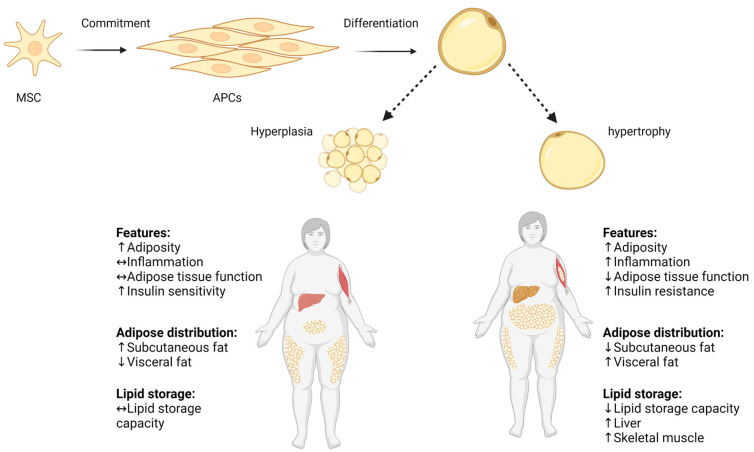
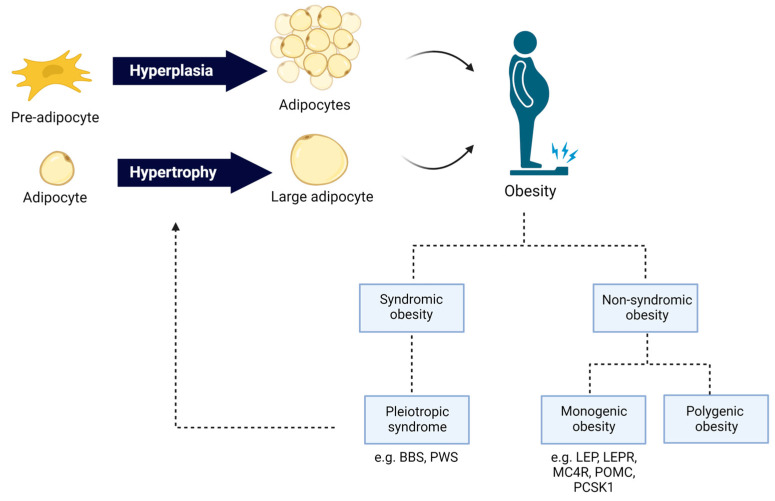
Obesity is a metabolic state generated by the expansion of adipose tissue. Adipose tissue expansion depends on the interplay between hyperplasia and hypertrophy, and is mainly regulated by a complex interaction between genetics and excess energy intake. However, the genetic regulation of adipose tissue expansion is yet to be fully understood. Obesity can be divided into common multifactorial/polygenic obesity and monogenic obesity, non-syndromic and syndromic. Several genes related to obesity were found through studies of monogenic non-syndromic obesity models. However, syndromic obesity, characterized by additional features other than obesity, suggesting a more global role of the mutant genes related to the syndrome and, thus, an additional peripheral influence on the development of obesity, were hardly studied to date in this regard. This review summarizes present knowledge regarding the hyperplasia and hypertrophy of adipocytes in common obesity. Additionally, we highlight the scarce research on syndromic obesity as a model for studying adipocyte hyperplasia and hypertrophy, focusing on Bardet–Biedl syndrome (BBS). BBS obesity involves central and peripheral mechanisms, with molecular and mechanistic alternation in adipocyte hyperplasia and hypertrophy. Thus, we argue that using syndromic obesity models, such as BBS, can further advance our knowledge regarding peripheral adipocyte regulation in obesity.
Overview
The claims and statistics of this paper haven’t been checked yet.
Run the check — free, no account needed. It reads the open-access text and checks the sources it cites.
Integrity signals
Registry
Cites
Statistics
Figures
Verification
Claims the paper makes
The claims and statistics of this paper haven’t been checked yet.
Run the check — free, no account needed. It reads the open-access text and checks the sources it cites.
Claims other papers make about this one
Each is checked against this paper’s own text: does it say what the citing paper says it does?
The source backs part of the claim, not all of it — or backs it for a different population, condition or comparison.
In the citing paper
“Hyperplasia and hypertrophy can occur in a depot-specific manner, as intra-abdominal fat depots primarily expand through hypertrophy, while subcutaneous WAT has been seen to expand through both methods (54).”
From Metabolic impact of endogenously produced estrogens by adipose tissue in females and males across the lifespan (2025) · cites this paper as [54]
Experimental — accuracy not yet measured
Self-check
Percentages, sums and reported differences re-computed from the paper’s own numbers.
The self-check needs the paper’s full text.
Citations
Cites
The metabolic phenotype in obesity: Fat mass, body fat distribution, and adipose tissue function
Goossens, G. H. (2017) · Obesity Facts · doi:10.1159/000471488 · Cited by 8,481
Genetics of Food Intake Self-Regulation in Childhood: Literature Review and Research Opportunities
Faith, M. S., Carnell, S., & Kral, T. V. E. (2013) · Human Heredity · doi:10.1159/000353879 · Cited by 7,633
Genetic studies of body mass index yield new insights for obesity biology
Study, T. L. C., Locke, A. E., The ADIPOGen Consortium, The AGEN-BMI Working Group, The CARDIOGRAMplusC4D Consortium, The CKDGen Consortium, The, G. L. G. C., The, I. C. B. P., The MAGIC Investigators, The MuTHER Consortium, et al. (2015) · Nature · doi:10.1038/nature14177 · Cited by 4,534
Mechanisms of fatty acid-induced inhibition of glucose uptake.
Boden, G., Chen, X., Ruiz, J., White, J. V., & Rossetti, L. (1994) · Journal of Clinical Investigation · doi:10.1172/jci117252 · Cited by 3,720
Targeted disruption of the melanocortin-4 receptor results in obesity in mice
Huszar, D., Lynch, C. A., Fairchild-Huntress, V., Dunmore, J. H., Fang, Q., Berkemeier, L. R., Gu, W., Kesterson, R. A., Boston, B. A., Cone, R. D., et al. (1997) · Cell · doi:10.1016/s0092-8674(00)81865-6 · Cited by 3,030
Pathophysiology of human visceral obesity: an update
Tchernof, A., & Després, J.-P. (2013) · Physiological Reviews · doi:10.1152/physrev.00033.2011 · Cited by 2,583
What we talk about when we talk about fat
Rosen, E. D., & Spiegelman, B. M. (2014) · Cell · doi:10.1016/j.cell.2013.12.012 · Cited by 2,373
Yengo, L., Sidorenko, J., Kemper, K. E., Zheng, Z., Wood, A. R., Weedon, M. N., Frayling, T. M., Hirschhorn, J. N., Yang, J., & Visscher, P. M. (2018) · Human Molecular Genetics · doi:10.1093/hmg/ddy271 · Cited by 2,368
Dynamics of fat cell turnover in humans
Spalding, K. L., Arner, E., Westermark, P. O., Bernard, S., Buchholz, B. A., Bergmann, O., Blomqvist, L., Hoffstedt, J., Näslund, E., Britton, T., et al. (2008) · Nature · doi:10.1038/nature06902 · Cited by 2,357 · cited 4×
“However, shown by several elegant studies, at any life stage, states of over-nutrition lead to adipose tissue hyperplasia and, consequently, to an increased mass [14,50,51,59].”
BackgroundInfluentialmPPAR gamma 2: tissue-specific regulator of an adipocyte enhancer.Preprint
Tontonoz, P., Hu, E., Graves, R. A., Budavari, A. I., & Spiegelman, B. M. (1994) · Genes & Development · doi:10.1101/gad.8.10.1224 · Cited by 2,181
Research works printed but not linked: 1
- Macdougald, O.A. (2014). Methods in Enzymology, Academic Press. [1st ed.].
Cited by
Sorted by citations
Impact of Adipose Tissue and Lipids on Skeletal Muscle in Sarcopenia
Jang, S. Y., & Choi, K. M. (2025) · Journal of Cachexia Sarcopenia and Muscle · doi:10.1002/jcsm.70000 · Cited by 81
Matar, D. B., Zhra, M., Nassar, W. K., Altemyatt, H., Naureen, A., Abotouk, N., Elahi, M. A., & Aljada, A. (2025) · Frontiers in Endocrinology · doi:10.3389/fendo.2025.1592683 · Cited by 93
“Adipocyte hypertrophy, with cell diameters expanding up to 150-200 m m (94), leads to reduced oxygen availability and tissue hypoxia (95).”
Lopez‐Yus, M., Horndler, C., Ansón, S. B., Monterde, V. B., & Arbonés-Mainar, J. M. (2024) · Cells · doi:10.3390/cells13050380 · Cited by 60
“This difference in insulin sensitivity plays a significant role in the systemic effects of obesity, particularly the development of insulin resistance [43].”
BackgroundKavitha, S. A., Zainab, S., Muthyalaiah, Y. S., John, C. M., & Arockiasamy, S. (2025) · Molecular Biology Reports · doi:10.1007/s11033-025-10632-x · Cited by 36
“This percentage rises to 45–60% in experimentally obese mice [20, 21].”
Mohaghegh, N., Iyer, A., Wang, E., Balajam, N. Z., Kang, H., Akbari, M., Barnhill, M. S., Khademhosseini, A., Pearson, R. M., & Najafabadi, A. H. (2025) · Journal of Controlled Release · doi:10.1016/j.jconrel.2025.113670 · Cited by 28
Lee, A. A., & Den Hartigh, L. J. (2025) · Frontiers in Endocrinology · doi:10.3389/fendo.2025.1682231 · Cited by 32
“The molecular and genetic mechanisms underlying obesity-driven hyperplasia and hypertrophy are reviewed here (54).”
Obesity–cancer axis crosstalk: Molecular insights and therapeutic approaches
Rakib, A., Mamun, M. A. A., Mandal, M., Sinha, P., & Singh, U. P. (2025) · Acta Pharmaceutica Sinica B · doi:10.1016/j.apsb.2025.04.029 · Cited by 25
“As a key player in adipocyte hyperplasia, leptin can exert either an autocrine or a paracrine effect on the differentiation of adipocytes 29 .”
Clinically Effective Molecules of Natural Origin for Obesity Prevention or Treatment
Hidalgo-Lozada, G. M., Villarruel‐López, A., Nuño, K., García, A. G., Sánchez-Nuño, Y. A., & Ramos-García, C. O. (2024) · International Journal of Molecular Sciences · doi:10.3390/ijms25052671 · Cited by 28
“Furthermore, this excessive growth favors adipocyte hypoxia, the release of reactive oxygen species (ROS), and inflammatory cytokines that activates adipogenesis (adipocyte hyperplasia), another mechanism to increase storage capacity [43].”
BackgroundExosomal miRNAs and isomiRs: potential biomarkers for type 2 diabetes mellitus
Sou, Y. L., Chilian, W. M., Ratnam, W., Zain, S. M., Kadir, S. Z. S. A., Pan, Y., & Pung, Y. F. (2024) · Precision Clinical Medicine · doi:10.1093/pcmedi/pbae021 · Cited by 22
“In the context of obesity, there is a shift in adipocyte phenotypes, in which they under go hypertr ophy and hyperplasia in response to excessive calorie intake [ 90 ].”
BackgroundBaek, S., & Yoon, J. (2024) · International Journal of Molecular Sciences · doi:10.3390/ijms252111540 · Cited by 20
Reytor-González, C., Simancas‐Racines, D., Román-Galeano, N. M., Campuzano-Donoso, M., Am, C., Zambrano-Villacres, R., Teresa, M., Coppola, L., Marchetti, M., Galasso, M., et al. (2025) · Food and Agricultural Immunology · doi:10.1080/09540105.2025.2521270 · Cited by 21
“…adipocytes are characterized by pathologic phenotypes, including hypoxia, fibrosis, the infiltration of proinflammatory macrophages, chronic inflammation states and are less responsive to insulin signals, fail to function properly, and produce and secrete adipokines (Horwitz & Birk, 2023).”
Key Considerations for Studying the Effects of High-Fat Diet on the Nulligravid Mouse Endometrium
Skalski, H. J., Arendt, A. R., Harkins, S. K., MacLachlan, M., Corbett, C., Goy, R. W., Kapoor, A., Hostetter, G. H., & Chandler, R. L. (2024) · Journal of the Endocrine Society · doi:10.1210/jendso/bvae104 · Cited by 18
“Obesity is commonly associated with adipocyte hypertrophy, fatty liver infiltration, and glucose intolerance [27-30].”
BackgroundSinha, S. K., Carpio, M. B., & Nicholas, S. B. (2024) · Biomedicines · doi:10.3390/biomedicines12102209 · Cited by 19
“In the case of obesity, continuous overnutrition leads to lipid accumulation and hypertrophy of WAT [22,23], one of the major factors responsible for macrophage recruitment.”
BackgroundIspas, S., Tuta, L. A., Botnarciuc, M., Ispas, V., Staicovici, S., Ali, S., Twakor, A. N., Cojocaru, C., Herlo, A., & Petcu, A. (2023) · Journal of Personalized Medicine · doi:10.3390/jpm13111602 · Cited by 19
“Furthermore, it has been demonstrated that the size of the adipocytes, rather than their amount, is associated with the risk of diseases linked to nutrition [34].”
BackgroundUnraveling the complexities of diet induced obesity and glucolipid dysfunction in metabolic syndrome
Dutta, B., Tripathy, A., Archana, P. R., & Kamath, S. U. (2025) · Diabetology & Metabolic Syndrome · doi:10.1186/s13098-025-01837-y · Cited by 19
Smorenburg, J. N., Hodun, K., McTavish, P. V., Wang, C., Pinheiro, M. A., Wells, K. R. D., Brunt, K. R., Nakamura, M., Chabowski, A., & Mutch, D. M. (2024) · Molecular Nutrition & Food Research · doi:10.1002/mnfr.202400721 · Cited by 13
Macrophage Phenotypic Switch and Obesity‐Associated Metabolic Risk: Mechanisms and Targets
Vera, K., Hemakumar, C., Bilachi, R. S., Ramírez, D. C., & Gomez-Mejiba, S. (2025) · Oxidative Medicine and Cellular Longevity · doi:10.1155/omcl/6710641 · Cited by 12
“…cells present in the AT, can develop through two processes: hypertrophy, described as an increase in cell size, and hyperplasia, which is the increase in the number of cells from a precursor cell — preadipocyte — that manage to differentiate until its fi nal stage, becoming a mature adipocyte [50].”
New Mediators in the Crosstalk between Different Adipose Tissues
Gómez‐Hernández, A., Heras, N. D. L., Gálvez, B. G., Fernández‐Marcelo, T., Fernández‐Millán, E., & Escribano, Ó. (2024) · International Journal of Molecular Sciences · doi:10.3390/ijms25094659 · Cited by 13
Magwaza, S. N., Chabalala, V. N., Hlongwane, N. P., Ismail, H., & Islam, M. S. (2024) · Marine Drugs · doi:10.3390/md22120528 · Cited by 12
“Excessive accumulation of fats in the WAT causes hyperplasia (formation of new adipocytes) and hypertrophy (increase in existing adipocyte size), which alter the adipocyte secretome, thereby influencing the nearby microenvironment [5].”
Anti-adipogenic and anti-obesity effects of morroniside in vitro and in vivo
Oh, K.-I., Lim, E., Uprety, L. P., Jeong, J., Jeong, H., Park, E., & Jeong, S. (2024) · Biomedicine & Pharmacotherapy · doi:10.1016/j.biopha.2024.116762 · Cited by 10
Targeting adipocyte differentiation with CRT0066101: activation of AMPK signaling in 3T3-L1 cells
Luo, J., Wang, L., Zhang, L., Tang, W., Deng, M., Shi, Y., Xu, K., Wu, Q., Zhao, J., Zhang, J., et al. (2025) · Frontiers in Pharmacology · doi:10.3389/fphar.2025.1645587 · Cited by 11
Gowda, N. G. S., Shiragannavar, V. D., Karunakara, S. H., Veeranna, R. P., Suvarna, D., Kumar, D. P., & Santhekadur, P. K. (2024) · Biochemistry and Biophysics Reports · doi:10.1016/j.bbrep.2024.101754 · Cited by 9
“The increased adipose tissue mass in obesity condition is due to excess fat accumulation, where hypertrophy (increased cell size) and hyperplasia (increased cell numbers) are the two possible mechanisms that can progress to adipose tissue inflammation [23].”
BackgroundBBS8-dependent ciliary Hedgehog signaling governs cell fate in the white adipose tissue
Sieckmann, K., Winnerling, N., Ribeiro, D. J. S., Yüksel, S., Kardinal, R., Steinheuer, L. M., Frechen, F., Corrêa, L. H., Schermann, G., Klausen, C., et al. (2025) · The EMBO Journal · doi:10.1038/s44318-025-00524-y · Cited by 9
“Mice that lack the BBS chaperonin-complex protein BBS12 also develop obesity but expand the adipose tissue by hyperplasia and retain normal glucose tolerance and insulin sensitivity (Horwitz and Birk, 2023; Marion et al, 2012).”
Combination of Gold Nanoparticles with Carnitine Attenuates Brain Damage in an Obesity Animal Model
da Silva, L. E., Abel, J. S., Tartari, G., da Silva, M. R., de Oliveira, M. P., Vedova, L. M. D., Mendes, T. F., Mendes, R. L., Soares, H. J., Vernke, C. N., et al. (2024) · Molecular Neurobiology · doi:10.1007/s12035-024-03984-1 · Cited by 9
“Initially, the greatest accumulation of fat occurs in the subcutaneous adipose tissue, being the largest and least harmful, where the expansion of this tissue occurs predominantly through hyperplasia [4].”
Cell and tissue reprogramming: Unlocking a new era in medical drug discovery
Sen, C. K., Friday, A. J., & Roy, S. (2025) · Pharmacological Reviews · doi:10.1016/j.pharmr.2025.100077 · Cited by 9
Acetate cellulose fibrous scaffold is suitable for cultivated fat production
Moreira, A. M. S., Nogueira, J. M., Carceroni, J., Guadalupe, J. L., dos Santos, A. E. A., Fagundes, A. M. A., Copola, A. G. L., Silva, G. A. B., da Silva, A. B., Santos, J. P. F., et al. (2024) · Current Research in Food Science · doi:10.1016/j.crfs.2024.100903 · Cited by 8
Obesity as a Systems‐Level Driver of Cancer: Mechanisms and Nutritional Reprogramming
Munteanu, C., & Dhanasekaran, D. N. (2025) · Obesity Reviews · doi:10.1111/obr.70075 · Cited by 8
“This stabilizes hypoxia-inducible factor-1α (HIF-1α), which promotes angiogenesis and inflammatory signaling [15].”
Thermogenesis in Adipose Tissue: Adrenergic and Non-Adrenergic Pathways
Hossain, M. A., Poojari, A., & Rabiee, A. (2026) · Cells · doi:10.3390/cells15020131 · Cited by 8
“Larger adipocytes are associated with worse tissue function, increased local inflammation, and reduced lipid storage [11].”
InfluentialÁbel, T., & Csajbókné, É. C. (2026) · International Journal of Molecular Sciences · doi:10.3390/ijms27031186 · Cited by 10
Adipocyte Septin-7 attenuates obesogenic adipogenesis and promotes lipolysis to prevent obesity
Xu, L., Yang, C., Pang, K., Zhang, Y., He, Y., Liu, S., Tian, H., Shao, Z., Wang, S., Liu, X., et al. (2025) · Molecular Metabolism · doi:10.1016/j.molmet.2025.102114 · Cited by 7
“The de fi ning pathological alteration associated with obesity is an increase in the quantity of adipose tissue within the body [8].”
Alterations in P-glycoprotein Expression in the Placenta of Obese Rats and Humans
Szatmári, P., Kemény, K. K., Surányi, A., Rachamim, Y., & Ducza, E. (2025) · International Journal of Molecular Sciences · doi:10.3390/ijms26146976 · Cited by 7
“Obesity is a long-term energy imbalance caused when the calorie consumption exceeds the required utilized energy by the body and results in an excessive body fat accumulation in white adipose tissues through hypertrophy or hyperplasia, both in visceral and subcutaneous regions [5–7].”
Škrlep, M., Poklukar, K., Vrecl, M., Brankovič, J., & Čandek‐Potokar, M. (2024) · Animals · doi:10.3390/ani14223331 · Cited by 7
Sarmiento-Ortega, V. E., Alcántara-Jara, D. I., Moroni-González, D., Díaz, A., Vázquez‐Roque, R. A., Brambila, E., & Treviño, S. (2024) · Toxicology and Applied Pharmacology · doi:10.1016/j.taap.2024.117203 · Cited by 8
Song, Q., Xu, P., Xiao, Q., Zhang, C., & Mao, Y. (2025) · Molecular Medicine Reports · doi:10.3892/mmr.2025.13534 · Cited by 7
Zahran, N. H., Abu-Elsaoud, A. M., Mohamed, A. S., & Marie, O. (2025) · Biomedicines · doi:10.3390/biomedicines13092106 · Cited by 6
“This hypertrophy of adipocytes results in dysregulated adipose tissue, which is marked by a pro-inflammatory profile and insulin resistance [80].”
Krueger, A., Zhu, X., Siddiqi, S., Whitehead, E. C., Tang, H., Jordan, K. L., Lerman, A., & Lerman, L. O. (2025) · Cells · doi:10.3390/cells14010040 · Cited by 6
Yen, C., Chiang, M.-H., Lee, Y.-C., Kao, E., & Lee, H. (2025) · Journal of Agricultural and Food Chemistry · doi:10.1021/acs.jafc.4c08799 · Cited by 9
Evaluation of antiobesogenic properties of fermented foods: In silico insights
Jimoh, A. A., & Adebo, J. A. (2025) · Journal of Food Science · doi:10.1111/1750-3841.70074 · Cited by 8
“Increased adipose tissue mass caused by an abnormally high number of enlarged fat cells (adipocytes) is what characterizes obesity development (Horwitz & Birk, 2023).”
Canine Obesity: Contributing Factors and Body Condition Evaluation
Ramos, A. G. D. C., Morais, K. M. A. D. S. C., Lima, N. D. D. S., Umigi, R. T., de Paiva, J. T., & Fagundes, G. M. (2025) · Pets · doi:10.3390/pets2020022 · Cited by 6
3D Bioprinted Fat‐Myocardium Model Unravels the Role of Adipocyte Hypertrophy in Atrial Dysfunction
Celebi, L. E., & Zorlutuna, P. (2026) · Advanced Science · doi:10.1002/advs.202516114 · Cited by 5
“Hypertrophic adipocytes are characterized by several hallmarks: enlarged cell size due to excessive lipid accumulation [ 12 ], increased secretion of proinflammatory cytokines [ 13 ], a shift in adipokine profile [ 14 ], impaired insulin signaling [ 15 ], and altered lipolysis [ 16 ], as well as…”
Lugo, R., Solis, A. L. G., Jimeno-Figueroa, R. E., Góngora-Chan, P., Vera‐Aviles, M., Williams-Jacquez, D., Chaurand-Lara, M., Valdivieso‐Jiménez, J. A., Medina-Vera, I., Guevara‐Cruz, M., et al. (2026) · Metabolites · doi:10.3390/metabo16030203 · Cited by 5
“This relationship is partly explained by the high lipolytic activity of adipose tissue, which releases free fatty acids directly into the portal circulation, leading to increased intrahepatic triglyceride accumulation [30].”
Unravelling metabolic factors impacting iNKT cell biology in obesity
Wilkin, C., Piette, J. G., & Legrand-Poels, S. (2024) · Biochemical Pharmacology · doi:10.1016/j.bcp.2024.116436 · Cited by 5
Phytoactives for Obesity Management: Integrating Nanomedicine for Its Effective Delivery
Mandal, A. K., Sahoo, A., Almalki, W. H., Almujri, S. S., Alhamyani, A., Aodah, A. H., Alruwaili, N. K., Kadir, S. Z. B. S. A., Mandal, R. K., Almalki, R. A., et al. (2024) · Nutrition Reviews · doi:10.1093/nutrit/nuae136 · Cited by 5
Human miR-1 Stimulates Metabolic and Thermogenic-Related Genes in Adipocytes
Díez-Sainz, E., Milagro, F. I., Aranaz, P., Riezu‐Boj, J. I., Batrow, P.-L., Contu, L., Gautier, N., Amri, E., Mothe‐Satney, I., & Lorente‐Cebrián, S. (2024) · International Journal of Molecular Sciences · doi:10.3390/ijms26010276 · Cited by 5
The effects of the gut bacterial product, gassericin A, on obesity in mice
Mahdavi, V., Kazerani, H. R., Taghizad, F., & Balaei, H. (2025) · Lipids in Health and Disease · doi:10.1186/s12944-024-02423-3 · Cited by 5
Healthy adipose tissue after menopause: contribution of balanced diet and physical exercise
Vecchiatto, B., de Castro, T. L., Ferreira, N. J. R., & Evangelista, F. S. (2025) · Exploration of Endocrine and Metabolic Diseases · doi:10.37349/eemd.2025.101424 · Cited by 5
Vratarić, M., Teofilović, A., Milutinović, D. V., Veličković, N. A., Vucicevic, L. M., Đmura, G., & Djordjevic, A. D. (2025) · The Journal of Nutritional Biochemistry · doi:10.1016/j.jnutbio.2025.109912 · Cited by 5
Gómez-López, I., Eseberri, I., Krisa, S., Cano, M. P., & Portillo, M. P. (2024) · Plants · doi:10.3390/plants13212967 · Cited by 7
“Furthermore, this increased fat accumulation contributes to the development of obesity-related co-morbidities, including cardiovascular diseases, type 2 diabetes, musculoskeletal disorders and certain cancers [3].”
BackgroundSikur, N., Böröczky, C., Paszternák, A., Gyöngyössy, R., Szökő, É., Varga, K., & Tábi, T. (2024) · Nutrients · doi:10.3390/nu16223869 · Cited by 7
Role of Non-Coding RNAs in White and Brown Adipose Tissue Differentiation and Development
Sleiman, L., & Dinescu, S. (2025) · Non-Coding RNA · doi:10.3390/ncrna11030030 · Cited by 4
“Interestingly, studies have shown that hyperplasia of WAT is responsible for obesity and can cause insulin resistance due to the dysfunction of metabolic pathways [14–16].”
Gudasi, S., Gharge, S., Kumar, D., Tewari, S., & Ranade, S. D. (2026) · Journal of Molecular Structure · doi:10.1016/j.molstruc.2026.145555 · Cited by 4
Jakkawanpitak, C., Wunnoo, S., Sermwittayawong, D., Runsaeng, P., Amnuaikit, T., & Voravuthikunchai, S. P. (2026) · Animal Cells and Systems · doi:10.1080/19768354.2026.2623321 · Cited by 4
“These changes significantly impair metabolic function and contribute to the development of obesity-related comorbidities (Horwitz and Birk 2023).”
Decoding the Function of FGFBP1 in Sheep Adipocyte Proliferation and Differentiation
Tian, L., He, Z., Wang, G., Zhang, S., Di, T., Chang, M., Han, W., Gao, J., Li, M., Wang, Z., et al. (2025) · Animals · doi:10.3390/ani15101456 · Cited by 4
BBSome: An essential component of hypothalamic regulation of energy homeostasis
Guo, D., Zhao, Y., Laule, C. F., & Rahmouni, K. (2025) · Reviews in Endocrine and Metabolic Disorders · doi:10.1007/s11154-025-09979-0 · Cited by 5
Lee, S.-H., Choi, J., Park, J. Y., Kim, H.-R., Shim, M., Im, K., Choe, H., Choi, J.-C., Park, Y.-C., Lim, T., et al. (2024) · Nutrients · doi:10.3390/nu16060809 · Cited by 4
“Obesity is characterized by the conversion of excess energy from increased food intake into triglycerides (TGs) which are subsequently stored in adipose tissue, resulting in weight gain [3].”
BackgroundLow Intensity Pulsed Ultrasounds Modulate Adipose Stem Cells Differentiation
Fernández‐Marcelo, T., Calero, A., de Lucas, B., Garrido, M., Arregui, R. L., Sury, P., Quintana, E., Pérez, L. M., Fernández‐Millán, E., & Gálvez, B. G. (2025) · Stem Cell Reviews and Reports · doi:10.1007/s12015-025-10896-7 · Cited by 4
“…of overnutrition, adipocytes primarily undergo hypertrophy (instead of hyperplasia process) and preferentially localized in visceral depots [30, 31], ultimately fall under a hypoxic state [32] after expanding to a limited size, [33], probably due to anomalous lipid accumulation that exceeds…”
Tavares, A. H., Connelly, S. P., Maksat, D., Zheng, J., Rabhi, N., & Layne, M. D. (2025) · Journal of Biological Chemistry · doi:10.1016/j.jbc.2025.110563 · Cited by 3
A Review of Syndromic Forms of Obesity: Genetic Etiology, Clinical Features, and Molecular Diagnosis
Farzand, A., Rohin, M. A. K., Awan, S. J., Sharif, Z., Yaseen, A., & Ahmad, A. M. R. (2025) · Current Issues in Molecular Biology · doi:10.3390/cimb47090718 · Cited by 3
“These include more complex, intense-period, multiplied craniofacial and limb malformations [midface hypoplasia, ocular hypertelorism, micro-or retrognathia, short neck, brachydactyly, and mild syndactyly] [46,47].”
Park, J., Kim, M. S., & Boo, Y.-K. (2025) · Nutrition Reviews · doi:10.1093/nutrit/nuaf181 · Cited by 3
Randeni, N., Luo, J., & Xu, B. (2025) · Food Research International · doi:10.1016/j.foodres.2025.118206 · Cited by 3
Camacho-Padilla, L. G., Zepeda‐Morales, A. S. M., Arrizón, J., Flores-Soto, M. E., Zepeda-Nuño, J. S., Carrera-Quintanar, L., Herrera-González, A., Aparicio-García, G., & López-Roa, R. I. (2025) · Molecules · doi:10.3390/molecules30193895 · Cited by 3
“Adipocytes respond to excess fatty acids by enlarging (hypertrophy) or increasing in number (hyperplasia), storing triglycerides via lipogenesis and mobilizing them through lipolysis during fasting or physical activity [4,5].”
Won, Y., Bak, S.-G., Chandimali, N., Park, E. H., Lim, H. J., Kwon, H. S., Park, S., & Lee, S. (2024) · Lipids in Health and Disease · doi:10.1186/s12944-024-02175-0 · Cited by 3
“As fat accumulates in the body, WAT undergoes a process of tissue remodelling characterized by an increase in the size of adipocytes, known as hypertrophy [30].”
BackgroundRahimianfar, F., Rahimianfar, M., & Eshghjoo, S. (2023) · Preprints.org · doi:10.20944/preprints202312.0433.v1 · Cited by 2
Chchd10: A Novel Metabolic Sensor Modulating Adipose Tissue Homeostasis
Wu, X., Zhang, Z., Li, J., Zong, J., Yuan, L., Shu, L., Cheong, L. Y., Huang, X., Jiang, M., Ping, Z., et al. (2025) · Advanced Science · doi:10.1002/advs.202408763 · Cited by 2
Katamesh, B. E., Varayil, J. E., Pillai, N., & Vincent, A. (2025) · Biomedicines · doi:10.3390/biomedicines13071558 · Cited by 2
“In premenopausal women, adipose tissue expansion primarily occurs via hyperplasia, favoring subcutaneous fat deposition, which is associated with a lower risk of metabolic disease [11,12].”
A Single-Cell Assessment of Intramuscular and Subcutaneous Adipose Tissue in Beef Cattle
Green, M. M., Ford, H. R., Tegeler, A. P., Benitez, O. J., Johnson, B. J., & Strieder‐Barboza, C. (2025) · Agriculture · doi:10.3390/agriculture15141545 · Cited by 2
Ciecierska, A., Gorji, A. E., Majewska, A., & Sadkowski, T. (2025) · Genes · doi:10.3390/genes16080969 · Cited by 2
“The postnatal fat accretion, including IMF deposition, depends on the expansion of adipose tissue volume, resulting from hyperplasia (characterized by an increase in adipocyte number) and hypertrophy (an increase in the size of existing adipocytes) [3–5].”
Reytor-González, C., Jiménez-Flores, E., Toral-Noristz, M., Campuzano-Donoso, M., Román-Galeano, N. M., & Simancas‐Racines, D. (2025) · International Journal of Molecular Sciences · doi:10.3390/ijms262211130 · Cited by 2
“Estrogen deficiency can, thus, contribute to metabolically harmful fat expansion via adipocyte hypertrophy [34,35].”
Maikaew, P., Phattanakiatsakul, T., Sitticharoon, C., & Keadkraichaiwat, I. (2025) · Scientific Reports · doi:10.1038/s41598-025-25101-5 · Cited by 2
“Aging alters adipose tissue dynamics and distribution 28 , favoring hypertrophy over hyperplasia and reducing adipogenesis 8 , leading to excess lipid storage, particularly in visceral fat 29 .”
The fat‐heart entanglement and the role of ‘osteopontin mechanics’ in cardiometabolic senescence
Michelauz, C., Montecucco, F., Liberale, L., & Carbone, F. (2026) · European Journal of Clinical Investigation · doi:10.1111/eci.70181 · Cited by 2
Adult Zucker Obese fa/fa Rats Present Impaired Immunity and Oxidative-Inflammatory Responses
Castro, N. M. D., la Fuente, M. D., Giménez‐Llort, L., Ruíz-Tóvar, J., Vida, C., & Baeza‐Monedero, M. I. (2026) · Biomolecules · doi:10.3390/biom16040547 · Cited by 4
“Obesity represents a metabolic condition characterized by the expansion of adipose tissue through both adipocyte hyperplasia and hypertrophy [48].”
Rare Variants of Obesity-Associated Genes in Young Adults with Abdominal Obesity
Bairqdar, A., Шахтшнейдер, Е. В., Иванощук, Д. Е., Михайлова, С. В., Kashtanova, E. V., Шрамко, В. С., Polonskaya, Y. V., & Ragino, Y. I. (2023) · Journal of Personalized Medicine · doi:10.3390/jpm13101500 · Cited by 2
“With abdominal obesity, hypertrophy and hyperplasia of adipocytes develop, signs of an inflammatory process appear in the tissue, fibrosis develops, and the nature of adipokines secretion changes [12–16].”
BackgroundBiochemistry and laboratory diagnosis of obesity
Milinković, N., Bogavac‐Stanojević, N., Vekić, J., Jovičić, S. Ž., & Kotur‐Stevuljević, J. (2024) · Arhiv za farmaciju · doi:10.5937/arhfarm74-50458 · Cited by 2
Yanko, R. V., Safonov, S., & Levashov, M. I. (2024) · Reports of Morphology · doi:10.31393/morphology-journal-2024-30(4)-05 · Cited by 2
“In hyperplasia, there is not only an increase in the size of the adipocytes themselves, but also an increase in their number due to differentiation from precursor cells [10].”
Dietary interventions in obesity: A narrative review
Petrovičova, O. D., Djuricic, I. D., Ivanović, N., Dabetić, N., Dodevska, M. S., & Ilić, T. D. (2024) · Arhiv za farmaciju · doi:10.5937/arhfarm74-50457 · Cited by 2
Clinical Efficacy Landscaping in Genetic Obesity: A Meta-analysis in Prader–Willi Syndrome (PWS)
Sarkar, M., von Horsten, H. H., Milunov, D., Lefebvre, N. B., & Saha, S. (2024) · Drug repurposing · doi:10.58647/drugrepo.24.2.0018 · Cited by 2
A Narrative Review of the Impacts of Obesity on Pulmonary Function and Muscle Strength
Alzahrani, A., Morsy, W. E., & Abdelbasset, W. K. (2024) · International Journal of Biomedicine · doi:10.21103/article14(2)_ra2 · Cited by 1
Santos, M. P., Azevedo‐Martins, A. K., Rodrigues, A. O., Aquino, N. S. S., & Evangelista, F. S. (2025) · Metabolism and Target Organ Damage · doi:10.20517/mtod.2024.97 · Cited by 2
Kaczmarek, I., Schüßler, K., Lindhorst, A., Gericke, M. T., & Thor, D. (2025) · Cells · doi:10.3390/cells14110837 · Cited by 1
“In individuals with obesity, the expansion of AT is characterized by increased lipid accumulation, mostly driven by adipocyte hypertrophy rather than hyperplasia and adipogenesis, leading to the formation of larger lipid droplets and adipocytes [10,11].”
InfluentialCoppola, H., Al-Khalidi, K., Gremlich, S., Viertl, D., Siméoni, U., Armengaud, J.-B., & Yzydorczyk, C. (2025) · The Journal of Nutritional Biochemistry · doi:10.1016/j.jnutbio.2025.110096 · Cited by 3
Hachiya, K., Mizunoe, Y., Yang, J.-J., Uchida, Y., Fukai, H., Esashi, T., Nozaki, Y., Mizuno, S., Takahashi, S., Kobayashi, M., et al. (2025) · Scientific Reports · doi:10.1038/s41598-025-19977-6 · Cited by 1
Tissue engineered models of adipose tissue dysfunction to investigate obesity-related comorbidities
Celebi, L. E., Ketchum, F., Bozkaya, D. N., & Zorlutuna, P. (2025) · Progress in Biomedical Engineering · doi:10.1088/2516-1091/ae1cfe · Cited by 3
“In obesity, adipose tissue expands either through preadipocyte proliferation and differentiation (hyperplasia) or an increase in adipocyte size (hypertrophy) [16].”
Li, X., Xiao, C., Liu, S., Zhang, Q., Zhou, L., Cai, Q., Zhu, Y., Deng, L., & Wu, K. (2026) · Food Research International · doi:10.1016/j.foodres.2026.118351 · Cited by 1
Azar, P. S., Akhlaghi, S., Shariat‐Madar, Z., & Mahdi, F. (2026) · Biomolecules · doi:10.3390/biom16040535 · Cited by 1
Mohamed, W. A. S., Huri, H. Z., Zuhdi, A. S. M., Sukahri, S., Nisa'Ishak, K., Mansor, M. N., Lim, H. Y., Baharum, N., Jaharudin, A. F., Zainudin, N. A. Z., et al. (2026) · Scientific Reports · doi:10.1038/s41598-026-53191-2 · Cited by 1
Micro/Nanobubble-Assisted Lipotransfer
Halaseh, F. F., Sherafat, A. A., Zaki, D. P., Alaniz, L., Rahimian, H., Tang, J., Arora, J. S., Sayadi, L. R., Evans, G. R. D., Ziegler, M. E., et al. (2024) · Annals of Plastic Surgery · doi:10.1097/sap.0000000000004145 · Cited by 1
BBSome-dependent ciliary Hedgehog signaling governs cell fate in the white adipose tissuePreprint
Sieckmann, K., Winnerling, N., Ribeiro, D. J. S., Kardinal, R., Steinheuer, L. M., Schermann, G., Klausen, C., Blank-Stein, N., Schulte-Schrepping, J., Osei-Sarpong, C., et al. (2024) · bioRxiv (Cold Spring Harbor Laboratory) · doi:10.1101/2024.01.25.576526 · Cited by 1
Clinical efficacy landscaping in genetic obesity: A meta-analysis in Prader Willi syndrome (PWS)Preprint
Sarkar, M., von Horsten, H., Milunov, D., Lefebvre, N. B., & Saha, S. (2024) · medRxiv · doi:10.1101/2024.08.02.24311335 · Cited by 1
Peptide‐small Molecule Drug Conjugates for Cancer, Metabolic Diseases, and Beyond
He, R., Singh, S., & Mezo, A. R. (2025) · Peptide Science · doi:10.1002/9781119824701.ch12 · Cited by 1
BBS genes are involved in accelerated proliferation and early differentiation of BBS-related tissues
Horwitz, A., Levi-Carmel, N., Shnaider, O., & Birk, R. Z. (2024) · Differentiation · doi:10.1016/j.diff.2024.100745
Self-citationMajeed, Z. H., Muhammad, E. A. H., & Rasheed, M. S. (2024) · Journal of Medical Genetics and Clinical Biology · doi:10.61796/jmgcb.v1i6.583
Effect of quercetin on oxidative stress in 3T3-L1 mature and hypertrophic cells
Tunç-Ata, M., Kılıç-Toprak, E., & Akan, G. (2024) · Pamukkale Medical Journal · doi:10.31362/patd.1497658
Effects of quercetin on adipokine profile in fructose-induced metabolic syndrome
Tunç-Ata, M., Kılıç-Toprak, E., Başeğmez, M., Çört, A., & Küçükatay, V. (2024) · Pamukkale Medical Journal · doi:10.31362/patd.1586924
Noor, A., Kunwar, D., Tasneem, Z., & Ishaq, S. A. (2024) · Clinical Case Reports · doi:10.1002/ccr3.70023
Yuen, M. M. A. (2025) · IntechOpen eBooks · doi:10.5772/intechopen.1010254
Cook, L. B., King, C. M., & Abdullah, H. Y. (2025) · Adipocyte · doi:10.1080/21623945.2025.2594882
“…development involves both the mitotic expansion of pre-adipocytes and the accumulation of lipid droplets to accommodate long-term energy storage [46], we looked more deeply into the effects of MCH on 3T3-L1 adipocyte differentiation by quantifying adipocyte size following differentiation in the…”
Huang, X., Gao, Z., Gao, P., Ji, H., Xu, L., Fan, W., & Song, S. (2025) · Probiotics and Antimicrobial Proteins · doi:10.1007/s12602-025-10869-9
Won, Y.-S., Bak, S.-G., Chandimali, N., Park, E. H., Lim, H.-J., Kwon, H. S., Park, S.-I., & Lee, S. J. (2024) · Figshare · doi:10.6084/m9.figshare.26085085
Kittichaiworakul, R., Thongkumkoon, P., Vaddhanaphuti, C. S., Rojanaverawong, W., Sutheeworapong, S., Wongpoomchai, R., & Dissook, S. (2026) · Nutrients · doi:10.3390/nu18162667
“Obesity is a global health concern and a chronic metabolic disorder mainly driven by an imbalance between energy intake and energy expenditure, resulting in the excessive accumulation of adipose tissue in the body [1].”
Metadata
- Authors
- Horwitz, A., & Birk, R.
- Affiliations
- Ariel University (IL)
- Corresponding author
- Birk, Ruth
- ORCID
- Birk, Ruth
- Venue
- Nutrients
- Publisher
- MDPI AG
- Published
- 2023-08-04
- Volume
- 15
- Issue
- 15
- Pages
- 3445
- ISSN
- 2072-6643 (ISSN-L)
- PMC
- PMC10421039
- OpenAlex
- W4385577907
- Cited by
- 143
- References
- 264
- Citations by year
- 2026: 50 · 2025: 52 · 2024: 37 · 2023: 4
- FWCI
- 5.59
- Type
- journal article
- Language
- en
- Open access
- gold
- doi.org
- Licence
- Locations
- Nutrients (publishedVersion, cc-by)
- PubMed Central (publishedVersion, cc-by)
- PubMed (publishedVersion)
- Topics
- Health Sciences › Medicine › Endocrinology, Diabetes and Metabolism › Adipokines, Inflammation, and Metabolic Diseases
- Health Sciences › Medicine › Physiology (medical) › Adipose Tissue and Metabolism
- Life Sciences › Biochemistry, Genetics and Molecular Biology › Biochemistry › Lipid metabolism and biosynthesis
- Keywords
- adipose tissue hyperplasia, adipocyte hypertrophy, syndromic obesity, Bardet-Biedl syndrome, monogenic obesity, polygenic obesity
- MeSH terms
- Adipose Tissue, Animals, Humans, Hyperplasia, Hypertrophy, Obesity, Syndrome, Adipocytes, Bardet-Biedl Syndrome
About these checks
Registry, retraction, Cites and statistics results are computed, not judged, with one exception: a printed reference that no index lists is read once by a model before it counts as a citation error. Claims are extracted by a model and kept only when their quote appears verbatim in the text; each cited source is then checked, with a model’s help, for whether it says what the claim relies on. Those verdicts can be wrong — read the claim’s quote and the cited source before relying on one.
Statistics and arithmetic are recomputed, not judged.
Confidence bands are shown only for fields calibrated on our annotated test set. None is calibrated yet, so no band is shown.
What counts as a claim ›How we measure confidence ›How we check this ›
Are you an author, or do you see a problem with this page? Request a review
