

The DOI matches its Crossref record; 4 of the 4 references it cites were found in a registry or an index.
Is Fasting Superior to Continuous Caloric Restriction for Weight Loss and Metabolic Outcomes in Obese Adults? A Systematic Review and Meta-Analysis of Randomized Clinical Trials
Abstract
Background: fasting-based strategies (FBS) and continuous caloric restriction (CCR) are popular methods for weight loss and improving metabolic health. FBS alternates between eating and fasting periods, while CCR reduces daily calorie intake consistently. Both aim to create a calorie deficit, but it is still uncertain as to which is more effective for short- and long-term weight and metabolic outcomes. Objectives: this systematic review and meta-analysis aimed to compare the effectiveness of FBS and CCR on these parameters in obese adults. Methods: after screening 342 articles, 10 randomized controlled trials (RCTs) with 623 participants were included. Results: both interventions led to weight loss, with a reduction of 5.5 to 6.5 kg observed at the six-month mark. However, the results showed that FBS led to slightly greater short-term reductions in body weight (−0.94 kg, p = 0.004) and fat mass (−1.08 kg, p = 0.0001) compared to CCR, although these differences are not clinically significant. Both interventions had similar effects on lean mass, waist and hip circumference, blood pressure, lipid profiles, and glucose metabolism. However, FBS improved insulin sensitivity, with significant reductions in fasting insulin (−7.46 pmol/L, p = 0.02) and HOMA-IR (−0.14, p = 0.02). Conclusions: despite these short-term benefits, FBS did not show superior long-term outcomes compared to CCR. Both strategies are effective for weight management, but more research is needed to explore the long-term clinical relevance of FBS in obese populations.
Overview
The claims and statistics of this paper haven’t been checked yet.
Run the check — free, no account needed. It reads the open-access text and checks the sources it cites.
Integrity signals
Registry
Cites
Statistics
Figures
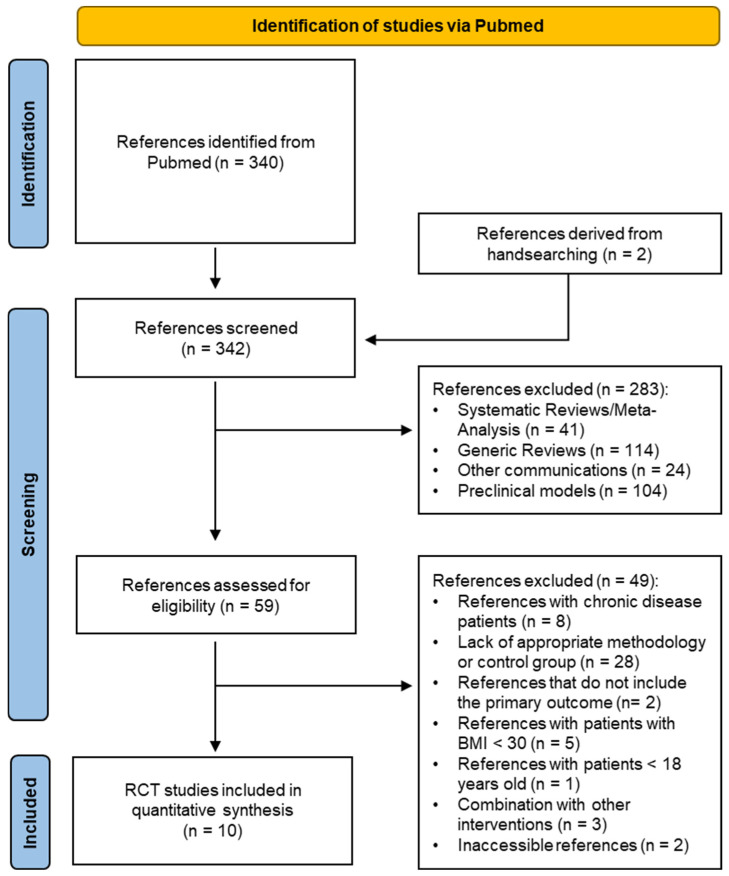
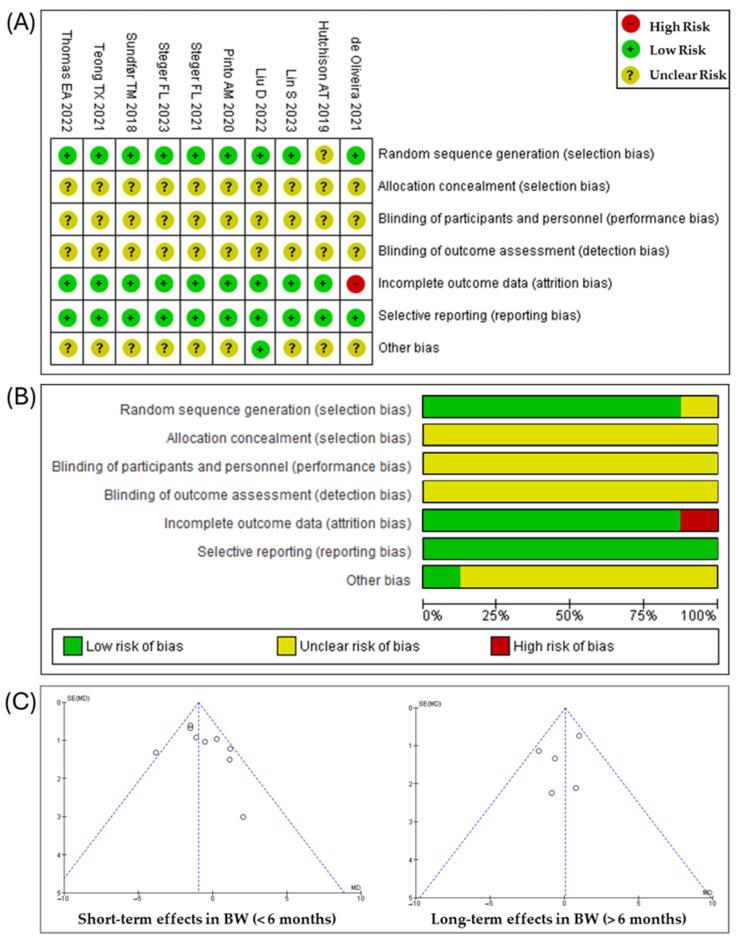
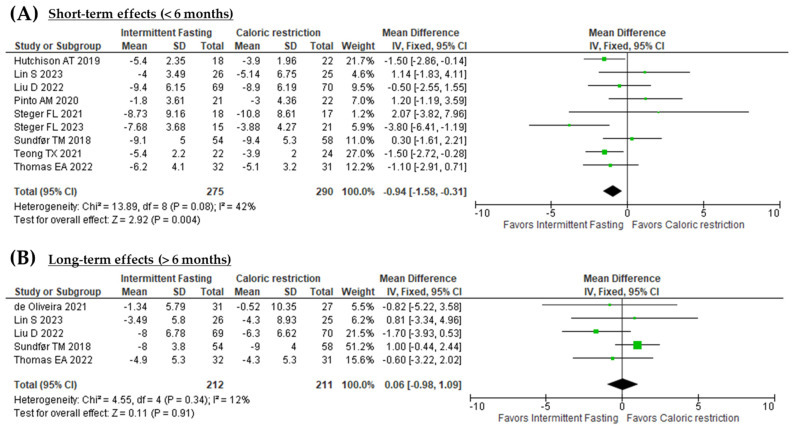
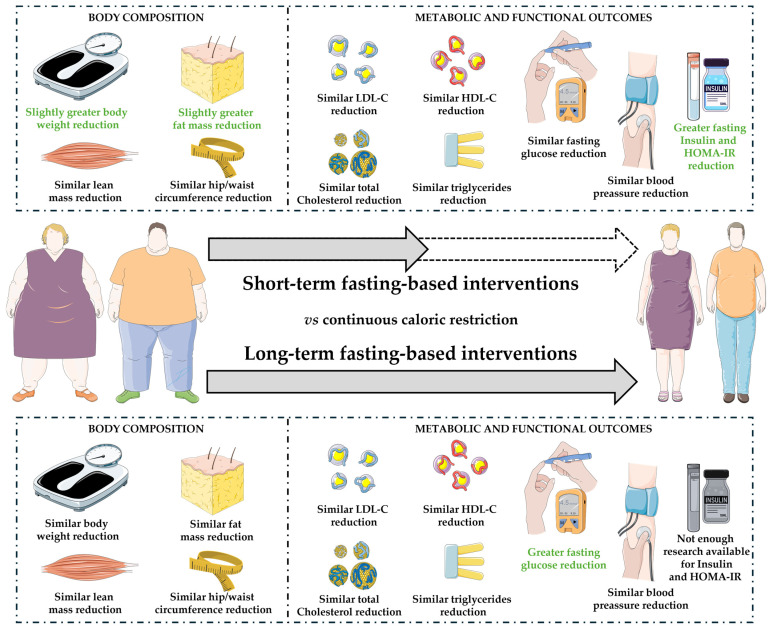
Verification
Claims the paper makes
The claims and statistics of this paper haven’t been checked yet.
Run the check — free, no account needed. It reads the open-access text and checks the sources it cites.
Claims other papers make about this one
Each is checked against this paper’s own text: does it say what the citing paper says it does?
The source backs part of the claim, not all of it — or backs it for a different population, condition or comparison.
In the citing paper
“In studies extending beyond 6 months, there were no statistically significant differences in body weight, body composition, and markers of cardiometabolic health (i.e. blood lipid profile, blood pressure, and glucose metabolism) between the IF and CER.”
From International Society of Sports Nutrition position stand: diets for body weight reduction (2026) · cites this paper as [62]
Experimental — accuracy not yet measured
Self-check
Percentages, sums and reported differences re-computed from the paper’s own numbers.
The self-check needs the paper’s full text.
Citations
Cites
Elfhag, K., & Rössner, S. (2005) · Obesity Reviews · doi:10.1111/j.1467-789x.2005.00170.x · Cited by 1,343
Impact of intermittent fasting on health and disease processes
Mattson, M. P., Longo, V. D., & Harvie, M. (2017) · Ageing Research Reviews · doi:10.1016/j.arr.2016.10.005 · Cited by 1,187
Calorie restriction with or without time-restricted eating in weight loss
Liu, D., Huang, Y., Huang, C., Yang, S., Wei, X., Zhang, P., Guo, D., Lin, J., Xu, B., Li, C., et al. (2022) · New England Journal of Medicine · doi:10.1056/nejmoa2114833 · Cited by 516
Calorie and Time Restriction in Weight Loss
Laferrère, B., & Panda, S. (2022) · New England Journal of Medicine · doi:10.1056/nejme2202821 · Cited by 14
Research works printed but not linked: 41
- Herz, D., Karl, S., Weiß, J., Zimmermann, P., Haupt, S., Zimmer, R.T., Schierbauer, J., Wachsmuth, N.B., Erlmann, M.P., and Niedrist, T. (2024). Effects of Different Types of Intermittent Fasting Interventions on Metabolic Health in Healthy Individuals (EDIF): A Randomised Trial with a Controlled-Run in Phase. Nutrients, 16. · DOI
- Yuan, 2022, Effect of Intermittent Fasting Diet on Glucose and Lipid Metabolism and Insulin Resistance in Patients with Impaired Glucose and Lipid Metabolism: A Systematic Review and Meta-Analysis, Int. J. Endocrinol., 2022, 6999907, 10.1155/2022/6999907 · DOI
- Zhou, 2021, The Influence of Fasting and Caloric Restriction on Inflammation Levels in Humans, Medicine, 100, e25509, 10.1097/MD.0000000000025509 · DOI
- Petridou, A., Rodopaios, N.E., Mougios, V., Koulouri, A.-A., Vasara, E., Papadopoulou, S.K., Skepastianos, P., Hassapidou, M., and Kafatos, A. (2021). Effects of Periodic Religious Fasting for Decades on Nutrient Intakes and the Blood Biochemical Profile. Nutrients, 13. · DOI
- Blumberg, 2023, Intermittent Fasting: Consider the Risks of Disordered Eating for Your Patient, Clin. Diabetes Endocrinol., 9, 4, 10.1186/s40842-023-00152-7 · DOI
- Vasim, I., Majeed, C.N., and DeBoer, M.D. (2022). Intermittent Fasting and Metabolic Health. Nutrients, 14. · DOI
- Wang, 2022, The Effect of Fasting on Human Metabolism and Psychological Health, Dis. Markers, 2022, 5653739
- Ard, 2017, Meal Timing and Frequency: Implications for Cardiovascular Disease Prevention: A Scientific Statement From the American Heart Association, Circulation, 135, e96
- Soliman, G.A. (2022). Intermittent Fasting and Time-Restricted Eating Role in Dietary Interventions and Precision Nutrition. Front. Public Health, 10. · DOI
- Shazman, S. (2023). Understanding Type 2 Diabetes Mellitus Risk Parameters through Intermittent Fasting: A Machine Learning Approach. Nutrients, 15. · DOI
- Duan, 2024, The Road Ahead of Dietary Restriction on Anti-Aging: Focusing on Personalized Nutrition, Crit. Rev. Food Sci. Nutr., 64, 891, 10.1080/10408398.2022.2110034 · DOI
- Most, 2020, Impact of Calorie Restriction on Energy Metabolism in Humans, Exp. Gerontol., 133, 110875, 10.1016/j.exger.2020.110875 · DOI · Paper page
- Moreira, 2011, Dietary Adherence to Long-Term Controlled Feeding in a Calorie-Restriction Study in Overweight Men and Women, Nutr. Clin. Pract., 26, 309, 10.1177/0884533611405992 · DOI
- Pannen, S.T., Maldonado, S.G., Nonnenmacher, T., Sowah, S.A., Gruner, L.F., Watzinger, C., Nischwitz, K., Ulrich, C.M., Kaaks, R., and Schübel, R. (2021). Adherence and Dietary Composition during Intermittent vs. Continuous Calorie Restriction: Follow-Up Data from a Randomized Controlled Trial in Adults with Overweight or Obesity. Nutrients, 13. · DOI
- DerSimonian, 1986, Meta-analysis in clinical trials, Control. Clin. Trials, 7, 177188, 10.1016/0197-2456(86)90046-2 · DOI · Paper page
- Higgins, 2011, The Cochrane Collaboration’s Tool for Assessing Risk of Bias in Randomised Trials, BMJ, 343, d5928, 10.1136/bmj.d5928 · DOI · Paper page
- Bueno, 2021, Effects of Time-Restricted Feeding on Body Weight, Body Composition and Vital Signs in Low-Income Women with Obesity: A 12-Month Randomized Clinical Trial, Clin. Nutr., 40, 759, 10.1016/j.clnu.2020.06.036 · DOI
- Hutchison, 2019, Effects of Intermittent Versus Continuous Energy Intakes on Insulin Sensitivity and Metabolic Risk in Women with Overweight, Obesity, 27, 50, 10.1002/oby.22345 · DOI
- Lin, 2023, Time-Restricted Eating Without Calorie Counting for Weight Loss in a Racially Diverse Population, Ann. Intern. Med., 176, 885, 10.7326/M23-0052 · DOI
- Pinto, 2020, Intermittent Energy Restriction Is Comparable to Continuous Energy Restriction for Cardiometabolic Health in Adults with Central Obesity: A Randomized Controlled Trial; the Met-IER Study, Clin. Nutr., 39, 1753, 10.1016/j.clnu.2019.07.014 · DOI
- Steger, 2023, Early Time-Restricted Eating Affects Weight, Metabolic Health, Mood, and Sleep in Adherent Completers: A Secondary Analysis, Obesity, 31, 96, 10.1002/oby.23614 · DOI
- Steger, 2021, Intermittent and Continuous Energy Restriction Result in Similar Weight Loss, Weight Loss Maintenance, and Body Composition Changes in a 6 Month Randomized Pilot Study, Clin. Obes., 11, e12430, 10.1111/cob.12430 · DOI
- Svendsen, 2018, Effect of Intermittent versus Continuous Energy Restriction on Weight Loss, Maintenance and Cardiometabolic Risk: A Randomized 1-Year Trial, Nutr. Metab. Cardiovasc. Dis., 28, 698, 10.1016/j.numecd.2018.03.009 · DOI · Paper page
- Teong, 2021, Eight Weeks of Intermittent Fasting versus Calorie Restriction Does Not Alter Eating Behaviors, Mood, Sleep Quality, Quality of Life and Cognitive Performance in Women with Overweight, Nutr. Res., 92, 32, 10.1016/j.nutres.2021.06.006 · DOI
- Thomas, 2022, Early Time-Restricted Eating Compared with Daily Caloric Restriction: A Randomized Trial in Adults with Obesity, Obesity, 30, 1027, 10.1002/oby.23420 · DOI
- Zhang, Q., Zhang, C., Wang, H., Ma, Z., Liu, D., Guan, X., Liu, Y., Fu, Y., Cui, M., and Dong, J. (2022). Intermittent Fasting versus Continuous Calorie Restriction: Which Is Better for Weight Loss?. Nutrients, 14. · DOI · Paper page
- Kushner, 2018, Weight Loss Strategies for Treatment of Obesity: Lifestyle Management and Pharmacotherapy, Prog. Cardiovasc. Dis., 61, 246, 10.1016/j.pcad.2018.06.001 · DOI
- Hall, 2018, Maintenance of Lost Weight and Long-Term Management of Obesity, Med. Clin. N. Am., 102, 183, 10.1016/j.mcna.2017.08.012 · DOI · Paper page
- Kheniser, 2021, Long-Term Weight Loss Strategies for Obesity, J. Clin. Endocrinol. Metab., 106, 1854, 10.1210/clinem/dgab091 · DOI · Paper page
- Martinez, M., Salazar-Collier, C.L., Pena, J., Wilkinson, A.V., Chavarria, E.A., and Reininger, B.M. (2022). Motivation for Weight Loss among Completers of a Free Community-Based Weight Loss Program in a US-Mexico Border Region: A Self-Determination Theory Perspective. Front. Public Health, 10. · DOI
- Calugi, 2005, Weight Loss Expectations in Obese Patients and Treatment Attrition: An Observational Multicenter Study, Obes. Res., 13, 1961, 10.1038/oby.2005.241 · DOI
- Davis, 2016, Intermittent Energy Restriction and Weight Loss: A Systematic Review, Eur. J. Clin. Nutr., 70, 292, 10.1038/ejcn.2015.195 · DOI
- Alhamdan, 2016, Alternate-Day versus Daily Energy Restriction Diets: Which Is More Effective for Weight Loss? A Systematic Review and Meta-Analysis, Obes. Sci. Pract., 2, 293, 10.1002/osp4.52 · DOI
- Williamson, E., and Moore, D.R. (2021). A Muscle-Centric Perspective on Intermittent Fasting: A Suboptimal Dietary Strategy for Supporting Muscle Protein Remodeling and Muscle Mass?. Front. Nutr., 8. · DOI
- Kawaji, 2021, Accuracy of Waist Circumference Measurement Using the WHO versus NIH Protocol in Predicting Visceral Adiposity Using Bioelectrical Impedance Analysis among Overweight and Obese Adult Filipinos in a Tertiary Hospital, J. ASEAN Fed. Endocr. Soc., 36, 180, 10.15605/jafes.036.02.13 · DOI
- Ross, 2008, Does the Relationship between Waist Circumference, Morbidity and Mortality Depend on Measurement Protocol for Waist Circumference?, Obes. Rev., 9, 312, 10.1111/j.1467-789X.2007.00411.x · DOI
- Di Daniele, N., Marrone, G., Di Lauro, M., Di Daniele, F., Palazzetti, D., Guerriero, C., and Noce, A. (2021). Effects of Caloric Restriction Diet on Arterial Hypertension and Endothelial Dysfunction. Nutrients, 13. · DOI
- Caristia, S., De Vito, M., Sarro, A., Leone, A., Pecere, A., Zibetti, A., Filigheddu, N., Zeppegno, P., Prodam, F., and Faggiano, F. (2020). Is Caloric Restriction Associated with Better Healthy Aging Outcomes? A Systematic Review and Meta-Analysis of Randomized Controlled Trials. Nutrients, 12. · DOI
- Huffman, 2022, Calorie Restriction Improves Lipid-Related Emerging Cardiometabolic Risk Factors in Healthy Adults without Obesity: Distinct Influences of BMI and Sex from CALERIETM a Multicentre, Phase 2, Randomised Controlled Trial, eClinicalMedicine, 43, 101261, 10.1016/j.eclinm.2021.101261 · DOI
- Kraus, 2019, Two Years of Calorie Restriction and Cardiometabolic Risk Factors, Lancet Diabetes Endocrinol., 7, 673, 10.1016/S2213-8587(19)30151-2 · DOI · Paper page
- Sharma, 2023, Effect of Intermittent Fasting on Glycaemic Control in Patients with Type 2 Diabetes Mellitus: A Systematic Review and Meta-Analysis of Randomized Controlled Trials, touchREV Endocrinol., 19, 25, 10.17925/EE.2023.19.1.25 · DOI
Cited by
Sorted by citations
International Society of Sports Nutrition position stand: diets for body weight reduction
Aragon, A. A., Campbell, B. I., Schoenfeld, B. J., Stout, J. R., Kalman, D., Arciero, P. J., Arent, S. M., Kreider, R. B., Taylor, L. W., Bannock, L., et al. (2026) · Journal of the International Society of Sports Nutrition · doi:10.1080/15502783.2026.2740266
Metadata
- Authors
- Siles-Guerrero, V., Romero-Márquez, J. M., García-Pérez, R. N., Novo-Rodríguez, C., Guardia-Baena, J. M., Hayón-Ponce, M., Tenorio-Jiménez, C., López-de-la-Torre-Casares, M., & Muñoz-Garach, A.
- Affiliations
- Department of Endocrinology and Nutrition, Virgen de las Nieves University Hospital, 18014 Granada, Spain
- ORCID
- Venue
- Nutrients
- Publisher
- MDPI AG
- Published
- 2024-10-18
- Volume
- 16
- Issue
- 20
- Pages
- 3533
- ISSN
- 2072-6643
- PMC
- PMC11510157
- Cited by
- 25
- References
- 4
- Language
- en
About these checks
Registry, retraction, Cites and statistics results are computed, not judged, with one exception: a printed reference that no index lists is read once by a model before it counts as a citation error. Claims are extracted by a model and kept only when their quote appears verbatim in the text; each cited source is then checked, with a model’s help, for whether it says what the claim relies on. Those verdicts can be wrong — read the claim’s quote and the cited source before relying on one.
Statistics and arithmetic are recomputed, not judged.
Confidence bands are shown only for fields calibrated on our annotated test set. None is calibrated yet, so no band is shown.
What counts as a claim ›How we measure confidence ›How we check this ›
Are you an author, or do you see a problem with this page? Request a review
