

Bacillus for Plant Growth Promotion and Stress Resilience: What Have We Learned?
Open accessThe DOI matches its Crossref record; 157 of the 158 references it cites were found in a registry or an index.
Abstract
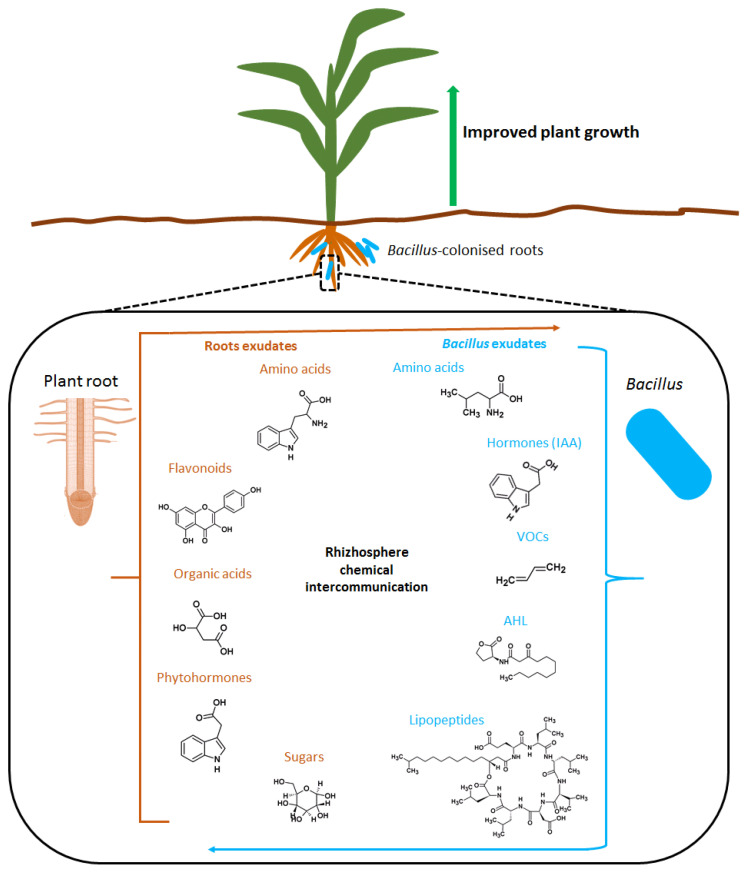
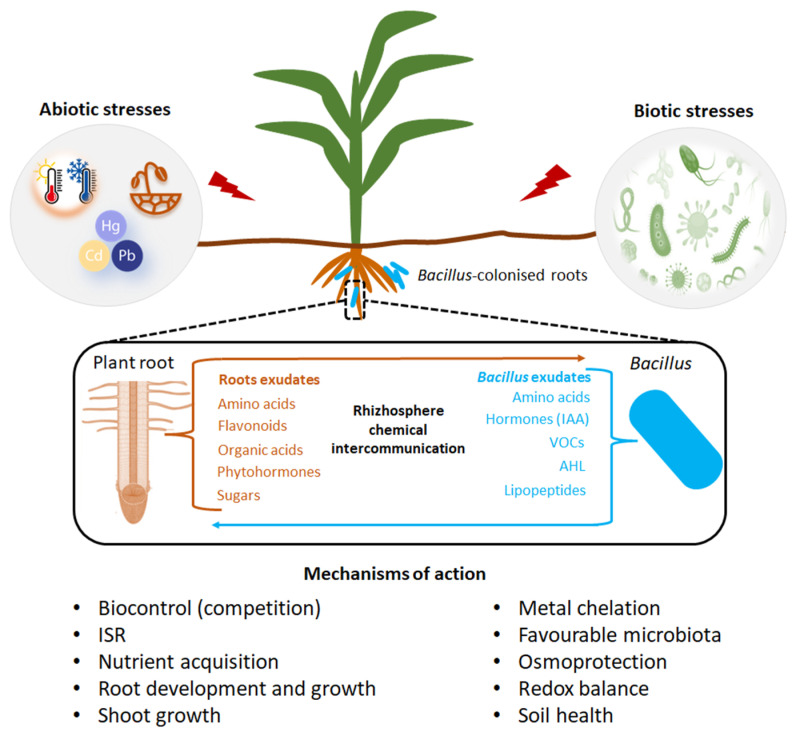
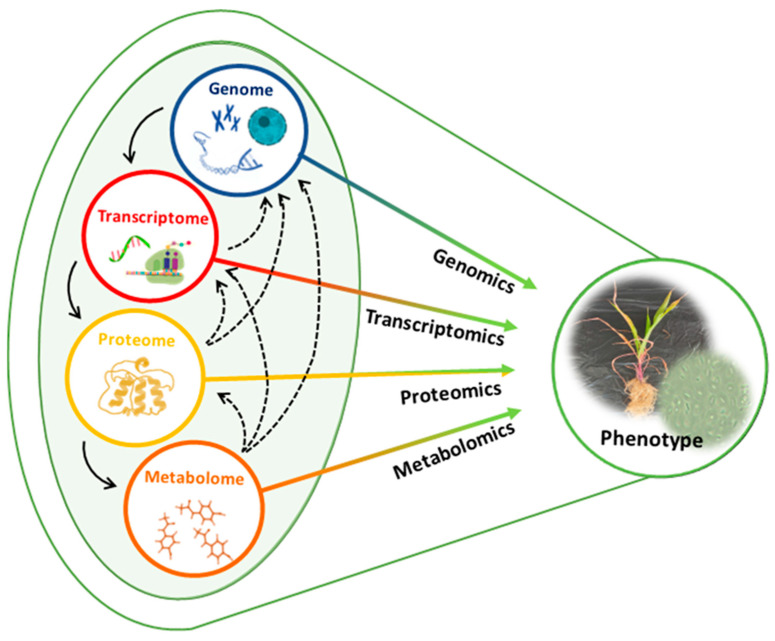
The rhizosphere is a thin film of soil that surrounds plant roots and the primary location of nutrient uptake, and is where important physiological, chemical, and biological activities are occurring. Many microbes invade the rhizosphere and have the capacity to promote plant growth and health. Bacillus spp. is the most prominent plant growth promoting rhizobacteria due to its ability to form long-lived, stress-tolerant spores. Bacillus-plant interactions are driven by chemical languages constructed by a wide spectrum of metabolites and lead to enhanced plant growth and defenses. Thus, this review is a synthesis and a critical assessment of the current literature on the application of Bacillus spp. in agriculture, highlighting gaps that remain to be explored to improve and expand on the Bacillus-based biostimulants. Furthermore, we suggest that omics sciences, with a focus on metabolomics, offer unique opportunities to illuminate the chemical intercommunications between Bacillus and plants, to elucidate biochemical and molecular details on modes of action of Bacillus-based formulations, to generate more actionable insights on cellular and molecular events that explain the Bacillus-induced growth promotion and stress resilience in plants.
Overview
The claims and statistics of this paper haven’t been checked yet.
Free: it reads the open-access text and checks the first 5 claims that cite a source we can check. Create a free account to check every claim.
Integrity signals
Registry
Cites
Statistics
Figures
Verification
Claims the paper makes
The claims and statistics of this paper haven’t been checked yet.
Free: it reads the open-access text and checks the first 5 claims that cite a source we can check. Create a free account to check every claim.
Claims other papers make about this one
Each is checked against this paper’s own text: does it say what the citing paper says it does?
The cited source says what the claim attributes to it.
In the citing paper
“Bacteria of the genus Bacillus are important plant growth promoters [5][6][7].”
From Soy Molasses as Culture Medium for Bacillus Species Aiming at Plant Growth Promotion (2024) · cites this paper as [7]
The cited source says what the claim attributes to it.
In the citing paper
“Growth-promoting effects can be direct, such as the siderophore production, nitrogen fixation, phytohormone production, and nutrient solubilization, or indirect such, as the production of exopolysaccharides, hydrogen cyanide and lytic enzymes, and biofilm formation [7,8].”
From Soy Molasses as Culture Medium for Bacillus Species Aiming at Plant Growth Promotion (2024) · cites this paper as [7]
Self-check
Percentages, sums and reported differences re-computed from the paper’s own numbers.
The self-check needs the paper’s full text.
Citations
Cites
Understanding plant responses to drought—from genes to the whole plant.
Chaves, M. M., Maroco, J. P., & Pereira, J. S. (2003) · Functional Plant Biology · doi:10.1071/fp02076 · Cited by 3,845
Induced systemic resistance by beneficial microbes
Pieterse, C. M. J., Zamioudis, C., Berendsen, R. L., Weller, D. M., Van Wees, S. C. M., & Bakker, P. A. H. M. (2014) · Annual Review of Phytopathology · doi:10.1146/annurev-phyto-082712-102340 · Cited by 3,272
Multi-omics approaches to disease
Hasin, Y., Seldin, M., & Lusis, A. (2017) · Genome Biology · doi:10.1186/s13059-017-1215-1 · Cited by 2,953
Biological control of soil-borne pathogens by fluorescent pseudomonads
Haas, D., & Défago, G. (2005) · Nature Reviews Microbiology · doi:10.1038/nrmicro1129 · Cited by 2,598 · cited 1×
“can facilitate the uptake of phosphates by the roots through the secretion of phosphatases and low molecular weight organic acids such as formic acid, acetic acid, lactic acid, glycolic acid, fumaric acid, and succinic acid which acidify the environment to aid the conversion of inorganic phosphates into free phosphate…”
BackgroundAlengebawy, A., Abdelkhalek, S. T., Qureshi, S. R., & Wang, M.-Q. (2021) · Toxics · doi:10.3390/toxics9030042 · Cited by 2,339
Feed Your Friends: Do Plant Exudates Shape the Root Microbiome?
Sasse, J., Martinoia, E., & Northen, T. (2018) · Trends in Plant Science · doi:10.1016/j.tplants.2017.09.003 · Cited by 2,216 · cited 1×
“The communication between plant roots and microbes in the rhizosphere is highly organized and regulated through a dynamic range of specialized metabolites and exudates which ultimately result in altered gene expression in one or both of the interacting partners [29].”
BackgroundBacker, R., Rokem, J. S., Ilangumaran, G., Lamont, J., Praslickova, D., Ricci, E., Subramanian, S., & Smith, D. L. (2018) · Frontiers in Plant Science · doi:10.3389/fpls.2018.01473 · Cited by 2,114
Bacterial volatiles promote growth in Arabidopsis
Ryu, C.-M., Farag, M. A., Hu, C.-H., Reddy, M. S., Wei, H.-X., Paré, P. W., & Kloepper, J. W. (2003) · Proceedings of the National Academy of Sciences · doi:10.1073/pnas.0730845100 · Cited by 1,656
Feature-based molecular networking in the GNPS analysis environment
Nothias, L.-F., Petras, D., Schmid, R., Dührkop, K., Rainer, J., Sarvepalli, A., Protsyuk, I., Ernst, M., Tsugawa, H., Fleischauer, M., et al. (2020) · Nature Methods · doi:10.1038/s41592-020-0933-6 · Cited by 1,634
Role of Plant Growth Promoting Rhizobacteria in Agricultural Sustainability—A Review
Vejan, P., Abdullah, R., Khadiran, T., Ismail, S., & Nasrulhaq Boyce, A. (2016) · Molecules · doi:10.3390/molecules21050573 · Cited by 1,426 · cited 2×
“Members of the genus Bacillus are ubiquitous, Gram-positive, and aerobic bacteria [6,7].”
Background
Research works printed but not linked: 2
- 30. Shaikh, S.S. Impact of Interactions between Rhizosphere and Rhizobacteria: A Review Plant Microbes interaction View project Soil Bioremediation: An approach towards sustainable cleaner technology View project. J. Bacteriol. Mycol. 2018, 5, 1058.
- 98. Rhodes, D.; Hanson, A.D. Compounds in Higher Plants. Annu. Rev. Plant Physiol. Plant Mol. Biol. 1993, 44, 357-384. [CrossRef] · doi:10.1146/annurev.pp.44.060193.002041 · Paper page
Cited by
Items 101–200 of 254
Microbiome Migration from Soil to Leaves in Maize and Rice
Ma, J., Peng, Q., Chen, S., Liu, Z., Zhang, W., Zhang, C., Du, X., Sun, S.-E., Peng, W., Lei, Z., et al. (2025) · Microorganisms · doi:10.3390/microorganisms13040947 · Cited by 5
“Although a substantial body of research indicates that Bacillales primarily interact with plants in the rhizosphere, there is also evidence suggesting that Bacillales can be used to control diseases on leaves [82–86].”
Endophytic Bacteria Bacillus spp. in the Formation of Adaptive Potential of Plants
Курамшина, З. М., Хайруллин, Р. М., & Maksimov, I. V. (2023) · Russian Journal of Plant Physiology · doi:10.1134/s1021443723602021 · Cited by 4
USE OF BIOLOGICALLY ACTIVE SUBSTANCES IN AGRICULTURAL PREPARATIONS
Krichkovska, L., Бобро, М. А., Karpushyna, S. A., & Хохленкова, Н. В. (2024) · Naukovì dopovìdì Nacìonalʹnogo unìversitetu bìoresursiv ì prirodokoristuvannâ Ukraïni · doi:10.31548/dopovidi.1(107).2024.002 · Cited by 4
Guo, L., Zhao, J., Zhang, X., Liu, Y., Zhang, A., Sun, J., Fan, X., Yan, X., & Pang, Q. (2024) · Physiologia Plantarum · doi:10.1111/ppl.14411 · Cited by 3
Corrêa, J. D. S., Araújo, D. A. D. O., Rodrigues, A. C. P. S., Brito, O. G., Júnior, G. R. G., & Rodrigues, T. T. M. S. (2025) · Ciência e Agrotecnologia · doi:10.1590/1413-7054202549024124 · Cited by 3
“…organic acids, volatile organic compounds, ion-exchange reactions in the mineral matrix, and the formation of exopolysaccharides (EPS) to increase microbial populations (Chen et al., 2016; Radhakrishnan, Abeer & Abd-Allah, 2017; Tsotetsi et al., 2022; Wang et al., 2022; Wei et al., 2018).”
Biocontrol efficacy of Bacillus velezensis YZU 173039 against Corynespora leaf spot on tobacco
Huang, C., Guo, Z.-J., Yang, X., Long, X.-Q., Wen, M.-X., Wu, H., Rashad, Y. M., Hu, J., & Deng, J. (2025) · Biocontrol Science and Technology · doi:10.1080/09583157.2025.2481506 · Cited by 3
“Bacillus species have been widely reported for their ability to prevent disease spread and induce host resistance (Tsotetsi et al., 2022), with B. velezensis showing particular promise in controlling destructive phytopathogens (Liang et al., 2023; Zhou et al., 2022).”
Cardoso, L. M. A. B., Rocha, R. A. R., da Cruz, M. A. D., Alonso, L., Sousa, A. D. B. M., Costa, G. X. R., Bertarini, P. L. L., Gomes, M. D. S., do Amaral, L. R., Silva, L. C. F., et al. (2025) · Food and Bioprocess Technology · doi:10.1007/s11947-025-03880-z · Cited by 3
Chauhan, R., Gupta, S., Pandey, S., & Tomar, A. (2026) · Proceedings of the Indian National Science Academy · doi:10.1007/s43538-026-00769-z · Cited by 3
Ogugua, U. V., Ogbuewu, I. P., MBAJIORGU, C. A., & Adriaanse, P. (2024) · Applied Ecology and Environmental Research · doi:10.15666/aeer/2203_25072530 · Cited by 3
“PGPB enhances plant growth and promotes soil remediation by releasing various metabolites and hormones, through the process of nitrogen fixation, and by increasing the availability of other essential nutrients through mineral solubilization (Poria et al., 2022; Tsotetsi et al., 2022).”
BackgroundInfluentialLi, X., Hu, N., Li, Y., Yang, T., & Xu, J. (2024) · Plant and Soil · doi:10.1007/s11104-024-07107-6 · Cited by 3
“Bacillus , which is highly adaptable to the environment, is one of the most important PGPR (Tsotetsi et al. 2022).”
Vardanian, I. V., Sargsyan, G. Z., Pahlevanyan, A., Martirosyan, H. H., Sukhudyan, D., Avagyan, A. E., Solomonyan, A. K., Zakharyan, M., Danielyan, M., Datumyan, G., et al. (2025) · Functional Food Science · doi:10.31989/ffs.v5i7.1685 · Cited by 3
Virk, Z. A., Yasin, M. Z., Gill, S., Ilyas, M. F., Dradrach, A., Alamri, S. A., Alfagham, A. T., Akhtar, M. S., & Iqbal, M. M. (2023) · Minerals · doi:10.3390/min13091178 · Cited by 3
Du, E., Li, P., Zhao, W., Luo, R., Chen, Y., Lu, M., Sun, Z., & Gui, F. (2024) · Microorganisms · doi:10.3390/microorganisms12122438 · Cited by 3
“The JA signaling pathway serves as a crucial defense mechanism in many plants, and numerous studies have shown that inoculation with AMFs and Bacillus can enhance plant defense capabilities by activating the JA signaling pathway [80,81].”
Moon, H. J., & Sang, M. K. (2024) · Research in Plant Disease · doi:10.5423/rpd.2024.30.2.181 · Cited by 3
Utami, N. W. A. D., Zulkifli, L., Rasmi, D. A. C., & Sedijani, P. (2024) · JURNAL BIOLOGI TROPIS · doi:10.29303/jbt.v24i4.7968 · Cited by 5
Acharya, A., & Subedi, S. (2025) · Journal of Applied Research in Plant Sciences · doi:10.38211/joarps.2025.06.304 · Cited by 2
“A particular focus has been given to strains isolated from the rhizosphere, known for their high enzymatic potential (Tsotetsi et al. , 2022).”
Pudasaini, R., Khalaf, E. M., Brettingham, D. J. L., & Raizada, M. N. (2025) · Bacteria · doi:10.3390/bacteria4030031 · Cited by 2
“…such as proline and sugars, by producing extra-cellular polymers, by regulating diverse phytohormones, including indole-3-acetic acid, which promotes root growth for improved water and nutrient uptake, and by inducing host plant genes that promote tolerance to drought stress [56,59–62].”
Etumah, S. O., Ifie, J. E., Odoma, S., Babangida, A., & Aja, P. M. (2025) · F1000Research · doi:10.12688/f1000research.169119.1 · Cited by 2
Proposal of Bacillus altaicus sp. nov. Isolated from Soil in the Altai Region, Russia
Shikov, A. E., Romanenko, M. N., Shmatov, F. M., Belousov, M. V., Solovchenko, A. E., Chivkunova, O. B., Savelev, G. K., Kuznetsova, I. G., Karlov, D. S., Nizhnikov, A. A., et al. (2025) · International Journal of Molecular Sciences · doi:10.3390/ijms26199517 · Cited by 3
“Petrobactin, another catecholate siderophore initially perceived as a B. anthracis virulence factor [59] and later found to be widespread around Bacillus species [60], due to its iron-chelating abilities, is advantageous for the plants by sequestering iron essential for plant pathogens [61].”
Wu, Z., Liang, F., Luo, W., Zhang, Q., Li, S., Yang, H., Han, C., Wang, Y., Kong, Z., Wang, X., et al. (2025) · Rhizosphere · doi:10.1016/j.rhisph.2025.101240 · Cited by 2
Carrégalo-Ríos, L., Molina‐Santiago, C., Berlanga‐Clavero, M. V., Petras, D., Hierrezuelo, J., Pineda, M., Alba, J. M., de Vicente, A., Barón, M., Dorrestein, P. C., et al. (2026) · Horticulture Research · doi:10.1093/hr/uhag053 · Cited by 2
“Bacillus species are widely used as plant growth-promoting rhizobacteria [ 7, 8]; however, most studies treat these microbes as functionally equivalent , focusing on their general effects on yield or pathogen suppression [ 9].”
Luo, H., Hu, Y., Shen, H., Zhang, X., & Li, N. (2026) · Frontiers in Plant Science · doi:10.3389/fpls.2026.1775125 · Cited by 2
Foliar Application of a New Biostimulant at Key Growth Stages Improves Soybean Performance
Moretti, L. G., Bossolani, J. W., Portugal, J. R., Galeriani, T. M., Magro, F., Perucco, E., Masetti, G., & Crusciol, C. A. C. (2026) · Plants · doi:10.3390/plants15101519 · Cited by 2
Soil microbiota of industrial hemp (Cannabis sativa L.) grown in a long-term monoculture
Klishchova, Z., de Abreu, C. G., Layko, H., Primakov, O., Міщенко, С. В., Dias, E. S., Kyrylenko, S., & Pylro, V. S. (2026) · Biotechnology for the Environment · doi:10.1186/s44314-026-00045-w · Cited by 2
“Numerous Bacillus species produce bioactive compounds that not only stimulate plant growth but also confer protection against phytopathogens, an attribute particularly valuable in non-fertilized agricultural systems [61].”
Mariculture Probiotics: A Scoping Review of Research Trends, Knowledge Gaps and Opportunities
Alperstein, L., Nappi, J., & Egan, S. (2026) · Marine Biotechnology · doi:10.1007/s10126-026-10701-7 · Cited by 2
“…and status as Generally Recognised as Safe (GRAS) organisms for ter - restrial and human applications without necessarily considering their suitability in marine hosts (Cutting 2011, Azad et al. 2018 , Tsotetsi et al. 2022, Ringø et al. 2020 , Hasan and Banerjee 2020, Martínez Cruz et al. 2012).”
Futuristic Approaches in Biofertilizer Industry Through Metabolomics, Proteomes, and Gene Editing
Bose, J. C., Sarwan, J., Narang, J., Mittal, K., & Sharma, H. (2023) · Springer eBooks · doi:10.1007/978-981-99-3561-1_15 · Cited by 3
Biocontrol Mechanisms by Root-Associated Bacillus Species
Ashraf, M. H., Hussain, N., Saleem, M., & Haqqi, R. (2024) · Microorganisms for sustainability · doi:10.1007/978-981-97-8739-5_9 · Cited by 2
Huang, W., Tan, Z., Xiao, Q., Liu, X., Liu, K., Li, Z., Zhou, X. J., Bai, L., & Luo, K. (2025) · Journal of Hazardous Materials · doi:10.1016/j.jhazmat.2025.138037 · Cited by 6
Mataka, S. N., Liu, B., Qin, Q., Hu, J., Wang, J., Gan, J., Zhuang, Y., Zhou, Y., & Sun, Z. (2025) · Physiological and Molecular Plant Pathology · doi:10.1016/j.pmpp.2025.103045 · Cited by 2
ERF transcription factor StPti5 is a regulator of endophyte community maintenance in potato
Lukan, T., Pogačar, K., Kraigher, B., Stare, K., Kovacic, T. G., Zagorščak, M., Petek, M., Štefanič, P., Vozelj, A., Levak, V., et al. (2026) · New Phytologist · doi:10.1111/nph.71240 · Cited by 2
Draft genome assemblies from seven Bacillaceae isolates from woodland soil
McLoon, A. L., Barker, J. M., Churan, G. M., Cucca, A., Gardner, L., Gejo, J., Gerbasi, F., Higgins, M., Kronau, L., Le, J., et al. (2025) · Microbiology Resource Announcements · doi:10.1128/mra.00289-25 · Cited by 1
Bahlouli, I., Daldoul, S., Zineb, A. B., Mliki, A., Mercati, F., & Gargouri, M. (2025) · The Science of The Total Environment · doi:10.1016/j.scitotenv.2025.180412 · Cited by 1
Khan, Z., Imran, A., Haider, G., Adnan, F., Sheikh, Z., & Bhatti, M. F. (2025) · Plant Stress · doi:10.1016/j.stress.2025.101087 · Cited by 1
Gutiérrez-Chávez, A., Acevedo-Barrera, A. A., Muñoz, R. M. Y., & Hernández-Huerta, J. (2025) · Agronomía Mesoamericana · doi:10.15517/am.2025.61996 · Cited by 1
“El género Bacillus es reconocido por su capacidad para promover el crecimiento vegetal, en cultivos convencionales y sistemas hidropónicos (Da Silva Oliveira et al., 2023; Tsotetsi et al., 2022; Weinand et al., 2023).”
Naz, I., Bano, A., Mirza, M. S., & Hassan, T. U. (2025) · Acta Physiologiae Plantarum · doi:10.1007/s11738-025-03848-8 · Cited by 1
“Firmicutes have been reported to harbor various plants, act as bio-control agents, and PGPR (Comeau et al. 2021; Tsotetsi et al. 2022; Mahapatra et al. 2022).”
Benomyl modulates paracetamol bioaccumulation and endophytic microbiome diversity in zucchini
Priyadarshani, H. M. C., Mierzejewska, E., Kózka, B., Giebułtowicz, J., & Urbaniak, M. (2025) · Scientific Reports · doi:10.1038/s41598-025-33977-6 · Cited by 1
“This treatment also promoted beneficial genera such as Bacillus and Microbacterium , which, according to the literature, support plant growth and remediation of a range of organic compounds 101–103 , with Bacillus having been shown to possess paracetamol-degrading capabilities 104 .”
Genome sequence of Bacillus subtilis NGII: a rhizobacteria from potato plants
Nikolaeva, A., Pudova, D. S., Lutfullina, G., Lutfullin, M. T., Akosah, Y. A., & Mardanova, A. E. (2025) · Microbiology Resource Announcements · doi:10.1128/mra.01025-25 · Cited by 1
Bacillus in Agriculture: Past, Present, and Future
Kaari, M., Annamalai, K. K., Prakash, M. P. K., Gopikrishnan, V., & Manikkam, R. (2026) · Microorganisms for sustainability · doi:10.1007/978-981-95-4817-0_12 · Cited by 1
Durán-Sequeda, D., Varela, Z. S., Castañeda, R. P., Torres, M. J., Tobias, L. S., Vergel, C., Linero, A. P. Q., Bolívar-Anillo, H. J., Amils, R., & Iglesias-Navas, M. A. (2026) · Plants · doi:10.3390/plants15010143 · Cited by 1
“These compounds are described as promoters of plant growth in environments subject to abiotic stress in the genus Bacillus [68,74].”
InfluentialBatool, N., Nosheen, A., Yasmin, H., Naz, R., Correa, P. A., & Kazmi, S. M. U. S. (2026) · Journal of Plant Growth Regulation · doi:10.1007/s00344-025-12033-7 · Cited by 1
Novel insights of bioinoculants on augmented productivity of Andrographis paniculata Wall. ex Nees
Fatima, B., Mishra, U., & Singh, A. (2026) · Vegetos · doi:10.1007/s42535-025-01598-z · Cited by 1
Rineksane, I. A., Astuti, A., Samidjo, G. S., Nugrahani, P., & Sumarsih (2026) · Emirates Journal of Food and Agriculture · doi:10.3897/ejfa.2026.159327 · Cited by 1
Shan, W., Shah, S. S. T. H., Gao, Y., Deng, M., Hu, X., & Peng, Y. (2026) · Archives of Microbiology · doi:10.1007/s00203-025-04659-8 · Cited by 1
“They promote plant growth via multiple mechanisms, primarily through nitrogen fixation, phosphorus and potassium solubilization, production of siderophores, and phytohor-mones such as IAA (Hashem et al. 2019; Kulkova et al. 2023; Tsotetsi et al. 2022).”
Li, M., Yang, R., Bai, Q., Yang, Z., Huang, T., Qiao, Y., Yang, B., Chen, J., & Lin, W. (2026) · BMC Microbiology · doi:10.1186/s12866-026-04812-3 · Cited by 1
“Rhizoplane microorganisms modulate plant development primarily by active production of signaling molecules (e.g., pyo-cyanin), hormones (e.g., IAA), and enzymes (e.g., ACC deaminase) [80–82].”
Sil, M., Goswami, A., & Mukherjee, N. (2026) · ACS Agricultural Science & Technology · doi:10.1021/acsagscitech.5c00794 · Cited by 1
Beber, A., Lamovšek, J., & Pleško, I. M. (2026) · Horticulturae · doi:10.3390/horticulturae12030288 · Cited by 1
Xu, T., Li, M., Dong, X., Zhao, J., Ling, J., Yang, Y., Zhenchuan, M., Xie, B., Zhou, L., & Li, Y. (2026) · BMC Microbiology · doi:10.1186/s12866-026-04919-7 · Cited by 1
The Influence of Biological Measures on Strawberry Plant Growth, Yield, and Fruit Quality
Rasiukevičiūtė, N., Morkeliūnė, A., Mažeikienė, I., Birzleja, D., Lanauskas, J., & Valiuškaitė, A. (2026) · Plants · doi:10.3390/plants15060929 · Cited by 1
Medison, R. G., Xing, Y., Medison, M. B., Li, Y., Khitov, B., Liu, H., Chai, M., Yang, X., (11406), Y. W., & Li, Y. (2026) · Medicinal Plant Biology · doi:10.48130/mpb-0026-0001 · Cited by 2
Sang, T., Yang, D., Wang, D., & 王慧婉 (2026) · Horticulturae · doi:10.3390/horticulturae12040480 · Cited by 1
Microbiome driven approaches improve seed quality and plant health for agricultural sustainability
Singh, D. P., Prabha, R., Maurya, S., Satnami, L., Sarma, B. K., Chaurasia, A., & Rai, N. (2026) · Discover Plants. · doi:10.1007/s44372-026-00530-2 · Cited by 4
Cao, K., Wang, X., Peng, Y., Wang, J., Zhang, Y., Li, B., Liu, H., Wu, Y., An, M., & Xu, C. (2026) · Biological Control · doi:10.1016/j.biocontrol.2026.106052 · Cited by 1
Singh, V., Chandra, S., Kishor, R., Maurya, N., Luqman, S., Verma, R. K., Yadav, A. K., & Kumar, B. S. D. (2026) · Biochemical Genetics · doi:10.1007/s10528-026-11396-0 · Cited by 2
“The applications of Bacillus spp. on plants are reported to positively impact plant growth promotion by modulating nutrient availability to them, which are limited in the rhizosphere (Tsotetsi et al. 2022).”
Sam-on, M. F. S., Aizuddin, K. N. A. K., Hashim, A. M., Nazir, Y., Zaini, N. A. M., Aliah, N., Aqma, W. S., & Ali, M. I. (2026) · Microbial Pathogenesis · doi:10.1016/j.micpath.2026.108602 · Cited by 1
Pishchik, V. N., Mirskaya, G. V., Filippova, P. S., Vertebny, V. E., Dubovitskaya, V. I., Kudryavtcev, D. V., Bortsova, O. A., Khomyakov, Y. V., Kononchuk, P. Y., & Chebotar, V. K. (2026) · International Journal of Molecular Sciences · doi:10.3390/ijms27115041 · Cited by 1
“PGPB of the genus Bacillus are known to be resistant to high concentrations of Ni and can grow on a medium with a Ni concentration of 80 mg/L [21] and may be used in agriculture as bioinoculants for alleviating abiotic stresses [22].”
Nunes, A., Minello, L. V. P., Oliveira, E. R., Schneider, A. R., Dutra, F. D. S., Guizolfi, T., dos Santos, L. R., Gelli, V. C., Granada, C. E., Sperotto, R. A., et al. (2026) · Plants · doi:10.3390/plants15111749 · Cited by 2
“Members of the Bacillaceae family are commonly described as copiotrophic microorganisms with rapid responses to labile carbon inputs and well-established plant growth-promoting traits, including phytohormone production, nutrient solubilization, and antagonistic activity against pathogens [39].”
Recent progress on biological control of Fusarium wilt in vegetable crops
Xiong, F., Guo, M., Liu, Y., Liu, X., Fu, J., Gao, J., Yang, M., Ma, R., Zhang, T., Liu, X., et al. (2026) · Crop Protection · doi:10.1016/j.cropro.2026.107752 · Cited by 1
Sharma, A., Debnath, S., Pandey, P., & Shukla, P. (2026) · Current Plant Biology · doi:10.1016/j.cpb.2026.100642 · Cited by 1
Soil-derived Bacillus strains producing proteolytic enzymes for food industry applications
Gudzenko, O., Varbanets, L., Буценко, Л., & PASICHNYK, L. (2026) · Ukrainian Food Journal · doi:10.24263/2304-974x-2026-15-2-15 · Cited by 2
Lana, U. G. D. P., de Sousa, S. M., Godinho, B. T. V., Ferreira, L. V. S., Oliveira-Paiva, C. A., de Avelar, J. V. S. A., Magalhães, P. C., Vasconcelos, J. C. S., Cançado, G. M. D. A., & Gomes, E. A. (2026) · Frontiers in Plant Science · doi:10.3389/fpls.2026.1867580 · Cited by 1
“…biotic and abiotic stress, representing a sustainable alternative to conventional agricultural inputs and contributing to global food security in line with the United Nations Sustainable Development Goals (SDGs) (Tsotetsi et al., 2022; Cao and Solangi, 2023; Toukabri and Mohamed Youssef, 2023).”
Honchar, A., Tonkha, O., & Patyka, M. V. (2023) · PLANT AND SOIL SCIENCE · doi:10.31548/plant3.2023.35 · Cited by 1
“Given the current research on understanding the relationship between rhizobacte-ria and plants, J. Poveda & F. González-Andrés (2021) and T. Tsotetsi et al. (2022) summarise the current knowledge base on the key metabolites released by both bacteria and plants, their role in the interaction between…”
BackgroundBeltrán-García, M. J., Martínez-Rodríguez, A., Beltran-García, C., Miranda-Rivera, J. V., Valdez, B. S., Mascio, P. D., & White, J. F. (2024) · Elsevier eBooks · doi:10.1016/b978-0-443-19150-3.00007-2 · Cited by 3
Lugito, L., Respatie, D. W., Yaapar, N., & Putra, E. T. S. (2025) · Caraka Tani Journal of Sustainable Agriculture · doi:10.20961/carakatani.v40i2.95053 · Cited by 1
da Silva, A. O. (2023) · Digital Library of Theses and Dissertations (Universidade de São Paulo) · doi:10.11606/d.11.2023.tde-02102023-152800 · Cited by 1
Sivaprakasam, S., Khan, N. A. M. A., Fan, T. Y., Kumarasan, Y., Sicheritz‐Pontén, T., Petersen, B., Hata, E. M., Vadamalai, G., Parimannan, S., & Rajandas, H. (2024) · Microbiology Resource Announcements · doi:10.1128/mra.01137-23
Rosa, M. S. (2024) · Digital Library of Theses and Dissertations (Universidade de São Paulo) · doi:10.11606/d.11.2024.tde-10052024-155752
Rizi, S. S., Rezayatmand, Z., Ranjbar, M., Yazdanpanahi, N., & Emami‐Karvani, Z. (2024) · PubMed Central · doi:10.30498/ijb.2024.394178.3687 · Cited by 1
Bashir, S., Iqbal, A., & Hasnain, S. (2024) · World Journal of Biology and Biotechnology · doi:10.33865//wjb.009.03.1337
Bravo, V. A. V., Santana-Carrasco, B., Palacios, C. S., Párraga, A. G. D., Álava, G. A. L., Beltrón, C. O. V., & Zambrano, S. M. V. (2024) · Revista de Investigación e Innovación Agropecuaria y de Recursos Naturales · doi:10.53287/tsgi1863mr39w
Impact of Bacillus Inoculation on Rhizosphere Bacterial Community Structure: A Review
Salsabila, N., & Hindersah, R. (2024) · Agrologia · doi:10.30598/agrologia.v13i2.14904
“Bacillus spp. secrete cyclic lipopeptides like iturin and surfactin, which contribute to disease suppression by serving as bi-functional molecules with antifungal properties and by triggering induced systemic resistance (ISR) [31] .”
Mascarenhas, S. N. A. D. P., Pinto, B. R. C., dos Santos, J. C. N., Penha, H. G. V., & Pereira, I. S. (2025) · STUDIES IN ENGINEERING AND EXACT SCIENCES · doi:10.54021/seesv6n1-027
Mascarenhas, S. N. A. D. P., Pinto, B. R. C., dos Santos, J. C. N., & Pereira, I. S. (2025) · Scientia Naturalis · doi:10.29327/269504.7.1-18
Koujane, F. A., Cochard, C., Duban, M., Thomas, R., Jacques, P., Krier, F., & Leclère, V. (2025) · SSRN Electronic Journal · doi:10.2139/ssrn.5365309
Yang, M., Zuo, S., Liu, A., Zhong, N., Lu, X., Liu, X., Jiang, X., Hu, T., Liu, Y., Ren, X., et al. (2025) · BMC Microbiology · doi:10.1186/s12866-025-04306-8
“For example, Bacillus subtilis improves nutrient availability, modulates phytohormone homeostasis, and alleviates abiotic stress [5, 55].”
Maung, C. E. H., Choi, D. S., Han, S. E., & Kim, K. Y. (2025) · 한국토양비료학회지 · doi:10.7745/kjssf.2025.58.3.271
Mahat, S. B., Mazlan, S., Azmi, A. S. S., Chun, C. N. W., Wang, Y., Zulfigar, S. B., Omar, R., & Tajarudin, H. A. (2025) · Biological Agriculture & Horticulture · doi:10.1080/01448765.2025.2558790
“This enhanced nutrient uptake can lead to improved plant vigour, development, and overall growth (Tsotetsi et al. 2022).”
Wei, L., Qin, Q., Tang, X., Xie, X., Zhou, Y., & Zhou, Y. (2025) · Research Square · doi:10.21203/rs.3.rs-7620890/v1
Evaluation of Capsaicin as a Selector for Growth Promotional Bacteria Isolated from Capsicum Peppers
Chiaranunt, P., Wysocki, K. Z., Kingsley, K. L., Lindert, S., Velazquez, F., & White, J. F. (2025) · Sustainability · doi:10.3390/su172310549
Bouchiba, E., Hassen, W., Nasri, E., Ouzari, H., Elgharbi, F., Ferrer, A. V., Gómez‐Canela, C., Ellafi, A., & Borgi, M. A. (2025) · World Journal of Microbiology and Biotechnology · doi:10.1007/s11274-025-04728-6
“These bacteria have the ability of spore-forming under harsh environments, allowing them to withstand extreme environmental pressures, including radiation, acidity, high temperatures, drought, and humidity (Kuebutornye et al. 2019; Tsotetsi et al. 2022).”
Overview of insights into the role of
Youssfi, C. E., Soujaa, H., Hammoudani, Y. E., Mohammed, H. Z., Mourabit, N., & Aarab, S. (2024) · Springer Link (Chiba Institute of Technology) · doi:10.1051/e3sconf/202452703010/pdf
Effect of mucins on phage-host interactions in Bacillus subtilis
Jakin Lazar, J. (2023) · Repository of the University of Ljubljana (University of Ljubljana)
Falcón-Piñeiro, A. (2024) · Institutional Repository of the University of Granada (University of Granada)
Microbial-Enhanced Boiler Ash as a Sustainable Soil Amendment
Badaluddin, N. A., Khalit, S. I., Kamaruzaman, N., Badaluddin, N. A., Yusoff, N., & Mamat, M. R. (2025) · Sarhad Journal of Agriculture · doi:10.17582/journal.sja/2025/41.5.273.281
Nurcahyanti, S. D., Wagiyana, W., Hoesain, M., Prihatiningsih, N., Laisabela, I., Saffanah, R., Novitasari, B., Nurdika, A. A. H., Tanzil, A. I., & Alfarisy, F. K. (2026) · Research Square · doi:10.21203/rs.3.rs-8127009/v1
Liu, J., Li, H., He, S., SongMei, L., Zhang, Y., & Li, H. (2026) · The Journal of Horticultural Science and Biotechnology · doi:10.1080/14620316.2026.2619984
“Lactococcus and Bacillus , both Gram-positive endo-phytes, produce bacteriocins that exhibit antimicrobial activities (Tsotetsi et al., 2022; Vasques et al., 2024).”
Hadiwiyono, H., Pradasa, F. P., Poromarto, S. H., & Sudadi, S. (2026) · Springer Link (Chiba Institute of Technology) · doi:10.1051/bioconf/202621907005/pdf
Khourchi, S., Olabode, S., Amechatte, G., Chaouki, H., Mouttaqi, A. E., Elfermi, R., Radouane, N., Hijri, M., Hirich, A., & Ahmed, B. (2026) · Research Square · doi:10.21203/rs.3.rs-8609941/v1
Genomic insights into three Bacillus strains for biocontrol of tobacco black shank disease
Cao, Y., Gou, J., Gao, G., Lu, N., Zhang, M., & Yang, X. (2026) · International Microbiology · doi:10.1007/s10123-025-00754-4
Enhancing Napier grass growth under greenhouse conditions using Bacillus and Trichoderma bioproducts
Khewkhom, N., Faydach, K., Leesutthiphonchai, W., Kasem, S., Umrung, S., Banjerdkij, P., Panyasak, A., & Tawornpruek, S. (2025) · Agriculture and Natural Resources · doi:10.34044/j.anres.2025.59.6.02
Адикович, Ю. Р., Maslennikova, D., Koryakov, I., Gerasimov, N., Kuznetsov, K., Suleymanov, A., Allagulova, C. R., Мэлсович, А. А., Ponomareva, E., & Yunusbaev, U. (2026) · Russian Journal of Plant Physiology · doi:10.1134/s1021443725607116
Nelwamondo, A. M., Kanu, S. A., Ntushelo, K., & Mohale, K. C. (2026) · Discover Sustainability · doi:10.1007/s43621-026-03150-8
“On the other hand, Bacillus subtilis synthesizes plant growth-promoting hormones such as IAA, gibberellins, cytokinins, and spermidines [31, 38].”
Construction et évolution dirigée de consortia synthétiques mutualistes de Bacillus subtilis
Laforge, N. (2024) · theses.fr (ABES) · doi:10.70675/1a5f75e4zc59cz4b16z9ca2ze4f157bfa6d0
Akkaya, O. B., Demir, Ö. F., Özkılıç, D., Aygan, A., & Çömlekçioğlu, N. (2026) · Research Square · doi:10.21203/rs.3.rs-9209332/v1
ELVEREN, M., Осма, Э., Varol, T., Yaman, M., & Öztürk, H. İ. (2026) · BMC Plant Biology · doi:10.1186/s12870-026-08846-7
Ammar, E. E., El-Esawy, M. A., Zou, X., Ghosh, S., Onyeaka, H., & Elsherif, D. E. (2026) · Journal of soil science and plant nutrition · doi:10.1007/s42729-026-03274-w
“Furthermore, they serve a vital role in conferring resistance to plants against biotic and abiotic stressors (Zhang et al. 2025; Tsotetsi et al. 2022; Gurikar et al. 2023).”
Chun, C. N. W., Kamaludin, R., Makhtar, M. M. Z., Akter, R., Wibisono, Y., & Tajarudin, H. A. (2026) · Journal of soil science and plant nutrition · doi:10.1007/s42729-026-03326-1
“Bacillus subtilis likely promoted growth via IAA production, phosphatase activity, nitrogen cycling, and micronutrient solubilization (Tsotetsi et al. 2022; Niu and Li 2022).”
Lu, Z., Guo, X., Li, R., Zhang, Y., Zhang, H., Li, X., Li, X., Yin, S., Chen, Z., Zhang, X., et al. (2026) · Horticulturae · doi:10.3390/horticulturae12050627 · Cited by 1
“Bacillus species promote plant growth through a multitude of direct and indirect mechanisms [13].”
Zhang, Y., Zhang, B. H., Yu, H., Liu, J., Li, K., Wang, Q., & Song, F. (2026) · Plant and Soil · doi:10.1007/s11104-026-08492-w
Mechanisms of the biostimulant action of Bacillus spp
Karačić, V., Miljaković, D., & Ivanović, M. (2025) · Biljni lekar · doi:10.5937/biljlek2411001k
Metadata
- Authors
- Tsotetsi, T., Nephali, L., Malebe, M., & Tugizimana, F.
- Affiliations
- University of Johannesburg (ZA)
- Corresponding author
- Tsotetsi, Teboho
- Tugizimana, Fidele
- Venue
- Plants
- Publisher
- MDPI AG
- Published
- 2022-09-22
- Volume
- 11
- Issue
- 19
- Pages
- 2482
- ISSN
- 2223-7747 (ISSN-L)
- PMC
- PMC9571655
- OpenAlex
- W4296830111
- Cited by
- 222
- References
- 158
- Citations by year
- 2026: 83 · 2025: 55 · 2024: 53 · 2023: 30 · 2022: 1
- FWCI
- 3.19
- Type
- journal article
- Language
- en
- Open access
- gold
- doi.org
- Licence
- Locations
- Plants (publishedVersion, cc-by)
- PubMed Central (publishedVersion, cc-by)
- PubMed (publishedVersion)
- DOAJ (DOAJ: Directory of Open Access Journals) (submittedVersion, cc-by-sa)
- Topics
- Life Sciences › Agricultural and Biological Sciences › Plant Science › Plant-Microbe Interactions and Immunity
- Life Sciences › Agricultural and Biological Sciences › Plant Science › Plant Growth Enhancement Techniques
- Life Sciences › Agricultural and Biological Sciences › Plant Science › Agriculture, Plant Science, Crop Management
- Keywords
- Bacillus, plant growth-promoting rhizobacteria, plant stress resilience, rhizosphere, biostimulants, metabolomics, microbial metabolites, plant defense, spore-forming bacteria, agricultural applications
About these checks
Registry, retraction, Cites and statistics results are computed, not judged, with one exception: a printed reference that no index lists is read once by a model before it counts as a citation error. Claims are extracted by a model and kept only when their quote appears verbatim in the text; each cited source is then checked, with a model’s help, for whether it says what the claim relies on. Those verdicts can be wrong — read the claim’s quote and the cited source before relying on one.
Statistics and arithmetic are recomputed, not judged.
Confidence bands are shown only for fields calibrated on our annotated test set. None is calibrated yet, so no band is shown.
What counts as a claim ›How we measure confidence ›How we check this ›
Are you an author, or do you see a problem with this page? Request a review
Data sources
Bibliographic data: Semantic Scholar, OpenAlex, Crossref.
Contains information from the Semantic Scholar Academic Graph Datasets, made available under the ODC Attribution License (ODC-BY 1.0).
Semantic Scholar’s data is described in: Kinney, R., et al. (2023). The Semantic Scholar Open Data Platform. arXiv:2301.10140.
