

Bacillus for Plant Growth Promotion and Stress Resilience: What Have We Learned?
Open accessThe DOI matches its Crossref record; 157 of the 158 references it cites were found in a registry or an index.
Abstract
The rhizosphere is a thin film of soil that surrounds plant roots and the primary location of nutrient uptake, and is where important physiological, chemical, and biological activities are occurring. Many microbes invade the rhizosphere and have the capacity to promote plant growth and health. Bacillus spp. is the most prominent plant growth promoting rhizobacteria due to its ability to form long-lived, stress-tolerant spores. Bacillus-plant interactions are driven by chemical languages constructed by a wide spectrum of metabolites and lead to enhanced plant growth and defenses. Thus, this review is a synthesis and a critical assessment of the current literature on the application of Bacillus spp. in agriculture, highlighting gaps that remain to be explored to improve and expand on the Bacillus-based biostimulants. Furthermore, we suggest that omics sciences, with a focus on metabolomics, offer unique opportunities to illuminate the chemical intercommunications between Bacillus and plants, to elucidate biochemical and molecular details on modes of action of Bacillus-based formulations, to generate more actionable insights on cellular and molecular events that explain the Bacillus-induced growth promotion and stress resilience in plants.
Overview
The claims and statistics of this paper haven’t been checked yet.
Free: it reads the open-access text and checks the first 5 claims that cite a source we can check. Create a free account to check every claim.
Integrity signals
Registry
Cites
Statistics
Figures
Verification
Claims the paper makes
The claims and statistics of this paper haven’t been checked yet.
Free: it reads the open-access text and checks the first 5 claims that cite a source we can check. Create a free account to check every claim.
Claims other papers make about this one
Each is checked against this paper’s own text: does it say what the citing paper says it does?
The cited source says what the claim attributes to it.
In the citing paper
“Bacteria of the genus Bacillus are important plant growth promoters [5][6][7].”
From Soy Molasses as Culture Medium for Bacillus Species Aiming at Plant Growth Promotion (2024) · cites this paper as [7]
The cited source says what the claim attributes to it.
In the citing paper
“Growth-promoting effects can be direct, such as the siderophore production, nitrogen fixation, phytohormone production, and nutrient solubilization, or indirect such, as the production of exopolysaccharides, hydrogen cyanide and lytic enzymes, and biofilm formation [7,8].”
From Soy Molasses as Culture Medium for Bacillus Species Aiming at Plant Growth Promotion (2024) · cites this paper as [7]
Self-check
Percentages, sums and reported differences re-computed from the paper’s own numbers.
The self-check needs the paper’s full text.
Citations
Cites
Understanding plant responses to drought—from genes to the whole plant.
Chaves, M. M., Maroco, J. P., & Pereira, J. S. (2003) · Functional Plant Biology · doi:10.1071/fp02076 · Cited by 3,845
Induced systemic resistance by beneficial microbes
Pieterse, C. M. J., Zamioudis, C., Berendsen, R. L., Weller, D. M., Van Wees, S. C. M., & Bakker, P. A. H. M. (2014) · Annual Review of Phytopathology · doi:10.1146/annurev-phyto-082712-102340 · Cited by 3,272
Multi-omics approaches to disease
Hasin, Y., Seldin, M., & Lusis, A. (2017) · Genome Biology · doi:10.1186/s13059-017-1215-1 · Cited by 2,953
Biological control of soil-borne pathogens by fluorescent pseudomonads
Haas, D., & Défago, G. (2005) · Nature Reviews Microbiology · doi:10.1038/nrmicro1129 · Cited by 2,598 · cited 1×
“can facilitate the uptake of phosphates by the roots through the secretion of phosphatases and low molecular weight organic acids such as formic acid, acetic acid, lactic acid, glycolic acid, fumaric acid, and succinic acid which acidify the environment to aid the conversion of inorganic phosphates into free phosphate…”
BackgroundAlengebawy, A., Abdelkhalek, S. T., Qureshi, S. R., & Wang, M.-Q. (2021) · Toxics · doi:10.3390/toxics9030042 · Cited by 2,339
Feed Your Friends: Do Plant Exudates Shape the Root Microbiome?
Sasse, J., Martinoia, E., & Northen, T. (2018) · Trends in Plant Science · doi:10.1016/j.tplants.2017.09.003 · Cited by 2,216 · cited 1×
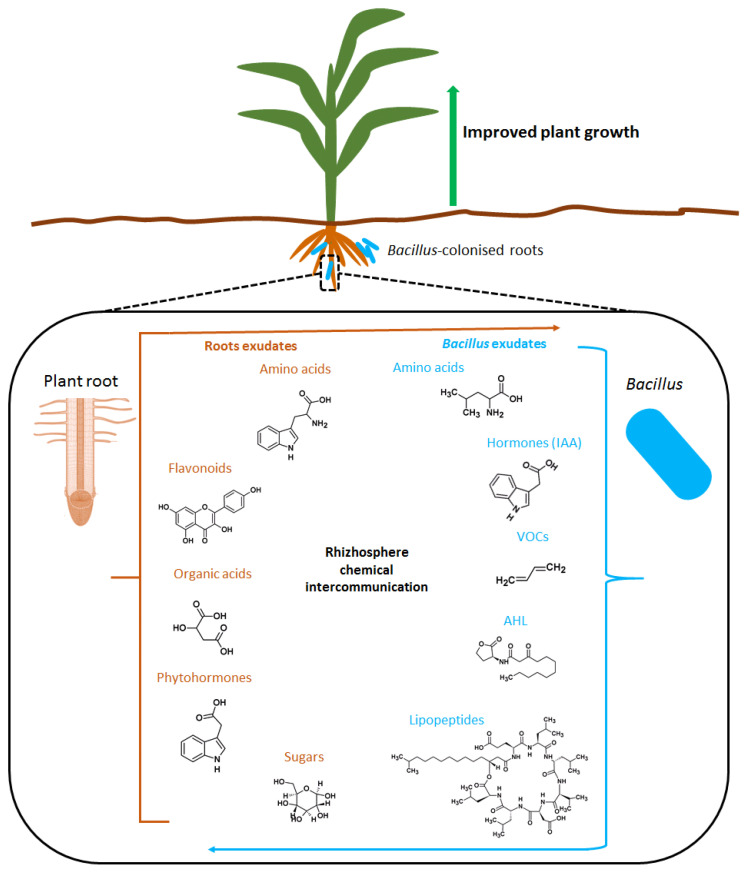
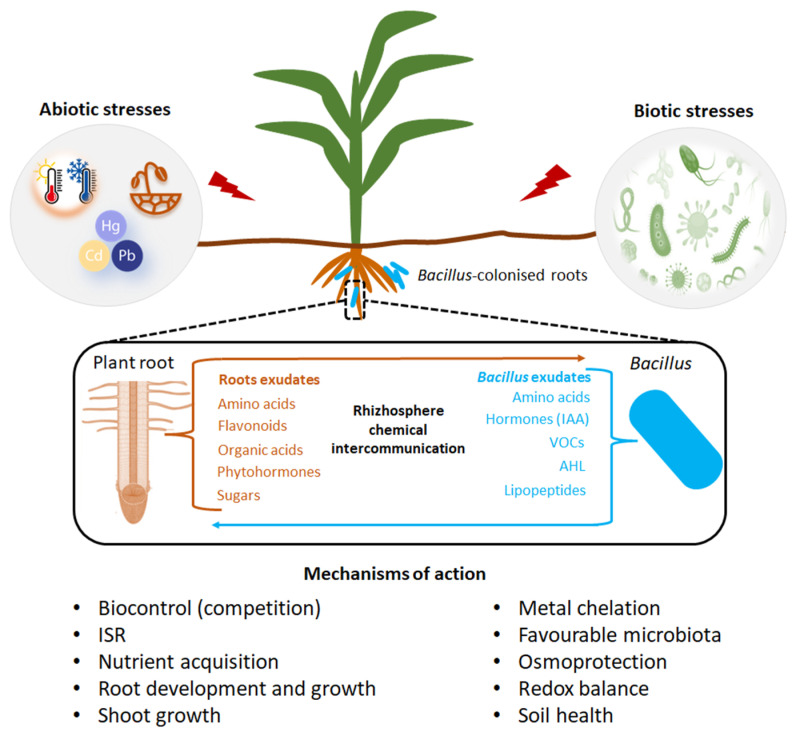
“The communication between plant roots and microbes in the rhizosphere is highly organized and regulated through a dynamic range of specialized metabolites and exudates which ultimately result in altered gene expression in one or both of the interacting partners [29].”
BackgroundBacker, R., Rokem, J. S., Ilangumaran, G., Lamont, J., Praslickova, D., Ricci, E., Subramanian, S., & Smith, D. L. (2018) · Frontiers in Plant Science · doi:10.3389/fpls.2018.01473 · Cited by 2,114
Bacterial volatiles promote growth in Arabidopsis
Ryu, C.-M., Farag, M. A., Hu, C.-H., Reddy, M. S., Wei, H.-X., Paré, P. W., & Kloepper, J. W. (2003) · Proceedings of the National Academy of Sciences · doi:10.1073/pnas.0730845100 · Cited by 1,656
Feature-based molecular networking in the GNPS analysis environment
Nothias, L.-F., Petras, D., Schmid, R., Dührkop, K., Rainer, J., Sarvepalli, A., Protsyuk, I., Ernst, M., Tsugawa, H., Fleischauer, M., et al. (2020) · Nature Methods · doi:10.1038/s41592-020-0933-6 · Cited by 1,634
Role of Plant Growth Promoting Rhizobacteria in Agricultural Sustainability—A Review
Vejan, P., Abdullah, R., Khadiran, T., Ismail, S., & Nasrulhaq Boyce, A. (2016) · Molecules · doi:10.3390/molecules21050573 · Cited by 1,426 · cited 2×
“Members of the genus Bacillus are ubiquitous, Gram-positive, and aerobic bacteria [6,7].”
Background
Research works printed but not linked: 2
- 30. Shaikh, S.S. Impact of Interactions between Rhizosphere and Rhizobacteria: A Review Plant Microbes interaction View project Soil Bioremediation: An approach towards sustainable cleaner technology View project. J. Bacteriol. Mycol. 2018, 5, 1058.
- 98. Rhodes, D.; Hanson, A.D. Compounds in Higher Plants. Annu. Rev. Plant Physiol. Plant Mol. Biol. 1993, 44, 357-384. [CrossRef] · doi:10.1146/annurev.pp.44.060193.002041 · Paper page
Cited by
Items 201–254 of 254
Balekoğlu, E., Salman, A., & Yağmur, B. (2026) · Spanish Journal of Agricultural Research · doi:10.5424/sjar/2026241-21909
“B. mycoides enhances root development and abiotic stress resilience through phytohormone modulation and improved nutrient solubility (Kurniawan & Chuang, 2022; Tsotetsi et al., 2022).”
Riseh, R. S., Fathi, F., & Kennedy, J. F. (2026) · Current Microbiology · doi:10.1007/s00284-026-04995-y
Muis, A., Suriani, Najamuddin, E., Djaenuddin, N., Nonci, N., Pakki, S., & Aminah (2026) · Journal of Plant Diseases and Protection · doi:10.1007/s41348-026-01291-6
“Bacillus species produce siderophores to acquire iron, fix nitrogen, synthesize phytohormones, and solubilize nutrients, contributing to enhanced plant development (Tsotetsi et al. 2022 ).”
Nghiên cứu sàng lọc các chủng vi khuẩn có khả năng phân hủy cellulose trong chất thải hữu cơ
Phương, P. N. T., Thảo, N. V. P., & Tâm, Đ. T. T. (2026) · Tạp chí Khoa học và Công nghệ Lâm nghiệp · doi:10.55250/jo.vnuf.15.5.2026.013-021
Abedini, S., Ariaeenejad, S., & Lohrasbi‐Nejad, A. (2026) · BMC Plant Biology · doi:10.1186/s12870-026-09331-x
“…candidates, spore-forming Bacillus species are particularly attractive because of their physiological robustness, shelf stability, and multiple plant-beneficial traits, including biofilm formation, nutrient mobilization, phytohormone modulation, and antagonistic activity against pathogens [9].”
Hakiki, A. F., & Elfina, Y. (2026) · Jurnal Hama dan Penyakit Tumbuhan · doi:10.21776/ub.jurnalhpt.2026.014.2.2
Silvério, T. C., Rumjanek, N. G., Guerra, J. G. M., Rouws, J. R., Antunes, L. F. S., & Xavier, G. R. (2026) · ACS Agricultural Science & Technology · doi:10.1021/acsagscitech.5c01181
Oh, S.-Y., Balaraju, K., Yoon, D.-H., Lee, C. H., Lee, S. W., Lee, Y. H., & Park, K. (2026) · Frontiers in Microbiology · doi:10.3389/fmicb.2026.1842281
“…drought is consistent with studies showing that Bacillus -treated plants display improved physiological and biochemical responses, such as increased production of stress-related phytohormones and antioxidants, which contribute to drought tolerance (Tsotetsi et al., 2022; Vurukonda et al., 2016).”
InfluentialAfzal, T., Aslam, M. N., Alshehri, D., Moosa, A., Noureldeen, A., Alotaibi, N. M., Alotaibi, M. O., Alotaibi, S. S., Albogami, S., & Zulfiqar, F. (2026) · New Zealand Journal of Crop and Horticultural Science · doi:10.1002/nzc2.70211
Marques, G. G., Erbiai, E. H., & Jaime, F. C. (2026) · Agricultural sciences. · doi:10.5772/intechopen.1015485
Niron, H., Steinwidder, L., Boito, L., Janse, S., Roussard, J., & Vicca, S. (2026) · Plant and Soil · doi:10.1007/s11104-026-08911-y · Cited by 1
Sawiphak, S., & Wongjiratthiti, A. (2026) · Anais da Academia Brasileira de Ciências · doi:10.1590/0001-3765202620250852
By-products of insect farming as a novel sustainable biofertilizer for crops
Barragán‐Fonseca, K. Y., Mertens, D., da Costa, P. B., van Loon, J. J. A., & Dicke, M. (2026) · npj Sustainable Agriculture · doi:10.1038/s44264-026-00175-4
Salinas, O. M. S., Santos-Juanillo, J. R. E., López, A. V., & Ticona, A. R. P. (2026) · Agronomy · doi:10.3390/agronomy16151474
Asmono, S. L., Rahmawati, Arifiana, N. B., Erawati, D. N., Sjamsijah, N., & Sulistyono, N. B. E. (2026) · BIOTROPIA · doi:10.11598/btb.2026.33.3.2466
“Bacillus such as those found in EM4 and GAS can produce the phytohormone IAA (Tsotetsi et al. 2022; Wagi & Ahmed 2019).”
Avanços da Pesquisa e Inovação em Sistemas Agrícolas: Conjunturas da Ciências Agrárias - Volume 5
de Souza, F. J. C., & Assunção, M. C. (2026) · Editora Científica Digital eBooks · doi:10.37885/978-65-6155-216-5
APLICATIVO BIOINSUMOS DA EMBRAPA/MAPA: UMA ANÁLISE ATUALIZADA EM 2025
de Carvalho, O. A. P., Portela, V. O., de Pereira, E. P., Handte, V. G., Magalhães, J. B., & Ramos, R. F. (2026) · Editora Científica Digital eBooks · doi:10.37885/260722451
Zakavi, M., Askari, H., & Shahrooei, M. (2026) · Microbiological Research · doi:10.1016/j.micres.2026.128679
Romero, K. J. S., Zamora, H. D. T., Chavarría, V. E. Z., Quishpe, O. M. E., & Loor, V. D. C. (2026) · Multidisciplinary Collaborative Journal · doi:10.70881/mcj/v4/n3/175
“Sin embargo, estos mecanismos son posibilidades biológicas; su confirmación requeriría evaluar variables específicas, como la producción de fitohormonas, la solubilización de nutrientes o la colonización radicular por las cepas (Tsotetsi et al., 2022).”
Singh, D. P., Maurya, S., Satnami, L., Prabha, R., Renu, Chaurasia, A., & Rai, N. (2026) · Current Microbiology · doi:10.1007/s00284-026-05111-w
Bashir, A., Banoo, M., Manzoor, M. M., Mir, F. A., & Riyaz‐Ul‐Hassan, S. (2026) · Journal of Applied Research on Medicinal and Aromatic Plants · doi:10.1016/j.jarmap.2026.100739
Delgado-González, C. R., Vidal-Martínez, E. C., Pérez-Soto, E., & Islas-Pelcastre, M. (2026) · Archives of Microbiology · doi:10.1007/s00203-026-05133-9
“Because of these traits, Bacillus species have attracted considerable attention for their applications in agriculture, environmental biotechnology, and stress mitigation in plant–microbe systems (El Youssfi et al. 2024; Tsotetsi et al. 2022 ).”
Enhancing the self-life of plant growth-promoting rhizobacterium Bacillus megaterium
Ramachandran, S., Ahmed, M., & Pal, S. (2026) · South Asian Journal of Agricultural Sciences · doi:10.22271/27889289.2026.v6.i8a.384
Sevgi, K., Sevgi, B., & Leblebici, S. (2026) · Journal of Plant Nutrition · doi:10.1080/01904167.2026.2717729
“Members of the genus Bacillus , which are gram-positive and aerobic bacteria, produce numerous enzymes and metabolites, thus making them a prominent and promising application for sustainable agriculture (Tsotetsi et al. 2022).”
Medina, A. B. P., & Cantero, J. (2026) · Revista Ciencia Tecnologia & Sociedad · doi:10.70598/nhma7999cv30p
Liu, Y., Zhao, J., Zhang, J., Zhang, T., Chen, L., Li, Y., Zhang, T., & Qin, W. (2026) · BMC Plant Biology · doi:10.1186/s12870-026-10247-9
EMERGÊNCIA E CRESCIMENTO DE CANAFÍSTULA SOB DIFERENTES PRODUTOS BIOLÓGICOS E TEMPOS DE IMERSÃO
Guariz, H. R., Magalhães, P. A., Amorim, F. T., Oliveira, L. D. S., de Almeida, H. G., & Picoli, M. H. S. (2026) · Journal of Education Science and Health · doi:10.52832/jesh.v6i3.743
Riviere, S., Fracasso, I., Tiziani, R., Trevisan, F., Bouaicha, O., Keiblinger, K. M., Gerzabek, M. H., Chaves, J. A., Zehetner, F., Jäger, H., et al. (2026) · Geoderma · doi:10.1016/j.geoderma.2026.118005
Sustainable arsenic bioremediation by a marine macroalgal endophyte, Bacillus subtilis ULB16
Anand, S. S., Babu, P., Nair, B. G., George, S., Nair, S. S., & Pai, J. G. (2026) · Journal of Hazardous Materials Advances · doi:10.1016/j.hazadv.2026.101536
Voronina, E. N., Sokolova, E. А., Tromenschleger, I. N., Mishukova, O. V., Fedorets, V. A., Khlistun, I. V., Савенков, О. А., Saprykin, O. I., Buyanova, M. D., Filippova, I. M., et al. (2026) · International Journal of Molecular Sciences · doi:10.3390/ijms27177873
Al‐Dakhil, M., Abdelrahim, A., Felemban, A., Alotaibi, M., Dewir, Y. H., Rehan, M., Alotaibi, F., & El-Hendawy, S. (2026) · Life · doi:10.3390/life16091511
Bacillus altitudinis 1.4 e Pseudomonas fluorescens 5.4 como biocontroladores e crescimento vegetal
Pianetti, T. R. (2026) · Lume (Universidade Federal do Rio Grande do Sul)
Yuniar, F. D., Al-Amanah, H., Yani, A., & Nurul Fajeriana, M. (2026) · IOP Conference Series Earth and Environmental Science · doi:10.1088/1755-1315/1655/1/012030
Mulaudzi, M. S., Nephali, L. P., & Tugizimana, F. (2026) · Microbial Ecology · doi:10.1007/s00248-026-02885-1
Self-citationBjelić, D., Marinković, J., Vasiljević, M., Tintor, B., Uhlarik, A., Đorđević, V., & Miladinović, J. (2026) · Ratarstvo i povrtarstvo · doi:10.5937/ratpov63-70524
“E Azotobacter and Bacillus are among the most important PGPR genera that are widely used as inoculants in agricultural production (Aasfar et al., 2021; Tsotetsi et al., 2022).”
Potencial biotecnológico de estirpes bacterianas endofíticas no algodoeiro
Korber, L. P. P. (2025) · Lume (Universidade Federal do Rio Grande do Sul)
Wu, R.-T., Ye, C., Tan, H.-Y., Ye, J.-C., Liu, B.-L., Feng, N.-X., Li, Y.-W., Quanying, C., Li, Q. X., Mo, C.-H., et al. (2026) · Environmental Science & Technology · doi:10.1021/acs.est.6c12315
Barańska, D., Panek, J., Pertile, G., Gryta, A., Różalska, S., & Frąc, M. (2026) · International Journal of Molecular Sciences · doi:10.3390/ijms27198734
“Their ability to interact with plants and plant-associated environments involves several mechanisms, such as chemotaxis, biofilm formation, nutrient mobilization, phosphate solubilization, siderophore production, phytohormone synthesis, microbial antagonism, and many more [8–15].”
Kpemuonye, A. N. K., Ngmenzuma, T. Y.-A., Oteng‐Frimpong, R., Mpai, T., Soundy, P., & Dakora, F. D. (2026) · Research Square · doi:10.21203/rs.3.rs-10918119/v1
Mazzarino, S. (n.d.) · Institutional Research Information System University of Turin (University of Turin)
Innovative approaches to the management of mycotoxin-producing fungi
Chtioui, W. (n.d.) · UnissResearch (Università degli Studi di Sassari)
การคัดเลือก Bacillus sp.ที่เป็นแบคทีเรียส่งเสริมการเจริญเติบโตของพืช
Saman, P. (2025) · Journal of Science, Technology and Agriculture Research
Moreira, A. V. C., Montúfar, G. H. V., Guerrero, M. F. C., & Villamar-Torres, R. O. (2026) · Agroindustrial science · doi:10.17268/agroind.sci.2026.03.02
Silva, L. L., Rodrigues, A. A., Silva, I. M. H. D. L. E., Jesus, T. F., de Sousa, E. B., Costa, A. C., Santos, E. C. D., Santos, L. S., Mota, J. W. G. C., & Sales, J. D. F. (2026) · Brazilian Journal of Biology · doi:10.1590/1519-6984.303697
Soares, A. G., de Sousa, F. B. L. P. F., & dos Santos, G. R. (2026) · Research Society and Development · doi:10.33448/rsd-v15i10.51307
Mani, J., Anthonisamy, A., Senniyappan, M., Malaravan, R., & Radhakrishnan, S. (2026) · Physiological and Molecular Plant Pathology · doi:10.1016/j.pmpp.2026.103603
Bessa, L. A., Reis, M. N. O., Augusto, D. S. S., Macedo, A. S., de Faria, G. S., & Vitorino, L. C. (2026) · Ciência Rural · doi:10.1590/0103-8478cr20250498
Kahraman, N. D., Anas, M., Kucukmaras, S. D., Khan, Z., Eken, N., & Hakki, E. E. (2026) · World Journal of Microbiology and Biotechnology · doi:10.1007/s11274-026-05346-6
“Biological nitrogen fixation and phosphate solubilization are well-established PGPR mechanisms that improve nutri - ent availability, promote root development, and enhance plant performance under abiotic stress conditions (Patani et al. 2024; Tsotetsi et al. 2022).”
Cheng, C., Zhang, Q., Jia, C., Agathokleous, E., Wang, Q., Lu, Y., He, Y., White, J. C., He, J., XiangDong, Z., et al. (2026) · Environmental Science & Technology · doi:10.1021/acs.est.6c10880
Bartholomew, H. P., Lovelace, A. H., Jurick, W. M., Sparks, M. E., Gundersen‐Rindal, D. E., & Blackburn, M. B. (2026) · Frontiers in Horticulture · doi:10.3389/fhort.2026.1966024
Yan, Y., Qiao, Z., Wang, Y., Gao, Z., Li, Y., Fu, C., Zhao, S., & Wang, Q. (2026) · Horticulturae · doi:10.3390/horticulturae12111347
Zhang, Q., Inostroza, N. G., Huerta, N., Valenzuela, T., Salgado, Ó., Carabantes, C., Martínez, O. A., Videla, A., Sandoval-Espinoza, B., Diaz, B., et al. (2026) · Frontiers in Soil Science · doi:10.3389/fsoil.2026.1947844
Hanifa, I. U., Prasetyawati, E. T., & Wiyatiningsih, S. (2026) · AJARCDE (Asian Journal of Applied Research for Community Development and Empowerment) · doi:10.29165/ajarcde.v11i1.1297
Metadata
- Authors
- Tsotetsi, T., Nephali, L., Malebe, M., & Tugizimana, F.
- Affiliations
- University of Johannesburg (ZA)
- Corresponding author
- Tsotetsi, Teboho
- Tugizimana, Fidele
- Venue
- Plants
- Publisher
- MDPI AG
- Published
- 2022-09-22
- Volume
- 11
- Issue
- 19
- Pages
- 2482
- ISSN
- 2223-7747 (ISSN-L)
- PMC
- PMC9571655
- OpenAlex
- W4296830111
- Cited by
- 222
- References
- 158
- Citations by year
- 2026: 83 · 2025: 55 · 2024: 53 · 2023: 30 · 2022: 1
- FWCI
- 3.19
- Type
- journal article
- Language
- en
- Open access
- gold
- doi.org
- Licence
- Locations
- Plants (publishedVersion, cc-by)
- PubMed Central (publishedVersion, cc-by)
- PubMed (publishedVersion)
- DOAJ (DOAJ: Directory of Open Access Journals) (submittedVersion, cc-by-sa)
- Topics
- Life Sciences › Agricultural and Biological Sciences › Plant Science › Plant-Microbe Interactions and Immunity
- Life Sciences › Agricultural and Biological Sciences › Plant Science › Plant Growth Enhancement Techniques
- Life Sciences › Agricultural and Biological Sciences › Plant Science › Agriculture, Plant Science, Crop Management
- Keywords
- Bacillus, plant growth-promoting rhizobacteria, plant stress resilience, rhizosphere, biostimulants, metabolomics, microbial metabolites, plant defense, spore-forming bacteria, agricultural applications
About these checks
Registry, retraction, Cites and statistics results are computed, not judged, with one exception: a printed reference that no index lists is read once by a model before it counts as a citation error. Claims are extracted by a model and kept only when their quote appears verbatim in the text; each cited source is then checked, with a model’s help, for whether it says what the claim relies on. Those verdicts can be wrong — read the claim’s quote and the cited source before relying on one.
Statistics and arithmetic are recomputed, not judged.
Confidence bands are shown only for fields calibrated on our annotated test set. None is calibrated yet, so no band is shown.
What counts as a claim ›How we measure confidence ›How we check this ›
Are you an author, or do you see a problem with this page? Request a review
Data sources
Bibliographic data: Semantic Scholar, OpenAlex, Crossref.
Contains information from the Semantic Scholar Academic Graph Datasets, made available under the ODC Attribution License (ODC-BY 1.0).
Semantic Scholar’s data is described in: Kinney, R., et al. (2023). The Semantic Scholar Open Data Platform. arXiv:2301.10140.
