

Exploring the Lesser-Known Bioactive Natural Products of Plant Species of the Genus Cannabis L.: Alkaloids, Phenolic Compounds, and Their Therapeutic Potential
Open accessThe DOI matches its Crossref record; 129 of the 130 references it cites were found in a registry or an index; 79 of the 234 sources its claims cite were checked for support.
Abstract
Plant species of the genus Cannabis L. are predominantly recognized for their cannabinoids, which have garnered significant attention due to their bioactive properties. However, Cannabis also produces a diverse array of bioactive compounds with promising pharmacological potential that remain underexplored. This review focuses primarily on phytochemicals derived from Cannabis sativa L. subspecies, including both its drug-type and fiber-type varieties, which are the most widely cultivated and studied within the genus. Among these, nitrogen-containing compounds such as spermidine alkaloids exhibit neuroprotective and anti-aging properties, while hydroxycinnamic acids and hydroxycinnamic acid amides, including N-trans-caffeoyltyramine and N-trans-feruloyltyramine, have demonstrated notable antioxidant and anti-inflammatory activities. Additionally, Cannabis species are a valuable source of unique stilbenes, such as canniprene, and flavonoids, including cannflavin A and B, which demonstrated potent anti-inflammatory and antiproliferative effects. Despite this rich phytochemical diversity, research on these compounds remains limited, largely due to historical legal restrictions. This literature review consolidates and updates current knowledge on these lesser-studied phytochemicals of Cannabis, detailing their biosynthetic pathways, metabolic precursors, and emerging therapeutic applications. By expanding the research focus beyond cannabinoids, this work aims to enhance our understanding of Cannabis’s full pharmacological potential and promote further investigation into its diverse chemical constituents.
Overview
CoChat Summary
TL;DR
This is a narrative review of lesser-known Cannabis metabolites beyond cannabinoids, focusing on nitrogen-containing compounds, flavonoids, and stilbenes, and summarizing their biosynthesis and reported bioactivities. The paper argues that these compounds have meaningful therapeutic potential, but research remains limited by historical cannabinoid bias, legal constraints, and thin regulatory guidance.
Key findings
- The review reports that Cannabis contains 10 identified alkaloids and 15 phenolic amides/lignanamides, plus numerous flavonoids and stilbenes; it also states that 38 stilbenes have been identified in Cannabis.
- For flavonoids, the paper highlights cannflavin A and B as especially potent anti-inflammatory compounds, stating they are 30 times more potent than acetylsalicylic acid in inhibiting prostaglandin/leukotriene production, and gives quantified levels such as 21–280 mg/kg for cannflavin A and 9–106 mg/kg for cannflavin B in pre-flowering leaves, and 19.6–130.0 mg/kg and 11.9–215.5 mg/kg across some hemp cultivars.
- For nitrogen-containing compounds, the paper notes hordenine’s antibacterial and anti-inflammatory effects, including MIC = 2.5 mg/mL against *Pseudomonas aeruginosa* PAO1 and 69%, 74%, and 79% reductions in one quorum-sensing signal at 0.5, 0.75, and 1.0 mg/mL; it also reports N-trans-coumaroyltyramine reduced living cells by 40% in U937 and 32% in Jurkat at 30 μM.
- For stilbenes, the paper reports denbinobin as antiproliferative and anti-metastatic, including 48.4% and 56.1% decreases in A549 viability at 10 and 20 μM, and anti-inflammatory activity for canniprene with IC50 = 0.4 μM against lipoxygenase 5.
Methods
- Narrative literature review of Cannabis lesser-known metabolites, with emphasis on Cannabis sativa L. subspecies and especially roots, leaves, flowers, seeds, and stems.
- PubMed searches were performed using metabolite- and activity-specific terms; when article counts were high, the review prioritized the most recent 10 years, and it included only purified compounds, excluding plant-extract activity studies.
- The review synthesizes evidence on biosynthetic pathways, metabolic precursors, biological activities, and regulatory considerations; it also states that figures were created with ChemDraw version 22.2.0.3300.
Limitations
- The paper explicitly says research on these compounds remains limited because of historical legal restrictions, research bias toward cannabinoids, and the absence of comprehensive regulatory frameworks.
- It also states that for some compound classes, there is little biosynthetic or bioactivity information, especially for spermidine-type alkaloids and lignanamides.
- Evident from the text: this is a narrative review rather than a systematic review or primary study, and it relies on published purified-compound studies, so its conclusions depend on the quality and availability of prior reports.
Model-written summary. Check it against the paper before relying on it.
Integrity signals
Registry
Cites
Statistics
Figures
Verification
Claims the paper makes
67 Valid · 10 Not valid · 122 Not checked · 42 Own results and interpretations
The cited sources support only part of this claim — read each source’s verdict below.
In the paper
“emerging research has identified notable bioactive properties worthy of therapeutic consideration such as neuroprotective, antitumor, and analgesic effects, suggesting they warrant further investigation [12,13,14].”
§ Exploring the Lesser-Known Bioactive Natural Products of Plant Species of the Genus Cannabis L.: Alkaloids, Phenolic Compounds, and Their Therapeutic Potential > 1. Introduction
What the sources say
- Not checked — no full text of the sourcecites [12] Pollastro F. Minassi A. Fresu L.G. Cannabis Phenolics and their Bioactivities Curr. Med. Chem. 2018 25 1160 1185 10.2174/0929867324666170810164636 28799497 source
- Not checked — no full text of the sourcecites [13] Gagné V. Boucher N. Desgagné-Penix I. Cannabis Roots: Therapeutic, Biotechnological and Environmental Aspects Cannabis Cannabinoid Res. 2024 9 35 48 10.1089/can.2023.0168 38252502 source
- Partly supportedcites [14] Gagné V. Merindol N. Boucher R. Boucher N. Desgagné-Penix I. Rooted in therapeutics: Comprehensive analyses of Cannabis sativa root extracts reveals potent antioxidant, anti-inflammatory, and bactericidal properties Front. Pharmacol. 2024 15 1465136 10.3389/fphar.2024.1465136 39351095 PMC11440120 sourceExperimental — accuracy not yet measured
The Results (§3.1 and §3.5) identify nitrogen-containing compounds in Cannabis roots and show cholinesterase inhibition by root extracts. The Discussion (§5) suggests that alkaloids may contribute to this potentially neuroprotective effect, but does not establish the effect for the individual metabolites. It describes analgesia as a traditional use of roots, not a demonstrated effect of those metabolites, and the searched passages provide no support for an antitumor effect. (LLM, conf=0.86)
hedgedstates an association- Asserted: passes — The authors put it forward as true.
- Checkable: passes — It can be checked against evidence.
- Load-bearing: passes — The paper’s conclusions depend on it.
- Based: passes — The paper gives a reason why it holds.
The cited sources support only part of this claim — read each source’s verdict below.
In the paper
“While cannabinoids, such as tetrahydrocannabinol (THC) and cannabidiol (CBD), dominate the current understanding of Cannabis bioactivity, other specialized metabolites—including alkaloids, flavonoids, and stilbenes—also contribute to its pharmacological profile but remain less studied [2,9,10].”
§ Exploring the Lesser-Known Bioactive Natural Products of Plant Species of the Genus Cannabis L.: Alkaloids, Phenolic Compounds, and Their Therapeutic Potential > 1. Introduction
What the sources say
- Partly supportedcites [2] Andre C.M. Hausman J.F. Guerriero G. Cannabis sativa: The Plant of the Thousand and One Molecules Front. Plant Sci. 2016 7 19 10.3389/fpls.2016.00019 26870049 PMC4740396 sourceExperimental — accuracy not yet measured
The ‘Hemp Phytochemicals’ section says cannabinoids are the most extensively studied Cannabis bioactives and that other components have health-promoting properties. ‘Phenolic Compounds’ identifies Cannabis flavonoids and stilbenes, while ‘Health Benefits Associated with Phenolic Compounds’ describes biological effects of its flavonoids. Our copy does not substantiate a pharmacological contribution from Cannabis alkaloids or specifically from its stilbenes; page numbers are unavailable. (LLM, conf=0.85)
- Not checked — no full text of the sourcecites [9] Elsohly M.A. Slade D. Chemical constituents of marijuana: The complex mixture of natural cannabinoids Life Sci. 2005 78 539 548 10.1016/j.lfs.2005.09.011 16199061 source
- Not checked — no full text of the sourcecites [10] Ross S. EISohly M. Constituents of Cannabis sativa L. XXVIII. A review of the natural constituents: 1980–1994 Zagazig J. Pharm. Sci. 1995 4 150 160 10.21608/zjps.1995.169714 source
plainstates an association- Asserted: passes — The authors put it forward as true.
- Checkable: passes — It can be checked against evidence.
- Load-bearing: passes — The paper’s conclusions depend on it.
- Based: passes — The paper gives a reason why it holds.
- Partly supported
The cited sources support only part of this claim — read each source’s verdict below.
In the paper
“These molecules, which vary significantly in their structure, biosynthetic pathways, and bioactivities, may offer therapeutic potential as anti-inflammatory, antioxidant, neuroprotective, and antimicrobial agents [5,6].”
§ Exploring the Lesser-Known Bioactive Natural Products of Plant Species of the Genus Cannabis L.: Alkaloids, Phenolic Compounds, and Their Therapeutic Potential > 1. Introduction
What the sources say
- Could not verifycites [5] Radwan M.M. Chandra S. Gul S. ElSohly M.A. Cannabinoids, Phenolics, Terpenes and Alkaloids of Cannabis Molecules 2021 26 2774 10.3390/molecules26092774 34066753 PMC8125862 sourceExperimental — accuracy not yet measured
The Introduction (p. 1) describes CBD as an antiepileptic agent and mentions pharmacological effects of phytocannabinoids, but does not link these molecules to the four claimed activities. Searches for anti-inflammatory, antioxidant, neuroprotective, and antimicrobial found no passage in the paper’s discussion establishing that therapeutic potential; anti-inflammatory and antioxidant appear only in a cited work’s title in the references (p. 28). (LLM, conf=0.75)
- Supportedcites [6] Jin D. Dai K. Xie Z. Chen J. Secondary Metabolites Profiled in Cannabis Inflorescences, Leaves, Stem Barks, and Roots for Medicinal Purposes Sci. Rep. 2020 10 3309 10.1038/s41598-020-60172-6 32094454 PMC7039888 source
The Discussion (page not supplied) attributes anti-inflammatory, antioxidant, and neuroprotective properties to identified terpenoids and flavonoids, and all four listed properties—including antimicrobial activity—to identified triterpenoids and sterols. It describes their pharmaceutical value while noting that their contribution to cannabis’s overall therapeutic benefits needs further investigation, consistent with the claim’s 'may' qualifier. (LLM, conf=0.91)
hedgedstates a possible cause- Asserted: passes — The authors put it forward as true.
- Checkable: passes — It can be checked against evidence.
- Load-bearing: passes — The paper’s conclusions depend on it.
- Based: passes — The paper gives a reason why it holds.
- Could not verify
The cited sources support only part of this claim — read each source’s verdict below.
In the paper
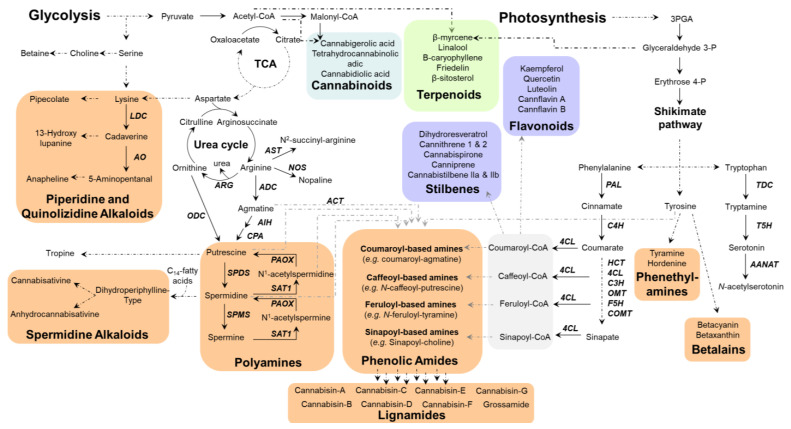
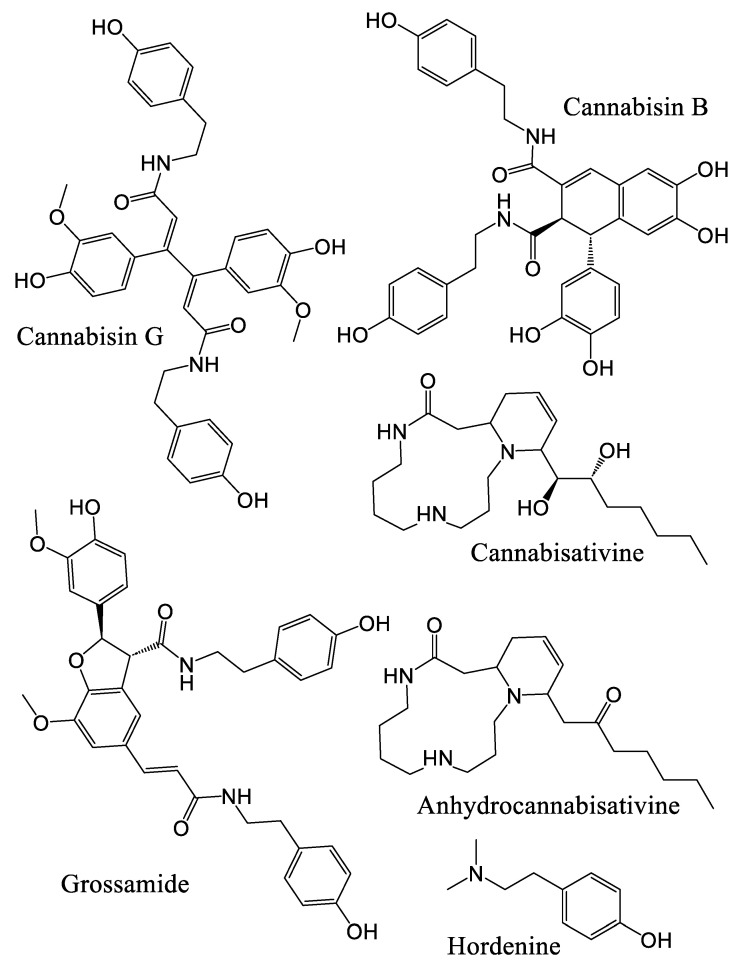
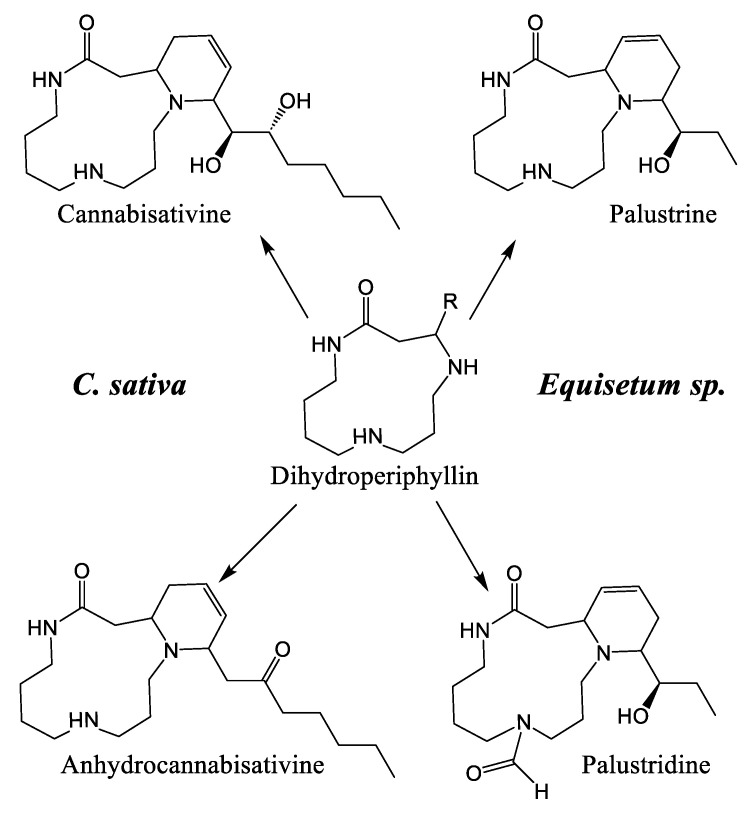
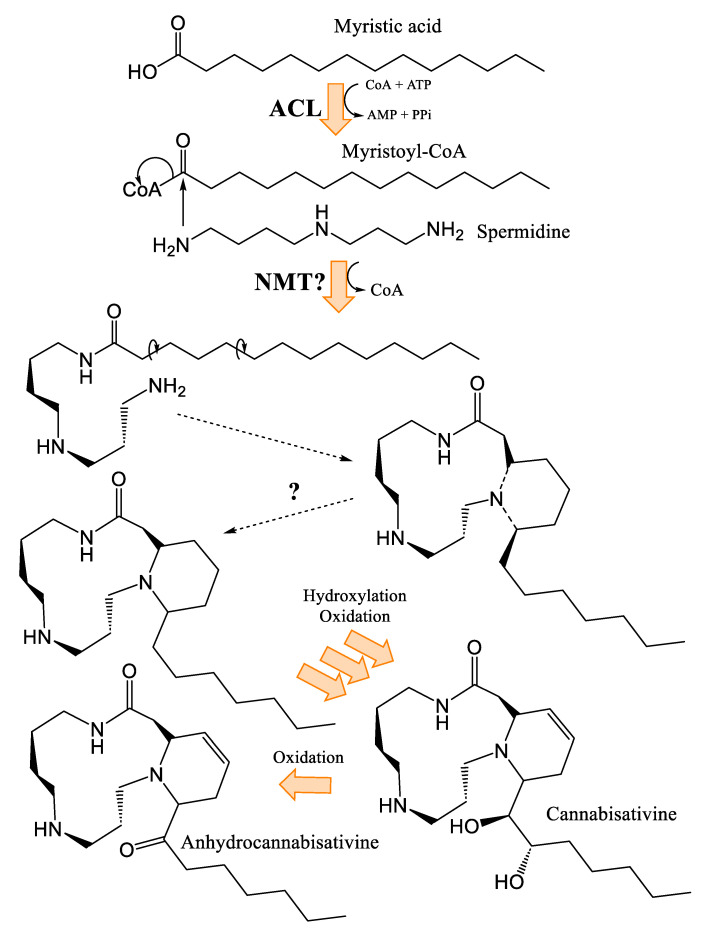
“The spermidine-type alkaloids reported in Cannabis include cannabisativine and anhydrocannabisativine (Figure 1 and Figure 2) [13,21,30,40].”
§ Exploring the Lesser-Known Bioactive Natural Products of Plant Species of the Genus Cannabis L.: Alkaloids, Phenolic Compounds, and Their Therapeutic Potential > 2. Generalities and Classification of Cannabis Metabolites > 2.3. Specialized Metabolites of Cannabis
What the sources say
- Not checked — no full text of the sourcecites [13] Gagné V. Boucher N. Desgagné-Penix I. Cannabis Roots: Therapeutic, Biotechnological and Environmental Aspects Cannabis Cannabinoid Res. 2024 9 35 48 10.1089/can.2023.0168 38252502 source
- Partly supportedcites [21] Ryz N.R. Remillard D.J. Russo E.B. Cannabis Roots: A Traditional Therapy with Future Potential for Treating Inflammation and Pain Cannabis Cannabinoid Res. 2017 2 210 216 10.1089/can.2017.0028 29082318 PMC5628559 sourceExperimental — accuracy not yet measured
The Active Compounds in Cannabis Roots section reports both cannabisativine and anhydrocannabisativine as alkaloids identified in cannabis roots. Our copy does not classify either as a spermidine-type alkaloid, so that part of the claim is unsupported. (LLM, conf=0.86)
- Partly supportedcites [30] Lowe H. Steele B. Bryant J. Toyang N. Ngwa W. Non-Cannabinoid Metabolites of Cannabis sativa L. with Therapeutic Potential Plants 2021 10 400 10.3390/plants10020400 33672441 PMC7923270 sourceExperimental — accuracy not yet measured
Section 2.5, “Alkaloids in Cannabis” (page not provided), explicitly lists cannabisativine and anhydrocannabisativine as alkaloids produced by Cannabis sativa. It does not identify either as a spermidine-type alkaloid, so that classification is not supported by our copy. (LLM, conf=0.84)
- Not checked — no full text of the sourcecites [40] Elsohly M.A. Turner C.E. Phoebe C.H. Jr. Knapp J.E. Schiff P.L. Jr. Slatkin D.J. Anhydrocannabisativine, a new alkaloid from Cannabis sativa L J. Pharm. Sci. 1978 67 124 10.1002/jps.2600670135 619102 source
plain- Asserted: passes — The authors put it forward as true.
- Checkable: passes — It can be checked against evidence.
- Load-bearing: unclear — It is unclear whether the paper’s conclusions depend on it.
- Based: passes — The paper gives a reason why it holds.
The cited sources support only part of this claim — read each source’s verdict below.
In the paper
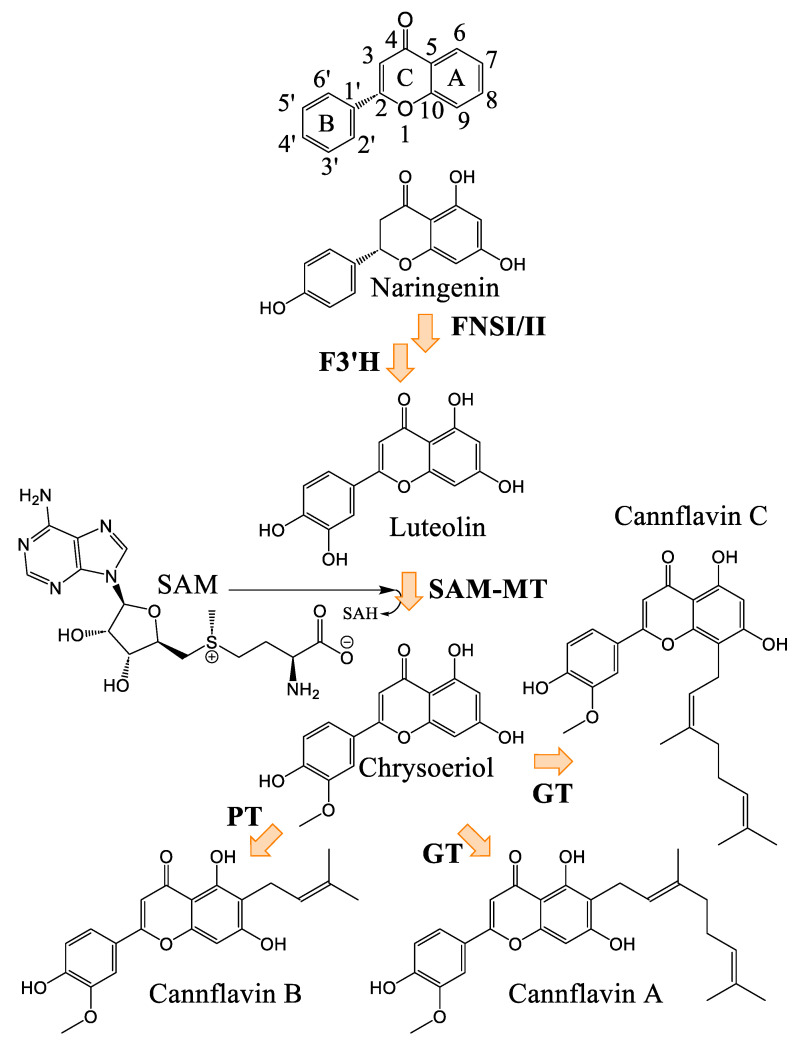
“Flavonoids like cannaflavin A and B, unique to Cannabis, demonstrated the notable inhibition of inflammatory pathways, with potency exceeding some NSAIDs [15,16,17].”
§ Exploring the Lesser-Known Bioactive Natural Products of Plant Species of the Genus Cannabis L.: Alkaloids, Phenolic Compounds, and Their Therapeutic Potential > 1. Introduction
What the sources say
- Not checked — no full text of the sourcecites [15] Werz O. Seegers J. Schaible A.M. Weinigel C. Barz D. Koeberle A. Allegrone G. Pollastro F. Zampieri L. Grassi G. Cannflavins from hemp sprouts, a novel cannabinoid-free hemp food product, target microsomal prostaglandin E2 synthase-1 and 5-lipoxygenase Pharma Nutr. 2014 2 53 60 10.1016/j.phanu.2014.05.001 source
- Partly supportedcites [16] Abdel-Kader M.S. Radwan M.M. Metwaly A.M. Eissa I.H. Hazekamp A. Sohly M.A. Chemistry and Biological Activities of Cannflavins of the Cannabis Plant Cannabis Cannabinoid Res. 2023 8 974 985 10.1089/can.2023.0128 37756221 PMC10714118 sourceExperimental — accuracy not yet measured
The Introduction identifies cannflavins A and B as compounds isolated from cannabis, and the Anti-inflammatory effects section reports that both inhibit inflammatory enzymes. That section places their inhibition of prostaglandin E release between aspirin and indomethacin/dexamethasone, but does not explicitly establish that their potency exceeds an NSAID; the copy also does not establish that the compounds are exclusive to Cannabis. No page numbers are provided in our copy. (LLM, conf=0.82)
- Not checked — no full text of the sourcecites [17] Erridge S. Mangal N. Salazar O. Pacchetti B. Sodergren M.H. Cannflavins—From plant to patient: A scoping review Fitoterapia 2020 146 104712 10.1016/j.fitote.2020.104712 32858172 source
boostedstates a cause- Asserted: passes — The authors put it forward as true.
- Checkable: passes — It can be checked against evidence.
- Load-bearing: unclear — It is unclear whether the paper’s conclusions depend on it.
- Based: passes — The paper gives a reason why it holds.
92 more claims · 23 with their cited sources checked
Create a free account to see all 241 claims and to verify the 31 references still open.
- It may state two separate claims as one. 105
- Probably not a substantial claim. 64
- The quote only partly states this claim. 2
Citations
Cites
Plant Phenolics: Extraction, Analysis and Their Antioxidant and Anticancer Properties
Dai, J., & Mumper, R. J. (2010) · Molecules · doi:10.3390/molecules15107313 · Cited by 4,506
Vogt, T. (2010) · Molecular Plant · doi:10.1093/mp/ssp106 · Cited by 3,072
Flavonoids: biosynthesis, biological functions, and biotechnological applications
Falcone Ferreyra, M. L., Rius, S. P., & Casati, P. (2012) · Frontiers in Plant Science · doi:10.3389/fpls.2012.00222 · Cited by 1,831
Cannabis sativa: The Plant of the Thousand and One Molecules
Andre, C. M., Hausman, J.-F., & Guerriero, G. (2016) · Frontiers in Plant Science · doi:10.3389/fpls.2016.00019 · Cited by 1,544
Chemical constituents of marijuana: The complex mixture of natural cannabinoids
ElSohly, M. A., & Slade, D. (2005) · Life Sciences · doi:10.1016/j.lfs.2005.09.011 · Cited by 1,094
The Phenylpropanoid Pathway in Arabidopsis
Fraser, C. M., & Chapple, C. (2011) · The Arabidopsis Book · doi:10.1199/tab.0152 · Cited by 860
Bonini, S. A., Premoli, M., Tambaro, S., Kumar, A., Maccarinelli, G., Memo, M., & Mastinu, A. (2018) · Journal of Ethnopharmacology · doi:10.1016/j.jep.2018.09.004 · Cited by 669
Metabolism and roles of stilbenes in plants
Chong, J., Poutaraud, A., & Hugueney, P. (2009) · Plant Science · doi:10.1016/j.plantsci.2009.05.012 · Cited by 664
Role of secondary metabolites in plant defense against pathogens
Zaynab, M., Fatima, M., Abbas, S., Sharif, Y., Umair, M., Zafar, M. H., & Bahadar, K. (2018) · Microbial Pathogenesis · doi:10.1016/j.micpath.2018.08.034 · Cited by 639
Constituents of Cannabis sativa L. XVII. A review of the natural constituents
Turner, C. E., Elsohly, M. A., & Boeren, E. G. (1980) · Journal of Natural Products · doi:10.1021/np50008a001 · Cited by 599
Research works printed but not linked: 2
- Deya P. Kumarb A. Guptac M. Leea B.M. Bhaktad T. Dashd S. Kima H.S. Recent Advances in Natural Products Analysis Elsevier Amsterdam, The Netherlands 2020 505 567
- NAS National Academies of Sciences, Engineering, and Medicine Health and Medicine Division Board on Population Health and Public Health Practice Committee on the Health Effects of Marijuana: An Evidence Review and Research Agenda Challenges and Barriers in Conducting Cannabis Research The Health Effects of Cannabis and Cannabinoids: The Current State of Evidence and Recommendations for Research The National Academic Press Washington, DC, USA 2017 Available online: https://www.ncbi.nlm.nih.gov/books/NBK425757/ (accessed on 27 April 2025)
Cited by
Natural solutions for diabetes: the therapeutic potential of plants and mushrooms
Sknepnek, A., Miletić, D., Stupar, A., Salević-Jelić, A. S., Nedović, V., & Cvetanović, A. D. (2025) · Frontiers in Nutrition · doi:10.3389/fnut.2025.1511049 · Cited by 36
Drug repurposing for skin pigmentation disorders: Discovery of novel tyrosinase inhibitors
Khan, M., Liang, T., Zheng, F., Zhang, H., Zhang, T., Feng, X., Gao, P., Li, J., & Yang, L. (2026) · Bioorganic Chemistry · doi:10.1016/j.bioorg.2026.109942 · Cited by 3
Ortiz, J. E., Adarvez‐Feresin, C. W., Llalla-Córdova, O., Cristos, D., Garro, A., & Feresin, G. E. (2025) · Compounds · doi:10.3390/compounds5030035 · Cited by 4
Zhou, M., Bahatijiang, M., Liu, W., et al. (2025) · Journal of Pharmaceutical and Biomedical Analysis · doi:10.1016/j.jpba.2025.117320 · Cited by 1
Rashid, M. H., Williams, M. J., Guerra, A. G., Itharat, A., Löebenberg, R., & Davies, N. M. (2026) · Journal of Phytomedicine · doi:10.3390/jphytomed1010002 · Cited by 1
“…mitrafoline (5); rhynchociline (6); corynoxine B (11); rhynchophylline (12); isomitrafoline (13); mitragynine oxindole B (15); 3-epicorynoxine B (20); 3-epirhynchophylline (21); rotundifoline (22); isorotundifoline (23); speciofoline (24); ciliaphyline (25) showing high inhibitory confidence (92”
Metadata
- Authors
- Boucher, R., Germain, H., & Desgagné-Penix, I.
- Affiliations
- Université du Québec à Trois-Rivières (CA)
- Department of Chemistry, Biochemistry and Physics, Université du Québec à Trois-Rivières, Trois-Rivières, QC G9A 5H7, Canada
- Venue
- Plants
- Publisher
- MDPI AG
- Published
- 2025-04-30
- Volume
- 14
- Issue
- 9
- Pages
- 1372
- ISSN
- 2223-7747 (ISSN-L)
- PMC
- PMC12073235
- OpenAlex
- W4410006496
- Cited by
- 23
- References
- 130
- Citations by year
- 2026: 18 · 2025: 5
- FWCI
- 3.09
- Type
- journal article
- Language
- en
- Open access
- gold
- doi.org
- Licence
- Locations
- Plants (publishedVersion, cc-by)
- PubMed Central (publishedVersion, cc-by)
- PubMed (publishedVersion)
- Le dépôt institutionnel (Université du Québec à Trois-Rivières) (submittedVersion)
- DOAJ (DOAJ: Directory of Open Access Journals) (submittedVersion, cc-by-sa)
- Funders
- Université du Québec à Trois-Rivières (Annexe C)
- Topics
- Health Sciences › Medicine › Pharmacology (medical) › Cannabis and Cannabinoid Research
- Life Sciences › Agricultural and Biological Sciences › Plant Science › Phytochemistry and Biological Activities
- Life Sciences › Agricultural and Biological Sciences › Plant Science › Medicinal Plant Research
- Keywords
- cannabis, Cannabis sativa, phytochemicals, spermidine alkaloids, hydroxycinnamic acid amides, N-trans-feruloyltyramine, stilbenes, flavonoids, phenolic compounds, biosynthetic pathway, neuroprotection, anti-aging, antioxidant activity, anti-inflammatory activity, antiproliferative activity, therapeutic potential
About these checks
Registry, retraction, Cites and statistics results are computed, not judged, with one exception: a printed reference that no index lists is read once by a model before it counts as a citation error. Claims are extracted by a model and kept only when their quote appears verbatim in the text; each cited source is then checked, with a model’s help, for whether it says what the claim relies on. Those verdicts can be wrong — read the claim’s quote and the cited source before relying on one.
The claim verdicts this report counts are experimental: their accuracy is not yet measured.
A language model drew the claims from the paper on 2026-10-10, under version 3 of the claim definition (model deepseek-v4.1-flash, prompt extract-v3).
A second model labelled each claim on 2026-10-10 (model jev-1.13-20260917, definition revision gold-guideline-v0.2).
Cited sources are checked with a language model’s help (gpt-6-sol).
Statistics and arithmetic are recomputed, not judged.
Confidence bands are shown only for fields calibrated on our annotated test set. None is calibrated yet, so no band is shown.
What counts as a claim ›How we measure confidence ›How we check this ›
Are you an author, or do you see a problem with this page? Request a review
Data sources
Bibliographic data: Semantic Scholar, OpenAlex, Crossref.
Contains information from the Semantic Scholar Academic Graph Datasets, made available under the ODC Attribution License (ODC-BY 1.0).
Semantic Scholar’s data is described in: Kinney, R., et al. (2023). The Semantic Scholar Open Data Platform. arXiv:2301.10140.
