

Challenges in Multiscale Modeling of Polymer Dynamics
Open accessThe DOI matches its Crossref record; 412 of the 437 references it cites were found in a registry or an index; 53 of the 367 sources its claims cite were checked for support.
Abstract
The mechanical and physical properties of polymeric materials originate from the interplay of phenomena at different spatial and temporal scales. As such, it is necessary to adopt multiscale techniques when modeling polymeric materials in order to account for all important mechanisms. Over the past two decades, a number of different multiscale computational techniques have been developed that can be divided into three categories: (i) coarse-graining methods for generic polymers; (ii) systematic coarse-graining methods and (iii) multiple-scale-bridging methods. In this work, we discuss and compare eleven different multiscale computational techniques falling under these categories and assess them critically according to their ability to provide a rigorous link between polymer chemistry and rheological material properties. For each technique, the fundamental ideas and equations are introduced, and the most important results or predictions are shown and discussed. On the one hand, this review provides a comprehensive tutorial on multiscale computational techniques, which will be of interest to readers newly entering this field; on the other, it presents a critical discussion of the future opportunities and key challenges in the multiscale modeling of polymeric materials and how these methods can help us to optimize and design new polymeric materials.
Overview
CoChat Summary
TL;DR
This review categorizes and compares eleven multiscale computational techniques for polymer dynamics into three groups: coarse-graining for generic polymers, systematic coarse-graining, and multiple-scale-bridging methods. It assesses their ability to link polymer chemistry to rheological properties and discusses key challenges and future opportunities.
Key findings
- The review divides methods into (i) coarse-graining for generic polymers, (ii) systematic coarse-graining (IBI, blob, super coarse-graining), and (iii) multiple-scale-bridging methods (dynamic mapping onto the tube model, molecularly-derived constitutive equation, concurrent modeling, hierarchical modeling).
- Reported speedups versus all-atomistic simulations are about 10²× for IBI, 10³–10⁴× for the blob model, and roughly 10⁶× for super coarse-graining; the hierarchical framework predicts cis-PI storage and loss moduli over 10⁻⁴ to 10⁶ rad s⁻¹.
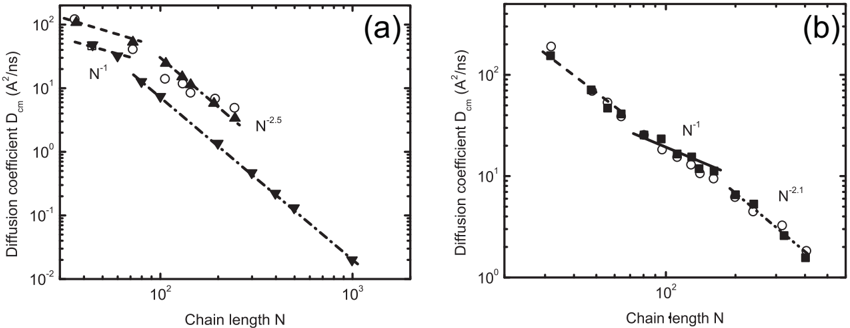
- Specific validations include FENE chains reproducing η₀ ∼ N and η₀ ∼ N³ for unentangled and entangled chains, with intermediate η₀ ∼ N³·⁴; BFM giving D_cm ∼ N⁻²·⁰⁸ with entanglements versus D_cm ∼ N⁻¹ without; blob-model PE giving D_cm ∼ N⁻² and η₀ ∼ N³·⁶; and slip-link inclusion of constraint release reducing η₀ by a factor of 3/5.
- Dynamic mapping onto the tube model shows the double reptation model overestimates and the dual constraint model underestimates Ψ(t) relative to direct primitive-path analysis; the hierarchical model with the Mittag-Leffler exponent α captures polydisperse PE and HPB relaxation.
Methods
- Design: critical review and tutorial comparing eleven multiscale computational techniques, organized into three categories, with fundamental ideas, equations, and key results for each.
- Scope/data: focuses on viscoelasticity and rheology of polymer melts and homopolymers; excludes self-consistent field theory and ab initio/DFT-to-classical bridging, and only briefly mentions polymer mixtures.
- Analysis: qualitative and quantitative comparison using literature results and illustrative simulations; tables compare approachable temporal and spatial scales, predictable properties, and acceleration.
Limitations
- Stated: the review is limited to viscoelasticity of polymer melts and homopolymers; polymer mixtures are only briefly mentioned, and self-consistent field theory and ab initio/DFT bridging are excluded.
- Stated: many methods remain limited to generic models or simple polymers/short chains; there is no direct mapping from BFM or FENE to the slip-link model; time-scaling/dynamical heterogeneity, transferability, thermodynamic consistency, and loss of internal degrees in coarse-graining remain challenges; rheological properties of the analytical super coarse-grained model have not been reported.
- Evident: as a review, it synthesizes prior work rather than presenting new primary experimental data, and its comparisons rely on cited simulations and experiments.
Model-written summary. Check it against the paper before relying on it.
Integrity signals
Registry
Cites
Statistics
Figures










Verification
Claims the paper makes
37 Valid · 24 Not valid · 201 Not checked · 242 Own results and interpretations
At least one cited source doesn’t support this claim or points to a different paper, and none confirmed it — see the verdicts below.
In the paper
“Such a linear, attractive tail function has been demonstrated to recover the correct pressure for coarse-grained polymer systems [83,211,212,239,240].”
§ Challenges in Multiscale Modeling of Polymer Dynamics > 4.1.4. Transferability and Thermodynamic Consistency
What the sources say
- Disputedcites [83] Meyer, 2000, Coarse graining of nonbonded inter-particle potentials using automatic simplex optimization to fit structural properties, J. Chem. Phys. sourceExperimental — accuracy not yet measured
The Isoprene Pseudo Monomers section (p. 11) reports that the coarse-grained model's pressure was about twice that of its reference system, not that it recovered the correct pressure. The Discussion and Conclusion (p. 14) says pressure could be added as a target observable for future transferability and that polymer force-field optimization was still in progress. Our copy does not describe a linear attractive tail that corrects pressure in a polymer system. (LLM, conf=0.87)
Checked by a reasoning model — may be wrong.
- Not checked — no full text of the sourcecites [211] Reith, 2002, CG-OPT: A software package for automatic force field design, Comput. Phys. Commun. source
- Not checked — no full text of the sourcecites [212] Reith, 2003, Deriving effective mesoscale potentials from atomistic simulations, J. Comput. Chem. source
- Not checked — no full text of the sourcecites [239] Eslami, 2011, Coarse-grained computer simulation of nanoconfined polyamide-6, 6, Macromolecules source
- Not checked — no full text of the sourcecites [240] Bayramoglu, 2012, Coarse-grained modeling of polystyrene in various environments by iterative Boltzmann inversion, Macromolecules source
boostedstates a cause- Asserted: passes — The authors put it forward as true.
- Checkable: passes — It can be checked against evidence.
- Load-bearing: unclear — It is unclear whether the paper’s conclusions depend on it.
- Based: passes — The paper gives a reason why it holds.
- Disputed
At least one cited source doesn’t support this claim or points to a different paper, and none confirmed it — see the verdicts below.
In the paper
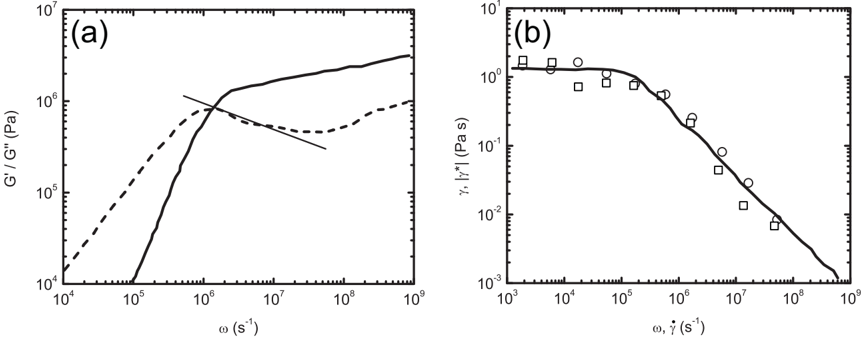
“In fact, G ∼ ω 1/4 in the intermediate range, due to the combined effects of reptation and CLF.”
§ Challenges in Multiscale Modeling of Polymer Dynamics > 5.4. Hierarchical Modeling of Polymer Rheology
What the sources say
- Not checked — no full text of the sourcecites [14] Likhtman, 2002, Quantitative theory for linear dynamics of linear entangled polymers, Macromolecules source
- Disputedcites [331] Milner, 1998, Reptation and contour-length fluctuations in melts of linear polymers, Phys. Rev. Lett. sourceExperimental — accuracy not yet measured
On p. 4, the paper assigns the intermediate-frequency ω^1/4 power law to the loss modulus G″, arising from contour-length fluctuations. It says the reptation contribution instead leads to a plateau in the storage modulus G′ at higher frequencies, contrary to the claim about G′. (LLM, conf=0.88)
Checked by a reasoning model — may be wrong.
plainstates a cause- Asserted: passes — The authors put it forward as true.
- Checkable: passes — It can be checked against evidence.
- Load-bearing: passes — The paper’s conclusions depend on it.
- Based: passes — The paper gives a reason why it holds.
The sources with a verdict support this claim; the rest weren’t checked yet, have no full text we could read, or their verdicts aren’t rated yet.
In the paper
“These phenomena have also been observed both in molecular dynamics (MD) simulations [2,3] and experiments [4].”
§ Challenges in Multiscale Modeling of Polymer Dynamics > 1. Introduction
What the sources say
- Supportedcites [2] Mondello, 1998, Dynamics of n-alkanes: Comparison to Rouse model, J. Chem. Phys. source
The Introduction (p. 2) reports Rouse-predicted scaling of self-diffusion and viscosity in experiments and says simulations reproduce the chain-length scaling. This paper supports the MD portion of the citing sentence; its Conclusions (p. 13) qualify its own n-alkane results as a crossover to Rouse-like behavior, rather than scaling across all chain lengths. The experiments in the citing sentence carry a separate citation. (LLM, conf=0.86)
- Not checked — no full text of the sourcecites [3] Harmandaris, 2002, Detailed molecular dynamics simulation of the self-diffusion of n-alkane and cis-1, 4 polyisoprene oligomer melts, J. Chem. Phys. source
- Not checked — no full text of the sourcecites [4] Fleischer, 1995, Chain length and temperature dependence of the self-diffusion of polyisoprene and polybutadiene in the melt, Macromolecules source
plainstates an association- Asserted: passes — The authors put it forward as true.
- Checkable: passes — It can be checked against evidence.
- Load-bearing: unclear — It is unclear whether the paper’s conclusions depend on it.
- Based: passes — The paper gives a reason why it holds.
- Supported
The sources with a verdict support this claim; the rest weren’t checked yet, have no full text we could read, or their verdicts aren’t rated yet.
In the paper
“Pütz et al. [105] studied the dynamic scattering factor, S(q), of entangled polymer chains and found that the S(q) of highly entangled polymer chains (N = 10, 000) can be well characterized by the tube model [5,107].”
§ Challenges in Multiscale Modeling of Polymer Dynamics > 3.2. FENE Model
What the sources say
- Supportedcites [105] Kremer, 2000, What is the entanglement length in a polymer melt?, EPL (Europhys. Lett.) source
The paper reports fitting the dynamic single-chain structure function S(k,t) to a tube-model expression for chains including N = 10000. On p. 3, it says the agreement is acceptable for N = 10000, supporting the claim about highly entangled chains. (LLM, conf=0.91)
- Not checked — no full text of the sourcecites [5] De Gennes, P.G. (1979). Scaling Concepts in Polymer Physics, Cornell University Press. source
- Not checked — no full text of the sourcecites [107] Kremer, 1984, Dynamics of polymer chains confined into tubes: Scaling theory and Monte Carlo simulations, J. Chem. Phys. source
plainstates an association- Asserted: passes — The authors put it forward as true.
- Checkable: passes — It can be checked against evidence.
- Load-bearing: unclear — It is unclear whether the paper’s conclusions depend on it.
- Based: passes — The paper gives a reason why it holds.
- Supported
The cited sources support only part of this claim — read each source’s verdict below.
In the paper
“From the above equation, it is clear that the derived coarse-grained potential function, U (R N ), is not a conventional potential energy function [82,83,176,177].”
§ Challenges in Multiscale Modeling of Polymer Dynamics > 4.1. Iterative Boltzmann Inversion Method
What the sources say
- Not checked — no full text of the sourcecites [82] Kremer, 1998, Simulation of polymer melts. I. Coarse-graining procedure for polycarbonates, Acta Polym. doi:10.1002/(sici)1521-4044(199802)49:2/3<61::aid-apol61>3.0.co;2-v
- Partly supportedcites [83] Meyer, 2000, Coarse graining of nonbonded inter-particle potentials using automatic simplex optimization to fit structural properties, J. Chem. Phys. sourceExperimental — accuracy not yet measured
In “Discussion and Conclusion” (p. 13), the paper says its piecewise coarse-grained potential lacks a theoretical interpretation beyond that of a numerical potential. That supports distinguishing it from a conventional physically interpreted potential, but the paper does not state that a derived U(R^N) is not a conventional potential energy function. (LLM, conf=0.76)
- Not checked — no full text of the sourcecites [176] Kremer, 1998, Simulation of polymer melts. II. From coarse-grained models back to atomistic description, Acta Polym. source
- Not matchedcites [177] Kremer, 1999, Simulation of polymer melts. I. Coarse-graining procedure for polycarbonates, Acta Polym.
Couldn’t be matched to a paper in Crossref, so it can’t be checked.
boosted- Asserted: passes — The authors put it forward as true.
- Checkable: passes — It can be checked against evidence.
- Load-bearing: passes — The paper’s conclusions depend on it.
- Based: passes — The paper gives a reason why it holds.
312 more claims · 24 with their cited sources checked
Create a free account to see all 504 claims and to verify the 8 references still open.
- It may state two separate claims as one. 107
- Probably not a substantial claim. 98
- The quote only partly states this claim. 3
Self-check
Percentages, sums and reported differences re-computed from the paper’s own numbers.
Each contradiction between two passages listed here was confirmed by an independent check.
Rated major: it would touch a result — a value a result rests on, reported and recomputed p-values on opposite sides of the significance level, two passages that conflict with no sign which is right, or a cited work retracted before this paper was published.
In the paper
§ Challenges in Multiscale Modeling of Polymer Dynamics > 4.1.1. Definition of Super Atom
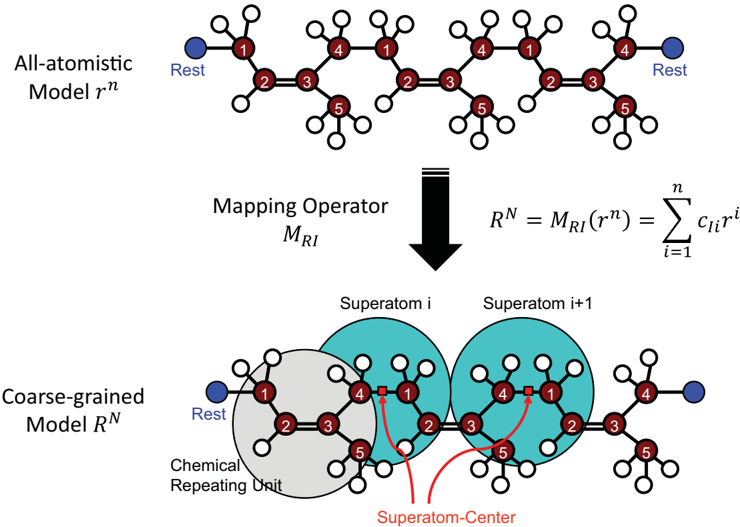
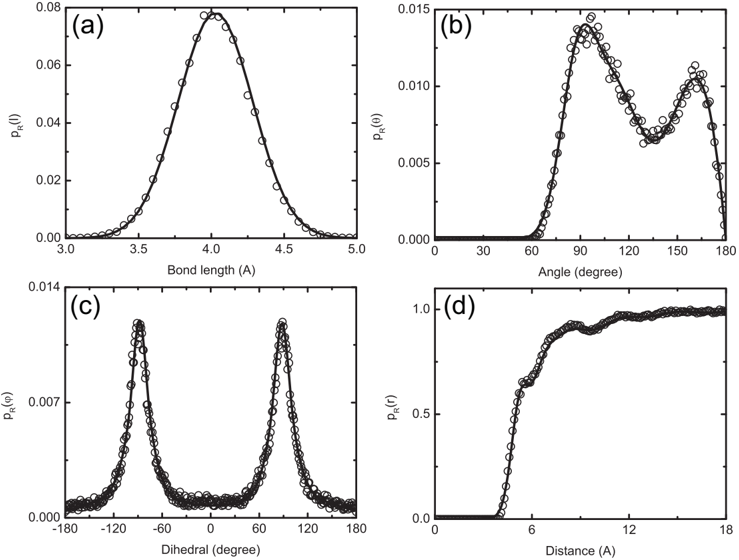
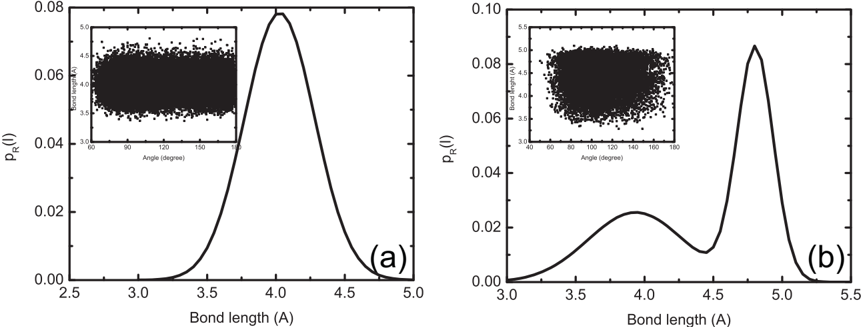
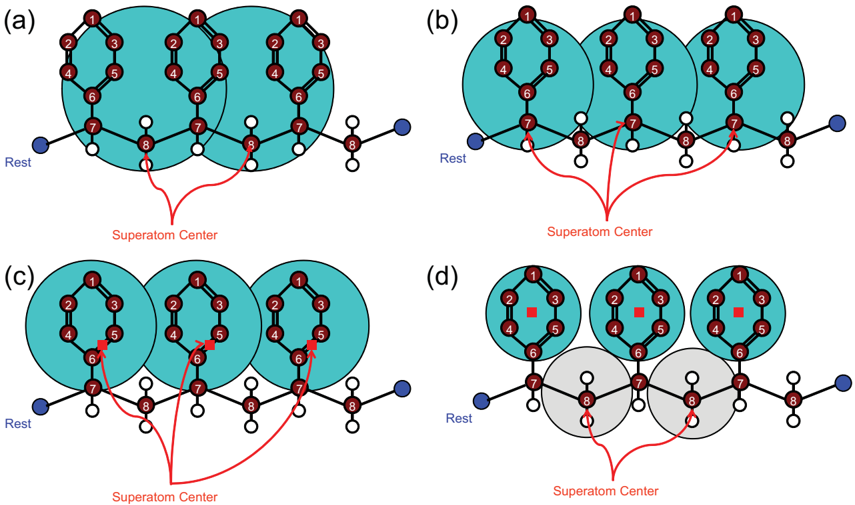
“One is the center of the PI monomer, and the other is the center of the carbon-carbon bond connecting two monomers together.The distribution functions, p R (l), for both of these definitions have been obtained (Figure 10).In the first case, p R (l) is characterized well by a single Gaussian”
§ Challenges in Multiscale Modeling of Polymer Dynamics > 4.1.1. Definition of Super Atom
“if the super-atomic center is defined as the center of mass of the cis-PI monomer (i.e., the carbon-carbon double bond), the p R (l) will have two peaks”
Rated minor: it would not touch a result — a value no result rests on, a p-value that stays on the same side of the significance level, or a conflict that is clerical, resolved elsewhere in the paper, or outside its own findings.
In the paper
§ Challenges in Multiscale Modeling of Polymer Dynamics > 3.3. Slip-Link Model
“the G(t) given by the Doi-Edwards model decays very quickly, compared with the slip-link model, since the Doi-Edwards model only considers reptation, whereas the slip-link model contains other relaxation mechanisms, i.e., the chain fluctuation and constraint release.”
§ Challenges in Multiscale Modeling of Polymer Dynamics > 1. Introduction
“Thus, CR is a cooperative phenomenon between different chains, while CLF can be considered as a single-chain phenomenon, but both hasten the relaxation process.”
Rated minor: it would not touch a result — a value no result rests on, a p-value that stays on the same side of the significance level, or a conflict that is clerical, resolved elsewhere in the paper, or outside its own findings.
In the paper
§ Challenges in Multiscale Modeling of Polymer Dynamics > 5.3. Concurrent Modeling of Polymer Melts under Shear Flow
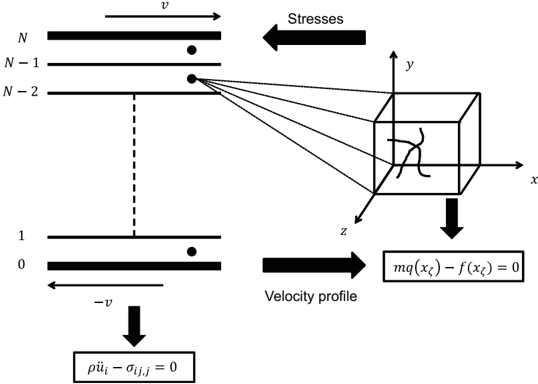
“Equations ( 35) and ( 36) are for the fine scale (MD), scale bridging (modified virial stress) and the coarse scale (continuum), respectively.”
§ Challenges in Multiscale Modeling of Polymer Dynamics > 5.3. Concurrent Modeling of Polymer Melts under Shear Flow
“mq (x ζ ) -f (x ζ ) = 0 for x ζ ∈ Θ ζ (35 ) ρü(x ζ ) -∇ • σ(x ζ ) = 0 for x ζ ∈ Ω (36 ) σ(x ζ ) = 1 2Θ ζ A B =A r AB ζ (x ζ ) ⊗ f AB ζ (x ζ )(37)”
Citations
Cites
Fast Parallel Algorithms for Short-Range Molecular Dynamics
Plimpton, S. (1995) · Journal of Computational Physics · doi:10.1006/jcph.1995.1039 · Cited by 44,721 · cited 2×
“To date, there is support for tabulated forms for all the potential functions, including pair, bond, angle and dihedral interactions, in the Large-scale Atomic/Molecular Massively Parallel Simulator (LAMMPS) [209].”
BackgroundViscoelastic Properties of Polymers
Ferry, J. D., & Myers, H. S. (1961) · Journal of The Electrochemical Society · doi:10.1149/1.2428174 · Cited by 13,487
An Introduction to Fluid Dynamics
Batchelor, G. K. (2000) · doi:10.1017/cbo9780511800955 · Cited by 12,360
The theory of polymer dynamics
Doi, M., & Edwards, S. F. (1986) · Cited by 12,024
Scaling Concepts in Polymer Physics
de Gennes, P. G., & Witten, T. A. (1980) · Physics Today · doi:10.1063/1.2914118 · Cited by 9,348 · cited 8×
“According to the tube model [5,6], assumed to describe the motion of these free chains, the viscous Cauchy stress can be formulated as [32]:”
BackgroundInfluentialHansen, J. P., McDonald, I. R., & Henderson, D. J. (1976) · Cited by 8,464
Sun, H. (1998) · The Journal of Physical Chemistry B · doi:10.1021/jp980939v · Cited by 6,001 · cited 1×
“The ab initio force field COMPASS [180] was used for the all-atomistic simulations.”
MethodEmerging applications of stimuli-responsive polymer materials
Stuart, M. A. C., Huck, W. T. S., Genzer, J., Müller, M., Ober, C., Stamm, M., Sukhorukov, G. B., Szleifer, I., Tsukruk, V. V., Urban, M., et al. (2010) · Nature Materials · doi:10.1038/nmat2614 · Cited by 5,707 · cited 1×
“number of important applications were newly added in the recent past, including block copolymers and nanocomposites [53]; screening effects in polyelectrolyte brushes [54]; mixed polymer brushes [55]; harvesting cells cultured on thermoresponsive polymer brushes [56,57]; morphology control of hairy”
BackgroundRole of repulsive forces in determining the equilibrium structure of simple liquids
Weeks, J. D., Chandler, D., & Andersen, H. C. (1971) · The Journal of Chemical Physics · doi:10.1063/1.1674820 · Cited by 5,207 · cited 1×
“For dense polymeric systems, all the beads interact with each other through the Weeks-Chandler-Andersen (WCA) potential [103], which is a Lennard-Jones potential cut off at its minimum and shifted to zero.”
BackgroundBird, R. B. (1977) · Medical Entomology and Zoology · Cited by 4,951
Research works printed but not linked: 12
- Likhtman, A.E. (2011). Comprehensive Polymer Science, Elsevier.
- Holm, 2009, Advanced computer simulation approaches for soft matter sciences III, Adv. Polym. Sci., 221, 1
- Müller, M., and Schmid, F. (2005). Advanced Computer Simulation Approaches for Soft Matter Sciences II, Springer.
- Kremer, 1998, Simulation of polymer melts. II. From coarse-grained models back to atomistic description, Acta Polym., 49, 75, 10.1002/(sici)1521-4044(199802)49:2/3 · doi:10.1002/(sici)1521-4044(199802)49:2/3
- Kremer, 1999, Simulation of polymer melts. I. Coarse-graining procedure for polycarbonates, Acta Polym., 49, 61
- Karimi-Varzaneh, H., and Müller-Plathe, F. (2012). Multiscale Molecular Methods in Applied Chemistry, Springer.
- Savin, 2013, Thermodynamic formulation of flowing soft matter with transient forces, Rheol. Acta, 52, 23, 10.1007/s00397-012-0661-7 · DOI · Paper page
- 2002, Projection from an atomistic chain contour to its primitive path, Polymer, 43, 477, 10.1016/s0032-3861(01)00422-0 · DOI · Paper page
- Ilg, P., Mavrantzas, V.G., and Öttinger, H.C. (2010). Modeling and Simulations in Polymers, Wiley-VCH.
- Kremer, 1999, Simulation of polymer melts. II. From coarse-grained models back to atomistic description, Acta Polym., 49, 75
- Succi, S. (2001). Numerical Mathematics and Scientific Computation, Oxford University Press.
- Harmandaris, 2005, Molecular dynamics simulation of a polymer melt/solid interface: Local dynamics and chain mobility in a thin film of polyethylene melt adsorbed on graphite, Macromolecules, 38, 5796, 10.1021/ma050177j · DOI · Paper page
Cited by
Modeling and Simulations of Polymers: A Roadmap
Gartner, T. E., & Jayaraman, A. (2019) · Macromolecules · doi:10.1021/acs.macromol.8b01836 · Cited by 548
Computer modelling of the surface tension of the gas–liquid and liquid–liquid interface
Ghoufi, A., Malfreyt, P., & Tildesley, D. J. (2016) · Chemical Society Reviews · doi:10.1039/c5cs00736d · Cited by 245
A Review of Multiscale Computational Methods in Polymeric Materials
Gooneie, A., Schuschnigg, S., & Holzer, C. (2017) · Polymers · doi:10.3390/polym9010016 · Cited by 227
“Ui+1 CG(q) = Ui CG(q) + kBT ln pi R(q) ptarget R (q) (47) The iterative algorithm i IBI co ares the probability distribution functi ns f t e CG model with the corresponding target probability distributio functions f A simulations ptarget, and im roves the calculated CG potential functions in a step-wise man er accordi…”
BackgroundMethodInfluentialEveraers, R., Karimi-Varzaneh, H. A., Fleck, F., Hojdis, N., & Svaneborg, C. (2020) · Macromolecules · doi:10.1021/acs.macromol.9b02428 · Cited by 211
“) the ratio of packing and Kuhn length, p/lK, Eq. (11), (ii) the number of Kuhn segments per entanglement length, NeK, Eqs. (15) and (16), (iii) the ratio of tube diameter and Kuhn length, dT/lK, Eq. (12), and (iv) the ratioofthe Kuhn and entanglement times, τe/τK, Eq. (13). Matching NK assures (i) comparable ratios o…”
BackgroundLiu, J., Liu, J., Wang, S., Huang, J., Wu, S., Tang, Z., Guo, B., & Zhang, L. (2017) · Journal of Materials Chemistry A · doi:10.1039/c7ta08255j · Cited by 168
Machine-Learning-Guided Discovery of 19 F MRI Agents Enabled by Automated Copolymer Synthesis
Reis, M. H., Gusev, F., Taylor, N. G., Chung, S. H., Verber, M., Lee, Y. Z., Isayev, O., & Leibfarth, F. A. (2021) · Journal of the American Chemical Society · doi:10.1021/jacs.1c08181 · Cited by 169
Experimental Polymer Mechanochemistry and its Interpretational Frameworks
Akbulatov, S. V., & Boulatov, R. (2017) · ChemPhysChem · doi:10.1002/cphc.201601354 · Cited by 150
Perspective: Advances, Challenges, and Insight for Predictive Coarse-Grained Models
Noid, W. G. (2023) · The Journal of Physical Chemistry B · doi:10.1021/acs.jpcb.2c08731 · Cited by 165
Molecular simulation guided constitutive modeling on finite strain viscoelasticity of elastomers
Li, Y., Tang, S., Kröger, M., & Liu, W. K. (2015) · Journal of the Mechanics and Physics of Solids · doi:10.1016/j.jmps.2015.12.007 · Cited by 146
Self-citationKaratrantos, A., Clarke, N., & Kröger, M. (2016) · Journal of macromolecular science. Part C, Reviews in macromolecular chemistry and physics/Journal of macromolecular science. Reviews in macromolecular chemistry and physics · doi:10.1080/15583724.2015.1090450 · Cited by 146
“The modeling of polymer nanocomposites still poses a challenge within a multiscale approach to polymer dynamics.(19) From a fundamental point of view, polymer structure and conformations in nanocomposites clearly influence mechanical,(7) rheological,(22,23) tribological,(24) optical,(25,26) and electrical(27) properti…”
BackgroundSelf-citationKröger, M., Dietz, J. D., Hoy, R. S., & Luap, C. (2022) · Computer Physics Communications · doi:10.1016/j.cpc.2022.108567 · Cited by 155
Self-citationChemically specific coarse‐graining of polymers: Methods and prospects
Dhamankar, S., & Webb, M. A. (2021) · Journal of Polymer Science · doi:10.1002/pol.20210555 · Cited by 126
Decorating Nanoparticle Surface for Targeted Drug Delivery: Opportunities and Challenges
Shen, Z., Nieh, M., & Li, Y. (2016) · Polymers · doi:10.3390/polym8030083 · Cited by 127
“Through a systematic coarse-graining process [67,68], an accurate DPD model has been developed for PEG polymers, which can reproduce their end-to-end distance Ree and radius of gyration Rg in water.”
MethodSelf-citationHou, M., Qi, W., Li, L., et al. (2021) · Journal of Membrane Science · doi:10.1016/j.memsci.2021.119541 · Cited by 115
Simulating the Flow of Entangled Polymers
Masubuchi, Y. (2014) · Annual Review of Chemical and Biomolecular Engineering · doi:10.1146/annurev-chembioeng-060713-040401 · Cited by 127
Understanding and Modeling Polymers: The Challenge of Multiple Scales
Schmid, F. (2022) · ACS Polymers Au · doi:10.1021/acspolymersau.2c00049 · Cited by 131
Simultaneous Iterative Boltzmann Inversion for Coarse-Graining of Polyurea
Agrawal, V., Arya, G., & Oswald, J. (2014) · Macromolecules · doi:10.1021/ma500320n · Cited by 117
“…of systematically coarse-grained methods with other multiscale modeling methods for polymers, the reader is referred to the recent review article by Li et al.13 In this paper, we develop a systematic approach for coarsegraining polyurea by using the iterative Boltzmann inversion (IBI)…”
MethodResolving Dynamic Properties of Polymers through Coarse-Grained Computational Studies
Salerno, K. M., Agrawal, A., Perahia, D., & Grest, G. S. (2016) · Physical Review Letters · doi:10.1103/physrevlett.116.058302 · Cited by 115
Ruff, K. M., Harmon, T. S., & Pappu, R. V. (2015) · The Journal of Chemical Physics · doi:10.1063/1.4935066 · Cited by 93
Farrell, K., Oden, J. T., & Faghihi, D. (2015) · Journal of Computational Physics · doi:10.1016/j.jcp.2015.03.071 · Cited by 88
Multiscale modeling in smart cities: A survey on applications, current trends, and challenges
Khan, A., Aslam, S., Aurangzeb, K., Alhussein, M. A., & Javaid, N. (2021) · Sustainable Cities and Society · doi:10.1016/j.scs.2021.103517 · Cited by 100
Smart Polymers for Advanced Applications: A Mechanical Perspective Review
Brighenti, R., Li, Y., & Vernerey, F. J. (2020) · Frontiers in Materials · doi:10.3389/fmats.2020.00196 · Cited by 103
Self-citationMoyassari, A., Gkourmpis, T., Hedenqvist, M. S., & Gedde, U. W. (2019) · Macromolecules · doi:10.1021/acs.macromol.8b01874 · Cited by 88
The role of hydrophobic modification on hyaluronic acid dynamics and self-assembly
Payne, W. M., Svechkarev, D. A., Kyrychenko, A. V., & Mohs, A. M. (2017) · Carbohydrate Polymers · doi:10.1016/j.carbpol.2017.10.054 · Cited by 87
Process-directed self-assembly of copolymers: Results of and challenges for simulation studies
Müller, M. (2020) · Progress in Polymer Science · doi:10.1016/j.progpolymsci.2019.101198 · Cited by 85
Dynamic structure of unentangled polymer chains in the vicinity of non-attractive nanoparticles
Li, Y., Kröger, M., & Liu, W. K. (2014) · Soft Matter · doi:10.1039/c3sm51564h · Cited by 81
Self-citationEntanglements and Fracture in Polymers
Kang, T., Dai, J., Huang, Y., Kim, H., Keten, S., & Kim, J. (2025) · Chemical Reviews · doi:10.1021/acs.chemrev.5c00459 · Cited by 97
Predictive multiscale modeling for Unidirectional Carbon Fiber Reinforced Polymers
Gao, J., Shakoor, M., Domel, G., et al. (2019) · Composites Science and Technology · doi:10.1016/j.compscitech.2019.107922 · Cited by 73
Self-citationAssessment of the PETase conformational changes induced by poly(ethylene terephthalate) binding
da Costa, C. H. S., dos Santos, A. M., Alves, C. N., Martí, S., Moliner, V., da Costa, K. S., & Lameira, J. (2021) · Proteins Structure Function and Bioinformatics · doi:10.1002/prot.26155 · Cited by 76
Ye, H., Xian, W., & Li, Y. (2021) · ACS Omega · doi:10.1021/acsomega.0c05321 · Cited by 73
“5 The force-matching method intends to match the force distribution of the CG model to that obtained from AA molecular simulations.”
BackgroundMethodInfluentialSelf-citationCoarse-Grained Models for Protein-Cell Membrane Interactions
Bradley, R. P., & Radhakrishnan, R. (2013) · Polymers · doi:10.3390/polym5030890 · Cited by 78
Modeling of Entangled Polymer Diffusion in Melts and Nanocomposites: A Review
Karatrantos, A., Composto, R. J., Winey, K. I., Kröger, M., & Clarke, N. (2019) · Polymers · doi:10.3390/polym11050876 · Cited by 68
“While there are numerous simulation studies investigating polymer structure [1–7], reinforcement [8–10], entanglements [11–15] and their effect on macroscopic properties, such as viscosity [16–18], and mechanical properties [19], on the contrary, there are much fewer studies focusing to the simulation of entangled pol…”
BackgroundSelf-citationPredicting experimental results for polyethylene by computer simulation
Ramos, J., Vega, J. F., & Martínez‐Salazar, J. (2017) · European Polymer Journal · doi:10.1016/j.eurpolymj.2017.12.027 · Cited by 69
“Several excellent books and reviews exist on polymer simulations and modelling where the reader can find very valuable information [29-38].”
BackgroundMethodAssociative thickeners for waterborne paints: Structure, characterization, rheology, and modeling
Larson, R. G., Dyk, A. K. V., Chatterjee, T., & Ginzburg, V. V. (2022) · Progress in Polymer Science · doi:10.1016/j.progpolymsci.2022.101546 · Cited by 73
Energy Renormalization Method for the Coarse-Graining of Polymer Viscoelasticity
Song, J., Hsu, D. D., Shull, K. R., Phelan, F. R., Douglas, J. F., Xia, W., & Keten, S. (2018) · Macromolecules · doi:10.1021/acs.macromol.7b02560 · Cited by 66
Multiscale modeling and uncertainty quantification in nanoparticle-mediated drug/gene delivery
Li, Y., Stroberg, W., Lee, T.-R., Kim, H., Man, H., Ho, D., Decuzzi, P., & Liu, W. K. (2013) · Computational Mechanics · doi:10.1007/s00466-013-0953-5 · Cited by 70
Self-citationMaurel, G., Goujon, F., Schnell, B., & Malfreyt, P. (2015) · The Journal of Physical Chemistry C · doi:10.1021/jp510979d · Cited by 62
Nguyen, T. D., Tao, L., & Li, Y. (2022) · Frontiers in Chemistry · doi:10.3389/fchem.2021.820417 · Cited by 67
“…dynamics (CGMD) rather than all-atom modeling can serve as an effective approach for reducing tremendously computational cost and complexity of chemical space while maintaining modeling accuracy (Li et al., 2013; Ingólfsson et al., 2014; Webb et al., 2019; Wang et al., 2020a; Ye et al., 2021).”
BackgroundMethodInfluentialSelf-citationStructure–Mechanics Relation of Natural Rubber: Insights from Molecular Dynamics Simulations
Chen, Q., Zhang, Z., Huang, Y., Zhao, H., Chen, Z., Gao, K., Yue, T., Zhang, L., & Liu, J. (2022) · ACS Applied Polymer Materials · doi:10.1021/acsapm.2c00147 · Cited by 61
Coarse-Grained Modeling of Polyethylene Melts: Effect on Dynamics
Peters, B. L., Salerno, K. M., Agrawal, A., Perahia, D., & Grest, G. S. (2017) · Journal of Chemical Theory and Computation · doi:10.1021/acs.jctc.7b00241 · Cited by 58
Duan, K., He, Y., Li, Y., Liu, J., Zhang, J., Hu, Y., Lin, R., Wang, X., Deng, W., & Li, L. (2019) · Materials & Design · doi:10.1016/j.matdes.2019.108130 · Cited by 52
Self-citationPugar, J. A., Gang, C., Huang, C. S., Haider, K. W., & Washburn, N. R. (2022) · ACS Applied Materials & Interfaces · doi:10.1021/acsami.1c24715 · Cited by 52
Zhelavskyi, O., & Kyrychenko, A. V. (2019) · Journal of Molecular Graphics and Modelling · doi:10.1016/j.jmgm.2019.04.004 · Cited by 47
Encoding and selecting coarse-grain mapping operators with hierarchical graphs
Chakraborty, M., Xu, C., & White, A. D. (2018) · The Journal of Chemical Physics · doi:10.1063/1.5040114 · Cited by 54
Steenbakkers, R. J. A., Tzoumanekas, C., Li, Y., Liu, W. K., Kröger, M., & Schieber, J. D. (2014) · New Journal of Physics · doi:10.1088/1367-2630/16/1/015027 · Cited by 45
Self-citationKopal, I., Harničárová, M., Valíček, J., & Kušnerová, M. (2017) · Polymers · doi:10.3390/polym9100519 · Cited by 47
“Many different multi-scale computational techniques are described in detail in [17].”
BackgroundAgrawal, V., Holzworth, K., Nantasetphong, W., Amirkhizi, A. V., Oswald, J., & Nemat‐Nasser, S. (2016) · Journal of Polymer Science Part B Polymer Physics · doi:10.1002/polb.23976 · Cited by 47
Hoy, R. S., & Kröger, M. (2020) · Physical Review Letters · doi:10.1103/physrevlett.124.147801 · Cited by 49
Self-citationUSNCTAM perspectives on mechanics in medicine
Bao, G., Bazilevs, Y., Chung, J.-H., Decuzzi, P., Espinosa, H. D., Mauro Ferrari, B., Gao, H., Hossain, S. S., Hughes, T. J. R., Kamm, R. D., et al. (2014) · Journal of The Royal Society Interface · doi:10.1098/rsif.2014.0301 · Cited by 48
Self-citationWang, W., Hou, G., Zheng, Z., Wang, L., Liu, J., Wu, Y., Zhang, L., & Lyulin, A. V. (2017) · Physical Chemistry Chemical Physics · doi:10.1039/c7cp01453h · Cited by 45
Predicting the Mobility Increase of Coarse-Grained Polymer Models from Excess Entropy Differences
Rondina, G. G., Böhm, M. C., & Müller‐Plathe, F. (2020) · Journal of Chemical Theory and Computation · doi:10.1021/acs.jctc.9b01088 · Cited by 40
Multiscale approach to equilibrating model polymer melts
Svaneborg, C., Karimi‐Varzaneh, H. A., Hojdis, N. W., Fleck, F., & Everaers, R. (2016) · Physical review. E · doi:10.1103/physreve.94.032502 · Cited by 41
Nanoscale Study of Polymer Dynamics
Keshavarz, M., Engelkamp, H., Xu, J., Braeken, E., Otten, M. B. J., Uji‐i, H., Schwartz, E., Koepf, M., Vananroye, A., Vermant, J., et al. (2015) · ACS Nano · doi:10.1021/acsnano.5b06931 · Cited by 41
Dingreville, R., Karnesky, R. A., Puel, G., & Schmitt, J. (2015) · Journal of Materials Science · doi:10.1007/s10853-015-9551-6 · Cited by 43
“gress made in metals. The authors readily recognize many areas where the integration of experimentswithmultiscalemodelinghasaffectedthe Materials Science community, for example in the area of polymers [39,40], or biomaterials [41–43]. The purposeofthismanuscriptistoprovidetheMaterialsSciencecommunitywithacoherentovervi…”
BackgroundLiu, Y., Xian, W., He, J., & Li, Y. (2023) · International Journal of Smart and Nano Materials · doi:10.1080/19475411.2023.2261777 · Cited by 45
“…between the micro-and the mesoscopic structural evolution may become difficult to trace when one tries to integrate them and to establish multiscale models [25] because the macroscopic fractures of the networks are hierarchical processes, which involve different zones near the crack-tip [26].”
BackgroundSelf-citationIntegrating Machine Learning in the Coarse-Grained Molecular Simulation of Polymers
Ricci, E., & Vergadou, N. (2023) · The Journal of Physical Chemistry B · doi:10.1021/acs.jpcb.2c06354 · Cited by 43
Li, Y. (2016) · Soft Matter · doi:10.1039/c6sm00108d · Cited by 39
Self-citationA least-squares particle model with other techniques for 2D viscoelastic fluid/free surface flow
Jiang, T., Ren, J., Yuan, J., et al. (2020) · Journal of Computational Physics · doi:10.1016/j.jcp.2020.109255 · Cited by 37
Shireen, Z., Weeratunge, H., Menzel, A., Phillips, A. W., Larson, R. G., Smith‐Miles, K., & Hajizadeh, E. (2022) · npj Computational Materials · doi:10.1038/s41524-022-00914-4 · Cited by 46
PEGylated “stealth” nanoparticles and liposomes
Shen, Z., Fisher, A., Liu, W. K., & Li, Y. (2018) · Elsevier eBooks · doi:10.1016/b978-0-08-101750-0.00001-5 · Cited by 54
Self-citationTailoring the mechanical properties by molecular integration of flexible and stiff polymer networks
Wan, H., Shen, J., Gao, N., Liu, J., Gao, Y., & Zhang, L. (2018) · Soft Matter · doi:10.1039/c7sm02282d · Cited by 35
Transferability and Nonbond Functional Form of Coarse Grained Force Field – Tested on Linear Alkanes
Cao, F., & Sun, H. (2015) · Journal of Chemical Theory and Computation · doi:10.1021/acs.jctc.5b00573 · Cited by 35
“over atom-specific force field.(1-6) Significant efforts have been devoted to parameterizations,”
BackgroundPrediction of structural and thermomechanical properties of polymers from multiscale simulations
Maurel, G., Goujon, F., Schnell, B., & Malfreyt, P. (2015) · RSC Advances · doi:10.1039/c4ra16417b · Cited by 35
Realistic Coarse-Grain Model ofcis-1,4-Polybutadiene: From Chemistry to Rheology
Kempfer, K., Devémy, J., Dequidt, A., Couty, M., & Malfreyt, P. (2019) · Macromolecules · doi:10.1021/acs.macromol.8b02750 · Cited by 36
Development of DPD coarse-grained models: From bulk to interfacial properties
Canchaya, J. G. S., Dequidt, A., Goujon, F., & Malfreyt, P. (2016) · The Journal of Chemical Physics · doi:10.1063/1.4960114 · Cited by 35
Lebold, K. M., & Noid, W. G. (2019) · The Journal of Chemical Physics · doi:10.1063/1.5125246 · Cited by 33
Khan, P. M., Kaushik, R. K., & Jayaraj, A. (2022) · ACS Omega · doi:10.1021/acsomega.2c06248 · Cited by 36
Loaldi, D., Regi, F., Baruffi, F., Calaon, M., Quagliotti, D., Zhang, Y., & Tosello, G. (2020) · Micromachines · doi:10.3390/mi11060614 · Cited by 29
Effects of Coarse-Graining on Molecular Simulation of Craze Formation in Polymer Glass
Wang, J., Veld, P. J. I. ’., Robbins, M. O., & Ge, T. (2022) · Macromolecules · doi:10.1021/acs.macromol.1c01969 · Cited by 28
Dynamics in entangled polyethylene melts
Salerno, K. M., Agrawal, A., Peters, B. L., Perahia, D., & Grest, G. S. (2016) · The European Physical Journal Special Topics · doi:10.1140/epjst/e2016-60142-7 · Cited by 31
Radhakrishnan, R. (2020) · AIChE Journal · doi:10.1002/aic.17026 · Cited by 29
“A class of algorithms that realize this challenging integration have been reviewed in Reference 46: examples include the quasicontinuum approach, finite-element/atomistic method, bridging scale method, and the Schwartz inequality method, 156,157 which all employ domain decomposition bridging by performing molecular sc…”
BackgroundAtomistic Descriptions of thecis-1,4-Polybutadiene/Silica Interfaces
Kempfer, K., Devémy, J., Dequidt, A., Couty, M., & Malfreyt, P. (2019) · ACS Applied Polymer Materials · doi:10.1021/acsapm.8b00274 · Cited by 31
A generalized tube model of rubber elasticity
Darabi, E., & Itskov, M. (2020) · Soft Matter · doi:10.1039/d0sm02055a · Cited by 30
Polymer crystallization under external flow
Sheng, J., Chen, W., Cui, K., & Li, L. (2022) · Reports on Progress in Physics · doi:10.1088/1361-6633/ac4d92 · Cited by 27
Filled Elastomers: Mechanistic and Physics-Driven Modeling and Applications as Smart Materials
Xian, W., Zhan, Y.-S., Maiti, A., Saab, A. P., & Li, Y. (2024) · Polymers · doi:10.3390/polym16101387 · Cited by 31
Self-citationBenchmark of Schemes for Multiscale Molecular Dynamics Simulations
Goga, N., Melo, M. N., Rzepiela, A. J., de Vries, A. H., Hadăr, A., Marrink, . J., & Berendsen, H. J. C. (2015) · Journal of Chemical Theory and Computation · doi:10.1021/ct501102b · Cited by 26
Ryu, M. S., Kim, H. G., Kim, H. Y., Min, K.-S., Kim, H. J., & Lee, H. M. (2017) · Physical Chemistry Chemical Physics · doi:10.1039/c7cp00080d · Cited by 23
Importance of Interface in the Coarse-Grained Model of CNT /Epoxy Nanocomposites
Duan, K., Li, L., Wang, F., Meng, W., Hu, Y., & Wang, X. (2019) · Nanomaterials · doi:10.3390/nano9101479 · Cited by 25
“As for the CNTs-reinforced PNCs, although the force fields of CNTs and polymer matrix can be successfully derived, respectively, from the force matching and IBI approach [23,29,30], there is still a lack of the definition on the interface interactions between CNTs and the polymer matrix material.”
BackgroundHou, G., Tao, W., Liu, J., Gao, Y., Zhang, L., & Li, Y. (2017) · Physical Chemistry Chemical Physics · doi:10.1039/c7cp06199d · Cited by 25
Self-citationToward Making Polymer Chemistry Autonomous
Basak, S., & Bandyopadhyay, A. (2024) · ACS Applied Engineering Materials · doi:10.1021/acsaenm.4c00214 · Cited by 33
Designing Superlattice Structure via Self-Assembly of One-Component Polymer-Grafted Nanoparticles
Hou, G., Xia, X., Liu, J., Wang, W., Dong, M., & Zhang, L. (2019) · The Journal of Physical Chemistry B · doi:10.1021/acs.jpcb.8b11118 · Cited by 24
Panagiotou, E., & Kröger, M. (2014) · Physical Review E · doi:10.1103/physreve.90.042602 · Cited by 21
Self-citationNonmonotonic dependence of polymer-glass mechanical response on chain bending stiffness
Ness, C., Palyulin, V. V., Milkus, R., Elder, R. M., Sirk, T. W., & Zaccone, A. (2017) · Physical review. E · doi:10.1103/physreve.96.030501 · Cited by 23
Cao, F., Deetz, J. D., & Sun, H. (2016) · Journal of Chemical Information and Modeling · doi:10.1021/acs.jcim.6b00685 · Cited by 21
Molecular modeling of the interface of an egg yolk protein-based emulsion
Ferrari, M., Handgraaf, J., Boccardo, G., et al. (2022) · Physics of Fluids · doi:10.1063/5.0079883 · Cited by 21
Molecular simulation-guided and physics-informed mechanistic modeling of multifunctional polymers
Chen, G., Xian, W., Wang, Q., & Li, Y. (2021) · Acta Mechanica Sinica · doi:10.1007/s10409-021-01100-3 · Cited by 23
“Consequently, the number of degrees of freedom can be reduced and a larger time step can be chosen to accelerate the simulation [91, 202].”
BackgroundSelf-citationTransferability of a coarse-grained atactic polystyrene model: Thermodynamics and structure
Xia, J., Xiao, Q., & Guo, H. (2018) · Polymer · doi:10.1016/j.polymer.2018.06.057 · Cited by 21
Surface Ripples of Polymeric Nanofibers under Tension: The Crucial Role of Poisson’s Ratio
Tang, S., Li, Y., Liu, W. K., & Huang, X. (2014) · Macromolecules · doi:10.1021/ma5012599 · Cited by 22
Self-citationYue, T., Zhang, Z., Zhang, Z., et al. (2022) · Nano Energy · doi:10.1016/j.nanoen.2022.107584 · Cited by 21
Nguyen, H. T. L., & Huang, D. M. (2022) · The Journal of Chemical Physics · doi:10.1063/5.0085006 · Cited by 21
Shalygina, Т. А., Rudenko, M. S., Nemtsev, I. V., et al. (2021) · Polymers · doi:10.3390/polym13223864 · Cited by 20
Yang, S., & Qu, J. (2014) · Modelling and Simulation in Materials Science and Engineering · doi:10.1088/0965-0393/22/6/065011 · Cited by 23
Hente, A., Arash, B., & Rolfes, R. (2021) · Polymer · doi:10.1016/j.polymer.2021.123741 · Cited by 23
Age-aware constitutive materials model for a 3D printed polymeric foam
Maiti, A., Small, W., Lewicki, J. P., Chinn, S. C., Wilson, T. S., & Saab, A. P. (2019) · Scientific Reports · doi:10.1038/s41598-019-52298-z · Cited by 20
Chen, Q., Liu, Z., Huang, Y., Hu, A., Huang, W., Zhang, L., Cui, L., & Liu, J. (2023) · Langmuir · doi:10.1021/acs.langmuir.3c01878 · Cited by 19
Toward High Fidelity Materials Property Prediction from Multiscale Modeling and Simulation
Vassaux, M., Sinclair, R. C., Richardson, R. A., Suter, J. L., & Coveney, P. V. (2019) · Advanced Theory and Simulations · doi:10.1002/adts.201900122 · Cited by 25
From bonds to breaks: multiscale perspectives on polymer network fracture
Tang, Z., Xian, W., He, J., Long, R., & Li, Y. (2025) · International Journal of Smart and Nano Materials · doi:10.1080/19475411.2025.2582826 · Cited by 24
Self-citationThe archetype-genome exemplar in molecular dynamics and continuum mechanics
Greene, M. S., Li, Y., Chen, W., & Liu, W. K. (2013) · Computational Mechanics · doi:10.1007/s00466-013-0925-9 · Cited by 18
Self-citationHarmandaris, V. (2014) · Korea-Australia Rheology Journal · doi:10.1007/s13367-014-0003-7 · Cited by 19
“…interfaces, is a very active research field, and various models and methods have been proposed in the literature (see for example the recent reviews by Guenza, 2008; Padding and Briels, 2011; Shell, 2012; Li et al., 2012; Johnston and Harmandaris, 2013b; Li et al., 2013 and references within).”
MethodXie, Z., Chai, D., Wang, Y., & Tan, H. (2016) · The Journal of Physical Chemistry B · doi:10.1021/acs.jpcb.6b06457 · Cited by 18
Metadata
- Authors
- Li, Y., Abberton, B., Kröger, M., & Liu, W.
- Affiliations
- Northwestern University (US)
- ETH Zurich (CH)
- Venue
- Polymers
- Publisher
- MDPI AG
- Published
- 2013-06-13
- Volume
- 5
- Issue
- 2
- Pages
- 751-832
- ISSN
- 2073-4360 (ISSN-L)
- OpenAlex
- W1972149909
- Cited by
- 222
- References
- 437
- Citations by year
- 2026: 12 · 2025: 16 · 2024: 15 · 2023: 9 · 2022: 20 · 2021: 21 · 2020: 25 · 2019: 24 · 2018: 13 · 2017: 21 · 2016: 13 · 2015: 17 · 2014: 13 · 2013: 3
- FWCI
- 12.18
- Type
- journal article
- Language
- en
- Open access
- gold
- dx.doi.org
- Licence
- Locations
- Polymers (publishedVersion, cc-by)
- DOAJ (DOAJ: Directory of Open Access Journals) (submittedVersion, cc-by-sa)
- Repository for Publications and Research Data (ETH Zurich) (submittedVersion, cc-by)
- ETH Zürich Research Collection (cc-by)
- Funders
- National Science Foundation (0928320, 0823327, DE-AC02–06CH11357, 1130948)
- U.S. Department of Energy (DE‐ AC02‐06CH11357, AC02‐06CH11357, contract DE-AC02-06CH11357, 06CH11357, DE-AC02-)
- Northwestern University (DE-AC02-06CH11357)
- National Research Foundation
- National Research Foundation of Korea (DE-AC02-06CH11357)
- Ministry of Education, Science and Technology (R33-10079)
- Office of Science (AC02‐06CH11357, DE-AC02, 06CH11357, DE-AC02-06CH11357)
- Division of Civil, Mechanical and Manufacturing Innovation
- Argonne National Laboratory (DE- AC02-06-CH11357, DE-AC02, AC02–06CH11357, 06CH11357, under contract DE-AC02-06CH11357)
- Topics
- Physical Sciences › Chemical Engineering › Fluid Flow and Transfer Processes › Rheology and Fluid Dynamics Studies
- Physical Sciences › Chemistry › Physical and Theoretical Chemistry › Advanced Physical and Chemical Molecular Interactions
- Physical Sciences › Materials Science › Polymers and Plastics › Polymer crystallization and properties
- Keywords
- multiscale modeling, polymer dynamics, coarse-graining, polymer rheology, polymer chemistry, polymers
About these checks
Registry, retraction, Cites and statistics results are computed, not judged, with one exception: a printed reference that no index lists is read once by a model before it counts as a citation error. Claims are extracted by a model and kept only when their quote appears verbatim in the text; each cited source is then checked, with a model’s help, for whether it says what the claim relies on. Those verdicts can be wrong — read the claim’s quote and the cited source before relying on one.
The claim verdicts this report counts are experimental: their accuracy is not yet measured.
A language model drew the claims from the paper on 2026-09-28, under version 3 of the claim definition (prompt extract-v3).
A second model labelled each claim on 2026-09-28 (model jev-1.13-20260917, definition revision gold-guideline-v0.2).
Cited sources are checked with a language model’s help (gpt-6-sol).
Statistics and arithmetic are recomputed, not judged.
Confidence bands are shown only for fields calibrated on our annotated test set. None is calibrated yet, so no band is shown.
What counts as a claim ›How we measure confidence ›How we check this ›
Are you an author, or do you see a problem with this page? Request a review
Data sources
Bibliographic data: Semantic Scholar, OpenAlex, Crossref.
Contains information from the Semantic Scholar Academic Graph Datasets, made available under the ODC Attribution License (ODC-BY 1.0).
Semantic Scholar’s data is described in: Kinney, R., et al. (2023). The Semantic Scholar Open Data Platform. arXiv:2301.10140.
