

Challenges in Multiscale Modeling of Polymer Dynamics
Open accessThe DOI matches its Crossref record; 412 of the 437 references it cites were found in a registry or an index; 53 of the 367 sources its claims cite were checked for support.
Abstract
The mechanical and physical properties of polymeric materials originate from the interplay of phenomena at different spatial and temporal scales. As such, it is necessary to adopt multiscale techniques when modeling polymeric materials in order to account for all important mechanisms. Over the past two decades, a number of different multiscale computational techniques have been developed that can be divided into three categories: (i) coarse-graining methods for generic polymers; (ii) systematic coarse-graining methods and (iii) multiple-scale-bridging methods. In this work, we discuss and compare eleven different multiscale computational techniques falling under these categories and assess them critically according to their ability to provide a rigorous link between polymer chemistry and rheological material properties. For each technique, the fundamental ideas and equations are introduced, and the most important results or predictions are shown and discussed. On the one hand, this review provides a comprehensive tutorial on multiscale computational techniques, which will be of interest to readers newly entering this field; on the other, it presents a critical discussion of the future opportunities and key challenges in the multiscale modeling of polymeric materials and how these methods can help us to optimize and design new polymeric materials.
Overview
CoChat Summary
TL;DR
This review categorizes and compares eleven multiscale computational techniques for polymer dynamics into three groups: coarse-graining for generic polymers, systematic coarse-graining, and multiple-scale-bridging methods. It assesses their ability to link polymer chemistry to rheological properties and discusses key challenges and future opportunities.
Key findings
- The review divides methods into (i) coarse-graining for generic polymers, (ii) systematic coarse-graining (IBI, blob, super coarse-graining), and (iii) multiple-scale-bridging methods (dynamic mapping onto the tube model, molecularly-derived constitutive equation, concurrent modeling, hierarchical modeling).
- Reported speedups versus all-atomistic simulations are about 10²× for IBI, 10³–10⁴× for the blob model, and roughly 10⁶× for super coarse-graining; the hierarchical framework predicts cis-PI storage and loss moduli over 10⁻⁴ to 10⁶ rad s⁻¹.
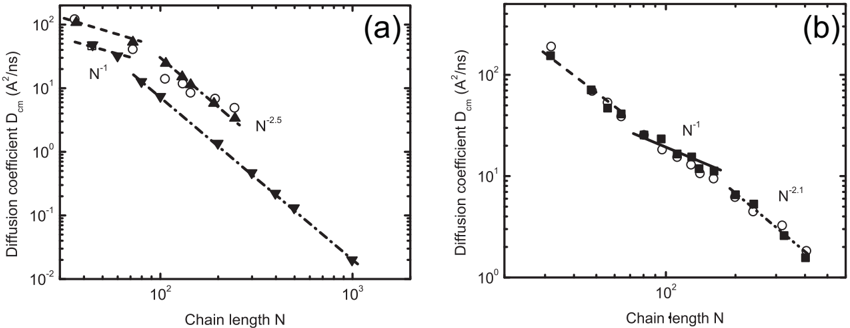
- Specific validations include FENE chains reproducing η₀ ∼ N and η₀ ∼ N³ for unentangled and entangled chains, with intermediate η₀ ∼ N³·⁴; BFM giving D_cm ∼ N⁻²·⁰⁸ with entanglements versus D_cm ∼ N⁻¹ without; blob-model PE giving D_cm ∼ N⁻² and η₀ ∼ N³·⁶; and slip-link inclusion of constraint release reducing η₀ by a factor of 3/5.
- Dynamic mapping onto the tube model shows the double reptation model overestimates and the dual constraint model underestimates Ψ(t) relative to direct primitive-path analysis; the hierarchical model with the Mittag-Leffler exponent α captures polydisperse PE and HPB relaxation.
Methods
- Design: critical review and tutorial comparing eleven multiscale computational techniques, organized into three categories, with fundamental ideas, equations, and key results for each.
- Scope/data: focuses on viscoelasticity and rheology of polymer melts and homopolymers; excludes self-consistent field theory and ab initio/DFT-to-classical bridging, and only briefly mentions polymer mixtures.
- Analysis: qualitative and quantitative comparison using literature results and illustrative simulations; tables compare approachable temporal and spatial scales, predictable properties, and acceleration.
Limitations
- Stated: the review is limited to viscoelasticity of polymer melts and homopolymers; polymer mixtures are only briefly mentioned, and self-consistent field theory and ab initio/DFT bridging are excluded.
- Stated: many methods remain limited to generic models or simple polymers/short chains; there is no direct mapping from BFM or FENE to the slip-link model; time-scaling/dynamical heterogeneity, transferability, thermodynamic consistency, and loss of internal degrees in coarse-graining remain challenges; rheological properties of the analytical super coarse-grained model have not been reported.
- Evident: as a review, it synthesizes prior work rather than presenting new primary experimental data, and its comparisons rely on cited simulations and experiments.
Model-written summary. Check it against the paper before relying on it.
Integrity signals
Registry
Cites
Statistics
Figures










Verification
Claims the paper makes
37 Valid · 24 Not valid · 201 Not checked · 242 Own results and interpretations
At least one cited source doesn’t support this claim or points to a different paper, and none confirmed it — see the verdicts below.
In the paper
“Such a linear, attractive tail function has been demonstrated to recover the correct pressure for coarse-grained polymer systems [83,211,212,239,240].”
§ Challenges in Multiscale Modeling of Polymer Dynamics > 4.1.4. Transferability and Thermodynamic Consistency
What the sources say
- Disputedcites [83] Meyer, 2000, Coarse graining of nonbonded inter-particle potentials using automatic simplex optimization to fit structural properties, J. Chem. Phys. sourceExperimental — accuracy not yet measured
The Isoprene Pseudo Monomers section (p. 11) reports that the coarse-grained model's pressure was about twice that of its reference system, not that it recovered the correct pressure. The Discussion and Conclusion (p. 14) says pressure could be added as a target observable for future transferability and that polymer force-field optimization was still in progress. Our copy does not describe a linear attractive tail that corrects pressure in a polymer system. (LLM, conf=0.87)
Checked by a reasoning model — may be wrong.
- Not checked — no full text of the sourcecites [211] Reith, 2002, CG-OPT: A software package for automatic force field design, Comput. Phys. Commun. source
- Not checked — no full text of the sourcecites [212] Reith, 2003, Deriving effective mesoscale potentials from atomistic simulations, J. Comput. Chem. source
- Not checked — no full text of the sourcecites [239] Eslami, 2011, Coarse-grained computer simulation of nanoconfined polyamide-6, 6, Macromolecules source
- Not checked — no full text of the sourcecites [240] Bayramoglu, 2012, Coarse-grained modeling of polystyrene in various environments by iterative Boltzmann inversion, Macromolecules source
boostedstates a cause- Asserted: passes — The authors put it forward as true.
- Checkable: passes — It can be checked against evidence.
- Load-bearing: unclear — It is unclear whether the paper’s conclusions depend on it.
- Based: passes — The paper gives a reason why it holds.
- Disputed
At least one cited source doesn’t support this claim or points to a different paper, and none confirmed it — see the verdicts below.
In the paper
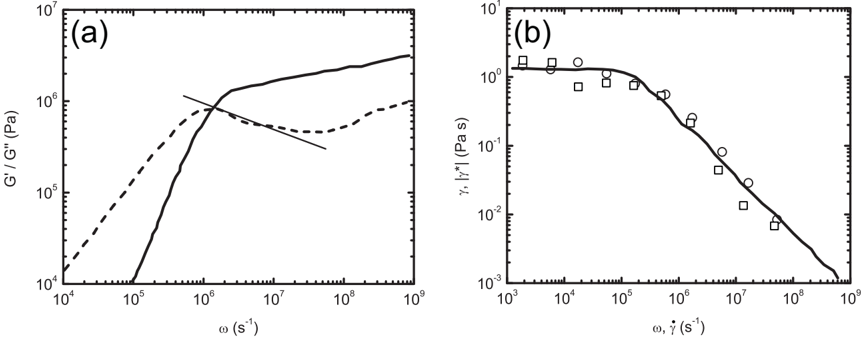
“In fact, G ∼ ω 1/4 in the intermediate range, due to the combined effects of reptation and CLF.”
§ Challenges in Multiscale Modeling of Polymer Dynamics > 5.4. Hierarchical Modeling of Polymer Rheology
What the sources say
- Not checked — no full text of the sourcecites [14] Likhtman, 2002, Quantitative theory for linear dynamics of linear entangled polymers, Macromolecules source
- Disputedcites [331] Milner, 1998, Reptation and contour-length fluctuations in melts of linear polymers, Phys. Rev. Lett. sourceExperimental — accuracy not yet measured
On p. 4, the paper assigns the intermediate-frequency ω^1/4 power law to the loss modulus G″, arising from contour-length fluctuations. It says the reptation contribution instead leads to a plateau in the storage modulus G′ at higher frequencies, contrary to the claim about G′. (LLM, conf=0.88)
Checked by a reasoning model — may be wrong.
plainstates a cause- Asserted: passes — The authors put it forward as true.
- Checkable: passes — It can be checked against evidence.
- Load-bearing: passes — The paper’s conclusions depend on it.
- Based: passes — The paper gives a reason why it holds.
The sources with a verdict support this claim; the rest weren’t checked yet, have no full text we could read, or their verdicts aren’t rated yet.
In the paper
“These phenomena have also been observed both in molecular dynamics (MD) simulations [2,3] and experiments [4].”
§ Challenges in Multiscale Modeling of Polymer Dynamics > 1. Introduction
What the sources say
- Supportedcites [2] Mondello, 1998, Dynamics of n-alkanes: Comparison to Rouse model, J. Chem. Phys. source
The Introduction (p. 2) reports Rouse-predicted scaling of self-diffusion and viscosity in experiments and says simulations reproduce the chain-length scaling. This paper supports the MD portion of the citing sentence; its Conclusions (p. 13) qualify its own n-alkane results as a crossover to Rouse-like behavior, rather than scaling across all chain lengths. The experiments in the citing sentence carry a separate citation. (LLM, conf=0.86)
- Not checked — no full text of the sourcecites [3] Harmandaris, 2002, Detailed molecular dynamics simulation of the self-diffusion of n-alkane and cis-1, 4 polyisoprene oligomer melts, J. Chem. Phys. source
- Not checked — no full text of the sourcecites [4] Fleischer, 1995, Chain length and temperature dependence of the self-diffusion of polyisoprene and polybutadiene in the melt, Macromolecules source
plainstates an association- Asserted: passes — The authors put it forward as true.
- Checkable: passes — It can be checked against evidence.
- Load-bearing: unclear — It is unclear whether the paper’s conclusions depend on it.
- Based: passes — The paper gives a reason why it holds.
- Supported
The sources with a verdict support this claim; the rest weren’t checked yet, have no full text we could read, or their verdicts aren’t rated yet.
In the paper
“Pütz et al. [105] studied the dynamic scattering factor, S(q), of entangled polymer chains and found that the S(q) of highly entangled polymer chains (N = 10, 000) can be well characterized by the tube model [5,107].”
§ Challenges in Multiscale Modeling of Polymer Dynamics > 3.2. FENE Model
What the sources say
- Supportedcites [105] Kremer, 2000, What is the entanglement length in a polymer melt?, EPL (Europhys. Lett.) source
The paper reports fitting the dynamic single-chain structure function S(k,t) to a tube-model expression for chains including N = 10000. On p. 3, it says the agreement is acceptable for N = 10000, supporting the claim about highly entangled chains. (LLM, conf=0.91)
- Not checked — no full text of the sourcecites [5] De Gennes, P.G. (1979). Scaling Concepts in Polymer Physics, Cornell University Press. source
- Not checked — no full text of the sourcecites [107] Kremer, 1984, Dynamics of polymer chains confined into tubes: Scaling theory and Monte Carlo simulations, J. Chem. Phys. source
plainstates an association- Asserted: passes — The authors put it forward as true.
- Checkable: passes — It can be checked against evidence.
- Load-bearing: unclear — It is unclear whether the paper’s conclusions depend on it.
- Based: passes — The paper gives a reason why it holds.
- Supported
The cited sources support only part of this claim — read each source’s verdict below.
In the paper
“From the above equation, it is clear that the derived coarse-grained potential function, U (R N ), is not a conventional potential energy function [82,83,176,177].”
§ Challenges in Multiscale Modeling of Polymer Dynamics > 4.1. Iterative Boltzmann Inversion Method
What the sources say
- Not checked — no full text of the sourcecites [82] Kremer, 1998, Simulation of polymer melts. I. Coarse-graining procedure for polycarbonates, Acta Polym. doi:10.1002/(sici)1521-4044(199802)49:2/3<61::aid-apol61>3.0.co;2-v
- Partly supportedcites [83] Meyer, 2000, Coarse graining of nonbonded inter-particle potentials using automatic simplex optimization to fit structural properties, J. Chem. Phys. sourceExperimental — accuracy not yet measured
In “Discussion and Conclusion” (p. 13), the paper says its piecewise coarse-grained potential lacks a theoretical interpretation beyond that of a numerical potential. That supports distinguishing it from a conventional physically interpreted potential, but the paper does not state that a derived U(R^N) is not a conventional potential energy function. (LLM, conf=0.76)
- Not checked — no full text of the sourcecites [176] Kremer, 1998, Simulation of polymer melts. II. From coarse-grained models back to atomistic description, Acta Polym. source
- Not matchedcites [177] Kremer, 1999, Simulation of polymer melts. I. Coarse-graining procedure for polycarbonates, Acta Polym.
Couldn’t be matched to a paper in Crossref, so it can’t be checked.
boosted- Asserted: passes — The authors put it forward as true.
- Checkable: passes — It can be checked against evidence.
- Load-bearing: passes — The paper’s conclusions depend on it.
- Based: passes — The paper gives a reason why it holds.
312 more claims · 24 with their cited sources checked
Create a free account to see all 504 claims and to verify the 8 references still open.
- It may state two separate claims as one. 107
- Probably not a substantial claim. 98
- The quote only partly states this claim. 3
Self-check
Percentages, sums and reported differences re-computed from the paper’s own numbers.
Each contradiction between two passages listed here was confirmed by an independent check.
Rated major: it would touch a result — a value a result rests on, reported and recomputed p-values on opposite sides of the significance level, two passages that conflict with no sign which is right, or a cited work retracted before this paper was published.
In the paper
§ Challenges in Multiscale Modeling of Polymer Dynamics > 4.1.1. Definition of Super Atom
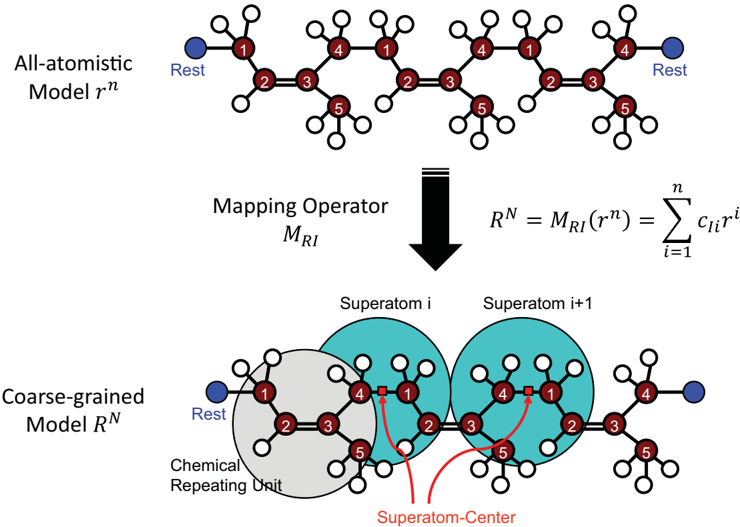
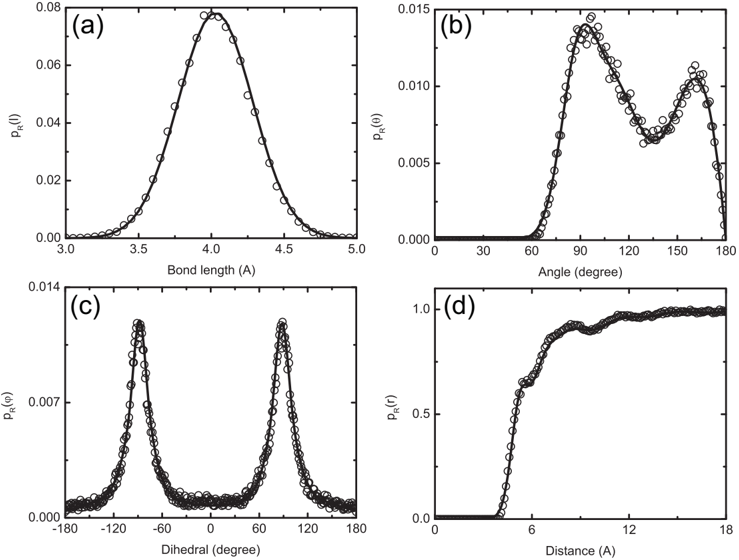
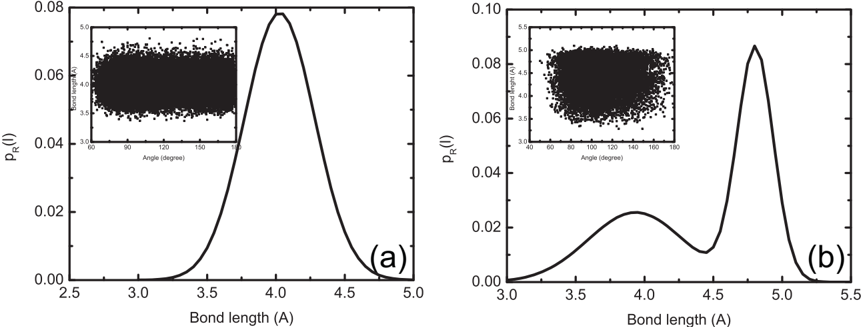
“One is the center of the PI monomer, and the other is the center of the carbon-carbon bond connecting two monomers together.The distribution functions, p R (l), for both of these definitions have been obtained (Figure 10).In the first case, p R (l) is characterized well by a single Gaussian”
§ Challenges in Multiscale Modeling of Polymer Dynamics > 4.1.1. Definition of Super Atom
“if the super-atomic center is defined as the center of mass of the cis-PI monomer (i.e., the carbon-carbon double bond), the p R (l) will have two peaks”
Rated minor: it would not touch a result — a value no result rests on, a p-value that stays on the same side of the significance level, or a conflict that is clerical, resolved elsewhere in the paper, or outside its own findings.
In the paper
§ Challenges in Multiscale Modeling of Polymer Dynamics > 3.3. Slip-Link Model
“the G(t) given by the Doi-Edwards model decays very quickly, compared with the slip-link model, since the Doi-Edwards model only considers reptation, whereas the slip-link model contains other relaxation mechanisms, i.e., the chain fluctuation and constraint release.”
§ Challenges in Multiscale Modeling of Polymer Dynamics > 1. Introduction
“Thus, CR is a cooperative phenomenon between different chains, while CLF can be considered as a single-chain phenomenon, but both hasten the relaxation process.”
Rated minor: it would not touch a result — a value no result rests on, a p-value that stays on the same side of the significance level, or a conflict that is clerical, resolved elsewhere in the paper, or outside its own findings.
In the paper
§ Challenges in Multiscale Modeling of Polymer Dynamics > 5.3. Concurrent Modeling of Polymer Melts under Shear Flow
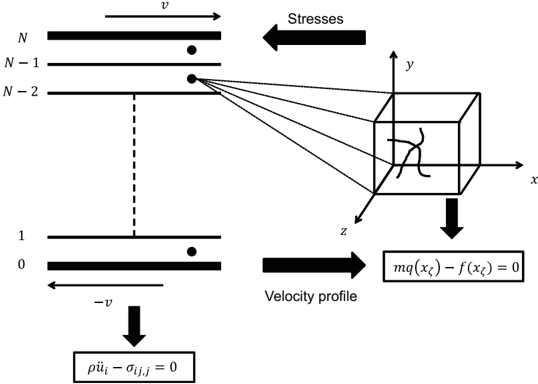
“Equations ( 35) and ( 36) are for the fine scale (MD), scale bridging (modified virial stress) and the coarse scale (continuum), respectively.”
§ Challenges in Multiscale Modeling of Polymer Dynamics > 5.3. Concurrent Modeling of Polymer Melts under Shear Flow
“mq (x ζ ) -f (x ζ ) = 0 for x ζ ∈ Θ ζ (35 ) ρü(x ζ ) -∇ • σ(x ζ ) = 0 for x ζ ∈ Ω (36 ) σ(x ζ ) = 1 2Θ ζ A B =A r AB ζ (x ζ ) ⊗ f AB ζ (x ζ )(37)”
Citations
Cites
Fast Parallel Algorithms for Short-Range Molecular Dynamics
Plimpton, S. (1995) · Journal of Computational Physics · doi:10.1006/jcph.1995.1039 · Cited by 44,721 · cited 2×
“To date, there is support for tabulated forms for all the potential functions, including pair, bond, angle and dihedral interactions, in the Large-scale Atomic/Molecular Massively Parallel Simulator (LAMMPS) [209].”
BackgroundViscoelastic Properties of Polymers
Ferry, J. D., & Myers, H. S. (1961) · Journal of The Electrochemical Society · doi:10.1149/1.2428174 · Cited by 13,487
An Introduction to Fluid Dynamics
Batchelor, G. K. (2000) · doi:10.1017/cbo9780511800955 · Cited by 12,360
The theory of polymer dynamics
Doi, M., & Edwards, S. F. (1986) · Cited by 12,024
Scaling Concepts in Polymer Physics
de Gennes, P. G., & Witten, T. A. (1980) · Physics Today · doi:10.1063/1.2914118 · Cited by 9,348 · cited 8×
“According to the tube model [5,6], assumed to describe the motion of these free chains, the viscous Cauchy stress can be formulated as [32]:”
BackgroundInfluentialHansen, J. P., McDonald, I. R., & Henderson, D. J. (1976) · Cited by 8,464
Sun, H. (1998) · The Journal of Physical Chemistry B · doi:10.1021/jp980939v · Cited by 6,001 · cited 1×
“The ab initio force field COMPASS [180] was used for the all-atomistic simulations.”
MethodEmerging applications of stimuli-responsive polymer materials
Stuart, M. A. C., Huck, W. T. S., Genzer, J., Müller, M., Ober, C., Stamm, M., Sukhorukov, G. B., Szleifer, I., Tsukruk, V. V., Urban, M., et al. (2010) · Nature Materials · doi:10.1038/nmat2614 · Cited by 5,707 · cited 1×
“number of important applications were newly added in the recent past, including block copolymers and nanocomposites [53]; screening effects in polyelectrolyte brushes [54]; mixed polymer brushes [55]; harvesting cells cultured on thermoresponsive polymer brushes [56,57]; morphology control of hairy”
BackgroundRole of repulsive forces in determining the equilibrium structure of simple liquids
Weeks, J. D., Chandler, D., & Andersen, H. C. (1971) · The Journal of Chemical Physics · doi:10.1063/1.1674820 · Cited by 5,207 · cited 1×
“For dense polymeric systems, all the beads interact with each other through the Weeks-Chandler-Andersen (WCA) potential [103], which is a Lennard-Jones potential cut off at its minimum and shifted to zero.”
BackgroundBird, R. B. (1977) · Medical Entomology and Zoology · Cited by 4,951
Research works printed but not linked: 12
- Likhtman, A.E. (2011). Comprehensive Polymer Science, Elsevier.
- Holm, 2009, Advanced computer simulation approaches for soft matter sciences III, Adv. Polym. Sci., 221, 1
- Müller, M., and Schmid, F. (2005). Advanced Computer Simulation Approaches for Soft Matter Sciences II, Springer.
- Kremer, 1998, Simulation of polymer melts. II. From coarse-grained models back to atomistic description, Acta Polym., 49, 75, 10.1002/(sici)1521-4044(199802)49:2/3 · doi:10.1002/(sici)1521-4044(199802)49:2/3
- Kremer, 1999, Simulation of polymer melts. I. Coarse-graining procedure for polycarbonates, Acta Polym., 49, 61
- Karimi-Varzaneh, H., and Müller-Plathe, F. (2012). Multiscale Molecular Methods in Applied Chemistry, Springer.
- Savin, 2013, Thermodynamic formulation of flowing soft matter with transient forces, Rheol. Acta, 52, 23, 10.1007/s00397-012-0661-7 · DOI · Paper page
- 2002, Projection from an atomistic chain contour to its primitive path, Polymer, 43, 477, 10.1016/s0032-3861(01)00422-0 · DOI · Paper page
- Ilg, P., Mavrantzas, V.G., and Öttinger, H.C. (2010). Modeling and Simulations in Polymers, Wiley-VCH.
- Kremer, 1999, Simulation of polymer melts. II. From coarse-grained models back to atomistic description, Acta Polym., 49, 75
- Succi, S. (2001). Numerical Mathematics and Scientific Computation, Oxford University Press.
- Harmandaris, 2005, Molecular dynamics simulation of a polymer melt/solid interface: Local dynamics and chain mobility in a thin film of polyethylene melt adsorbed on graphite, Macromolecules, 38, 5796, 10.1021/ma050177j · DOI · Paper page
Cited by
Items 101–200 of 227
Multi-scale modeling of the polymer–filler interaction
Kempfer, K., Devémy, J., Dequidt, A., Couty, M., & Malfreyt, P. (2020) · Soft Matter · doi:10.1039/c9sm01959f · Cited by 19
A coarse-grained model for mechanical behavior of phosphorene sheets
Liu, N., Becton, M., Zhang, L., Chen, H., Zeng, X., Pidaparti, R. M. V., & Wang, X. (2018) · Physical Chemistry Chemical Physics · doi:10.1039/c8cp06918b · Cited by 17
Assessing numerical methods for molecular and particle simulation
Shang, X., Kröger, M., & Leimkuhler, B. (2017) · Soft Matter · doi:10.1039/c7sm01526g · Cited by 24
“Such systems can be investigated qualitatively using coarse-graining strategies and multiscale modeling approaches of various kinds [33,63].”
BackgroundSelf-citationSystematic and simulation-free coarse graining of homopolymer melts: A structure-based study
Yang, D., & Wang, Q. (2015) · The Journal of Chemical Physics · doi:10.1063/1.4906493 · Cited by 15
Pervaje, A. K., Pasquinelli, M. A., Khan, S. A., & Santiso, E. E. (2022) · Macromolecules · doi:10.1021/acs.macromol.1c00630 · Cited by 17
Effects of Graphite and Plasticizers on the Structure of Highly Entangled Polyisoprene Melts
Giunta, G., Svaneborg, C., Karimi‐Varzaneh, H. A., & Carbone, P. (2019) · ACS Applied Polymer Materials · doi:10.1021/acsapm.9b00815 · Cited by 16
Rapid rheological characterization of a viscoelastic fluid based on spatiotemporal flow velocimetry
Shiratori, T., Tasaka, Y., & Murai, Y. (2015) · Experimental Thermal and Fluid Science · doi:10.1016/j.expthermflusci.2015.10.012 · Cited by 15
Solution of the complete Curtiss-Bird model for polymeric liquids subjected to simple shear flow
Stephanou, P. S., & Kröger, M. (2016) · The Journal of Chemical Physics · doi:10.1063/1.4944674 · Cited by 14
Self-citationNon-constant link tension coefficient in the tumbling-snake model subjected to simple shear
Stephanou, P. S., & Kröger, M. (2017) · The Journal of Chemical Physics · doi:10.1063/1.4991935 · Cited by 15
Self-citationModular-based multiscale modeling on viscoelasticity of polymer nanocomposites
Li, Y., Liu, Z., Jia, Z., Liu, W. K., Aldousari, S. M., Hedia, H. S., & Asiri, S. (2016) · Computational Mechanics · doi:10.1007/s00466-016-1346-3 · Cited by 14
Self-citationCanchaya, J. G. S., Dequidt, A., Garruchet, S., Latour, B., Martzel, N., Devémy, J., Goujon, F., Blaak, R., Schnell, B., Munch, É., et al. (2019) · The Journal of Chemical Physics · doi:10.1063/1.5115148 · Cited by 16
Multiscale Modeling in Smart Cities: A Survey on applications, Current Trends, and Challenges
(2021) · doi:10.20944/preprints202106.0008.v1 · Cited by 14
“review and present challenges related to polymer dynamics [19].”
BackgroundEffects of Coarse-Graining on Molecular Simulations of Mechanical Properties of Glassy Polymers
Ge, T., Wang, J., & Robbins, M. O. (2021) · Macromolecules · doi:10.1021/acs.macromol.0c02467 · Cited by 15
Liu, J., Liang, S., Zhu, Y., Zhao, L., Huang, M., & Li, Z. (2024) · International Journal of Mechanical Sciences · doi:10.1016/j.ijmecsci.2024.109542 · Cited by 15
Noncovalent Interactions in Nanotechnology
Cooper, V. R., Lam, C. N., Wang, Y., & Sumpter, B. G. (2017) · Elsevier eBooks · doi:10.1016/b978-0-12-809835-6.00016-5 · Cited by 10
Molecular simulation of polymers with a SAFT-γ Mie approach
Pervaje, A. K., Walker, C. C., & Santiso, E. E. (2019) · Molecular Simulation · doi:10.1080/08927022.2019.1645331 · Cited by 13
Tensile Stress-Driven Surface Wrinkles on Cylindrical Core–Shell Soft Solids
Tang, S., Li, Y., Liu, W. K., Hu, N., Peng, X., & Guo, Z. (2015) · Journal of Applied Mechanics · doi:10.1115/1.4031244 · Cited by 13
Self-citationMolecular simulation for predicting the rheological properties of polymer melts
Xi, L. (2019) · Molecular Simulation · doi:10.1080/08927022.2019.1605600 · Cited by 13
“tangled or, more often, weakly-entangled chains (from MD) to highly-entangled systems comparable to experiments [91, 107, 134, 135, 143, 151, 152, 161].”
BackgroundResultChen, J., Gao, Q., Huang, M., & Yu, K. (2025) · Physical Chemistry Chemical Physics · doi:10.1039/d4cp02989e · Cited by 14
Yue, T., Zhao, H., Wei, Y., Duan, P., Zhang, L., Wang, J., & Liu, J. (2024) · Macromolecules · doi:10.1021/acs.macromol.3c01871 · Cited by 12
Assessing numerical methods for molecular and particle simulation
Shang, X., Kröger, M., & Leimkuhler, B. (2017) · Repository for Publications and Research Data (ETH Zurich) · doi:10.3929/ethz-b-000219173 · Cited by 13
Self-citationCoarse grain forces in star polymer melts
Liu, L., den Otter, W. K., & Briels, W. J. (2014) · Soft Matter · doi:10.1039/c4sm00767k · Cited by 14
Prediction of the relaxation modulus of a fluoroelastomer using molecular dynamics simulation
Tamir, E., Srebnik, S., & Sidess, A. (2020) · Chemical Engineering Science · doi:10.1016/j.ces.2020.115786 · Cited by 11
Zheng, X., Xia, W., & Zhang, Y. (2024) · Extreme Mechanics Letters · doi:10.1016/j.eml.2024.102252 · Cited by 11
Zhang, X.-Z., Shi, R., Lu, Z., & Qian, H. (2024) · JACS Au · doi:10.1021/jacsau.3c00756 · Cited by 15
Systematic and simulation-free coarse graining of homopolymer melts: a relative-entropy-based study
Yang, D., & Wang, Q. (2015) · Soft Matter · doi:10.1039/c5sm01142f · Cited by 11
Kapoor, U., Kulshreshtha, A., & Jayaraman, A. (2020) · Polymers · doi:10.3390/polym12112764 · Cited by 10
“This is expected of CG models and has been discussed in prior review articles on CG modeling of polymer dynamics [9,39,40,147].”
MethodPolybutadiene Copolymers via Atomistic and Systematic Coarse-Grained Simulations
Rissanou, A. N., Chazirakis, A., Polińska, P., Burkhart, C., Doxastakis, M., & Harmandaris, V. (2021) · Macromolecules · doi:10.1021/acs.macromol.1c01939 · Cited by 13
Scalable and fast heterogeneous molecular simulation with predictive parallelization schemes
Guzman, H. V., Junghans, C., Kremer, K., & Stuehn, T. (2017) · Physical review. E · doi:10.1103/physreve.96.053311 · Cited by 11
Yue, T., Li, S., Zhang, Z., Chen, Y., Zhang, L., & Liu, J. (2021) · Physical Chemistry Chemical Physics · doi:10.1039/d0cp06532c · Cited by 12
Sun, L., Pan, F., & Li, S. (2022) · Membranes · doi:10.3390/membranes12080730 · Cited by 12
“In this work, we used CG method, which treats a group of atoms as one bead, to model lipid molecules [34] (Figure 1).”
MethodMaiti, A. (2019) · Rheologica Acta · doi:10.1007/s00397-019-01138-y · Cited by 11
Coarse-Graining Atactic Polystyrene and Its Analogues
Agrawal, A., Aryal, D., Perahia, D., Ge, T., & Grest, G. S. (2014) · Macromolecules · doi:10.1021/ma500319v · Cited by 9
Numerical study of smart honeycomb core using shape memory polymers
Tao, R., Yang, Q., Zhang, X., Liu, X., He, X., & Liew, K. M. (2017) · Journal of Applied Polymer Science · doi:10.1002/app.45672 · Cited by 8
Walker, C. C., Genzer, J., & Santiso, E. E. (2020) · The Journal of Chemical Physics · doi:10.1063/1.5126213 · Cited by 9
Wei, S., Hou, G., Ren, R., Li, X., Weng, Y., & Liu, J. (2023) · Physical Chemistry Chemical Physics · doi:10.1039/d3cp01309j · Cited by 10
Zhu, H., Szymczyk, A., & Ghoufi, A. (2024) · Discover Nano · doi:10.1186/s11671-024-04020-w · Cited by 10
“Each tier from atomic-level interactions to macroscopic functionality must be accurately represented and aligned with its counterparts to ensure that the emergent model faithfully predicts real-world behavior [168].”
BackgroundGiri, R. K., & Swaminathan, N. (2022) · Computational Materials Science · doi:10.1016/j.commatsci.2022.111309 · Cited by 8
Olowookere, F. V., Barbosa, G. D., & Turner, C. H. (2023) · Macromolecules · doi:10.1021/acs.macromol.3c02211 · Cited by 10
Yue, T., Zhao, H., Qu, J., Zhang, L., & Liu, J. (2024) · Langmuir · doi:10.1021/acs.langmuir.4c02769 · Cited by 8
Laurent, H., Hughes, M. D. G., Walko, M., Brockwell, D. J., Mahmoudi, N., Youngs, T. G. A., Headen, T. F., & Dougan, L. (2023) · Biomacromolecules · doi:10.1021/acs.biomac.3c00583 · Cited by 7
Molecular simulation of the viscosity of asymmetric dense mixtures
Crusius, J.-P., Santacreu, S. D., Galliéro, G., & Vesovic, V. (2021) · Journal of Molecular Liquids · doi:10.1016/j.molliq.2021.117052 · Cited by 7
Multiscale modeling beyond equilibrium
Schieber, J. D., & Hütter, M. (2020) · Physics Today · doi:10.1063/pt.3.4430 · Cited by 8
Boudraa, K. E., Bouchaour, T., & Maschke, U. (2019) · Journal of Thermal Analysis and Calorimetry · doi:10.1007/s10973-019-08898-y · Cited by 9
Grain Shape Dynamics for Molecular Simulations at the Mesoscale
Martzel, N., Dequidt, A., Devémy, J., Blaak, R., Garruchet, S., Latour, B., Goujon, F., Munch, É., & Malfreyt, P. (2020) · Advanced Theory and Simulations · doi:10.1002/adts.202000124 · Cited by 8
Multiscale analysis of large-strain deformation behaviour of random cross-linked elastomers
Chaube, S., Mishra, S., Maiti, S., et al. (2018) · Molecular Simulation · doi:10.1080/08927022.2018.1538559 · Cited by 7
“Alternatively, they can be obtained from molecular dynamics (MD) simulations for a given chemistry of elastomer, as it incorporates molecular phenomena and provides more accurate insights into the structural properties of a system [5].”
BackgroundHentschke, R. (2018) · Soft Materials · doi:10.1080/1539445x.2018.1518243 · Cited by 7
Zhang, M., & Xin, Y. (2019) · Applied Sciences · doi:10.3390/app9081683 · Cited by 7
Multiscale simulations of coupled composition-stress-morphology of binary polymer blend
Huang, L.-H., Wu, C. H., Hua, C., & Huang, T.-J. (2020) · Polymer · doi:10.1016/j.polymer.2020.122366 · Cited by 7
Variable entanglement density constitutive rheological model for polymeric fluids
Stephanou, P. S. (2024) · Rheologica Acta · doi:10.1007/s00397-024-01444-0 · Cited by 8
“…al. 2003; Steenbakkers et al. 2014; Schieber and Andreev 2014), slip-spring simulations (Likhtman 2005; Chappa et al. 2012; Uneyama and Masubuchi 2012; Langeloth et al. 2013; Ramírez-Hernández et al. 2013), and to multiscale modeling approaches (Li et al. 2013; Stephanou and Mavrantzas 2013, 2014).”
Multiscale Simulations of Polymer Flow Between Two Parallel Plates
Yan, H.-J., Wan, Z., Qin, F., & Sun, D.-J. (2021) · Journal of Fluids Engineering · doi:10.1115/1.4049691 · Cited by 6
Gupta, R., Goswami, Y., Yuan, L., Roy, B., Pereiro, E., & Shivashankar, G. V. (2024) · Scientific Reports · doi:10.1038/s41598-024-77361-2 · Cited by 5
“S6A in the Supplementary Materials, we observe that the mean squared displacement, ⟨ r 2 ( t ) ⟩ , scales as t 1 / 2 , characteristic of polymers 35 , with a separation between the diffusivities of the EC/ A and HC/ B beads in the regime of heterochromatin affinity ( ϵ HC ) where clustering occurs.”
Prieto, J. L. (2015) · Journal of Non-Newtonian Fluid Mechanics · doi:10.1016/j.jnnfm.2015.12.003 · Cited by 9
Alhous, S. F., Kadhim, S. A., Alkufi, A. A., et al. (2020) · IOP Conference Series Materials Science and Engineering · doi:10.1088/1757-899x/928/7/072076 · Cited by 6
“These natural radioactive sources are the major contributors to the largest contributor of the radiation doses received by humanity [3].”
BackgroundPeroukidis, S. D., Stott, I. P., & Mavrantzas, V. G. (2022) · The Journal of Physical Chemistry B · doi:10.1021/acs.jpcb.2c02751 · Cited by 6
Yue, T., Zou, X., Zhao, H., et al. (2024) · Macromolecules · doi:10.1021/acs.macromol.4c01486 · Cited by 5
Wetting characteristics of polymer adhesives with different chain bending stiffness
Sha, W., Fu, J., & Guo, F. (2021) · High Performance Polymers · doi:10.1177/09540083211035016 · Cited by 5
Review on Simulation Models for Materials and Biomolecular Study and Design
Taft, C. A., & Canchaya, J. G. S. (2017) · Springer eBooks · doi:10.1007/978-3-319-53898-3_15 · Cited by 5
Force Field Development and Nanoreactor Chemistry
Wang, L. (2019) · Challenges and advances in computational chemistry and physics · doi:10.1007/978-3-030-05600-1_6 · Cited by 5
Liu, H., Liu, Y., Jiang, S., et al. (2019) · Engineering Analysis with Boundary Elements · doi:10.1016/j.enganabound.2019.02.006 · Cited by 5
Wang, H., Shentu, B., & Faller, R. (2015) · Molecular Simulation · doi:10.1080/08927022.2015.1047368 · Cited by 3
Estimation of error in observables of coarse-grained models of atomic systems
Oden, J. T., Farrell, K., & Faghihi, D. (2015) · Advanced Modeling and Simulation in Engineering Sciences · doi:10.1186/s40323-015-0025-9 · Cited by 5
“[2], and an application to semiconductor nano-manufacturing is discussed in Farrell et al.”
Advancements in multiresolution analysis
Moore, J., Li, Y., O'Connor, D. T., Stroberg, W., & Liu, W. K. (2015) · International Journal for Numerical Methods in Engineering · doi:10.1002/nme.4840 · Cited by 6
“For further details about these assumptions, their justification, and the detailed numerics, readers are referred to References [51, 53].”
BackgroundMethodInfluentialSelf-citationResolving Properties of Entangled Polymers Melts Through Atomistic Derived Coarse-Grained Models
Grest, G. S., Salerno, K. M., Peters, B. L., Ge, T., & Perahia, D. (2020) · Springer eBooks · doi:10.1007/978-3-319-44677-6_34 · Cited by 4
Development of a coarse-grained molecular dynamics model for poly(dimethyl- co -diphenyl)siloxane
Xian, W., Maiti, A., Saab, A. P., & Li, Y. (2024) · Soft Matter · doi:10.1039/d4sm00875h · Cited by 4
Self-citationMultiscale Modeling of Epoxies and Epoxy-Based Composites
Wu, X., & El‐Awady, J. A. (2020) · Springer eBooks · doi:10.1007/978-3-030-40562-5_10 · Cited by 4
Xian, W., Maiti, A., Saab, A. P., & Li, Y. (2025) · Macromolecules · doi:10.1021/acs.macromol.5c01192 · Cited by 4
“5,6 In particular, MD simulation allows one to investigate the structural and dynamic properties at length and time scales not easily accessible by experiments alone.”
Self-citationInterfacial mechanisms in the freezing of polymer solutions
Ulrich, N. G., & Louf, J. (2026) · Nanoscale · doi:10.1039/d5nr04002g · Cited by 4
Coarse-grained modeling and multi-properties simulation of amorphous polyethylene
Yang, X., Yu, T., Zhang, X., Ma, Y., & Xie, J. (2025) · Computational Materials Science · doi:10.1016/j.commatsci.2025.113670 · Cited by 3
Insight into the Density-Dependence of Pair Potentials for Predictive Coarse-Grained Models
Lesniewski, M. C., & Noid, W. G. (2024) · The Journal of Physical Chemistry B · doi:10.1021/acs.jpcb.3c06890 · Cited by 5
Sadeghi, M. S., Moghbeli, M. R., & Goddard, W. A. (2020) · Physical Chemistry Chemical Physics · doi:10.1039/d0cp04364h · Cited by 4
Shang, W., Ren, R., Chen, S., Hou, G., Weng, Y., & Liu, J. (2024) · Macromolecules · doi:10.1021/acs.macromol.4c00914 · Cited by 4
Tong, Z., Liu, H., Liu, Y., et al. (2020) · Microfluidics and Nanofluidics · doi:10.1007/s10404-020-02338-2 · Cited by 4
Medina, H., & Drake, R. (2026) · Journal of Chemical Information and Modeling · doi:10.1021/acs.jcim.5c02421 · Cited by 8
Athir, N., Shi, L., Shah, S. A. A., et al. (2019) · Physical Chemistry Chemical Physics · doi:10.1039/c9cp03221e · Cited by 3
Li, H., Su, X., Gong, G., et al. (2025) · Polymer · doi:10.1016/j.polymer.2025.129546 · Cited by 3
Polymer solution structure and dynamics within pores of hexagonally close-packed nanoparticles
Heil, C. M., & Jayaraman, A. (2022) · Soft Matter · doi:10.1039/d2sm01102f · Cited by 2
Escañuela-Copado, A., Martín‐Molina, A., & Patti, A. (2025) · The Journal of Chemical Physics · doi:10.1063/5.0255157 · Cited by 3
Machine Learning-Guided Discovery of 19F MRI Agents Enabled by Automated Copolymer SynthesisPreprint
Reis, M. H., Gusev, F., Taylor, N. G., Chung, S. H., Verber, M., Lee, Y. Z., Isayev, O., & Leibfarth, F. A. (2021) · Journal of the American Chemical Society · doi:10.33774/chemrxiv-2021-rwr0w · Cited by 3
Fiber formation seen through the high-resolution computational microscope
Piskorz, T. K., Lakshminarayanan, V., de Vries, A. H., & van Esch, J. H. (2025) · Faraday Discussions · doi:10.1039/d4fd00188e · Cited by 4
Rizzi, L. G. (2022) · Frontiers in Physics · doi:10.3389/fphy.2022.893613 · Cited by 3
“Coarsegrained models seem to be unavoidable when performing simulations in those cases, and besides systematic coarsening modelling approaches [26, 51, 56], one could also explore simple heuristic models which take into account specific details of real biomolecules [77].”
BackgroundGkagkas, K., & Ponnuchamy, V. (2017) · Modelling and Simulation in Materials Science and Engineering · doi:10.1088/1361-651x/aa7ac5 · Cited by 3
Multiscale Discrete Element Modeling
Zhuravlev, A. A., Abgaryan, K. K., & Reviznikov, D. L. (2021) · Symmetry · doi:10.3390/sym13020219 · Cited by 2
Islam, M. S., Hoque, T., Shuvo, J. I., Tori, S. R., Malitha, S. B., Alam, M. Z., & Chowdhury, A. K. A. (2026) · InfoScience. · doi:10.1002/inc2.70011 · Cited by 2
“33,34 The development of polymer information systems and standardized data representations marked a pivotal advance in the field of polymer informatics through the development of early databases and markup languages, including polymer markup language, which aids polymer data storage, retrieval, and…”
Influence of Small-Scale Correlation on the Interface Evolution of Semiflexible Homopolymer Blends
Chen, X., Qi, S., Zhang, X., et al. (2020) · ACS Omega · doi:10.1021/acsomega.0c00421 · Cited by 2
Network approach towards understanding the crazing in glassy amorphous polymers
Venkatesan, S., Vivek-Ananth, R. P., Pushpa, S. R., Mangalapandi, P., Hassanali, A. A., & Samal, A. (2018) · Journal of Statistical Mechanics Theory and Experiment · doi:10.1088/1742-5468/aab688 · Cited by 5
Physics-Informed Neural Network Engines to Predict Viscoelastic Behavior of Elastomers/Hydrogels
Naderi, H., & Dargazany, R. (2025) · Journal of Applied Mechanics · doi:10.1115/1.4070470 · Cited by 3
A Multi-State Comparative Coarse-Grained Modeling of Semi-Crystalline Poly(vinyl alcohol)
Zhu, C., Xiao, S., Ding, Y. S., Zhang, Z., He, J., & Zhao, J. (2025) · Macromolecules · doi:10.1021/acs.macromol.4c03146 · Cited by 4
Resolving Properties of Entangled Polymers Melts Through Atomistic Derived Coarse-Grained Models
Grest, G. S., Salerno, K. M., Peters, B. L., Ge, T., & Perahia, D. (2018) · Springer eBooks · doi:10.1007/978-3-319-42913-7_34-1 · Cited by 4
A Mesoscopic Model with Vectorial Structure Parameter for Interacting Star Polymers
Fitzgerald, B. W., & Briels, W. J. (2017) · Macromolecular Theory and Simulations · doi:10.1002/mats.201700069 · Cited by 2
Modeling and Simulations of Multicomponent Hydrogels for Biomedical Applications
Popa, I. (2023) · Royal Society of Chemistry eBooks · doi:10.1039/bk9781837670055-00288 · Cited by 2
Mishra, S., Maiti, S., Pandey, P., & Rai, B. (2021) · arXiv (Cornell University) · doi:10.48550/arxiv.2103.12316 · Cited by 1
Yang, S., & Qu, J. (2014) · International Conference on Thermal, Mechanical and Multi-Physics Simulation and Experiments in Microelectronics and Microsystems (EuroSimE) · doi:10.1109/eurosime.2014.6813791 · Cited by 1
Seyedi, A., & Albaugh, A. (2026) · The Journal of Chemical Physics · doi:10.1063/5.0307723 · Cited by 1
Multiscale modeling: foundations, historical milestones, current status, and future prospectsPreprint
Radhakrishnan, R. (2020) · doi:10.22541/au.159171171.18048855 · Cited by 1
“Enhanced sampling methods [6] Umbrella sampling [30] Parallel tempering [6] Metadynamics [65] Path sampling [66] Adaptive resolution methods Multiple time step molecular dynamics [67] Multigrid PDE solvers [46, 68] Dual resolution [18] Equation free methods [69, 70] Coarse graining methods [71, 72] Structure matching…”
MethodComparison of coarse-grained models for cis -1,4-polyisoprene-graphite system
Giri, R. K., & Swaminathan, N. (2024) · Molecular Simulation · doi:10.1080/08927022.2024.2353315 · Cited by 1
“For insightful information on methods and challenges of modelling of polymers, we refer readers to review articles, Li et al. [14], Gartner and Jayaraman [15], Dhamankar and Web [16], Jin et al. [17], and Schmid [18].”
MethodKey factors in semi-generic coarse-grained modeling of solid polymer electrolytes
Zhang, Y., & Hall, L. M. (2025) · The Journal of Chemical Physics · doi:10.1063/5.0295871 · Cited by 1
Metadata
- Authors
- Li, Y., Abberton, B., Kröger, M., & Liu, W.
- Affiliations
- Northwestern University (US)
- ETH Zurich (CH)
- Venue
- Polymers
- Publisher
- MDPI AG
- Published
- 2013-06-13
- Volume
- 5
- Issue
- 2
- Pages
- 751-832
- ISSN
- 2073-4360 (ISSN-L)
- OpenAlex
- W1972149909
- Cited by
- 222
- References
- 437
- Citations by year
- 2026: 12 · 2025: 16 · 2024: 15 · 2023: 9 · 2022: 20 · 2021: 21 · 2020: 25 · 2019: 24 · 2018: 13 · 2017: 21 · 2016: 13 · 2015: 17 · 2014: 13 · 2013: 3
- FWCI
- 12.18
- Type
- journal article
- Language
- en
- Open access
- gold
- dx.doi.org
- Licence
- Locations
- Polymers (publishedVersion, cc-by)
- DOAJ (DOAJ: Directory of Open Access Journals) (submittedVersion, cc-by-sa)
- Repository for Publications and Research Data (ETH Zurich) (submittedVersion, cc-by)
- ETH Zürich Research Collection (cc-by)
- Funders
- National Science Foundation (0928320, 0823327, DE-AC02–06CH11357, 1130948)
- U.S. Department of Energy (DE‐ AC02‐06CH11357, AC02‐06CH11357, contract DE-AC02-06CH11357, 06CH11357, DE-AC02-)
- Northwestern University (DE-AC02-06CH11357)
- National Research Foundation
- National Research Foundation of Korea (DE-AC02-06CH11357)
- Ministry of Education, Science and Technology (R33-10079)
- Office of Science (AC02‐06CH11357, DE-AC02, 06CH11357, DE-AC02-06CH11357)
- Division of Civil, Mechanical and Manufacturing Innovation
- Argonne National Laboratory (DE- AC02-06-CH11357, DE-AC02, AC02–06CH11357, 06CH11357, under contract DE-AC02-06CH11357)
- Topics
- Physical Sciences › Chemical Engineering › Fluid Flow and Transfer Processes › Rheology and Fluid Dynamics Studies
- Physical Sciences › Chemistry › Physical and Theoretical Chemistry › Advanced Physical and Chemical Molecular Interactions
- Physical Sciences › Materials Science › Polymers and Plastics › Polymer crystallization and properties
- Keywords
- multiscale modeling, polymer dynamics, coarse-graining, polymer rheology, polymer chemistry, polymers
About these checks
Registry, retraction, Cites and statistics results are computed, not judged, with one exception: a printed reference that no index lists is read once by a model before it counts as a citation error. Claims are extracted by a model and kept only when their quote appears verbatim in the text; each cited source is then checked, with a model’s help, for whether it says what the claim relies on. Those verdicts can be wrong — read the claim’s quote and the cited source before relying on one.
The claim verdicts this report counts are experimental: their accuracy is not yet measured.
A language model drew the claims from the paper on 2026-09-28, under version 3 of the claim definition (prompt extract-v3).
A second model labelled each claim on 2026-09-28 (model jev-1.13-20260917, definition revision gold-guideline-v0.2).
Cited sources are checked with a language model’s help (gpt-6-sol).
Statistics and arithmetic are recomputed, not judged.
Confidence bands are shown only for fields calibrated on our annotated test set. None is calibrated yet, so no band is shown.
What counts as a claim ›How we measure confidence ›How we check this ›
Are you an author, or do you see a problem with this page? Request a review
Data sources
Bibliographic data: Semantic Scholar, OpenAlex, Crossref.
Contains information from the Semantic Scholar Academic Graph Datasets, made available under the ODC Attribution License (ODC-BY 1.0).
Semantic Scholar’s data is described in: Kinney, R., et al. (2023). The Semantic Scholar Open Data Platform. arXiv:2301.10140.
