

Challenges in Multiscale Modeling of Polymer Dynamics
Open accessThe DOI matches its Crossref record; 412 of the 437 references it cites were found in a registry or an index; 53 of the 367 sources its claims cite were checked for support.
Abstract
The mechanical and physical properties of polymeric materials originate from the interplay of phenomena at different spatial and temporal scales. As such, it is necessary to adopt multiscale techniques when modeling polymeric materials in order to account for all important mechanisms. Over the past two decades, a number of different multiscale computational techniques have been developed that can be divided into three categories: (i) coarse-graining methods for generic polymers; (ii) systematic coarse-graining methods and (iii) multiple-scale-bridging methods. In this work, we discuss and compare eleven different multiscale computational techniques falling under these categories and assess them critically according to their ability to provide a rigorous link between polymer chemistry and rheological material properties. For each technique, the fundamental ideas and equations are introduced, and the most important results or predictions are shown and discussed. On the one hand, this review provides a comprehensive tutorial on multiscale computational techniques, which will be of interest to readers newly entering this field; on the other, it presents a critical discussion of the future opportunities and key challenges in the multiscale modeling of polymeric materials and how these methods can help us to optimize and design new polymeric materials.
Overview
CoChat Summary
TL;DR
This review categorizes and compares eleven multiscale computational techniques for polymer dynamics into three groups: coarse-graining for generic polymers, systematic coarse-graining, and multiple-scale-bridging methods. It assesses their ability to link polymer chemistry to rheological properties and discusses key challenges and future opportunities.
Key findings
- The review divides methods into (i) coarse-graining for generic polymers, (ii) systematic coarse-graining (IBI, blob, super coarse-graining), and (iii) multiple-scale-bridging methods (dynamic mapping onto the tube model, molecularly-derived constitutive equation, concurrent modeling, hierarchical modeling).
- Reported speedups versus all-atomistic simulations are about 10²× for IBI, 10³–10⁴× for the blob model, and roughly 10⁶× for super coarse-graining; the hierarchical framework predicts cis-PI storage and loss moduli over 10⁻⁴ to 10⁶ rad s⁻¹.
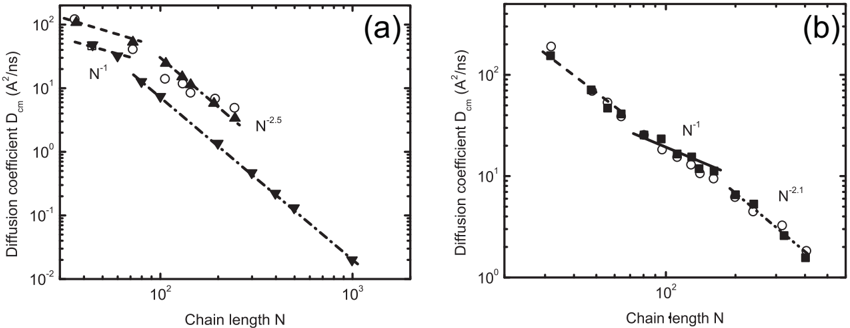
- Specific validations include FENE chains reproducing η₀ ∼ N and η₀ ∼ N³ for unentangled and entangled chains, with intermediate η₀ ∼ N³·⁴; BFM giving D_cm ∼ N⁻²·⁰⁸ with entanglements versus D_cm ∼ N⁻¹ without; blob-model PE giving D_cm ∼ N⁻² and η₀ ∼ N³·⁶; and slip-link inclusion of constraint release reducing η₀ by a factor of 3/5.
- Dynamic mapping onto the tube model shows the double reptation model overestimates and the dual constraint model underestimates Ψ(t) relative to direct primitive-path analysis; the hierarchical model with the Mittag-Leffler exponent α captures polydisperse PE and HPB relaxation.
Methods
- Design: critical review and tutorial comparing eleven multiscale computational techniques, organized into three categories, with fundamental ideas, equations, and key results for each.
- Scope/data: focuses on viscoelasticity and rheology of polymer melts and homopolymers; excludes self-consistent field theory and ab initio/DFT-to-classical bridging, and only briefly mentions polymer mixtures.
- Analysis: qualitative and quantitative comparison using literature results and illustrative simulations; tables compare approachable temporal and spatial scales, predictable properties, and acceleration.
Limitations
- Stated: the review is limited to viscoelasticity of polymer melts and homopolymers; polymer mixtures are only briefly mentioned, and self-consistent field theory and ab initio/DFT bridging are excluded.
- Stated: many methods remain limited to generic models or simple polymers/short chains; there is no direct mapping from BFM or FENE to the slip-link model; time-scaling/dynamical heterogeneity, transferability, thermodynamic consistency, and loss of internal degrees in coarse-graining remain challenges; rheological properties of the analytical super coarse-grained model have not been reported.
- Evident: as a review, it synthesizes prior work rather than presenting new primary experimental data, and its comparisons rely on cited simulations and experiments.
Model-written summary. Check it against the paper before relying on it.
Integrity signals
Registry
Cites
Statistics
Figures










Verification
Claims the paper makes
37 Valid · 24 Not valid · 201 Not checked · 242 Own results and interpretations
At least one cited source doesn’t support this claim or points to a different paper, and none confirmed it — see the verdicts below.
In the paper
“Such a linear, attractive tail function has been demonstrated to recover the correct pressure for coarse-grained polymer systems [83,211,212,239,240].”
§ Challenges in Multiscale Modeling of Polymer Dynamics > 4.1.4. Transferability and Thermodynamic Consistency
What the sources say
- Disputedcites [83] Meyer, 2000, Coarse graining of nonbonded inter-particle potentials using automatic simplex optimization to fit structural properties, J. Chem. Phys. sourceExperimental — accuracy not yet measured
The Isoprene Pseudo Monomers section (p. 11) reports that the coarse-grained model's pressure was about twice that of its reference system, not that it recovered the correct pressure. The Discussion and Conclusion (p. 14) says pressure could be added as a target observable for future transferability and that polymer force-field optimization was still in progress. Our copy does not describe a linear attractive tail that corrects pressure in a polymer system. (LLM, conf=0.87)
Checked by a reasoning model — may be wrong.
- Not checked — no full text of the sourcecites [211] Reith, 2002, CG-OPT: A software package for automatic force field design, Comput. Phys. Commun. source
- Not checked — no full text of the sourcecites [212] Reith, 2003, Deriving effective mesoscale potentials from atomistic simulations, J. Comput. Chem. source
- Not checked — no full text of the sourcecites [239] Eslami, 2011, Coarse-grained computer simulation of nanoconfined polyamide-6, 6, Macromolecules source
- Not checked — no full text of the sourcecites [240] Bayramoglu, 2012, Coarse-grained modeling of polystyrene in various environments by iterative Boltzmann inversion, Macromolecules source
boostedstates a cause- Asserted: passes — The authors put it forward as true.
- Checkable: passes — It can be checked against evidence.
- Load-bearing: unclear — It is unclear whether the paper’s conclusions depend on it.
- Based: passes — The paper gives a reason why it holds.
- Disputed
At least one cited source doesn’t support this claim or points to a different paper, and none confirmed it — see the verdicts below.
In the paper
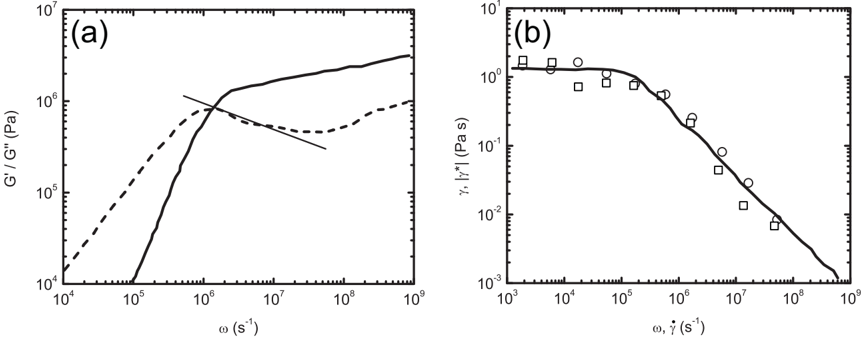
“In fact, G ∼ ω 1/4 in the intermediate range, due to the combined effects of reptation and CLF.”
§ Challenges in Multiscale Modeling of Polymer Dynamics > 5.4. Hierarchical Modeling of Polymer Rheology
What the sources say
- Not checked — no full text of the sourcecites [14] Likhtman, 2002, Quantitative theory for linear dynamics of linear entangled polymers, Macromolecules source
- Disputedcites [331] Milner, 1998, Reptation and contour-length fluctuations in melts of linear polymers, Phys. Rev. Lett. sourceExperimental — accuracy not yet measured
On p. 4, the paper assigns the intermediate-frequency ω^1/4 power law to the loss modulus G″, arising from contour-length fluctuations. It says the reptation contribution instead leads to a plateau in the storage modulus G′ at higher frequencies, contrary to the claim about G′. (LLM, conf=0.88)
Checked by a reasoning model — may be wrong.
plainstates a cause- Asserted: passes — The authors put it forward as true.
- Checkable: passes — It can be checked against evidence.
- Load-bearing: passes — The paper’s conclusions depend on it.
- Based: passes — The paper gives a reason why it holds.
The sources with a verdict support this claim; the rest weren’t checked yet, have no full text we could read, or their verdicts aren’t rated yet.
In the paper
“These phenomena have also been observed both in molecular dynamics (MD) simulations [2,3] and experiments [4].”
§ Challenges in Multiscale Modeling of Polymer Dynamics > 1. Introduction
What the sources say
- Supportedcites [2] Mondello, 1998, Dynamics of n-alkanes: Comparison to Rouse model, J. Chem. Phys. source
The Introduction (p. 2) reports Rouse-predicted scaling of self-diffusion and viscosity in experiments and says simulations reproduce the chain-length scaling. This paper supports the MD portion of the citing sentence; its Conclusions (p. 13) qualify its own n-alkane results as a crossover to Rouse-like behavior, rather than scaling across all chain lengths. The experiments in the citing sentence carry a separate citation. (LLM, conf=0.86)
- Not checked — no full text of the sourcecites [3] Harmandaris, 2002, Detailed molecular dynamics simulation of the self-diffusion of n-alkane and cis-1, 4 polyisoprene oligomer melts, J. Chem. Phys. source
- Not checked — no full text of the sourcecites [4] Fleischer, 1995, Chain length and temperature dependence of the self-diffusion of polyisoprene and polybutadiene in the melt, Macromolecules source
plainstates an association- Asserted: passes — The authors put it forward as true.
- Checkable: passes — It can be checked against evidence.
- Load-bearing: unclear — It is unclear whether the paper’s conclusions depend on it.
- Based: passes — The paper gives a reason why it holds.
- Supported
The sources with a verdict support this claim; the rest weren’t checked yet, have no full text we could read, or their verdicts aren’t rated yet.
In the paper
“Pütz et al. [105] studied the dynamic scattering factor, S(q), of entangled polymer chains and found that the S(q) of highly entangled polymer chains (N = 10, 000) can be well characterized by the tube model [5,107].”
§ Challenges in Multiscale Modeling of Polymer Dynamics > 3.2. FENE Model
What the sources say
- Supportedcites [105] Kremer, 2000, What is the entanglement length in a polymer melt?, EPL (Europhys. Lett.) source
The paper reports fitting the dynamic single-chain structure function S(k,t) to a tube-model expression for chains including N = 10000. On p. 3, it says the agreement is acceptable for N = 10000, supporting the claim about highly entangled chains. (LLM, conf=0.91)
- Not checked — no full text of the sourcecites [5] De Gennes, P.G. (1979). Scaling Concepts in Polymer Physics, Cornell University Press. source
- Not checked — no full text of the sourcecites [107] Kremer, 1984, Dynamics of polymer chains confined into tubes: Scaling theory and Monte Carlo simulations, J. Chem. Phys. source
plainstates an association- Asserted: passes — The authors put it forward as true.
- Checkable: passes — It can be checked against evidence.
- Load-bearing: unclear — It is unclear whether the paper’s conclusions depend on it.
- Based: passes — The paper gives a reason why it holds.
- Supported
The cited sources support only part of this claim — read each source’s verdict below.
In the paper
“From the above equation, it is clear that the derived coarse-grained potential function, U (R N ), is not a conventional potential energy function [82,83,176,177].”
§ Challenges in Multiscale Modeling of Polymer Dynamics > 4.1. Iterative Boltzmann Inversion Method
What the sources say
- Not checked — no full text of the sourcecites [82] Kremer, 1998, Simulation of polymer melts. I. Coarse-graining procedure for polycarbonates, Acta Polym. doi:10.1002/(sici)1521-4044(199802)49:2/3<61::aid-apol61>3.0.co;2-v
- Partly supportedcites [83] Meyer, 2000, Coarse graining of nonbonded inter-particle potentials using automatic simplex optimization to fit structural properties, J. Chem. Phys. sourceExperimental — accuracy not yet measured
In “Discussion and Conclusion” (p. 13), the paper says its piecewise coarse-grained potential lacks a theoretical interpretation beyond that of a numerical potential. That supports distinguishing it from a conventional physically interpreted potential, but the paper does not state that a derived U(R^N) is not a conventional potential energy function. (LLM, conf=0.76)
- Not checked — no full text of the sourcecites [176] Kremer, 1998, Simulation of polymer melts. II. From coarse-grained models back to atomistic description, Acta Polym. source
- Not matchedcites [177] Kremer, 1999, Simulation of polymer melts. I. Coarse-graining procedure for polycarbonates, Acta Polym.
Couldn’t be matched to a paper in Crossref, so it can’t be checked.
boosted- Asserted: passes — The authors put it forward as true.
- Checkable: passes — It can be checked against evidence.
- Load-bearing: passes — The paper’s conclusions depend on it.
- Based: passes — The paper gives a reason why it holds.
312 more claims · 24 with their cited sources checked
Create a free account to see all 504 claims and to verify the 8 references still open.
- It may state two separate claims as one. 107
- Probably not a substantial claim. 98
- The quote only partly states this claim. 3
Self-check
Percentages, sums and reported differences re-computed from the paper’s own numbers.
Each contradiction between two passages listed here was confirmed by an independent check.
Rated major: it would touch a result — a value a result rests on, reported and recomputed p-values on opposite sides of the significance level, two passages that conflict with no sign which is right, or a cited work retracted before this paper was published.
In the paper
§ Challenges in Multiscale Modeling of Polymer Dynamics > 4.1.1. Definition of Super Atom
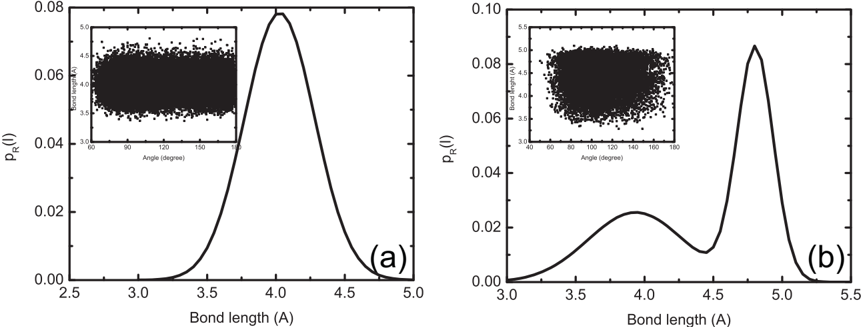
“One is the center of the PI monomer, and the other is the center of the carbon-carbon bond connecting two monomers together.The distribution functions, p R (l), for both of these definitions have been obtained (Figure 10).In the first case, p R (l) is characterized well by a single Gaussian”
§ Challenges in Multiscale Modeling of Polymer Dynamics > 4.1.1. Definition of Super Atom
“if the super-atomic center is defined as the center of mass of the cis-PI monomer (i.e., the carbon-carbon double bond), the p R (l) will have two peaks”
Rated minor: it would not touch a result — a value no result rests on, a p-value that stays on the same side of the significance level, or a conflict that is clerical, resolved elsewhere in the paper, or outside its own findings.
In the paper
§ Challenges in Multiscale Modeling of Polymer Dynamics > 3.3. Slip-Link Model
“the G(t) given by the Doi-Edwards model decays very quickly, compared with the slip-link model, since the Doi-Edwards model only considers reptation, whereas the slip-link model contains other relaxation mechanisms, i.e., the chain fluctuation and constraint release.”
§ Challenges in Multiscale Modeling of Polymer Dynamics > 1. Introduction
“Thus, CR is a cooperative phenomenon between different chains, while CLF can be considered as a single-chain phenomenon, but both hasten the relaxation process.”
Rated minor: it would not touch a result — a value no result rests on, a p-value that stays on the same side of the significance level, or a conflict that is clerical, resolved elsewhere in the paper, or outside its own findings.
In the paper
§ Challenges in Multiscale Modeling of Polymer Dynamics > 5.3. Concurrent Modeling of Polymer Melts under Shear Flow
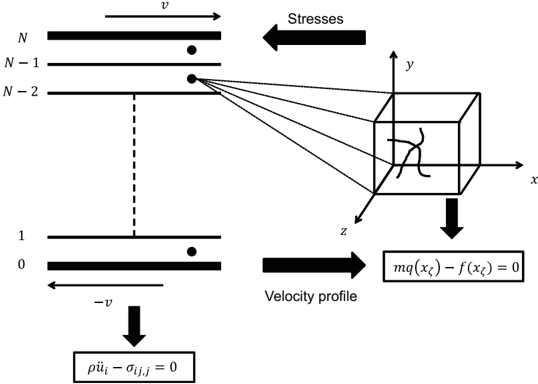
“Equations ( 35) and ( 36) are for the fine scale (MD), scale bridging (modified virial stress) and the coarse scale (continuum), respectively.”
§ Challenges in Multiscale Modeling of Polymer Dynamics > 5.3. Concurrent Modeling of Polymer Melts under Shear Flow
“mq (x ζ ) -f (x ζ ) = 0 for x ζ ∈ Θ ζ (35 ) ρü(x ζ ) -∇ • σ(x ζ ) = 0 for x ζ ∈ Ω (36 ) σ(x ζ ) = 1 2Θ ζ A B =A r AB ζ (x ζ ) ⊗ f AB ζ (x ζ )(37)”
Citations
Cites
Fast Parallel Algorithms for Short-Range Molecular Dynamics
Plimpton, S. (1995) · Journal of Computational Physics · doi:10.1006/jcph.1995.1039 · Cited by 44,721 · cited 2×
“To date, there is support for tabulated forms for all the potential functions, including pair, bond, angle and dihedral interactions, in the Large-scale Atomic/Molecular Massively Parallel Simulator (LAMMPS) [209].”
BackgroundViscoelastic Properties of Polymers
Ferry, J. D., & Myers, H. S. (1961) · Journal of The Electrochemical Society · doi:10.1149/1.2428174 · Cited by 13,487
An Introduction to Fluid Dynamics
Batchelor, G. K. (2000) · doi:10.1017/cbo9780511800955 · Cited by 12,360
The theory of polymer dynamics
Doi, M., & Edwards, S. F. (1986) · Cited by 12,024
Scaling Concepts in Polymer Physics
de Gennes, P. G., & Witten, T. A. (1980) · Physics Today · doi:10.1063/1.2914118 · Cited by 9,348 · cited 8×
“According to the tube model [5,6], assumed to describe the motion of these free chains, the viscous Cauchy stress can be formulated as [32]:”
BackgroundInfluentialHansen, J. P., McDonald, I. R., & Henderson, D. J. (1976) · Cited by 8,464
Sun, H. (1998) · The Journal of Physical Chemistry B · doi:10.1021/jp980939v · Cited by 6,001 · cited 1×
“The ab initio force field COMPASS [180] was used for the all-atomistic simulations.”
MethodEmerging applications of stimuli-responsive polymer materials
Stuart, M. A. C., Huck, W. T. S., Genzer, J., Müller, M., Ober, C., Stamm, M., Sukhorukov, G. B., Szleifer, I., Tsukruk, V. V., Urban, M., et al. (2010) · Nature Materials · doi:10.1038/nmat2614 · Cited by 5,707 · cited 1×
“number of important applications were newly added in the recent past, including block copolymers and nanocomposites [53]; screening effects in polyelectrolyte brushes [54]; mixed polymer brushes [55]; harvesting cells cultured on thermoresponsive polymer brushes [56,57]; morphology control of hairy”
BackgroundRole of repulsive forces in determining the equilibrium structure of simple liquids
Weeks, J. D., Chandler, D., & Andersen, H. C. (1971) · The Journal of Chemical Physics · doi:10.1063/1.1674820 · Cited by 5,207 · cited 1×
“For dense polymeric systems, all the beads interact with each other through the Weeks-Chandler-Andersen (WCA) potential [103], which is a Lennard-Jones potential cut off at its minimum and shifted to zero.”
BackgroundBird, R. B. (1977) · Medical Entomology and Zoology · Cited by 4,951
The Structure and Rheology of Complex Fluids
Larson, R. G. (1998) · Cited by 4,841
Nonlinear finite elements for continua and structures
(2001) · Choice Reviews Online · doi:10.5860/choice.38-3926 · Cited by 4,585
Reptation of a Polymer Chain in the Presence of Fixed Obstacles
de Gennes, P. G. (1971) · The Journal of Chemical Physics · doi:10.1063/1.1675789 · Cited by 4,284 · cited 1×
“De Gennes then realized that one can omit the crosslinks when the chains become very long, and he adopted the tube concept to study the polymer chain reptation inside a strongly crosslinked polymeric gel [25].”
BackgroundA theory of the linear viscoelastic properties of dilute solutions of coiling polymers
Rouse, P. E. (1953) · The Journal of Chemical Physics · doi:10.1063/1.1699180 · Cited by 4,203 · cited 3×
“According to the Rouse theory, the viscosity, η0, of these oligomers has a simple scaling relationship with chain length N , as η0 ∼ N , and the self-diffusion coefficient scales as Dcm ∼ N−1 [1].”
MethodResultInfluentialDynamics of entangled linear polymer melts: A molecular-dynamics simulation
Kremer, K., & Grest, G. S. (1990) · The Journal of Chemical Physics · doi:10.1063/1.458541 · Cited by 4,023 · cited 3×
“methods between FENE chains and real polymers have been suggested [79,106].”
BackgroundMethodSimulating microscopic hydrodynamic phenomena with dissipative particle dynamics
Hoogerbrugge, P. J., & Koelman, J. M. V. A. (1992) · Europhysics Letters (EPL) · doi:10.1209/0295-5075/19/3/001 · Cited by 3,811 · cited 1×
“In order to avoid modeling the solvent explicitly, some techniques have been developed recently, such as dissipative particle dynamics [362], stochastic rotation dynamics [363,364] and the lattice Boltzmann method [365,366].”
MethodStereochemistry of polypeptide chain configurations
Ramachandran, G. N., Ramakrishnan, C., & Sasisekharan, V. (1963) · Journal of Molecular Biology · doi:10.1016/s0022-2836(63)80023-6 · Cited by 3,554 · cited 1×
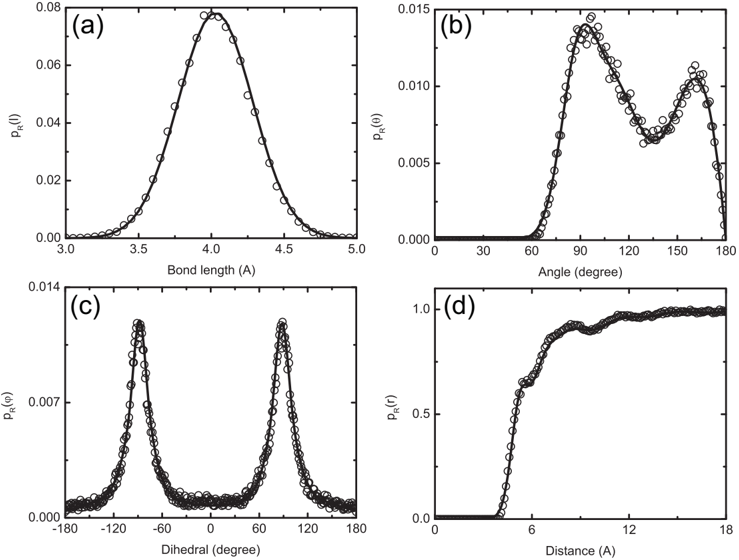
“As shown in the insert of Figure 10a, the bonds and angles can be plotted following the idea of a Ramachandran diagram [187].”
MethodA three-dimensional constitutive model for the large stretch behavior of rubber elastic materials
Arruda, E. M., & Boyce, M. C. (1993) · Journal of the Mechanics and Physics of Solids · doi:10.1016/0022-5096(93)90013-6 · Cited by 3,239 · cited 4×
“The well-established Arruda-Boyce model [28,325,326] is used to describe the elastic behavior of the crosslinked network under deformation: P = ∂WAB”
BackgroundMethodInfluentialThe Lattice Boltzmann Equation: For Fluid Dynamics and Beyond
Yeomans, J. M. (2001) · Cited by 2,947
Coarse Grained Model for Semiquantitative Lipid Simulations
Marrink, S. J., de Vries, A. H., & Mark, A. E. (2004) · The Journal of Physical Chemistry B · doi:10.1021/jp036508g · Cited by 2,257 · cited 1×
“However, there are several studies demonstrating that the effective potential functions of the coarse-grained model have a limited range of transferability into a subset of thermodynamics states [69,188,201,231–236].”
BackgroundCorrelation of dynamic and steady flow viscosities
Cox, W. P., & Merz, E. H. (1958) · Journal of Polymer Science · doi:10.1002/pol.1958.1202811812 · Cited by 2,092 · cited 1×
“In addition, the empirical Cox-Merz rule [110] for”
MethodFetters, L. J., Lohse, D. J., Richter, D., Witten, T. A., & Zirkel, A. (1994) · Macromolecules · doi:10.1021/ma00095a001 · Cited by 1,999 · cited 1×
“, packing length and tube diameter, were also obtained and found to be in agreement with experiments [199].”
ResultMolecular dynamics simulation for polymers in the presence of a heat bath
Grest, G. S., & Kremer, K. (1986) · Physical Review A · doi:10.1103/physreva.33.3628 · Cited by 1,893 · cited 1×
“The bonded beads interact, in addition, through the FENE potential [78,79]:”
BackgroundThe computer study of transport processes under extreme conditions
Lees, A. W., & Edwards, S. F. (1972) · Journal of Physics C: Solid State Physics · doi:10.1088/0022-3719/5/15/006 · Cited by 1,506 · cited 1×
“As the Gauss-point behavior can be determined through independent NEMD simulations with the Lee-Edwards periodic boundary conditions [320], the coarse-grained problem should be easily solved.”
MethodInteratomic Potentials from First-Principles Calculations: The Force-Matching Method
Ercolessi, F., & Adams, J. B. (1994) · Europhysics Letters (EPL) · doi:10.1209/0295-5075/26/8/005 · Cited by 1,455 · cited 1×
“There are two methods belonging to the force-based methods: the force-matching method [168] and the multiscale”
MethodScheutjens, J. M. H. M., & Fleer, G. J. (1979) · The Journal of Physical Chemistry · doi:10.1021/j100475a012 · Cited by 1,345
Deriving effective mesoscale potentials from atomistic simulations
Reith, D., Pütz, M., & Müller‐Plathe, F. (2003) · Journal of Computational Chemistry · doi:10.1002/jcc.10307 · Cited by 1,314 · cited 3×
“[212] further improved the convergence of the pair”
BackgroundCarmesin, I., & Kremer, K. (1988) · Macromolecules · doi:10.1021/ma00187a030 · Cited by 1,267 · cited 3×
“Bonds with lengths greater than four are considered to be broken, so the bond length is restricted to be less than four [77].”
BackgroundA Multiscale Coarse-Graining Method for Biomolecular Systems
Izvekov, S., & Voth, G. A. (2005) · The Journal of Physical Chemistry B · doi:10.1021/jp044629q · Cited by 1,197 · cited 1×
“coarse-graining method [169,170].”
The distribution of glass-transition temperatures in nanoscopically confined glass formers
Ellison, C. J., & Torkelson, J. M. (2003) · Nature Materials · doi:10.1038/nmat980 · Cited by 1,176 · cited 1×
“For this reason, many computational and experimental works have been performed in recent years to understand the polymer dynamics at the interface and in the interphase [127,128,328,329,370–382].”
BackgroundConstitutive Equations for Polymer Melts and Solutions
(1988) · Elsevier eBooks · doi:10.1016/c2013-0-04284-3 · Cited by 1,167 · cited 1×
“These behaviors are experimentally observed [314,315] and have also been captured by different constitutive models [316,317]; however, these models tend to exhibit the inconvenient feature that they describe some types of flow very well, while failing for others [19].”
BackgroundInteratomic Potentials from First-Principles Calculations – The Force-Matching Method
Ercolessi, F., & Adams, J. B. (1994) · Institutional Research Information System (University of Udine) · Cited by 1,161
Constitutive modeling of the large strain time-dependent behavior of elastomers
BERGSTROM, J. (1998) · Journal of the Mechanics and Physics of Solids · doi:10.1016/s0022-5096(97)00075-6 · Cited by 1,147 · cited 1×
“The well-established Arruda-Boyce model [28,325,326] is used to describe the elastic behavior of the crosslinked network under deformation: P = ∂WAB”
MethodThe dynamic properties of carbon black-loaded natural rubber vulcanizates. Part I
Payne, A. R. (1962) · Journal of Applied Polymer Science · doi:10.1002/app.1962.070061906 · Cited by 1,098 · cited 1×
“Such a behavior is the so-called “Payne effect” [392,393], which is attributed to the deformation-induced change of the internal microstructure of elastomeric solids, i.”
BackgroundSimo, J. C. (1987) · Computer Methods in Applied Mechanics and Engineering · doi:10.1016/0045-7825(87)90107-1 · Cited by 1,063 · cited 1×
“However, the current studies on damage and strain softening phenomena are mostly limited to continuum modeling [32,333,395,400,401].”
BackgroundTube theory of entangled polymer dynamics
McLeish, T. C. B. (2002) · Advances in Physics · doi:10.1080/00018730210153216 · Cited by 905 · cited 5×
“By taking these important mechanisms into account, various models have been developed [7–13], which result in significant improvements when compared with experimental results.”
BackgroundResultInfluentialBeyond Equilibrium Thermodynamics
Öttinger, H. C. (2005) · doi:10.1002/0471727903 · Cited by 896
Noid, W. G., Chu, J.-W., Ayton, G. S., Krishna, V., Izvekov, S., Voth, G. A., Das, A., & Andersen, H. C. (2008) · The Journal of Chemical Physics · doi:10.1063/1.2938860 · Cited by 875 · cited 1×
“[171–173].”
Lyubartsev, A. P., & Laaksonen, A. (1995) · Physical Review E · doi:10.1103/physreve.52.3730 · Cited by 852 · cited 2×
“To overcome this issue, Lyubartsev and Laaksonen [165] developed the IMC method, in which the correlation between different distribution functions is accounted for during the updating and iterating process, and the effective potentials of the multi-component system rather quickly converge.”
MethodRheology and microscopic topology of entangled polymeric liquids
Everaers, R., Sukumaran, S. K., Grest, G. S., Svaneborg, C., Sivasubramanian, A., & Kremer, K. (2004) · Science · doi:10.1126/science.1091215 · Cited by 832 · cited 4×
“Such a method is also referred to as the primitive path analysis (PPA) method [97,119].”
BackgroundMethodInfluentialA bridging domain method for coupling continua with molecular dynamics
Xiao, S. P., & Belytschko, T. (2004) · Computer Methods in Applied Mechanics and Engineering · doi:10.1016/j.cma.2003.12.053 · Cited by 779 · cited 1×
“3, borrowing ideas from the bridging scale method [344] and the bridging domain method [345], can exchange information and capture interaction between the fine scale and coarse scale in both directions.”
BackgroundDynamics and thermodynamics of complex fluids. II. Illustrations of a general formalism
Öttinger, H. C., & Grmela, M. (1997) · Physical Review E · doi:10.1103/physreve.56.6633 · Cited by 770
Viscoelasticity and dynamics of entangled polymers
Watanabe, H. (1999) · Progress in Polymer Science · doi:10.1016/s0079-6700(99)00029-5 · Cited by 718 · cited 3×
“By taking these important mechanisms into account, various models have been developed [7–13], which result in significant improvements when compared with experimental results.”
BackgroundResultCoarse-Graining of Condensed Phase and Biomolecular Systems
(2008) · CRC Press eBooks · doi:10.1201/9781420059564 · Cited by 677
Quantitative theory for linear dynamics of linear entangled polymers
Likhtman, A. E., & McLeish, T. C. B. (2002) · Macromolecules · doi:10.1021/ma0200219 · Cited by 666 · cited 6×
“The overall shapes of G′ and G′′ are found to be in agreement with experimental observation [109] and theoretical prediction [14].”
BackgroundResultInfluentialCoupling of atomistic and continuum simulations using a bridging scale decomposition
Wagner, G. J., & Liu, W. K. (2003) · Journal of Computational Physics · doi:10.1016/s0021-9991(03)00273-0 · Cited by 659 · cited 1×
“3, borrowing ideas from the bridging scale method [344] and the bridging domain method [345], can exchange information and capture interaction between the fine scale and coarse scale in both directions.”
BackgroundSelf-citationThe relative entropy is fundamental to multiscale and inverse thermodynamic problems
Shell, M. S. (2008) · The Journal of Chemical Physics · doi:10.1063/1.2992060 · Cited by 656 · cited 1×
“The structure-based methods include the iterative Boltzmann inversion (IBI) method [82,83], the Kirkwood-Buff IBI method [164], the inverse Monte Carlo (IMC) method [165], the relative entropy method [166] and the generalized Yvon–Born–Green theory [167].”
MethodMultiscale coarse graining of liquid-state systems
Izvekov, S., & Voth, G. A. (2005) · The Journal of Chemical Physics · doi:10.1063/1.2038787 · Cited by 653 · cited 2×
“coarse-graining method [169,170].”
The use of a mathematical model to describe isothermal stress-strain curves in glassy thermoplastics
Haward, R. N., & Thackray, G. (1968) · Proceedings of the Royal Society of London. Series A. Mathematical and Physical Sciences · doi:10.1098/rspa.1968.0029 · Cited by 646 · cited 1×
“The entropic network models [396,397], based on the rubber elasticity theory, produce good fitting to experimental data.”
MethodPhase behavior of a model colloid-polymer mixture
Ilett, S. M., Orrock, A., Poon, W. C. K., & Pusey, P. N. (1995) · Physical Review E · doi:10.1103/physreve.51.1344 · Cited by 598 · cited 1×
“The simulation of such complex systems is a challenge involving additional complexities [64,65].”
BackgroundInterdiffusion and self-diffusion in polymer mixtures: A Monte Carlo study
Deutsch, H. P., & Binder, K. (1991) · The Journal of Chemical Physics · doi:10.1063/1.459901 · Cited by 585 · cited 2×
“(i) Bond-fluctuation method [67,77] Section 3.”
BackgroundThe statistical mechanics of polymerized material
Edwards, S. F. (1967) · Proceedings of the Physical Society · doi:10.1088/0370-1328/92/1/303 · Cited by 578 · cited 1×
“To explore why the elastic modulus of rubber eventually becomes independent of the strand length in the network, Edwards invented the tube concept in his description of rubber elasticity [22–24].”
BackgroundA new look at the atomic level virial stress: On continuum-molecular system equivalence
Zhou, M. (2003) · Proceedings of the Royal Society of London. Series A: Mathematical, Physical and Engineering Sciences · doi:10.1098/rspa.2003.1127 · Cited by 569 · cited 1×
“The stress tensor, σ(x), at the Gauss point can be calculated based on the modified virial stress [321], which is further used as the input for the continuum equation of motion (on the coarse scale).”
MethodElasticity of polymer networks
Rubinstein, M., & Panyukov, S. (2002) · Macromolecules · doi:10.1021/ma0203849 · Cited by 566 · cited 2×
“The prediction of the new model agreed with experimental and computer-simulation results [27].”
BackgroundResultMIEHE, C. (2004) · Journal of the Mechanics and Physics of Solids · doi:10.1016/j.jmps.2004.03.011 · Cited by 556 · cited 1×
“materials, with all the relevant physical mechanisms considered [19,29–33].”
BackgroundMolecular dynamics simulation of a polymer melt with a nanoscopic particle
Starr, F. W., Schrøder, T. B., & Glotzer, S. C. (2002) · Macromolecules · doi:10.1021/ma010626p · Cited by 511 · cited 1×
“On the one hand, both experimental and computational results have suggested that a mobility gradient exists near the surface of nanoparticles (NPs) on a small, sub-chain-length scale [370,376,377].”
BackgroundEvolution of plastic anisotropy in amorphous polymers during finite straining
Arruda, E. M., & Boyce, M. C. (1993) · International Journal of Plasticity · doi:10.1016/0749-6419(93)90034-n · Cited by 509 · cited 1×
“The entropic network models [396,397], based on the rubber elasticity theory, produce good fitting to experimental data.”
MethodGlass Transition Dynamics and Surface Layer Mobility in Unentangled Polystyrene Films
Yang, Z., Fujii, Y., Lee, F. K., Lam, C.-H., & Tsui, O. K. C. (2010) · Science · doi:10.1126/science.1184394 · Cited by 503
Versatile object-oriented toolkit for coarse-graining applications
Rühle, V., Junghans, C., Lukyanov, A., Kremer, K., & Andrienko, D. (2009) · Journal of Chemical Theory and Computation · doi:10.1021/ct900369w · Cited by 485 · cited 5×
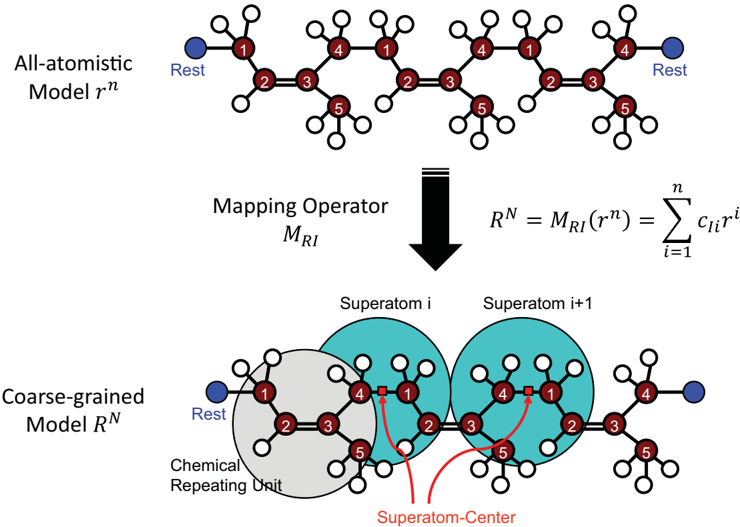
“The figure is taken and modified from [174].”
BackgroundMethodInfluentialMultiscale simulation of soft matter systems–from the atomistic to the coarse-grained level and back
Peter, C., & Kremer, K. (2009) · Soft Matter · doi:10.1039/b912027k · Cited by 465 · cited 8×
“Conversely, the well-equilibrated coarse-grained models can be mapped back onto an atomistic model, as reviewed by Müller-Plathe [38] and Peter and Kremer [340].”
MethodInfluential(2009) · JuSER (Forschungszentrum Jülich) · Cited by 465
Kröger, M. (2005) · Computer Physics Communications · doi:10.1016/j.cpc.2005.01.020 · Cited by 459 · cited 5×
“Based on the Z1 code [281], Stephanou et al.”
BackgroundMethodInfluentialSelf-citationStatistical mechanics with topological constraints: I
Edwards, S. F. (1967) · Proceedings of the Physical Society · doi:10.1088/0370-1328/91/3/301 · Cited by 454 · cited 1×
“To explore why the elastic modulus of rubber eventually becomes independent of the strand length in the network, Edwards invented the tube concept in his description of rubber elasticity [22–24].”
BackgroundReptation and contour-length fluctuations in melts of linear polymers
Milner, S. T., & McLeish, T. C. B. (1998) · Physical Review Letters · doi:10.1103/physrevlett.81.725 · Cited by 451 · cited 2×
“For extremely high frequencies (ω > τ−1 R ), G ′ ∼ ω in accord with the Rouse model [14,92,331].”
BackgroundNoid, W. G., Liu, P., Wang, Y., Chu, J.-W., Ayton, G. S., Izvekov, S., Andersen, H. C., & Voth, G. A. (2008) · The Journal of Chemical Physics · doi:10.1063/1.2938857 · Cited by 426 · cited 1×
“[171–173].”
An introduction to computational nanomechanics and materials
Liu, W. K., Karpov, E. G., Zhang, S., & Park, H. S. (2004) · Computer Methods in Applied Mechanics and Engineering · doi:10.1016/j.cma.2003.12.008 · Cited by 406 · cited 1×
“There is a tremendous amount of concurrent multiscale modeling methods developed in the recent ten years with rigorous mathematical foundations, but mostly for metals [344,346–350] and carbon nanomaterials [345,351–354].”
BackgroundSelf-citationBridging the Gap Between Atomistic and Coarse-Grained Models of Polymers: Status and Perspectives
Baschnagel, J., Binder, K., Doruker, P., Gusev, A. A., Hahn, O., Kremer, K., Mattice, W. L., Müller-Plathe, F., Murat, M., Paul, W., et al. (2000) · Advances in Polymer Science · doi:10.1007/3-540-46778-5_2 · Cited by 389 · cited 3×
“There exist some excellent and recent reviews on the coarse-graining of entangled polymers, focusing on static properties [35–37], dynamic properties [38–41] and the comparison between different”
BackgroundIntegral Equation Theories of the Structure, Thermodynamics, and Phase Transitions of Polymer Fluids
Schweizer, K. S., & Curro, J. G. (1997) · Advances in Chemical Physics · doi:10.1002/9780470141571.ch1 · Cited by 386 · cited 1×
“models or super coarse-grained model in four aspects: (i) the model was derived analytically through the Ornstein-Zernike equation [11]; (ii) it is not state-dependent, in contrast with the effective potential functions derived through the IBI method; (iii) the analytical solution does not need further optimization ag…”
MethodThe tube model theory of rubber elasticity
Edwards, S. F., & Vilgis, T. A. (1988) · Reports on Progress in Physics · doi:10.1088/0034-4885/51/2/003 · Cited by 384 · cited 2×
“Later on, through rigorous statistical mechanic formulations, upon employing the affine deformation assumption, Edwards and Vilgis established the contributions of entanglements and crosslinks to the elastic response of a crosslinked network following an external applied force [21].”
BackgroundExplanation for the 3. 4-power law for viscosity of polymeric liquids on the basis of the tube model
Doi, M. (1983) · Journal of Polymer Science: Polymer Physics Edition · doi:10.1002/pol.1983.180210501 · Cited by 369
Molecular dynamics simulation study of nonconcatenated ring polymers in a melt. I. Statics
Halverson, J. D., Lee, W. B., Grest, G. S., Grosberg, A. Y., & Kremer, K. (2011) · The Journal of Chemical Physics · doi:10.1063/1.3587137 · Cited by 355
Hierarchical modeling of polystyrene: From atomistic to coarse-grained simulations
Harmandaris, V. A., Adhikari, N. P., van der Vegt, N. F. A., & Kremer, K. (2006) · Macromolecules · doi:10.1021/ma0606399 · Cited by 350 · cited 4×
“The derived model can represent the PS sequence with varying tacticities and has been validated for the structural and dynamic properties of atactic PS [188,201].”
BackgroundMethodInfluentialSystematic coarse-graining methods for soft matter simulations – a review
Brini, E., Algaer, E. A., Ganguly, P., Li, C., Rodríguez-Ropero, F., & van der Vegt, N. F. A. (2013) · Soft Matter · doi:10.1039/c2sm27201f · Cited by 350 · cited 1×
“systematic coarse-graining methods [42,43].”
Hoy, R. S., Foteinopoulou, K., & Kröger, M. (2009) · Physical Review E · doi:10.1103/physreve.80.031803 · Cited by 335 · cited 2×
“Through static PP analysis using Z1 code, all these parameters, except α, can be directly obtained [92,178,242,330].”
BackgroundMethodSelf-citationA Self-Consistent Mean Field Model of a Starburst Dendrimer: Dense Core vs Dense Shell
Boris, D., & Rubinstein, M. (1996) · Macromolecules · doi:10.1021/ma960397k · Cited by 322 · cited 1×
“Self-consistent field theoretical approaches have been excluded from this review, because the underlying principles were established and developed more than two decades ago [49–52].”
BackgroundMolecular dynamics simulations of glassy polymers
Barrat, J.-L., Baschnagel, J., & Lyulin, A. (2010) · Soft Matter · doi:10.1039/b927044b · Cited by 320 · cited 1×
“With the attractive well, the FENE model has been applied to study the glass transition temperature [127–130], scission”
MethodDynamics of polymer solutions and melts. Reptation predictions and scaling of relaxation times
Paul, W., Binder, K., Heermann, D. W., & Kremer, K. (1991) · The Journal of Chemical Physics · doi:10.1063/1.461346 · Cited by 318 · cited 4×
“Here, the chain length is N = 200, which indicates that the chain is slightly entangled (entanglement length Ne ' 30) [94].”
BackgroundMethodInfluentialTime and length scales of polymer melts studied by coarse-grained molecular dynamics simulations
Padding, J. T., & Briels, W. J. (2002) · The Journal of Chemical Physics · doi:10.1063/1.1481859 · Cited by 317 · cited 6×
“As shown in Figure 14, Padding and Briels applied the blob model to study PE polymer melts with chain lengths ranging between 80 and 1000 (blobs from four to 50) [85].”
BackgroundMethodInfluentialLattice Boltzmann Simulations of Soft Matter Systems
Dünweg, B., & Ladd, A. J. C. (2009) · Advanced Computer Simulation Approaches for Soft Matter Sciences III · doi:10.1007/978-3-540-87706-6_2 · Cited by 316
Large strain time-dependent behavior of filled elastomers
Bergström, J. S., & Boyce, M. C. (2000) · Mechanics of Materials · doi:10.1016/s0167-6636(00)00028-4 · Cited by 315 · cited 1×
“The well-established Arruda-Boyce model [28,325,326] is used to describe the elastic behavior of the crosslinked network under deformation: P = ∂WAB”
Method“Learn on the Fly”: A Hybrid Classical and Quantum-Mechanical Molecular Dynamics Simulation
Csányi, G., Albaret, T., Payne, M. C., & De Vita, A. (2004) · Physical Review Letters · doi:10.1103/physrevlett.93.175503 · Cited by 312
Theory of Phase Separation in Polymer Nanocomposites
Hooper, J. B., & Schweizer, K. S. (2006) · Macromolecules · doi:10.1021/ma060577m · Cited by 311 · cited 2×
“For this reason, many computational and experimental works have been performed in recent years to understand the polymer dynamics at the interface and in the interphase [127,128,328,329,370–382].”
BackgroundViscosity and self-diffusion coefficient of linear polyethylene
Pearson, D. S., Ver Strate, G., Von Meerwall, E., & Schilling, F. C. (1987) · Macromolecules · doi:10.1021/ma00171a044 · Cited by 310 · cited 1×
“[251].”
Beware of density dependent pair potentials
Louis, A. A. (2002) · Journal of Physics: Condensed Matter · doi:10.1088/0953-8984/14/40/311 · Cited by 309 · cited 2×
“transferable to another set of conditions (N , T and V or p), as discussed by Luis [230].”
Topological Analysis of Linear Polymer Melts: A Statistical Approach
Tzoumanekas, C., & Theodorou, D. N. (2006) · Macromolecules · doi:10.1021/ma0607057 · Cited by 306 · cited 1×
“introduced the Z1 code [281,287] and contour reduction topological analysis (CReTA) [283] methods, respectively, to minimize the total contour length rather than the elastic energy,”
MethodLikhtman, A. E. (2005) · Macromolecules · doi:10.1021/ma050399h · Cited by 304 · cited 1×
“Likhtman [141] introduced a new single-chain”
Simple models for complex nonequilibrium fluids
KROGER, M. (2004) · Physics Reports · doi:10.1016/j.physrep.2003.10.014 · Cited by 302 · cited 2×
“One of the most widely used coarse-grained MD models for generic polymers is the finite-extensible non-linear elastic (FENE) model [16].”
BackgroundMethodSelf-citationBrownian simulations of a network of reptating primitive chains
Masubuchi, Y., Takimoto, J.-I., Koyama, K., Ianniruberto, G., Marrucci, G., & Greco, F. (2001) · The Journal of Chemical Physics · doi:10.1063/1.1389858 · Cited by 300 · cited 2×
“2; both agree well with experimental results [144].”
MethodResultAdvanced Computer Simulation Approaches for Soft Matter Sciences III
(2009) · Springer eBooks · doi:10.1007/978-3-540-87706-6 · Cited by 300
Beware of density dependent pair potentialsPreprint
Louis, A. A. (2013) · Cited by 299
On the large deformation behaviour of reinforced rubber at different temperatures
Lion, A. (1997) · Journal of the Mechanics and Physics of Solids · doi:10.1016/s0022-5096(97)00028-8 · Cited by 297 · cited 1×
“However, the current studies on damage and strain softening phenomena are mostly limited to continuum modeling [32,333,395,400,401].”
BackgroundContact Aggregation, Bridging, and Steric Stabilization in Dense Polymer−Particle Mixtures
Hooper, J. B., & Schweizer, K. S. (2005) · Macromolecules · doi:10.1021/ma051318k · Cited by 295 · cited 1×
“Such important understanding will enhance our capability to process and design PNCs with targeted mechanical and physical properties, as discussed extensively in [328,329,377,379–382,386–391].”
BackgroundRelaxation by reptation and tube enlargement: A model for polydisperse polymers
Marrucci, G. (1985) · Journal of Polymer Science: Polymer Physics Edition · doi:10.1002/pol.1985.180230115 · Cited by 288 · cited 2×
“In Figure 19a, the Ψ (t) is compared with the double reptation model [295,296] and dual constraint model [297,298].”
BackgroundMethodIdentifying the primitive path mesh in entangled polymer liquids
Sukumaran, S. K., Grest, G. S., Kremer, K., & Everaers, R. (2005) · Journal of Polymer Science Part B: Polymer Physics · doi:10.1002/polb.20384 · Cited by 277 · cited 3×
“Such a method is also referred to as the primitive path analysis (PPA) method [97,119].”
BackgroundMethodMolecular dynamics simulation study of nonconcatenated ring polymers in a melt. II. Dynamics
Halverson, J. D., Lee, W. B., Grest, G. S., Grosberg, A. Y., & Kremer, K. (2011) · The Journal of Chemical Physics · doi:10.1063/1.3587138 · Cited by 271
Low-field NMR investigations of nanocomposites: Polymer dynamics and network effects
Papon, A., Saalwächter, K., Schäler, K., Guy, L., Lequeux, F., & Montes, H. (2011) · Macromolecules · doi:10.1021/ma102486x · Cited by 267 · cited 2×
“On the one hand, both experimental and computational results have suggested that a mobility gradient exists near the surface of nanoparticles (NPs) on a small, sub-chain-length scale [370,376,377].”
BackgroundReconciliation of the molecular weight dependence of diffusion and viscosity in entangled polymers
Lodge, T. P. (1999) · Physical Review Letters · doi:10.1103/physrevlett.83.3218 · Cited by 263 · cited 1×
“The original tube theory [6] provides a simple analytical expression for ψ (s, t) as ψ (s, t) = ∑ p:odd (4/pπ) sin (pπs/Lpp) exp (−p(2)t/τd), which implies the scaling behaviors, η0 ∼ N(3) and Dcm ∼ N−2, which, in fact, do not completely agree with experimental results [7,294], due to the inconsistency between the ana…”
ResultMilano, G., & Müller-Plathe, F. (2005) · The Journal of Physical Chemistry B · doi:10.1021/jp0523571 · Cited by 260 · cited 2×
“As the equilibration of a coarse-grained polymer is much faster and easier than the all-atomistic one, the back-mapping procedure can be used to quickly generate equilibrated all-atomistic models of highly entangled polymers, including polycarbonates [177,235,341], polystyrene [198,201] and polyamide [197,342].”
BackgroundMethodStructure and dynamics of polymer brushes near the Θ point: A Monte Carlo simulation
Lai, P.-Y., & Binder, K. (1992) · The Journal of Chemical Physics · doi:10.1063/1.463554 · Cited by 251
The dynamic properties of carbon black loaded natural rubber vulcanizates. Part II
Payne, A. R. (1962) · Journal of Applied Polymer Science · doi:10.1002/app.1962.070062115 · Cited by 250
Nonaffine deformation and elasticity of polymer networks
Rubinstein, M., & Panyukov, S. (1997) · Macromolecules · doi:10.1021/ma970364k · Cited by 248 · cited 3×
“stress-strain relationship for polymer networks, which has been further validated by experiments [26].”
BackgroundMethodInfluentialTemperature-transferable coarse-grained potentials for ethylbenzene, polystyrene, and their mixtures
Qian, H.-J., Carbone, P., Chen, X., Karimi-Varzaneh, H. A., Liew, C. C., & Müller-Plathe, F. (2008) · Macromolecules · doi:10.1021/ma801910r · Cited by 247 · cited 5×
“temperature shift factor, √ T/T0, such that U(T ) = U0(T0) √ T/T0 [69].”
BackgroundInfluentialReith, D., Meyer, H., & Müller-Plathe, F. (2001) · Macromolecules · doi:10.1021/ma001499k · Cited by 237 · cited 1×
“In most studies, the super atom is defined to be a spherical particle [37,177,184,189–191], but there are also some studies attempting to do generalizations for anisotropic potentials [192,193].”
BackgroundKröger, M., & Hess, S. (2000) · Physical Review Letters · doi:10.1103/physrevlett.85.1128 · Cited by 237 · cited 6×
“Moreover, in the intermediate range, the scaling relationship, η0 ∼ N, induced by the CLF and CR effects was also confirmed [106].”
BackgroundMethodResultInfluentialSelf-citationWhat is the entanglement length in a polymer melt?
Pütz, M., Kremer, K., & Grest, G. S. (2000) · Europhysics Letters (EPL) · doi:10.1209/epl/i2000-00212-8 · Cited by 235 · cited 4×
“In addition, the entanglement length, Ne, predicted from the S(q) calculation is in agreement with the Ne obtained from the segment motion of polymer chains [105], which further validates the tube model for entangled polymer chain”
InfluentialRheology and structural changes of polymer melts via nonequilibrium molecular dynamics
Kröger, M., Loose, W., & Hess, S. (1993) · Journal of Rheology · doi:10.1122/1.550409 · Cited by 230 · cited 1×
“Shear-thinning occurs in polymer melts under such high shear rates [324] and from the strain-rate dependent viscosity and its definition”
BackgroundSelf-citationGompper, G., Ihle, T., Kroll, D. M., & Winkler, R. G. (2009) · Advanced Computer Simulation Approaches for Soft Matter Sciences III · doi:10.1007/978-3-540-87706-6_1 · Cited by 229
Miehe, C., & Göktepe, S. (2005) · Journal of the Mechanics and Physics of Solids · doi:10.1016/j.jmps.2005.04.006 · Cited by 224 · cited 1×
“materials, with all the relevant physical mechanisms considered [19,29–33].”
BackgroundHarmandaris, V. A., Mavrantzas, V. G., Theodorou, D. N., Kröger, M., Ramírez, J., Öttinger, H. C., & Vlassopoulos, D. (2003) · Macromolecules · doi:10.1021/ma020009g · Cited by 222 · cited 2×
“Since the rheological properties of entangled polymer melts are dominated by entanglements, many computational works have been undertaken to extract the underlying primitive path (PP) and entanglement characteristics predicted by the tube model directly from the atomistic simulations [76,79,97,119,178,198,223,242,275–…”
BackgroundSelf-citationRheology of Ring Polymer Melts: From Linear Contaminants to Ring-Linear Blends
Halverson, J. D., Grest, G. S., Grosberg, A. Y., & Kremer, K. (2012) · Physical Review Letters · doi:10.1103/physrevlett.108.038301 · Cited by 221 · cited 1×
“For example, the FENE model with finite bending stiffness has been applied to study the static structure and dynamics of ring polymers [124–126].”
MethodMultiscale Coarse-Graining and Structural Correlations: Connections to Liquid-State Theory
Noid, W. G., Chu, J.-W., Ayton, G. S., & Voth, G. A. (2007) · The Journal of Physical Chemistry B · doi:10.1021/jp068549t · Cited by 221 · cited 1×
“[171–173].”
Transferability of coarse-grained force fields: The polymer case
Carbone, P., Varzaneh, H. A. K., Chen, X., & Müller-Plathe, F. (2008) · The Journal of Chemical Physics · doi:10.1063/1.2829409 · Cited by 219 · cited 5×
“They also found that chain length did not affect the transferability of the derived potentials, and that the transferability of the PA66 coarse-grained potential was due to the lower degree of coarse graining, compared with the PS model [232].”
BackgroundMethodResultInfluentialMonte Carlo Simulations of a Coarse Grain Model for Block Copolymers and Nanocomposites
Detcheverry, F. A., Kang, H., Daoulas, K. C., Müller, M., Nealey, P. F., & de Pablo, J. J. (2008) · Macromolecules · doi:10.1021/ma702514v · Cited by 219 · cited 1×
“number of important applications were newly added in the recent past, including block copolymers and nanocomposites [53]; screening effects in polyelectrolyte brushes [54]; mixed polymer brushes [55]; harvesting cells cultured on thermoresponsive polymer brushes [56,57]; morphology control of hairy”
BackgroundStrain hardening of polymer glasses: Effect of entanglement density, temperature, and rate
Hoy, R. S., & Robbins, M. O. (2006) · Journal of Polymer Science Part B: Polymer Physics · doi:10.1002/polb.21012 · Cited by 219 · cited 2×
“Hoy and Robbins [121] studied the effects of entanglement density, temperature and deformation rate on the strain hardening behavior of polymer glasses.”
BackgroundPrimitive path networks generated by annealing and geometrical Methods: insights into differences
Shanbhag, S., & Kröger, M. (2007) · Macromolecules · doi:10.1021/ma062457k · Cited by 217 · cited 2×
“Within the original PPA method, the PP was defined as the path with minimum total energy, not as the shortest path between two ends of the chain, and PPA results are known to weakly depend on implementation details, such as a temperature ramp and bead size [276,287].”
MethodSelf-citationDynamics of polystyrene melts through hierarchical multiscale simulations
Harmandaris, V. A., & Kremer, K. (2009) · Macromolecules · doi:10.1021/ma8018624 · Cited by 215 · cited 12×
“Conversely, the well-equilibrated coarse-grained models can be mapped back onto an atomistic model, as reviewed by Müller-Plathe [38] and Peter and Kremer [340].”
MethodResultInfluentialNano Mechanics and Materials: Theory, Multiscale Methods and Applications
Liu, W. K., Karpov, E. G., & Park, H. S. (2006) · Cited by 213
Self-citationUncrossability constraints in mesoscopic polymer melt simulations: Non-Rouse behavior of C120H242
Padding, J. T., & Briels, W. J. (2001) · The Journal of Chemical Physics · doi:10.1063/1.1385162 · Cited by 211 · cited 10×
“The bond potential consists of a repulsive term described by two Gaussians and an attractive term described by a single power law [84]:”
BackgroundMethodInfluentialSpyriouni, T., Tzoumanekas, C., Theodorou, D., Müller-Plathe, F., & Milano, G. (2007) · Macromolecules · doi:10.1021/ma0700983 · Cited by 204 · cited 3×
“As the equilibration of a coarse-grained polymer is much faster and easier than the all-atomistic one, the back-mapping procedure can be used to quickly generate equilibrated all-atomistic models of highly entangled polymers, including polycarbonates [177,235,341], polystyrene [198,201] and polyamide [197,342].”
BackgroundMethodEffect of Nanoconfinement on Polymer Dynamics: Surface Layers and Interphases
Krutyeva, M., Wischnewski, A., Monkenbusch, M., Willner, L., Maiz, J., Mijangos, C., Arbe, A., Colmenero, J., Radulescu, A., Holderer, O., et al. (2013) · Physical Review Letters · doi:10.1103/physrevlett.110.108303 · Cited by 202 · cited 6×
“Is there a glassy polymer layer near the surface of NPs in PNCs?”
BackgroundInfluentialStructure and dynamics of amorphous polymers: computer simulations compared to experiment and theory
Paul, W., & Smith, G. D. (2004) · Reports on Progress in Physics · doi:10.1088/0034-4885/67/7/r03 · Cited by 202 · cited 1×
“There exist some excellent and recent reviews on the coarse-graining of entangled polymers, focusing on static properties [35–37], dynamic properties [38–41] and the comparison between different”
BackgroundSzleifer, I. G., & Carignano, M. A. (1996) · Advances in chemical physics · Cited by 201
VISCOELASTIC PROPERTIES OF DILUTE POLYMER SOLUTIONS
Ferry, J. D. (1979) · Macromolecular Chemistry · doi:10.1016/b978-0-08-022039-0.50009-6 · Cited by 198
Viscosity and self-diffusion coefficient of hydrogenated polybutadiene
Pearson, D. S., Fetters, L. J., Graessley, W. W., Ver Strate, G., & von Meerwall, E. (1994) · Macromolecules · doi:10.1021/ma00081a014 · Cited by 198 · cited 1×
“In (a), the scaled diffusion coefficient, D(N)/DR(N), is plotted against the scaled chain length, N/Ne,p, for polystyrene (closed circles Ne,p = 140 and T = 485 K [111]), polyethylene (closed squares Ne,p = 31 and T = 448 K [112]), hydrogenated polybutadiene (closed triangles Ne,p = 18 and T = 448 K [113]), FENE (open…”
BackgroundAtomistic simulations of spinodal phase separation preceding polymer crystallization
Gee, R. H., Lacevic, N., & Fried, L. E. (2006) · Nature Materials · doi:10.1038/nmat1543 · Cited by 196 · cited 1×
“[34] on spinodal decomposition preceding polymer crystallization.”
Nanoparticle effect on the dynamics of polymer chains and their entanglement network
Li, Y., Kröger, M., & Liu, W. K. (2012) · Physical Review Letters · doi:10.1103/physrevlett.109.118001 · Cited by 194 · cited 2×
“The polymer dynamics are represented by the diffusion coefficient, Dcm, and disentanglement time, τd, which can be obtained through experiments or MD simulations [92,328,329].”
BackgroundMethodSelf-citationGöktepe, S., & Miehe, C. (2005) · Journal of the Mechanics and Physics of Solids · doi:10.1016/j.jmps.2005.04.010 · Cited by 189 · cited 1×
“materials, with all the relevant physical mechanisms considered [19,29–33].”
BackgroundMontes, H., Lequeux, F., & Berriot, J. (2003) · Macromolecules · doi:10.1021/ma0344590 · Cited by 189 · cited 2×
“On the one hand, both experimental and computational results have suggested that a mobility gradient exists near the surface of nanoparticles (NPs) on a small, sub-chain-length scale [370,376,377].”
BackgroundSzleifer, I., & Carignano, M. A. (1996) · Advances in Chemical Physics · doi:10.1002/9780470141533.ch3 · Cited by 185 · cited 1×
“Self-consistent field theoretical approaches have been excluded from this review, because the underlying principles were established and developed more than two decades ago [49–52].”
BackgroundStatistical mechanics with topological constraints: II
Edwards, S. F. (1968) · Journal of Physics A: General Physics · doi:10.1088/0305-4470/1/1/303 · Cited by 184 · cited 1×
“To explore why the elastic modulus of rubber eventually becomes independent of the strand length in the network, Edwards invented the tube concept in his description of rubber elasticity [22–24].”
BackgroundHarmandaris, V. A., Daoulas, K. C., & Mavrantzas, V. G. (2005) · Macromolecules · doi:10.1021/ma050177j · Cited by 184 · cited 2×
“For this reason, many computational and experimental works have been performed in recent years to understand the polymer dynamics at the interface and in the interphase [127,128,328,329,370–382].”
BackgroundStructure and rheology of molten polymers: from structure to flow behavior and back again
(2006) · Choice Reviews Online · doi:10.5860/choice.44-1540 · Cited by 183
Briels, W. J., & Padding, J. T. (2007) · University of Twente Research Information · Cited by 181
Comparison between coarse-graining models for polymer systems: Two mapping schemes for polystyrene
Harmandaris, V. A., Reith, D., van der Vegt, N. F. A., & Kremer, K. (2007) · Macromolecular Chemistry and Physics · doi:10.1002/macp.200700245 · Cited by 179 · cited 4×
“Such a criterion has been checked in detail for different coarse-graining models, through combined pR(θ) versus pR(φ) distribution plots (see Figure 3 in [188]).”
BackgroundMethodInfluentialKarayiannis, N. C., & Kröger, M. (2009) · International Journal of Molecular Sciences · doi:10.3390/ijms10115054 · Cited by 177 · cited 1×
“The less computationally expensive Z1 code [279,281] begins to construct the PP network by fixing the ends of polymer chains and replacing each polymer chain by a series of infinitesimally thin, impenetrable and tensionless straight lines.”
BackgroundSelf-citationA multiscale projection method for the analysis of carbon nanotubes
Qian, D., Wagner, G. J., & Liu, W. K. (2004) · Computer Methods in Applied Mechanics and Engineering · doi:10.1016/j.cma.2003.12.016 · Cited by 176 · cited 1×
“There is a tremendous amount of concurrent multiscale modeling methods developed in the recent ten years with rigorous mathematical foundations, but mostly for metals [344,346–350] and carbon nanomaterials [345,351–354].”
BackgroundSelf-citationEffect of silica nanoparticles on the local segmental dynamics in poly (vinyl acetate)
Bogoslovov, R. B., Roland, C. M., Ellis, A. R., Randall, A. M., & Robertson, C. G. (2008) · Macromolecules · doi:10.1021/ma702372a · Cited by 176 · cited 1×
“On the other hand, silica NPs have been found to have no influence on the local segmental dynamics of poly(vinyl acetate) chains adjacent to them, when compared with the chains in the bulk [383].”
BackgroundMolecular modelling of entanglement
Doi, M., & Takimoto, J.-I. (2003) · Philosophical Transactions of the Royal Society of London. Series A: Mathematical, Physical and Engineering Sciences · doi:10.1098/rsta.2002.1168 · Cited by 174 · cited 3×
“The strain-hardening behavior of polymer blends has been observed with 5% highly entangled chains [140].”
BackgroundInfluentialAn introduction and tutorial on multiple-scale analysis in solids
Park, H. S., & Liu, W. K. (2004) · Computer Methods in Applied Mechanics and Engineering · doi:10.1016/j.cma.2003.12.054 · Cited by 173 · cited 1×
“There is a tremendous amount of concurrent multiscale modeling methods developed in the recent ten years with rigorous mathematical foundations, but mostly for metals [344,346–350] and carbon nanomaterials [345,351–354].”
BackgroundSelf-citationIncorporating Fluctuations and Dynamics in Self-Consistent Field Theories for Polymer Blends
Müller, M., & Schmid, F. (2005) · Springer eBooks · doi:10.1007/b136794 · Cited by 173 · cited 1×
“One of the most powerful methods to study polymer mixtures at equilibrium in an approximate manner is self-consistent field theory [66].”
MethodMolecular theories of polymer nanocomposites
Hall, L. M., Jayaraman, A., & Schweizer, K. S. (2010) · Current Opinion in Solid State and Materials Science · doi:10.1016/j.cossms.2009.08.004 · Cited by 173 · cited 1×
“Such important understanding will enhance our capability to process and design PNCs with targeted mechanical and physical properties, as discussed extensively in [328,329,377,379–382,386–391].”
BackgroundYaoita, T., Isaki, T., Masubuchi, Y., Watanabe, H., Ianniruberto, G., & Marrucci, G. (2012) · Macromolecules · doi:10.1021/ma202525v · Cited by 172 · cited 1×
“also extended to study star and branched polymers [150], nonlinear rheology [151–153], phase separation in polymer blends [154,155], block copolymers [156] and the dynamics of confined polymers [157].”
BackgroundSegmental dynamics in miscible polymer blends: Recent results and open questions
Colmenero, J., & Arbe, A. (2007) · Soft Matter · doi:10.1039/b710141d · Cited by 172 · cited 2×
“Finally, we would like to emphasize that time-scaling is one of the central challenges in the coarse-graining process [75,228].”
BackgroundRheology of star polymers in concentrated solutions and melts
Doi, M., & Kuzuu, N. Y. (1980) · Journal of Polymer Science: Polymer Letters Edition · doi:10.1002/pol.1980.130181205 · Cited by 170 · cited 2×
“5, which has been theoretically predicted by Doi and Kuzuu [98].”
BackgroundInfluentialPadding, J. T., & Briels, W. J. (2011) · Journal of Physics Condensed Matter · doi:10.1088/0953-8984/23/23/233101 · Cited by 169 · cited 1×
“There exist some excellent and recent reviews on the coarse-graining of entangled polymers, focusing on static properties [35–37], dynamic properties [38–41] and the comparison between different”
BackgroundFoteinopoulou, K., Karayiannis, N. C., Mavrantzas, V. G., & Kröger, M. (2006) · Macromolecules · doi:10.1021/ma060306b · Cited by 169 · cited 1×
“Since the rheological properties of entangled polymer melts are dominated by entanglements, many computational works have been undertaken to extract the underlying primitive path (PP) and entanglement characteristics predicted by the tube model directly from the atomistic simulations [76,79,97,119,178,198,223,242,275–…”
BackgroundSelf-citationPhase diagram of a mixed polymer brush
Müller, M. (2002) · Physical review. E, Statistical physics, plasmas, fluids, and related interdisciplinary topics · doi:10.1103/physreve.65.030802 · Cited by 165 · cited 1×
“number of important applications were newly added in the recent past, including block copolymers and nanocomposites [53]; screening effects in polyelectrolyte brushes [54]; mixed polymer brushes [55]; harvesting cells cultured on thermoresponsive polymer brushes [56,57]; morphology control of hairy”
BackgroundHua, C. C., & Schieber, J. D. (1998) · The Journal of Chemical Physics · doi:10.1063/1.477670 · Cited by 164
Screening Effects in a Polyelectrolyte Brush: Self-Consistent-Field Theory
Zhulina, E. B., Klein Wolterink, J., & Borisov, O. V. (2000) · Macromolecules · doi:10.1021/ma990187i · Cited by 162 · cited 1×
“number of important applications were newly added in the recent past, including block copolymers and nanocomposites [53]; screening effects in polyelectrolyte brushes [54]; mixed polymer brushes [55]; harvesting cells cultured on thermoresponsive polymer brushes [56,57]; morphology control of hairy”
BackgroundHooper, J. B., Schweizer, K. S., Desai, T. G., Koshy, R. R., & Keblinski, P. (2004) · The Journal of Chemical Physics · doi:10.1063/1.1790831 · Cited by 162 · cited 1×
“Such important understanding will enhance our capability to process and design PNCs with targeted mechanical and physical properties, as discussed extensively in [328,329,377,379–382,386–391].”
BackgroundThe bridging scale for two-dimensional atomistic/continuum coupling
Park, H. S., Karpov, E. G., Liu †, W. K., & Klein, P. A. (2005) · Philosophical Magazine · doi:10.1080/14786430412331300163 · Cited by 162 · cited 1×
“There is a tremendous amount of concurrent multiscale modeling methods developed in the recent ten years with rigorous mathematical foundations, but mostly for metals [344,346–350] and carbon nanomaterials [345,351–354].”
BackgroundSelf-citationRheology and reptation of linear polymers. Ultrahigh molecular weight chain dynamics in the melt
Vega, J. F., Rastogi, S., Peters, G. W. M., & Meijer, H. E. H. (2004) · Journal of Rheology · doi:10.1122/1.1718367 · Cited by 161 · cited 1×
“In (b), the dots are experimental results [335].”
BackgroundEffects of chain topology on polymer dynamics: Bulk melts
Shaffer, J. S. (1994) · The Journal of Chemical Physics · doi:10.1063/1.467470 · Cited by 161 · cited 1×
“Shaffer adopted the BFM to study the effect of chain topology on polymer dynamics [96].”
MethodMorita, H., Tanaka, K., Kajiyama, T., Nishi, T., & Doi, M. (2006) · Macromolecules · doi:10.1021/ma052632h · Cited by 161 · cited 2×
“With the attractive well, the FENE model has been applied to study the glass transition temperature [127–130], scission”
BackgroundMethodFritz, D., Harmandaris, V. A., Kremer, K., & van der Vegt, N. F. A. (2009) · Macromolecules · doi:10.1021/ma901242h · Cited by 161 · cited 8×
“Conversely, the well-equilibrated coarse-grained models can be mapped back onto an atomistic model, as reviewed by Müller-Plathe [38] and Peter and Kremer [340].”
MethodInfluentialStatic and Dynamic Properties of a n-C100H202 Melt from Molecular Dynamics Simulations
Paul, W., Smith, G. D., & Yoon, D. Y. (1997) · Macromolecules · doi:10.1021/ma971184d · Cited by 160
Bridging scale methods for nanomechanics and materials
Liu, W. K., Park, H. S., Qian, D., Karpov, E. G., Kadowaki, H., & Wagner, G. J. (2006) · Computer Methods in Applied Mechanics and Engineering · doi:10.1016/j.cma.2005.05.042 · Cited by 159 · cited 1×
“There is a tremendous amount of concurrent multiscale modeling methods developed in the recent ten years with rigorous mathematical foundations, but mostly for metals [344,346–350] and carbon nanomaterials [345,351–354].”
BackgroundSelf-citationDynamical heterogeneity in a miscible polymer blend
Roland, C. M., & Ngai, K. L. (1991) · Macromolecules · doi:10.1021/ma00009a021 · Cited by 159 · cited 1×
“in a system can have different time-scaling factors compared to the underlying all-atomistic model; this phenomenon is referred to as “dynamical heterogeneity” [75,228,229].”
BackgroundLocal Structure and Dynamics in Solvent-Swollen Polymers
Müller-Plathe, F. (1996) · Macromolecules · doi:10.1021/ma9518767 · Cited by 158 · cited 2×
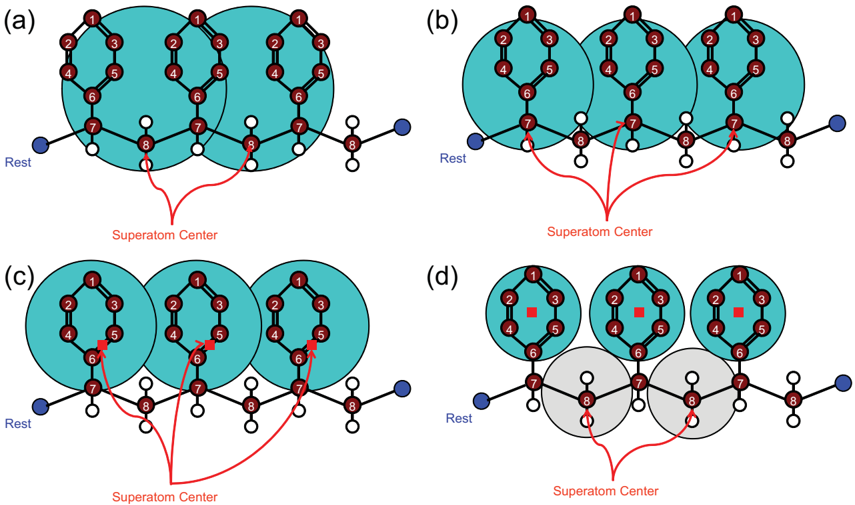
“Müller-Plathe and his co-workers [195–197] adopted the mapping scheme shown in Figure 11a using an IBI method with pressure correction.”
BackgroundMethodStrain hardening in polymer glasses: Limitations of network models
Hoy, R. S., & Robbins, M. O. (2007) · Physical Review Letters · doi:10.1103/physrevlett.99.117801 · Cited by 154 · cited 2×
“For example, when the segments between entanglements are pulled taut, the corresponding energy contribution to the stress grows rapidly [122].”
BackgroundMolecular Dynamics Simulations of Polymer Welding: Strength from Interfacial Entanglements
Ge, T., Pierce, F., Perahia, D., Grest, G. S., & Robbins, M. O. (2013) · Physical Review Letters · doi:10.1103/physrevlett.110.098301 · Cited by 153 · cited 1×
“and recombination in worm-like micelles and equilibrium polymers [131–134], surface tension [135], dielectric relaxation [136], polymer welding [137,138], strain hardening [121,122] and other properties.”
BackgroundDynamics of entangled chains in polymer nanocomposites
Schneider, G. J., Nusser, K., Willner, L., Falus, P., & Richter, D. (2011) · Macromolecules · doi:10.1021/ma200899y · Cited by 151 · cited 7×
“Is there a glassy polymer layer near the surface of NPs in PNCs?”
BackgroundResultInfluentialTagliazucchi, M., Peleg, O., Kröger, M., Rabin, Y., & Szleifer, I. G. (2013) · Proceedings of the National Academy of Sciences · doi:10.1073/pnas.1212909110 · Cited by 149 · cited 1×
“nanopores [58]; and the effect of charge, hydrophobicity and sequence of nucleoporins on the translocation of model particles through the nuclear pore complex [59]; to mention a few.”
BackgroundSelf-citationNon-affine deformations in polymer hydrogels
Wen, Q., Basu, A., Janmey, P. A., & Yodh, A. G. (2012) · Soft Matter · doi:10.1039/c2sm25364j · Cited by 148 · cited 1×
“, vulcanized natural rubber, experimental results indicate that the deformation is affine [337].”
BackgroundOsmotic coefficients of atomistic NaCl (aq) force fields
Hess, B., Holm, C., & van der Vegt, N. (2006) · The Journal of Chemical Physics · doi:10.1063/1.2185105 · Cited by 147 · cited 2×
“There are three methods belonging to the derived coarse-graining methods: pair potential of mean force [160], effective force coarse-graining [162] and conditional reversible work [163].”
BackgroundMethodReptational dynamics in dissipative particle dynamics simulations of polymer melts
Nikunen, P., Vattulainen, I., & Karttunen, M. (2007) · Physical Review E · doi:10.1103/physreve.75.036713 · Cited by 146 · cited 1×
“[246] developed a simple and computationally efficient criterion for avoiding chain crossing in DPD simulations, and the new model could capture the reptation behavior of entangled chains.”
BackgroundLiu, W. K., Karpov, E. G., & Park, H. S. (2006) · Wiley eBooks · doi:10.1002/0470034106 · Cited by 143
Self-citationEffective force coarse-graining
Wang, Y., Noid, W. G., Liu, P., & Voth, G. A. (2009) · Physical Chemistry Chemical Physics · doi:10.1039/b819182d · Cited by 143 · cited 1×
“There are three methods belonging to the derived coarse-graining methods: pair potential of mean force [160], effective force coarse-graining [162] and conditional reversible work [163].”
MethodGeneral projection operator formalism for the dynamics and thermodynamics of complex fluids
Öttinger, H. C. (1998) · Physical Review E · doi:10.1103/physreve.57.1416 · Cited by 142 · cited 1×
“definite friction matrix obtained by a Green-Kubo type formula [309,312]:”
MethodMulti-chain slip-spring model for entangled polymer dynamics
Uneyama, T., & Masubuchi, Y. (2012) · The Journal of Chemical Physics · doi:10.1063/1.4758320 · Cited by 141 · cited 1×
“Later on, the PCN model was extended to study the relationship between entanglement length and plateau modulus [145–149].”
MethodA structure-based coarse-grained model for polymer melts
Akkermans, R. L. C., & Briels, W. J. (2001) · The Journal of Chemical Physics · doi:10.1063/1.1330744 · Cited by 140 · cited 1×
“In most studies, the super atom is defined to be a spherical particle [37,177,184,189–191], but there are also some studies attempting to do generalizations for anisotropic potentials [192,193].”
BackgroundThe Payne effect in finite viscoelasticity
Lion, A., & Kardelky, C. (2004) · International Journal of Plasticity · doi:10.1016/j.ijplas.2003.07.001 · Cited by 140 · cited 4×
“Lion and Kardelky [333] applied a similar fractional diffusion equation to study the Payne effect in the finite viscoelasticity of carbon-black-filled elastomers.”
BackgroundInfluentialA predictive multiscale computational framework for viscoelastic properties of linear polymers
Li, Y., Tang, S., Abberton, B. C., Kröger, M., Burkhart, C., Jiang, B., Papakonstantopoulos, G. J., Poldneff, M., & Liu, W. K. (2012) · Polymer · doi:10.1016/j.polymer.2012.09.055 · Cited by 139 · cited 9×
“where Υ is an integrand that depends on the tube survivability, Ψ(t), and polymer chain rotation during deformation, as shown in [32,92].”
BackgroundMethodInfluentialSelf-citationFrom many monomers to many polymers: Soft ellipsoid model for polymer melts and mixtures
Murat, M., & Kremer, K. (1998) · The Journal of Chemical Physics · doi:10.1063/1.475835 · Cited by 138 · cited 10×
“Conversely, the well-equilibrated coarse-grained models can be mapped back onto an atomistic model, as reviewed by Müller-Plathe [38] and Peter and Kremer [340].”
BackgroundInfluentialLi, Y., Kröger, M., & Liu, W. K. (2012) · Macromolecules · doi:10.1021/ma202289a · Cited by 137 · cited 1×
“The polymer dynamics are represented by the diffusion coefficient, Dcm, and disentanglement time, τd, which can be obtained through experiments or MD simulations [92,328,329].”
MethodSelf-citationComputer Simulation of Asymmetric Polymer Mixtures
Mueller, M., & Binder, K. (1995) · Macromolecules · doi:10.1021/ma00110a016 · Cited by 135 · cited 1×
“The simulation of such complex systems is a challenge involving additional complexities [64,65].”
BackgroundEntanglement molecular weight and frequency response of sliplink networks
Masubuchi, Y., Ianniruberto, G., Greco, F., & Marrucci, G. (2003) · The Journal of Chemical Physics · doi:10.1063/1.1605382 · Cited by 133 · cited 1×
“Later on, the PCN model was extended to study the relationship between entanglement length and plateau modulus [145–149].”
MethodA coarse-graining procedure for flexible polymer chains with bonded and nonbonded interactions
Fukunaga, H., Takimoto, J.-I., & Doi, M. (2002) · The Journal of Chemical Physics · doi:10.1063/1.1469609 · Cited by 132 · cited 1×
“Doi and his co-workers studied the mean densities and segment distribution functions of coarse-grained and united atom models for linear PE from 300–800 K and found that they agree well at all temperatures, except 300 K [231].”
BackgroundAutomatic parameterization of force fields for liquids by simplex optimization
Faller, R., Schmitz, H., Biermann, O., & M�ller-Plathe, F. (1999) · Journal of Computational Chemistry · doi:10.1002/(sici)1096-987x(19990730)20:10<1009::aid-jcc3>3.0.co;2-c · Cited by 130
Dynamics of polymer chains confined into tubes: Scaling theory and Monte Carlo simulations
Kremer, K., & Binder, K. (1984) · The Journal of Chemical Physics · doi:10.1063/1.447549 · Cited by 130 · cited 1×
“[105] studied the dynamic scattering factor, S(q), of entangled polymer chains and found that the S(q) of highly entangled polymer chains (N = 10, 000) can be well characterized by the tube model [5,107].”
BackgroundMeyer, H., Biermann, O., Faller, R., Reith, D., & Müller-Plathe, F. (2000) · The Journal of Chemical Physics · doi:10.1063/1.1308542 · Cited by 128 · cited 9×
“Although the IBI method is a very straightforward and systematic coarse-graining method with rigorous thermodynamical foundations [82,83,176,177], there are several important issues that require attention and further discussion.”
BackgroundMethodInfluentialDirect Observation of Confined Single Chain Dynamics by Neutron Scattering
Martín, J., Krutyeva, M., Monkenbusch, M., Arbe, A., Allgaier, J., Radulescu, A., Falus, P., Maiz, J., Mijangos, C., Colmenero, J., et al. (2010) · Physical Review Letters · doi:10.1103/physrevlett.104.197801 · Cited by 128 · cited 1×
“For this reason, many computational and experimental works have been performed in recent years to understand the polymer dynamics at the interface and in the interphase [127,128,328,329,370–382].”
BackgroundLong time atomistic polymer trajectories from coarse grained simulations: Bisphenol-A polycarbonate
Hess, B., León, S., van der Vegt, N., & Kremer, K. (2006) · Soft Matter · doi:10.1039/b602076c · Cited by 128 · cited 2×
“As the equilibration of a coarse-grained polymer is much faster and easier than the all-atomistic one, the back-mapping procedure can be used to quickly generate equilibrated all-atomistic models of highly entangled polymers, including polycarbonates [177,235,341], polystyrene [198,201] and polyamide [197,342].”
BackgroundMethodTranslationally invariant slip-spring model for entangled polymer dynamics
Chappa, V. C., Morse, D. C., Zippelius, A., & Müller, M. (2012) · Physical Review Letters · doi:10.1103/physrevlett.109.148302 · Cited by 128 · cited 2×
“, segmental mean-squared displacement, shear thinning and reduction of entanglements under shear flow [158].”
BackgroundDirect Observation of the Dynamics of Semiflexible Polymers in Shear Flow
Harasim, M., Wunderlich, B. K., Peleg, O., et al. (2013) · Physical Review Letters · doi:10.1103/physrevlett.110.108302 · Cited by 126 · cited 1×
“For example, the backbone stiffness of polymer chains is not considered [115], since a bending potential, as employed for semiflexible chains [16,116–118], is not explicitly included.”
BackgroundSelf-citationBrownian dynamics simulations of flexible polymers with spring–spring repulsions
Kumar, S., & Larson, R. G. (2001) · The Journal of Chemical Physics · doi:10.1063/1.1358860 · Cited by 121 · cited 1×
“[249], who developed a repulsive potential between segments [250] in DPD simulation to avoid bond crossing.”
BackgroundModeling multibody effects in ionic solutions with a concentration dependent dielectric permittivity
Hess, B., Holm, C., & van der Vegt, N. (2006) · Physical Review Letters · doi:10.1103/physrevlett.96.147801 · Cited by 121 · cited 1×
“to include multibody effects, such as the effect of solvent in implicit-solvent models [160,161].”
BackgroundDynamics of n-alkanes: Comparison to Rouse model
Mondello, M., Grest, G. S., Webb, E. B., & Peczak, P. (1998) · The Journal of Chemical Physics · doi:10.1063/1.476619 · Cited by 118 · cited 2×
“The united-atom method involves ignoring hydrogen atoms and is reviewed in [2,3].”
BackgroundMethodStephanou, P. S., Baig, C., Tsolou, G., Mavrantzas, V. G., & Kröger, M. (2010) · The Journal of Chemical Physics · doi:10.1063/1.3361674 · Cited by 118 · cited 6×
“(iii) Dynamic mapping onto tube model [89] Section 5.”
MethodInfluentialSelf-citationAutomatic coarse graining of polymers
Faller, R. (2004) · Polymer · doi:10.1016/j.polymer.2003.11.053 · Cited by 115 · cited 3×
“The IBI method [37] then bridges the nano- and meso-scales by allowing us to coarse-grain the all-atomistic model.”
BackgroundMethodBaschnagel, J., Binder, K., Paul, W., Laso, M., Suter, U. W., Batoulis, I., Jilge, W., & Bürger, T. (1991) · The Journal of Chemical Physics · doi:10.1063/1.461826 · Cited by 115 · cited 1×
“Subsequent works focused on the mapping of BFM results to real polymers, such as bisphenol polycarbonates and polyethylene (PE) [99–102].”
BackgroundJayaraman, A., & Schweizer, K. S. (2009) · Macromolecules · doi:10.1021/ma901631x · Cited by 114 · cited 1×
“Such important understanding will enhance our capability to process and design PNCs with targeted mechanical and physical properties, as discussed extensively in [328,329,377,379–382,386–391].”
BackgroundHow good are coarse-grained polymer models? A comparison for atactic polystyrene
Karimi‐Varzaneh, H. A., van der Vegt, N. F. A., Müller‐Plathe, F., & Carbone, P. (2012) · ChemPhysChem · doi:10.1002/cphc.201200111 · Cited by 114 · cited 3×
“systematic coarse-graining methods [42,43].”
BackgroundAbrams, C. F., & Kremer, K. (2003) · Macromolecules · doi:10.1021/ma0213495 · Cited by 114 · cited 8×
“Conversely, the well-equilibrated coarse-grained models can be mapped back onto an atomistic model, as reviewed by Müller-Plathe [38] and Peter and Kremer [340].”
MethodInfluentialNonaffine Displacements in Flexible Polymer Networks
Basu, A., Wen, Q., Mao, X., Lubensky, T. C., Janmey, P. A., & Yodh, A. G. (2011) · Macromolecules · doi:10.1021/ma1026803 · Cited by 112 · cited 1×
“Such differences imply the existence of non-affine deformation [26,337–339].”
BackgroundFang, J., Kröger, M., & Öttinger, H. C. (2000) · Journal of Rheology · doi:10.1122/1.1308522 · Cited by 112 · cited 3×
“The related theories have also been extensively reviewed in the literature [7,10–13,16–20].”
BackgroundSelf-citationPolymer‐mode‐coupling theory of the slow dynamics of entangled macromolecular fluids
Schweizer, K. S., Fuchs, M., Szamel, G., Guenza, M., & Tang, H. (1997) · Macromolecular Theory and Simulations · doi:10.1002/mats.1997.040060604 · Cited by 112 · cited 2×
“By taking these important mechanisms into account, various models have been developed [7–13], which result in significant improvements when compared with experimental results.”
BackgroundResultStress relaxation in entangled polymer melts
Hou, J.-X., Svaneborg, C., Everaers, R., & Grest, G. S. (2010) · Physical Review Letters · doi:10.1103/physrevlett.105.068301 · Cited by 109 · cited 2×
“They found that their simulation results agreed with the Likhtman-McLeish theory [14] by using the double reptation approximation for the CR effect and removing high-frequency CLF contributions [15].”
BackgroundResultBisphenol A Polycarbonate: Entanglement Analysis from Coarse-Grained MD Simulations
León, S., van der Vegt, N. F. A., Site, L. D., & Kremer, K. (2005) · Macromolecules · doi:10.1021/ma050943m · Cited by 108 · cited 1×
“Although such a dynamic rescaling method does not have rigorous theoretical foundations, it has been used successfully for low degrees of coarse graining [92,183,184,197,200,201,221–227].”
MethodIBIsCO: A molecular dynamics simulation package for coarse‐grained simulation
Karimi‐Varzaneh, H. A., Qian, H., Chen, X., Carbone, P., & Müller‐Plathe, F. (2011) · Journal of Computational Chemistry · doi:10.1002/jcc.21717 · Cited by 108 · cited 1×
“Inversion software for Coarse Graining Simulations” (IBIsCO) code to incorporate this form into their coarse-grained MD simulations [206,207].”
Method
Research works printed but not linked: 12
- Likhtman, A.E. (2011). Comprehensive Polymer Science, Elsevier.
- Holm, 2009, Advanced computer simulation approaches for soft matter sciences III, Adv. Polym. Sci., 221, 1
- Müller, M., and Schmid, F. (2005). Advanced Computer Simulation Approaches for Soft Matter Sciences II, Springer.
- Kremer, 1998, Simulation of polymer melts. II. From coarse-grained models back to atomistic description, Acta Polym., 49, 75, 10.1002/(sici)1521-4044(199802)49:2/3 · doi:10.1002/(sici)1521-4044(199802)49:2/3
- Kremer, 1999, Simulation of polymer melts. I. Coarse-graining procedure for polycarbonates, Acta Polym., 49, 61
- Karimi-Varzaneh, H., and Müller-Plathe, F. (2012). Multiscale Molecular Methods in Applied Chemistry, Springer.
- Savin, 2013, Thermodynamic formulation of flowing soft matter with transient forces, Rheol. Acta, 52, 23, 10.1007/s00397-012-0661-7 · DOI · Paper page
- 2002, Projection from an atomistic chain contour to its primitive path, Polymer, 43, 477, 10.1016/s0032-3861(01)00422-0 · DOI · Paper page
- Ilg, P., Mavrantzas, V.G., and Öttinger, H.C. (2010). Modeling and Simulations in Polymers, Wiley-VCH.
- Kremer, 1999, Simulation of polymer melts. II. From coarse-grained models back to atomistic description, Acta Polym., 49, 75
- Succi, S. (2001). Numerical Mathematics and Scientific Computation, Oxford University Press.
- Harmandaris, 2005, Molecular dynamics simulation of a polymer melt/solid interface: Local dynamics and chain mobility in a thin film of polyethylene melt adsorbed on graphite, Macromolecules, 38, 5796, 10.1021/ma050177j · DOI · Paper page
Cited by
Modeling and Simulations of Polymers: A Roadmap
Gartner, T. E., & Jayaraman, A. (2019) · Macromolecules · doi:10.1021/acs.macromol.8b01836 · Cited by 548
Computer modelling of the surface tension of the gas–liquid and liquid–liquid interface
Ghoufi, A., Malfreyt, P., & Tildesley, D. J. (2016) · Chemical Society Reviews · doi:10.1039/c5cs00736d · Cited by 245
A Review of Multiscale Computational Methods in Polymeric Materials
Gooneie, A., Schuschnigg, S., & Holzer, C. (2017) · Polymers · doi:10.3390/polym9010016 · Cited by 227
“Ui+1 CG(q) = Ui CG(q) + kBT ln pi R(q) ptarget R (q) (47) The iterative algorithm i IBI co ares the probability distribution functi ns f t e CG model with the corresponding target probability distributio functions f A simulations ptarget, and im roves the calculated CG potential functions in a step-wise man er accordi…”
BackgroundMethodInfluentialEveraers, R., Karimi-Varzaneh, H. A., Fleck, F., Hojdis, N., & Svaneborg, C. (2020) · Macromolecules · doi:10.1021/acs.macromol.9b02428 · Cited by 211
“) the ratio of packing and Kuhn length, p/lK, Eq. (11), (ii) the number of Kuhn segments per entanglement length, NeK, Eqs. (15) and (16), (iii) the ratio of tube diameter and Kuhn length, dT/lK, Eq. (12), and (iv) the ratioofthe Kuhn and entanglement times, τe/τK, Eq. (13). Matching NK assures (i) comparable ratios o…”
BackgroundLiu, J., Liu, J., Wang, S., Huang, J., Wu, S., Tang, Z., Guo, B., & Zhang, L. (2017) · Journal of Materials Chemistry A · doi:10.1039/c7ta08255j · Cited by 168
Metadata
- Authors
- Li, Y., Abberton, B., Kröger, M., & Liu, W.
- Affiliations
- Northwestern University (US)
- ETH Zurich (CH)
- Venue
- Polymers
- Publisher
- MDPI AG
- Published
- 2013-06-13
- Volume
- 5
- Issue
- 2
- Pages
- 751-832
- ISSN
- 2073-4360 (ISSN-L)
- OpenAlex
- W1972149909
- Cited by
- 222
- References
- 437
- Citations by year
- 2026: 12 · 2025: 16 · 2024: 15 · 2023: 9 · 2022: 20 · 2021: 21 · 2020: 25 · 2019: 24 · 2018: 13 · 2017: 21 · 2016: 13 · 2015: 17 · 2014: 13 · 2013: 3
- FWCI
- 12.18
- Type
- journal article
- Language
- en
- Open access
- gold
- dx.doi.org
- Licence
- Locations
- Polymers (publishedVersion, cc-by)
- DOAJ (DOAJ: Directory of Open Access Journals) (submittedVersion, cc-by-sa)
- Repository for Publications and Research Data (ETH Zurich) (submittedVersion, cc-by)
- ETH Zürich Research Collection (cc-by)
- Funders
- National Science Foundation (0928320, 0823327, DE-AC02–06CH11357, 1130948)
- U.S. Department of Energy (DE‐ AC02‐06CH11357, AC02‐06CH11357, contract DE-AC02-06CH11357, 06CH11357, DE-AC02-)
- Northwestern University (DE-AC02-06CH11357)
- National Research Foundation
- National Research Foundation of Korea (DE-AC02-06CH11357)
- Ministry of Education, Science and Technology (R33-10079)
- Office of Science (AC02‐06CH11357, DE-AC02, 06CH11357, DE-AC02-06CH11357)
- Division of Civil, Mechanical and Manufacturing Innovation
- Argonne National Laboratory (DE- AC02-06-CH11357, DE-AC02, AC02–06CH11357, 06CH11357, under contract DE-AC02-06CH11357)
- Topics
- Physical Sciences › Chemical Engineering › Fluid Flow and Transfer Processes › Rheology and Fluid Dynamics Studies
- Physical Sciences › Chemistry › Physical and Theoretical Chemistry › Advanced Physical and Chemical Molecular Interactions
- Physical Sciences › Materials Science › Polymers and Plastics › Polymer crystallization and properties
- Keywords
- multiscale modeling, polymer dynamics, coarse-graining, polymer rheology, polymer chemistry, polymers
About these checks
Registry, retraction, Cites and statistics results are computed, not judged, with one exception: a printed reference that no index lists is read once by a model before it counts as a citation error. Claims are extracted by a model and kept only when their quote appears verbatim in the text; each cited source is then checked, with a model’s help, for whether it says what the claim relies on. Those verdicts can be wrong — read the claim’s quote and the cited source before relying on one.
The claim verdicts this report counts are experimental: their accuracy is not yet measured.
A language model drew the claims from the paper on 2026-09-28, under version 3 of the claim definition (prompt extract-v3).
A second model labelled each claim on 2026-09-28 (model jev-1.13-20260917, definition revision gold-guideline-v0.2).
Cited sources are checked with a language model’s help (gpt-6-sol).
Statistics and arithmetic are recomputed, not judged.
Confidence bands are shown only for fields calibrated on our annotated test set. None is calibrated yet, so no band is shown.
What counts as a claim ›How we measure confidence ›How we check this ›
Are you an author, or do you see a problem with this page? Request a review
Data sources
Bibliographic data: Semantic Scholar, OpenAlex, Crossref.
Contains information from the Semantic Scholar Academic Graph Datasets, made available under the ODC Attribution License (ODC-BY 1.0).
Semantic Scholar’s data is described in: Kinney, R., et al. (2023). The Semantic Scholar Open Data Platform. arXiv:2301.10140.
