

Polymers and Dyes: Developments and Applications
Open accessThe DOI matches its Crossref record; 122 of the 123 references it cites were found in a registry or an index.
Abstract
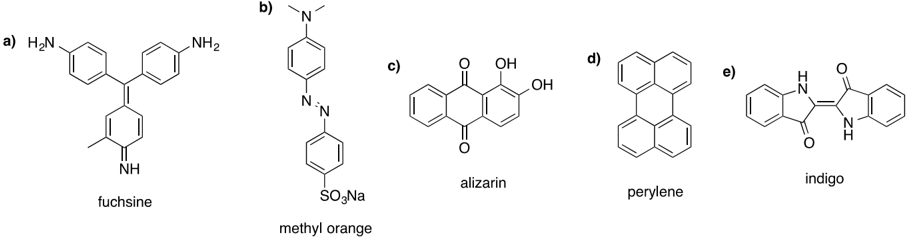
Amongst functional macromolecules, the combination of polymers and dyes is a research field of great potential with regard to high-performance materials. Accordingly, colored polymers have become increasingly important as materials for miscellaneous technical applications in recent years while also being a major part of everyday life. For instance, dye-containing polymers are nowadays widely applied in medicine, painting industries, analytics and gas separation processes. Since these applications are obviously connected to the dye’s nature, which is incorporated into the corresponding polymers, the affinity of certain polymers to dyes is exploited in wastewater work-ups after (textile) dyeing procedures. In this review, we wish to point out the great importance of dye-containing polymers, with a comprehensive scope and a focus on azo, triphenylmethane, indigoid, perylene and anthraquinone dyes. Since a large number of synthetic approaches towards the preparation of such materials can be found in the literature, an elaborated overview of different preparation techniques is given as well.
Overview
The claims and statistics of this paper haven’t been checked yet.
Free: it reads the open-access text and checks the first 5 claims that cite a source we can check. Create a free account to check every claim.
Integrity signals
Registry
Cites
Statistics
Figures


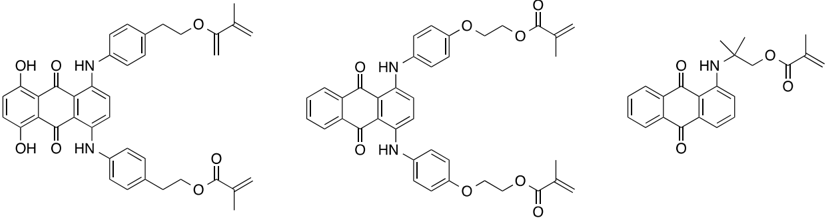

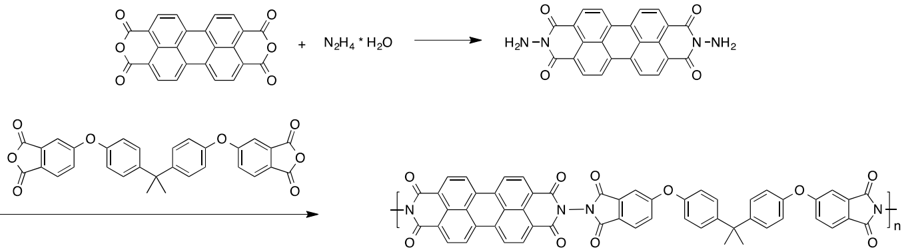
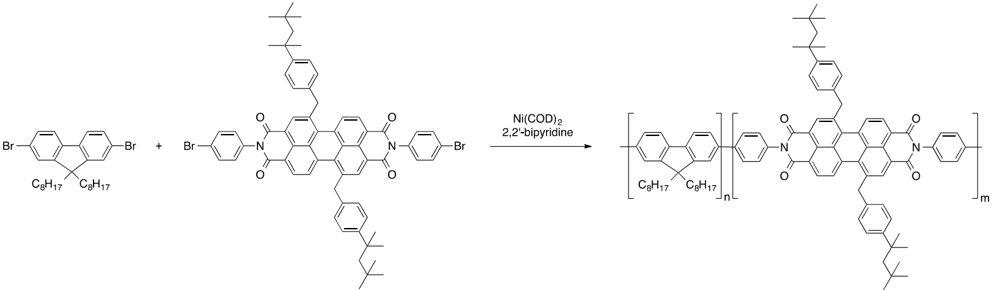

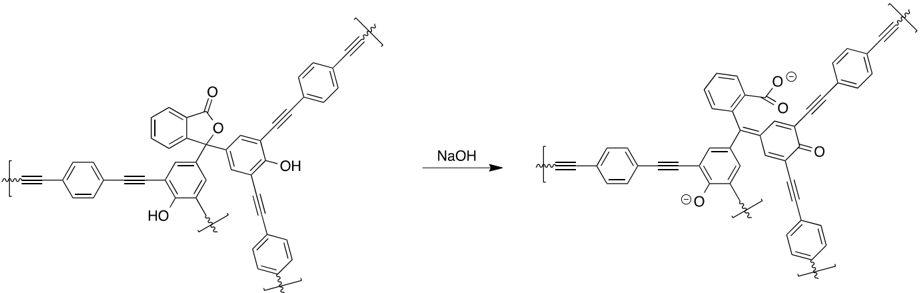




Verification
Claims the paper makes
The claims and statistics of this paper haven’t been checked yet.
Free: it reads the open-access text and checks the first 5 claims that cite a source we can check. Create a free account to check every claim.
Self-check
Percentages, sums and reported differences re-computed from the paper’s own numbers.
The self-check needs the paper’s full text.
Citations
Cites
Robinson, T., McMullan, G., Marchant, R., & Nigam, P. (2001) · Bioresource Technology · doi:10.1016/s0960-8524(00)00080-8 · Cited by 4,422 · cited 1×
“Hence, the environment is also being more and more affected by the steadily increasing frequency of dye pollutants, which induce unwanted color contaminations and sometimes have toxic effects to humans and animals [11,79].”
BackgroundLow-cost adsorbents for heavy metals uptake from contaminated water: a review
Babel, S. (2003) · Journal of Hazardous Materials · doi:10.1016/s0304-3894(02)00263-7 · Cited by 3,444 · cited 1×
“For instance, polysaccharide-based materials can be a cheap and effective alternative to commonly used systems [83,84].”
BackgroundRemoval of synthetic dyes from wastewaters: a review
Forgacs, E., Cserháti, T., & Oros, G. (2004) · Environment International · doi:10.1016/j.envint.2004.02.001 · Cited by 3,008 · cited 1×
“Plenty of physical, chemical and biological methods such as ozonation, fungal decolorization and degradation, membrane-filtration, activated carbon usage or electrochemical techniques like coagulation have been developed and optimized in recent years [80–82].”
MethodCrini, G., & Badot, P.-M. (2008) · Progress in Polymer Science · doi:10.1016/j.progpolymsci.2007.11.001 · Cited by 2,350 · cited 1×
“The only disadvantages in using chitosan are the variability in its characteristics, as the distribution of the acetyl groups along the backbone cannot be controlled, and its pH sensitivity [88].”
BackgroundPhotoinduced Motions in Azo-Containing Polymers
Natansohn, A., & Rochon, P. (2002) · Chemical Reviews · doi:10.1021/cr970155y · Cited by 2,229 · cited 1×
“This so-called Weigert effect induces birefringence of the materials [106,107].”
BackgroundRecent developments in polysaccharide-based materials used as adsorbents in wastewater treatment
Crini, G. (2005) · Progress in Polymer Science · doi:10.1016/j.progpolymsci.2004.11.002 · Cited by 2,183 · cited 1×
“For instance, polysaccharide-based materials can be a cheap and effective alternative to commonly used systems [83,84].”
BackgroundCharge Carrier Transporting Molecular Materials and Their Applications in Devices
Shirota, Y., & Kageyama, H. (2007) · Chemical Reviews · doi:10.1021/cr050143+ · Cited by 1,756 · cited 1×
“A quite new field of interest in polymers combined with dyes is organic light-emitting diodes (OLEDs) or rather polymer light-emitting diodes (PLEDs), which can be used as a full-color, high-efficiency and low-drive voltage material for flat-panel displays [118].”
BackgroundForce-induced activation of covalent bonds in mechanoresponsive polymeric materials
Davis, D. A., Hamilton, A., Yang, J., Cremar, L. D., Van Gough, D., Potisek, S. L., Ong, M. T., Braun, P. V., Martínez, T. J., White, S. R., et al. (2009) · Nature · doi:10.1038/nature07970 · Cited by 1,754 · cited 1×
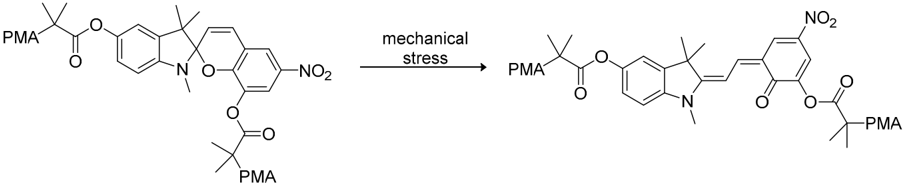
“A noted example for polymer-dye systems in chromogenic materials are spiropyrans [112,113].”
BackgroundPhotochemistry of azobenzene-containing polymers
Kumar, G. S., & Neckers, D. C. (1989) · Chemical Reviews · doi:10.1021/cr00098a012 · Cited by 1,366 · cited 1×
“Thereby, the original disorder in the molecule is reconstituted [15].”
BackgroundAdsorption behavior of reactive dye in aqueous solution on chemical cross-linked chitosan beads
Chiou, M. S., & Li, H. Y. (2003) · Chemosphere · doi:10.1016/s0045-6535(02)00636-7 · Cited by 840 · cited 1×
“In several publications epichlorhydrin cross-linked cyclodextrine and starch, as well as glutaraldehyde cross-linked chitosan, showed a high affinity, selectivity and capacity towards anthraquinone and azo dye pollutants in waste water [85–87].”
Background
Research works printed but not linked: 3
- Venkataraman, K. (2012). The Chemistry of Synthetic Dyes, Academic Press.
- Venkataraman, K. (2012). The Chemistry of Synthetic Dyes, Academic Press.
- Dawson, 1981, Polymeric dyes, Aldrichim. Acta, 14, 23
Cited by
Items 101–200 of 204
Upadhyay, R., Kumar, S., Srinuvasu, K., Gopinath, C. S., Chandrakumar, K. R. S., & Maurya, S. K. (2025) · Materials Advances · doi:10.1039/d5ma00711a · Cited by 7
Erbaş, S. Ç., & Gülle, S. (2018) · Celal Bayar Üniversitesi Fen Bilimleri Dergisi · doi:10.18466/cbayarfbe.423419 · Cited by 7
“Azo dyes are one of the most important commercial colorants with their favorable properties separated from other dye classes such as wide color ranges, high fastness and color intensities [1-2].”
BackgroundSynthesis and application of photo-responsive polymers
Qian, S., Nie, H., Li, S., & Zhang, W. (2019) · Scientia Sinica Chimica · doi:10.1360/n032018-00238 · Cited by 7
Genome‐wide selective detection of Mile red‐bone goat using next‐generation sequencing technology
He, Y., Hong, Q., Zhou, D., Wang, S., Yang, B., Yuan, Y., Zhang, W., Huang, Y., & Guangxin, E. (2021) · Ecology and Evolution · doi:10.1002/ece3.8165 · Cited by 7
“Numerous anthraquinone compounds are used as industrial dyes (Fleischmann et al., 2015) and involved in the inhibition of bone resorption of osteoclasts (OCs) and bone injuries (He et al., 2019).”
BackgroundOptical Limiting Properties of the Natural Dye Extract from Alternanthera brasiliana Leaves
Haripadmam, P. C., Beryl, C., & Reji Philip, A. (2022) · Journal of Electronic Materials · doi:10.1007/s11664-022-09523-9 · Cited by 7
Metzcar, C., Ye, X. P., Wang, T., & Doona, C. J. (2022) · Journal of the American Oil Chemists Society · doi:10.1002/aocs.12647 · Cited by 7
Ishak, S., Rosly, N. Z., Abdullah, A. H., & Ahmad, S. A. A. (2023) · Environmental Monitoring and Assessment · doi:10.1007/s10661-023-11909-z · Cited by 7
“Many reports (Fleischmann et al., 2015; Gama et al., 2018; Şolpan et al., 2003) stated that treatments with calix[4]arene as a based resin have been found promising and highly effective for the removal of dyes in aqueous media.”
BackgroundTowards hydrophobic carminic acid derivatives and their incorporation in polyacrylates
Gabrielli, L., Origgi, D., Zampella, G., Bertini, L., Bonetti, S., Vaccaro, G., Meinardi, F., Simonutti, R., & Cipolla, L. (2018) · Royal Society Open Science · doi:10.1098/rsos.172399 · Cited by 7
White-Light Emission of Dye-Doped Polymer Submicronic Fibers Produced by Electrospinning
Enculescu, M., Evanghelidis, A., & Enculescu, I. (2018) · Polymers · doi:10.3390/polym10070737 · Cited by 7
“Fluorescent dyes are mainly used in life sciences for non-destructive tracking or analysis of biological molecules [37,38], but they find a wide use in the industry for textile dyeing and as optical brighteners in laundry detergents [39,40], advanced cosmetic formulations [41], safety equipment and clothing, fine arts…”
BackgroundPhenylvinilbisquinolines as fluorescent markers in functionalized polypropylene films
Vázquez-Velázquez, A. R., Vázquez‐García, R. A., Hernandez-Bucio, G., González, V. Á. G., Moggio, I., & Vázquez‐Rodríguez, S. (2019) · Polymer Bulletin · doi:10.1007/s00289-019-02828-6 · Cited by 7
Dye-based covalent organic networks
Freitas, S. K. S., Oliveira, F. L., Merlini, C., Justo, E. P. S., Gioda, A., & Esteves, P. M. (2020) · Journal of Physics Materials · doi:10.1088/2515-7639/ab854b · Cited by 7
Kumar, R., Singh, B., Rana, A., Yadav, M., Kaishyop, J., Khan, T. S., Kumar, R., Naik, G. N., & Narani, A. (2024) · Applied Catalysis A General · doi:10.1016/j.apcata.2024.120080 · Cited by 6
Investigation of interaction strategies between pyrazolone dyes and poly(acrylamide-co-acrylic acid)
Shirsath, N. B., Gite, V. V., & Meshram, J. S. (2016) · Russian Journal of Applied Chemistry · doi:10.1134/s1070427216110215 · Cited by 6
Khalil, M. M., El‐Sayed, A. H., Masaoud, M. S., & Hamad, M. A. (2021) · Journal of Materials Research and Technology · doi:10.1016/j.jmrt.2021.01.102 · Cited by 6
Mishra, A., Kushwaha, A., Maurya, P., & Verma, R. (2023) · Spectrochimica Acta Part A Molecular and Biomolecular Spectroscopy · doi:10.1016/j.saa.2023.123554 · Cited by 6
Raduly, F. M., Rădițoiu, V., Rădițoiu, A., Grapin, M., Constantin, M., Răut, I., Nicolae, C. A., & Frone, A. N. (2024) · Gels · doi:10.3390/gels10020106 · Cited by 6
Poly(dimethylsiloxane) as a room-temperature solid solvent for photophysics and photochemistry
Clark, J. A., Robinson, S., Espinoza, E. M., Bao, D., Derr, J. B., Croft, L., O’Mari, O., Grover, W. H., & Vullev, V. I. (2024) · Physical Chemistry Chemical Physics · doi:10.1039/d3cp05413f · Cited by 6
Georgiev, A., Dimov, D., Stoilova, A., Markova, F., & Nazarova, D. (2019) · Optical Materials · doi:10.1016/j.optmat.2018.12.050 · Cited by 6
Wang, R., Ma, X., Hao, K., Song, L., Liu, T., Dai, P., Li, Y., Tjong, S. C., Yu, Q. B., & Wang, Z. (2020) · Materials Research Express · doi:10.1088/2053-1591/ab71cf · Cited by 6
Metzcar, C., Ye, X. P., Wang, T., & Doona, C. J. (2022) · Polymers · doi:10.3390/polym14030628 · Cited by 6
“It is worthwhile to mention that in dyeing textiles, dyes are usually fixed on textiles through physical entrapment or the relatively weak hydrogen bonds and van der Waals force of attraction, or stronger ionic bonds in the case of acid dye or basic dye; few dye molecules binded to textiles via covalent bonds, except…”
BackgroundSmart Bags and Smartphone for On-The-Spot Detection of Bleached Garlic
Balachandar, S., Goel, I., Sathe, A., Prabhu, A., & Mani, N. K. (2024) · Food Analytical Methods · doi:10.1007/s12161-024-02575-z · Cited by 6
“This class of dyes are used in dyeing textile fibres such as cotton, wool, silk, and nylon, where mainly non-covalent interactions are involved between the dyes and the fibres (Fleischmann et al. 2012, 2015).”
Phase-separated polyvinylidene fluoride/ZnO composite microspheres as sunlight-driven photocatalysts
Anwar, H., Al‐Ejji, M., Radhika, V., & Ponnamma, D. (2024) · Arabian Journal of Chemistry · doi:10.1016/j.arabjc.2024.105670 · Cited by 6
Mominou, N., Wang, L., & Anagho, S. (2016) · Open Journal of Inorganic Chemistry · doi:10.4236/ojic.2016.63011 · Cited by 6
Sweah, Z. J., Malik, F. H., & Karem, A. A. H. A. (2020) · Baghdad Science Journal · doi:10.21123/bsj.2021.18.1.0097 · Cited by 6
Albu, R. M., Stoica, I., Barzic, A. I., Postolache, M., Angheluță, M.-D., & Dorohoi, D. O. (2021) · Polymer Engineering and Science · doi:10.1002/pen.25771 · Cited by 6
Philip, P., & Tomlal Jose, E. (2025) · Environmental Progress & Sustainable Energy · doi:10.1002/ep.14600 · Cited by 5
Cross-Linked Polymer-Based Adsorbents and Membranes for Dye Removal
Velazco‐Medel, M. A., Camacho‐Cruz, L. A., Lugo‐González, J. C., & Bucio, E. (2021) · Sustainable textiles · doi:10.1007/978-981-16-4823-6_10 · Cited by 7
Biswas, D., Chowdhury, P., Bar, N., & Das, G. K. (2025) · Journal of Luminescence · doi:10.1016/j.jlumin.2025.121105 · Cited by 5
Fluorescent Sulfonate-Based Inorganic–Organic Hybrid Nanoparticles for Staining and Imaging
Poß, M., Zittel, E., Meschkov, A., Schepers, U., & Feldmann, C. (2018) · Bioconjugate Chemistry · doi:10.1021/acs.bioconjchem.8b00423 · Cited by 5
Bendahma, Y. H., Hamri, S., Merad, M., Bouchaour, T., & Maschke, U. (2018) · Polymer Bulletin · doi:10.1007/s00289-018-2455-2 · Cited by 5
Choudhary, N., Kaur, J., & Kumar, A. (2026) · ChemistrySelect · doi:10.1002/slct.73410 · Cited by 4
Zhi, K., Zhang, J. Y., Zhang, J. Y., Liu, Z. Y., Cui, H., Zhang, J. Y., Wang, Y., Feng, J., Mei, Y., & Liu, Z. (2026) · Journal of Hazardous Materials Advances · doi:10.1016/j.hazadv.2026.101321 · Cited by 8
Hussein, A. O., Abbas, R. A., Al-Zinkee, J. M. M., & Jarad, A. J. (2024) · Baghdad Science Journal · doi:10.21123/bsj.2024.8319 · Cited by 4
Al-Jarwany, Q. A., Habeeb, S. A., Bakly, A. A. K., & Walton, C. D. (2024) · Journal of Fluorescence · doi:10.1007/s10895-024-03984-3 · Cited by 4
“Thus, separating the individual R6G molecules adsorbed in the solid materials is essential to avoid dye aggregate and acquire the luminescence capability from laser dyes in the solid state [43, 44].”
Philip, P., Jose, T., Mathew, J. T., & Kuthanapillil, J. M. (2021) · Nano Futures · doi:10.1088/2399-1984/abf6b2 · Cited by 4
Electrochemical Characteristics of Azo Dyes Doped Poly(3,4-Ethylenedioxythiophene)
Dülgerbaki, Ç., Kömür, A. İ., Eren, E., Tkach, V., Skrypska, O. V., Kushnir, M. V., & Öksüz, A. U. (2020) · Biointerface Research in Applied Chemistry · doi:10.33263/briac106.69126925 · Cited by 4
“The dyes exhibit benzenoid quinonoid tautomerism with the corresponding quinone hydrazones [19, 20].”
BackgroundYıldırım, T., Barım, E., Tuncer, H., & Demirelli, K. (2024) · Journal of Macromolecular Science Part B · doi:10.1080/15325008.2024.2318889 · Cited by 4
Sweah, Z. J., & Malik, F. H. (2020) · Muthanna Journal of Pure Science · doi:10.52113/2/08.01.2021/54-61 · Cited by 3
Al-Muntaser, A. A., Alzahrani, E. A., Alghamdi, S. A., Al‐Harthi, A. M., Aldwais, S., & Saeed, A. (2024) · ECS Journal of Solid State Science and Technology · doi:10.1149/2162-8777/ad9a79 · Cited by 3
Photo-induced birefringence of azo-dye based on three-dimensional opal photonic crystals
Zhong, Q., Zou, L., Wang, Y., Sui, N., Liu, Q., Zhang, L., & Zhang, H. (2016) · Chemical Research in Chinese Universities · doi:10.1007/s40242-016-6042-5 · Cited by 3
Investigation of Optical Properties of Solochrome Dark Blue Dye Doped Polymer Films
Al-Saidi, I. A.-D. H. A., & Jabar, R. (2017) · Journal of materials physics and chemistry · doi:10.12691/jmpc-5-1-4 · Cited by 3
“Organic dyes are currently attracting considerable attention and emerged as the most promising materials for devices applications owing to their high nonlinearity and ultra-fast responses, Polymers have also received significant interest due to their various applications in many scientific branches and materials techn…”
BackgroundBiodegradace textilních barviv v odpadních vodách pomocí lakas
Herkommerová, K., & Pichová, I. (. (2017) · Chemické listy · Cited by 3
Selvaraj, V., Rhagavarshini, T. R., & Krishnadevi, K. (2018) · Polymer Bulletin · doi:10.1007/s00289-018-2337-7 · Cited by 3
Synthesis and Optical Properties of Near-Infrared (NIR) Absorbing Azo Dyes
Patil, S. R., & Chaudhary, A. S. (2020) · IntechOpen eBooks · doi:10.5772/intechopen.81229 · Cited by 3
Brissinger, D. (2024) · Polymers · doi:10.3390/polym16050660 · Cited by 2
“Additives can be used to obtain a variety of effects, and the incorporation of dyes into polymers is a common strategy [1–3] used to control optical characteristics (i.e., transmission, absorption and reflection) with implications across various domains, ranging from the visual aspect of polymers…”
BackgroundGong, W., Zhang, M., Li, Y., Dong, M., He, Y., Zeng, B., Shu, Y., Zhu, K., Zhang, J., & Wang, J. (2025) · Dyes and Pigments · doi:10.1016/j.dyepig.2025.113317 · Cited by 2
Wang, X., Cao, Y., Zhao, C., Lu, H., Xie, K., & Zheng, G. (2026) · Journal of Water Process Engineering · doi:10.1016/j.jwpe.2026.110273 · Cited by 2
Salmani, S., & Asgari, H. (2022) · Journal of Fluorescence · doi:10.1007/s10895-022-03025-x · Cited by 2
“Azo molecules can be incorporated into a polymer in the host-gust system, where in the azodye dissolved into polymer matrix [12, 13].”
BackgroundA facile approach to fabricate dual-responsive smart natural fibre sensors
Gan, H., Jin, X., & Zhang, J. (2024) · European Polymer Journal · doi:10.1016/j.eurpolymj.2023.112727 · Cited by 2
Bahrani, F., Jasim, I. K., & Abdullah, A. Q. (2024) · Journal of Optoelectronic and Biomedical Materials · doi:10.15251/jobm.2024.161.35 · Cited by 2
Effects of Dye Addition on the Rheological Properties of Aqueous Polymer Solutions
Upoma, M. A., He, Z., Tran, H., Sivells, T., Cyran, J. D., & Pack, M. Y. (2024) · Langmuir · doi:10.1021/acs.langmuir.4c01533 · Cited by 2
PREPARATION AND OPTICAL PROPERTIES CHARACTERIZATION OF P3OT - PMMA POLYMER BLEND FILMS
Al-Saidi, I. A.-D. H. A., Hussein, H. F., & Kareem, A. H. (2020) · International Journal of Research -GRANTHAALAYAH · doi:10.29121/granthaalayah.v7.i10.2019.392 · Cited by 2
“This is can be done effectively by mixing two or more polymers [9 - 12] or by doping the polymer with a suitable organic dye [6 - 8, 14].”
BackgroundNief, O. A., Abdullah, E. K., Alzahawi, H. M. G., & Jasim, M. N. (2018) · Baghdad Science Journal · doi:10.21123/bsj.15.4.415-524 · Cited by 2
Nandimath, M., Bhajantri, R. F., & Naik, J. (2023) · Physica Scripta · doi:10.1088/1402-4896/ad01fc · Cited by 1
Al-Sehemi, A. G., Al‐Ghamdi, A. A., Dishovsky, N., Mihailova, I., Malinova, P. A., Atanasov, N. T., & Atanasova, G. L. (2024) · Journal of Rubber Research · doi:10.1007/s42464-024-00235-9 · Cited by 1
“Being added to the materials, they also improve the applicative properties, namely light stability and flammability [1–4] and when mixed with metal oxides having the general formula AB 2 O 4 .”
Solğun, D. G., Savaş, B., Ağırtaş, M. S., & Öztürk, T. (2024) · Materials Research Innovations · doi:10.1080/14328917.2024.2371098 · Cited by 1
Thermal evaluation of the calcium stearate influence on polystyrene by in-line colorimetry
Bernardo, F., & Canevarolo, S. V. (2024) · Polímeros · doi:10.1590/0104-1428.20230130 · Cited by 1
Functional Materials for Paper-Based Chromogenic Sensors and Devices
Korotcenkov, G. S. (2025) · Springer eBooks · doi:10.1007/978-3-031-91080-7_23 · Cited by 1
Chen, M., Li, K., Deng, H. W., Chen, C., Chen, J., Yang, C., & Sun, L. (2026) · Water · doi:10.3390/w18070769 · Cited by 1
Jabar, H. J. M. I. H. (2018) · Eurasian Journal of Analytical Chemistry · Cited by 1
Hydrodynamic Conditions and Photodegradation of Methyl Orange in a Fluidized Bed Photoreactor
(2016) · International Journal of Research in Chemical Metallurgical and Civil Engineering · doi:10.15242/ijrcmce.e0616027 · Cited by 1
Baruah, S., Kumar, S., & Пузари, А. (2019) · Bulletin of Materials Science · doi:10.1007/s12034-019-1821-5 · Cited by 1
Study of Optical Properties of Bromophenol Blue Dye Doped P3OT– PMMA Polymer Blend Films
Al-Saidi, I. A.-D. H. A., Hussein, H. F., & Kareem, A. H. (2019) · International Journal of Engineering and Applied Sciences (IJEAS) · doi:10.31873/ijeas.6.9.25 · Cited by 1
Tan, L. V., Thắm, N. T., Tran, V. T., Uyen, D. T. T., Vũ, P. G., Sy, D. T., Danh, V. T., Nguyen, T. A., Vo, D. N., & Nguyen, T. D. (2020) · Asian Journal of Chemistry · doi:10.14233/ajchem.2020.22189 · Cited by 1
Joshi, A., Vuree, S., Nguyen, T. L., & Kaushik, V. (2023) · AIP conference proceedings · doi:10.1063/5.0168966 · Cited by 1
Coordination dynamics: The role of azodye metal ions in enhancing polymeric behaviour
Tripathy, L., & Sarangi, A. K. (2025) · Journal of the Indian Chemical Society · doi:10.1016/j.jics.2025.101734 · Cited by 1
Ferdous, T., Anis‐Ul‐Haque, K. M., Sharif, M. N., Ullah, M. W., Khan, J. M., Ul‐Islam, M., Hoque, M. A., & Kabir, S. E. (2025) · Journal of Solution Chemistry · doi:10.1007/s10953-025-01485-w · Cited by 1
Özdemir, P., Kantar, G. K., Özgüney, A. T., & Şaşmaz, S. (2024) · AATCC Journal of Research · doi:10.1177/24723444241246306 · Cited by 1
Intrinsically magenta-colored aramids with enhanced mechanical performance
Guembe-García, M., Vallejos, S., García, J. M., & Trigo‐López, M. (2025) · Dyes and Pigments · doi:10.1016/j.dyepig.2025.112944 · Cited by 1
Формування попиту та стимулювання збуту
Бондаренко, В. М., & Сластьоненко, В. О. (2017) · Electronic Archive of Poltava University of Economics and Trade (University of Poltava) · Cited by 1
Characterisation of microplastic fibres and their degradation under environmental conditions
Sait, S. T. L. (2019) · NORA - Norwegian Open Research Archives · Cited by 5
Iglesias, A., Cancela, Á., Heyvaert, A., & Sánchez, Á. (2026) · Applied Sciences · doi:10.3390/app16062635
Bondarev, S. L., Арико, Н. Г., Filippovich, L., Кароза, А. Г., & Stupak, A. P. (2016) · Journal of Applied Spectroscopy · doi:10.1007/s10812-016-0344-8
Development of gel dosimetry for radiotherapy
Smith, S. T. (2017) · Queensland University of Technology · doi:10.5204/thesis.eprints.102759
Application of Marine Polymers in Dye and Textile Industries
Sivaperumal, P., Kamala, K., & Rajaram, R. (2017) · CRC Press eBooks · doi:10.4324/9781315313535-23
Colorant Materials, Additives in Plastic Technology
Mohamed, R. R. (2017) · Springer eBooks · doi:10.1007/978-3-642-37179-0_81-1
“Pigments and dyes are coloring substances, i.e., substances imparting a specific color to the substrate being colored (Carolin et al. 2015).”
BackgroundKufel, A., & Kuciel, S. T. (2020) · Journal of Natural Fibers · doi:10.1080/15440478.2020.1844841
“Natural colorants are eco-friendly and they are used to reduce toxicity and decrease production costs (Fleischmann, Lievenbrück, and Ritter 2015).”
BackgroundDecolorization of azo dyes with Klebsiella Pneumoniae under high saline conditions
Gopi, T. (2021) · DR-NTU (Nanyang Technological University) · doi:10.32657/10356/153445 · Cited by 1
Influence of Nature of Pigments and Dyes on Coloring Properties of Polymeric Superconcentrates
Blyznyuk, O., Vasilchenko, A., Danilin, O., & Дармофал, Е. (2022) · Diffusion and defect data, solid state data. Part B, Solid state phenomena/Solid state phenomena · doi:10.4028/p-96nwu6
Sistemas de revalorización de poliolefinas procedentes de residuos sólidos urbanos
López-Cepero, F. P. (2023) · RiuNet (Universitat Politècnica de València) · doi:10.4995/thesis/10251/194553
Iglesias, A., Cancela, Á., Heyvaert, A., & Sánchez, Á. (2024) · SSRN Electronic Journal · doi:10.2139/ssrn.4777253
Hameed, D. A., Shinen, M. H., & Obayes, A. I. (2025) · Annales de Chimie Science des Matériaux · doi:10.18280/acsm.490110
“Given that the nature of the dye, which is integrated into the polymers, is clearly related to these applications [15].”
The Coloration of Additive-Manufactured Polymer
Abisuga, O. A., Akiwowo, K., & de Beer, D. J. (2024) · Journal of Textile Design Research and Practice · doi:10.1080/20511787.2025.2489252
“Fleischmann, Lievenbr € uck, and Ritter (2015) described polymer dyeing as a fundamental process that involves the introduction of colorants, typically dyes or pigments, into polymer materials to achieve desired coloration and visual aesthetics.”
Zuo, J., Liu, G.-L., Wang, K., Wang, Z., & Wang, N. (2025) · ChemistrySelect · doi:10.1002/slct.202501841
Design and Construction of a System for Dyeing 3D Printed PA12
Poláková, S., Kolembusová, P., Ferenčík, N., Danko, M., Steingartner, W., & Ballová, Z. (2025) · IEEE International Symposium on Applied Computational Intelligence and Informatics (SACI) · doi:10.1109/saci66288.2025.11030198
Carbazole-modified benzothiazolium dye composites for holographic application
Abdelsalam, D. H. A., Dhas, A. A., Yamazaki, I., Kinashi, K., NaotoTsutsumi, & Jackin, B. J. (2025) · Journal of Photochemistry and Photobiology A Chemistry · doi:10.1016/j.jphotochem.2025.116960
Porous materials for removal of water pollutants
Teixeira, A. P. (2022) · Portuguese National Funding Agency for Science, Research and Technology (RCAAP Project by FCT) · doi:10.34626/g6ea-7a72
(2021) · Zhytomyr State University Library (Zhytomyr Ivan Franko State University)
Untersuchungen zum Diffusionsverhalten von Farbstoffen in organischen Beschichtungen
Eder, A. (2017) · University Library Linz repository (Johannes Kepler Universitat Linz)
Управління закупівельною діяльністю на підприємстві
Бондаренко, В. М., & Анастасія, Л. (2017) · Electronic Archive of Poltava University of Economics and Trade (University of Poltava)
THE STUDY OF THE SUPERCONCENTRATE EFFECT ON PROPERTIES OF POLYPROPYLENE
Khusainova, G. R. (2025) · COMPOSITES and NANOSTRUCTURES · doi:10.36236/1999-7590-2025-17-4-294-306
Mechanisms of Interaction in Nanocomposites of πConjugated Dyes with Nanostructures and Biomolecules
Гапонов, А. М. (2025) · eKNUTSHIR
Optimizing Photocuring Properties of Ceramic Slurries in Stereolithography
Konnunaho, P. (2025) · Tampere University Institutional Repository (Tampere University)
Semmoud, R. (2020) · Dépôt Institutionnel de lUniversité de Tlemcen
Polymer–Dye Hybrid Systems for Sustainable Cosmetics and Personal Care
Pawaskar, G., & Puglia, T. (2026) · The Bombay Technologist · doi:10.36664/bt/2026/v72i1/173250
Ziyayeva, G. K., Тулеубаев, Ж., К.Ж, С., Кадыр, Г., Abdikaiymova, Z., & Жорабек, Г. Е. (2026) · Vestnik of M Kozybayev North Kazakhstan University · doi:10.54596/2958-0048-2026-2-83-96
Applications of Natural Dyes in Our Daily Life
Bhandari, N. L., Bhandari, G., & Rokaya, M. B. (2026) · Springer eBooks · doi:10.1007/978-3-032-23229-8_6
Yang, Q., Wang, H., Liu, W., Niu, Y., Li, Z., Zhang, L., Zhao, Z., Wang, J., Liu, M., & Li, C. (2026) · Coloration Technology · doi:10.1111/cote.70089
Metadata
- Authors
- Fleischmann, C., Lievenbrück, M., & Ritter, H.
- Affiliations
- University of California, Santa Barbara (US)
- Heinrich Heine University Düsseldorf (DE)
- Corresponding author
- Ritter, Helmut
- ORCID
- Fleischmann, Carolin
- Venue
- Polymers
- Publisher
- MDPI AG
- Published
- 2015-04-15
- Volume
- 7
- Issue
- 4
- Pages
- 717-746
- ISSN
- 2073-4360 (ISSN-L)
- OpenAlex
- W1965217519
- Cited by
- 188
- References
- 123
- Citations by year
- 2026: 10 · 2025: 20 · 2024: 32 · 2023: 16 · 2022: 14 · 2021: 18 · 2020: 21 · 2019: 17 · 2018: 15 · 2017: 14 · 2016: 10 · 2015: 1
- FWCI
- 18.11
- Type
- journal article
- Language
- en
- Open access
- gold
- dx.doi.org
- Licence
- Locations
- Polymers (publishedVersion, cc-by)
- DOAJ (DOAJ: Directory of Open Access Journals) (submittedVersion, cc-by-sa)
- Topics
- Physical Sciences › Materials Science › Polymers and Plastics › Dyeing and Modifying Textile Fibers
- Physical Sciences › Chemistry › Organic Chemistry › Advanced Polymer Synthesis and Characterization
- Physical Sciences › Materials Science › Polymers and Plastics › Polymer Synthesis and Characterization
- Keywords
- colored polymers, azo dyes, triphenylmethane dyes, indigoid dyes, perylene dyes, anthraquinone dyes, polymer synthesis, dyeing wastewater, gas separation, medical applications, painting industry
About these checks
Registry, retraction, Cites and statistics results are computed, not judged, with one exception: a printed reference that no index lists is read once by a model before it counts as a citation error. Claims are extracted by a model and kept only when their quote appears verbatim in the text; each cited source is then checked, with a model’s help, for whether it says what the claim relies on. Those verdicts can be wrong — read the claim’s quote and the cited source before relying on one.
Statistics and arithmetic are recomputed, not judged.
Confidence bands are shown only for fields calibrated on our annotated test set. None is calibrated yet, so no band is shown.
What counts as a claim ›How we measure confidence ›How we check this ›
Are you an author, or do you see a problem with this page? Request a review
Data sources
Bibliographic data: Semantic Scholar, OpenAlex, Crossref.
Contains information from the Semantic Scholar Academic Graph Datasets, made available under the ODC Attribution License (ODC-BY 1.0).
Semantic Scholar’s data is described in: Kinney, R., et al. (2023). The Semantic Scholar Open Data Platform. arXiv:2301.10140.
