

Brain Computer Interfaces, a Review
Open accessThe DOI matches its Crossref record; 322 of the 325 references it cites were found in a registry or an index.
Abstract
A brain-computer interface (BCI) is a hardware and software communications system that permits cerebral activity alone to control computers or external devices. The immediate goal of BCI research is to provide communications capabilities to severely disabled people who are totally paralyzed or ‘locked in’ by neurological neuromuscular disorders, such as amyotrophic lateral sclerosis, brain stem stroke, or spinal cord injury. Here, we review the state-of-the-art of BCIs, looking at the different steps that form a standard BCI: signal acquisition, preprocessing or signal enhancement, feature extraction, classification and the control interface. We discuss their advantages, drawbacks, and latest advances, and we survey the numerous technologies reported in the scientific literature to design each step of a BCI. First, the review examines the neuroimaging modalities used in the signal acquisition step, each of which monitors a different functional brain activity such as electrical, magnetic or metabolic activity. Second, the review discusses different electrophysiological control signals that determine user intentions, which can be detected in brain activity. Third, the review includes some techniques used in the signal enhancement step to deal with the artifacts in the control signals and improve the performance. Fourth, the review studies some mathematic algorithms used in the feature extraction and classification steps which translate the information in the control signals into commands that operate a computer or other device. Finally, the review provides an overview of various BCI applications that control a range of devices.
Overview
The claims and statistics of this paper haven’t been checked yet.
Free: it reads the open-access text and checks the first 5 claims that cite a source we can check. Create a free account to check every claim.
Integrity signals
Registry
Cites
Statistics
Figures
Verification
Claims the paper makes
The claims and statistics of this paper haven’t been checked yet.
Free: it reads the open-access text and checks the first 5 claims that cite a source we can check. Create a free account to check every claim.
Claims other papers make about this one
Each is checked against this paper’s own text: does it say what the citing paper says it does?
The source backs part of the claim, not all of it — or backs it for a different population, condition or comparison.
In the citing paper
“Noninvasive EEG based BCI could potentially serve the needs of a large population10.”
From Noninvasive Electroencephalogram Based Control of a Robotic Arm for Reach and Grasp Tasks (2016) · cites this paper as [10]
Experimental — accuracy not yet measuredThe cited source says what the claim attributes to it.
In the citing paper
“this response can be used as a neural signal in EEG-based brain-computer interfaces (BCIs), enabling direct communication between the brain and surroundings without the involvement of peripheral nerves or muscles (Nicolas-Alonso and Gomez-Gil, 2012).”
From A Lightweight Multi-Scale Convolutional Neural Network for P300 Decoding: Analysis of Training Strategies and Uncovering of Network Decision (2021) · cites this paper as Nicolas-Alonso and Gomez-Gil, 2012
The check wasn’t confident either way, so it gives no verdict — never disputed.
In the citing paper
“Among others, external influences such as stress, emotion, and work impact these metrics and can be used to infer those [162].”
From A Survey on Measuring Cognitive Workload in Human-Computer Interaction (2023) · cites this paper as [162]
Experimental — accuracy not yet measured
Self-check
Percentages, sums and reported differences re-computed from the paper’s own numbers.
The self-check needs the paper’s full text.
Citations
Cites
A Tutorial on Support Vector Machines for Pattern Recognition
Burges, C. J. C. (1998) · Data Mining and Knowledge Discovery · doi:10.1023/a:1009715923555 · Cited by 16,429 · cited 1×
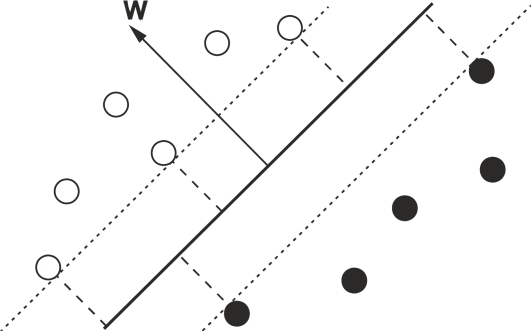
“However, in contrast to LDA, SVM selects the hyperplanes that maximize the margins, that is, the distance between the nearest training samples and the hyperplanes [236].”
MethodAn Information-Maximization Approach to Blind Separation and Blind Deconvolution
Bell, A. J., & Sejnowski, T. J. (1995) · Neural Computation · doi:10.1162/neco.1995.7.6.1129 · Cited by 8,986 · cited 1×
“Finally, s(t) and A are obtained from x(t) by means of certain algorithms, such as Infomax [162] or further modification of the Infomax [163].”
MethodBrain–computer interfaces for communication and control
Wolpaw, J. R., Birbaumer, N., McFarland, D. J., Pfurtscheller, G., & Vaughan, T. M. (2002) · Clinical Neurophysiology · doi:10.1016/s1388-2457(02)00057-3 · Cited by 7,927 · cited 2×
“Furthermore, BCI systems require real-time signal processing, and up until recently the requisite technology either did not exist or was extremely expensive [2].”
BackgroundEvent-related EEG/MEG synchronization and desynchronization: basic principles
Pfurtscheller, G., & Lopes da Silva, F. H. (1999) · Clinical Neurophysiology · doi:10.1016/s1388-2457(99)00141-8 · Cited by 7,328 · cited 1×
“Both rhythms are associated in such a way that some beta rhythms are harmonic mu rhythms, although some beta rhythms may also be independent [139].”
BackgroundStatistical pattern recognition: a review
Jain, A. K., Duin, P. W., & Mao, J. (2000) · IEEE Transactions on Pattern Analysis and Machine Intelligence · doi:10.1109/34.824819 · Cited by 6,767 · cited 1×
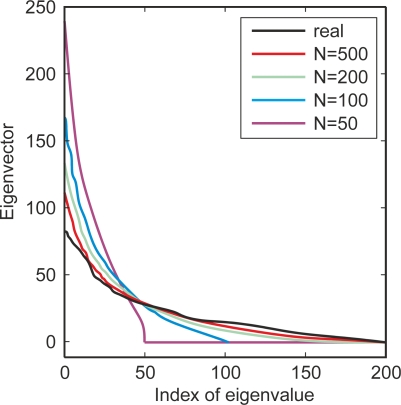
“training data needed to offer good results increases exponentially with the dimensionality of the feature vector [223].”
BackgroundThe ten-twenty electrode system of the international federation
Jasper, H. H. (1958) · Electroencephalography and Clinical Neurophysiology · Cited by 6,567
Neurophysiological investigation of the basis of the fMRI signal
Logothetis, N. K., Pauls, J., Augath, M., Trinath, T., & Oeltermann, A. (2001) · Nature · doi:10.1038/35084005 · Cited by 6,551 · cited 1×
“a correspondence between both does exist [86].”
Frequency Dependence of Signal Power and Spatial Reach of the Local Field Potential
Leski, S., Lindén, H., Tetzlaff, T., Pettersen, K. H., & Einevoll, G. T. (2013) · PubMed · doi:10.18154/rwth-conv-084442 · Cited by 3,639
Neuronal ensemble control of prosthetic devices by a human with tetraplegia
Hochberg, L. R., Serruya, M. D., Friehs, G. M., Mukand, J. A., Saleh, M., Caplan, A. H., Branner, A., Chen, D., Penn, R. D., & Donoghue, J. P. (2006) · Nature · doi:10.1038/nature04970 · Cited by 3,295 · cited 1×
“[287] implanted BrainGate sensors in the primary motor cortex of a tetraplegic patient to control a cursor.”
BackgroundFarwell, L. A., & Donchin, E. (1988) · Electroencephalography and Clinical Neurophysiology · doi:10.1016/0013-4694(88)90149-6 · Cited by 3,228 · cited 5×
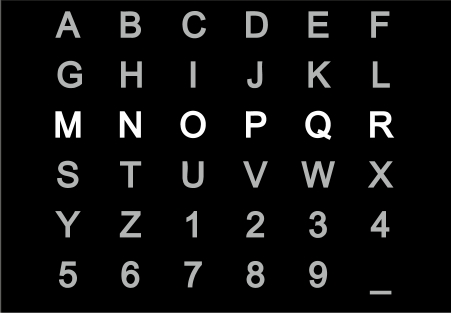
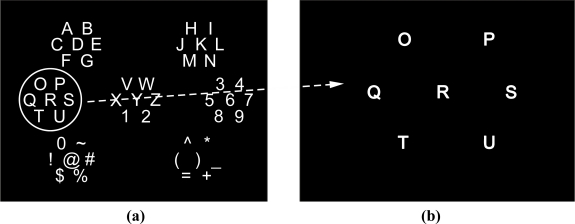
“A typical application of a BCI based on visual P300 evoked potentials comprises a matrix of letters, numbers, or other symbols or commands [123,127,128].”
BackgroundInfluential
Research works printed but not linked: 3
- Steven, L., and Giulio, T. (2009). The Neurology of Consciousness, Academic Press.
- Mellinger, 2007, An MEG-based brain-computer interface (BCI), Neuroimage, 36, 581, 10.1016/j.neuroimage.2007.03.019 · DOI · Paper page
- Tangermann, M., Krauledat, M., Grzeska, K., Sagebaum, M., Blankertz, B., Vidaurre, C., and Müller, K. (2008). Playing Pinball with non-invasive BCI. Proc. NIPS, 1641–1648.
Cited by
EEGNet: a compact convolutional neural network for EEG-based brain-computer interfaces
Lawhern, V. J., Solon, A. J., Waytowich, N. R., Gordon, S. M., Hung, C. P., & Lance, B. J. (2018) · Journal of Neural Engineering · doi:10.1088/1741-2552/aace8c · Cited by 5,115
“processing stages [3]: a data collection stage, where neural data is recorded; a signal processing stage, where the recorded data is preprocessed and cleaned; a feature extraction stage, where meaningful information is extracted from the neural data; a classification stage, where a decision is interpreted from the dat…”
BackgroundEEGNet: A Compact Convolutional Network for EEG-based Brain-Computer Interfaces
Lawhern, V. J., Solon, A. J., Waytowich, N. R., Gordon, S. M., Hung, C. P., & Lance, B. J. (2016) · arXiv · doi:10.48550/arxiv.1611.08024 · Cited by 5,105
“processing stages [3]: a data collection stage, where neural data is recorded; a signal processing stage, where the recorded data is preprocessed and cleaned; a feature extraction stage, where meaningful information is extracted from the neural data; a classification stage, where a decision is interpreted from the dat…”
BackgroundThe grand challenges of Science Robotics
Yang, G.-Z., Bellingham, J., Dupont, P. E., Fischer, P., Floridi, L., Full, R., Jacobstein, N., Kumar, V., McNutt, M., Merrifield, R., et al. (2018) · Science Robotics · doi:10.1126/scirobotics.aar7650 · Cited by 1,177
“Beyond their clinical use, BCIs also have emerging applications in neuroer-gonomics, communication and control, education and self-regulation, as well as games and entertainment ( 72 ).”
BackgroundfNIRS-based brain-computer interfaces: a review
Naseer, N., & Hong, K.-S. (2015) · Frontiers in Human Neuroscience · doi:10.3389/fnhum.2015.00003 · Cited by 988
“For more details on genetic algorithms, please see Pernkopf and O’Leary (2001) and Nicolas-Alonso and Gomez-Gil (2012).”
MethodA comprehensive review of EEG-based brain–computer interface paradigms
Abiri, R., Borhani, S., Sellers, E. W., Jiang, Y., & Zhao, X. (2019) · Journal of Neural Engineering · doi:10.1088/1741-2552/aaf12e · Cited by 946
A novel deep learning approach for classification of EEG motor imagery signals
Tabar, Y. R., & Halici, U. (2017) · Journal of Neural Engineering · doi:10.1088/1741-2560/14/1/016003 · Cited by 859
EEG-Based Brain-Computer Interfaces Using Motor-Imagery: Techniques and Challenges
Padfield, N., Zabalza, J., Zhao, H., Masero, V., & Ren, J. (2019) · Sensors · doi:10.3390/s19061423 · Cited by 596
“The performance of SMR-BCIs is heavily dependent on the neurophysiological and psychological state of the user, with the control of SMR activity being found to be challenging for many users [9,23].”
BackgroundMethodInfluentialEEG dataset and OpenBMI toolbox for three BCI paradigms: an investigation into BCI illiteracy
Lee, M.-H., Kwon, O.-Y., Kim, Y.-J., Kim, H.-K., Lee, Y.-E., Williamson, J., Fazli, S., & Lee, S.-W. (2019) · GigaScience · doi:10.1093/gigascience/giz002 · Cited by 590
“…that exogenous BCI paradigms [38] (i.e., ERP and SSVEP), where external visual stimuli evoke brain responses, show a relatively small ratio of BCI illiteracy compared to the endogenous BCI paradigm [38] (i.e., MI) where a userinducesthebrainsignalswithapredefinedmentaltask(i.e., imaginedmovements).”
Brain computer interfacing: Applications and challenges
Abdulkader, S. N., Atia, A., & Mostafa, M.-S. M. (2015) · Egyptian Informatics Journal · doi:10.1016/j.eij.2015.06.002 · Cited by 533
Transfer Learning for Brain–Computer Interfaces: A Euclidean Space Data Alignment Approach
He, H., & Wu, D. (2020) · IEEE Transactions on Biomedical Engineering · doi:10.1109/tbme.2019.2913914 · Cited by 569
Rashid, M., Sulaiman, N., P. P. Abdul Majeed, A., Musa, R. M., Ab. Nasir, A. F., Bari, B. S., & Khatun, S. (2020) · Frontiers in Neurorobotics · doi:10.3389/fnbot.2020.00025 · Cited by 506
Noninvasive Electroencephalogram Based Control of a Robotic Arm for Reach and Grasp Tasks
Meng, J., Zhang, S., Bekyo, A., Olsoe, J., Baxter, B., & He, B. (2016) · Scientific Reports · doi:10.1038/srep38565 · Cited by 484
Visual and Auditory Brain–Computer Interfaces
Gao, S., Wang, Y., Gao, X., & Hong, B. (2014) · IEEE Transactions on Biomedical Engineering · doi:10.1109/tbme.2014.2300164 · Cited by 449
Frolov, A. A., Mokienko, O., Lyukmanov, R., Biryukova, E., Kotov, S., Turbina, L., Nadareyshvily, G., & Bushkova, Y. (2017) · Frontiers in Neuroscience · doi:10.3389/fnins.2017.00400 · Cited by 396
Progress in Brain Computer Interface: Challenges and Opportunities
Saha, S., Mamun, K. A., Ahmed, K., Mostafa, R., Naik, G. R., Darvishi, S., Khandoker, A. H., & Baumert, M. (2021) · Frontiers in Systems Neuroscience · doi:10.3389/fnsys.2021.578875 · Cited by 365
“For specialized reviews on particular BCI topics we refer to the recent literature (McFarland et al., 2006; Schwartz et al., 2006; Bashashati et al., 2007; Lotte et al., 2007, 2018; Matthews et al., 2007; Sitaram et al., 2007; Mak and Wolpaw, 2009; Menon et al., 2009; Nicolelis and Lebedev, 2009; Summerer et al., 2009…”
BackgroundMethodFlexible brain–computer interfaces
Tang, X., Shen, H., Zhao, S., Li, N., & Liu, J. (2023) · Nature Electronics · doi:10.1038/s41928-022-00913-9 · Cited by 373
Subject-Independent Brain–Computer Interfaces Based on Deep Convolutional Neural Networks
Kwon, O.-Y., Lee, M.-H., Guan, C., & Lee, S.-W. (2020) · IEEE Transactions on Neural Networks and Learning Systems · doi:10.1109/tnnls.2019.2946869 · Cited by 347
Lazarou, I., Nikolopoulos, S., Petrantonakis, P. C., Kompatsiaris, I., & Tsolaki, M. (2018) · Frontiers in Human Neuroscience · doi:10.3389/fnhum.2018.00014 · Cited by 335
Machine Learning for Neural Decoding
Glaser, J. I., Benjamin, A. S., Chowdhury, R. H., Perich, M. G., Miller, L. E., & Kording, K. P. (2020) · eneuro · doi:10.1523/eneuro.0506-19.2020 · Cited by 319
Past, Present, and Future of EEG-Based BCI Applications
Värbu, K., Muhammad, N., & Muhammad, Y. (2022) · Sensors · doi:10.3390/s22093331 · Cited by 321
“As per NicolasAlonso and Gomez-Gil [27] BCI could be categorized as synchronous or asynchronous.”
BackgroundMethodInfluentialXie, J., Zhang, J., Sun, J., Ma, Z., Qin, L., Li, G., Zhou, H., & Zhan, Y. (2022) · IEEE Transactions on Neural Systems and Rehabilitation Engineering · doi:10.1109/tnsre.2022.3194600 · Cited by 314
Performance variation in motor imagery brain–computer interface: A brief review
Ahn, M., & Jun, S. C. (2015) · Journal of Neuroscience Methods · doi:10.1016/j.jneumeth.2015.01.033 · Cited by 316
A Survey on Measuring Cognitive Workload in Human-Computer Interaction
Kosch, T., Karolus, J., Zagermann, J., Reiterer, H., Schmidt, A., & Woźniak, P. W. (2023) · ACM Computing Surveys · doi:10.1145/3582272 · Cited by 304
“EEG is commonly leveraged in clinical applications and yields a non-invasive method to estimate cortical activity [166, 180, 254].”
Feature Extraction and Classification Methods for Hybrid fNIRS-EEG Brain-Computer Interfaces
Hong, K.-S., Khan, M. J., & Hong, M. J. (2018) · Frontiers in Human Neuroscience · doi:10.3389/fnhum.2018.00246 · Cited by 283
“The brain signals suitable for use with LIS patients have been discussed in several papers (Nicolas-Alonso and Gomez-Gil, 2012; Moghimi et al., 2013).”
BackgroundA Sliding Window Common Spatial Pattern for Enhancing Motor Imagery Classification in EEG-BCI
Gaur, P., Gupta, H., Chowdhury, A., McCreadie, K., Pachori, R. B., & Wang, H. (2021) · IEEE Transactions on Instrumentation and Measurement · doi:10.1109/tim.2021.3051996 · Cited by 280
Decoding of four movement directions using hybrid NIRS-EEG brain-computer interface
Khan, M. J., Hong, M. J., & Hong, K.-S. (2014) · Frontiers in Human Neuroscience · doi:10.3389/fnhum.2014.00244 · Cited by 280
Driver Lane Change Intention Inference for Intelligent Vehicles: Framework, Survey, and Challenges
Xing, Y., Lv, C., Wang, H., Wang, H., Ai, Y., Cao, D., Velenis, E., & Wang, F.-Y. (2019) · IEEE Transactions on Vehicular Technology · doi:10.1109/tvt.2019.2903299 · Cited by 274
Brain-Computer Interface: Advancement and Challenges
Mridha, M. F., Das, S. C., Kabir, M. M., Lima, A. A., Islam, M. R., & Watanobe, Y. (2021) · Sensors · doi:10.3390/s21175746 · Cited by 263
“In addition to these medical applications, security, lie detection, alertness monitoring, telepresence, gaming, education, art, and human enhancement are just a few uses for brain–computer interfaces (BCIs), also known as brain–machine interfaces or BMIs [5].”
BackgroundHong, K.-S., & Khan, M. J. (2017) · Frontiers in Neurorobotics · doi:10.3389/fnbot.2017.00035 · Cited by 267
Fahimi, F., Zhang, Z., Goh, W. B., Lee, T.-S., Ang, K. K., & Guan, C. (2019) · Journal of Neural Engineering · doi:10.1088/1741-2552/aaf3f6 · Cited by 264
A survey of sensor fusion methods in wearable robotics
Novak, D., & Riener, R. (2015) · Robotics and Autonomous Systems · doi:10.1016/j.robot.2014.08.012 · Cited by 252
EEG-Based BCI Control Schemes for Lower-Limb Assistive-Robots
Tariq, M., Trivailo, P. M., & Simic, M. (2018) · Frontiers in Human Neuroscience · doi:10.3389/fnhum.2018.00312 · Cited by 245
“This provides the basis for the development of controllers, directly driven from cortical activity in correlation to the user intent for volitional movements (Nicolas-Alonso and Gomez-Gil, 2012; Angeli et al., 2014; Tucker et al., 2015; Lebedev and Nicolelis, 2017) instead of EMG signals.”
BackgroundConcurrent fNIRS and EEG for Brain Function Investigation: A Systematic, Methodology-Focused Review
Li, R., Yang, D., Fang, F., Hong, K.-S., Reiss, A. L., & Zhang, Y. (2022) · Sensors · doi:10.3390/s22155865 · Cited by 236
“Integrated EEG–fNIRS approaches offer numerous benefits over single-modality methods by exploiting their individual strengths; EEG provides favorable temporal resolution while fNIRS offers better spatial resolution and is robust to noise [23,24].”
BackgroundGaur, P., Pachori, R. B., Wang, H., & Prasad, G. (2018) · Expert Systems with Applications · doi:10.1016/j.eswa.2017.11.007 · Cited by 238
“As discussed earlier, the raw EEG signals have low SNR as they may be affected with interference from electrosurgical units (ESUs), EOG, and EMG (Pfurtscheller, Neuper, Flotzinger, & Pregenzer, 1997).”
BackgroundInfluentialMultivariate synchronization index for frequency recognition of SSVEP-based brain–computer interface
Zhang, Y., Xu, P., Cheng, K., & Yao, D. (2014) · Journal of Neuroscience Methods · doi:10.1016/j.jneumeth.2013.07.018 · Cited by 233
Soft, Comfortable Polymer Dry Electrodes for High Quality ECG and EEG Recording
Chen, Y.-H., De Beeck, M., Vanderheyden, L., Carrette, E., Mihajlović, V., Vanstreels, K., Grundlehner, B., Gadeyne, S., Boon, P., & Van Hoof, C. (2014) · Sensors · doi:10.3390/s141223758 · Cited by 238
“EEG monitoring offers also interesting possibilities for brain computer interface (BCI) applications [7].”
Generative Adversarial Networks-Based Data Augmentation for Brain–Computer Interface
Fahimi, F., Dosen, S., Ang, K. K., Mrachacz-Kersting, N., & Guan, C. (2021) · IEEE Transactions on Neural Networks and Learning Systems · doi:10.1109/tnnls.2020.3016666 · Cited by 228
Hybrid EEG–fNIRS-Based Eight-Command Decoding for BCI: Application to Quadcopter Control
Khan, M. J., & Hong, K.-S. (2017) · Frontiers in Neurorobotics · doi:10.3389/fnbot.2017.00006 · Cited by 227
EEG Classification of Motor Imagery Using a Novel Deep Learning Framework
Dai, M., Zheng, D., Na, R., Wang, S., & Zhang, S. (2019) · Sensors · doi:10.3390/s19030551 · Cited by 229
“Thus, motor imagery has had widespread use as a major approach in BCI systems [6,7].”
BackgroundSantamaría-Vázquez, E., Martínez-Cagigal, V., Vaquerizo-Villar, F., & Hornero, R. (2020) · IEEE Transactions on Neural Systems and Rehabilitation Engineering · doi:10.1109/tnsre.2020.3048106 · Cited by 213
Hramov, A. E., Maksimenko, V. A., & Pisarchik, A. N. (2021) · Physics Reports · doi:10.1016/j.physrep.2021.03.002 · Cited by 213
BNCI Horizon 2020: towards a roadmap for the BCI community
Brunner, C., Birbaumer, N., Blankertz, B., Guger, C., Kübler, A., Mattia, D., Millán, J. D. R., Miralles, F., Nijholt, A., Opisso, E., et al. (2015) · Brain-Computer Interfaces · doi:10.1080/2326263x.2015.1008956 · Cited by 213
Brain-Computer Interface in Stroke Rehabilitation
Ang, K. K., & Guan, C. (2013) · Journal of Computing Science and Engineering · doi:10.5626/jcse.2013.7.2.139 · Cited by 212
EEG-based emotion recognition: Review of commercial EEG devices and machine learning techniques
Dadebayev, D., Goh, W. W., & Tan, E. X. (2022) · Journal of King Saud University - Computer and Information Sciences · doi:10.1016/j.jksuci.2021.03.009 · Cited by 208
Passive BCI based on drowsiness detection: an fNIRS study
Khan, M. J., & Hong, K.-S. (2015) · Biomedical Optics Express · doi:10.1364/boe.6.004063 · Cited by 209
Amin, S. U., Alsulaiman, M., Muhammad, G., Bencherif, M. A., & Hossain, M. S. (2019) · IEEE Access · doi:10.1109/access.2019.2895688 · Cited by 209
Recent Advances in Materials, Devices, and Systems for Neural Interfaces
Won, S. M., Song, E., Zhao, J., Li, J., Rivnay, J., & Rogers, J. A. (2018) · Advanced Materials · doi:10.1002/adma.201800534 · Cited by 206
Ahn, M., Lee, M., Choi, J., & Jun, S. (2014) · Sensors · doi:10.3390/s140814601 · Cited by 186
Real-time encoding and compression of neuronal spikes by metal-oxide memristors
Gupta, I., Serb, A., Khiat, A., Zeitler, R., Vassanelli, S., & Prodromakis, T. (2016) · Nature Communications · doi:10.1038/ncomms12805 · Cited by 172
Jeunet, C., N’Kaoua, B., Subramanian, S., Hachet, M., & Lotte, F. (2015) · PLOS ONE · doi:10.1371/journal.pone.0143962 · Cited by 185
Mahmood, M., Mzurikwao, D., Kim, Y.-S., Lee, Y., Mishra, S., Herbert, R., Duarte, A., Ang, C. S., & Yeo, W.-H. (2019) · Nature Machine Intelligence · doi:10.1038/s42256-019-0091-7 · Cited by 181
Decoding Individual Finger Movements from One Hand Using Human EEG Signals
Liao, K., Xiao, R., Gonzalez, J., & Ding, L. (2014) · PLoS ONE · doi:10.1371/journal.pone.0085192 · Cited by 174
Papanastasiou, G., Drigas, A., Skianis, C., & Lytras, M. (2020) · Heliyon · doi:10.1016/j.heliyon.2020.e04250 · Cited by 174
“A broad variety of neurofeedback applications use BCI systems to improve healthy individuals' cognitive performance, speech skills, affection, and pain management and for the treatment of attention deficit, learning disabilities, depression and autistic disorders (Angelakis et al., 2007; Monastra et al., 2006; Nicolas…”
BackgroundEEG-based BCI and video games: a progress report
Kerous, B., Skola, F., & Liarokapis, F. (2018) · Virtual Reality · doi:10.1007/s10055-017-0328-x · Cited by 179
Brain–Computer Interface Games Based on Consumer-Grade EEG Devices: A Systematic Literature Review
Vasiljevic, G. A. M., & de Miranda, L. C. (2020) · International Journal of Human–Computer Interaction · doi:10.1080/10447318.2019.1612213 · Cited by 173
“The delta waves (below 4 Hz) are low-frequency waves associated with deep, dreamless sleep and profound meditation states (Nicolas-Alonso & Gomez-Gil, 2012).”
BackgroundInfluentialA Parallel Multiscale Filter Bank Convolutional Neural Networks for Motor Imagery EEG Classification
Wu, H., Niu, Y., Li, F., Li, Y., Fu, B., Shi, G., & Dong, M. (2019) · Frontiers in Neuroscience · doi:10.3389/fnins.2019.01275 · Cited by 175
EEG-Based Control for Upper and Lower Limb Exoskeletons and Prostheses: A Systematic Review
AL-Quraishi, M. S., Elamvazuthi, I., Daud, S. A., Parasuraman, S., & Borboni, A. (2018) · Sensors · doi:10.3390/s18103342 · Cited by 164
“It typically requires, however, longer training sessions and the bit rate is usually lower than those in SSVEPS and P300.”
BackgroundPark, S.-H., Lee, D., & Lee, S.-G. (2018) · IEEE Transactions on Neural Systems and Rehabilitation Engineering · doi:10.1109/tnsre.2017.2757519 · Cited by 170
“Therefore, classification of EEGs is a difficult task [10], [11].”
BackgroundSamal, P., & Hashmi, M. F. (2024) · Artificial Intelligence Review · doi:10.1007/s10462-023-10690-2 · Cited by 188
Sharma, R., Kim, M., & Gupta, A. (2022) · Biomedical Signal Processing and Control · doi:10.1016/j.bspc.2021.103101 · Cited by 158
EEG-ITNet: An Explainable Inception Temporal Convolutional Network for Motor Imagery Classification
Salami, A., Andreu-Perez, J., & Gillmeister, H. (2022) · IEEE Access · doi:10.1109/access.2022.3161489 · Cited by 155
Brain computer interface advancement in neurosciences: Applications and issues
Mudgal, S. K., Sharma, S. K., Chaturvedi, J., & Sharma, A. K. (2020) · Interdisciplinary Neurosurgery · doi:10.1016/j.inat.2020.100694 · Cited by 183
Data Analytics in Steady-State Visual Evoked Potential-Based Brain–Computer Interface: A Review
Zhang, Y., Xie, S. Q., Wang, H., & Zhang, Z. (2020) · IEEE Sensors Journal · doi:10.1109/jsen.2020.3017491 · Cited by 161
Non-invasive control interfaces for intention detection in active movement-assistive devices
Lobo-Prat, J., Kooren, P. N., Stienen, A. H. A., Herder, J. L., Koopman, H. F. J. M., & Veltink, P. H. (2014) · Journal of NeuroEngineering and Rehabilitation · doi:10.1186/1743-0003-11-168 · Cited by 172
New Evidence for Therapies in Stroke Rehabilitation
Dobkin, B. H., & Dorsch, A. (2013) · Current Atherosclerosis Reports · doi:10.1007/s11883-013-0331-y · Cited by 146
Enhance decoding of pre-movement EEG patterns for brain–computer interfaces
Wang, K., Xu, M., Wang, Y., Zhang, S., Chen, L., & Ming, D. (2019) · Journal of Neural Engineering · doi:10.1088/1741-2552/ab598f · Cited by 148
A CSP\AM-BA-SVM Approach for Motor Imagery BCI System
Selim, S., Tantawi, M. M., Shedeed, H. A., & Badr, A. A. (2018) · IEEE Access · doi:10.1109/access.2018.2868178 · Cited by 152
A systematic review of the psychological factors that influence neurofeedback learning outcomes
Kadosh, K. C., & Staunton, G. (2018) · NeuroImage · doi:10.1016/j.neuroimage.2018.10.021 · Cited by 172
“, delta (0–4 Hz), theta (4–7 Hz), alpha (8–12Hz), beta (12–30 Hz) and gamma (>30 Hz) bands) before key features of the signals are extracted (Nicolas-Alonso and Gomez-Gil, 2012).”
BackgroundInfluentialTranslational opportunities and challenges of invasive electrodes for neural interfaces
Shen, K., Chen, O., Edmunds, J. L., Piech, D. K., & Maharbiz, M. M. (2023) · Nature Biomedical Engineering · doi:10.1038/s41551-023-01021-5 · Cited by 160
Silent Speech Interfaces for Speech Restoration: A Review
González, J. A., Gomez-Alanis, A., Martín-Doñas, J. M., Pérez-Córdoba, J. L., & Gomez, A. M. (2020) · IEEE Access · doi:10.1109/access.2020.3026579 · Cited by 188
Robotics in Physical Rehabilitation: Systematic Review
Banyai, A. D., & Brișan, C. (2024) · Healthcare · doi:10.3390/healthcare12171720 · Cited by 209
Transfer learning for motor imagery based brain–computer interfaces: A tutorial
Wu, D., Jiang, X., & Peng, R. (2022) · Neural Networks · doi:10.1016/j.neunet.2022.06.008 · Cited by 174
“It can benefit both patients [3] and able-bodied people [4], [5].”
BackgroundA brain-controlled exoskeleton with cascaded event-related desynchronization classifiers
Lee, K., Liu, D., Perroud, L., Chavarriaga, R., & Millán, J. D. R. (2016) · Robotics and Autonomous Systems · doi:10.1016/j.robot.2016.10.005 · Cited by 142
Motor Imagery EEG Classification Using Capsule Networks
Ha, K.-W., & Jeong, J.-W. (2019) · Sensors · doi:10.3390/s19132854 · Cited by 150
“, right-hand, left-hand, foot, and tongue); therefore, it is most widely and commonly used in motor imagery-based BCI applications [8].”
BackgroundMethodRemsik, A., Young, B., Vermilyea, R., Kiekhoefer, L., Abrams, J., Evander Elmore, S., Schultz, P., Nair, V., Edwards, D., Williams, J., et al. (2016) · Expert Review of Medical Devices · doi:10.1080/17434440.2016.1174572 · Cited by 135
Kohli, V., Tripathi, U., Chamola, V., Rout, B. K., & Kanhere, S. S. (2021) · Microprocessors and Microsystems · doi:10.1016/j.micpro.2021.104392 · Cited by 137
Thinking out loud, an open-access EEG-based BCI dataset for inner speech recognition
Nieto, N., Peterson, V., Rufiner, H. L., Kamienkowski, J. E., & Spies, R. D. (2022) · Scientific Data · doi:10.1038/s41597-022-01147-2 · Cited by 153
“th mean V std V ( ) ( ) (2) pb pb γ = + .”
A Review of Brain Activity and EEG-Based Brain–Computer Interfaces for Rehabilitation Application
Orban, M., Elsamanty, M. M., Guo, K., Zhang, S., & Yang, H. (2022) · Bioengineering · doi:10.3390/bioengineering9120768 · Cited by 177
Electroencephalogram and Physiological Signal Analysis for Assessing Flow in Games
Berta, R., Bellotti, F., Gloria, A. D., Pranantha, D., & Schatten, C. (2013) · IEEE Transactions on Computational Intelligence and AI in Games · doi:10.1109/tciaig.2013.2260340 · Cited by 151
Advanced TSGL-EEGNet for Motor Imagery EEG-Based Brain-Computer Interfaces
Deng, X., Zhang, B., Yu, N., Liu, K., & Sun, K. (2021) · IEEE Access · doi:10.1109/access.2021.3056088 · Cited by 144
Sun, Y., He, W., Jiang, C., Li, J., Liu, J., & Liu, M. (2025) · Nano-Micro Letters · doi:10.1007/s40820-024-01597-w · Cited by 168
“In response to external stimuli, the activation of neurons and associated electrical pathways generates various electrophysiological signals, mainly encompassing electrocardiogram (ECG), electroencephalogram (EEG), electromyogram (EMG), and electrooculogram (EOG), etc. [162].”
Data augmentation for motor imagery signal classification based on a hybrid neural network.
Zhang, K., Xu, G., Han, Z., Ma, K., Zheng, X., Chen, L., Duan, N., & Zhang, S. (2020) · Sensors · doi:10.3390/s20164485 · Cited by 130
“(MI), and passive induction, such as steady-state visual evoked potential, P300, and auditory evoked potential [2].”
BackgroundEfficient mental workload estimation using task-independent EEG features
Roy, R. N., Charbonnier, S., Campagne, A., & Bonnet, S. (2016) · Journal of Neural Engineering · doi:10.1088/1741-2560/13/2/026019 · Cited by 128
“Mental workload estimation can be performed thanks to tools that have been developed for active BCIs.”
BackgroundInfluentialEEG-Based Emotion Recognition Using Quadratic Time-Frequency Distribution
Alazrai, R., Homoud, R., Alwanni, H., & Daoud, M. I. (2018) · Sensors · doi:10.3390/s18082739 · Cited by 129
The Cybathlon promotes the development of assistive technology for people with physical disabilities
Riener, R. (2016) · Journal of NeuroEngineering and Rehabilitation · doi:10.1186/s12984-016-0157-2 · Cited by 127
Novel Multipin Electrode Cap System for Dry Electroencephalography
Fiedler, P., Pedrosa, P., Griebel, S., Fonseca, C., Vaz, F., Supriyanto, E., Zanow, F., & Haueisen, J. (2015) · Brain Topography · doi:10.1007/s10548-015-0435-5 · Cited by 142
Detection and classification of three-class initial dips from prefrontal cortex
Zafar, A., & Hong, K.-S. (2017) · Biomedical Optics Express · doi:10.1364/boe.8.000367 · Cited by 126
EEG Classification of Covert Speech Using Regularized Neural Networks
Rezazadeh Sereshkeh, A., Trott, R., Bricout, A., & Chau, T. (2017) · IEEE/ACM Transactions on Audio, Speech, and Language Processing · doi:10.1109/taslp.2017.2758164 · Cited by 123
Learning joint space–time–frequency features for EEG decoding on small labeled data.
Zhao, D., Tang, F., Si, B., & Feng, X. (2019) · Neural Networks · doi:10.1016/j.neunet.2019.02.009 · Cited by 123
Tibrewal, N., Leeuwis, N., & Alimardani, M. (2022) · PLoS ONE · doi:10.1371/journal.pone.0268880 · Cited by 148
fNIRS-based Neurorobotic Interface for gait rehabilitation
Khan, R. A., Naseer, N., Qureshi, N. K., Noori, F. M., Nazeer, H., & Khan, M. U. (2018) · Journal of NeuroEngineering and Rehabilitation · doi:10.1186/s12984-018-0346-2 · Cited by 130
Bio-signal based control in assistive robots: a survey
Rechy-Ramirez, E. J., & Hu, H. (2015) · Digital Communications and Networks · doi:10.1016/j.dcan.2015.02.004 · Cited by 127
A comprehensive assessment of Brain Computer Interfaces: Recent trends and challenges
Yadav, D., Yadav, S., & Veer, K. (2020) · Journal of Neuroscience Methods · doi:10.1016/j.jneumeth.2020.108918 · Cited by 133
Nizamis, K., Athanasiou, A., Almpani, S., Dimitrousis, C., & Astaras, A. (2021) · Sensors · doi:10.3390/s21062084 · Cited by 143
Sensor Modalities for Brain-Computer Interface Technology: A Comprehensive Literature Review
Martini, M. L., Oermann, E. K., Opie, N. L., Panov, F. E., Oxley, T. J., & Yaeger, K. (2019) · Neurosurgery · doi:10.1093/neuros/nyz286 · Cited by 133
Spatial Filtering for EEG-Based Regression Problems in Brain–Computer Interface (BCI)
Wu, D., King, J.-T., Chuang, C.-H., Lin, C.-T., & Jung, T.-P. (2018) · IEEE Transactions on Fuzzy Systems · doi:10.1109/tfuzz.2017.2688423 · Cited by 116
Li, R., Potter, T. B. H., Huang, W., & Zhang, Y. (2017) · Frontiers in Human Neuroscience · doi:10.3389/fnhum.2017.00462 · Cited by 129
Lee, H. K., & Choi, Y.-S. (2019) · Entropy · doi:10.3390/e21121199 · Cited by 137
Review on Patient-Cooperative Control Strategies for Upper-Limb Rehabilitation Exoskeletons
Gasperina, S. D., Roveda, L., Pedrocchi, A., Braghin, F., & Gandolla, M. (2021) · Frontiers in Robotics and AI · doi:10.3389/frobt.2021.745018 · Cited by 137
kNN and SVM Classification for EEG: A Review
Sha'abani, M. N. A.-H., Fuad, N., Jamal, N., & Ismail, M. F. (2020) · Lecture notes in electrical engineering · doi:10.1007/978-981-15-2317-5_47 · Cited by 122
Metadata
- Authors
- Nicolas-Alonso, L. F., & Gomez-Gil, J.
- Affiliations
- Universidad de Valladolid (ES)
- Department of Signal Theory, Communications and Telematics Engineering, University of Valladolid, Valladolid 47011, Spain
- Corresponding author
- Nicolas-Alonso, Luis Fernando
- Venue
- Sensors
- Publisher
- MDPI AG
- Published
- 2012-01-31
- Volume
- 12
- Issue
- 2
- Pages
- 1211-1279
- ISSN
- 1424-8220 (ISSN-L)
- PMC
- PMC3304110
- OpenAlex
- W2128909182
- Cited by
- 2,143
- References
- 325
- Citations by year
- 2026: 137 · 2025: 186 · 2024: 178 · 2023: 181 · 2022: 201 · 2021: 220 · 2020: 185 · 2019: 185 · 2018: 177 · 2017: 134 · 2016: 118 · 2015: 91 · 2014: 78 · 2013: 48 · 2012: 20
- FWCI
- 5.81
- Type
- journal article
- Language
- en
- Open access
- gold
- doi.org
- Licence
- Locations
- Sensors (publishedVersion, cc-by)
- PubMed Central (publishedVersion, cc-by)
- PubMed (publishedVersion)
- Hispana (publishedVersion, cc-by)
- DOAJ (DOAJ: Directory of Open Access Journals) (submittedVersion, cc-by-sa)
- University of Valladolid Documentary Repository (University of Valladolid) (submittedVersion, cc-by)
- Topics
- Life Sciences › Neuroscience › Cognitive Neuroscience › EEG and Brain-Computer Interfaces
- Physical Sciences › Computer Science › Human-Computer Interaction › Gaze Tracking and Assistive Technology
- Physical Sciences › Engineering › Biomedical Engineering › Muscle activation and electromyography studies
- Keywords
- brain-computer interface, neuroimaging, electrophysiological signals, signal preprocessing, artifact removal, feature extraction, brain signal classification, paralysis, locked-in syndrome, amyotrophic lateral sclerosis, spinal cord injury, brain-computer interface applications
- MeSH terms
- Algorithms, Brain, Electroencephalography, Humans, Man-Machine Systems, Pattern Recognition, Automated, Signal Processing, Computer-Assisted, Transducers, User-Computer Interface
About these checks
Registry, retraction, Cites and statistics results are computed, not judged, with one exception: a printed reference that no index lists is read once by a model before it counts as a citation error. Claims are extracted by a model and kept only when their quote appears verbatim in the text; each cited source is then checked, with a model’s help, for whether it says what the claim relies on. Those verdicts can be wrong — read the claim’s quote and the cited source before relying on one.
Statistics and arithmetic are recomputed, not judged.
Confidence bands are shown only for fields calibrated on our annotated test set. None is calibrated yet, so no band is shown.
What counts as a claim ›How we measure confidence ›How we check this ›
Are you an author, or do you see a problem with this page? Request a review
Data sources
Bibliographic data: Semantic Scholar, OpenAlex, Crossref.
Contains information from the Semantic Scholar Academic Graph Datasets, made available under the ODC Attribution License (ODC-BY 1.0).
Semantic Scholar’s data is described in: Kinney, R., et al. (2023). The Semantic Scholar Open Data Platform. arXiv:2301.10140.
