

The DOI matches its Crossref record; 33 of the 33 references it cites were found in a registry or an index.
Continuous Monitoring of Turning in Patients with Movement Disability
Open accessAbstract
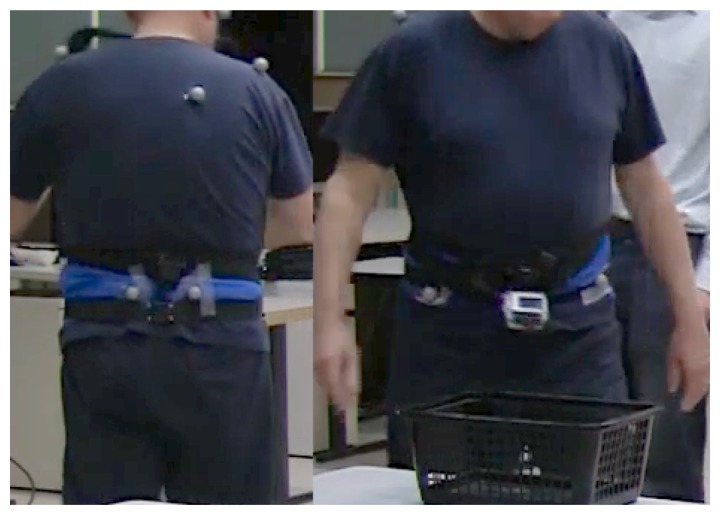
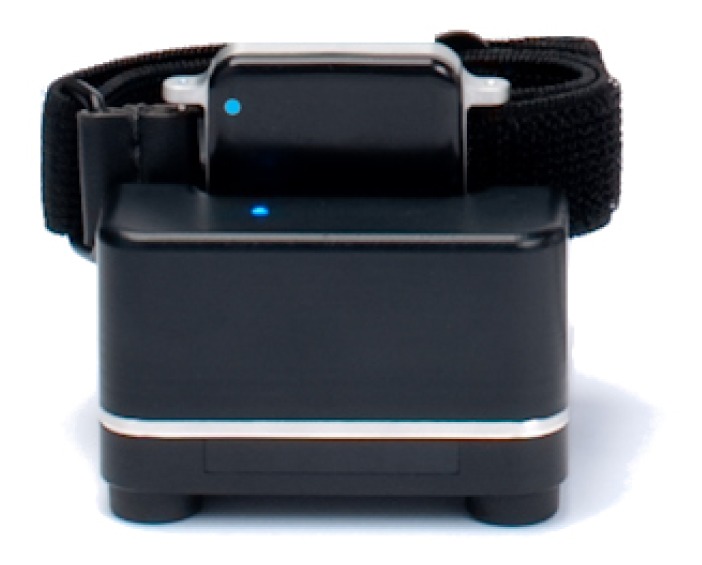
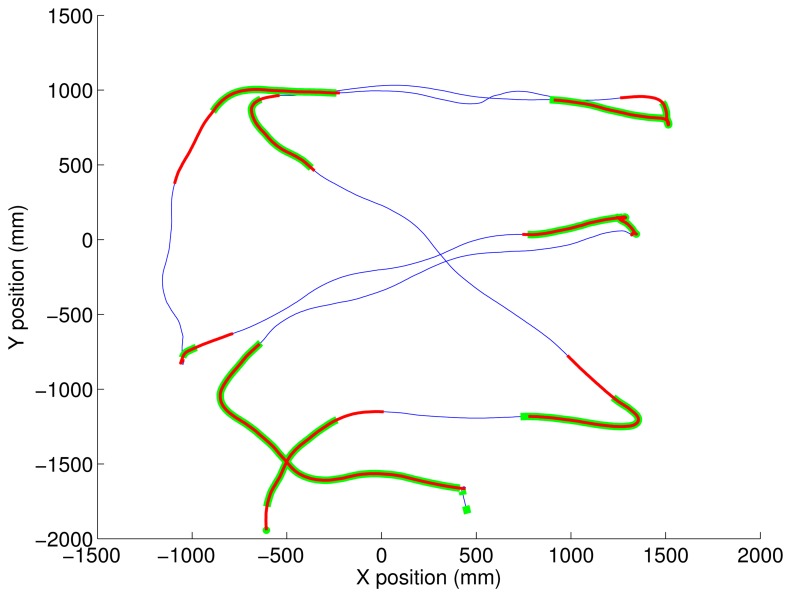
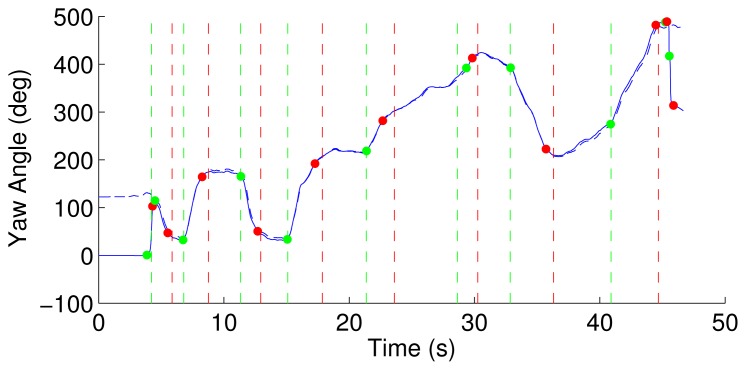
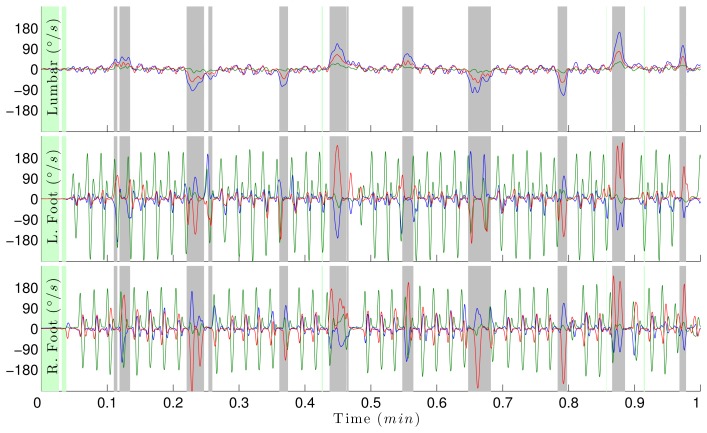
Difficulty with turning is a major contributor to mobility disability and falls in people with movement disorders, such as Parkinson’s disease (PD). Turning often results in freezing and/or falling in patients with PD. However, asking a patient to execute a turn in the clinic often does not reveal their impairments. Continuous monitoring of turning with wearable sensors during spontaneous daily activities may help clinicians and patients determine who is at risk of falls and could benefit from preventative interventions. In this study, we show that continuous monitoring of natural turning with wearable sensors during daily activities inside and outside the home is feasible for people with PD and elderly people. We developed an algorithm to detect and characterize turns during gait, using wearable inertial sensors. First, we validate the turning algorithm in the laboratory against a Motion Analysis system and against a video analysis of 21 PD patients and 19 control (CT) subjects wearing an inertial sensor on the pelvis. Compared to Motion Analysis and video, the algorithm maintained a sensitivity of 0.90 and 0.76 and a specificity of 0.75 and 0.65, respectively. Second, we apply the turning algorithm to data collected in the home from 12 PD and 18 CT subjects. The algorithm successfully detects turn characteristics, and the results show that, compared to controls, PD subjects tend to take shorter turns with smaller turn angles and more steps. Furthermore, PD subjects show more variability in all turn metrics throughout the day and the week.
Overview
The claims and statistics of this paper haven’t been checked yet.
Run the check — free, no account needed. It reads the open-access text and checks the sources it cites.
Integrity signals
Registry
Cites
Statistics
Figures
Verification
Claims the paper makes
The claims and statistics of this paper haven’t been checked yet.
Run the check — free, no account needed. It reads the open-access text and checks the sources it cites.
Claims other papers make about this one
Each is checked against this paper’s own text: does it say what the citing paper says it does?
In the citing paper
“The present findings are also in line with other studies measuring remote physical activity in PD, which were traditionally performed over shorter timeframes (i.e., 1 day to 1 week).”
From Evaluation of smartphone‐based testing to generate exploratory outcome measures in a phase 1 Parkinson's disease clinical trial (2018) · cites this paper as [48]
In the citing paper
“These reported significantly less motor activity in PD compared to controls (e.g., fewer steps and shorter bouts of physical activity,48, 70) some of which were related to disease severity71”
From Evaluation of smartphone‐based testing to generate exploratory outcome measures in a phase 1 Parkinson's disease clinical trial (2018) · cites this paper as [48]
Self-check
Percentages, sums and reported differences re-computed from the paper’s own numbers.
The self-check needs the paper’s full text.
Citations
Cites
Gait Analysis Using Wearable Sensors
Tao, W., Liu, T., Zheng, R., & Feng, H. (2012) · Sensors · doi:10.3390/s120202255 · Cited by 1,252
Physical performance measures in the clinical setting
Studenski, S., Perera, S., Wallace, D., Chandler, J. M., Duncan, P. W., Rooney, E., Fox, M., & Guralnik, J. M. (2003) · Journal of the American Geriatrics Society · doi:10.1046/j.1532-5415.2003.51104.x · Cited by 1,218
Ganz, D., Bao, Y., Shekelle, P., & Rubenstein, L. (2007) · Journal of the American Medical Association (JAMA) · doi:10.1001/jama.297.1.77 · Cited by 878
Prospective assessment of falls in Parkinson's disease
Bloem, B. R., Grimbergen, Y. A. M., Cramer, M., Willemsen, M., & Zwinderman, A. H. (2001) · Journal of Neurology · doi:10.1007/s004150170047 · Cited by 869
Wearable Assistant for Parkinson’s Disease Patients With the Freezing of Gait Symptom
Bachlin, M., Plotnik, M., Roggen, D., Maidan, I., Hausdorff, J. M., Giladi, N., & Troster, G. (2010) · IEEE Transactions on Information Technology in Biomedicine · doi:10.1109/titb.2009.2036165 · Cited by 693
A meta‐analysis of six prospective studies of falling in Parkinson's disease
Pickering, R. M., Grimbergen, Y. A. M., Rigney, U., Ashburn, A., Mazibrada, G., Wood, B. H., Gray, P., Kerr, G., & Bloem, B. R. (2007) · Movement Disorders · doi:10.1002/mds.21598 · Cited by 587
Properties of the ‘Timed Up and Go’ Test: More than Meets the Eye
Herman, T., Giladi, N., & Hausdorff, J. M. (2010) · Gerontology · doi:10.1159/000314963 · Cited by 575
Fall Frequency and Characteristics and the Risk of Hip Fractures
Cumming, R. G., & Klineberg, R. J. (1994) · Journal of the American Geriatrics Society · doi:10.1111/j.1532-5415.1994.tb06540.x · Cited by 418
Moe‐Nilssen, R. (1998) · Clinical Biomechanics · doi:10.1016/s0268-0033(98)00089-8 · Cited by 406
Zampieri, C., Salarian, A., Carlson‐Kuhta, P., Aminian, K., Nutt, J. G., & Horak, F. B. (2009) · Journal of Neurology Neurosurgery & Psychiatry · doi:10.1136/jnnp.2009.173740 · Cited by 367
Self-citation
Cited by
Sorted by citations
Items 201–258 of 258
Goubault, É., Duval, C., Martin, C., & Lebel, K. (2024) · Sensors · doi:10.3390/s24175486 · Cited by 3
Cockx, H. M., Nonnekes, J. H., Bloem, B. R., Wezel, R. J. A. V., Cameron, I. G. M., & Wang, Y. (2021) · Research Square · doi:10.21203/rs.3.rs-735366/v1 · Cited by 3
Gracey-McMinn, L., Loudon, D. W., Chadwell, A., Curtin, S., Ostler, C., & Granat, M. H. (2025) · Sensors · doi:10.3390/s25164979 · Cited by 2
Bruning, F., Boekesteijn, R. J., Defoort, K. C., Susan, S., van den Ende, C. H. M., & Smulders, K. (2026) · Osteoarthritis and Cartilage Open · doi:10.1016/j.ocarto.2026.100835 · Cited by 2
Shah, V. V., Carlson‐Kuhta, P., Mancini, M., Sowalsky, K. L., & Horak, F. B. (2024) · Gait & Posture · doi:10.1016/j.gaitpost.2024.01.030 · Cited by 2
Self-citationAutomated Multicohort Mobility Assessment With an Instrumented L-Test (iL-test)
Sanabria, J. L. A., Palumbo, P., D’Ascanio, I., Bonci, T., Caruso, M., Salis, F., Cereatti, A., Din, S. D., Alcock, L., Küderle, A., et al. (2025) · IEEE Transactions on Neural Systems and Rehabilitation Engineering · doi:10.1109/tnsre.2025.3531723 · Cited by 2
Self-citationArdle, R. M., Ryan, L. J., Rehman, R. Z. U., Dignan, E., Thompson, A., Din, S. D., Galna, B., Thomas, A. J., Rochester, L., & Alcock, L. (2025) · Gait & Posture · doi:10.1016/j.gaitpost.2025.02.011 · Cited by 2
Can Dance Improve Turning in People With Parkinson’s Disease?
Haas, A. N., Smith, T., Peyré‐Tartaruga, L. A., Fortes, M. B., Nagy, F., Delabary, M. D. S., Koutedakis, Y., & Wyon, M. A. (2024) · Journal of Dance Medicine & Science · doi:10.1177/1089313x241242632 · Cited by 1
Pelletier-Visa, M., Dobija, L., Verdilos, A., Mullez, A., Reynaud, V., Gignoux, P., Costes, F., & Coudeyre, E. (2025) · Sensors · doi:10.3390/s26010142 · Cited by 1
Lee, J. W., Antonellis, P., Fino, P. C., Peterka, R. J., Wilhelm, J. L., Scanlan, K. T., Stojak, M., Brodsky, J., Monoli, C., Weston, A. R., et al. (2026) · PLoS ONE · doi:10.1371/journal.pone.0340867 · Cited by 5
Xie, L., & Dai, J. (2026) · Archives of Physical Medicine and Rehabilitation · doi:10.1016/j.apmr.2026.02.490 · Cited by 1
CONTINUOUS MONITORING OF MOVEMENT IN PATIENTS WITH PARKINSON'S DISEASE USING INERTIAL SENSORS
El‐Gohary, M., Pearson, S., McNames, J., Mancini, M., & Horak, F. B. (2015) · PDXScholar (Portland State University) · Cited by 1
Self-citationLeach, J. M., Mellone, S., Palumbo, P., Coni, A., Bandinelli, S., & Chiari, L. (2016) · Gait & Posture · doi:10.1016/j.gaitpost.2016.07.045 · Cited by 1
Self-citationSanabria, J. L. A., Palumbo, P., Bandinelli, S., Palmerini, L., & Chiari, L. (2023) · International Joint Conference on Biomedical Engineering Systems and Technologies (BIOSTEC) · doi:10.5220/0011727700003414 · Cited by 1
Self-citationDaily life mobility detects frailty, falls, and functioning in ADT-treated prostate cancer survivors
Tibbitts, D., Mancini, M., Stoyles, S. A., Dieckmann, N. F., Graff, J. N., El‐Gohary, M., Horak, F. B., & Winters‐Stone, K. M. (2024) · Journal of Geriatric Oncology · doi:10.1016/j.jgo.2024.102180 · Cited by 1
Self-citationGait characteristics in people with Friedreich ataxia: daily life versus clinic measures
Casey, H. L., Shah, V. V., Muzyka, D., McNames, J., El‐Gohary, M., Sowalsky, K. L., Safarpour, D., Carlson‐Kuhta, P., Rummey, C., Horak, F. B., et al. (2025) · Frontiers in Neurology · doi:10.3389/fneur.2025.1544453 · Cited by 1
Self-citationClassification of Medication States in Parkinson’s Disease Patients Through Gait Analysis
Otálora, S., Sanabria, J. L. A., Shah, S. A., van Dieën, J. H., Dunn, M., Mancini, M., Shah, V. V., & Micó-Amigo, M. E. (2025) · IEEE International Conference on Digital Health (ICDH) · doi:10.1109/icdh67620.2025.00033 · Cited by 1
Self-citationLong-term ambulatory assessment of motor symptoms in movement disorders: a best-evidence review
Kramer, G., Maurits, N. M., Rosmalen, J. G. M., & Tijssen, M. A. J. (2018) · Basal Ganglia · doi:10.1016/j.baga.2018.07.002 · Cited by 1
Powell, D., Godfrey, A., Parrington, L., Campbell, K. R., King, L. A., & Stuart, S. (2021) · Research Square · doi:10.21203/rs.3.rs-270331/v1 · Cited by 1
Machine Learning Approaches for Fall Detection Using Integrated Data from Multi-Brand SensorsPreprint
Buzpınar, M. A. (2024) · Research Square · doi:10.21203/rs.3.rs-4673031/v1 · Cited by 1
Grobbelaar, R. (2017) · SUNScholar (Stellenbosch University)
Craig, J. J. (2018) · KU ScholarWorks (University of Kansas)
Future perspectives on balance disorders in PD
Mancini, M., Nutt, J. G., & Horak, F. B. (2019) · Elsevier eBooks · doi:10.1016/b978-0-12-813874-8.00010-6
Self-citationWearable-based Temporal Parameters of Gait in Circuitous Routes under Dual-Task Conditions
Caramia, C., Bibbo, D., D’Anna, C., Marchis, C. D., Ranaldi, S., Varrecchia, T., Conforto, S., & Schmid, M. (2019) · Annual International Conference of the IEEE Engineering in Medicine and Biology Society (EMBC) · doi:10.1109/embc.2019.8856531
Diagnosis of Neurogenetic Disorders: Contribution of Next Generation Sequencing and Deep Phenotyping
McNeill, A. (2019) · MDPI eBooks · doi:10.3390/books978-3-03921-611-6
Popular Health Monitoring Systems
Sanei, S., Jarchi, D., & Constantinides, A. G. (2020) · doi:10.1002/9781119390060.ch8
Lee, C. J., Kim, W. J., & Lee, J. K. (2023) · Journal of the Korean Society for Precision Engineering · doi:10.7736/jkspe.022.112
YAZICI, E., Tan, M., & Alakaş, H. M. (2023) · International Journal of Advanced Natural Sciences and Engineering Researches · doi:10.59287/ijanser.1172
YAZICI, E., Tan, M., & Alakaş, H. M. (2023) · International Conference on Applied Engineering and Natural Sciences · doi:10.59287/icaens.1094
Buzpınar, M. A. (2024) · Research Square · doi:10.21203/rs.3.rs-4301091/v1
Daily life mobility detects frailty, falls, and functioning in ADT-treated prostate cancer survivorsPreprint
Tibbitts, D., Mancini, M., Stoyles, S. A., Dieckmann, N. F., Graff, J. N., El‐Gohary, M., Horak, F. B., & Winters‐Stone, K. M. (2024) · Research Square · doi:10.21203/rs.3.rs-4402624/v1
Self-citationTibbitts, D., Stoyles, S. A., Mancini, M., El‐Gohary, M., Horak, F. B., Dieckmann, N. F., & Winters‐Stone, K. M. (2024) · Seminars in Oncology Nursing · doi:10.1016/j.soncn.2024.151658
Self-citationAlgorithms for gait: technical and clinical validity
Alcock, L., Micó-Amigo, E., Bonci, T., & Din, S. D. (2025) · Elsevier eBooks · doi:10.1016/b978-0-443-21484-4.00011-9
Muollo, V., D’Emanuele, S., Amini, M., Marco, R. D., Cavedon, V., Keating, S. E., Lanceni, M., Setti, M., Benfari, G., Ghiotto, L., et al. (2025) · BMJ Open Sport & Exercise Medicine · doi:10.1136/bmjsem-2025-002667
Madrid, J., Ulrich, B., Selig, M., Jolles, B. M., Favre, J., & Benninger, D. H. (2025) · Research Square · doi:10.21203/rs.3.rs-6862985/v1
Vyšata, O., Matyáš, D., Chandrashekhar, R. K., & Procházka, A. (2025) · IEEE International Conference on Digital Signal Processing (DSP) · doi:10.1109/dsp65409.2025.11074893
Choi, H., Youm, C., Park, H., Kim, B., Hwang, J., & Cheon, S. (2025) · Research Square · doi:10.21203/rs.3.rs-7285962/v1
Sanabria, J. L. A., Palmerini, L., Bandinelli, S., & Chiari, L. (2025) · IEEE International Conference on Digital Health (ICDH) · doi:10.1109/icdh67620.2025.00032
Self-citationPhysical Inactivity and Sedentary Behavior Negatively Impact Postural Balance and Gait
Appiah-Kubi, K. O., Senarathna, D., Mondal, S., & Boolani, A. (2025) · Applied Sciences · doi:10.3390/app152212058
Cortico-pallidal beta dynamics underlie impaired turning in Parkinson’s disease
Shukla, P. D., Bath, J., Louie, K. H., Azgomi, H. F., Ramesh, R., Patelaki, E., Marks, J. H., Balakid, J. P., & Wang, D. D. (2026) · npj Parkinson s Disease · doi:10.1038/s41531-026-01421-9
Cockx, H. M., Nonnekes, J. H., Bloem, B. R., Wezel, R. J. A. V., Cameron, I. G. M., & Wang, Y. (2023) · Figshare · doi:10.6084/m9.figshare.22715248
Toumi, L., Balbal, S., & Boulkhiout, Y. (2025) · International Journal of Computational and Experimental Science and Engineering · doi:10.22399/ijcesen.4491
Neumann, S., Sanabria, J. L. A., Naef, A. C., Luft, A. R., Chiari, L., & Easthope, C. A. (2026) · doi:10.2196/preprints.93413
Self-citationPłonka, M., Klimas, R., Stanev, D., Angelini, L., Napiórkowski, N., Chan, G. G., Bunn, L. M., Glazier, P. S., Hosking, R., Freeman, J. A., et al. (2026) · Multiple Sclerosis and Related Disorders · doi:10.1016/j.msard.2026.107171 · Cited by 1
Alaoui, O. M. (2021) · theses.fr (ABES) · doi:10.70675/1eeb9e49zaae4z4fd0z83f3z1d176066fafc · Cited by 2
Peterson, D. S., Shah, V. V., Carlson‐Kuhta, P., Silva‐Batista, C., Ragothaman, A., Ofori, E., Horak, F. B., & Mancini, M. (2026) · European Journal of Neuroscience · doi:10.1111/ejn.70526
Self-citationNeural signatures of real-world turning during naturalistic locomotion in Parkinson’s DiseasePreprint
Ramesh, R., Balakid, J. P., Marks, J. H., Louie, K. H., Song, S., Shukla, P., Azgomi, H. F., & Wang, D. (2026) · medRxiv · doi:10.64898/2026.05.03.26352320
Subthalamic Signatures of Freezing while Turning in Parkinson’s DiseasePreprint
Klocke, P., Loeffler, M., Müßler, H. B., Boßelmann, C. M., Siegel, M., & Weiss, D. (2026) · Research Square · doi:10.21203/rs.3.rs-9617843/v1
Instrumented Timed Up and Go Detects Differences Between Parkinson Disease Subtypes
Balzer, R., Hamod, B., Handlery, K., Handlery, R., Fourspring, J., Fritz, S. L., & Flach, A. (2026) · Physical & Occupational Therapy In Geriatrics · doi:10.1080/02703181.2026.2673311
Lee, J. W., Fino, P. C., Michielutti, P. G., Weston, A. R., Hoppes, C. W., Dibble, L. E., King, L. A., & Weightman, M. M. (2026) · Gait & Posture · doi:10.1016/j.gaitpost.2026.110284
Neumann, S., Sanabria, J. L. A., Naef, A. C., Luft, A. R., Chiari, L., & Easthope, C. A. (2026) · Journal of Medical Internet Research · doi:10.2196/93413
Self-citationThe Effects of Anxiety and Cognitive Load on Freezing of Gait in Parkinson's Disease
Zoetewei, D., Gilat, M., D’Cruz, N., Cornelis, J., Bedime, J. S. N., Helmich, R. C. G., Ginis, P., & Nieuwboer, A. (2026) · European Journal of Neuroscience · doi:10.1111/ejn.70678
Boekesteijn, R. J., van Mierlo, M., Hannink, G., Keijsers, N. L. W., & Smulders, K. (2026) · Journal of Biomechanics · doi:10.1016/j.jbiomech.2026.113581
Zhu, J., Chen, L., Pang, J., Martínez-Hernández, U., Meng, L., & Ming, D. (2026) · Knowledge-Based Systems · doi:10.1016/j.knosys.2026.117147
Inui, Y., Takamura, Y., & Morioka, S. (2026) · Gait & Posture · doi:10.1016/j.gaitpost.2026.110673
Metadata
- Authors
- El-Gohary, M., Pearson, S., McNames, J., Mancini, M., Horak, F., Mellone, S., & Chiari, L.
- Affiliations
- APDM, Inc., Portland, OR 97201, USA
- APDM (United States) (US)
- Oregon Health & Science University (US)
- Venue
- Sensors
- Publisher
- MDPI AG
- Published
- 2013-12-27
- Volume
- 14
- Issue
- 1
- Pages
- 356-369
- ISSN
- 1424-8220 (ISSN-L)
- PMC
- PMC3926561
- OpenAlex
- W2067428313
- Cited by
- 258
- References
- 33
- Citations by year
- 2026: 17 · 2025: 20 · 2024: 16 · 2023: 21 · 2022: 26 · 2021: 27 · 2020: 25 · 2019: 28 · 2018: 23 · 2017: 29 · 2016: 16 · 2015: 5 · 2014: 5
- FWCI
- 22.53
- Type
- journal article
- Language
- en
- Open access
- gold
- doi.org
- Licence
- Locations
- Sensors (publishedVersion, cc-by)
- Europe PMC (PubMed Central) (publishedVersion, other-oa)
- PubMed Central (publishedVersion, cc-by)
- PubMed (publishedVersion)
- PDXScholar (Portland State University) (submittedVersion)
- Archivio istituzionale della ricerca (Alma Mater Studiorum Università di Bologna) (submittedVersion, cc-by)
- DOAJ (DOAJ: Directory of Open Access Journals) (submittedVersion, cc-by-sa)
- Funders
- National Institute on Aging (R01AG006457)
- National Institute of Neurological Disorders and Stroke (R41NS076088)
- Topics
- Health Sciences › Health Professions › Physical Therapy, Sports Therapy and Rehabilitation › Balance, Gait, and Falls Prevention
- Physical Sciences › Computer Science › Computer Vision and Pattern Recognition › Context-Aware Activity Recognition Systems
- Physical Sciences › Engineering › Biomedical Engineering › Gait Recognition and Analysis
- Keywords
- turning, Parkinson's disease, mobility impairment, wearable inertial sensors, fall risk, freezing of gait, gait analysis, home monitoring, older adults, daily activities, turning angle, step count
- MeSH terms
- Aged, Algorithms, Female, Persons with Disabilities, Humans, Male, Middle Aged, Movement, Parkinson Disease, Biosensing Techniques
About these checks
Registry, retraction, Cites and statistics results are computed, not judged, with one exception: a printed reference that no index lists is read once by a model before it counts as a citation error. Claims are extracted by a model and kept only when their quote appears verbatim in the text; each cited source is then checked, with a model’s help, for whether it says what the claim relies on. Those verdicts can be wrong — read the claim’s quote and the cited source before relying on one.
Statistics and arithmetic are recomputed, not judged.
Confidence bands are shown only for fields calibrated on our annotated test set. None is calibrated yet, so no band is shown.
What counts as a claim ›How we measure confidence ›How we check this ›
Are you an author, or do you see a problem with this page? Request a review
