

Pilot Study of the EncephaLog Smartphone Application for Gait Analysis
Open accessThe DOI matches its Crossref record; 47 of the 48 references it cites were found in a registry or an index.
Abstract
Gait disorders and falls are common in elders and in many clinical conditions, yet they are typically infrequently and subjectively evaluated, limiting prevention and intervention. Completion-time of the Timed-Up-and-Go (TUG) test is a well-accepted clinical biomarker for rating mobility and prediction of falls risk. Using smartphones’ integral accelerometers and gyroscopes, we already demonstrated that TUG completion-time can be accurately measured via a smartphone app. Here we present an extended app, EncephaLogTM, which provides gait analysis in much more detail, offering 9 additional gait biomarkers on top of the TUG completion-time. In this pilot, four healthy adults participated in a total of 32 TUG tests; simultaneously recorded by EncephaLog and motion sensor devices used in movement labs: motion capture cameras (MCC), pressure mat; and/or wearable sensors. Results show high agreement between EncephaLog biomarkers and those measured by the other devices. These preliminary results suggest that EncephaLog can provide an accurate, yet simpler, instrumented TUG (iTUG) platform than existing alternatives, offering a solution for clinics that cannot afford the cost or space required for a dedicated motion lab and for monitoring patients at their homes. Further research on a larger study population with pathologies is required to assess full validity.
Overview
The claims and statistics of this paper haven’t been checked yet.
Free: it reads the open-access text and checks the first 5 claims that cite a source we can check. Create a free account to check every claim.
Integrity signals
Registry
Cites
Statistics
Figures
Verification
Claims the paper makes
The claims and statistics of this paper haven’t been checked yet.
Free: it reads the open-access text and checks the first 5 claims that cite a source we can check. Create a free account to check every claim.
Claims other papers make about this one
Each is checked against this paper’s own text: does it say what the citing paper says it does?
The source backs part of the claim, not all of it — or backs it for a different population, condition or comparison.
In the citing paper
“mobility was measured based on the Timed-up-and-go (TUG) test by the United States Food and Drug Administration approved EncephaLog application using a smartphone device54”
From A randomized clinical trial of mindfulness meditation versus exercise in Parkinson’s disease during social unrest (2023) · cites this paper as [54]
Experimental — accuracy not yet measured
Self-check
Percentages, sums and reported differences re-computed from the paper’s own numbers.
The self-check needs the paper’s full text.
Citations
Cites
STATISTICAL METHODS FOR ASSESSING AGREEMENT BETWEEN TWO METHODS OF CLINICAL MEASUREMENT
Martin Bland, J., & Altman, D. (1986) · The Lancet · doi:10.1016/s0140-6736(86)90837-8 · Cited by 47,965
The Timed “Up & Go”: A Test of Basic Functional Mobility for Frail Elderly Persons
Podsiadlo, D., & Richardson, S. (1991) · Journal of the American Geriatrics Society · doi:10.1111/j.1532-5415.1991.tb01616.x · Cited by 14,418
Muro-de-la-Herran, A., Garcia-Zapirain, B., & Mendez-Zorrilla, A. (2014) · Sensors · doi:10.3390/s140203362 · Cited by 1,172 · cited 5×
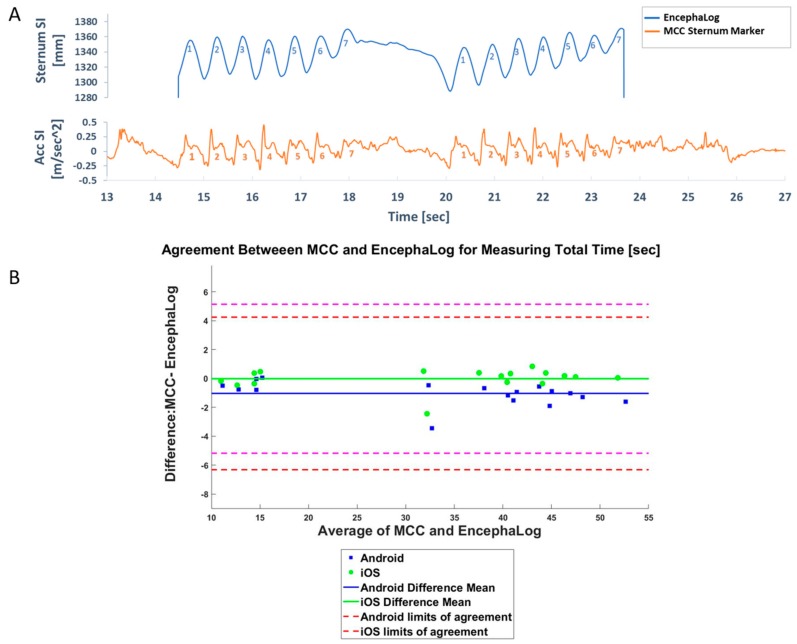
“attaching multiple body sensors [11,45]) and professionals to calibrate and operate the system, analyze the data, and extract the TUG biomarkers; altogether making MCC expensive, time consuming, and less accessible for iTUG.”
BackgroundMethodInfluentialGait variability: methods, modeling and meaning
Hausdorff, J. M. (2005) · Journal of NeuroEngineering and Rehabilitation · doi:10.1186/1743-0003-2-19 · Cited by 934
Basic gait parameters: reference data for normal subjects, 10-79 years of age.
Öberg, T., Karsznia, A., & Öberg, K. (1993) · PubMed · Cited by 832
Reliability of Measurements Obtained With the Timed “Up & Go” Test in People With Parkinson Disease
Morris, S., Morris, M. E., & Iansek, R. (2001) · Physical Therapy · doi:10.1093/ptj/81.2.810 · Cited by 664
The ‘extrapolated center of mass’ concept suggests a simple control of balance in walking
Hof, A. L. (2008) · Human Movement Science · doi:10.1016/j.humov.2007.08.003 · Cited by 596 · cited 2×
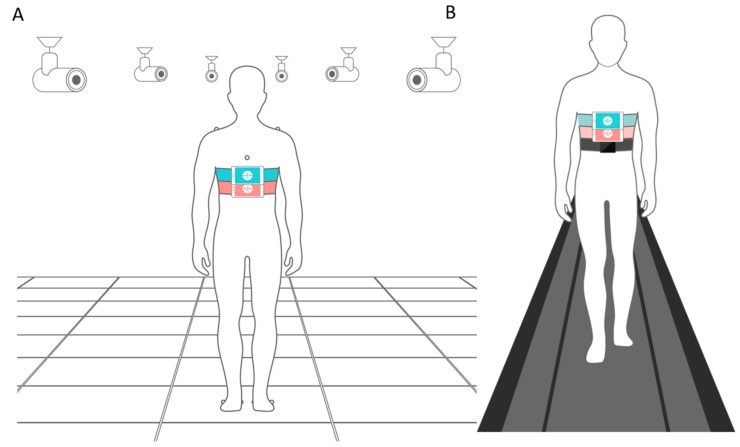
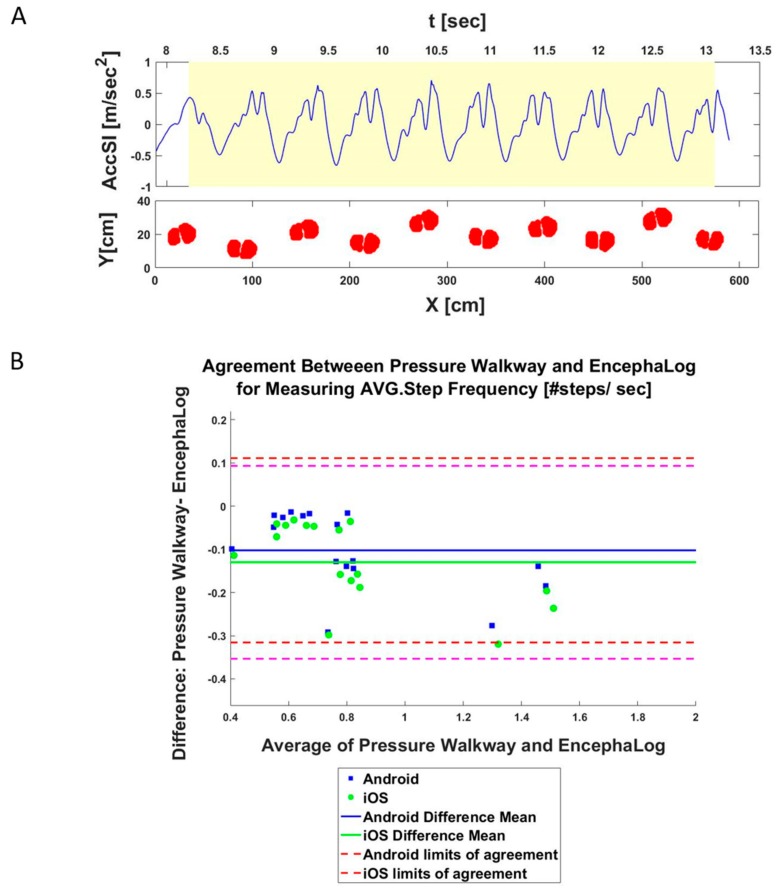
“Pressure coordinates were recorded during walking, mapping step patterns from which the Center of Pressure (COP) trajectory was calculated, along with step cadence and step length.”
BackgroundSheridan, P. L., Solomont, J., Kowall, N., & Hausdorff, J. M. (2003) · Journal of the American Geriatrics Society · doi:10.1046/j.1532-5415.2003.51516.x · Cited by 494 · cited 1×
“iTUG provides additional biomarkers that complement TUG completion time and augment the evaluation of disease progression [16,17].”
BackgroundiTUG, a Sensitive and Reliable Measure of Mobility
Salarian, A., Horak, F. B., Zampieri, C., Carlson-Kuhta, P., Nutt, J. G., & Aminian, K. (2010) · IEEE Transactions on Neural Systems and Rehabilitation Engineering · doi:10.1109/tnsre.2010.2047606 · Cited by 489
Postural sway biofeedback: its effect on reestablishing stance stability in hemiplegic patients.
Shumway-Cook, A., Anson, D. K., & Haller, S. (1988) · PubMed · Cited by 449
Research works printed but not linked: 1
- Jovanov E. Frith K.H. Madhushri P. Hunter A. Coffey S.S. Milenkovic A. Chapter 44 - Gender Differences in Mobility of Elderly: Measurements and Interventions to Improve Mobility Principles of Gender-Specific Medicine 3rd ed. Legato M.J. Academic Press San Diego, CA, USA 2017 639 653 978-0-12-803506-1
Cited by
Parkinson's Disease Remote Patient Monitoring During the COVID-19 Lockdown
Motolese, F., Magliozzi, A., Puttini, F., Rossi, M., Capone, F., Karlinsky, K. T., Stark‐Inbar, A., Yekutieli, Z., Lazzaro, V. D., & Marano, M. (2020) · Frontiers in Neurology · doi:10.3389/fneur.2020.567413 · Cited by 88
Self-citationWerner, C., Hezel, N., Dongus, F., Spielmann, J., Mayer, J., Becker, C., & Bauer, J. M. (2023) · Scientific Reports · doi:10.1038/s41598-023-32550-3 · Cited by 57
Kwok, J. Y. Y., Choi, E. P. H., Wong, J. Y. H., Lok, K. Y. W., Ho, M.-H., Fong, D. Y. T., Kwan, J. C. Y., Pang, S. Y. Y., & Auyeung, M. (2023) · npj Parkinson's Disease · doi:10.1038/s41531-023-00452-w · Cited by 43
Netz, Y., Yekutieli, Z., Arnon, M., Argov, E., Karlinsky, K. T., Benmoha, E., & Jacobs, J. M. (2021) · Gerontology · doi:10.1159/000517918 · Cited by 34
Self-citationLee, S., Lee, S., Park, E., Lee, J., & Kim, I. Y. (2022) · IEEE Access · doi:10.1109/access.2022.3221813 · Cited by 27
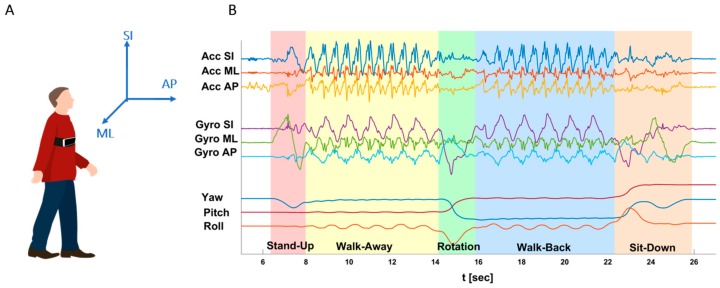
“Therefore, the unstable sensor coordinate system (X, Y, Z) must be transformed into a stable pedestrian anatomical plane (Medial-Lateral, Superior-Inferior, Anterior-Posterior [36]).”
Background
Metadata
- Authors
- Tchelet, K., Stark-Inbar, A., & Yekutieli, Z.
- Affiliations
- Montfort Brain Monitor LTD, Ha-Nasi 14, Zichron Ya’acov 3090314, Israel
- Corresponding author
- Yekutieli, Ziv
- ORCID
- Yekutieli, Ziv
- Venue
- Sensors
- Publisher
- MDPI AG
- Published
- 2019-11-26
- Volume
- 19
- Issue
- 23
- Pages
- 5179
- ISSN
- 1424-8220 (ISSN-L)
- PMC
- PMC6929058
- OpenAlex
- W2990605185
- Cited by
- 27
- References
- 48
- Citations by year
- 2025: 6 · 2024: 3 · 2023: 6 · 2022: 8 · 2021: 2 · 2020: 2
- FWCI
- 6.89
- Type
- journal article
- Language
- en
- Open access
- gold
- dx.doi.org
- Licence
- Locations
- Sensors (publishedVersion, cc-by)
- PubMed Central (publishedVersion, cc-by)
- PubMed (publishedVersion)
- Zenodo (CERN European Organization for Nuclear Research) (submittedVersion, cc-by)
- Funders
- Israeli Innovation Authority (65957)
- European Commission H2020-MSCA-IF-2016 (753071)
- Ministry of Aliyah and Integration, Israel (The Center for Integration in Science)
- Topics
- Health Sciences › Health Professions › Physical Therapy, Sports Therapy and Rehabilitation › Balance, Gait, and Falls Prevention
- Physical Sciences › Computer Science › Computer Vision and Pattern Recognition › Context-Aware Activity Recognition Systems
- Physical Sciences › Engineering › Biomedical Engineering › Gait Recognition and Analysis
- Keywords
- mobile application, gait analysis, Timed Up and Go test, gait biomarkers, accelerometer, gyroscope, fall risk, mobility assessment, home monitoring, motion capture comparison, wearable sensors, pressure mat
- MeSH terms
- Accidental Falls, Smartphone, Gait Analysis, Adult, Female, Gait, Humans, Male, Monitoring, Physiologic, Movement, Pilot Projects
About these checks
Registry, retraction, Cites and statistics results are computed, not judged, with one exception: a printed reference that no index lists is read once by a model before it counts as a citation error. Claims are extracted by a model and kept only when their quote appears verbatim in the text; each cited source is then checked, with a model’s help, for whether it says what the claim relies on. Those verdicts can be wrong — read the claim’s quote and the cited source before relying on one.
Statistics and arithmetic are recomputed, not judged.
Confidence bands are shown only for fields calibrated on our annotated test set. None is calibrated yet, so no band is shown.
What counts as a claim ›How we measure confidence ›How we check this ›
Are you an author, or do you see a problem with this page? Request a review
How to cite
Cite CoChat for the checks on this page, and the paper for its own findings.
- This page
- CoChat. (2026). Citation check: Pilot Study of the EncephaLog Smartphone Application for Gait Analysis. https://app.cochat.ai/papers/10.3390/s19235179
- The paper
- Tchelet, K., Stark-Inbar, A., & Yekutieli, Z. (2019). Pilot Study of the EncephaLog Smartphone Application for Gait Analysis. Sensors. https://doi.org/10.3390/s19235179
Data sources
Bibliographic data: Semantic Scholar, OpenAlex, Crossref.
Contains information from the Semantic Scholar Academic Graph Datasets, made available under the ODC Attribution License (ODC-BY 1.0).
Semantic Scholar’s data is described in: Kinney, R., et al. (2023). The Semantic Scholar Open Data Platform. arXiv:2301.10140.
