

Deep Learning with Dynamically Weighted Loss Function for Sensor-Based Prognostics and Health Management
Open accessThe DOI matches its Crossref record; 34 of the 34 references it cites were found in a registry or an index.
Abstract
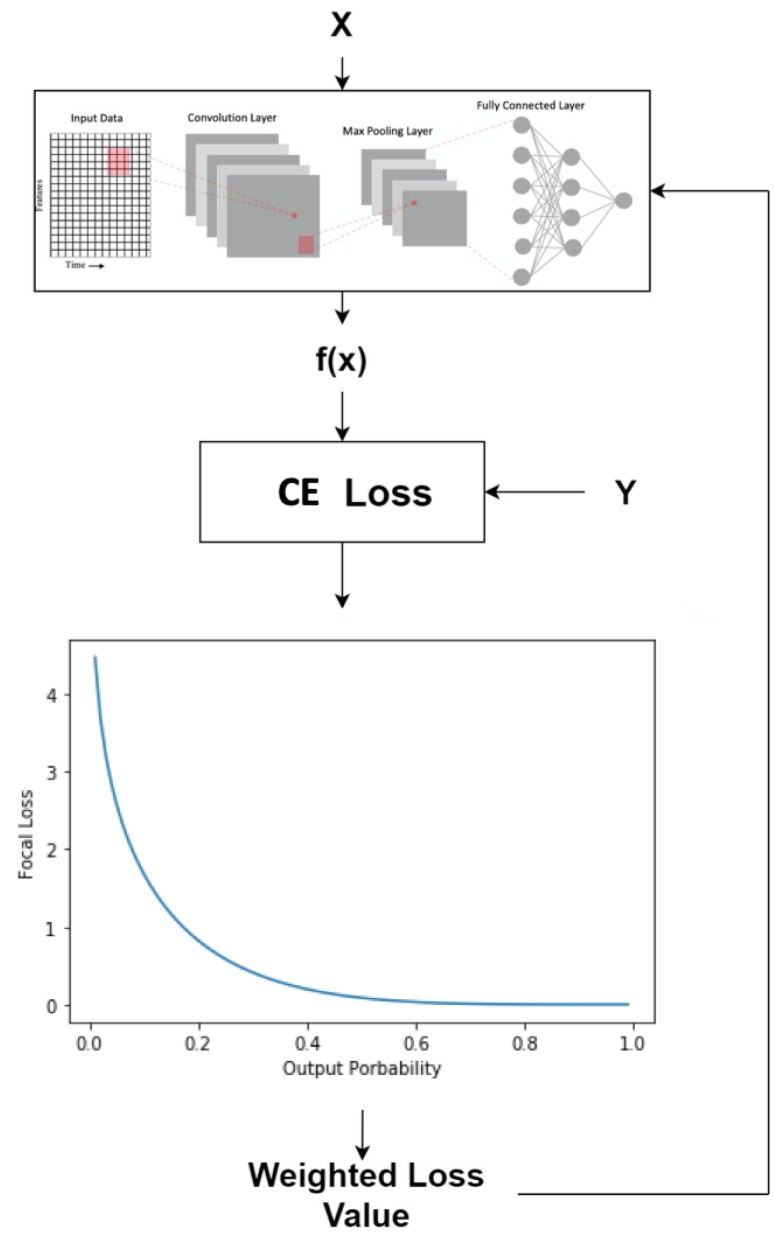
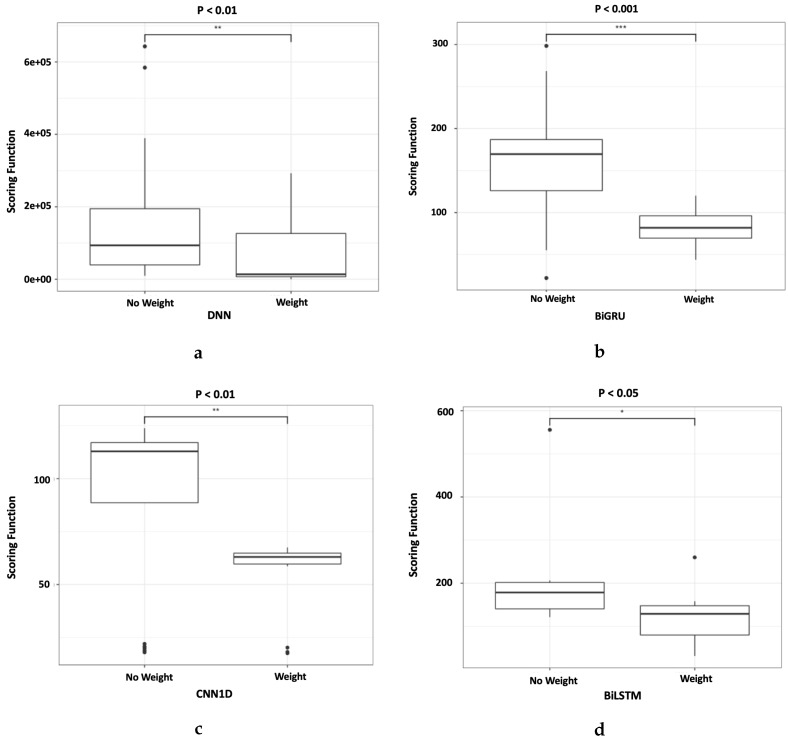
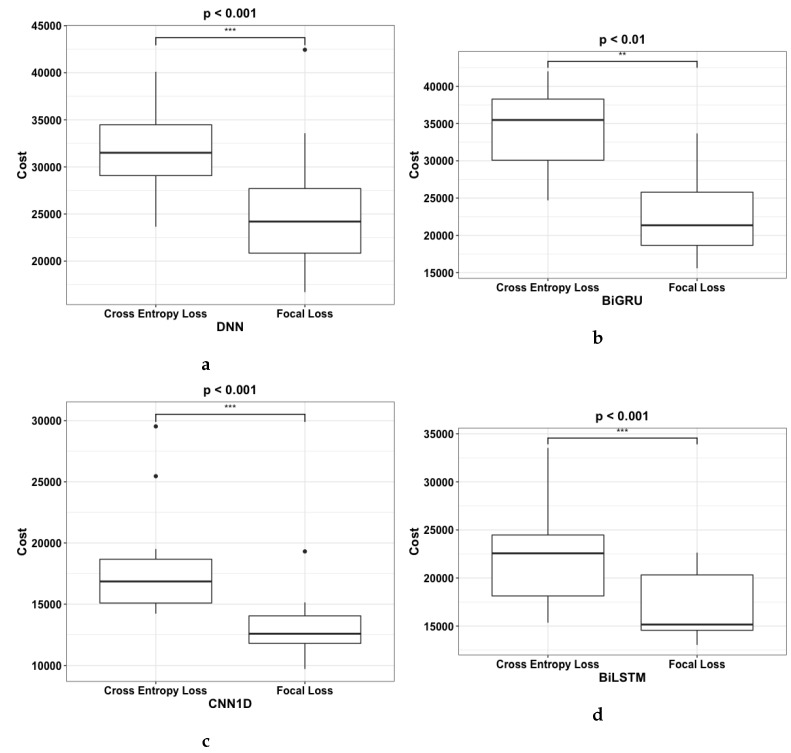
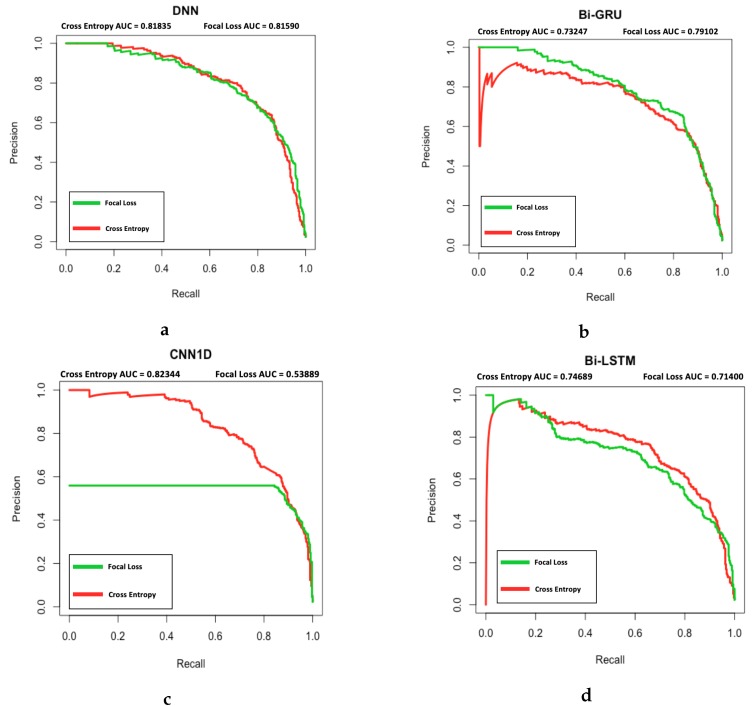
Deep learning has been employed to prognostic and health management of automotive and aerospace with promising results. Literature in this area has revealed that most contributions regarding deep learning is largely focused on the model’s architecture. However, contributions regarding improvement of different aspects in deep learning, such as custom loss function for prognostic and health management are scarce. There is therefore an opportunity to improve upon the effectiveness of deep learning for the system’s prognostics and diagnostics without modifying the models’ architecture. To address this gap, the use of two different dynamically weighted loss functions, a newly proposed weighting mechanism and a focal loss function for prognostics and diagnostics task are investigated. A dynamically weighted loss function is expected to modify the learning process by augmenting the loss function with a weight value corresponding to the learning error of each data instance. The objective is to force deep learning models to focus on those instances where larger learning errors occur in order to improve their performance. The two loss functions used are evaluated using four popular deep learning architectures, namely, deep feedforward neural network, one-dimensional convolutional neural network, bidirectional gated recurrent unit and bidirectional long short-term memory on the commercial modular aero-propulsion system simulation data from NASA and air pressure system failure data for Scania trucks. Experimental results show that dynamically-weighted loss functions helps us achieve significant improvement for remaining useful life prediction and fault detection rate over non-weighted loss function predictions.
Overview
The claims and statistics of this paper haven’t been checked yet.
Free: it reads the open-access text and checks the first 5 claims that cite a source we can check. Create a free account to check every claim.
Integrity signals
Registry
Cites
Statistics
Figures
Verification
Claims the paper makes
The claims and statistics of this paper haven’t been checked yet.
Free: it reads the open-access text and checks the first 5 claims that cite a source we can check. Create a free account to check every claim.
Claims other papers make about this one
Each is checked against this paper’s own text: does it say what the citing paper says it does?
The source backs part of the claim, not all of it — or backs it for a different population, condition or comparison.
In the citing paper
“The MAE loss function maintains a constant gradient throughout the entire training process, enhancing the model's resistance to noise interference and addressing the issue of gradient explosion during training [44].”
From Prediction of Heat and Cold Loads of Factory Mushroom Houses Based on EWT Decomposition (2023) · cites this paper as [44]
Experimental — accuracy not yet measured
Self-check
Percentages, sums and reported differences re-computed from the paper’s own numbers.
The self-check needs the paper’s full text.
Citations
Cites
Hochreiter, S., & Schmidhuber, J. (1997) · Neural Computation · doi:10.1162/neco.1997.9.8.1735 · Cited by 102,318 · cited 1×
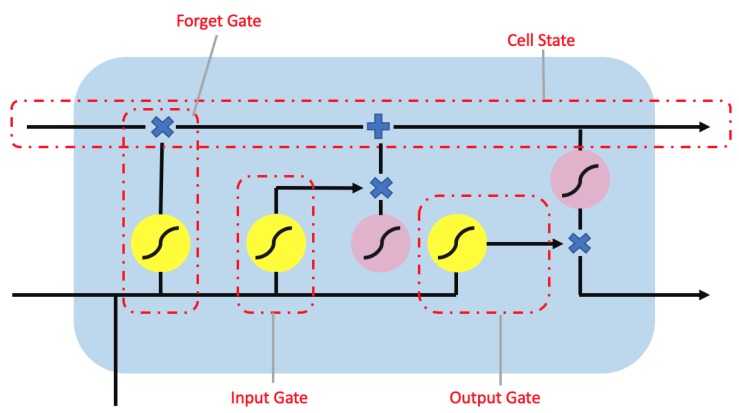
“The long short-term memory (LSTM) network [16] is a variant of the recurrent neural network [17] (RNN) designed with chain units consisting of input, forget, and output gates as shown in Figure 5.”
Background(2014) · Cited by 33,419
Focal Loss for Dense Object Detection
Lin, T.-Y., Goyal, P., Girshick, R., He, K., & Dollar, P. (2017) · 2017 IEEE International Conference on Computer Vision (ICCV) · doi:10.1109/iccv.2017.324 · Cited by 30,581
Learning Phrase Representations using RNN Encoder–Decoder for Statistical Machine Translation
Cho, K., van Merrienboer, B., Gulcehre, C., Bahdanau, D., Bougares, F., Schwenk, H., & Bengio, Y. (2014) · Proceedings of the 2014 Conference on Empirical Methods in Natural Language Processing (EMNLP) · doi:10.3115/v1/d14-1179 · Cited by 25,545 · cited 1×
“The gated recurrent unit (GRU) [18] is proposed as alternative to LSTM.”
BackgroundA fast learning algorithm for deep belief nets
Hinton, G. E., Osindero, S., & Teh, Y.-W. (2006) · Neural Computation · doi:10.1162/neco.2006.18.7.1527 · Cited by 16,336 · cited 1×
“[20] is used to fine-tune the DBN classifier after it has been pretrained and trained.”
MethodBackpropagation Applied to Handwritten Zip Code Recognition
LeCun, Y., Boser, B., Denker, J. S., Henderson, D., Howard, R. E., Hubbard, W., & Jackel, L. D. (1989) · Neural Computation · doi:10.1162/neco.1989.1.4.541 · Cited by 11,891
Kohonen, T. (1990) · Proceedings of the IEEE · doi:10.1109/5.58325 · Cited by 8,414
Saito, T., & Rehmsmeier, M. (2015) · PLOS ONE · doi:10.1371/journal.pone.0118432 · Cited by 5,309 · cited 1×
“A PR curve is employed here as opposed to a receiver operating characteristic curve as the latter can be easily misinterpreted in highly imbalanced dataset [34].”
MethodAn overview of gradient descent optimization algorithms
Ruder, S. (2016) · arXiv · doi:10.48550/arxiv.1609.04747 · Cited by 4,962 · cited 1×
“The authors employed a conventional CNN and training was conducted using mini-batch gradient descent [29].”
MethodDamage propagation modeling for aircraft engine run-to-failure simulation
Saxena, A., Goebel, K., Simon, D., & Eklund, N. (2008) · 2008 International Conference on Prognostics and Health Management · doi:10.1109/phm.2008.4711414 · Cited by 1,954 · cited 5×
“CMAPSS is a run-to-failure gas turbine engine dataset openly sourced by NASA [12] and it is the standard dataset to compare different machine learning models for aerospace prognostics [13,14].”
BackgroundMethodInfluential
Research works printed but not linked: 1
- Figueredo G.P. Owa K. John R.I. Multi-Objective Optimization for Preventive Maintenance in Transportation: A Review Technical Report University of Nottingham Nottingham, UK 2018
Cited by
Theissler, A., Pérez-Velázquez, J., Kettelgerdes, M., & Elger, G. (2021) · Reliability Engineering & System Safety · doi:10.1016/j.ress.2021.107864 · Cited by 581
Olesen, J. F., & Shaker, H. R. (2020) · Sensors · doi:10.3390/s20082425 · Cited by 139
“ANN solutions have been gaining speed as new architectures have been discovered [32].”
BackgroundMethodA comprehensive review of deep neuro-fuzzy system architectures and their optimization methods
Talpur, N., Abdulkadir, S. J., Alhussian, H., Hasan, M. H., Aziz, N., & Bamhdi, A. M. (2022) · Neural Computing and Applications · doi:10.1007/s00521-021-06807-9 · Cited by 110
“The SGD algorithm converges to the minima generating the best value for weight parameter in each iteration [68].”
MethodFeature importance in machine learning models: A fuzzy information fusion approach
Rengasamy, D., Mase, J. M., Kumar, A., Rothwell, B. C., Torres, M. T., Alexander, M. R., Winkler, D. A., & Figueredo, G. P. (2022) · Neurocomputing · doi:10.1016/j.neucom.2022.09.053 · Cited by 106
Self-citationThe Semantic Segmentation of Standing Tree Images Based on the Yolo V7 Deep Learning Algorithm
Cao, L., Zheng, X., & Fang, L. (2023) · Electronics · doi:10.3390/electronics12040929 · Cited by 95
“Loss is a function that describes the difference between the output value of the model and the true value of the sample, which is derived from the input dataset [24]. the true value of the sample, which is derived from the input dataset [24].”
BackgroundCruz-Ramos, C., García-Avila, O., Almaraz-Damian, J. A., Ponomaryov, V. I., Reyes-Reyes, R., & Sadovnychiy, S. (2023) · Entropy · doi:10.3390/e25070991 · Cited by 66
“Then, those features are related to a weight w and are updated using the back-propagation algorithm [60].”
MethodThe asset administration shell as enabler for predictive maintenance: a review
Rahal, J. R., Schwarz, A., Sahelices, B., Weis, R., & Antón, S. D. D. (2023) · Journal of Intelligent Manufacturing · doi:10.1007/s10845-023-02236-8 · Cited by 71
“Rengasamy et al. (2020) develop dynamically weighted cost functions used to train deep learning architectures for the task of detecting faults in an air pressure system of heavy trucks.”
InfluentialSemi-supervised clustering-based method for fault diagnosis and prognosis: A case study
Azar, K., Hajiakhondi-Meybodi, Z., & Naderkhani, F. (2022) · Reliability Engineering & System Safety · doi:10.1016/j.ress.2022.108405 · Cited by 61
Rengasamy, D., Rothwell, B. C., & Figueredo, G. P. (2021) · Applied Sciences · doi:10.3390/app112411854 · Cited by 72
Self-citationLiu, Q., Shang, Z., Lu, S., Liu, Y., Liu, Y., & Sheng, Y. (2024) · Journal of Energy Storage · doi:10.1016/j.est.2024.114736 · Cited by 56
Lei, Y., Karimi, H. R., Cen, L., Chen, X., & Xie, Y. (2021) · Control Engineering Practice · doi:10.1016/j.conengprac.2020.104706 · Cited by 49
Self-citationMiller, R. J. H., Singh, A., Otaki, Y., Tamarappoo, B. K., Kavanagh, P., Parekh, T., Hu, L.-H., Gransar, H., Sharir, T., Einstein, A. J., et al. (2022) · European Journal of Nuclear Medicine and Molecular Imaging · doi:10.1007/s00259-022-05972-w · Cited by 41
“With weighted loss functions, prediction errors in the under-represented population are assigned greater weight [22] (model 1).”
BackgroundComputational framework for real-time diagnostics and prognostics of aircraft actuation systems
Berri, P. C., Vedova, M. D. L. D., & Mainini, L. (2021) · Computers in Industry · doi:10.1016/j.compind.2021.103523 · Cited by 41
A Review of Applications of Artificial Intelligence in Heavy Duty Trucks
Katreddi, S., Kasani, S. P. K., & Thiruvengadam, A. (2022) · Energies · doi:10.3390/en15207457 · Cited by 44
Deep Learning with Attention Mechanisms for Road Weather Detection
Samo, M., Mase, J. M., & Figueredo, G. P. (2023) · Sensors · doi:10.3390/s23020798 · Cited by 46
“Focal loss forces the model to focus on the hard misclassified examples during the training process [17].”
BackgroundSelf-citationPredictive Maintenance: An Autoencoder Anomaly-Based Approach for a 3 DoF Delta Robot
Fathi, K., van de Venn, H. W., & Honegger, M. (2021) · Sensors · doi:10.3390/s21216979 · Cited by 50
Intelligent Deep Learning for Anomaly-Based Intrusion Detection in IoT Smart Home Networks
Butt, N., Shahid, A., Qureshi, K. N., Haider, S., Ibrahim, A. O., Binzagr, F., & Arshad, N. (2022) · Mathematics · doi:10.3390/math10234598 · Cited by 39
“Each cell contains an input gate, forget gate, and an output gate [22].”
Bell, V., Arce, I. M., Mase, J. M., Rengasamy, D., Rothwell, B. C., & Figueredo, G. P. (2022) · SAE International Journal of Aerospace · doi:10.4271/01-15-02-0017 · Cited by 38
Self-citationML-based vehicle downtime reduction: A case of air compressor failure detection
Panda, C., & Singh, T. R. (2023) · Engineering Applications of Artificial Intelligence · doi:10.1016/j.engappai.2023.106031 · Cited by 41
Stoean, C., Stoean, R., Atencia, M., Abdar, M., Velázquez‐Pérez, L., Khosravi, A., Nahavandi, S., Acharya, U. R., & Joya, G. (2020) · Sensors · doi:10.3390/s20113032 · Cited by 40
“At the other end, data coming from different types of sensors have been also effectively analyzed by neural techniques [17–22].”
MethodEarly fault prediction for wind turbines based on deep learning
Lin, K.-C., Hsu, G. J. Y., Wang, H.-W., & Chen, M. (2024) · Sustainable Energy Technologies and Assessments · doi:10.1016/j.seta.2024.103684 · Cited by 34
Deep Clustering-Based Anomaly Detection and Health Monitoring for Satellite Telemetry
Obied, M. A., Ghaleb, F. F. M., Hassanien, A. E., Abdelfattah, A. M. H., & Zakaria, W. (2023) · Big Data and Cognitive Computing · doi:10.3390/bdcc7010039 · Cited by 34
A stable technical feature with GRU-CNN-GA fusion
Ke, Z., Shen, J., Zhao, X., Fu, X., Wang, Y., Li, Z., Liu, L., & Mu, H. (2025) · Applied Soft Computing · doi:10.1016/j.asoc.2025.114302 · Cited by 66
Deep hybrid learning framework for spatiotemporal crash prediction using big traffic data
Kashifi, M. T., Al-Turki, M., & Sharify, A. W. (2022) · International Journal of Transportation Science and Technology · doi:10.1016/j.ijtst.2022.07.003 · Cited by 36
Alturayeif, N., & Luqman, H. (2021) · Applied Sciences · doi:10.3390/app112210694 · Cited by 31
“This technique involves having different weights for each class in the loss function based on the number of class’s samples [64].”
MethodSentiment Analysis of Indonesian TikTok Review Using LSTM and IndoBERTweet Algorithm
Setiawan, J. C., Lhaksmana, K. M., & Bunyamin, B. (2023) · JIPI (Jurnal Ilmiah Penelitian dan Pembelajaran Informatika) · doi:10.29100/jipi.v8i3.3911 · Cited by 27
“The purpose of learning algorithms is to minimize the error from loss function while the training process [22].”
BackgroundBalakrishnan, N., Devasigamani, A. I., Anupama, K. R., & Sharma, N. (2021) · Optical Memory and Neural Networks · doi:10.3103/s1060992x21010094 · Cited by 27
AI4R2R (AI for Rock to Revenue): A Review of the Applications of AI in Mineral Processing
Mishra, A. K. (2021) · Minerals · doi:10.3390/min11101118 · Cited by 28
“One of the ways to achieve this is by using a weighted sum of loss function [126–129].”
MethodEl-Haryqy, N., Madini, Z., & Zouine, Y. (2024) · International Journal of Computers and Applications · doi:10.1080/1206212x.2024.2414042 · Cited by 23
“These parts form a chain-like design, as shown in Figure 5 [59].”
Kashifi, M. T., Alsghan, I., Rahman, S. M., & Al-Ahmadi, H. M. (2022) · Neural Computing and Applications · doi:10.1007/s00521-022-07511-y · Cited by 23
“The weighted loss function is one method to deal with the class imbalance problem [59].”
MethodRemaining Useful Life Prognosis of Aircraft Brakes
Λούτας, Θ., Oikonomou, A., Eleftheroglou, N., Freeman, F. C., & Zarouchas, D. S. (2022) · International Journal of Prognostics and Health Management · doi:10.36001/ijphm.2022.v13i1.3072 · Cited by 22
“…& Celaya, 2017); model-based prognostics (Autin, De Martin, Jacazio, Socheleau & Vachtsevanos, 2021), (Acuna & Orchard, 2016), (Dalla Vedova, Germanà, Berri & Maggiore, 2019) and data-driven prognostics (Rengasamy, Jafari, Rothwell, Chen & Figueredo, 2020), (Verstraete, Droguett & Modarres, 2020).”
MethodMSTL-GLTP: A Global–Local Decomposition and Prediction Framework for Wireless Traffic
Nan, H., Zhu, X., & Ma, J. (2022) · IEEE Internet of Things Journal · doi:10.1109/jiot.2022.3221743 · Cited by 21
“…components, different weights are distributed to the corresponding cell based on their distance to the cluster center to obtain the loss function [29], [30], which can be expressed as (15) where y Si and ˆ y Si are the true value and predicted value of cell i . d i , c k denotes the distance…”
BackgroundOWAdapt: An adaptive loss function for deep learning using OWA operators
Maldonado, S., Vairetti, C., Jara, K., Carrasco, M., & López, J. (2023) · Knowledge-Based Systems · doi:10.1016/j.knosys.2023.111022 · Cited by 25
Deep Learning Approaches for Detection of Breast Adenocarcinoma Causing Carcinogenic Mutations
Shah, A. A., Alturise, F., Alkhalifah, T., & Khan, Y. D. (2022) · International Journal of Molecular Sciences · doi:10.3390/ijms231911539 · Cited by 20
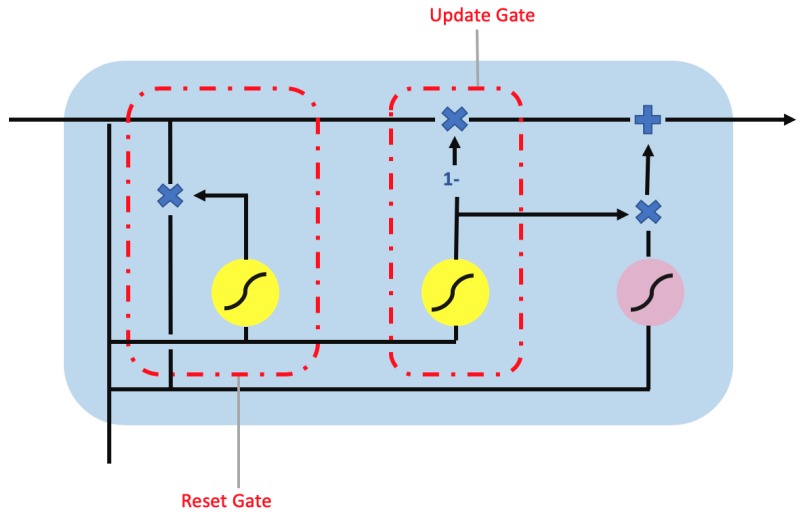
“14 GRU use only two gates reset gate and the update gate in the cell [52]. of 19 The reset gate of GRU decides how much past information is neglected and update gate decides how much past information is to be used. y t = ( 1 − z t ) ∗ B t + z t ∗ B t − 1 ) (24) Figure 12 explains the GRU cell…”
BackgroundInfluentialNuclide identification of radioactive sources from gamma spectra using artificial neural networks
Barradas, N. P., Vieira, A. S., Felizardo, M., & Matos, M. (2025) · Radiation Physics and Chemistry · doi:10.1016/j.radphyschem.2025.112692 · Cited by 19
Wu, X., Song, J., Duan, Z., Wang, X., Ding, W. M., Wu, J. W., & Lu, S. (2024) · Measurement · doi:10.1016/j.measurement.2024.114617 · Cited by 19
Evaluation of deep learning techniques for identification of sarcoma-causing carcinogenic mutations
Shah, A. A., Alturise, F., Alkhalifah, T., & Khan, Y. D. (2022) · Digital Health · doi:10.1177/20552076221133703 · Cited by 19
Rodrigues, I. R., Dantas, M. S. M., Filho, A. T. D. O., Barbosa, G. B. N., Bezerra, D., de Souza, R. G., Marquezini, M. V., Endo, P. T., Kelner, J., & Sadok, D. F. H. (2022) · The Journal of Supercomputing · doi:10.1007/s11227-022-04936-z · Cited by 20
Novel Hybrid UNet++ and LSTM Model for Enhanced Attack Detection and Classification in IoMT Traffic
Mezina, A., Nurmi, J., & Ometov, A. (2025) · IEEE Access · doi:10.1109/access.2025.3553966 · Cited by 18
Rengasamy, D., Rothwell, B. C., & Figueredo, G. P. (2020) · International Joint Conference on Neural Networks (IJCNN) · doi:10.1109/ijcnn48605.2020.9207051 · Cited by 17
Self-citationAbboush, M., Knieke, C., & Rausch, A. (2024) · Electronics · doi:10.3390/electronics13020437 · Cited by 23
Accuracy–Efficiency Trade-Off: Optimizing YOLOv8 for Structural Crack Detection
Zhang, J.-X., Beliaeva, Z. V., & Huang, Y. (2025) · Sensors · doi:10.3390/s25133873 · Cited by 16
Multi-Time Resolution Ensemble LSTMs for Enhanced Feature Extraction in High-Rate Time Series
Barzegar, V., Laflamme, S., Hu, C. K., & Dodson, J. C. (2021) · Sensors · doi:10.3390/s21061954 · Cited by 16
“Among data-driven algorithms, neural network-based models have been successfully applied to model complex nonlinear dynamic systems across many fields [7,8], including electricity demand prediction [9], biology [10], autonomous vehicles [11,12], and structural health monitoring [13–15].”
MethodShort-Term Load Forecasting Using Neural Networks with Pattern Similarity-Based Error Weights
Dudek, G. (2021) · Energies · doi:10.3390/en14113224 · Cited by 15
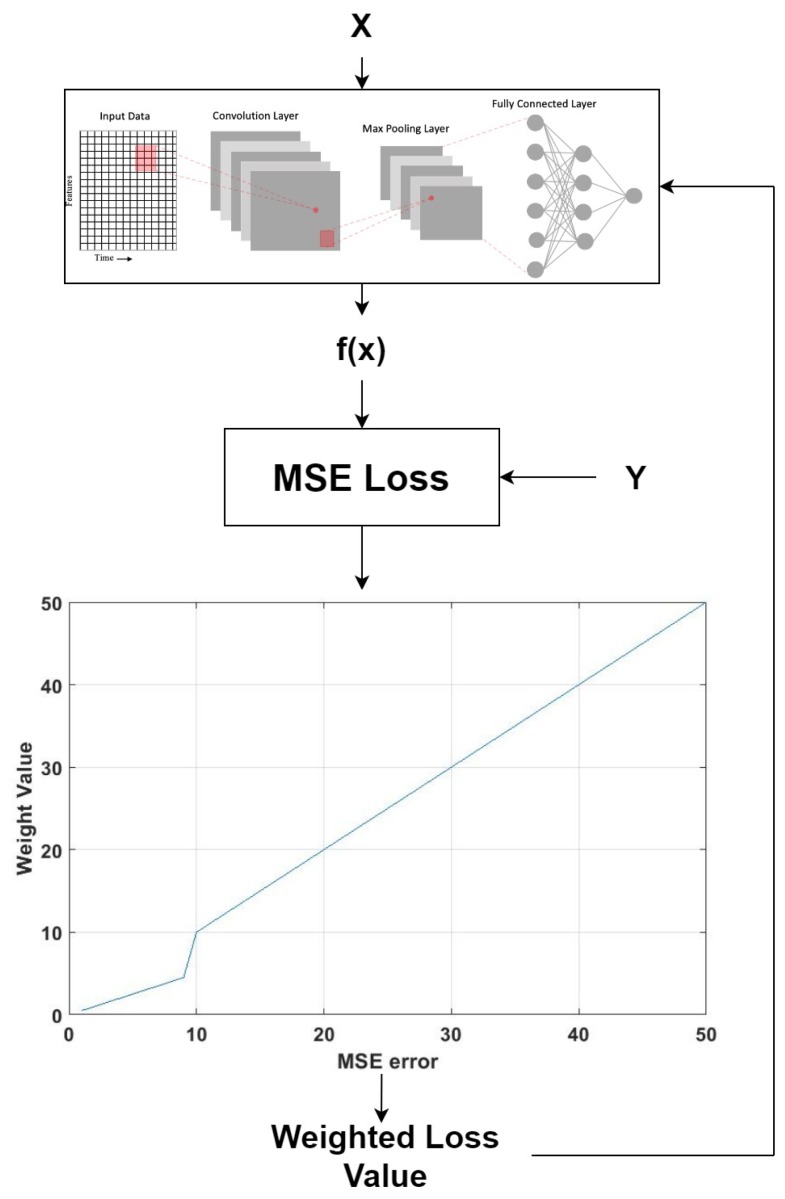
“A dynamically weighted loss function for convolutional and recurrent deep architectures was proposed in [45].”
BackgroundBattery Lifetime Prediction via Neural Networks with Discharge Capacity and State of Health
Hemdani, J., Degaa, L., Soltani, M., Rizoug, N., Telmoudi, A. J., & Châari, A. (2022) · Energies · doi:10.3390/en15228558 · Cited by 16
Hojjati, H., Sadeghi, M., & Armanfard, N. (2023) · Lecture notes in computer science · doi:10.1007/978-3-031-43430-3_15 · Cited by 29
Cross-Entropy as a Metric for the Robustness of Drone Swarms
Cofta, P., Ledziński, D., Śmigiel, S., & Gackowska, M. (2020) · Entropy · doi:10.3390/e22060597 · Cited by 14
Broad Embedded Logistic Regression Classifier for Prediction of Air Pressure Systems Failure
Adegoke, M., Lee, C. K. M., Chan, J. C., Pang, B., & Alaka, H. (2023) · Mathematics · doi:10.3390/math11041014 · Cited by 14
Abboush, M., Knieke, C., & Rausch, A. (2023) · Sensors · doi:10.3390/s23146606 · Cited by 18
Detecting APS failures using LSTM-AE and anomaly transformer enhanced with human expert analysis
Mumcuoğlu, M. E., Farea, S. M., Ünel, M., Mise, S., Unsal, S., Cevik, E., Yılmaz, M., & Köprübasi, K. (2024) · Engineering Failure Analysis · doi:10.1016/j.engfailanal.2024.108811 · Cited by 13
Li, Q., Li, J., Wang, Z., Liu, B., Wang, W., & Wang, Z. (2024) · Atmospheric Environment · doi:10.1016/j.atmosenv.2024.120865 · Cited by 14
Deep Learning-Based Algorithm for Recognizing Tennis Balls
Wu, D., & Ai-ping, X. (2022) · Applied Sciences · doi:10.3390/app122312116 · Cited by 13
Prediction OPEC oil price utilizing long short-term memory and multi-layer perceptron models
Abdulrahim, H., Alshibani, S. M., Ibrahim, O., & Elhag, A. A. (2024) · Alexandria Engineering Journal · doi:10.1016/j.aej.2024.10.057 · Cited by 11
EDLM: Ensemble Deep Learning Model to Detect Mutation for the Early Detection of Cholangiocarcinoma
Shah, A. A., Alturise, F., Alkhalifah, T., Faisal, A., & Khan, Y. D. (2023) · Genes · doi:10.3390/genes14051104 · Cited by 11
“A sigmoid capability is utilized as an initiation capability, the details of which are also available in [38].”
MethodSukarti, S., Sulaima, M. F., Kadir, A. F. A., Shamsor, M. H., & Yao, S. W. (2024) · Energy and Buildings · doi:10.1016/j.enbuild.2024.114457 · Cited by 13
Collaborative multiview time series modeling for vehicle maintenance demand prediction
Chen, F., Shang, D., Zhou, G., Ye, K., Ren, F., & Wu, G. (2025) · Scientific Reports · doi:10.1038/s41598-025-96720-1 · Cited by 10
“Rengasamy et al. 6 explored deep learning in vehicle and aerospace applications, using dynamic weighted loss functions, novel weighting mechanisms, and focal loss functions.”
An ensemble-based deep learning model for detection of mutation causing cutaneous melanoma
Shah, A. A., Shaker, A. S. A., Jabbar, S., Abbas, Q., Albalawi, T. S., & Celebi, M. E. (2023) · Scientific Reports · doi:10.1038/s41598-023-49075-4 · Cited by 10
“It operates through a gated process involving three types of gates: input gates, forget gates, and output gates 48 .”
BackgroundZhong, J., & Wang, Z. (2024) · Lecture notes in computer science · doi:10.1007/978-3-031-58553-1_22 · Cited by 12
Zhao, D., Li, H., Xu, A., & Song, T. (2022) · Frontiers in Psychology · doi:10.3389/fpsyg.2022.843493 · Cited by 9
“The loss weights for each exit (Rengasamy et al., 2020) are summed and trained.”
BackgroundPrognosis and Prediction of Breast Cancer Using Machine Learning and Ensemble-Based Training Model
Gupta, N., & Kaushik, B. N. (2021) · The Computer Journal · doi:10.1093/comjnl/bxab145 · Cited by 12
KESTİRİMCİ BAKIMDA MAKİNE ÖĞRENMESİ: LİTERATÜR ARAŞTIRMASI
DÜNDAR, D. R., Sarıçiçek, İ., Çinar, E. M., & Yazıcı, A. T. (2021) · Eskişehir Osmangazi Üniversitesi mühendislik ve mimarlık fakültesi dergisi :/Osmangazi Üniversitesi Mühendislik-Mimarlık Fakültesi dergisi · doi:10.31796/ogummf.873963 · Cited by 13
Prediction of Heat and Cold Loads of Factory Mushroom Houses Based on EWT Decomposition
Zuo, H., Zheng, W., Wang, M., & Zhang, X. (2023) · Sustainability · doi:10.3390/su152115270 · Cited by 8
Ding, P., Liu, Z., Huang, X., Zhao, C., & Li, Y. (2025) · Precision Engineering · doi:10.1016/j.precisioneng.2025.03.031 · Cited by 8
Prediction of aging of battery for electric vehicles based on a modified version of neural networks
Hemdani, J., Soltani, M., Telmoudi, A. J., & Châari, A. (2021) · Mediterranean Conference on Control and Automation (MED) · doi:10.1109/med51440.2021.9480161 · Cited by 8
“It allows the study of management failure mechanisms in the system life cycle and provides efficient strategies to predict component degradation and industrial systems [5]–[7].”
BackgroundAmeur, A., Hamdi, S., & Yahia, S. B. (2023) · Computational Intelligence · doi:10.1111/coin.12609 · Cited by 8
“18,19 These weights are computed for the different samples based on the class to which they belong (the majority or the minority classes).”
BackgroundKatreddi, S. (2023) · The Research Repository @ WVU (West Virginia University) · doi:10.33915/etd.11780 · Cited by 13
Modeling Daily Ice Cover in Northern Hemisphere Lakes With a Long Short‐Term Memory Neural Network
He, X., Andreadis, K. M., Roy, A. H., Langhorst, T., Kumar, A., & Butler, C. S. (2025) · Geophysical Research Letters · doi:10.1029/2024gl113544 · Cited by 7
Semi-Supervised Learning Approach for Optimizing Condition-based-Maintenance (CBM) Decisions
Azar, K., & Naderkhani, F. (2020) · IEEE Conference on Prognostics and Health Management · doi:10.1109/icphm49022.2020.9187022 · Cited by 7
“A recent contribution in this line of research is provided by [6] where a Deep Learning (DL)-based model is developed for Remaining Useful Life (RUL) prediction for gas turbine engines based on an open-sourced dataset provided by NASA [7].”
MethodRyu, J., & Park, H. (2022) · Sustainability · doi:10.3390/su14106120 · Cited by 7
Improving skin lesion classification through saliency-guided loss functions
Dakhli, R., & Barhoumi, W. (2025) · Computers in Biology and Medicine · doi:10.1016/j.compbiomed.2025.110299 · Cited by 6
Collaborative multiple attention mechanisms for vehicle fault prediction
Chen, F., Shang, D., Zhou, G., Ye, K., Ren, F., & Wu, G. (2025) · Engineering Applications of Artificial Intelligence · doi:10.1016/j.engappai.2025.111896 · Cited by 7
Li, Z., Ren, S., Zhang, X., Bai, L., Jiang, C., Wu, J., & Zhang, W. (2021) · Journal of Healthcare Engineering · doi:10.1155/2021/2254594 · Cited by 6
“)erefore, the loss function was the instructor of the entire network learning, which had a great influence on the quality of the final learning result [18].”
BackgroundAn Explainable AI approach for detecting failures in air pressure systems
Farea, S. M., Mumcuoğlu, M. E., & Ünel, M. (2025) · Engineering Failure Analysis · doi:10.1016/j.engfailanal.2025.109441 · Cited by 5
Prediction of Oil Pipeline Process Operating Parameters Based on Mechanism and Data Mining
Wei, L., Wang, L., Zhou, Q., & Gao, Y. (2024) · Journal of Energy Resources Technology · doi:10.1115/1.4065951 · Cited by 5
Collaborative Fusion Attention Mechanism for Vehicle Fault Prediction
Jia, H. B., Qian, D., Chen, F., & Zhou, W. (2025) · Future Internet · doi:10.3390/fi17090428 · Cited by 5
“Rengasamy et al. [29] explored dynamically weighted loss functions for prognostics and health management of sensor systems, demonstrating substantial improvements in prediction and fault detection rates through deep learning models.”
Research on Electrostatic Monitoring of Tribo-Contacts with Dynamic Adaptive Fusion Method
Liu, R., Wang, H., Zhang, J., Gu, S., & Sun, J. (2022) · Mathematical Problems in Engineering · doi:10.1155/2022/8952349 · Cited by 5
Kang, X., Liu, Z., Wu, G., Yang, C., & Li, Y. (2024) · Renewable Energy · doi:10.1016/j.renene.2024.122322 · Cited by 4
Guo, X., Wang, P., Wang, H., Xiao, J., & Song, L. (2021) · Global Reliability and Prognostics and Health Management Conference (PHM) · doi:10.1109/phm-nanjing52125.2021.9613038 · Cited by 4
Gao, S., Wang, Z., Jiang, S., Ding, W. J., Wang, Y., & Dong, X. (2022) · International Journal of Environmental Research and Public Health · doi:10.3390/ijerph192013114 · Cited by 5
“At present, the actual development of health management, especially in community health services, WHSM, and the health insurance industry, still lacks systematic research and governance [17].”
BackgroundDynamic Binary Cross Entropy: An effective and quick method for model convergence
Kulkarni, C., Rajesh, M., & Shylaja, S. S. (2022) · International Conference on Machine Learning and Applications · doi:10.1109/icmla55696.2022.00135 · Cited by 4
“Divish Rengasamy et al. [4] have proposed a dynamic weighted counterpart to the Mean Squared Error (MSE) loss function.”
BackgroundEngine Bearing Analysis Under Diverse Conditions via Response Surface Methodology
Riaz, M. N., Hamza, A., Buriro, A., Jabbar, H., Abbas, M., & Tiwana, M. I. (2025) · IEEE Access · doi:10.1109/access.2025.3611277 · Cited by 3
“Jung and Sundström [41] and Wolf et al. [42] applied deep learning for fault identification in complex systems, while Wang et al. [43] and Rengasamy et al. [44] demonstrated sound and vibration analysis in heavy-duty engines.”
Wu, L., Gan, F., Yang, R., Liu, J., Ren, Z., & Wang, H. (2025) · Environmental Earth Sciences · doi:10.1007/s12665-025-12569-7 · Cited by 3
Arkaan, S. G., Atmadja, A. R., & Firdaus, M. D. (2024) · Komputasi Jurnal Ilmiah Ilmu Komputer dan Matematika · doi:10.33751/komputasi.v21i2.9987 · Cited by 3
Zhou, Z., Zhang, M., Liao, C., Zhang, H., Yang, Q., & Yang, Y. (2022) · Computational Intelligence and Neuroscience · doi:10.1155/2022/1852718 · Cited by 3
“+en, the level set loss function (L S loss) was proposed [16].”
BackgroundMore with Less: ZeroQA and Relevant Subset Selection for AI2 Reasoning Challenge
Pătras, C. C.-B., Pîrtoacă, G.-S., Rebedea, T. E., & Ruşeţi, Ş. (2022) · Procedia Computer Science · doi:10.1016/j.procs.2022.09.334 · Cited by 2
Chen, D., Chen, M., Lang, B., Wang, X., Xu, Q., Shen, J., Liang, L., & Luo, Q. (2025) · Sensors · doi:10.3390/s25175219 · Cited by 2
“To address this issue, Rengasamy et al. [40] developed a set of methods known as SoftAdapt, which dynamically adjust the component weights of multi-part loss functions based on the real-time performance statistics of each loss component.”
Shahrivar, F., Mahmoodian, M., Sidiq, A., Jayasinghe, S., Sun, Z., Alavi, A., & Setunge, S. (2026) · Artificial Intelligence Review · doi:10.1007/s10462-026-11547-0 · Cited by 2
“While DL, an advanced branch of ML, employs multi-layered ANNs to decipher complex data patterns (Rengasamy et al. 2020 ).”
Towards Efficient Variational Auto-Encoder Using Wasserstein Distance
Chen, Z., & Liu, P. (2022) · Proceedings - International Conference on Image Processing · doi:10.1109/icip46576.2022.9897782 · Cited by 2
Wang, B., Li, Q., Yang, Q., Lu, J., & Nie, X. (2023) · Processes · doi:10.3390/pr11072225 · Cited by 2
“[3] used a deep feedforward neural network, a one-dimensional convolutional neural network, a bidirectional gated recurrent unit, and bidirectional long short-term memory to evaluate two loss functions for NASA’s commercial modular aviation propulsion system simulation data and Scania truck pressure system fault data…”
MethodPeng, S. (2024) · Service Oriented Computing and Applications · doi:10.1007/s11761-024-00401-2 · Cited by 2
“(4) [26].”
Domain Knowledge Injection Guidance for Predictive Maintenance
Afroze, L., Merkelbach, S., von Enzberg, S., & Dumitrescu, R. (2024) · Technologien für die intelligente Automation · doi:10.1007/978-3-031-47062-2_8 · Cited by 2
Air Pressure System Failures Detection Using LSTM-Autoencoder
Mumcuoğlu, M. E., Farea, S. M., Ünel, M., Mise, S., Unsal, S., Cevik, E., Yılmaz, M., & Köprübasi, K. (2024) · IEEE International Workshop on Metrology for Automotive (MetroAutomotive) · doi:10.1109/metroautomotive61329.2024.10615355 · Cited by 2
Forecasting the EUR/USD Exchange Rate Using ARIMA and Machine Learning Models
Lakhal, S. (2024) · Data & Metadata · doi:10.56294/dm2024.368 · Cited by 2
Cava, C., D’Antona, S., Maselli, F., Castiglioni, I., & Porro, D. (2023) · Functional & Integrative Genomics · doi:10.1007/s10142-023-01228-4 · Cited by 2
“This function is used to evaluate the classifier through the model error and to quantify how the model fits (Rengasamy et al. 2020).”
MethodComputer Vision-Based PV Module Fault Recognition Using a Transfer Learning Approach
Kellil, N., Aissat, A. E., Boudiaf, A., & Mellit, A. (2024) · Springer proceedings in energy · doi:10.1007/978-981-99-2777-7_4 · Cited by 2
Asif, A. A., Al-Dulaimi, A., & Mohammadi, A. (2020) · Spectrum Research Repository (Concordia University) · Cited by 6
Towards Better Data Augmentation using Wasserstein Distance in Variational Auto-encoderPreprint
Chen, Z., & Liu, P. (2021) · arXiv (Cornell University) · doi:10.48550/arxiv.2109.14795 · Cited by 2
Insight generation for improving e-governance: towards crop yield prediction model
Anitha, M., Valarmathi, K., & Karthikeyan, A. (2024) · International Journal of Image and Data Fusion · doi:10.1080/19479832.2024.2346112 · Cited by 1
“To overcome this problem, a hybrid loss function is used that combines weighted MSE loss (Rengasamy et al .”
Enhanced Isolation Forest Algorithm for Aero-Engine Fault Detection
Yang, J., & Li, J. (2024) · Asia Conference Mechanical and Aerospace Engineering · doi:10.1109/meae62008.2024.11026662 · Cited by 1
Extending Skinner: A Multi-label Approach to Scalp Disease Detection with Explainable AI
Fortino, L., Lodato, G., Trò, R., & Francese, R. (2026) · Lecture notes in networks and systems · doi:10.1007/978-3-032-14160-6_7 · Cited by 1
Metadata
- Authors
- Rengasamy, D., Jafari, M., Rothwell, B., Chen, X., & Figueredo, G. P.
- Affiliations
- University of Nottingham (GB)
- Corresponding author
- Rengasamy, Divish
- Venue
- Sensors
- Publisher
- MDPI AG
- Published
- 2020-01-28
- Volume
- 20
- Issue
- 3
- Pages
- 723
- ISSN
- 1424-8220 (ISSN-L)
- PMC
- PMC7038523
- OpenAlex
- W3003362255
- Cited by
- 118
- References
- 34
- Citations by year
- 2026: 9 · 2025: 17 · 2024: 24 · 2023: 19 · 2022: 26 · 2021: 18 · 2020: 5
- FWCI
- 8.40
- Type
- journal article
- Language
- en
- Open access
- gold
- dx.doi.org
- Licence
- Locations
- Sensors (publishedVersion, cc-by)
- PubMed Central (publishedVersion, cc-by)
- PubMed (publishedVersion)
- Repository@Nottingham (University of Nottingham) (publishedVersion, cc-by)
- Repository@Nottingham (University of Nottingham) (submittedVersion, cc-by)
- DOAJ (DOAJ: Directory of Open Access Journals) (submittedVersion, cc-by-sa)
- Funders
- H2020 Marie Skłodowska-Curie Actions (665468)
- Topics
- Physical Sciences › Engineering › Control and Systems Engineering › Machine Fault Diagnosis Techniques
- Physical Sciences › Engineering › Control and Systems Engineering › Fault Detection and Control Systems
- Physical Sciences › Engineering › Safety, Risk, Reliability and Quality › Reliability and Maintenance Optimization
- Keywords
- prognostics and health management, focal loss, remaining useful life prediction, fault detection, sensor-based condition monitoring, Scania trucks, bidirectional LSTM, bidirectional GRU, convolutional neural networks, deep feedforward neural network
- MeSH terms
- Population Health Management, Deep Learning, Algorithms, Humans, Prognosis, Biosensing Techniques, Weight Loss, Neural Networks, Computer
About these checks
Registry, retraction, Cites and statistics results are computed, not judged, with one exception: a printed reference that no index lists is read once by a model before it counts as a citation error. Claims are extracted by a model and kept only when their quote appears verbatim in the text; each cited source is then checked, with a model’s help, for whether it says what the claim relies on. Those verdicts can be wrong — read the claim’s quote and the cited source before relying on one.
Statistics and arithmetic are recomputed, not judged.
Confidence bands are shown only for fields calibrated on our annotated test set. None is calibrated yet, so no band is shown.
What counts as a claim ›How we measure confidence ›How we check this ›
Are you an author, or do you see a problem with this page? Request a review
Data sources
Bibliographic data: Semantic Scholar, OpenAlex, Crossref.
Contains information from the Semantic Scholar Academic Graph Datasets, made available under the ODC Attribution License (ODC-BY 1.0).
Semantic Scholar’s data is described in: Kinney, R., et al. (2023). The Semantic Scholar Open Data Platform. arXiv:2301.10140.
