

Human Activity Recognition via Hybrid Deep Learning Based Model
Open accessThe DOI matches its Crossref record; 50 of the 51 references it cites were found in a registry or an index.
Abstract
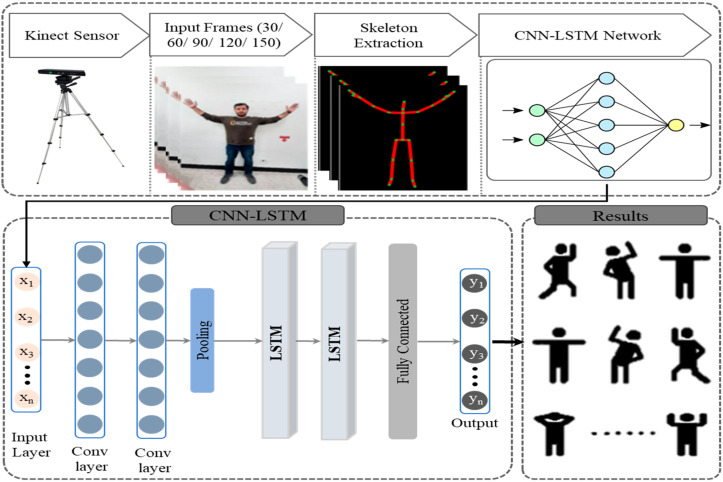
In recent years, Human Activity Recognition (HAR) has become one of the most important research topics in the domains of health and human-machine interaction. Many Artificial intelligence-based models are developed for activity recognition; however, these algorithms fail to extract spatial and temporal features due to which they show poor performance on real-world long-term HAR. Furthermore, in literature, a limited number of datasets are publicly available for physical activities recognition that contains less number of activities. Considering these limitations, we develop a hybrid model by incorporating Convolutional Neural Network (CNN) and Long Short-Term Memory (LSTM) for activity recognition where CNN is used for spatial features extraction and LSTM network is utilized for learning temporal information. Additionally, a new challenging dataset is generated that is collected from 20 participants using the Kinect V2 sensor and contains 12 different classes of human physical activities. An extensive ablation study is performed over different traditional machine learning and deep learning models to obtain the optimum solution for HAR. The accuracy of 90.89% is achieved via the CNN-LSTM technique, which shows that the proposed model is suitable for HAR applications.
Overview
The claims and statistics of this paper haven’t been checked yet.
Free: it reads the open-access text and checks the first 5 claims that cite a source we can check. Create a free account to check every claim.
Integrity signals
Registry
Cites
Statistics
Figures

Verification
Claims the paper makes
The claims and statistics of this paper haven’t been checked yet.
Free: it reads the open-access text and checks the first 5 claims that cite a source we can check. Create a free account to check every claim.
Claims other papers make about this one
Each is checked against this paper’s own text: does it say what the citing paper says it does?
The source backs part of the claim, not all of it — or backs it for a different population, condition or comparison.
In the citing paper
“For example, wearable sensors such as accelerometers, gyroscopes, and magnetometers capture detailed information about a person's movements and posture, whereas cameras capture visual information about the person and their surroundings [114,116,164,165].”
From A Survey of Video Surveillance Systems in Smart City (2023) · cites this paper as [114]
Experimental — accuracy not yet measuredThe cited source says what the claim attributes to it.
In the citing paper
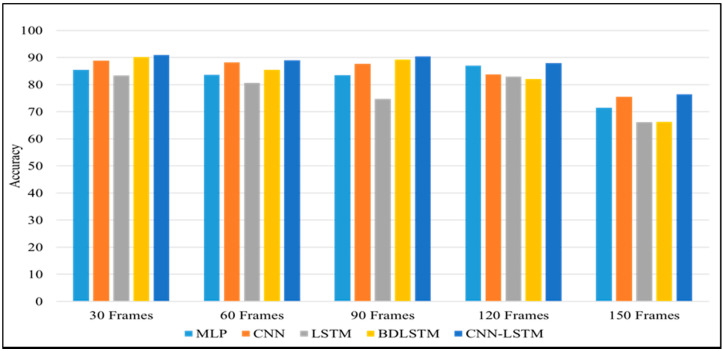
“To combine the strengths of both models, a CNN-LSTM hybrid architecture was developed in [114] to monitor and recognize human actions in indoor environments in 2022 with an accuracy of 90.89% on 30 frames.”
From A Survey of Video Surveillance Systems in Smart City (2023) · cites this paper as [114]
The check wasn’t confident either way, so it gives no verdict — never disputed.
In the citing paper
“Indeed, as mentioned in [114,157], when new types of operations and objects are not labeled or known in advance, unsupervised deep learning techniques can be explored to improve object classification and recognition.”
From A Survey of Video Surveillance Systems in Smart City (2023) · cites this paper as [114]
Experimental — accuracy not yet measured
Self-check
Percentages, sums and reported differences re-computed from the paper’s own numbers.
The self-check needs the paper’s full text.
Citations
Cites
Faster R-CNN: Towards Real-Time Object Detection with Region Proposal Networks
Ren, S., He, K., Girshick, R., & Sun, J. (2017) · IEEE Transactions on Pattern Analysis and Machine Intelligence · doi:10.1109/tpami.2016.2577031 · Cited by 73,472 · cited 1×
“The proposed dataset includes 12 different activities taken from 20 individuals aged between 25–35 years.”
MethodCortes, C., & Vapnik, V. (1995) · Machine Learning · doi:10.1007/bf00994018 · Cited by 59,421
Neural networks and physical systems with emergent collective computational abilities.
Hopfield, J. J. (1982) · Proceedings of the National Academy of Sciences · doi:10.1073/pnas.79.8.2554 · Cited by 19,270 · cited 1×
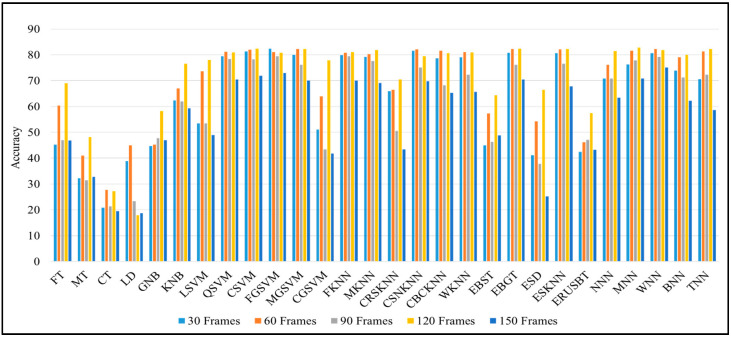
“To capture the unique features of action or activity, complex machine learning-based models such as various flavors of SVM [22] (Linear SVM (LSVM), Quadratic SVM (QSVM), Cubic SVM (CSVM), Fine Gaussian SVM (FGSVM), Medium Gaussian SVM (MGSVM), Coarse Gaussian SVM (CGSVM)), KNN [23] (Fine KNN (FKNN), Medium KNN (MKNN),…”
BackgroundTHE USE OF MULTIPLE MEASUREMENTS IN TAXONOMIC PROBLEMS
FISHER, R. A. (1936) · Annals of Eugenics · doi:10.1111/j.1469-1809.1936.tb02137.x · Cited by 15,227 · cited 1×
“To capture the unique features of action or activity, complex machine learning-based models such as various flavors of SVM [22] (Linear SVM (LSVM), Quadratic SVM (QSVM), Cubic SVM (CSVM), Fine Gaussian SVM (FGSVM), Medium Gaussian SVM (MGSVM), Coarse Gaussian SVM (CGSVM)), KNN [23] (Fine KNN (FKNN), Medium KNN (MKNN),…”
BackgroundAn Introduction to Kernel and Nearest-Neighbor Nonparametric Regression
Altman, N. S. (1992) · The American Statistician · doi:10.1080/00031305.1992.10475879 · Cited by 5,708 · cited 2×
“…various flavors of SVM [22] (Linear SVM (LSVM), Quadratic SVM (QSVM), Cubic SVM (CSVM), Fine Gaussian SVM (FGSVM), Medium Gaussian SVM (MGSVM), Coarse Gaussian SVM (CGSVM)), KNN [23] SVM is a supervised learning model that strives for maximal margin separation with a little amount of training data.”
MethodPopular Ensemble Methods: An Empirical Study
Opitz, D., & Maclin, R. (1999) · Journal of Artificial Intelligence Research · doi:10.1613/jair.614 · Cited by 2,953 · cited 1×
“To capture the unique features of action or activity, complex machine learning-based models such as various flavors of SVM [22] (Linear SVM (LSVM), Quadratic SVM (QSVM), Cubic SVM (CSVM), Fine Gaussian SVM (FGSVM), Medium Gaussian SVM (MGSVM), Coarse Gaussian SVM (CGSVM)), KNN [23] (Fine KNN (FKNN), Medium KNN (MKNN),…”
BackgroundOn Human Motion Prediction Using Recurrent Neural Networks
Martinez, J., Black, M. J., & Romero, J. (2017) · 2017 IEEE Conference on Computer Vision and Pattern Recognition (CVPR) · doi:10.1109/cvpr.2017.497 · Cited by 984 · cited 1×
“For instance, Julieta et al. [19] focus on human motion by utilizing the recurrent neural network, the goal is time-dependent representations to perform tasks including short-term prediction as well as long-term human motion synthesis.”
BackgroundLi, C., Zhong, Q., Xie, D., & Pu, S. (2018) · Proceedings of the Twenty-Seventh International Joint Conference on Artificial Intelligence · doi:10.24963/ijcai.2018/109 · Cited by 582
Human action recognition using a temporal hierarchy of covariance descriptors on 3D joint locations
Hussein, M. E., Torki, M., Gowayyed, M. A., & El-Saban, M. (2013) · Cited by 507
Beyond English-Centric Multilingual Machine Translation
Fan, A., Bhosale, S., Schwenk, H., Ma, Z., El-Kishky, A., Goyal, S., Baines, M., Çelebi, O., Wenzek, G., Chaudhary, V., et al. (2020) · arXiv (Cornell University) · doi:10.48550/arxiv.2010.11125 · Cited by 452 · cited 1×
“…time such as anomaly recognition [37,38] speech recognition [39,40], person re-identification [41], Energy forecasting [42–45], machine translation [46], and activity recognition from sensor data [47] used a special kind of neural network called Recurrent Neural Network (RNN) specifically designed…”
Method
Research works printed but not linked: 1
- Arthi, 2020, An Efficient Data Augmentation CNN-Network for Skeleton-based Human Action Recognition, IJARTET J., 7, 101
Cited by
Items 101–200 of 273
MM-DOS: A Novel Dataset Of Workout Activities
Sharshar, A., Fayez, A., Eitta, A. A., & Gomaa, W. E. (2022) · International Joint Conference on Neural Networks (IJCNN) · doi:10.1109/ijcnn55064.2022.9892589 · Cited by 9
“This conclusion is driven by the fact that HAR plays a crucial role in video surveillance systems, human-computer interaction, robotics for human behavior characterization, security and entertainment fields, etc. [1] Nowadays, sports are one of the main topics in HAR.”
BackgroundSkeleton-Based Human Action Recognition Based on Single Path One-Shot Neural Architecture Search
Jiang, Y., Yu, S., Wang, T., Sun, Z., & Wang, S. (2023) · Electronics · doi:10.3390/electronics12143156 · Cited by 9
PAR-Net: An Enhanced Dual-Stream CNN–ESN Architecture for Human Physical Activity Recognition
Khan, I. U., & Lee, J. W. (2024) · Sensors · doi:10.3390/s24061908 · Cited by 9
“…in separate CSV files, which contain details about the data and their specific labels. using the Discrete Gestures Basics WPF SDK. Joint data were captured by the Kinect Body View The detailed explanation of both datasets used in this research is shown in Table 1. script and saved as CSV fi les.”
MethodSelf-citationEllouze, A., Kadri, N., Alaerjan, A., & Ksantini, M. (2024) · Computers, materials & continua/Computers, materials & continua (Print) · doi:10.32604/cmc.2024.048061 · Cited by 9
A YOLOv11-Based Deep Learning Framework for Multi-Class Human Action Recognition
Nayeem, N. I., Mahbuba, S., Disha, S., Buiyan, M. R. H., Rahman, S., Abdullah-Al-Wadud, M., & Uddin, J. (2025) · Computers, materials & continua/Computers, materials & continua (Print) · doi:10.32604/cmc.2025.065061 · Cited by 13
Shaiba, H. A., Alzahrani, J. S., Eltahir, M. M. E., Marzouk, R., Mohsen, H., & Hamza, M. A. (2022) · Computers, materials & continua/Computers, materials & continua (Print) · doi:10.32604/cmc.2022.031625 · Cited by 8
“It has the ability to remember the data for a long period [20].”
Egocentric Vision Action Recognition: Performance Analysis on the Coer_Egovision Dataset
Gupta, H., & Kumar, V. (2024) · International Conference on Automation and Computation (AUTOCOM) · doi:10.1109/autocom60220.2024.10486146 · Cited by 7
Madaoui, L., Amira, A., Talha, M. K., Kerdjidj, O., & Himeur, Y. (2024) · Biomedical Signal Processing and Control · doi:10.1016/j.bspc.2024.107068 · Cited by 8
Chen, L., Lin, Q., Cheng, H., Fang, B., Zhang, J., & Hong, J. (2025) · IEEE Sensors Journal · doi:10.1109/jsen.2025.3526646 · Cited by 7
Wang, Y., Shao, Y., Yu, Z., & Wang, Z. (2025) · Applied Sciences · doi:10.3390/app15031577 · Cited by 7
Human Behavior Classification using 2D – Convolutional Neural Network, VGG16 and ResNet50
Sowmya, M., Balasubramanian, M., & Vaidehi, K. (2023) · Indian Journal of Science and Technology · doi:10.17485/ijst/v16i16.199 · Cited by 7
Table-Balancing Cooperative Robot Based on Deep Reinforcement Learning
Kim, Y., Kim, D., & Kang, B. (2023) · Sensors · doi:10.3390/s23115235 · Cited by 8
“[25] developed a hybrid model by incorporating a convolutional neural network (CNN) and LSTM for activity recognition, where the CNN is used for spatial feature extraction and the LSTM network is utilized for learning temporal information.”
MethodCamera Coach: Activity Recognition and Assessment Using Thermal and RGB Videos
Sharshar, A., Eitta, A. A., Fayez, A., Khamis, M. A., Zaky, A. B., & Gomaa, W. E. (2023) · International Joint Conference on Neural Networks (IJCNN) · doi:10.1109/ijcnn54540.2023.10191379 · Cited by 7
“HAR is important in video surveillance systems and security, robotics for human behaviour characterization, health and medical fields, entertainment areas, and many others [1].”
BackgroundGlinkowski, W., Miścior, T., & Sitnik, R. (2023) · Applied Sciences · doi:10.3390/app132111982 · Cited by 7
A Review Work: Human Action Recognition in Video Surveillance Using Deep Learning Techniques
Gupta, N. S., Ramya, K., & Karnati, R. (2024) · Informatics and Automation · doi:10.15622/ia.23.2.5 · Cited by 7
Moghaddam, E. S., Ellis, C., & Hejrati, B. (2025) · IEEE Access · doi:10.1109/access.2025.3606339 · Cited by 6
MCANet: a lightweight action recognition network with multidimensional convolution and attention
Tian, Q., Miao, W., Zhang, L., Yang, Z., Yu, Y., Zhao, Y., & Yao, L. (2024) · International Journal of Machine Learning and Cybernetics · doi:10.1007/s13042-024-02454-3 · Cited by 7
Cheng, C.-F., Lin, C. J., & Hu, Q.-X. (2025) · Artificial intelligence for engineering design analysis and manufacturing · doi:10.1017/s0890060424000313 · Cited by 6
“In the last decade, low-cost RGB depth cameras have become highly cost-effective and have been used for real-time 3D motion capture in HAR studies (Jalal et al., 2017; Khan et al., 2022; Qi et al., 2022; Yadav et al., 2021).”
A CNN-MLP Deep Model for Sensor-based Human Activity Recognition
Nadia, A., Lyazid, S., Kazar, O., & Chibani, A. (2023) · International Conference on Innovations in Information Technology · doi:10.1109/iit59782.2023.10366481 · Cited by 6
Kryeem, A., Raz, S., Eluz, D., Itah, D., Hel-Or, H. Z., & Shimshoni, I. (2023) · IEEE International Conference on Computer Vision Workshops · doi:10.1109/iccvw60793.2023.00201 · Cited by 6
“Hybrid DL model was also developed in [19] by incorporating CNN and Long Short-Term Memory (LSTM) for activity recognition where CNN is used for spatial features extraction and LSTM network is utilized for learning temporal information, also in this work Kinect was used to extract human body joints.”
MethodWeighted voting ensemble of hybrid CNN-LSTM Models for vision-based human activity recognition
Aggarwal, S., Bhola, G., & Vishwakarma, D. K. (2024) · Multimedia Tools and Applications · doi:10.1007/s11042-024-19582-1 · Cited by 7
“Recurrent neural networks, including LSTMs, have been widely used for sensor-based HAR [26–30].”
Enhancing Human Action Recognition Through Transfer Learning and Body Articulation Analysis
Jlidi, N., Jemai, O., & Bouchrika, T. (2025) · Circuits Systems and Signal Processing · doi:10.1007/s00034-025-03026-8 · Cited by 6
“In [18], the authors tackle the challenges of HAR by proposing a novel fully automated scheme that integrates deep neural networks (DNN) with multiview features.”
Interrogation, Intelligence and the Issue of Human Rights
Newbery, S., Brecher, B., Sands, P., & Stewart, B. (2009) · Intelligence & National Security · doi:10.1080/02684520903209381 · Cited by 6
Deep Incremental Learning for Personalized Human Activity Recognition on Edge Devices
Younan, S., & Abu-Elkheir, M. (2022) · Canadian Journal of Electrical and Computer Engineering · doi:10.1109/icjece.2022.3199227 · Cited by 7
“CNNs were again integrated with a long short-term memory (LSTM—a special type of RNNs) to recognize 12 human activities with the incorporation of spatial and temporal activities extracted via interactive virtual reality environments [4].”
BackgroundEfficient detection of refugees and migrants in Turkey using convolutional neural network
Elebe, T. M., & Kurnaz, S. (2023) · Physical Communication · doi:10.1016/j.phycom.2023.102078 · Cited by 6
MOMOWO: Women Designers, Craftswomen, Architects and Engineers between 1918 and 1945
Groot, M., Seražin, H., Franchini, C., & Garda, E. M. (2017) · Womenʼs creativity · doi:10.3986/wocrea/1/momowo1 · Cited by 6
Wang, Z., & Kang, K. (2025) · Scientific Reports · doi:10.1038/s41598-025-18444-6 · Cited by 5
“CNN-RNN hybrids, while successful, frequently entail substantial computing expenses and face challenges in differentiating identical activities (e.g., smoking from drinking) in the absence of attention mechanisms [10, 15], hence constraining their use on low-power devices.”
Arora, I., & Gangadharappa, M. (2025) · Modelling—International Open Access Journal of Modelling in Engineering Science · doi:10.3390/modelling6020033 · Cited by 5
Subtransfer Learning in Human Activity Recognition: Boosting the Outlier User Accuracy
Kanjilal, R., Küçük, M. F., & Uysal, I. (2023) · IEEE Sensors Journal · doi:10.1109/jsen.2023.3312146 · Cited by 5
“In some recent studies, the authors used a hybrid CNN-LSTM architecture for activity recognition [25], [27], [28].”
MethodHAR: A stacked ensemble learning approach based on smartphone sensors for activity detection
Lalwani, P. D., & Ganeshan, R. (2024) · Internet of Things · doi:10.1016/j.iot.2024.101487 · Cited by 5
Lan, S., Xue, Y., Liu, H., & Yang, X. (2025) · Biomedical Signal Processing and Control · doi:10.1016/j.bspc.2025.108207 · Cited by 6
Deep Learning Ensemble for Recognising Lower Limb Activity
Ganesha, H. S., Gupta, R., Gupta, S. H., & Rajan, S. (2023) · IEEE Sensors Applications Symposium (SAS) · doi:10.1109/sas58821.2023.10254188 · Cited by 5
Tahir, B. S., Ageed, Z. S., Hasan, S. S., & Zeebaree, S. R. M. (2023) · Computers, materials & continua/Computers, materials & continua (Print) · doi:10.32604/cmc.2023.037433 · Cited by 7
Ashwin, M., Jagadeesan, D., Kumar, M. R., Murugavalli, S., Krishna, A. C., & Ammisetty, V. (2024) · Multimedia Tools and Applications · doi:10.1007/s11042-024-19095-x · Cited by 7
Hybrid CNN-GRU Model for Exercise Classification Using IMU Time-Series Data
Zhang, J., Lau, M. C., & Zhu, Z. (2024) · Journal of Machine Intelligence and Data Science · doi:10.11159/jmids.2024.007 · Cited by 4
STAR: Sea Turtle Basic Activity Recognizer Network via Efficient Transformer
Putro, M. D., Sutrisno, A., Manembu, I. S., Chun, I. Y., & Oh, T.-H. (2025) · IEEE Access · doi:10.1109/access.2025.3615067 · Cited by 4
Real-Time Fall Detection Based on Deep Learning
Humod, A. T., Ahmed, S. R., Hammash, N. M., Hakim, B. A., Shwayaa, A. K., Al-Aswad, F. M. S., Hashim, W. A., Algburi, S. S., & Othman, B. B. (2025) · International Conference on Business Analytics for Technology and Security (ICBATS) · doi:10.1109/icbats66542.2025.11258122 · Cited by 4
“Convolutional Neural Networks (CNNs) are utilized in vision-based approaches [30] that leverage photos and videos to extract spatial characteristics and identify the fall event [31].”
CatBoost-based stacked ensemble model for human activity recognition
Lalwani, P. D., Ganeshan, R., & Lalwani, P. (2025) · Multiagent and Grid Systems · doi:10.1177/15741702251403182 · Cited by 4
Hybrid Principal Component Analysis Using Boosting Classification Techniques: Categorical Boosting
Lalwani, P., & Ganeshan, R. (2024) · Lecture notes in networks and systems · doi:10.1007/978-981-99-7814-4_19 · Cited by 4
Asadi, S., Tartibian, B., Moni, M. A., & Eslami, R. (2024) · Scientific Reports · doi:10.1038/s41598-024-71576-z · Cited by 4
“…solve regression and classification issues in the field of medicine and exercise around the world, including the diagnosis and prediction of cardiovascular diseases 12 , cancers 13 , Type-2 Diabetes 14 , adherence to physical activity 15 , athletes’ competitive ability 16 , and human activity 17 .”
BackgroundDual-Stream Architecture Enhanced by Soft-Attention Mechanism for Plant Species Classification
Khan, I. U., Khan, H. A., & Lee, J. W. (2024) · Plants · doi:10.3390/plants13182655 · Cited by 4
Self-citationBhavani, Y. V. K. D., & Pagi, V. B. (2025) · Cogent Social Sciences · doi:10.1080/23311886.2025.2465834 · Cited by 4
Hyex-net: hybrid efficient Xception network for human activity recognition using multimodalities
Gupta, S., & Mahapatra, R. P. (2025) · Cluster Computing · doi:10.1007/s10586-024-04998-z · Cited by 4
“The challenges met by the established techniques employed for HAR are organized as follows, • In [3], CNN-LSTM was developed for HAR, and it performed better in a huge amount of data, but it failed to add feature extraction techniques for extracting features for improving identification.”
InfluentialMao, Y., Wu, W., Li, H., Xu, Y., Tu, K., Zhang, H., Dong, X., & Sun, Q. (2025) · Microchemical Journal · doi:10.1016/j.microc.2025.114939 · Cited by 4
Kumar, L. M. A., & Murugan, S. (2023) · Multimedia Tools and Applications · doi:10.1007/s11042-023-14977-y · Cited by 4
“Khan et al. [9] developed a hybrid mechanism by integrating CNN and LSTM for HAR whereby CNN is utilized for spatial feature extraction and LSTM system is employed for learning temporal data.”
MethodSensor placement determination for a wearable device in dual-arm manipulation tasks
Urukalo, D., Nates, F. M., & Blazevic, P. (2024) · Engineering Applications of Artificial Intelligence · doi:10.1016/j.engappai.2024.109217 · Cited by 5
PlantView: Integrating deep learning with 3D modeling for indoor plant augmentation
Afzal, S., Khan, H. A., & Lee, J. W. (2024) · Ecological Informatics · doi:10.1016/j.ecoinf.2024.102899 · Cited by 4
Self-citationPerformance analysis of VEP signal discrimination using CNN and RNN algorithms
Cheker, Z., Chakkor, S., Oualkadi, A. E., Baghouri, M., Belfkih, R., Hangouche, A. J. E., & Laameche, J. (2022) · Neuroscience Informatics · doi:10.1016/j.neuri.2022.100087 · Cited by 4
Applying Semi-Supervised learning on Human Activity Recognition Data
Mishra, A., & Bhattacharjee, V. (2022) · International Conference on IoT and Blockchain Technology (ICIBT) · doi:10.1109/icibt52874.2022.9807808 · Cited by 4
“Khan et al. [22] develop a hybrid model by using convolutional neural network (CNN) for feature extraction and Long Short-Term Memory (LSTM) for learning.”
MethodVisible Light Sensing for Recognising Human Postural Transitions
Salem, Z., & Weiss, A. P. (2022) · International Conference on Broadband Communications for Next Generation Networks and Multimedia Applications (CoBCom) · doi:10.1109/cobcom55489.2022.9880682 · Cited by 4
Deep Learning‐Based Quantum System for Human Activity Recognition
Salvadi, S. R., Narsimhulu, P., & Madhuri, T. N. P. (2023) · Wiley eBooks · doi:10.1002/9781119905172.ch17 · Cited by 5
Action Recognition with Multiple People Using Long Short-term Memory
Lee, H.-W., Hsieh, S.-L., & Tsai, M. (2023) · IEEE International Conference on Consumer Electronics - Taiwan (ICCE-Taiwan) · doi:10.1109/icce-taiwan58799.2023.10226656 · Cited by 4
“Introduction In view of the fact that human motion recognition systems and the development of this technology have gradually matured, human motion recognition technology has started to be applied in daily life [1][5]; however, current human motion recognition frameworks cannot efficiently identify the motions of multi…”
BackgroundThomas, A. L., & Judith, J. E. (2024) · International Conference on Circuit, Power and Computing Technologies · doi:10.1109/iccpct61902.2024.10672919 · Cited by 5
A Novel Martingale Model for Human Activity Recognition using Robust Optimisation Techniques
Etumusei, J., Carracedo, J. M., & McClean, S. I. (2023) · International Conference on Electrical, Computer, Communications and Mechatronics Engineering (ICECCME) · doi:10.1109/iceccme57830.2023.10252710 · Cited by 3
“[5] develop a hybrid model that combines convolutional neural network (CNN) and long short-term memory (LSTM) for activity recognition.”
BackgroundGupta, M., Pantola, D., Singh, P., Diwakar, M., & Shankar, A. (2026) · Multimedia Tools and Applications · doi:10.1007/s11042-026-21189-7 · Cited by 3
“There is a dearth of study in these areas, and the data obtained after disasters can aid in the creation of a repository that will be invaluable for future disaster management planning [1].”
Jing, C., Wei, Z., Tong, Y., Jiang, H., Miao, X., & Yin, C. (2024) · Multimedia Systems · doi:10.1007/s00530-024-01586-4 · Cited by 3
“The CNN-LSTM hybrid neural network exhibits excellent performance in extracting local spatial features as well as association information [40].”
Jahanmanesh, P., Farhadi, A., & Zamanifar, A. (2025) · IEEE Access · doi:10.1109/access.2025.3566337 · Cited by 3
Surgical applications of the Ultraleap 3Di-based gesture-controlled 3D imaging visualization system
Liu, Z., Wang, B., Lin, J., Xu, H., Li, C., Chen, R., Nan, H., & Li, J. (2025) · Computers in Biology and Medicine · doi:10.1016/j.compbiomed.2025.110548 · Cited by 3
Understanding the audience experience of contemporary visual arts at Geevor Mine World Heritage Site
Bagnall, G., & Randall, J. M. (2020) · Routledge eBooks · doi:10.4324/9780429053498-14 · Cited by 3
(2017) · BRILL eBooks · doi:10.1163/9789004360846 · Cited by 3
Proposed Hybrid Model Recurrent Neural Network for Human Activity Recognition
Errafik, Y., Kenzi, A., & Dhassi, Y. (2023) · Lecture notes in networks and systems · doi:10.1007/978-3-031-29857-8_8 · Cited by 3
Less is more: Efficient behavioral context recognition using Dissimilarity-Based Query Strategy
Akram, A., Farhan, A. A., & Basharat, A. (2023) · PLoS ONE · doi:10.1371/journal.pone.0286919 · Cited by 3
“[51] created a hybrid model for activity recognition by combining CNN and LSTM.”
MethodActivity recognition for elderly care using genetic search
Biswal, A., Panigrahi, C. R., Behera, A., Nanda, S., Weng, T., Pati, B., & Malu, C. (2024) · Computer Science and Information Systems · doi:10.2298/csis230622003b · Cited by 3
Gad, G., Fadlullah, Z. M., Rabie, K. M., & Fouda, M. M. (2023) · doi:10.36227/techrxiv.23518110.v1 · Cited by 3
Gad, G., Fadlullah, Z. M., Rabie, K. M., & Fouda, M. M. (2023) · doi:10.36227/techrxiv.23518110 · Cited by 3
Hybrid Architecture and pre-processing for Speech Emotion Recognition
Norval, M., & Wang, Z. (2024) · International Conference on Advanced Mechatronic Systems · doi:10.1109/icamechs63130.2024.10818817 · Cited by 2
A multi-resolution CNN-LSTM architecture for sensor-based human activity recognition
Pareek, G., Singh, R. K., & Nigam, S. (2026) · Neural Computing and Applications · doi:10.1007/s00521-025-11719-z · Cited by 2
IoT based Human Activity Recognition using Deep learning
Siddiqui, S. A., Ahmad, A., & Varshney, A. (2023) · EAI Endorsed Transactions on Context-aware Systems and Applications · doi:10.4108/eetcasa.v9i1.2682 · Cited by 2
“The paper [2] develops a hybrid model by incorporating CNN and LSTM for activity recognition with dataset generated from 20 participants using the Kinect V2 sensor and contains 12 different classes for activities achieving an accuracy of 90.89% with this technique.”
MethodInfluentialDaily Routine Monitoring Using Deep Learning Models
Salman, A. J. M. K., & Al-Chalabi, H. K. M. (2023) · Lecture notes in networks and systems · doi:10.1007/978-3-031-35317-8_28 · Cited by 2
Real-Time Motion Up and Down Activity Recognition Based on Smart Phone and Smart Watch Sensors
Afram, R. M., Abd-almuhsen, G. S., Ali, Y. H., Falih, B. S., Ahmed, W. R., Ali, H. A., Jasim, A. A., Josephine, R., Muslim, A. M., & Ali, E. M. (2022) · International Conference on Current Research in Engineering and Science Applications (ICCRESA) · doi:10.1109/iccresa57091.2022.10352458 · Cited by 2
“…studies used DT, such as in [7] – [13], due to it is a low level of complexity and good performance, then followed by SVM, which consider the second machine learning classier as in [11] – [16], which also shown good performance in most of the work but with a high level of complexity [17] – [19].”
MethodComparative Study of Ensemble Method vs Deep Learning on Human Activity Recognition for Elderly Care
Saudi, A. (2022) · Journal of Science and Mathematics Letters · doi:10.37134/jsml.vol10.1.4.2022 · Cited by 2
Chanti, Y., Shnain, A. H., Banoth, R., Rupavath, R. V. S. S. B., & Sushama, C. (2024) · International Conference on Networks, Multimedia and Information Technology (NMITCON) · doi:10.1109/nmitcon62075.2024.10699228 · Cited by 2
“For activity recognition, Imran Ullah Khan et al. [6] recommended a hybrid model that combines CNN and LSTM. CNN was used for extracting spatial characteristics, while LSTM network is used for learning temporal information.”
MethodInfluentialA New Model for Assembly Task Recognition: A Case Study of Seru Production System
Torkul, O., Selvi, İ. H., Şişci, M., & Diren, D. D. (2024) · IEEE Access · doi:10.1109/access.2024.3484955 · Cited by 2
“Therefore, it is necessary to develop a robust model that has the potential to extract both information simultaneously [51].”
BackgroundSain, M. K., Laskar, R. H., Singha, J., & Saini, S. (2024) · International Journal of Computers and Applications · doi:10.1080/1206212x.2024.2427287 · Cited by 2
“• Convolutional-LSTM Hybrid Architecture [53]: ConvLSTM [47] was employed to classify the dataset by combining CNN and LSTM. CNN extracted spatial characteristics, LSTM predicted sequences, and dense layers mapped features to create a more separable space.”
Achieving High-Accuracy Human Activity Recognition Using BERT-Based Classwise Ensemble Models
Fuad, K. M. N. R., Ahmed, M., Abir, M. G. R., Rahman, M. A., Zamil, M. Z. H., Mridha, M. F., & Shin, J. (2024) · IEEE International Conference on Computing, Applications and Systems (COMPAS) · doi:10.1109/compas60761.2024.10796319 · Cited by 2
“Khan et al. [28] took a different approach applying CNN and LSTM, and that model achieved 90.89% accuracy.”
InfluentialReal-Time Robbery Detection in Public Transport Using Audio Recordings and Deep Learning
Jalili, L. D., Espejel-Cabrera, J., Castilla, J. S. R., & Cervantes, J. (2025) · SN Computer Science · doi:10.1007/s42979-025-03903-8 · Cited by 2
Computers and Independent Study: Student Perspectives
Jarvis, H. (2009) · IGI Global eBooks · doi:10.4018/978-1-59904-994-6.ch023 · Cited by 2
Recognizing Multiple Human Activities Using Deep Learning Framework
Janardhanan, J., & Subbian, U. (2022) · Revue d intelligence artificielle · doi:10.18280/ria.360518 · Cited by 2
“Convolutional Neural Network (CNN) and Long Short-Term Memory (LSTM) were combined to create a hybrid model by Imran Ullah Khan et al. [15] for activity recognition, where CNN is used for extracting spatial characteristics and LSTM network is used for learning temporal information.”
MethodA Hybrid Speed and Radial Distance Feature Descriptor Using Optical Flow Approach in HAR
Hua, G., Kumar, G. H., & Aradhya, V. N. M. (2022) · Communications in computer and information science · doi:10.1007/978-3-031-24801-6_1 · Cited by 2
Recent Trends in Video Surveillance System in Dense Environment: - A Review Paper
Tyagi, E. A. H. (2023) · International Journal on Recent and Innovation Trends in Computing and Communication · doi:10.17762/ijritcc.v11i9.10082 · Cited by 1
Using Multi Class SVM for Creating an Algorithm for Human Activity Recognition
Kaarthik Ganapathy, S., Kaarthick, C., & Sethuraman, R. (2024) · International Conference on Advances in Computing, Communication and Applied Informatics (ACCAI) · doi:10.1109/accai61061.2024.10602276 · Cited by 1
“…envisioned outcome of the research is the development of a system for human activity identification employing multi-class support vector machines [7] can achieve heightened effectiveness and reliability with accurate sensor data, advanced feature extraction algorithms, and an efficient SVM…”
BackgroundInfluentialFrom Pixels to People: Deep Learning Breakthroughs in Human Detection
Bakhtiyar, A., Ansari, M. A., Mewada, A., & Singh, D. K. (2024) · International Conference on Computational Intelligence and Communication Networks (CICN) · doi:10.1109/cicn63059.2024.10847522 · Cited by 2
“Authors [18] proposed the CNN-LSTM model to address the challenges of feature extraction.”
PRR–FCM–Based Segmentation Model for Human Activity Recognition: A Hybrid Deep Learning Strategy
Tyagi, A., Singh, P., & Dev, H. (2025) · International Journal of Image and Graphics · doi:10.1142/s0219467827500276 · Cited by 1
Human Activity Recognition Using Advanced Machine Learning and Deep Learning Techniques
Mukhopadhyay, P., Majumdar, K., & Basu, S. (2025) · Lecture notes in networks and systems · doi:10.1007/978-981-97-8476-9_12 · Cited by 1
Efficient Human Activity Recognition Using a Hybrid MobileNetV2-CNN Model
Rani, M., & Kumar, M. (2025) · National Academy Science Letters · doi:10.1007/s40009-025-01720-4 · Cited by 1
Enhanced Human Action Recognition Using CNN and DCGAN Preprocessing on the KTH Dataset
Narooka, P., Gupta, A., Tak, P., Goswami, M. P., Palit, R., & Keshan, M. (2025) · Lecture notes in networks and systems · doi:10.1007/978-981-96-2724-0_13 · Cited by 1
Deep learning based efficient yoga activity recognition system using kinect sensor
Paul, S., & Roy, A. H. (2025) · Microsystem Technologies · doi:10.1007/s00542-025-05906-0 · Cited by 1
“In this study (Khan et al. 2022 ), authors are focusing on research area for human action identification and it’s application for healthcare as well as human interference (Raza et al. 2022a , 2023a, 2022b ).”
Assisting Aging Adults With Memory Issues: An AI-Driven Video Monitoring Based Approach
Kaur, A., & Majumdar, S. (2025) · IEEE International Conference on Digital Health (ICDH) · doi:10.1109/icdh67620.2025.00028 · Cited by 1
“Hybrid models that combine convolutional neural networks (CNN) with LSTM architectures have further improved activity recognition by capturing both the spatial and temporal aspects of human motion [10].”
A Survey of Training Healthcare Robots With Extended Reality and Digital Twins
Badalov, K., Tseng, H., & Yoon, Y. (2025) · Expert Systems · doi:10.1111/exsy.70113 · Cited by 2
“HAR will be performed using hybrid deep learning models including CNN and LSTM (Khan et al. 2022) and CNN with optimisation algorithms (Dahou et al. 2022), which our review accuracy in a hybrid CNN–LSTM model for activity recognition and up to 90% for culturally-specific activities like prayer postures using image pro…”
Sain, M. K., Laskar, R. H., Singha, J., & Saini, S. (2025) · Robotica · doi:10.1017/s0263574725102312 · Cited by 1
“There is a gap in the utilization of comprehensive feature sets for activity recognition, suggesting the potential for developing hybrid models [52, 53, 54] that integrate multiple types of features.”
RIFLES: Resource-effIcient Federated LEarning via Scheduling
Alosaime, S., & Jhumka, A. (2025) · IEEE International Conference on Mobile Ad-Hoc and Sensor Systems (MASS) · doi:10.1109/mass66014.2025.00034 · Cited by 1
“This extensive data supports diverse applications, including human activity recognition [1], [2] and healthcare monitoring [3], [4].”
Musham, N. K., Musam, V. S., Hasan, S. B., Bharathidasan, S., Spandana, S. G., & Abu-Adaiq, H. (2025) · Journal of Multiscale Modelling · doi:10.1142/s1756973726400056 · Cited by 1
Selvabharathi, S., Dhanalakshmi, K. S., & Prabhu, P. (2025) · Knowledge-Based Systems · doi:10.1016/j.knosys.2025.115245 · Cited by 2
Bayat, N., Tran, A., Kim, J.-H., & Park, J. (2026) · IEEE Transactions on Instrumentation and Measurement · doi:10.1109/tim.2026.3657490 · Cited by 1
“Long short-term memory (LSTM) models and bi-directional LSTM (BiLSTM) networks are also popular models for HAR, especially for temporal learning [68], [69], [70], often paired with CNN to capture temporal information [54], [71], [72].”
Saha, S., Mukhopadhyay, P., Mahata, K., Basu, S., & Majumder, K. (2026) · CCF Transactions on Pervasive Computing and Interaction · doi:10.1007/s42486-026-00233-3 · Cited by 2
The clinical effectiveness of joint protection education and exercises in hand osteoarthritis (OA)
Dziedzic, K., Nicholls, E. E., Hill, S., Hammond, A., Jowett, S. M., Oppong, R., & Hay, E. M. (2012) · Osteoarthritis and Cartilage · doi:10.1016/j.joca.2012.02.255 · Cited by 1
The pro-business effects of paramilitary terror in Colombia
Maher, D. (2021) · Routledge eBooks · doi:10.4324/9780429279430-4 · Cited by 1
Cheker, Z., Chakkor, S., & Oualkadi, A. E. (2022) · International Conference on Decision Aid Sciences and Applications (DASA) · doi:10.1109/dasa54658.2022.9765034 · Cited by 1
“The maximum pooling layer is used to increase the feature richness, the step based on ReLU is for accelerating the forward propagation process, we note that the signals (1D vectors) used for training and for testing must be grouped in a 4D array [20] [21].”
MethodMaria Anthony Kumar, L., Murugan, S., & Therasa Alphonsa, A. (2023) · International Journal of Electrical and Electronics Engineering · doi:10.14445/23488379/ijeee-v10i5p101 · Cited by 2
“[20] suggested a fusion method incorporating LSTM and CNN for recognizing activity.”
Hua, G., Kumar, G. H., & Aradhya, V. N. M. (2023) · Algorithms for intelligent systems · doi:10.1007/978-981-99-2854-5_8 · Cited by 1
Metadata
- Authors
- Khan, I. U., Afzal, S., & Lee, J. W.
- Affiliations
- Sejong University (KR)
- Corresponding author
- Lee, Jong Weon
- Venue
- Sensors
- Publisher
- MDPI AG
- Published
- 2022-01-01
- Volume
- 22
- Issue
- 1
- Pages
- 323
- ISSN
- 1424-8220 (ISSN-L)
- PMC
- PMC8749555
- OpenAlex
- W4206103951
- Cited by
- 256
- References
- 51
- Citations by year
- 2026: 25 · 2025: 47 · 2024: 61 · 2023: 65 · 2022: 29
- FWCI
- 16.52
- Type
- journal article
- Language
- en
- Open access
- gold
- doi.org
- Licence
- Locations
- Sensors (publishedVersion, cc-by)
- PubMed Central (publishedVersion, cc-by)
- PubMed (publishedVersion)
- DOAJ (DOAJ: Directory of Open Access Journals) (submittedVersion, cc-by-sa)
- Funders
- National Research Foundation
- Ministry of Trade, Industry and Energy (P0016038, Project No. P0016038)
- Korea Institute for Advancement of Technology (P0016038)
- National Research Foundation of Korea (NRF2017S1A5B6053101)
- Topics
- Physical Sciences › Computer Science › Computer Vision and Pattern Recognition › Context-Aware Activity Recognition Systems
- Physical Sciences › Computer Science › Computer Vision and Pattern Recognition › Human Pose and Action Recognition
- Physical Sciences › Engineering › Biomedical Engineering › Gait Recognition and Analysis
- Keywords
- human activity recognition, CNN-LSTM hybrid model, spatial feature extraction, temporal feature learning, Kinect v2, wearable sensor data
- MeSH terms
- Machine Learning, Deep Learning, Artificial Intelligence, Humans, Human Activities, Neural Networks, Computer
About these checks
Registry, retraction, Cites and statistics results are computed, not judged, with one exception: a printed reference that no index lists is read once by a model before it counts as a citation error. Claims are extracted by a model and kept only when their quote appears verbatim in the text; each cited source is then checked, with a model’s help, for whether it says what the claim relies on. Those verdicts can be wrong — read the claim’s quote and the cited source before relying on one.
Statistics and arithmetic are recomputed, not judged.
Confidence bands are shown only for fields calibrated on our annotated test set. None is calibrated yet, so no band is shown.
What counts as a claim ›How we measure confidence ›How we check this ›
Are you an author, or do you see a problem with this page? Request a review
Data sources
Bibliographic data: Semantic Scholar, OpenAlex, Crossref.
Contains information from the Semantic Scholar Academic Graph Datasets, made available under the ODC Attribution License (ODC-BY 1.0).
Semantic Scholar’s data is described in: Kinney, R., et al. (2023). The Semantic Scholar Open Data Platform. arXiv:2301.10140.
