

Wireless Power Transfer: Systems, Circuits, Standards, and Use Cases
Open accessThe DOI matches its Crossref record; 144 of the 145 references it cites were found in a registry or an index, and 1 are not checked yet.
Abstract
Wireless power transfer provides a most convenient solution to charge devices remotely and without contacts. R&D has advanced the capabilities, variety, and maturity of solutions greatly in recent years. This survey provides a comprehensive overview of the state of the art on different technological concepts, including electromagnetic coupled and uncoupled systems and acoustic technologies. Solutions to transfer mW to MW of power, over distances ranging from millimeters to kilometers, and exploiting wave concepts from kHz to THz, are covered. It is an attractive charging option for many existing applications and moreover opens new opportunities. Various technologies are proposed to provide wireless power to these devices. The main challenges reside in the efficiency and range of the transfer. We highlight innovation in beamforming and UV-assisted approaches. Of particular interest for designers is the discussion of implementation and operational aspects, standards, and safety relating to regulations. A high-level catalog of potential applications maps these to adequate technological options for wireless power transfer.
Overview
The claims and statistics of this paper haven’t been checked yet.
Free: it reads the open-access text and checks the first 5 claims that cite a source we can check. Create a free account to check every claim.
Integrity signals
Registry
Cites
Statistics
Figures








Verification
Claims the paper makes
The claims and statistics of this paper haven’t been checked yet.
Free: it reads the open-access text and checks the first 5 claims that cite a source we can check. Create a free account to check every claim.
Claims other papers make about this one
Each is checked against this paper’s own text: does it say what the citing paper says it does?
The source backs part of the claim, not all of it — or backs it for a different population, condition or comparison.
In the citing paper
“Moreover, NFC’s capability to support two-way data communication between an external coil or loop antenna and a second implanted coil, while penetrating the tissue barrier, further sets it apart.”
From Comparative analysis of energy transfer mechanisms for neural implants (2024) · cites this paper as Van Mulders et al., 2022
Experimental — accuracy not yet measuredThe source backs part of the claim, not all of it — or backs it for a different population, condition or comparison.
In the citing paper
“This dual functionality for both power transfer and data exchange at close proximity makes NFC a versatile choice for neural implant systems, serving specific purposes that broader inductive coupling technologies might not fulfill (Stoecklin et al., 2020; Lathiya and Wang, 2021; Van Mulders et al., 2022).”
From Comparative analysis of energy transfer mechanisms for neural implants (2024) · cites this paper as Van Mulders et al., 2022
Experimental — accuracy not yet measuredThe check wasn’t confident either way, so it gives no verdict — never disputed.
In the citing paper
“This specialized design results in NFC devices generating weaker electromagnetic fields compared to broader RF technologies, whose radiation levels vary based on power and application (Stoecklin et al., 2020; Lathiya and Wang, 2021; Van Mulders et al., 2022).”
From Comparative analysis of energy transfer mechanisms for neural implants (2024) · cites this paper as Van Mulders et al., 2022
Experimental — accuracy not yet measured
Self-check
Percentages, sums and reported differences re-computed from the paper’s own numbers.
The self-check needs the paper’s full text.
Citations
Cites
Wireless Power Transfer via Strongly Coupled Magnetic Resonances
Kurs, A., Karalis, A., Moffatt, R., Joannopoulos, J. D., Fisher, P., & Soljačić, M. (2007) · Science · doi:10.1126/science.1143254 · Cited by 5,576 · cited 1×
“[99] use self-resonant coils operating at 9.”
Wireless Networks With RF Energy Harvesting: A Contemporary Survey
Lu, X., Wang, P., Niyato, D., Kim, D. I., & Han, Z. (2015) · IEEE Communications Surveys & Tutorials · doi:10.1109/comst.2014.2368999 · Cited by 2,603 · cited 1×
“Ambient RF sources refer to transmitters that are not intentionally made for energy transfer, such as TV towers, Wi-Fi, and cellular communication systems [39].”
BackgroundGuidelines for Limiting Exposure to Electromagnetic Fields (100 kHz to 300 GHz)
(2020) · Health Physics · doi:10.1097/hp.0000000000001210 · Cited by 2,081
Power amplifiers and transmitters for RF and microwave
Raab, F. H., Asbeck, P., Cripps, S., Kenington, P. B., Popovic, Z. B., Pothecary, N., Sevic, J. F., & Sokal, N. O. (2002) · IEEE Transactions on Microwave Theory and Techniques · doi:10.1109/22.989965 · Cited by 1,213 · cited 1×
“Alternatively, class-C, class-D, and class-E amplifiers can provide a more efficient solution [4].”
BackgroundDas, H. S., Rahman, M. M., Li, S., & Tan, C. W. (2020) · Renewable and Sustainable Energy Reviews · doi:10.1016/j.rser.2019.109618 · Cited by 1,140
IEEE 802.15.7 visible light communication: modulation schemes and dimming support
Rajagopal, S., Roberts, R., & Lim, S.-K. (2012) · IEEE Communications Magazine · doi:10.1109/mcom.2012.6163585 · Cited by 1,058
Wireless Charging Technologies: Fundamentals, Standards, and Network Applications
Lu, X., Wang, P., Niyato, D., Kim, D. I., & Han, Z. (2016) · IEEE Communications Surveys & Tutorials · doi:10.1109/comst.2015.2499783 · Cited by 968 · cited 1×
“This results in a lower coupling quality compared to the parallel structure [19,21,22].”
ResultAmbient RF Energy Harvesting in Urban and Semi-Urban Environments
Pinuela, M., Mitcheson, P. D., & Lucyszyn, S. (2013) · IEEE Transactions on Microwave Theory and Techniques · doi:10.1109/tmtt.2013.2262687 · Cited by 926
Simultaneous Wireless Information and Power Transfer (SWIPT): Recent Advances and Future Challenges
Ponnimbaduge Perera, T. D., Jayakody, D. N. K., Sharma, S. K., Chatzinotas, S., & Li, J. (2018) · IEEE Communications Surveys & Tutorials · doi:10.1109/comst.2017.2783901 · Cited by 920 · cited 1×
“, [43,44], and in this paper consider wireless energy transfer as a desired standalone feature.”
BackgroundNew equivalent circuits for elementary piezoelectric transducers
Krimholtz, R., Leedom, D. A., & Matthaei, G. L. (1970) · Electronics Letters · doi:10.1049/el:19700280 · Cited by 810
Research works printed but not linked: 4
- A. Balanis C. Antenna Theory: Analysis and Design 3rd ed. John Wiley and Sons, Inc. Hoboken, NJ, USA 2005 92 95
- Bernath P.F. Spectra of Atoms and Molecules Oxford University Press New York, NY, USA 1995
- IEEE C95.1-2019 IEEE Standard for Safety Levels with Respect to Human Exposure to Electric, Magnetic, and Electromagnetic Fields, 0 Hz to 300 GHz The Institute of Electrical and Electronics Engineers New York, NY, USA 2019
- Parliament E. Directive 2014/30/EU of the European Parliament and of the council of 26 February 2014 on the harmonisation of the laws of the Member States relating to electromagnetic compatibility (recast) Official Journal of the European Union 29 March 2014
Cited by
Smart Contact Lenses as Wearable Ophthalmic Devices for Disease Monitoring and Health Management
Seo, H., Chung, W. G., Kwon, Y. W., Kim, S., Hong, Y., Park, W., Kim, E., Lee, J., Lee, S., Kim, M., et al. (2023) · Chemical Reviews · doi:10.1021/acs.chemrev.3c00290 · Cited by 160
Wireless Power Transfer Technologies, Applications, and Future Trends: A Review
Alabsi, A., Hawbani, A., Wang, X., Al‐Dubai, A., Hu, J., Aziz, S. A., Kumar, S., Zhao, L., Shvetsov, A. V., & Alsamhi, S. H. (2024) · IEEE Transactions on Sustainable Computing · doi:10.1109/tsusc.2024.3380607 · Cited by 155
“Furthermore, in the context of home appliances, WPT eliminates the need for electrical outlets and frees these devices from the outlet plugs [21].”
Obaideen, K., Albasha, L., Iqbal, U., & Mir, H. (2024) · Energy Strategy Reviews · doi:10.1016/j.esr.2024.101376 · Cited by 90
Mariello, M., & Proctor, C. M. (2024) · Advanced Materials Technologies · doi:10.1002/admt.202400797 · Cited by 57
Advanced Ultrasound Energy Transfer Technologies using Metamaterial Structures
Imani, I. M., Kim, H. S., Shin, J., Lee, D., Park, J., Vaidya, A., Kim, C., Baik, J. M., Zhang, Y. S., Kang, H., et al. (2024) · Advanced Science · doi:10.1002/advs.202401494 · Cited by 53
A comprehensive review of wireless power transfer methods, applications, and challenges
Rahman, M. M., Shanto, M. S. I., Sarker, N., Rani, T., & Paul, L. C. (2024) · Engineering Reports · doi:10.1002/eng2.12951 · Cited by 51
Amir, M., Saifi, I. A., Waseem, M., & Tariq, M. (2024) · Green Energy and Intelligent Transportation · doi:10.1016/j.geits.2024.100196 · Cited by 45
All-in-one self-powered wearable biosensors systems
Li, Q., Gao, M., Sun, X., Wang, X., Chu, D., Cheng, W., Xi, Y., & Lu, Y. (2025) · Materials Science and Engineering R Reports · doi:10.1016/j.mser.2025.100934 · Cited by 43
Arinze, S. N., Obi, E. R., Ebenuwa, S. H., & Nwajana, A. O. (2025) · Telecom · doi:10.3390/telecom6030045 · Cited by 26
Comparative analysis of energy transfer mechanisms for neural implants
Miziev, S., Pawlak, W. A., & Howard, N. (2024) · Frontiers in Neuroscience · doi:10.3389/fnins.2023.1320441 · Cited by 21
Wireless power transfer using electronic textiles: A comparative review
Rahman, S., Haque, M. A., Solaiman, M., Ratul, R. H., Ahmed, I., Tabassum, S., & Ciesielska–Wróbel, I. (2024) · Journal of Engineering Research · doi:10.1016/j.jer.2024.02.008 · Cited by 22
Fusco, F., Castrillo, V. U., Giannetta, H., Albano, M., & Cavallini, E. (2024) · Aerospace · doi:10.3390/aerospace11020132 · Cited by 16
Kumar, A., Bertoluzzo, M., Jha, R. K., & Sagar, A. (2023) · Energies · doi:10.3390/en16041795 · Cited by 14
A Measurement Method of Power Transferred to an Electric Vehicle Using Wireless Charging
Nakutis, Ž., Lukočius, R., Girdenis, V., & Kroičs, K. (2023) · Sensors · doi:10.3390/s23249636 · Cited by 12
“Stationary and dynamic wireless EV charging brings a lot of benefits [10–12], is a promising technology for conventional grid-connected solutions, and is an essential part of Future Sustainable Roads for Electric Mobility, combining energy harvesting and other modern technologies [13,14].”
BackgroundMattos, A., Brante, G. G. D. O., Moritz, G. L., & Souza, R. D. (2024) · Sensors · doi:10.3390/s24061901 · Cited by 12
“Additionally, a contactless solution proves more reliable, sidestepping issues like corrosion, dust intrusion, and moisture exposure [37].”
BackgroundInfluentialLuo, B., Wang, J., Yang, Y., Lan, J., & Liu, Y. (2024) · IEEE Journal of Photovoltaics · doi:10.1109/jphotov.2024.3372331 · Cited by 12
“This innovative technology significantly enhances the convenience and flexibility of energy transmission and is regarded as a groundbreaking and novel solution [1], [2], [3].”
BackgroundA Non-Cooperative Pricing Strategy for UAV-Enabled Charging of Wireless Sensor Network
Gupta, A. K., & Bhatnagar, M. R. (2024) · IEEE Transactions on Green Communications and Networking · doi:10.1109/tgcn.2024.3434603 · Cited by 12
“The intricate circuitry, standards, and mechanism for wireless charging of WRSN are documented in the referenced publication [19], [20].”
van Ieperen, A., Derammelaere, S., & Minnaert, B. (2024) · IEEE Open Journal of Power Electronics · doi:10.1109/ojpel.2024.3414172 · Cited by 11
“This can be particularly beneficial in scenarios where several devices must be charged at the same time, such as in smart homes, offices, or (public) vehicle charging stations [8], [9], [10].”
BackgroundCamera-Based Safety System for Optical Wireless Power Transmission Using Dynamic Safety-Distance
Zuo, C., & Miyamoto, T. (2024) · Photonics · doi:10.3390/photonics11060500 · Cited by 10
John, F., Pongiannan, R. K., Narayanamoorthi, R., Vavra, L., Petrov, J., & Král, V. (2024) · Sustainability · doi:10.3390/su16167045 · Cited by 11
“…vehicle with dead-time management, it is necessary to consider several standards such as SAE J2954 [44], IEEE 2030.1.1, IEC 61980, and ISO 15118 [45] These standards ensure safety, efficiency, and interoperability, while also adhering to local regulations for electrical safety, electromagnetic…”
InfluentialSoleimani, J., & Kurt, G. K. (2024) · IET Wireless Sensor Systems · doi:10.1049/wss2.12089 · Cited by 12
A Review on Near-Field and Far-Field Wireless Power Transfer Technologies
Badawi, A. S. A., Elzein, I. M., El-bayeh, C. Z., Alqaisi, W. K., Zyoud, A., & Ghanem, W. T. (2025) · Energies · doi:10.3390/en19010157 · Cited by 11
Efficient Multi-Hop Wireless Power Transfer for the Indoor Environment
Eidaks, J., Kušņins, R., Babajans, R., Cirjulina, D., Semenjako, J., & Litviņenko, A. (2023) · Sensors · doi:10.3390/s23177367 · Cited by 9
Shin, Y., & Woo, S. (2024) · Electronics · doi:10.3390/electronics13091712 · Cited by 9
Thiagarajan, K., Deepa, T., & Kolhe, M. L. (2024) · Wireless Power Transfer · doi:10.48130/wpt-0024-0012 · Cited by 8
Guan, H., Mu, D., Zhou, Y., Zhang, H., Jin, H., Dong, S., Wang, X., & Gao, F. (2025) · IEEE Electron Device Letters · doi:10.1109/led.2025.3529686 · Cited by 8
“Wireless passive strain sensors, which operate battery-less, avoid the maintenance issues associated with powered wireless sensors [13], [14].”
UAV-Based Servicing of IoT Nodes: Assessment of Ecological Impact
Mulders, J. V., Cappelle, J., Goossens, S., Strycker, L. D., & der Perre, L. V. (2023) · Sensors · doi:10.3390/s23042291 · Cited by 8
Sezer, C., & Altintaş, N. (2023) · Energies · doi:10.3390/en16083544 · Cited by 8
Marangalou, A. H., Gonzalez, M., Reppucci, N., & Güler, Ü. (2024) · Electronics · doi:10.3390/electronics13193947 · Cited by 8
Loureiro, M., Pereira, R. M. M., & Pereira, A. J. C. (2026) · Sustainability · doi:10.3390/su18052191 · Cited by 7
Han, H., & Bhatti, M. A. (2024) · Wireless Power Transfer · doi:10.48130/wpt-0024-0006 · Cited by 7
Saputri, F. R., Sunarno, S., & Hawibowo, S. (2023) · Indonesian Journal of Electrical Engineering and Computer Science · doi:10.11591/ijeecs.v31.i2.pp681-691 · Cited by 7
Improved a two-stage control method for efficient wireless power transfer in fuel cell applications
Yılmaz, Ü. (2024) · Renewable Energy · doi:10.1016/j.renene.2024.122219 · Cited by 10
Auto-Protection for Resonant Beam SWIPT in Portable Applications
Xia, S., Liu, Q., Liu, M., Wen, F., Xiong, M., Bai, Y., & Li, X. (2023) · IEEE Internet of Things Journal · doi:10.1109/jiot.2023.3298521 · Cited by 6
“The safety implications inherent in the practical application of optical-based wireless power transfer have consistently posed significant challenges [17], [18].”
BackgroundDrakopoulou, S., Varkevisser, F., Sohail, L., Aqamolaei, M., Costa, T. L., & Spyropoulos, G. D. (2023) · Frontiers in Electronics · doi:10.3389/felec.2023.1250655 · Cited by 10
Thiagarajan, K., Deepa, T., & Prabhakar, M. (2025) · Scientific Reports · doi:10.1038/s41598-025-12741-w · Cited by 5
“By safety regulations and standards, the frequency of IPT varies from 10 kHz to 95 kHz 27 .”
Ali, N. B., Dhasarathan, V., Sheheryar, T., & Al-Moliki, Y. M. (2025) · Measurement · doi:10.1016/j.measurement.2025.120190 · Cited by 5
Ali, A., & Mehta, U. (2024) · International Journal of Circuit Theory and Applications · doi:10.1002/cta.3921 · Cited by 5
Survey of near-field wireless communication and power transfer for biomedical implants
Abduljaleel, H. K., Mutashar, S., & Gharghan, S. K. (2024) · Engineering and Technology Journal · doi:10.30684/etj.2024.144480.1636 · Cited by 8
UAV-based solution for extending the lifetime of IoT devices: efficiency, design and sustainability
Mulders, J. V., Boeckx, S., Cappelle, J., der Perre, L. V., & Strycker, L. D. (2024) · Frontiers in Communications and Networks · doi:10.3389/frcmn.2024.1341081 · Cited by 5
Stepins, D., Sokolovs, A., & Zaķis, J. (2023) · Electronics · doi:10.3390/electronics12030687 · Cited by 5
Sharma, P., Pandya, R. J., Iyer, S., & Sharma, A. (2023) · Proceedings of the Indian National Science Academy · doi:10.1007/s43538-023-00204-7 · Cited by 5
Albaihani, Y., Akram, R., Hajlaoui, E. A., Almohaimeed, A. M., Almohaimeed, Z. M., & Albaihani, A. (2026) · Electronics · doi:10.3390/electronics15020311 · Cited by 4
A Review of Wireless Charging Solutions for FANETs in IoT-Enabled Smart Environments
Aslam, N., Wang, H., Esmaiel, H., Junejo, N. U. R., & Agamy, A. (2026) · Sensors · doi:10.3390/s26030912 · Cited by 5
“[38] MisalignmentToleranceSystem InductivePowerTransfer UAV Acircular-padtransmitterfeaturingmultiple overlappingcoilsandacompactreceiverwasdevelopedtomaintainefficiencyevenwhenmisalignmentoccursduringlanding.”
Song, H., Wu, Y., Shen, Y., Xu, Y., Bai, H. K., Wang, F., & Lu, F. (2026) · Conference proceedings/Conference proceedings - IEEE Applied Power Electronics Conference and Exposition · doi:10.1109/apec51134.2026.11517168 · Cited by 4
“…fault interruption speeds and superior reclosing capabilities, which are indispensable for In recent years, Wireless Power Transfer (WPT) technology, utilizing magnetic resonance coupling, has emerged as a promising alternative for high-voltage auxiliary power supplies [9], [10], [11], [12].”
Integrated Super Planar Inductor-Rectifier Design for EV Drive
Khan, S. A., Liu, Y., Wang, M., Liu, G., Lee, J. S., Kamineni, A., & Chaturvedi, S. (2024) · IEEE Access · doi:10.1109/access.2023.3349135 · Cited by 5
“…in both directions then the total complex power is given by Similarly, the reactive power can be expressed as, After the primary side generates the high-frequency current into the sending coil through a converter, a rectification stage is implemented on the secondary side [24], [25], [26], [27].”
BackgroundLecluyse, C., Baayeh, A. G., Minnaert, B., & Kleemann, M. (2024) · Sensors and Actuators A Physical · doi:10.1016/j.sna.2024.115061 · Cited by 5
Self-citationAn Integrated Mobility-Oriented Wireless Charging Scheme for Wireless Sensor Network
Mallikarjuna, M., & Amgoth, T. (2024) · International Conference on Artificial Intelligence for Internet of Things (AIIoT) · doi:10.1109/aiiot58432.2024.10574662 · Cited by 4
“At present, there are various research methods for wireless charging viz. inductive charging, reso nant inductive charging, radio frequency charging, ultrasound charging, optical charging, microwave power transfer, solar energy harvesting, etc. [7], [ 8 ].”
BackgroundJiang, J., & Meng, Z. (2024) · Electronics · doi:10.3390/electronics13071312 · Cited by 4
Li, S., Yang, Y., Rong, E., Li, T., Sun, Z., Zou, X., Lu, S., Shafiq, Z., & Liu, Z. (2025) · Wireless Power Transfer · doi:10.48130/wpt-0025-0029 · Cited by 3
Smart Wireless Transducer Dedicated for Use in Aviation Laboratories
Kabala, T., & Weremczuk, J. (2024) · Sensors · doi:10.3390/s24113585 · Cited by 3
“Decreasing the power consumption of electronic devices and efficient power management make it possible to power smart sensors and other devices wirelessly from low-energy sources [22], and there are several ways to power devices wirelessly [23–25].”
BackgroundRelay Incentive Mechanisms Using Wireless Power Transfer in Non-Cooperative Networks
Hurst, W., & Mostofi, Y. (2025) · IEEE Transactions on Wireless Communications · doi:10.1109/twc.2025.3563828 · Cited by 3
“In recent years, it has found many applications, from smart home ecosystems to industrial manufacturing [8].”
Callebaut, G., Mulders, J. V., Cox, B., Deutschmann, B. J. B., Ottoy, G., Strycker, L. D., & der Perre, L. V. (2025) · European Conference on Antennas and Propagation · doi:10.23919/eucap63536.2025.10999740 · Cited by 3
Self-citationPowering implanted sensors that monitor human activity using spider‐web coil wireless power transfer
Mahmood, A. I., Gharghan, S. K., Eldosoky, M. A. A., & Soliman, A. M. (2023) · IET Power Electronics · doi:10.1049/pel2.12473 · Cited by 3
Optimal Wireless Power Transfer Circuit without a Capacitor on the Secondary Side
Akbar, S. R., Setiawan, E., Hirata, T., & Hodaka, I. (2023) · Energies · doi:10.3390/en16062922 · Cited by 3
Keeping Energy-Neutral Devices Operational: a Coherent Massive Beamforming Approach
Mulders, J. V., Cox, B., Deutschmann, B. J. B., Callebaut, G., Strycker, L. D., & der Perre, L. V. (2024) · IEEE International Workshop on Signal Processing Advances in Wireless Communications (SPAWC) · doi:10.1109/spawc60668.2024.10694523 · Cited by 3
Self-citationLiu, L., & Abdulla, W. H. (2025) · IEEE Sensors Journal · doi:10.1109/jsen.2025.3538855 · Cited by 4
“U LTRASONIC wireless power transfer (UWPT) is an emerging technology distinguished from the fundamental principles of IPT and CPT, as it relies on mechanical principles to transfer energy [1].”
ТЕХНОЛОГІЯ БЕЗДРОТОВОЇ ПЕРЕДАЧІ ЕНЕРГІЇ ТА ОБЛАСТІ ЇЇ ЗАСТОСУВАННЯ
Jawad, A. M., Al-Aameri, M. G., & Qasim, N. H. (2023) · Transport development · doi:10.33082/td.2023.4-19.12 · Cited by 2
Han, J., Chen, J., Li, G., Zheng, R., Sun, L., Li, Y., & Lan, J. (2025) · Energy Conversion and Management · doi:10.1016/j.enconman.2025.119903 · Cited by 2
Energy Transfer Strategies in Magnetic Resonance Based Intrabody Networks
Kia, H., Pandit, P., & Kant, K. (2025) · IEEE International Symposium on a World of Wireless, Mobile and Multimedia Networks (WoWMoM) · doi:10.1109/wowmom65615.2025.00047 · Cited by 2
“For example, NFMI [9], [16], [17], ultrasound [18] and comparison between various techniques [19], [20].”
Fuada, S., Särestöniemi, M., & Katz, M. D. (2025) · International Symposium on Medical Information and Communication Technology · doi:10.1109/ismict64722.2025.11059412 · Cited by 2
“Many commercial PMICs are available for experimentation, such as the E-peas AEM10330 [31], which operates between 100 – 4500 mV.”
Kaur, N., Sudhakar, K., Mohamed, M. R., Cuce, E., & Barbulescu, D. (2025) · Unconventional Resources · doi:10.1016/j.uncres.2025.100287 · Cited by 2
Güney, E., Bayılmış, C., Yang, Y., Erol, E., Atmaca, Ö., & Beşikçi, E. B. (2026) · Journal of Marine Science and Engineering · doi:10.3390/jmse14151417 · Cited by 2
Zhi-jun, W., Tan, L., Huang, X., Li, X., Li, H., & Xu, H. (2023) · Annual Conference of the IEEE Industrial Electronics Society (IECON) · doi:10.1109/iecon51785.2023.10312394 · Cited by 2
Kindl, V., Zavřel, M., Tyrpekl, M., Frivaldský, M., & Škorvaga, J. (2023) · Electronics · doi:10.3390/electronics12234818 · Cited by 2
“WPT has already reached the commercialization stage in inductive pickup systems in manufacturing facilities [1], and it has been used in portable consumer electronics as well as for biomedical applications [2–6] over the last decade.”
MethodSpectrum analysis of digital UPWM signals generated from random modulating signals
Kaleris, K., Psarakis, E. Ζ., & Mourjopoulos, J. (2024) · Scientific Reports · doi:10.1038/s41598-024-54983-0 · Cited by 2
“It is also adopted in a wide range of electrical engineering applications such as power electronics 9,10 , Wireless Power Transmission (WPT) systems 11,12 , electric motor control 13,14 and others.”
BackgroundA Survey on Wireless Communication and Power Transfer Systems for Space Applications
Castrillo, V. U., Fusco, F., Giannetta, H., Albano, M., & Cavallini, E. (2024) · IEEE International Workshop on Metrology for AeroSpace (MetroAeroSpace) · doi:10.1109/metroaerospace61015.2024.10591585 · Cited by 2
Autotuning of Resonant Magnetic Induction Communications
Kia, H., & Kant, K. (2024) · International Conference on Distributed Computing in Smart Systems and the Internet of Things (DCOSS-IoT) · doi:10.1109/dcoss-iot61029.2024.00036 · Cited by 2
Zhao, J., Ma, J., Wang, X., & Zhang, B. (2024) · Electromagnetic Biology and Medicine · doi:10.1080/15368378.2024.2438607 · Cited by 2
“Wireless Power Transfer, a power transmission mode that can transmit power to electrical equipment mid-air (Van Mulders et al. 2022), has been widely used in many fields in recent years because of its safety, convenience, and other advantages.”
Wireless power transfer-based single layer inductive coupling for biomedical implantable devices
Abduljaleel, H. K., & Gharghan, S. K. (2024) · AIP conference proceedings · doi:10.1063/5.0236278 · Cited by 2
Yuvarajan, A., Vishnu, G., & Saranraj, N. (2025) · Biomedical Materials & Devices · doi:10.1007/s44174-025-00282-9 · Cited by 2
Kang, J., Zeng, D., Lu, J., & Shi, X. (2022) · Sensors · doi:10.3390/s22249839 · Cited by 2
Wireless Power Transfer System Design for Industrial Mobile Robots – Initial Study
Krupiarz, P., & Zygarlicki, J. (2023) · International Scientific Conference on Electric Power Engineering · doi:10.1109/epe58302.2023.10149282 · Cited by 2
Automatically Reconfigurable Metasurface for Free-Positioning Wireless Power Transfer
Ye, X., Wang, H., Yu, J., Chen, Y., & Zhao, Y. (2023) · IEEE Wireless Power Technology Conference and Expo (WPTCE) · doi:10.1109/wptce56855.2023.10216114 · Cited by 2
Joo, C., & Kim, T.-K. (2023) · Energies · doi:10.3390/en16248045 · Cited by 2
Lukočius, R., Nakutis, Ž., Vilkauskas, A., Deltuva, R., & Romikaitis, L. (2024) · Applied Sciences · doi:10.3390/app14041380 · Cited by 2
Recent Advances in Wireless Power Transfer Technologies for Electric Vehicles
Chen, S. (2023) · Highlights in Science Engineering and Technology · doi:10.54097/g289q610 · Cited by 1
“But, radio frequency and laser power transfer are the uncoupling technology [4].”
BackgroundPowering Wireless Sensors Using Magnetoelectric Wireless Power Transfer
Saha, O., & Roundy, S. (2024) · Proceedings of IEEE Sensors/Proceedings of IEEE Sensors ... · doi:10.1109/sensors60989.2024.10785003 · Cited by 1
Bae, H.-G., & Park, S.-W. (2025) · Electronics · doi:10.3390/electronics14173568 · Cited by 1
Overview of High-Frequency Wireless Power Transfer Systems
Davis, J. F. (2025) · IEEE Microwave Magazine · doi:10.1109/mmm.2025.3597886 · Cited by 1
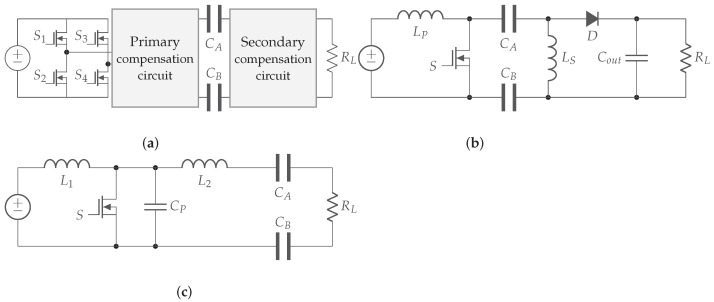
“An example of a radiative WPT system topology is depicted in Figure 1 [1].”
InfluentialJang, G., Jeon, K.-H., Oh, S., & Park, J. (2025) · ACS Applied Electronic Materials · doi:10.1021/acsaelm.5c02079 · Cited by 1
Fuada, S., Särestöniemi, M., & Katz, M. D. (2026) · Lecture notes of the Institute for Computer Sciences, Social Informatics and Telecommunications Engineering · doi:10.1007/978-3-032-16102-4_37 · Cited by 1
High-Efficiency Laser Wireless Power Transfer System With Automatic Tracking for Smart Grids
Huang, H., Zhang, P., Li, A., Jiachang, Z., Zhang, C., Wang, L., Liu, Y., Chen, H., Meng, F., Shi, J., et al. (2026) · IEEE Transactions on Power Electronics · doi:10.1109/tpel.2026.3696300 · Cited by 1
Singh, T. N., Athikho, H., & Maisnam, M. (2026) · Ceramics International · doi:10.1016/j.ceramint.2026.05.454 · Cited by 1
Zhai, Y., Zhang, H., & Mishra, D. (2026) · Energies · doi:10.3390/en19122871 · Cited by 1
Shielded Capacitive Power Transmission (S-CPT) System Using Cast Iron
Tateishi, E., Chen, H., Kojo, N., Yuta, I. D. E., Kai, N., Hashimoto, T., Uchio, K., Yamaguchi, T., Kanaya, H., & Hattori, R. (2025) · Energies · doi:10.3390/en18195288 · Cited by 2
Bunyamin, W. M. H. W., & Baharom, R. (2026) · International Journal of Applied Power Engineering (IJAPE) · doi:10.11591/ijape.v15.i1.pp361-372 · Cited by 1
Ardeshirpour, Y., Guag, J. W., Silberberg, J. L., & Seidman, S. J. (2026) · IEEE Electromagnetic Compatibility Magazine · doi:10.1109/memc.2026.11435322 · Cited by 1
Bae, H.-G., & Park, S.-W. (2026) · Applied Sciences · doi:10.3390/app16083688 · Cited by 1
Aku, D. E., Araga, I. A., Danjuma, I. M., & Airoboman, A. E. (2026) · Vokasi UNESA Bulletin of Engineering, Technology and Applied Science · doi:10.26740/vubeta.v3i1.44795 · Cited by 1
“These benefits have made it a key area of interest in energy transfer research [1] – [6].”
Toward a fully wireless endovascular neural interface: Evaluating power transfer efficacy
Tai, Y.-D., Villalobos, J., Wickramasinghe, N., Widdicombe, B., Unnithan, R. R., Grayden, D. B., & John, S. E. (2026) · PLoS ONE · doi:10.1371/journal.pone.0351138 · Cited by 2
Asl, E. S., & Samienezhad, S. (2026) · IET Circuits Devices & Systems · doi:10.1049/cds2/9964230 · Cited by 1
Wireless Capacitive Energy Transfer System for Mining Applications—Preliminary Results
Skóra, M., Hylla, P., Stankiewicz, K., Polnik, B., Kasprzak, M., Kaczmarczyk, Z., Kierepka, K., & Przybyła, K. (2023) · Energies · doi:10.3390/en16176120 · Cited by 1
Bertozzi, M., Catania, A., Bandini, G., Strangio, S., & Iannaccone, G. (2023) · Electronics · doi:10.3390/electronics12224619 · Cited by 1
“It is quite straightforward to obtain an expression of the overall link efficiency that emphasizes its dependency on Z MN [5].”
BackgroundHe, X., Zhang, Z., Zhou, H., Xu, M., Niu, R., & Jing, L. (2024) · Electronics · doi:10.3390/electronics13081411 · Cited by 1
Callebaut, G., Mulders, J. V., Cox, B., der Perre, L. V., Strycker, L. D., & Rottenberg, F. (2024) · IEEE International Workshop on Signal Processing Advances in Wireless Communications (SPAWC) · doi:10.1109/spawc60668.2024.10693966 · Cited by 1
Self-citationDahal, Y. P., Gu, B., Ghimire, R. R., Su, Z., & Fu, Y. (2024) · Journal of Radiology and Clinical Imaging · doi:10.26502/jrci.2809104 · Cited by 1
Hosseini, S. M., Maghami, M. H., Amiri, P., & Sawan, M. (2023) · Electronics · doi:10.3390/electronics12143136 · Cited by 1
Analysis on the Effect of DC Current Changes on the Magnetic Field of Wireless Power Transfer
Irwanto, M., Ali, M. B., Nugraha, Y. T., Ismail, B., Nisja, I., & Leow, W. Z. (2023) · IEEE Control and System Graduate Research Colloquium (ICSGRC) · doi:10.1109/icsgrc57744.2023.10215406
Multichannel current-mode stimulator with channel-specific regulated power supply
Varkevisser, F., Costa, T. L., & Serdijn, W. A. (2023) · IEEE Biomedical Circuits and Systems Conference (BioCAS) · doi:10.1109/biocas58349.2023.10388577 · Cited by 1
Metadata
- Authors
- Van Mulders, J., Delabie, D., Lecluyse, C., Buyle, C., Callebaut, G., Van der Perre, L., & De Strycker, L.
- Affiliations
- ESAT-DRAMCO, Ghent Technology Campus, KU Leuven, 9000 Ghent, Belgium
- KU Leuven (BE)
- ORCID
- Venue
- Sensors
- Publisher
- MDPI AG
- Published
- 2022-07-26
- Volume
- 22
- Issue
- 15
- Pages
- 5573
- ISSN
- 1424-8220 (ISSN-L)
- PMC
- PMC9371050
- OpenAlex
- W4288069083
- Cited by
- 141
- References
- 141
- Citations by year
- 2026: 31 · 2025: 33 · 2024: 48 · 2023: 28 · 2022: 1
- FWCI
- 1.79
- Type
- journal article
- Language
- en
- Open access
- gold
- doi.org
- Licence
- Locations
- Sensors (publishedVersion, cc-by)
- PubMed Central (publishedVersion, cc-by)
- PubMed (publishedVersion)
- Lirias (KU Leuven) (submittedVersion, cc-by)
- DOAJ (DOAJ: Directory of Open Access Journals) (submittedVersion, cc-by-sa)
- Funders
- European Union’s Horizon 2020 research and innovation programme (101013425, G0D3819N)
- Flemish Science Council FWO (101013425, G0D3819N)
- Topics
- Physical Sciences › Engineering › Electrical and Electronic Engineering › Wireless Power Transfer Systems
- Physical Sciences › Engineering › Electrical and Electronic Engineering › Advanced DC-DC Converters
- Physical Sciences › Engineering › Mechanical Engineering › Innovative Energy Harvesting Technologies
- Keywords
- wireless power transfer, electromagnetic induction, electromagnetic resonance, acoustic energy transfer, wireless charging, beamforming, safety regulations, transfer efficiency
- MeSH terms
- Electromagnetic Phenomena, Wireless Technology
About these checks
Registry, retraction, Cites and statistics results are computed, not judged, with one exception: a printed reference that no index lists is read once by a model before it counts as a citation error. Claims are extracted by a model and kept only when their quote appears verbatim in the text; each cited source is then checked, with a model’s help, for whether it says what the claim relies on. Those verdicts can be wrong — read the claim’s quote and the cited source before relying on one.
Statistics and arithmetic are recomputed, not judged.
Confidence bands are shown only for fields calibrated on our annotated test set. None is calibrated yet, so no band is shown.
What counts as a claim ›How we measure confidence ›How we check this ›
Are you an author, or do you see a problem with this page? Request a review
Data sources
Bibliographic data: Semantic Scholar, OpenAlex, Crossref.
Contains information from the Semantic Scholar Academic Graph Datasets, made available under the ODC Attribution License (ODC-BY 1.0).
Semantic Scholar’s data is described in: Kinney, R., et al. (2023). The Semantic Scholar Open Data Platform. arXiv:2301.10140.
