

Wireless Power Transfer: Systems, Circuits, Standards, and Use Cases
Open accessThe DOI matches its Crossref record; 144 of the 145 references it cites were found in a registry or an index, and 1 are not checked yet.
Abstract
Wireless power transfer provides a most convenient solution to charge devices remotely and without contacts. R&D has advanced the capabilities, variety, and maturity of solutions greatly in recent years. This survey provides a comprehensive overview of the state of the art on different technological concepts, including electromagnetic coupled and uncoupled systems and acoustic technologies. Solutions to transfer mW to MW of power, over distances ranging from millimeters to kilometers, and exploiting wave concepts from kHz to THz, are covered. It is an attractive charging option for many existing applications and moreover opens new opportunities. Various technologies are proposed to provide wireless power to these devices. The main challenges reside in the efficiency and range of the transfer. We highlight innovation in beamforming and UV-assisted approaches. Of particular interest for designers is the discussion of implementation and operational aspects, standards, and safety relating to regulations. A high-level catalog of potential applications maps these to adequate technological options for wireless power transfer.
Overview
The claims and statistics of this paper haven’t been checked yet.
Free: it reads the open-access text and checks the first 5 claims that cite a source we can check. Create a free account to check every claim.
Integrity signals
Registry
Cites
Statistics
Figures








Verification
Claims the paper makes
The claims and statistics of this paper haven’t been checked yet.
Free: it reads the open-access text and checks the first 5 claims that cite a source we can check. Create a free account to check every claim.
Claims other papers make about this one
Each is checked against this paper’s own text: does it say what the citing paper says it does?
The source backs part of the claim, not all of it — or backs it for a different population, condition or comparison.
In the citing paper
“Moreover, NFC’s capability to support two-way data communication between an external coil or loop antenna and a second implanted coil, while penetrating the tissue barrier, further sets it apart.”
From Comparative analysis of energy transfer mechanisms for neural implants (2024) · cites this paper as Van Mulders et al., 2022
Experimental — accuracy not yet measuredThe source backs part of the claim, not all of it — or backs it for a different population, condition or comparison.
In the citing paper
“This dual functionality for both power transfer and data exchange at close proximity makes NFC a versatile choice for neural implant systems, serving specific purposes that broader inductive coupling technologies might not fulfill (Stoecklin et al., 2020; Lathiya and Wang, 2021; Van Mulders et al., 2022).”
From Comparative analysis of energy transfer mechanisms for neural implants (2024) · cites this paper as Van Mulders et al., 2022
Experimental — accuracy not yet measuredThe check wasn’t confident either way, so it gives no verdict — never disputed.
In the citing paper
“This specialized design results in NFC devices generating weaker electromagnetic fields compared to broader RF technologies, whose radiation levels vary based on power and application (Stoecklin et al., 2020; Lathiya and Wang, 2021; Van Mulders et al., 2022).”
From Comparative analysis of energy transfer mechanisms for neural implants (2024) · cites this paper as Van Mulders et al., 2022
Experimental — accuracy not yet measured
Self-check
Percentages, sums and reported differences re-computed from the paper’s own numbers.
The self-check needs the paper’s full text.
Citations
Cites
Wireless Power Transfer via Strongly Coupled Magnetic Resonances
Kurs, A., Karalis, A., Moffatt, R., Joannopoulos, J. D., Fisher, P., & Soljačić, M. (2007) · Science · doi:10.1126/science.1143254 · Cited by 5,576 · cited 1×
“[99] use self-resonant coils operating at 9.”
Wireless Networks With RF Energy Harvesting: A Contemporary Survey
Lu, X., Wang, P., Niyato, D., Kim, D. I., & Han, Z. (2015) · IEEE Communications Surveys & Tutorials · doi:10.1109/comst.2014.2368999 · Cited by 2,603 · cited 1×
“Ambient RF sources refer to transmitters that are not intentionally made for energy transfer, such as TV towers, Wi-Fi, and cellular communication systems [39].”
BackgroundGuidelines for Limiting Exposure to Electromagnetic Fields (100 kHz to 300 GHz)
(2020) · Health Physics · doi:10.1097/hp.0000000000001210 · Cited by 2,081
Power amplifiers and transmitters for RF and microwave
Raab, F. H., Asbeck, P., Cripps, S., Kenington, P. B., Popovic, Z. B., Pothecary, N., Sevic, J. F., & Sokal, N. O. (2002) · IEEE Transactions on Microwave Theory and Techniques · doi:10.1109/22.989965 · Cited by 1,213 · cited 1×
“Alternatively, class-C, class-D, and class-E amplifiers can provide a more efficient solution [4].”
BackgroundDas, H. S., Rahman, M. M., Li, S., & Tan, C. W. (2020) · Renewable and Sustainable Energy Reviews · doi:10.1016/j.rser.2019.109618 · Cited by 1,140
IEEE 802.15.7 visible light communication: modulation schemes and dimming support
Rajagopal, S., Roberts, R., & Lim, S.-K. (2012) · IEEE Communications Magazine · doi:10.1109/mcom.2012.6163585 · Cited by 1,058
Wireless Charging Technologies: Fundamentals, Standards, and Network Applications
Lu, X., Wang, P., Niyato, D., Kim, D. I., & Han, Z. (2016) · IEEE Communications Surveys & Tutorials · doi:10.1109/comst.2015.2499783 · Cited by 968 · cited 1×
“This results in a lower coupling quality compared to the parallel structure [19,21,22].”
ResultAmbient RF Energy Harvesting in Urban and Semi-Urban Environments
Pinuela, M., Mitcheson, P. D., & Lucyszyn, S. (2013) · IEEE Transactions on Microwave Theory and Techniques · doi:10.1109/tmtt.2013.2262687 · Cited by 926
Simultaneous Wireless Information and Power Transfer (SWIPT): Recent Advances and Future Challenges
Ponnimbaduge Perera, T. D., Jayakody, D. N. K., Sharma, S. K., Chatzinotas, S., & Li, J. (2018) · IEEE Communications Surveys & Tutorials · doi:10.1109/comst.2017.2783901 · Cited by 920 · cited 1×
“, [43,44], and in this paper consider wireless energy transfer as a desired standalone feature.”
BackgroundNew equivalent circuits for elementary piezoelectric transducers
Krimholtz, R., Leedom, D. A., & Matthaei, G. L. (1970) · Electronics Letters · doi:10.1049/el:19700280 · Cited by 810
Dai, J., & Ludois, D. C. (2015) · IEEE Transactions on Power Electronics · doi:10.1109/tpel.2015.2415253 · Cited by 638 · cited 2×
“CPT is a technology that can transfer energy over a few millimeters and by using the right compensation circuits up to a dozen of centimeters [15,16,18,19,100].”
BackgroundWireless Power Transfer Strategies for Implantable Bioelectronics
Agarwal, K., Jegadeesan, R., Guo, Y.-X., & Thakor, N. V. (2017) · IEEE Reviews in Biomedical Engineering · doi:10.1109/rbme.2017.2683520 · Cited by 540 · cited 3×
“A brief overview is provided below, based on the work of [1].”
BackgroundA Dual-Band Rectenna Using Broadband Yagi Antenna Array for Ambient RF Power Harvesting
Sun, H., Guo, Y.-X., He, M., & Zhong, Z. (2013) · IEEE Antennas and Wireless Propagation Letters · doi:10.1109/lawp.2013.2272873 · Cited by 409
Development of Implantable Medical Devices: From an Engineering Perspective
Joung, Y.-H. (2013) · International Neurourology Journal · doi:10.5213/inj.2013.17.3.98 · Cited by 367 · cited 1×
“Implantable medical devices (IMDs) are placed either partly or totally into the human body and assist in the monitoring of biological parameters, drug delivery, or functional improvement of certain organs [67,68].”
BackgroundMai, R., Liu, Y., Li, Y., Yue, P., Cao, G., & He, Z. (2018) · IEEE Transactions on Power Electronics · doi:10.1109/tpel.2017.2665040 · Cited by 360 · cited 4×
“Different types of metal-oxide-semiconductor field-effect transistors (MOSFETs) are found in WPT systems.”
BackgroundInfluentialA Study on Magnetic Field Repeater in Wireless Power Transfer
Ahn, D., & Hong, S. (2013) · IEEE Transactions on Industrial Electronics · doi:10.1109/tie.2012.2188254 · Cited by 351 · cited 2×
“A coupling coefficient smaller, equal or greater than 1/ √ QTQR is called undercoupled, critically coupled, or overcoupled, respectively [10].”
BackgroundSchuylenbergh, K. V., & Puers, R. (2009) · Springer eBooks · doi:10.1007/978-90-481-2412-1 · Cited by 348
Zhang, H., Lu, F., Hofmann, H., Liu, W., & Mi, C. (2016) · IEEE Transactions on Power Electronics · doi:10.1109/tpel.2016.2520963 · Cited by 338
A Review of Acoustic Impedance Matching Techniques for Piezoelectric Sensors and Transducers
Rathod, V. T. (2020) · Sensors · doi:10.3390/s20144051 · Cited by 328 · cited 1×
“In conclusion, single or multiple matching layers should be used to reduce mismatch losses [71].”
BackgroundLED lighting flicker and potential health concerns: IEEE standard PAR1789 update
Wilkins, A., Veitch, J., & Lehman, B. (2010) · 2010 IEEE Energy Conversion Congress and Exposition · doi:10.1109/ecce.2010.5618050 · Cited by 327 · cited 1×
“Since LPT techniques are more efficient when using a pulse signal, flicker can arise which can also cause serious health problems when the frequency is too slow (headache, tiredness, decreased vision, an increased heart rate for people with anxiety disorder, an enlarged saccade, or even seizures) [147,148].”
BackgroundFeedback Analysis and Design of RF Power Links for Low-Power Bionic Systems
Baker, M. W., & Sarpeshkar, R. (2007) · IEEE Transactions on Biomedical Circuits and Systems · doi:10.1109/tbcas.2007.893180 · Cited by 317
A Novel Phase-Shift Control of Semibridgeless Active Rectifier for Wireless Power Transfer
Colak, K., Asa, E., Bojarski, M., Czarkowski, D., & Onar, O. C. (2015) · IEEE Transactions on Power Electronics · doi:10.1109/tpel.2015.2430832 · Cited by 313 · cited 12×
“Alternatively, active rectifiers achieve higher efficiencies as they are built with FETs.”
BackgroundInfluentialWireless Laser Power Transmission: A Review of Recent Progress
Jin, K., & Zhou, W. (2019) · IEEE Transactions on Power Electronics · doi:10.1109/tpel.2018.2853156 · Cited by 308 · cited 10×
“It is important for efficiency to have a good match in terms of used wavelength and beam intensity between the laser and PV element [49].”
BackgroundMethodInfluentialA Review on the Recent Development of Capacitive Wireless Power Transfer Technology
Lu, F., Zhang, H., & Mi, C. (2017) · Energies · doi:10.3390/en10111752 · Cited by 282 · cited 2×
“CPT is a technology that can transfer energy over a few millimeters and by using the right compensation circuits up to a dozen of centimeters [15,16,18,19,100].”
BackgroundMassa, A., Oliveri, G., Viani, F., & Rocca, P. (2013) · Proceedings of the IEEE · doi:10.1109/jproc.2013.2245491 · Cited by 254 · cited 1×
“In many situations, both the transmitter and receiver do not know their relative position to each other ahead of time [86,91].”
BackgroundWireless Power Transfer for Light-Duty Plug-in/Electric Vehicles and Alignment Methodology
Hybrid - EV Committee (2020) · doi:10.4271/j2954_202010 · Cited by 248
Magnetic MIMO: how to charge your phone in your pocket
Jadidian, J., & Katabi, D. (2014) · Proceedings of the 20th annual international conference on Mobile computing and networking · doi:10.1145/2639108.2639130 · Cited by 241
Acoustic Energy Transfer: A Review
Roes, M. G. L., Duarte, J. L., Hendrix, M. A. M., & Lomonova, E. A. (2013) · IEEE Transactions on Industrial Electronics · doi:10.1109/tie.2012.2202362 · Cited by 209 · cited 3×
“Consequently, the dimensions of the transmitter and receiver can be a factor cEM/cair smaller than their EM-based counterparts for a given directionality [66].”
BackgroundInfluentialEfficiency in RF energy harvesting systems: A comprehensive review
Cansiz, M., Altinel, D., & Kurt, G. K. (2019) · Energy · doi:10.1016/j.energy.2019.02.100 · Cited by 209 · cited 1×
“The following formulas can be used [38]:”
A review of acoustic power transfer for bio-medical implants
Basaeri, H., Christensen, D. B., & Roundy, S. (2016) · Smart Materials and Structures · doi:10.1088/0964-1726/25/12/123001 · Cited by 202
A Two-Plate Capacitive Wireless Power Transfer System for Electric Vehicle Charging Applications
Lu, F., Zhang, H., & Mi, C. (2018) · IEEE Transactions on Power Electronics · doi:10.1109/tpel.2017.2735365 · Cited by 202 · cited 1×
“In this way, CPT can be a replacement for the maintenance-intensive pantograph [20].”
BackgroundDistributed Laser Charging: A Wireless Power Transfer Approach
Zhang, Q., Fang, W., Liu, Q., Wu, J., Xia, P., & Yang, L. (2018) · IEEE Internet of Things Journal · doi:10.1109/jiot.2018.2851070 · Cited by 191 · cited 2×
“SWIPT via DLC can therefore be further explored, since there is a huge bandwidth available [64,65].”
BackgroundUltrasonic vs. Inductive Power Delivery for Miniature Biomedical Implants
Denisov, A., & Yeatman, E. (2010) · 2010 International Conference on Body Sensor Networks · doi:10.1109/bsn.2010.27 · Cited by 190
Zhang, H., Lu, F., Hofmann, H., Liu, W., & Mi, C. C. (2018) · IEEE Transactions on Power Electronics · doi:10.1109/tpel.2017.2662583 · Cited by 186 · cited 1×
“The authors of [23] showed through simulations that the electric field strength between the plates of a 2 kW system can reach 180 kV/m, which is considerably above the allowed 614 V/m in the IEEE standard.”
BackgroundAn Overview of Resonant Circuits for Wireless Power Transfer
Jiang, C., Chau, K. T., Liu, C., & Lee, C. H. T. (2017) · Energies · doi:10.3390/en10070894 · Cited by 186 · cited 1×
“The reason is the low complexity of implementation and parameter design, as well as its robustness [27].”
BackgroundCharging Unplugged: Will Distributed Laser Charging for Mobile Wireless Power Transfer Work?
Liu, Q., Wu, J., Xia, P., Zhao, S., Chen, W., Yang, Y., & Hanzo, L. (2016) · IEEE Vehicular Technology Magazine · doi:10.1109/mvt.2016.2594944 · Cited by 184 · cited 2×
“SWIPT via DLC can therefore be further explored, since there is a huge bandwidth available [64,65].”
BackgroundWireless Information and Power Transfer: Nonlinearity, Waveform Design, and Rate-Energy Tradeoff
Clerckx, B. (2018) · IEEE Transactions on Signal Processing · doi:10.1109/tsp.2017.2775593 · Cited by 183 · cited 1×
“Not only hardware but also applying an optimal signaling waveform, such as peak-to-average power ratio (PAPR) signals, has proven to impact rectifier design significantly [172].”
BackgroundTransmitting electric energy through a metal wall by acoustic waves using piezoelectric transducers
Hu, Y., Zhang, X., Yang, J., & Jiang, Q. (2003) · IEEE Transactions on Ultrasonics, Ferroelectrics and Frequency Control · doi:10.1109/tuffc.2003.1214497 · Cited by 171 · cited 1×
“First work in the derivation of an analytic model for a planar through-wall configuration APT was reported in [78].”
BackgroundBerman, S. M., GREENHOUSE, D. S., Bailey, I. L., Clear, R. D., & Raasch, T. W. (1991) · Optometry and Vision Science · doi:10.1002/j.1538-9235.1991.tb02788.x · Cited by 163
Multiband Ambient RF Energy Harvesting Circuit Design for Enabling Batteryless Sensors and IoT
Muncuk, U., Alemdar, K., Sarode, J. D., & Chowdhury, K. R. (2018) · IEEE Internet of Things Journal · doi:10.1109/jiot.2018.2813162 · Cited by 157
Distributed Wireless Power Transfer System for Internet of Things Devices
Choi, K. W., Aziz, A. A., Setiawan, D., Tran, N. M., Ginting, L., & Kim, D. I. (2018) · IEEE Internet of Things Journal · doi:10.1109/jiot.2018.2790578 · Cited by 149 · cited 1×
“(I) Single [85,163] and distributed antenna arrays [87,164,165] have been introduced to compensate for the high path loss, either by increasing the array gain, lowering the distance between the transmitter and receiver, or a combination of both [166].”
BackgroundSingle Active Switch Power Electronics for Kilowatt Scale Capacitive Power Transfer
Dai, J., & Ludois, D. C. (2014) · IEEE Journal of Emerging and Selected Topics in Power Electronics · doi:10.1109/jestpe.2014.2334621 · Cited by 145 · cited 1×
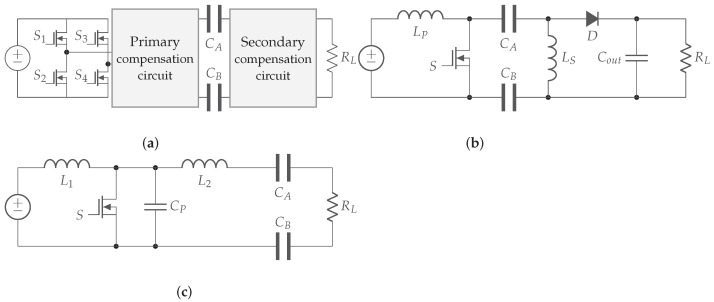
“Figure 15b shows such a modified SEPIC converter [29,30].”
BackgroundGuo, S., Duan, X., Xie, M., Aw, K. C., & Xue, Q. (2020) · Micromachines · doi:10.3390/mi11121076 · Cited by 141
Wireless Power Transfer in the Radiative Near Field
Gowda, V. R., Yurduseven, O., Lipworth, G., Župan, T., Reynolds, M. S., & Smith, D. R. (2016) · IEEE Antennas and Wireless Propagation Letters · doi:10.1109/lawp.2016.2542138 · Cited by 137
Broadband Millimeter-Wave Textile-Based Flexible Rectenna for Wearable Energy Harvesting
Wagih, M., Hilton, G., Weddell, A. S., & Beeby, S. (2020) · IEEE Transactions on Microwave Theory and Techniques · doi:10.1109/tmtt.2020.3018735 · Cited by 137 · cited 1×
“In addition, a shift towards higher frequencies [169] and broadband rectifiers [170,171] for multiband energy harvesting brings continuous change to the rectifier landscape.”
BackgroundMansour, M. M., & Kanaya, H. (2018) · IEEE Microwave and Wireless Components Letters · doi:10.1109/lmwc.2018.2808419 · Cited by 131 · cited 1×
“In addition, a shift towards higher frequencies [169] and broadband rectifiers [170,171] for multiband energy harvesting brings continuous change to the rectifier landscape.”
BackgroundThrough-Metal-Wall Power Delivery and Data Transmission for Enclosed Sensors: A Review
Yang, D., Hu, Z. F., Zhao, H., Hu, H., Sun, Y.-Z., & Hou, B. (2015) · Sensors · doi:10.3390/s151229870 · Cited by 118 · cited 1×
“Some power can be transferred through coupling systems, but the effectiveness strongly decreases for ferromagnetic or thick non-ferromagnetic metallic barriers due to strong Faraday shielding [75].”
BackgroundFar-Field RF Wireless Power Transfer with Blind Adaptive Beamforming for Internet of Things Devices
Yedavalli, P. S., Riihonen, T., Wang, X., & Rabaey, J. M. (2017) · IEEE Access · doi:10.1109/access.2017.2666299 · Cited by 114 · cited 1×
“(I) Single [85,163] and distributed antenna arrays [87,164,165] have been introduced to compensate for the high path loss, either by increasing the array gain, lowering the distance between the transmitter and receiver, or a combination of both [166].”
BackgroundWireless Power Transfer for Electric Vehicles: Foundations and Design Approach
Triviño, A., González‐González, J. M., & Aguado, J. A. (2019) · Power systems · doi:10.1007/978-3-030-26706-3 · Cited by 114
A Selective, Tracking, and Power Adaptive Far-Field Wireless Power Transfer System
Belo, D., Ribeiro, D. C., Pinho, P. G. L. F., & Carvalho, N. B. (2019) · IEEE Transactions on Microwave Theory and Techniques · doi:10.1109/tmtt.2019.2913653 · Cited by 105
MEMS based energy harvesting for the Internet of Things: a survey
Sun, H., Yin, M., Wei, W., Li, J., Wang, H., & Jin, X. (2018) · Microsystem Technologies · doi:10.1007/s00542-018-3763-z · Cited by 104 · cited 1×
“However, RF energy has the lowest power density when compared to other ambient energy harvesting technologies such as solar, thermal, and vibration energy [37].”
BackgroundLeighton, T. G. (2016) · Proceedings of the Royal Society A Mathematical Physical and Engineering Sciences · doi:10.1098/rspa.2015.0624 · Cited by 97
Omnidirectional Ultrasonic Powering for Millimeter-Scale Implantable Devices
Song, S. H., Kim, A., & Ziaie, B. (2015) · IEEE Transactions on Biomedical Engineering · doi:10.1109/tbme.2015.2444854 · Cited by 95 · cited 2×
“An electromechanical model presented in the context of millimeter implantable devices has been presented in [72].”
BackgroundMethodWireless Power Transfer Using Class E Inverter With Saturable DC-Feed Inductor
Aldhaher, S., Luk, P. C. K., Bati, A. F., & Whidborne, J. F. (2014) · IEEE Transactions on Industry Applications · doi:10.1109/tia.2014.2300200 · Cited by 93
A Review of the Current State of Technology of Capacitive Wireless Power Transfer
Lecluyse, C., Minnaert, B., & Kleemann, M. (2021) · Energies · doi:10.3390/en14185862 · Cited by 91 · cited 6×
“The voltage or current gain depends on the structure of the L-section, as shown in Figure 16c [15,34,36].”
BackgroundInfluentialSelf-citationComparative Study of CCPT Systems With Two Different Inductor Tuning Positions
Liu, C., Hu, A. P., Covic, G. A., & Nair, N.-K. C. (2011) · IEEE Transactions on Power Electronics · doi:10.1109/tpel.2011.2158322 · Cited by 88
Saffari, P., Basaligheh, A., & Moez, K. K. (2019) · IEEE Transactions on Circuits and Systems I Regular Papers · doi:10.1109/tcsi.2019.2931485 · Cited by 87 · cited 1×
“Therefore, a lot of research is focused on improving the efficiency of rectifiers over a wide input power range [168].”
BackgroundDynamic Focusing of Large Arrays for Wireless Power Transfer and Beyond
Hajimiri, A., Abiri, B., Bohn, F., Gal-Katziri, M., & Manohara, M. H. (2020) · IEEE Journal of Solid-State Circuits · doi:10.1109/jssc.2020.3036895 · Cited by 82 · cited 3×
“In many situations, both the transmitter and receiver do not know their relative position to each other ahead of time [86,91].”
BackgroundCharging Techniques for UAV-Assisted Data Collection: Is Laser Power Beaming the Answer?
Lahmeri, M.-A., Kishk, M. A., & Alouini, M. (2022) · IEEE Communications Magazine · doi:10.1109/mcom.001.2100871 · Cited by 81
Optimal laser wavelength for efficient laser power converter operation over temperature
Höhn, O., Walker, A. W., Bett, A. W., & Helmers, H. (2016) · Applied Physics Letters · doi:10.1063/1.4954014 · Cited by 80 · cited 1×
“This leads, in addition, to the higher efficiency of the PV element [48].”
BackgroundA Broadband High-Efficiency RF Rectifier for Ambient RF Energy Harvesting
Liu, W., Huang, K., Wang, T., Zhang, Z., & Hou, J. (2020) · IEEE Microwave and Wireless Components Letters · doi:10.1109/lmwc.2020.3028607 · Cited by 78 · cited 1×
“In addition, a shift towards higher frequencies [169] and broadband rectifiers [170,171] for multiband energy harvesting brings continuous change to the rectifier landscape.”
BackgroundShen, S., & Clerckx, B. (2020) · IEEE Transactions on Wireless Communications · doi:10.1109/twc.2020.3024064 · Cited by 75 · cited 1×
“In [92], an alternative approach is introduced that takes the advantage of an array setup, but greatly reduces complexity.”
BackgroundPhased Array Focusing for Acoustic Wireless Power Transfer
Tseng, V. F.-G., Bedair, S. S., & Lazarus, N. S. (2017) · IEEE Transactions on Ultrasonics Ferroelectrics and Frequency Control · doi:10.1109/tuffc.2017.2771283 · Cited by 71 · cited 2×
“However, it was only until recently that an ultrasound phased array system has been used to enhance the performance of through-air acoustic WPT [93].”
MethodEfficient electromechanical network model for wireless acoustic-electric feed-throughs
Sherrit, S., Bădescu, M., Bao, X. Q., Bar‐Cohen, Y., & Chang, Z. (2005) · Proceedings of SPIE, the International Society for Optical Engineering/Proceedings of SPIE · doi:10.1117/12.598300 · Cited by 62
He, T., Yang, S., Zhang, H., Zhao, C., Zhang, Y., Xu, P. F., & Muñoz-García, M. Á. (2014) · Chinese Physics Letters · doi:10.1088/0256-307x/31/10/104203 · Cited by 61 · cited 2×
“6% at a distance of 100 m was demonstrated [60] with a usable received power of 9.”
BackgroundHigh-power piezoelectric acoustic-electric power feedthru for metal walls
Bao, X. Q., Biederman, W., Sherrit, S., Bădescu, M., Bar‐Cohen, Y., Jones, C., Aldrich, J. B., & Chang, Z. (2008) · Proceedings of SPIE, the International Society for Optical Engineering/Proceedings of SPIE · doi:10.1117/12.776473 · Cited by 57 · cited 1×
“5 mm thick steel barrier and in [77], more than 1 kW was delivered at 84 % efficiency by means of a prestressed piezo actuator.”
MethodFeasibility assessment of next-generation drones powering by laser-based wireless power transfer
Mohammadnia, A., Ziapour, B. M., Ghaebi, H., & Khooban, M. H. (2021) · Optics & Laser Technology · doi:10.1016/j.optlastec.2021.107283 · Cited by 55 · cited 3×
“Since the optical power of a laser is often specified by the manufacturer, the laser efficiency can be obtained via (37) [50].”
BackgroundMethodInfluentialWireless power transmission to an electromechanical receiver using low-frequency magnetic fields
Challa, V. R., Mur-Miranda, J. O., & Arnold, D. P. (2012) · Smart Materials and Structures · doi:10.1088/0964-1726/21/11/115017 · Cited by 54 · cited 3×
“Electrodynamically coupled WPT system with electromechanical receiver [13].”
BackgroundDirectional Radiation Technique for Maximum Receiving Power in Microwave Power Transmission System
Hui, Q., Jin, K., & Zhu, X. (2019) · IEEE Transactions on Industrial Electronics · doi:10.1109/tie.2019.2941150 · Cited by 54
Bundle Charging: Wireless Charging Energy Minimization in Dense Wireless Sensor Networks
Wang, N., Wu, J., & Dai, H. (2019) · IEEE International Conference on Distributed Computing Systems (ICDCS) · doi:10.1109/icdcs.2019.00085 · Cited by 53 · cited 2×
“Devices can be installed in parallel with each other, resulting in power levels up to 48 kW [119].”
BackgroundPrinciples of semiconductor devices
SOLYMAR, L., Walsh, D., & Syms, R. R. A. (2018) · doi:10.1093/oso/9780198829942.003.0009 · Cited by 52
Recent demonstrations of Laser power beaming at DFRC and MSFC
Blackwell, T. (2005) · AIP conference proceedings · doi:10.1063/1.1925133 · Cited by 51 · cited 2×
“5 [57] Diode 60 1000 <10 <10 [58] Diode 300 808 GaAs 50 40 <14 [58] Diode 360 808 GaAs 50 90 <14 [59] Diode 25 793 GaAs 100 9.”
BackgroundA Cost-Effective Adaptive Rectifier for Low Power Loosely Coupled Wireless Power Transfer Systems
Ozalevli, E., Femia, N., Capua, G. D., Subramonian, R., Du, D., Sankman, J., & Markhi, M. E. (2017) · IEEE Transactions on Circuits and Systems I Regular Papers · doi:10.1109/tcsi.2017.2780169 · Cited by 50
Fan, X., Ding, H., Li, S., Sanzari, M., Zhang, Y., Trappe, W. K., Han, Z., & Howard, R. E. (2018) · Proceedings of the ACM on Interactive Mobile Wearable and Ubiquitous Technologies · doi:10.1145/3214268 · Cited by 49
Positional characteristics of capacitive power transfer as a resonance coupling system
Komaru, T., & Hidenori, A. (2013) · doi:10.1109/wpt.2013.6556922 · Cited by 47 · cited 1×
“This results in a lower coupling quality compared to the parallel structure [19,21,22].”
ResultA dynamic capacitive power transfer system with reduced power pulsation
Lu, F., Zhang, H., Hofmann, H. F., Mei, Y., & Mi, C. C. (2016) · IEEE PELS Workshop on Emerging Technologies: Wireless Power Transfer · doi:10.1109/wow.2016.7772067 · Cited by 47
Beamforming for Magnetic Induction Based Wireless Power Transfer Systems with Multiple Receivers
Kisseleff, S., Akyildiz, I. F., & Gerstacker, W. (2015) · Globecom · doi:10.1109/glocom.2015.7417006 · Cited by 47
Acoustic Power Transfer and Communication With a Wireless Sensor Embedded Within Metal
Tseng, V. F.-G., Bedair, S. S., & Lazarus, N. S. (2018) · IEEE Sensors Journal · doi:10.1109/jsen.2018.2839558 · Cited by 46 · cited 2×
“Sensors can also be encapsulated in metal walls for the benefit of structural health monitoring (SHM) [74] to monitor structural parameters such as strain, acceleration, and temperature in situ through non-destructive evaluation (NDE).”
BackgroundRadioWeaves for efficient connectivity: analysis and impact of constraints in actual deployments
der Perre, L. V., Larsson, E. G., Tufvesson, F., Strycker, L. D., Björnson, E., & Edfors, O. (2019) · Asilomar Conference on Signals, Systems and Computers (ACSSC) · doi:10.1109/ieeeconf44664.2019.9048825 · Cited by 46 · cited 1×
“(I) Single [85,163] and distributed antenna arrays [87,164,165] have been introduced to compensate for the high path loss, either by increasing the array gain, lowering the distance between the transmitter and receiver, or a combination of both [166].”
BackgroundWireless Charging of Electric Vehicles
Kesler, M. (2018) · IEEE Wireless Power Transfer Conference · doi:10.1109/wpt.2018.8639303 · Cited by 45 · cited 5×
“A first draft specification is available for members of the Wireless Power Consortium [109].”
BackgroundInfluentialPenetration-free system for transmission of data and power through solid metal barriers
Lawry, T. J., Saulnier, G. J., Ashdown, J., Wilt, K. R., Scarton, H. A., Pascarelle, S., & Pinezich, J. D. (2011) · IEEE Military Communications Conference (MILCOM) · doi:10.1109/milcom.2011.6127699 · Cited by 41 · cited 1×
“For example, in [76], 50 W AC power is transferred at an efficiency of 51 % through a 63.”
BackgroundWireless Power Transfer to Millimeter-Sized Nodes Using Airborne Ultrasound
Rekhi, A., Khuri-Yakub, B. T., & Arbabian, A. (2017) · IEEE Transactions on Ultrasonics Ferroelectrics and Frequency Control · doi:10.1109/tuffc.2017.2737620 · Cited by 41 · cited 2×
“This causes an energy shift towards the harmonics, where a higher absorption leads to increased dissipation losses [84].”
BackgroundWan, K.-C., Xue, Q., Liu, X., & Hui, S. Y. R. (2013) · IEEE Transactions on Industrial Electronics · doi:10.1109/tie.2013.2263771 · Cited by 40 · cited 1×
“[98] have shown that RF repeaters can be efficiently used to extend the range.”
BackgroundAziz, A. A., Ginting, L., Setiawan, D., Park, J. H., Tran, N. M., Yeon, G. Y., Kim, D. I., & Choi, K. W. (2019) · IEEE Internet of Things Journal · doi:10.1109/jiot.2019.2928313 · Cited by 40 · cited 1×
“(I) Single [85,163] and distributed antenna arrays [87,164,165] have been introduced to compensate for the high path loss, either by increasing the array gain, lowering the distance between the transmitter and receiver, or a combination of both [166].”
BackgroundHigh power capacitive power transfer for electric vehicle charging applications
Mi, C. C. (2015) · International Conference on Power Electronics Systems and Applications · doi:10.1109/pesa.2015.7398937 · Cited by 36
Public exposure to ultrasound and very high-frequency sound in air
Fletcher, M. D., Jones, S. L., White, P. R., Dolder, C. N., Lineton, B., & Leighton, T. G. (2018) · The Journal of the Acoustical Society of America · doi:10.1121/1.5063817 · Cited by 36
Resonantly coupled antennas for passive sensors
Rindorf, L., Lading, L., & Breinbjerg, O. (2008) · Italian National Conference on Sensors · doi:10.1109/icsens.2008.4716759 · Cited by 34 · cited 2×
“The transfer coefficient Π and efficiency η as function of kmrc(QTQR) [11].”
BackgroundClass D Audio Amplifiers: What, Why, and How
Gaalaas, E. (2006) · Cited by 34
The use of dielectric coatings in capacitive power transfer systems
Ge, B., Ludois, D. C., & Perez, R. (2014) · IEEE Energy Conversion Congress and Exposition (ECCE) · doi:10.1109/ecce.2014.6953695 · Cited by 32 · cited 1×
“Therefore, an insulating coating will be applied to the plates [15,133].”
BackgroundYao, Y., Zhu, Z., Huang, S., Yue, X., Pan, C., & Li, X. (2019) · IEEE Access · doi:10.1109/access.2019.2961977 · Cited by 32 · cited 1×
“The RF link can energize the sensor nodes and the UV can receive its data via backscattering [105].”
BackgroundSimultaneous Lightwave Information and Power Transfer in Underwater Visible Light Communications
Ghasvarianjahromi, S., Karbalayghareh, M., Diamantoulakis, P. D., Karagiannidis, G. K., & Uysal, M. (2019) · IEEE International Symposium on Personal, Indoor and Mobile Radio Communications (PIMRC) · doi:10.1109/pimrc.2019.8904146 · Cited by 29 · cited 1×
“Another advantage of an HILPB system is that it is suitable for power delivery to electronic devices in EMI, RF, high voltage and magnetic field areas [49] or for devices located underwater [55].”
MethodExperimental demonstration of underwater optical wireless power transfer using a laser diode
Kim, S., Choi, J. C. J., & Jung, H. J. H. (2018) · Chinese Optics Letters · doi:10.3788/col201816.080101 · Cited by 28
Techtile – Open 6G R&D Testbed for Communication, Positioning, Sensing, WPT and Federated Learning
Callebaut, G., Mulders, J. V., Ottoy, G., Delabie, D., Cox, B., Stevens, N., & der Perre, L. V. (2022) · Joint European Conference on Networks and Communications & 6G Summit (EuCNC/6G Summit) · doi:10.1109/eucnc/6gsummit54941.2022.9815696 · Cited by 28 · cited 1×
“(I) Single [85,163] and distributed antenna arrays [87,164,165] have been introduced to compensate for the high path loss, either by increasing the array gain, lowering the distance between the transmitter and receiver, or a combination of both [166].”
BackgroundSelf-citationPowersphere: A Photovoltaic Cavity Converter for Wireless Power Transmission using High Power Lasers
Ortabasi, U., & Friedman, H. (2006) · IEEE World Conference on Photovoltaic Energy Conference · doi:10.1109/wcpec.2006.279380 · Cited by 27 · cited 4×
“With corrections, efficiencies of 40–60% are possible, according to [61].”
BackgroundMethodInfluentialMagnetic Resonant Beamforming for Secured Wireless Power Transfer
Sun, H., Lin, H. F., Zhu, F., & Gao, F. (2017) · IEEE Signal Processing Letters · doi:10.1109/lsp.2017.2703105 · Cited by 27
Selvan, S., Zaman, M., Gobbi, R., & Wong, H. Y. (2018) · Journal of Electromagnetic Waves and Applications · doi:10.1080/09205071.2018.1497548 · Cited by 27 · cited 1×
“(II) Since the radiated power is ultimately bound by regulation, a lot of effort is invested in increasing the efficiency of the receiver rectifier [167].”
BackgroundFrequency Synchronization and Control for a 6.78 MHz WPT Active Rectifier
Cochran, S., & Costinett, D. J. (2018) · IEEE ... Workshop on Control and Modeling for Power Electronics · doi:10.1109/compel.2018.8459998 · Cited by 27 · cited 1×
“Active rectifiers are based on MOSFETs [7] for low frequency switching or GaN FETs for high frequency switching [8].”
BackgroundThermal analysis for temperature robust wireless power transfer systems
Hwang, K., Chung, S., Yoon, U., Lee, M., & Ahn, S. (2013) · IEEE Wireless Power Transfer Conference · doi:10.1109/wpt.2013.6556879 · Cited by 26 · cited 1×
“These losses will rise system temperature, which has an effect on the efficiency [151].”
BackgroundAnalysis and design of coupling capacitors for contactless capacitive power transfer systems
Rozario, D., Azeez, N. A., & Williamson, S. S. (2016) · IEEE Transportation Electrification Conference and Expo · doi:10.1109/itec.2016.7520244 · Cited by 26 · cited 3×
“The voltage or current gain depends on the structure of the L-section, as shown in Figure 16c [15,34,36].”
BackgroundLaser Energy Transmission for a Wireless Energy Supply to Robots
Kawashima, N., Takeda, K., Matsuoka, H., Fujii, Y., & Yamamoto, M. (2005) · International Symposium on Automation and Robotics in Construction (ISARC) · doi:10.22260/isarc2005/0068 · Cited by 26
Frequency bands for ultrasound, suitable for the consideration of its health effects
Duck, F. A., & Leighton, T. G. (2018) · The Journal of the Acoustical Society of America · doi:10.1121/1.5063578 · Cited by 24 · cited 3×
“The thermal effects are caused by the absorption of acoustic waves in the tissue and are the dominant factor of lethal implications in the MHz frequency range [138].”
BackgroundInfluentialNguyễn, Đ. H., Matsushima, T., Qin, C., & Adachi, C. (2021) · Frontiers in Energy Research · doi:10.3389/fenrg.2021.679125 · Cited by 24
Equivalent electromechanical representation of trapped energy transducers
Mason, W. P. (1969) · Proceedings of the IEEE · doi:10.1109/proc.1969.7387 · Cited by 23 · cited 2×
“Two commonly used equivalent circuit models are the Mason [80] and KLM model [81].”
MethodKim, K., Kim, H., & Choi, J. (2017) · IEEE Wireless Power Transfer Conference · doi:10.1109/wpt.2017.7953869 · Cited by 23
A Three-Phase Dynamic Wireless Charging System with Constant Output Voltage
Mai, R., Li, H., Liu, Y., Zhou, K., Fu, L., & He, Z. Y. (2017) · Energies · doi:10.3390/en11010045 · Cited by 21 · cited 1×
“Technologies and developments for charging EVs and robots are another important area of research, such as dynamic wireless power transfer (DWPT) and multiple phase WPT [158].”
BackgroundAcoustic wireless power transfer with receiver array for enhanced performance
Tseng, V. F.-G., Bedair, S. S., & Lazarus, N. S. (2017) · IEEE Wireless Power Transfer Conference · doi:10.1109/wpt.2017.7953842 · Cited by 19 · cited 1×
“Similar to the aforementioned WPT technologies, transducer arrays have been introduced in acoustic WPT systems to improve the overall power conversion efficiency [93,173].”
Analytical optimization of piezoelectric acoustic power transfer systems
Freychet, O., Frassati, F., Boisseau, S., Garraud, N., Gasnier, P., & Despesse, G. (2020) · Engineering Research Express · doi:10.1088/2631-8695/abcb4a · Cited by 19
Performance Investigation of Capacitive Wireless Charging Topologies for Electric Vehicles
Kodeeswaran, S., & Gayathri, M. N. (2021) · International Conference on Innovative Trends in Information Technology (ICITIIT) · doi:10.1109/icitiit51526.2021.9399608 · Cited by 19 · cited 2×
“Another disadvantage of PWM-based converters is that soft-switching is not possible in every load condition, which increases the electromagnetic interference electromagnetic interference (EMI) and decreases the efficiency [29].”
Background13.56 MHz Scalable Shielded-Capacitive Power Transfer for Electric Vehicle Wireless Charging
Muharam, A., Ahmad, S., Hattori, R., & Hapid, A. (2020) · IEEE PELS Workshop on Emerging Technologies: Wireless Power Transfer · doi:10.1109/wow47795.2020.9291299 · Cited by 18
Guo, S., Duan, X., Xie, M., et al. (2020) · Preprints.org · doi:10.20944/preprints202011.0262.v1 · Cited by 18
Multi-MHz In-Motion Capacitive Wireless Power Transfer System for Mobile Robots
Makhdoom, R., Maji, S., Sinha, S., Etta, D., & Afridi, K. K. (2022) · 2022 Wireless Power Week (WPW) · doi:10.1109/wpw54272.2022.9853940 · Cited by 18
One-dimensional pressure transfer models for acoustic–electric transmission channels
Wilt, K. R., Lawry, T. J., Scarton, H. A., & Saulnier, G. J. (2015) · Journal of Sound and Vibration · doi:10.1016/j.jsv.2015.04.031 · Cited by 16
Comparison of Class E and Half Bridge Inverters for Use in Electronic Ballasts
Ekbote, A., & Zinger, D. S. (2006) · Conference record · doi:10.1109/ias.2006.256847 · Cited by 16 · cited 1×
“Furthermore, high input voltages can be applied without the appearance of major voltage stress across the switching components compared to other topologies [28].”
BackgroundScaling-Factor and Design Guidelines for Shielded-Capacitive Power Transfer
Muharam, A., Ahmad, S., & Hattori, R. (2020) · Energies · doi:10.3390/en13164240 · Cited by 16
An LC compensated electric field repeater for long distance capacitive power transfer
Zhang, H., Lu, F., Hofmann, H. F., & Mi, C. C. (2016) · IEEE Energy Conversion Congress and Exposition (ECCE) · doi:10.1109/ecce.2016.7854858 · Cited by 15 · cited 4×
“CPT is a technology that can transfer energy over a few millimeters and by using the right compensation circuits up to a dozen of centimeters [15,16,18,19,100].”
BackgroundMethodInfluentialExploring the potential of acoustic energy transfer
Roes, M. G. L. (2015) · TU/e Research Portal · Cited by 15
Laser Energy Transmission to a Small-Unmanned Aerial Vehicle
TAKEDA, K., Kawashima, N., & Yabe, K. (2008) · SPACE TECHNOLOGY JAPAN THE JAPAN SOCIETY FOR AERONAUTICAL AND SPACE SCIENCES · doi:10.2322/stj.7.27 · Cited by 14 · cited 2×
“5 [57] Diode 60 1000 <10 <10 [58] Diode 300 808 GaAs 50 40 <14 [58] Diode 360 808 GaAs 50 90 <14 [59] Diode 25 793 GaAs 100 9.”
BackgroundExperimental Evaluation of Coupling Coils for Underwater Wireless Power Transfer
Duarte, C., Goncalves, F., Silva, M., Correia, V., & Pessoa, L. M. (2019) · IEEE Wireless Power Transfer Conference · doi:10.1109/wptc45513.2019.9055518 · Cited by 14 · cited 1×
“For example, the widely used IPT technology has a reduced efficiency in salt water compared to air [102].”
MethodKuroda, S., & Imura, T. (2020) · IEEE PELS Workshop on Emerging Technologies: Wireless Power Transfer · doi:10.1109/wow47795.2020.9291254 · Cited by 14 · cited 2×
“The voltage or current gain depends on the structure of the L-section, as shown in Figure 16c [15,34,36].”
BackgroundConstant capacitive wireless power transfer at variable coupling
Minnaert, B., Mastri, F., Mongiardo, M., Costanzo, A., & Stevens, N. (2018) · IEEE MTT-S International Wireless Symposium (IWS) · doi:10.1109/ieee-iws.2018.8400878 · Cited by 13 · cited 2×
“A solution to problems such as variable loads or changing distances is proposed in [17].”
BackgroundEmery, W. J., & Camps, A. (2017) · Elsevier eBooks · doi:10.1016/b978-0-12-809254-5.00008-7 · Cited by 12
Wireless power transmission technology development and demonstrations
Steinsiek, F., Weber, K. H., Foth, W. P., Foth, H. ‐., & Schäfer, C. (2006) · International Conference on Recent Advances in Space Technologies · doi:10.1109/rast.2005.1512551 · Cited by 10 · cited 1×
“A fully autonomous rover, powered over a distance of 30–200 m with a tracking laser having an output power of 5 W is reported in [56].”
BackgroundGeneralized Circuit Model of Shielded Capacitive Power Transfer
Ahmad, S., Hattori, R., & Muharam, A. (2021) · Energies · doi:10.3390/en14102826 · Cited by 9
SoftCharge: Software Defined Multi-Device Wireless Charging Over Large Surfaces
Li, K., Muncuk, U., Naderi, M. Y., & Chowdhury, K. R. (2020) · IEEE Journal on Emerging and Selected Topics in Circuits and Systems · doi:10.1109/jetcas.2020.2973814 · Cited by 8 · cited 1×
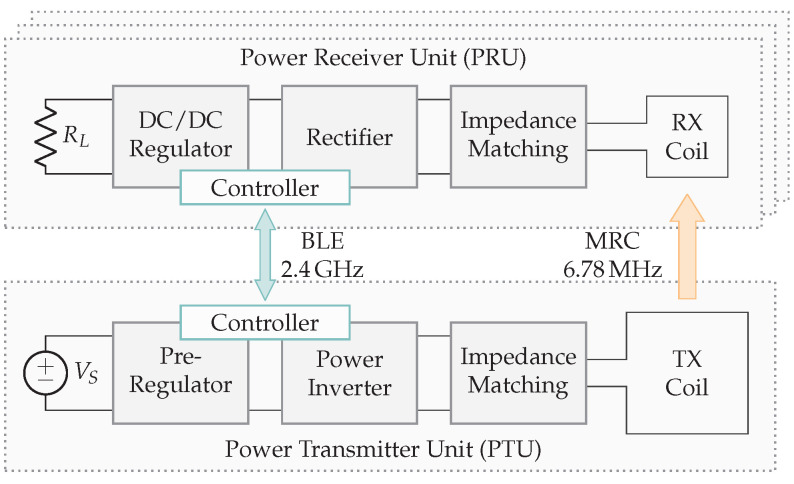
“The SoftCharge concept in [155] and MagMIMO in [94] operate on the basis of magnetic resonance coupling and shows the potential to further increase spatial freedom compared to traditional MRC implementations.”
MethodGain Expressions for Capacitive Wireless Power Transfer with One Electric Field Repeater
Minnaert, B., Monti, G., Costanzo, A., & Mongiardo, M. (2021) · Electronics · doi:10.3390/electronics10060723 · Cited by 8 · cited 1×
“Each repeater segment introduces additional power losses, thus maintaining efficiency forms the main challenge [100,101].”
BackgroundA Multi-band Solution for Interacting with Energy-Neutral Devices
Buyle, C., Cox, B., der Perre, L. V., & Strycker, L. D. (2021) · Asilomar Conference on Signals, Systems and Computers (ACSSC) · doi:10.1109/ieeeconf53345.2021.9723184 · Cited by 8
Self-citationImproving the efficiency of electrodynamic wireless power transmission
Mur-Miranda, J. O., Cheng, S., & Arnold, D. P. (2013) · European Conference on Antennas and Propagation · Cited by 7
Jang, B.-G., Oh, S., Park, Y., & Lee, K. Y. (2016) · IEEE International Conference on Consumer Electronics-Asia (ICCE-Asia) · doi:10.1109/icce-asia.2016.7804735 · Cited by 7
Current Status of Study on Hydrogen Production with Space Solar Power Systems (SSPS)
Mori, M., Kagawa, H., Nagayama, H., & Saito, Y. (2004) · Cited by 7
Influence of a Medium on Capacitive Power Transfer Capability
Lecluyse, C., Minnaert, B., Ravyts, S., & Kleemann, M. (2022) · 2022 Wireless Power Week (WPW) · doi:10.1109/wpw54272.2022.9853947 · Cited by 6
Self-citationReview of Current Recommendations for Airborne Ultrasound Exposure LimitsPreprint
Howard, C. Q., Hansen, C. H., & Zander, A. C. (2005) · Cited by 5
Barat, K. (2014) · Optical science and engineering · doi:10.1201/b16581 · Cited by 5
Lü, Y., & Ki, W. (2017) · Analog circuits and signal processing/Analog circuits and signal processing series · doi:10.1007/978-981-10-2615-7_7 · Cited by 5 · cited 1×
“The permissible exposure limits for the general public in the function of the ISM bands can be found in [132,136].”
BackgroundAerial Energy Provisioning for Massive Energy-Constrained IoT by UAVs
Mulders, J. V., Leenders, G., Callebaut, G., Strycker, L. D., & der Perre, L. V. (2022) · International Conference on Communications · doi:10.1109/icc45855.2022.9838284 · Cited by 5 · cited 2×
“After localizing the node, the battery can be recharged by relying on, for example, an inductive link [104].”
BackgroundMethodSelf-citationHuang, J., Dou, Y., Chen, X., Liu, C., Ouyang, Z., & Andersen, M. A. E. (2022) · 2022 Wireless Power Week (WPW) · doi:10.1109/wpw54272.2022.9853999 · Cited by 5 · cited 1×
“This will give a better estimation of coupling and system efficiency [107,156,157].”
BackgroundBringing Energy to IoT Nodes: an Unmanned Vehicle for Wireless Power Transfer
Mulders, J. V., Crul, S., Leenders, G., Thoen, B., & der Perre, L. V. (2019) · IEEE Sensors Applications Symposium (SAS) · doi:10.1109/sas.2019.8705983 · Cited by 4 · cited 1×
“The vehicle has an amount of stored energy available and can be used in residential or industrial applications [103].”
BackgroundHigh-Power Field-Focusing Circuit for Dynamic Wireless Power Transfer Systems
Inoue, S., Teeneti, C. R., Goodrich, D., Larsen, J., Kamineni, A., & Zane, R. A. (2022) · 2022 Wireless Power Week (WPW) · doi:10.1109/wpw54272.2022.9901335 · Cited by 4 · cited 1×
“[159] present a technique to use a single inverter connected to multiple transmitter coils.”
MethodFundamentals of Signal Design for WPT and SWIPT
Clerckx, B., & Varasteh, M. (2018) · doi:10.1002/9781119476863.ch2 · Cited by 3 · cited 1×
“, [43,44], and in this paper consider wireless energy transfer as a desired standalone feature.”
BackgroundHigh-Frequency Effect Analysis and Optimization Design of WPT Magnetic Coupling Mechanism
Wei, B., Wang, S., Wu, X., Xu, C. X., Xu, J., Gao, J., & Wang, H. (2019) · International Conference on Electrical Machines and Systems (ICEMS) · doi:10.1109/icems.2019.8922388 · Cited by 2 · cited 1×
“The Eddy currents in proximity effects are created due to the variable magnetic field of the current in the adjacent winding layer, whereby the amplitude of the Eddy currents increases exponentially with the number of coil windings/layers [152].”
BackgroundRF power standard for low frequencies (100 kHz to 1 GHz)
Charles, M., Litwin, A., & Allal, D. (2012) · Conference on Precision Electromagnetic Measurements · doi:10.1109/cpem.2012.6250676 · Cited by 1 · cited 1×
“Different values are recommended for different parts of the body and whether the source is operated close to the body or at a large distance [137].”
BackgroundAnalysis of Wireless Transmission of Power for Physical Security Use
Sandia National Laboratories (SNL), A., Geyer, C., & Administration, U. A. S. F. H. R. A. (2019) · doi:10.2172/1570551 · Cited by 1 · cited 1×
“The angle of divergence of the beam φdiv in rad can be determined with (42) in which the laser beam profile and therefore also the divergence is considered Gaussian [54].”
BackgroundGeneral Procedure to Optimize a MIMO Capacitive Wireless Power Transfer System
Minnaert, B., Monti, G., Costanzo, A., & Mongiardo, M. (2021) · IEEE MTT-S International Microwave and RF Conference (IMaRC) · doi:10.1109/imarc49196.2021.9714704 · Cited by 1 · cited 1×
“This will give a better estimation of coupling and system efficiency [107,156,157].”
BackgroundHargis, L., & Botkin, J. (2005) · doi:10.2172/15016394 · Cited by 1 · cited 1×
“During the demonstration, a light, a laptop, and a coffee machine are supplied with power, whereby this demonstration best describes the household situation [131].”
BackgroundThomson, H. (2019) · The New Scientist · doi:10.1016/s0262-4079(19)32236-5 · Cited by 1
Thing-to-Thing Optical Wireless Power Transfer Based on Metal Halide Perovskite TransceiversPreprint
Nguyễn, Đ. H., Qin, C., Matsushima, T., et al. (2020) · arXiv (Cornell University) · doi:10.48550/arxiv.2009.06163 · cited 1×
“Consequently, the laser beam can be received using a small surface at distances far away [47].”
Background
Research works printed but not linked: 4
- A. Balanis C. Antenna Theory: Analysis and Design 3rd ed. John Wiley and Sons, Inc. Hoboken, NJ, USA 2005 92 95
- Bernath P.F. Spectra of Atoms and Molecules Oxford University Press New York, NY, USA 1995
- IEEE C95.1-2019 IEEE Standard for Safety Levels with Respect to Human Exposure to Electric, Magnetic, and Electromagnetic Fields, 0 Hz to 300 GHz The Institute of Electrical and Electronics Engineers New York, NY, USA 2019
- Parliament E. Directive 2014/30/EU of the European Parliament and of the council of 26 February 2014 on the harmonisation of the laws of the Member States relating to electromagnetic compatibility (recast) Official Journal of the European Union 29 March 2014
Cited by
Smart Contact Lenses as Wearable Ophthalmic Devices for Disease Monitoring and Health Management
Seo, H., Chung, W. G., Kwon, Y. W., Kim, S., Hong, Y., Park, W., Kim, E., Lee, J., Lee, S., Kim, M., et al. (2023) · Chemical Reviews · doi:10.1021/acs.chemrev.3c00290 · Cited by 160
Wireless Power Transfer Technologies, Applications, and Future Trends: A Review
Alabsi, A., Hawbani, A., Wang, X., Al‐Dubai, A., Hu, J., Aziz, S. A., Kumar, S., Zhao, L., Shvetsov, A. V., & Alsamhi, S. H. (2024) · IEEE Transactions on Sustainable Computing · doi:10.1109/tsusc.2024.3380607 · Cited by 155
“Furthermore, in the context of home appliances, WPT eliminates the need for electrical outlets and frees these devices from the outlet plugs [21].”
Obaideen, K., Albasha, L., Iqbal, U., & Mir, H. (2024) · Energy Strategy Reviews · doi:10.1016/j.esr.2024.101376 · Cited by 90
Mariello, M., & Proctor, C. M. (2024) · Advanced Materials Technologies · doi:10.1002/admt.202400797 · Cited by 57
Advanced Ultrasound Energy Transfer Technologies using Metamaterial Structures
Imani, I. M., Kim, H. S., Shin, J., Lee, D., Park, J., Vaidya, A., Kim, C., Baik, J. M., Zhang, Y. S., Kang, H., et al. (2024) · Advanced Science · doi:10.1002/advs.202401494 · Cited by 53
Metadata
- Authors
- Van Mulders, J., Delabie, D., Lecluyse, C., Buyle, C., Callebaut, G., Van der Perre, L., & De Strycker, L.
- Affiliations
- ESAT-DRAMCO, Ghent Technology Campus, KU Leuven, 9000 Ghent, Belgium
- KU Leuven (BE)
- ORCID
- Venue
- Sensors
- Publisher
- MDPI AG
- Published
- 2022-07-26
- Volume
- 22
- Issue
- 15
- Pages
- 5573
- ISSN
- 1424-8220 (ISSN-L)
- PMC
- PMC9371050
- OpenAlex
- W4288069083
- Cited by
- 141
- References
- 141
- Citations by year
- 2026: 31 · 2025: 33 · 2024: 48 · 2023: 28 · 2022: 1
- FWCI
- 1.79
- Type
- journal article
- Language
- en
- Open access
- gold
- doi.org
- Licence
- Locations
- Sensors (publishedVersion, cc-by)
- PubMed Central (publishedVersion, cc-by)
- PubMed (publishedVersion)
- Lirias (KU Leuven) (submittedVersion, cc-by)
- DOAJ (DOAJ: Directory of Open Access Journals) (submittedVersion, cc-by-sa)
- Funders
- European Union’s Horizon 2020 research and innovation programme (101013425, G0D3819N)
- Flemish Science Council FWO (101013425, G0D3819N)
- Topics
- Physical Sciences › Engineering › Electrical and Electronic Engineering › Wireless Power Transfer Systems
- Physical Sciences › Engineering › Electrical and Electronic Engineering › Advanced DC-DC Converters
- Physical Sciences › Engineering › Mechanical Engineering › Innovative Energy Harvesting Technologies
- Keywords
- wireless power transfer, electromagnetic induction, electromagnetic resonance, acoustic energy transfer, wireless charging, beamforming, safety regulations, transfer efficiency
- MeSH terms
- Electromagnetic Phenomena, Wireless Technology
About these checks
Registry, retraction, Cites and statistics results are computed, not judged, with one exception: a printed reference that no index lists is read once by a model before it counts as a citation error. Claims are extracted by a model and kept only when their quote appears verbatim in the text; each cited source is then checked, with a model’s help, for whether it says what the claim relies on. Those verdicts can be wrong — read the claim’s quote and the cited source before relying on one.
Statistics and arithmetic are recomputed, not judged.
Confidence bands are shown only for fields calibrated on our annotated test set. None is calibrated yet, so no band is shown.
What counts as a claim ›How we measure confidence ›How we check this ›
Are you an author, or do you see a problem with this page? Request a review
Data sources
Bibliographic data: Semantic Scholar, OpenAlex, Crossref.
Contains information from the Semantic Scholar Academic Graph Datasets, made available under the ODC Attribution License (ODC-BY 1.0).
Semantic Scholar’s data is described in: Kinney, R., et al. (2023). The Semantic Scholar Open Data Platform. arXiv:2301.10140.
