

Effective Techniques for Multimodal Data Fusion: A Comparative Analysis
Open accessThe DOI matches its Crossref record; 31 of the 31 references it cites were found in a registry or an index.
Abstract
Data processing in robotics is currently challenged by the effective building of multimodal and common representations. Tremendous volumes of raw data are available and their smart management is the core concept of multimodal learning in a new paradigm for data fusion. Although several techniques for building multimodal representations have been proven successful, they have not yet been analyzed and compared in a given production setting. This paper explored three of the most common techniques, (1) the late fusion, (2) the early fusion, and (3) the sketch, and compared them in classification tasks. Our paper explored different types of data (modalities) that could be gathered by sensors serving a wide range of sensor applications. Our experiments were conducted on Amazon Reviews, MovieLens25M, and Movie-Lens1M datasets. Their outcomes allowed us to confirm that the choice of fusion technique for building multimodal representation is crucial to obtain the highest possible model performance resulting from the proper modality combination. Consequently, we designed criteria for choosing this optimal data fusion technique.
Overview
The claims and statistics of this paper haven’t been checked yet.
Free: it reads the open-access text and checks the first 5 claims that cite a source we can check. Create a free account to check every claim.
Integrity signals
Registry
Cites
Statistics
Figures
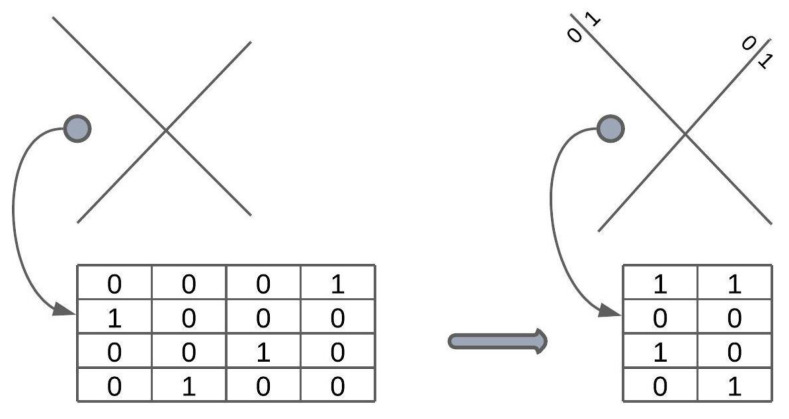
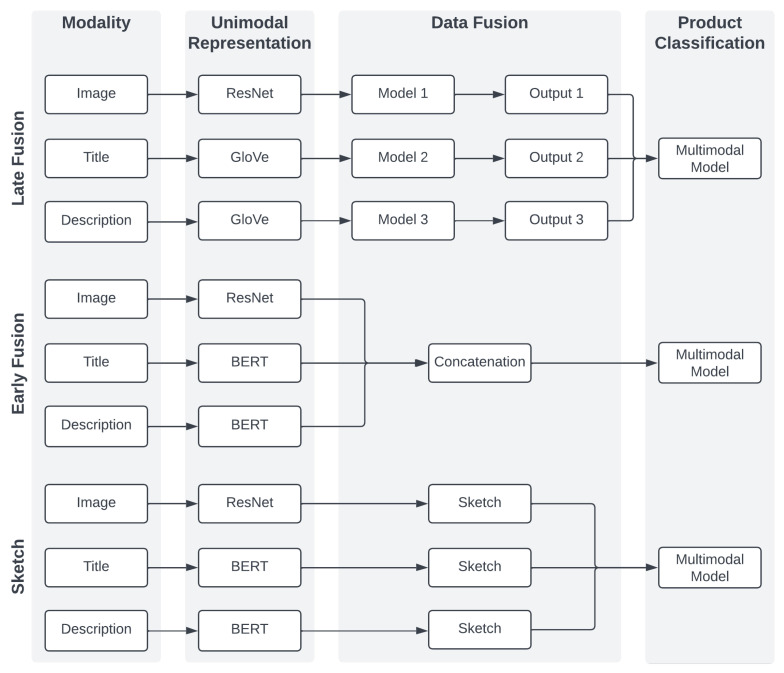
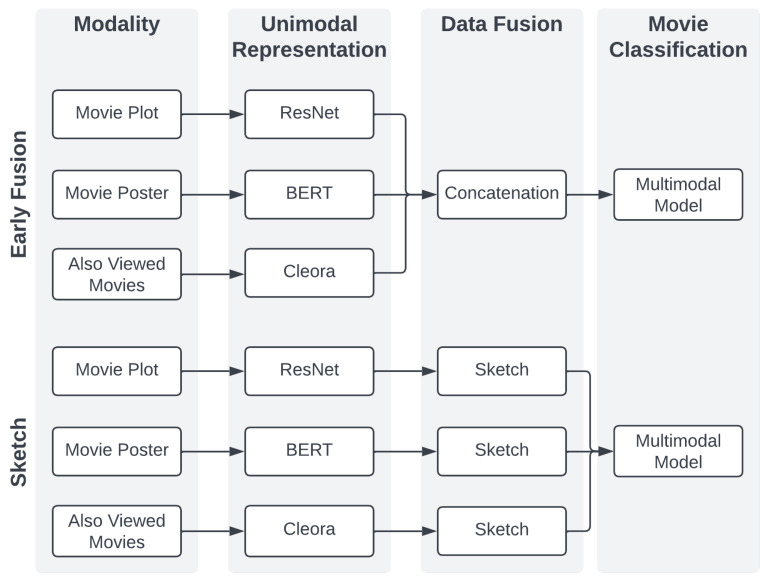
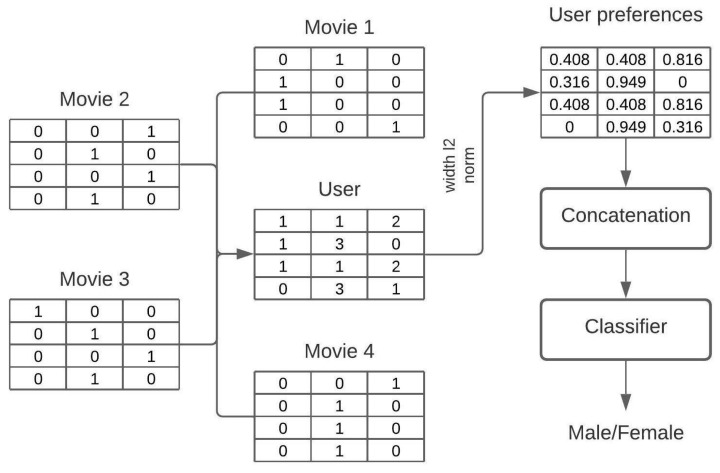
Verification
Claims the paper makes
The claims and statistics of this paper haven’t been checked yet.
Free: it reads the open-access text and checks the first 5 claims that cite a source we can check. Create a free account to check every claim.
Claims other papers make about this one
Each is checked against this paper’s own text: does it say what the citing paper says it does?
The cited source says what the claim attributes to it.
In the citing paper
“the choice of fusion strategy is now recognized as a critical component of model design rather than a secondary implementation detail [7].”
From Benchmarking Multimodal Deep Fusion Strategies for Heterogeneous Neuroimaging and Cognitive Data Using a Controlled Sex Classification Task (2026) · cites this paper as [7]
Self-check
Percentages, sums and reported differences re-computed from the paper’s own numbers.
The self-check needs the paper’s full text.
Citations
Cites
Deep Residual Learning for Image Recognition
He, K., Zhang, X., Ren, S., & Sun, J. (2016) · 2016 IEEE Conference on Computer Vision and Pattern Recognition (CVPR) · doi:10.1109/cvpr.2016.90 · Cited by 235,474 · cited 1×
“The problem of unimodal representation has already been solved with modality-dedicated models, such as BERT [17] for textual data, ResNet [18] for images, etc.”
MethodBERT: Pre-training of Deep Bidirectional Transformers for Language Understanding
Devlin, J., Chang, M.-W., Lee, K., & Toutanova, K. (2018) · arXiv · doi:10.48550/arxiv.1810.04805 · Cited by 73,173
Representation Learning: A Review and New Perspectives
Bengio, Y., Courville, A., & Vincent, P. (2013) · IEEE Transactions on Pattern Analysis and Machine Intelligence · doi:10.1109/tpami.2013.50 · Cited by 13,001 · cited 1×
“Bengio et al. [19] characterized several features that an appropriate vector representation should possess, including: • Smoothness: a transformation should preserve objects similarities,expressed mathe-matically as x ≈ y ⇒ f ( x ) ≈ f ( y ) .”
BackgroundThe MovieLens Datasets: History and Context
Harper, F. M., & Konstan, J. A. (2016) · ACM Transactions on Interactive Intelligent Systems · doi:10.1145/2827872 · Cited by 6,627 · cited 1×
“We conduct experiments on three datasets, Amazon Reviews [7], MovieLens25M, and MovieLens1M [8].”
MethodMultimodal Machine Learning: A Survey and Taxonomy
Baltrusaitis, T., Ahuja, C., & Morency, L.-P. (2019) · IEEE Transactions on Pattern Analysis and Machine Intelligence · doi:10.1109/tpami.2018.2798607 · Cited by 5,018
GLUE: A Multi-Task Benchmark and Analysis Platform for Natural Language Understanding
Wang, A., Singh, A., Michael, J., Hill, F., Levy, O., & Bowman, S. (2018) · Proceedings of the 2018 EMNLP Workshop BlackboxNLP: Analyzing and Interpreting Neural Networks for NLP · doi:10.18653/v1/w18-5446 · Cited by 4,222 · cited 1×
“Designing a multimodal benchmark, similar to GLUE [29] for NLP applications, is crucial for establishing the standards of multimodal representation research.”
BackgroundMultimodal Learning with Deep Boltzmann Machines
Srivastava, N., & Salakhutdinov, R. (2012) · Journal of Machine Learning Research · doi:10.5555/2627435.2697059 · Cited by 1,807 · cited 1×
“[20] identifies more factors that should be taken into account: (1) the similarity between individual modalities should be preserved in their joint representation and (2) robustness to the absence of some modalities; it should still be possible to create multimodal embedding.”
BackgroundHe, R., & McAuley, J. (2016) · Proceedings of the 25th International Conference on World Wide Web · doi:10.1145/2872427.2883037 · Cited by 1,459 · cited 1×
“We conduct experiments on three datasets, Amazon Reviews [7], MovieLens25M, and MovieLens1M [8].”
MethodA survey on deep learning for multimodal data fusion
Gao, J., Li, P., Chen, Z., & Zhang, J. (2020) · Neural Computation · doi:10.1162/neco_a_01273 · Cited by 821 · cited 7×
“A few issues should be taken into account [4] when it comes to fusing several modalities:”
BackgroundMethodInfluentialGandhi, A., Adhvaryu, K., Poria, S., Cambria, E., & Hussain, A. (2023) · Information Fusion · doi:10.1016/j.inffus.2022.09.025 · Cited by 783 · cited 1×
“Furthermore, modalities might naturally coexist, and the analyzed machine learning (ML) problem cannot be solved unless all modalities are considered [5].”
Background
Research works printed but not linked: 3
- 9. Varshney K. Trust in Machine Learning, Manning Publications, Shelter Island, Chapter 4 Data Sources and Biases, Section 4.1 Modalities. [(accessed on 23 March 2021)]. Available online: https://livebook.manning.com/book/trust-in-machine-learning/chapter-4/v-2/
- 14. Rychalska B., Basaj D.B., Dabrowski J., Daniluk M. I know why you like this movie: Interpretable Efficient Multimodal Recommender. arXiv. 20202006.09979
- 26. Wirojwatanakul P., Wangperawong A. Multi-Label Product Categorization Using Multi-Modal Fusion Models. arXiv. 20191907.00420
Cited by
A Comprehensive Survey on Deep Learning Multi-Modal Fusion: Methods, Technologies and Applications
Jiao, T., Guo, C., Feng, X., Chen, Y., & Song, J. (2024) · Computers, Materials & Continua · doi:10.32604/cmc.2024.053204 · Cited by 158
Fraiwan, M., & Khasawneh, N. (2023) · arXiv (Cornell University) · doi:10.48550/arxiv.2305.00237 · Cited by 56
“Another approach is to use multimodal fusion techniques to combine the outputs of separate models trained on different modalities [63].”
BackgroundDeep Learning in Multimodal Fusion for Sustainable Plant Care: A Comprehensive Review
Yang, Z., Li, Y., Wang, R.-F., Hu, P., & Su, W. (2025) · Sustainability · doi:10.3390/su17125255 · Cited by 118
A Comparative Analysis of Early and Late Fusion for the Multimodal Two-Class Problem
Pereira, L. M., Salazar, A., & Vergara, L. (2023) · IEEE Access · doi:10.1109/access.2023.3296098 · Cited by 69
“Sofar, there exists some research comparing early and late fusion [10], [11], [12], [13], [14], [15], [16], [17].”
BackgroundDigital twin systems for musculoskeletal applications: A current concepts review
Diniz, P., Grimm, B., Garcia, F., Fayad, J., Ley, C., Mouton, C., Oeding, J. F., Hirschmann, M. T., Samuelsson, K., & Seil, R. (2025) · Knee Surgery, Sports Traumatology, Arthroscopy · doi:10.1002/ksa.12627 · Cited by 100
Advancements in AI-Driven detection and localisation of solar panel defects
Ghahremani, A., Adams, S. D., Norton, M., Khoo, S., & Kouzani, A. Z. (2025) · Advanced Engineering Informatics · doi:10.1016/j.aei.2024.103104 · Cited by 52
Stock movement prediction with multimodal stable fusion via gated cross-attention mechanism
Zong, C. F., Wan, J., Cascone, L., & Zhou, H. (2025) · Complex & Intelligent Systems · doi:10.1007/s40747-025-02023-3 · Cited by 52
“Current methods typically employ single-modal encoding followed by multimodal integration [18], often defaulting to simple vector concatenation for fusion [19] [20] [21], which fails to facilitate interactivity between different data types.”
Hybrid Multimodal Feature Extraction, Mining and Fusion for Sentiment Analysis
Li, J., Zhang, Z., Lang, J., Jiang, Y., An, L., Zou, P., Xu, Y., Gao, S., Lin, J., Fan, C., et al. (2022) · doi:10.1145/3551876.3554809 · Cited by 42
Ramezani, E. (2025) · Neurocomputing · doi:10.1016/j.neucom.2025.129862 · Cited by 41
Fault diagnosis in electric motors using multi-mode time series and ensemble transformers network
Xu, B., Li, H., Ding, R., & Zhou, F. (2025) · Scientific Reports · doi:10.1038/s41598-025-89695-6 · Cited by 46
“Pawlowski’s 35 focuses on comparing effective multi-modal data fusion techniques.”
Restrepo, D. S., Wu, C., Cajas, S. A., Nakayama, L. F., Celi, L. A., & López, D. M. (2024) · medRxiv · doi:10.1101/2024.06.03.24308401 · Cited by 46
Survey of Large Multimodal Model Datasets, Application Categories and Taxonomy
Pattnayak, P., Patel, H. L., Kumar, B., Agarwal, A., Banerjee, I., Panda, S., & Kumar, T. (2026) · Lecture notes in networks and systems · doi:10.1007/978-3-032-14041-8_4 · Cited by 33
Faria, D. R., Godkin, A. L., & Ayrosa, P. P. S. (2025) · Sensors · doi:10.3390/s25041161 · Cited by 39
“Techniques such as Bayesian inference [49] and ensemble learning are employed to combine information from multiple sensory modalities, enhancing the robustness and accuracy of emotion recognition systems.”
Multimodal fusion with relational learning for molecular property prediction
Zhou, Z., Li, Y., Hong, P., & Xu, H. (2025) · Communications Chemistry · doi:10.1038/s42004-025-01586-z · Cited by 37
“A Nature Portfolio journal https://doi.org/10.1038/s42004-025-01586-z”
InfluentialRecent Advances in Vehicle Driver Health Monitoring Systems
Melders, L., Šmigins, R., & Birkavs, A. (2025) · Sensors · doi:10.3390/s25061812 · Cited by 32
“It is worth mentioning that the authors of [41] explored three of the most common multimodal data fusion techniques, (1) late fusion, (2) early fusion, and (3) the sketch, and compared them in classification tasks, also outlining the various types of data that sensors can collect for a broad…”
Mohandas, R., Mongan, P. G., & Hayes, M. J. (2024) · Sensors · doi:10.3390/s24206553 · Cited by 31
“A multimodal dataset is generated from the fusion of multiple modalities such as images, text, audio, and numerical or behavioural data [75].”
BackgroundMultimodal AI systems for enhanced laying hen welfare assessment and productivity optimization
Essien, D., & Neethirajan, S. R. (2025) · Smart Agricultural Technology · doi:10.1016/j.atech.2025.101564 · Cited by 28
Multimodal malware classification using proposed ensemble deep neural network framework
Nazim, S., Alam, M. M., Rizvi, S. S. A., Mustapha, J. C., Hussain, S. S., & Su’ud, M. M. (2025) · Scientific Reports · doi:10.1038/s41598-025-96203-3 · Cited by 27
“computer is classified as malware 1 .”
A review of multi-modal deep learning towards agentic smart manufacturing
Leng, J., Wang, J., Zhou, L., Zhao, R., Chen, C., Zhang, D., Zheng, S., Liu, Q., & Shen, W. (2025) · Advanced Engineering Informatics · doi:10.1016/j.aei.2025.104117 · Cited by 32
Intelligent sensing devices and systems for personalized mental health
Xing, Y., Yang, Y., Yang, K., Lu, A., Xing, L., Mackie, K., & Guo, F. (2025) · Med-X · doi:10.1007/s44258-025-00057-3 · Cited by 28
“This approach effectively captures inter-modal relationships but requires significant computational resources [192].”
Orchi, H., Diallo, A. B., Elbiaze, H., Sabir, E., & Sadik, M. (2024) · Information Fusion · doi:10.1016/j.inffus.2024.102667 · Cited by 30
Khan, N., & Sisodia, D. S. (2025) · Information Processing & Management · doi:10.1016/j.ipm.2025.104075 · Cited by 24
Responsible adoption of multimodal artificial intelligence in health care: promises and challenges
Azarfar, G., Naimimohasses, S., Rambhatla, S., Komorowski, M., Ferro, D., Lewis, P. R., Gates, D., Shara, N. M., Gascon, G. M., Chang, A. C., et al. (2025) · The Lancet Digital Health · doi:10.1016/j.landig.2025.100917 · Cited by 32
A multi-modal deep learning solution for precise pneumonia diagnosis: the PneumoFusion-Net model
Wang, Y., Liu, C., Fan, Y., Niu, C., Huang, W., Pan, Y., Li, J., Wang, Y., & Li, J. (2025) · Frontiers in Physiology · doi:10.3389/fphys.2025.1512835 · Cited by 25
“Intermediate fusion promotes modal feature interaction at the intermediate layers of the model, effectively capturing correlations between modalities while balancing model complexity and performance (Pawłowski et al., 2023).”
Sensing in Smart Cities: A Multimodal Machine Learning Perspective
Sadiq, T., & Omlin, C. W. P. (2025) · Smart Cities · doi:10.3390/smartcities9010003 · Cited by 26
Eom, S., Eom, S.-Y., & Washington, P. Y. (2023) · Lecture notes in computer science · doi:10.1007/978-3-031-47679-2_12 · Cited by 23
Barah, O. O., David, M., & Joseph, M. (2025) · Journal of Materials Science Composites · doi:10.1186/s42252-025-00073-x · Cited by 26
Tsinganos, N., Fouliras, P., Mavridis, I. K., & Gritzalis, D. A. (2024) · IEEE Access · doi:10.1109/access.2024.3359030 · Cited by 16
“In the context of our study, multimodal refers to the use of multiple modalities or sources of information to make predictions [64], [65], [66].”
BackgroundEnhancing Vision-Language Models with Scene Graphs for Traffic Accident Understanding
Lohner, A., Compagno, F., Francis, J., & Oltramari, A. (2024) · IEEE International Automated Vehicle Validation Conference (IAVVC) · doi:10.1109/iavvc63304.2024.10786395 · Cited by 19
“…strategies for fusing the outputs of a multimodal model before the downstream task at hand, such as early and late stage fusion involving concatenation [Sleeman et al., 2022, Pawłowski et al., 2023], merging [Sleeman et al., 2022], or sampling from a shared embedding space [Gao et al., 2020].”
Prediction of Seedling Oilseed Rape Crop Phenotype by Drone-Derived Multimodal Data
Yang, Y., Wei, X., Wang, J., Zhou, G., Wang, J., Jiang, Z., Zhao, J., & Ren, Y. (2023) · Remote Sensing · doi:10.3390/rs15163951 · Cited by 15
Fonteles, J. H., Cohn, C., Ayalon, E., Zhou, M., Ashwin, T. S., Davalos, E., Li, Z., Rayala, S., Mereddy, D., Coursey, A., et al. (2026) · Learning and Instruction · doi:10.1016/j.learninstruc.2025.102274 · Cited by 19
A systematic review of multimodal learning analytics in computer-supported collaborative learning
Ouyang, F., & Bai, X. (2026) · Computers & Education · doi:10.1016/j.compedu.2026.105574 · Cited by 15
Daly, K., & Olukoya, O. (2025) · Biomedical Signal Processing and Control · doi:10.1016/j.bspc.2025.107959 · Cited by 20
Design and evaluation of intelligent student management system based on multi-modal data
Yuan, G. (2025) · Systems and Soft Computing · doi:10.1016/j.sasc.2025.200370 · Cited by 13
Advanced Feature Selection Techniques in Medical Imaging—A Systematic Literature Review
Khan, S. (2025) · Computers, materials & continua/Computers, materials & continua (Print) · doi:10.32604/cmc.2025.066932 · Cited by 20
Mixed Patch Visible-Infrared Modality Agnostic Object Detection
Medeiros, H. R., Latortue, D., Granger, É., & Pedersoli, M. (2025) · IEEE Winter Conference on Applications of Computer Vision · doi:10.1109/wacv61041.2025.00874 · Cited by 23
“Fusion is a technique where the advantage of multiple modalities is taken to better optimize one training objective by combining them to develop a multimodal representation [30].”
Mobaraki, M., Ahani, S., Gonzalez, R., van Heusden, K., & Dumont, G. A. (2025) · The International Journal of Advanced Manufacturing Technology · doi:10.1007/s00170-025-15839-7 · Cited by 11
“Selecting the appropriate fusion technique is critical for effectively integrate the information from different modalities and achieving optimal model performance [45].”
Wu, H., Jin, S., Xiang, C. J., Tang, J., Xian, J., Zhang, J., Zhao, J., Feng, X., Jiang, D., Wu, Y., et al. (2025) · Plant Communications · doi:10.1016/j.xplc.2025.101416 · Cited by 13
“For example, early fusion can fully exploit intermodal information but may increase computational burdens due to higher dimensionality, whereas late fusion offers flexibility in handling high-dimensional data but may miss deeper intermodal correlations (Pawłowski et al., 2023).”
SAGE-Net: Single-layer augmented gated encoder network for efficient multimodal sentiment analysis
Zhou, J., Kang, X., Ding, W., Wang, L., Ding, F., Matsumoto, K., Zhang, C., & Chi, H. (2025) · Applied Soft Computing · doi:10.1016/j.asoc.2025.113665 · Cited by 13
DeepEgo+: Unsynchronized Radar Sensor Fusion for Robust Vehicle Ego-Motion Estimation
Zhu, S., Ravindran, S., Chen, L., Yarovoy, A. G., & Fioranelli, F. (2025) · IEEE Transactions on Radar Systems · doi:10.1109/trs.2025.3546001 · Cited by 9
“In addition, the designed decentralized architecture with the late fusion approach [28] further enhances its robustness against situations such as sensor failure 2 or erroneous radar node output.”
Liu, Z., Yin, Z., Mi, Z., Guo, B., & Zheng, Z. (2025) · Mathematics · doi:10.3390/math13081218 · Cited by 10
Intelligent soft wearable bioelectronics for neurological disorders
Kim, D., Bang, J., Jeong, J., Koo, D. L., & Ko, S. H. (2025) · Materials Horizons · doi:10.1039/d5mh00528k · Cited by 10
Yue, S. (2024) · Innovations in Systems and Software Engineering · doi:10.1007/s11334-024-00591-0 · Cited by 12
Dong, J., Hao, M., Ding, F., Chen, S., Wu, J., Zhuo, J., & Jiang, D. (2025) · Big Data and Cognitive Computing · doi:10.3390/bdcc9030063 · Cited by 11
An investigation of multimodal EMG-EEG fusion strategies for upper-limb gesture classification
Pritchard, M., Campelo, F., & Goldingay, H. (2025) · Journal of Neural Engineering · doi:10.1088/1741-2552/ade1f9 · Cited by 9
“Finally, Decision-LevelFusion , also known as late fusion [53], involves the processing and parallel classification of each data modality by independent models, with the resulting predictions combined in an ensemble.”
Rahman, M. I., Hossain, M. R., Sayem, S. M., & Emdad, F. B. (2025) · Intelligence-Based Medicine · doi:10.1016/j.ibmed.2025.100342 · Cited by 11
Multi-Modal Federated Learning Over Cell-Free Massive MIMO Systems for Activity Recognition
Sheikholeslami, S. M., Ng, P. C., Abouei, J., & Plataniotis, K. N. (2025) · IEEE Access · doi:10.1109/access.2025.3548001 · Cited by 9
“Data fusion can generally be divided into fusion with raw modalities (early fusion) and fusion with abstract modalities (late fusion) [9], [10].”
On the Optimum Linear Soft Fusion of Classifiers
Vergara, L., & Salazar, A. (2025) · Applied Sciences · doi:10.3390/app15095038 · Cited by 8
Yi, J., Tian, Y., & Zhao, Y. (2023) · IEEE Access · doi:10.1109/access.2023.3336419 · Cited by 8
“While the effect of fusion stages is also discussed by Pawłowski [25], and the results illustrates that the choice of fusion technique for building multimodal representation is crucial to obtain the highest possible model performance resulting from the proper modality combination.”
BackgroundYang, Y., Teo, H. H., & King, Y. J. (2025) · IEEE Access · doi:10.1109/access.2025.3625220 · Cited by 8
MMFformer: Multimodal Fusion Transformer Network for Depression Detection
Haque, M. R., Islam, M. M., Raju, S. M. T. U., Altaheri, H., Nassar, L., & Karray, F. (2025) · Conference proceedings/Conference proceedings - IEEE International Conference on Systems, Man, and Cybernetics · doi:10.1109/smc58881.2025.11342694 · Cited by 7
“Moreover, the fusion of several modalities, including audio and video, presents challenges due to differences in format, timing, and structure [8].”
Spectroscopy-multimodal data fusion empowers smart food quality analysis: Challenges and prospects
Li, Z., Deng, W., Zhao, J., & Kong, Y. (2026) · Food Chemistry X · doi:10.1016/j.fochx.2026.103939 · Cited by 9
“Low-level, mid-level, and high-level data fusion correspond to different modeling paradigms, each involving a trade-off between information retention, feature compression, and decision-level collaboration (Paw ł owski et al., 2023).”
Feature fusion federated learning for privacy-aware indoor localization
Tasbaz, O., Farahani, B., & Moghtadaiee, V. (2024) · Peer-to-Peer Networking and Applications · doi:10.1007/s12083-024-01736-5 · Cited by 9
“3 [43, 44]: • Early Fusion: This fusion strategy is based on combining the raw data or original features of different modalities into a single representative vector.”
Fusion of Multimodal Imaging and 3D Digitization Using Photogrammetry
Ramm, R., Cruz, P. D. D., Heist, S., Kühmstedt, P., & Notni, G. (2024) · Sensors · doi:10.3390/s24072290 · Cited by 7
“Deep learning applications with multimodal data require such methods for early sensor fusion [67].”
BackgroundMethodDewanjee, S., & Muntaha, S. (2024) · International Conference on Computing, Communication and Networking Technologies (ICCCNT) · doi:10.1109/icccnt61001.2024.10724337 · Cited by 7
“Late fusion refers to combining the outputs of individual model trained on different modalities to make a final decision [24].”
BackgroundDeepfake Detection Using Multi-Modal Fusion Combined with Attention Mechanism
Shirley, C. P., Jingle, B. J., Abisha, M. B., Venkatesan, R., Yashvanth Ram, R., V, & Elango, E. (2024) · International Conference on Sustainable Expert Systems (ICSES) · doi:10.1109/icses63445.2024.10763221 · Cited by 9
Deep learning for multi-modal data fusion in IoT applications
Saghir, A., Akbar, A., Zafar, A., & Hassan, A. (2025) · Mehran University Research Journal of Engineering and Technology · doi:10.22581/muet1982.3171 · Cited by 7
“Effective multimodal data fusion is dependent upon the choice of an appropriate fusion technique [25].”
Dobrzycki, A. D., & Bernardos, A. M. (2026) · Applied Intelligence · doi:10.1007/s10489-026-07142-z · Cited by 6
Chen, Z., Tu, B., Liu, B., Li, J., & Plaza, A. (2025) · IEEE Transactions on Geoscience and Remote Sensing · doi:10.1109/tgrs.2025.3616284 · Cited by 8
“Recent advances in remote sensing and computer vision demonstrate that this approach significantly improves system accuracy and robustness [33], [34], [35], [36], [37].”
Sahota, A., Roguski, A., Jones, M. W., Abdallah, Z. S., & Santos‐Rodríguez, R. (2024) · Machine learning for signal processing ... · doi:10.1109/mlsp58920.2024.10734737 · Cited by 6
“For optimal classifier performance data fusion techniques such as late fusion (fusion at the decision level), model level fusion (at the representation level) or a hybrid between methods can be implemented [18].”
MethodCascaded cross-modal transformer for audio–textual classification
Ristea, N.-C., Anghel, A., & Ionescu, R. T. (2024) · Artificial Intelligence Review · doi:10.1007/s10462-024-10869-1 · Cited by 7
“A wide variety of frameworks have been proposed in the literature, including approaches based on early, intermediate, and late fusion (Boulahia et al. 2021; Huang et al. 2020a, 2020b; Wang et al. 2020; Li et al. 2023; Pawłowski et al. 2023; Xu et al. 2023; Singh et al. 2021).”
Liu, D., Li, D., Ding, H., Cao, Y., & Gao, K. (2025) · Transportation Research Part C Emerging Technologies · doi:10.1016/j.trc.2025.105270 · Cited by 9
A hybrid attention-based deep learning framework for precise early diagnosis of Alzheimer’s disease
Akindele, R. G., Cen, S., Yu, M., Aribilola, I., Xinrang, T., & Liu, Y. (2025) · Discover Applied Sciences · doi:10.1007/s42452-025-07492-2 · Cited by 5
Chen, H., & Tang, D. M. (2025) · International Conference on Artificial Intelligence and Smart Manufacturing · doi:10.1145/3756423.3756555 · Cited by 9
“The general focus of multimodal learning is on data with multiple modalities such as text, images, audio, and numerical or behavioral [2].”
Wu, H., Qi, Y., Peng, J., Tang, H., & Shao, M. (2025) · Alexandria Engineering Journal · doi:10.1016/j.aej.2025.10.032 · Cited by 5
Multimodal learning of melt pool dynamics in laser powder bed fusion
Mojumder, S., Halder, P., & Tonge, T. (2026) · Progress in Additive Manufacturing · doi:10.1007/s40964-025-01496-5 · Cited by 5
Jeong, K., Jo, G., Lee, J. H., Kim, B., Choi, J., Oh, H., Jeong, J.-H., & Lee, E. (2025) · Meat and Muscle Biology · doi:10.22175/mmb.20157 · Cited by 5
Advances in the machine learning construction process for citrus quality and disease detection
Mai, R., He, X., Li, Y., Ren, J., Gong, X., & Fan, G. (2025) · Food Control · doi:10.1016/j.foodcont.2025.111849 · Cited by 5
Minyilu, Y., Yimer, M. A., & Meshesha, M. (2025) · JMIR AI · doi:10.2196/67584 · Cited by 5
“An MMDF approach is used for combining particular modalities to derive multimodal representation [12,13,23,34].”
Mao, A., Zhu, M., Li, Y., & Wang, K. (2026) · Smart Agricultural Technology · doi:10.1016/j.atech.2026.102232 · Cited by 5
Paval, K. S., Radhakrishnan, V., Krishnan, K., Lal, G. J., & Premjith, B. (2024) · International Conference on Computing, Communication and Networking Technologies (ICCCNT) · doi:10.1109/icccnt61001.2024.10724438 · Cited by 4
“[23].”
Parallel Feature Fusion for Multimodal Scene Recognition on Dual-Core MCUs
Woodward, K., & Kanjo, E. (2025) · IEEE Pervasive Computing · doi:10.1109/mprv.2025.3555334 · Cited by 5
“10,11 However, this creates several critical issues with privacy, latency, and reliability.”
Balachandran, A., & Masum, M. (2025) · IEEE Conference on Artificial Intelligence (CAI) · doi:10.1109/cai64502.2025.00025 · Cited by 9
“The Early Fusion technique was utilized to integrate 768D BERT text embeddings and 768D image embeddings from ViT, effectively capturing cross-modal relationships for improved accuracy [34].”
Eldien, N. A. S., Ali, R. E., Ezzeldin, M., & Zaher, M. (2024) · Intelligent Methods, Systems, and Applications (IMSA) · doi:10.1109/imsa61967.2024.10652655 · Cited by 4
“Data-level fusion refers to the process of integrating information from multiple sources or sensors at the raw data level [11].”
BackgroundAl-Kaabi, H., Al-Ibraheemi, F. A., Jasim, A. K., Al-Rekabi, M., & Parchami, J. (2025) · Research Square · doi:10.21203/rs.3.rs-5865706/v1 · Cited by 8
QCaption: Video Captioning and Q&A through Fusion of Large Multimodal Models
Wang, J., Ng, G. W., Mak, L. O., Cher, R., Ryan, N. D. H., & Wang, D. (2024) · International Conference on Information Fusion (FUSION) · doi:10.23919/fusion59988.2024.10706514 · Cited by 3
“This technique is primarily divided into two categories: late fusion and early fusion [23].”
MENG, W., Obaiys, S. J., Karaca, Y., & Jamaludin, N. A. (2025) · Fractals · doi:10.1142/s0218348x2540136x · Cited by 3
Yang, D., Tian, Z., Xi, J., Chen, H., Sun, E., & Wang, L. (2025) · Animals · doi:10.3390/ani15152158 · Cited by 4
“These studies confirm that strategies such as feature concatenation, weighted fusion, and GAN [23] can significantly improve model adaptability.”
Analysis of Emerging Trends and Challenges in Multimodal Data
Shamim, M., Faridi, A. R., & Masood, F. (2025) · International Conference on Computing for Sustainable Global Development · doi:10.23919/indiacom66777.2025.11115680 · Cited by 3
Vázquez, B., Pérez-González, J., & Montiel, N. H. (2025) · BioMedical Engineering OnLine · doi:10.1186/s12938-025-01446-w · Cited by 3
“Multimodality involves working with data that contain multiple modalities, such as text, images, audio, and numerical or behavioral data [81].”
Chiranjeevi, M., & Chavan, A. (2025) · Arabian Journal for Science and Engineering · doi:10.1007/s13369-025-10671-3 · Cited by 3
Zhang, A., Bertley, C., Liang, D., & Thomaz, E. (2026) · ACM Transactions on Intelligent Systems and Technology · doi:10.1145/3828651 · Cited by 3
Zhou, X., Pan, Y., Qin, J., & Chen, J.-J. (2025) · Advanced Engineering Informatics · doi:10.1016/j.aei.2025.104105 · Cited by 4
A robust weighted late fusion approach for IoT
Nirala, V., & Ratneshwer (2025) · Internet of Things · doi:10.1016/j.iot.2025.101857 · Cited by 3
Zhang, Z., Chen, D., Yang, J., Li, J., Xiao, H., & Liu, Q. (2026) · Engineering Research Express · doi:10.1088/2631-8695/ae3457 · Cited by 4
Liu, Z., Lou, S., Feng, Y., Huang, W., Hu, B., Lu, C., & Tan, J. (2025) · Advanced Engineering Informatics · doi:10.1016/j.aei.2025.103392 · Cited by 3
Tang, Q., Xu, S., Wang, Z., Wang, Y., Liu, S., & Hua, H. (2025) · Journal Of Big Data · doi:10.1186/s40537-025-01224-4 · Cited by 3
“Nevertheless, integrating multi-dimensional factors to capture user and ROI characteristics effectively remains a central focus of current research [12, 13] The main challenges in the current research are as follows: 1.”
Minyilu, Y., Yimer, M. A., & Meshesha, M. (2024) · medRxiv · doi:10.1101/2024.01.07.24300957 · Cited by 3
“Multimodal data fusion approach is used for combining particular modalities to derive multimodal representation [10][11][19][27].”
MethodLearning Sparse Latent Predictive Foundation Model for Multimodal NeuroimagingPreprint
Huang, H., Chen, L., Chen, J., Hyun, J., Loftus, J. R., Melmed, K. R., Orringer, D. A., Frontera, J., Dehkharghani, S., Masurkar, A. V., et al. (2026) · arXiv (Cornell University) · doi:10.48550/arxiv.2606.14957 · Cited by 6
Roof Geometrical Component Extraction Using Bimodal Data and Graph Neural Network
Vostikolaei, F. S., & Jabari, S. (2025) · The international archives of the photogrammetry, remote sensing and spatial information sciences/International archives of the photogrammetry, remote sensing and spatial information sciences · doi:10.5194/isprs-archives-xlviii-g-2025-1353-2025 · Cited by 2
Hybrid Optical and Hyperspectral Sensing System for Multimodal Segmentation of Solid Waste
Mazanov, G., Iliushina, A., Nesteruk, S., Pimenov, A., Stepanov, A., Mikhaylova, N., & Somov, A. (2025) · IEEE Sensors Journal · doi:10.1109/jsen.2025.3598200 · Cited by 2
“Late fusion techniques, such as ensemble methods, combine predictions from separate models trained on RGB and hyperspectral data, yielding improved classification accuracies while maintaining computational efficiency [21], [22] [23].”
A Systematic Literature Review on Multimodal Sentiment Analysis Trends, Challenges and Opportunities
Panjaitan, C. H. P., Manongga, D., Hendry, H., & Mayopu, R. G. (2025) · International Conference on Creative Communication and Innovative Technology (ICCIT) · doi:10.1109/iccit65724.2025.11167526 · Cited by 2
“Early fusion is theoretically based on the assumption that combining low-level features can preserve correlation across modalities, while intermediate fusion leverages neural attention mechanisms to align feature importance dynamically during learning [13], [14].”
Maiti, N., Seppecher, M., & Leclercq, L. (2025) · European Transport Research Review · doi:10.1186/s12544-025-00750-9 · Cited by 2
Ahmad, A., Diaz, F. J., Sendra, S., & Lloret, J. (2025) · Food Analytical Methods · doi:10.1007/s12161-025-02923-7 · Cited by 2
“This capacity to accumulate diffuse variance likely explains Ridge’s superior accuracy in modeling sesquiterpenes as reported previously (Pawłowski et al. 2023).”
Li, H., Zhang, F., Yang, Y., Li, F., & Wang, M. (2025) · Expert Systems with Applications · doi:10.1016/j.eswa.2025.131041 · Cited by 2
Polowczyk, A., Polowczyk, A., & Woźniak, M. (2026) · Computer Standards & Interfaces · doi:10.1016/j.csi.2026.104157 · Cited by 2
Jiang, G.-F., Zhou, N., Wang, S.-M., & Ni, Y. (2026) · Results in Engineering · doi:10.1016/j.rineng.2026.111903 · Cited by 2
FuseRank (Demo): Filtered Vector Search in Multimodal Structured Data
Paraschakis, D., Ros, R., Borg, M., & Runeson, P. (2024) · Lecture notes in computer science · doi:10.1007/978-3-031-70371-3_29 · Cited by 2
A Multisensor Fault Diagnosis Model With Adaptive Spatial-Temporal Dual-Scale Remodeling
Xu, Z., Jia, Z., Wei, Y., Gao, Z., Sun, J., Tian, L., & Liu, J. (2024) · IEEE Sensors Journal · doi:10.1109/jsen.2024.3502714 · Cited by 2
“Furthermore, individual data points are unable to express complex meanings and lack local semantics [32].”
Multimodal Fusion for Enhanced Human–Computer Interaction
Sharma, A. K., Batra, I., Sharma, S., & Junfithrana, A. P. (2025) · International Global Conference Series on ICT Integration in Technical Education & Smart Society · doi:10.3390/engproc2025107081 · Cited by 2
Metadata
- Authors
- Pawłowski, M., Wróblewska, A., & Sysko-Romańczuk, S.
- Affiliations
- Warsaw University of Technology (PL)
- Corresponding author
- Pawłowski, Maciej
- Wróblewska, Anna
- Venue
- Sensors
- Publisher
- MDPI AG
- Published
- 2023-02-21
- Volume
- 23
- Issue
- 5
- Pages
- 2381
- ISSN
- 1424-8220 (ISSN-L)
- PMC
- PMC10007548
- OpenAlex
- W4321497840
- Cited by
- 180
- References
- 30
- Citations by year
- 2026: 50 · 2025: 94 · 2024: 30 · 2023: 6
- FWCI
- 16.31
- Type
- journal article
- Language
- en
- Open access
- gold
- doi.org
- Licence
- Locations
- Sensors (publishedVersion, cc-by)
- PubMed Central (publishedVersion, cc-by)
- PubMed (publishedVersion)
- arXiv (Cornell University) (submittedVersion)
- DOAJ (DOAJ: Directory of Open Access Journals) (submittedVersion, cc-by-sa)
- arXiv (Cornell University) (cc-by)
- Funders
- Centre for Priority Research Area Artificial Intelligence and Robotics of Warsaw University of Technology within the Excellence Initiative: Research University (IDUB) programme (1820/27/Z01/POB2/2021, POIR.01.01.01-00-0066/22)
- National Centre for Research and Development in Poland, Smart Growth Operational Program for 2014-2020, Digital Innovations (1820/27/Z01/POB2/2021, POIR.01.01.01-00-0066/22)
- Topics
- Physical Sciences › Computer Science › Computer Vision and Pattern Recognition › Multimodal Machine Learning Applications
- Physical Sciences › Engineering › Media Technology › Advanced Image Fusion Techniques
- Social Sciences › Psychology › Experimental and Cognitive Psychology › Multisensory perception and integration
- Keywords
- multimodal fusion, decision fusion, feature-level fusion, multimodal representation learning, classification, sensor data, recommender systems, Amazon reviews, MovieLens
About these checks
Registry, retraction, Cites and statistics results are computed, not judged, with one exception: a printed reference that no index lists is read once by a model before it counts as a citation error. Claims are extracted by a model and kept only when their quote appears verbatim in the text; each cited source is then checked, with a model’s help, for whether it says what the claim relies on. Those verdicts can be wrong — read the claim’s quote and the cited source before relying on one.
Statistics and arithmetic are recomputed, not judged.
Confidence bands are shown only for fields calibrated on our annotated test set. None is calibrated yet, so no band is shown.
What counts as a claim ›How we measure confidence ›How we check this ›
Are you an author, or do you see a problem with this page? Request a review
Data sources
Bibliographic data: Semantic Scholar, OpenAlex, Crossref.
Contains information from the Semantic Scholar Academic Graph Datasets, made available under the ODC Attribution License (ODC-BY 1.0).
Semantic Scholar’s data is described in: Kinney, R., et al. (2023). The Semantic Scholar Open Data Platform. arXiv:2301.10140.
