

Effective Techniques for Multimodal Data Fusion: A Comparative Analysis
Open accessThe DOI matches its Crossref record; 31 of the 31 references it cites were found in a registry or an index.
Abstract
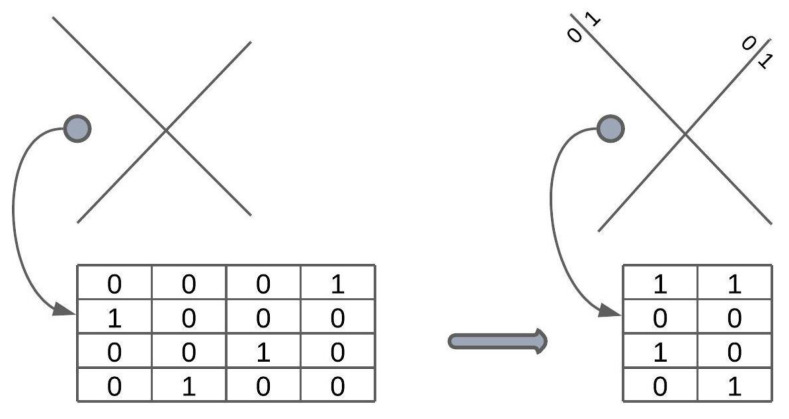
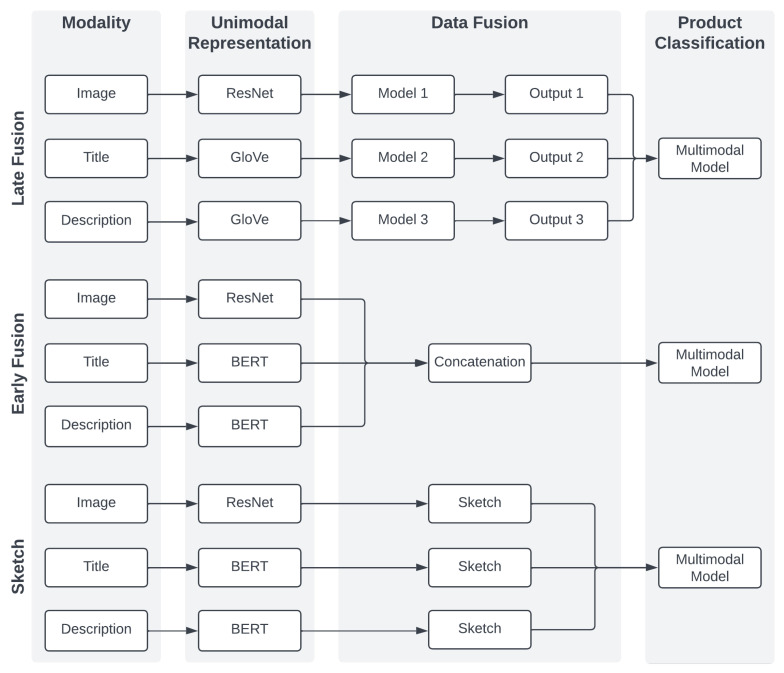
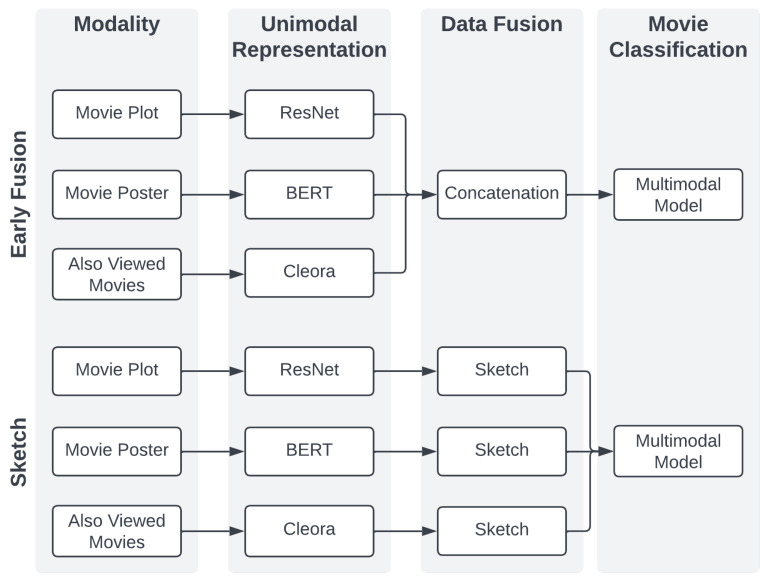
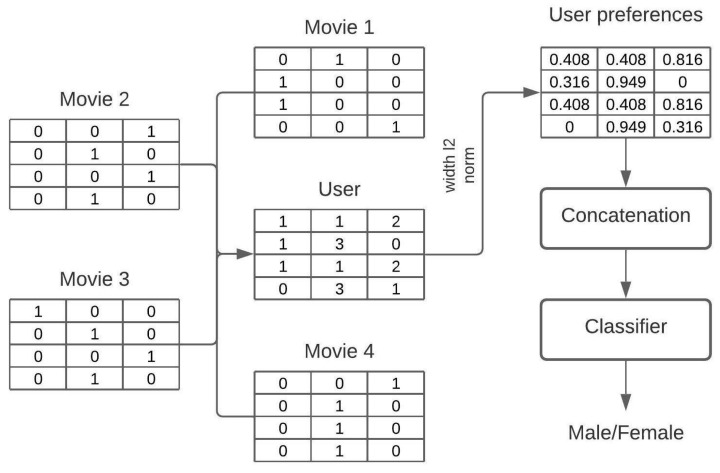
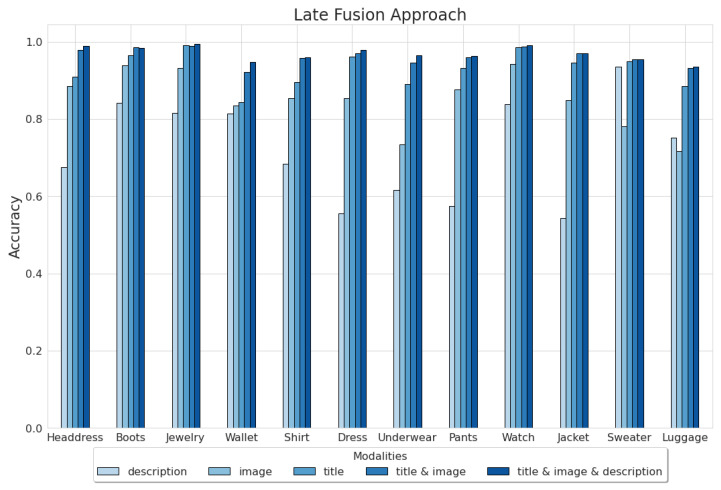
Data processing in robotics is currently challenged by the effective building of multimodal and common representations. Tremendous volumes of raw data are available and their smart management is the core concept of multimodal learning in a new paradigm for data fusion. Although several techniques for building multimodal representations have been proven successful, they have not yet been analyzed and compared in a given production setting. This paper explored three of the most common techniques, (1) the late fusion, (2) the early fusion, and (3) the sketch, and compared them in classification tasks. Our paper explored different types of data (modalities) that could be gathered by sensors serving a wide range of sensor applications. Our experiments were conducted on Amazon Reviews, MovieLens25M, and Movie-Lens1M datasets. Their outcomes allowed us to confirm that the choice of fusion technique for building multimodal representation is crucial to obtain the highest possible model performance resulting from the proper modality combination. Consequently, we designed criteria for choosing this optimal data fusion technique.
Overview
The claims and statistics of this paper haven’t been checked yet.
Free: it reads the open-access text and checks the first 5 claims that cite a source we can check. Create a free account to check every claim.
Integrity signals
Registry
Cites
Statistics
Figures
Verification
Claims the paper makes
The claims and statistics of this paper haven’t been checked yet.
Free: it reads the open-access text and checks the first 5 claims that cite a source we can check. Create a free account to check every claim.
Claims other papers make about this one
Each is checked against this paper’s own text: does it say what the citing paper says it does?
The cited source says what the claim attributes to it.
In the citing paper
“the choice of fusion strategy is now recognized as a critical component of model design rather than a secondary implementation detail [7].”
From Benchmarking Multimodal Deep Fusion Strategies for Heterogeneous Neuroimaging and Cognitive Data Using a Controlled Sex Classification Task (2026) · cites this paper as [7]
Self-check
Percentages, sums and reported differences re-computed from the paper’s own numbers.
The self-check needs the paper’s full text.
Citations
Cites
Deep Residual Learning for Image Recognition
He, K., Zhang, X., Ren, S., & Sun, J. (2016) · 2016 IEEE Conference on Computer Vision and Pattern Recognition (CVPR) · doi:10.1109/cvpr.2016.90 · Cited by 235,474 · cited 1×
“The problem of unimodal representation has already been solved with modality-dedicated models, such as BERT [17] for textual data, ResNet [18] for images, etc.”
MethodBERT: Pre-training of Deep Bidirectional Transformers for Language Understanding
Devlin, J., Chang, M.-W., Lee, K., & Toutanova, K. (2018) · arXiv · doi:10.48550/arxiv.1810.04805 · Cited by 73,173
Representation Learning: A Review and New Perspectives
Bengio, Y., Courville, A., & Vincent, P. (2013) · IEEE Transactions on Pattern Analysis and Machine Intelligence · doi:10.1109/tpami.2013.50 · Cited by 13,001 · cited 1×
“Bengio et al. [19] characterized several features that an appropriate vector representation should possess, including: • Smoothness: a transformation should preserve objects similarities,expressed mathe-matically as x ≈ y ⇒ f ( x ) ≈ f ( y ) .”
BackgroundThe MovieLens Datasets: History and Context
Harper, F. M., & Konstan, J. A. (2016) · ACM Transactions on Interactive Intelligent Systems · doi:10.1145/2827872 · Cited by 6,627 · cited 1×
“We conduct experiments on three datasets, Amazon Reviews [7], MovieLens25M, and MovieLens1M [8].”
MethodMultimodal Machine Learning: A Survey and Taxonomy
Baltrusaitis, T., Ahuja, C., & Morency, L.-P. (2019) · IEEE Transactions on Pattern Analysis and Machine Intelligence · doi:10.1109/tpami.2018.2798607 · Cited by 5,018
GLUE: A Multi-Task Benchmark and Analysis Platform for Natural Language Understanding
Wang, A., Singh, A., Michael, J., Hill, F., Levy, O., & Bowman, S. (2018) · Proceedings of the 2018 EMNLP Workshop BlackboxNLP: Analyzing and Interpreting Neural Networks for NLP · doi:10.18653/v1/w18-5446 · Cited by 4,222 · cited 1×
“Designing a multimodal benchmark, similar to GLUE [29] for NLP applications, is crucial for establishing the standards of multimodal representation research.”
BackgroundMultimodal Learning with Deep Boltzmann Machines
Srivastava, N., & Salakhutdinov, R. (2012) · Journal of Machine Learning Research · doi:10.5555/2627435.2697059 · Cited by 1,807 · cited 1×
“[20] identifies more factors that should be taken into account: (1) the similarity between individual modalities should be preserved in their joint representation and (2) robustness to the absence of some modalities; it should still be possible to create multimodal embedding.”
BackgroundHe, R., & McAuley, J. (2016) · Proceedings of the 25th International Conference on World Wide Web · doi:10.1145/2872427.2883037 · Cited by 1,459 · cited 1×
“We conduct experiments on three datasets, Amazon Reviews [7], MovieLens25M, and MovieLens1M [8].”
MethodA survey on deep learning for multimodal data fusion
Gao, J., Li, P., Chen, Z., & Zhang, J. (2020) · Neural Computation · doi:10.1162/neco_a_01273 · Cited by 821 · cited 7×
“A few issues should be taken into account [4] when it comes to fusing several modalities:”
BackgroundMethodInfluentialGandhi, A., Adhvaryu, K., Poria, S., Cambria, E., & Hussain, A. (2023) · Information Fusion · doi:10.1016/j.inffus.2022.09.025 · Cited by 783 · cited 1×
“Furthermore, modalities might naturally coexist, and the analyzed machine learning (ML) problem cannot be solved unless all modalities are considered [5].”
Background
Research works printed but not linked: 3
- 9. Varshney K. Trust in Machine Learning, Manning Publications, Shelter Island, Chapter 4 Data Sources and Biases, Section 4.1 Modalities. [(accessed on 23 March 2021)]. Available online: https://livebook.manning.com/book/trust-in-machine-learning/chapter-4/v-2/
- 14. Rychalska B., Basaj D.B., Dabrowski J., Daniluk M. I know why you like this movie: Interpretable Efficient Multimodal Recommender. arXiv. 20202006.09979
- 26. Wirojwatanakul P., Wangperawong A. Multi-Label Product Categorization Using Multi-Modal Fusion Models. arXiv. 20191907.00420
Cited by
Items 101–200 of 220
Chen, B., Yu, J., Feng, H., Rungsardthong, V., & Zhang, X. (2025) · Food and Bioprocess Technology · doi:10.1007/s11947-025-04044-9 · Cited by 2
“Multimodal data fusion technology improves the accuracy and robustness of data analysis and prediction by integrating information from various modalities and leveraging the strengths of multiple sensors or technologies (Pawłowski et al., 2023).”
Gómez-Martínez, V., Chushig-Muzo, D., Veierød, M. B., Granja, C., & Soguero-Ruíz, C. (2023) · Research Square · doi:10.21203/rs.3.rs-3781517/v1 · Cited by 2
Camastra, C., Pelagi, A., Quattrone, A., & Sarica, A. (2026) · Brain Sciences · doi:10.3390/brainsci16040405 · Cited by 1
Mandai, A., Ansar, W., & Chakrabarti, A. (2024) · IEEE Calcutta Conference (CALCON) · doi:10.1109/calcon63337.2024.10914232 · Cited by 1
Sowiński, P., Lacalle, I., Vaño, R., Palau, C. E., Ganzha, M., & Paprzycki, M. (2025) · Lecture notes in computer science · doi:10.1007/978-3-031-86193-2_5 · Cited by 2
PEARL: Perceptual and Analytical Representation Learning for Video Anomaly Detection
Anigala, O., Won, K., & Pack, C. (2025) · ACM SIGAPP Applied Computing Review · doi:10.1145/3727257.3727258 · Cited by 1
“By contrast, late fusion (decision-level fusion) processes each modality separately and combines their outputs only at the final decision stage [2, 29].”
Interpretable Threat Detection with Evidential Classifier: The MQTT Case
Pešek, J., Fukuda, K., & Čejka, T. (2025) · IEEE/IFIP Network Operations and Management Symposium (NOMS) · doi:10.1109/noms57970.2025.11073686 · Cited by 1
“Following Pawlowski et al. [39], we used an early fusion approach for combining the information.”
Grasnick, A., & Schwerk, A. M. K. (2025) · Smart innovation, systems and technologies · doi:10.1007/978-981-96-1154-6_3 · Cited by 1
Enhancing Multimodal Data Fusion for Fine-Grained Product Classification
Wiliyanti, & Suciati, N. (2025) · International Conference on Electronics Representation and Algorithm (ICERA) · doi:10.1109/icera66156.2025.11087307 · Cited by 1
“Fine-grained datasets often consist of subtle visual variations, requiring detailed exploration of image-level correlations to improve classification performance [5].”
Research on Emotional Cognitive Analysis Based on Knowledge Graph and Dynamic Multi-modal Fusion
Xie, P., Gu, H., & Zhou, D. (2025) · Lecture notes of the Institute for Computer Sciences, Social Informatics and Telecommunications Engineering · doi:10.1007/978-3-031-97352-9_31 · Cited by 1
Saragih, H. (2025) · International Journal of Apllied Mathematics · doi:10.12732/ijam.v38i5.229 · Cited by 6
“Fusion is performed using hierarchical cross - modal attention mechanisms that align semantic representations across modalities, supported by a late - fusion reliability layer that weighs inputs based on modality - specific confidence (Pawłowski et al., 2023).”
A Multimodal Deep Learning Pipeline for Enhanced Detection and Classification of Oral Cancer
Tafala, I., Ben-Bouazza, F.-E., Mezali, M. C. E., Emssaad, I., & Jioudi, B. (2025) · doi:10.3390/engproc2025112065 · Cited by 2
Translating Features to Findings: Deep Learning for Melanoma Subtype Prediction
Guermazi, D., Khemchandani, S., Wahood, S., Nguyen, C. V., & Saliba, E. (2025) · Dermatopathology · doi:10.3390/dermatopathology12040042 · Cited by 1
Kim, J., Yang, J., & Chung, D. (2025) · Mathematics · doi:10.3390/math13223730 · Cited by 1
“In the context of gravimetric capacity prediction, the chemical formula feature contributes the greatest information density, and is thus leveraged most effectively, while additional modalities can be seamlessly incorporated to enhance model extensibility [49].”
High-level locomotion intent estimation from electromyography and body posture
Hodossy, B. K., & Farina, D. (2025) · Journal of Neural Engineering · doi:10.1088/1741-2552/ae2804 · Cited by 1
“An alternative view of hierarchical control strategies is treating HL controllers as independent input processing steps, which are then combined in the LL in a multimodal late-fusion scheme [32].”
A Study on Product Recommendation Based on Dynamically Adjusted Multimodal Weights
Zhao, B., Zheng, Y., Yu, X., & Song, W. (2025) · IEEE International Conference on Software Engineering and Artificial Intelligence (SEAI) · doi:10.1109/seai65851.2025.11108918 · Cited by 1
“In recent years, researchers have been committed to enhancing the fusion of different modalities by exploring strategies such as early fusion, late fusion, and cross-modal fusion [6-8].”
Capsule network–based multimodal fusion for mortgage risk assessment from unstructured data sources
Tavakoli, M., Chandra, R., & Bravo, C. (2026) · Expert Systems with Applications · doi:10.1016/j.eswa.2026.134887 · Cited by 1
Yang, K., Yang, K., Zeng, S., Zhang, Y., & Zhang, D. (2025) · International Electronic Conference on Sensors and Applications (ECSA) · doi:10.3390/ecsa-12-26605 · Cited by 2
A Hybrid Deep Learning Model for Parkinson’s Stage using Voice and Hand Drawn Image Analysis
Sinduja.R, Shanthini, S., & S.Manochithra (2025) · International Conference on Sustainable Communication Networks and Application (ICSCNA) · doi:10.1109/icscn67106.2025.11308343 · Cited by 1
“Current research can be roughly divided into two categories: multimodal techniques, which combine information from different sources, and unimodal approaches, which rely on a single data type, such as handwriting, speech, or neuroimaging [10].”
AVFF-RI: an improved rainfall intensity measurement using common cameras
Fiallos-Salguero, M. S., Khu, S., & Wang, M. (2026) · Journal of Hydrology · doi:10.1016/j.jhydrol.2026.135045 · Cited by 1
Cai, Z., Zhu, J., Jie, Z., Zhang, C., Xu, A., Zheng, H., Wang, W. J., Hu, C., Li, Y., & Mei, H. (2026) · Microchemical Journal · doi:10.1016/j.microc.2026.117251 · Cited by 1
Chowdhary, R., Sheth, P. D., Rampurawala, I. M., Kapadia, C., Vohra, C., Chowdhary, R., Arora, K., Taranikanti, V., Vuthaluru, A. R., Goyal, O., et al. (2026) · Artificial Intelligence in Gastrointestinal Endoscopy · doi:10.37126/aige.v7.i1.117988 · Cited by 1
Seafarer fatigue identification based on multimodal data fusion
Lv, M., Shi, G., Liu, Z., & Wang, X. (2026) · Ocean Engineering · doi:10.1016/j.oceaneng.2026.124999 · Cited by 1
Tirabassi, N., Kumar, S. B. R., Jha, S. K., & Ramanathan, A. (2025) · IEEE International Conference on Cognitive Machine Intelligence (CogMI) · doi:10.1109/cogmi67134.2025.00043 · Cited by 1
Theodorakopoulos, L., & Theodoropoulou, A. (2026) · Electronics · doi:10.3390/electronics15071405 · Cited by 1
Huang, W., Wen, H., Li, Y., He, W., & Zhang, X. (2026) · Computers and Electronics in Agriculture · doi:10.1016/j.compag.2026.111856 · Cited by 1
A multimodal framework for modeling and predicting information propagation in online social networks
Muhammad, T., Ahmad, A., & Zeshan, F. (2026) · Journal Of Big Data · doi:10.1186/s40537-026-01381-0 · Cited by 1
“Traditional approaches include early feature fusion [68] which offers integration of raw or preprocessed feature vectors from multiple feature modalities prior to the downstream classification model.”
Alwzwazy, H. A., Alzubaidi, L., Zhao, Z., Crawford, R., Alnaseri, O., Jurdak, R., & Gu, Y. (2026) · Neural Networks · doi:10.1016/j.neunet.2026.109190 · Cited by 1
An intelligent synapse fusion network with dynamic adaptive control for multimodal fusion
Zhai, W., Chen, K., & Wang, S. (2026) · Scientific Reports · doi:10.1038/s41598-026-63857-6 · Cited by 1
Mengistu, G. (2026) · Precision Medical Sciences · doi:10.1002/prm2.70047 · Cited by 1
Multi-modal Recommendation based on Knowledge Graph
Chen, X., Wang, Y., & Yang, J. (2023) · IEEE International Conference on Computer and Communications (ICCC) · doi:10.1109/iccc59590.2023.10507494 · Cited by 3
ARIF: An Adaptive Attention-Based Cross-Modal Representation Integration Framework
Liu, C., Luo, Z., Bi, Y., Huang, Z., Shu, D., Hou, J., Wang, H., & Liang, K. (2024) · Lecture notes in computer science · doi:10.1007/978-3-031-72347-6_1 · Cited by 2
Exploring Semantic Understanding and Generative Modeling in Speech-Text Multimodal Data Fusion
Yu, H., Wang, X., Sun, Y., Yang, Y., & Sun, Y. (2024) · Applied Mathematics and Nonlinear Sciences · doi:10.2478/amns-2024-3156 · Cited by 1
Road Ahead for Multi‐modal Intelligent Sensing in the Deep Learning Era
Zoha, A., Ramzan, N., Jamshed, M. A., & Rehman, M. U. (2024) · Wiley eBooks · doi:10.1002/9781394257744.ch12 · Cited by 1
Shen, L., Huang, Y., Zhou, C., & Wang, L. (2025) · Sustainability · doi:10.3390/su17030996 · Cited by 1
Multi-Modal ViT-Based Deep Learning Architecture for Binary Classification of Traffic Accident
Pérez, J. D. R., Torres, G. S., & Miranda, C. H. (2025) · REVISTA COLOMBIANA DE TECNOLOGIAS DE AVANZADA · doi:10.24054/rcta.v1i45.3751 · Cited by 1
MORAL: A Multimodal Reinforcement Learning Framework for Decision Making in Autonomous LaboratoriesPreprint
Tirabassi, N., Kumar, S., Jha, S., & Ramanathan, A. (2025) · arXiv (Cornell University) · doi:10.48550/arxiv.2504.03153 · Cited by 1
“As agents must handle multiple forms of information simultaneously, there is a need for accessible solutions that can efficiently process and learn from these inputs in real-time [6].”
Minyilu, Y., Yimer, M. A., & Meshesha, M. (2024) · Research Square · doi:10.21203/rs.3.rs-3870993/v1 · Cited by 3
Detection and metrology of micro-nano particles through the integration of image and laser modes
Tao, Y., & He, H. (2024) · Measurement Science and Technology · doi:10.1088/1361-6501/ad3a8c
“The BP neural network model was trained to classify the aggregation and non-aggregation of micro-nano particles [22].”
Zhang, Y. (2024) · Journal of Electrical Systems · doi:10.52783/jes.3055
“Textual modality was the only place where classical sentiment analysis and emotion detection could be applied [4].”
BackgroundChen, J., Tungom, C. E., Zhang, Q., Zhang, X., Ding, X., & Ji, Y. (2024) · International Conference on Management Engineering, Software Engineering and Service Sciences (ICMSS) · doi:10.1109/icmss61211.2024.00014
Data Science for Social Climate Change Modelling: Emerging Technologies Review
Ustyianovych, T. (2024) · Lecture notes on data engineering and communications technologies · doi:10.1007/978-3-031-62213-7_18
Huang, J., Haihong, E., Liu, J., Hu, T., Qiao, X., Ding, J., & Hu, X. (2024) · International Conference on Behavioral, Economic, and Socio-Cultural Computing · doi:10.1109/besc64747.2024.10780700
“…SBERT method [2] to compute semantic similarities between Chinese and English; for image features, we use the Vision Transformer (ViT) [3] to calculate image similarities; finally, we employ a late fusion approach [4] using Gaussian Naive Bayes to integrate information from all modalities.”
Alexandrov, A. A., Dmitriev, P., Dmitrieva, A. A., Poltavskiy, A. V., & Kozlovsky, B. L. (2024) · Lecture notes in networks and systems · doi:10.1007/978-3-031-77688-5_20
Nuevas contribuciones en aplicaciones de fusión multimodal de bioseñales
González, L. M. P. (2024) · RiuNet (Universitat Politècnica de València) · doi:10.4995/thesis/10251/213614
Review of Multimodal Data Fusion in Machine Learning
Arya, L., Sharma, Y. K., Smitha, & Doma, S. (2025) · Wiley eBooks · doi:10.1002/9781394269969.ch10
A Cross-System Dynamic Data Fusion Method Based on Train Operation Trajectories
Zou, D., Sun, S., Wang, P., & Wu, J. (2025) · Lecture notes in electrical engineering · doi:10.1007/978-981-96-3969-4_29
Visual effect prediction of ceramic packaging based on deep learning
Ouyang, J., & Long, Z. (2025) · International Journal of Information and Communication Technology · doi:10.1504/ijict.2025.10071718
Intelligent Generative Design: A New Mechanical Design ConceptPreprint
Ning, F., Wang, Y., Li, H., Shi, Y., & Lu, J. (2025) · SSRN Electronic Journal · doi:10.2139/ssrn.5393870
Decision-Level Fusion of Electro-Optic and Infrared Modalities for Improved Aerial Vehicle Detection
Felter, M. (2025) · IEEE Integrated STEM Education Conference (ISEC) · doi:10.1109/isec64801.2025.11147345
“Though each of these subdivisions can be advantageous for their respective reasons, decision-level fusion can often be the simplest and most resilient approach to improving unimodal results [1].”
Yolchuyeva, S., Ebrahimpour, L., Lemaréchal, Y., Joubert, P., Bilodeau, S., Després, P., & Manem, V. S. (2025) · Modern Pathology · doi:10.1016/j.modpat.2025.100897
FuseRank: Filtered Vector Search in Multimodal Structured Data
Paraschakis, D., Ros, R., Asaad, A., Borg, M., & Runeson, P. (2025) · Procedia Computer Science · doi:10.1016/j.procs.2025.09.495
An exploration of data fusion techniques applied to nuclear forensics tasks
Johnson, J., McDonald, L. W., & Taşdizen, T. (2025) · Journal of Radioanalytical and Nuclear Chemistry · doi:10.1007/s10967-025-10474-8
“This improvement of early fusion has been seen before [17], especially in datasets where one modality might not contain all the information required to form a prediction of the required task.”
InfluentialChandu, M., Sajeed, M., Nikhil, L. S., Sarangi, P. K., & Jabbar, M. A. (2025) · International Conference on Intelligent Communication Networks and Computational Techniques (ICICNCT) · doi:10.1109/icicnct66124.2025.11232637
“Consistent performance across various metrics indicate system generalizes well to different types of user input [25].”
Does Score Bias Correction Improve the Fusion of Classifiers?
Vergara, L., & Salazar, A. (2025) · Machine Learning and Knowledge Extraction · doi:10.3390/make7040151
Strategies for Generalisable Machine Learning with Small Data for Exercise Fatigue Detection
Jeworutzki, A. (2025) · REPOSIT (Hamburg University of Applied Sciences (HAW Hamburg)) · doi:10.48441/4427.2383 · Cited by 1
Liang, J., Yu, Z., Xie, Z., Guo, Y., Guo, Y., & Yu, X. (2025) · arXiv (Cornell University) · doi:10.48550/arxiv.2506.17761 · Cited by 1
“By leveraging complementary features across modalities, multi-modal techniques offer enhanced analytical capabilities, improved interpretability, and superior generalization performance [8].”
Κατηγοριοποίηση βίντεο από επεισόδια επιληψίας με την χρήση βαθιάς μάθησης
Καρκαλή, Χ. Χ., & Καρκαλή, Χ. Χ. (2024) · University of Thessaly Institutional Repository (University of Thessaly)
Análisis multimodal visio-lingüe para detectar contenido fraudulento en Reddit
Jiménez, A. G. (2023) · UPM Digital Archive (Technical University of Madrid)
Stock Portfolio risk analysis using multimodal data
Suyog, K., Sushmitha, T., Swathi, Ballal, U., & Ramasay, P. (2025) · International Conference on Software and Computer Applications (ICSCA) · doi:10.1145/3731806.3731864
Multimodal Attribute-Integrated Person Re-Identification in UAV Surveillance Systems
Parattanawong, K., Erjongmanee, S., Suwanagood, E., & Klampol, C. (2025) · International Computer Science and Engineering Conference · doi:10.1109/icsec67360.2025.11298037
“While this late fusion approach offers flexibility and modality independence [25], it neglects cross-modal interactions [26].”
ZARATE-TREJO, C., & Ramos, F. (2026) · Studies in computational intelligence · doi:10.1007/978-3-032-13592-6_36
Wei, W., Song, F., Zhao, Q., Li, G., Zhao, S., & Sun, F. (2025) · International Conference on Electronic Engineering and Informatics (EEI) · doi:10.1109/eei67650.2025.11334820
“…1) This experiment aims to validate the performance of the attention mechanism-based feature fusion, by comparing the performance of three different fusion methods-weighted average (Soft voting) [13], simple concatenation (Early Fusion) [14], and the proposed attention mechanism fusion method.”
Roy, L. A. A., Beh, J. S. B., Yeo, C. K., & Regunathan, S. (2026) · Computers & Industrial Engineering · doi:10.1016/j.cie.2026.111872 · Cited by 1
Reshanjana, R. M. U., Asanka, D., & Rajapaksha, A. D. (2025) · International Conference on Information Technology Research (ICITR) · doi:10.1109/icitr69413.2025.11353655
“In ML and DL, data fusion techniques and feature engineering techniques allows to occupied the storage efficiency and flexibility with less effective classification tasks to address the resource requirement for the model [29], [30], [31].”
Schuh, G., Keuper, A., & Stein, F. (2025) · IEEE International Conference on Industrial Engineering and Engineering Management (IEEM) · doi:10.1109/ieem63636.2025.11357570
“Unlike early fusion, which merges raw data [28], this approach combines decision-level outputs, enabling independent optimization of each modality while leveraging their complementary strengths.”
AI Driven Meme Generation from Text to Image and Image to Text
Baby, V., Gottimukkula, P., Davanam, G., Vunnam, D., Akshith, G. S., & Maisagalla, R. K. (2026) · Lecture notes in electrical engineering · doi:10.1007/978-981-95-5831-5_8
Xu, S., Li, C., Li, J.-R., & Chang, T.-W. (2026) · Electronics · doi:10.3390/electronics15040832
“Researchers have compared techniques like early fusion, late fusion, and the “sketch” to determine the optimal way to combine modalities for specific classification tasks [49].”
Local and global mortality experience: A novel hierarchical model for regional mortality risk
Nalmpatian, A., Heumann, C., Alkaya, L., & Jackson, W. (2026) · PLoS ONE · doi:10.1371/journal.pone.0312928
Xu, H., Zhang, J., Yu, L., & Xia, J. (2026) · International Conference on Big Data, Computational Intelligence, and Applications (BDCIA) · doi:10.1117/12.3104543
“The system is mainly composed of various sensors, data transmission modules and data analysis and processing units [11].”
Reshanjana, R. M. U., & Asanka, D. (2025) · International Conference on Innovations in Engineering, Science and Technology for Sustainable Development (ICEST) · doi:10.1109/icest65883.2025.11428516
de Oliveira, A. P. S., de Lima, C. T., de Souza, J. M. N., de Oliveira, L. F. C., Calixto, L., Silva, A. S. D. O., Simões, C. M. D. L., Lins, M. E. S. B., Barbosa, B. J. A. P., de Lima, C. L., et al. (2026) · AI in Neurology · doi:10.64187/ain.2026.v1.i2.002
Fusion of ECG, PPG, and GSR Using Attention Based Machine Learning for Mental Workload Assessment
Khan, Z., & Prabhu, S. (2026) · Biennial International Conference on Nascent Technologies in Engineering (ICNTE) · doi:10.1109/icnte66387.2026.11437512
“Nonetheless, limited research has systematically integrated these multimodal physiological signals utilizing optimized machine learning and interpretable deep learning systems [10] [11].”
Multimodal electronic information fusion sensing method for complex scenarios
He, S. (2026) · International Conference on Artificial Intelligence and Social Network Systems (AISNS) · doi:10.1109/aisns67921.2026.11440423
“…() m h is the mode observation mapping; m belongs to the mode parameters, which include external parameters, calibration and encoder-related parameters; mt is the noise term; mt r is the availability mask, and a value of 0 indicates the existence of missing or packet loss phenomenon [10] .”
Predicting Music Origin with Deep Learning
Ladanyi, F., & Qiao, H. (2025) · IEEE International Conference on Future Machine Learning and Data Science (FMLDS) · doi:10.1109/fmlds67896.2025.00084
Su, S., Geng, P., Zhang, G., Xue, G., & Dong, L. (2026) · IEEE Access · doi:10.1109/access.2026.3678527
“Fusion: A Comparative Analysis [30], evaluating fusion strategies for multimodal data.”
Oktavian, D., & Putra, B. A. (2026) · JATI (Jurnal Mahasiswa Teknik Informatika) · doi:10.36040/jati.v10i2.17353
Deep-Learning Models for Ultrasound, Mammography, and MRI Fusion for Accurate Tumor Segmentation
Sikkander, A. R. M. (2026) · World Journal of Applied Medical Sciences · doi:10.65336/wjams.2026.3104 · Cited by 5
CEAT: Context-Emotion Adversarial Training Framework for Robust Emotion-Driven Fraud Detection
Li, C., Wu, S., Lu, Y., Ma, Y., Liu, J., Jia, D., Han, M., Li, F., & Hu, P. (2026) · International World Wide Web Conference (WWW) · doi:10.1145/3774904.3792981
Shen, X., & Ma, X. (2026) · Big Data and Information Analytics · doi:10.3934/bdia.2026006 · Cited by 1
Fine-Grained Gesture Recognition via Narrow-Kernel CNN and Attention-based SEMG-ACC Fusion
Zhang, H., Boudaoud, S., & Rida, I. (2026) · IEEE International Conference on Acoustics Speech and Signal Processing · doi:10.1109/icassp55912.2026.11460574
Deep Phenotyping of Obstructive Sleep Apnea Using Multimodal Representation Learning
Coblentz, D., Dong, A.-J., Crivelli, S., Zamora-Resendiz, R., Ayo-Durojaiye, I., & Qian, C. (2026) · International Computer Science Conference · doi:10.1109/icsc67292.2026.00064
“Various fusion strategies, including early, late, and hybrid fusion, have been evaluated, highlighting trade-offs between interpretability and performance [8].”
Monika, S., & Sangeetha, M. (2026) · The European Physical Journal Plus · doi:10.1140/epjp/s13360-026-07655-z
Sentiment Analysis Based on Enhanced Feature Decoupling and Multimodal Logical Reasoning
Yang, H., Zhao, M., Qiu, Y., Li, Y., Guo, J., Zhang, Z., Chen, B., He, M., & Hong, Y. (2026) · Multimodal Technologies and Interaction · doi:10.3390/mti10050050
“Current research methodologies can be broadly categorized into traditional fusion approaches [5] and deep learning-based methods [6]; however, several critical limitations persist.”
Transfer Learning and Multimodal Artificial Intelligence
Pandey, A., Gupta, P., & Sehgal, N. K. (2026) · Springer eBooks · doi:10.1007/978-3-032-10808-1_5
Mwiiya, W. N., & Zimba, A. (2026) · Research Square · doi:10.21203/rs.3.rs-9232899/v1
Zhang, Y., Chen, B., Zhu, C., Xu, C., & Liang, J. (2026) · Lecture notes of the Institute for Computer Sciences, Social Informatics and Telecommunications Engineering · doi:10.1007/978-3-032-23453-7_21 · Cited by 1
Multimodal Sensing System for Health Monitoring: A Systematic Review
Awa, M. N., & García-Zapirain, B. (2026) · Lecture notes on data engineering and communications technologies · doi:10.1007/978-3-032-18188-6_17
Fukasawa, T., Murayama, Y., & Izumi, K. (2026) · Neural Computing and Applications · doi:10.1007/s00521-026-12118-8
Tamakloe, E., Kommey, B., Kponyo, J. J., Opoku, D., & Effah, F. B. (2026) · Andalas Journal of Electrical and Electronic Engineering Technology · doi:10.25077/ajeeet.v6i1.210
Bridging artificial intelligence and clinical decision-making in gastric cancer surgery
Ormeci, M. T., Kirkik, D., & Tulubaş, E. (2026) · World Journal of Gastrointestinal Surgery · doi:10.4240/wjgs.119402
Kashi, R. N., Surendra, H. H., & Archana, H. R. (2026) · Sadhana · doi:10.1007/s12046-026-03148-y
“Similarly, some approaches use multimodal fusion techniques such as early fusion (combining raw data at the input level) or late fusion (combining predictions at the decision level) to capitalize on the strengths of both modalities [20, 21].”
Williams, B. R., Suryasentana, S. K., & O'Boyle, B. (2026) · Ocean Engineering · doi:10.1016/j.oceaneng.2026.126556
PSO–SVM based Machine Learning Framework for Parkinson’s Disease Stage Prediction
Sinduja.R, Shanthini, S., & S.Manochithra (2026) · International Conference on Inventive Research in Computing Applications (ICIRCA) · doi:10.1109/icirca69024.2026.11570510
“Many research papers describe the development of various types of machine learning and deep learning algorithms for the diagnosis of Parkinson’s disease based on various types of data, including voice signals, handwriting, gait, and images [15].”
Zahid, S., Jin, Z., & Kim, D. (2026) · IEEE Access · doi:10.1109/access.2026.3710990
“Rather than adopting heavy attention-based fusion mechanisms [42], which are often computationally demanding, GTiS-Net employs a lightweight and experimentally validated concatenation strategy that achieves comparable or even superior performance while reducing resource consumption [43].”
Optimizing Online Gambling Site Detection via XLM-RoBERTa and ResNet34-Based Early Fusion
Nugroho, R., & Kurniawan, D. (2026) · Jurnal Ilmu Komputer dan Informasi
Heap overflow vulnerability detection based on deep learning and multimodal fusion
Zhai, J., Xu, T., Miao, H., & Yang, H. (2026) · The Journal of Supercomputing · doi:10.1007/s11227-026-08724-x
“Compared to early fusion, late fusion offers stronger robustness in the presence of noise and outliers and is often preferred in classification tasks [35].”
Elizalde, C. S. (2026) · Academica-e (Universidad Pública de Navarra)
Hybrid Deep Learning Based on Domain Expertise and Multimodality for Chatter Detection
Mengue, F. D., Kounta, C. A. K. A., Arnaud, L., & Kamsu-Foguem, B. (2026) · Journal of Vibration Engineering & Technologies · doi:10.1007/s42417-026-02687-2
“…showing that noise reduction and appropriate signal conditioning are crucial for improving the reliability of clustering results in complex data, such as those found in fault detection (e.g., works on signal preprocessing in machine learning-based clustering for industrial applications) [48 ].”
Metadata
- Authors
- Pawłowski, M., Wróblewska, A., & Sysko-Romańczuk, S.
- Affiliations
- Warsaw University of Technology (PL)
- Corresponding author
- Pawłowski, Maciej
- Wróblewska, Anna
- Venue
- Sensors
- Publisher
- MDPI AG
- Published
- 2023-02-21
- Volume
- 23
- Issue
- 5
- Pages
- 2381
- ISSN
- 1424-8220 (ISSN-L)
- PMC
- PMC10007548
- OpenAlex
- W4321497840
- Cited by
- 180
- References
- 30
- Citations by year
- 2026: 50 · 2025: 94 · 2024: 30 · 2023: 6
- FWCI
- 16.31
- Type
- journal article
- Language
- en
- Open access
- gold
- doi.org
- Licence
- Locations
- Sensors (publishedVersion, cc-by)
- PubMed Central (publishedVersion, cc-by)
- PubMed (publishedVersion)
- arXiv (Cornell University) (submittedVersion)
- DOAJ (DOAJ: Directory of Open Access Journals) (submittedVersion, cc-by-sa)
- arXiv (Cornell University) (cc-by)
- Funders
- Centre for Priority Research Area Artificial Intelligence and Robotics of Warsaw University of Technology within the Excellence Initiative: Research University (IDUB) programme (1820/27/Z01/POB2/2021, POIR.01.01.01-00-0066/22)
- National Centre for Research and Development in Poland, Smart Growth Operational Program for 2014-2020, Digital Innovations (1820/27/Z01/POB2/2021, POIR.01.01.01-00-0066/22)
- Topics
- Physical Sciences › Computer Science › Computer Vision and Pattern Recognition › Multimodal Machine Learning Applications
- Physical Sciences › Engineering › Media Technology › Advanced Image Fusion Techniques
- Social Sciences › Psychology › Experimental and Cognitive Psychology › Multisensory perception and integration
- Keywords
- multimodal fusion, decision fusion, feature-level fusion, multimodal representation learning, classification, sensor data, recommender systems, Amazon reviews, MovieLens
About these checks
Registry, retraction, Cites and statistics results are computed, not judged, with one exception: a printed reference that no index lists is read once by a model before it counts as a citation error. Claims are extracted by a model and kept only when their quote appears verbatim in the text; each cited source is then checked, with a model’s help, for whether it says what the claim relies on. Those verdicts can be wrong — read the claim’s quote and the cited source before relying on one.
Statistics and arithmetic are recomputed, not judged.
Confidence bands are shown only for fields calibrated on our annotated test set. None is calibrated yet, so no band is shown.
What counts as a claim ›How we measure confidence ›How we check this ›
Are you an author, or do you see a problem with this page? Request a review
Data sources
Bibliographic data: Semantic Scholar, OpenAlex, Crossref.
Contains information from the Semantic Scholar Academic Graph Datasets, made available under the ODC Attribution License (ODC-BY 1.0).
Semantic Scholar’s data is described in: Kinney, R., et al. (2023). The Semantic Scholar Open Data Platform. arXiv:2301.10140.
