

Social Life Cycle Approach as a Tool for Promoting the Market Uptake of Bio-Based Products from a Consumer Perspective
Open accessThe DOI matches its Crossref record; 47 of the 47 references it cites were found in a registry or an index.
Abstract
The sustainability of bio-based products, especially when compared with fossil based products, must be assured. The life cycle approach has proven to be a promising way to analyze the social, economic and environmental impacts of bio-based products along the whole value chain. Until now, however, the social aspects have been under-investigated in comparison to environmental and economic aspects. In this context, the present paper aims to identify the main social impact categories and indicators that should be included in a social sustainability assessment of bio-based products, with a focus on the consumers’ category. To identify which social categories and indicators are most relevant, we carry out a literature review on existing social life cycle studies; this is followed by a focus group with industrial experts and academics. Afterwards, we conduct semi-structured interviews with some consumer representatives to understand which social indicators pertaining to consumers are perceived as relevant. Our findings highlight the necessity for the development and dissemination of improved frameworks capable of exploiting the consumers’ role in the ongoing process of market uptake of bio-based products. More specifically, this need regards the effective inclusion of some social indicators (i.e., end users’ health and safety, feedback mechanisms, transparency, and end-of-life responsibility) in the social life cycle assessment scheme for bio-based products. This would allow consumers, where properly communicated, to make more informed and aware purchasing choices, therefore having a flywheel effect on the market diffusion of a bio-based product.
Overview
The claims and statistics of this paper haven’t been checked yet.
Free: it reads the open-access text and checks the first 5 claims that cite a source we can check. Create a free account to check every claim.
Integrity signals
Registry
Cites
Statistics
Figures

Verification
Claims the paper makes
The claims and statistics of this paper haven’t been checked yet.
Free: it reads the open-access text and checks the first 5 claims that cite a source we can check. Create a free account to check every claim.
Claims other papers make about this one
Each is checked against this paper’s own text: does it say what the citing paper says it does?
The cited source says what the claim attributes to it.
In the citing paper
“The results obtained by the RESPONSA are aligned with the outcomes of previous authors in the bio-based field [58,59], in terms of the relevance of the indices health and safety, decent work, labor and human rights, and social acceptability for social life cycle assessment in the bioeconomy field.”
Self-check
Percentages, sums and reported differences re-computed from the paper’s own numbers.
The self-check needs the paper’s full text.
Citations
Cites
Focus Groups as Qualitative Research
Morgan, D. (1997) · doi:10.4135/9781412984287 · Cited by 8,863
An exploration of measures of social sustainability and their application to supply chain decisions
Hutchins, M. J., & Sutherland, J. W. (2008) · Journal of Cleaner Production · doi:10.1016/j.jclepro.2008.06.001 · Cited by 1,025 · cited 1×
“Social sustainability is an essential component of sustainable development, even though it has been largely under-investigated when compared to economic and environmental components [1].”
BackgroundThe Bioeconomy in Europe: An Overview
McCormick, K., & Kautto, N. (2013) · Sustainability · doi:10.3390/su5062589 · Cited by 799 · cited 1×
“Furthermore, the analysis suggests that willingness to pay is also strongly related to social acceptability, whose lack represents a dramatic barrier (see [64]).”
BackgroundSustainability assessments of bio-based polymers
Hottle, T. A., Bilec, M. M., & Landis, A. E. (2013) · Polymer Degradation and Stability · doi:10.1016/j.polymdegradstab.2013.06.016 · Cited by 525
Sustainability accounting—a brief history and conceptual framework
Lamberton, G. (2005) · Accounting Forum · doi:10.1016/j.accfor.2004.11.001 · Cited by 506 · cited 1×
“The development of general SLCA indicators could provide organizations with relevant information to better understand those social factors that might influence their development over time [12].”
BackgroundBio-based plastics - A review of environmental, social and economic impact assessments
Spierling, S., Knüpffer, E., Behnsen, H., Mudersbach, M., Krieg, H., Springer, S., Albrecht, S., Herrmann, C., & Endres, H.-J. (2018) · Journal of Cleaner Production · doi:10.1016/j.jclepro.2018.03.014 · Cited by 502 · cited 2×
“As became apparent from the case studies considered in our review, and according to several scholars [8,19], SLCA studies on bio-based products have focused mainly on social indicators relating to the worker stakeholder category while overlooking other stakeholders.”
BackgroundResultÁlvarez-Chávez, C. R., Edwards, S., Moure-Eraso, R., & Geiser, K. (2012) · Journal of Cleaner Production · doi:10.1016/j.jclepro.2011.10.003 · Cited by 491
A Framework for Social Life Cycle Impact Assessment (10 pp)
Dreyer, L., Hauschild, M., & Schierbeck, J. (2006) · The International Journal of Life Cycle Assessment · doi:10.1065/lca2005.08.223 · Cited by 488 · cited 2×
“, [48,51]) that SLCA should complement the existing AoPs analyzed in ELCA by focusing on social well-being, which has been considered the primary AoP of LSCA [57].”
BackgroundConsumers' evaluations of ecological packaging – Rational and emotional approaches
Koenig-Lewis, N., Palmer, A., Dermody, J., & Urbye, A. (2014) · Journal of Environmental Psychology · doi:10.1016/j.jenvp.2013.11.009 · Cited by 389 · cited 1×
“This is in line with recent literature that proves that consumers, when confronted with eco-friendly purchase alternatives, respond not only rationally but also emotionally [65]; this could also be reflected in consumer acceptance of bio-based products [63].”
ResultThe Integration of Economic and Social Aspects in Life Cycle Impact Assessment
Weidema, B. P. (2006) · The International Journal of Life Cycle Assessment · doi:10.1065/lca2006.04.016 · Cited by 333 · cited 2×
“, [48,51]) that SLCA should complement the existing AoPs analyzed in ELCA by focusing on social well-being, which has been considered the primary AoP of LSCA [57].”
BackgroundMethod
Research works printed but not linked: 1
- 27. Reinshagen, P. Bioeconomy: Much More Employment in Bio-Based Chemicals Than in Biofuels; Bio Based Press: Amsterdam, The Netherlands, 2015; Available online: http://www.bio-basedpress.eu/ 2015/06/bioeconomy-much-moreemployment-in-bio-based-chemicals-than-in-biofuels/ (accessed on 10 January 2018).
Cited by
Drivers and barriers in the transition from a linear economy to a circular economy
Neves, S. A., & Marques, A. C. (2022) · Journal of Cleaner Production · doi:10.1016/j.jclepro.2022.130865 · Cited by 359
Thonemann, N., Schulte, A., & Maga, D. (2020) · Sustainability · doi:10.3390/su12031192 · Cited by 354
The Hijacking of the Bioeconomy
Vivien, F.-D., Nieddu, M., Befort, N., Debref, R., & Giampietro, M. (2019) · Ecological Economics · doi:10.1016/j.ecolecon.2019.01.027 · Cited by 320
Falcone, P. M., & Sica, E. (2019) · Sustainability · doi:10.3390/su11020517 · Cited by 206
“With the aim of integrating this exercise with additional information from the so-called “grey literature” [47] (i.”
MethodSelf-citationPast and future of Social Life Cycle Assessment: Historical evolution and research trends
Ramos Huarachi, D. A., Piekarski, C. M., Puglieri, F. N., & de Francisco, A. C. (2020) · Journal of Cleaner Production · doi:10.1016/j.jclepro.2020.121506 · Cited by 183
Exploring the Current Challenges and Opportunities of Life Cycle Sustainability Assessment
Fauzi, R. T., Lavoie, P., Sorelli, L., Heidari, M. D., & Amor, B. (2019) · Sustainability · doi:10.3390/su11030636 · Cited by 208
“, revisions on the current guideline, linking life cycle thinking to SDGs) and the different contexts of its application, including cutting-edge topics such as circular economy [26,27], renewable energy [28,29], and bio-based economy [30,31].”
BackgroundGreenhouse Gas Emissions from Landfills: A Review and Bibliometric Analysis
Zhang, C., Xu, T., Feng, H., & Chen, S. (2019) · Sustainability · doi:10.3390/su11082282 · Cited by 192
“Falcone and Imbert suggested that LCAs represent a valuable framework whose transdisciplinary nature clearly demonstrated the importance of integrating economic models as well as ecological and social theories [63].”
BackgroundConsumer willingness to pay for bio-based products: Do certifications matter?
Morone, P., Caferra, R., D’Adamo, I., Falcone, P. M., Imbert, E., & Morone, A. (2021) · International Journal of Production Economics · doi:10.1016/j.ijpe.2021.108248 · Cited by 179
Self-citationSocio-economic sustainability with circular economy — An alternative approach
Mukherjee, P. K., Das, B., Bhardwaj, P. K., Tampha, S., Singh, H. K., Chanu, L. D., Sharma, N., & Devi, S. I. (2023) · The Science of The Total Environment · doi:10.1016/j.scitotenv.2023.166630 · Cited by 170
Recycling of end-of-life vehicles: Assessing trends and performances in Europe
D’Adamo, I., Gastaldi, M., & Rosa, P. (2019) · Technological Forecasting and Social Change · doi:10.1016/j.techfore.2019.119887 · Cited by 150
Towards a sustainable forest-based bioeconomy in Italy: Findings from a SWOT analysis
Falcone, P. M., Tani, A., Târţiu, V. E., & Imbriani, C. (2019) · Forest Policy and Economics · doi:10.1016/j.forpol.2019.04.014 · Cited by 155
Self-citationSchäfer, N. (2022) · Management Review Quarterly · doi:10.1007/s11301-021-00252-7 · Cited by 155
“2017; O’Rourke 2006), or certifications (Falcone and Imbert 2018; Kashmanian 2017), or they may inform about the pressure they are under to comply with laws or regulations (e.g., Barling et al.”
BackgroundTeixeira, H. M., Bianchi, F. J. J. A., Cardoso, I. M., Tittonell, P., & Peña-Claros, M. (2021) · Agriculture, Ecosystems & Environment · doi:10.1016/j.agee.2020.107171 · Cited by 86
Transitioning towards the bio-economy: Assessing the social dimension through a stakeholder lens
Falcone, P. M., González García, S., Imbert, E., Lijó, L., Moreira, M. T., Tani, A., Tartiu, V. E., & Morone, P. (2019) · Corporate Social Responsibility and Environmental Management · doi:10.1002/csr.1791 · Cited by 80
Self-citationBio-Based Plastics Production, Impact and End of Life: A Literature Review and Content Analysis
Abrha, H., Cabrera, J., Dai, Y., Irfan, M. H., Toma, A., Jiao, S., & Liu, X. (2022) · Sustainability · doi:10.3390/su14084855 · Cited by 76
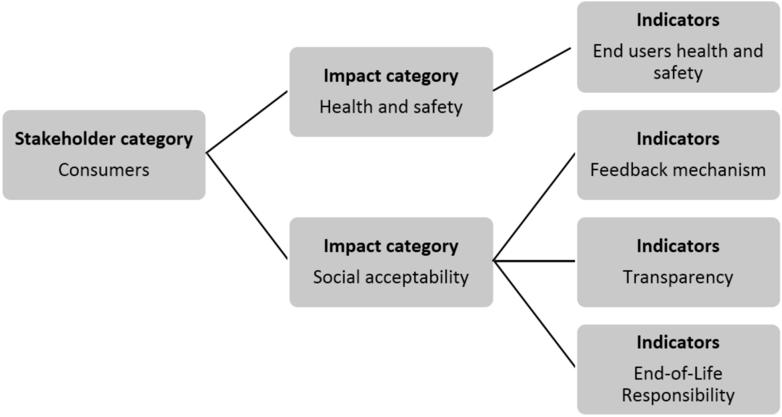
“Inclusion of some social indicators such as end users’ health and safety, feedback mechanisms, transparency, and end-of-life responsibility in the social life cycle assessment scheme for bio-based products would allow consumers to make better purchasing decisions, creating momentum on the market diffusion of a bio-bas…”
BackgroundA Socio-economic Indicator for EoL Strategies for Bio-based Products
D’Adamo, I., Falcone, P. M., Imbert, E., & Morone, P. (2020) · Ecological Economics · doi:10.1016/j.ecolecon.2020.106794 · Cited by 83
Self-citationD’Adamo, I., Sánchez, R. G., Salgado, S. M., & Settembre‐Blundo, D. (2021) · Sustainability · doi:10.3390/su13126752 · Cited by 75
“A well-established method in the literature is the Likert-scale-based survey [37], with five levels of assessment that were defined as follows: 1 = totally disagree, 2 = disagree, 3 = neither agree nor disagree, 4 = agree and 5 = completely agree [38].”
MethodBezama, A., Ingrao, C., O’Keeffe, S., & Thrän, D. (2019) · Sustainability · doi:10.3390/su11247235 · Cited by 55
Progress of social assessment in the framework of bioeconomy under a life cycle perspective
Rebolledo-Leiva, R., Moreira, M. T., & González‐García, S. (2023) · Renewable and Sustainable Energy Reviews · doi:10.1016/j.rser.2023.113162 · Cited by 69
Construction Cost of Green Building Certified Residence: A Case Study in Taiwan
Sun, C.-Y., Chen, Y.-G., Wang, R.-J., Lo, S.-C., Yau, J.-T., & Wu, Y.-W. (2019) · Sustainability · doi:10.3390/su11082195 · Cited by 52
Social life cycle assessment for industrial product development: A comprehensive review and analysis
Mármol, C., Martín-Mariscal, A., Picardo, A., & Peralta, E. (2023) · Heliyon · doi:10.1016/j.heliyon.2023.e22861 · Cited by 68
Performance Evaluation of Sustainable Soil Stabilization Process Using Waste Materials
Aamir, M., Mahmood, Z., Nisar, A., Farid, A., Khan, T. A., Abbas, M., Ismaeel, M., Shah, S. A. R., & Waseem, M. (2019) · Processes · doi:10.3390/pr7060378 · Cited by 63
“The concept of a waste recycling approach and the circular economy has proven to be a positive way to analyze social, economic, and environmental impacts [32].”
BackgroundGaffey, J., McMahon, H. P., Marsh, E., Vehmas, K., Kymäläinen, T., & Vos, J. (2021) · Sustainability · doi:10.3390/su13116062 · Cited by 69
“The role of tools such as life cycle assessment and social life cycle assessment has been acknowledged as contributing to informing and supporting the consumer transition towards more sustainable consumption patterns, including the uptake of BBPs [18,19].”
BackgroundZhang, L., Peng, W., Wang, F., Bao, H., Zhan, P., Chen, J., & Tong, Z. (2021) · Fuel · doi:10.1016/j.fuel.2021.122153 · Cited by 47
Systematic Map of the Social Impact Assessment Field
Bonilla-Alicea, R. J., & Fu, K. K. (2019) · Sustainability · doi:10.3390/su11154106 · Cited by 49
Rafiaani, P., Kuppens, T., Thomassen, G., Van Dael, M., Azadi, H., Lebailly, P., & Van Passel, S. (2020) · The International Journal of Life Cycle Assessment · doi:10.1007/s11367-019-01702-x · Cited by 38
“Nevertheless, Falcone et al. (2019) and Zimmermann and Schomäcker (2017) highlighted the importance of social assessment at the early stage of technology developments. The advantage of such results is that companies can use them to compare their performance with that of their specific sector and/or region in which the…”
BackgroundInfluentialMousavi, M., Kowsari, E., Gheibi, M., Cheshmeh, Z. A., Teymoorian, T., & Ramakrishna, S. (2024) · Materials Circular Economy · doi:10.1007/s42824-023-00098-2 · Cited by 47
“Mean-while, advertising and creating economic models based on customer satisfaction can increase the level of sustainability in competitive conditions (Friedrich 2021; Falcone and Imbert 2018).”
Delgado, A. D., Domínguez‐Torres, H., & Domínguez-Torres, C.-A. (2020) · Sustainability · doi:10.3390/su12145602 · Cited by 41
Life Cycle Assessment of a Buoy-Rope-Drum Wave Energy Converter
Zhai, Q., Zhu, L., & Lu, S. (2018) · Energies · doi:10.3390/en11092432 · Cited by 35
Lin, R., Man, Y., Lee, C. K. M., Ji, P., & Ren, J. (2019) · Journal of Cleaner Production · doi:10.1016/j.jclepro.2019.119729 · Cited by 41
Arefeen, S., & Shimada, K. (2020) · Sustainability · doi:10.3390/su12020540 · Cited by 50
“According to Falcon and Imbert [9], linking the ecosystem change with economic opportunities and social wellbeing has always been a challenging work.”
BackgroundNubi, O., Morse, S., & Murphy, R. (2021) · Sustainability · doi:10.3390/su131810177 · Cited by 36
“The approach used is similar to that of [46,54], as applied to the promotion of the”
MethodSocial Sustainability Assessment in Livestock Production: A Social Life Cycle Assessment Approach
Rivera-Huerta, A., Lozano, M. S. R., Padilla‐Rivera, A., & Güereca, L. P. (2019) · Sustainability · doi:10.3390/su11164419 · Cited by 39
Fürtner, D., Ranacher, L., Echenique, E. A. P., Schwarzbauer, P., & Hesser, F. (2021) · BioEnergy Research · doi:10.1007/s12155-021-10261-9 · Cited by 37
“40 Falcone and Imbert 2018 [32] General”
A Practical Approach for Social Life Cycle Assessment in the Automotive Industry
Karlewski, H., Lehmann, A., Ruhland, K., & Finkbeiner, M. (2019) · Resources · doi:10.3390/resources8030146 · Cited by 32
Carbon Recycling of High Value Bioplastics: A Route to a Zero-Waste Future
Keith, M. J., Koller, M., & Lackner, M. K. (2024) · Polymers · doi:10.3390/polym16121621 · Cited by 36
Comparative sustainability assessments for integrated cassava starch wastes biorefineries
Padi, R. K., & Chimphango, A. F. A. (2020) · Journal of Cleaner Production · doi:10.1016/j.jclepro.2020.125171 · Cited by 36
Presumido, P. H., de Sousa, F. R., Gonçalves, A., Bosco, T. C. D., & Feliciano, M. (2018) · Agriculture · doi:10.3390/agriculture8100165 · Cited by 35
“Life cycle sustainability assessment represents the evaluation of all environmental, social, and economic negative impacts and benefits of a product throughout its life cycle and how to use the result to support decision-making processes [8].”
BackgroundYasinta, T., & Karuniasa, M. (2021) · IOP Conference Series Earth and Environmental Science · doi:10.1088/1755-1315/716/1/012113 · Cited by 39
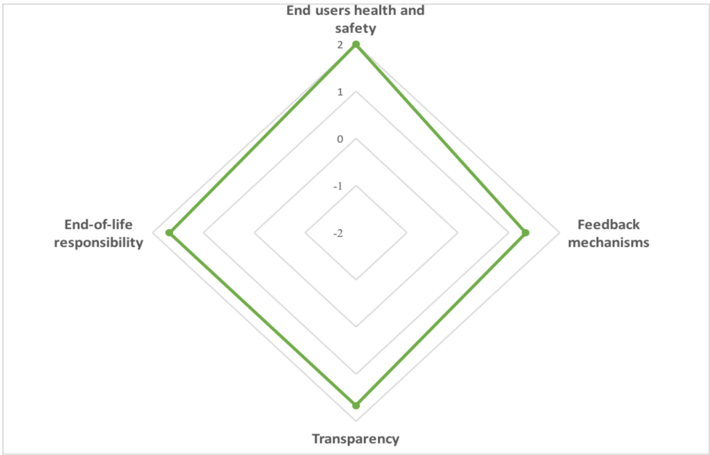
“Stakeholder perspective in a radar graph [9].”
MethodAddressing Stakeholder Concerns Regarding the Effective Use of Bio-Based and Biodegradable Plastics
Fletcher, C. A., Niemenoja, K., Hunt, R., Adams, J., Dempsey, A., & Banks, C. E. (2021) · Resources · doi:10.3390/resources10100095 · Cited by 37
Sajid, Z., & Lynch, N. (2018) · Sustainability · doi:10.3390/su10093289 · Cited by 27
Life Cycle Inventory for Pavements - A Case Study of South Africa
Blaauw, S. A., & MAINA, J. W. (2021) · Transportation Engineering · doi:10.1016/j.treng.2021.100049 · Cited by 25
Gaglio, M., Tamburini, E., Lucchesi, F., Aschonitis, V. G., Atti, A., Castaldelli, G., & Fano, E. A. (2019) · Resources · doi:10.3390/resources8020060 · Cited by 30
“A possible solution to minimize wastage and to promote sustainable local development and resource efficiency can be the wide application of the emerging bioeconomy and circular economy model [15,16], which has also been identified as a fundamental requirement for sustainable development by the 2015 Paris Agreement [17…”
BackgroundBezama, A., Hildebrandt, J., & Thrän, D. (2021) · Sustainability · doi:10.3390/su13084221 · Cited by 22
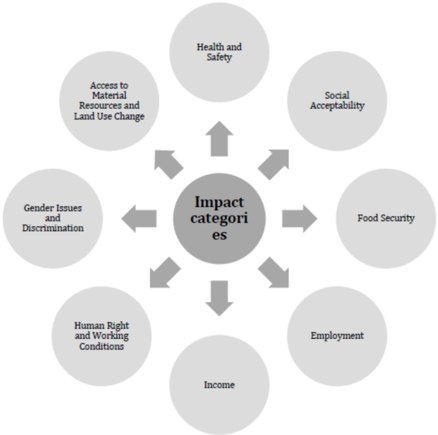
“The results obtained by the RESPONSA are aligned with the outcomes of previous authors in the bio-based field [58,59], in terms of the relevance of the indices health and safety, decent work, labor and human rights, and social acceptability for social life cycle assessment in the bioeconomy field.”
ResultZarauz, I., Hernández, M. A. S., & Rivera‐Lirio, J. M. (2024) · Journal of Cleaner Production · doi:10.1016/j.jclepro.2024.144570 · Cited by 26
Sustainability Transition towards a Biobased Economy: Defining, Measuring and Assessing
Morone, P. (2018) · Sustainability · doi:10.3390/su10082631 · Cited by 23
“Both Falcone and Imbert [10] and Martin et al. [11] look at a specific dimension of sustainability, i.e., the social one.”
BackgroundInfluentialTackling Uncertainty in the Bio-Based Economy
Falcone, P. M., & Imbert, E. (2019) · International Journal of Standardization Research · doi:10.4018/ijsr.2019010105 · Cited by 23
Self-citationPadi, R. K., Douglas, S., & Murphy, F. (2023) · Energy · doi:10.1016/j.energy.2023.128542 · Cited by 24
Uceda-Rodríguez, M., Moreno-Maroto, J. M., Cobo-Ceacero, C. J., López, A. B., Cotes-Palomino, T., & García, C. M. (2022) · Applied Sciences · doi:10.3390/app12041917 · Cited by 21
“The industrial sector, as well as society in general, is increasingly aware of the importance of addressing the efficient use of resources and raw materials, as well as the impact of high emissions of harmful substances associated with human activity on the environment, public health, resource value and economic devel…”
BackgroundSocial Life Cycle Inventory for Pavements – A Case Study of South Africa
Blaauw, S. A., MAINA, J. W., & Grobler, L. J. (2021) · Transportation Engineering · doi:10.1016/j.treng.2021.100060 · Cited by 21
Life cycle sustainability assessment of bioderived advanced materials: A state-of-the-art Review
Muazu, R. I., Yaseneva, P., Shah, N., & Titirici, M. (2024) · Journal of environmental chemical engineering · doi:10.1016/j.jece.2024.114387 · Cited by 29
Life cycle sustainability impact categories for sustainable procurement
de Oliveira, D. F., & de Souza, R. G. (2022) · Journal of Cleaner Production · doi:10.1016/j.jclepro.2022.135448 · Cited by 36
Panoutsou, C., von Cossel, M., Ciria, P., Ciria, C. S., Baraniecki, P., Monti, A., Zanetti, F., & Dubois, J. (2022) · Biofuels Bioproducts and Biorefining · doi:10.1002/bbb.2376 · Cited by 23
Challenges and opportunities toward a sustainable bio‐based chemical sector in Europe
de Souza, N. R. D., Groenestege, M., Spekreijse, J., Ribeiro, C., Matos, C. T., Pizzol, M., & Cherubini, F. (2024) · Wiley Interdisciplinary Reviews Energy and Environment · doi:10.1002/wene.534 · Cited by 22
“Finally, few studies assess social impacts of bio-based chemicals and plastics, calling for more research in this topic (Falcone & Imbert, 2018; Spierling et al., 2018).”
Friedrich, D. (2021) · Journal of Cleaner Production · doi:10.1016/j.jclepro.2021.126716 · Cited by 20
Fletcher, C. A., Aureli, S., Foschi, E., Filho, W. L., Barbir, J., Beltrán, F. R., Lehtinen, L., & Banks, C. E. (2024) · Current Research in Environmental Sustainability · doi:10.1016/j.crsust.2024.100246 · Cited by 26
“Also consumer expectations regarding performance can influence purchasing behaviors and can be linked to past experience and current level of knowledge (Falcone and Imbert, 2018; Findrik and Meixner, 2023; Uehara et al., 2023).”
BackgroundResultInfluentialEnergy Life-Cycle Assessment of Fruit Products—Case Study of Beira Interior’s Peach (Portugal)
Gaspar, J. P., Gaspar, P. D., da Silva, P. D., Simões, M. P., & Santo, C. E. (2018) · Sustainability · doi:10.3390/su10103530 · Cited by 18
“Sustainability is an anthropocentric idea, before meeting the environmental criteria, it needs to meet the Human population requirements [7,10].”
BackgroundLife Cycle Assessment of Thermoelectric Generators (TEGs) in an Automobile Application
Kawajiri, K., Kishita, Y., & Shinohara, Y. (2021) · Sustainability · doi:10.3390/su132413630 · Cited by 15
“Continuation of using fossil fuels will soon reach a critical point from a sustainability point of view [3].”
BackgroundEffects of information provision on public attitudes toward bioplastics in Japan
Otaki, Y., & Kyono, T. (2022) · Frontiers in Sustainability · doi:10.3389/frsus.2022.927857 · Cited by 14
“It has been stressed that consumers are usually aware that they would pay a higher price for green products, and, therefore, their willingness to pay for such products must be supported by adequate information (Falcone and Imbert, 2018).”
BackgroundSocial life cycle assessment and its methodological challenges: A bibliometric and content analysis
Huang, Q., Sun, Y., Guo, Q., Li, Q., Zhang, Y., Li, X., & Wang, L. (2024) · Journal of Industrial Ecology · doi:10.1111/jiec.13605 · Cited by 14
“…et al., 2018), methodology under bioeconomy framework (Rebolledo-Leiva et al., 2023), LCSA practice (Leroy-Parmentier et al., 2023), guidelines (Tokede & Traverso, 2020), and the selection of categories and indicators (Ayassamy & Pellerin, 2023; Falcone & Imbert, 2018; Mancini & Sala, 2018).”
Kumble, P. A. (2019) · Sustainability · doi:10.3390/su11174776 · Cited by 14
Shades of Sustainability: Who are the Buyers and Non-buyers of Sustainable Packaging?
McCarthy, B., & Wang, P. (2022) · Journal of Food Products Marketing · doi:10.1080/10454446.2022.2064202 · Cited by 16
“It is reported that market demand for sustainable packaging is hampered by ‘greenwashing’ suspicions, and public acceptance for sustainable packaging will depend on overcoming fears about safety and health impacts (Falcone & Imbert, 2018).”
BackgroundResultState/Academia Key Stakeholders’ Perceptions Regarding Bioeconomy: Evidence from Greece
Τρίγκας, Μ., & Karagouni, G. (2023) · Sustainability · doi:10.3390/su15139976 · Cited by 17
Iqbal, K., Xu, C., Nasir, H., Alam, M., Farooq, A., & Williams, E. J. (2020) · Advances in Materials Science and Engineering · doi:10.1155/2020/1360197 · Cited by 10
“If most of the quantity does not recycle, it will pollute the environment because the waste recycling concept and circular economy is a positive approach to analyse economic, social, and environmental impacts [7].”
BackgroundWurster, S., & Reis, C. F. D. B. (2022) · Sustainability · doi:10.3390/su141911951 · Cited by 11
Consumer demand for bioplastics: an umbrella review of barriers and recommendations
Domingos, S., Farias, A. R., Possidónio, C., Luís, S., Loureiro, A., Cruz, B., & Portugal, E. (2025) · Journal of Risk Research · doi:10.1080/13669877.2025.2553084 · Cited by 10
“Additionally, they have high expectations for technical and environmental performance (Blesin, Jaspersen, and Möhring 2017; Falcone and Imbert 2018).”
A Systematic Approach for Assessing and Managing the Urban Bioeconomy
Bezama, A., Mittelstädt, N., & Thrän, D. (2021) · Springer eBooks · doi:10.1007/978-3-030-64969-2_18 · Cited by 7
Environmental and Safety Aspects of Bio-based Cosmetics in Indonesia
Paramita, S., Kusuma, I. W., Sulistioadi, Y. B., & Kiswanto, K. (2024) · Springer eBooks · doi:10.1007/978-981-97-1908-2_22 · Cited by 11
Virgolino, J. L. F., & Holden, N. M. (2025) · Cleaner and Circular Bioeconomy · doi:10.1016/j.clcb.2025.100202 · Cited by 7
Life Cycle Assessment of Water in Sport Equine Production in Argentina: A Case Study
Vaccaro, M. M., Liñeiro, A. G., Fernández‐Cirelli, A., & Volpedo, A. V. (2021) · Agriculture · doi:10.3390/agriculture11111084 · Cited by 4
Ziegler-Rodríguez, K., Gonzalez-Flo, E., García, J., & Garfí, M. (2026) · Environmental Impact Assessment Review · doi:10.1016/j.eiar.2026.108333 · Cited by 7
On the societal impact of publicly funded Circular Bioeconomy research in Europe
Brandão, A. S., & Santos, J. M. R. C. A. (2023) · Research Evaluation · doi:10.1093/reseval/rvad002 · Cited by 3
Sustainability Transition Towards a Bio-Based Economy: New Technologies, New Products, New Policies
Morone, P. (2018) · MDPI eBooks · doi:10.3390/books978-3-03897-381-2 · Cited by 7
Is the consumer experience creating barriers for the effective uptake and disposal of bioplastics?
Fletcher, C. A. (2022) · Clean Technologies and Recycling · doi:10.3934/ctr.2022016 · Cited by 7
Environmental, Economic, and Social Life Cycle Assessment in the Polymer Composites Sector
Rosa, A. D. L., Valente, C., & Aradoaei, M. (2024) · International Conference and Exposition on Electrical and Power Engineering (EPE) · doi:10.1109/epei63510.2024.10758166 · Cited by 3
“Most of the literature focuses on biofuels, [19] on the stakeholder category workers excluding for example the social impacts on consumers [20], [21].”
Evaluating environmental and social impacts of fluorescent lamp recycling processes in Thailand
Sari, E. (2020) · Chula Digiverse · doi:10.58837/chula.the.2020.244 · Cited by 4
Zukünfte nachhaltiger Bioökonomie: Kommunikation und Partizipation in neuen Wirtschaftsformen
Reinermann, J.-L., Kamlage, J.-H., de Vries, N., Goerke, U., Oertel, B., & Schrey, S. D. (2022) · Neue Ökologie · doi:10.1515/9783839459836 · Cited by 3
Social Life Cycle Assessment of a Circular Economy System of Lignin-Based Biocoating
Cassuriaga, B., dos Santos, A. M. R., Alves, P., Staccioli, L., Gallego, J., & Carvalho, A. I. C. D. S. G. (2025) · Industrial & Engineering Chemistry Research · doi:10.1021/acs.iecr.5c00653 · Cited by 3
Ajala, S. B., Ayojimi, W., & Hájek, M. (2025) · Sustainability · doi:10.3390/su17188261 · Cited by 3
Compost, Social Sustainability, and Circular Economy in Guatemala
Kumble, P. A. (2022) · IntechOpen eBooks · doi:10.5772/intechopen.100280 · Cited by 1
ДОСЛІДЖЕННЯ СПРИЙНЯТТЯ БІОЕКОНОМІЧНОЇ ТРАНСФОРМАЦІЇ КЛЮЧОВИМИ СТЕЙКХОЛДЕРАМИ НА МІКРОРІВНІ
Vostriakova, V. I. (2024) · Сталий розвиток економіки · doi:10.32782/2308-1988/2024-48-3 · Cited by 1
Yosep, Y., Mulkhan, U., Hasanudin, U., & Iryani, D. A. (2024) · Applied Environmental Research · doi:10.35762/aer.2024013 · Cited by 4
Unveiling the Power of Neuromarketing: Crafting Brand Connections in the Minds of Retail Consumers
Pol, N., Daveshar, S., Bhakat, R. S., Kazim, S., Swaroop, K. R., & Mukthar, K. P. J. (2024) · Lecture notes in networks and systems · doi:10.1007/978-3-031-67437-2_32 · Cited by 1
Stakeholders’ awareness and perception of bio-economic transformation in Ukraine
Vostriakova, V. I. (2024) · IOP Conference Series Earth and Environmental Science · doi:10.1088/1755-1315/1415/1/012010 · Cited by 1
Imbert, E., & Falcone, P. M. (2020) · Royal Society of Chemistry eBooks · doi:10.1039/9781839160271-00166 · Cited by 2
Self-citationMcCarthy, B., & Wang, P. (2022) · Springer eBooks · doi:10.1007/978-981-16-5260-8_21 · Cited by 2
Drivers of the Bioeconomy's Development
Sadik‐Zada, E. R. (2022) · Neue Ökologie · doi:10.14361/9783839459836-006
Aureli, S., Foschi, E., Fletcher, C. A., Filho, W. L., Barbir, J., Lehtinen, L., & beltran, F. (2023) · SSRN Electronic Journal · doi:10.2139/ssrn.4525618 · Cited by 1
Social Sustainability Assessment
Singh, A. K. (2025) · Springer eBooks · doi:10.1007/978-3-031-83852-1_8
Techno-economic assessment of biochar production
Sivaramakrishnan, S., & Shrinithivihahshini, N. D. (2025) · Elsevier eBooks · doi:10.1016/b978-0-443-43794-6.00004-6
Ditting, R., Baumann, J.-R., Bardos, P., & Müssig, J. (2026) · Circular Economy and Sustainability · doi:10.1007/s43615-026-01131-7 · Cited by 1
“Products featuring fair, transpar - ent, and ethically sound value chains are increasingly advantaged by regulatory trends and consumer awareness [53].”
Metadata
- Authors
- Falcone, P., & Imbert, E.
- Affiliations
- Unitelma Sapienza University (IT)
- Corresponding author
- Falcone, Pasquale
- Venue
- Sustainability
- Publisher
- MDPI AG
- Published
- 2018-03-30
- Volume
- 10
- Issue
- 4
- Pages
- 1031
- ISSN
- 2071-1050 (ISSN-L)
- OpenAlex
- W2795051699
- Semantic Scholar
- f31983b987226bfc296e6f22f48fff9521e6fad1
- Cited by
- 92
- References
- 47
- Citations by year
- 2026: 2 · 2025: 6 · 2024: 13 · 2023: 7 · 2022: 14 · 2021: 16 · 2020: 10 · 2019: 18 · 2018: 6
- FWCI
- 6.28
- Type
- journal article
- Language
- en
- Open access
- gold
- doi.org
- Licence
- Locations
- Sustainability (publishedVersion, cc-by)
- RePEc: Research Papers in Economics (submittedVersion)
- DOAJ (DOAJ: Directory of Open Access Journals) (submittedVersion, cc-by-sa)
- IRIS Research product catalog (Sapienza University of Rome) (submittedVersion)
- CINECA IRIS Institutial research information system (Parthenope University of Naples) (submittedVersion)
- Zenodo (CERN European Organization for Nuclear Research) (submittedVersion, cc-by)
- Funders
- European Commission (HORIZON2020, 727740)
- Topics
- Physical Sciences › Environmental Science › Environmental Engineering › Environmental Impact and Sustainability
- Life Sciences › Agricultural and Biological Sciences › General Agricultural and Biological Sciences › Bioeconomy and Sustainability Development
- Social Sciences › Business, Management and Accounting › Strategy and Management › Sustainable Supply Chain Management
- Keywords
- social life cycle assessment, bioproducts, consumer perception, social sustainability indicators, market uptake, consumer health and safety, transparency, feedback mechanisms, purchase decision, sustainable consumption
About these checks
Registry, retraction, Cites and statistics results are computed, not judged, with one exception: a printed reference that no index lists is read once by a model before it counts as a citation error. Claims are extracted by a model and kept only when their quote appears verbatim in the text; each cited source is then checked, with a model’s help, for whether it says what the claim relies on. Those verdicts can be wrong — read the claim’s quote and the cited source before relying on one.
Statistics and arithmetic are recomputed, not judged.
Confidence bands are shown only for fields calibrated on our annotated test set. None is calibrated yet, so no band is shown.
What counts as a claim ›How we measure confidence ›How we check this ›
Are you an author, or do you see a problem with this page? Request a review
Data sources
Bibliographic data: Semantic Scholar, OpenAlex, Crossref.
Contains information from the Semantic Scholar Academic Graph Datasets, made available under the ODC Attribution License (ODC-BY 1.0).
Semantic Scholar’s data is described in: Kinney, R., et al. (2023). The Semantic Scholar Open Data Platform. arXiv:2301.10140.
