

Sharing and Sustainable Consumption in the Era of COVID-19
Open accessThe DOI matches its Crossref record; 45 of the 47 references it cites were found in a registry or an index.
Abstract
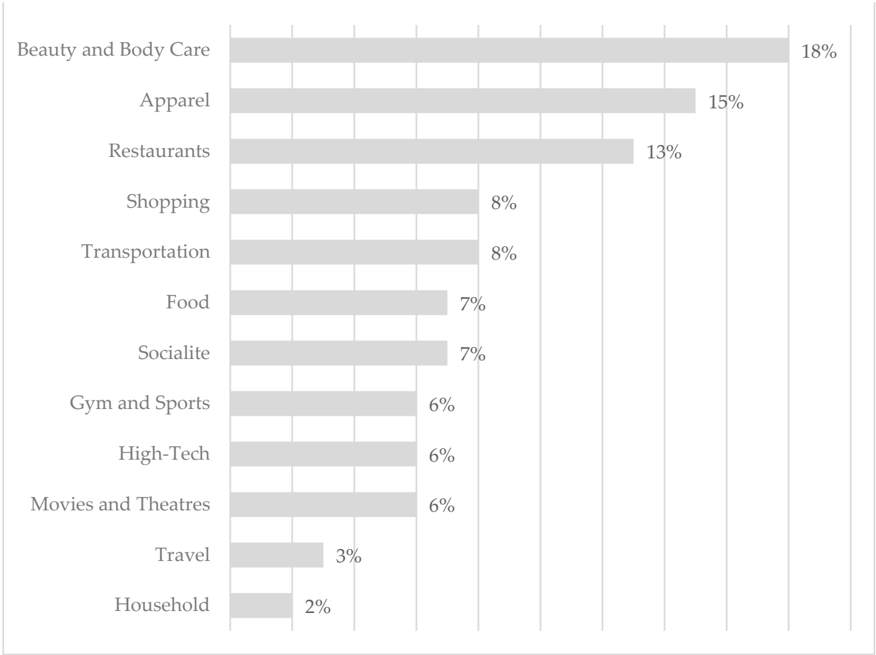
The pandemic triggered by the spread of the coronavirus disease 2019 (COVID-19) has had a major impact on numerous collective behaviors, while also changing individuals’ consumption choices. Thus, social researchers dealing with consumption patterns need to reflect on the changes of individual practices, also in view of the growing centrality in the public debate of issues related to sustainability and responsible consumption. The presented paper takes its cue from a quantitative research project aiming at understanding the proneness of Italian people towards sustainable products in COVID-19 era, aiming to test whether and how the coronavirus pandemic has changed that attitude. Data have been collected through an online self-completion questionnaire from October to December 2020, using a snowball procedure to collect the purposive sample of approximately 500 questionnaires. Moreover, the second step of the research aimed to deepen the topic of collaborative consumption to verify how the pandemic is changing and how it will re-draft Italian consumers’ willingness to adopt specific forms of shared consumption such as car sharing or bike sharing. According to our data, respondents increased the frequency of purchase of certain products such as books and TV series, while reducing the frequency of purchase of others, such as beauty care and clothing items. Furthermore, we found a decrease in the use of public transport and ridesharing, since respondents prefer to avoid contact with strangers on shared transportations means. As for sustainability, our results highlight the commitment of our sample of young, educated women toward a more responsible attitude in consumption.
Overview
The claims and statistics of this paper haven’t been checked yet.
Free: it reads the open-access text and checks the first 5 claims that cite a source we can check. Create a free account to check every claim.
Integrity signals
Registry
Cites
Statistics
Figures
Verification
Claims the paper makes
The claims and statistics of this paper haven’t been checked yet.
Free: it reads the open-access text and checks the first 5 claims that cite a source we can check. Create a free account to check every claim.
Claims other papers make about this one
Each is checked against this paper’s own text: does it say what the citing paper says it does?
The source backs part of the claim, not all of it — or backs it for a different population, condition or comparison.
In the citing paper
“Additionally, after the COVID-19 pandemic, a healthier life perspective has arisen, opening novel opportunities for the cosmetic industry, especially focusing on the circular economy [3,5].”
From Innovative Approaches to an Eco-Friendly Cosmetic Industry: A Review of Sustainable Ingredients (2024) · cites this paper as [5]
Experimental — accuracy not yet measured
Self-check
Percentages, sums and reported differences re-computed from the paper’s own numbers.
The self-check needs the paper’s full text.
Citations
Cites
Schwartz, S. H. (1992) · Advances in Experimental Social Psychology · doi:10.1016/s0065-2601(08)60281-6 · Cited by 14,619 · cited 3×
“As Schwartz highlighted [45], values are critical motivators of behaviors and attitudes and are crucial for explaining social change; to summarize the oppositions between competing values, the scholar [45,46] organized his value system along two bipolar dimensions.”
BackgroundAn overview of the Schwartz theory of basic values
Schwartz, S. H. (2012) · Online Readings in Psychology and Culture · doi:10.9707/2307-0919.1116 · Cited by 4,147 · cited 1×
“As Schwartz highlighted [45], values are critical motivators of behaviors and attitudes and are crucial for explaining social change; to summarize the oppositions between competing values, the scholar [45,46] organized his value system along two bipolar dimensions.”
BackgroundConsumption and Theories of Practice
Warde, A. (2005) · Journal of Consumer Culture · doi:10.1177/1469540505053090 · Cited by 2,682 · cited 1×
“Starting from the idea that practices are interrelated, and therefore should be seen as a system and not as a set of individual units [12], researchers identified some dimensions, generally related to one another, useful to understand whether and how much Italian consumers are interested in the issue of sustainability…”
BackgroundSustainable food consumption: Exploring the consumer “attitude–behavioral intention” gap
Vermeir, I., & Verbeke, W. (2006) · Journal of Agricultural and Environmental Ethics · doi:10.1007/s10806-005-5485-3 · Cited by 2,524
Predicting green product consumption using theory of planned behavior and reasoned action
Paul, J., Modi, A., & Patel, J. (2016) · Journal of Retailing and Consumer Services · doi:10.1016/j.jretconser.2015.11.006 · Cited by 2,399 · cited 1×
“As far as fashion is concerned, it is explored the possibility that ethical consumption could be influenced by some fashionable trend, even if at least one study [18] reveals that people’s intention to buy a sustainable product is not affected by the opinions of significant others.”
BackgroundMeasurement of Consumer Susceptibility to Interpersonal Influence
Bearden, W. O., Netemeyer, R. G., & Teel, J. E. (1989) · Journal of Consumer Research · doi:10.1086/209186 · Cited by 2,320 · cited 1×
“[31] have revealed, it is possible that the fashion dimension is significantly affected by the normative influence, since subjective norms have an extensive impact on young consumers’ consumption behavior.”
BackgroundNew Ways of Thinking about Environmentalism: Elaborating on Gender Differences in Environmentalism
Zelezny, L. C., Chua, P., & Aldrich, C. (2000) · Journal of Social Issues · doi:10.1111/0022-4537.00177 · Cited by 1,816
Impact of Covid-19 on consumer behavior: Will the old habits return or die?
Sheth, J. (2020) · Journal of Business Research · doi:10.1016/j.jbusres.2020.05.059 · Cited by 1,766 · cited 2×
“As Seth [5] points out, social actors have shown flexibility and resilience, using improvisation to manage the shortage of products or services.”
BackgroundDiamantopoulos, A., Schlegelmilch, B. B., Sinkovics, R. R., & Bohlen, G. M. (2003) · Journal of Business Research · doi:10.1016/s0148-2963(01)00241-7 · Cited by 1,692 · cited 1×
“6%), confirming that female consumers with a relatively high educational status are most interested in ethical consumption [25,26], authors decided to focus their analysis on them and to use the male part of the sample (15.”
BackgroundSustainable consumption: green consumer behaviour when purchasing products
Young, W., Hwang, K., McDonald, S., & Oates, C. J. (2010) · Sustainable Development · doi:10.1002/sd.394 · Cited by 1,609 · cited 1×
“In this perspective, several studies [28,29] have indicated that “substantial environmental knowledge is necessary to take suitable action towards ecological protection and that consumers with higher ecological knowledge are more likely to demonstrate sustainable purchasing behavior” [30] (p.”
Background
Research works printed but not linked: 1
- 6. Zinola, A. L'impatto del Covid-19 sugli atteggiamenti e i comportamenti di consumo. Micro Macro Market. 2020, 3, 647-656.
Cited by
Items 101–120 of 120
COMPORTAMENTO DE CONSUMO SUSTENTÁVEL: UM ESTUDO COM DISCENTES DE ENSINO SUPERIOR
Bogdezevicius, C. R., Gução, M. F. B., & Pinto, J. S. (2022) · Revista Diálogos Interdisciplinares · doi:10.55028/gepfip.v1i10.16488
Mattos, G. G. C. (2023) · Digital Library of Theses and Dissertations (Universidade de São Paulo) · doi:10.11606/d.96.2023.tde-01122023-115713 · Cited by 2
Sustainable Consumption Behaviour of Young Consumers: Gender-Based Approach From an Emerging Market
Onat, K. T., & Tanrıkulu, C. (2024) · Advances in business strategy and competitive advantage book series · doi:10.4018/979-8-3693-1155-4.ch007
Analysis of College Students' Consumption Behavior Based on LDA Thematic Modeling
Sun, S., Guo, J., Bai, Y., Yang, J., Dai, W., & Jia, R. (2024) · International Conference on Economic Management and Model Engineering (ICEMME) · doi:10.4108/eai.17-11-2023.2342698
İPEKOĞLU, H. Y., & Kurtoğlu, M. B. (2024) · Journal of Turkish Studies · doi:10.7827/turkishstudies.71486
Consumer preference for sustainability labels in the context of China
Kim, R. B., & Li, J. (2024) · Environment and Social Psychology · doi:10.59429/esp.v9i7.2070
Factors Influencing Changes in Consumer Behavior amidst Post COVID-19 Pandemic
Li, C. C., Luqman, A., Husin, S., Rusok, N. H. M., & Alwi, M. A. M. (2024) · Information Management and Business Review · doi:10.22610/imbr.v16i2(i).3784
“For example, some product categories (e.g., clothing) experienced reduced sales during the pandemic while others (e.g., entertainment products) experienced increased sales (Degli et al., 2021).”
BackgroundSÜRDÜRÜLEBİLİR TURİZM BAĞLAMINDA YAŞAM TARZININ DAVRANIŞSAL ROL ÜZERİNDEKİ ETKİSİNİN İNCELENMESİ
Karaca, Ş., & Öcel, Y. (2024) · Academic Review of Humanities and Social Sciences · doi:10.54186/arhuss.1562206
Usluoğlu, S., & Köksal, C. (2024) · İstanbul Ticaret Üniversitesi Dış Ticaret Dergisi · doi:10.62101/iticudisticaretdergisi.1540027
İstediğini Öde Kriz Dönemlerinde Alternatif Fiyatlandırma Stratejisi Olabilir mi?
Dalgıç, T., Şaan, T., & Tiltay, M. A. (2024) · Optimum Ekonomi ve Yönetim Bilimleri Dergisi · doi:10.17541/optimum.1326396 · Cited by 1
Tudor, T. L. (2025) · Royal Society of Chemistry eBooks · doi:10.1039/9781837676033-00001
Food consumption practices during Covid-19: an opportunity for European consumers?
Tirabassi, L. (2025) · Edward Elgar Publishing eBooks · doi:10.4337/9781035355303.00012
An impact of COVID-19 on consumer buying behavior
Kaur, H., & Singh, J. (2025) · International Journal of Scientific Development and Research · doi:10.56975/ijsdr.v10i6.303776
Encarnación, D. J., Thuvander, L., Stavroulaki, I., Elangovan, E., & Rosado, L. (2025) · Journal of Cleaner Production · doi:10.1016/j.jclepro.2025.146237
The Impact of Socially Responsible Medical Tourism Firms on Digital Consumer Behavior
López-Fernández, A. M., & Arrioja-Castrejón, E. (2025) · Springer eBooks · doi:10.1007/978-3-031-90794-4_11
Habib, M., & Ashraf, N. (2023) · Pakistan Journal of Commerce and Social Sciences · doi:10.64534/commer.2023.071
Çabuk, S., & Gür, D. (2025) · Çukurova Üniversitesi Sosyal Bilimler Enstitüsü Dergisi · doi:10.35379/cusosbil.1589455
The role of emotions in consumption contexts and their influence on decision-making
Putinas, A.-C. (2021) · theses.fr (ABES) · doi:10.70675/4a2b78b1z32b3z4053z982fzdd29b90df4cf
Innovative Fibers for Sustainability in Fashion: Luxury Versus Fast Fashion Consumer Responses
Raimondo, M. A., & Donato, C. (2026) · Sustainable textiles · doi:10.1007/978-3-032-29974-1_3
Tuğer, A. T. (2026) · European journal of managerial research. · doi:10.62666/eujmr.1982084
Metadata
- Authors
- Degli Esposti, P., Mortara, A., & Roberti, G.
- Affiliations
- Department of Sociology and Business Law, University of Bologna, 40126 Bologna, Italy
- IULM University (IT)
- University of L'Aquila (IT)
- Corresponding author
- Roberti, Geraldina
- ORCID
- Mortara, Ariela
- Venue
- Sustainability
- Publisher
- MDPI AG
- Published
- 2021-02-10
- Volume
- 13
- Issue
- 4
- Pages
- 1903
- ISSN
- 2071-1050 (ISSN-L)
- OpenAlex
- W3126313388
- Cited by
- 121
- References
- 47
- Citations by year
- 2026: 3 · 2025: 10 · 2024: 24 · 2023: 32 · 2022: 36 · 2021: 16
- FWCI
- 24.84
- Type
- journal article
- Language
- en
- Open access
- gold
- doi.org
- Licence
- Locations
- Sustainability (publishedVersion, cc-by)
- Archivio istituzionale della ricerca (Alma Mater Studiorum Università di Bologna) (submittedVersion, cc-by)
- Archivio Istituzionale della Ricerca - Università degli Studi dell Aquila (submittedVersion, public-domain)
- RePEc: Research Papers in Economics (submittedVersion)
- DOAJ (DOAJ: Directory of Open Access Journals) (submittedVersion)
- IRIS Research product catalog (Sapienza University of Rome) (submittedVersion)
- Topics
- Social Sciences › Business, Management and Accounting › Marketing › Environmental Sustainability in Business
- Social Sciences › Economics, Econometrics and Finance › Economics and Econometrics › COVID-19 Pandemic Impacts
- Social Sciences › Business, Management and Accounting › Marketing › Sharing Economy and Platforms
- Keywords
- COVID-19 pandemic, sustainable consumption, responsible consumption, collaborative consumption, shared consumption, car sharing, bike sharing, consumer behavior, purchase frequency, transit ridership, ride-sharing, Italian consumers, gender differences in consumption, young women
About these checks
Registry, retraction, Cites and statistics results are computed, not judged, with one exception: a printed reference that no index lists is read once by a model before it counts as a citation error. Claims are extracted by a model and kept only when their quote appears verbatim in the text; each cited source is then checked, with a model’s help, for whether it says what the claim relies on. Those verdicts can be wrong — read the claim’s quote and the cited source before relying on one.
Statistics and arithmetic are recomputed, not judged.
Confidence bands are shown only for fields calibrated on our annotated test set. None is calibrated yet, so no band is shown.
What counts as a claim ›How we measure confidence ›How we check this ›
Are you an author, or do you see a problem with this page? Request a review
Data sources
Bibliographic data: Semantic Scholar, OpenAlex, Crossref.
Contains information from the Semantic Scholar Academic Graph Datasets, made available under the ODC Attribution License (ODC-BY 1.0).
Semantic Scholar’s data is described in: Kinney, R., et al. (2023). The Semantic Scholar Open Data Platform. arXiv:2301.10140.
