

Pedagogical Design of K-12 Artificial Intelligence Education: A Systematic Review
Open accessThe DOI matches its Crossref record; 79 of the 81 references it cites were found in a registry or an index.
Abstract
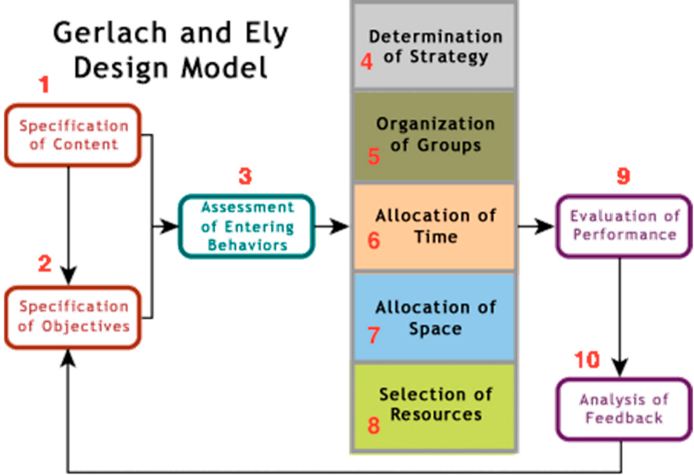
In response to the growing popularity of artificial intelligence (AI) usage in daily life, AI education is increasingly being provided at the K-12 level, with relevant initiatives being launched worldwide. Examining how these programs have been implemented and summarizing useful experiences is thus imperative. Although prior reviews have described the characteristics of AI education programs in publications, the papers reviewed were mostly nonempirical reports, and the analysis typically only involved a descriptive summary. The current review focuses on the most recent empirical studies on AI teaching programs in K-12 contexts through a systematic search of the Web of Science database from 2010 to 2022. To provide a comprehensive overview of the status of AI teaching and learning (T&L), 32 empirical studies were analyzed both descriptively and thematically. We analyzed (1) the research status, (2) the pedagogical design, and (3) the assessments and outcomes of the AI teaching programs. An increasing number of studies have focused on AI education at the K-12 stage, but most of them have a small sample size. Moreover, the data were mostly collected through interviews and self-reports. We reviewed the pedagogical design of AI teaching programs by using Gerlach and Ely’s pedagogical design model. The results comprehensively delineated current AI teaching programs through nine dimensions: learning theory, pedagogical approach, T&L activities, learning content, scale, teaching resources, prior knowledge prerequisite, aims and objectives, assessment, and learning outcome. The results highlighted the positive impact of current AI teaching programs on students’ motivation, engagement, and attitude. However, we observed a lack of sufficient research objectively measuring students’ knowledge acquisition as learning outcomes. Overall, in this paper, we discussed relevant findings in terms of research trends, learning content, teaching units, characteristics of the pedagogical design, and assessment and evaluation by providing illustrations of exemplary designs; we also discussed future directions for research and practice in AI education in the K-12 context.
Overview
The claims and statistics of this paper haven’t been checked yet.
Free: it reads the open-access text and checks the first 5 claims that cite a source we can check. Create a free account to check every claim.
Integrity signals
Registry
Cites
Statistics
Figures
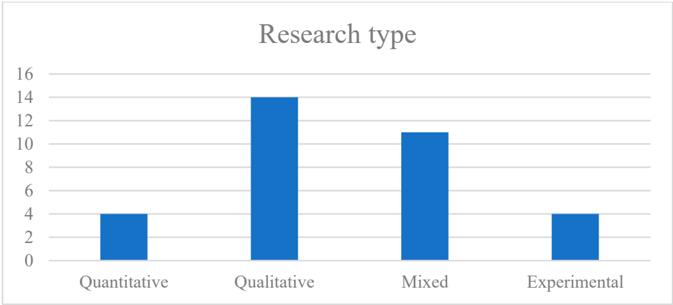
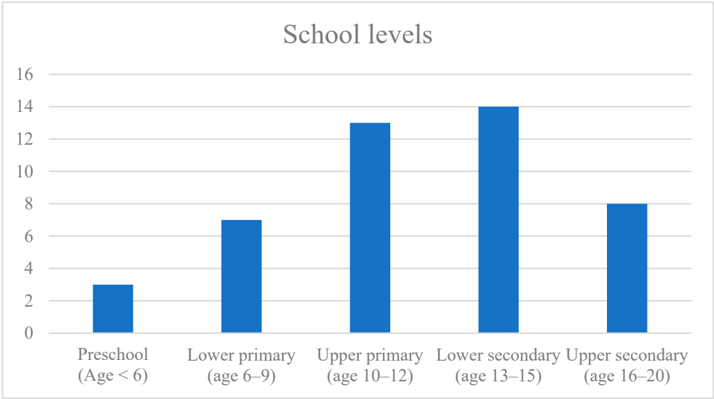
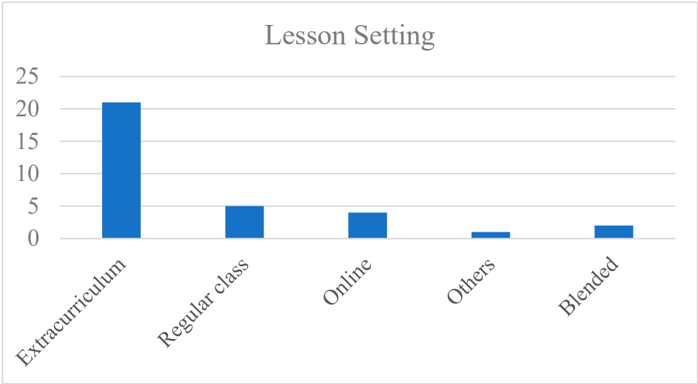
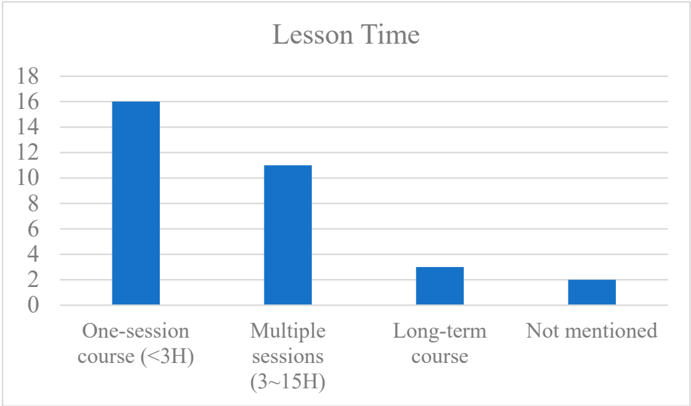
Verification
Claims the paper makes
The claims and statistics of this paper haven’t been checked yet.
Free: it reads the open-access text and checks the first 5 claims that cite a source we can check. Create a free account to check every claim.
Claims other papers make about this one
Each is checked against this paper’s own text: does it say what the citing paper says it does?
The source backs part of the claim, not all of it — or backs it for a different population, condition or comparison.
In the citing paper
“AI research in k-12 continues to privilege traditional AI (e.g., ITS) [30], emphasizing tool properties [31,32] or AI literacy [31,33,34] instead of tracing how AI is pedagogically enacted to enhance learning.”
From A Systematic Review of Generative AI in K–12: Mapping Goals, Activities, Roles, and Outcomes via the 3P Model (2025) · cites this paper as [33]
Experimental — accuracy not yet measuredIn the citing paper
“Recently, Yue et al. (2022) analyzed the main components of the pedagogical design in 32 empirical studies in K-12 AI education”
From AI literacy in K-12: a systematic literature review (2023) · cites this paper as Yue et al., 2022
Self-check
Percentages, sums and reported differences re-computed from the paper’s own numbers.
The self-check needs the paper’s full text.
Citations
Cites
Preferred Reporting Items for Systematic Reviews and Meta-Analyses: the PRISMA statement
Moher, D., Liberati, A., Tetzlaff, J., Altman, D. G., & for the PRISMA Group (2009) · BMJ · doi:10.1136/bmj.b2535 · Cited by 83,823
Preferred Reporting Items for Systematic Reviews and Meta-Analyses: The PRISMA Statement
Moher, D., Liberati, A., Tetzlaff, J., & Altman, D. G. (2009) · Journal of Clinical Epidemiology · doi:10.1016/j.jclinepi.2009.06.005 · Cited by 19,575
What is AI Literacy? Competencies and Design Considerations
Long, D., & Magerko, B. (2020) · Proceedings of the 2020 CHI Conference on Human Factors in Computing Systems · doi:10.1145/3313831.3376727 · Cited by 3,241
Instructional Design: The ADDIE Approach
Branch, R. M. (2009) · Springer eBooks · doi:10.1007/978-0-387-09506-6 · Cited by 3,051
Effects of Teachers’ Mathematical Knowledge for Teaching on Student Achievement
Hill, H. C., Rowan, B., & Ball, D. L. (2005) · American Educational Research Journal · doi:10.3102/00028312042002371 · Cited by 2,812
Interaction between learning and development
(1980) · Mind in Society · doi:10.2307/j.ctvjf9vz4.11 · Cited by 2,150
Intellectual Evolution from Adolescence to Adulthood
Piaget, J. (1972) · Human Development · doi:10.1159/000271225 · Cited by 1,880
Envisioning AI for K-12: What Should Every Child Know about AI?
Touretzky, D., Gardner-McCune, C., Martin, F., & Seehorn, D. (2019) · Proceedings of the AAAI Conference on Artificial Intelligence · doi:10.1609/aaai.v33i01.33019795 · Cited by 918
Applying thematic analysis theory to practice: A researcher’s experience
Tuckett, A. G. (2005) · Contemporary Nurse · doi:10.5172/conu.19.1-2.75 · Cited by 840
Artificial intelligence and computer science in education: From kindergarten to university
Kandlhofer, M., Steinbauer, G., Hirschmugl-Gaisch, S., & Huber, P. (2016) · 2016 IEEE Frontiers in Education Conference (FIE) · doi:10.1109/fie.2016.7757570 · Cited by 437
Research works printed but not linked: 5
- 13. Bahar, M. Misconceptions in biology education and conceptual change strategies. Educ. Sci. Theory Pract. 2003, 3, 55-64.
- 14. D'Silva, I. Active learning. J. Educ. Adm. Policy Stud. 2010, 6, 77-82.
- 57. Lane, D. Machine Learning for Kids: A Project-Based Introduction to Artificial Intelligence; No Starch Press: San Francisco, CA, USA, 2021.
- 74. Papert, S. Mindstorms: Children, Computers, and Powerful Ideas; Harvester Press: Brighton, UK, 1980.
- 75. Palesuvaran, P.; Karpathy, A. (Tesla): CVPR 2021 Workshop on Autonomous Vehicles. Available online: https://pharath.github. io/self%20driving/Karpathy-CVPR-2021/ (accessed on 26 October 2022).
Cited by
Items 101–200 of 211
An experiential learning approach to learn AI in an online workshop
Xu, Y., Yau, K. W., Chai, C. S., Chiu, T. K. F., Meng, H. M. L., King, I., Wong, S. W. H., & Yam, Y. (2023) · IEEE International Conference on Teaching, Assessment, and Learning for Engineering · doi:10.1109/tale56641.2023.10398321 · Cited by 4
Unveiling the Convenience and Drawbacks of Artificial Intelligence (AI) in Education
Ampong, R. L. T., Codilla, L. L., Romero, T. J., & Caparo, P. D. P. (2024) · International Conference on TVET Excellence & Development (ICTeD) · doi:10.1109/icted62334.2024.10844614 · Cited by 3
Gaibor, M. L. G., Bravo, D., Andrade, W. F. O., & Arias, J. B. R. (2025) · Horizonte Cientifico International Journal · doi:10.64747/f718q395 · Cited by 6
Artificial Intelligence (Ai) Governance in Higher Education: A Meta-Analytic Systematic ReviewPreprint
Abbas, A., Mahrishi, M., & Mishra, D. (2023) · SSRN Electronic Journal · doi:10.2139/ssrn.4657675 · Cited by 5
Innovating Videography Instruction in Vocational Schools: A DBR-Based Multimedia Approach
Luthfillah, D., Huda, A., Dewi, I. P., & Daineko, Y. A. (2025) · Journal of Hypermedia & Technology-Enhanced Learning (J-HyTEL) · doi:10.58536/j-hytel.191 · Cited by 2
Deep Learning-Based Training for Junior High School Teachers in Mempawah
Radiana, U., Rosnija, E., Afandi, A., Waruwu, M., Halida, H., Hartouo, A. S. W., Rudiansyah, R., & Darmawan, D. (2025) · SPEKTA (Jurnal Pengabdian Kepada Masyarakat Teknologi dan Aplikasi) · doi:10.12928/spekta.v6i2.14459 · Cited by 2
“Furthermore, research [21] on the application of deep learning pedagogy Project-based learning in secondary schools has resulted in improved critical thinking and collaboration skills among students.”
Formative Epistemics and Inclusive Design Approach Using Constructive Alignment and Metacognition
Alam, A. (2026) · IGI Global eBooks · doi:10.4018/979-8-3373-6546-6.ch004 · Cited by 2
Yue, M., & Jong, M. S. (2026) · International Journal of STEM Education · doi:10.1186/s40594-026-00604-3 · Cited by 4
Self-citationCoen, A. N., & Cuddapah, J. L. (2026) · American Journal of STEM Education · doi:10.32674/keqjjt69 · Cited by 3
The impact of artificial intelligence on creativity in early childhood: a scoping review
Cao, X., & Zhang, H. (2026) · Pedagogy Culture and Society · doi:10.1080/14681366.2026.2676803 · Cited by 2
Díaz‐Guerra, D. D. (2024) · PSIQUEMAG/ Revista Científica Digital de Psicología · doi:10.18050/psiquemag.v13i2.3138 · Cited by 8
A Study on the Impact of Generative AI on Korean Economy Growth
Kim, D. H. (2023) · IARJSET · doi:10.17148/iarjset.2023.10933 · Cited by 6
Pantelimon, F.-V., Posedaru, B.-Ș., Toader, L.-A., Dulgheru, M.-N., & Georgescu, T.-M. (2024) · Proceedings of the ... International Conference on Business Excellence · doi:10.2478/picbe-2024-0283 · Cited by 1
“Furthermore, in the study (Yue et al., 2022), the authors provide a comprehensive analysis of the implementation and effectiveness of artificial intelligence (AI) education programs at the K-12 level.”
Evidence-based advancement of teaching AI in K-12: an action research approach
Jetzinger, F. (2024) · Workshop in Primary and Secondary Computing Education · doi:10.1145/3677619.3677641 · Cited by 1
Pineda, C., Ashar, A. A. K., & Liu, J. (2024) · IEEE Frontiers in Education Conference (FIE) · doi:10.1109/fie61694.2024.10893365 · Cited by 2
Attwood, A. I. (2025) · Advances in human and social aspects of technology book series · doi:10.4018/979-8-3693-9035-1.ch009 · Cited by 2
What to Teach and How to Teach: Artificial Intelligence Education in Primary and Secondary Schools
Xia, X. (2025) · Science Insights Education Frontiers · doi:10.15354/sief.25.re523 · Cited by 2
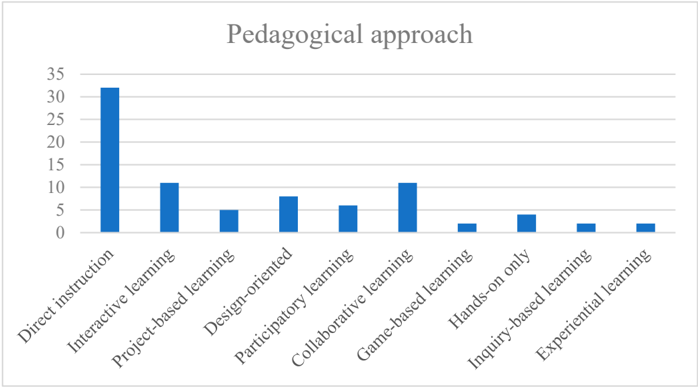
“…literature include: interactive learning, where the students complete tasks and gain hands-on experience by engaging with robots or platform tools (Yue et al., 2022); game-based learning, which uses games or competitions to make learning enjoyable and engaging (Lee & Kwon, 2024; Su et al., 2024);…”
Teaching Responsible AI Literacy in Schools: Perspectives from academics and teachers
Robertson, J., Abacı, S., Farrell, K., & Kanwal, J. (2025) · Conference on United Kingdom & Ireland Computing Education Research (UKICER) · doi:10.1145/3754508.3754541 · Cited by 1
Yapay Zekâ Kavramının Ortaokul Türkçe Dersi Öğretim Programı ve Ders Kitaplarına Yansımaları
Kır, D. B. (2025) · Kuram ve Uygulamada Sosyal Bilimler Dergisi · doi:10.48066/kusob.1791524 · Cited by 2
Bitki Doku Kültürü Temel Prensipleri ve Yöntemleri
Dönmez, D., Zekai, E., Özlem, M., Sevindik, B., Açar, E., Erol, M. H., Örgeç, M., Ünüvar, Ö. C., Kaya, Ö., Gürel, S., et al. (2026) · Akademisyen Kitabevi eBooks · doi:10.37609/akya.3992 · Cited by 1
Meti, A., Patil, D. R., & Rane, N. L. (2025) · International Journal of Applied Resilience and Sustainability · doi:10.70593/deepsci.0101006 · Cited by 3
“There are already numerous studies which build on technology acceptance that explore [12-14], for example, perceived usefulness and ease of use as factors impacting the first use stage.”
Wang, N., Chen, H., & Du, L. (2026) · European Journal of Education · doi:10.1111/ejed.70524 · Cited by 2
AI literacy training for K–12 learners: Community-led non-formal education practices in China
Zhao, Y., Hu, X., Zhao, Y. (., Song, S., & Li, J. (2026) · Information Research · doi:10.47989/ir31iconf64284 · Cited by 2
Tibane, C. C. (2026) · International Journal of Learning Teaching and Educational Research · doi:10.26803/ijlter.25.3.18 · Cited by 2
Träg, K. H., Mulders, M., & Evangelou, D. (2026) · IEEE International Conference on Artificial Intelligence and eXtended and Virtual Reality (AIxVR) · doi:10.1109/aixvr67263.2026.00026 · Cited by 1
Gu, Y., Xiong, B., Li, R., Pan, Z., Huang, Y., & Pan, Y. (2026) · Frontiers in Psychology · doi:10.3389/fpsyg.2026.1833613 · Cited by 1
“…have largely concentrated on instructional theories, curriculum design, technological tools, and the effectiveness of learning content (e.g., Yue et al., 2022; Li et al., 2024; Wu et al., 2024), with relatively few explaining the behavioral mechanisms underlying students’ intentions to…”
AI and student motivation: A scoping review
Li, J., King, R. B., Chai, C. S., Lee, V. W. Y., & Li, R. (2026) · Journal of Research on Technology in Education · doi:10.1080/15391523.2026.2672515 · Cited by 1
Jetzinger, F., & Michaeli, T. (2026) · ACM Conference on International Computing Education Research (ICER) · doi:10.1145/3765964.3811641 · Cited by 1
Huang, B., Xie, L., Liu, Y., Liu, X., Tang, H., Feng, X., Qiao, C., Guo, Q., Wu, C., & Bao, L. (2026) · International Journal of STEM Education · doi:10.1186/s40594-026-00652-9 · Cited by 1
“In the GenAI introduction module, students learned the fundamental distinction between GenAI and traditional tools (e.g., search engines), emphasizing GenAI’s content generation nature and inherent risks (Casal-Otero et al., 2023; Yue et al., 2022).”
MOSES, P. Z. O., & MOSES-PROMISE, P. D. (2026) · Federal University Gusau Faculty of Education Journal · doi:10.64348/zije.2026531 · Cited by 1
Khawaja, E., & Ehsan, H. (2024) · ASEE Annual Conference & Exposition · doi:10.18260/1-2--44153 · Cited by 4
WIP: What are AI Bachelor Degrees About? A Comparative Analysis
He, Z., Pang, P. C., & Lam, C. K. (2024) · IEEE Frontiers in Education Conference (FIE) · doi:10.1109/fie61694.2024.10893136 · Cited by 2
“Possessing AI literacy may encourage more students with higher education to consider AI careers [19].”
Hieu, H. H., Thảo, L. T., & Thùy, P. T. (2024) · Vision Journal for Language and Foreign Language Learning · doi:10.21580/vjv13i120398 · Cited by 3
Exploring Elementary Pre-Service Teachers’ AI Literacy in ChatGPT-Assisted Science Lesson Design
Choi, Y., & Kim, M.-C. (2026) · Education Sciences · doi:10.3390/educsci16081275 · Cited by 3
Communication Analysis and Privacy in CAI Based on Data Mining and Federated Learning
Hu, Q., Jiang, J., & Lin, W. (2023) · Applied Sciences · doi:10.3390/app13095624 · Cited by 1
Shailja, S., Kumar, S., Caetano, A., & Pandey, A. (2024) · ASEE Annual Conference & Exposition · doi:10.18260/1-2--47953 · Cited by 1
“AI programs for high school students: Educators and professionals have taught AI to high school students at various levels, scales, and duration [12, 13].”
BackgroundMingfeng, L., & Wang, Y. (2026) · Research Square · doi:10.21203/rs.3.rs-8166344/v1 · Cited by 3
Hau, D., Reuter, R. A. P., Mariño, O., & Houssemand, C. (2024) · IEEE International Conference on Advanced Learning Technologies (ICALT) · doi:10.1109/icalt61570.2024.00091
Comparing Inclusive Education Practices Implemented in Schools According to Stages of Education
Karaman, H. S., & Maya, İ. (2024) · Özgür Yayınları eBooks · doi:10.58830/ozgur.pub590.c2456
Yapay Zeka ile Eğitimde Dönüşüm: Fırsatlar, Zorluklar ve Yeni Dinamikler
Özdere, M. (2024) · Özgür Yayınları eBooks · doi:10.58830/ozgur.pub590.c2455
Güncel Eğitim Yönetimi Uygulamaları
Erdemir, B., Özdere, M., Karaman, H. S., Maya, İ., Yılmaz, Z., Kılçık, F., Serin, H., Dörterler, S. Ö., Uslu, S., Gezmen, R., et al. (2024) · Özgür Yayınları eBooks · doi:10.58830/ozgur.pub590
Mutlu, A. (2024) · Özgür Yayınları eBooks · doi:10.58830/ozgur.pub590.c2460
Yılmaz, Z., Kılçık, F., & Serin, H. (2024) · Özgür Yayınları eBooks · doi:10.58830/ozgur.pub590.c2457
Yazıcı, S. Ç., & Kaya, G. (2024) · Özgür Yayınları eBooks · doi:10.58830/ozgur.pub590.c2603
Sosyal Bilgiler Öğretmen Adaylarının Coğrafi İşaretli Ürünleri Satın Almaya Yönelik Tutumları
Uslu, S., Gezmen, R., & Özalp, A. (2024) · Özgür Yayınları eBooks · doi:10.58830/ozgur.pub590.c2459
Erken Çocukluk Eğitiminde Yönetim
Dörterler, S. Ö. (2024) · Özgür Yayınları eBooks · doi:10.58830/ozgur.pub590.c2458
Gouveia, A. J., Machado, B., & Pendão, C. (2025) · Communications in computer and information science · doi:10.1007/978-3-032-02675-0_4 · Cited by 1
Guliyeva, A., & Yeter, I. H. (2025) · ASEE Annual Conference & Exposition · doi:10.18260/1-2--55995 · Cited by 1
Karalekas, G., Vologiannidis, S. D., & Kalomiros, J. A. (2025) · TEM Journal · doi:10.18421/tem143-46
Auliana, I., Putra, R. W. Y. P., Putra, F. G. P., & Khoiriyah, B. K. (2025) · Journal of Literacy Education · doi:10.64780/jole.v1i2.72
Battista, D., Cubeddu, F., & Picarella, L. (2025) · Advances in computational intelligence and robotics book series · doi:10.4018/979-8-3373-0872-2.ch007
Application of digital educational resources in the training of future teachers
Lutsan, N. I., Vertuhina, V. N., Bulgakova, O., RUDIUK, T., Маланюк, Т., & Halaievska, L. (2025) · Sapienza International Journal of Interdisciplinary Studies · doi:10.51798/sijis.v6i3.1065 · Cited by 1
“The methodological basis of the research is also the approach of pedagogical design and system design (Yue et al., 2022).”
Lucas, J. (2025) · Psychology and Education A Multidisciplinary Journal · doi:10.70838/pemj.480506
AI-Based Primary Schools Teachers' Professional Competency Assessment Tool
Erviana, V. Y., Saputra, W. N. E., & Rahma, F. O. (2025) · doi:10.1109/icet67257.2025.11290844
Additional file 1 of AI literacy in K-12: a systematic literature review
Otero, L. C., Catala, A., Morante, C. F., Taboada, M., Cebreiro, B., & Barro, S. (2024) · Figshare · doi:10.6084/m9.figshare.26583390
Yapay Zekâ Okuryazarlığı Ölçeği: Türkçeye Uyarlama Çalışması
Gökoğlu, S., Erdoğdu, F., & Altun, E. (2025) · Anadolu Journal Of Educational Sciences International · doi:10.18039/ajesi.1699897
USING AI TO PERSONALIZE CREATIVE LEARNING PATHS
Kumar, V., Balakrishnan, S., Kaur, G., Rai, J. S., Srivastav, A., & Wawage, P. (2025) · ShodhKosh Journal of Visual and Performing Arts · doi:10.29121/shodhkosh.v6.i5s.2025.6905
Tsutsumi, K., Amakawa, Y., & Yata, C. (2026) · Asia Pacific Journal of Education · doi:10.1080/02188791.2026.2619058 · Cited by 1
Elçiçek, M., & Pesen, A. (2026) · International Journal of Human-Computer Interaction · doi:10.1080/10447318.2026.2619619 · Cited by 2
“…& Burke, 2023; Huang et al., 2023; Oubibi et al., 2025), pedagogical foundations (Chai et al., 2021; McDonald et al., 2025; Moore et al., 2023; Yue et al., 2022) have future-oriented tendencies (Huang et al., 2023) while ignoring students’ experiential and affective considerations regarding…”
Empathetic Pathways: Leveraging Verstehen to Navigate GenAI in Canadian Teacher Education
Sharma, S., & Kumar, R. (2026) · Journal of Digital Life and Learning · doi:10.51357/jdll.v6i1.342 · Cited by 1
Technological Innovation with Artificial Intelligence in Education: Pros and Cons
Mishra, A., & Sharma, S. (2026) · International Journal of Innovative Research in Technology · doi:10.64643/ijirtv12i9-192507-459
Martínez, J. H. A., & Martínez, E. P. (2026) · Trends in Higher Education · doi:10.3390/higheredu5010021
The TASP Instructional Design Model: Embedding AI Literacy in K-12 STEAM
Zhang, S.-Y., Fu, X., Fu, P., & Chang, Y.-L. (2025) · International Conference on Educational Technology Management (ICETM) · doi:10.1109/icetm67477.2025.11413493
“These developments underscore the need for models that teach not only technical use but also critical evaluation and design-oriented engagement [2], [9].”
Webb, M., Baniya, S., Smith, A. N., Rasberry, N., & Ogbonnaya-Ogburu, I. F. (2026) · IEEE Transactions on Professional Communication · doi:10.1109/tpc.2026.3658847
“In response to issues like these, Yue, Jong, and Dai [51] propose a framework for optimizing AI integration that emphasizes stakeholder engagement and institutional readiness.”
Educator Training for Artificial Intelligence Use in AI-Based K-12 Education System
Hossain, S. (2026) · Advances in computational intelligence and robotics book series · doi:10.4018/979-8-3693-6346-1.ch006
“Kabulok Komad Quartet Card” Learning Media: Student Interest and Learning Outcomes in Science
Wahyuni, S. F., Hanif, M. D., & Sudarmiani, S. (2026) · Journal Evaluation in Education (JEE) · doi:10.37251/jee.v7i2.1258
Munibi, A. Z. (2026) · Abjad Journal of Humanities & Education · doi:10.62079/abjad.v4i1.126
Building Foundations: AI Literacy for Young Children
Chalmers, C., Woods, A. F., & Levido, A. (2026) · Springer eBooks · doi:10.1007/978-3-032-12174-5_10
Pre-service Teachers’ Experiences in Instructional Design with Artificial Intelligence Tools
Ayaz, E., & Ekinci, V. (2026) · Springer eBooks · doi:10.1007/978-3-032-18030-8_8
Examining Artificial Intelligence Curricula for Ethical Principles—A Bridge to Human Flourishing
Mak, J., Wen, W., & Castellana, M. A. (2026) · Springer eBooks · doi:10.1007/978-3-032-17190-0_3
Mikeska, J. N., King, N. S., & Gao, Y. (2026) · Springer eBooks · doi:10.1007/978-3-032-16871-9_7
Designing Minecraft-Supported Project Learning for Meaningful Elementary Mathematics Experiences
Haryatmo, T., Sarwanto, S., & Riyadi, R. (2026) · Journal of Education and Training Studies · doi:10.11114/jets.v14i3.8567
“…a theory-based description of how the instructional design was developed, refined, and contextualized within authentic classroom practices, complicating the assessment of alignment with core PjBL principles and opportunities for replication and adaptation (Huang et al., 2023; Yue et al., 2022).”
Harnessing Artificial Intelligence in universities: motivation, intention, efficacy, and creativity
Khalid, K., & Alsini, J. (2026) · IJERI International Journal of Educational Research and Innovation · doi:10.46661/ijeri.12533
Building AI Literacy with Experiential Learning—Insights from a Field Experiment in K-12 Education
Förster, M., Pitz, K., Wrabel, A., Klier, M., & Zimmermann, S. (2026) · Lecture notes in information systems and organisation · doi:10.1007/978-3-032-08486-6_19
Reading Beyond Words: Multimodal Meaning-Making in AI-Mediated Literacy Classrooms
Nodira, K., Natarajan, R., Selvakumar, A., Turaev, D., & Turdiev, A. S. (2026) · Advances in computational intelligence and robotics book series · doi:10.4018/979-8-3373-6986-0.ch001
Alrishan, A. M. H. (2026) · Emerging Science Journal · doi:10.28991/esj-2026-010-03-020
“The same gaps exist at all the levels of education, especially in ethical consciousness and content-sensitive application [11, 12].”
AI's effect on physics education: A comparative analysis of educator and learner's perspective
Hadap, A., Saregar, A., Panse, V. R., & Kushwaha, S. (2026) · AIP conference proceedings · doi:10.1063/5.0338292
Kong, S. C., & Wang, Q. (2026) · Computers and Education Artificial Intelligence · doi:10.1016/j.caeai.2026.100631
Ferreira, T. J. D. N., & de França, R. S. (2026) · doi:10.5753/educomp.2026.18769
Philosophical foundations of artificial superintelligence literacy: A scoping review and synthesis
Tanchuk, N., Taylor, R. M., Lee, S., & Gaur, A. (2026) · Theory and Research in Education · doi:10.1177/14778785261459884 · Cited by 1
Eğitimde Yapay Zekâ Uygulamalarına İlişkin Öğrenci ve Veli Görüşleri: Türkiye den Kanıtlar
Sağbaş, N. Ö. (2026) · Kalem Uluslararasi Egitim ve Insan Bilimleri Dergisi · doi:10.23863/kalem.2026.347
Syam, R. R. (2025) · Asia Conference on Cognitive Engineering and Intelligent Interaction (CEII) · doi:10.1109/ceii67787.2025.00034
“Numerous studies indicate that AI use in K-12 settings has increased rapidly and now plays an active role in everyday learning activities [1] [2].”
Kong, S. C., Yang, Y., & Chow, S. S. (2025) · International Conference on Computers in Education · doi:10.58459/icce.2025.6011
“First, educational robots remain under-researched despite their potential to make AI concepts more transparent than conventional "black box" tools (Yue et al., 2022).”
Muñoz, E. V. B., Chico, A. E. C., Martinez, N. A. M., & Muñoz, D. P. L. (2026) · RECIAMUC · doi:10.26820/reciamuc/10.(3).agos.2026.108-127
Wang, L.-J., Chuang, T., & Wu, Y. (2026) · Computers and Education Artificial Intelligence · doi:10.1016/j.caeai.2026.100661
Miao, C., & Zhang, S. (2026) · Acta Psychologica · doi:10.1016/j.actpsy.2026.107693
Ayala, L. R., Garza, M. N. S., & Ayala, E. R. (2026) · Dilemas contemporáneos Educación Política y Valores · doi:10.46377/dilemas.v14i1.5022
Ayón, P. M. F., García-Narváez, P. A., Eras, C. E. P., & Vilela, J. O. M. G. (2026) · RECIAMUC · doi:10.26820/reciamuc/10.(3).agos.2026.151-175
Li, Y., Guo, J., Xie, J., Zhu, L., & Siek, H. L. (2026) · Humanities and Social Sciences Communications · doi:10.1057/s41599-026-08868-4
Saparbaykyzy, S., Tajibayeva, Z., Aitenova, E. A., Nauruzbaeva, A., Nakypova, G., Daukeeva, A., & Mkilima, T. (2026) · Frontiers in Artificial Intelligence · doi:10.3389/frai.2026.1899576
“Whilst these studies provide valuable insights, they often examine technologies in isolation and primarily evaluate effectiveness, efficiency, engagement, or adoption outcomes (Kuchynska et al., 2025; Mengliyev et al., 2024; Yue et al., 2022).”
Babori, A. (2026) · Pedagogical Research · doi:10.29333/pr/19252
“However, Yue et al. (2022) emphasize that although ChatGPT facilitates the automated generation of pedagogical scenarios, their educational value depends on alignment between learning activities (e.g., problem-solving and collaborative learning), pedagogical frameworks (e.g., constructivism,…”
Zamfara International Journal of Education (zije) 2025 Special Edition Vol 6 No 5
Sodangi, E.-I.-C.-C. D. U., BASHIR, S., Haruna, P. E. P. A. S., Abdullahi, A. P. E. D. Y. A., Shaibu, E. P. A., Bagudo, E. P. A. A., Lukman, E. D. S. A., Lawal, E. D. N. I., & Editorial Board: Yahaya Abdulkadir Ulama Secretary (2026) · Federal University Gusau Faculty of Education Journal · doi:10.64348/zije.2026559
AI-Generated Feedback as a Pedagogical Tool: Opportunities and Design Principles
Kayyali, M. (2026) · Advances in computational intelligence and robotics book series · doi:10.4018/979-8-3373-9089-5.ch009
Kumar, S., & Kumar, P. (2026) · Advances in computational intelligence and robotics book series · doi:10.4018/979-8-2600-0383-1.ch001
Barghot, M., & elba, A. A. (2026) · Journal of Educational Technology and Online Learning · doi:10.31681/jetol.1880084
LEARNING AGILITY AS A KEY DRIVER OF HUMAN RESOURCE READINESS IN THE AGE OF AUTOMATION
Aziz, A., Siswati, A., & Pandansari, P. (2026) · International Journal of Economics Business and Accounting Research (IJEBAR) · doi:10.29040/ijebar.v10i3.20356
Carguaitongo, E. R. A., Zambrano, J. Y. T., Cuello, J. F. C., Guevara, M. E. A., & Moposita, R. M. C. (2026) · Saber Estratégico Internacional · doi:10.70577/s.e.v4i3.135
Wang, Z., Liu, X., Chang, F., & Lv, C. (2026) · IJCER (International Journal of Chemistry Education Research) · doi:10.20885/ijcer.vol10.iss2.art3
Bucayu-Cuerdo, M. C. (2026) · QualiSearch Journal of Educational Research and Practice · doi:10.66437/qjerp.v2i10.026
Metadata
- Authors
- Yue, M., Jong, M. S.-Y., & Dai, Y.
- Affiliations
- Chinese University of Hong Kong (HK)
- Corresponding author
- Yue, Miao
- Jong, Morris Siu-Yung
- Venue
- Sustainability
- Publisher
- MDPI AG
- Published
- 2022-11-24
- Volume
- 14
- Issue
- 23
- Pages
- 15620
- ISSN
- 2071-1050 (ISSN-L)
- OpenAlex
- W4309852220
- Cited by
- 176
- References
- 81
- Citations by year
- 2026: 54 · 2025: 61 · 2024: 51 · 2023: 10
- FWCI
- 3.85
- Type
- journal article
- Language
- en
- Open access
- gold
- doi.org
- Licence
- Locations
- Sustainability (publishedVersion, cc-by)
- RePEc: Research Papers in Economics (submittedVersion)
- DOAJ (DOAJ: Directory of Open Access Journals) (submittedVersion, cc-by-sa)
- Topics
- Social Sciences › Education › Artificial Intelligence in Education
- Physical Sciences › Computer Science › Computer Science Applications › Teaching and Learning Programming
- Social Sciences › Education › Educational Technology and Pedagogy
- Keywords
- artificial intelligence in education, K-12 education, instructional design, student motivation, student engagement, student attitudes, learning outcomes, learning content, teaching materials
About these checks
Registry, retraction, Cites and statistics results are computed, not judged, with one exception: a printed reference that no index lists is read once by a model before it counts as a citation error. Claims are extracted by a model and kept only when their quote appears verbatim in the text; each cited source is then checked, with a model’s help, for whether it says what the claim relies on. Those verdicts can be wrong — read the claim’s quote and the cited source before relying on one.
Statistics and arithmetic are recomputed, not judged.
Confidence bands are shown only for fields calibrated on our annotated test set. None is calibrated yet, so no band is shown.
What counts as a claim ›How we measure confidence ›How we check this ›
Are you an author, or do you see a problem with this page? Request a review
Data sources
Bibliographic data: Semantic Scholar, OpenAlex, Crossref.
Contains information from the Semantic Scholar Academic Graph Datasets, made available under the ODC Attribution License (ODC-BY 1.0).
Semantic Scholar’s data is described in: Kinney, R., et al. (2023). The Semantic Scholar Open Data Platform. arXiv:2301.10140.
