

Corporate Concentration and Technological Change in the Global Seed Industry
Open accessThe DOI matches its Crossref record; 37 of the 38 references it cites were found in a registry or an index.
Abstract
In the past three decades, the seed sector has experienced, and is now again experiencing, corporate concentration trends. The fallout of this consolidation is the subject of numerous concerns. However, the seed sector is rather poorly understood. Thus, it is useful to understand it better and to investigate the potential impact on the agri-food chain of the trend toward increased corporate concentration. The first part of this paper presents the main characteristics of the global seed sector, its stakeholders, and its size in the agri-food chain. Next, the corporate consolidation trends of the seed industry over the past two years are examined. The technological evolution of the seed sector is also briefly presented. In the last part of this paper, the fallout of recent mergers and acquisitions in the seed industry are analyzed. Opposing views are expressed on the impact of these mergers and acquisitions in the agri-food chain: while certain stakeholders worry about the risk of food power by the biggest companies, some others expect useful innovations.
Overview
The claims and statistics of this paper haven’t been checked yet.
Free: it reads the open-access text and checks the first 5 claims that cite a source we can check. Create a free account to check every claim.
Integrity signals
Registry
Cites
Statistics
Figures
Verification
Claims the paper makes
The claims and statistics of this paper haven’t been checked yet.
Free: it reads the open-access text and checks the first 5 claims that cite a source we can check. Create a free account to check every claim.
Claims other papers make about this one
Each is checked against this paper’s own text: does it say what the citing paper says it does?
The cited source says what the claim attributes to it.
In the citing paper
“Measurement of a concentration ratio depends on knowing the overall size of the market, which is not always easily available and is often an estimate (Bonny 2017).”
From Corporate concentration and power matter for agency in food systems (2025) · cites this paper as Bonny 2017
Self-check
Percentages, sums and reported differences re-computed from the paper’s own numbers.
The self-check needs the paper’s full text.
Citations
Cites
Myers, J. P., Antoniou, M. N., Blumberg, B., Carroll, L., Colborn, T., Everett, L. G., Hansen, M., Landrigan, P. J., Lanphear, B. P., Mesnage, R., et al. (2016) · Environmental Health · doi:10.1186/s12940-016-0117-0 · Cited by 903
Corporate Power in Global Agrifood Governance
(2009) · The MIT Press eBooks · doi:10.7551/mitpress/9780262012751.001.0001 · Cited by 492
Precision genome engineering and agriculture: opportunities and regulatory challenges
Voytas, D. F., & Gao, C. (2014) · PLoS Biology · doi:10.1371/journal.pbio.1001877 · Cited by 458
Public Acceptance of Plant Biotechnology and GM Crops
Lucht, J. (2015) · Viruses · doi:10.3390/v7082819 · Cited by 409 · cited 1×
“In addition, food products from authorized GE crops could be rejected by consumers if there are many articles presenting them as hazardous, as the case has been for GM food products [65,66].”
BackgroundTarazona, J. V., Court-Marques, D., Tiramani, M., Reich, H., Pfeil, R., Istace, F., & Crivellente, F. (2017) · Archives of Toxicology · doi:10.1007/s00204-017-1962-5 · Cited by 402 · cited 1×
“For example, in the past few years, glyphosate, which is the most widely used pesticide and furthermore is associated with more than 80% of GM crops, has been at the heart of a controversy about its carcinogenic risks [41,42].”
BackgroundDeployment of new biotechnologies in plant breeding
Lusser, M., Parisi, C., Plan, D., & Rodríguez-Cerezo, E. (2012) · Nature Biotechnology · doi:10.1038/nbt.2142 · Cited by 342
Perspectives on the agrochemical industry and agrochemical discovery
Sparks, T. C., & Lorsbach, B. A. (2017) · Pest Management Science · doi:10.1002/ps.4457 · Cited by 293 · cited 1×
“Therefore, regulatory processes for pesticides and GMOs are tightening [40], and are subject to polemics in a number of countries.”
BackgroundThe Regulatory Status of Genome‐edited Crops
Wolt, J. D., Wang, K., & Yang, B. (2016) · Plant Biotechnology Journal · doi:10.1111/pbi.12444 · Cited by 283
Hartung, F., & Schiemann, J. (2014) · The Plant Journal · doi:10.1111/tpj.12413 · Cited by 277 · cited 2×
“If gene-edited (GE) plants are considered as GMOs, the cost corresponding to the regulatory aspects will be higher [65], which will favor the largest companies to the detriment of SMEs.”
BackgroundVisualizing Consolidation in the Global Seed Industry: 1996–2008
Howard, P. H. (2009) · Sustainability · doi:10.3390/su1041266 · Cited by 231 · cited 1×
“In addition, there is the risk of an increase in the dependence of SMEs on the three most important seed companies because of the numerous patents held by the latter, and because of licensing agreements [6,8,29,52].”
Background
Research works printed but not linked: 8
- Keller, M.; Gabsi, R. The ISF (International Seed federation) Rules for Trade. In Proceedings of the Congress of AFSTA (African Seed Trade Association), Nairobi, Kenya, 3 March 2016.
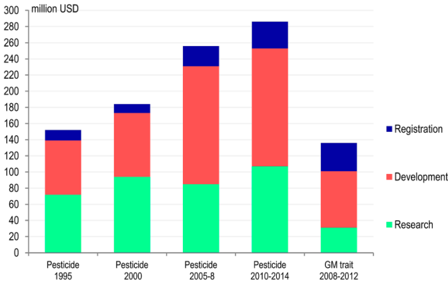
- Phillips McDougall. The Cost of New Agrochemical Product Discovery, Development and Registration in 1995, 2000, 2005-8 and 2010 to 2014;
- IMAA. Number and Value and Largest Mergers, Acquisitions and Alliances Transactions by Year, 1985-2017; IMAA (Institute of Mergers, Acquisitions and Alliances), Webster University: Vienna, Austria, 2017; Available online: https://imaa-institute.org/m-and-a-statistics-transaction-type/ (accessed on 11 July 2017).
- Jorasch, P. How Much Plant Breeding Innovation is Politically Intended? Eur. Seed 2017, 3, 2016. Available online: http://european-seed.com/much-plant-breeding-innovation-politically-intended/ (accessed on 11 July 2017).
- Stucke, M.E.; Grunes, A.P. An Antitrust Review of a Bayer-Monsanto Merger; The Konkurrenz Group: Washington, DC, USA, 2016.
- Bayer; Monsanto. Joint Statement: Monsanto, Bayer CEOs Meet with New Administration. Bayer, Monsanto Press Release 17 January 2017. Available online: https://www.advancingtogether.com/en/ir-media/press- releases/ (accessed on 11 July 2017).
- Robin, M.M. The World According to Monsanto: Pollution, Corruption, and the Control of the World's Food Supply; The New Press: New York, NY, USA, 2008; p. 384.
- Bayer. Advancing together. Bayer to Acquire Monsanto. Creating a Global Leader in Agriculture. Available online: http://www.press.bayer.com/baynews/baynews.nsf/id/Bayer-Offers-to-Acquire-Monsanto-to- Create-a-Global-Leader-in-Agriculture (accessed on 7 September 2017).
Cited by
The problem with growing corporate concentration and power in the global food system
Clapp, J. (2021) · Nature Food · doi:10.1038/s43016-021-00297-7 · Cited by 359
Explaining Growing Glyphosate Use: The Political Economy of Herbicide-Dependent Agriculture
Clapp, J. (2021) · Global Environmental Change · doi:10.1016/j.gloenvcha.2021.102239 · Cited by 168
Navigating toward resilient and inclusive seed systems
Westengen, O. T., Dalle, S. P., & Mulesa, T. H. (2023) · Proceedings of the National Academy of Sciences · doi:10.1073/pnas.2218777120 · Cited by 122
“The four largest multinational companies in seed trade today control about 60% of the ~50 billion USD annual global commercial seed market (160, 161).”
Corporate concentration and power matter for agency in food systems
Clapp, J., Vriezen, R., Laila, A., Conti, C., Gordon, L., Hicks, C., & Rao, N. (2025) · Food Policy · doi:10.1016/j.foodpol.2025.102897 · Cited by 64
Abendroth, L., Miguez, F. E., Castellano, M. J., Carter, P. R., Messina, C. D., Dixon, P. M., & Hatfield, J. L. (2021) · Global Change Biology · doi:10.1111/gcb.15565 · Cited by 72
“Because Pioneer hybrids are planted on approximately one- third of maize area globally (Begemann, 2015; Bonny, 2017; Fernandez- Cornejo, 2004), these data reasonably characterize regional preferences.”
BackgroundThe Food Systems Summit’s Failure to Address Corporate Power
Clapp, J., Noyes, I., & Grant, Z. (2021) · Development · doi:10.1057/s41301-021-00303-2 · Cited by 66
“The lock-in of high-tech agricultural practices has led to an increased reliance on herbicides in industrial agricultural systems, which has led to the development of herbicideresistant super weeds and increased exposures to herbicides (Bonny 2017; Clapp 2021).”
BackgroundHerbicides: Brief history, agricultural use, and potential alternatives for weed control
Mesnage, R., Székács, A., & Zaller, J. G. (2021) · Elsevier eBooks · doi:10.1016/b978-0-12-823674-1.00002-x · Cited by 82
Return to Agrobiodiversity: Participatory Plant Breeding
Ceccarelli, S., & Grando, S. (2022) · Diversity · doi:10.3390/d14020126 · Cited by 62
Concentration in seed and biotech markets: extent, causes, and impacts
Deconinck, K. (2020) · Annual Review of Resource Economics · doi:10.1146/annurev-resource-102319-100751 · Cited by 44
Innovation and the commons: lessons from the governance of genetic resources in potato breeding
Beumer, K., Stemerding, D., & Swart, J. A. A. (2020) · Agriculture and Human Values · doi:10.1007/s10460-020-10169-8 · Cited by 31
“As the ownership of such precious parent lines has high economic value, hybrid potato breeding might lead to a series of mergers and acquisitions in the potato value chain, akin to the mergers and acquisitions previously witnessed in the seed sector of other crops (Bonny 2017; Duvick 2009).”
BackgroundInfluentialLes initiatives citoyennes et leur changement d’échelle
Bricas, N., & Douillet, M. (2021) · Éditions Quæ eBooks · doi:10.35690/978-2-7592-3353-3/c19 · Cited by 30
Climate justice for the southwestern coastal region of Bangladesh
Ashrafuzzaman, M., Gomes, C., & Guerra, J. F. C. (2022) · Frontiers in Climate · doi:10.3389/fclim.2022.881709 · Cited by 38
“Additionally, many companies such as Monsanto (Agrochemical Corporation) backed this idea, which supported the use of pesticides (Bonny, 2017).”
BackgroundNew evidence on concentration in seed markets
Deconinck, K. (2019) · Global Food Security · doi:10.1016/j.gfs.2019.05.001 · Cited by 34
Aux origines de l’agriculture industrielle
Daviron, B. (2021) · Éditions Quæ eBooks · doi:10.35690/978-2-7592-3353-3/c4 · Cited by 28
Les limites des systèmes alimentaires industrialisés
Bricas, N. (2021) · Éditions Quæ eBooks · doi:10.35690/978-2-7592-3353-3/c7 · Cited by 31
The rise of big food and agriculture: corporate influence in the food system
Clapp, J. (2022) · Edward Elgar Publishing eBooks · doi:10.4337/9781800880269.00011 · Cited by 56
Phytostimulator Application after Cold Stress for Better Maize (Zea mays L.) Plant Recovery
Ratajczak, K., SULEWSKA, H., Panasiewicz, K., Faligowska, A., & Szymańska, G. (2023) · Agriculture · doi:10.3390/agriculture13030569 · Cited by 34
Décloisonner les savoirs sur l’alimentation
Louvin, J.-M., & Walser, M. (2021) · Éditions Quæ eBooks · doi:10.35690/978-2-7592-3353-3/c9 · Cited by 23
Conclusion. L'alimentation est une rencontre avec le monde... tout le monde
Bricas, N., Conaré, D., & Walser, M. (2021) · Éditions Quæ eBooks · doi:10.35690/978-2-7592-3353-3/cc · Cited by 24
Fortifier les aliments pour lutter contre les carences ?
Avallone, S., Alpha, A., & Bricas, N. (2021) · Éditions Quæ eBooks · doi:10.35690/978-2-7592-3353-3/c12 · Cited by 24
Wynberg, R., Andersen, R., Laird, S. A., Kusena, K., Prip, C., & Westengen, O. T. (2021) · Frontiers in Plant Science · doi:10.3389/fpls.2021.686728 · Cited by 33
Kliem, L., & Sievers-Glotzbach, S. (2021) · International Journal of Agricultural Sustainability · doi:10.1080/14735903.2021.1963598 · Cited by 34
Strengthening agroecological resilience through commons-based seed governance in the Philippines
Kliem, L. (2022) · Environment Development and Sustainability · doi:10.1007/s10668-022-02844-z · Cited by 35
“This trend leads to a lack of democratic participation, limited farmers’ access to diverse genetic resources, and a reduction of seed supply channels (Bonny, 2017; Howard, 2021).”
Une écologie de l'alimentation
Bricas, N., Conaré, D., Walser, M., & Fischler, C. (2021) · Éditions Quæ eBooks · doi:10.35690/978-2-7592-3353-3 · Cited by 60
Sohn, E. (2020) · Organization Science · doi:10.1287/orsc.2020.1407 · Cited by 31
Methods of crop improvement and applications towards fortifying food security
Patel, A., Miles, A., Strackhouse, T., Cook, L., Leng, S., Patel, S., Klinger, K., Rudrabhatla, S. V., & Potlakayala, S. D. (2023) · Frontiers in Genome Editing · doi:10.3389/fgeed.2023.1171969 · Cited by 21
“Most commercialized events have been patented, and the majority are being patented by the top five multinational companies as shown in Table 6 (Bonny, 2017; Business Wire, 2020).”
BackgroundAhmadi, S., Amendolagine, V., & Sala, P. L. (2025) · Agricultural and Food Economics · doi:10.1186/s40100-025-00393-3 · Cited by 21
“…focused on the potential of digital services in agri-food systems to enhance agri-food value chains by facilitating knowledge exchange among stakeholders in the agri-food supply chain (Bellon-Maurel & Huyghe 2017; Bonny 2017), while also transforming food chains (Jouanjean 2019; Wittman 2023).”
Rodríguez, C. H. (2022) · The Journal of Peasant Studies · doi:10.1080/03066150.2022.2025780 · Cited by 22
Sievers-Glotzbach, S., & Christinck, A. (2020) · Agriculture and Human Values · doi:10.1007/s10460-020-10166-x · Cited by 21
“Today, three internationally operating companies control over 60% of the global commercial seed market (Howard 2015; Bonny 2017).”
BackgroundThe role of market concentration in the agrifood industry
Hernandez, M. A., Espinoza, A., Berrospi, M. L., Deconinck, K., Swinnen, J., & Vos, R. (2023) · doi:10.2499/p15738coll2.136567 · Cited by 13
Technological lock-in in action: Appraisal and policy commitment in Argentina's seed sector
Marín, A., Stubrin, L. I., & van Zwanenberg, P. (2022) · Research Policy · doi:10.1016/j.respol.2022.104678 · Cited by 17
Rinaldi, A., Jalaluddin, N. S. M., Hussain, R. B. M., & Ghapor, A. A. (2025) · GM crops & food · doi:10.1080/21645698.2025.2510735 · Cited by 15
“23 Additionally, other issues such as human health risk assessments and management, 24 intellectual property rights, 25 public acceptance, 26,27 food labels 28 and farmer dependency 19 are equally important aspects for consideration when drafting a regulatory and governance framework for spray-able…”
Daviron, B. (2019) · Éditions Quæ eBooks · doi:10.35690/978-2-7592-2983-3 · Cited by 20
Responsible Innovation in Plant Breeding: The Case of Hybrid Potato Breeding
Stemerding, D., Beumer, K., Edelenbosch, R., Swart, J. A. A., de Vries, M. E., ter Steeg, E., Almekinders, C., Lindhout, P., van Dijk, L. C. M., & Struik, P. C. (2023) · Plants · doi:10.3390/plants12091751 · Cited by 10
“Indeed, the shift from conventional to hybrid breeding, as in maize and other crops, has historically been associated with increasing (natural) protection and corporate appropriation of (genetic) knowledge and with commercial marketing of seeds around the world [48,51].”
BackgroundKliem, L., & Sagebiel, J. (2023) · Food Policy · doi:10.1016/j.foodpol.2023.102501 · Cited by 13
Flowers of Invention: Patent Protection and Productivity Growth in US AgriculturePreprint
Moscona, J. (2021) · SSRN Electronic Journal · doi:10.2139/ssrn.3924439 · Cited by 15
Sharma, T., Ananthakrishnan, S., Gawdiya, S., Rawat, A., Singh, A., Suryawanshi, Y. C., Chauhan, G., & Rana, R. S. (2025) · Wiley eBooks · doi:10.1002/9781394186426.ch13 · Cited by 12
Neufeld, L. M., Huang, J., Badiane, O., Caron, P., & Sennerby-Forsse, L. (2023) · Springer eBooks · doi:10.1007/978-3-031-15703-5_8 · Cited by 11
Stephens, P., Madziak, V., Gerhardt, A., & Cantafio, J. (2024) · Food Policy · doi:10.1016/j.foodpol.2024.102773 · Cited by 14
Forever niche: Why do organically bred vegetable varieties not diffuse?
Rohe, S., Oltmer, M., Wolter, H., Gmeiner, N., & Tschersich, J. (2022) · Environmental Innovation and Societal Transitions · doi:10.1016/j.eist.2022.09.004 · Cited by 12
New Frontiers in Biosafety and Biosecurity
Raybould, A. F. (2021) · Frontiers in Bioengineering and Biotechnology · doi:10.3389/fbioe.2021.727386 · Cited by 9
“The product range is limited, comprising mainly herbicide-tolerant and insectresistant GM commodity crops produced by a few large multinational companies (Bonny, 2017).”
BackgroundInput Intensification in Food Crops Production and Food Security
Marambe, B., Jayawardena, S. S. B. D. G., Weerakoon, W. M. W., & Wijewardena, H. (2020) · Springer eBooks · doi:10.1007/978-981-15-2152-2_10 · Cited by 11
Hybrid-maize seed certification and smallholder adoption in Zambia
Blekking, J. P., Waldman, K. B., & Evans, T. P. (2020) · Journal of Environmental Planning and Management · doi:10.1080/09640568.2020.1764342 · Cited by 10
Theoretical and methodological aspects of ensuring the sustainable development of agro-food systems
Kadomtseva, M. Y. (2022) · Izvestiya of Saratov University Economics Management Law · doi:10.18500/1994-2540-2022-22-3-277-286 · Cited by 10
Global Corporate Concentration in Pesticides: Agrochemicals Industry
Tsolomyti, G., Magoutas, A. I., & Tsoulfas, G. Τ. (2021) · Springer proceedings in business and economics · doi:10.1007/978-3-030-57065-1_29 · Cited by 7
Raybould, A. F. (2021) · Transgenic Research · doi:10.1007/s11248-021-00277-4 · Cited by 9
“This policy has constrained innovation as shown by the narrow range of products – most GM varieties are herbicide-tolerant and insect-resistant commodity crops – and product development being limited largely to a handful of multinational companies (Bonny 2017).”
BackgroundHow do consumers perceive open‐source seed licenses? Exploring a new credence attribute
Kliem, L., & Wolter, H. (2022) · International Journal of Consumer Studies · doi:10.1111/ijcs.12780 · Cited by 8
Prendre ses distances avec le local ?
Conaré, D., & Bricas, N. (2021) · Éditions Quæ eBooks · doi:10.35690/978-2-7592-3353-3/c17 · Cited by 10
Cross‐licensing agreements in presence of technological improvements
Hosseini, S. H., Gray, R., & Torshizi, M. (2018) · Canadian Journal of Agricultural Economics/Revue canadienne d agroeconomie · doi:10.1111/cjag.12180 · Cited by 7
Xu, S. (2021) · Agroecology and Sustainable Food Systems · doi:10.1080/21683565.2021.1989104 · Cited by 6
Lutter contre le gaspillage alimentaire ?
Mourad, M., & Bricas, N. (2021) · Éditions Quæ eBooks · doi:10.35690/978-2-7592-3353-3/c14 · Cited by 6
Does sustainability matter in mergers and acquisitions?: The case of the Serbian food industry
Denčić-Mihajlov, K. (2020) · Ekonomika poljoprivrede · doi:10.5937/ekopolj2001025d · Cited by 6
“The environmental, social and governance (ESG) issues may play part in M&A transactions in several areas, such as (1) selection of target company, (2) due diligence process, (3) deal valuation and (4) post-acquisition integration.”
BackgroundSeeds with Stories: Seed Savers Exchange Revisited
Volkening, T. (2018) · Journal of Agricultural & Food Information · doi:10.1080/10496505.2018.1441578 · Cited by 5
Le consomm’acteur, moteur du changement ?
Bricas, N. (2021) · Éditions Quæ eBooks · doi:10.35690/978-2-7592-3353-3/c18 · Cited by 6
Lutter contre la précarité par de l’aide alimentaire ?
SCHERER, P., & Bricas, N. (2021) · Éditions Quæ eBooks · doi:10.35690/978-2-7592-3353-3/c15 · Cited by 10
Decision factors influencing new variety adoption in western Canada by the seed industry
Lassoued, R., & Smyth, S. J. (2023) · Canadian Journal of Plant Science · doi:10.1139/cjps-2022-0204 · Cited by 6
“Over the past century, the seed industry has witnessed dramatic changes as public and private investments have increased and property rights on commercial seed became available (e.g., Bonny 2017; Carew et al. 2017).”
BackgroundClustered and Unclustered Group Testing for Biosecurity
Clark, R. G., Barnes, B., & Parsa, M. (2023) · Journal of Agricultural Biological and Environmental Statistics · doi:10.1007/s13253-023-00566-x · Cited by 5
“Agricultural production of cucurbit fruits derives from cucurbit seeds that are themselves commonly produced, processed and transported in bulk across multiple national boundaries, through highly structured supply chains (Bonny 2017).”
Algorithmic Bias and Farmers' Autonomy in AI-Driven Agricultural Marketing and Supply Chains
Gwelo, F. A. (2024) · Advances in marketing, customer relationship management, and e-services book series · doi:10.4018/979-8-3693-6760-5.ch013 · Cited by 8
Hidayat, A., Robiani, B., Marwa, T., Suhel, S., Susetyo, D., & Mukhlis, M. (2024) · Agris on-line Papers in Economics and Informatics · doi:10.7160/aol.2024.160105 · Cited by 9
Niankara, I., & Adkins, L. C. (2020) · Journal of Open Innovation Technology Market and Complexity · doi:10.3390/joitmc6020034 · Cited by 5
“These, in turn, lead to socioeconomic, political, and ethical concerns in society [95,96].”
BackgroundRéinvestir la cuisine et le « fait maison » ?
Dasgupta, A., Zirari, H., Bricas, N., Walser, M., & Soula, A. (2021) · Éditions Quæ eBooks · doi:10.35690/978-2-7592-3353-3/c16 · Cited by 5
Collinson, S., Cairns, J. E., Ndlala, L. Z., Deonovic, B., Ligeyo, D. O., Albertsen, M. C., Chivasa, W., Mashingaidze, K., Olsen, M. S., Ertiro, B. T., et al. (2024) · Scientific Reports · doi:10.1038/s41598-024-83931-1 · Cited by 5
Decomposition of efficiency in the global seed industry: A nonparametric approach
Smart, R. D., Sidhoum, A. A., & Sauer, J. (2021) · Managerial and Decision Economics · doi:10.1002/mde.3514 · Cited by 4
Seed commodification and contestation in US farmer seed systems
Isbell, C., Tobin, D., Mares, T., & Jones, K. (2024) · Renewable Agriculture and Food Systems · doi:10.1017/s174217052400019x · Cited by 3
“…argue that private-sector interest in seed research and development (R&D) has led to innovations in seed technologies and increases in crop yields (Bonny, 2017; Deconinck, 2019), others raise concerns, pointing to the homogenization of the global food supply (Khoury et al., 2022; IPES-Food,…”
InfluentialBashokoh, M. I., Tóth, G., & Ali, O. (2025) · Economies · doi:10.3390/economies13050136 · Cited by 5
“…in this sector, examining its implications for food security, environmental sustainability, and socio-economic equity from various perspectives (Bonny, 2017; Clapp, 2024; Fanzo et al., 2021; Greenberg, 2017; Hendrickson et al., 2020; P. H. Howard, 2020; Keenan et al., 2023; Levins, 2013;…”
Schwering, D. S., Hollenbeck, A., Krone, S., Spiller, A., & Lemken, D. (2022) · The International Food and Agribusiness Management Review · doi:10.22434/ifamr2021.0095 · Cited by 6
“The age of the database (2017) may limit the interpretation of the results, as digital sales channels have evolved significantly since 2017, especially in e-commerce.”
Zhitao, Z., Jie, H., Khan, A. A., Khan, S. U., Ali, M. A. S., Wang, Z., Ali, M. A. S., & Luo, J. (2023) · Environmental Science and Pollution Research · doi:10.1007/s11356-023-26303-y · Cited by 3
“Some scholars also believe that support from the financial system is the key for seed enterprises to become bigger and stronger (Bonny 2017).”
BackgroundRussia’s Agroindustrial Complex in the New Geopolitical Conditions: Sectoral and Regional Dimensions
Нефедова, Т. Г. (2023) · Regional Research of Russia · doi:10.1134/s2079970523700685 · Cited by 3
“…line with global trends in the development of the agroindustrial complex, its specialization, and monopolization in the world and within countries.14 Economies of scale lead to cost reductions as production volumes increase (Bonny, 2017), but frequently results in unrelenting expansion of land use.”
BackgroundA monopolização das sementes pelo capital e a contaminação por transgênicos no semiárido de Alagoas
Lima, L. G. (2021) · Germinal Marxismo e Educação em Debate · doi:10.9771/gmed.v13i2.45030 · Cited by 3
“Bonny (2017) atribui este fato aos decréscimos nos preços de agrotóxicos e sementes e a eventuais condições climáticas adversas.”
BackgroundInfluentialSynergy of Innovation between Hybrid Corn Seed Production and Seed Companies: A Review
Bahtiar, B., Salman, D., Arsyad, M., & Azrai, M. (2022) · AGRIVITA Journal of Agricultural Science · doi:10.17503/agrivita.v44i3.3907 · Cited by 10
Aerni, P. (2021) · Springer eBooks · doi:10.1007/978-3-030-68345-0_19 · Cited by 5
Faut-il doubler la production alimentaire pour nourrir le monde ?
Bricas, N., & Malézieux, É. (2021) · Éditions Quæ eBooks · doi:10.35690/978-2-7592-3353-3/c11 · Cited by 3
Empowering European farmers: Insights from decolonial theory and indigenous people in Latin America
Lécuyer, L., Calla, S., Coolsaet, B., Rodríguez, I., & Young, J. C. (2025) · Journal of Rural Studies · doi:10.1016/j.jrurstud.2025.103651 · Cited by 8
Seed activism on four fronts: MASIPAG’s rice seed struggles in the Philippines
Nikol, L. J., Almekinders, C., & Jansen, K. (2025) · Agriculture and Human Values · doi:10.1007/s10460-025-10747-8 · Cited by 2
“Relying on science and the division of labour as mechanisms, the trajectory of capitalist accumulation that shaped the seed industry and now drives its consolidation (Bonny 2017) is the corporate appropriation of science.”
Chevalier, H. (2026) · Cleaner Food Systems · doi:10.1016/j.clfs.2026.100040 · Cited by 4
Conaré, D., & Bricas, N. (2021) · Éditions Quæ eBooks · doi:10.35690/978-2-7592-3353-3/c22 · Cited by 2
Titumir, R. A. M. (2023) · Purdue University Press eBooks · doi:10.2307/j.ctv2x6f0h7 · Cited by 4
“The main challenges for sustainability in agriculture originate from the need to produce more food from a rapidly fragmenting landmass in order to meet the exponentially increasing demand for food due to the population size.”
BackgroundMcCallum, J. A., Baldwin, S. J., Macknight, R. C., Khosa, J. S., & Shaw, M. L. (2018) · Compendium of plant genomes · doi:10.1007/978-3-319-95825-5_13 · Cited by 2
The economics of RNAi-based innovation: from the innovation landscape to consumer acceptance.
Ventura, V., & Frisio, D. G. (2021) · CABI eBooks · doi:10.1079/9781789248890.0015 · Cited by 2
Neufeld, L. M., Huang, J., Badiane, O., Caron, P., & Sennerby-Forsse, L. (2021) · CGSPace A Repository of Agricultural Research Outputs (Consultative Group for International Agricultural Research) · doi:10.48565/scfss2021-tw37 · Cited by 4
Vous reprendrez bien un peu de protéines ?
Lepiller, O., & Fourat, E. (2021) · Éditions Quæ eBooks · doi:10.35690/978-2-7592-3353-3/c13 · Cited by 3
cultural input markets in India – Recent policy reforms and way forward: A review
Padmaja, S. S., Balaji, S. J., & Pal, S. (2020) · The Indian Journal of Agricultural Sciences · doi:10.56093/ijas.v90i6.104752 · Cited by 1
Kiambi, S. K., & Kihara, A. (2023) · Journal of Business and Strategic Management · doi:10.47941/jbsm.1320 · Cited by 1
“(Bonny, 2017). Several studies have found a favorable relationship between production capacity and productivity. Organizations with better production capacities can generate higher output levels, resulting in enhanced operational efficiency. Smith and Johnson (2021) conducted recent study that showed the need of optim…”
BackgroundUnraveling the Complex Interplay of Sustainability, Investments, and Economic Indicators
Chahuán-Jiménez, K., Rubilar-Torrealba, R., de la Fuente‐Mella, H., & Elórtegui-Gómez, C. (2023) · Sustainability · doi:10.3390/su16010003 · Cited by 4
Caradus, J. R., & Turner, J. A. (2026) · Genetics. · doi:10.5772/intechopen.1014297 · Cited by 2
Sua-Rojas, M. F., Neris, D. M., & Menossi, M. (2026) · GM crops & food · doi:10.1080/21645698.2026.2662120 · Cited by 1
“28 This consolidation led to the streamlining of R&D pipelines, where companies prioritized high-value “blockbuster” traits over numerous incremental filings.”
S’engager pour la transformation des systèmes alimentaires
Conaré, D., Bricas, N., & Walser, M. (2021) · Éditions Quæ eBooks · doi:10.35690/978-2-7592-3353-3/c10 · Cited by 1
Argentina ante el nuevo escenario de la industria agrobiotecnológica mundial
Sztulwark, S., Wahren, P., Locher, M. V., & Girard, M. A. (2023) · PAMPA · doi:10.14409/pampa.2023.28.e0075 · Cited by 2
Transición paradigmática en la industria agro-biotecnológica mundial
Sztulwark, S., Locher, V., Wahren, P., & Girard, M. A. (2023) · Ensayos de Economía · doi:10.15446/ede.v33n63.107479 · Cited by 5
“El fuerte proceso de concentración que se dio a finales de la década pasada tiene como base tecnológica esta tendencia general (Bonny, 2017; Deconinck, 2020).”
BackgroundHan, L., Li, H., & Shen, H. (2024) · Journal of Infrastructure Policy and Development · doi:10.24294/jipd.v8i4.3475 · Cited by 3
Fatores de sucesso do relacionamento entre agricultores e indústria de sementes de milho
Lopes, J. A., Carvalho, J. M., & Leitão, F. O. (2021) · Revista de Economia e Sociologia Rural · doi:10.1590/1806-9479.2021.229897 · Cited by 1
L’industrialisation de l’offre alimentaire
Bricas, N., Conaré, D., & Walser, M. (2021) · Éditions Quæ eBooks · doi:10.35690/978-2-7592-3353-3/c5 · Cited by 4
L'alimentation pour se relier aux autres
Walser, M., & Bricas, N. (2021) · Éditions Quæ eBooks · doi:10.35690/978-2-7592-3353-3/c2 · Cited by 1
Les entreprises : vers de nouveaux modèles ?
Kessari, M., Marais, M., Meyer, M., Palpacuer, F., Temri, L., & Walser, M. (2021) · Éditions Quæ eBooks · doi:10.35690/978-2-7592-3353-3/c20 · Cited by 2
E-Commerce and Sales Management in Agribusiness
Schwering, D. S. (2022) · eDiss (Georg-August-Universität Göttingen) · doi:10.53846/goediss-9014 · Cited by 1
Johnson, H. N. (2018) · Springer eBooks · doi:10.1007/978-981-13-2155-9_20 · Cited by 1
Volynets, O., Bondarenko, D., & Oleksiuk, V. (2019) · Agrosvit · doi:10.32702/2306-6792.2019.12.39
“herbicide, which in the long run substantially transforms the added value agro#food chains reducing them to three segments: "land — carbon dioxide — milk" [23].”
BackgroundInfluentialMorfi, C. (2020) · Agricultural and Food Science · doi:10.23986/afsci.86937 · Cited by 1
Discussion on Biotechnology and Food Policy: Taking China’s Genetically Modified Organisms (GMOs)
Ashrafuzzaman, M., & Rahman, M. S. (2020) · Asian Research Journal of Arts & Social Sciences · doi:10.9734/arjass/2020/v12i430195
“Therefore, the promotion of GMOs has also promoted the further concentration of seed ownership in agricultural companies [38], and the extensive control of farmers has exacerbated the unbalanced power relations in agriculture, rather than reduced them.”
Background
Metadata
- Authors
- Bonny, S.
- Affiliations
- AgroParisTech (FR)
- Corresponding author
- Bonny, Sylvie
- Venue
- Sustainability
- Publisher
- MDPI AG
- Published
- 2017-09-14
- Volume
- 9
- Issue
- 9
- Pages
- 1632
- ISSN
- 2071-1050 (ISSN-L)
- OpenAlex
- W2754564638
- Cited by
- 121
- References
- 38
- Citations by year
- 2026: 4 · 2025: 12 · 2024: 7 · 2023: 17 · 2022: 14 · 2021: 45 · 2020: 12 · 2019: 6 · 2018: 4
- FWCI
- 15.83
- Type
- journal article
- Language
- en
- Open access
- gold
- doi.org
- Licence
- Locations
- Sustainability (publishedVersion, cc-by)
- RePEc: Research Papers in Economics (submittedVersion)
- SSRN Electronic Journal (submittedVersion)
- HAL (submittedVersion, cc-by)
- DOAJ (DOAJ: Directory of Open Access Journals) (submittedVersion, cc-by-sa)
- Topics
- Social Sciences › Development › Agriculture, Land Use, Rural Development
- Life Sciences › Agricultural and Biological Sciences › Plant Science › Genetically Modified Organisms Research
- Social Sciences › Economics, Econometrics and Finance › Economics and Econometrics › Merger and Competition Analysis
- Keywords
- seed industry, business concentration, mergers and acquisitions, technological change, agri-food chain, food power, agricultural innovation
About these checks
Registry, retraction, Cites and statistics results are computed, not judged, with one exception: a printed reference that no index lists is read once by a model before it counts as a citation error. Claims are extracted by a model and kept only when their quote appears verbatim in the text; each cited source is then checked, with a model’s help, for whether it says what the claim relies on. Those verdicts can be wrong — read the claim’s quote and the cited source before relying on one.
Statistics and arithmetic are recomputed, not judged.
Confidence bands are shown only for fields calibrated on our annotated test set. None is calibrated yet, so no band is shown.
What counts as a claim ›How we measure confidence ›How we check this ›
Are you an author, or do you see a problem with this page? Request a review
Data sources
Bibliographic data: Semantic Scholar, OpenAlex, Crossref.
Contains information from the Semantic Scholar Academic Graph Datasets, made available under the ODC Attribution License (ODC-BY 1.0).
Semantic Scholar’s data is described in: Kinney, R., et al. (2023). The Semantic Scholar Open Data Platform. arXiv:2301.10140.
