

A Saccharomyces cerevisiae Wine Strain Inhibits Growth and Decreases Ochratoxin A Biosynthesis by Aspergillus carbonarius and Aspergillus ochraceus
Open accessThe DOI matches its Crossref record; 37 of the 37 references it cites were found in a registry or an index.
Abstract
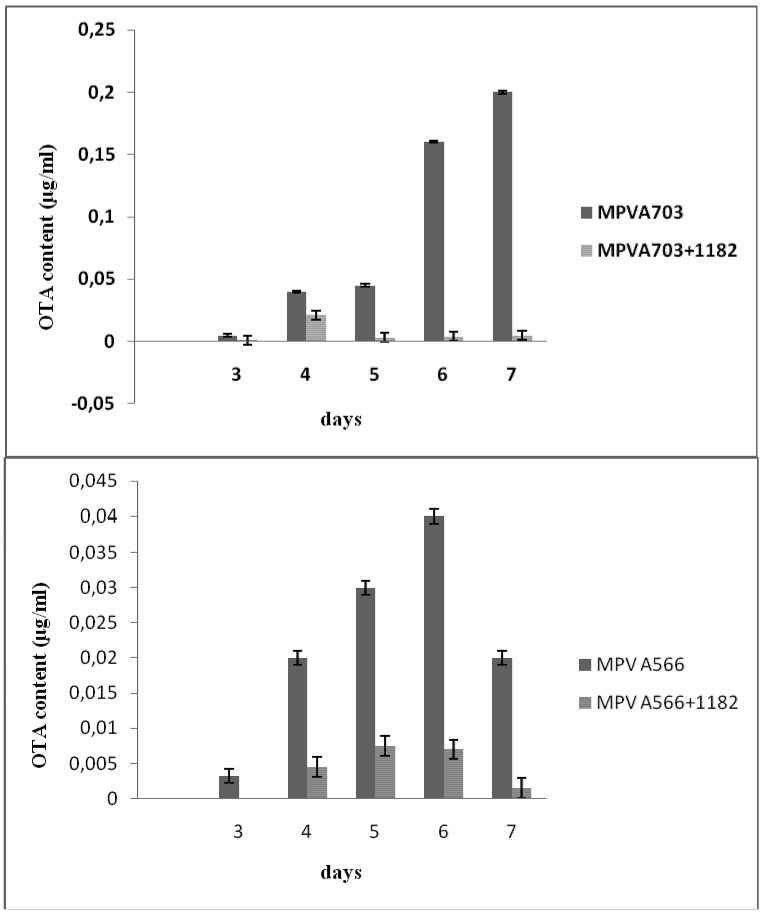
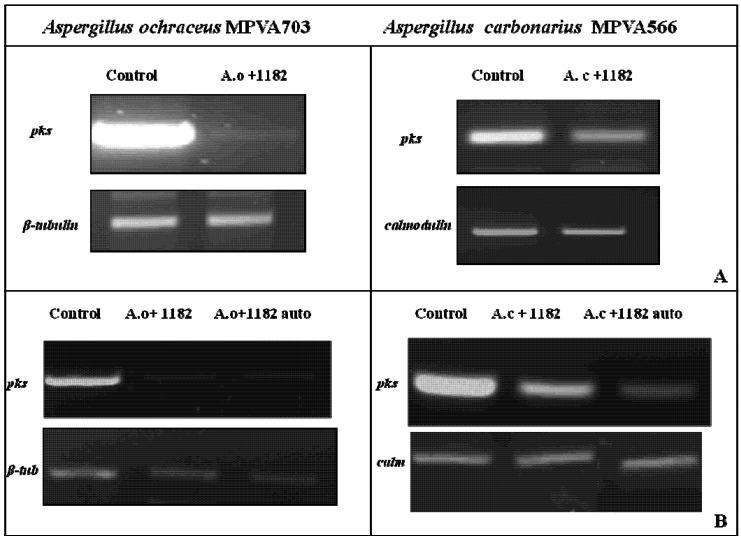
The aim of this study was to select wine yeast strains as biocontrol agents against fungal contaminants responsible for the accumulation of ochratoxin A (OTA) in grape and wine and to dissect the mechanism of OTA detoxification by a Saccharomyces cerevisiae strain (DISAABA1182), which had previously been reported to reduce OTA in a synthetic must. All of the yeast strains tested displayed an ability to inhibit the growth of Aspergillus carbonarius both in vivo and in vitro and addition of culture filtrates from the tested isolates led to complete inhibition of OTA production. S. cerevisiae DISAABA1182 was selected and further tested for its capacity to inhibit OTA production and pks (polyketide synthase) transcription in A. carbonarius and Aspergillus ochraceus in vitro. In order to dissect the mechanism of OTA detoxification, each of these two fungi was co-cultured with living yeast cells exposed to yeast crude or to autoclaved supernatant: S. cerevisiae DISAABA1182 was found to inhibit mycelial growth and OTA production in both Aspergilli when co-cultured in the OTA-inducing YES medium. Moreover, a decrease in pks transcription was observed in the presence of living cells of S. cerevisiae DISAABA1182 or its supernatant, while no effects were observed on transcription of either of the constitutively expressed calmodulin and β-tubulin genes. This suggests that transcriptional regulation of OTA biosynthetic genes takes place during the interaction between DISAABA1182 and OTA-producing Aspergilli.
Overview
The claims and statistics of this paper haven’t been checked yet.
Free: it reads the open-access text and checks the first 5 claims that cite a source we can check. Create a free account to check every claim.
Integrity signals
Registry
Cites
Statistics
Figures
Verification
Claims the paper makes
The claims and statistics of this paper haven’t been checked yet.
Free: it reads the open-access text and checks the first 5 claims that cite a source we can check. Create a free account to check every claim.
Claims other papers make about this one
Each is checked against this paper’s own text: does it say what the citing paper says it does?
The source backs part of the claim, not all of it — or backs it for a different population, condition or comparison.
In the citing paper
“The mycotoxin-removing activity is due to adsorption to S. cerevisiae cell walls, stress responses to the toxin (e.g., changes in plasma membrane composition following patulin exposure), as well as direct transcriptional downregulation of polyketide synthesis (Armando et al. 2012b; Cubaiu et al. 2012; Oporto et al. 2019).”
From Biocontrol yeasts: mechanisms and applications (2019) · cites this paper as Cubaiu et al. 2012
Experimental — accuracy not yet measuredThe cited source says what the claim attributes to it.
In the citing paper
“A number of S. cerevisiae strains (e.g., DISAABA1182, RC008, RC009, RC012, and RC016) reduced the growth of plant pathogens such as A. carbonarius, A. ochraceus, A. parasiticus or Fusarium graminearum and also inhibited mycotoxin (e.g., aflatoxin, ochratoxin A, zearalenone, deoxynivalenol) production by these species (Armando et al. 2012a, 2013; Cubaiu et al. 2012).”
From Biocontrol yeasts: mechanisms and applications (2019) · cites this paper as Cubaiu et al. 2012
Self-check
Percentages, sums and reported differences re-computed from the paper’s own numbers.
The self-check needs the paper’s full text.
Citations
Cites
Twenty years of postharvest biocontrol research: Is it time for a new paradigm?
Droby, S., Wisniewski, M., Macarisin, D., & Wilson, C. (2009) · Postharvest Biology and Technology · doi:10.1016/j.postharvbio.2008.11.009 · Cited by 758 · cited 1×
“long periods under dry conditions coupled with an ability to display multiple mechanisms of antagonism [11].”
BackgroundCiani, M., Comitini, F., Mannazzu, I., & Domizio, P. (2010) · FEMS Yeast Research · doi:10.1111/j.1567-1364.2009.00579.x · Cited by 559 · cited 1×
“In addition, yeasts have a long history of proven safe use as fermentative starters in food and beverages [13–15].”
BackgroundFleet, G. H. (2008) · FEMS Yeast Research · doi:10.1111/j.1567-1364.2008.00427.x · Cited by 518 · cited 1×
“In addition, yeasts have a long history of proven safe use as fermentative starters in food and beverages [13–15].”
BackgroundOchratoxin A in table wine and grape‐juice: Occurrence and risk assessment∗
Zimmerli, B., & Dick, R. (1996) · Food Additives and Contaminants · doi:10.1080/02652039609374451 · Cited by 510 · cited 1×
“OTA was first detected in wine by Zimmerli and Dick [2], where its presence is commonly ascribed to infection of wine grapes by Aspergillus carbonarius and some strains of Aspergilli section nigri.”
BackgroundSaccharomyces cerevisiae and lactic acid bacteria as potential mycotoxin decontaminating agents
Shetty, P. H., & Jespersen, L. (2006) · Trends in Food Science & Technology · doi:10.1016/j.tifs.2005.10.004 · Cited by 442 · cited 2×
“During the wine making process, OTA levels are known to decrease, an effect which is believed to be mediated by the activity of the resident microbial flora, particularly of lactic acid bacteria and yeasts [10,16–18].”
BackgroundPesticide Residues in Grapes, Wine, and Their Processing Products
Cabras, P., & Angioni, A. (2000) · Journal of Agricultural and Food Chemistry · doi:10.1021/jf990727a · Cited by 372 · cited 1×
“Fungicide treatments at either the pre-harvest or post-harvest stage are however not practical, due to the risk of contamination of the wine by toxic residues [4].”
BackgroundDroby, S., Vinokur, V., Weiss, B., Cohen, L., Daus, A., Goldschmidt, E. E., & Porat, R. (2002) · Phytopathology® · doi:10.1094/phyto.2002.92.4.393 · Cited by 325 · cited 2×
“According to related pathosystems, other possible mechanisms may include biofilm formation on the wound surface [26], the inhibition of fungal secondary metabolism [27], the production of antifungal enzymes [28] or the induction of resistance in the fruit tissues [12,29].”
BackgroundYeasts and their possible beneficial and negative effects on the quality of dairy products
Jakobsen, M., & Narvhus, J. (1996) · International Dairy Journal · doi:10.1016/0958-6946(95)00071-2 · Cited by 287 · cited 1×
“In addition, yeasts have a long history of proven safe use as fermentative starters in food and beverages [13–15].”
BackgroundWisniewski, M., Biles, C., Droby, S., McLaughlin, R., Wilson, C., & Chalutz, E. (1991) · Physiological and Molecular Plant Pathology · doi:10.1016/0885-5765(91)90033-e · Cited by 274
Bejaoui, H., Mathieu, F., Taillandier, P., & Lebrihi, A. (2004) · Journal of Applied Microbiology · doi:10.1111/j.1365-2672.2004.02385.x · Cited by 250 · cited 1×
“and yeasts [6–10].”
Research works printed but not linked: 2
- 1. International Agency for Research on Cancer (IARC) IARCS Monographs on the Evaluation of Carcinogenic risks to Humans. Vol. 56. IARC; Lyon, France: 1993. Ochratoxin A; pp. 489–452.
- 38. Sambrook J., Russell D.W. Molecular Cloning. 3rd. Cold Spring Harbor Laboratory Press; Cold Spring Harbor, New York, NY, USA: 2001.
Cited by
Biocontrol yeasts: mechanisms and applications
Freimoser, F. M., Rueda-Mejia, M. P., Tilocca, B., & Migheli, Q. (2019) · World Journal of Microbiology and Biotechnology · doi:10.1007/s11274-019-2728-4 · Cited by 462
Self-citationWine microbiome: A dynamic world of microbial interactions
Liu, Y., Rousseaux, S., Tourdot-Maréchal, R., Sadoudi, M., Gougeon, R., Schmitt-Kopplin, P., & Alexandre, H. (2017) · Critical Reviews in Food Science and Nutrition · doi:10.1080/10408398.2014.983591 · Cited by 226
“Note that various strains of yeast have been reported to produce compounds inhibiting filamentous fungi (Fleet, 2003; Bleve et al., 2006; Ponsone et al., 2011; Cubaiu et al., 2012; Kapetanakou et al., 2012).”
BackgroundFarbo, M. G., Urgeghe, P. P., Fiori, S., Marcello, A., Oggiano, S., Balmas, V., Hassan, Z. U., Jaoua, S., & Migheli, Q. (2018) · International Journal of Food Microbiology · doi:10.1016/j.ijfoodmicro.2018.06.023 · Cited by 128
Self-citationMycotoxins – prevention and decontamination by yeasts
Pfliegler, W. P., Pusztahelyi, T., & Pócsi, I. (2015) · Journal of Basic Microbiology · doi:10.1002/jobm.201400833 · Cited by 140
“ochraceus through repression of the pks (polyketide synthase) biosynthetic gene [38].”
BackgroundFiori, S., Urgeghe, P. P., Hammami, W., Razzu, S., Jaoua, S., & Migheli, Q. (2014) · International Journal of Food Microbiology · doi:10.1016/j.ijfoodmicro.2014.07.020 · Cited by 107
“to remove OTA (Cubaiu et al., 2012).”
Self-citationDegradation of ochratoxin A byBacillus amyloliquefaciensASAG1
Xiaojiao, C., Wu, Z., Wu, S., Dai, Y., & Sun, C. (2014) · Food Additives & Contaminants Part A · doi:10.1080/19440049.2014.991948 · Cited by 104
“…microbes and enzymes have been reported to be able to degrade OTA, and some practical biological strategies have already been exploited (Böhm et al. 2000; Stander et al. 2000, 2001; Varga et al. 2000, 2005; Abrunhosa et al. 2002, 2010; Cubaiu et al. 2012; Armando et al. 2013; Shi et al. 2014).”
BackgroundMethodNon-Botrytis grape-rotting fungi responsible for earthy and moldy off-flavors and mycotoxins
Rousseaux, S., DIGUTA, C. F., Matei, F., Alexandre, H., & Guilloux-Bénatier, M. (2013) · Food Microbiology · doi:10.1016/j.fm.2013.08.013 · Cited by 108
He, Y., Degraeve, P., & Oulahal, N. (2024) · Heliyon · doi:10.1016/j.heliyon.2024.e24929 · Cited by 116
Adsorption of ochratoxin A from grape juice by yeast cells immobilised in calcium alginate beads
Farbo, M. G., Urgeghe, P. P., Fiori, S., Marceddu, S., Jaoua, S., & Migheli, Q. (2015) · International Journal of Food Microbiology · doi:10.1016/j.ijfoodmicro.2015.10.012 · Cited by 78
“Amongthemicrobiologicalapproaches,theuseofyeaststrainstore-move OTA from juice and wine proved most effective (Bejaoui et al., 2004; Cubaiu et al., 2012; Fiori et al., 2014; Petruzzi et al., 2013).”
Self-citationBiodegradation of ochratoxin A byAlcaligenes faecalisisolated from soil
Zhang, H. H., Wang, Y., Zhao, C., Wang, J., & Zhang, X. L. (2017) · Journal of Applied Microbiology · doi:10.1111/jam.13537 · Cited by 63
“2014), Saccharomyces cerevisiae (Cubaiu et al. 2012), Phaffia rhodozyma (P eteri et al.”
BackgroundPotential of yeasts isolated from dry-cured ham to control ochratoxin A production in meat models
Peromingo, B., Núñez, F., Rodríguez, A., Alía, A., & Andrade, M. J. (2018) · International Journal of Food Microbiology · doi:10.1016/j.ijfoodmicro.2018.01.006 · Cited by 64
Impact of environmental factors on ochratoxin A: From natural occurrence to control strategy
Wang, G., Li, E., Gallo, A., Perrone, G., Varga, E., Ma, J., Yang, B., Tai, B., & Xing, F. (2022) · Environmental Pollution · doi:10.1016/j.envpol.2022.120767 · Cited by 54
Abdel-Kareem, M. M., Rasmey, A.-H. M., & Zohri, A.-N. A. (2019) · Letters in Applied Microbiology · doi:10.1111/lam.13105 · Cited by 67
“This could be proposed as a possible mode of action of this biocontrol yeast in suppressing fungal growth and this might be attributed to competition for space or for a specific growth-limiting factor and production of substances that affect hyphae integrity (Cubaiu et al. 2012).”
BackgroundMethodInfluentialPeromingo, B., Andrade, M. J., Delgado, J., Sánchez-Montero, L., & Núñez, F. (2019) · Food Microbiology · doi:10.1016/j.fm.2019.01.024 · Cited by 58
Prendes, L. P., Merín, M. G., Fontana, A., Bottini, R., Ramirez, M. L., & de Ambrosini, V. I. M. (2017) · International Journal of Food Microbiology · doi:10.1016/j.ijfoodmicro.2017.10.033 · Cited by 44
Álvarez, M., Rodríguez, A., Núñez, F., Silva, A., & Andrade, M. J. (2020) · Food Control · doi:10.1016/j.foodcont.2020.107222 · Cited by 40
Bozza, A., Corrêa, I. P., Furuie, J. L., Pires, T. D. F., Dalzoto, P. D. R., & Pimentel, I. C. (2019) · Brazilian Journal of Microbiology · doi:10.1007/s42770-019-00152-9 · Cited by 40
Competitive yeast action against Aspergillus carbonarius growth and ochratoxin A production
Tryfinopoulou, P., Chourdaki, A., Nychas, G. E., & Panagou, E. Ζ. (2019) · International Journal of Food Microbiology · doi:10.1016/j.ijfoodmicro.2019.108460 · Cited by 39
Zhu, C., Shi, J., Jiang, C., & Liu, Y. (2014) · Food Control · doi:10.1016/j.foodcont.2014.08.042 · Cited by 42
Pesce, V. M., Nally, M. C., Carrizo, G. P., Rojo, C., Pérez, B. A., Toro, M. E., de Figueroa, L. I. C., & Vázquez, F. (2017) · Biological Control · doi:10.1016/j.biocontrol.2017.03.005 · Cited by 35
The Route of Mycotoxins in the Grape Food Chain
Gonçalves, A., Palumbo, R., Guimarães, A., Gkrillas, A., Dall’Asta, C., Dorne, J. L. C. M., Battilani, P., & Venâncio, A. (2019) · American Journal of Enology and Viticulture · doi:10.5344/ajev.2019.19039 · Cited by 32
“Cubaiu et al. (2012) confirmed the ability of strains of Saccharomyces cerevisiae and Kloeckera apiculata to control development of A. carbonarius and A. ochraceus and OTA production in vitro and on grapes.”
BackgroundMinimizing Ochratoxin A Contamination through the Use of Actinobacteria and Their Active Molecules
Campos-Avelar, I., de la Noue, A. C., Durand, N., Fay, B., Martinez, V., Fontana, A., Strub, C., & Schorr‐Galindo, S. (2020) · Toxins · doi:10.3390/toxins12050296 · Cited by 26
“Other similar results were found with other microorganisms such as yeast, which decrease the expression of the pks gene and subsequent OTA production [43].”
Yeasts and Traditional Fermented Foods and Beverages
Bhalla, T. C., & Savitri (2017) · Springer eBooks · doi:10.1007/978-981-10-2621-8_3 · Cited by 30
Biological detoxification of ochratoxin A in plants and plant products
Sheikh‐Zeinoddin, M., & Khalesi, M. (2018) · Toxin Reviews · doi:10.1080/15569543.2018.1452264 · Cited by 26
Abdel-Kareem, M. M., Zohri, A.-N. A., & Nasr, S. A. E. E. (2021) · Journal of Plant Diseases and Protection · doi:10.1007/s41348-021-00461-y · Cited by 25
From Grapes to Wine: Impact of the Vinification Process on Ochratoxin A Contamination
Placa, L. L., Tsitsigiannis, D. Ι., Leggieri, M. C., & Battilani, P. (2023) · Foods · doi:10.3390/foods12020260 · Cited by 26
“OTA is one of the most potentially dangerous fungal metabolites for human health, with nephrotoxic, hepatotoxic, teratogenic, and carcinogenic effects [2,3,9,10].”
BackgroundDual Role of Yeasts and Filamentous Fungi in Fermented Sausages
Sidari, R., & Tofalo, R. (2024) · Foods · doi:10.3390/foods13162547 · Cited by 23
“…above, D. hansenii was able to inhibit OTA biosynthesis of A. westerdijkiae at the level of transcription [96], and S. cerevisiae inhibited the growth of Aspergilli and the OTA production of A. carbonarius and A. ochraceus by downregulating the pks (polyketide synthase) biosynthetic gene [97].”
BackgroundGiannoukos, K., Giannoukos, S., Lagogianni, C. S., Tsitsigiannis, D. Ι., & Taylor, S. (2020) · Scientific Reports · doi:10.1038/s41598-020-78332-z · Cited by 18
Tryfinopoulou, P., Fengou, L.-C., & Panagou, E. Ζ. (2019) · LWT · doi:10.1016/j.lwt.2019.01.050 · Cited by 17
Effect of Aspergillus carbonarius amounts on winemaking and ochratoxin A contamination
Jiang, C., Shi, J., Cheng, Y., & Liu, Y. (2013) · Food Control · doi:10.1016/j.foodcont.2013.11.027 · Cited by 17
Khoury, R. E., Choque, É., Khoury, A. E., Snini, S. P., Cairns, R., Andriantsiferana, C., & Mathieu, F. (2018) · Toxins · doi:10.3390/toxins10040137 · Cited by 17
Biocontrol of Occurrence Ochratoxin A in Wine: A Review
Zjalić, S., Markov, K., Lončar, J. V., Jakopović, Ž., Beccaccioli, M., & Reverberi, M. (2024) · Toxins · doi:10.3390/toxins16060277 · Cited by 19
“…carbonarius growth and OTA synthesis on both liquid media and grape berries [104]. growth and OTA synthesis on both liquid media and grape berries [104 Yeast strains of other species, Candida intermedia, and Lachancea thermotolerance inhibited A. carbonarius growth and OTA production, Yeast…”
BackgroundMahmoud, A. L. E., Kilany, A. H. A. M., & Hassan, E. A. (2023) · BMC Microbiology · doi:10.1186/s12866-023-03007-4 · Cited by 14
“The decrease in the development of toxic fungi ( A. flavus f10 and F. proliferatum f30) by Lysinibacillus macroi-des Bac6 strain was conducted according to the method described in [89, 92].”
MethodBallet, N., Renaud, S., Roume, H., George, F., Vandekerckove, P., Boyer, M., & Durand‐Dubief, M. (2023) · Encyclopedia · doi:10.3390/encyclopedia3020043 · Cited by 27
“SC strains can effectively inhibit mycotoxigenic fungi growth and reduce mycotoxin levels [25,28] by adsorbing them in the cell wall and lowering polyketide and secondary metabolite production [25,26,30–32].”
BackgroundQui, N. H. (2022) · Al-mağallaẗ al-ʻirāqiyyaẗ li-l-ʻulūm al-bayṭariyyaẗ/Iraqi journal of veterinary sciences · doi:10.33899/ijvs.2022.132912.2146 · Cited by 20
“cerevisiae cell walls and the changes in the composition of the blood membrane after patulin exposure all contributed to the mycotoxin-removing effect (21,52,53).”
Eamlaor, P., Kortheerakul, C., Plaimas, K., Chareonpornwattana, S., Rerngsamran, P., & Sirisomboon, C. D. (2025) · BioControl · doi:10.1007/s10526-025-10328-y · Cited by 11
“…reactions were conducted with a CFX-350 real-time system (Bio-rad, USA) to analyze gene expression of OTA production-related genes in A. carbonarius ( acpks , acOTApks , and acOTAnrps ) (Cubaiu et al. 2012; Wang et al. 2016; Farbo et al. 2018) and β-tubulin (Casquete et al. 2019) as a control.”
Resilience to Climate Change by Biocontrol Yeasts Against Ochratoxin A Production in Robusta Coffee
Rodríguez, C. L., Verheecke‐Vaessen, C., Strub, C., Fontana, A., Guehi, T. S., Schorr‐Galindo, S., & Medina, Á. (2025) · Toxins · doi:10.3390/toxins17030110 · Cited by 9
“Surprisingly, temperature did not influence fungal growth, while in other studies it has been positively correlated with higher A. carbonarius growth [24].”
Yeast as plant growth promoter and biocontrol agent
Kapoor, D., & Karnwal, A. (2020) · Elsevier eBooks · doi:10.1016/b978-0-12-821394-0.00017-2 · Cited by 10
Wine Yeasts and Consumer Health
Granchi, L., Budroni, M., Rauhut, D., & Zara, G. (2019) · Springer eBooks · doi:10.1007/978-1-4939-9782-4_11 · Cited by 8
Self-citationApplication of Fungal Metabolites Against Mycotoxins Production
Verheecke‐Vaessen, C., Choque, É., & Mathieu, F. (2016) · Springer eBooks · doi:10.1007/978-3-319-19456-1_31-1 · Cited by 5
Role of yeast bioactive compounds in food and fermented beverages
Oro, L., Ciani, M., & Orena, M. (2013) · Università Politecnica delle Marche (Università Politecnica delle Marche) · Cited by 4
Osete-Alcaraz, L., Gómez‐Plaza, E., Oliva-Ortiz, J., Cámara, M. Á., Jørgensen, B., Jurado, R., & Bautista‐Ortín, A. B. (2025) · Foods · doi:10.3390/foods14091565 · Cited by 3
“OTA was classified as a potential human carcinogen (group 2B) by the International Agency for Research on Cancer (IARC), with nephrotoxic, hepatotoxic, teratogenic, and carcinogenic effects [18,19], and it has been correlated with tumours in the human urinary tract [20–22].”
Application of Fungal Metabolites Against Mycotoxins Production
Verheecke‐Vaessen, C., Choque, É., & Mathieu, F. (2017) · Springer eBooks · doi:10.1007/978-3-319-25001-4_31 · Cited by 2
Yeast as a Source of Metabolites for Agricultural Applications
Hassan, M. G., Gupta, V., Sharma, A., Jamwal, G., Gupta, S. K., & Razdan, V. K. (2025) · Fungal biology · doi:10.1007/978-3-031-76587-2_2 · Cited by 3
Prevalence extent of aflatoxigenic fungi and their toxins level in corn and corn-based products
(2022) · Assiut University Journal of Multidisciplinary Scientific Research · doi:10.21608/aunj.2022.219643 · Cited by 3
Biocontrol of mycotoxins: Dynamics and mechanisms of action
Mehmood, M. A., Rauf, A., Ashfaq, M., Ahmad, F., Akram, U., Saddique, M. A. B., & Farid, B. (2023) · Elsevier eBooks · doi:10.1016/b978-0-323-95241-5.00007-1 · Cited by 1
Probiotic microbe activity for application as anti- fungal and feed intake rate of ruminants
Ali, S. I. S., & Imranudin, S. (2015)
Gimenes, D. C., Ono, M. A., Suguiura, I. M. D. S., Macagnan, R., Sartori, D., Borsato, D., Fungaro, M. H. P., & Ono, E. Y. S. (2023) · Journal of Applied Microbiology · doi:10.1093/jambio/lxad174
Zhao, J., Wu, D., Gao, J., Song, Y., Liu, Y., Qin, Y., Song, Y., Zhao, X., & Lu, Y. (2025) · Critical Reviews in Food Science and Nutrition · doi:10.1080/10408398.2025.2566389 · Cited by 1
“In addition, some yeast strains reduce the production of ochra-toxin A (OTA) in Aspergillus by inhibiting the secondary metabolic synthesis gene pks (Cubaiu et al. 2012), thus safeguarding the safety of wine.”
Xiao, J., Wu, Q., Wu, J., Wang, X., Huang, S., Yang, X., Wei, X., Zhang, Y., Kou, X., Wu, Y., et al. (2026) · Foods · doi:10.3390/foods15020295
“For example, Cubaiu et al. [59] demonstrated that Saccharomyces cerevisiae DISAABA1182 effectively suppressed Aspergillus carbonarius infection in grapes and significantly reduced OTA production.”
Etude des écosystèmes microbiens cidricoles : quel impact sur la qualité organoleptique ?
Misery, B. (2021) · theses.fr (ABES) · doi:10.70675/3d02a36fz510bz4794z8359z7650450c8de6
Metadata
- Authors
- Cubaiu, L., Abbas, H., Dobson, A., Budroni, M., & Migheli, Q.
- Affiliations
- University of Sassari (IT)
- University College Cork (IE)
- Corresponding author
- Migheli, Quirico
- Venue
- Toxins
- Publisher
- MDPI AG
- Published
- 2012-12-10
- Volume
- 4
- Issue
- 12
- Pages
- 1468-1481
- ISSN
- 2072-6651 (ISSN-L)
- PMC
- PMC3528257
- OpenAlex
- W2144520823
- Cited by
- 53
- References
- 37
- Citations by year
- 2026: 2 · 2025: 5 · 2024: 3 · 2023: 5 · 2022: 3 · 2021: 2 · 2020: 5 · 2019: 7 · 2018: 5 · 2017: 5 · 2016: 1 · 2015: 4 · 2014: 3 · 2013: 3
- FWCI
- 3.65
- Type
- journal article
- Language
- en
- Open access
- gold
- doi.org
- Licence
- Locations
- Toxins (publishedVersion, cc-by)
- Europe PMC (PubMed Central) (publishedVersion, cc-by)
- PubMed Central (publishedVersion, cc-by)
- PubMed (publishedVersion)
- UnissResearch (Università degli Studi di Sassari) (submittedVersion)
- UnissResearch (Università degli Studi di Sassari) (submittedVersion, cc-by)
- DOAJ (DOAJ: Directory of Open Access Journals) (submittedVersion, cc-by-sa)
- Funders
- Qatar Foundation (NPRP 4)
- Fonds National de la Recherche Luxembourg
- Qatar National Research Fund (NPRP 4, NPRP 4-259-2-083)
- Topics
- Life Sciences › Agricultural and Biological Sciences › Plant Science › Mycotoxins in Agriculture and Food
- Life Sciences › Immunology and Microbiology › Applied Microbiology and Biotechnology › Microbial Natural Products and Biosynthesis
- Life Sciences › Agricultural and Biological Sciences › Food Science › Fermentation and Sensory Analysis
- Keywords
- ochratoxin A, Saccharomyces cerevisiae, Aspergillus carbonarius, Aspergillus ochraceus, biological control, wine yeast, polyketide synthase, transcriptional regulation, co-culture, mycelial growth inhibition
- MeSH terms
- Aspergillus, Carcinogens, Ochratoxins, Saccharomyces cerevisiae, Wine, Kloeckera, Biological Control Agents
About these checks
Registry, retraction, Cites and statistics results are computed, not judged, with one exception: a printed reference that no index lists is read once by a model before it counts as a citation error. Claims are extracted by a model and kept only when their quote appears verbatim in the text; each cited source is then checked, with a model’s help, for whether it says what the claim relies on. Those verdicts can be wrong — read the claim’s quote and the cited source before relying on one.
Statistics and arithmetic are recomputed, not judged.
Confidence bands are shown only for fields calibrated on our annotated test set. None is calibrated yet, so no band is shown.
What counts as a claim ›How we measure confidence ›How we check this ›
Are you an author, or do you see a problem with this page? Request a review
Data sources
Bibliographic data: Semantic Scholar, OpenAlex, Crossref.
Contains information from the Semantic Scholar Academic Graph Datasets, made available under the ODC Attribution License (ODC-BY 1.0).
Semantic Scholar’s data is described in: Kinney, R., et al. (2023). The Semantic Scholar Open Data Platform. arXiv:2301.10140.
