

The DOI matches its Crossref record; 158 of the 165 references it cites were found in a registry or an index.
The Role of Indoleamine 2, 3-Dioxygenase in Immune Suppression and Autoimmunity
Open accessAbstract
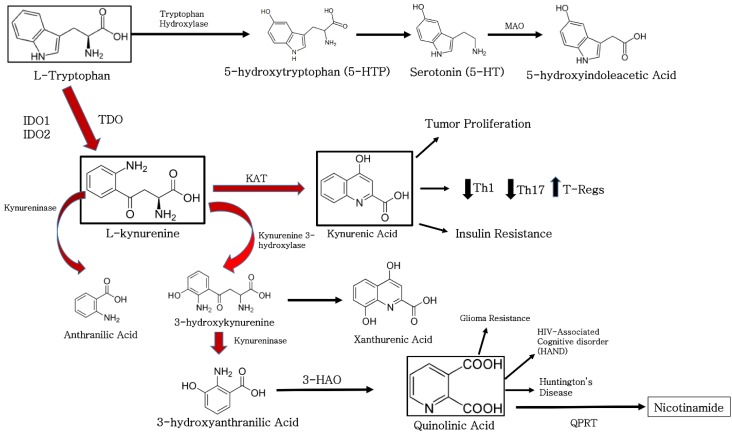
Indoleamine 2, 3-dioxygenase (IDO) is the first and rate limiting catabolic enzyme in the degradation pathway of the essential amino acid tryptophan. By cleaving the aromatic indole ring of tryptophan, IDO initiates the production of a variety of tryptophan degradation products called “kynurenines” that are known to exert important immuno-regulatory functions. Because tryptophan must be supplied in the diet, regulation of tryptophan catabolism may exert profound effects by activating or inhibiting metabolism and immune responses. Important for survival, the regulation of IDO biosynthesis and its activity in cells of the immune system can critically alter their responses to immunological insults, such as infection, autoimmunity and cancer. In this review, we assess how IDO-mediated catabolism of tryptophan can modulate the immune system to arrest inflammation, suppress immunity to cancer and inhibit allergy, autoimmunity and the rejection of transplanted tissues. Finally, we examine how vaccines may enhance immune suppression of autoimmunity through the upregulation of IDO biosynthesis in human dendritic cells.
Overview
The claims and statistics of this paper haven’t been checked yet.
Run the check — free, no account needed. It reads the open-access text and checks the sources it cites.
Integrity signals
Registry
Cites
Statistics
Figures
Verification
Claims the paper makes
The claims and statistics of this paper haven’t been checked yet.
Run the check — free, no account needed. It reads the open-access text and checks the sources it cites.
Claims other papers make about this one
Each is checked against this paper’s own text: does it say what the citing paper says it does?
The cited source says what the claim attributes to it.
In the citing paper
“Increased IDO expression is responsible for the catabolism of TRP in the KYN degradation pathway [36] and is canonically upregulated by inflammatory mechanisms [37,38].”
Self-check
Percentages, sums and reported differences re-computed from the paper’s own numbers.
The self-check needs the paper’s full text.
Citations
Cites
Multilineage potential of adult human mesenchymal stem cells
Pittenger, M. F., Mackay, A. M., Beck, S. C., Jaiswal, R. K., Douglas, R., Mosca, J. D., Moorman, M. A., Simonetti, D. W., Craig, S., & Marshak, D. R. (1999) · Science · doi:10.1126/science.284.5411.143 · Cited by 21,052 · cited 1×
“Mesenchymal stem cells provide a basis for improved tissue regeneration and gene therapy [17,18].”
BackgroundMechanisms of TGF-β Signaling from Cell Membrane to the Nucleus
Shi, Y., & Massagué, J. (2003) · Cell · doi:10.1016/s0092-8674(03)00432-x · Cited by 5,860 · cited 3×
“Several molecular stimuli and signaling pathways were shown to induce the transcription and translation of metabolically-active IDO1 enzyme [35,40,50].”
BackgroundMechanisms of Diabetic Complications
Forbes, J. M., & Cooper, M. E. (2013) · Physiological Reviews · doi:10.1152/physrev.00045.2011 · Cited by 2,890 · cited 2×
“About 80% of patients are women with a 2–5-times greater risk of autoimmune disease onset among African, Hispanic and Native American women than those of European descent [119,137,143–145].”
BackgroundPrevention of Allogeneic Fetal Rejection by Tryptophan Catabolism
Munn, D. H., Zhou, M., Attwood, J. T., Bondarev, I. E., Conway, S. J., Marshall, B., Brown, C. C., & Mellor, A. L. (1998) · Science · doi:10.1126/science.281.5380.1191 · Cited by 2,589 · cited 1×
“confirming that placental cells synthesizing IDO1 can protect the mammalian fetus from maternal T-cell attack [15,16].”
BackgroundUyttenhove, C., Pilotte, L., Théate, I., Stroobant, V., Colau, D., Parmentier, N., Boon, T., & Van den Eynde, B. J. (2003) · Nature Medicine · doi:10.1038/nm934 · Cited by 2,305 · cited 1×
“A connection between elevated urinary tryptophan catabolites and bladder cancer was first reported in the 1950s [105].”
BackgroundBone Marrow Stromal Stem Cells: Nature, Biology, and Potential Applications
Bianco, P., Riminucci, M., Gronthos, S., & Robey, P. G. (2001) · Stem Cells · doi:10.1634/stemcells.19-3-180 · Cited by 1,944 · cited 1×
“Mesenchymal stem cells provide a basis for improved tissue regeneration and gene therapy [17,18].”
BackgroundAn endogenous tumour-promoting ligand of the human aryl hydrocarbon receptor
Opitz, C. A., Litzenburger, U. M., Sahm, F., Ott, M., Tritschler, I., Trump, S., Schumacher, T., Jestaedt, L., Schrenk, D., Weller, M., et al. (2011) · Nature · doi:10.1038/nature10491 · Cited by 1,898 · cited 1×
“The aryl hydrocarbon receptor (AhR) was shown to cause immune suppression after binding dioxin [70].”
BackgroundAn Interaction between Kynurenine and the Aryl Hydrocarbon Receptor Can Generate Regulatory T Cells
Mezrich, J. D., Fechner, J. H., Zhang, X., Johnson, B. P., Burlingham, W. J., & Bradfield, C. A. (2010) · The Journal of Immunology · doi:10.4049/jimmunol.0903670 · Cited by 1,674 · cited 2×
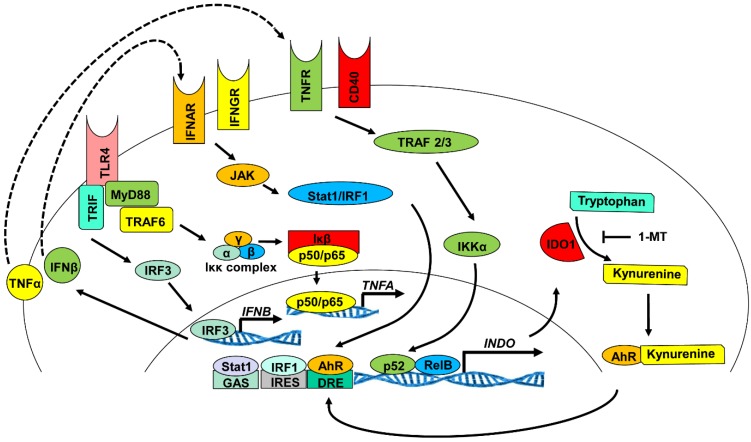
“Interestingly, kynurenines produced from IDO’s enzymatic activity can also bind and activate as an endogenous ligand, AhR [53,54].”
BackgroundEpidemiology and estimated population burden of selected autoimmune diseases in the United States
Jacobson, D. L., Gange, S. J., Rose, N. R., & Graham, N. M. H. (1997) · Clinical Immunology and Immunopathology · doi:10.1006/clin.1997.4412 · Cited by 1,667 · cited 2×
“self-antigens were shown to prevent uveitis, multiple sclerosis and type 1 diabetes in animal models of autoimmunity [124,131,132,142,153].”
BackgroundEisenbarth (1986) · doi:10.1056/nejm198605223142106 · Cited by 1,659 · cited 1×
“Type 1 diabetes (T1D) is a well-studied prototypic tissue-specific autoimmune disease resulting from auto-reactive lymphocyte destruction of the pancreatic islet insulin-producing -cells [34,134–137].”
Background
Cited by
Sorted by citations
Items 101–200 of 316
Maher, A. M., Saleh, S. R., Elguindy, N., Hashem, H. M., & Yacout, G. (2020) · Life Science · doi:10.1016/j.lfs.2020.117427 · Cited by 30
Indoleamine 2,3-dioxygenase 1 is highly expressed in glioma stem cells
Ozawa, Y., Yamamuro, S., Sano, E., Tatsuoka, J., Hanashima, Y., Yoshimura, S., Sumi, K., Hara, H., Nakayama, T., Suzuki, Y., et al. (2020) · Biochemical and Biophysical Research Communications · doi:10.1016/j.bbrc.2020.01.148 · Cited by 34
Hypothesis: Emerging Roles for Aryl Hydrocarbon Receptor in Orchestrating CoV-2-Related Inflammation
Guarnieri, T. (2022) · Cells · doi:10.3390/cells11040648 · Cited by 30
“It is widely accepted that the balance of Trp/Kyn concentrations impacts immune system regulation and is a measure of inflammation level [100].”
BackgroundVallejo, A. F., Read, R. C., Arévalo‐Herrera, M., Herrera, S. V., Elliott, T. J., & Polak, M. E. (2018) · Journal of Infection · doi:10.1016/j.jinf.2018.09.005 · Cited by 27
Biswas, P., & Stuehr, D. J. (2023) · Journal of Biological Chemistry · doi:10.1016/j.jbc.2023.104753 · Cited by 30
“production of Kyn (27,61), we speculate that a low level of NO might actually be boosting”
BackgroundIndoleamine-2,3-Dioxygenase as a Perioperative Marker of the Immune System
Bello, C., Heinisch, P. P., Mihalj, M., Carrel, T. P., & Luedi, M. M. (2021) · Frontiers in Physiology · doi:10.3389/fphys.2021.766511 · Cited by 32
“The role of IDO in infection is to suppress the replication of intracellular pathogens and to create an immune balance by regulating T-cell differentiation (Mbongue et al., 2015).”
BackgroundFettig, N. M., & Osborne, L. C. (2021) · Microbes and Infection · doi:10.1016/j.micinf.2021.104814 · Cited by 26
Burnham, A. J., Foppiani, E. M., & Horwitz, E. M. (2020) · Frontiers in Immunology · doi:10.3389/fimmu.2020.609277 · Cited by 34
Myeloid-derived suppressor cells in cancer: Current knowledge and future perspectives
Rajkumari, S., Singh, J., Agrawal, U., & Agrawal, S. (2024) · International Immunopharmacology · doi:10.1016/j.intimp.2024.112949 · Cited by 28
Qiu, H., Zhang, J., Guo, Q., Zhang, Y., & Zhong, X. (2020) · Biomedicine & Pharmacotherapy · doi:10.1016/j.biopha.2020.110288 · Cited by 32
Hu, Y., Sun, L., Yuan, Z., Xu, Y.-X., & Cao, J. (2017) · Scientific Reports · doi:10.1038/s41598-017-11532-2 · Cited by 26
An empirical review on oxidative stress markers and their relevance in obsessive-compulsive disorder
Kar, S., & Choudhury, I. (2016) · International journal of Nutrition Pharmacology Neurological Diseases · doi:10.4103/2231-0738.191641 · Cited by 26
Gamat, M., Jeon, D., Johnson, L. E., Moseman, J. E., Muralidhar, A., Potluri, H. K., Rastogi, I., Wargowski, E., Zahm, C. D., & McNeel, D. G. (2020) · Cancers · doi:10.3390/cancers12102831 · Cited by 31
“IDO is a catabolic enzyme responsible for the degradation of tryptophan, and the degradation products such as kynurenine, which is known to have substantial inhibitory effects in the microenvironment of solid tumors [125].”
BackgroundLiotti, F., Prevete, N., Vecchio, G., & Melillo, R. (2019) · F1000Research · doi:10.12688/f1000research.16677.1 · Cited by 25
Kim, S. B., Choi, J., Uyangaa, E., Patil, A. M., Hossain, F. M. A., Hur, J., Park, S., Lee, J. H., Kim, K., & Eo, S. K. (2016) · Journal of Neuroinflammation · doi:10.1186/s12974-016-0551-5 · Cited by 25
Yang, P., & Zhang, J. (2023) · Biomedicines · doi:10.3390/biomedicines11071988 · Cited by 28
Aria, H., Rezaei, M., Nazem, S., Daraei, A., Nikfar, G., Mansoori, B., Bahmanyar, M., Tavassoli, A., Vakil, M. K., & Mansoori, Y. (2022) · Frontiers in Immunology · doi:10.3389/fimmu.2022.947885 · Cited by 26
Immunotherapy Targeting Tumor-Associated Macrophages
Liu, Y., & Wang, R. (2020) · Frontiers in Medicine · doi:10.3389/fmed.2020.583708 · Cited by 27
Shiokawa, Z., Kashiwabara, E., Yoshidome, D., Fukase, K., Inuki, S., & Fujimoto, Y. (2016) · ChemMedChem · doi:10.1002/cmdc.201600446 · Cited by 26
Breaking Bad: Autophagy Tweaks the Interplay Between Glioma and the Tumor Immune Microenvironment
Fan, Y., Wang, Y.-B., Zhang, J., Dong, X.-C., Gao, P., Liu, K., Ma, C.-Y., & Zhao, G. (2021) · Frontiers in Immunology · doi:10.3389/fimmu.2021.746621 · Cited by 23
Khazan, M., Nasiri, S., Riahi, S., Robati, R., & Hedayati, M. (2020) · Journal of Medical Virology · doi:10.1002/jmv.25484 · Cited by 23
“2020;92:1253-1259. wileyonlinelibrary.com/journal/jmv © 2019 Wiley Periodicals, Inc. | 1253 Melatonin (MLT) as an antioxidant factor with an anti‐inflammatory effect not only decreases oxidative stress and production of inflammatory markers but also acts as an immunomodulatory agent and protects nerve cells.8-10 Addit…”
BackgroundInfluentialMedication-related osteonecrosis of the jaw related to epacadostat and pembrolizumab.
Decaux, J., & Magremanne, M. (2020) · Journal of Stomatology Oral and Maxillofacial Surgery · doi:10.1016/j.jormas.2020.05.001 · Cited by 23
Metastatic immune infiltrates correlate with those of the primary tumour in canine osteosarcoma
Withers, S. S., York, D. S., Choi, J. W., Woolard, K., Amorim, R. L., Sparger, E. E., Burton, J. H., McSorley, S. J., Monjazeb, A. M., Murphy, W. J., et al. (2019) · Veterinary and Comparative Oncology · doi:10.1111/vco.12459 · Cited by 29
Kaminski, T. W., Pawlak, K., Karbowska, M., Myśliwiec, M., Grzegorzewski, W. J., Kuna, J., & Pawlak, D. (2017) · International Urology and Nephrology · doi:10.1007/s11255-017-1729-1 · Cited by 27
DeVeaux, S. A., Ogle, M., Vyshnya, S., Chiappa, N. F., Leitmann, B., Rudy, R., Day, A., Mortensen, L., Kurtzberg, J., Roy, K., et al. (2021) · bioRxiv · doi:10.1101/2021.06.01.446428 · Cited by 22
Heidari, F., Ramezani, A., Erfani, N., & Razmkhah, M. (2020) · International Reviews of Immunology · doi:10.1080/08830185.2020.1836176 · Cited by 25
“The mechanism of IDO induction using PIC partially mediates through IFNb and transcription factors such as IRF3 and nuclear factor-jB (NF-jB) [59,60].”
BackgroundHuang, J. Y., Larose, T. L., Luu, H. N., Wang, R., Fanidi, A., Alcala, K., Stevens, V. L., Weinstein, S. J., Albanes, D., Caporaso, N. E., et al. (2019) · International Journal of Cancer · doi:10.1002/ijc.32555 · Cited by 28
Metabolism in atherosclerotic plaques: immunoregulatory mechanisms in the arterial wall
Forteza, M. J., & Ketelhuth, D. F. J. (2022) · Clinical Science · doi:10.1042/cs20201293 · Cited by 25
Ebelt, N., Zuniga, E., Marzagalli, M., Zamloot, V., Blazar, B., Salgia, R., & Manuel, E. R. (2020) · Biomedicines · doi:10.3390/biomedicines8120617 · Cited by 21
Heterologous viral protein interactions within licensed seasonal influenza virus vaccines
Koroleva, M., Batarse, F., Moritzky, S., Henry, C., Chaves, F., Wilson, P., Krammer, F., Richards, K., & Sant, A. (2020) · npj Vaccines · doi:10.1038/s41541-019-0153-1 · Cited by 21
Ziklo, N., Huston, W. M., Taing, K., & Timms, P. (2019) · BMC Infectious Diseases · doi:10.1186/s12879-019-3843-4 · Cited by 25
Sharma, R. B., Dalmazi, G. D., & Caturegli, P. (2016) · Thyroid · doi:10.1089/thy.2016.0092 · Cited by 21
Struckmeier, A., Radermacher, A., Fehrenz, M., Bellin, T., Alansary, D., Wartenberg, P., Boehm, U., Wagner, M., Scheller, A., Heß, J., et al. (2022) · Journal of Cancer Research and Clinical Oncology · doi:10.1007/s00432-022-04277-7 · Cited by 21
Novel immune targets for the treatment of triple-negative breast cancer
Corti, C., Nicolò, E., & Curigliano, G. (2021) · Expert Opinion on Therapeutic Targets · doi:10.1080/14728222.2021.2006187 · Cited by 21
D’Arrigo, P., Tufano, M., Rea, A., Vigorito, V., Novizio, N., Russo, S., Romano, M. F., & Romano, S. (2018) · Current Medicinal Chemistry · doi:10.2174/0929867325666181106114421 · Cited by 21
Xu, L., Pelosof, L., Wang, R., Mcfarland, H. I., Wu, W. W., Phue, J., Lee, C.-T., Shen, R.-F., Juhl, H., Wu, L., et al. (2020) · Frontiers in Immunology · doi:10.3389/fimmu.2020.00224 · Cited by 20
“An additional ICP expressed at higher abundance compared to the other well-known ICP was IDO1, a rate-limiting metabolic enzyme that converts tryptophan into immune suppressive kynurenines (37).”
BackgroundAwuah, D., Alobaid, M. A., Latif, A., Salazar, F., Emes, R. D., & Ghaemmaghami, A. (2019) · Journal of Immunology · doi:10.4049/jimmunol.1801108 · Cited by 20
Biochemical hallmarks-targeting antineoplastic nanotherapeutics
Han, J. G., Dong, H., Zhu, T., Wei, Q., Wang, Y., Wang, Y., Lv, Y. B., Mu, H., Huang, S., Zeng, K., et al. (2024) · Bioactive Materials · doi:10.1016/j.bioactmat.2024.05.042 · Cited by 14
Triple-negative breast cancer: from none to multiple therapeutic targets in two decades
Carvalho, F. M. (2023) · Frontiers in Oncology · doi:10.3389/fonc.2023.1244781 · Cited by 26
“IDO1 is a cytosolic enzyme that degrades tryptophan and generates catabolites with important immune-regulatory functions (52).”
IDO-triggered swellable polymeric micelles for IDO inhibition and targeted cancer immunotherapy.
Park, J., Nah, Y., & Kim, W. J. (2023) · Journal of Controlled Release · doi:10.1016/j.jconrel.2023.09.050 · Cited by 19
Momma, T. Y., & Ottaviani, J. (2022) · Nitric oxide · doi:10.1016/j.niox.2022.09.002 · Cited by 19
Hypoxia and the Kynurenine Pathway: Implications and Therapeutic Prospects in Alzheimer’s Disease
Adeyemı, O. S., Awakan, O. J., Afolabi, B., Rotimi, D. E., Oluwayemi, E. T., Otuechere, C. A., Ibraheem, O., Elebiyo, T. C., Alejolowo, O. O., & Arowolo, A. (2021) · Oxidative Medicine and Cellular Longevity · doi:10.1155/2021/5522981 · Cited by 20
“The phosphorylation of IDO1 at tyrosine residues Y115 and Y253 helps to modulate its activity by changing IDO1 protein conformation, thus rendering it inactive [85].”
BackgroundInfluentialMetabolic Interplay between the Immune System and Melanoma Cells: Therapeutic Implications
Indini, A., Grossi, F., Mandalà, M., Taverna, D., & Audrito, V. (2021) · Biomedicines · doi:10.3390/biomedicines9060607 · Cited by 20
Zou, Y., Hu, Y., Ge, S., Zheng, Y., Li, Y., Liu, W., Guo, W., Zhang, Y., Xu, Q., & Lai, Y. (2019) · European Journal of Medicinal Chemistry · doi:10.1016/j.ejmech.2019.111750 · Cited by 24
Tsai, Y.-S., Jou, Y., Tsai, H.-T., Cheong, I.-S., & Tzai, T. (2019) · Urologic oncology · doi:10.1016/j.urolonc.2019.05.005 · Cited by 19
Angelis, M. T. D., Santamaria, G., Parrotta, E. I., Scalise, S., Conte, M. L., Gasparini, S., Ferlazzo, E., Aguglia, U., Ciampi, C., Sgura, A., et al. (2019) · Journal of Cellular and Molecular Medicine · doi:10.1111/jcmm.14598 · Cited by 17
Sen, A., Sharma, A., & Greenberg, H. (2017) · Journal of Virology · doi:10.1128/jvi.01394-17 · Cited by 19
IDO family: the metabolic crossroads connecting immunity, nerves and tumors
Wang, X., Chen, Z., Chen, L., & Qiu, C. (2026) · Journal of Translational Medicine · doi:10.1186/s12967-026-07758-2 · Cited by 19
“As a critical molecular hub bridging immune metabolism, neural regulation, and tumorigenesis, the IDO family exerts its biological effects primarily by regulating immune responses—specifically, by depleting tryptophan and generating kynurenine metabolites [4, 5].”
Abram, D. M., Fernandes, L. G. R., Filho, A. R., & Simioni, P. U. (2017) · Drug Design Development and Therapy · doi:10.2147/dddt.s135367 · Cited by 22
“Studies showed that the tryptophan 2,3-dioxygenase (TDO) and IDO enzymes catalyze the conversion of TRP to N-formyl kynurenine.(21,22) Unlike TDO, expressed only in the liver, IDO is found in various organs, tissues, and cell types, such as stromal, hematopoietic, tumor, lymphoid, and dendritic cells,(21,22) and expre…”
Mohammadi, S., Sedighi, S., Memarian, A., & Yazdani, Y. (2017) · Journal of Laboratory Medicine · doi:10.1515/labmed-2016-0076 · Cited by 15
“Tryptophan degradation leads to the inhibition of surrounding T cells function [9].”
BackgroundTrivedi, A. A., Lin, M., Miyazawa, B. Y., Nair, A., Vivona, L. R., Fang, X., Bieback, K., Schäfer, R., Spohn, G., McKenna, D. H., et al. (2024) · Cytotherapy · doi:10.1016/j.jcyt.2024.03.486 · Cited by 15
Morton, L. D., Castilla-Casadiego, D. A., Palmer, A. C., & Rosales, A. M. (2022) · bioRxiv · doi:10.1101/2022.08.03.502671 · Cited by 17
Atene, C. G., Fiorcari, S., Mesini, N., Alboni, S., Martinelli, S., Maccaferri, M., Leonardi, G., Potenza, L., Luppi, M., Maffei, R., et al. (2022) · Frontiers in Immunology · doi:10.3389/fimmu.2022.832263 · Cited by 17
Zhao, X.-W., Ge, L., Wang, J., Song, Z., Ni, B., He, X.-C., Ruan, Z., & You, Y. (2022) · Frontiers in Immunology · doi:10.3389/fimmu.2021.752736 · Cited by 17
Intrinsic and Extrinsic Determinants of T Cell Metabolism in Health and Disease
Munford, H., & Dimeloe, S. (2019) · Frontiers in Molecular Biosciences · doi:10.3389/fmolb.2019.00118 · Cited by 19
“T cells are also reliant on arginine (which is a precursor for polyamine and protein biosynthesis) and tryptophan (required for proliferation), which have both been implicated in impaired T cell responses to either viral infection, cancer or both (Mbongue et al., 2015).”
BackgroundBacha, A. B., Norah, A.-O., Al-Osaimi, M., Harrath, A., Mansour, L., & el-Ansary, A. (2019) · Metabolic brain disease · doi:10.1007/s11011-019-00496-z · Cited by 17
Hui, Y., Jiao, X., Yang, L., Lu, D., Han, Y., Yang, W., Cao, Y., Miao, Y., Gong, S., & Wei, M. (2025) · Acta Pharmaceutica Sinica B · doi:10.1016/j.apsb.2025.04.022 · Cited by 18
“It is generally accepted that IDO exerts its immunosuppressive functions through two main mechanisms: (1) Trp depletion, which inhibits T cell proliferation and, (2) the accumulation of Trp metabolites, which further contribute to immunosuppression 46,47 .”
Chakraborty, A., Wang, C., Hodgson-Garms, M., Broughton, B. R. S., Frith, J., Kelly, K., & Samuel, C. (2024) · Biomedicine & pharmacotherapy = Biomedecine & pharmacotherapie · doi:10.1016/j.biopha.2024.117259 · Cited by 16
Immunometabolism: a new dimension in immunotherapy resistance
Xiao, C., Xiong, W., Xu, Y., Zou, J. P., Zeng, Y., Liu, J., Peng, Y., Hu, C., & Wu, F. (2023) · Frontiers of Medicine · doi:10.1007/s11684-023-1012-z · Cited by 18
Cho, K.-S., Park, M.-K., Mun, S., Park, H.-Y., Yu, H.-S., & Roh, H.-J. (2016) · PLoS ONE · doi:10.1371/journal.pone.0165661 · Cited by 16
Cancer Immunotherapy: Targeting Tumor-Associated Macrophages by Gene Silencing
Zins, K., & Abraham, D. (2020) · Methods in molecular biology · doi:10.1007/978-1-0716-0290-4_17 · Cited by 21
Bahraoui, E., Serrero, M. C., & Planès, R. (2020) · Scientific Reports · doi:10.1038/s41598-020-64847-y · Cited by 21
Gide, T. N., Allanson, B. M., Menzies, A. M., Ferguson, P. M., Madore, J., Saw, R. P. M., Thompson, J. F., Long, G. V., Wilmott, J. S., & Scolyer, R. A. (2018) · Histopathology · doi:10.1111/his.13814 · Cited by 16
Fibroblast cell-based therapy prevents induction of alopecia areata in an experimental model
Jalili, R. B., Kilani, R. T., Li, Y., Khosravi-maharlooie, M., Nabai, L., Wang, E. H. C., McElwee, K. J., & Ghahary, A. (2018) · Cell Transplantation · doi:10.1177/0963689718773311 · Cited by 18
Overcoming immune evasion with innovative multi-target approaches for glioblastoma
Su, H., Peng, Y., Wu, Y.-L., & Zeng, X.-L. (2025) · Frontiers in Immunology · doi:10.3389/fimmu.2025.1541467 · Cited by 14
Recent Advances in Host-Directed Therapies for Tuberculosis and Malaria
Matteucci, K. C., Correa, A. A. D. S., & Costa, D. L. (2022) · Frontiers in Cellular and Infection Microbiology · doi:10.3389/fcimb.2022.905278 · Cited by 23
“The enzyme indoleamine 2,3-dioxygenase (IDO) catabolizes the conversion of tryptophan to kynurenine, a process that attenuates the production of IFN-g by CD4 T cells (Mbongue et al., 2015).”
BackgroundBlood biomarkers reflect the effects of obesity and inflammation on the human breast transcriptome
Cho, B. A., Iyengar, N. M., Zhou, X. K., Morrow, M., Giri, D. D., Verma, A., Elemento, O., Pollak, M., & Dannenberg, A. J. (2021) · Carcinogenesis · doi:10.1093/carcin/bgab066 · Cited by 15
Liu, Z., Wang, C., Wang, X., & Schepdael, A. V. (2021) · Journal of Chromatography A · doi:10.1016/j.chroma.2021.462305 · Cited by 14
Robert, C., Tsiampali, J., Fraser‐Miller, S. J., Neumann, S., Maciaczyk, D., Young, S. L., Maciaczyk, J., & Gordon, K. C. (2021) · Spectrochimica Acta Part A Molecular and Biomolecular Spectroscopy · doi:10.1016/j.saa.2021.119534 · Cited by 16
Sigmarsdóttir, Þ. B., McGarrity, S., Rolfsson, Ó., Yurkovich, J. T., & Sigurjónsson, Ó. E. (2020) · Frontiers in Bioengineering and Biotechnology · doi:10.3389/fbioe.2020.00239 · Cited by 18
Sarkar, I., Buzatto, A. Z., Garg, R., Li, L., & den Hurk, S. V. D. L.-V. (2019) · Journal of Proteome Research · doi:10.1021/acs.jproteome.8b00806 · Cited by 14
Cong, W., Dottorini, T., Khan, F., Emes, R. D., Zhang, F.-K., Zhou, C.-X., He, J.-J., Zhang, X.-X., Elsheikha, H., & Zhu, X.-Q. (2018) · Frontiers in Immunology · doi:10.3389/fimmu.2018.02403 · Cited by 14
Early warning biomarkers in major depressive disorder: a strategic approach to a testing question
Pratt, R., & Stapelberg, N. J. C. (2018) · Biomarkers · doi:10.1080/1354750x.2018.1463563 · Cited by 17
Bhattacharya, S., Paraskar, G., Jha, M., Gupta, G. L., & Prajapati, B. G. (2024) · ACS Pharmacology & Translational Science · doi:10.1021/acsptsci.4c00156 · Cited by 14
Stuehr, D. J., Biswas, P., Dai, Y., Ghosh, A., Islam, S., & Jayaram, D. T. (2023) · BioEssays · doi:10.1002/bies.202300055 · Cited by 15
Gustafsson, A., Prgomet, Z., Jankovskaja, S., Ruzgas, T., Engblom, J., Ohlsson, L., & Gjörloff-Wingren, A. (2020) · Journal of dermatological science (Amsterdam) · doi:10.1016/j.jdermsci.2020.07.005 · Cited by 13
Proteome and Phosphoproteome Analysis in TNF Long Term-Exposed Primary Human Monocytes
Welz, B., Bikker, R., Junemann, J., Christmann, M., Neumann, K., Weber, M., Hoffmeister, L., Preuß, K., Pich, A., Huber, R., et al. (2019) · International Journal of Molecular Sciences · doi:10.3390/ijms20051241 · Cited by 13
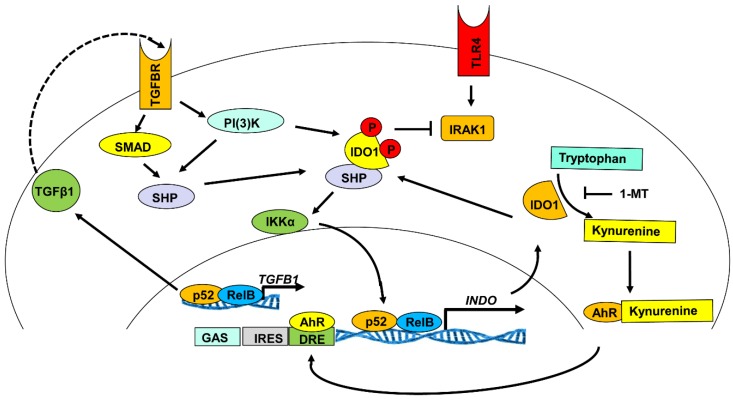
“Moreover, the IDO-dependent metabolites kynurenine and kynurenic acid have been described to play a role in cytokine production (e.g., by increasing TGFβ expression or decreasing LPS-induced TNF secretion), immunomodulation, and the formation of LPS tolerance [24].”
BackgroundInfluentialPromising vaccines for treating glioblastoma
Swartz, A. M., Shen, S. H., Salgado, M. A., Congdon, K. L., & Sanchez-Perez, L. A. (2018) · Expert Opinion on Biological Therapy · doi:10.1080/14712598.2018.1531846 · Cited by 14
Cha, L.-L., Jones, A., Trend, S., Byrne, S., Fabis-Pedrini, M., Carroll, W., Lucas, R., Cole, J., Booth, D., Kermode, A., et al. (2018) · Clinical & Translational Immunology · doi:10.1002/cti2.1037 · Cited by 13
Depressive Disorder Affects TME and Hormonal Changes Promoting Tumour Deterioration Development
Dong, J., Du, J., Liu, R., Gao, X., Wang, Y., Ma, L., Yang, Y., Wu, J. H., Yu, J., & Liu, N. (2025) · Immunology · doi:10.1111/imm.13933 · Cited by 12
Xiao, G., Zhang, S., Zhang, L., Liu, S., Li, G., Ou, M., Zeng, X., Wang, Z., Zhang, G., & Lu, S. (2022) · BMC Microbiology · doi:10.1186/s12866-022-02659-y · Cited by 16
“It was reported that induction of host IDO inhibits T-cell functions and generates regulatory T cells through depletion of Trp, leading to immune suppression or tolerance [38].”
BackgroundHighlights of Immunomodulation in Salmonella-Based Cancer Therapy
Pangilinan, C., & Lee, C.-H. (2021) · Biomedicines · doi:10.3390/biomedicines9111566 · Cited by 12
“High IDO activity deprives effector immune cells of available tryptophan and, in particular, T-cells undergo cell cycle arrest at the G1 phase due to depleted tryptophan [25,26].”
BackgroundAnastasiadou, E., Ceccarelli, S., Messina, E., Gerini, G., Megiorni, F., Pontecorvi, P., Camero, S., Onesti, M., Trivedi, P., Faenza, M., et al. (2021) · PLoS ONE · doi:10.1371/journal.pone.0257070 · Cited by 12
“IDO1 catalyzes the cleavage of the essential amino acid tryptophan into “Kynurenines” which leads to important immunomodulation [17].”
BackgroundZhu, Y., Jiang, C., Liu, Y., Li, Y., Wu, H., Feng, J., & Xu, Y. (2020) · Annals of Translational Medicine · doi:10.21037/atm-20-5634 · Cited by 13
Jain, S., Bhardwaj, B., Amin, S., Adhikari, N., Jha, T., & Gayen, S. (2019) · Journal of Biomolecular Structure and Dynamics · doi:10.1080/07391102.2019.1615000 · Cited by 12
Baxter-Parker, G., Chu, A., Petocz, P., Samman, S., & Gieseg, S. (2019) · Pteridines · doi:10.1515/pteridines-2019-0003 · Cited by 12
“Both groups presented with a decrease in plasma tryptophan over the measurement period, which may be due to minor IDO activation or natural circadian rhythmic variations seen throughout the day [30].”
MethodInfluentialSabbagh, P., Karkhah, A., Nouri, H., Javanian, M., & Ebrahimpour, S. (2018) · Infection, Genetics and Evolution · doi:10.1016/j.meegid.2018.05.001 · Cited by 12
Wang, Y., Merchen, T. D., Fang, X., Lassiter, R. L., Ho, C., Jajosky, R. P., Kleven, D. T., Thompson, T., Mohamed, E. T., Yu, M., et al. (2018) · Journal of Investigative Medicine · doi:10.1136/jim-2018-000742 · Cited by 13
Prescott, S. M., Billeci, N., Gotcher, M., Sapna Patel, M. C., Almon, A., Morgan, H., Abukhalaf, D., & Groër, M. (2025) · Frontiers in Reproductive Health · doi:10.3389/frph.2024.1453714 · Cited by 9
“The IDO pathway, which involves TRP degradation, is crucial for maintaining pregnancy by regulating maternal immune responses and preventing fetal rejection (27).”
Yoo, S., Jeong, Y. H., Choi, H.-H., Chae, S., Hwang, D.-R., Shin, S., & Ha, S. (2023) · Experimental and Molecular Medicine · doi:10.1038/s12276-023-00991-5 · Cited by 11
“Furthermore, the expression of immunosuppressive cytokines, including IL-10 and TGF-β , by DCs can also repress immunity 12,13 .”
Choudhary, V., Ajebo, E. M., Uaratanawong, R., Spaulding, S. C., Hossack, S., Chen, X., Xu, J., Choudhary, M., Irsik, D. L., Isales, C. M., et al. (2022) · International Journal of Tryptophan Research · doi:10.1177/11786469221078191 · Cited by 11
“Of note, Harden et al compared 3 psoriasis datasets: (1) “psoriasis classifier” genes, which can correctly distinguish between lesional and nonlesional skin, (2) psoriasis methylation genes that show altered methylation patterns in psoriasis, and (3) “molecular scar” genes, which are slightly upregulated in non-lesion…”
BackgroundResultMetabolomic Characterization of Pediatric Acute-Onset Neuropsychiatric Syndrome (PANS)
Murgia, F., Gagliano, A., Tanca, M. G., Or‐Geva, N., Hendren, A. J., Carucci, S., Pintor, M., Cera, F., Cossu, F., Sotgiu, S., et al. (2021) · Frontiers in Neuroscience · doi:10.3389/fnins.2021.645267 · Cited by 14
“As well as products of the KP pathway, tryptophan is also the precursor to 5-hydroxytryptamine (5-HT) (Wichers and Maes, 2004).”
BackgroundPlacenta immune infiltrates and perinatal outcomes
Ozen, M., Novak, C. M., & Burd, I. (2018) · American Journal of Reproductive Immunology · doi:10.1111/aji.12850 · Cited by 11
Bianchi, P. D., Leandro, R. M., Poscai, A. N., Yoshinaga, T., Gonçalez, P. O., & Júnior, J. R. K. (2017) · Immunological Investigations · doi:10.1080/08820139.2017.1296856 · Cited by 11
“the control of inflammation (Huang et al., 2010; Harden and Egilmez, 2012; Mbongue et al., 2015), as a regulatory mechanism.”
BackgroundInfluentialYilmaz, N., Ustundağ, Y., Kıvrak, Ş., Kahvecioğlu, S., Celik, H., Kıvrak, İ., & Huysal, K. (2016) · Renal Failure · doi:10.1080/0886022x.2016.1209389 · Cited by 11
Thomas, M. E., Jie, E., Kim, A. M., Mayberry, T. G., Cowan, B. C., Luechtefeld, H. D., Wakefield, M. R., & Fang, Y. (2024) · Medical Oncology · doi:10.1007/s12032-024-02564-6 · Cited by 9
The reactive stroma response regulates the immune landscape in prostate cancer
Thomas, R., Jerome, J. M., Krieger, K. L., Ashraf, N., & Rowley, D. R. (2024) · Journal of Translational Genetics and Genomics · doi:10.20517/jtgg.2024.15 · Cited by 11
Delen, E., Küçükali, C. İ., Karaaslan, Z., Yüceer, H., Punar, S., Hakan, M. T., Yaylım, İ., & Özkök, E. (2023) · Acta Neuropsychiatrica · doi:10.1017/neu.2023.55 · Cited by 11
“It is known that the IDO enzyme is activated by inflammatory regulators, especially IFN γ , Transforming Growth Factor-β (TGF-β ), and IL-6 (Mbongue et al ., 2015; Salminen, 2022).”
BackgroundMallis, P., Michalopoulos, Ε., Sarri, E.-F., Papadopoulou, E. P., Theodoropoulou, V., Katsimpoulas, M., & Stavropoulos‐Giokas, C. (2022) · Current Issues in Molecular Biology · doi:10.3390/cimb44100303 · Cited by 10
“IDO is also characterized by key-specific immunoregulatory properties [43].”
BackgroundOliveira, J. P., Gandini, M., Sales, J., Fujimori, S. K., Barbosa, M. G. M., Frutuoso, V., Moraes, M., Sarno, E., Pessolani, M., & Pinheiro, R. (2020) · Journal of Leukocyte Biology · doi:10.1002/jlb.4a0320-188r · Cited by 10
Metadata
- Authors
- Mbongue, J., Nicholas, D., Torrez, T., Kim, N.-S., Firek, A., & Langridge, W.
- Affiliations
- Loma Linda University (US)
- California Baptist University (US)
- Jerry L. Pettis Memorial VA Medical Center (US)
- Corresponding author
- Langridge, William
- Venue
- Vaccines
- Publisher
- MDPI AG
- Published
- 2015-09-10
- Volume
- 3
- Issue
- 3
- Pages
- 703-729
- ISSN
- 2076-393X (ISSN-L)
- PMC
- PMC4586474
- OpenAlex
- W2101376945
- Cited by
- 351
- References
- 165
- Citations by year
- 2026: 18 · 2025: 32 · 2024: 32 · 2023: 39 · 2022: 43 · 2021: 39 · 2020: 47 · 2019: 34 · 2018: 39 · 2017: 16 · 2016: 11 · 2015: 1
- FWCI
- 1.26
- Type
- journal article
- Language
- en
- Open access
- gold
- dx.doi.org
- Licence
- Locations
- Vaccines (publishedVersion, cc-by)
- Europe PMC (PubMed Central) (publishedVersion, cc-by)
- PubMed Central (publishedVersion, cc-by)
- PubMed (publishedVersion)
- DOAJ (DOAJ: Directory of Open Access Journals) (submittedVersion, cc-by-sa)
- Funders
- Loma Linda University
- National Institutes of Health (DK-99-013)
- National Institute of General Medical Sciences (R25GM060507)
- National Institute on Minority Health and Health Disparities (P20MD006988)
- Topics
- Life Sciences › Neuroscience › Biological Psychiatry › Tryptophan and brain disorders
- Life Sciences › Immunology and Microbiology › Immunology › Immunotherapy and Immune Responses
- Life Sciences › Immunology and Microbiology › Immunology › T-cell and B-cell Immunology
- Keywords
- indoleamine 2,3-dioxygenase, tryptophan catabolism, kynurenine, immunosuppression, autoimmunity, dendritic cells, tumor immunosuppression, allergy, graft rejection, inflammation, vaccine adjuvants, tryptophan metabolism
About these checks
Registry, retraction, Cites and statistics results are computed, not judged, with one exception: a printed reference that no index lists is read once by a model before it counts as a citation error. Claims are extracted by a model and kept only when their quote appears verbatim in the text; each cited source is then checked, with a model’s help, for whether it says what the claim relies on. Those verdicts can be wrong — read the claim’s quote and the cited source before relying on one.
Statistics and arithmetic are recomputed, not judged.
Confidence bands are shown only for fields calibrated on our annotated test set. None is calibrated yet, so no band is shown.
What counts as a claim ›How we measure confidence ›How we check this ›
Are you an author, or do you see a problem with this page? Request a review
