

Immunological Evaluation of Recent MUC1 Glycopeptide Cancer Vaccines
Open accessThe DOI matches its Crossref record; 85 of the 88 references it cites were found in a registry or an index.
Abstract
Aberrantly glycosylated mucin 1 (MUC1) is a recognized tumor-specific antigen on epithelial cell tumors. A wide variety of MUC1 glycopeptide anti-cancer vaccines have been formulated by many research groups. Some researchers have used MUC1 alone as an immunogen whereas other groups used different antigenic carrier proteins such as bovine serum albumin or keyhole limpet hemocyanin for conjugation with MUC1 glycopeptide. A variety of adjuvants have been used with MUC1 glycopeptides to improve their immunogenicity. Fully synthetic multicomponent vaccines have been synthesized by incorporating different T helper cell epitopes and Toll-like receptor agonists. Some vaccine formulations utilized liposomes or nanoparticles as vaccine delivery systems. In this review, we discuss the immunological evaluation of different conjugate or synthetic MUC1 glycopeptide vaccines in different tumor or mouse models that have been published since 2012.
Overview
The claims and statistics of this paper haven’t been checked yet.
Free: it reads the open-access text and checks the first 5 claims that cite a source we can check. Create a free account to check every claim.
Integrity signals
Registry
Cites
Statistics
Figures
Verification
Claims the paper makes
The claims and statistics of this paper haven’t been checked yet.
Free: it reads the open-access text and checks the first 5 claims that cite a source we can check. Create a free account to check every claim.
Self-check
Percentages, sums and reported differences re-computed from the paper’s own numbers.
The self-check needs the paper’s full text.
Citations
Cites
Takeuchi, O., Hoshino, K., Kawai, T., Sanjo, H., Takada, H., Ogawa, T., Takeda, K., & Akira, S. (1999) · Immunity · doi:10.1016/s1074-7613(00)80119-3 · Cited by 3,362
Sakaguchi, S. (2005) · Nature Immunology · doi:10.1038/ni1178 · Cited by 2,669
Regulatory T cells, tumour immunity and immunotherapy
Zou, W. (2006) · Nature Reviews Immunology · doi:10.1038/nri1806 · Cited by 2,085
Cheever, M. A., Allison, J. P., Ferris, A. S., Finn, O. J., Hastings, B. M., Hecht, T. T., Mellman, I., Prindiville, S. A., Viner, J. L., Weiner, L. M., et al. (2009) · Clinical Cancer Research · doi:10.1158/1078-0432.ccr-09-0737 · Cited by 1,388 · cited 1×
“That is why the National Cancer Institute has placed MUC1 as a second prioritized cancer antigen for translational research [1].”
BackgroundToll-like receptors and cancer
Rakoff-Nahoum, S., & Medzhitov, R. (2009) · Nature Reviews Cancer · doi:10.1038/nrc2541 · Cited by 925 · cited 8×
“The γ-PGA was included to stimulate APCs to produce cytokines.”
BackgroundInfluentialT Cell-Independent Antigens Type 2
Mond, J. J. (1995) · Annual Review of Immunology · doi:10.1146/annurev.immunol.13.1.655 · Cited by 824 · cited 5×
“Surprisingly they often found stronger immune responses to vaccines in buffer solution compared to vaccines in Freund’s adjuvant, particularly with regard to tumor binding antibodies and activation of complement dependent cytotoxicity (CDC).”
BackgroundInfluentialGhiringhelli, F., Puig, P. E., Roux, S., Parcellier, A., Schmitt, E., Solary, E., Kroemer, G., Martin, F., Chauffert, B., & Zitvogel, L. (2005) · The Journal of Experimental Medicine · doi:10.1084/jem.20050463 · Cited by 776
Ju, T., & Cummings, R. D. (2002) · Proceedings of the National Academy of Sciences · doi:10.1073/pnas.262438199 · Cited by 487 · cited 3×
“Tumors are deficient in core 1,3-galactosyl-transferase (T synthase) which causes the MUC1 to be aberrantly glycosylated and produce carbohydrate structures such as Tn (GalNAcα-Ser or -Thr), STn (Neu5Ac-α (2,6)-GalNAcα-Thr) and TF antigen (Gal-β (1,3)-GalNAcα-Thr) [3].”
BackgroundInfluentialBarnd, D. L., Lan, M. S., Metzgar, R. S., & Finn, O. J. (1989) · Proceedings of the National Academy of Sciences · doi:10.1073/pnas.86.18.7159 · Cited by 449 · cited 2×
“In order to generate an effective anti-cancer vaccine response, the vaccine candidate should produce both humoral and cellular immunity [22].”
BackgroundRegulatory T-cell inhibition versus depletion: the right choice in cancer immunotherapy
Colombo, M. P., & Piconese, S. (2007) · Nature Reviews Cancer · doi:10.1038/nrc2250 · Cited by 407
Cited by
MUC1: Structure, Function, and Clinic Application in Epithelial Cancers
Chen, W., Zhang, Z., Zhang, S., Zhu, P., Ko, J. K.-S., & Yung, K. K.-L. (2021) · International Journal of Molecular Sciences · doi:10.3390/ijms22126567 · Cited by 246
A review on development of MUC1-based cancer vaccine
Gao, T., Cen, Q., & Lei, H. (2020) · Biomedicine & Pharmacotherapy · doi:10.1016/j.biopha.2020.110888 · Cited by 151
Phage display as a tool for vaccine and immunotherapy development
Hess, K. L., & Jewell, C. M. (2020) · Bioengineering & Translational Medicine · doi:10.1002/btm2.10142 · Cited by 134
“MUC1 is expressed by many types of cancer cells and is therefore an interesting target for cancer immunotherapies.(101,102) By incubating phages expressing the various epitopes with sera from immunized mice, a region of interest (SAPDTRPAP) was discovered.”
BackgroundDevelopments in Carbohydrate-Based Cancer Therapeutics
Hossain, F., & Andreana, P. R. (2019) · Pharmaceuticals · doi:10.3390/ph12020084 · Cited by 134
Koltai, T., Reshkin, S. J., Carvalho, T. M. A., Molfetta, D. D., Greco, M. R., Alfarouk, K. O., & Cardone, R. A. (2022) · Cancers · doi:10.3390/cancers14102486 · Cited by 133
Thymoquinone as a Potential Adjuvant Therapy for Cancer Treatment: Evidence from Preclinical Studies
Mostofa, A., Hossain, M. K., Basak, D., & Sayeed, M. S. B. (2017) · Frontiers in Pharmacology · doi:10.3389/fphar.2017.00295 · Cited by 130
“Tacemotide, a peptide vaccine that target MUC1 glycoprotein is one of the prominent vaccine in this group whereas Sipuleucel-T is an immune cell vaccine in prostate cancer (Anassi and Ndefo, 2011; Wurz et al., 2014; Hossain and Wall, 2016).”
BackgroundSelf-citationTumor-associated O-glycans of MUC1: Carriers of the glyco-code and targets for cancer vaccine design
Beckwith, D. M., & Čudić, M. (2020) · Seminars in Immunology · doi:10.1016/j.smim.2020.101389 · Cited by 124
Peptide-based vaccine for cancer therapies
Buonaguro, L., & Tagliamonte, M. (2023) · Frontiers in Immunology · doi:10.3389/fimmu.2023.1210044 · Cited by 110
Compañón, I., Guerreiro, A., Mangini, V., Castro-López, J., Escudero‐Casao, M., Avenoza, A., Busto, J. H., Castillón, S., Jiménez‐Barbero, J., Asensio, J. L., et al. (2019) · Journal of the American Chemical Society · doi:10.1021/jacs.8b13503 · Cited by 111
Wu, X., Yin, Z., McKay, C., Pett, C., Yu, J., Schorlemer, M., Gohl, T., Sungsuwan, S., Ramadan, S., Baniel, C., et al. (2018) · Journal of the American Chemical Society · doi:10.1021/jacs.8b08473 · Cited by 100
Use of Dendritic Cell Receptors as Targets for Enhancing Anti-Cancer Immune Responses
Hossain, M. K., & Wall, K. A. (2019) · Cancers · doi:10.3390/cancers11030418 · Cited by 97
Self-citationHER2-Positive Breast Cancer Immunotherapy: A Focus on Vaccine Development
Arab, A., Yazdian‐Robati, R., & Behravan, J. (2020) · Archivum Immunologiae et Therapiae Experimentalis · doi:10.1007/s00005-019-00566-1 · Cited by 96
The future of cancer immunotherapy: DNA vaccines leading the way
Pandya, A., Shah, Y., Kothari, N., Postwala, H., Shah, A., Parekh, P., & Chorawala, M. R. (2023) · Medical Oncology · doi:10.1007/s12032-023-02060-3 · Cited by 71
Improving Immunotherapy Through Glycodesign
Buettner, M. J., Shah, S. R., Saeui, C. T., Ariss, R., & Yarema, K. J. (2018) · Frontiers in Immunology · doi:10.3389/fimmu.2018.02485 · Cited by 70
Fernandes, E., Sores, J., Cotton, S., Peixoto, A., Ferreira, D., Freitas, R., Reis, C. A., Santos, L. L., & Ferreira, J. A. (2020) · Theranostics · doi:10.7150/thno.42480 · Cited by 68
“The introduction of distinct T helper cell epitopes, Toll-like receptor agonists and other relevant immunogens in vaccine constructs together with the use of liposomes and nanoparticles as delivery systems may also help paving the way for improved vaccine designs [141, 142].”
BackgroundSynthesis of aryl-thioglycopeptides through chemoselective Pd-mediated conjugation
Montoir, D., Amoura, M., Ababsa, Z. E. A., Vishwanatha, T. M., Yen‐Pon, E., Robert, V., Beltramo, M., Piller, V., Alami, M., Aucagne, V., et al. (2018) · Chemical Science · doi:10.1039/c8sc02370k · Cited by 66
Antitumor Humoral and T Cell Responses by Mucin-1 Conjugates of Bacteriophage Qβ in Wild-type Mice
Yin, Z., Wu, X., Kaczanowska, K., Sungsuwan, S., Comellas-Aragonès, M., Pett, C., Yu, J., Baniel, C., Westerlind, U., Finn, M. G., et al. (2018) · ACS Chemical Biology · doi:10.1021/acschembio.8b00313 · Cited by 54
Zhou, D., Xu, L., Huang, W., & Tonn, T. (2018) · Molecules · doi:10.3390/molecules23061326 · Cited by 53
Augmenting Vaccine Immunogenicity through the Use of Natural Human Anti-rhamnose Antibodies
Hossain, M. K., Vartak, A., Karmakar, P. S., Sucheck, S. J., & Wall, K. A. (2018) · ACS Chemical Biology · doi:10.1021/acschembio.8b00312 · Cited by 52
Self-citationSynthesis and biomedical applications of mucin mimic materials
Kohout, V. R., Wardzala, C. L., & Kramer, J. R. (2022) · Advanced Drug Delivery Reviews · doi:10.1016/j.addr.2022.114540 · Cited by 47
Cancer Vaccines for Triple-Negative Breast Cancer: A Systematic Review
Hosseini, M., Seyedpour, S., Khodaei, B., Loghman, A. H., Seyedpour, N., Yazdi, M. H., & Rezaei, N. (2023) · Vaccines · doi:10.3390/vaccines11010146 · Cited by 46
Rashidijahanabad, Z., & Huang, X. (2020) · Seminars in Immunology · doi:10.1016/j.smim.2020.101390 · Cited by 43
Du, J., Wang, C., Xu, W., Zhang, L., Tang, Y., Zhou, S., Gao, X.-F., Yang, G., & Guo, J. (2020) · iScience · doi:10.1016/j.isci.2020.100935 · Cited by 43
Farooq, M. U., Lawrie, C. H., & Deng, N. (2024) · Chemical Engineering Journal · doi:10.1016/j.cej.2024.150356 · Cited by 33
Zhou, S., Li, Y., Zhang, R., Liu, Y., You, Z.-W., Bian, M.-M., Wen, Y., Wang, J., Du, J., & Guo, J. (2022) · Frontiers in Immunology · doi:10.3389/fimmu.2022.857779 · Cited by 33
Carbohydrates: Potential Sweet Tools Against Cancer
Franconetti, A., López, Ó., & Fernández‐Bolaños, J. G. (2018) · Current Medicinal Chemistry · doi:10.2174/0929867325666180719114150 · Cited by 29
Wu, X., McFall-Boegeman, H., Rashidijahanabad, Z., Liu, K., Pett, C., Yu, J., Schorlemer, M., Ramadan, S., Behren, S., Westerlind, U., et al. (2021) · Organic & Biomolecular Chemistry · doi:10.1039/d1ob00007a · Cited by 28
Guo, M., Luo, B., Pan, M., Li, M., Xu, H., Zhao, F., & Dou, J. (2020) · International Immunopharmacology · doi:10.1016/j.intimp.2020.106850 · Cited by 25
Matsuura, R., Kaji, H., Tomioka, A., Sato, T., Narimatsu, H., Moriwaki, Y., Misawa, H., Imai, K., & Tsuji, S. (2018) · Scientific Reports · doi:10.1038/s41598-018-32534-8 · Cited by 24
Campbell, K., Young, V. L., Donaldson, B., Woodall, M. J., Shields, N. J., Walker, G. F., Ward, V. K., & Young, S. L. (2021) · Vaccines · doi:10.3390/vaccines9050463 · Cited by 22
Thompson, C. M., Cannon, A. C., West, S. C., Ghersi, D., Atri, P., Bhatia, R., Smith, L. M., Rachagani, S., Wichman, C., Kumar, S., et al. (2021) · Clinical Cancer Research · doi:10.1158/1078-0432.ccr-21-1591 · Cited by 22
“Expression ofMUC1 is typical ofmany tissues and cell types, including gastrointestinal epithelium, stromal cells, and immunocytes (46, 47).”
BackgroundMolecular Recognition of a Thomsen–Friedenreich Antigen Mimetic Targeting Human Galectin‐3
Santarsia, S., Grosso, A. S., Trovão, F., Jiménez‐Barbero, J., Carvalho, A. L., Nativi, C., & Marcelo, F. (2018) · ChemMedChem · doi:10.1002/cmdc.201800525 · Cited by 22
Expression of Tumour-Associated MUC1 Is a Poor Prognostic Marker in Breast Cancer in Kumasi, Ghana
Manu, E. A., Bedu-Addo, K., Titiloye, N. A., Ameh-Mensah, C., Opoku, F., & Duduyemi, B. M. (2020) · Journal of Oncology · doi:10.1155/2020/9752952 · Cited by 22
Tumor-associated carbohydrate antigens of MUC1 – Implication in cancer development
Radziejewska, I. (2024) · Biomedicine & Pharmacotherapy · doi:10.1016/j.biopha.2024.116619 · Cited by 23
Alpha-Fetoprotein Binding Mucin and Scavenger Receptors: An Available Bio-Target for Treating Cancer
Lin, B., Wang, Q., Liu, K., Xu, D., Zhu, M., & Li, M. (2021) · Frontiers in Oncology · doi:10.3389/fonc.2021.625936 · Cited by 21
De Masi, R., & Orlando, S. (2022) · International Journal of Molecular Sciences · doi:10.3390/ijms23137373 · Cited by 20
Supekar, N. T., Lakshminarayanan, V., Capicciotti, C. J., Sirohiwal, A., Madsen, C. S., Wolfert, M. A., Cohen, P. A., Gendler, S. J., & Boons, G. (2017) · ChemBioChem · doi:10.1002/cbic.201700424 · Cited by 20
MUC1 (CA27.29) before and after Chemotherapy and Prognosis in High-Risk Early Breast Cancer Patients
Huebner, H., Häberle, L., Müller, V., Schrader, I., Lorenz, R., Forstbauer, H., Fink, V., Schochter, F., Bekes, I., Mahner, S., et al. (2022) · Cancers · doi:10.3390/cancers14071721 · Cited by 19
Zhou, X., Zhang, B., Hu, J., Shen, J., Chen, Z., Zhang, J., Wu, B., Zhou, E., Peng, S., Wong, T., et al. (2024) · The Innovation Medicine · doi:10.59717/j.xinn-med.2024.100052 · Cited by 20
Liposomal Fc Domain Conjugated to a Cancer Vaccine Enhances Both Humoral and Cellular Immunity
Hossain, M. K., Vartak, A., Sucheck, S. J., & Wall, K. A. (2019) · ACS Omega · doi:10.1021/acsomega.9b00029 · Cited by 19
Self-citationUlucan‐Karnak, F., & Akgöl, S. (2021) · Nanomanufacturing · doi:10.3390/nanomanufacturing1010003 · Cited by 18
Preparation and applications of artificial mucins in biomedicine
Detwiler, R. E., & Kramer, J. R. (2022) · Current Opinion in Solid State and Materials Science · doi:10.1016/j.cossms.2022.101031 · Cited by 17
Yin, L., Zhou, Y., Hong, S., Ding, F., & Cai, H. (2023) · ChemBioChem · doi:10.1002/cbic.202200805 · Cited by 16
Syntheses and Functional Studies of Self‐Adjuvanting Anti‐HER2 Cancer Vaccines
Feng, Q., Manabe, Y., Kabayama, K., Aiga, T., Miyamoto, A., Ohshima, S., Kametani, Y., & Fukase, K. (2019) · Chemistry - An Asian Journal · doi:10.1002/asia.201901002 · Cited by 14
Recent Advances in the Development and Efficacy of Anti-Cancer Vaccines—A Narrative Review
Kiełbowski, K., Plewa, P., Zadworny, J., Bakinowska, E., Becht, R., & Pawlik, A. (2025) · Vaccines · doi:10.3390/vaccines13030237 · Cited by 13
“In contrast, the C-terminal fragment consists of an extracellular domain, a transmembrane domain, and an intracellular domain, the latter two of which are highly conserved [49,50].”
Hsu, C., Ahmed, A. Y., Ullah, M. I., Ballal, S., Singh, A., Kavitha, V. S. N. P., Nathiya, D., Abdulhussain, M. A., Abass, M. A., & Hashemzadeh, A. (2025) · International Journal of Biological Macromolecules · doi:10.1016/j.ijbiomac.2025.145514 · Cited by 11
Chemical and Synthetic Biology Approaches for Cancer Vaccine Development
Hossain, F., Kandalai, S., Zhou, X., Zhang, N., & Zheng, Q. (2022) · Molecules · doi:10.3390/molecules27206933 · Cited by 11
Targeting cancer-specific glycans by cyclic peptide lectinomimics
Rodríguez, M. C., Yongye, A. B., Cudic, M., Mayorga, K. M., Liu, E., Mueller, B. M., Ainsley, J., Karabencheva‐Christova, T. G., Christov, C. Z., Čudić, M., et al. (2017) · Amino Acids · doi:10.1007/s00726-017-2485-3 · Cited by 11
“2015; Hossain and Wall 2016).”
Yang, C., Murray, J. L., & Ibrahim, N. K. (2017) · Elsevier eBooks · doi:10.1016/b978-0-12-809819-6.00015-0 · Cited by 14
Advances in Therapeutic Cancer Vaccines, Their Obstacles, and Prospects Toward Tumor Immunotherapy
Eskandari, A., Leow, T. C., Rahman, M. B. A., & Oslan, S. N. (2024) · Molecular Biotechnology · doi:10.1007/s12033-024-01144-3 · Cited by 9
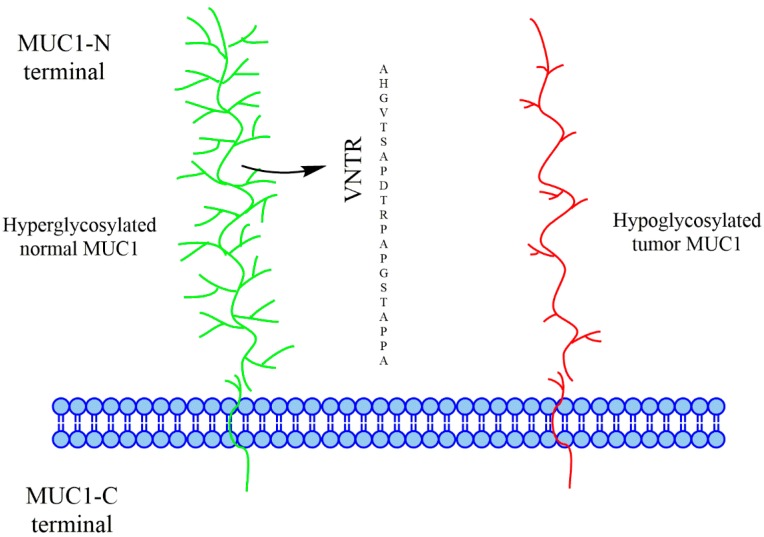
“It comprises three key elements: (a) an N-terminal extracellular domain containing a flexible series of 20 amino acid tandem repeat (VNTR) units, (b) a transmembrane region, and (c) an intracellular C-terminal region [129].”
Du, J., Zhou, S., Liu, J., Zhong, X.-Y., Zhang, R., Zhao, W.-X., Wen, Y., Su, Z., Lu, Z., & Guo, J. (2024) · ACS Pharmacology & Translational Science · doi:10.1021/acsptsci.4c00437 · Cited by 8
Identification of new MUC1 epitopes using HLA-transgenic animals: implication for immunomonitoring
Gatard-Scheikl, T., Tosch, C., Lemonnier, F. A., & Rooke, R. (2017) · Journal of Translational Medicine · doi:10.1186/s12967-017-1254-0 · Cited by 8
Balancing Antigen Loading on Gold Nanoparticles: Implications for Future Cancer Vaccine Strategies
Ghirardello, M., Guerreiro, A., Bretón, C., Compañón, I., Zabalza, J., Mangini, V., Peregrina, J. M., Bernardes, G. J. L., & Corzana, F. (2025) · Chemistry - A European Journal · doi:10.1002/chem.202501286 · Cited by 7
Research progress of MUC1 in genitourinary cancers
Mao, W., Zhang, H., Wang, K., Geng, J., & Wu, J. (2024) · Cellular & Molecular Biology Letters · doi:10.1186/s11658-024-00654-x · Cited by 7
“The PDTRP site in the VNTR domain is recognized by both B cells and T cells [66, 67].”
BackgroundHossain, M. K., Vartak, A., Sucheck, S. J., & Wall, K. A. (2020) · Molecules · doi:10.3390/molecules25143137 · Cited by 7
Self-citationNandedkar-Kulkarni, N., Vartak, A., Sucheck, S. J., Wall, K. A., Quinn, A., Morran, M. P., & McInerney, M. F. (2019) · Bioconjugate Chemistry · doi:10.1021/acs.bioconjchem.9b00332 · Cited by 7
Self-citationAdvances in MUC1 resistance to chemotherapy in pancreatic cancer
Yao, Y., & Fan, D. (2023) · Journal of Chemotherapy · doi:10.1080/1120009x.2023.2282839 · Cited by 6
“Synthetic glycopeptide vaccines are considered suitable because of their higher immunogenicity than nat-ural glycopeptides [59].”
Liu, Y., Yan, B., Wang, Z., Zhu, H., Yin, X., Wang, K., Wang, M., & Zhao, W. G. (2020) · ACS Medicinal Chemistry Letters · doi:10.1021/acsmedchemlett.9b00579 · Cited by 6
Development of Strategies for Glycopeptide Synthesis: An Overview on the Glycosidic Linkage
Rodríguez-Mayor, A. V., Peralta-Camacho, G. J., Cárdenas-Martínez, K. J., & García‐Castañeda, J. E. (2020) · Current Organic Chemistry · doi:10.2174/1385272824999200701121037 · Cited by 6
Li, Z., Derking, R., Lee, W.-H., Bosman, G. P., Ward, A. B., Sanders, R. W., & Boons, G. (2022) · ChemBioChem · doi:10.1002/cbic.202200236 · Cited by 6
Immunological characterization of a rigid α-Tn mimetic on murine iNKT and human NK cells
Fallarini, S., Brittoli, A., Fiore, M., Lombardi, G., Renaudet, O., Richichi, B., & Nativi, C. (2017) · Glycoconjugate Journal · doi:10.1007/s10719-017-9775-6 · Cited by 6
Discovery of tumor antigens in renal cell carcinoma and prospects for clinical application
Марсельевна, К. Э., Enikeeva, K., Mukhamadeev, R. R., Динаровна, А. Д., Вакилевна, Ш. Ю., Shmelkova, P., Gainullina, D. K., Trifonova, D., Gattinger, P., Docena, G. H., et al. (2026) · Frontiers in Immunology · doi:10.3389/fimmu.2026.1771006 · Cited by 4
“Aberrantly glycosylated MUC1 is a recognized tumor-speci fi c antigen on epithelial cell tumors (117).”
Takemoto, K., Nishikawa, Y., Moriguchi, S., Hori, Y., Kamezawa, Y., Matsui, T., & Hara, O. (2019) · Organic Letters · doi:10.1021/acs.orglett.9b02809 · Cited by 4
Synthesis of MUC1-derived glycopeptide bearing a novel triazole STn analog
Marchiori, M. F., Bortot, L. O., Carvalho, I., & Campo, V. L. (2020) · Carbohydrate Research · doi:10.1016/j.carres.2020.108155 · Cited by 4
Synthesis and immunological evaluation of Mincle ligands-based antitumor vaccines
Wang, K., Zhang, T., Liu, M., Wang, D., Zhu, H., Wang, Z., Fan, Y., Liu, Y., & Zhao, W. G. (2022) · Chinese Chemical Letters · doi:10.1016/j.cclet.2022.108065 · Cited by 2
Rauter, A. P., & Xavier, N. M. (2020) · MDPI eBooks · doi:10.3390/books978-3-03928-317-0 · Cited by 1
Vaccine-Loaded Polymeric Vehicles in Cancer Immunotherapy
Alsharabasy, A. M. (2017) · Journal of clinical research
Léo, T. C. D. (2018) · Digital Library of Theses and Dissertations (Universidade de São Paulo) · doi:10.11606/d.60.2018.tde-23052018-112144
Göçer, I. M. (2020) · Hacettepe University Institutional Repository (hacettepe.edu.tr)
Development of cancer nanovaccines based on glyco-neoantigens
Teixeira, B. G. F. (2020) · Portuguese National Funding Agency for Science, Research and Technology (RCAAP Project by FCT) · doi:10.34626/efjs-h440
Update on Gene Therapy as an Antineoplastic Alternative
Sánchez, C. M. C. (2021) · Open Access Journal of Biomedical Science · doi:10.38125/oajbs.000271
“All with encouraging results for breast cancer [26,27].”
BackgroundFajriani, D., Delyuzar, Betty, B., Lukito, J. S., & Laksmi, L. I. (2021) · International Journal of Research Publications · doi:10.47119/ijrp1008811120212411
Thompson, C. M., Cannon, A. C., West, S. C., Ghersi, D., Atri, P., Bhatia, R., Smith, L. M., Rachagani, S., Wichman, C., Kumar, S., et al. (2023) · doi:10.1158/1078-0432.c.6530856.v1
Rôle de MUC1 en physiopathologie rénale : cancer et inflammation
Swierczewski, T. (2021) · theses.fr (ABES) · doi:10.70675/4f0b8a59z34a8z4c58z83a6z529dd65c3ba8
Targeting Fc Receptors for More Effective Cancer Vaccines
Hossain, M. K. (2018) · OhioLink ETD Center (Ohio Library and Information Network)
Self-citationAutoantigens and Insulin Receptor in Type 1 Diabetes
Nandedkar, N. D. (2019) · OhioLink ETD Center (Ohio Library and Information Network)
Structure-based design of unnatural glycopeptides for cancer diagnosis and therapy
Lazaris, F. S. (2025) · RIUR (Universidad de La Rioja)
Castro-López, J., & Hurtado‐Guerrero, R. (2020) · LA Referencia (Red Federada de Repositorios Institucionales de Publicaciones Científicas)
アミド近傍水酸基選択的アシル化反応の開発とセリン選択的糖ペプチド修飾反応への応用
竹本, 昂. (2020) · Institutional Repositories DataBase (IRDB)
Fuentes, R., Baschirotto, P. T., Aguinagalde, L., & Fernández‐Tejada, A. (2026) · Chemistry - A European Journal · doi:10.1002/chem.71192
Raj, A., Chattopadhyay, S., Alex, A. T., Mutalik, S., Kundoolithodi, R., Ellyan, N. S., & Sarath Chandran, C. (2026) · Journal of Drug Delivery Science and Technology · doi:10.1016/j.jddst.2026.108630
Chugh, S., Ramadan, S., Nakisa, A., Behren, S., Guo, Z., Westerlind, U., & Huang, X. (2026) · ACS Chemical Biology · doi:10.1021/acschembio.6c00640
Metadata
- Authors
- Hossain, M., & Wall, K.
- Affiliations
- University of Toledo (US)
- Corresponding author
- Wall, Katherine
- Venue
- Vaccines
- Publisher
- MDPI AG
- Published
- 2016-07-26
- Volume
- 4
- Issue
- 3
- Pages
- 25
- ISSN
- 2076-393X (ISSN-L)
- PMC
- PMC5041019
- OpenAlex
- W2480252091
- Cited by
- 74
- References
- 88
- Citations by year
- 2026: 4 · 2025: 3 · 2024: 6 · 2023: 6 · 2022: 9 · 2021: 8 · 2020: 12 · 2019: 8 · 2018: 11 · 2017: 7
- FWCI
- 0.84
- Type
- journal article
- Language
- en
- Open access
- gold
- doi.org
- Licence
- Locations
- Vaccines (publishedVersion, cc-by)
- Europe PMC (PubMed Central) (publishedVersion, cc-by)
- PubMed Central (publishedVersion, cc-by)
- PubMed (publishedVersion)
- DOAJ (DOAJ: Directory of Open Access Journals) (submittedVersion, cc-by-sa)
- Funders
- National Institutes of Health (GM094734)
- Topics
- Life Sciences › Immunology and Microbiology › Immunology › Immunotherapy and Immune Responses
- Life Sciences › Biochemistry, Genetics and Molecular Biology › Molecular Biology › Glycosylation and Glycoproteins Research
- Physical Sciences › Chemistry › Organic Chemistry › Carbohydrate Chemistry and Synthesis
- Keywords
- MUC1 glycopeptide, cancer vaccines, tumor-specific antigens, mucin glycosylation, antigen conjugation, bovine serum albumin, keyhole limpet hemocyanin, vaccine adjuvants, helper T cell epitopes, TLR agonists, liposomes, nanoparticles, vaccine delivery systems, immunogenicity, tumor models
About these checks
Registry, retraction, Cites and statistics results are computed, not judged, with one exception: a printed reference that no index lists is read once by a model before it counts as a citation error. Claims are extracted by a model and kept only when their quote appears verbatim in the text; each cited source is then checked, with a model’s help, for whether it says what the claim relies on. Those verdicts can be wrong — read the claim’s quote and the cited source before relying on one.
Statistics and arithmetic are recomputed, not judged.
Confidence bands are shown only for fields calibrated on our annotated test set. None is calibrated yet, so no band is shown.
What counts as a claim ›How we measure confidence ›How we check this ›
Are you an author, or do you see a problem with this page? Request a review
Data sources
Bibliographic data: Semantic Scholar, OpenAlex, Crossref.
Contains information from the Semantic Scholar Academic Graph Datasets, made available under the ODC Attribution License (ODC-BY 1.0).
Semantic Scholar’s data is described in: Kinney, R., et al. (2023). The Semantic Scholar Open Data Platform. arXiv:2301.10140.
