

The DOI matches its Crossref record; 70 of the 70 references it cites were found in a registry or an index.
Long-term irritable bowel syndrome symptom control with reintroduction of selected FODMAPs
Open accessAbstract
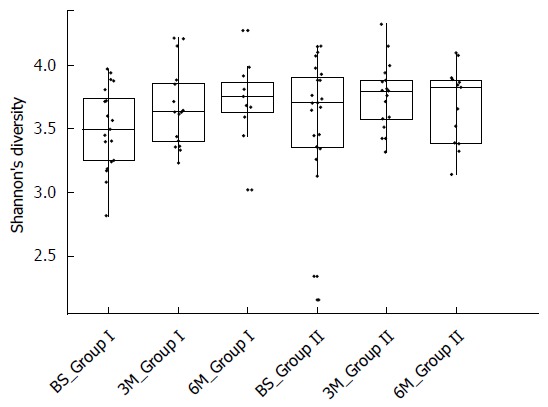
AIM: To investigate the long-term effect of dietary education on a low fermentable oligosaccharide, disaccharide and polyol (FODMAP) diet on irritable bowel syndrome (IBS) symptoms and quality of life (QoL). METHODS: Participants with IBS (Rome III) were randomized to two groups. Group I commenced a low FODMAP diet at baseline. At three months, group II, so far a comparator group, crossed over to a low FODMAP diet while group I started re-challenging foods. All patients completed the IBS SSS (IBS symptom severity scoring system, 0-500 points increasing with severity), IBS QoL questionnaire (0-100 increasing with QoL), a FODMAP specific food frequency questionnaire and provided a stool sample at baseline, three and six months for microbiome analysis. RESULTS: < 0.01) and after re-introducing FODMAP containing foods increased again to 27 ± 9 g/d. There was no change seen in the intestinal microbiome when participants adopted a low FODMAP diet. CONCLUSION: This study demonstrated that a reduction in FODMAPs improves symptoms in IBS and this improvement can be maintained while reintroducing FODMAPs.
Overview
The claims and statistics of this paper haven’t been checked yet.
Run the check — free, no account needed. It reads the open-access text and checks the sources it cites.
Integrity signals
Registry
Cites
Statistics
Figures
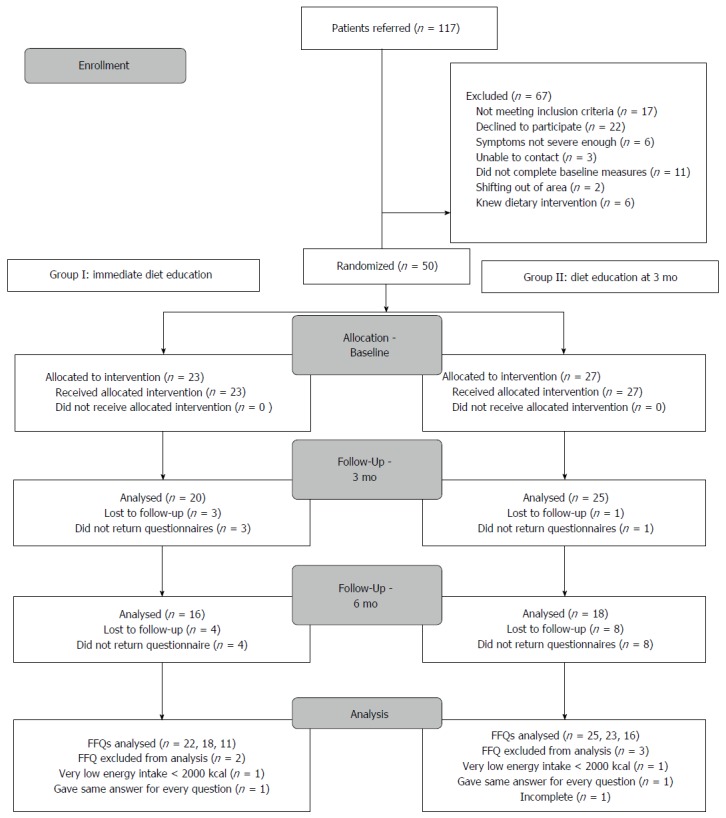
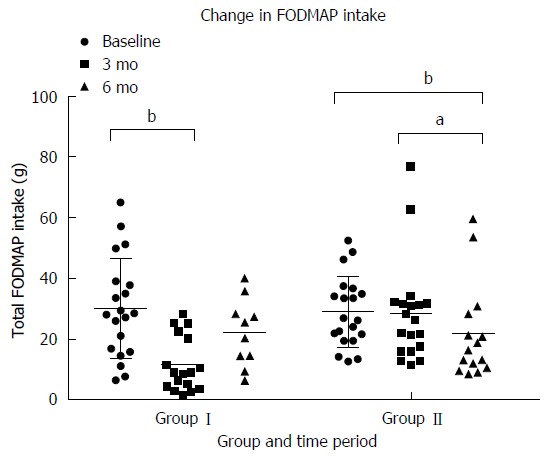
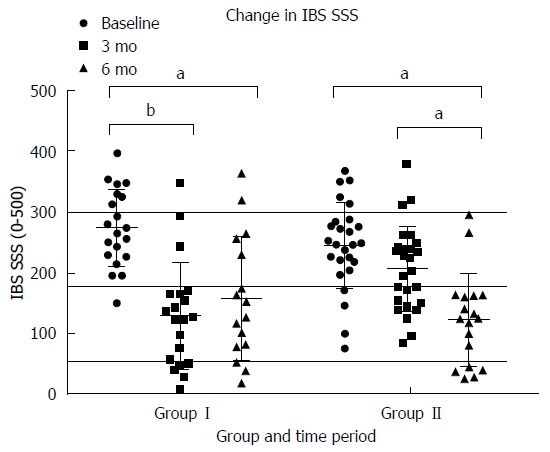
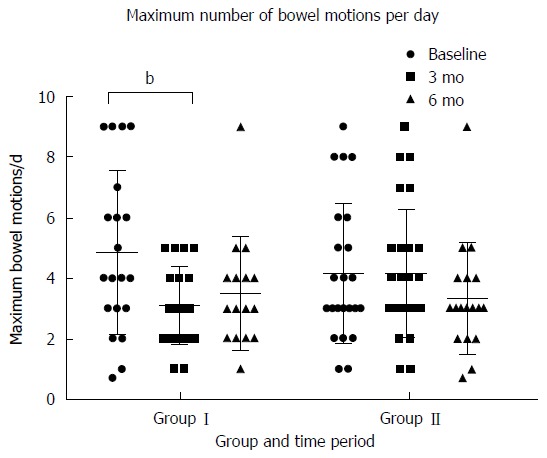
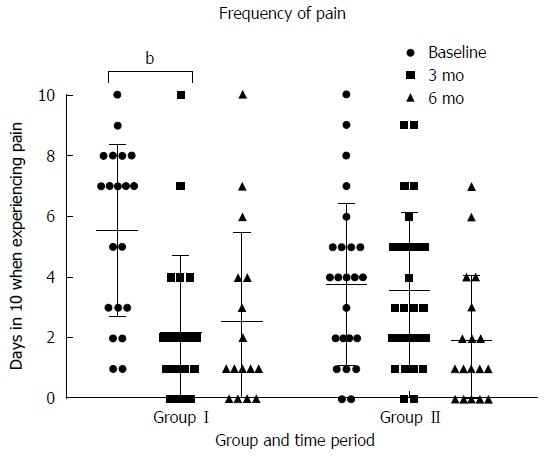
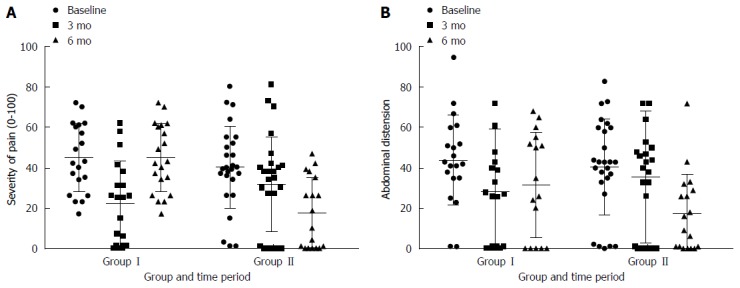
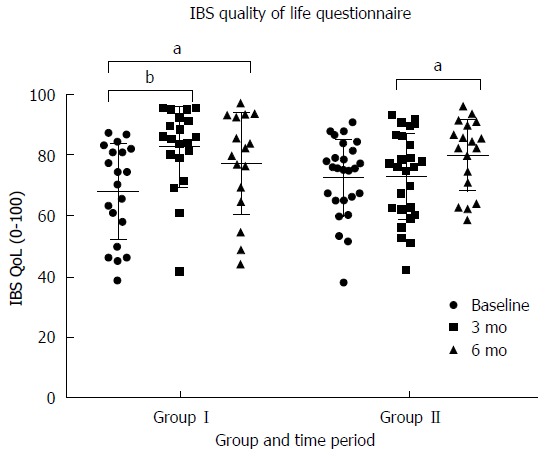
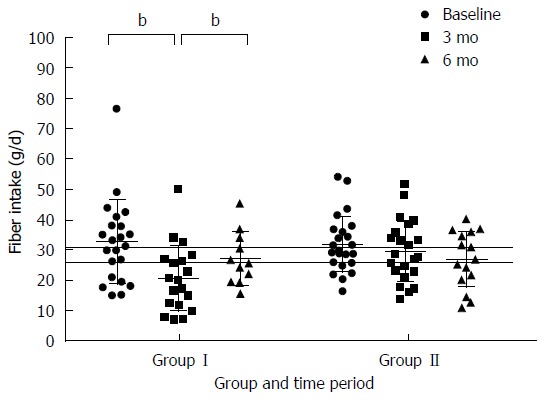
Verification
Claims the paper makes
The claims and statistics of this paper haven’t been checked yet.
Run the check — free, no account needed. It reads the open-access text and checks the sources it cites.
Claims other papers make about this one
Each is checked against this paper’s own text: does it say what the citing paper says it does?
The cited source doesn’t support the claim as written.
In the citing paper
“The effect of FODMAP reintroduction to tolerance on IBS symptoms is therefore unclear, although there have been open-label studies reporting the long-term efficacy of an adapted low FODMAP diet ranges somewhere between 50% and 60%.177 203”
From British Society of Gastroenterology guidelines on the management of irritable bowel syndrome (2021) · cites this paper as [177]
Checked by a reasoning model — may be wrong.
Experimental — accuracy not yet measuredThe source backs part of the claim, not all of it — or backs it for a different population, condition or comparison.
In the citing paper
“Beans, cruciferous vegetables and other high fodmap foods that are more prone to gas formation may be reduced in the diet and can be reintroduced slowly if patients are experiencing bloating or cramping similar to IBS [102].”
From Lifestyle Medicine for Obesity in the Era of Highly Effective Anti-Obesity Treatment (2025) · cites this paper as [102]
Experimental — accuracy not yet measuredThe source backs part of the claim, not all of it — or backs it for a different population, condition or comparison.
In the citing paper
“The effect of FODMAP reintroduction to tolerance on IBS symptoms is therefore unclear, although there have been open-label studies reporting the long-term efficacy of an adapted low FODMAP diet ranges somewhere between 50% and 60%.177 203”
From British Society of Gastroenterology guidelines on the management of irritable bowel syndrome (2021) · cites this paper as [177]
Experimental — accuracy not yet measured
Self-check
Percentages, sums and reported differences re-computed from the paper’s own numbers.
The self-check needs the paper’s full text.
Citations
Cites
1 retracted
Russo, I., Luciani, A., Cicco, P. D., Troncone, E., & Ciacci, C. (2012) · PLoS ONE · doi:10.1371/journal.pone.0032841 · Cited by 108
RetractedQIIME allows analysis of high-throughput community sequencing data
Caporaso, J. G., Kuczynski, J., Stombaugh, J., Bittinger, K., Bushman, F. D., Costello, E. K., Fierer, N., Peña, A. G., Goodrich, J. K., Gordon, J. I., et al. (2010) · Nature Methods · doi:10.1038/nmeth.f.303 · Cited by 34,887
Naive Bayesian Classifier for Rapid Assignment of rRNA Sequences into the New Bacterial Taxonomy
Wang, Q., Garrity, G. M., Tiedje, J. M., & Cole, J. R. (2007) · Applied and Environmental Microbiology · doi:10.1128/aem.00062-07 · Cited by 20,145
Longstreth, G. F., Thompson, W. G., Chey, W. D., Houghton, L. A., Mearin, F., & Spiller, R. C. (2006) · Gastroenterology · doi:10.1053/j.gastro.2005.11.061 · Cited by 4,856
Regulation of inflammatory responses by gut microbiota and chemoattractant receptor GPR43
Maslowski, K. M., Vieira, A. T., Ng, A., Kranich, J., Sierro, F., Yu, D., Schilter, H. C., Rolph, M. S., Mackay, F., Artis, D., et al. (2009) · Nature · doi:10.1038/nature08530 · Cited by 3,241
Global Prevalence of and Risk Factors for Irritable Bowel Syndrome: A Meta-analysis
Lovell, R. M., & Ford, A. C. (2012) · Clinical Gastroenterology and Hepatology · doi:10.1016/j.cgh.2012.02.029 · Cited by 2,155
FRANCIS, C. Y., MORRIS, J., & WHORWELL, P. J. (1997) · Alimentary Pharmacology & Therapeutics · doi:10.1046/j.1365-2036.1997.142318000.x · Cited by 1,708
Fernandes, A. D., Reid, J. N., Macklaim, J. M., McMurrough, T. A., Edgell, D. R., & Gloor, G. B. (2014) · Microbiome · doi:10.1186/2049-2618-2-15 · Cited by 1,329
A Diet Low in FODMAPs Reduces Symptoms of Irritable Bowel Syndrome
Halmos, E. P., Power, V. A., Shepherd, S. J., Gibson, P. R., & Muir, J. G. (2014) · Gastroenterology · doi:10.1053/j.gastro.2013.09.046 · Cited by 1,249
Rajilić–Stojanović, M., Biagi, E., Heilig, H. G. H. J., Kajander, K., Kekkonen, R. A., Tims, S., & de Vos, W. M. (2011) · Gastroenterology · doi:10.1053/j.gastro.2011.07.043 · Cited by 1,041
Research works printed but not linked: 1
- Shepherd SJ, Gibson P. Food intolerance management plan Australia: Penguin Group; 2011;.
Cited by
Sorted by citations
Items 101–143 of 143
Ke, T., Sameeha, M. J., Siah, K. T. H., Jeffri, P., Idrus, N., & Krishnasamy, S. (2024) · Nutrients · doi:10.3390/nu16213596 · Cited by 8
Guerreiro, M., Guerreiro, C. S., & Cravo, M. L. (2019) · Current Opinion in Clinical Nutrition & Metabolic Care · doi:10.1097/mco.0000000000000589 · Cited by 7
Duncanson, K., Burrows, T. L., Keely, S., Potter, M. D. E., Das, G., Walker, M. M., & Talley, N. J. (2019) · Nutrients · doi:10.3390/nu11112590 · Cited by 6
FODMAPs and carbohydrate intolerance
Gibson, P. R., & Halmos, E. P. (2019) · Elsevier eBooks · doi:10.1016/b978-0-12-813037-7.00026-1 · Cited by 7
Adherence to treatment of patients with irritable bowel syndrome: state of the issue
Sukhanova, S. A., Timakova, A. Y., Livzan, M. A., Fedorin, M. M., Skirdenko, Y. P., Gaus, O. V., Andreev, K. A., Горбенко, А. В., & Plinder, M. I. (2021) · Russian Journal of Preventive Medicine · doi:10.17116/profmed202124081101 · Cited by 6
Low FODMAP diet in children with functional abdominal pain disorders. Is it always worth trying?
Castro, M. L. B., Arnal, I. R., Romero, R. G., Garrido, H. L., Delgado‐Sanzonetti, L., Gómez, C. T., & Goicolea, P. O. (2025) · Archives de Pédiatrie · doi:10.1016/j.arcped.2024.12.008 · Cited by 5
A Low-FODMAP diet enhances IBS symptom relief and gut microbiota homeostasis: A meta-analysis
Yang, W., Tan, H., & Nie, S. (2025) · Food Bioscience · doi:10.1016/j.fbio.2025.107190 · Cited by 6
Hillestad, E. M. R., Steinsvik, E. K., Teige, E. S., Rasmussen, S. H., Brønstad, I., Lundervold, A., Hausken, T., Hanevik, K., Lied, G. A., & Berentsen, B. (2024) · Neurogastroenterology & Motility · doi:10.1111/nmo.14814 · Cited by 4
Régime pauvre en FODMAPS, ce que doivent savoir les nutritionnistes
Jouët, P., & Morel, N. (2019) · Nutrition Clinique et Métabolisme · doi:10.1016/j.nupar.2019.05.005 · Cited by 5
Liu, L., Zhang, W., Zhao, W., Guo, S., Wang, Y., Lv, X., Li, B., Wang, H., Xu, E., Li, Q., et al. (2022) · Therapeutic Advances in Gastroenterology · doi:10.1177/17562848221092596 · Cited by 5
Rej, A., & Sanders, D. S. (2021) · Elsevier eBooks · doi:10.1016/b978-0-12-821571-5.00010-6 · Cited by 6
Pouladi, A., Arabpour, E., Bahrami, O., Sadeghi, A., Tape, P. M. K., Abdehagh, M., & Zali, M. R. (2025) · Journal of Human Nutrition and Dietetics · doi:10.1111/jhn.70105 · Cited by 4
Conley, T. E., Parkes, M., Moss, S., & Probert, C. S. (2024) · Clinical Nutrition · doi:10.1016/j.clnu.2024.03.017 · Cited by 5
Pensabene, L., Salvatore, S., Turco, R., Tarsitano, F., Concolino, D., Baldassarre, M. E., Borrelli, O., Thapar, N., Vandenplas, Y., Staiano, A., et al. (2019) · Jornal de Pediatria (Versão em Português) · doi:10.1016/j.jpedp.2019.05.019 · Cited by 4
Optimizing Nutritional Balance: Integrating the Mediterranean Diet into Low-FODMAP Nutrition
Dimitriou, A., Aggeletopoulou, I., & Triantos, C. K. (2025) · Microorganisms · doi:10.3390/microorganisms13092085 · Cited by 4
Global research trend and hotspot in the low FODMAP diet: a bibliometric analysis
Xu, C., Song, Z., Hu, J.-Y., Li, C.-C., & Shen, H. (2024) · Journal of Health Population and Nutrition · doi:10.1186/s41043-024-00567-7 · Cited by 5
Alexandru, B. A., Rat, L. A., Moldovan, A. F., MIHANCEA, P., & Mariș, L. (2022) · Medicina · doi:10.3390/medicina58060763 · Cited by 2
Role of diet and nutrition treatment methods in reducing the ailment of the irritable bowel syndrome
Balwierz, R. J., Jasiński, K., Osowski, M., Grela, K. P., Karpęcka-Gałka, E., Kusakiewicz-Dawid, A., & Skotnicka-Graca, U. (2021) · Farmacja Polska · doi:10.32383/farmpol/138856 · Cited by 1
İrritabl Bağırsak Sendromunda Düşük FODMAP Diyet Tedavisi
DÜŞÜNSEL, A. D., & Kılınç, G. E. (2022) · Balıkesır Health Sciences Journal · doi:10.53424/balikesirsbd.1004488 · Cited by 1
Dietary Therapy in Irritable Bowel Syndrome
Kang, S. J., & the Korean Society of Neurogastroenterology and Motility (2025) · Korean Journal of Gastroenterology · doi:10.4166/kjg.2025.009 · Cited by 1
Progress in understanding of relationship between irritable bowel syndrome and food intolerance
Zhang, X., & Zhang, Y. (2022) · World Chinese Journal of Digestology · doi:10.11569/wcjd.v30.i20.886 · Cited by 1
Stankus, T. (2019) · Science & Technology Libraries · doi:10.1080/0194262x.2019.1617226
FODMAP urriko dieta eta haien erabilgarritasuna hesteko gaixotasunen maneiuan
Pérez-Junkera, G., Lasa, A., Miranda, J., Navarro, V., Simón, E., Larretxi, I., Martínez, O., Bustamante, M. Á., Txurruka, I., & Vázquez-Polo, M. (2020) · EKAIA Euskal Herriko Unibertsitateko Zientzi eta Teknologi Aldizkaria · doi:10.1387/ekaia.21650
Rafferty, A. (2020) · Arizona State University Library Digital Repository (Arizona State University)
DRFODMAPS COMO UMA ABORDAGEM TERAPÊUTICA PARA A SII: UMA REVISÃO BIBLIOGRÁFICA
Cardoso, R. R. C., LOPES, A. B. D. C. D. A., Mesquita, A. C. G., Gomes, B. M., de Oliveira, C. R., Lopes, C. F., Olmos, G. V. N., Brandizzi, G. V., Filho, J. R. F., Nascimento, L. G. Z., et al. (2022) · Editora Pasteur eBooks · doi:10.29327/547549.1-55
EFEITOS DA RESTRIÇÃO DE FODMAPs NA REDUÇÃO DE SINTOMAS DA SÍNDROME DO INTESTINO IRRITÁVEL
SANTOS, R. B. D., SALES, V. C., RODRIGUES, E. D. S., Debia, N., BARROS, L. D. R., & MARTINS, M. D. C. D. C. E. (2022) · Editora Pasteur eBooks · doi:10.29327/560779.4-26 · Cited by 1
Kramer, L., Zizenbacher, P., Kubiena, G., Ploberger, F., & Krenner, L. (2019) · Springer eBooks · doi:10.1007/978-3-662-48879-9_29
Oliveira, C. N., Oliveira, J. D., Araújo, K. C. D., & Fernandez, M. (2022) · International Journal of Health Science · doi:10.22533/at.ed.1592672203117
Diet-specific impacts on the gut microbiome and their relation to health and inflammation
El-Shafie, S., & Metwaly, A. (2024) · Elsevier eBooks · doi:10.1016/b978-0-443-18979-1.00005-8
Non-starch carbohydrates as lever to improve cereal-based foods: The case of FODMAP and beta-glucans
Schmidt, M. P. (2025) · Advances in food and nutrition research · doi:10.1016/bs.afnr.2025.06.006
Varney, J. E., Madan, J., Halmos, E. P., Krishnasamy, S., Lee, Y. Y., Mustafa, U., Siah, K. T. H., Wu, P.-S., Yao, C. K., & Ghoshal, U. C. (2025) · Journal of Neurogastroenterology and Motility · doi:10.5056/jnm25090 · Cited by 1
Targeted and individualized dietary interventions in disorders of gut-brain interaction
Routhiaux, K., Gils, T. V., & Balsiger, L. M. (2025) · Best Practice & Research Clinical Gastroenterology · doi:10.1016/j.bpg.2025.102076 · Cited by 2
Microbiome-based interventions for irritable bowel syndrome management
Chaudhary, K., Mehra, H., & Dhiman, N. K. (2026) · Elsevier eBooks · doi:10.1016/b978-0-443-40483-2.00048-0
IRRITABLE BOWEL SYNDROME: A COMPREHENSIVE REVIEW OF CURRENT KNOWLEDGE
Szklarski, M., Sztajura, J., Szkarłat, K. J., Targosz, S., Stachel, M., Maraszewska, E., Szymacha, W., Płecka, A., Zimnicki, K., & Stępień, A. (2026) · International Journal of Innovative Technologies in Social Science · doi:10.31435/ijitss.2(50).2026.5315
Anderson, J. L., Ljótsson, B., Yao, C. K., Murray, H. B., & Biesiekierski, J. R. (2026) · Proceedings of The Nutrition Society · doi:10.1017/s002966512610305x
RADU-MIHAI, B., Ciobica, A. S., & Mavroudis, I. (2026) · Annals of the Academy of Romanian Scientists Series on Biological Sciences · doi:10.56082/annalsarscibio.2026.1.226
Iftequar, Y., Bajpai, P., Dav, R., Harshitha, K. S., Chandan, C., Goel, R., Chimkar, S. B., & Chowdhary, R. (2026) · Internal and Emergency Medicine · doi:10.1007/s11739-026-04418-7
From Dysbiosis to systemic health: Microbiome modulation as a unified therapeutic framework
Dhiman, N. K., & Ahmad, S. R. (2026) · Acta Microbiologica et Immunologica Hungarica · doi:10.1556/030.2026.03015
Mah, E., McKenna, C. F., Blonquist, T. M., Kaden, V. N., Shah, A. M., Qu, Y., Tuck, C. J., Landberg, R., Cook, C. M., & Garvey, S. M. (2026) · Journal of Nutrition · doi:10.1016/j.tjnut.2026.101782
Gatniejewska, J., Sienicka, M., Prudzic, P., Winiarska, W., Bełcikowska-Skowron, W. R., Siegmund, A., Chrapczyńska, M., Filarecka, A., Przybyszewski, P., & Przybyszewska, E. (2026) · International Journal of Innovative Technologies in Social Science · doi:10.31435/ijitss.3(51).2026.5919
Azevedo, Y. R. A., Chaves, B. M. S., Soares, I. F., Morais, J. B. S., Melo, S. R. D. S., & de Oliveira, A. R. S. (2026) · Revista Multidisciplinar do Nordeste Mineiro · doi:10.66104/dk2wfv93
Alenezi, M. A. M., Alfayez, J. F. A., Alkhidhr, J. M. B., Alruwaili, A. S. M., Alanazi, A. M. M., Alqarni, I. A. S., Alanazi, N. F. M., Alenezi, A. F. M., Alshammari, R. O. K., Alanazi, Z. S. D., et al. (2026) · Cureus · doi:10.7759/cureus.117606
Gorini, F., Tonacci, A., Gabriele, M., & Borghini, A. (2026) · Nutrients · doi:10.3390/nu18213535
Metadata
- Authors
- Harvie, R. M., Chisholm, A. W., Bisanz, J. E., Burton, J. P., Herbison, P., Schultz, K., & Schultz, M.
- Affiliations
- Western University (CA)
- Corresponding author
- Schultz, Michael
- Venue
- World Journal of Gastroenterology
- Publisher
- Baishideng Publishing Group Inc.
- Published
- 2017
- Volume
- 23
- Issue
- 25
- Pages
- 4632
- ISSN
- 1007-9327 (ISSN-L)
- PMC
- PMC5504379
- OpenAlex
- W2730702691
- Cited by
- 143
- References
- 70
- Citations by year
- 2026: 12 · 2025: 15 · 2024: 14 · 2023: 12 · 2022: 21 · 2021: 18 · 2020: 13 · 2019: 23 · 2018: 10 · 2017: 5
- FWCI
- 14.60
- Type
- journal article
- Language
- en
- Open access
- hybrid
- doi.org
- Licence
- cc-by-nc
- Locations
- World Journal of Gastroenterology (publishedVersion, cc-by-nc)
- Europe PMC (PubMed Central) (publishedVersion, cc-by-nc)
- PubMed Central (publishedVersion, cc-by-nc)
- PubMed (publishedVersion)
- Topics
- Health Sciences › Medicine › Gastroenterology › Gastrointestinal motility and disorders
- Life Sciences › Biochemistry, Genetics and Molecular Biology › Molecular Biology › Gut microbiota and health
- Health Sciences › Medicine › Pediatrics, Perinatology and Child Health › Infant Health and Development
- Keywords
- irritable bowel syndrome, low FODMAP diet, nutrition education, symptom severity, quality of life, gut microbiota, dietary fiber intake
- MeSH terms
- Gastrointestinal Microbiome, Adult, Colon, Disaccharides, Female, Fermentation, Humans, Male, Middle Aged, Patient Education as Topic, Quality of Life, Surveys and Questionnaires, Severity of Illness Index, Sugar Alcohols, Irritable Bowel Syndrome, Diet, Carbohydrate-Restricted
About these checks
Registry, retraction, Cites and statistics results are computed, not judged, with one exception: a printed reference that no index lists is read once by a model before it counts as a citation error. Claims are extracted by a model and kept only when their quote appears verbatim in the text; each cited source is then checked, with a model’s help, for whether it says what the claim relies on. Those verdicts can be wrong — read the claim’s quote and the cited source before relying on one.
Statistics and arithmetic are recomputed, not judged.
Confidence bands are shown only for fields calibrated on our annotated test set. None is calibrated yet, so no band is shown.
What counts as a claim ›How we measure confidence ›How we check this ›
Are you an author, or do you see a problem with this page? Request a review
