

The DOI matches its Crossref record; 70 of the 70 references it cites were found in a registry or an index.
Long-term irritable bowel syndrome symptom control with reintroduction of selected FODMAPs
Open accessAbstract
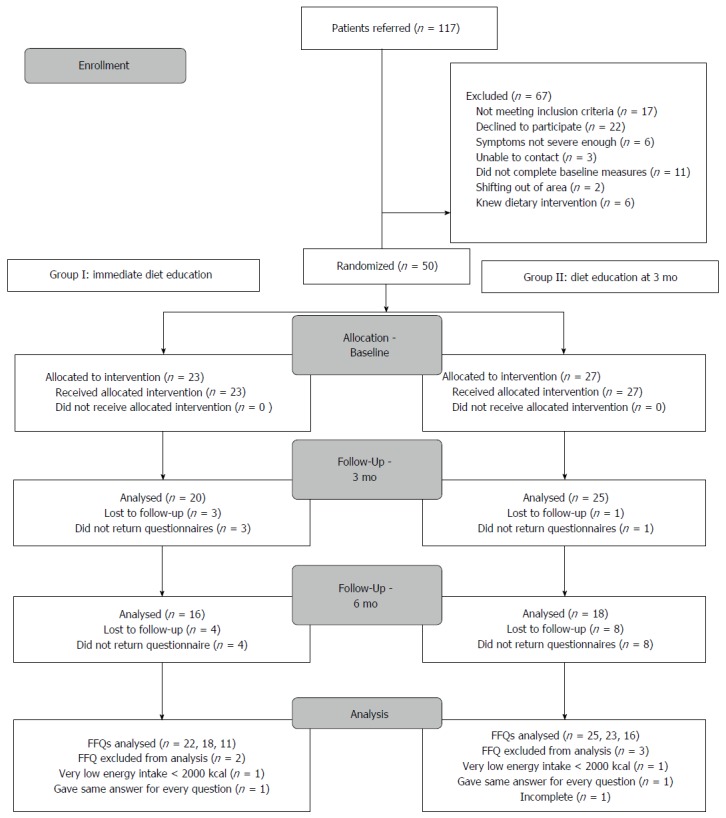
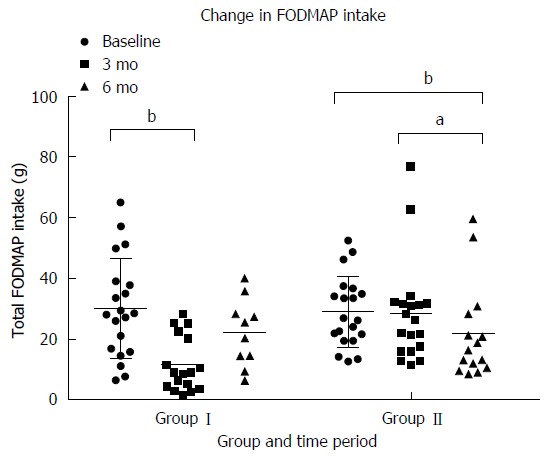
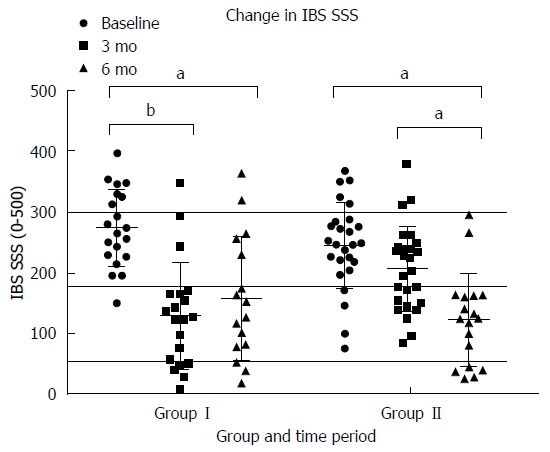
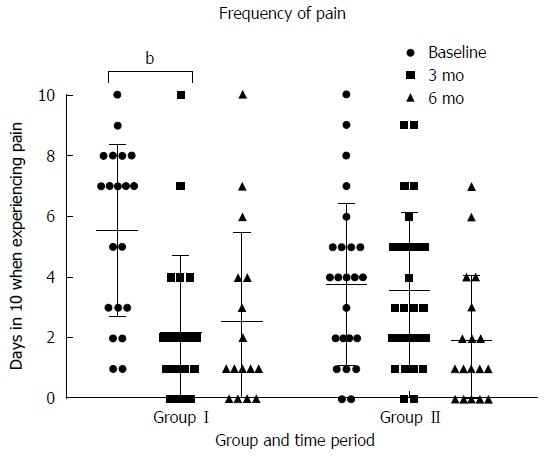
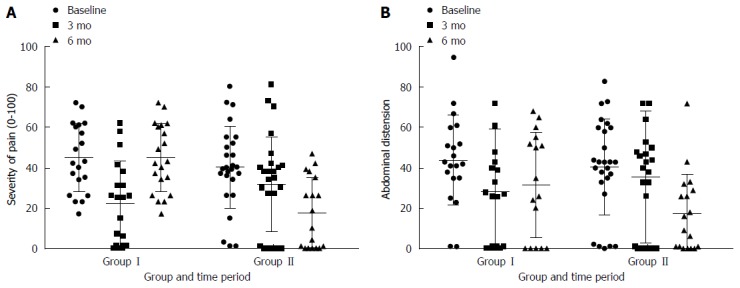
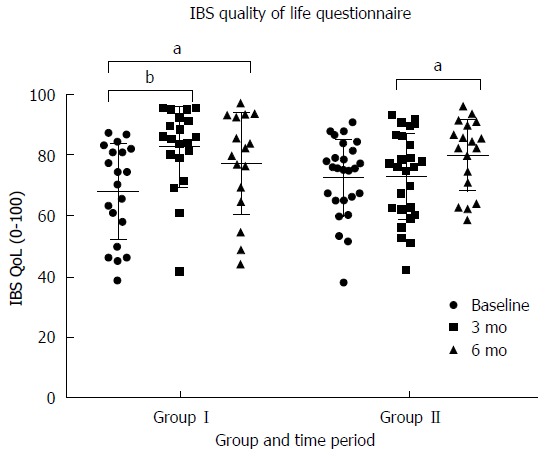
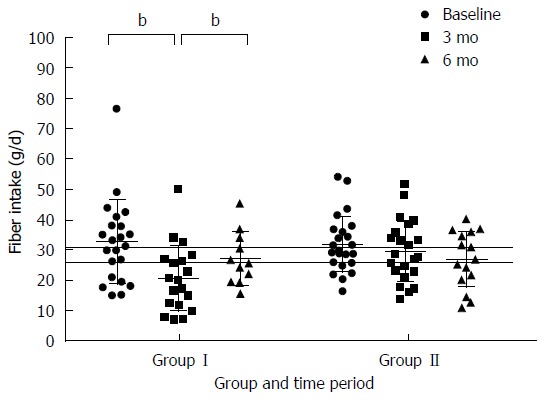
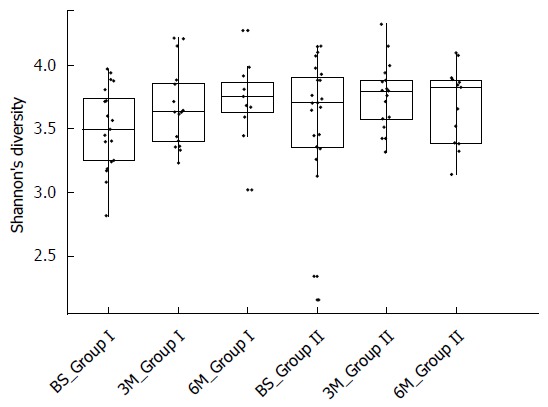
AIM: To investigate the long-term effect of dietary education on a low fermentable oligosaccharide, disaccharide and polyol (FODMAP) diet on irritable bowel syndrome (IBS) symptoms and quality of life (QoL). METHODS: Participants with IBS (Rome III) were randomized to two groups. Group I commenced a low FODMAP diet at baseline. At three months, group II, so far a comparator group, crossed over to a low FODMAP diet while group I started re-challenging foods. All patients completed the IBS SSS (IBS symptom severity scoring system, 0-500 points increasing with severity), IBS QoL questionnaire (0-100 increasing with QoL), a FODMAP specific food frequency questionnaire and provided a stool sample at baseline, three and six months for microbiome analysis. RESULTS: < 0.01) and after re-introducing FODMAP containing foods increased again to 27 ± 9 g/d. There was no change seen in the intestinal microbiome when participants adopted a low FODMAP diet. CONCLUSION: This study demonstrated that a reduction in FODMAPs improves symptoms in IBS and this improvement can be maintained while reintroducing FODMAPs.
Overview
The claims and statistics of this paper haven’t been checked yet.
Run the check — free, no account needed. It reads the open-access text and checks the sources it cites.
Integrity signals
Registry
Cites
Statistics
Figures
Verification
Claims the paper makes
The claims and statistics of this paper haven’t been checked yet.
Run the check — free, no account needed. It reads the open-access text and checks the sources it cites.
Claims other papers make about this one
Each is checked against this paper’s own text: does it say what the citing paper says it does?
The cited source doesn’t support the claim as written.
In the citing paper
“The effect of FODMAP reintroduction to tolerance on IBS symptoms is therefore unclear, although there have been open-label studies reporting the long-term efficacy of an adapted low FODMAP diet ranges somewhere between 50% and 60%.177 203”
From British Society of Gastroenterology guidelines on the management of irritable bowel syndrome (2021) · cites this paper as [177]
Checked by a reasoning model — may be wrong.
Experimental — accuracy not yet measuredThe source backs part of the claim, not all of it — or backs it for a different population, condition or comparison.
In the citing paper
“Beans, cruciferous vegetables and other high fodmap foods that are more prone to gas formation may be reduced in the diet and can be reintroduced slowly if patients are experiencing bloating or cramping similar to IBS [102].”
From Lifestyle Medicine for Obesity in the Era of Highly Effective Anti-Obesity Treatment (2025) · cites this paper as [102]
Experimental — accuracy not yet measuredThe source backs part of the claim, not all of it — or backs it for a different population, condition or comparison.
In the citing paper
“The effect of FODMAP reintroduction to tolerance on IBS symptoms is therefore unclear, although there have been open-label studies reporting the long-term efficacy of an adapted low FODMAP diet ranges somewhere between 50% and 60%.177 203”
From British Society of Gastroenterology guidelines on the management of irritable bowel syndrome (2021) · cites this paper as [177]
Experimental — accuracy not yet measured
Self-check
Percentages, sums and reported differences re-computed from the paper’s own numbers.
The self-check needs the paper’s full text.
Citations
Cites
1 retracted
Russo, I., Luciani, A., Cicco, P. D., Troncone, E., & Ciacci, C. (2012) · PLoS ONE · doi:10.1371/journal.pone.0032841 · Cited by 108
RetractedQIIME allows analysis of high-throughput community sequencing data
Caporaso, J. G., Kuczynski, J., Stombaugh, J., Bittinger, K., Bushman, F. D., Costello, E. K., Fierer, N., Peña, A. G., Goodrich, J. K., Gordon, J. I., et al. (2010) · Nature Methods · doi:10.1038/nmeth.f.303 · Cited by 34,887
Naive Bayesian Classifier for Rapid Assignment of rRNA Sequences into the New Bacterial Taxonomy
Wang, Q., Garrity, G. M., Tiedje, J. M., & Cole, J. R. (2007) · Applied and Environmental Microbiology · doi:10.1128/aem.00062-07 · Cited by 20,145
Longstreth, G. F., Thompson, W. G., Chey, W. D., Houghton, L. A., Mearin, F., & Spiller, R. C. (2006) · Gastroenterology · doi:10.1053/j.gastro.2005.11.061 · Cited by 4,856
Regulation of inflammatory responses by gut microbiota and chemoattractant receptor GPR43
Maslowski, K. M., Vieira, A. T., Ng, A., Kranich, J., Sierro, F., Yu, D., Schilter, H. C., Rolph, M. S., Mackay, F., Artis, D., et al. (2009) · Nature · doi:10.1038/nature08530 · Cited by 3,241
Global Prevalence of and Risk Factors for Irritable Bowel Syndrome: A Meta-analysis
Lovell, R. M., & Ford, A. C. (2012) · Clinical Gastroenterology and Hepatology · doi:10.1016/j.cgh.2012.02.029 · Cited by 2,155
FRANCIS, C. Y., MORRIS, J., & WHORWELL, P. J. (1997) · Alimentary Pharmacology & Therapeutics · doi:10.1046/j.1365-2036.1997.142318000.x · Cited by 1,708
Fernandes, A. D., Reid, J. N., Macklaim, J. M., McMurrough, T. A., Edgell, D. R., & Gloor, G. B. (2014) · Microbiome · doi:10.1186/2049-2618-2-15 · Cited by 1,329
A Diet Low in FODMAPs Reduces Symptoms of Irritable Bowel Syndrome
Halmos, E. P., Power, V. A., Shepherd, S. J., Gibson, P. R., & Muir, J. G. (2014) · Gastroenterology · doi:10.1053/j.gastro.2013.09.046 · Cited by 1,249
Rajilić–Stojanović, M., Biagi, E., Heilig, H. G. H. J., Kajander, K., Kekkonen, R. A., Tims, S., & de Vos, W. M. (2011) · Gastroenterology · doi:10.1053/j.gastro.2011.07.043 · Cited by 1,041
Kassinen, A., Krogius-Kurikka, L., Mäkivuokko, H., Rinttilä, T., Paulin, L., Corander, J., Malinen, E., Apajalahti, J., & Palva, A. (2007) · Gastroenterology · doi:10.1053/j.gastro.2007.04.005 · Cited by 1,002
Nutrient reference values for Australia and New Zealand: Including recommended dietary intakes
Capra, S. M. (2006) · Cited by 802
The impact of irritable bowel syndrome on health-related quality of life
Gralnek, I. M., Hays, R. D., Kilbourne, A., Naliboff, B., & Mayer, E. A. (2000) · Gastroenterology · doi:10.1053/gast.2000.16484 · Cited by 781
Patrick, D. L., Drossman, D. A., Frederick, I. O., Dicesare, J., & Puder, K. L. (1998) · Digestive Diseases and Sciences · doi:10.1023/a:1018831127942 · Cited by 761
Irritable bowel syndrome: a clinical review.
Chey, W., Kurlander, J. E., & Eswaran, S. (2015) · Journal of the American Medical Association (JAMA) · doi:10.1001/jama.2015.0954 · Cited by 748
Malinen, E., Rinttila, T., Kajander, K., Matto, J., Kassinen, A., Krogius, L., Saarela, M., Korpela, R., & Palva, A. (2005) · The American Journal of Gastroenterology · doi:10.1111/j.1572-0241.2005.40312.x · Cited by 699
An Evidence-Based Position Statement on the Management of Irritable Bowel Syndrome
American College of Gastroenterology IBS Task Force (2009) · The American Journal of Gastroenterology · doi:10.1038/ajg.2008.122 · Cited by 694
Diets that differ in their FODMAP content alter the colonic luminal microenvironment
Halmos, E. P., Christophersen, C. T., Bird, A. R., Shepherd, S. J., Gibson, P. R., & Muir, J. G. (2015) · Gut · doi:10.1136/gutjnl-2014-307264 · Cited by 681
Evidence‐based dietary management of functional gastrointestinal symptoms: The FODMAP approach
Gibson, P. R., & Shepherd, S. (2009) · Journal of Gastroenterology and Hepatology · doi:10.1111/j.1440-1746.2009.06149.x · Cited by 657
Salonen, A., Lahti, L., Salojärvi, J., Holtrop, G., Korpela, K., Duncan, S. H., Date, P., Farquharson, F., Johnstone, A. M., Lobley, G. E., et al. (2014) · The ISME Journal · doi:10.1038/ismej.2014.63 · Cited by 626
Staudacher, H. M., Lomer, M. C. E., Anderson, J. L., Barrett, J. S., Muir, J. G., Irving, P. M., & Whelan, K. (2012) · The Journal of Nutrition · doi:10.3945/jn.112.159285 · Cited by 590
Ong, D. K., Mitchell, S. B., Barrett, J. S., Shepherd, S. J., Irving, P. M., Biesiekierski, J. R., Smith, S., Gibson, P. R., & Muir, J. G. (2010) · Journal of Gastroenterology and Hepatology · doi:10.1111/j.1440-1746.2010.06370.x · Cited by 583
Design of Treatment Trials for Functional Gastrointestinal Disorders
Irvine, E. J., Tack, J., Crowell, M. D., Gwee, K. A., Ke, M., Schmulson, M. J., Whitehead, W. E., & Spiegel, B. (2016) · Gastroenterology · doi:10.1053/j.gastro.2016.02.010 · Cited by 550
Shepherd, S. J., Parker, F. C., Muir, J. G., & Gibson, P. R. (2008) · Clinical Gastroenterology and Hepatology · doi:10.1016/j.cgh.2008.02.058 · Cited by 549
FODMAPs alter symptoms and the metabolome of patients with IBS: a randomised controlled trial
McIntosh, K., Reed, D. E., Schneider, T., Dang, F., Keshteli, A. H., Palma, G. D., Madsen, K. L., Berčík, P., & Vanner, S. J. (2016) · Gut · doi:10.1136/gutjnl-2015-311339 · Cited by 495
Dietary effects on human gut microbiome diversity
Xu, Z., & Knight, R. (2015) · British Journal Of Nutrition · doi:10.1017/s0007114514004127 · Cited by 456
Colonic transit time is related to bacterial metabolism and mucosal turnover in the gut
Roager, H. M., Hansen, L. B. S., Bahl, M. I., Frandsen, H. L., Carvalho, V., Gøbel, R. J., Dalgaard, M. D., Plichta, D. R., Sparholt, M. H., Vestergaard, H., et al. (2016) · Nature Microbiology · doi:10.1038/nmicrobiol.2016.93 · Cited by 449
Staudacher, H. M., Whelan, K., Irving, P. M., & Lomer, M. C. E. (2011) · Journal of Human Nutrition and Dietetics · doi:10.1111/j.1365-277x.2011.01162.x · Cited by 436
Chumpitazi, B. P., Cope, J. L., Hollister, E. B., Tsai, C. M., McMeans, A. R., Luna, R. A., Versalovic, J., & Shulman, R. J. (2015) · Alimentary Pharmacology & Therapeutics · doi:10.1111/apt.13286 · Cited by 436
Shepherd, S. J., & Gibson, P. R. (2006) · Journal of the American Dietetic Association · doi:10.1016/j.jada.2006.07.010 · Cited by 408
Ford, A. C., Quigley, E. M. M., Lacy, B. E., Lembo, A. J., Saito, Y. A., Schiller, L. R., Soffer, E. E., Spiegel, B. M. R., & Moayyedi, P. (2014) · American Journal of Gastroenterology · doi:10.1038/ajg.2014.148 · Cited by 405
Barrett, J. S., Gearry, R. B., Muir, J. G., Irving, P. M., ROSE, R., Rosella, O., Haines, M. L., Shepherd, S., & Gibson, P. G. (2010) · Alimentary Pharmacology & Therapeutics · doi:10.1111/j.1365-2036.2010.04237.x · Cited by 403
Gibson, P. R., & Shepherd, S. (2005) · Alimentary Pharmacology & Therapeutics · doi:10.1111/j.1365-2036.2005.02506.x · Cited by 391
Suzuki, T., Yoshida, S., & Hara, H. (2008) · British Journal Of Nutrition · doi:10.1017/s0007114508888733 · Cited by 370
A role for the gut microbiota in IBS
Collins, S. M. (2014) · Nature Reviews Gastroenterology & Hepatology · doi:10.1038/nrgastro.2014.40 · Cited by 351
Biesiekierski, J. R., Rosella, O., Rose, R., Liels, K., Barrett, J. S., Shepherd, S., Gibson, P. R., & Muir, J. G. (2011) · Journal of Human Nutrition and Dietetics · doi:10.1111/j.1365-277x.2010.01139.x · Cited by 350
Muir, J. G., Rose, R., Rosella, O., Liels, K., Barrett, J. S., Shepherd, S., & Gibson, P. R. (2009) · Journal of Agricultural and Food Chemistry · doi:10.1021/jf802700e · Cited by 342
High throughput sequencing methods and analysis for microbiome research
Bella, J. M. D., Bao, Y., Gloor, G. B., Burton, J. P., & Reid, G. (2013) · Journal of Microbiological Methods · doi:10.1016/j.mimet.2013.08.011 · Cited by 341
Self-citationJalanka-Tuovinen, J., Salojärvi, J., Salonen, A., Immonen, O., Garsed, K., Kelly, F. M., Zaitoun, A., Palva, A., Spiller, R. C., & de Vos, W. M. (2014) · Gut · doi:10.1136/gutjnl-2013-305994 · Cited by 340
It's all relative: analyzing microbiome data as compositions
Gloor, G. B., Wu, J. R., Pawlowsky-Glahn, V., & Egozcue, J. J. (2016) · Annals of Epidemiology · doi:10.1016/j.annepidem.2016.03.003 · Cited by 323
Gorzelak, M. A., Gill, S. K., Tasnim, N., Zahra, A.-V., Jay, M., & Gibson, D. L. (2015) · PLoS ONE · doi:10.1371/journal.pone.0134802 · Cited by 311
de Roest, R. H., Dobbs, B. R., CHAPMAN, B. A., Batman, B., O'Brien, L. A., Leeper, J., Hebblethwaite, C., & Gearry, R. B. (2013) · International Journal of Clinical Practice · doi:10.1111/ijcp.12128 · Cited by 307
Binder, H. J., & Mehta, P. (1989) · Gastroenterology · doi:10.1016/0016-5085(89)91614-4 · Cited by 303
Peripheral mechanisms in irritable bowel syndrome
Camilleri, M. (2012) · New England Journal of Medicine · doi:10.1056/nejmra1207068 · Cited by 300
Fructan and Free Fructose Content of Common Australian Vegetables and Fruit
Muir, J. G., Shepherd, S., Rosella, O., Rose, R., Barrett, J. S., & Gibson, P. R. (2007) · Journal of Agricultural and Food Chemistry · doi:10.1021/jf070623x · Cited by 288
Design of Treatment Trials for Functional Gastrointestinal Disorders
Irvine, E. J., Whitehead, W. E., Chey, W. D., Matsueda, K., Shaw, M., Talley, N. J., & Veldhuyzen van Zanten, S. J. O. (2006) · Gastroenterology · doi:10.1053/j.gastro.2005.11.058 · Cited by 286
Peripheral Mechanisms in Irritable Bowel Syndrome
Kassam, Z., Collins, S. M., & Moayyedi, P. (2013) · New England Journal of Medicine · doi:10.1056/nejmc1214185 · Cited by 285
Meta‐analysis: factors affecting placebo response rate in the irritable bowel syndrome
Ford, A. C., & Moayyedi, P. (2010) · Alimentary Pharmacology & Therapeutics · doi:10.1111/j.1365-2036.2010.04328.x · Cited by 226
Patient and practitioner influences on the placebo effect in irritable bowel syndrome.
Kelley, J. M., Lembo, A. J., Ablon, J. S., Villanueva, J. J., Conboy, L. A., Levy, R., Marci, C. D., Kerr, C. E., Kirsch, I., Jacobson, E. E., et al. (2009) · Psychosomatic Medicine · doi:10.1097/psy.0b013e3181acee12 · Cited by 208
Nyrop, K. A., Palsson, O. S., Levy, R. L., Korff, M. V., Feld, A., Turner, M. J., & Whitehead, W. E. (2007) · Alimentary Pharmacology & Therapeutics · doi:10.1111/j.1365-2036.2007.03370.x · Cited by 207
Halpert, A., Dalton, C. B., Palsson, O., Morris, C., Hu, Y., Bangdiwala, S., Hankins, J., Norton, N., & Drossman, D. (2007) · The American Journal of Gastroenterology · doi:10.1111/j.1572-0241.2007.01254.x · Cited by 184
Ehealth: Low FODMAP dietvs Lactobacillus rhamnosusGG in irritable bowel syndrome
Pedersen, N. K., Andersen, N. N., Végh, Z., Jensen, L., Ankersen, D. V., Felding, M., Simonsen, M. H., Burisch, J. M., & Munkholm, P. S. (2014) · World Journal of Gastroenterology · doi:10.3748/wjg.v20.i43.16215 · Cited by 180
DuPont, H. L. (2014) · Alimentary Pharmacology & Therapeutics · doi:10.1111/apt.12728 · Cited by 171
Kaptchuk, T. J., Shaw, J. E., Kerr, C. E., Conboy, L. A., Kelley, J. M., Csordas, T. J., Lembo, A. J., & Jacobson, E. (2009) · Culture Medicine and Psychiatry · doi:10.1007/s11013-009-9141-7 · Cited by 165
Sundin, J., Rangel, I., Fuentes, S., Heikamp‐de Jong, I., Hultgren‐Hörnquist, E., de Vos, W. M., & Brummer, R. J. (2015) · Alimentary Pharmacology & Therapeutics · doi:10.1111/apt.13055 · Cited by 164
Lyra, A., Rinttilä, T., Nikkilä, J., Krogius-Kurikka, L., Kajander, K., Malinen, E., Mättö, J., Mäkelä, L., & Palva, A. (2009) · World Journal of Gastroenterology · doi:10.3748/wjg.15.5936 · Cited by 160
Chumpitazi, B. P., Hollister, E. B., Oezguen, N., Tsai, C. M., McMeans, A. R., Luna, R. A., Savidge, T. C., Versalovic, J., & Shulman, R. J. (2014) · Gut Microbes · doi:10.4161/gmic.27923 · Cited by 156
Wilder‐Smith, C. H., Materna, A., Wermelinger, C., & Schuler, J. (2013) · Alimentary Pharmacology & Therapeutics · doi:10.1111/apt.12306 · Cited by 154
El‐Salhy, M. (2012) · Molecular Medicine Reports · doi:10.3892/mmr.2012.843 · Cited by 148
Hurst, N. R., Kendig, D. M., Murthy, K. S., & Grider, J. R. (2014) · Neurogastroenterology & Motility · doi:10.1111/nmo.12425 · Cited by 147
Barrett, J. S., & Gibson, P. R. (2010) · Journal of the American Dietetic Association · doi:10.1016/j.jada.2010.07.011 · Cited by 135
Irritable bowel syndrome: a disease still searching for pathogenesis, diagnosis and therapy.
(2014) · PubMed Central · doi:10.3748/wjg.v20.i27.8807 · Cited by 132
Maathuis, A. J. H., van den Heuvel, E. G. H. M., Schoterman, M. H. C., & Venema, K. (2012) · Journal of Nutrition · doi:10.3945/jn.111.157420 · Cited by 127
Weinberg, D. S., Smalley, W. E., Heidelbaugh, J. J., & Sultan, S. (2014) · Gastroenterology · doi:10.1053/j.gastro.2014.09.001 · Cited by 102
Palsson, O. S., Baggish, J. S., Turner, M. J., & Whitehead, W. E. (2012) · American Journal of Gastroenterology · doi:10.1038/ajg.2011.358 · Cited by 99
Bisanz, J. E., Seney, S. L., McMillan, A., Vongsa, R., Koenig, D. W., Wong, L., Dvoracek, B., Gloor, G. B., Sumarah, M. W., Ford, B., et al. (2014) · PLoS ONE · doi:10.1371/journal.pone.0104511 · Cited by 72
Self-citationClinical ramifications of malabsorption of fructose and other short-chain carbohydrates
Barrett, J. S., & Gibson, P. G. (2007) · Practical gastroenterology · Cited by 68
Pedersen, N. K. (2014) · World Journal of Gastroenterology · doi:10.3748/wjg.v20.i21.6680 · Cited by 58
Harvie, R., Walmsley, R. S., Schultz, M., & on behalf of the New Zealand Society of Gastroenterology (2016) · Journal of Gastroenterology and Hepatology · doi:10.1111/jgh.13462 · Cited by 10
Self-citationHarvie, R., Chanyi, R. M., Burton, J. P., & Schultz, M. (2016) · Journal of the Academy of Nutrition and Dietetics · doi:10.1016/j.jand.2016.10.020 · Cited by 7
Self-citation
Research works printed but not linked: 1
- Shepherd SJ, Gibson P. Food intolerance management plan Australia: Penguin Group; 2011;.
Cited by
Sorted by citations
British Society of Gastroenterology guidelines on the management of irritable bowel syndrome
Vasant, D. H., Paine, P. A., Black, C. J., Houghton, L. A., Everitt, H. A., Corsetti, M., Agrawal, A., Aziz, I., Farmer, A. D., Eugenicos, M. P., et al. (2021) · Gut · doi:10.1136/gutjnl-2021-324598 · Cited by 592
Black, C. J., Staudacher, H. M., & Ford, A. C. (2021) · Gut · doi:10.1136/gutjnl-2021-325214 · Cited by 380
World Gastroenterology Organisation Global Guidelines
Hunt, R. H., Armstrong, D., Katelaris, P., Afihene, M., Bane, A., Bhatia, S. J., Chen, M., Choi, M., de Melo, A. C., Fock, K. M., et al. (2017) · Journal of Clinical Gastroenterology · doi:10.1097/mcg.0000000000000854 · Cited by 306
Low FODMAP Diet: Evidence, Doubts, and Hopes
Bellini, M., Tonarelli, S., Nagy, A., Pancetti, A., Costa, F., Ricchiuti, A., de Bortoli, N., Mosca, M., Marchi, S., & Rossi, A. (2020) · Nutrients · doi:10.3390/nu12010148 · Cited by 239
Tuck, C. J., Biesiekierski, J. R., Schmid‐Grendelmeier, P., & Pohl, D. (2019) · Nutrients · doi:10.3390/nu11071684 · Cited by 156
Metadata
- Authors
- Harvie, R. M., Chisholm, A. W., Bisanz, J. E., Burton, J. P., Herbison, P., Schultz, K., & Schultz, M.
- Affiliations
- Western University (CA)
- Corresponding author
- Schultz, Michael
- Venue
- World Journal of Gastroenterology
- Publisher
- Baishideng Publishing Group Inc.
- Published
- 2017
- Volume
- 23
- Issue
- 25
- Pages
- 4632
- ISSN
- 1007-9327 (ISSN-L)
- PMC
- PMC5504379
- OpenAlex
- W2730702691
- Cited by
- 143
- References
- 70
- Citations by year
- 2026: 12 · 2025: 15 · 2024: 14 · 2023: 12 · 2022: 21 · 2021: 18 · 2020: 13 · 2019: 23 · 2018: 10 · 2017: 5
- FWCI
- 14.60
- Type
- journal article
- Language
- en
- Open access
- hybrid
- doi.org
- Licence
- cc-by-nc
- Locations
- World Journal of Gastroenterology (publishedVersion, cc-by-nc)
- Europe PMC (PubMed Central) (publishedVersion, cc-by-nc)
- PubMed Central (publishedVersion, cc-by-nc)
- PubMed (publishedVersion)
- Topics
- Health Sciences › Medicine › Gastroenterology › Gastrointestinal motility and disorders
- Life Sciences › Biochemistry, Genetics and Molecular Biology › Molecular Biology › Gut microbiota and health
- Health Sciences › Medicine › Pediatrics, Perinatology and Child Health › Infant Health and Development
- Keywords
- irritable bowel syndrome, low FODMAP diet, nutrition education, symptom severity, quality of life, gut microbiota, dietary fiber intake
- MeSH terms
- Gastrointestinal Microbiome, Adult, Colon, Disaccharides, Female, Fermentation, Humans, Male, Middle Aged, Patient Education as Topic, Quality of Life, Surveys and Questionnaires, Severity of Illness Index, Sugar Alcohols, Irritable Bowel Syndrome, Diet, Carbohydrate-Restricted
About these checks
Registry, retraction, Cites and statistics results are computed, not judged, with one exception: a printed reference that no index lists is read once by a model before it counts as a citation error. Claims are extracted by a model and kept only when their quote appears verbatim in the text; each cited source is then checked, with a model’s help, for whether it says what the claim relies on. Those verdicts can be wrong — read the claim’s quote and the cited source before relying on one.
Statistics and arithmetic are recomputed, not judged.
Confidence bands are shown only for fields calibrated on our annotated test set. None is calibrated yet, so no band is shown.
What counts as a claim ›How we measure confidence ›How we check this ›
Are you an author, or do you see a problem with this page? Request a review
