

The DOI matches its Crossref record; 10 of the 10 references it cites were found in a registry or an index.
Lipocalin-2 and intestinal diseases
Abstract
Dysfunction of the intestinal barrier is a prevalent phenomenon observed across a spectrum of diseases, encompassing conditions such as mesenteric artery dissection, inflammatory bowel disease, cirrhosis, and sepsis. In these pathological states, the integrity of the intestinal barrier, which normally serves to regulate the selective passage of substances between the gut lumen and the bloodstream, becomes compromised. This compromised barrier function can lead to a range of adverse consequences, including increased permeability to harmful substances, the translocation of bacteria and their products into systemic circulation, and heightened inflammatory responses within the gut and beyond. Understanding the mechanisms underlying intestinal barrier dysfunction in these diverse disease contexts is crucial for the development of targeted therapeutic interventions aimed at restoring barrier integrity and ameliorating disease progression. Lipocalin-2 (LCN2) expression is significantly upregulated during episodes of intestinal inflammation, making it a pivotal indicator for gauging the extent of such inflammatory processes. Notably, however, LCN2 derived from distinct cellular sources, whether intestinal epithelial cells or immune cells, exhibits notably divergent functional characteristics. Furthermore, the multifaceted nature of LCN2 is underscored by its varying roles across different diseases, sometimes even demonstrating contradictory effects.
Overview
The claims and statistics of this paper haven’t been checked yet.
Run the check — free, no account needed. It reads the open-access text and checks the sources it cites.
Integrity signals
Registry
Cites
Statistics
Figures
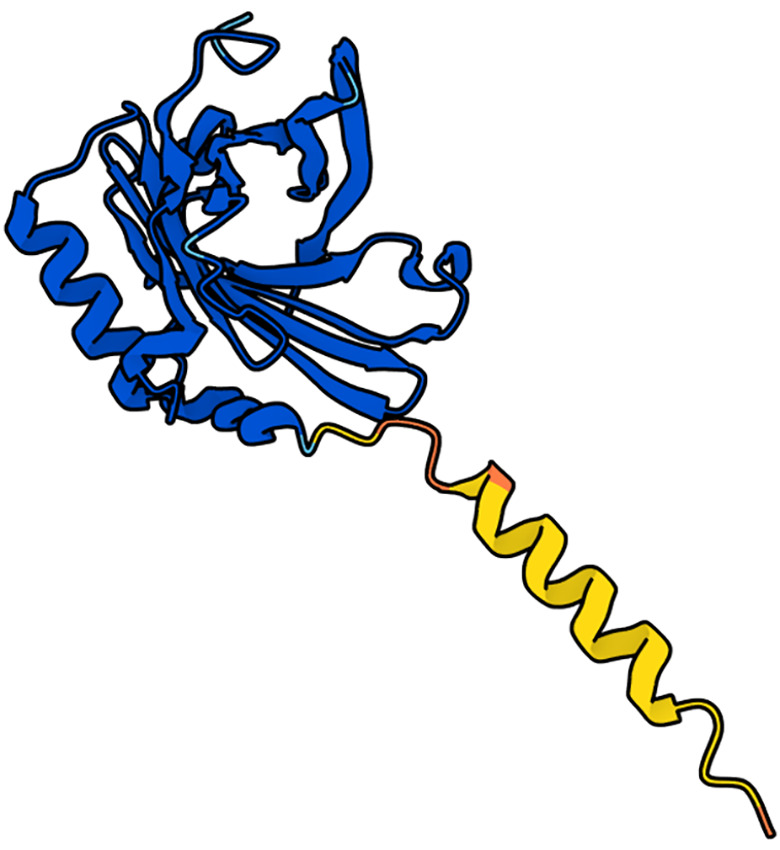
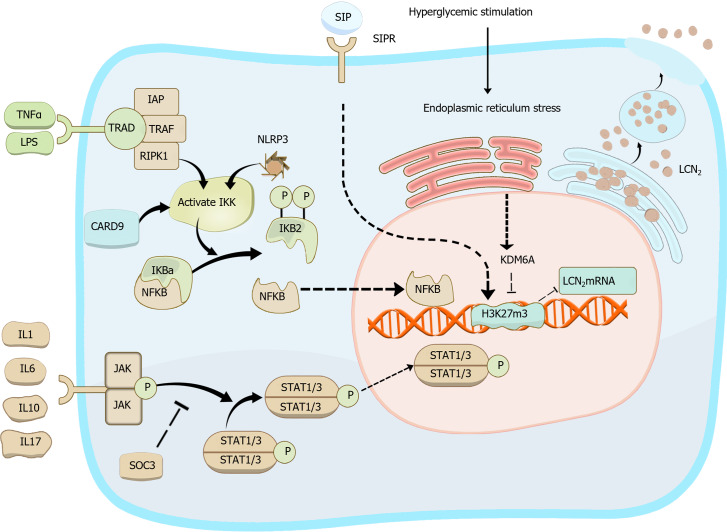
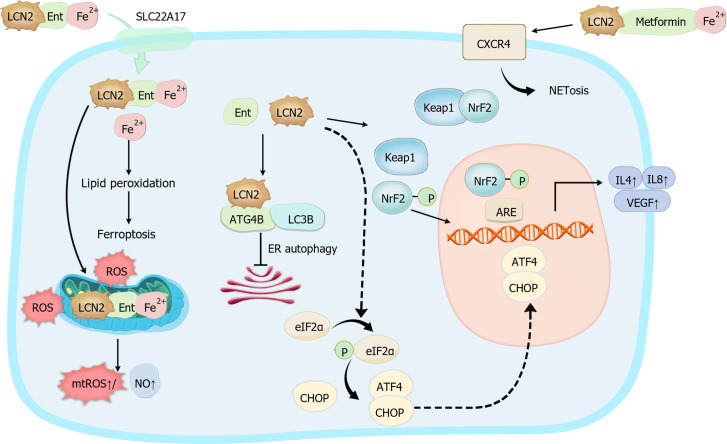
Verification
Claims the paper makes
The claims and statistics of this paper haven’t been checked yet.
Run the check — free, no account needed. It reads the open-access text and checks the sources it cites.
Claims other papers make about this one
Each is checked against this paper’s own text: does it say what the citing paper says it does?
In the citing paper
“The availability of iron and zinc is essential for bacterial biofilm development, oxidative stress resistance, and virulence gene activation (Zhang et al. 2024).”
From Nutritional Immunity in Wound Infection: Unveiling the Role of Dietary Elements in Host–Pathogen Interaction (2025) · cites this paper as Zhang et al. 2024
Self-check
Percentages, sums and reported differences re-computed from the paper’s own numbers.
The self-check needs the paper’s full text.
Citations
Cites
Highly accurate protein structure prediction with AlphaFold
Jumper, J., Evans, R., Pritzel, A., Green, T., Figurnov, M., Ronneberger, O., Tunyasuvunakool, K., Bates, R., Žídek, A., Potapenko, A., et al. (2021) · Nature · doi:10.1038/s41586-021-03819-2 · Cited by 43,764
Siderophore-Based Iron Acquisition and Pathogen Control
Miethke, M., & Marahiel, M. A. (2007) · Microbiology and Molecular Biology Reviews · doi:10.1128/mmbr.00012-07 · Cited by 1,774
Goetz, D. H., Holmes, M. A., Borregaard, N., Bluhm, M. E., Raymond, K. N., & Strong, R. K. (2002) · Molecular Cell · doi:10.1016/s1097-2765(02)00708-6 · Cited by 1,355
An Iron Delivery Pathway Mediated by a Lipocalin
Yang, J., Goetz, D., Li, J.-Y., Wang, W., Mori, K., Setlik, D., Du, T., Erdjument-Bromage, H., Tempst, P., Strong, R., et al. (2002) · Molecular Cell · doi:10.1016/s1097-2765(02)00710-4 · Cited by 651
Raffatellu, M., George, M. D., Akiyama, Y., Hornsby, M. J., Nuccio, S.-P., Paixao, T. A., Butler, B. P., Chu, H., Santos, R. L., Berger, T., et al. (2009) · Cell Host & Microbe · doi:10.1016/j.chom.2009.03.011 · Cited by 525
Lipocalin 2: an emerging player in iron homeostasis and inflammation
Xiao, X., Yeoh, B. S., & Vijay-Kumar, M. (2017) · Annual Review of Nutrition · doi:10.1146/annurev-nutr-071816-064559 · Cited by 426
Cowland, J. B., Sørensen, O. E., Sehested, M., & Borregaard, N. (2003) · The Journal of Immunology · doi:10.4049/jimmunol.171.12.6630 · Cited by 354
Lipocalin 2 deactivates macrophages and worsens pneumococcal pneumonia outcomes
Warszawska, J. M., Gawish, R., Sharif, O., Sigel, S., Doninger, B., Lakovits, K., Mesteri, I., Nairz, M., Boon, L., Spiel, A., et al. (2013) · Journal of Clinical Investigation · doi:10.1172/jci67911 · Cited by 148
Nairz, M., Schroll, A., Haschka, D., Dichtl, S., Sonnweber, T., Theurl, I., Theurl, M., Lindner, E., Demetz, E., Aßhoff, M., et al. (2015) · European Journal of Immunology · doi:10.1002/eji.201545569 · Cited by 67
Stress increases hepatic release of lipocalin 2 which contributes to anxiety-like behavior in mice
Yan, L., Yang, F., Wang, Y., Shi, L., Wang, M., Yang, D., Wang, W., Jia, Y., So, K.-F., & Zhang, L. (2024) · Nature Communications · doi:10.1038/s41467-024-47266-9 · Cited by 63
Research works printed but not linked: 123
- Kjeldsen L, Bainton DF, Sengeløv H, Borregaard N. Identification of neutrophil gelatinase-associated lipocalin as a novel matrix protein of specific granules in human neutrophils. Blood 1994; 799-807 · DOI
- 10.1016/j.biopha.2021.112002 · DOI
- 10.1021/bi992215v · DOI
- 10.1074/jbc.M107101200 · DOI
- 10.1002/hep.27447 · DOI
- 10.1080/2162402X.2017.1408751 · DOI · Paper page
- 10.1093/eurheartj/ehp088 · DOI
- 10.3390/metabo11050329 · DOI
- 10.3389/fimmu.2023.1229885 · DOI
- 10.1016/j.cell.2005.10.027 · DOI · Paper page
- 10.1124/dmd.121.000702 · DOI
- 10.1126/science.aaz2193 · DOI · Paper page
- 10.1038/nrm778 · DOI
- 10.1038/ncomms12973 · DOI
- 10.1038/s41421-023-00595-3 · DOI
- 10.1038/nature03104 · DOI · Paper page
- 10.3390/ijms232415763 · DOI
- 10.1111/cmi.12813 · DOI
- 10.3389/fimmu.2019.02594 · DOI
- 10.1038/mi.2012.24 · DOI
- 10.1002/hep.29919 · DOI
- 10.1038/ki.2011.446 · DOI
- 10.1152/ajprenal.90250.2008 · DOI
- 10.1186/s13045-023-01429-1 · DOI
- 10.3389/fimmu.2019.00812 · DOI
- 10.1152/physrev.00012.2018 · DOI
- 10.1002/ctm2.1170 · DOI
- 10.1038/s41577-021-00571-6 · DOI
- 10.1016/j.redox.2023.102906 · DOI
- 10.1111/aji.13676 · DOI
- 10.1371/journal.pone.0019427 · DOI
- 10.1038/nchembio.402 · DOI · Paper page
- 10.3389/fimmu.2023.1220028 · DOI
- 10.3389/fcvm.2022.922534 · DOI
- 10.1016/j.alit.2023.07.004 · DOI
- 10.1093/eurheartj/ehw002 · DOI
- 10.1016/j.jhep.2016.05.041 · DOI
- 10.1016/j.ymthe.2023.07.012 · DOI
- 10.1038/s41419-021-03896-1 · DOI
- 10.4049/jimmunol.1700261 · DOI
- 10.3389/fimmu.2019.00746 · DOI
- 10.1155/2022/9339411 · DOI
- 10.1016/j.jtos.2019.03.010 · DOI
- 10.3390/biomedicines11030866 · DOI
- 10.1016/j.immuni.2014.06.008 · DOI · Paper page
- 10.1097/MIB.0000000000001134 · DOI
- 10.7150/ijbs.79915 · DOI
- 10.3390/ijms21207527 · DOI
- 10.1172/JCI23056 · DOI · Paper page
- 10.1038/s41416-019-0655-7 · DOI
- 10.1016/j.metabol.2022.155293 · DOI
- 10.1038/s41392-023-01635-w · DOI
- 10.1186/s13578-023-01123-2 · DOI
- 10.1161/HYPERTENSIONAHA.121.17712 · DOI
- 10.1111/sji.12245 · DOI
- 10.1016/j.molmet.2023.101783 · DOI
- 10.1016/j.metabol.2023.155527 · DOI
- 10.3390/cancers15215159 · DOI
- 10.1126/scisignal.aaf3241 · DOI · Paper page
- 10.1016/j.mcpro.2023.100691 · DOI
- 10.1016/j.gene.2023.147597 · DOI
- 10.1002/advs.202301928 · DOI
- 10.1164/rccm.202004-1079OC · DOI
- 10.1186/s13578-021-00686-2 · DOI
- 10.1097/j.pain.0000000000002824 · DOI
- 10.3390/nu10081016 · DOI
- 10.1016/j.clim.2018.10.008 · DOI
- 10.1371/journal.pone.0291619 · DOI
- 10.48101/ujms.v128.9392 · DOI
- 10.1684/ejd.2014.2490 · DOI
- 10.1053/j.gastro.2016.10.020 · DOI · Paper page
- 10.1038/nature10208 · DOI
- 10.3109/1354750X.2015.1123354 · DOI
- 10.3390/ph16020324 · DOI
- 10.1097/MIB.0000000000000515 · DOI
- 10.1186/s40001-023-01200-9 · DOI
- 10.3389/fonc.2021.793760 · DOI
- 10.1093/ibd/izad050 · DOI
- 10.1371/journal.pone.0044328 · DOI
- 10.1038/s41385-018-0086-4 · DOI
- 10.1016/j.jaci.2019.11.003 · DOI
- 10.1016/j.chom.2016.03.007 · DOI · Paper page
- 10.1053/j.gastro.2006.05.051 · DOI
- 10.1038/s41366-020-00712-2 · DOI
- 10.1016/j.ajpath.2015.12.004 · DOI
- 10.3389/fimmu.2023.1163987 · DOI
- 10.1016/j.str.2004.10.009 · DOI · Paper page
- 10.1073/pnas.0510847103 · DOI · Paper page
- 10.1016/j.micpath.2023.106435 · DOI
- 10.1038/srep35014 · DOI · Paper page
- 10.3390/ijms222313156 · DOI
- 10.1002/jat.4566 · DOI
- 10.2337/db07-0007 · DOI
- 10.1136/gut.38.3.414 · DOI
- 10.3233/CBM-130335 · DOI
- 10.1016/j.humpath.2010.05.031 · DOI
- 10.1038/bjc.2013.264 · DOI
- 10.1038/s41598-019-51999-9 · DOI
- 10.1007/s00268-013-1930-z · DOI
- 10.3892/or.17.6.1541 · DOI
- 10.1007/s00268-014-2499-x · DOI
- 10.1186/s13073-020-0710-2 · DOI
- 10.3892/ijo.2018.4562 · DOI
- 10.1016/j.bbrc.2021.11.071 · DOI
- 10.1038/onc.2012.159 · DOI
- 10.1002/ijc.21657 · DOI
- 10.1111/cas.13389 · DOI
- 10.1007/s13277-015-3277-6 · DOI
- 10.1186/s12943-016-0564-9 · DOI
- 10.4049/jimmunol.1701573 · DOI
- 10.1080/15548627.2022.2062887 · DOI
- 10.1186/s12974-023-02819-5 · DOI
- 10.1038/s43018-023-00519-w · DOI
- 10.1038/s12276-023-01098-7 · DOI
- 10.1016/j.jaut.2023.103165 · DOI
- 10.1007/s00134-023-07171-z · DOI
- 10.1093/ndt/gfad226 · DOI
- 10.1002/hep.32569 · DOI
- 10.1038/s12276-024-01213-2 · DOI
- 10.1158/0008-5472.CAN-08-0540 · DOI
- 10.1158/0008-5472.CAN-16-1986 · DOI
- 10.1016/j.devcel.2023.09.007 · DOI
- 10.1038/s41419-023-06160-w · DOI
Cited by
Sorted by citations
Chen, C., Hu, X., He, D., He, X., & Shen, L. (2025) · Food Science & Nutrition · doi:10.1002/fsn3.70854 · Cited by 6
Metadata
- Authors
- Zhang, Z.-X., Peng, J., & Ding, W.-W.
- Venue
- World Journal of Gastroenterology
- Publisher
- Baishideng Publishing Group Inc.
- Published
- 2024-12-14
- Volume
- 30
- Issue
- 46
- Pages
- 4864-4879
- ISSN
- 1007-9327
- PMC
- PMC11612708
- Cited by
- 19
- References
- 10
About these checks
Registry, retraction, Cites and statistics results are computed, not judged, with one exception: a printed reference that no index lists is read once by a model before it counts as a citation error. Claims are extracted by a model and kept only when their quote appears verbatim in the text; each cited source is then checked, with a model’s help, for whether it says what the claim relies on. Those verdicts can be wrong — read the claim’s quote and the cited source before relying on one.
Statistics and arithmetic are recomputed, not judged.
Confidence bands are shown only for fields calibrated on our annotated test set. None is calibrated yet, so no band is shown.
What counts as a claim ›How we measure confidence ›How we check this ›
Are you an author, or do you see a problem with this page? Request a review
How to cite
Cite CoChat for the checks on this page, and the paper for its own findings.
- This page
- CoChat. (2026). Citation check: Lipocalin-2 and intestinal diseases. https://app.cochat.ai/papers/10.3748/wjg.v30.i46.4864
- The paper
- Zhang, Z.-X., Peng, J., & Ding, W.-W. (2024). Lipocalin-2 and intestinal diseases. World Journal of Gastroenterology. https://doi.org/10.3748/wjg.v30.i46.4864
