

The DOI matches its Crossref record; 109 of the 116 references it cites were found in a registry or an index; 4 of the 104 sources its claims cite were checked for support.
Context, attention, and the switch between habit and goal-direction in behavior
Open accessAbstract
This article reviews recent findings from the author’s laboratory that may provide new insights into how habits are made and broken. Habits are extensively practiced behaviors that are automatically evoked by antecedent cues and performed without their goal (or reinforcer) “in mind.” Goal-directed actions, in contrast, are instrumental behaviors that are performed because their goal is remembered and valued. New results suggest that actions may transition to habit after extended practice when conditions encourage reduced attention to the behavior. Consistent with theories of attention and learning, a behavior may command less attention (and become habitual) as its reinforcer becomes well-predicted by cues in the environment; habit learning is prevented if presentation of the reinforcer is uncertain. Other results suggest that habits are not permanent, and that goal-direction can be restored by several environmental manipulations, including exposure to unexpected reinforcers or context change. Habits are more context-dependent than goal-directed actions are. Habit learning causes retroactive interference in a way that is reminiscent of extinction: It inhibits, but does not erase, goal-direction in a context-dependent way. The findings have implications for the understanding of habitual and goal-directed control of behavior as well as disordered behaviors like addictions.
Overview
AI snapshot
Written from the paper’s full text.
TL;DR
This review argues that habits are not permanent endpoints: they develop when a discriminative stimulus reliably predicts reinforcement and attention to the response declines, but goal-directed action can be restored by surprising reinforcers or context change. Habit learning appears to inhibit, rather than erase, goal-direction in a context-dependent way, paralleling extinction and retroactive interference.
Key findings
- In discriminated operant procedures with rats, lever pressing remained goal-directed after as many as 66 sessions and roughly 1,054 response–reinforcer pairings when a 30-s tone signaled reinforcement on an RI 30-s schedule; free-operant methods can create habit in about 360 pairings.
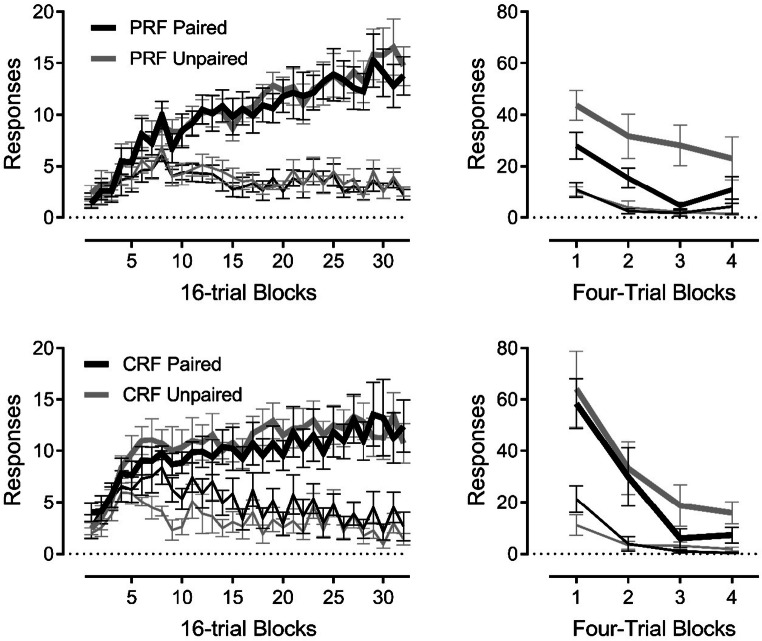
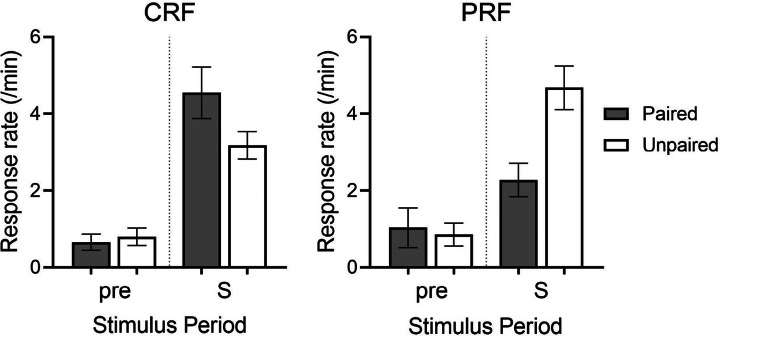
- Habit developed when every presentation of a 30-s tone was reinforced (CRF), but not when reinforcement occurred in only 50% of tone presentations (PRF); with a more salient lever-insertion cue, habit developed under both CRF and PRF.
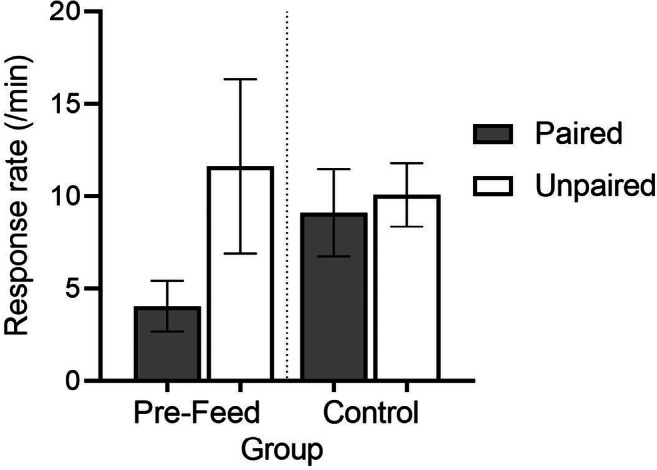
- Habits were not fixed: unexpected reinforcers, pre-feeding with an irrelevant food pellet, or context change restored sensitivity to reinforcer devaluation, indicating a return to goal-directed action.
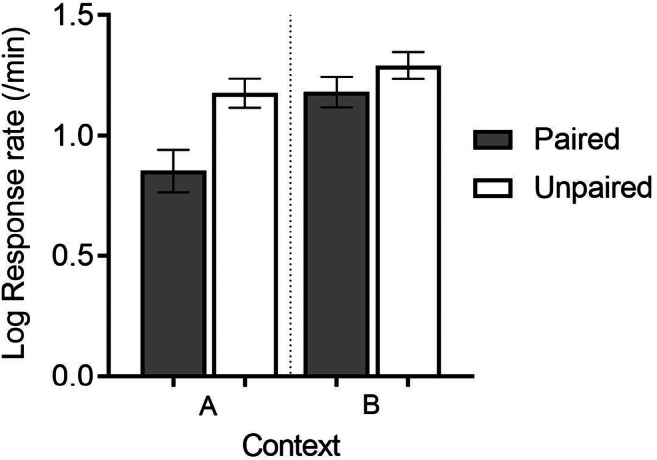
- Habits were more context-dependent than actions: after action→habit conversion, the response remained habitual in the habit context but expressed as goal-directed in a different context, suggesting habit learning interferes with goal-direction rather than erasing it.
Methods
- Review of recent findings from the author’s laboratory on instrumental behavior in rats, using lever pressing for food reinforcers in Skinner boxes.
- Main behavioral assay was reinforcer devaluation by taste aversion learning: the reinforcer was paired or unpaired with LiCl, then responding was tested in extinction; suppression indicated goal-directed action, while no suppression indicated habit.
- Reviewed experiments manipulated discriminated operant cues (tone or lever insertion), reinforcement schedules (RI 30-s, VI 3-s, CRF vs PRF), amount of training, reinforcer type changes, pre-feeding, and context switches including ABA and ABC renewal designs.
Limitations
- The paper states that there is not a complete understanding of the difference between lever insertion and tone as habit cues, and that more research is needed on the processes and mechanisms underlying the habit–action switch.
- The paper notes that existing habit theories—law of effect, rate-correlation, and reinforcement learning models—do not anticipate the finding that reinforcer predictability is critical for habit development.
- Evident from the text: this is a review of the author’s laboratory work, mainly in rats, and implications for human addiction and everyday habits are discussed as possibilities rather than directly tested here.
Model-written summary. Check it against the paper before relying on it.
Integrity signals
Registry
Cites
Statistics
Figures
Verification
Claims the paper makes
63 Not checked yet · 38 Own interpretation · 2 Supported · 2 Own result · 2 No basis given · 1 Supported so far · 1 Sources not found
Every source the paper cites for this claim was checked and supports it.
In the paper
“In both of these experiments, the behavior’s status as a habit was not permanent; it could readily switch back to a goal-directed action again.”
§ Context, attention, and the switch between habit and goal-direction in behavior > Breaking habits > Unexpected reinforcers
What the sources say
- Supportedcites Bouton et al., 2020 source
The General Discussion says that habit status is not permanent and that Experiments 1 and 3 each returned an extensively trained habit to goal-directed action. The paper reports three experiments overall, but these are the two that directly demonstrate the switch. (LLM, conf=0.94)
plaindirect- Asserted: passes — The authors put it forward as true.
- Checkable: passes — It can be checked against evidence.
- Load-bearing: passes — The paper’s conclusions depend on it.
- Based: passes — The paper gives a reason why it holds.
- Supported
Every source the paper cites for this claim was checked and supports it.
In the paper
“But after an unexpected change in reinforcer type, the lever-press response was affected by devaluation, suggesting that it had returned to action status.”
§ Context, attention, and the switch between habit and goal-direction in behavior > Breaking habits > Unexpected reinforcers
What the sources say
- Supportedcites Bouton et al., 2020 source
The Discussion reports that introducing a new reinforcer in the final training session made lever pressing sensitive to devaluation, while the control response remained insensitive. It interprets this as a habit returning to goal-directed action. (LLM, conf=0.94)
hedgeddirect- Asserted: passes — The authors put it forward as true.
- Checkable: passes — It can be checked against evidence.
- Load-bearing: passes — The paper’s conclusions depend on it.
- Based: passes — The paper gives a reason why it holds.
- Supported
A result the paper reports from its own data — it cites no other source for it, so there is none to check. The quote shows it is in the paper.
In the paper
“Habits are more context-dependent than goal-directed actions are.”
§ Context, attention, and the switch between habit and goal-direction in behavior > Abstract
plaincorrelational- Asserted: passes — The authors put it forward as true.
- Checkable: passes — It can be checked against evidence.
- Load-bearing: passes — The paper’s conclusions depend on it.
- Based: passes — The paper gives a reason why it holds.
A result the paper reports from its own data — it cites no other source for it, so there is none to check. The quote shows it is in the paper.
In the paper
“habit learning is prevented if presentation of the reinforcer is uncertain”
§ Context, attention, and the switch between habit and goal-direction in behavior > Abstract
plaindirect- Asserted: passes — The authors put it forward as true.
- Checkable: passes — It can be checked against evidence.
- Load-bearing: passes — The paper’s conclusions depend on it.
- Based: passes — The paper gives a reason why it holds.
In the paper
“But with more extended training, responding occasioned by either kind of cue also became a habit.”
§ Context, attention, and the switch between habit and goal-direction in behavior > Making habits
What the sources say
- Not checked yetcites Thrailkill et al., 2021
plaindirect- Asserted: passes — The authors put it forward as true.
- Checkable: passes — It can be checked against evidence.
- Load-bearing: passes — The paper’s conclusions depend on it.
- Based: passes — The paper gives a reason why it holds.
In the paper
“But with lever insertion, there was little difference in lever-pressing rate with the PRF and CRF procedures, as if non-reinforcement had less impact on responding in the presence of this stimulus.”
§ Context, attention, and the switch between habit and goal-direction in behavior > Making habits
What the sources say
- Not checked yetcites Thrailkill et al., 2021
plain- Asserted: passes — The authors put it forward as true.
- Checkable: passes — It can be checked against evidence.
- Load-bearing: passes — The paper’s conclusions depend on it.
- Based: passes — The paper gives a reason why it holds.
In the paper
“With a moderate amount of instrumental training, lever pressing occasioned by either lever or tone was goal-directed, as indicated by our reinforcer devaluation tests.”
§ Context, attention, and the switch between habit and goal-direction in behavior > Making habits
What the sources say
- Not checked yetcites Thrailkill et al., 2021
plaindirect- Asserted: passes — The authors put it forward as true.
- Checkable: passes — It can be checked against evidence.
- Load-bearing: passes — The paper’s conclusions depend on it.
- Based: passes — The paper gives a reason why it holds.
In the paper
“But experimental subjects received an unexpected 30-min pre-feeding with an irrelevant food pellet in the home cage just before the test. As can be seen, this treatment converted the habit evident in the controls back to a goal-directed action that was depressed by the devalued reinforcer.”
§ Context, attention, and the switch between habit and goal-direction in behavior > Breaking habits > Unexpected reinforcers
What the sources say
- Not checked yetcites Bouton et al., 2020, Experiment 3 source
plaindirect- Asserted: passes — The authors put it forward as true.
- Checkable: passes — It can be checked against evidence.
- Load-bearing: passes — The paper’s conclusions depend on it.
- Based: passes — The paper gives a reason why it holds.
In the paper
“When we compared CRF and PRF procedures with lever insertion, habit developed with either of them.”
§ Context, attention, and the switch between habit and goal-direction in behavior > Making habits
What the sources say
- Not checked yetcites Thrailkill et al., 2021
plain- Asserted: passes — The authors put it forward as true.
- Checkable: passes — It can be checked against evidence.
- Load-bearing: passes — The paper’s conclusions depend on it.
- Based: passes — The paper gives a reason why it holds.
None of the sources cited for this claim have been checked yet.
In the paper
“Remarkably, regardless of whether the behavior had been trained as an action or habit in Context A, it renewed as an action in Context C.”
§ Context, attention, and the switch between habit and goal-direction in behavior > Breaking habits > Effects of context change
What the sources say
- Not checked yetcites Steinfeld & Bouton, 2020
- Not checked yetcites Steinfeld & Bouton, 2021 source
plaindirect- Asserted: passes — The authors put it forward as true.
- Checkable: passes — It can be checked against evidence.
- Load-bearing: passes — The paper’s conclusions depend on it.
- Based: passes — The paper gives a reason why it holds.
- It may state two separate claims as one. 44
- The quote only partly states this claim. 2
- Probably not a substantial claim. 21
The sources with a verdict support this claim; the rest weren’t checked yet, have no full text we could read, or their verdicts aren’t rated yet.
In the paper
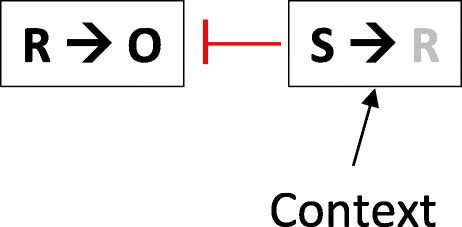
“However, instead of erasing R-O, S-R exists along with it, coded by a separate circuit in the brain (e.g., Balleine, 2019; Balleine & O'Doherty, 2010; Gruber & McDonald, 2012; Robbins et al., 2019).”
§ Context, attention, and the switch between habit and goal-direction in behavior > Discussion
What the sources say
- Not checked yetcites Balleine, 2019
- Supportedcites Balleine & O'Doherty, 2010 source
The “Neural Theories of Action Selection” section says goal-directed and habitual learning processes are concurrently engaged and can be maintained in parallel, supporting the claim that S-R learning does not erase R-O learning. The paper also identifies distinct corticostriatal substrates for the two forms of control in its sections on goal-directed and habit learning. (LLM, conf=0.94)
- Supportedcites Gruber & McDonald, 2012 source
The Conclusion (page unavailable) says learning and memory systems function in parallel even when one is not the dominant response strategy, supporting coexistence rather than erasure. The striatum sections (pages unavailable) associate R-O learning with the dorsomedial striatum and S-R habits with the dorsolateral striatum. (LLM, conf=0.88)
plaincorrelational- Asserted: passes — The authors put it forward as true.
- Checkable: passes — It can be checked against evidence.
- Load-bearing: passes — The paper’s conclusions depend on it.
- Based: passes — The paper gives a reason why it holds.
It may state two separate claims as one.
None of the sources cited for this claim have been checked yet.
In the paper
“Habit develops when the cue always predicts the response will be reinforced, but not when the cue is associated with a reinforcer unpredictably on a random half of the trials.”
§ Context, attention, and the switch between habit and goal-direction in behavior > Making habits
What the sources say
- Not checked yetcites Thrailkill et al., 2018
- Not checked yetcites Thrailkill et al., 2021
plaindirect- Asserted: passes — The authors put it forward as true.
- Checkable: passes — It can be checked against evidence.
- Load-bearing: passes — The paper’s conclusions depend on it.
- Based: passes — The paper gives a reason why it holds.
It may state two separate claims as one.
In the paper
“Additional experiments found that the interleaved training of R2 could be reinforced by a different reinforcer (sucrose when grain had been trained or grain when sucrose had been trained). And it turned out that R2 was not necessary; all we needed to do was present the reinforcers freely (not contingent on any response) during the sessions in Context B.”
§ Context, attention, and the switch between habit and goal-direction in behavior > Breaking habits > Unexpected reinforcers
What the sources say
- Not checked yetcites Trask et al., 2020 source
plaindirect- Asserted: passes — The authors put it forward as true.
- Checkable: passes — It can be checked against evidence.
- Load-bearing: passes — The paper’s conclusions depend on it.
- Based: passes — The paper gives a reason why it holds.
It may state two separate claims as one.
In the paper
“In a discriminated operant procedure, habit developed when the reinforcer was predictably delivered in every S, but not when it was unpredictably delivered in only half of them.”
§ Context, attention, and the switch between habit and goal-direction in behavior > Making habits
What the sources say
- Not checked yetcites Thrailkill et al., 2018, Experiment 4
plaindirect- Asserted: passes — The authors put it forward as true.
- Checkable: passes — It can be checked against evidence.
- Load-bearing: passes — The paper’s conclusions depend on it.
- Based: passes — The paper gives a reason why it holds.
It may state two separate claims as one.
In the paper
“Sixty-six sessions was a lot of training by most standards – it involved roughly 1,054 pairings of the response and reinforcer, whereas free-operant methods can create habit in about 360”
§ Context, attention, and the switch between habit and goal-direction in behavior > Making habits
What the sources say
- Not checked yetcites Thrailkill & Bouton, 2015
plain- Asserted: passes — The authors put it forward as true.
- Checkable: passes — It can be checked against evidence.
- Load-bearing: passes — The paper’s conclusions depend on it.
- Based: passes — The paper gives a reason why it holds.
It may state two separate claims as one.
In the paper
“We found that inactivation of the prelimbic cortex suppressed moderately trained (but not extensively trained) instrumental behavior, and that inactivation of infralimbic cortex suppressed the extensively trained (but not moderately trained) response.”
§ Context, attention, and the switch between habit and goal-direction in behavior > Breaking habits > Unexpected reinforcers
What the sources say
- Not checked yetcites Shipman et al., 2018 source
plaindirect- Asserted: passes — The authors put it forward as true.
- Checkable: passes — It can be checked against evidence.
- Load-bearing: passes — The paper’s conclusions depend on it.
- Based: passes — The paper gives a reason why it holds.
It may state two separate claims as one.
In the paper
“When R1 was trained the same way but without the interleaved R2 training, or when R2 training began after R1 training had finished, reinforcer devaluation tests determined that R1 was indeed a habit.”
§ Context, attention, and the switch between habit and goal-direction in behavior > Breaking habits > Unexpected reinforcers
What the sources say
- Not checked yetcites Trask et al., 2020 source
plaindirect- Asserted: passes — The authors put it forward as true.
- Checkable: passes — It can be checked against evidence.
- Load-bearing: passes — The paper’s conclusions depend on it.
- Based: passes — The paper gives a reason why it holds.
It may state two separate claims as one.
In the paper
“When we trained rats with a longer 8-min, rather than a 30-s, tone stimulus setting the occasion for lever pressing on the RI-30 schedule, habit did develop after extended training; rats that subsequently acquired a taste aversion to the pellet continued to lever press during the test despite their aversion to the reinforcer”
§ Context, attention, and the switch between habit and goal-direction in behavior > Making habits
What the sources say
- Not checked yetcites Thrailkill et al., 2018, Experiments 2 and 3
plaindirect- Asserted: passes — The authors put it forward as true.
- Checkable: passes — It can be checked against evidence.
- Load-bearing: passes — The paper’s conclusions depend on it.
- Based: passes — The paper gives a reason why it holds.
It may state two separate claims as one.
In the paper
“But there was a rub: The effects of reinforcer devaluation suggested that both the moderately trained R2 and extensively trained R1 were goal-directed actions.”
§ Context, attention, and the switch between habit and goal-direction in behavior > Breaking habits > Unexpected reinforcers
What the sources say
- Not checked yetcites Shipman et al., 2018 source
hedgeddirect- Asserted: passes — The authors put it forward as true.
- Checkable: passes — It can be checked against evidence.
- Load-bearing: passes — The paper’s conclusions depend on it.
- Based: passes — The paper gives a reason why it holds.
It may state two separate claims as one.
In the paper
“As Thrailkill et al. (2018) had found with stimuli that were five times as long and a reinforcement schedule that was 1/10 as rich, the CRF procedure produced habit, whereas PRF maintained goal-direction.”
§ Context, attention, and the switch between habit and goal-direction in behavior > Making habits
What the sources say
- Not checked yetcites Thrailkill et al., 2021
plaindirect- Asserted: passes — The authors put it forward as true.
- Checkable: passes — It can be checked against evidence.
- Load-bearing: passes — The paper’s conclusions depend on it.
- Based: passes — The paper gives a reason why it holds.
It may state two separate claims as one. The quote only partly states this claim.
In the paper
“With a lever-insertion stimulus, which may be more salient, habit does develop even when the reinforcer is uncertain, perhaps because the stimulus (and the strength of its presumed prediction of the reinforcer) is less decremented by the non-reinforced trials”
§ Context, attention, and the switch between habit and goal-direction in behavior > Making habits
What the sources say
- Not checked yetcites Thrailkill et al., 2021
hedgedconditional- Asserted: passes — The authors put it forward as true.
- Checkable: passes — It can be checked against evidence.
- Load-bearing: passes — The paper’s conclusions depend on it.
- Based: passes — The paper gives a reason why it holds.
It may state two separate claims as one.
In the paper
“Thus, with as many as 66 sessions, the behavior was still a goal-directed action.”
§ Context, attention, and the switch between habit and goal-direction in behavior > Making habits
What the sources say
- Not checked yetcites Thrailkill et al., 2018
plaindirect- Asserted: passes — The authors put it forward as true.
- Checkable: passes — It can be checked against evidence.
- Load-bearing: passes — The paper’s conclusions depend on it.
- Based: passes — The paper gives a reason why it holds.
It may state two separate claims as one. The quote only partly states this claim.
None of the sources cited for this claim have been checked yet.
In the paper
“With a standard tone stimulus, habit develops if the tone predicts that a reinforcer will occur whenever it is presented, but not when reinforcer delivery is uncertain”
§ Context, attention, and the switch between habit and goal-direction in behavior > Making habits
What the sources say
- Not checked yetcites Thrailkill et al., 2018
- Not checked yetcites Thrailkill et al., 2021
plaindirect- Asserted: passes — The authors put it forward as true.
- Checkable: passes — It can be checked against evidence.
- Load-bearing: passes — The paper’s conclusions depend on it.
- Based: passes — The paper gives a reason why it holds.
It may state two separate claims as one.
In the paper
“In either case, responding returned (was “renewed”), and by comparing the groups for which the pellets had been devalued or not, we could see that the response that had been trained as an action renewed as action and the response trained as a habit renewed as a habit.”
§ Context, attention, and the switch between habit and goal-direction in behavior > Breaking habits > Effects of context change
What the sources say
- Not checked yetcites Steinfeld & Bouton, 2020
plaindirect- Asserted: passes — The authors put it forward as true.
- Checkable: passes — It can be checked against evidence.
- Load-bearing: passes — The paper’s conclusions depend on it.
- Based: passes — The paper gives a reason why it holds.
It may state two separate claims as one.
In the paper
“it is also not clear whether existing reinforcement learning theories can accommodate the evidence that, with an equal number of response-reinforcer pairings, habit develops when the reinforcers are predictable, and not when they are not (Thrailkill et al., 2018, 2021).”
§ Context, attention, and the switch between habit and goal-direction in behavior > Discussion
What the sources say
- Not checked yetcites Thrailkill et al., 2018, 2021
hedgeddirect- Asserted: passes — The authors put it forward as true.
- Checkable: passes — It can be checked against evidence.
- Load-bearing: fails — The paper’s conclusions may not depend on it.
- Based: passes — The paper gives a reason why it holds.
Probably not a substantial claim. The paper’s conclusions may not depend on it.
In the paper
“habits develop more rapidly with behaviors reinforced on interval as opposed to ratio schedules”
§ Context, attention, and the switch between habit and goal-direction in behavior > Making habits
What the sources say
- Not checked yetcites Dickinson et al., 1983 source
plaindirect- Asserted: passes — The authors put it forward as true.
- Checkable: passes — It can be checked against evidence.
- Load-bearing: fails — The paper’s conclusions may not depend on it.
- Based: passes — The paper gives a reason why it holds.
Probably not a substantial claim. The paper’s conclusions may not depend on it.
A conclusion the paper draws from its own results — it cites no other source for it, so there is none to check. The quote shows it is in the paper.
In the paper
“Other results suggest that habits are not permanent, and that goal-direction can be restored by several environmental manipulations, including exposure to unexpected reinforcers or context change.”
§ Context, attention, and the switch between habit and goal-direction in behavior > Abstract
hedgeddirect- Asserted: passes — The authors put it forward as true.
- Checkable: passes — It can be checked against evidence.
- Load-bearing: passes — The paper’s conclusions depend on it.
- Based: passes — The paper gives a reason why it holds.
It may state two separate claims as one.
None of the sources cited for this claim have been checked yet.
In the paper
“We and others have shown that extinction weakens instrumental responding, but does not erase the original learning. Instead, extinction involves a form of context-specific inhibition (rather than unlearning) of the response”
§ Context, attention, and the switch between habit and goal-direction in behavior > Breaking habits > Effects of context change
What the sources say
boosteddirect- Asserted: passes — The authors put it forward as true.
- Checkable: passes — It can be checked against evidence.
- Load-bearing: passes — The paper’s conclusions depend on it.
- Based: passes — The paper gives a reason why it holds.
It may state two separate claims as one.
In the paper
“according to at least one venerable theory of associative learning, the Pearce-Hall model of Pavlovian learning (Pearce & Hall, 1980), attention paid to cues that predict a reinforcer should decline as the reinforcer becomes better and better predicted during extended conditioning.”
§ Context, attention, and the switch between habit and goal-direction in behavior > Making habits
What the sources say
- Not checked yetcites Pearce & Hall, 1980 source
hedgeddirect- Asserted: passes — The authors put it forward as true.
- Checkable: passes — It can be checked against evidence.
- Load-bearing: passes — The paper’s conclusions depend on it.
- Based: passes — The paper gives a reason why it holds.
Probably not a substantial claim.
A conclusion the paper draws from its own results — it cites no other source for it, so there is none to check. The quote shows it is in the paper.
In the paper
“On the other hand, the attentional perspective, which holds that a behavior becomes a habit once you aren’t attending to it, suggests more flexibility: A behavior’s status as habit or action might in principle change as attention changes.”
§ Context, attention, and the switch between habit and goal-direction in behavior > Breaking habits
hedgedconditional- Asserted: passes — The authors put it forward as true.
- Checkable: passes — It can be checked against evidence.
- Load-bearing: passes — The paper’s conclusions depend on it.
- Based: passes — The paper gives a reason why it holds.
Probably not a substantial claim. It may state two separate claims as one.
A conclusion the paper draws from its own results — it cites no other source for it, so there is none to check. The quote shows it is in the paper.
In the paper
“Thus, when the reinforcer is imperfectly predicted by S, we might pay more attention to both the predictor and the behavior itself. That may be the reason why a discriminated operant that is reinforced during only some of the S presentations may keep the status of goal-directed action.”
§ Context, attention, and the switch between habit and goal-direction in behavior > Making habits
hedgedconditional- Asserted: passes — The authors put it forward as true.
- Checkable: passes — It can be checked against evidence.
- Load-bearing: passes — The paper’s conclusions depend on it.
- Based: passes — The paper gives a reason why it holds.
It may state two separate claims as one.
None of the sources cited for this claim have been checked yet.
In the paper
“The results of experiments in rats (e.g., Kaye & Pearce, 1984; Wilson et al., 1992) and humans (Hogarth et al., 2008) suggest that a visual cue that has an uncertain (50%) relation to an outcome maintains orienting behavior, whereas a cue that has a perfect (100%) relation to an outcome does not.”
§ Context, attention, and the switch between habit and goal-direction in behavior > Making habits
What the sources say
- Not checked yetcites Kaye & Pearce, 1984
- Not checked yetcites Wilson et al., 1992
- Not checked yetcites Hogarth et al., 2008 source
hedgeddirect- Asserted: passes — The authors put it forward as true.
- Checkable: passes — It can be checked against evidence.
- Load-bearing: passes — The paper’s conclusions depend on it.
- Based: passes — The paper gives a reason why it holds.
It may state two separate claims as one.
In the paper
“We know that the “context” (e.g., the Skinner box itself) can be the stimulus (S) that controls habits learned with free-operant methods (Thrailkill & Bouton, 2015)– when we test lever pressing in a different context, the habit decreases in strength.”
§ Context, attention, and the switch between habit and goal-direction in behavior > Making habits
What the sources say
- Not checked yetcites Thrailkill & Bouton, 2015
plaindirect- Asserted: passes — The authors put it forward as true.
- Checkable: passes — It can be checked against evidence.
- Load-bearing: passes — The paper’s conclusions depend on it.
- Based: passes — The paper gives a reason why it holds.
It may state two separate claims as one.
In the paper
“Although a little S-R learning may occur early during instrumental training (e.g., Thrailkill & Bouton, 2015), the action➔habit transition seems to fit a general organizing principle of associative learning.”
§ Context, attention, and the switch between habit and goal-direction in behavior > Breaking habits > Effects of context change
What the sources say
- Not checked yetcites Thrailkill & Bouton, 2015
hedgedcorrelational- Asserted: passes — The authors put it forward as true.
- Checkable: passes — It can be checked against evidence.
- Load-bearing: passes — The paper’s conclusions depend on it.
- Based: passes — The paper gives a reason why it holds.
It may state two separate claims as one.
A conclusion the paper draws from its own results — it cites no other source for it, so there is none to check. The quote shows it is in the paper.
In the paper
“The picture that emerges in our studies of action➔habit conversion is one of flexibility rather than rigidity. Habits are not really fixed or confining.”
§ Context, attention, and the switch between habit and goal-direction in behavior > Breaking habits > Effects of context change
plain- Asserted: passes — The authors put it forward as true.
- Checkable: passes — It can be checked against evidence.
- Load-bearing: passes — The paper’s conclusions depend on it.
- Based: passes — The paper gives a reason why it holds.
It may state two separate claims as one.
A conclusion the paper draws from its own results — it cites no other source for it, so there is none to check. The quote shows it is in the paper.
In the paper
“The simplest interpretation of these results after action➔habit conversion is that goal-direction transfers well across contexts (i.e., from A to C), whereas habit does not transfer as effectively from B to C.”
§ Context, attention, and the switch between habit and goal-direction in behavior > Breaking habits > Effects of context change
hedgeddirect- Asserted: passes — The authors put it forward as true.
- Checkable: passes — It can be checked against evidence.
- Load-bearing: passes — The paper’s conclusions depend on it.
- Based: passes — The paper gives a reason why it holds.
It may state two separate claims as one.
None of the sources cited for this claim have been checked yet.
In the paper
“Given the tradeoff, the arbitrator selects between the two systems according to various criteria, such as the accuracy or prediction error connected with each (Daw et al., 2005; Lee et al., 2014) or the prevailing rate of reinforcement (Dezfouli et al., 2014).”
§ Context, attention, and the switch between habit and goal-direction in behavior > Discussion
What the sources say
plaindirect- Asserted: passes — The authors put it forward as true.
- Checkable: passes — It can be checked against evidence.
- Load-bearing: fails — The paper’s conclusions may not depend on it.
- Based: passes — The paper gives a reason why it holds.
Probably not a substantial claim. The paper’s conclusions may not depend on it.
A conclusion the paper draws from its own results — it cites no other source for it, so there is none to check. The quote shows it is in the paper.
In the paper
“Although actions seem less affected by context change than habits are, the action➔habit conversion and context-dependent interference by habit allows the organism to switch between the two with changes in context (see below).”
§ Context, attention, and the switch between habit and goal-direction in behavior > Breaking habits > Effects of context change
plaindirect- Asserted: passes — The authors put it forward as true.
- Checkable: passes — It can be checked against evidence.
- Load-bearing: passes — The paper’s conclusions depend on it.
- Based: passes — The paper gives a reason why it holds.
It may state two separate claims as one.
A conclusion the paper draws from its own results — it cites no other source for it, so there is none to check. The quote shows it is in the paper.
In the paper
“In our animals and with our methods, habit learning does not seem permanent, but like extinction, interferes with goal-direction in a context-specific way.”
§ Context, attention, and the switch between habit and goal-direction in behavior > Breaking habits > Effects of context change
hedgeddirect- Asserted: passes — The authors put it forward as true.
- Checkable: passes — It can be checked against evidence.
- Load-bearing: passes — The paper’s conclusions depend on it.
- Based: passes — The paper gives a reason why it holds.
It may state two separate claims as one.
In the paper
“Habits are context-specific, but actions are not (see also Thrailkill & Bouton, 2015).”
§ Context, attention, and the switch between habit and goal-direction in behavior > Breaking habits > Effects of context change
What the sources say
- Not checked yetcites Thrailkill & Bouton, 2015
plain- Asserted: passes — The authors put it forward as true.
- Checkable: passes — It can be checked against evidence.
- Load-bearing: passes — The paper’s conclusions depend on it.
- Based: passes — The paper gives a reason why it holds.
It may state two separate claims as one.
None of the sources cited for this claim have been checked yet.
In the paper
“Other frameworks that emphasize multiple parallel memory systems in the brain (e.g., Gruber & McDonald, 2012; McDonald & White, 1993; White, 1996) also allow behavioral flexibility.”
§ Context, attention, and the switch between habit and goal-direction in behavior > Discussion
What the sources say
plaindirect- Asserted: passes — The authors put it forward as true.
- Checkable: passes — It can be checked against evidence.
- Load-bearing: fails — The paper’s conclusions may not depend on it.
- Based: passes — The paper gives a reason why it holds.
Probably not a substantial claim. The paper’s conclusions may not depend on it.
In the paper
“When a behavior is in habit mode, it exploits the tried and true; when it is in action mode, it can presumably explore new opportunities or connections (cf. Beeseley et al., 2015)”
§ Context, attention, and the switch between habit and goal-direction in behavior > Breaking habits > Effects of context change
What the sources say
- Not checked yetcites Beeseley et al., 2015 source
hedgedconditional- Asserted: passes — The authors put it forward as true.
- Checkable: passes — It can be checked against evidence.
- Load-bearing: fails — The paper’s conclusions may not depend on it.
- Based: passes — The paper gives a reason why it holds.
Probably not a substantial claim. The paper’s conclusions may not depend on it. It may state two separate claims as one.
None of the sources cited for this claim have been checked yet.
In the paper
“Approaches to action and habit in the reinforcement learning tradition (e.g., Sutton & Barto, 1998) have also often accepted the coexistence of action and habit systems and allowed one or the other to be selected by a hypothetical “arbitrator” for behavioral control (e.g.,Daw et al., 2005 ; Lee et al., 2014).”
§ Context, attention, and the switch between habit and goal-direction in behavior > Discussion
What the sources say
plain- Asserted: passes — The authors put it forward as true.
- Checkable: passes — It can be checked against evidence.
- Load-bearing: fails — The paper’s conclusions may not depend on it.
- Based: passes — The paper gives a reason why it holds.
Probably not a substantial claim. The paper’s conclusions may not depend on it.
A conclusion the paper draws from its own results — it cites no other source for it, so there is none to check. The quote shows it is in the paper.
In the paper
“The parallel with habit learning is apparent: In the action➔habit conversion, like the conditioning➔extinction (or conditioning➔punishment) conversion, the first-thing learned (goal-directed action) remains at least partially intact after second learning. It also transfers relatively well across contexts. In contrast, the second-thing learned (habit) does not.”
§ Context, attention, and the switch between habit and goal-direction in behavior > Breaking habits > Effects of context change
hedgeddirect- Asserted: passes — The authors put it forward as true.
- Checkable: passes — It can be checked against evidence.
- Load-bearing: passes — The paper’s conclusions depend on it.
- Based: passes — The paper gives a reason why it holds.
It may state two separate claims as one.
The paper states this without a source or data behind it here, so there is nothing to check it against. The quote shows it is in the paper.
In the paper
“Actions or behaviors based on a “model-based” system (which encodes representations of all the behavior’s possible consequences) are considered rich but computationally expensive, while habits or behaviors based on a “model-free” system (which encodes only the behavior’s “cached” or average value) may be efficient but inflexible.”
§ Context, attention, and the switch between habit and goal-direction in behavior > Discussion
hedgedcorrelational- Asserted: passes — The authors put it forward as true.
- Checkable: passes — It can be checked against evidence.
- Load-bearing: fails — The paper’s conclusions may not depend on it.
- Based: passes — The paper gives a reason why it holds.
Probably not a substantial claim. The paper’s conclusions may not depend on it. It may state two separate claims as one.
None of the sources cited for this claim have been checked yet.
In the paper
“It should be noted that the dual-process or “associative-cybernetic” approaches of Dickinson and Balleine and colleagues (e.g., Balleine & Ostlund, 2007; de Wit & Dickinson, 2009; Dickinson, 2012) do posit separate and co-existing action and habit memories.”
§ Context, attention, and the switch between habit and goal-direction in behavior > Discussion
What the sources say
plain- Asserted: passes — The authors put it forward as true.
- Checkable: passes — It can be checked against evidence.
- Load-bearing: fails — The paper’s conclusions may not depend on it.
- Based: passes — The paper gives a reason why it holds.
Probably not a substantial claim. The paper’s conclusions may not depend on it.
A conclusion the paper draws from its own results — it cites no other source for it, so there is none to check. The quote shows it is in the paper.
In the paper
“As noted earlier, the development of a habit and automaticity is theoretically functional because it preserves limited space in working memory for processing other things.”
§ Context, attention, and the switch between habit and goal-direction in behavior > Breaking habits > Effects of context change
plaindirect- Asserted: passes — The authors put it forward as true.
- Checkable: passes — It can be checked against evidence.
- Load-bearing: fails — The paper’s conclusions may not depend on it.
- Based: fails — The paper may give no reason why it holds.
Probably not a substantial claim. The paper’s conclusions may not depend on it. The paper may give no reason why it holds.
None of the sources cited for this claim have been checked yet.
In the paper
“On this account, the switch back to R-O after unexpected reinforcers or context change (Bouton et al., 2020; Steinfeld & Bouton, 2021; Trask et al., 2020) would be created by merely increasing attention to R (and the consequent associative retrieval of O).”
§ Context, attention, and the switch between habit and goal-direction in behavior > Discussion
What the sources say
hedgeddirect- Asserted: passes — The authors put it forward as true.
- Checkable: passes — It can be checked against evidence.
- Load-bearing: passes — The paper’s conclusions depend on it.
- Based: passes — The paper gives a reason why it holds.
Probably not a substantial claim.
In the paper
“The attention explanation given above is based on a well-known theory of attention and its role in Pavlovian learning (Pearce & Hall, 1980).”
§ Context, attention, and the switch between habit and goal-direction in behavior > Discussion
What the sources say
- Not checked yetcites Pearce & Hall, 1980 source
boosted- Asserted: passes — The authors put it forward as true.
- Checkable: passes — It can be checked against evidence.
- Load-bearing: passes — The paper’s conclusions depend on it.
- Based: passes — The paper gives a reason why it holds.
Probably not a substantial claim.
In the paper
“The other idea that the reinforcer must be predictable in order to create habit (Thrailkill et al., 2018, 2021) seems to lie outside the scope of existing habit theories.”
§ Context, attention, and the switch between habit and goal-direction in behavior > Discussion
What the sources say
- Not checked yetcites Thrailkill et al., 2018, 2021
hedged- Asserted: passes — The authors put it forward as true.
- Checkable: fails — It may be too vague to check against evidence.
- Load-bearing: passes — The paper’s conclusions depend on it.
- Based: passes — The paper gives a reason why it holds.
Probably not a substantial claim. It may be too vague to check against evidence.
None of the sources cited for this claim have been checked yet.
In the paper
“Mackintosh’s attention rule is consistent with a number of results (e.g., Le Pelley et al., 2016; Pearce & Mackintosh, 2010), and contemporary approaches to attention and learning now suppose that both the Mackintosh and Pearce-Hall rules can play a role in any situation (e.g., Le Pelley, 2004; Pearce & Mackintosh, 2010; see Chao et al., 2021, for recent discussion).”
§ Context, attention, and the switch between habit and goal-direction in behavior > Discussion
What the sources say
plaincorrelational- Asserted: passes — The authors put it forward as true.
- Checkable: passes — It can be checked against evidence.
- Load-bearing: unclear — It is unclear whether the paper’s conclusions depend on it.
- Based: passes — The paper gives a reason why it holds.
It may state two separate claims as one.
A conclusion the paper draws from its own results — it cites no other source for it, so there is none to check. The quote shows it is in the paper.
In the paper
“Perhaps the habit context mostly modulates attention to the response instead of switching between S-R and R-O.”
§ Context, attention, and the switch between habit and goal-direction in behavior > Discussion
hedgedconditional- Asserted: passes — The authors put it forward as true.
- Checkable: passes — It can be checked against evidence.
- Load-bearing: fails — The paper’s conclusions may not depend on it.
- Based: passes — The paper gives a reason why it holds.
Probably not a substantial claim. The paper’s conclusions may not depend on it.
None of the sources cited for this claim have been checked yet.
In the paper
“To explain why the presentation of surprising reinforcers also seems to activate action after habit learning (Bouton et al., 2020; Trask et al., 2020), we could thus note that they may provide a form of context change (e.g., Bouton et al., 2021b).”
§ Context, attention, and the switch between habit and goal-direction in behavior > Discussion
What the sources say
hedgedconditional- Asserted: passes — The authors put it forward as true.
- Checkable: passes — It can be checked against evidence.
- Load-bearing: fails — The paper’s conclusions may not depend on it.
- Based: passes — The paper gives a reason why it holds.
Probably not a substantial claim. The paper’s conclusions may not depend on it.
A conclusion the paper draws from its own results — it cites no other source for it, so there is none to check. The quote shows it is in the paper.
In the paper
“The result of this simple mechanism is that in the habit context, the habit association is active and action is suppressed, whereas outside the habit context, S-R is not activated, and goal-direction(R-O) is expressed.”
§ Context, attention, and the switch between habit and goal-direction in behavior > Discussion
plaindirect- Asserted: passes — The authors put it forward as true.
- Checkable: passes — It can be checked against evidence.
- Load-bearing: passes — The paper’s conclusions depend on it.
- Based: passes — The paper gives a reason why it holds.
It may state two separate claims as one.
In the paper
“In our experiments (Thrailkill et al., 2018, 2021), attention to the response was theoretically maintained by making the reinforcer uncertain from trial to trial; this maintained goal-direction and prevented habit.”
§ Context, attention, and the switch between habit and goal-direction in behavior > Discussion
What the sources say
- Not checked yetcites Thrailkill et al., 2018, 2021
plaindirect- Asserted: passes — The authors put it forward as true.
- Checkable: passes — It can be checked against evidence.
- Load-bearing: passes — The paper’s conclusions depend on it.
- Based: passes — The paper gives a reason why it holds.
It may state two separate claims as one.
In the paper
“In a different account of attention and learning, Mackintosh (1975) argued that attention increases (rather than decreases) to the best predictor of a reinforcer.”
§ Context, attention, and the switch between habit and goal-direction in behavior > Discussion
What the sources say
- Not checked yetcites Mackintosh (1975) source
plaindirect- Asserted: passes — The authors put it forward as true.
- Checkable: passes — It can be checked against evidence.
- Load-bearing: passes — The paper’s conclusions depend on it.
- Based: passes — The paper gives a reason why it holds.
Probably not a substantial claim.
A conclusion the paper draws from its own results — it cites no other source for it, so there is none to check. The quote shows it is in the paper.
In the paper
“Extended practice will thus normally decrease attention to the response; when this occurs, habit is created, and the response can be elicited by S without the organism processing O.”
§ Context, attention, and the switch between habit and goal-direction in behavior > Discussion
plaindirect- Asserted: passes — The authors put it forward as true.
- Checkable: passes — It can be checked against evidence.
- Load-bearing: passes — The paper’s conclusions depend on it.
- Based: passes — The paper gives a reason why it holds.
It may state two separate claims as one.
A conclusion the paper draws from its own results — it cites no other source for it, so there is none to check. The quote shows it is in the paper.
In the paper
“The Pearce-Hall rule predicts that attention to the response will decline – and thus incorrectly implies habit.”
§ Context, attention, and the switch between habit and goal-direction in behavior > Discussion
plaindirect- Asserted: passes — The authors put it forward as true.
- Checkable: passes — It can be checked against evidence.
- Load-bearing: passes — The paper’s conclusions depend on it.
- Based: passes — The paper gives a reason why it holds.
It may state two separate claims as one.
A conclusion the paper draws from its own results — it cites no other source for it, so there is none to check. The quote shows it is in the paper.
In the paper
“Outcome uncertainty maintains attention to behavior and therefore action, whereas outcome predictability reduces it and creates habit.6”
§ Context, attention, and the switch between habit and goal-direction in behavior > Discussion
plaindirect- Asserted: passes — The authors put it forward as true.
- Checkable: passes — It can be checked against evidence.
- Load-bearing: passes — The paper’s conclusions depend on it.
- Based: passes — The paper gives a reason why it holds.
It may state two separate claims as one.
A conclusion the paper draws from its own results — it cites no other source for it, so there is none to check. The quote shows it is in the paper.
In the paper
“Habit is not a fixed endpoint; its acquisition does not erase R-O and make it permanently unavailable.”
§ Context, attention, and the switch between habit and goal-direction in behavior > Discussion
plain- Asserted: passes — The authors put it forward as true.
- Checkable: passes — It can be checked against evidence.
- Load-bearing: passes — The paper’s conclusions depend on it.
- Based: passes — The paper gives a reason why it holds.
It may state two separate claims as one.
A conclusion the paper draws from its own results — it cites no other source for it, so there is none to check. The quote shows it is in the paper.
In the paper
“But the research reviewed here emphasizes that goal-direction is not erased during habit learning, and that it can be recovered under the right conditions.”
§ Context, attention, and the switch between habit and goal-direction in behavior > Discussion
plain- Asserted: passes — The authors put it forward as true.
- Checkable: passes — It can be checked against evidence.
- Load-bearing: passes — The paper’s conclusions depend on it.
- Based: passes — The paper gives a reason why it holds.
It may state two separate claims as one.
None of the sources cited for this claim have been checked yet.
In the paper
“It is worth noting that the range of cues that can constitute context is arguably very wide, potentially including time, drug states, deprivation and stress states, and other behaviors among other things (e.g., Bouton, 2019; Bouton et al., 2021a, b).”
§ Context, attention, and the switch between habit and goal-direction in behavior > Discussion
What the sources say
- Not checked yetcites Bouton, 2019 source
- Not checked yetcites Bouton et al., 2021a, b
hedged- Asserted: passes — The authors put it forward as true.
- Checkable: passes — It can be checked against evidence.
- Load-bearing: fails — The paper’s conclusions may not depend on it.
- Based: passes — The paper gives a reason why it holds.
Probably not a substantial claim. The paper’s conclusions may not depend on it.
None of the sources cited for this claim have been checked yet.
In the paper
“For example, the Rescorla-Wagner model (Rescorla & Wagner, 1972) and its extensions by Wagner (e.g., Wagner, 1978, 1981, 2008; Wagner & Brandon, 1989) emphasize that the reinforcer becomes less surprising and less processed as classical conditioning approaches asymptote.”
§ Context, attention, and the switch between habit and goal-direction in behavior > Discussion
What the sources say
- Not checked yetcites Rescorla & Wagner, 1972
- Not checked yetcites Wagner, 1978, 1981, 2008
- Not checked yetcites Wagner & Brandon, 1989
plaindirect- Asserted: passes — The authors put it forward as true.
- Checkable: passes — It can be checked against evidence.
- Load-bearing: passes — The paper’s conclusions depend on it.
- Based: passes — The paper gives a reason why it holds.
Probably not a substantial claim.
None of the sources cited for this claim have been checked yet.
In the paper
“Crucially, the activation of S-R is context-dependent, either because the context itself provides the S associated with R, or because (as we have seen in other retroactive interference paradigms) the context controls the second thing learned (e.g., Bouton, 1993; Nelson, 2002).”
§ Context, attention, and the switch between habit and goal-direction in behavior > Discussion
What the sources say
plaindirect- Asserted: passes — The authors put it forward as true.
- Checkable: passes — It can be checked against evidence.
- Load-bearing: passes — The paper’s conclusions depend on it.
- Based: passes — The paper gives a reason why it holds.
It may state two separate claims as one.
The paper states this without a source or data behind it here, so there is nothing to check it against. The quote shows it is in the paper.
In the paper
“With a ratio schedule, the higher the rate of responding, the higher the rate of reinforcement, and response rate is thus a good predictor of the reinforcer.”
§ Context, attention, and the switch between habit and goal-direction in behavior > Discussion
plaindirect- Asserted: passes — The authors put it forward as true.
- Checkable: passes — It can be checked against evidence.
- Load-bearing: passes — The paper’s conclusions depend on it.
- Based: passes — The paper gives a reason why it holds.
It may state two separate claims as one.
None of the sources cited for this claim have been checked yet.
In the paper
“If habits do play a role in addiction, they may do so because the habit-action switch becomes sticky (see also Balleine et al., 2009; Lee et al., 2014). As a consequence, once a habit is learned, it may be difficult to switch it back to goal-directed status.”
§ Context, attention, and the switch between habit and goal-direction in behavior > Discussion
What the sources say
hedgedconditional- Asserted: passes — The authors put it forward as true.
- Checkable: passes — It can be checked against evidence.
- Load-bearing: passes — The paper’s conclusions depend on it.
- Based: passes — The paper gives a reason why it holds.
It may state two separate claims as one.
In the paper
“Thus, if there is a good predictor, the organism will tune it in rather than tune it out. Crucially, the organism will also tune out contemporaneous predictors that are not as good as (or no better than) the best one.”
§ Context, attention, and the switch between habit and goal-direction in behavior > Discussion
What the sources say
- Not checked yetcites Mackintosh (1975) source
plaindirect- Asserted: passes — The authors put it forward as true.
- Checkable: passes — It can be checked against evidence.
- Load-bearing: passes — The paper’s conclusions depend on it.
- Based: passes — The paper gives a reason why it holds.
Probably not a substantial claim. It may state two separate claims as one.
In the paper
“Although things work this way in instrumental learning (i.e., habit is eventually observed), classically conditioned responding is still suppressed by reinforcer devaluation even after extensive training (e.g., Holland, 1990, 2005).”
§ Context, attention, and the switch between habit and goal-direction in behavior > Discussion
What the sources say
- Not matchedcites Holland, 1990, 2005
Couldn’t be matched to a paper in Crossref, so it can’t be checked.
plaindirect- Asserted: passes — The authors put it forward as true.
- Checkable: passes — It can be checked against evidence.
- Load-bearing: passes — The paper’s conclusions depend on it.
- Based: passes — The paper gives a reason why it holds.
It may state two separate claims as one.
- Not matched
A conclusion the paper draws from its own results — it cites no other source for it, so there is none to check. The quote shows it is in the paper.
In the paper
“If an instrumental reinforcer were likewise less processed after asymptotic training, it could provide a different reason why reinforcer devaluation becomes ineffective: Reinforcer devaluation will not affect instrumental responding if the animal is not processing the reinforcer.”
§ Context, attention, and the switch between habit and goal-direction in behavior > Discussion
hedgedconditional- Asserted: fails — The authors may not put it forward as true.
- Checkable: passes — It can be checked against evidence.
- Load-bearing: fails — The paper’s conclusions may not depend on it.
- Based: passes — The paper gives a reason why it holds.
Probably not a substantial claim. The authors may not put it forward as true. The paper’s conclusions may not depend on it. It may state two separate claims as one.
A conclusion the paper draws from its own results — it cites no other source for it, so there is none to check. The quote shows it is in the paper.
In the paper
“The two conclusions are consistent with what we know about interference and attention in associative learning, which until now have had too little contact with the science of goal-directed actions and habits.”
§ Context, attention, and the switch between habit and goal-direction in behavior > Discussion
boostedcorrelational- Asserted: passes — The authors put it forward as true.
- Checkable: passes — It can be checked against evidence.
- Load-bearing: unclear — It is unclear whether the paper’s conclusions depend on it.
- Based: passes — The paper gives a reason why it holds.
It may state two separate claims as one.
The paper relies on this without support.
In everyday human habits, such as smoking, responses to a trigger stimulus are predictably reinforced in every stimulus.
“Notice that, in everyday human habits (e.g., smoking), responses to a trigger stimulus are probably also predictably reinforced in every stimulus.”
The paper relies on this without support.
Sensitivity to reinforcer devaluation is a valid index of whether instrumental behavior is goal-directed or habitual.
“When the reinforcer was devalued in both contexts, tests demonstrated that lever pressing was still a habit in Context B, but switched to action when tested in Context A (the original action context) (see Fig. 4).”
Claims other papers make about this one
Each is checked against this paper’s own text: does it say what the citing paper says it does?
The cited source says what the claim attributes to it.
In the citing paper
“By contrast, when a behavior is stably rewarded in a specific context, this contextual stability has been proposed to facilitate execution of a habitual behavior, possibly through serving the contextual information as a promoter8,14,53.”
From Dissociable roles of prefrontal plasticity in decision-making strategy and execution of habitual behavior (2026) · cites this paper as [14]
Citations
Cites
James, W. (1891) · Personality Culture Society · doi:10.1037/11059-000 · Cited by 25,876
Reinforcement Learning: An Introduction
Sutton, R. S., & Barto, A. (2005) · IEEE Transactions on Neural Networks · doi:10.1109/tnn.2004.842673 · Cited by 25,268
Rescorla, R. A. (1972) · Medical Entomology and Zoology · Cited by 7,268
Classical conditioning II: Current research and theory.
Black, A. H., & Prokasy, W. F. (1972) · Appleton-Century-Crofts eBooks · Cited by 4,449
Neural systems of reinforcement for drug addiction: from actions to habits to compulsion
Everitt, B. J., & Robbins, T. W. (2005) · Nature Neuroscience · doi:10.1038/nn1579 · Cited by 3,785
Pearce, J. M., & Hall, G. (1980) · Psychological Review · doi:10.1037/0033-295x.87.6.532 · Cited by 3,023
A theory of attention: Variations in the associability of stimuli with reinforcement
Mackintosh, N. J. (1975) · Psychological Review · doi:10.1037/h0076778 · Cited by 2,733
Daw, N. D., Niv, Y., & Dayan, P. (2005) · Nature Neuroscience · doi:10.1038/nn1560 · Cited by 2,533
Context, time, and memory retrieval in the interference paradigms of Pavlovian learning
Bouton, M. E. (1993) · Psychological Bulletin · doi:10.1037/0033-2909.114.1.80 · Cited by 1,896
Self-citationEffects of an expanding-spaced vs massed exposure schedule on fear reduction and return of fear
Rowe, M. K., & Craske, M. G. (1998) · Behaviour Research and Therapy · doi:10.1016/s0005-7967(97)10016-x · Cited by 1,782
Research works printed but not linked: 2
- Duhigg, C. (2012). The power of habit. Random House.
- Thorndike, E. L. (1911). Animal Intelligence. Macmillan.
Cited by
Sorted by citations
Hazardous drinking and alcohol use disorders
MacKillop, J. M., Agabio, R., Ewing, S. W. F., Heilig, M. A., Kelly, J. F., Leggio, L., Lingford-Hughes, A. R., Palmer, A. A., Parry, C. D. H., Ray, L. A., et al. (2022) · Nature Reviews Disease Primers · doi:10.1038/s41572-022-00406-1 · Cited by 251
Gardner, B., Rebar, A. L., de Wit, S., & Lally, P. J. (2024) · Social and Personality Psychology Compass · doi:10.1111/spc3.12975 · Cited by 93
From helplessness to controllability: toward a neuroscience of resilience
Baratta, M. V., Seligman, M. E. P., & Maier, S. F. (2023) · Frontiers in Psychiatry · doi:10.3389/fpsyt.2023.1170417 · Cited by 69
Making habits measurable beyond what they are not: A focus on associative dual-process models
Watson, P., O’Callaghan, C., Perkes, I. E., Bradfield, L. A., & Turner, K. M. (2022) · Neuroscience & Biobehavioral Reviews · doi:10.1016/j.neubiorev.2022.104869 · Cited by 67
Pathways to the persistence of drug use despite its adverse consequences
McNally, G. P., Jean-Richard-dit-Bressel, P., Millan, E. Z., & Lawrence, A. J. (2023) · Molecular Psychiatry · doi:10.1038/s41380-023-02040-z · Cited by 58
Theory of reinforcement schedules
Killeen, P. R. (2023) · Journal of the Experimental Analysis of Behavior · doi:10.1002/jeab.880 · Cited by 56
Multiple Memory Subsystems: Reconsidering Memory in the Mind and Brain
Sherman, B. E., Turk‐Browne, N. B., & Goldfarb, E. V. (2023) · Perspectives on Psychological Science · doi:10.1177/17456916231179146 · Cited by 48
Leveraging cognitive neuroscience for making and breaking real-world habits
Buabang, E. K., Donegan, K. R., Rafei, P., & Gillan, C. M. (2025) · Trends in Cognitive Sciences · doi:10.1016/j.tics.2024.10.006 · Cited by 34
Habits, Goals, and Effective Behavior Change
Wood, W. (2024) · Current Directions in Psychological Science · doi:10.1177/09637214241246480 · Cited by 32
New functions of the rodent prelimbic and infralimbic cortex in instrumental behavior
Green, J. T., & Bouton, M. E. (2021) · Neurobiology of Learning and Memory · doi:10.1016/j.nlm.2021.107533 · Cited by 37
Self-citationBouton, M. E. (2023) · Journal of the Experimental Analysis of Behavior · doi:10.1002/jeab.894 · Cited by 28
Self-citationSmeets, T., Ashton, S. M., Roelands, S. J. A. A., & Quaedflieg, C. W. E. M. (2023) · Neurobiology of Stress · doi:10.1016/j.ynstr.2023.100528 · Cited by 19
A novel free-operant framework enables experimental habit induction in humans
Gera, R., Barak, S., & Schönberg, T. (2023) · Behavior Research Methods · doi:10.3758/s13428-023-02263-6 · Cited by 18
Attentional capture by signals of reward persists following outcome devaluationPreprint
Watson, P., Pavri, Y., Le, J., Pearson, D., & Pelley, M. E. L. (2022) · Learning & Memory · doi:10.1101/lm.053569.122 · Cited by 18
Anderson, W. C., Baptist, A. P., Eakin, M. N., Federman, A. D., & Murphy, V. E. (2024) · The Journal of Allergy and Clinical Immunology In Practice · doi:10.1016/j.jaip.2024.07.031 · Cited by 16
Pensar, H., & Mäkelä, L. (2023) · Employee Relations · doi:10.1108/er-09-2022-0431 · Cited by 21
A comparison of renewal, spontaneous recovery, and reacquisition after punishment and extinction
Broomer, M. C., & Bouton, M. E. (2022) · Learning & Behavior · doi:10.3758/s13420-022-00552-2 · Cited by 15
Self-citationBouton, M. E., & Broomer, M. C. (2023) · Behavioural Processes · doi:10.1016/j.beproc.2023.104830 · Cited by 16
Self-citationA hippocampo-cortical pathway detects changes in the validity of an action as a predictor of reward
Piquet, R., Faugère, A., & Parkes, S. L. (2023) · Current Biology · doi:10.1016/j.cub.2023.11.036 · Cited by 14
Measuring context–response associations that drive habits
Labrecque, J. S., Lee, K. M., & Wood, W. (2023) · Journal of the Experimental Analysis of Behavior · doi:10.1002/jeab.893 · Cited by 14
Turner, K. M., & Balleine, B. W. (2023) · Journal of the Experimental Analysis of Behavior · doi:10.1002/jeab.898 · Cited by 16
Vandaele, Y., & Janak, P. H. (2022) · iScience · doi:10.1016/j.isci.2022.105818 · Cited by 12
A neural autopilot theory of habit: Evidence from consumer purchases and social media use
Camerer, C. F., Xin, Y., & Zhao, C. (2023) · Journal of the Experimental Analysis of Behavior · doi:10.1002/jeab.897 · Cited by 11
Action sequence learning, habits, and automaticity in obsessive-compulsive disorder
Banca, P., Herrojo Ruiz, M., Gonzalez-Zalba, M. F., Biria, M., Marzuki, A. A., Piercy, T., Sule, A., Fineberg, N. A., & Robbins, T. W. (2024) · eLife · doi:10.7554/elife.87346 · Cited by 9
Seeking Pleasure, Finding Trouble: Functions and Dysfunctions of Trait Sensation Seeking
Chase, H. W., & Ghane, M. (2023) · Current Addiction Reports · doi:10.1007/s40429-023-00484-5 · Cited by 9
Handel, S. N., & Smith, R. J. (2023) · Journal of the Experimental Analysis of Behavior · doi:10.1002/jeab.889 · Cited by 10
Addictive behaviors: decades of research, but still so many questions!
Campanella, S. (2024) · Frontiers in Psychology · doi:10.3389/fpsyg.2024.1485118 · Cited by 9
Outcome devaluation as a method for identifying goal-directed behaviors in rats
Pierce-Messick, Z. J., Shipman, M. L., Desilets, G. L., & Corbit, L. H. (2024) · Nature Protocols · doi:10.1038/s41596-024-01054-3 · Cited by 9
Schoenberg, H. L., Bremer, G. P., Carasi-Schwartz, F., VonDoepp, S., Arntsen, C., Anacker, A. M. J., & Toufexis, D. J. (2022) · Hormones and Behavior · doi:10.1016/j.yhbeh.2022.105172 · Cited by 7
Reichl, D., Enewoldsen, N., Müller, A., & Steins‐Loeber, S. (2022) · Psychological Research · doi:10.1007/s00426-022-01725-4 · Cited by 7
Social (media) psychology of the “news-finds-me” perception: habits, mindsets, and beliefs
Campbell, S. W., & Hawkins, I. (2025) · Journal of Computer-Mediated Communication · doi:10.1093/jcmc/zmaf010 · Cited by 10
Piquet, R., Faugère, A., & Parkes, S. L. (2023) · European Journal of Neuroscience · doi:10.1111/ejn.16143 · Cited by 6
Punishment resistance for cocaine is associated with inflexible habits in rats
Jones, B. O., Paladino, M. S., Cruz, A. M., Spencer, H. F., Kahanek, P. L., Scarborough, L. N., Georges, S. F., & Smith, R. J. (2024) · Addiction Neuroscience · doi:10.1016/j.addicn.2024.100148 · Cited by 6
Obesity During Pregnancy and Deficits in Offspring Neurobehavioral Flexibility: The CONFINE Model
Krzeczkowski, J. E., Mortaji, N., & Lieshout, R. J. V. (2025) · Biological Psychiatry · doi:10.1016/j.biopsych.2025.06.032 · Cited by 5
The temporal structure of goal‐directed and habitual operant behavior
Thrailkill, E. A., & Daniels, C. W. (2023) · Journal of the Experimental Analysis of Behavior · doi:10.1002/jeab.896 · Cited by 6
The nature of training in flavor preference learning determines the underlying associative structure
González, A., Sánchez, J., & de Brugada, I. (2024) · Behavioural Processes · doi:10.1016/j.beproc.2024.105074 · Cited by 5
Does the Habit Theory of Addictions Extend to Disordered Gambling?
van Timmeren, T., & Clark, L. (2026) · Current Addiction Reports · doi:10.1007/s40429-026-00715-5 · Cited by 4
Cold executive function processes and their hot analogs in schizotypy
Karamaouna, P., Zouraraki, C., Economou, E., Kafetsios, K. G., Bitsios, P., & Giakoumaki, S. G. (2023) · Journal of the International Neuropsychological Society · doi:10.1017/s1355617723000590 · Cited by 4
Hermann, C., & Sperl, M. F. J. (2023) · Autism and child psychopathology series · doi:10.1007/978-3-031-24926-6_21 · Cited by 4
A molar view of goal direction and habit
Baum, W. M. (2024) · Journal of the Experimental Analysis of Behavior · doi:10.1002/jeab.891 · Cited by 4
Teichroeb, J. A., Smeltzer, E. A., Mathur, V., Anderson, K. A., Fowler, E. J., Adams, F. V., Vasey, E. N., Kumpan, L. T., Stead, S. M., & Arseneau‐Robar, T. J. M. (2023) · American Journal of Primatology · doi:10.1002/ajp.23565 · Cited by 5
Anderson, I. A. (2024) · doi:10.31234/osf.io/824nb · Cited by 4
Thorndike's law of effect and its inconsistent description over the years
Domjan, M. P. (2025) · Journal of the Experimental Analysis of Behavior · doi:10.1002/jeab.70073 · Cited by 3
The effects of discriminative stimuli on combined relapse: A preliminary human‐operant investigation
King, H. C., Perez, N., McFarland, H. K., & Kranak, M. P. (2026) · Journal of the Experimental Analysis of Behavior · doi:10.1002/jeab.70080 · Cited by 3
Why the performance of habit requires attention
Bickel, L. (2023) · Mind & Language · doi:10.1111/mila.12467 · Cited by 4
Random interval schedule of reinforcement influences punishment resistance for cocaine in rats
Jones, B. O., Spencer, H. F., Cruz, A. M., Paladino, M. S., Handel, S. N., & Smith, R. J. (2024) · Neurobiology of Learning and Memory · doi:10.1016/j.nlm.2024.107961 · Cited by 3
Cheng, C., Exton-McGuinness, M. T. J., & Lee, J. L. C. (2022) · Frontiers in Behavioral Neuroscience · doi:10.3389/fnbeh.2022.953629 · Cited by 4
Situating Habit and Goal-Direction in a General View of Instrumental Behavior
Bouton, M. E. (2024) · Springer eBooks · doi:10.1007/978-3-031-55889-4_3 · Cited by 2
Self-citationBertran‐Gonzalez, J., & Balleine, B. W. (2025) · Handbook of behavioral neuroscience · doi:10.1016/b978-0-443-29867-7.00043-8 · Cited by 2
Roberts, A. I. (2025) · Neuroscience & Biobehavioral Reviews · doi:10.1016/j.neubiorev.2025.106432 · Cited by 2
Toward implicit gaze-based map interaction: predicting selection intentions from eye movements
Lu, B., Zhang, C., Zhou, Y., & Liao, H. (2026) · Geo-spatial Information Science · doi:10.1080/10095020.2026.2633646 · Cited by 2
A Focus on the Voice: Attention as a Unifying Mechanism Underlying Vocal Training and Mindfulness
Blanchet, S., & Atkin, A. E. (2023) · Voice and Speech Review · doi:10.1080/23268263.2023.2250242 · Cited by 2
The behavioral origins of phylogenic responses and ontogenic habits
Stahlman, W. D., & Leising, K. J. (2023) · Journal of the Experimental Analysis of Behavior · doi:10.1002/jeab.892 · Cited by 3
Temporal context-guided memory capabilities in rodents
Slater, B., Petkov, C. I., & Easton, A. (2025) · Scientific Reports · doi:10.1038/s41598-025-95410-2 · Cited by 2
Held, L. K., Lesage, E., Kool, W., & Braem, S. (2025) · Cognitive Affective & Behavioral Neuroscience · doi:10.3758/s13415-025-01350-9 · Cited by 3
The degraded contingency test fails to detect habit induction in humans
Molinero, S., Martínez-López, P., Morís, J., Quintero, M. J., Cobos, P. L., López, F. J., & Luque, D. (2025) · PLoS ONE · doi:10.1371/journal.pone.0334087 · Cited by 2
Integrating neuro-psychological habit research into consumer choice models
Webb, R., Fong, J., Landry, P., Levine, J., Wellsjo, A., Natan, O., Mazar, A., Zhao, C., Lally, P. J., de Wit, S., et al. (2025) · International Journal of Research in Marketing · doi:10.1016/j.ijresmar.2025.10.002 · Cited by 2
Self-citationAttentional capture by signals of reward persists following outcome devaluationPreprint
Watson, P., Pavri, Y., Le, J. T., Pearson, D., & Pelley, M. E. L. (2021) · doi:10.31234/osf.io/2jmpb · Cited by 2
Action-sequence learning, habits and automaticity in obsessive-compulsive disorderPreprint
Banca, P., Ruiz, M. H., González-Zalba, M. F., Biria, M., Marzuki, A. A., Piercy, T., Sule, A., Fineberg, N. A., & Robbins, T. W. (2023) · medRxiv · doi:10.1101/2023.02.23.23286338 · Cited by 2
Random Utility Maximisation Model Considering the Information Search ProcessPreprint
Nova, G., Guevara, C. Á., Hess, S., & Hancock, T. O. (2023) · SSRN Electronic Journal · doi:10.2139/ssrn.4594683 · Cited by 2
Introduction to the special issue: Goal direction and habit in operant behavior
Watson, P., Thrailkill, E. A., Corbit, L. H., & Bouton, M. E. (2023) · Journal of the Experimental Analysis of Behavior · doi:10.1002/jeab.901 · Cited by 2
Self-citationCognitive functions of the GPe
O'Berry, K., & Gittis, A. H. (2026) · Trends in Neurosciences · doi:10.1016/j.tins.2026.05.005 · Cited by 1
Toward a Selectionist Future in Comparative Cognition
Leising, K. J., & Stahlman, W. D. (2024) · Comparative Cognition & Behavior Reviews · doi:10.3819/ccbr.2024.190020 · Cited by 1
Historical and Modern Perspectives on the Neuroscience of Habits
Ameden, W. C., & Tricomi, E. M. (2024) · Springer eBooks · doi:10.1007/978-3-031-55889-4_10 · Cited by 1
Outcome Devaluation as a Means of Distinguishing Habits from Goal-Directed Actions
Pierce-Messick, Z. J., & Corbit, L. H. (2024) · Springer eBooks · doi:10.1007/978-3-031-55889-4_2 · Cited by 2
Human goal-directed behavior is resistant to interventions on the action-outcome contingency
Perez, O. D., Oh, S., Dickinson, A., Arenas, J., & Merlo, E. (2026) · BMC Psychology · doi:10.1186/s40359-026-04115-2 · Cited by 1
Evolution of behavioral flexibility and the forming and breaking of habits
Leimar, O., Dall, S. R. X., Hammerstein, P., Houston, A. I., Kuijper, B., & MCNAMARA, J. (2026) · Evolution Letters · doi:10.1093/evlett/qrag024 · Cited by 1
Chen, A. Y., Chen, C.-C., & Chen, W. (2023) · The Design Journal · doi:10.1080/14606925.2023.2189375 · Cited by 1
Interaction Between Habitual and Goal-Directed Processes in Addiction
Vandaele, Y. (2024) · Springer eBooks · doi:10.1007/978-3-031-55889-4_14 · Cited by 1
A roadmap for transformative translational research on gambling disorder in the UK
Hynes, T. J., Bowden‐Jones, H., Chamberlain, S. R., & Belin, D. (2025) · Neuroscience & Biobehavioral Reviews · doi:10.1016/j.neubiorev.2025.106071 · Cited by 1
Altered cortical dynamics and adaptive behavior following early-onset sucrose overconsumption
Lin, H., Tang, Y., Wang, S., Yin, Z., Guo, Q., & Zhou, J. (2025) · Current Biology · doi:10.1016/j.cub.2025.06.050 · Cited by 1
Manipulations of the context-response relationship reduce the expression of response habits
Pierce-Messick, Z. J., & Corbit, L. H. (2024) · Neurobiology of Learning and Memory · doi:10.1016/j.nlm.2024.107962 · Cited by 2
Action-sequence learning, habits and automaticity in obsessive-compulsive disorderPreprint
Banca, P., Ruiz, M. H., González-Zalba, M. F., Biria, M., Marzuki, A. A., Piercy, T., Sule, A., Fineberg, N. A., & Robbins, T. W. (2023) · eLife · doi:10.7554/elife.87346.2 · Cited by 1
Action-sequence learning, habits and automaticity in obsessive-compulsive disorderPreprint
Banca, P., Ruiz, M. H., González-Zalba, M. F., Biria, M., Marzuki, A. A., Piercy, T., Sule, A., Fineberg, N. A., & Robbins, T. W. (2024) · eLife · doi:10.7554/elife.87346.3 · Cited by 1
Asaoka, N., Pagano, D., & Hayashi, Y. (2026) · Nature Communications · doi:10.1038/s41467-026-75706-1
“By contrast, when a behavior is stably rewarded in a speci fi c context, this contextual stability has been proposed to facilitate execution of a habitual behavior, possibly through serving the contextual information as a promoter 8,14,53 .”
齋藤, 繁., 森沢, 邦., & 岡本幹太郎 (1996) · 建築雑誌
Schedule-dependent production of stereotyped sequences of actionsPreprint
Follman, E. G., Chevée, M., Kim, C. J., Johnson, A. R., Tat, J., & Calipari, E. S. (2022) · bioRxiv (Cold Spring Harbor Laboratory) · doi:10.1101/2022.06.16.496442
Dopaminergic Control of Actions and Habits
Naneix, F., & Coutureau, É. (2022) · Neuromethods · doi:10.1007/978-1-0716-2799-0_14
Author Response: Action-sequence learning, habits and automaticity in obsessive-compulsive disorder
Banca, P., Ruiz, M. H., González-Zalba, M. F., Biria, M., Marzuki, A. A., Piercy, T., Sule, A., Fineberg, N. A., & Robbins, T. W. (2023) · eLife · doi:10.7554/elife.87346.1.sa3
Random Utility Maximisation Model Considering the Information Search ProcessPreprint
Nova, G., Guevara, C. Á., Hess, S., & Hancock, T. O. (2023) · SSRN Electronic Journal · doi:10.2139/ssrn.4608477
Author Response: Action-sequence learning, habits and automaticity in obsessive-compulsive disorder
Banca, P., Ruiz, M. H., González-Zalba, M. F., Biria, M., Marzuki, A. A., Piercy, T., Sule, A., Fineberg, N. A., & Robbins, T. W. (2023) · eLife · doi:10.7554/elife.87346.2.sa3
eLife Assessment: Action-sequence learning, habits and automaticity in obsessive-compulsive disorder
O’Connell, R. G. (2024) · eLife · doi:10.7554/elife.87346.3.sa1
Author response: Action sequence learning, habits, and automaticity in obsessive-compulsive disorder
Banca, P., Ruiz, M. H., González-Zalba, M. F., Biria, M., Marzuki, A. A., Piercy, T., Sule, A., Fineberg, N. A., & Robbins, T. W. (2024) · eLife · doi:10.7554/elife.87346.4.sa2
Bouton, M. E., Broomer, M. C., Frazee, F., & Steinfeld, M. R. (2024) · Learning and Motivation · doi:10.1016/j.lmot.2024.102042
Self-citationFadeeva, E. V., & Михайловна, Л. А. (2024) · Psychology and Law · doi:10.17759/psylaw.2024140414
Variable schedules of reinforcement do not reliably distinguish habit from goal-directed behavior
Skalnik, E., & Ivlieva, N. (2025) · Neuroscience Letters · doi:10.1016/j.neulet.2025.138132
A Study on Kinematic Variabilities in Human-Human Object ComanipulationPreprint
Sassi, S.-L. H., Marsan, T., Benoussaad, M., & Watier, B. (2025) · SSRN Electronic Journal · doi:10.2139/ssrn.5128137
Dougherty, R., Thrailkill, E. A., Horn, S. V., Kussad, A., & Toufexis, D. J. (2025) · Neurobiology of Learning and Memory · doi:10.1016/j.nlm.2025.108063
Pierce-Messick, Z. J., Sari, E., & Corbit, L. H. (2025) · Neurobiology of Learning and Memory · doi:10.1016/j.nlm.2025.108078
Determining perception thresholds of young adults to small continuous moving platform perturbations
Mahdaviani, K., Tremblay, L., Novak, A. C., & Mansfield, A. (2026) · Journal of Neurophysiology · doi:10.1152/jn.00425.2025
Framing as a mechanism to overcome the temptation of bad habits
Wang, S., & Monterosso, J. R. (2025) · Frontiers in Behavioral Neuroscience · doi:10.3389/fnbeh.2025.1683756
Cortico-striatal dynamics across working memory stages
Villet, M., Azoulay, B., Barik, J., Marie, H., & Bethus, I. (2025) · Cerebral Cortex · doi:10.1093/cercor/bhaf334
Hajar, A. S. (2025) · Journal of Islamic Law and Humanitarian Studies · doi:10.64268/jilhs.v1i2.62
Rhythm in Everyday Aesthetics: An Exploration Through Doodling and Sgraffito
Mallick, S., Patnaik, A., Borgohain, J., & Patnaik, P. (2026) · Studies in Rhythm Engineering · doi:10.1007/978-981-95-1896-8_21
González, A., & de Brugada, I. (2026) · Psychonomic Bulletin & Review · doi:10.3758/s13423-025-02835-x
Sequence termination cues drive automated habit-like strategy via dopamine-mediated processes
Magnard, R., Cheng, Y., Zhou, J., Province, H. S., Thiriet, N., Janak, P. H., & Vandaele, Y. (2026) · Neuropsychopharmacology · doi:10.1038/s41386-026-02420-3
Mohammed, Z., Thrailkill, E. A., Firehock, G., Nelson, E., Flanagan, E., Marabello, J., Penny, J., Reulbach, J. C., Frost, L., & Toufexis, D. J. (2026) · Hormones and Behavior · doi:10.1016/j.yhbeh.2026.105952
Lestari, A., Yuliastuti, L. P. S., & Tarikawati, A. W. (2026) · Biomedical Journal of Indonesia · doi:10.32539/bji.v12i2.335
Martínez-Córdova, V., & Míguez, G. (2026) · Springer eBooks · doi:10.1007/978-3-031-70581-6_584-1
Roberts, A. I., Sorokowski, P., & Roberts, S. G. B. (2026) · Behavioral Ecology and Sociobiology · doi:10.1007/s00265-026-03796-4
Metadata
- Authors
- Bouton, M. E.
- Affiliations
- University of Vermont (US)
- Corresponding author
- Bouton, Mark E.
- ORCID
- Bouton, Mark E.
- Venue
- Learning & Behavior
- Published
- 2021-10-28
- Volume
- 49
- Issue
- 4
- Pages
- 349-362
- ISSN
- 1543-4494 (ISSN-L)
- 1543-4508
- PMC
- PMC8602149
- OpenAlex
- W3208180127
- Semantic Scholar
- 55a718b02ecc6d7ca515c47086a6b0a1b60f38cd
- Cited by
- 100
- References
- 116
- Citations by year
- 2026: 14 · 2025: 18 · 2024: 22 · 2023: 33 · 2022: 10 · 2021: 2
- FWCI
- 2.69
- Type
- journal article
- Language
- en
- Open access
- hybrid
- doi.org
- Locations
- Learning & Behavior (publishedVersion, cc-by)
- PubMed Central (publishedVersion, cc-by)
- PubMed (publishedVersion)
- Funders
- National Institutes of Health
- National Institute on Drug Abuse (R01DA033123)
- Topics
- Social Sciences › Psychology › Applied Psychology › Behavioral Health and Interventions
- Life Sciences › Neuroscience › Cognitive Neuroscience › Neural and Behavioral Psychology Studies
- Social Sciences › Psychology › Developmental and Educational Psychology › Behavioral and Psychological Studies
- Keywords
- habit formation, goal-directed behavior, attention, context sensitivity, retroactive interference, extinction, addiction, operant conditioning
- MeSH terms
- Animals, Conditioning, Operant, Goals, Habits, Learning, Motivation
About these checks
Registry, retraction, Cites and statistics results are computed, not judged, with one exception: a printed reference that no index lists is read once by a model before it counts as a citation error. Claims are extracted by a model and kept only when their quote appears verbatim in the text; each cited source is then checked, with a model’s help, for whether it says what the claim relies on. Those verdicts can be wrong — read the claim’s quote and the cited source before relying on one.
A language model drew the claims from the paper on 2026-10-09, under version 3 of the claim definition (model deepseek-v4.1-flash, prompt extract-v3).
A second model labelled each claim on 2026-10-09 (model jev-1.13-20260917, definition revision gold-guideline-v0.2).
Cited sources are checked with a language model’s help (gpt-6-sol).
Statistics and arithmetic are recomputed, not judged.
Confidence bands are shown only for fields calibrated on our annotated test set. None is calibrated yet, so no band is shown.
What counts as a claim ›How we measure confidence ›How we check this ›
Are you an author, or do you see a problem with this page? Request a review
