

Estimating psychological networks and their accuracy: A tutorial paper
Open accessPublished version of a preprint
The DOI matches its Crossref record; 76 of the 78 references it cites were found in a registry or an index.
Abstract
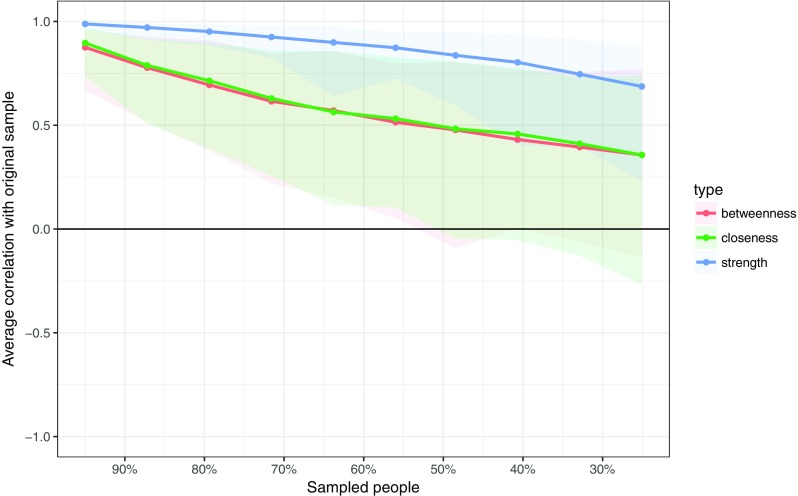
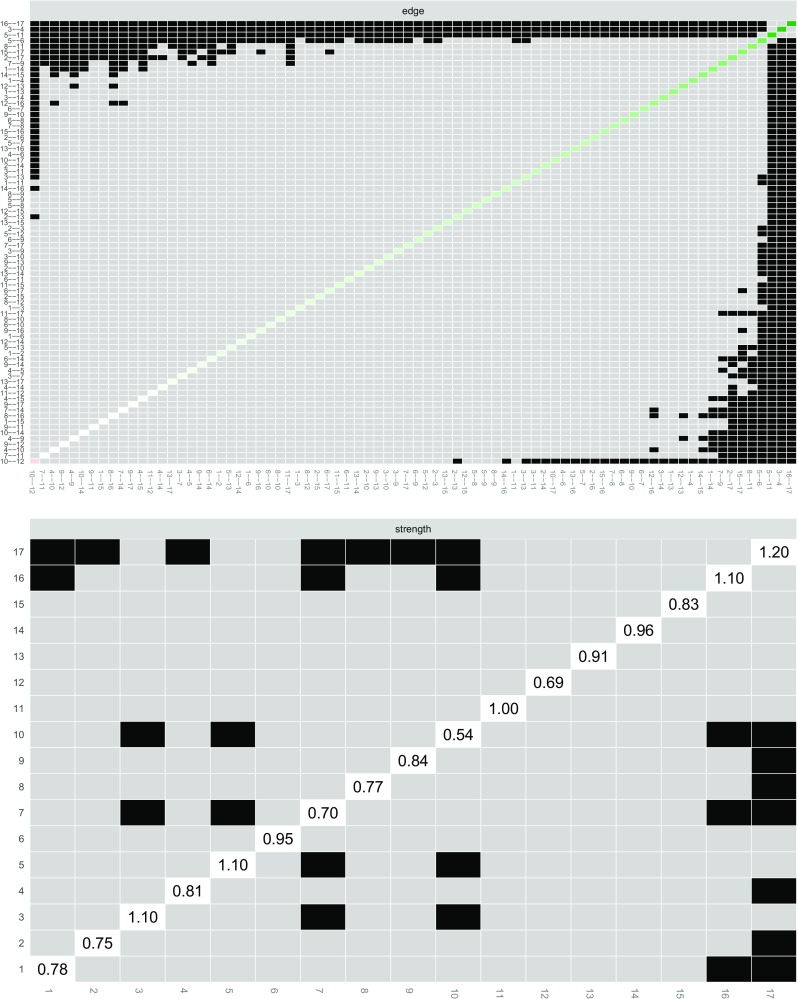
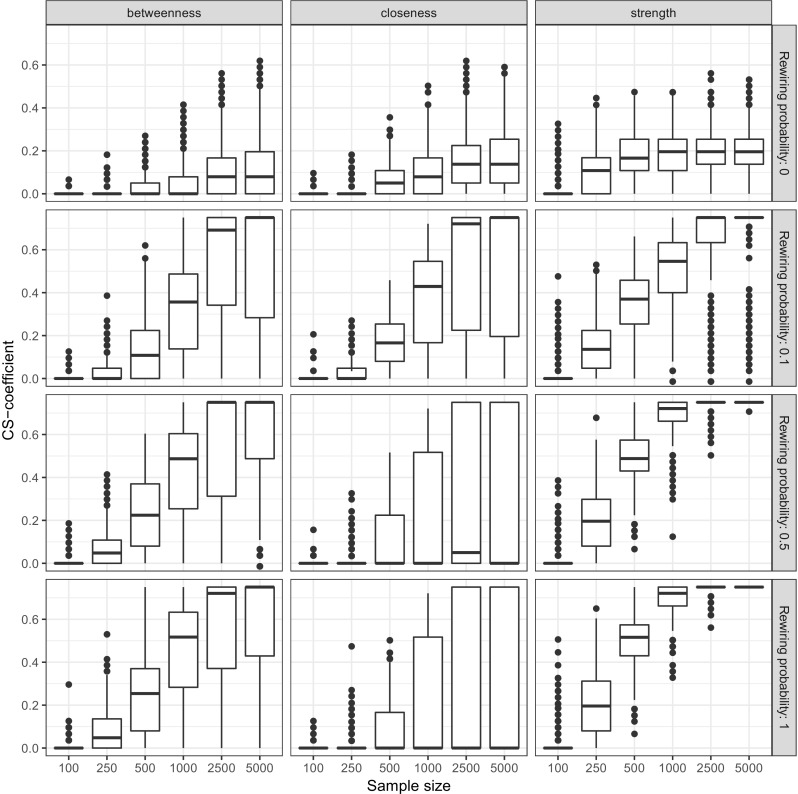
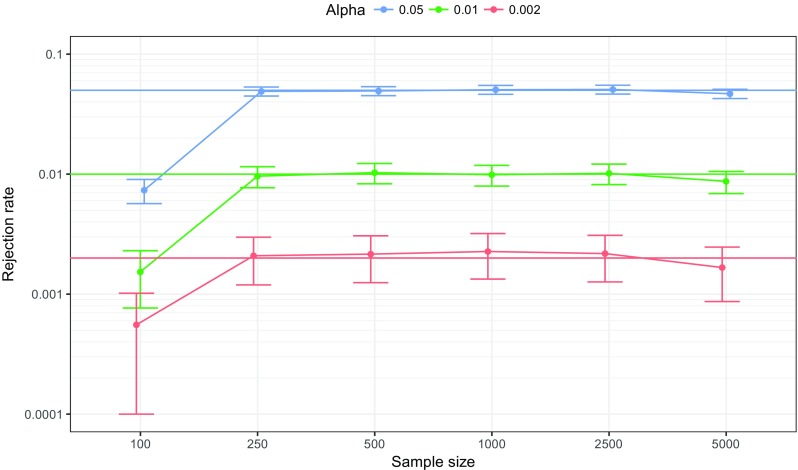
The usage of psychological networks that conceptualize behavior as a complex interplay of psychological and other components has gained increasing popularity in various research fields. While prior publications have tackled the topics of estimating and interpreting such networks, little work has been conducted to check how accurate (i.e., prone to sampling variation) networks are estimated, and how stable (i.e., interpretation remains similar with less observations) inferences from the network structure (such as centrality indices) are. In this tutorial paper, we aim to introduce the reader to this field and tackle the problem of accuracy under sampling variation. We first introduce the current state-of-the-art of network estimation. Second, we provide a rationale why researchers should investigate the accuracy of psychological networks. Third, we describe how bootstrap routines can be used to (A) assess the accuracy of estimated network connections, (B) investigate the stability of centrality indices, and (C) test whether network connections and centrality estimates for different variables differ from each other. We introduce two novel statistical methods: for (B) the correlation stability coefficient, and for (C) the bootstrapped difference test for edge-weights and centrality indices. We conducted and present simulation studies to assess the performance of both methods. Finally, we developed the free R-package bootnet that allows for estimating psychological networks in a generalized framework in addition to the proposed bootstrap methods. We showcase bootnet in a tutorial, accompanied by R syntax, in which we analyze a dataset of 359 women with posttraumatic stress disorder available online.
Overview
The claims and statistics of this paper haven’t been checked yet.
Free: it reads the open-access text and checks the first 5 claims that cite a source we can check. Create a free account to check every claim.
Integrity signals
Registry
Cites
Statistics
Figures
Verification
Claims the paper makes
The claims and statistics of this paper haven’t been checked yet.
Free: it reads the open-access text and checks the first 5 claims that cite a source we can check. Create a free account to check every claim.
Claims other papers make about this one
Each is checked against this paper’s own text: does it say what the citing paper says it does?
The source backs part of the claim, not all of it — or backs it for a different population, condition or comparison.
In the citing paper
“Moreover, it is possible to study a network structure at various time points and determine the changes following an intervention when using longitudinal data (Epskamp et al., 2018; McNally, 2016).”
From Psychometric properties of the engaged living scale (ELS) Spanish version in a large sample of Spanish pilgrims (2023) · cites this paper as Epskamp et al., 2018
Experimental — accuracy not yet measuredThe cited source says what the claim attributes to it.
In the citing paper
“Second, the accuracy of edge weights was evaluated by calculating 95% confidence intervals based on non-parametric bootstrapping (n = 1.000 boots) which is recommended for LASSO regularized edges [43].”
From Psychopathological symptoms and well-being in overweight and underweight adolescents: A network analysis (2021) · cites this paper as [43]
The cited source says what the claim attributes to it.
In the citing paper
“Ideally, the CS-coefficients should be above 0.5 [43].”
From Psychopathological symptoms and well-being in overweight and underweight adolescents: A network analysis (2021) · cites this paper as [43]
The cited source says what the claim attributes to it.
In the citing paper
“Currently, there is no established method for a formal power analysis available for psychological network analyses, nor is there a minimal sample size required for this type of analysis [43].”
From Psychopathological symptoms and well-being in overweight and underweight adolescents: A network analysis (2021) · cites this paper as [43]
The cited source says what the claim attributes to it.
In the citing paper
“However, to tackle this potential limitation, we used the LASSO estimation which is particularly suitable for smaller samples as it returns a sparse network model where the number of parameters that need to be estimated is reduced [43].”
From Psychopathological symptoms and well-being in overweight and underweight adolescents: A network analysis (2021) · cites this paper as [43]
Self-check
Percentages, sums and reported differences re-computed from the paper’s own numbers.
The self-check needs the paper’s full text.
Citations
Cites
R: A Language and Environment for Statistical Computing
R Core Team (2025) · doi:10.32614/r.manuals · Cited by 352,181
Statistical power analysis for the behavioral sciences
(1990) · Computers, Environment and Urban Systems · doi:10.1016/0198-9715(90)90050-4 · Cited by 65,269
Regression shrinkage and selection via the lasso
Tibshirani, R. (1996) · Journal of the Royal Statistical Society Series B: Statistical Methodology · doi:10.1111/j.2517-6161.1996.tb02080.x · Cited by 51,482
Collective dynamics of ‘small-world’ networks
Watts, D. J., & Strogatz, S. H. (1998) · Nature · doi:10.1038/30918 · Cited by 43,060
lavaan : An R Package for Structural Equation Modeling
Rosseel, Y. (2012) · Journal of Statistical Software · doi:10.18637/jss.v048.i02 · Cited by 27,955
Social Network Analysis: Methods and Applications
Wasserman, S. S., & Faust, K. (1994) · Cited by 17,982
Bootstrap methods: another look at the jackknife
Efron, B. (1979) · The Annals of Statistics · doi:10.1214/aos/1176344552 · Cited by 17,602
Social Network Analysis: Methods and Applications
Wasserman, S., & Faust, K. (1994) · doi:10.1017/cbo9780511815478 · Cited by 17,557 · cited 1×
“…networks strikingly different from network structures typically used in graph theory, such as power grids (Watts & Strogatz, 1998), social networks (Wasserman & Faust, 1994) or ecological networks (Barzel & Biham,2009), in which nodes represent entities (e.g., airports, people, organisms) and…”
Hapeman, D. E. (1991) · Technometrics · doi:10.1080/00401706.1991.10484817 · Cited by 9,373
Estimating the reproducibility of psychological science
Open Science Collaboration (2015) · Science · doi:10.1126/science.aac4716 · Cited by 8,515 · cited 1×
“The current replication crisis in psychology (Open Science Collaboration, 2015) stresses the crucial importance of obtaining robust results, and we want the emerging field of psychopathological networks to start off on the right foot.”
Newman, M. (2010) · doi:10.1093/acprof:oso/9780199206650.001.0001 · Cited by 6,595
Sparse inverse covariance estimation with the graphical lasso
Friedman, J., Hastie, T., & Tibshirani, R. (2008) · Biostatistics · doi:10.1093/biostatistics/kxm045 · Cited by 6,355
Graph drawing by force‐directed placement
Fruchterman, T. M. J., & Reingold, E. M. (1991) · Software: Practice and Experience · doi:10.1002/spe.4380211102 · Cited by 6,352
(2009) · Cited by 6,153
qgraph: Network Visualizations of Relationships in Psychometric Data
Epskamp, S., Cramer, A. O. J., Waldorp, L. J., Schmittmann, V. D., & Borsboom, D. (2012) · Journal of Statistical Software · doi:10.18637/jss.v048.i04 · Cited by 4,856
Self-citationNetwork analysis: An integrative approach to the structure of psychopathology
Borsboom, D., & Cramer, A. O. J. (2013) · Annual Review of Clinical Psychology · doi:10.1146/annurev-clinpsy-050212-185608 · Cited by 4,359
Self-citationCohen, J. (1994) · American Psychologist · doi:10.1037/0003-066x.49.12.997 · Cited by 4,003
Node centrality in weighted networks: Generalizing degree and shortest paths
Opsahl, T., Agneessens, F., & Skvoretz, J. (2010) · Social Networks · doi:10.1016/j.socnet.2010.03.006 · Cited by 3,718
Multiple significance tests: the Bonferroni method
Bland, J. M., & Altman, D. G. (1995) · BMJ · doi:10.1136/bmj.310.6973.170 · Cited by 3,341
Lauritzen, S. L. (1996) · doi:10.1093/oso/9780198522195.001.0001 · Cited by 2,976
A tutorial on regularized partial correlation networks
Epskamp, S., & Fried, E. I. (2018) · Psychological Methods · doi:10.1037/met0000167 · Cited by 2,918
Self-citationReliability and validity of a brief instrument for assessing post-traumatic stress disorder
Foa, E. B., Riggs, D. S., Dancu, C. V., & Rothbaum, B. O. (1993) · Journal of Traumatic Stress · doi:10.1002/jts.2490060405 · Cited by 2,537
Statistical Learning with Sparsity: The Lasso and Generalizations
Hastie, T., Tibshirani, R., & Wainwright, M. (2015) · Chapman & Hall/CRC eBooks · doi:10.1201/b18401 · Cited by 2,520
A practical solution to the pervasive problems ofp values
Wagenmakers, E.-J. (2007) · Psychonomic Bulletin & Review · doi:10.3758/bf03194105 · Cited by 2,490
Newman, M. E. J. (2004) · Physical Review E · doi:10.1103/physreve.70.056131 · Cited by 2,476
Organization, development and function of complex brain networks
SPORNS, O., CHIALVO, D., KAISER, M., & HILGETAG, C. (2004) · Trends in Cognitive Sciences · doi:10.1016/j.tics.2004.07.008 · Cited by 2,055
Extended Bayesian information criteria for model selection with large model spaces
Chen, J., & Chen, Z. (2008) · Biometrika · doi:10.1093/biomet/asn034 · Cited by 2,011
Bootstrapping goodness-of-fit measures in structural equation models.
Bollen, K. A., & Stine, R. A. (1992) · Sociological Methods & Research · doi:10.1177/0049124192021002004 · Cited by 1,831
Learning Bayesian Networks with the bnlearnR Package
Scutari, M. (2010) · Journal of Statistical Software · doi:10.18637/jss.v035.i03 · Cited by 1,733
Comorbidity: a network perspective
Cramer, A. O. J., Waldorp, L. J., van der Maas, H. L. J., & Borsboom, D. (2010) · Behavioral and Brain Sciences · doi:10.1017/s0140525x09991567 · Cited by 1,575
Self-citationSample Quantiles in Statistical Packages
Hyndman, R. J., & Fan, Y. (1996) · The American Statistician · doi:10.1080/00031305.1996.10473566 · Cited by 1,183
Maximum Likelihood Estimation of the Polychoric Correlation Coefficient
Olsson, U. (1979) · Psychometrika · doi:10.1007/bf02296207 · Cited by 1,127
Causality models, reasoning and inference
Pearl, J. (2000) · Cited by 1,040
State of the aRt personality research: A tutorial on network analysis of personality data in R
Costantini, G., Epskamp, S., Borsboom, D., Perugini, M., Mõttus, R., Waldorp, L. J., & Cramer, A. O. J. (2015) · Journal of Research in Personality · doi:10.1016/j.jrp.2014.07.003 · Cited by 982
Self-citationStatistical Analysis of Network Data: Methods and Models
Kolaczyk, E. D. (2009) · Springer Series in Statistics · doi:10.1007/978-0-387-88146-1 · Cited by 980
The problem of equivalent models in applications of covariance structure analysis.
MacCallum, R. C., Wegener, D. T., Uchino, B. N., & Fabrigar, L. R. (1993) · Psychological Bulletin · doi:10.1037//0033-2909.114.1.185 · Cited by 901
Association of Symptom Network Structure With the Course of Depression
van Borkulo, C., Boschloo, L., Borsboom, D., Penninx, B. W. J. H., Waldorp, L. J., & Schoevers, R. A. (2015) · JAMA Psychiatry · doi:10.1001/jamapsychiatry.2015.2079 · Cited by 846
Self-citationThe stability of centrality measures when networks are sampled
Costenbader, E., & Valente, T. W. (2003) · Social Networks · doi:10.1016/s0378-8733(03)00012-1 · Cited by 808
The use of causal indicators in covariance structure models: Some practical issues.
MacCallum, R. C., & Browne, M. W. (1993) · Psychological Bulletin · doi:10.1037//0033-2909.114.3.533 · Cited by 804
Bootstrap Methods: A Guide for Practitioners and Researchers
Chernick, M. R. (2007) · Cited by 796
A new method for constructing networks from binary data
van Borkulo, C. D., Borsboom, D., Epskamp, S., Blanken, T. F., Boschloo, L., Schoevers, R. A., & Waldorp, L. J. (2014) · Scientific Reports · doi:10.1038/srep05918 · Cited by 757
Self-citationFried, E. I., Epskamp, S., Nesse, R. M., Tuerlinckx, F., & Borsboom, D. (2016) · Journal of Affective Disorders · doi:10.1016/j.jad.2015.09.005 · Cited by 751
Self-citationDeconstructing the construct: a network perspective on psychological phenomena
Schmittmann, V. D., Cramer, A. O. J., Waldorp, L. J., Epskamp, S., Kievit, R. A., & Borsboom, D. (2013) · New Ideas in Psychology · doi:10.1016/j.newideapsych.2011.02.007 · Cited by 740
Self-citationExtended Bayesian Information Criteria for Gaussian Graphical Models
Foygel, R., & Drton, M. (2010) · arXiv (Cornell University) · doi:10.48550/arxiv.1011.6640 · Cited by 659
The Nonparanormal: Semiparametric Estimation of High Dimensional Undirected Graphs
Liu, H., Lafferty, J., & Wasserman, L. (2018) · doi:10.1184/r1/6610712.v1 · Cited by 621
Mental Disorders as Causal Systems: A Network Approach to Posttraumatic Stress Disorder
McNally, R. J., Robinaugh, D. J., Wu, G. W. Y., Wang, L., Deserno, M. K., & Borsboom, D. (2015) · Clinical Psychological Science · doi:10.1177/2167702614553230 · Cited by 592
Self-citationHigh-dimensional semiparametric Gaussian copula graphical models
Liu, H., Han, F., Yuan, M., Lafferty, J., & Wasserman, L. (2012) · The Annals of Statistics · doi:10.1214/12-aos1037 · Cited by 507
Cramer, A. O. J., Van Der Sluis, S., Noordhof, A., Wichers, M., Geschwind, N., Aggen, S. H., Kendler, K. S., & Borsboom, D. (2012) · European Journal of Personality · doi:10.1002/per.1866 · Cited by 477
Self-citationGeneralized Network Psychometrics: Combining Network and Latent Variable Models
Epskamp, S., Rhemtulla, M., & Borsboom, D. (2017) · Psychometrika · doi:10.1007/s11336-017-9557-x · Cited by 471
Self-citationThe huge Package for High-dimensional Undirected Graph Estimation in R
Zhao, T., Liu, H., Roeder, K., Lafferty, J., & Wasserman, L. (2020) · PubMed · doi:10.48550/arxiv.2006.14781 · Cited by 465
A Network Approach to Psychosis: Pathways Between Childhood Trauma and Psychotic Symptoms
Isvoranu, A.-M., van Borkulo, C. D., Boyette, L.-L., Wigman, J. T. W., Vinkers, C. H., Borsboom, D., & Group Investigators (2017) · Schizophrenia Bulletin · doi:10.1093/schbul/sbw055 · Cited by 397
Self-citationToward a formalized account of attitudes: The Causal Attitude Network (CAN) model.
Dalege, J., Borsboom, D., van Harreveld, F., van den Berg, H., Conner, M., & van der Maas, H. L. J. (2016) · Psychological Review · doi:10.1037/a0039802 · Cited by 373
Self-citationRevealing the dynamic network structure of the Beck Depression Inventory-II
Bringmann, L. F., Lemmens, L. H. J. M., Huibers, M. J. H., Borsboom, D., & Tuerlinckx, F. (2015) · Psychological Medicine · doi:10.1017/s0033291714001809 · Cited by 371
Self-citationFried, E. I. (2015) · Frontiers in Psychology · doi:10.3389/fpsyg.2015.00309 · Cited by 367
Self-citationFrom loss to loneliness: The relationship between bereavement and depressive symptoms.
Fried, E. I., Bockting, C., Arjadi, R., Borsboom, D., Amshoff, M., Cramer, A. O. J., Epskamp, S., Tuerlinckx, F., Carr, D., & Stroebe, M. (2015) · Journal of Abnormal Psychology · doi:10.1037/abn0000028 · Cited by 314
Self-citationHien, D. A., Wells, E. A., Jiang, H., Suarez-Morales, L., Campbell, A. N. C., Cohen, L. R., Miele, G. M., Killeen, T., Brigham, G. S., Zhang, Y., et al. (2009) · Journal of Consulting and Clinical Psychology · doi:10.1037/a0016227 · Cited by 287
The Network Structure of Symptoms of the Diagnostic and Statistical Manual of Mental Disorders
Boschloo, L., van Borkulo, C. D., Rhemtulla, M., Keyes, K. M., Borsboom, D., & Schoevers, R. A. (2015) · PLOS ONE · doi:10.1371/journal.pone.0137621 · Cited by 285
Self-citationRegularized estimation of large-scale gene association networks using graphical Gaussian models
Krämer, N., Schäfer, J., & Boulesteix, A.-L. (2009) · BMC Bioinformatics · doi:10.1186/1471-2105-10-384 · Cited by 237
On the distribution of penalized maximum likelihood estimators: The LASSO, SCAD, and thresholding
Pötscher, B. M., & Leeb, H. (2009) · Journal of Multivariate Analysis · doi:10.1016/j.jmva.2009.06.010 · Cited by 166
A Network Approach to Environmental Impact in Psychotic Disorder: Brief Theoretical Framework
Isvoranu, A.-M., Borsboom, D., van Os, J., & Guloksuz, S. (2016) · Schizophrenia Bulletin · doi:10.1093/schbul/sbw049 · Cited by 162
Self-citationKossakowski, J. J., Epskamp, S., Kieffer, J. M., van Borkulo, C. D., Rhemtulla, M., & Borsboom, D. (2016) · Quality of Life Research · doi:10.1007/s11136-015-1127-z · Cited by 145
Self-citationCostantini, G., Richetin, J., Borsboom, D., Fried, E. I., Rhemtulla, M., & Perugini, M. (2015) · European Journal of Personality · doi:10.1002/per.2014 · Cited by 142
Self-citationHigh-dimensional Ising model selection with Bayesian information criteria
Barber, R. F., & Drton, M. (2015) · Electronic Journal of Statistics · doi:10.1214/15-ejs1012 · Cited by 133
Application of network analysis to identify interactive systems of eating disorder psychopathology
Forbush, K. T., Siew, C. S. Q., & Vitevitch, M. S. (2016) · Psychological Medicine · doi:10.1017/s003329171600012x · Cited by 131
glasso: Graphical Lasso: Estimation of Gaussian Graphical Models
Jerome Friedman, T. H. A. R. T. (2007) · CRAN: Contributed Packages · doi:10.32614/cran.package.glasso · Cited by 117
Brief Report on Estimating Regularized Gaussian Networks from Continuous and Ordinal DataPreprint
Epskamp, S. (2016) · arXiv (Cornell University) · doi:10.48550/arxiv.1606.05771 · Cited by 114
Self-citationGoekoop, R., & Goekoop, J. G. (2014) · PLoS ONE · doi:10.1371/journal.pone.0112734 · Cited by 91
mgm: Estimating Time-Varying Mixed Graphical Models in High-Dimensional Data
Haslbeck, J. M. B., & Waldorp, L. (2015) · arXiv (Cornell University) · doi:10.48550/arxiv.1510.06871 · Cited by 66
Epskamp, S. (2016) · arXiv (Cornell University) · Cited by 63
Self-citationQuantifying the connectivity of a network: The network correlation function method
Barzel, B., & Biham, O. (2009) · Physical Review E · doi:10.1103/physreve.80.046104 · Cited by 54
Bayesian model choice and information criteria in sparse generalized linear models
Foygel, R., & Drton, M. (2011) · arXiv (Cornell University) · doi:10.48550/arxiv.1112.5635 · Cited by 53
huge: High-Dimensional Undirected Graph Estimation
Jiang, H., Fei, X., Liu, H., Roeder, K., Lafferty, J., Wasserman, L., Li, X., & Zhao, T. (2010) · CRAN: Contributed Packages · doi:10.32614/cran.package.huge · Cited by 52
Structure estimation for mixed graphical models in high-dimensional data
Haslbeck, J. M. B., & Waldorp, L. (2015) · arXiv (Cornell University) · doi:10.48550/arxiv.1510.05677 · Cited by 47
mgm: Estimating Time-Varying k-Order Mixed Graphical Models
Haslbeck, J. (2015) · doi:10.32614/cran.package.mgm · Cited by 34
IsingSampler: Sampling Methods and Distribution Functions for the Ising Model
Epskamp, S. (2014) · doi:10.32614/cran.package.isingsampler · Cited by 31
Self-citationA Primer on Estimating Regularized Psychological NetworksPreprint
Epskamp, S., & Fried, E. I. (2016) · arXiv (Cornell University) · Cited by 22
Self-citation
Research works printed but not linked: 1
- Gumbel, E.J. (1939). La probabilité des hypotheses. Comptes Rendus de l’Academie des Sciences (Paris), 209, 645–647.
Cited by
A tutorial on regularized partial correlation networks
Epskamp, S., & Fried, E. I. (2018) · Psychological Methods · doi:10.1037/met0000167 · Cited by 2,918
Self-citationBridge Centrality: A Network Approach to Understanding Comorbidity
Jones, P. J., Ma, R., & McNally, R. J. (2021) · Multivariate Behavioral Research · doi:10.1080/00273171.2019.1614898 · Cited by 1,741
Network analysis of multivariate data in psychological science
Borsboom, D., Deserno, M. K., Rhemtulla, M., Epskamp, S., Fried, E. I., McNally, R. J., Robinaugh, D. J., Perugini, M., Dalege, J., Costantini, G., et al. (2021) · Nature Reviews Methods Primers · doi:10.1038/s43586-021-00055-w · Cited by 1,371
Self-citationWhat do centrality measures measure in psychological networks?
Bringmann, L. F., Elmer, T., Epskamp, S., Krause, R. W., Schoch, D., Wichers, M., Wigman, J. T. W., & Snippe, E. (2019) · Journal of Abnormal Psychology · doi:10.1037/abn0000446 · Cited by 1,345
Self-citationThe Gaussian Graphical Model in Cross-Sectional and Time-Series Data
Epskamp, S., Waldorp, L. J., Mõttus, R., & Borsboom, D. (2018) · Multivariate Behavioral Research · doi:10.1080/00273171.2018.1454823 · Cited by 1,134
Self-citation
Metadata
- Authors
- Epskamp, S., Borsboom, D., & Fried, E. I.
- Affiliations
- University of Amsterdam (NL)
- Corresponding author
- Epskamp, Sacha
- Venue
- Behavior Research Methods
- Published
- 2017-03-24
- Volume
- 50
- Issue
- 1
- Pages
- 195-212
- ISSN
- 1554-351X (ISSN-L)
- 1554-3528
- PMC
- PMC5809547
- OpenAlex
- W2530237102
- Cited by
- 5,715
- References
- 78
- Citations by year
- 2026: 1331 · 2025: 1249 · 2024: 855 · 2023: 674 · 2022: 509 · 2021: 451 · 2020: 287 · 2019: 181 · 2018: 111 · 2017: 48
- FWCI
- 220.43
- Type
- journal article
- Language
- en
- Open access
- hybrid
- doi.org
- Locations
- Behavior Research Methods (publishedVersion, cc-by)
- PubMed Central (publishedVersion, cc-by)
- PubMed (publishedVersion)
- UvA-DARE (University of Amsterdam) (publishedVersion, cc-by)
- arXiv (Cornell University) (submittedVersion)
- Leiden Repository (Leiden University) (submittedVersion)
- Data Archiving and Networked Services (DANS) (submittedVersion, other-oa)
- arXiv (Cornell University)
- Funders
- NWO "research talent" (406-11-066)
- Topics
- Social Sciences › Psychology › Experimental and Cognitive Psychology › Mental Health Research Topics
- Social Sciences › Decision Sciences › Management Science and Operations Research › Psychometric Methodologies and Testing
- Life Sciences › Neuroscience › Cognitive Neuroscience › Functional Brain Connectivity Studies
- Keywords
- psychological networks, network estimation, sampling variability, bootstrapping, centrality indices, edge weights, post-traumatic stress disorder, network stability
- MeSH terms
- Female, Humans, Psychophysiology, Stress Disorders, Post-Traumatic, Neural Networks, Computer, Dimensional Measurement Accuracy
About these checks
Registry, retraction, Cites and statistics results are computed, not judged, with one exception: a printed reference that no index lists is read once by a model before it counts as a citation error. Claims are extracted by a model and kept only when their quote appears verbatim in the text; each cited source is then checked, with a model’s help, for whether it says what the claim relies on. Those verdicts can be wrong — read the claim’s quote and the cited source before relying on one.
Statistics and arithmetic are recomputed, not judged.
Confidence bands are shown only for fields calibrated on our annotated test set. None is calibrated yet, so no band is shown.
What counts as a claim ›How we measure confidence ›How we check this ›
Are you an author, or do you see a problem with this page? Request a review
Data sources
Bibliographic data: Semantic Scholar, OpenAlex, Crossref.
Contains information from the Semantic Scholar Academic Graph Datasets, made available under the ODC Attribution License (ODC-BY 1.0).
Semantic Scholar’s data is described in: Kinney, R., et al. (2023). The Semantic Scholar Open Data Platform. arXiv:2301.10140.
