

The DOI matches its Crossref record; 95 of the 96 references it cites were found in a registry or an index.
Automating creativity assessment with SemDis: An open platform for computing semantic distance
Open accessAbstract
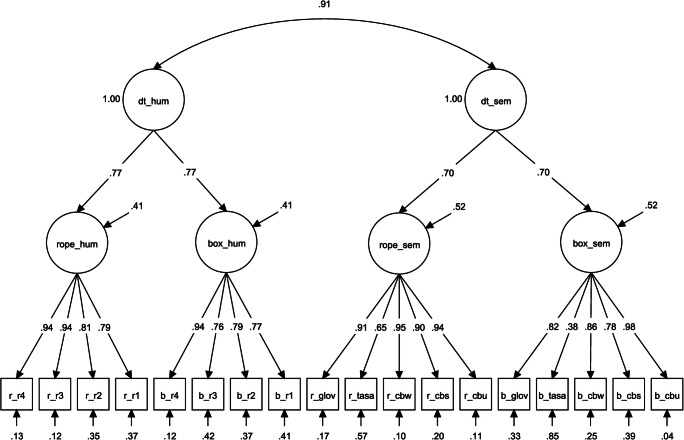
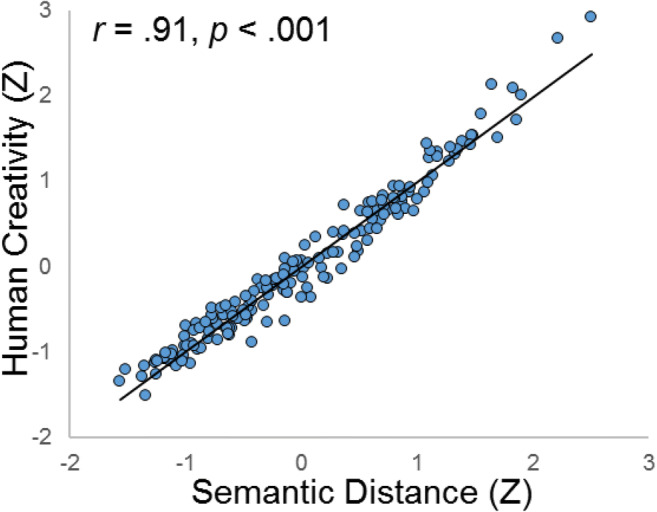
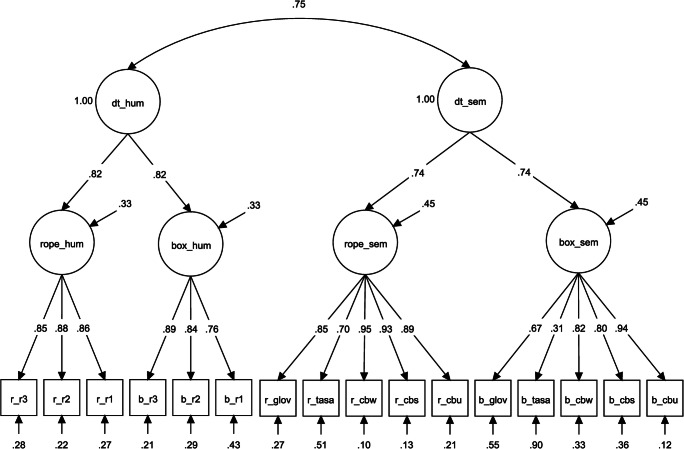
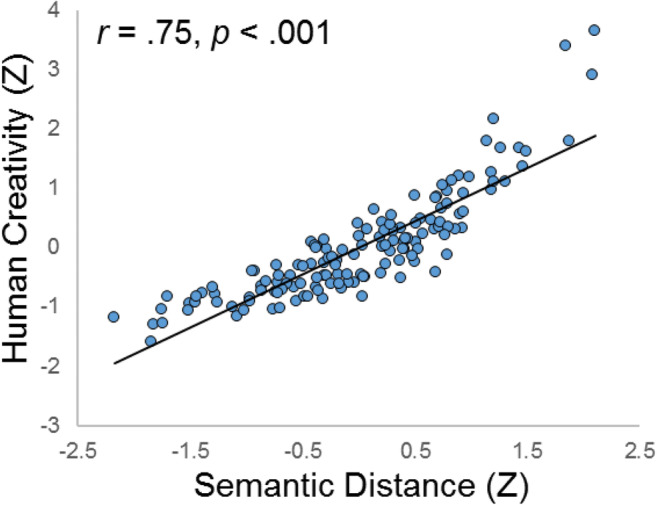
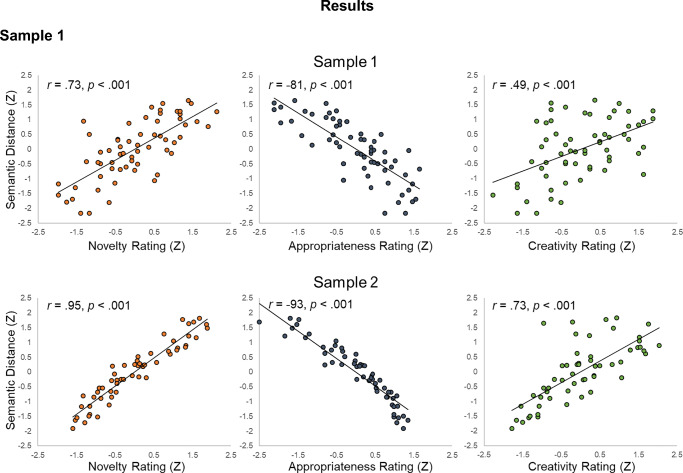
Creativity research requires assessing the quality of ideas and products. In practice, conducting creativity research often involves asking several human raters to judge participants’ responses to creativity tasks, such as judging the novelty of ideas from the alternate uses task (AUT). Although such subjective scoring methods have proved useful, they have two inherent limitations—labor cost (raters typically code thousands of responses) and subjectivity (raters vary on their perceptions and preferences)—raising classic psychometric threats to reliability and validity. We sought to address the limitations of subjective scoring by capitalizing on recent developments in automated scoring of verbal creativity via semantic distance, a computational method that uses natural language processing to quantify the semantic relatedness of texts. In five studies, we compare the top performing semantic models (e.g., GloVe, continuous bag of words) previously shown to have the highest correspondence to human relatedness judgements. We assessed these semantic models in relation to human creativity ratings from a canonical verbal creativity task (AUT; Studies 1–3) and novelty/creativity ratings from two word association tasks (Studies 4–5). We find that a latent semantic distance factor—comprised of the common variance from five semantic models—reliably and strongly predicts human creativity and novelty ratings across a range of creativity tasks. We also replicate an established experimental effect in the creativity literature (i.e., the serial order effect) and show that semantic distance correlates with other creativity measures, demonstrating convergent validity. We provide an open platform to efficiently compute semantic distance, including tutorials and documentation ( https://osf.io/gz4fc/ ).
Overview
The claims and statistics of this paper haven’t been checked yet.
Run the check — free, no account needed. It reads the open-access text and checks the sources it cites.
Integrity signals
Registry
Cites
Statistics
Figures
Verification
Claims the paper makes
The claims and statistics of this paper haven’t been checked yet.
Run the check — free, no account needed. It reads the open-access text and checks the sources it cites.
Claims other papers make about this one
Each is checked against this paper’s own text: does it say what the citing paper says it does?
In the citing paper
“we investigate originality primarily by means of semantic similarity, using a well-performing sentence embedding model [72] whose direct predecessors [70] have been found to agree well with human judgments of originality in creativity research [6, 26].”
From Homogenization Effects of Large Language Models on Human Creative Ideation (2024) · cites this paper as [6]
In the citing paper
“a metric which has been found to agree well with human judgments of semantic similarity [6, 26].”
From Homogenization Effects of Large Language Models on Human Creative Ideation (2024) · cites this paper as [6]
Self-check
Percentages, sums and reported differences re-computed from the paper’s own numbers.
The self-check needs the paper’s full text.
Citations
Cites
(1998) · Cited by 36,049
Glove: Global Vectors for Word Representation
Pennington, J., Socher, R., & Manning, C. (2014) · Proceedings of the 2014 Conference on Empirical Methods in Natural Language Processing (EMNLP) · doi:10.3115/v1/d14-1162 · Cited by 34,071
lavaan : An R Package for Structural Equation Modeling
Rosseel, Y. (2012) · Journal of Statistical Software · doi:10.18637/jss.v048.i02 · Cited by 27,955
Distributed Representations of Words and Phrases and their Compositionality
Mikolov, T., Sutskever, I., Chen, K., Corrado, G., & Dean, J. (2013) · arXiv · doi:10.48550/arxiv.1310.4546 · Cited by 24,533
An introduction to latent semantic analysis
Landauer, T. K., Foltz, P. W., & Laham, D. (1998) · Discourse Processes · doi:10.1080/01638539809545028 · Cited by 4,880
The associative basis of the creative process.
Mednick, S. (1962) · Psychological Review · doi:10.1037/h0048850 · Cited by 4,140
The social psychology of creativity: A componential conceptualization.
Amabile, T. M. (1983) · Journal of Personality and Social Psychology · doi:10.1037/0022-3514.45.2.357 · Cited by 4,034
Thurstone, L. L. (1973) · Springer eBooks · doi:10.1007/978-94-011-6129-9_8 · Cited by 2,126
(2011) · Cited by 2,025
Psychometric Properties of the HEXACO Personality Inventory
Lee, K., & Ashton, M. C. (2004) · Multivariate Behavioral Research · doi:10.1207/s15327906mbr3902_8 · Cited by 1,961
Research works printed but not linked: 2
- Cattell, R. B., & Cattell, A. K. S. (1961/2008). Measuring intelligence with the Culture Fair Tests. Oxford, UK: Hogrefe.
- Cattell, R. B., & Cattell, A. (1973). Measuring intelligence with the culture fair tests. Institute for Personality and Ability Testing. Champaign Ill.: Institute for Personality and Ability Testing.
Cited by
Sorted by citations
Items 201–300 of 342
Malthouse, E., Liang, Y., Russell, S., & Hills, T. T. (2021) · Cognition · doi:10.1016/j.cognition.2021.104937 · Cited by 4
Reilly, J. J., Zuckerman, B. M., Finley, A. M., Litovsky, C. P., & Kenett, Y. N. (2022) · PsyArXiv (OSF Preprints) · doi:10.31234/osf.io/6fuhv · Cited by 4
Default mode network spatio-temporal electrophysiological signature and causal role in creativityPreprint
Bartoli, E., Devara, E., Dang, H. Q., Rabinovich, R. J., Mathura, R. K., Anand, A., Pascuzzi, B., Adkinson, J., Bijanki, K. R., Sheth, S. A., et al. (2023) · bioRxiv (Cold Spring Harbor Laboratory) · doi:10.1101/2023.09.13.557639 · Cited by 4
Haim, E., Fischer, N., Citraro, S., Rossetti, G., & Stella, M. (2024) · doi:10.31234/osf.io/6zpre · Cited by 4
Koivisto, M., & Toivanen, H. (2024) · Creativity Research Journal · doi:10.1080/10400419.2024.2438609 · Cited by 4
Xu, S., Reiss, M. J., & Lodge, W. (2025) · Creativity Research Journal · doi:10.1080/10400419.2024.2448995 · Cited by 9
Yu, Y., Qin, K., Xu, F., Yang, X., Zheng, Q., Zhu, A., Hu, B., & Gu, C. (2025) · Learning and Instruction · doi:10.1016/j.learninstruc.2025.102265 · Cited by 3
Do Creativity Metrics from Design Research Correlate with Those from Psychology?
Gero, J. S., & Milovanovic, J. (2024) · Creativity Research Journal · doi:10.1080/10400419.2024.2320513 · Cited by 3
A Random Walk Modeling Framework for Boosting the Creativity of Humans and AI
Vardi, S., & Choudhary, V. (2026) · Information Systems Research · doi:10.1287/isre.2024.0982 · Cited by 2
Detecting Creative States From Emotional Cues: Insights From Speech With Focus on Text Modality
Kalateh, S., Nikghadam-Hojjati, S., & Barata, J. (2025) · IEEE Access · doi:10.1109/access.2025.3564499 · Cited by 3
Predication of Writing Originality Based on Computational Linguistics
Yang, L., Xin, T., Zhang, S., & Yu, Y. (2022) · Journal of Intelligence · doi:10.3390/jintelligence10040124 · Cited by 3
Effects of task characteristics and task-switching on remote associates test problem solving
Sio, U. N., Lortie‐Forgues, H., & Marsh, J. E. (2024) · Journal of Cognitive Psychology · doi:10.1080/20445911.2024.2333580 · Cited by 3
Information perseveration in recognition memory: Examining the scope of sequential dependencies
Dollois, M. A., Fenske, M. J., & Fiacconi, C. M. (2024) · Memory & Cognition · doi:10.3758/s13421-024-01582-z · Cited by 3
Chen, P.-Z., Wu, C., & Chen, H. (2024) · Thinking Skills and Creativity · doi:10.1016/j.tsc.2024.101716 · Cited by 3
Alves, N. D. C., von Wangenheim, C. G., Martins-Pacheco, L. H., & Borgatto, A. F. (2021) · doi:10.5753/educomp.2021.14467 · Cited by 3
Miroshnik, K. G., Forthmann, B., Karwowski, M., & Benedek, M. (2022) · doi:10.31234/osf.io/jfmda · Cited by 4
Characterizing Features of Creative Writing in Older Adults
Orwig, W., & Schacter, D. L. (2024) · The Journals of Gerontology Series B · doi:10.1093/geronb/gbae111 · Cited by 2
Poetic Break: Incubation for Associative Creativity
Chaudhuri, S., & Bhattacharya, J. (2025) · Creativity Research Journal · doi:10.1080/10400419.2025.2466571 · Cited by 2
Liu, L., Zheng, X., Zhang, Q., & Yang, T. (2025) · Thinking Skills and Creativity · doi:10.1016/j.tsc.2025.101818 · Cited by 2
Strukova, S., & Ruipérez‐Valiente, J. A. (2025) · Advances in analytics for learning and teaching · doi:10.1007/978-3-031-87740-7_4 · Cited by 2
Ganor, O., Samuel, G., Stella, M., & Kenett, Y. N. (2025) · Behavior Research Methods · doi:10.3758/s13428-025-02748-6 · Cited by 2
Haim, E., Fischer, N., Citraro, S., Rossetti, G., & Stella, M. (2026) · Journal of Computational Social Science · doi:10.1007/s42001-025-00446-z · Cited by 2
Mapping the landscape of AI-empowered psychology: a topic modeling-based bibliometric analysis
Jia, S., Zhang, Y., & Wang, F. (2026) · Artificial Intelligence Review · doi:10.1007/s10462-026-11543-4 · Cited by 2
Know when to trust: Making AI scoring more reliable for educational assessment
Organisciak, P., & Acar, S. (2026) · Behavior Research Methods · doi:10.3758/s13428-026-03058-1 · Cited by 3
iCreate: Mining Creative Thinking Patterns from Contextualized Educational Data
Shabani, N., Beheshti, A., Farhood, H., Bower, M., Garrett, M. J., & Alinejad‐Rokny, H. (2022) · Lecture notes in computer science · doi:10.1007/978-3-031-11647-6_68 · Cited by 2
Qunlin, C. H. E. N., & Ke, D. I. N. G. (2022) · Advances in Psychological Science · doi:10.3724/sp.j.1042.2022.02507 · Cited by 2
Witczak, O., Krzysik, I., Bromberek-Dyzman, K., Thierry, G., & Jończyk, R. (2024) · Scientific Reports · doi:10.1038/s41598-024-63225-2 · Cited by 3
Haq, I. U., Pifarré, M., & Fraca, E. (2024) · International Journal of Emerging Technologies in Learning (iJET) · doi:10.3991/ijet.v19i05.47465 · Cited by 5
Altındıs, Z. T., & Kanlı, E. (2024) · Buca eğitim fakültesi dergisi (Online)/Buca Eğitim Fakültesi dergisi · doi:10.53444/deubefd.1380279 · Cited by 2
Assessing the Alignment Between Word Representations in the Brain and Large Language Models
Kwon, E., Patterson, J. D., Beaty, R. E., & Goucher-Lambert, K. (2024) · Springer eBooks · doi:10.1007/978-3-031-71922-6_14 · Cited by 2
Self-citationHuang, Y., Zhang, Z., Cao, G., Kenett, Y. N., & Xu, Z. (2025) · Thinking Skills and Creativity · doi:10.1016/j.tsc.2025.101821 · Cited by 2
Reversing the alternate uses task
Scherbakova, A., Dumas, D., Kagan, S., Vlaamster, T., Acar, S., & Organisciak, P. (2025) · Thinking Skills and Creativity · doi:10.1016/j.tsc.2025.101915 · Cited by 2
Investigating age-related differences in semantic control mechanisms involved in creative cognition
Patel, T., MacPherson, S. E., & Hoffman, P. (2025) · Memory & Cognition · doi:10.3758/s13421-025-01753-6 · Cited by 2
Design and Validation product Creativity Evaluation Model in Architectural Design Education
Hassankhouei, E., Rezvani, A., Ahmadi, V., & Arbabi, F. H. (2021) · Iranian Journal of Educational Sociology · doi:10.52547/ijes.4.3.11 · Cited by 2
Horowitz‐Kraus, T., Kenett, Y. N., Link, D., Ashqar, E., & Farah, R. (2025) · bioRxiv (Cold Spring Harbor Laboratory) · doi:10.1101/2025.11.07.687207 · Cited by 2
One-class graph moderating attention neural network in quality assessment of creative ideas
Yang, Y. (2023) · Neural Computing and Applications · doi:10.1007/s00521-023-09256-8 · Cited by 1
Cross-domain analogical reasoning ability links functional connectome to creativity
Yang, L., Zeng, R., Wang, X., Chen, J., Gu, J., Fan, J., Qiu, J., & Cao, G. (2025) · Thinking Skills and Creativity · doi:10.1016/j.tsc.2025.101808 · Cited by 1
Fascination moderates the effects of nature video exposure on creative thinking
Koivisto, M., Lahnalahti, I., Malmberg, I., & Grassini, S. (2025) · Journal of Environmental Psychology · doi:10.1016/j.jenvp.2025.102699 · Cited by 1
Sankar, B., & Sen, D. (2025) · Journal of Engineering Design · doi:10.1080/09544828.2025.2537465 · Cited by 1
The Causal Role of the Left Angular Gyrus in Creativity-Driven Restructuring
Ding, K., Bickel, A., & Kenett, Y. N. (2025) · Creativity Research Journal · doi:10.1080/10400419.2025.2591458 · Cited by 1
Creative L2 Learners’ Use of Clustering and Switching in L2 Fluency Performance
Fontecha, A. F., & Hernández, A. P. (2025) · Educational linguistics · doi:10.1007/978-3-031-99435-7_6 · Cited by 1
Non-Linear Relationships Between Creativity Ratings of Musical Improvisations and Melodic Complexity
van Welzen, K., Clemente, A., Ullén, F., & de Manzano, Ö. (2026) · Creativity Research Journal · doi:10.1080/10400419.2025.2599793 · Cited by 1
Guidi, A., di Geronimo, V., Giretti, A., & di Meana, F. R. (2025) · Cognition and exploratory learning in the digital age · doi:10.1007/978-3-032-05817-1_2 · Cited by 1
Raz, T., & Kenett, Y. N. (2026) · Personality and Individual Differences · doi:10.1016/j.paid.2026.113721 · Cited by 1
Wang, Z., Yi, X., & Hu, W. (2026) · Creativity Research Journal · doi:10.1080/10400419.2026.2630191 · Cited by 1
Jung, S., & Nah, K. (2026) · Information · doi:10.3390/info17030243 · Cited by 2
Wu, C. (2026) · Behavioral Sciences · doi:10.3390/bs16040512 · Cited by 1
Curious minds at work: how organizational support and motivation relate to employee creativity
Yeshwant Raj., S., & Chang, Y. (2026) · The Learning Organization · doi:10.1108/tlo-05-2025-0123 · Cited by 1
Li, L., Herath, S., & Grumbach, C. (2026) · CHI Conference Extended Abstracts on Human Factors in Computing Systems (CHI EA) · doi:10.1145/3772363.3798678 · Cited by 2
Koivisto, M. (2026) · Consciousness and Cognition · doi:10.1016/j.concog.2026.104060 · Cited by 1
Luchini, S. A., Beaty, R. E., Boyce, A. S., Zappe, S. E. R., & Forthmann, B. (2026) · Journal of Engineering Education · doi:10.1002/jee.70066 · Cited by 1
Self-citationMaran, T. K., Bachmann, A. K., Kraus, S., Fitz, T., Furtner, M. R., & Dabić, M. (2026) · Technovation · doi:10.1016/j.technovation.2026.103683 · Cited by 1
The Instability of Creativity Over Weeks Through the Lens of Distributional Models
Katrahmani, A., Ansah, A. A., Ch, N. A. N., Burmeister, J., Kun, A. L., Mills, C., Shaer, O., & Lee, J. D. (2022) · Proceedings of the Human Factors and Ergonomics Society Annual Meeting · doi:10.1177/1071181322661553 · Cited by 2
Computing and Explaining Knowledge Relevance in Exploratory Search Environment
La, Y., & Yuan, L. (2022) · International Conference on Cyber Security and Information Engineering (ICCSIE) · doi:10.1109/iccsie56462.2022.00023 · Cited by 1
Pichot, N. (2023) · Dunod eBooks · doi:10.3917/dunod.bonna.2023.01.0052 · Cited by 1
The properties of personal semantics
Tanguay, A. F. N., Thériault, K., Clough, S., Taler, V., Renoult, L., & Davidson, P. S. R. (2026) · Memory & Cognition · doi:10.3758/s13421-026-01895-1 · Cited by 1
Generating mathematical strategies shows evidence of a serial order effect
Shaw, S., Yeghyayan, A. A., Ballenger, E. E., & Ramirez, G. (2024) · Frontiers in Education · doi:10.3389/feduc.2024.1347444 · Cited by 2
Valueva, E. А., Panfilova, A. S., & Семеновна, Р. А. (2024) · Психология Журнал Высшей школы экономики · doi:10.17323/1813-8918-2024-1-202-225 · Cited by 1
Mather, K. A., Weston, S. J., & Condon, D. M. (2024) · Behavior Research Methods · doi:10.3758/s13428-024-02422-3 · Cited by 1
An assessment framework for creative production in computing and engineering disciplines
Che, X., & Ip, B. (2024) · Computers and Education Open · doi:10.1016/j.caeo.2024.100220 · Cited by 1
Creativity Enhancement: A Primer
Ding, K., & Kenett, Y. N. (2024) · Oxford University Press eBooks · doi:10.1093/oxfordhb/9780197677131.013.21 · Cited by 1
Carolus, A., Koch, M. J., & Feng, S. (2025) · Scientific Reports · doi:10.1038/s41598-025-05745-z · Cited by 2
Hof, M. O. ‘., Hu, K., Tong, S., & Bai, H. (2025) · Journal of Intelligence · doi:10.3390/jintelligence13070080 · Cited by 1
Dong, Z., Han, B., Yang, T., Chen, S., Cao, Y., & Hou, Y. (2025) · Behavioral Sciences · doi:10.3390/bs15081003 · Cited by 1
de Souza, A. S., Alves, N. D. C., von Wangenheim, C. G., & Kreuch, L. (2021) · Anais do ... Simpósio Brasileiro de Informática na Educação/Anais do Simpósio Brasileiro de Informática na Educação · doi:10.5753/sbie.2021.217542 · Cited by 1
Myszkowski, N. (2022) · Physics of Life Reviews · doi:10.1016/j.plrev.2022.11.010 · Cited by 1
Dickson, D. S., Jończyk, R., Günay, E. E., van Hell, J. G., & Siddique, Z. (2024) · ASEE Annual Conference & Exposition · doi:10.18260/1-2--41126 · Cited by 1
Conceptual Expansion Induced by Analogical Reasoning Sparks “Aha” MomentsPreprint
Chesebrough, C., Chrysikou, E. G., Holyoak, K. J., Zhang, Z., & Kounios, J. (2023) · doi:10.31219/osf.io/uqcsr · Cited by 1
Witczak, O., Krzysik, I., Bromberek-Dyzman, K., Thierry, G., & Jończyk, R. (2023) · Research Square · doi:10.21203/rs.3.rs-3681912/v1 · Cited by 1
Wahbeh, H., Cannard, C., Yount, G. L., Arnaud Delorme, A., & Radin, D. I. (2024) · doi:10.31234/osf.io/vjqnu · Cited by 1
Human brain network control of creativityPreprint
Rabinovich, R. J., Cowan, R. L., Libowitz, M. R., Davis, T. S., Rahimpour, S., Beaty, R. E., Bartoli, E., Sheth, S. A., Smith, E. H., & Shofty, B. (2025) · bioRxiv (Cold Spring Harbor Laboratory) · doi:10.1101/2025.06.03.657648 · Cited by 1
Self-citationForthmann, B., Jankowska, D. M., & Karwowski, M. (2020) · doi:10.31234/osf.io/h2g4m
Estudio de la creatividad en diseño en ingeniería en Aprendizaje Basado en Proyectos
Mesa, M. J. R., & José, F. (2021)
Assessing lexical-semantic naming deficits using an automated machine learning approachPreprint
Schnur, T. T., & Lei, C.-M. (2021) · doi:10.31234/osf.io/vfyze
Perspective Chapter: New Approaches to the Assessment of Domain-Specific Creativity
Altındıs, Z. T. (2022) · IntechOpen eBooks · doi:10.5772/intechopen.102311
Short, Yet Creative: Compiling a Short Scale of Creative ActivitiesPreprint
Steger, D., Weiss, S., & Wilhelm, O. (2022) · doi:10.31234/osf.io/ahrzq
Balancing novelty and appropriateness leads to creative associations in childrenPreprint
Rastelli, C., Greco, A., Pisapia, N. D., & Finocchiaro, C. (2022) · doi:10.31234/osf.io/k5pz3
Balancing novelty and appropriateness leads to creative associations in childrenPreprint
Rastelli, C., Greco, A., Pisapia, N. D., & Finocchiaro, C. (2022) · doi:10.31234/osf.io/2tjhd
Hassankhouei, E., rezvani, A., Ahmadi, V., & Hajiarbabi, F. (2022) · The Journal Of Psychological Science · doi:10.52547/jps.21.111.593
An Interactive Exploration Learning Method based on Domain Knowledge Visualization
La, Y., & Liu, Y. (2022) · International Conference on Artificial Intelligence and Advanced Manufacture (AIAM) · doi:10.1109/aiam57466.2022.00063
Evidence for an Asymmetric Switch Cost in State Creativity
Cortes, R. A., Peña, M. C. B., Daker, R. J., Colaizzi, G. A., & Green, A. E. (2023) · Creativity Research Journal · doi:10.1080/10400419.2023.2212999
A Comparative Analysis of the Effectiveness of Rare Tokens on Creative Expression using ramBERT
Lee, Y., Kim, D., On, B.-W., & Lee, I. (2023) · Findings of the Association for Computational Linguistics: ACL (Findings of ACL) · doi:10.18653/v1/2023.findings-acl.639
The effect of diversity and social interaction on cognitive search: An agent-based simulationPreprint
Rocca, R., & Tylén, K. (2024) · PsyArXiv (OSF Preprints) · doi:10.31234/osf.io/n3t6j
Avaliação Automatizada da Criatividade de Aplicativos Móveis no Contexto Educacional
Alves, N. D. C., & von Wangenheim, C. G. (2024) · doi:10.5753/educomp.2024.237500
Mulia, A. C., Sa’dijah, C., & Susanto, H. (2024) · JOHME Journal of Holistic Mathematics Education · doi:10.19166/johme.v8i1.7721
Comprehending and Producing Metaphors A Reaction Time and Drawing Study
Birdsell, B. J., Tatsuta, N., & Hiroaki, N. (2023) · The Proceedings of the Annual Convention of the Japanese Psychological Association · doi:10.4992/pacjpa.87.0_1d-051-pi
A Parallel Distributed Processing Network of Human ReasoningPreprint
Jialin, & Cortese, M. J. (2024) · doi:10.31234/osf.io/pvxtk
Spontaneous associative thought may facilitate scene-gist memory via implicit scene-labeling
Baror, S., Aminoff, E., & Kenett, Y. N. (2024) · Memory & Cognition · doi:10.3758/s13421-024-01672-y
Xie, C., Zhang, S., Qiao, X., & Hao, N. (2024) · npj Science of Learning · doi:10.1038/s41539-024-00285-z
Measuring Creativity in Academic Writing
Nagel, J. H. B. (2022) · doi:10.12794/metadc2048679
Modeling Creativity in Education
Krishnaraja, S., Tirkova, S., Kovalkov, A., Paaßen, B., Gal, K., & Niels Pinkwart, C. (2025) · Advances in analytics for learning and teaching · doi:10.1007/978-3-031-87740-7_9
Chan, M. M. Y., O’Sullivan, J. D., Adam, R. J., Mosley, P. E., Breakspear, M. J., & Robinson, G. A. (2025) · bioRxiv (Cold Spring Harbor Laboratory) · doi:10.1101/2025.04.22.650134
Cooperation in nature: a nature-based intervention improves collaboration and creativity
Atchley, P., Atchley, R. A., Hopkins, M., Benau, E. M., Priester, G., & Strayer, D. L. (2025) · Journal of Cognitive Psychology · doi:10.1080/20445911.2025.2509752 · Cited by 2
Creativity in the Age of AI: Comparing Human and Machine Performance Using Standardised Tests
Grassini, S., Grødem, S., Gunnarskog, T., & Sevre, I. T. (2025) · Springer series on cultural computing · doi:10.1007/978-3-031-86551-0_3
Semantic Measures of Creativity
Johnson, D. R., & Beaty, R. E. (2025) · Elsevier eBooks · doi:10.1016/b978-0-323-95504-1.00716-x
Self-citationFrom logs to insights: Exploring domains of creativity in data analytics tasks
Weiser, O., Kalman, Y. M., & Ravid, G. (2025) · Thinking Skills and Creativity · doi:10.1016/j.tsc.2025.101947
Liu, X.-S., Wang, L., & Yang, J.-J. (2025) · Learning & memory (Cold Spring Harbor, N.Y.) · doi:10.1101/lm.054147.125
Decoding the cascading architecture of creative ideation: an ERP study
Yang, W., Ma, X., Su, Y., & Zhang, J. (2025) · BMC Psychology · doi:10.1186/s40359-025-03537-8
Qian Xuesen’s question Ⅱ: How and when does collectivism affect divergent thinking?
Shi, Y., Chen, F., Gao, Y., Zhou, W., Wang, L., Shou, W., Zhao, Q., & Yu, Q. (2025) · Thinking Skills and Creativity · doi:10.1016/j.tsc.2025.102092
Metadata
- Authors
- Beaty, R. E., & Johnson, D. R.
- Affiliations
- Pennsylvania State University (US)
- Washington and Lee University (US)
- Corresponding author
- Beaty, Roger E.
- Johnson, Dan R.
- Venue
- Behavior Research Methods
- Published
- 2020-08-31
- Volume
- 53
- Issue
- 2
- Pages
- 757-780
- ISSN
- 1554-351X (ISSN-L)
- 1554-3528
- PMC
- PMC8062332
- OpenAlex
- W3081924543
- Cited by
- 341
- References
- 96
- Citations by year
- 2026: 57 · 2025: 66 · 2024: 79 · 2023: 58 · 2022: 54 · 2021: 23 · 2020: 4
- FWCI
- 33.62
- Type
- journal article
- Language
- en
- Open access
- hybrid
- doi.org
- Locations
- Behavior Research Methods (publishedVersion, cc-by)
- PubMed Central (publishedVersion, cc-by)
- PubMed (publishedVersion)
- PsyArXiv (OSF Preprints) (submittedVersion, cc-by)
- PsyArXiv (OSF Preprints) (submittedVersion)
- Funders
- National Science Foundation (1920653)
- Topics
- Social Sciences › Psychology › Experimental and Cognitive Psychology › Creativity in Education and Neuroscience
- Physical Sciences › Computer Science › Artificial Intelligence › Topic Modeling
- Social Sciences › General Social Sciences › Computational and Text Analysis Methods
- Keywords
- creativity assessment, semantic distance, alternative uses task, word association task, automated grading, semantic relatedness, gloves, CBOW, serial order effects, convergent validity, open platform
- MeSH terms
- Creativity, Humans, Psychometrics, Semantics, Reproducibility of Results
About these checks
Registry, retraction, Cites and statistics results are computed, not judged, with one exception: a printed reference that no index lists is read once by a model before it counts as a citation error. Claims are extracted by a model and kept only when their quote appears verbatim in the text; each cited source is then checked, with a model’s help, for whether it says what the claim relies on. Those verdicts can be wrong — read the claim’s quote and the cited source before relying on one.
Statistics and arithmetic are recomputed, not judged.
Confidence bands are shown only for fields calibrated on our annotated test set. None is calibrated yet, so no band is shown.
What counts as a claim ›How we measure confidence ›How we check this ›
Are you an author, or do you see a problem with this page? Request a review
