

The DOI matches its Crossref record; 95 of the 96 references it cites were found in a registry or an index.
Automating creativity assessment with SemDis: An open platform for computing semantic distance
Open accessAbstract
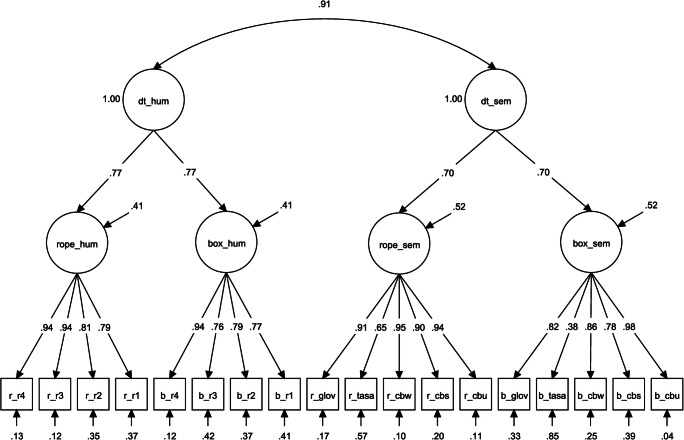
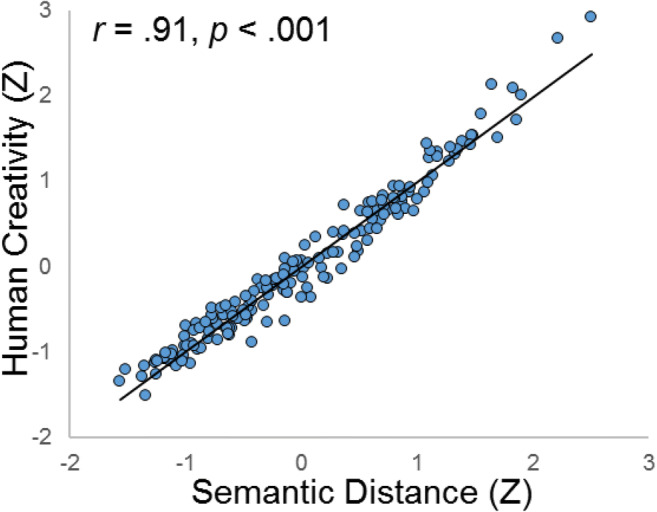
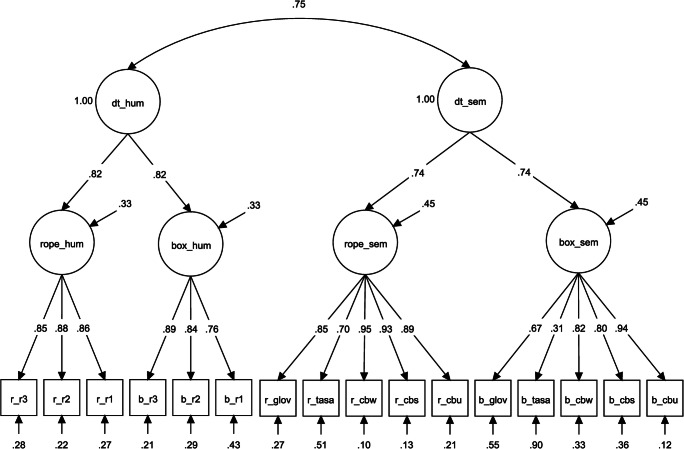
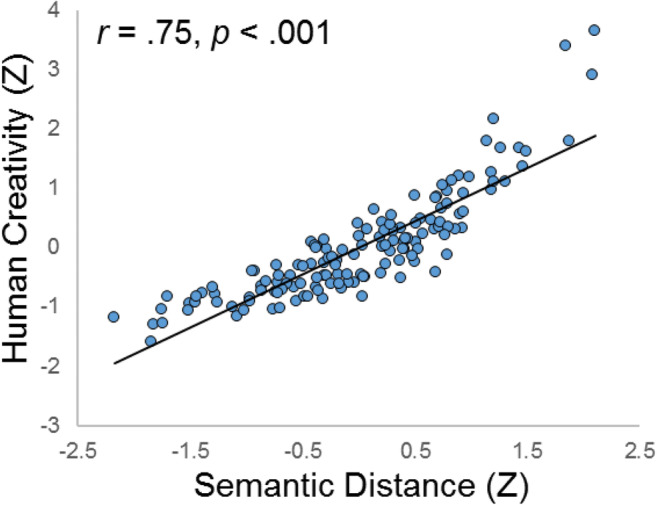
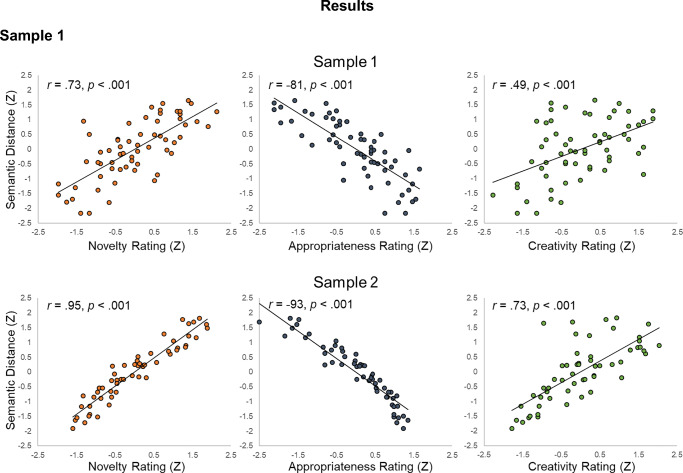
Creativity research requires assessing the quality of ideas and products. In practice, conducting creativity research often involves asking several human raters to judge participants’ responses to creativity tasks, such as judging the novelty of ideas from the alternate uses task (AUT). Although such subjective scoring methods have proved useful, they have two inherent limitations—labor cost (raters typically code thousands of responses) and subjectivity (raters vary on their perceptions and preferences)—raising classic psychometric threats to reliability and validity. We sought to address the limitations of subjective scoring by capitalizing on recent developments in automated scoring of verbal creativity via semantic distance, a computational method that uses natural language processing to quantify the semantic relatedness of texts. In five studies, we compare the top performing semantic models (e.g., GloVe, continuous bag of words) previously shown to have the highest correspondence to human relatedness judgements. We assessed these semantic models in relation to human creativity ratings from a canonical verbal creativity task (AUT; Studies 1–3) and novelty/creativity ratings from two word association tasks (Studies 4–5). We find that a latent semantic distance factor—comprised of the common variance from five semantic models—reliably and strongly predicts human creativity and novelty ratings across a range of creativity tasks. We also replicate an established experimental effect in the creativity literature (i.e., the serial order effect) and show that semantic distance correlates with other creativity measures, demonstrating convergent validity. We provide an open platform to efficiently compute semantic distance, including tutorials and documentation ( https://osf.io/gz4fc/ ).
Overview
The claims and statistics of this paper haven’t been checked yet.
Run the check — free, no account needed. It reads the open-access text and checks the sources it cites.
Integrity signals
Registry
Cites
Statistics
Figures
Verification
Claims the paper makes
The claims and statistics of this paper haven’t been checked yet.
Run the check — free, no account needed. It reads the open-access text and checks the sources it cites.
Claims other papers make about this one
Each is checked against this paper’s own text: does it say what the citing paper says it does?
In the citing paper
“we investigate originality primarily by means of semantic similarity, using a well-performing sentence embedding model [72] whose direct predecessors [70] have been found to agree well with human judgments of originality in creativity research [6, 26].”
From Homogenization Effects of Large Language Models on Human Creative Ideation (2024) · cites this paper as [6]
In the citing paper
“a metric which has been found to agree well with human judgments of semantic similarity [6, 26].”
From Homogenization Effects of Large Language Models on Human Creative Ideation (2024) · cites this paper as [6]
Self-check
Percentages, sums and reported differences re-computed from the paper’s own numbers.
The self-check needs the paper’s full text.
Citations
Cites
(1998) · Cited by 36,049
Glove: Global Vectors for Word Representation
Pennington, J., Socher, R., & Manning, C. (2014) · Proceedings of the 2014 Conference on Empirical Methods in Natural Language Processing (EMNLP) · doi:10.3115/v1/d14-1162 · Cited by 34,071
lavaan : An R Package for Structural Equation Modeling
Rosseel, Y. (2012) · Journal of Statistical Software · doi:10.18637/jss.v048.i02 · Cited by 27,955
Distributed Representations of Words and Phrases and their Compositionality
Mikolov, T., Sutskever, I., Chen, K., Corrado, G., & Dean, J. (2013) · arXiv · doi:10.48550/arxiv.1310.4546 · Cited by 24,533
An introduction to latent semantic analysis
Landauer, T. K., Foltz, P. W., & Laham, D. (1998) · Discourse Processes · doi:10.1080/01638539809545028 · Cited by 4,880
The associative basis of the creative process.
Mednick, S. (1962) · Psychological Review · doi:10.1037/h0048850 · Cited by 4,140
The social psychology of creativity: A componential conceptualization.
Amabile, T. M. (1983) · Journal of Personality and Social Psychology · doi:10.1037/0022-3514.45.2.357 · Cited by 4,034
Thurstone, L. L. (1973) · Springer eBooks · doi:10.1007/978-94-011-6129-9_8 · Cited by 2,126
(2011) · Cited by 2,025
Psychometric Properties of the HEXACO Personality Inventory
Lee, K., & Ashton, M. C. (2004) · Multivariate Behavioral Research · doi:10.1207/s15327906mbr3902_8 · Cited by 1,961
Research works printed but not linked: 2
- Cattell, R. B., & Cattell, A. K. S. (1961/2008). Measuring intelligence with the Culture Fair Tests. Oxford, UK: Hogrefe.
- Cattell, R. B., & Cattell, A. (1973). Measuring intelligence with the culture fair tests. Institute for Personality and Ability Testing. Champaign Ill.: Institute for Personality and Ability Testing.
Cited by
Sorted by citations
Items 101–200 of 342
Koutstaal, W., Brown, L., Lu, K., & Posson, K. (2024) · Creativity Research Journal · doi:10.1080/10400419.2023.2300575 · Cited by 14
Mapping the Memory Structure of High-Knowledge Students: A Longitudinal Semantic Network Analysis
Luchini, S. A., Wang, S., Kenett, Y. N., & Beaty, R. E. (2024) · Journal of Intelligence · doi:10.3390/jintelligence12060056 · Cited by 17
Self-citationA Rule-Based Approach for Mining Creative Thinking Patterns from Big Educational Data
Shabani, N., Beheshti, A., Farhood, H., Bower, M., Garrett, M. J., & Alinejad‐Rokny, H. (2023) · AppliedMath · doi:10.3390/appliedmath3010014 · Cited by 14
Reilly, J. J., Finley, A. M., Litovsky, C. P., & Kenett, Y. N. (2023) · Journal of Experimental Psychology General · doi:10.1037/xge0001389 · Cited by 15
Moon, K., Green, A. E., & Kushlev, K. (2024) · PsyArXiv (OSF Preprints) · doi:10.31234/osf.io/8p9wu · Cited by 17
CAP: The creativity assessment platform for online testing and automated scoring
Patterson, J. D., Pronchick, J., Panchanadikar, R., Fuge, M., van Hell, J. G., Miller, S. R., Johnson, D. R., & Beaty, R. E. (2025) · Behavior Research Methods · doi:10.3758/s13428-025-02761-9 · Cited by 13
Self-citationTowards Game-Based Assessment of Creative Thinking
Rafner, J. F., Wang, Q. J., Gadjacz, M., badtst, Baker, B. S., Bergenholtz, C., Biskjær, M. M., Bui, T., Carugati, A., de Cibeins, M., et al. (2023) · Creativity Research Journal · doi:10.1080/10400419.2023.2198845 · Cited by 13
Self-citationPlanning Missing Data Designs for Human Ratings in Creativity Research: A Practical Guide
Forthmann, B., Goecke, B., & Beaty, R. E. (2023) · Creativity Research Journal · doi:10.1080/10400419.2023.2250976 · Cited by 13
Self-citationNovelty Evaluation using Sentence Embedding Models in Open-ended Cocreative Problem-solving
Haq, I. U., Pifarré, M., & Fraca, E. (2024) · International Journal of Artificial Intelligence in Education · doi:10.1007/s40593-024-00392-3 · Cited by 13
Evaluation of poetic creativity: Predictors and the role of expertise—A multilevel approach.
Chaudhuri, S., Dooley, M., Johnson, D. R., Beaty, R. E., & Bhattacharya, J. (2024) · Psychology of Aesthetics Creativity and the Arts · doi:10.1037/aca0000649 · Cited by 12
Self-citationCropley, D. H., Theurer, C., Mathijssen, A. C. S., & Marrone, R. L. (2024) · Creativity Research Journal · doi:10.1080/10400419.2024.2339667 · Cited by 18
The DA VINCI Model for the Creative Thinking Process
Corazza, G. E., & Agnoli, S. (2022) · Creativity in the twenty first century · doi:10.1007/978-3-030-99674-1_4 · Cited by 13
The impact of knowledge on poetry composition: An fMRI investigation
He, R., Zhuang, K., Liu, L., Ding, K., Wang, X., Fu, L., Qiu, J., & Chen, Q. (2022) · Brain and Language · doi:10.1016/j.bandl.2022.105202 · Cited by 15
Large language models are homogeneously creative
Wenger, E., & Kenett, Y. N. (2026) · PNAS Nexus · doi:10.1093/pnasnexus/pgag042 · Cited by 100
Using large language models to evaluate alternative uses task flexibility score
Hadas, E., & Hershkovitz, A. (2024) · Thinking Skills and Creativity · doi:10.1016/j.tsc.2024.101549 · Cited by 22
Fine-Tuning ChatGPT for Automatic Scoring of Written Scientific Explanations in Chinese
Yang, J., Latif, E., He, Y., & Zhaı, X. (2025) · Journal of Science Education and Technology · doi:10.1007/s10956-025-10199-z · Cited by 12
Semantic Context Search in Creative Idea Generation
Johnson, D. R., & Hass, R. W. (2022) · The Journal of Creative Behavior · doi:10.1002/jocb.534 · Cited by 14
Self-citationGeorge, T., & Mielicki, M. K. (2022) · Thinking & Reasoning · doi:10.1080/13546783.2022.2066724 · Cited by 13
Promises and realities of artificial creativity
Medeiros, K. E., Marrone, R. L., Joksimovíc, S., Cropley, D. H., & Siemens, G. (2023) · Elsevier eBooks · doi:10.1016/b978-0-323-91841-1.00010-5 · Cited by 12
Creative abilities: Divergent thinking
Acar, S., & Runco, M. A. (2023) · Elsevier eBooks · doi:10.1016/b978-0-323-91840-4.00005-0 · Cited by 13
Automated Scoring of Open-Ended Question Complexity: A Large Language Model ApproachPreprint
Raz, T., Luchini, S. A., Beaty, R. E., & Kenett, Y. N. (2024) · Research Square · doi:10.21203/rs.3.rs-3890828/v1 · Cited by 12
Self-citationOrwig, W., Diez, I. P., Bueichekú, E., Vannini, P., Beaty, R. E., & Sepulcre, J. (2021) · Frontiers in Human Neuroscience · doi:10.3389/fnhum.2021.694274 · Cited by 12
Self-citationWeinstein, T. J., Ceh, S. M., Meinel, C., & Benedek, M. (2022) · Creativity Research Journal · doi:10.1080/10400419.2022.2124777 · Cited by 14
Toward greater computational modeling in neurocognitive creativity research.
Lloyd-Cox, J., Pickering, A. D., Beaty, R. E., & Bhattacharya, J. (2023) · Psychology of Aesthetics Creativity and the Arts · doi:10.1037/aca0000627 · Cited by 15
Self-citationEvaluating Creativity Support Tools via Homogenization Analysis
Anderson, B. R., Shah, J. H., & Kreminski, M. (2024) · CHI Conference Extended Abstracts on Human Factors in Computing Systems (CHI EA) · doi:10.1145/3613905.3651088 · Cited by 11
Wahbeh, H., Cannard, C., Yount, G. L., Arnaud Delorme, A., & Radin, D. I. (2024) · Journal of Creativity · doi:10.1016/j.yjoc.2024.100088 · Cited by 11
The role of alpha oscillations in free‐ and goal‐directed semantic associations
Ζιώγα, Ι., Kenett, Y. N., Giannopoulos, A., & Luft, C. D. B. (2024) · Human Brain Mapping · doi:10.1002/hbm.26770 · Cited by 12
Subjective valuation as a domain-general process in creative thinking
Battistello, G., Moreno-Rodriguez, S., Volle, E., & Lopez‐Persem, A. (2025) · Communications Psychology · doi:10.1038/s44271-025-00285-8 · Cited by 12
Reasoning outside the box: Divergent thinking is related to logical reasoning
de Chantal, P., & Markovits, H. (2022) · Cognition · doi:10.1016/j.cognition.2022.105064 · Cited by 11
Using word embeddings to investigate human psychology: Methods and applications
Bao, H., Zi-Xi, W. A. N. G., CHENG, X., Su, Z., Yang, Y., ZHANG, G.-Y., Wang, B., & Cai, H. (2023) · Advances in Psychological Science · doi:10.3724/sp.j.1042.2023.00887 · Cited by 11
Predicting openness to experience via a multiplex cognitive network approach
Samuel, G., Stella, M., Beaty, R. E., & Kenett, Y. N. (2023) · Journal of Research in Personality · doi:10.1016/j.jrp.2023.104369 · Cited by 12
Self-citationThe creative interplay between hand gestures, convergent thinking, and mental imagery
Hyusein, G., & Göksun, T. (2023) · PLoS ONE · doi:10.1371/journal.pone.0283859 · Cited by 11
Development of an exploratory creativity assessment scale
Chen, L., Song, Y., Sun, L., Childs, P., & Yin, Y. (2024) · International Journal of Design Creativity and Innovation · doi:10.1080/21650349.2024.2319772 · Cited by 13
Indicators of verbal creative thinking: results of a Delphi panel
Martínez, O. L., Garrido, A. J. L., & Jara, M. I. D. V.-Y. (2024) · Frontiers in Psychology · doi:10.3389/fpsyg.2024.1397861 · Cited by 22
Scoring German Alternate Uses Items Applying Large Language Models
Saretzki, J., Knopf, T., Forthmann, B., Goecke, B., Jaggy, A., Benedek, M., & Weiss, S. (2025) · Journal of Intelligence · doi:10.3390/jintelligence13060064 · Cited by 11
Neural dynamics during the generation and evaluation of creative and non-creative ideas
Kenett, Y. N., Chrysikou, E. G., Bassett, D. S., & Thompson‐Schill, S. L. (2025) · Communications Biology · doi:10.1038/s42003-025-09018-3 · Cited by 10
Semantic Spaces Are Not Created Equal – How Should We Weigh Them in the Sequel?
Forthmann, B., Beaty, R. E., & Johnson, D. R. (2022) · European Journal of Psychological Assessment · doi:10.1027/1015-5759/a000723 · Cited by 11
Self-citationHow do the kids speak? Improving educational use of text mining with child-directed language models
Organisciak, P., Newman, M., Eby, D., Acar, S., & Dumas, D. (2023) · Information and Learning Sciences · doi:10.1108/ils-06-2022-0082 · Cited by 14
Rominger, C., Fink, A., & Perchtold‐Stefan, C. M. (2024) · PLoS ONE · doi:10.1371/journal.pone.0300121 · Cited by 10
Differential effects of semantic distance, distractor salience, and relations in verbal analogy
Jones, L. L., Kmiecik, M. J., Irwin, J. L., & Morrison, R. G. (2022) · Psychonomic Bulletin & Review · doi:10.3758/s13423-022-02062-8 · Cited by 10
Anderson, S., Cameron, C. D., & Beaty, R. E. (2023) · Creativity Research Journal · doi:10.1080/10400419.2023.2229649 · Cited by 11
Self-citationThampanichwat, C., Wongvorachan, T., Bunyarittikit, S., Chunhajinda, P., Phaibulputhipong, P., & Wongmahasiri, R. (2024) · Buildings · doi:10.3390/buildings14082508 · Cited by 11
Dedesko, S., Pendleton, J., Petrov, J., Coull, B. A., Spengler, J. D., & Allen, J. G. (2025) · Building and Environment · doi:10.1016/j.buildenv.2025.112531 · Cited by 9
Zhang, Y., Li, Y., Hu, W., Bai, H., & Lyu, Y. (2025) · Journal of Science Education and Technology · doi:10.1007/s10956-024-10195-9 · Cited by 13
Müller, M., & Montag, C. (2024) · Journal of Creativity · doi:10.1016/j.yjoc.2024.100081 · Cited by 12
Lim, A., Williams, B. J., & Bullock, B. (2024) · Creativity Research Journal · doi:10.1080/10400419.2024.2343508 · Cited by 8
Investigating the Validity Evidence of Automated Scoring Methods for Divergent Thinking Assessments
Saretzki, J., & Benedek, M. (2026) · Creativity Research Journal · doi:10.1080/10400419.2025.2607669 · Cited by 12
The Scientific Creative Thinking Test (SCTT): Reliability, Validity, and Automated Scoring
Beaty, R. E., Cortes, R. A., Luchini, S. A., Patterson, J. D., Forthmann, B., Baker, B. S., Barbot, B., Hardiman, M. M., & Green, A. E. (2026) · Creativity Research Journal · doi:10.1080/10400419.2026.2639038 · Cited by 12
Self-citationKoivisto, M., & Pallaris, C. (2024) · Consciousness and Cognition · doi:10.1016/j.concog.2024.103698 · Cited by 8
Antecedents and Outcomes of Innovation Capability: A Case of European Automotive Organizations
Ahmad, A. (2021) · Journal of Digitovation and Information System · doi:10.54433/jdiis.2021100001 · Cited by 8
The Effects of Environmental Scene and Body Posture on Embodied Strategies in Creative Thinking
Sargent, M. J., LePage, A., Kenett, Y. N., & Matheson, H. E. (2023) · Creativity Research Journal · doi:10.1080/10400419.2022.2160563 · Cited by 8
Creativity at rest: Exploring functional network connectivity of creative experts
Orwig, W., Setton, R., Diez, I. P., Bueichekú, E., Meyer, M. L., Tamir, D., Sepulcre, J., & Schacter, D. L. (2023) · Network Neuroscience · doi:10.1162/netn_a_00317 · Cited by 9
Investigating Lasting Effects of Real-Time Feedback on Originality and Evaluation Accuracy
de Chantal, P., Houde-Labrecque, C., Leblanc, M., & Organisciak, P. (2024) · Creativity Research Journal · doi:10.1080/10400419.2024.2441014 · Cited by 10
Divergent and convergent creativity relate to different aspects of semantic control
Krieger‐Redwood, K., Lanzoni, L., Alam, T. R. G., Jackson, R. L., Smallwood, J., & Jefferies, E. (2025) · Imaging Neuroscience · doi:10.1162/imag_a_00502 · Cited by 7
The Effect of Aging on Question-Asking, Divergent Thinking, and Problem-Solving Abilities
Raz, T., Diaz, M. T., & Kenett, Y. N. (2025) · Creativity Research Journal · doi:10.1080/10400419.2025.2498916 · Cited by 7
Maier, S., Schneider, M., & Feuerriegel, S. (2026) · CHI Conference on Human Factors in Computing Systems · doi:10.1145/3772318.3791185 · Cited by 26
Back to the basics: Abstract painting as an index of creativity
Bellaiche, L., Smith, A. P., Barr, N., Christensen, A. P., Williams, C., Ragnhildstveit, A., Schooler, J. W., Beaty, R. E., Chatterjee, A. K., & Seli, P. (2023) · Creativity Research Journal · doi:10.1080/10400419.2023.2243100 · Cited by 7
Self-citationGuentulle, V., Nussbaum, M., Castillo, F., Chiuminatto, P., Spector, J. M., & Rojas, M. (2024) · Thinking Skills and Creativity · doi:10.1016/j.tsc.2024.101636 · Cited by 7
Development and validation of interactive creativity task platform
Wu, C., Su, Y.-D., Chen, E., Chen, P.-Z., Chang, Y.-L., & Chen, H. (2022) · Frontiers in Psychology · doi:10.3389/fpsyg.2022.954946 · Cited by 7
Are the Verbal TTCT Forms Actually Interchangeable?
Grajzel, K., Dumas, D., & Acar, S. (2022) · The Journal of Creative Behavior · doi:10.1002/jocb.556 · Cited by 7
Creativity on tap? The effect of creativity anxiety under evaluative pressure
Bullock Muir, A., Tribe, B., & Forster, S. (2025) · Creativity Research Journal · doi:10.1080/10400419.2024.2330800 · Cited by 6
Grammenos, D., & Lubart, T. (2025) · Artificial Intelligence Review · doi:10.1007/s10462-025-11288-6 · Cited by 6
Automated Scoring of Question Complexity with Transformer Language Models
Raz, T., Luchini, S. A., Beaty, R. E., & Kenett, Y. N. (2025) · Thinking Skills and Creativity · doi:10.1016/j.tsc.2025.102090 · Cited by 21
Self-citationA conceptual graph-based model of creativity in learning
Paaßen, B., Dehne, J., Krishnaraja, S., Kovalkov, A., Gal, K., & Niels Pinkwart, C. (2022) · Frontiers in Education · doi:10.3389/feduc.2022.1033682 · Cited by 6
Dynamics of automatized measures of creativity: mapping the landscape to quantify creative ideation
Haq, I. U., & Pifarré, M. (2023) · Frontiers in Education · doi:10.3389/feduc.2023.1240962 · Cited by 12
Ding, G., He, Y., Yi, K., & Li, S. (2024) · Thinking Skills and Creativity · doi:10.1016/j.tsc.2024.101503 · Cited by 10
Emotion Induction Modulates Neural Dynamics Related to the Originality of Ideational Creativity
Khalil, R., Frühholz, S., & Godde, B. (2025) · Human Brain Mapping · doi:10.1002/hbm.70182 · Cited by 8
Kratochvíl, T., Lebedíková, M. Š., Vaculík, M., Procházka, J., & Lieberoth, A. (2025) · Learning and Individual Differences · doi:10.1016/j.lindif.2025.102708 · Cited by 5
Creativity supports learning through associative thinking
Luchini, S. A., Kaufman, J. C., Goecke, B., Wilhelm, O., Kenett, Y. N., Lei, D., Benedek, M., van Hell, J. G., & Beaty, R. E. (2025) · npj Science of Learning · doi:10.1038/s41539-025-00334-1 · Cited by 7
Self-citationMcDaniel, C., Habibi, A., & Kaplan, J. (2025) · Scientific Reports · doi:10.1038/s41598-025-09736-y · Cited by 5
Semantic memory and creative evaluation
Skurnik, A., Ackerman, R., & Kenett, Y. N. (2025) · BMC Psychology · doi:10.1186/s40359-025-03124-x · Cited by 7
Bellaiche, L., Horowitz, A. H., McClay, M., Bottary, R. M., Denis, D., Chen, C., Maes, P., & Seli, P. (2024) · Frontiers in Sleep · doi:10.3389/frsle.2024.1258345 · Cited by 5
Associative Thinking and Creative Ability in Older Adulthood
Cosgrove, A. L., Diaz, M. T., DiStefano, P. V., Kenett, Y. N., & Beaty, R. E. (2025) · Creativity Research Journal · doi:10.1080/10400419.2024.2443720 · Cited by 6
Self-citationAssessing naming errors using an automated machine learning approach.
Schnur, T. T., & Lei, C.-M. (2022) · Neuropsychology · doi:10.1037/neu0000860 · Cited by 5
Yang, X., Gebbing, P., Lankut, E., & Lattemann, C. (2023) · Creativity Research Journal · doi:10.1080/10400419.2023.2198300 · Cited by 6
Human and Machine Complementary Roles in Collaborative Evaluation of Creative Speech
Kalateh, S., Nikghadam-Hojjati, S., & Barata, J. (2024) · IFIP advances in information and communication technology · doi:10.1007/978-3-031-71739-0_4 · Cited by 5
The neural mechanisms of bilinguals’ creativity: A neuroimaging study
Yang, Y., Li, Y., & Gu, J. (2025) · Journal of Neurolinguistics · doi:10.1016/j.jneuroling.2025.101245 · Cited by 5
Gozzo, M., Woldendorp, M. K., & de Rooij, A. (2022) · Lecture notes of the Institute for Computer Sciences, Social Informatics and Telecommunications Engineering · doi:10.1007/978-3-030-95531-1_15 · Cited by 6
A Study on Psychometric Properties of Creativity Indices
Atakaya, M. A., Sak, U., & Ayas, M. B. (2022) · Creativity Research Journal · doi:10.1080/10400419.2022.2134550 · Cited by 5
Rataj, K., Kakuba, P., Mandera, P., & van Heuven, W. J. B. (2023) · PLoS ONE · doi:10.1371/journal.pone.0284801 · Cited by 6
Metareasoning: Theoretical and Methodological Developments
Ball, L. J., & Richardson, B. H. (2025) · Journal of Intelligence · doi:10.3390/jintelligence13010005 · Cited by 4
The Mad-genius controversy: Estimating the creativity of suicide poets via a dual model
Liu, Y., Luximon, A., Yang, Y., Li, X., & Song, Y. (2025) · Thinking Skills and Creativity · doi:10.1016/j.tsc.2025.101845 · Cited by 4
How Do Hackathons Foster Creativity? Towards Automated Evaluation of Creativity at Scale
Falk, J., Chen, Y., Rafner, J. F., Zhang, M., Bjerva, J., & Nolte, A. (2025) · CHI Conference on Human Factors in Computing Systems · doi:10.1145/3706598.3713447 · Cited by 6
Validating LLM-based alternative uses test scoring across ages
Hadas, E., Avital-Lev, B., & Hershkovitz, A. (2025) · Thinking Skills and Creativity · doi:10.1016/j.tsc.2025.102066 · Cited by 4
An integrated benchmark for verbal creativity testing of LLMs and humans
Dinu, A., & Florescu, A. M. (2024) · Procedia Computer Science · doi:10.1016/j.procs.2024.09.380 · Cited by 4
Li, S., Peng, K., Zhu, B., & Liu, F. (2024) · Education and Information Technologies · doi:10.1007/s10639-024-13215-8 · Cited by 4
Intelligent Assessment of Scientific Creativity by Integrating Data Augmentation and Pseudo-Labeling
Weng, W., Liu, C., Zhao, G., Song, L., & Zhang, X. (2025) · Information · doi:10.3390/info16090785 · Cited by 4
A meta-analysis of the relationship between semantic distance and creative thinking
Yadan, L. I., Ying, D. U., Cong, X. I. E., Chunyu, L. I. U., Yilong, Y. A. N. G., Yangping, L. I., & Qiu, J. (2022) · Advances in Psychological Science · doi:10.3724/sp.j.1042.2023.00519 · Cited by 4
Testing Computational Assessment of Idea Novelty in Crowdsourcing
Wang, K., Dong, B., & Ma, J. (2023) · Creativity Research Journal · doi:10.1080/10400419.2023.2187544 · Cited by 5
Natural Language Processing Algorithms for Divergent Thinking Assessment
Lee, H., Zhou, W., Bai, H., Meng, W., Zeng, T., Peng, K., Tong, S., & Kumada, T. (2023) · IEEE Eurasian Conference on Educational Innovation (ECEI) · doi:10.1109/ecei57668.2023.10105336 · Cited by 3
Measuring creativity in organizations: The multifaceted nature of creativity
Reiter‐Palmon, R., Murugavel, V. R., & Linnell, A. E. (2023) · Elsevier eBooks · doi:10.1016/b978-0-323-91840-4.00008-6 · Cited by 4
A New Dataset and Method for Creativity Assessment Using the Alternate Uses Task
Sun, L., Gu, H., Myers, R., & Yuan, Z. (2024) · Communications in computer and information science · doi:10.1007/978-981-97-0065-3_9 · Cited by 4
Assessing the Linguistic Creativity Domain of Last-Year Compulsory Secondary School Students
Pont, I., Sanz, Y. E., & Ezpeleta, A. M. (2024) · Education Sciences · doi:10.3390/educsci14020153 · Cited by 8
Enhancing creative divergent thinking in older adults with a semantic retrieval strategy
Dubec, L., Gerver, C. R., Dennis, N. A., & Beaty, R. E. (2024) · Aging Neuropsychology and Cognition · doi:10.1080/13825585.2024.2414855 · Cited by 4
Self-citationSequence Generation and Evaluation: A Novel Assessment of Musical Creativity
Loui, P., Parrish, C., Wu, X., Lee, J., & Margulis, E. H. (2024) · Creativity Research Journal · doi:10.1080/10400419.2024.2425494 · Cited by 5
Stochel, J. F., & Sandberg, C. (2025) · Journal of Neuropsychology · doi:10.1111/jnp.12424 · Cited by 4
Automated Graphic Divergent Thinking Assessment: A Multimodal Machine Learning Approach
Zhang, H. Q., Dong, H., Wang, Y., Zhang, X., Fan, Y., Ren, B., & Xu, J. (2025) · Journal of Intelligence · doi:10.3390/jintelligence13040045 · Cited by 4
Bieth, T., Lopez‐Persem, A., Ovando‐Tellez, M., Urbanski, M., & Emmanuelle Volle, C. (2021) · Springer eBooks · doi:10.1007/978-3-030-75071-8_20 · Cited by 4
Loose and Tight: Creative Formation but Rigid Use of Nominal Compounds in Conspiracist Texts
Miani, A., van der Plas, L., & Bangerter, A. (2024) · The Journal of Creative Behavior · doi:10.1002/jocb.633 · Cited by 4
Measuring up: aligning creativity assessment with the Standards
Dumas, D., & Grajzel, K. (2024) · Edward Elgar Publishing eBooks · doi:10.4337/9781839102158.00007 · Cited by 4
Metadata
- Authors
- Beaty, R. E., & Johnson, D. R.
- Affiliations
- Pennsylvania State University (US)
- Washington and Lee University (US)
- Corresponding author
- Beaty, Roger E.
- Johnson, Dan R.
- Venue
- Behavior Research Methods
- Published
- 2020-08-31
- Volume
- 53
- Issue
- 2
- Pages
- 757-780
- ISSN
- 1554-351X (ISSN-L)
- 1554-3528
- PMC
- PMC8062332
- OpenAlex
- W3081924543
- Cited by
- 341
- References
- 96
- Citations by year
- 2026: 57 · 2025: 66 · 2024: 79 · 2023: 58 · 2022: 54 · 2021: 23 · 2020: 4
- FWCI
- 33.62
- Type
- journal article
- Language
- en
- Open access
- hybrid
- doi.org
- Locations
- Behavior Research Methods (publishedVersion, cc-by)
- PubMed Central (publishedVersion, cc-by)
- PubMed (publishedVersion)
- PsyArXiv (OSF Preprints) (submittedVersion, cc-by)
- PsyArXiv (OSF Preprints) (submittedVersion)
- Funders
- National Science Foundation (1920653)
- Topics
- Social Sciences › Psychology › Experimental and Cognitive Psychology › Creativity in Education and Neuroscience
- Physical Sciences › Computer Science › Artificial Intelligence › Topic Modeling
- Social Sciences › General Social Sciences › Computational and Text Analysis Methods
- Keywords
- creativity assessment, semantic distance, alternative uses task, word association task, automated grading, semantic relatedness, gloves, CBOW, serial order effects, convergent validity, open platform
- MeSH terms
- Creativity, Humans, Psychometrics, Semantics, Reproducibility of Results
About these checks
Registry, retraction, Cites and statistics results are computed, not judged, with one exception: a printed reference that no index lists is read once by a model before it counts as a citation error. Claims are extracted by a model and kept only when their quote appears verbatim in the text; each cited source is then checked, with a model’s help, for whether it says what the claim relies on. Those verdicts can be wrong — read the claim’s quote and the cited source before relying on one.
Statistics and arithmetic are recomputed, not judged.
Confidence bands are shown only for fields calibrated on our annotated test set. None is calibrated yet, so no band is shown.
What counts as a claim ›How we measure confidence ›How we check this ›
Are you an author, or do you see a problem with this page? Request a review
