

The DOI matches its Crossref record; 47 of the 48 references it cites were found in a registry or an index.
Proinflammatory effects of S100A8/A9 via TLR4 and RAGE signaling pathways in BV-2 microglial cells
Open accessAbstract
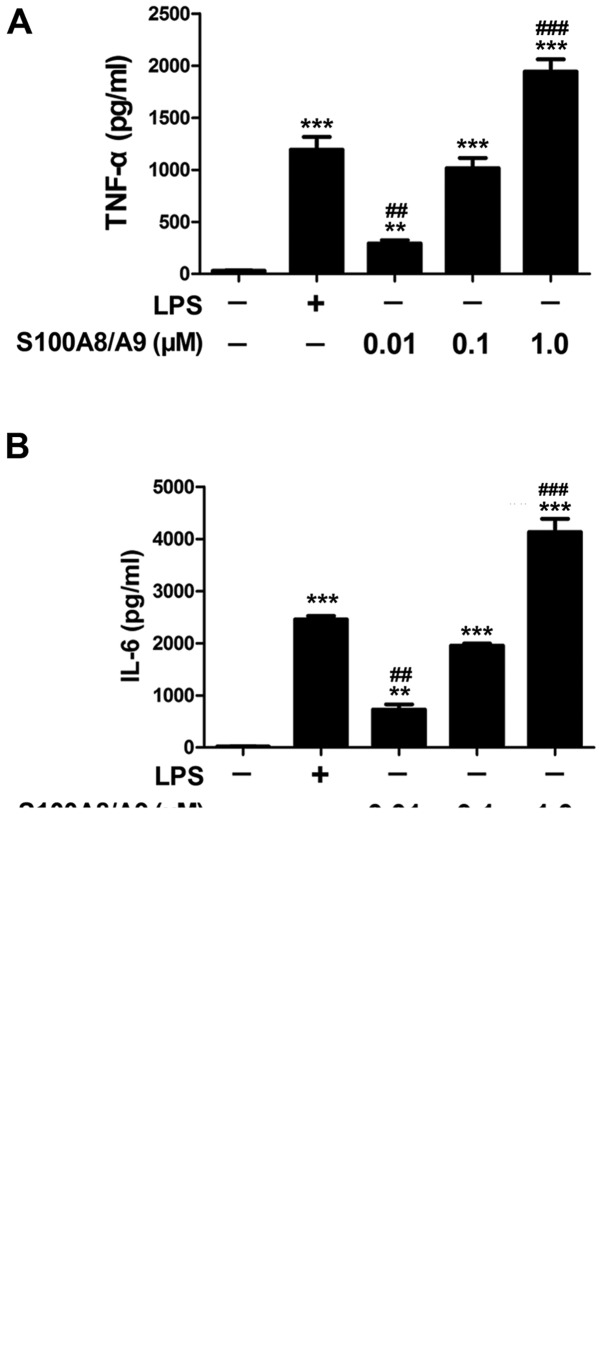
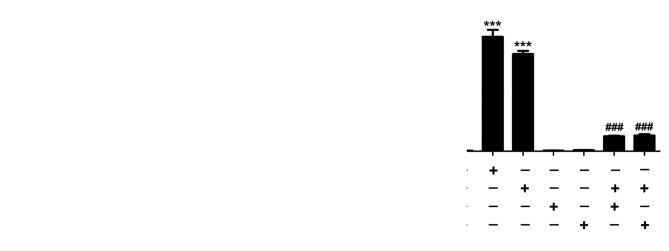
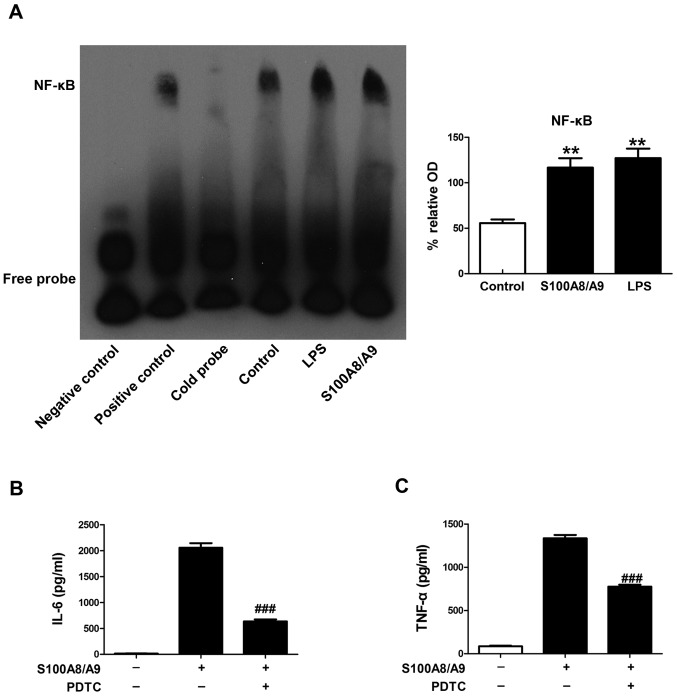
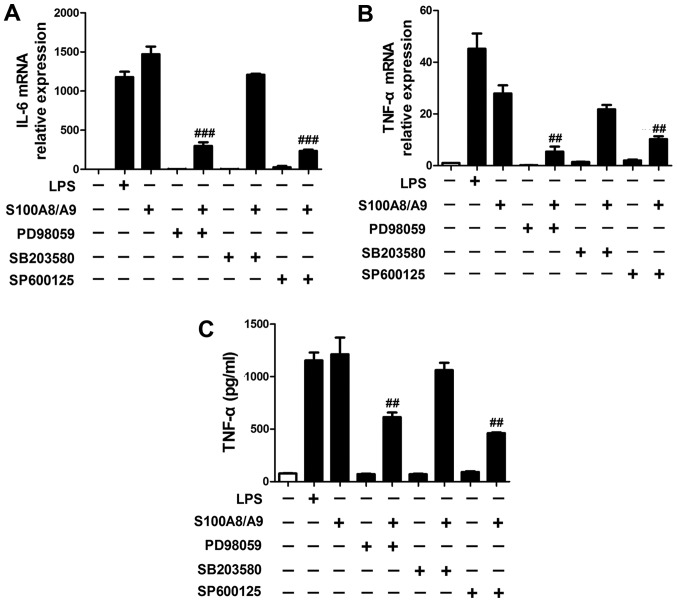
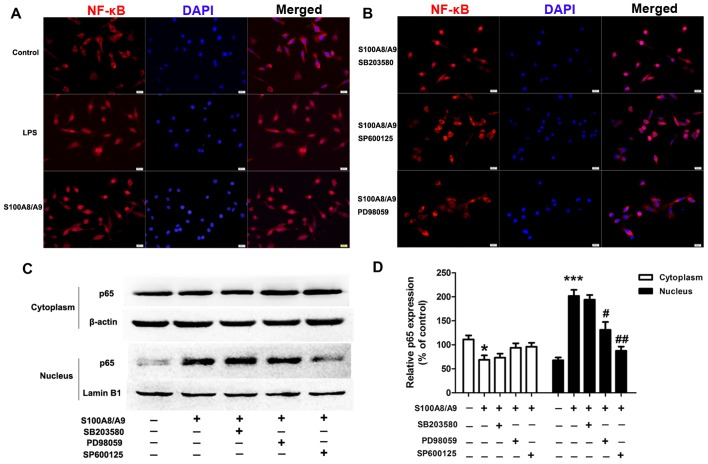
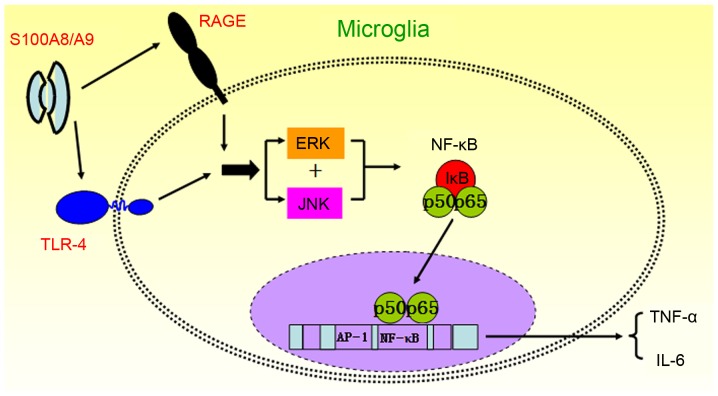
S100A8/A9, a heterodimer of the two calcium-binding proteins S100A8 and S100A9, has emerged as an important proinflammatory mediator in acute and chronic inflammation. However, whether S100A8/A9 is implicated in microglial‑induced neuroinflammatory response remains unclear. Here, we found that S100A8/A9 significantly increased the secretion of proinflammatory cytokines inclu-ding tumor necrosis factor-α (TNF-α) and interleukin-6 (IL-6) in cultured BV-2 microglial cells. Inhibition of the Toll-like receptor 4 (TLR4) and the receptor for advanced glycation end-products (RAGE) with C225 and a RAGE-blocking antibody, respectively significantly reduced the secretion of TNF-α and IL-6 from S100A8/A9-stimulated BV-2 microglial cells. Furthermore, S100A8/A9 markedly enhanced the nuclear translocation of NF-κB p65 and the DNA-binding activities of NF-κB in BV-2 microglial cells, and suppression of ERK and JNK/MAPK signaling pathways by PD98059 or SP600125 significantly inhibited NF-κB activity and the release of TNF-α and IL-6 in the S100A8/A9-treated BV-2 microglial cells. Our data also showed that inhibition of NF-κB with pyrrolidine dithiocarbamate (PDTC) significantly reduced the secretion of TNF-α and IL-6 from BV-2 microglial cells treated with S100A8/A9. Taken together, our data suggest that S100A8/A9 acts directly on BV-2 microglial cells via binding to TLR4 and RAGE on the membrane and then stimulates the secretion of proinflammatory cytokines through ERK and JNK-mediated NF-κB activity in BV-2 microglial cells. Targeting S100A8/A9 may provide a novel therapeutic strategy in microglial-induced neuroinflammatory diseases.
Overview
The claims and statistics of this paper haven’t been checked yet.
Run the check — free, no account needed. It reads the open-access text and checks the sources it cites.
Integrity signals
Registry
Cites
Statistics
Figures
Verification
Claims the paper makes
The claims and statistics of this paper haven’t been checked yet.
Run the check — free, no account needed. It reads the open-access text and checks the sources it cites.
Claims other papers make about this one
Each is checked against this paper’s own text: does it say what the citing paper says it does?
In the citing paper
“Tau-dependent microglial activation can enhance secretion of pro-inflammatory cytokines such as IL-1β, IL-6, and TNF-α [421–423].”
From Molecular and cellular mechanisms underlying the pathogenesis of Alzheimer’s disease (2020) · cites this paper as [422]
Self-check
Percentages, sums and reported differences re-computed from the paper’s own numbers.
The self-check needs the paper’s full text.
Citations
Cites
RAGE Mediates a Novel Proinflammatory Axis
Hofmann, M. A., Drury, S., Fu, C., Qu, W., Taguchi, A., Lu, Y., Avila, C., Kambham, N., Bierhaus, A., Nawroth, P., et al. (1999) · Cell · doi:10.1016/s0092-8674(00)80801-6 · Cited by 1,864 · cited 1×
“Previous studies have shown that activated microglia express high levels of TLR4 and RAGE in response to neuroinflammation (9-12).”
BackgroundNeumar, R. W., Nolan, J. P., Adrie, C., Aibiki, M., Berg, R. A., Böttiger, B. W., Callaway, C. W., Clark, R. S. B., Geocadin, R. G., Jauch, E. C., et al. (2008) · Circulation · doi:10.1161/circulationaha.108.190652 · Cited by 1,460 · cited 1×
“Microglial activation plays a pivotal role during the development and progression of neurodegenerative diseases based on its great capacity for secreting proinflammatory cytokines, such as tumor necrosis factor‑ α (TNF-α ) and interleukin‑6 (IL‑6), resulting in acute inflammation (13).”
BackgroundVogl, T., Tenbrock, K., Ludwig, S., Leukert, N., Ehrhardt, C., van Zoelen, M. A. D., Nacken, W., Foell, D., van der Poll, T., Sorg, C., et al. (2007) · Nature Medicine · doi:10.1038/nm1638 · Cited by 1,418 · cited 1×
“Recently, S100A8/A9, as the endogenous activator of TLR4 signaling, promotes lethal endotoxin‑induced shock (6).”
BackgroundUnderstanding RAGE, the receptor for advanced glycation end products
Bierhaus, A., Humpert, P. M., Morcos, M., Wendt, T., Chavakis, T., Arnold, B., Stern, D. M., & Nawroth, P. P. (2005) · Journal of Molecular Medicine · doi:10.1007/s00109-005-0688-7 · Cited by 1,297
Treatment of Septic Shock with the Tumor Necrosis Factor Receptor:Fc Fusion Protein
Fisher, C. J., Agosti, J. M., Opal, S. M., Lowry, S. F., BALK, R. A., SADOFF, J. C., Abraham, E. H., Schein, R. M. H., & Benjamin, E. (1996) · New England Journal of Medicine · doi:10.1056/nejm199606273342603 · Cited by 1,239 · cited 1×
“More studies also demonstrated that major risk factors for sepsis, systemic inflammatory response syndrome and septic shock are related to TNF‑ α ‑independent mechanisms (45,46).”
BackgroundLehnardt, S., Massillon, L., Follett, P., Jensen, F. E., Ratan, R., Rosenberg, P. A., Volpe, J. J., & Vartanian, T. (2003) · Proceedings of the National Academy of Sciences · doi:10.1073/pnas.1432609100 · Cited by 1,052 · cited 1×
“Thus, our data, which demonstrated that S100A8/A9 contributed to inflammation via TLR4, further revealed that neuroinflammation and ischemic brain injury is modulated by TLR4 (39-41).”
BackgroundNF-kB: a crucial transcription factor for glial and neuronal cell function
O'Neill, L. A. J., & Kaltschmidt, C. (1997) · Trends in Neurosciences · doi:10.1016/s0166-2236(96)01035-1 · Cited by 1,013
Intracellular and extracellular roles of S100 proteins
Donato, R. (2003) · Microscopy Research and Technique · doi:10.1002/jemt.10296 · Cited by 974 · cited 1×
“Previous studies have shown that activated microglia express high levels of TLR4 and RAGE in response to neuroinflammation (9-12).”
BackgroundEhrchen, J. M., Sunderkötter, C. H., Foell, D., Vogl, T., & Roth, J. (2009) · Journal of Leukocyte Biology · doi:10.1189/jlb.1008647 · Cited by 869 · cited 2×
“…the S100A8/A9 heterodimers are associ-/A9 heterodimers are associ-A9 heterodimers are associated with the pathogenesis of various diseases, and coupled with an inflammatory component, which is primarily released from activated or necrotic neutrophils and monocytes/macro-/macro-macro-phages (1,2).”
BackgroundRyckman, C., Vandal, K., Rouleau, P., Talbot, M., & Tessier, P. A. (2003) · The Journal of Immunology · doi:10.4049/jimmunol.170.6.3233 · Cited by 861 · cited 1×
“As an endogenous ligand of TLR4 and RAGE (14), S100A8/A9 also amplifies the production of proinflammatory cytokines and contributes to CNS injury (2,15).”
BackgroundRammes, A., Roth, J., Goebeler, M., Klempt, M., Hartmann, M., & Sorg, C. (1997) · Journal of Biological Chemistry · doi:10.1074/jbc.272.14.9496 · Cited by 547 · cited 1×
“This strategy may be very specific, as both proteins are secreted via a so‑called ‘alternative’ pathway (47).”
BackgroundThe apoptotic signaling pathway activated by Toll‐like receptor‐2
Aliprantis, A. O., Yang, R., Weiss, D. S., Godowski, P., & Zychlinsky, A. (2000) · The EMBO Journal · doi:10.1093/emboj/19.13.3325 · Cited by 502 · cited 1×
“TLR4 signaling has been confirmed to result in the activation of NF-κ B, and subsequently drives the transcriptional abundance of proinflammatory signals, which then activates the innate immune system and produces tissue destruction (35-38).”
BackgroundPhagocyte-specific S100 proteins: a novel group of proinflammatory molecules
Roth, J., Vogl, T., Sorg, C., & Sunderkötter, C. H. (2003) · Trends in Immunology · doi:10.1016/s1471-4906(03)00062-0 · Cited by 387 · cited 1×
“Previous studies have shown that activated microglia express high levels of TLR4 and RAGE in response to neuroinflammation (9-12).”
BackgroundToll‐like receptors in central nervous system glial inflammation and homeostasis
Kielian, T. (2006) · Journal of Neuroscience Research · doi:10.1002/jnr.20767 · Cited by 373 · cited 1×
“TLR4 signaling has been confirmed to result in the activation of NF-κB, and subsequently drives the transcriptional abundance of proinflammatory signals, which then activates the innate immune system and produces tissue destruction (35-38).”
BackgroundVascular and inflammatory stresses mediate atherosclerosis via RAGE and its ligands in apoE–/– mice
Harja, E., Bu, D.-X., Hudson, B. I., Chang, J. S., Shen, X., Hallam, K. M., Kalea, A. Z., Lu, Y., Rosario, R., Oruganti, S., et al. (2008) · Journal of Clinical Investigation · doi:10.1172/jci32703 · Cited by 365
Björk, P., Björk, A., Vogl, T., Stenström, M., Liberg, D., OLSSON, A. G., Roth, J., Ivars, F., & Leanderson, T. (2009) · PLoS Biology · doi:10.1371/journal.pbio.1000097 · Cited by 357
Nacken, W. K. F., Roth, J., Sorg, C., & Kerkhoff, C. (2003) · Microscopy Research and Technique · doi:10.1002/jemt.10299 · Cited by 346 · cited 1×
“…the S100A8/A9 heterodimers are associ-/A9 heterodimers are associ-A9 heterodimers are associated with the pathogenesis of various diseases, and coupled with an inflammatory component, which is primarily released from activated or necrotic neutrophils and monocytes/macro-/macro-macro-phages (1,2).”
BackgroundSunahori, K., Yamamura, M., Yamana, J., Takasugi, K., Kawashima, M., Yamamoto, H., Chazin, W., Nakatani, Y., Yui, S., & Makino, H. (2006) · Arthritis Research & Therapy · doi:10.1186/ar1939 · Cited by 324
Systemic infection, inflammation and acute ischemic stroke
McColl, B. W., Allan, S. M., & Rothwell, N. J. (2008) · Neuroscience · doi:10.1016/j.neuroscience.2008.08.019 · Cited by 319 · cited 1×
“TLR4, which is mainly expressed in microglia, mediates microglial activation and the expression of proinflammatory mediators in response to a variety of ligands (34).”
BackgroundViemann, D., Strey, A., Janning, A., Jurk, K., Klimmek, K., Vogl, T., Hirono, K., Ichida, F., Foell, D., Kehrel, B. E., et al. (2004) · Blood · doi:10.1182/blood-2004-07-2520 · Cited by 316
Ghavami, S., Rashedi, I., Dattilo, B. M., Eshraghi, M., Chazin, W., Hashemi, M. M., Wesselborg, S., Kerkhoff, C., & Łoś, M. (2008) · Journal of Leukocyte Biology · doi:10.1189/jlb.0607397 · Cited by 312 · cited 2×
“Previous studies have shown that activated microglia express high levels of TLR4 and RAGE in response to neuroinflammation (9-12).”
BackgroundRAGE, carboxylated glycans and S100A8/A9 play essential roles in colitis-associated carcinogenesis
Turovskaya, O., Foell, D., Sinha, P., Vogl, T., Newlin, R., Nayak, J., Nguyen, M. T. X., Olsson, A., Nawroth, P. P., Bierhaus, A., et al. (2008) · Carcinogenesis · doi:10.1093/carcin/bgn188 · Cited by 300
Boyd, J. H., Kan, B., Roberts, H., Wang, Y., & Walley, K. R. (2008) · Circulation Research · doi:10.1161/circresaha.107.167544 · Cited by 292 · cited 1×
“Boyd et al also demonstrated that activated TLR4 gives rise to an upregulation of S100A8/A9 expression earlier in cardiomyocytes (19).”
BackgroundȘchiopu, A., & Cotoi, O. S. (2013) · Mediators of Inflammation · doi:10.1155/2013/828354 · Cited by 273 · cited 4×
“Previous studies have shown that activated microglia express high levels of TLR4 and RAGE in response to neuroinflammation (9-12).”
BackgroundInfluentialHermani, A., DESERVI, B., Medunjanin, S., Tessier, P. A., & Mayer, D. (2005) · Experimental Cell Research · doi:10.1016/j.yexcr.2005.10.013 · Cited by 262 · cited 1×
“When S100A8/A9 was overexpressed in prostate cancer cells, NF-κ B and MAPK also remained activated (43).”
BackgroundToll-like receptor signaling in endogenous neuroprotection and stroke
Marsh, B. J., Williams-Karnesky, R. L., & Stenzel‐Poore, M. P. (2008) · Neuroscience · doi:10.1016/j.neuroscience.2008.07.067 · Cited by 259 · cited 1×
“Thus, our data, which demonstrated that S100A8/A9 contributed to inflammation via TLR4, further revealed that neuroinflammation and ischemic brain injury is modulated by TLR4 (39-41).”
BackgroundInhibition of Toll-like Receptor and Cytokine Signaling—A Unifying Theme in Ischemic Tolerance
Karikó, K., Weissman, D., & Welsh, F. A. (2004) · Journal of Cerebral Blood Flow & Metabolism · doi:10.1097/01.wcb.0000145666.68576.71 · Cited by 258 · cited 1×
“TLR4 signaling has been confirmed to result in the activation of NF-κB, and subsequently drives the transcriptional abundance of proinflammatory signals, which then activates the innate immune system and produces tissue destruction (35-38).”
BackgroundNF-κB in the Survival and Plasticity of Neurons
Mattson, M. P. (2005) · Neurochemical Research · doi:10.1007/s11064-005-6961-x · Cited by 254
Ehlermann, P., Eggers, K. M., Bierhaus, A., Most, P., Weichenhan, D., Greten, H. J., Nawroth, P. P., Katus, H. A., & Remppis, A. (2006) · Cardiovascular Diabetology · doi:10.1186/1475-2840-5-6 · Cited by 201
Manderson, A. P., Kay, J. G., Hammond, L. A., Brown, D. L., & Stow, J. L. (2007) · The Journal of Cell Biology · doi:10.1083/jcb.200612131 · Cited by 198 · cited 1×
“Activated macrophages and microglia release an array of proinflammatory cytokines, including TNF‑ α and IL‑6, which play important roles in neuroinflammation (27,28).”
BackgroundExpression and distribution of Toll‐like receptors in the brain during murine neurocysticercosis
Mishra, B. B., Mishra, P. K., & Teale, J. M. (2006) · Journal of Neuroimmunology · doi:10.1016/j.jneuroim.2006.07.019 · Cited by 165 · cited 1×
“TLR4 signaling has been confirmed to result in the activation of NF-κ B, and subsequently drives the transcriptional abundance of proinflammatory signals, which then activates the innate immune system and produces tissue destruction (35-38).”
BackgroundPathologies Involving the S100 Proteins and Rage
Heizmann, C. W., Ackermann, G. E., & Galichet, A. (2007) · Springer eBooks · doi:10.1007/978-1-4020-6191-2_5 · Cited by 161 · cited 1×
“However, S100A8/A9 not only activates TLR-4, but also RAGE (42).”
BackgroundInflammatory S100A9 and S100A12 proteins in Alzheimer's disease
Shepherd, C. E., Goyette, J., Utter, V., Rahimi, F., Yang, Z., Geczy, C. L., & Halliday, G. M. (2006) · Neurobiology of Aging · doi:10.1016/j.neurobiolaging.2005.09.033 · Cited by 161
TLR-4 deficiency protects against focal cerebral ischemia and axotomy-induced neurodegeneration
Kılıç, Ü., Kılıç, E., Matter, C. M., Bassetti, C. L., & Hermann, D. M. (2008) · Neurobiology of Disease · doi:10.1016/j.nbd.2008.03.002 · Cited by 159 · cited 1×
“Thus, our data, which demonstrated that S100A8/A9 contributed to inflammation via TLR4, further revealed that neuroinflammation and ischemic brain injury is modulated by TLR4 (39-41).”
BackgroundClark, M. A., Plank, L. D., Connolly, A. B., Streat, S., Hill, A. A. V., Gupta, R., Monk, D. N., Shenkin, A., & Hill, G. L. (1998) · Critical Care Medicine · doi:10.1097/00003246-199810000-00016 · Cited by 125 · cited 2×
“However, it was confirmed that a monoclonal antibody to TNF-α given early in the course of severe sepsis has a harmful rather than a beneficial consequence in clinical trials of human sepsis (46).”
BackgroundEngel, S., Schluesener, H. J., Mittelbronn, M. G. A., Seid, K., Adjodah, D., Wehner, H. D., & Meyermann, R. (2000) · Acta Neuropathologica · doi:10.1007/s004019900172 · Cited by 121
Césaro, A., Anceriz, N., Plante, A., Pagé, N., Tardif, M. R., & Tessier, P. A. (2012) · PLoS ONE · doi:10.1371/journal.pone.0045478 · Cited by 116
Immunomodulation in psoriatic arthritis: Focus on cellular and molecular pathways
Chimenti, M. S., Ballanti, E., Perricone, C., Cipriani, P., Giacomelli, R., & Perricone, R. (2012) · Autoimmunity Reviews · doi:10.1016/j.autrev.2012.10.002 · Cited by 102
Li, Y., Wu, Y., Ren, X., Liu, Q., Wang, J., & Liu, X. (2013) · Molecular and Cellular Biochemistry · doi:10.1007/s11010-013-1854-9 · Cited by 99 · cited 7×
“To explore whether S100A8/A9in-duced secretion of proinflammatory cytokines including TNF-α and IL‑6 was through MAPK‑mediated activation of NF-κ B in BV‑2 microglial cells, a specific ERK inhibitor PD98059, p38 MAP kinase inhibitor SB203580 and JNK inhibitor SP600125 were used.”
BackgroundInfluentialActivation of Microglia by Histamine and Substance P
Zhu, J., Qu, C., Lü, X., & Zhang, S. (2014) · Cellular Physiology and Biochemistry · doi:10.1159/000363041 · Cited by 92
Resolvin D1 promotes the interleukin-4-induced alternative activation in BV-2 microglial cells
Li, L., Wu, Y., Wang, Y., Wu, J., Song, L., Xian, W., Yuan, S., Pei, L., & Shang, Y. (2014) · Journal of Neuroinflammation · doi:10.1186/1742-2094-11-72 · Cited by 81 · cited 2×
“Evidence has shown that the MAPK signaling pathway, such as JNK, p38 MAPK and ERK, play important roles in the activation of NF-κ B in microglial-induced inflammation (23,25,26).”
BackgroundMethodMrp-8 and -14 mediate CNS injury in focal cerebral ischemia
Ziegler, G., Prinz, V., Albrecht, M. W., Harhausen, D., Khojasteh, U., Nacken, W. K. F., Endres, M., Dirnagl, U., Nietfeld, W., & Trendelenburg, G. (2009) · Biochimica et Biophysica Acta (BBA) - Molecular Basis of Disease · doi:10.1016/j.bbadis.2009.10.003 · Cited by 64
Lee, Y., Jang, S., Min, J., Lee, K., Sohn, K., Lim, J.-S., Im, M., Lee, H.-E., Seo, Y., Kim, C. D., et al. (2012) · Biochemical and Biophysical Research Communications · doi:10.1016/j.bbrc.2012.05.162 · Cited by 58
RAGE-Dependent Regulation of Calcium-Binding Proteins S100A8 and S100A9 in Human THP-1
Eggers, K., Sikora, K., Lorenz, M., Taubert, T., Moobed, M., Baumann, G., Stangl, K., & Stangl, V. (2011) · Experimental and Clinical Endocrinology & Diabetes · doi:10.1055/s-0030-1268426 · Cited by 38 · cited 1×
“In regards to S100A8/A9 or other ligands, activated RAGE also leads to further enhancement of S100A8/A9 production, and creates a putative positive feedback loop in acute inflammation (29,44).”
BackgroundSalidroside Reduces Cell Mobility via NF‐κB and MAPK Signaling in LPS‐Induced BV2 Microglial Cells
Hu, H., Li, Z., Zhu, X., Lin, R., & Chen, L. (2014) · Evidence-based Complementary and Alternative Medicine · doi:10.1155/2014/383821 · Cited by 34 · cited 1×
“Evidence has shown that the MAPK signaling pathway, such as JNK, p38 MAPK and ERK, play important roles in the activation of NF-κ B in microglial-induced inflammation (23,25,26).”
BackgroundJeong, Y., Kim, Y., Song, H., Chung, Y. S., Park, S. B., & Kim, H.-S. (2014) · PLoS ONE · doi:10.1371/journal.pone.0087030 · Cited by 29
Ishihara, K., Namura, T., Murayama, H., Arai, S., Totani, M., & Ikemoto, M. (2009) · PubMed · Cited by 7
Cited by
Sorted by citations
Wang, S., Song, R., Wang, Z., Jing, Z., Wang, S., & Ma, J. (2018) · Frontiers in Immunology · doi:10.3389/fimmu.2018.01298 · Cited by 1,450
“In BV-2 microglia, S100A8/A9 stimulates the production of TNF-α and IL-6 through ERK/NF-κB and JNK/ NF-κB signaling (72).”
BackgroundMolecular and cellular mechanisms underlying the pathogenesis of Alzheimer’s disease
Guo, T., Zhang, D., Zeng, Y., Huang, T. Y., Xu, H., & Zhao, Y. (2020) · Molecular Neurodegeneration · doi:10.1186/s13024-020-00391-7 · Cited by 994
Calprotectin: from biomarker to biological function
Jukic, A., Bakiri, L., Wagner, E. F., Tilg, H., & Adolph, T. E. (2021) · Gut · doi:10.1136/gutjnl-2021-324855 · Cited by 500
Transcriptional and Translational Differences of Microglia from Male and Female Brains
Guneykaya, D., Ivanov, A., Hernandez, D. P., Haage, V., Wojtas, B., Meyer, N., Maricos, M., Jordan, P., Buonfiglioli, A., Gielniewski, B., et al. (2018) · Cell Reports · doi:10.1016/j.celrep.2018.08.001 · Cited by 477
Calprotectin (S100A8/S100A9): a key protein between inflammation and cancer
Shabani, F., Farasat, A., Mahdavi, M., & Gheibi, N. (2018) · Inflammation Research · doi:10.1007/s00011-018-1173-4 · Cited by 251
Metadata
- Authors
- Ma, L., Sun, P., Zhang, J.-C., Zhang, Q., & Yao, S.-L.
- Affiliations
- Wuhan Union Hospital (CN)
- Corresponding author
- Zhang, Qing
- Venue
- International Journal of Molecular Medicine
- Publisher
- Spandidos Publications
- Published
- 2017-05-12
- Volume
- 40
- Issue
- 1
- Pages
- 31-38
- ISSN
- 1107-3756 (ISSN-L)
- 1791-244X
- PMC
- PMC5466387
- OpenAlex
- W2613996502
- Cited by
- 196
- References
- 48
- Citations by year
- 2026: 23 · 2025: 32 · 2024: 30 · 2023: 35 · 2022: 23 · 2021: 11 · 2020: 19 · 2019: 10 · 2018: 10 · 2017: 2
- FWCI
- 4.58
- Type
- journal article
- Language
- en
- Open access
- hybrid
- doi.org
- Licence
- cc-by-nc-nd
- Locations
- International Journal of Molecular Medicine (publishedVersion, cc-by-nc-nd)
- Europe PMC (PubMed Central) (publishedVersion, other-oa)
- PubMed Central (publishedVersion, cc-by-nc-nd)
- PubMed (publishedVersion)
- Funders
- National Natural Science Foundation of China (81101401)
- Topics
- Life Sciences › Biochemistry, Genetics and Molecular Biology › Molecular Biology › S100 Proteins and Annexins
- Life Sciences › Neuroscience › Neurology › Neuroinflammation and Neurodegeneration Mechanisms
- Life Sciences › Biochemistry, Genetics and Molecular Biology › Clinical Biochemistry › Advanced Glycation End Products research
- Keywords
- S100A8/A9, microglia, neuroinflammation, TLR4, RAGE, NF-κB, ERK signaling, JNK signaling, TNF-α, interleukin-6, inflammatory cytokines, pyrrolidine dithiocarbamate, C225, BV-2 cells
- MeSH terms
- Receptor for Advanced Glycation End Products, Animals, Cell Line, Transformed, Inflammation, Signal Transduction, Cytokines, Microglia, Inflammation Mediators, Calgranulin A, Calgranulin B, Toll-Like Receptor 4, Mice
About these checks
Registry, retraction, Cites and statistics results are computed, not judged, with one exception: a printed reference that no index lists is read once by a model before it counts as a citation error. Claims are extracted by a model and kept only when their quote appears verbatim in the text; each cited source is then checked, with a model’s help, for whether it says what the claim relies on. Those verdicts can be wrong — read the claim’s quote and the cited source before relying on one.
Statistics and arithmetic are recomputed, not judged.
Confidence bands are shown only for fields calibrated on our annotated test set. None is calibrated yet, so no band is shown.
What counts as a claim ›How we measure confidence ›How we check this ›
Are you an author, or do you see a problem with this page? Request a review
