

The DOI matches its Crossref record; 95 of the 95 references it cites were found in a registry or an index.
Methionine-35 of A β (1–42): Importance for Oxidative Stress in Alzheimer Disease
Open accessAbstract
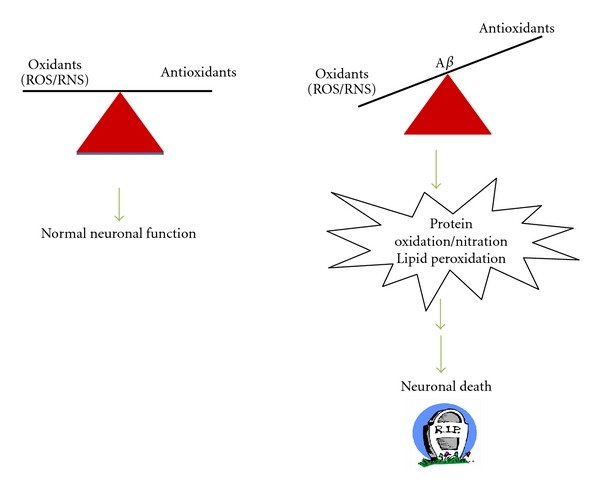
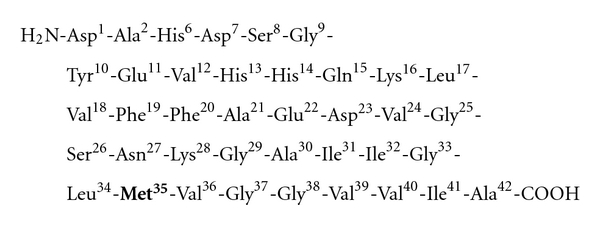
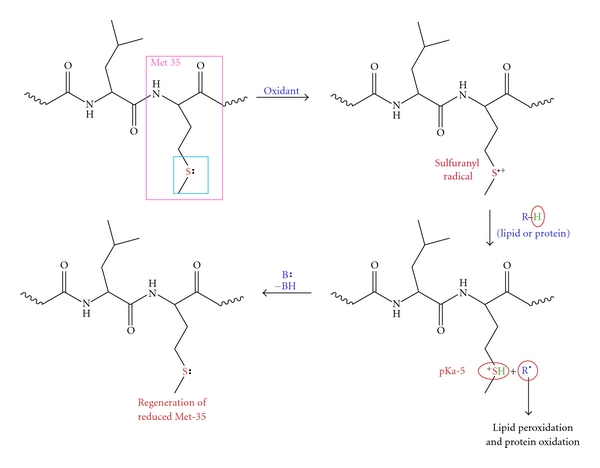
Alzheimer disease (AD) is an age-related progressive neurodegenerative disorder. This devastating disease is characterized by the presence of senile plaques (SP), neurofibrillary tangles (NFTs), and loss of synapses. Amyloid beta-peptide 1–42 (A β (1–42)) is the main component of SP and is pivotal to AD pathogenesis. Brain of subjects with AD and arguably its earliest manifestation, mild cognitive impairment (MCI), demonstrate increased levels of oxidative stress markers. Our laboratory combined these two aspects of AD and MCI and proposed the A β (1–42)-associated free radical oxidative stress hypothesis to explain oxidative stress under which the MCI and AD brain exist and the loss of synapses in both disorders. A large number of in vitro and in vivo studies showed that A β causes protein oxidation, lipid peroxidation, reactive oxygen species formation, and cell death in neuronal and synaptosomal systems. Methionine located at residue 35 of A β (1–42) is an important contributor to the oxidative stress associated with this neurotoxic peptide. In this paper, we summarize studies involving Met-35 of A β (1–42). Understanding the role of the single methionine residue of A β (1–42) may help in understanding underlying disease mechanisms in AD and MCI.
Overview
The claims and statistics of this paper haven’t been checked yet.
Run the check — free, no account needed. It reads the open-access text and checks the sources it cites.
Integrity signals
Registry
Cites
Statistics
Figures
Verification
Claims the paper makes
The claims and statistics of this paper haven’t been checked yet.
Run the check — free, no account needed. It reads the open-access text and checks the sources it cites.
Claims other papers make about this one
Each is checked against this paper’s own text: does it say what the citing paper says it does?
The check wasn’t confident either way, so it gives no verdict — never disputed.
In the citing paper
“Given the complexity and low abundance of many PTMs, AI-based analytical methods are increasingly used for enrichment, site identification, and functional network modeling139,169,178,179.”
From Artificial intelligence-driven multi-omics approaches in Alzheimer's disease: Progress, challenges, and future directions (2025) · cites this paper as [139]
Experimental — accuracy not yet measured
Self-check
Percentages, sums and reported differences re-computed from the paper’s own numbers.
The self-check needs the paper’s full text.
Citations
Cites
1 retracted
RETRACTED ARTICLE: APP binds DR6 to trigger axon pruning and neuron death via distinct caspases
Nikolaev, A., McLaughlin, T., O’Leary, D. D. M., & Tessier-Lavigne, M. (2009) · Nature · doi:10.1038/nature07767 · Cited by 992
RetractedAlzheimer's Disease: Genes, Proteins, and Therapy
Selkoe, D. J. (2001) · Physiological Reviews · doi:10.1152/physrev.2001.81.2.741 · Cited by 6,063
Harold, D., Abraham, R., Hollingworth, P., Sims, R., Gerrish, A., Hamshere, M. L., Pahwa, J. S., Moskvina, V., Dowzell, K., Williams, A., et al. (2009) · Nature Genetics · doi:10.1038/ng.440 · Cited by 3,326
Oxidative stress hypothesis in Alzheimer’s disease
Markesbery, W. R. (1997) · Free Radical Biology and Medicine · doi:10.1016/s0891-5849(96)00629-6 · Cited by 2,383
Cherny, R. A., Atwood, C. S., Xilinas, M. E., Gray, D. N., Jones, W. D., McLean, C. A., Barnham, K. J., Volitakis, I., Fraser, F. W., Kim, Y.-S., et al. (2001) · Neuron · doi:10.1016/s0896-6273(01)00317-8 · Cited by 1,447
Widespread Peroxynitrite-Mediated Damage in Alzheimer’s Disease
Smith, M. A., Richey Harris, P. L., Sayre, L. M., Beckman, J. S., & Perry, G. (1997) · The Journal of Neuroscience · doi:10.1523/jneurosci.17-08-02653.1997 · Cited by 1,239
Huang, X., Atwood, C., Hartshorn, M. A., Multhaup, G., Goldstein, L. E., Scarpa, R. C., Cuajungco, M. P., Gray, D. N., Lim, J. T., Moir, R. D., et al. (1999) · Biochemistry · doi:10.1021/bi990438f · Cited by 1,117
Evidence of oxidative damage in Alzheimer's disease brain: central role for amyloid β-peptide
Butterfield, D. A., Drake, J., Pocernich, C., & Castegna, A. (2001) · Trends in Molecular Medicine · doi:10.1016/s1471-4914(01)02173-6 · Cited by 1,114
Self-citationManczak, M., Anekonda, T. S., Henson, E., Park, B. S., Quinn, J., & Reddy, P. H. (2006) · Human Molecular Genetics · doi:10.1093/hmg/ddl066 · Cited by 1,104
Metals, oxidative stress and neurodegenerative disorders
Jomová, K., Vondráková, D., Lawson, M. K., & Valko, M. (2010) · Molecular and Cellular Biochemistry · doi:10.1007/s11010-010-0563-x · Cited by 1,074
Research works printed but not linked: 2
- 1991, BioFactors, 3, 91
- 2008, Journal of Pharmaceutical Science and Technology, 62, 211
Cited by
Sorted by citations
Oxidative stress and the amyloid beta peptide in Alzheimer’s disease
Cheignon, C., Tomas, M., Bonnefont-Rousselot, D., Faller, P., Hureau, C., & Collin, F. (2018) · Redox Biology · doi:10.1016/j.redox.2017.10.014 · Cited by 2,185
Jiang, T., Sun, Q., & Chen, S. (2016) · Progress in Neurobiology · doi:10.1016/j.pneurobio.2016.07.005 · Cited by 605
Butterfield, D. A., & Boyd-Kimball, D. (2018) · Journal of Alzheimer’s Disease · doi:10.3233/jad-170543 · Cited by 403
Self-citationImplications of peptide assemblies in amyloid diseases
Ke, P. C., Sani, M., Ding, F., Käkinen, A., Javed, I., Separovic, F., Davis, T. P., & Mezzenga, R. (2017) · Chemical Society Reviews · doi:10.1039/c7cs00372b · Cited by 340
Oxidative stress, protein modification and Alzheimer disease
Tramutola, A., Lanzillotta, C., Perluigi, M., & Butterfield, D. A. (2017) · Brain Research Bulletin · doi:10.1016/j.brainresbull.2016.06.005 · Cited by 303
Self-citationImportance of Iron Chelation in Free Radical-Induced Oxidative Stress and Human Disease
Jomová, K., & Valko, M. (2011) · Current Pharmaceutical Design · doi:10.2174/138161211798072463 · Cited by 273
Protein damage, repair and proteolysis
Chondrogianni, N., Petropoulos, I., Grimm, S., Georgila, K., Catalgol, B., Friguet, B., Grune, T., & Gonos, E. S. (2012) · Molecular Aspects of Medicine · doi:10.1016/j.mam.2012.09.001 · Cited by 271
Rajasekhar, K., Chakrabarti, M., & Govindaraju, T. (2015) · Chemical Communications · doi:10.1039/c5cc05264e · Cited by 243
Redox active metal-induced oxidative stress in biological systems
Jomová, K., Baroš, S., & Valko, M. (2012) · Transition Metal Chemistry · doi:10.1007/s11243-012-9583-6 · Cited by 255
Roy, R. G., Mandal, P. K., & Maroon, J. C. (2023) · ACS Chemical Neuroscience · doi:10.1021/acschemneuro.3c00486 · Cited by 194
Abeta, oxidative stress in Alzheimer disease: Evidence based on proteomics studies
Swomley, A. M., Förster, S., Keeney, J. T. R., Triplett, J. C., Zhang, Z., Rukhsana Sultana, A., & Butterfield, D. A. (2013) · Biochimica et Biophysica Acta (BBA) - Molecular Basis of Disease · doi:10.1016/j.bbadis.2013.09.015 · Cited by 194
Self-citation3-Nitrotyrosine: a versatile oxidative stress biomarker for major neurodegenerative diseases
Bandookwala, M., & Sengupta, P. (2020) · International Journal of Neuroscience · doi:10.1080/00207454.2020.1713776 · Cited by 194
A β 42 and A β 40: similarities and differences
Qiu, T., Liu, Q., Chen, Y., Zhao, Y., & Li, Y. (2015) · Journal of Peptide Science · doi:10.1002/psc.2789 · Cited by 180
Swomley, A. M., & Butterfield, D. A. (2015) · Archives of Toxicology · doi:10.1007/s00204-015-1556-z · Cited by 173
Self-citationWáng, Y., Zhang, M., Li, Z., Yue, J., Xu, M., Zhang, Y., Yung, K. K. L., & Li, R. (2018) · Chemosphere · doi:10.1016/j.chemosphere.2018.11.149 · Cited by 149
Connecting the “Dots”: From Free Radical Lipid Autoxidation to Cell Pathology and Disease
Foret, M. K., Lincoln, R., Carmo, S. D., Cuello, A. C., & Cosa, G. (2020) · Chemical Reviews · doi:10.1021/acs.chemrev.0c00761 · Cited by 150
Cioancă, O., Hriţcu, L., Mihăşan, M., & Hăncianu, M. (2013) · Physiology & Behavior · doi:10.1016/j.physbeh.2013.08.006 · Cited by 129
Butterfield, D. A. (2014) · Free Radical Biology and Medicine · doi:10.1016/j.freeradbiomed.2014.06.006 · Cited by 126
Self-citationBenseny‐Cases, N., Klementieva, O. L., Cotte, M., Ferrer, I., & Cladera, J. (2014) · Analytical Chemistry · doi:10.1021/ac502667b · Cited by 122
Khanna, R., Wilson, S. M., Brittain, J. M., Weimer, J. M., Rukhsana Sultana, A., Butterfield, D. A., & Hensley, K. (2012) · Future Neurology · doi:10.2217/fnl.12.68 · Cited by 113
Self-citationEffect of natural exogenous antioxidants on aging and on neurodegenerative diseases
Guerra‐Araiza, C., Álvarez-Mejía, L., Sánchez‐Torres, S., Farfán‐García, E. D., Mondragón‐Lozano, R., Pinto‐Almazán, R., & Salgado‐Ceballos, H. (2013) · Free Radical Research · doi:10.3109/10715762.2013.795649 · Cited by 110
Bedse, G., Romano, A., Lavecchia, A. M., Cassano, T., & Gaetani, S. (2014) · Journal of Alzheimer s Disease · doi:10.3233/jad-141635 · Cited by 109
Lee, B. I., Chung, Y. J., & Park, C. B. (2018) · Biomaterials · doi:10.1016/j.biomaterials.2018.10.043 · Cited by 96
Dietary Modulation of Oxidative Stress in Alzheimer’s Disease
Thapa, A., & Carroll, N. J. (2017) · International Journal of Molecular Sciences · doi:10.3390/ijms18071583 · Cited by 97
HIV Tat protein and amyloid-β peptide form multifibrillar structures that cause neurotoxicity
Hategan, A. P., Bianchet, M. A., Steiner, J. P., Karnaukhova, E., Masliah, E., Fields, A., Lee, M., Dickens, A. M., Haughey, N. J., Dimitriadis, E. K., et al. (2017) · Nature Structural & Molecular Biology · doi:10.1038/nsmb.3379 · Cited by 93
Sharma, S., Verma, S., Kapoor, M., Saini, A., & Nehru, B. (2016) · Neurological Research · doi:10.1080/01616412.2016.1209337 · Cited by 92
Ren, F., Wei, J., Chen, Q., Hu, M., Yu, L., Mi, J., Zhou, X., Qin, D., Wu, J., & Wu, A. (2025) · Acta Pharmaceutica Sinica B · doi:10.1016/j.apsb.2025.07.030 · Cited by 97
Giulia, N., Sestito, S., Digiacomo, M., & Rapposelli, S. (2017) · Current Topics in Medicinal Chemistry · doi:10.2174/1568026617666170607114232 · Cited by 86
Pimentel, C., Batista-Nascimento, L. S., Rodrigues‐Pousada, C., & Menezes, R. (2012) · Oxidative Medicine and Cellular Longevity · doi:10.1155/2012/132146 · Cited by 86
Cioancă, O., Hriţcu, L., Mihăşan, M., Trifan, A., & Hăncianu, M. (2014) · Physiology & Behavior · doi:10.1016/j.physbeh.2014.04.021 · Cited by 84
Rukhsana Sultana, A., & Butterfield, D. A. (2012) · Journal of Alzheimer s Disease · doi:10.3233/jad-2012-129018 · Cited by 84
Self-citationAn update on the interactions between Alzheimer's disease, autophagy and inflammation
Bostancıklıoğlu, M. (2019) · Gene · doi:10.1016/j.gene.2019.04.040 · Cited by 78
Wei, C., Fan, J. J., Sun, X., Yao, J., Guo, Y., Zhou, B., & Shang, Y. (2020) · Free Radical Biology and Medicine · doi:10.1016/j.freeradbiomed.2020.02.022 · Cited by 73
Sultana, R., Baglioni, M., Cecchetti, R., Cai, J., Klein, J. B., Bastiani, P., Ruggiero, C., Mecocci, P., & Butterfield, D. A. (2013) · Free Radical Biology and Medicine · doi:10.1016/j.freeradbiomed.2013.08.001 · Cited by 64
Self-citationMao, F., Chen, J., Zhou, Q., Luo, Z., Huang, L., & Li, X. (2013) · Bioorganic & Medicinal Chemistry Letters · doi:10.1016/j.bmcl.2013.10.034 · Cited by 62
Effects of different amyloid β-protein analogues on synaptic function
Ripoli, C., Piacentini, R., Riccardi, E., Leone, L., Puma, D. D. L., Bitan, G., & Grassi, C. (2012) · Neurobiology of Aging · doi:10.1016/j.neurobiolaging.2012.06.027 · Cited by 62
Redox proteomics and the dynamic molecular landscape of the aging brain
Marzia Perluigi, A., Swomley, A. M., & Butterfield, D. A. (2013) · Ageing Research Reviews · doi:10.1016/j.arr.2013.12.005 · Cited by 62
Self-citationEffect of methionine-35 oxidation on the aggregation of amyloid-β peptide
Friedemann, M., Helk, E., Tiiman, A., Zovo, K., Palumaa, P., & Tõugu, V. (2015) · Biochemistry and Biophysics Reports · doi:10.1016/j.bbrep.2015.07.017 · Cited by 53
Tarozzi, A., Bartolini, M., Piazzi, L., Valgimigli, L., Amorati, R., Bolondi, C., Djemil, A., Mancini, F., Andrisano, V., & Rampa, A. (2014) · Pharmacology Research & Perspectives · doi:10.1002/prp2.23 · Cited by 49
The role of mitochondrial defects and oxidative stress in Alzheimer’s disease
Islam, B. U., Jabir, N. R., & Tabrez, S. S. M. (2019) · Journal of drug targeting · doi:10.1080/1061186x.2019.1584808 · Cited by 48
Kuang, S., Zhu, B., Zhang, J., Yang, F., Wu, B., Ding, W., Yang, L., Shen, S., Liang, S. H., Mondal, P., et al. (2023) · Angewandte Chemie International Edition · doi:10.1002/anie.202312519 · Cited by 44
Chandran, S., & Binninger, D. (2023) · Antioxidants · doi:10.3390/antiox13010021 · Cited by 45
Discovery of Nobiletin from Citrus Peel as a Potent Inhibitor of β-Amyloid Peptide Toxicity
Youn, K., Lee, S., & Jun, M. (2019) · Nutrients · doi:10.3390/nu11112648 · Cited by 39
Brown, A. M., Lemkul, J. A., Schaum, N., & Bevan, D. R. (2014) · Archives of Biochemistry and Biophysics · doi:10.1016/j.abb.2014.01.002 · Cited by 39
Allowitz, K. V., Taylor, J., Harames, K., Yoo, J., Baloch, O. A., & Ramana, K. V. (2024) · Current Neuropharmacology · doi:10.2174/011570159x342720241014164650 · Cited by 38
Studies of Polymorphism of Amyloid-β 42 Peptide from Different Suppliers
Suvorina, M. Y., Selivanova, O. M., Grigorashvili, E. I., Никулин, А. Д., Marchenkov, V. V., Surin, A. K., & Galzitskaya, O. V. (2015) · Journal of Alzheimer s Disease · doi:10.3233/jad-150147 · Cited by 37
Molecular evidences on anti‐inflammatory, anticancer, and memory‐boosting effects of frankincense
Khajehdehi, M., Khalaj‐Kondori, M., & Baradaran, B. (2022) · Phytotherapy Research · doi:10.1002/ptr.7399 · Cited by 37
The Role of Insulin Signaling in Hippocampal-Related Diseases: A Focus on Alzheimer’s Disease
Liu, Q., Wang, Z., Cao, J., Dong, Y., & Chen, Y. (2022) · International Journal of Molecular Sciences · doi:10.3390/ijms232214417 · Cited by 42
Streltsov, V. A., Ekanayake, R. S. K., Drew, S. C., Chantler, C. T., & Best, S. P. (2018) · Inorganic Chemistry · doi:10.1021/acs.inorgchem.8b01255 · Cited by 36
Kurucz, A., Bombicz, M., Kiss, R., Priksz, D., Varga, B., Hortobágyi, T., Trencsényi, G., Szabó, R., Pósa, A., Gesztelyi, R., et al. (2018) · BioMed Research International · doi:10.1155/2018/7212861 · Cited by 32
Maszka, P., Kwaśniak-Butowska, M., Cysewski, D., Sławek, J. W., Smolenski, R. T., & Tomczyk, M. (2023) · Metabolites · doi:10.3390/metabo13030369 · Cited by 32
Breydo, L., Redington, J., & Uversky, V. N. (2016) · International review of cytology · doi:10.1016/bs.ircmb.2016.08.011 · Cited by 29
Frackowiak, J., Mazur‐Kolecka, B., Schanen, N. C., Brown, W. T., & Węgiel, J. (2013) · Acta Neuropathologica Communications · doi:10.1186/2051-5960-1-61 · Cited by 29
Sharma, S., Sharma, N., Saini, A., & Nehru, B. (2018) · Neurotoxicity Research · doi:10.1007/s12640-018-9975-2 · Cited by 29
Minniti, A. N., Arrázola, M. S., Bravo‐Zehnder, M., Ramos, F., Inestrosa, N. C., & Aldunate, R. (2014) · Antioxidants and Redox Signaling · doi:10.1089/ars.2013.5803 · Cited by 25
Greene, L. E., Lincoln, R., & Cosa, G. (2018) · Free Radical Biology and Medicine · doi:10.1016/j.freeradbiomed.2018.04.006 · Cited by 26
Benseny‐Cases, N., Álvarez-Marimon, E., Castillo-Michel, H. A., Cotte, M., Falcon, C., & Cladera, J. (2018) · Analytical Chemistry · doi:10.1021/acs.analchem.7b04818 · Cited by 26
Probing and Trapping a Sensitive Conformation: Amyloid-β Fibrils, Oligomers, and Dimers
Fawver, J. N., Duong, K. T., Wise-Scira, O., Chapa, R. P., Schall, H. E., Coskuner‐Weber, O., Zhu, X., Colom, L. V., & Murray, I. V. J. (2012) · Journal of Alzheimer s Disease · doi:10.3233/jad-2012-120880 · Cited by 24
Chrobak, W., Pacut, D. W., Blomgren, F., Rodin, A., Swenson, J., & Ermilova, I. (2021) · ACS Chemical Neuroscience · doi:10.1021/acschemneuro.0c00692 · Cited by 23
Timosaponin-BII inhibits the up-regulation of BACE1 induced by Ferric Chloride in rat retina
Huang, J.-F., Shang, L., Liu, P., Zhang, M.-Q., Chen, S., Chen, D., Fan, C.-L., Wang, H., & Xiong, K. (2012) · BMC Complementary and Alternative Medicine · doi:10.1186/1472-6882-12-189 · Cited by 21
Palmieri, G., Cocca, E., Gogliettino, M., Valentino, R., Ruvo, M., Cristofano, G., Angiolillo, A., Balestrieri, M., Rossi, M., & Costanzo, A. D. (2017) · Journal of Alzheimer s Disease · doi:10.3233/jad-170389 · Cited by 21
Cheignon, C., Hureau, C., & Collin, F. (2017) · Inorganica Chimica Acta · doi:10.1016/j.ica.2017.07.031 · Cited by 21
Alzheimer’s Disease, Drosophila melanogaster and Polyphenols
Jiménez-Del-Río, M., & Velez‐Pardo, C. (2015) · Advances in experimental medicine and biology · doi:10.1007/978-3-319-18365-7_2 · Cited by 21
Alzheimer Disease: The Role of Aβ in the Glutamatergic System
Campos‐Peña, V., & Antônio, M. (2014) · InTech eBooks · doi:10.5772/57367 · Cited by 24
Shao, X., Wang, C., Wang, C., Bai, M., Hou, T., Wang, X., Yan, C., Guan, P., & Hu, X. (2024) · Nanoscale · doi:10.1039/d3nr06165e · Cited by 17
Ledezma, C., Coria-Lucero, C. D., Delsouc, M. B., Casais, M., Vedova, C. D., Ramírez, D. C., Devia, C. M., Delgado, S. M., Navigatore-Fonzo, L., & Anzulovich, A. C. (2020) · Neuroscience · doi:10.1016/j.neuroscience.2020.08.016 · Cited by 16
Hydrogen Peroxide Modifies Aβ–Membrane Interactions with Implications for Aβ40 Aggregation
Pilkington, A. W., Donohoe, G. C., Akhmedov, N. G., Ferrebee, T., Valentine, S. J., & Legleiter, J. A. (2019) · Biochemistry · doi:10.1021/acs.biochem.9b00233 · Cited by 15
Application of carbon dots-based nanomaterials in amyloid aggregation disease
Yan, C., Shao, X., Wang, Y., Tang, S., Li, S., Wang, C., Bai, M., Qi, Y., Ma, Y., Zhao, R., et al. (2024) · Carbon · doi:10.1016/j.carbon.2024.119971 · Cited by 13
Shao, X., Li, M., Yan, C., Wang, C., Wang, X., Guan, P., Hu, X., & Fan, L. (2024) · Colloids and Surfaces B: Biointerfaces · doi:10.1016/j.colsurfb.2024.114380 · Cited by 14
Anti-Amyloidogenic Effects of Metasequoia glyptostroboides Fruits and Its Active Constituents
Yeo, J.-Y., Lee, S., Ko, M. S., Lee, C. H., Choi, J. Y., Hwang, K. W., & Park, S. (2023) · Molecules · doi:10.3390/molecules28031017 · Cited by 11
Sharma, S., Goyal, H., Joshi, S., Nehru, B., & Saini, A. (2023) · Advances in Redox Research · doi:10.1016/j.arres.2023.100060 · Cited by 11
Telomere length and oxidative stress variations in a murine model of Alzheimer’s disease progression
Martínez‐González, K., Islas‐Hernández, A., Martínez‐Ezquerro, J. D., Bermúdez‐Rattoni, F., & Garcia‐delaTorre, P. (2020) · European Journal of Neuroscience · doi:10.1111/ejn.14877 · Cited by 8
Navigatore-Fonzo, L., Alfaro, M., Mazaferro, P., Golini, R. S., Leporatti, J., Vedova, M. C. D., Ramírez, D. C., Delsouc, M. B., Casais, M., & Anzulovich, A. C. (2021) · Brain Research · doi:10.1016/j.brainres.2021.147449 · Cited by 9
Shrestha, S., Choi, J. S., Zhang, W. Y., & Smid, S. D. (2022) · International Journal of Food Science & Technology · doi:10.1111/ijfs.15753 · Cited by 8
Kumar, S., Tyagi, Y. K., Kumar, S., & Kumar, S. (2020) · 3 Biotech · doi:10.1007/s13205-020-02481-1 · Cited by 8
Karuppasamy, P. (2021) · Russian Journal of Physical Chemistry A · doi:10.1134/s0036024421150127 · Cited by 7
Jha, A., Chaube, U., & Jha, A. B. (2024) · Heliyon · doi:10.1016/j.heliyon.2024.e37372 · Cited by 7
Role of Oxidized Gly25, Gly29, and Gly33 Residues on the Interactions of Aβ1–42 with Lipid Membranes
Fatafta, H., Poojari, C., Sayyed–Ahmad, A., Strodel, B., & Owen, M. C. (2020) · ACS Chemical Neuroscience · doi:10.1021/acschemneuro.9b00558 · Cited by 8
Frackowiak, J., & Mazur‐Kolecka, B. (2023) · Frontiers in Molecular Neuroscience · doi:10.3389/fnmol.2023.1160967 · Cited by 8
Ekanayake, R. S. K., Streltsov, V. A., Best, S. P., & Chantler, C. T. (2024) · IUCrJ · doi:10.1107/s2052252524001830 · Cited by 6
Pepperberg, D. R. (2019) · Journal of Alzheimer s Disease · doi:10.3233/jad-190476 · Cited by 6
Althobaiti, N. A., Menaa, F., Albalawi, A. E., Dalzell, J. J., Warnock, N. D., Mccammick, E. M., Alsolais, A., Alkhaibari, A. M., & Green, B. D. (2021) · Cells · doi:10.3390/cells10092481 · Cited by 7
Nanoparticles for the potential treatment of Alzheimer’s disease: A physiopathological approach
Martínez, N. M. N., Toledo, J. A., & Morales, J. O. (2023) · Nanotechnology Reviews · doi:10.1515/ntrev-2022-0548 · Cited by 8
Unsaturated Fatty Acids Are Decreased in Aβ Plaques in Alzheimer's Disease
Röhr, D., Helfrich, M., Höring, M., Großerueschkamp, F., Liebisch, G., & Gerwert, K. B. (2025) · Journal of Neurochemistry · doi:10.1111/jnc.16306 · Cited by 5
Kuang, S., Zhu, B., Zhang, J., Yang, F., Wu, B., Ding, W., Yang, L., Shen, S., Liang, S. H., Mondal, P., et al. (2023) · Angewandte Chemie · doi:10.1002/ange.202312519 · Cited by 6
He, M. T., Kim, J. H., & Cho, E. J. (2023) · Food Science & Nutrition · doi:10.1002/fsn3.3768 · Cited by 4
Oxidative Stress in Neurodegenerative Diseases
Alami, M., Fülöp, T., Boumezough, K., Khalil, A., Zerif, E., & Berrougui, H. (2024) · Springer eBooks · doi:10.1007/978-3-031-69962-7_4 · Cited by 6
Clementi, M. E., Sampaolese, B., Triggiani, D., Tiezzi, A., & Giardina, B. (2013) · Advances in Alzheimer s Disease · doi:10.4236/aad.2013.23013 · Cited by 5
The Fate of Sulfur Radical Cation of N-Acetyl-Methionine: Deprotonation vs. Decarboxylation
Grzyb, K., Sehrawat, V., & Pędziński, T. (2023) · Photochem · doi:10.3390/photochem3010007 · Cited by 4
Althobaiti, N. A., Menaa, F., Green, B., & Dalzell, J. J. (2022) · Neural Regeneration Research · doi:10.4103/1673-5374.341042 · Cited by 4
Antioxidant activities of inula viscosa extract and curcumin on U87 cells induced by beta-amyloid
Alizade, A., & Özbolat, G. (2021) · Çukurova medical journal (Online)/Çukurova medical journal · doi:10.17826/cumj.854213 · Cited by 3
Methionine 35 sulphoxide reduces toxicity of Aβ in red blood cell
Carelli‐Alinovi, C., & Misiti, F. (2017) · European Journal of Clinical Investigation · doi:10.1111/eci.12735 · Cited by 3
Body Fluid Biomarkers of Neurological Injury in HIV-1-Associated Neurocognitive Disorder
Mei-juan, Y., Zhang, X., Zhang, D., Zhang, Y., Wang, J., Zhang, Y., Gu, C., Zhang, X., & Wei, L. (2025) · AIDS Research and Human Retroviruses · doi:10.1089/aid.2024.0053 · Cited by 2
Aziz, N., Wal, P., Singh, Y. K., Kumar, P., & Singh, B. (2024) · Current Drug Therapy · doi:10.2174/0115748855299317241014051505 · Cited by 2
Molecular etiopathogenesis of neurodegenerative diseases
Divya, D., Thekkekkara, D., Sai, T. E., Ramakrishna, D., Manjula, S. N., & Goswami, S. K. (2024) · Elsevier eBooks · doi:10.1016/b978-0-443-28822-7.00002-7 · Cited by 2
Blomgren, F., Rodin, A., Chrobak, W., Pacut, D. W., Swenson, J., & Ermilova, I. (2022) · RSC Advances · doi:10.1039/d2ra01963a · Cited by 2
Stress oxydant et maladie d’Alzheimer
Gilbert, T., Drai, J., & Bonnefoy, M. (2013) · Springer eBooks · doi:10.1007/978-2-8178-0443-9_10 · Cited by 2
Althobaiti, N. A., Albalawi, A. E., Warnock, N. D., Mccammick, E. M., Alsolais, A., Alkhaibari, A. M., Al-Hazani, T. M. I., Menaa, F., Dalzell, J. J., & Green, B. D. (2021) · Neurobiology of Aging · doi:10.1016/j.neurobiolaging.2021.05.020 · Cited by 2
RetractedQuintero-Espinosa, D. A., Velez‐Pardo, C., & Jiménez-Del-Río, M. (2025) · Molecules · doi:10.3390/molecules30092034 · Cited by 1
Li, S., Chen, Y., Li, W., Liao, Y., Zhu, J., Cai, L., & Han, X. (2025) · Nano Letters · doi:10.1021/acs.nanolett.5c04794 · Cited by 1
Metadata
- Authors
- Butterfield, D. A., & Sultana, R.
- Affiliations
- University of Kentucky (US)
- Department of Chemistry, University of Kentucky, Lexington, KY 40506-0055, USA
- Corresponding author
- Butterfield, D. Allan
- Venue
- Journal of Amino Acids
- Publisher
- Wiley
- Published
- 2011-06-04
- Volume
- 2011
- Pages
- 1-10
- ISSN
- 2090-0104 (ISSN-L)
- 2090-0112
- PMC
- PMC3268025
- OpenAlex
- W2015089109
- Cited by
- 124
- References
- 95
- Citations by year
- 2026: 2 · 2025: 6 · 2024: 11 · 2023: 26 · 2022: 5 · 2021: 6 · 2020: 7 · 2019: 6 · 2018: 8 · 2017: 8 · 2016: 6 · 2015: 6 · 2014: 8 · 2013: 9 · 2012: 9
- FWCI
- 6.11
- Type
- journal article
- Language
- en
- Open access
- hybrid
- doi.org
- Locations
- Journal of Amino Acids (publishedVersion, cc-by)
- Europe PMC (PubMed Central) (publishedVersion, cc-by)
- PubMed Central (publishedVersion, cc-by)
- PubMed (publishedVersion)
- UKnowledge (University of Kentucky) (submittedVersion, cc-by)
- Funders
- National Institutes of Health (AG-05119)
- Topics
- Life Sciences › Neuroscience › Cellular and Molecular Neuroscience › Alzheimer's disease research and treatments
- Health Sciences › Medicine › Psychiatry and Mental health › Dementia and Cognitive Impairment Research
- Health Sciences › Medicine › Clinical Neurology › Parkinson's Disease Mechanisms and Treatments
- Keywords
- Alzheimer's disease, amyloid beta peptide 1-42, 35S-methionine, oxidative stress, mild cognitive impairment, amyloid plaques, neurofibrillary tangles, synaptic loss, protein oxidation, lipid peroxidation, reactive oxygen species, neurotoxicity
About these checks
Registry, retraction, Cites and statistics results are computed, not judged, with one exception: a printed reference that no index lists is read once by a model before it counts as a citation error. Claims are extracted by a model and kept only when their quote appears verbatim in the text; each cited source is then checked, with a model’s help, for whether it says what the claim relies on. Those verdicts can be wrong — read the claim’s quote and the cited source before relying on one.
Statistics and arithmetic are recomputed, not judged.
Confidence bands are shown only for fields calibrated on our annotated test set. None is calibrated yet, so no band is shown.
What counts as a claim ›How we measure confidence ›How we check this ›
Are you an author, or do you see a problem with this page? Request a review
