

The DOI matches its Crossref record; 95 of the 95 references it cites were found in a registry or an index.
Methionine-35 of A β (1–42): Importance for Oxidative Stress in Alzheimer Disease
Open accessAbstract
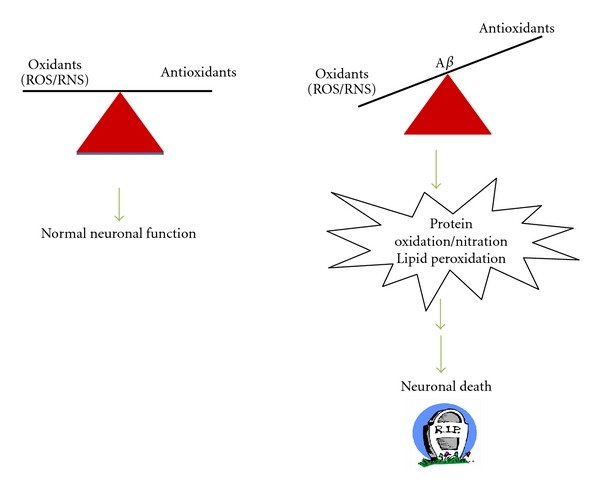
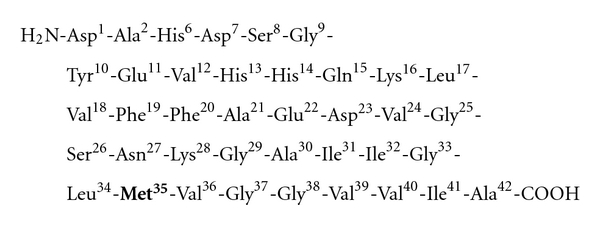
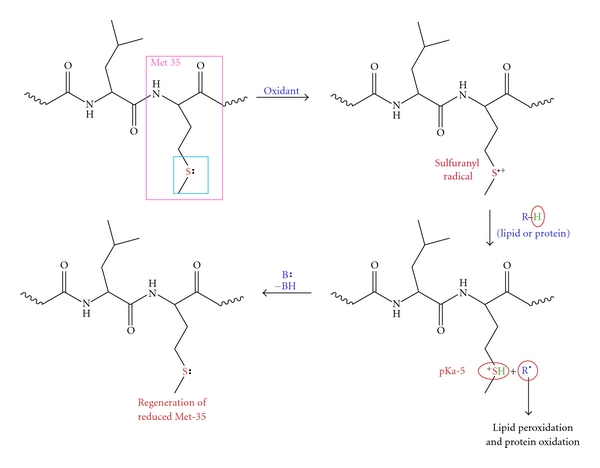
Alzheimer disease (AD) is an age-related progressive neurodegenerative disorder. This devastating disease is characterized by the presence of senile plaques (SP), neurofibrillary tangles (NFTs), and loss of synapses. Amyloid beta-peptide 1–42 (A β (1–42)) is the main component of SP and is pivotal to AD pathogenesis. Brain of subjects with AD and arguably its earliest manifestation, mild cognitive impairment (MCI), demonstrate increased levels of oxidative stress markers. Our laboratory combined these two aspects of AD and MCI and proposed the A β (1–42)-associated free radical oxidative stress hypothesis to explain oxidative stress under which the MCI and AD brain exist and the loss of synapses in both disorders. A large number of in vitro and in vivo studies showed that A β causes protein oxidation, lipid peroxidation, reactive oxygen species formation, and cell death in neuronal and synaptosomal systems. Methionine located at residue 35 of A β (1–42) is an important contributor to the oxidative stress associated with this neurotoxic peptide. In this paper, we summarize studies involving Met-35 of A β (1–42). Understanding the role of the single methionine residue of A β (1–42) may help in understanding underlying disease mechanisms in AD and MCI.
Overview
The claims and statistics of this paper haven’t been checked yet.
Run the check — free, no account needed. It reads the open-access text and checks the sources it cites.
Integrity signals
Registry
Cites
Statistics
Figures
Verification
Claims the paper makes
The claims and statistics of this paper haven’t been checked yet.
Run the check — free, no account needed. It reads the open-access text and checks the sources it cites.
Claims other papers make about this one
Each is checked against this paper’s own text: does it say what the citing paper says it does?
The check wasn’t confident either way, so it gives no verdict — never disputed.
In the citing paper
“Given the complexity and low abundance of many PTMs, AI-based analytical methods are increasingly used for enrichment, site identification, and functional network modeling139,169,178,179.”
From Artificial intelligence-driven multi-omics approaches in Alzheimer's disease: Progress, challenges, and future directions (2025) · cites this paper as [139]
Experimental — accuracy not yet measured
Self-check
Percentages, sums and reported differences re-computed from the paper’s own numbers.
The self-check needs the paper’s full text.
Citations
Cites
1 retracted
RETRACTED ARTICLE: APP binds DR6 to trigger axon pruning and neuron death via distinct caspases
Nikolaev, A., McLaughlin, T., O’Leary, D. D. M., & Tessier-Lavigne, M. (2009) · Nature · doi:10.1038/nature07767 · Cited by 992
RetractedAlzheimer's Disease: Genes, Proteins, and Therapy
Selkoe, D. J. (2001) · Physiological Reviews · doi:10.1152/physrev.2001.81.2.741 · Cited by 6,063
Harold, D., Abraham, R., Hollingworth, P., Sims, R., Gerrish, A., Hamshere, M. L., Pahwa, J. S., Moskvina, V., Dowzell, K., Williams, A., et al. (2009) · Nature Genetics · doi:10.1038/ng.440 · Cited by 3,326
Oxidative stress hypothesis in Alzheimer’s disease
Markesbery, W. R. (1997) · Free Radical Biology and Medicine · doi:10.1016/s0891-5849(96)00629-6 · Cited by 2,383
Cherny, R. A., Atwood, C. S., Xilinas, M. E., Gray, D. N., Jones, W. D., McLean, C. A., Barnham, K. J., Volitakis, I., Fraser, F. W., Kim, Y.-S., et al. (2001) · Neuron · doi:10.1016/s0896-6273(01)00317-8 · Cited by 1,447
Widespread Peroxynitrite-Mediated Damage in Alzheimer’s Disease
Smith, M. A., Richey Harris, P. L., Sayre, L. M., Beckman, J. S., & Perry, G. (1997) · The Journal of Neuroscience · doi:10.1523/jneurosci.17-08-02653.1997 · Cited by 1,239
Huang, X., Atwood, C., Hartshorn, M. A., Multhaup, G., Goldstein, L. E., Scarpa, R. C., Cuajungco, M. P., Gray, D. N., Lim, J. T., Moir, R. D., et al. (1999) · Biochemistry · doi:10.1021/bi990438f · Cited by 1,117
Evidence of oxidative damage in Alzheimer's disease brain: central role for amyloid β-peptide
Butterfield, D. A., Drake, J., Pocernich, C., & Castegna, A. (2001) · Trends in Molecular Medicine · doi:10.1016/s1471-4914(01)02173-6 · Cited by 1,114
Self-citationManczak, M., Anekonda, T. S., Henson, E., Park, B. S., Quinn, J., & Reddy, P. H. (2006) · Human Molecular Genetics · doi:10.1093/hmg/ddl066 · Cited by 1,104
Metals, oxidative stress and neurodegenerative disorders
Jomová, K., Vondráková, D., Lawson, M. K., & Valko, M. (2010) · Molecular and Cellular Biochemistry · doi:10.1007/s11010-010-0563-x · Cited by 1,074
Butterfield, D. A., & Lauderback, C. M. (2002) · Free Radical Biology and Medicine · doi:10.1016/s0891-5849(02)00794-3 · Cited by 1,013
Self-citationRitchie, C. W., Bush, A. I., Mackinnon, A., Macfarlane, S., Mastwyk, M., MacGregor, L., Kiers, L., Cherny, R., Li, Q.-X., Tammer, A., et al. (2003) · Archives of Neurology · doi:10.1001/archneur.60.12.1685 · Cited by 988
Biologically relevant metal ion‐dependent hydroxyl radical generation An update
Halliwell, B. B., & Gutteridge, J. M. C. (1992) · FEBS Letters · doi:10.1016/0014-5793(92)80911-y · Cited by 884
Hensley, K., Hall, N., Subramaniam, R., Cole, P., Harris, M., Aksenov, M., Aksenova, M., Gabbita, S. P., Wu, J. F., Carney, J. M., et al. (1995) · Journal of Neurochemistry · doi:10.1046/j.1471-4159.1995.65052146.x · Cited by 779 · cited 1×
“This devastating disease is characterized by the presence of senile plaques (SP), neurofibrillary tangles (NFTs), and loss of synapses [1].”
BackgroundSelf-citationMitochondrial Aβ: a potential focal point for neuronal metabolic dysfunction in Alzheimer's disease
Caspersen, C., Wang, N., Yao, J., Sosunov, A., Chen, X., Lustbader, J. W., Xu, H. W., Stern, D., McKhann, G., & Du Yan, S. (2005) · The FASEB Journal · doi:10.1096/fj.05-3735fje · Cited by 738
Review: Alzheimer's Amyloid β-Peptide-Associated Free Radical Oxidative Stress and Neurotoxicity
Varadarajan, S., Yatin, S., Aksenova, M., & Butterfield, D. A. (2000) · Journal of Structural Biology · doi:10.1006/jsbi.2000.4274 · Cited by 735
Self-citationAllanbutterfield, D., Castegna, A., Lauderback, C. M., & Drake, J. (2002) · Neurobiology of Aging · doi:10.1016/s0197-4580(01)00340-2 · Cited by 715
Pike, C. J., Walencewicz‐Wasserman, A. J., Kosmoski, J., Cribbs, D. H., Glabe, C. G., & Cotman, C. W. (1995) · Journal of Neurochemistry · doi:10.1046/j.1471-4159.1995.64010253.x · Cited by 699
Curtain, C. C., Ali, F. E. A., Volitakis, I., Cherny, R. A., Norton, R. S., Beyreuther, K. T., Barrow, C. J., Masters, C. L., Bush, A. I., & Barnham, K. J. (2001) · Journal of Biological Chemistry · doi:10.1074/jbc.m100175200 · Cited by 658
The redox chemistry of the Alzheimer's disease amyloid β peptide
Smith, D. G., Cappai, R., & Barnham, K. J. (2007) · Biochimica et Biophysica Acta (BBA) - Biomembranes · doi:10.1016/j.bbamem.2007.02.002 · Cited by 608
Choi, J., Levey, A. I., Weintraub, S. T., Rees, H. D., Gearing, M., Chin, L.-S., & Li, L. (2004) · Journal of Biological Chemistry · doi:10.1074/jbc.m314124200 · Cited by 568
Butterfield, D. A., Reed, T., Newman, S. F., & Sultana, R. (2007) · Free Radical Biology and Medicine · doi:10.1016/j.freeradbiomed.2007.05.037 · Cited by 564
Self-citationEvidence of increased oxidative damage in subjects with mild cognitive impairment
Keller, J. N., Schmitt, F. A., Scheff, S. W., Ding, Q., Chen, Q., Butterfield, D. A., & Markesbery, W. R. (2005) · Neurology · doi:10.1212/01.wnl.0000156156.13641.ba · Cited by 539
Self-citationProtein oxidation in the brain in Alzheimer's disease
Aksenov, M. Y., Aksenova, M. V., Butterfield, D. A., Geddes, J. W., & Markesbery, W. R. (2001) · Neuroscience · doi:10.1016/s0306-4522(00)00580-7 · Cited by 505
Self-citationNäslund, J., Schierhorn, A., Hellman, U., Lannfelt, L., Roses, A. D., Tjernberg, L. O., Silberring, J., Gandy, S. E., Winblad, B., & Greengard, P. (1994) · Proceedings of the National Academy of Sciences · doi:10.1073/pnas.91.18.8378 · Cited by 468
Lauderback, C. M., Hackett, J. M., Huang, F. F., Keller, J. N., Szweda, L. I., Markesbery, W. R., & Butterfield, D. A. (2001) · Journal of Neurochemistry · doi:10.1046/j.1471-4159.2001.00451.x · Cited by 464
Self-citationAutopsy Samples of Alzheimer's Cortex Show Increased Peroxidation In Vitro
Subbarao, K. V., Richardson, J. S., & Ang, L. C. (1990) · Journal of Neurochemistry · doi:10.1111/j.1471-4159.1990.tb08858.x · Cited by 463
Methionine in proteins defends against oxidative stress
Luo, S., & Levine, R. L. (2008) · The FASEB Journal · doi:10.1096/fj.08-118414 · Cited by 462
Butterfield, D. A., Hensley, K., Harris‐White, M. E., Mattson, M. P., & Carney, J. M. (1994) · Biochemical and Biophysical Research Communications · doi:10.1006/bbrc.1994.1508 · Cited by 404
Self-citationA second cytotoxic proteolytic peptide derived from amyloid β-protein precursor
Lu, D. C.-T., Rabizadeh, S., Chandra, S. S., Shayya, R. F., Ellerby, L., Ye, X., Salvesen, G. S., Koo, E. H., & Bredesen, D. E. (2000) · Nature Medicine · doi:10.1038/74656 · Cited by 403
Butterfield, D. A., Poon, H. F., St. Clair, D., Keller, J. N., Pierce, W. M., Klein, J. B., & Markesbery, W. R. (2006) · Neurobiology of Disease · doi:10.1016/j.nbd.2005.11.002 · Cited by 377
Self-citationSchöneich, C. (2004) · Biochimica et Biophysica Acta (BBA) - Proteins and Proteomics · doi:10.1016/j.bbapap.2004.09.009 · Cited by 372
Drake, J. (2003) · Neurobiology of Aging · doi:10.1016/s0197-4580(02)00225-7 · Cited by 371
Different Mechanisms of Oxidative Stress and Neurotoxicity for Alzheimer‘s Aβ(1−42) and Aβ(25−35)
Varadarajan, S., Kanski, J., Aksenova, M., Lauderback, C., & Butterfield, D. A. (2001) · Journal of the American Chemical Society · doi:10.1021/ja010452r · Cited by 346
Self-citationOxidation of Methionine Residues of Proteins: Biological Consequences
Stadtman, E. R., Moskovitz, J., & Levine, R. L. (2003) · Antioxidants and Redox Signaling · doi:10.1089/152308603770310239 · Cited by 344
(1999) · Neurobiology of Aging · doi:10.1016/s0197-4580(99)00056-1 · Cited by 330
Self-citationWhite, A. R., Du, T., Laughton, K. M., Volitakis, I., Sharples, R. A., Xilinas, M. E., Hoke, D. E., Holsinger, R. M. D., Evin, G., Cherny, R. A., et al. (2006) · Journal of Biological Chemistry · doi:10.1074/jbc.m602487200 · Cited by 284
Lipid peroxidation is an early event in the brain in amnestic mild cognitive impairment
Markesbery, W. R., Kryscio, R. J., Lovell, M. A., & Morrow, J. D. (2005) · Annals of Neurology · doi:10.1002/ana.20629 · Cited by 277
Butterfield, D. A., & Debra Boyd-kimball, A. (2004) · Biochimica et Biophysica Acta (BBA) - Proteins and Proteomics · doi:10.1016/j.bbapap.2004.10.014 · Cited by 270
Self-citationSubramaniam, R., Roediger, F., Jordan, B., Mattson, M. P., Keller, J. N., Waeg, G., & Butterfield, D. A. (1997) · Journal of Neurochemistry · doi:10.1046/j.1471-4159.1997.69031161.x · Cited by 270
Self-citationDrug Development Based on the Metals Hypothesis of Alzheimer's Disease
Bush, A. I. (2008) · Journal of Alzheimer s Disease · doi:10.3233/jad-2008-15208 · Cited by 267
Rukhsana Sultana, A., Marzia Perluigi, A., & Butterfield, D. A. (2006) · Antioxidants and Redox Signaling · doi:10.1089/ars.2006.8.2021 · Cited by 261
Self-citationGenome-wide association studies in Alzheimer’s disease
Bertram, L., & Tanzi, R. E. (2009) · Human Molecular Genetics · doi:10.1093/hmg/ddp406 · Cited by 257
Decrease in Peptide Methionine Sulfoxide Reductase in Alzheimer's Disease Brain
Gabbita, S. P., Aksenov, M. Y., Lovell, M. A., & Markesbery, W. R. (1999) · Journal of Neurochemistry · doi:10.1046/j.1471-4159.1999.0731660.x · Cited by 256
Effects of injected Alzheimer beta-amyloid cores in rat brain.
Frautschy, S. A., Baird, A., & Cole, G. M. (1991) · Proceedings of the National Academy of Sciences · doi:10.1073/pnas.88.19.8362 · Cited by 254
Butterfield, D. A., Reed, T., Perluigi, M., De Marco, C., Coccia, R., Cini, C., & Sultana, R. (2006) · Neuroscience Letters · doi:10.1016/j.neulet.2005.12.017 · Cited by 246
Self-citationYatin, S. M., Varadarajan, S., & Butterfield, D. A. (2000) · Journal of Alzheimer s Disease · doi:10.3233/jad-2000-2212 · Cited by 241
Self-citationGalvan, V., Gorostiza, O. F., Banwait, S., Ataie, M., Logvinova, A. V., Sitaraman, S., Carlson, E., Sagi, S. A., Chevallier, N., Jin, K., et al. (2006) · Proceedings of the National Academy of Sciences · doi:10.1073/pnas.0509695103 · Cited by 239
Sultana, R., Perluigi, M., & Butterfield, D. A. (2009) · Acta Neuropathologica · doi:10.1007/s00401-009-0517-0 · Cited by 215
Self-citationBehl, C., & Moosmann, B. (2002) · Biological Chemistry · doi:10.1515/bc.2002.053 · Cited by 203
Schöneich, C., Pogocki, D., Hug, G. L., & Bobrowski, K. (2003) · Journal of the American Chemical Society · doi:10.1021/ja036733b · Cited by 199
Glabe, C. C. (2006) · Springer eBooks · doi:10.1007/0-387-23226-5_8 · Cited by 193
Barnham, K. J., Ciccotosto, G. D., Tickler, A. K., Ali, F. E. A., Smith, D. G., Williamson, N. A., Lam, Y.-H., Carrington, D., Tew, D. J., Kocak, G., et al. (2003) · Journal of Biological Chemistry · doi:10.1074/jbc.m305494200 · Cited by 191
Butterfield, D. A., Galván, V., Lange, M. L. B., Tang, H., Robinson, R. A. S., Spilman, P. R., Fombonne, J., Gorostiza, O. F., Zhang, J., Rukhsana Sultana, A., et al. (2009) · Free Radical Biology and Medicine · doi:10.1016/j.freeradbiomed.2009.10.035 · Cited by 188
Self-citationBiomarkers of oxidative stress are significantly elevated in Down syndrome
Jovanovic, S. V., Clements, D., & MacLeod, K. (1998) · Free Radical Biology and Medicine · doi:10.1016/s0891-5849(98)00137-3 · Cited by 183
Redox proteomics: from protein modifications to cellular dysfunction and disease
Butterfield, D. A., & Dalle‐Donne, I. (2013) · Mass Spectrometry Reviews · doi:10.1002/mas.21404 · Cited by 181
Self-citationThe biochemistry of methionine sulfoxide residues in proteins
Brot, N., & Weissbach, H. (1982) · Trends in Biochemical Sciences · doi:10.1016/0968-0004(82)90204-3 · Cited by 171
Neuronal Death and Survival Under Oxidative Stress in Alzheimer and Parkinson Diseases
Nunomura, A., Moreira, P. I., Lee, H., Zhu, X., Castellani, R. J., Smith, M. A., & Perry, G. L. (2007) · CNS & Neurological Disorders - Drug Targets · doi:10.2174/187152707783399201 · Cited by 140
Owen, J. B., Rukhsana Sultana, A., Aluise, C. D., Erickson, M. A., Price, T. O., Bu, G., Banks, W. A., & Butterfield, D. A. (2010) · Free Radical Biology and Medicine · doi:10.1016/j.freeradbiomed.2010.09.013 · Cited by 132
Self-citationOxidation of Methionine 35 Attenuates Formation of Amyloid β-Peptide 1–40 Oligomers
Palmblad, M., Westlind‐Danielsson, A., & Bergquist, J. (2002) · Journal of Biological Chemistry · doi:10.1074/jbc.m112218200 · Cited by 130
Amyloid β Protein: Aβ40 Inhibits Aβ42 Oligomerization
Murray, M. M., Bernstein, S. L., Nyugen, V., Condron, M. M., Teplow, D. B., & Bowers, M. T. (2009) · Journal of the American Chemical Society · doi:10.1021/ja8092604 · Cited by 128
Examination of the current top candidate genes for AD in a genome-wide association study
Feulner, T. M., Laws, S. M., Friedrich, P., Wagenpfeil, S., Wurst, S. H. R., Riehle, C., Kuhn, K. A., Krawczak, M., Schreiber, S., Nikolaus, S., et al. (2010) · Molecular Psychiatry · doi:10.1038/mp.2008.141 · Cited by 128
Lyras, L., Perry, R. H., Perry, E. K., Ince, P. G., Jenner, A. M., Jenner, P. G., & Halliwell, B. B. (1998) · Journal of Neurochemistry · doi:10.1046/j.1471-4159.1998.71010302.x · Cited by 121
Wan, L., Nie, G., Zhang, J., Luo, Y., Zhang, P., Zhang, Z., & Zhao, B. (2010) · Free Radical Biology and Medicine · doi:10.1016/j.freeradbiomed.2010.10.707 · Cited by 121
Quintanilla, R. A., Muñoz, F. J., Metcalfe, M., Hitschfeld, M., Olivares, G. H., Godoy, J. A., & Inestrosa, N. C. (2005) · Journal of Biological Chemistry · doi:10.1074/jbc.m411936200 · Cited by 114
Nishida, Y., Ito, S., Ohtsuki, S., Yamamoto, N., Takahashi, T., Iwata, N., Jishage, K.-I., Yamada, H., Sasaguri, H., Yokota, S., et al. (2009) · Journal of Biological Chemistry · doi:10.1074/jbc.m109.054056 · Cited by 106
Avdulov, N. A., Chochina, S. V., Igbavboa, U., O‘Hare, E., Schroeder, F., Cleary, J. P., & Wood, W. G. (1997) · Journal of Neurochemistry · doi:10.1046/j.1471-4159.1997.68052086.x · Cited by 106
Clementi, M. E., Pezzotti, M., Orsini, F., Sampaolese, B., Mezzogori, D., Grassi, C., Giardina, B., & Misiti, F. (2006) · Biochemical and Biophysical Research Communications · doi:10.1016/j.bbrc.2006.01.137 · Cited by 105
Olivieri, G., Hess, C. W., Savaskan, E., Ly, C. V., Meier, F., Baysang, G., Brockhaus, M., & Müller-Spahn, F. (2001) · Journal of Pineal Research · doi:10.1034/j.1600-079x.2001.310406.x · Cited by 105
Madeira, A., Pommet, J., Prochiantz, A., & Allinquant, B. (2005) · The FASEB Journal · doi:10.1096/fj.05-3839fje · Cited by 102
Ciccotosto, G. D., Tew, D. J., Curtain, C. C., Smith, D., Carrington, D., Masters, C. L., Bush, A. I., Cherny, R. A., Cappai, R., & Barnham, K. J. (2004) · Journal of Biological Chemistry · doi:10.1074/jbc.m406465200 · Cited by 101
Oxidatively modified RNA in mild cognitive impairment
Lovell, M. A., & Markesbery, W. R. (2007) · Neurobiology of Disease · doi:10.1016/j.nbd.2007.07.030 · Cited by 93
Alzheimer β protein mediated oxidative damage of mitochondrial DNA: Prevention by melatonin
Pappolla, M. A., Chyan, Y., Pöeggeler, B., Bozner, P., Ghiso, J. A., LeDoux, S. P., & Wilson, G. L. (1999) · Journal of Pineal Research · doi:10.1111/j.1600-079x.1999.tb00619.x · Cited by 89
Enzymatic reactions involved in the repair of oxidized proteins
Mary, J., Vougier, S., Picot, C. R., Perichon, M., Petropoulos, I., & Friguet, B. (2004) · Experimental Gerontology · doi:10.1016/j.exger.2004.06.008 · Cited by 87
Enhanced brain levels of 8,12- iso -iPF 2α -VI differentiate AD from frontotemporal dementia
Yao, Y., Zhukareva, V., Sung, S., Clark, C. M., Rokach, J., Lee, V. M.-Y., Trojanowski, J. Q., & Praticò, D. (2003) · Neurology · doi:10.1212/01.wnl.0000070185.02546.5d · Cited by 86
Kański, J., Varadarajan, S., Aksenova, M. V., & Butterfield, D. A. (2002) · Biochimica et Biophysica Acta (BBA) - Molecular Basis of Disease · doi:10.1016/s0925-4439(01)00097-7 · Cited by 83
Self-citationLiu, X., Lovell, M. A., & Lynn, B. C. (2005) · Analytical Chemistry · doi:10.1021/ac050624t · Cited by 79
Radioiodinated clioquinol as a biomarker for β‐amyloid: Zn2+ complexes in Alzheimer's disease
Opazo, C., Luza, S., Villemagne, V. L., Volitakis, I., Rowe, C. C., Barnham, K. J., Altschul, D., Masters, C. L., Cherny, R. A., & Bush, A. I. (2006) · Aging Cell · doi:10.1111/j.1474-9726.2006.00196.x · Cited by 76
Rukhsana Sultana, A., Marzia Perluigi, A., & Butterfield, D. A. (2005) · Journal of Chromatography B · doi:10.1016/j.jchromb.2005.09.024 · Cited by 72
Self-citationBoyd-Kimball, D., Abdul, H. M., Reed, T. T., Sultana, R., & Butterfield, D. (2004) · Chemical Research in Toxicology · doi:10.1021/tx049796w · Cited by 67
Self-citationRedox Properties of Met35in Neurotoxic β-Amyloid Peptide. A Molecular Modeling Study
Pogocki, D., & Schöneich, C. (2002) · Chemical Research in Toxicology · doi:10.1021/tx0101550 · Cited by 66
Chapter 9 Alzheimer's Disease Genetics
Bertram, L. (2009) · International review of neurobiology · doi:10.1016/s0074-7742(09)00409-7 · Cited by 63
Stadtman, E. R. (2003) · Archives of Biochemistry and Biophysics · doi:10.1016/j.abb.2003.10.001 · Cited by 61
Kański, J., Aksenova, M. V., & Butterfield, D. A. (2002) · Neurotoxicity Research · doi:10.1080/10298420290023945 · Cited by 58
Self-citationAttenuated amyloid-β aggregation and neurotoxicity owing to methionine oxidation
Johansson, A., Bergquist, J., Volbracht, C., Päiviö, A., Leist, M., Lannfelt, L., & Westlind‐Danielsson, A. (2007) · Neuroreport · doi:10.1097/wnr.0b013e3280b07c21 · Cited by 53
Despite its role in assembly, methionine 35 is not necessary for amyloid β‐protein toxicity
Maiti, P., Lomakin, A., Benedek, G. B., & Bitan, G. (2010) · Journal of Neurochemistry · doi:10.1111/j.1471-4159.2010.06692.x · Cited by 46
Misiti, F., Clementi, M. E., & Giardina, B. (2010) · Neurochemistry International · doi:10.1016/j.neuint.2010.01.002 · Cited by 44
Galván, V., Zhang, J., Gorostiza, O. F., Banwait, S., Huang, W., Ataie, M., Tang, H., & Bredesen, D. E. (2008) · Behavioural Brain Research · doi:10.1016/j.bbr.2008.03.035 · Cited by 43
Cerpa, W. F., Barría, M. I., Chacón, M. A., Suazo, M., González, M., Opazo, C., Bush, A. I., & Inestrosa, N. C. (2004) · The FASEB Journal · doi:10.1096/fj.03-1349fje · Cited by 41
Possible involvement of copper(II) in Alzheimer disease.
Kowalik‐Jankowska, T., Ruta-Dolejsz, M., Wiśniewska, K., Łankiewicz, L., & Kozłowski, H. (2002) · Environmental Health Perspectives · doi:10.1289/ehp.02110s5869 · Cited by 38
Clementi, M. E., Martorana, G. E., Pezzotti, M., Giardina, B., & Misiti, F. (2004) · The International Journal of Biochemistry & Cell Biology · doi:10.1016/j.biocel.2004.03.006 · Cited by 33
Brunelle, P., & Rauk, A. (2002) · Journal of Alzheimer s Disease · doi:10.3233/jad-2002-4403 · Cited by 29
Pogocki, D. (2004) · Chemical Research in Toxicology · doi:10.1021/tx030044w · Cited by 18
Dai, X., Sun, Y., & Jiang, Z.-F. (2007) · FEBS Letters · doi:10.1016/j.febslet.2007.02.038 · Cited by 13
LaBrenz, S. R., Calmann, M. A., Heavner, G. A., & Tolman, G. (2008) · PubMed · Cited by 13
Research works printed but not linked: 2
- 1991, BioFactors, 3, 91
- 2008, Journal of Pharmaceutical Science and Technology, 62, 211
Cited by
Sorted by citations
Oxidative stress and the amyloid beta peptide in Alzheimer’s disease
Cheignon, C., Tomas, M., Bonnefont-Rousselot, D., Faller, P., Hureau, C., & Collin, F. (2018) · Redox Biology · doi:10.1016/j.redox.2017.10.014 · Cited by 2,185
Jiang, T., Sun, Q., & Chen, S. (2016) · Progress in Neurobiology · doi:10.1016/j.pneurobio.2016.07.005 · Cited by 605
Butterfield, D. A., & Boyd-Kimball, D. (2018) · Journal of Alzheimer’s Disease · doi:10.3233/jad-170543 · Cited by 403
Self-citationImplications of peptide assemblies in amyloid diseases
Ke, P. C., Sani, M., Ding, F., Käkinen, A., Javed, I., Separovic, F., Davis, T. P., & Mezzenga, R. (2017) · Chemical Society Reviews · doi:10.1039/c7cs00372b · Cited by 340
Oxidative stress, protein modification and Alzheimer disease
Tramutola, A., Lanzillotta, C., Perluigi, M., & Butterfield, D. A. (2017) · Brain Research Bulletin · doi:10.1016/j.brainresbull.2016.06.005 · Cited by 303
Self-citation
Metadata
- Authors
- Butterfield, D. A., & Sultana, R.
- Affiliations
- University of Kentucky (US)
- Department of Chemistry, University of Kentucky, Lexington, KY 40506-0055, USA
- Corresponding author
- Butterfield, D. Allan
- Venue
- Journal of Amino Acids
- Publisher
- Wiley
- Published
- 2011-06-04
- Volume
- 2011
- Pages
- 1-10
- ISSN
- 2090-0104 (ISSN-L)
- 2090-0112
- PMC
- PMC3268025
- OpenAlex
- W2015089109
- Cited by
- 124
- References
- 95
- Citations by year
- 2026: 2 · 2025: 6 · 2024: 11 · 2023: 26 · 2022: 5 · 2021: 6 · 2020: 7 · 2019: 6 · 2018: 8 · 2017: 8 · 2016: 6 · 2015: 6 · 2014: 8 · 2013: 9 · 2012: 9
- FWCI
- 6.11
- Type
- journal article
- Language
- en
- Open access
- hybrid
- doi.org
- Locations
- Journal of Amino Acids (publishedVersion, cc-by)
- Europe PMC (PubMed Central) (publishedVersion, cc-by)
- PubMed Central (publishedVersion, cc-by)
- PubMed (publishedVersion)
- UKnowledge (University of Kentucky) (submittedVersion, cc-by)
- Funders
- National Institutes of Health (AG-05119)
- Topics
- Life Sciences › Neuroscience › Cellular and Molecular Neuroscience › Alzheimer's disease research and treatments
- Health Sciences › Medicine › Psychiatry and Mental health › Dementia and Cognitive Impairment Research
- Health Sciences › Medicine › Clinical Neurology › Parkinson's Disease Mechanisms and Treatments
- Keywords
- Alzheimer's disease, amyloid beta peptide 1-42, 35S-methionine, oxidative stress, mild cognitive impairment, amyloid plaques, neurofibrillary tangles, synaptic loss, protein oxidation, lipid peroxidation, reactive oxygen species, neurotoxicity
About these checks
Registry, retraction, Cites and statistics results are computed, not judged, with one exception: a printed reference that no index lists is read once by a model before it counts as a citation error. Claims are extracted by a model and kept only when their quote appears verbatim in the text; each cited source is then checked, with a model’s help, for whether it says what the claim relies on. Those verdicts can be wrong — read the claim’s quote and the cited source before relying on one.
Statistics and arithmetic are recomputed, not judged.
Confidence bands are shown only for fields calibrated on our annotated test set. None is calibrated yet, so no band is shown.
What counts as a claim ›How we measure confidence ›How we check this ›
Are you an author, or do you see a problem with this page? Request a review
