

The DOI matches its Crossref record; 22 of the 24 references it cites were found in a registry or an index.
The limbic system
Open accessAbstract
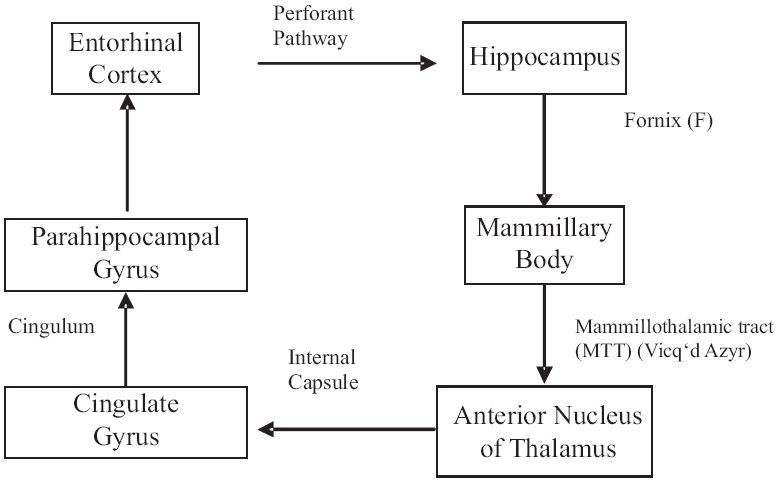
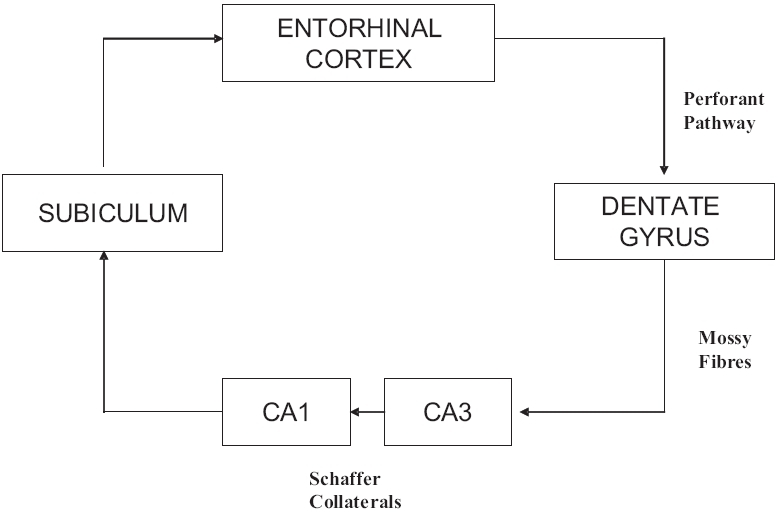
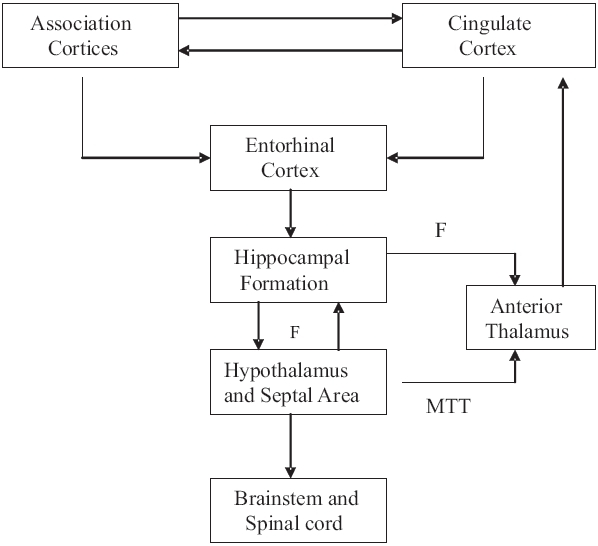
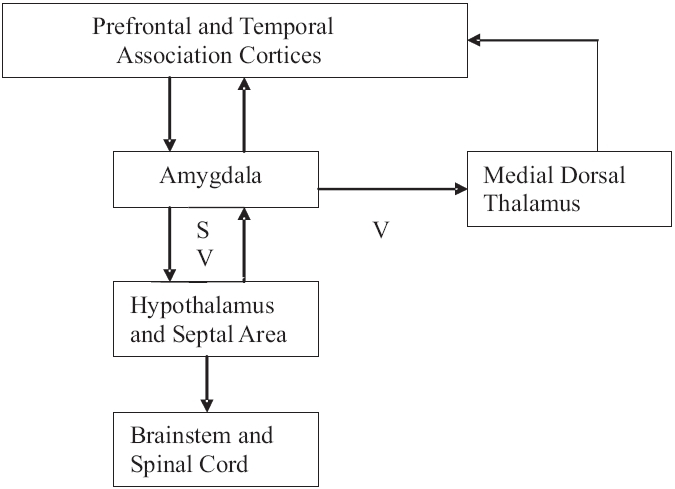
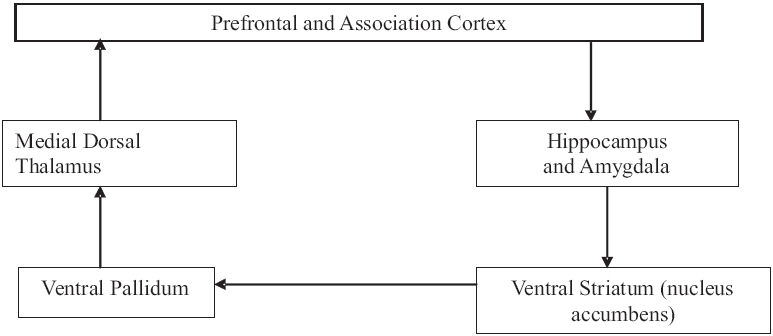
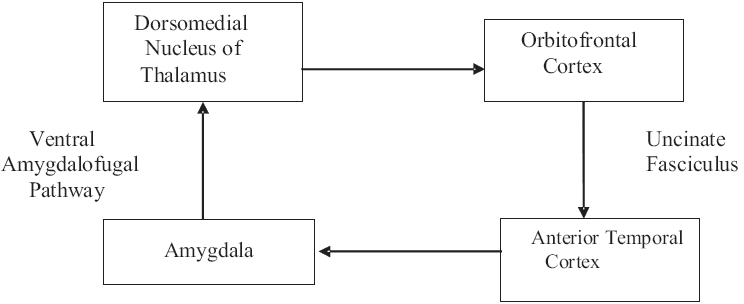
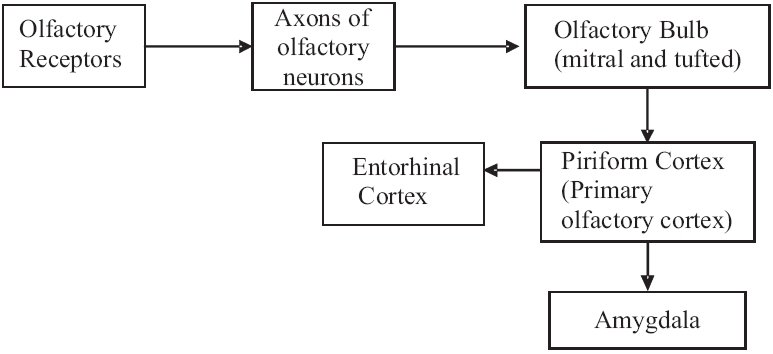
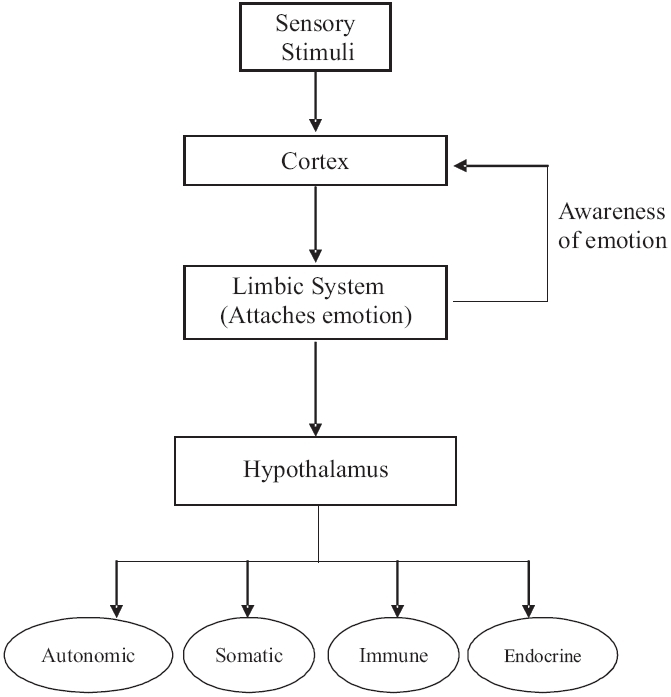
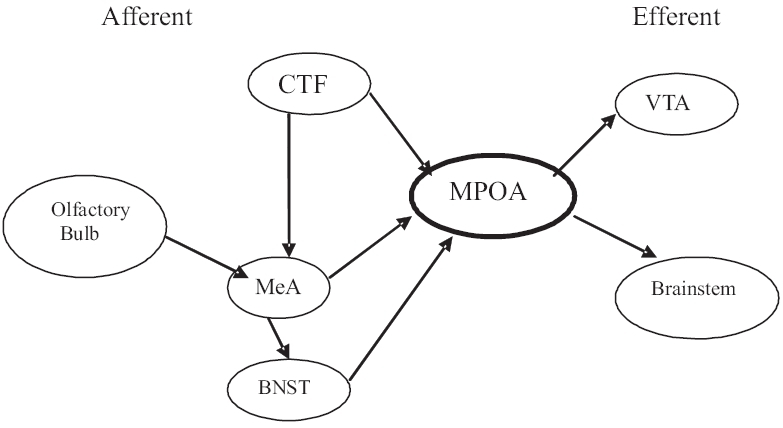
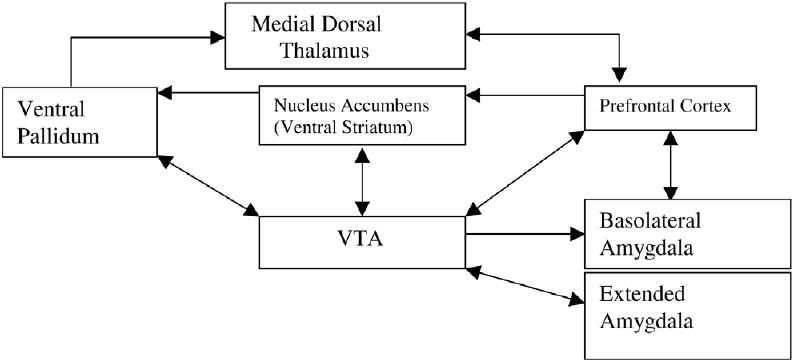
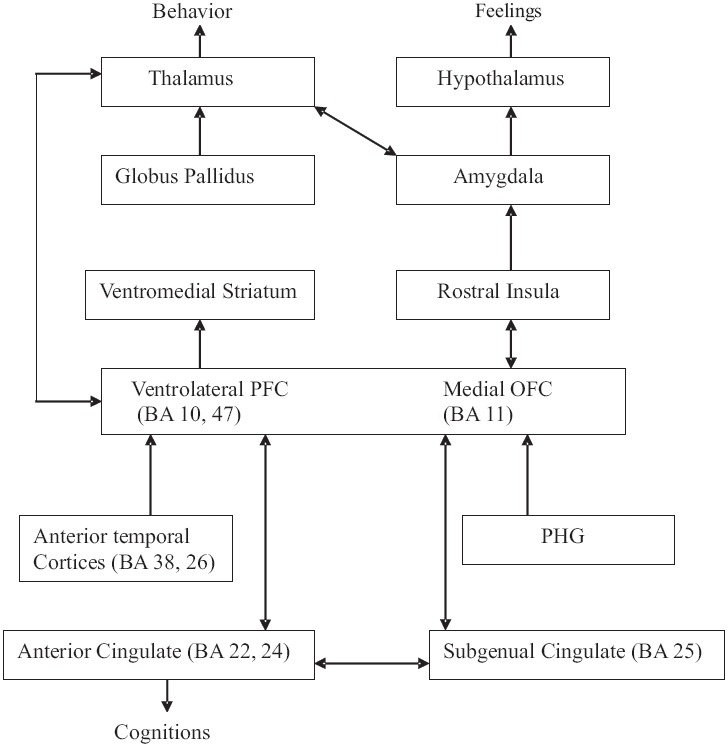
“The hypothalamus, the anterior thalamic nucleus, the cingulate gyrus, the hippocampus and their interconnections, constitute a harmonious mechanism which may elaborate the functions of central emotion as well as participate in the emotional expression.” James Papez, 1937 The limbic system consists of the phylogenetically old limbic lobe and other subcortical structures and their connections. Although not empirically proven, the limbic system is a functional concept which may be employed to explain various brain functions.[1] HISTORY Paul Pierre Broca in 1878 spoke of ‘le grand lobe limbique’ or the great limbic lobe and applied the term “limbic” (from the Latin limbus for border) to the curved rim of the cortex which incudes the cingulate and the parahippocampal gyri. However, its putative role in emotion was elaborated by the American physician, James Papez in 1937 in the seminal paper titled ‘A proposed mechanism of emotion’. This anatomical model is referred to as the Papez circuit.[2] Yakovlev in 1948 proposed Yakovlev's circuit in the control of emotion involving the orbitofrontal, insular and anterior temporal lobe cortex, the amygdala and the dorsomedial nucleus of thalamus.[3] In 1952, Paul D. MacLean coined the term “limbic system” to describe Broca's limbic lobe and related subcortical nuclei as the collective neural substrate for emotion.[1] MacLean was also instrumental in proposing and defining the Triune concept of the brain. MacLean's evolutionary “Triune brain theory” proposed that the human brain was in reality three brains in one: the R-complex (reptilian complex), the limbic system and the neocortex.[4] The concept of the limbic system has since been further expanded and developed by Nauta, Heimer and others. COMPONENTS OF THE LIMBIC SYSTEM There is no universal agreement on the total list of structures, which comprise the limbic system. The brain regions that constitute the limbic system are: Limbic cortex Cingulate gyrus Parahippocampal gyrus Hippocampal formation The dentate gyrus Hippocampus Subicular Complex Amygdala Septal area Hypothalamus These structures form a complex network for controlling emotion.[5] Limbic lobe The limbic lobe situated at the inferomedial aspect of the cerebral hemispheres, consists of two concentric gyri surrounding the corpus callosum. Broca proposed that the larger outer gyrus be named “limbic gyrus” and the smaller inner one “the intralimbic gyrus”. The limbic gyrus (limbic lobe) consists of the isthmus of the cingulate gyrus, the parahippocampal gyrus (both of which are continuous via a bundle of white matter called “cingulum”) and the subcallosal area.[6] The cingulate gyrus (Latin = Belt ridge) dorsal to the corpus callosum is heavily interconnected with the association areas of the cerebral cortex. The parahippocampal gyrus in the medial temporal lobe contains several distinct regions, the most important being the entorhinal cortex (ERC). The ERC funnels highly processed cortical information to the hippocampal formation and serves as its major output pathway.[5] The hippocampal formation Hippocampal formation in the temporal lobe has three distinct zones: The dentate gyrus The hippocampus proper The subiculum Embryologically, the hippocampal formation is an extension of the medial edge of the temporal lobe. The entire hippocampal formation has a length of about 5 cm from its anterior end at the amygdala to its tapering posterior end near the splenium of the corpus callosum.[5] Dentate gyrus The dentate gyrus is composed of three layers: an outer acellular molecular layer, a granular middle layer and an inner polymorphic layer. Hippocampus The word hippocampus means “Sea Horse” in Greek. Hippocampus is a trilaminate structure with an outer molecular layer, a middle pyramidal layer and an inner polymorphic layer. On the basis of differences in cytoarchitecture and connectivity, the hippocampus has four fields (named by Lorente de No in 1934): CA1, CA2, CA3 and CA4 (CA: Cornu Ammonis). To embryologic enthusiasts, CA4 is not part of the Cornu Ammonis but is a separate structure—the dentate hilus. The thin layer of fibers adjacent to the polymorphic layer of the hippocampus is known as the alveus. These fibres coalesce to form the fimbria and subsequently, the crura of the fornix (main efferent pathway of the hippocampal formation). The crura of the fornix converge to form the body of the fornix, which later forms the columns of the fornix and pass through the hypothalamus into the mammillary bodies.[57] Subicular complex The subicular complex has three components: the presubiculum, the parasubiculum and subiculum. Subiculum is the transitional zone between the six-layered, entorhinal cortex and the three-layered hippocampus.[5] Amygdala Identified by Burdach in the early 19th century, amygdala, an almond-shaped structure deep within the temporal lobe, is a collection of nuclei lying beneath the uncus. Lying at the anterior end of the hippocampal formati
Overview
The claims and statistics of this paper haven’t been checked yet.
Run the check — free, no account needed. It reads the open-access text and checks the sources it cites.
Integrity signals
Registry
Cites
Statistics
Figures
Verification
Claims the paper makes
The claims and statistics of this paper haven’t been checked yet.
Run the check — free, no account needed. It reads the open-access text and checks the sources it cites.
Claims other papers make about this one
Each is checked against this paper’s own text: does it say what the citing paper says it does?
The source backs part of the claim, not all of it — or backs it for a different population, condition or comparison.
In the citing paper
“so when the connection between the two is impaired, emotional lability can occur.”
From Approach to the patient with acquired hypothalamic syndrome (2026) · cites this paper as [86]
Experimental — accuracy not yet measuredThe cited source says what the claim attributes to it.
In the citing paper
“The limbic system affects emotional regulation and is integrally connected to the hypothalamus (86), so when the connection between the two is impaired, emotional lability can occur.”
From Approach to the patient with acquired hypothalamic syndrome (2026) · cites this paper as [86]
Self-check
Percentages, sums and reported differences re-computed from the paper’s own numbers.
The self-check needs the paper’s full text.
Citations
Cites
A PROPOSED MECHANISM OF EMOTION
PAPEZ, J. W. (1937) · Archives of Neurology And Psychiatry · doi:10.1001/archneurpsyc.1937.02260220069003 · Cited by 3,563
The Neural Basis of Addiction: A Pathology of Motivation and Choice
Kalivas, P. W., & Volkow, N. D. (2005) · American Journal of Psychiatry · doi:10.1176/appi.ajp.162.8.1403 · Cited by 2,757
The role of the hypothalamic-pituitary-adrenal axis in neuroendocrine responses to stress
Smith, S. M., & Vale, W. W. (2006) · Dialogues in Clinical Neuroscience · doi:10.31887/dcns.2006.8.4/ssmith · Cited by 1,948
Cognitive neuroscience of emotional memory
LaBar, K. S., & Cabeza, R. (2006) · Nature Reviews Neuroscience · doi:10.1038/nrn1825 · Cited by 1,834
The Amygdaloid Complex: Anatomy and Physiology
SAH, P., FABER, E. S. L., LOPEZ DE ARMENTIA, M., & POWER, J. (2003) · Physiological Reviews · doi:10.1152/physrev.00002.2003 · Cited by 1,745
The sleep switch: hypothalamic control of sleep and wakefulness
Saper, C. B., Chou, T. C., & Scammell, T. E. (2001) · Trends in Neurosciences · doi:10.1016/s0166-2236(00)02002-6 · Cited by 1,656
Adolphs, R., Tranel, D., Damasio, H., & Damasio, A. (1995) · The Journal of Neuroscience · doi:10.1523/jneurosci.15-09-05879.1995 · Cited by 1,138
The functional neuroanatomy of bipolar disorder: a review of neuroimaging findings
Strakowski, S. M., DelBello, M. P., & Adler, C. M. (2005) · Molecular Psychiatry · doi:10.1038/sj.mp.4001585 · Cited by 818
Frontal Cortical and Left Temporal Glutamatergic Dysfunction in Schizophrenia
Deakin, J. F. W., Slater, P., Simpson, M. D. C., Gilchrist, A., Skan, W., Royston, M. C., Reynolds, G. P., & Cross, A. J. (1989) · Journal of Neurochemistry · doi:10.1111/j.1471-4159.1989.tb07257.x · Cited by 386
Extended Amygdala and Basal Forebrain
Alheid, G. F. (2003) · Annals of the New York Academy of Sciences · doi:10.1111/j.1749-6632.2003.tb07082.x · Cited by 334
Research works printed but not linked: 7
- Maclean PD. The triune brain in evolution: Role in paleocerebral functions. Plenum Press: New York; 1990.
- Pierri JN, Lewis DA. Functional neuroanatomy. In : Kaplan and Sadock′s Comprehensive textbook of psychiatry, 8 th ed. Sadock BJ, Sadock VA, editor. Lippincott William and Wilkins: Phildelphia; p. 3-33.
- Ganong WF. Smell and taste. In : review of medical physiology. 21 st ed. McGraw Hill Companies Inc: 2003. p. 188-91.
- Ganong WF. Neural basis of instinctual behavior and emotions. In Review of Medical Physiology. 21 st ed. McGraw Hill Companies Inc: 2003. p. 260-9.
- Benca RM, Cirelli C, Rattenborg MC, Tononi G. Basic science of sleep. In : Kaplan and Sadock′s Comprehensive textbook of psychiatry, 8 th ed. Sadock BJ, Sadock VA, editors. Lippincott William and Wilkins: Phildelphia; p. 280-95.
- Paller KA, Squire LR. Biology of memory. In : Kaplan and Sadock′s Comprehensive textbook of psychiatry, 8 th ed. Sadock BJ, Sadock VA, editor. Lippincott William and Wilkins: Phildelphia; p. 553-66.
- Hechtman L. Attention-deficit/hyperactivity disorder. In : Kaplan and Sadock′s Comprehensive textbook of psychiatry, 8 th ed. Sadock BJ, Sadock VA, editor. Lippincott William and Wilkins: Phildelphia; p. 3183-97.
Cited by
Sorted by citations
Items 201–300 of 349
The spontaneous order of creativity Brain, complexity and evolution
Maldonato, N. M., Muzii, B., Corrado, D. D., Sperandeo, R., Bottone, M., Cappuccio, M. L., Coco, M., & Esposito, A. A. (2019) · IEEE International Conference on Cognitive Infocommunications · doi:10.1109/coginfocom47531.2019.9089955 · Cited by 4
Art Therapy and the Malnourished Brain: The Development of the Nourishment Framework
Misluk-Gervase, E. (2020) · Art Therapy · doi:10.1080/07421656.2020.1739599 · Cited by 4
Insula uses overlapping codes for emotion in self and othersPreprint
Xiao, J., Adkinson, J. A., Allawala, A. B., Banks, G. P., Bartoli, E., Fan, X., Mocchi, M. M., Pascuzzi, B., Pulapaka, S., Franch, M. C., et al. (2024) · bioRxiv (Cold Spring Harbor Laboratory) · doi:10.1101/2024.06.04.596966 · Cited by 4
Biphasic Model of Addiction: Neurobehavioral Adaptations
Aggarwal, D., Naik, J., & Lindquist, D. H. (2025) · Current Behavioral Neuroscience Reports · doi:10.1007/s40473-025-00314-0 · Cited by 3
The Science and Clinical Practice of Neuropsychoanalysis
Reddy, K. J. (2026) · Routledge eBooks · doi:10.4324/9781003644767 · Cited by 3
MRI Volumetric Analysis of the Hypothalamus and Limbic System across the Pediatric Age Span
Wagner, M. W., Rafful, P. P., Vidarsson, L., & Ertl-Wagner, B. B. (2023) · Children · doi:10.3390/children10030477 · Cited by 3
Association between vertebral fractures and brain volume: insights from a community cohort study
Nakajima, K., Horii, C., Kodama, H., Shirokoshi, T., Ogawa, A., Osada, T., Konishi, S., Oshima, Y., Iidaka, T., Muraki, S., et al. (2025) · Osteoporosis International · doi:10.1007/s00198-025-07403-6 · Cited by 3
Ocak, M., & Oğuz, B. (2025) · Medicina · doi:10.3390/medicina61030525 · Cited by 3
Makna Qalb dalam Al-Qur’an Berbasis Tafsir Mafatih al-Ghaib dan Neurosains
Ilmi, M. N., Robi'aqolbi, R., & Edison, R. E. (2023) · Jurnal Intelektualita Keislaman Sosial dan Sains · doi:10.19109/intelektualita.v12i2.19190 · Cited by 3
Jeanne, M., Carson, F., & Toledo, F. (2023) · Psych · doi:10.3390/psych6010003 · Cited by 3
Kluver–Bucy syndrome in an adolescent girl: A sequel of encephalitis
Kar, S. K., Das, A., Pandey, S., & Gupta, B. (2018) · Journal of Pediatric Neurosciences · doi:10.4103/jpn.jpn_70_18 · Cited by 3
Lu, C., Wu, Y., Teng, S., Wang, P.-S., Tu, P., Su, T., Jao, C., & Li, C. (2019) · Brain Sciences · doi:10.3390/brainsci9090240 · Cited by 3
The structure of the brain and human behaviour
Wróbel, G. (2018) · Pedagogy and Psychology of Sport · doi:10.12775/pps.2018.004 · Cited by 3
Liu, H., & Morris, E. D. (2021) · Physics in Medicine and Biology · doi:10.1088/1361-6560/ac195d · Cited by 3
Siddiqui, S. A., Singh, S., Rawat, A. K., Arshad, M., & Kumar, S. (2022) · Heliyon · doi:10.1016/j.heliyon.2022.e10242 · Cited by 3
Chen, T., Zhao, H., Tan, C., Constable, R. T., Yip, S. W., & Zhao, Y. (2024) · Biostatistics · doi:10.1093/biostatistics/kxae045 · Cited by 3
Neuropsychodrama: What is happening in our brains in psychodrama?
Bilik, E. (2019) · Revista Brasileira de Psicodrama · doi:10.15329/2318-0498.20190019 · Cited by 3
Аvdeeva, D. K., Ivanov, M. L., Natalinova, N. M., Nguyen, D. K., Rybalka, S., & Turushev, N. V. (2017) · Journal of Physics Conference Series · doi:10.1088/1742-6596/881/1/012004 · Cited by 3
Jiang, S. (2016) · UC Research Repository (University of Canterbury) · doi:10.26021/6257 · Cited by 3
Rigo, P., Giannotti, M., Filippi, B., Simonelli, A., Gemignani, M., Perzolli, S., Venuti, P., & de Falco, S. (2025) · BMC Psychology · doi:10.1186/s40359-025-03439-9 · Cited by 2
Fernandes, R. A., de Oliveira, M. S., de Castro, O. W., & Santos, V. R. (2025) · Progress in Neuro-Psychopharmacology and Biological Psychiatry · doi:10.1016/j.pnpbp.2025.111553 · Cited by 2
Inderyas, M., Thapaliya, K., Marshall‐Gradisnik, S., & Barnden, L. R. (2026) · Journal of Translational Medicine · doi:10.1186/s12967-026-07708-y · Cited by 2
Emotional Support and its Medical and Healthcare Implications: A Mind and Body Approach
Zineldin, M., Hassan, T., & Vasicheva, V. (2020) · Journal of Medical Sciences(Faisalabad) · doi:10.3923/jms.2020.60.65 · Cited by 2
Effect of Emotional Regulation on Impulsivity and Anxiety Through the Mediating Role of Mindfulness
Panwar, N., Agarwal, N. R., & Tanwar, S. (2023) · Medical Research Archives · doi:10.18103/mra.v11i5.3807 · Cited by 2
Goldstein, H., Onose, G., Azamfirei, B., & Muresanu, D. F. (2024) · Balneo and PRM Research Journal · doi:10.12680/balneo.2024.670 · Cited by 2
Beta-Band Power Modulation in the Human Amygdala During a Delayed Reach Task
Sundaram, S., Shao, X., Chung, R. S., Vera, R. M. D. C., Cavaleri, J., Parra, M., Zhang, S., Swarup, A., Kammen, A., Heck, C., et al. (2024) · Journal of Clinical Neuroscience · doi:10.1016/j.jocn.2025.111151 · Cited by 2
Weeks, B. S., Weeks, S. D., Kim, A. J. H., Kessler, L., & Perez, P. P. (2021) · IntechOpen eBooks · doi:10.5772/intechopen.97565 · Cited by 2
Awadu, J. E., Giordani, B., Sikorskii, A. E., Abbo, C., Fenton, J. I., Zalwango, S. K., & Ezeamama, A. E. (2023) · Nutrients · doi:10.3390/nu15092020 · Cited by 2
Vecchio, D., Piras, F., Ciullo, V., Piras, F., Natalizi, F., Ducci, G., Ambrogi, S., Spalletta, G., & Banaj, N. (2023) · Journal of Personalized Medicine · doi:10.3390/jpm13050799 · Cited by 3
Kalinowski, D., Bogus‐Nowakowska, K., Kozłowska, A., & Równiak, M. (2023) · International Journal of Molecular Sciences · doi:10.3390/ijms241915025 · Cited by 2
Dynamic Synergy Network Analysis Reveals Stage-Specific Regional Dysfunction in Alzheimer’s Disease
Zhang, X., Han, C., Xia, J., Deng, L., & Dong, J. (2025) · Brain Sciences · doi:10.3390/brainsci15060636 · Cited by 2
Inoue, Y., Sawano, T., Yamaguchi, N., Inoue, S., Takayama, A., Nakazawa, S., Inagaki, S., Nakatani, J., & Tanaka, H. (2022) · The Journal of Comparative Neurology · doi:10.1002/cne.25319 · Cited by 2
Adicción al tabaco y adolescencia: riesgos psicobiológicos
Ortega, L. A., Campos, E. L., SUAREZ, J. A., Barrios, K. P., & Rey, L. E. (2022) · Interdisciplinaria Revista de Psicología y Ciencias Afines · doi:10.16888/interd.2023.40.1.1 · Cited by 5
Connectomic Networks and Their Impact on Clinical Outcomes in Glioma Treatment: A Review
Rawanduzy, C. A., Earl, E. R., Brooks, J. B., Khan, M., Dadario, N. B., Sughrue, M. E., & Karsy, M. J. (2023) · Indian Journal of Neurosurgery · doi:10.1055/s-0043-1771214 · Cited by 2
Bases neurobiológicas de las emociones
Hoyos, C. F. E., & Rivero, G. A. (2023) · Revista Científica de Ciencias de la Salud · doi:10.17162/rccs.v16i1.1990 · Cited by 2
Warren, S. M., Chou, Y., & Steklis, H. D. (2020) · Brain Connectivity · doi:10.1089/brain.2019.0700 · Cited by 2
Shahpesandy, H., Mohammed-Ali, R., Oladosu, A., Al-Kubaisy, T., Anene, M., & Ramaiah, U. S. (2020) · General Psychiatry · doi:10.1136/gpsych-2020-100196 · Cited by 2
Popović, D., Ninić, N., Vojnović, L., Simić-Panić, D., & Knežević, A. (2023) · Acta Medica Medianae · doi:10.5633/amm.2023.0302 · Cited by 2
Neuroanatomy and Neuropathology
Tampi, R. R., & Tampi, D. J. (2021) · Springer eBooks · doi:10.1007/978-3-030-58663-8_7 · Cited by 2
The Origins of Gender, not Sex: Evolution and the Reproductive AxisPreprint
Woodhill, B. M., Samuels, C. A., & Jamieson, G. A. (2024) · doi:10.33774/coe-2020-k7gt1-v10 · Cited by 2
Cuya-Zevallos, C., Barriga, C., Graf, M. D. C., Cardeña, M., Borja, M. D. P., Condori, R., Azocar, M., & Cuya, C. (2024) · Frontiers in Pediatrics · doi:10.3389/fped.2024.1331310 · Cited by 1
Picture of the Human in Psychoanalysis
Dhar, A. K. (2024) · psychosozial · doi:10.30820/0171-3434-2024-1-64 · Cited by 1
Hosseini, E., Sepehrinezhad, A., Momeni, J., Ascenzi, B. M., Gorji, A., & Negah, S. S. (2024) · Elsevier eBooks · doi:10.1016/b978-0-12-822404-5.00014-0 · Cited by 1
Que, H., Wang, Y., Feng, Y., Tu, S., Wei, J., Cheung, C., Wei, N., Chen, Z., & Ai, H. (2025) · BMC Neuroscience · doi:10.1186/s12868-025-00945-9 · Cited by 1
The effects of sex and age on movie-watching functional connectivity and movie clip classification
Yang, C., Biswal, B. B., & Wang, P. (2025) · Brain Structure and Function · doi:10.1007/s00429-025-02962-0 · Cited by 1
A direct association between suicide and reduced amygdala volume: A retrospective study
Emre, E., Yıldız, S., Baran, A. R. Y., Kılıçarslan, G., Aydın, S., Agirbas, E. P., Emir, B. S., Şahin, İ., & Aydın, S. (2025) · Journal of International Medical Research · doi:10.1177/03000605251380424 · Cited by 1
Connaughton, M., Leemans, A., Silk, T. J., Anderson, V. A., O’Hanlon, E., Whelan, R., & McGrath, J. (2025) · Biological Psychiatry Cognitive Neuroscience and Neuroimaging · doi:10.1016/j.bpsc.2025.09.022 · Cited by 1
The effective connectome over a century of human life
Li, G., Huynh, K. M., Thung, K., Taylor, H. P., Lin, G., Lin, W., Ahmad, S., & Yap, P. (2025) · Communications Biology · doi:10.1038/s42003-025-08970-4 · Cited by 2
Amygdala clustering coefficients modulate the effect of neuroticism on the sensation of boredom
Ding, X., Liu, Y., Dai, F., Tang, R., & Tang, Y. (2026) · Brain Structure and Function · doi:10.1007/s00429-026-03092-x · Cited by 1
Chen, C.-L., Chang, L.-C., Chen, C.-Y., Lai, Y.-S., Chen, P., & Lin, C.-H. (2026) · Biomedical Journal · doi:10.1016/j.bj.2026.100972 · Cited by 1
Saleri, S., Marizzoni, M., Genini, P., Galbiati, C., Cattaneo, A., Turecki, G., Großkopf, H., Steinacker, P., Otto, M., Poggi, G., et al. (2026) · Neurobiology of Stress · doi:10.1016/j.ynstr.2026.100816 · Cited by 1
Limbic System Microstructure in Neonates With Antenatal Opioid Exposure
Álvarez, M. G. M., Asis‐Cruz, J. D., Kapse, K. J., Wu, Y., Merhar, S. L., Bann, C., Newman, J. E., Mack, N. A., DeMauro, S. B., Ambalavanan, N., et al. (2026) · JAMA Network Open · doi:10.1001/jamanetworkopen.2026.21603 · Cited by 1
Moral Reasoning: A Network Neuroscience Perspective
Anderson, E. D., & Barbey, A. K. (2020) · Cambridge University Press eBooks · doi:10.1017/9781108580298.025 · Cited by 1
A complex framework for spontaneous creativity
Maldonato, N. M., Duval, M., Continisio, G. I., Bottone, M., de Lucia, S., Muzii, B., Esposito, A. A., & Corrado, D. D. (2020) · IEEE International Conference on Cognitive Infocommunications · doi:10.1109/coginfocom50765.2020.9237834 · Cited by 1
Songur, A. (2023) · Scripta Medica · doi:10.5937/scriptamed54-45541 · Cited by 1
Ishikawa, Y., Umezawa, R., Yamamoto, T., Takahashi, N., Takeda, K., Suzuki, Y., Kishida, K., Teramura, S., Ito, K., & Jingu, K. (2023) · Cureus · doi:10.7759/cureus.49170 · Cited by 1
Metastases and Primary Brain Tumors Affecting the Fornix of the Brain
Kılıç, A. E., Bilgin, E. Y., & Ünal, Ö. (2024) · Cureus · doi:10.7759/cureus.57612 · Cited by 1
Guo, X., Wang, X., Zhou, R., Cui, D., Liu, J., & Gao, L. (2024) · Journal of Autism and Developmental Disorders · doi:10.1007/s10803-024-06661-3 · Cited by 1
THE LIMBIC SYSTEM IN ADULT HUMAN BRAINS – COMPARATIVE MORPHOMETRIC ANATOMO-IMAGISTIC STUDY
Nedelcu, A. H., Bulgaru, D.-C., Vicoleanu, S. A. P., Ţepordei, R. T., Popa, C. G., Popa, R.-A., Moraru, M. C., & Ursaru, M. (2024) · Romanian Journal of Oral Rehabilitation · doi:10.62610/rjor.2024.4.16.32 · Cited by 1
Shi, Y., Zhan, H., Zeng, Y., Huang, S., Cai, G., Yang, J., & Wu, W. (2021) · Frontiers in Behavioral Neuroscience · doi:10.3389/fnbeh.2021.657517 · Cited by 1
“Androides sonham com ovelhas elétricas”? Leituras neurobioéticas de Westworld – 1ª Temporada
Andreon, F. M., Nas, E., Antônio, V. E., Silva, E., Will, R. B., Mendes, I. R., Vicari, M. V., & Gomides, L. F. (2022) · Revista Neurociências · doi:10.34024/rnc.2022.v30.11703 · Cited by 1
Hosseini, R., Mirshekar, M. A., Sedaghat, G., Clark, C. C. T., & Jalali, M. (2022) · Shiraz E-Medical Journal · doi:10.5812/semj-113268 · Cited by 1
Kluver Bucy Syndrome: An Overview of the Clinical Interplay
Okikiade, A., Osharode, A., Aremu, N., Chibuike, K. U., Ogunesan, D., & Olojede, O. (2022) · International Neuropsychiatric Disease Journal · doi:10.9734/indj/2022/v18i3350 · Cited by 1
Shahpesandy, H. (2023) · World Journal of Neuroscience · doi:10.4236/wjns.2023.131004 · Cited by 1
The Intersection of Music Listening and Stress
Li, C. (2023) · Scholarly review . · doi:10.70121/001c.121684 · Cited by 1
Islands of memory in H.M. and other patients with global episodic amnesia: a mini review
Baro, F., & Priftis, K. (2025) · Neurocase · doi:10.1080/13554794.2025.2582824 · Cited by 1
Evans, C. A. (2008) · ScholarsArchive (Brigham Young University) · Cited by 1
Kaya, K., Önal, D., Kartal, Y., Budak, M. T., Karabulut, E., Oğuz, K. K., & Pehli̇vanoğlu, B. (2023) · bioRxiv (Cold Spring Harbor Laboratory) · doi:10.1101/2023.08.24.554569 · Cited by 1
Gaur, P., Vaibhav, K., Ahluwalia, M., & Gupta, S. (2025) · Frontiers in Molecular Neuroscience · doi:10.3389/fnmol.2025.1607675 · Cited by 1
CLIMATE BRAIN - Questionnaires, Tasks and the Neuroimaging Dataset
Zaremba, D., Kossowski, B., Wypych, M., Jednoróg, K., Michałowski, J. M., Klöckner, C. A., Wierzba, M., & Marchewka, A. (2025) · Scientific Data · doi:10.1038/s41597-025-05038-0 · Cited by 1
MRI analysis of brain connectivity in a mouse model of Alzheimer’s disease
Degiorgis, L. (2019) · theses.fr (ABES) · doi:10.70675/5334d86bz9cc5z451cz865fzcf91895a5400 · Cited by 1
Approach to the patient with acquired hypothalamic syndrome
Grishman, E. K., & McCormack, S. E. (2026) · The Journal of Clinical Endocrinology & Metabolism · doi:10.1210/clinem/dgag197
Az autizmusban jelentkező repetitív viselkedések egy lehetséges új funkciója
Németh, G. (2008) · Magyar Pszichológiai Szemle · doi:10.1556/mpszle.63.2008.2.4
McIver, T. A. (2014) · QSpace (Queen's University Library)
Altered Mental Status and Neurologic Syndromes
Howard, J., Zincke, M. T., Dark, A., & Atim, B. (2016) · Oxford University Press eBooks · doi:10.1093/med/9780190250843.003.0006
Haldar, R., Khandelwal, A., Srivastava, A. K., & Singh, P. (2016) · Journal of Pediatric Neurosciences · doi:10.4103/1817-1745.193382
Athreya, B. H., & Mouza, C. (2016) · Springer eBooks · doi:10.1007/978-3-319-12364-6_4
Amygdala and Jaw Movements: A Hodological Review
Yasui, Y. (2017) · InTech eBooks · doi:10.5772/67581
How to inhibit the habit of masturbation in cybersex adolescents, from bio-psychological approach?
Sulianti, A., Sunardi, I., Hernawan, W., Anggraeni, W., Adawiyah, Z., Ramadhan, F., & Fauzi, I. (2018) · IOP Conference Series Materials Science and Engineering · doi:10.1088/1757-899x/434/1/012136
The Neuroscience Between Musical Stimulation and Enhancing Short Term Memory with Age
Fiorta, M. A., & Talarczyk, P. (2019) · Journal of Student Research · doi:10.47611/jsrhs.v7i2.497
Appalachian Caregivers of Persons with Dementia Non Use of Services
Childers, K. M. (2019) · The Research Repository @ WVU (West Virginia University) · doi:10.33915/etd.3909
Music Evoked Brain Lobe Activation Using Spectral Features form EEG
Haque, C. A., Islam, M., Yusuf, M. S. U., & Saad, A. M. (2019) · International Conference on Computer, Communication, Chemical, Materials and Electronic Engineering (IC4ME2) · doi:10.1109/ic4me247184.2019.9036687
Alkohola edatearen eragina garun nerabean
Nuñez-delMoral, A., & Callado, L. F. (2020) · EKAIA Euskal Herriko Unibertsitateko Zientzi eta Teknologi Aldizkaria · doi:10.1387/ekaia.21785
The Limbic System, Oxytocin, and Pain Management
Swidan, S. Z., & Schultz, C. E. (2020) · CRC Press eBooks · doi:10.1201/9780429504891-16
Using music to improve mental health in people with dementia
Moustafa, A. A., Hamza, E. A., Jaroudi, W., & Garrido, S. (2021) · Elsevier eBooks · doi:10.1016/b978-0-12-821334-6.00009-0
Packard, D. T. (1983) · NASA Tech Briefs
Alhussinan, M. A. (2021) · Neuroscience and Neurological Surgery · doi:10.31579/2578-8868/159
Neurochemical and metabolic imaging in bipolar disorder
Baytunca, M. B., Lyoo, I. K., & Renshaw, P. F. (2022) · Oxford University Press eBooks · doi:10.1093/med/9780197574522.003.0005
Al-Tubaikh, J. A. (2010) · Springer eBooks · doi:10.1007/978-3-642-03709-2_15
Elgendy, A. M. (2015) · Radiopaedia.org · doi:10.53347/rid-33671
The Link from Stress Arousal to Disease
Everly, G. S., & Lating, J. M. (2019) · Springer eBooks · doi:10.1007/978-1-4939-9098-6_4
Impact of Insomnia on Optimism: A Predictor Factor among Young Adults in Indian Context
Choudhury, M., Jayaswal, A., & Singh, P. (2019) · Psychology and Cognitive Sciences - Open Journal · doi:10.17140/pcsoj-5-147
Knipe, H. C. (2015) · Radiopaedia.org · doi:10.53347/rid-39675
Impact of neuropsychiatric symptoms on limbic structures in age-related cognitive declinePreprint
Ronat, L. A., Hoang, V., Hanganu, A., & the, A. D. N. I. (2022) · medRxiv · doi:10.1101/2022.06.29.22277055
Saldivar, N., Varkey, T. C., Rafidi, B. J., Ding, J. B., Tran, T., & Akkihal, K. S. (2022) · International Journal Of Medical Science And Clinical Invention · doi:10.18535/ijmsci/v9i09.05
Biologizing Gender: The canalized reproductive axis of gender, not sex.Preprint
Woodhill, B. M., Samuels, C. A., & Jamieson, G. A. (2022) · doi:10.33774/coe-2020-k7gt1-v7
Magnetic Resonance Neuroimaging of Inflammatory Bowel Disease
Tangsujaritvijit, T. (2022) · Science Insights · doi:10.15354/si.22.re103
AMİQDALA HAQQINDA MÜASİR MƏLUMATLAR
Məlikova, G. (2023) · SCIENTIFIC WORK · doi:10.36719/2663-4619/86/63-67
Biologizing Gender: The canalized reproductive axis of gender, not sex.Preprint
Woodhill, B. M., Samuels, C. A., & Jamieson, G. A. (2023) · doi:10.33774/coe-2020-k7gt1-v8
The funnel of optimal functioning: A model of coach education
Cook, E. (2022) · The Coaching Psychologist · doi:10.53841/bpstcp.2022.18.2.42
Metadata
- Authors
- RajMohan, V, & Mohandas, E.
- Venue
- Indian Journal of Psychiatry
- Published
- 2007
- Volume
- 49
- Issue
- 2
- Pages
- 132
- ISSN
- 0019-5545 (ISSN-L)
- PMC
- PMC2917081
- OpenAlex
- W1968677514
- Cited by
- 342
- References
- 24
- Citations by year
- 2026: 18 · 2025: 38 · 2024: 45 · 2023: 55 · 2022: 41 · 2021: 31 · 2020: 31 · 2019: 33 · 2018: 14 · 2017: 12 · 2016: 9 · 2015: 5 · 2014: 3 · 2012: 3
- FWCI
- 0.50
- Type
- journal article
- Language
- en
- Open access
- diamond
- doi.org
- Licence
- cc-by-nc-sa
- Locations
- Indian Journal of Psychiatry (publishedVersion, cc-by-nc-sa)
- PubMed Central (publishedVersion, cc-by)
- PubMed (publishedVersion)
- Topics
- Life Sciences › Neuroscience › Cognitive Neuroscience › Memory and Neural Mechanisms
- Life Sciences › Neuroscience › Cognitive Neuroscience › Neural and Behavioral Psychology Studies
- Life Sciences › Neuroscience › Cellular and Molecular Neuroscience › Neuroscience and Neuropharmacology Research
- Keywords
- limbic system, Papez circuit, emotions, limbic lobe, cingulate gyrus, parahippocampal gyrus, hippocampus, amygdala, hypothalamus, septal area, triune brain theory, limbic cortex
About these checks
Registry, retraction, Cites and statistics results are computed, not judged, with one exception: a printed reference that no index lists is read once by a model before it counts as a citation error. Claims are extracted by a model and kept only when their quote appears verbatim in the text; each cited source is then checked, with a model’s help, for whether it says what the claim relies on. Those verdicts can be wrong — read the claim’s quote and the cited source before relying on one.
Statistics and arithmetic are recomputed, not judged.
Confidence bands are shown only for fields calibrated on our annotated test set. None is calibrated yet, so no band is shown.
What counts as a claim ›How we measure confidence ›How we check this ›
Are you an author, or do you see a problem with this page? Request a review
