

Evaluating stratospheric ozone and water vapour changes in CMIP6 models from 1850 to 2100
Open accessPublished version of a preprint
The DOI matches its Crossref record; 231 of the 231 references it cites were found in a registry or an index.
Abstract
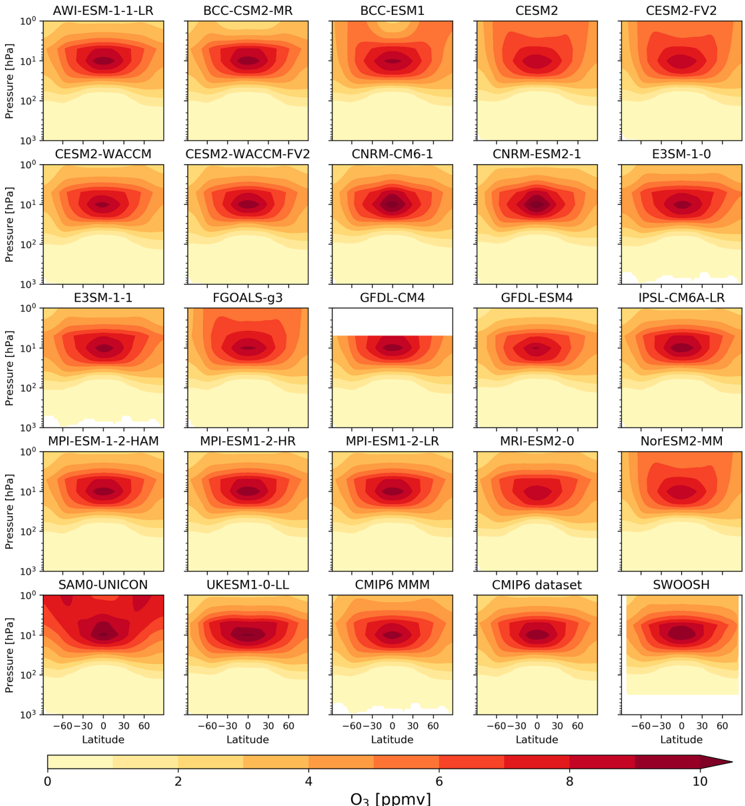
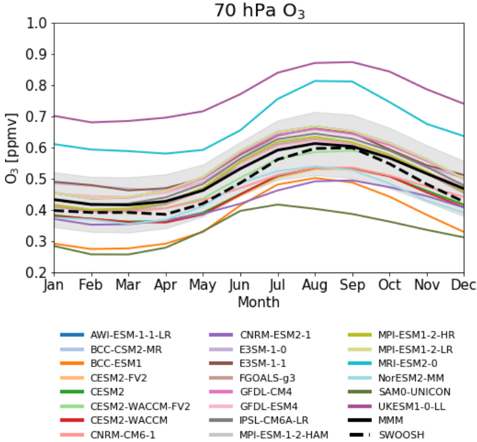
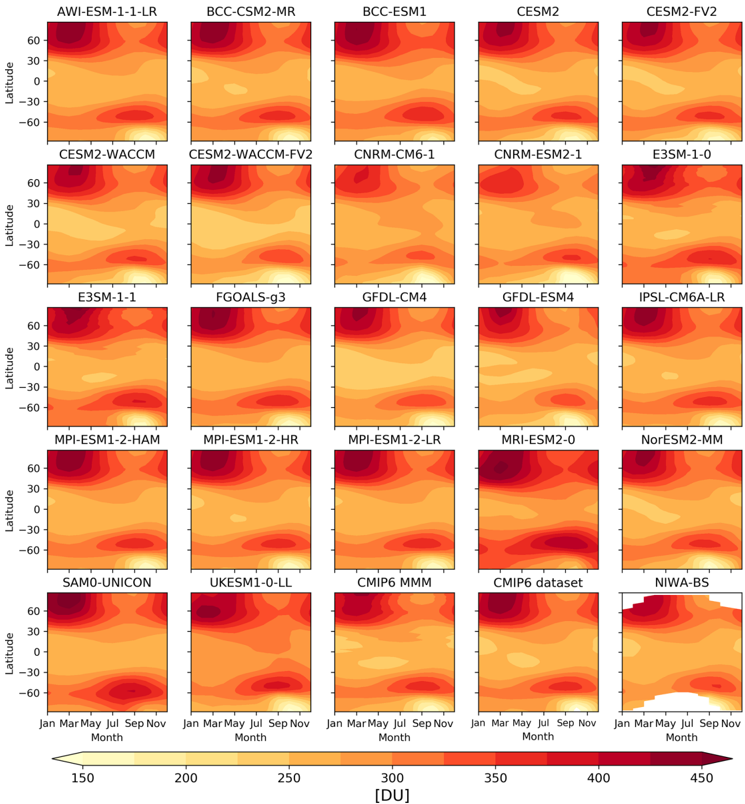
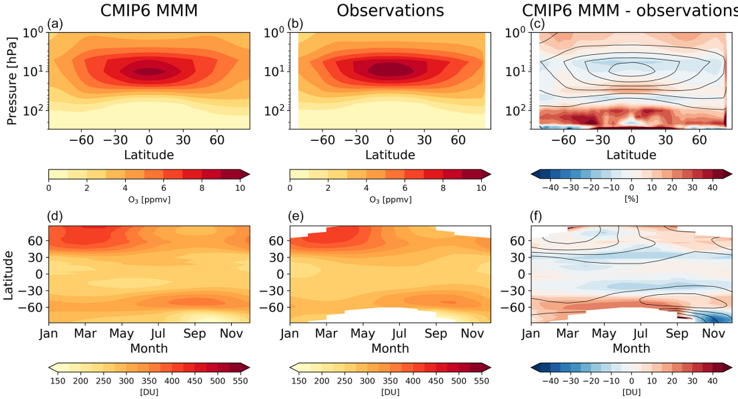
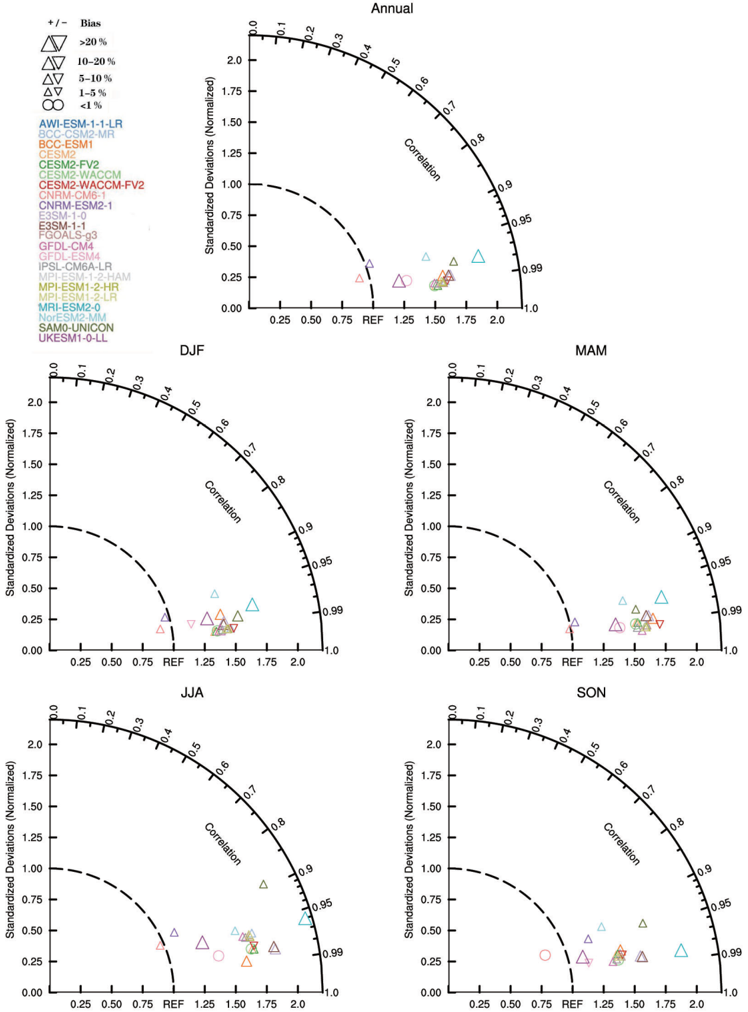
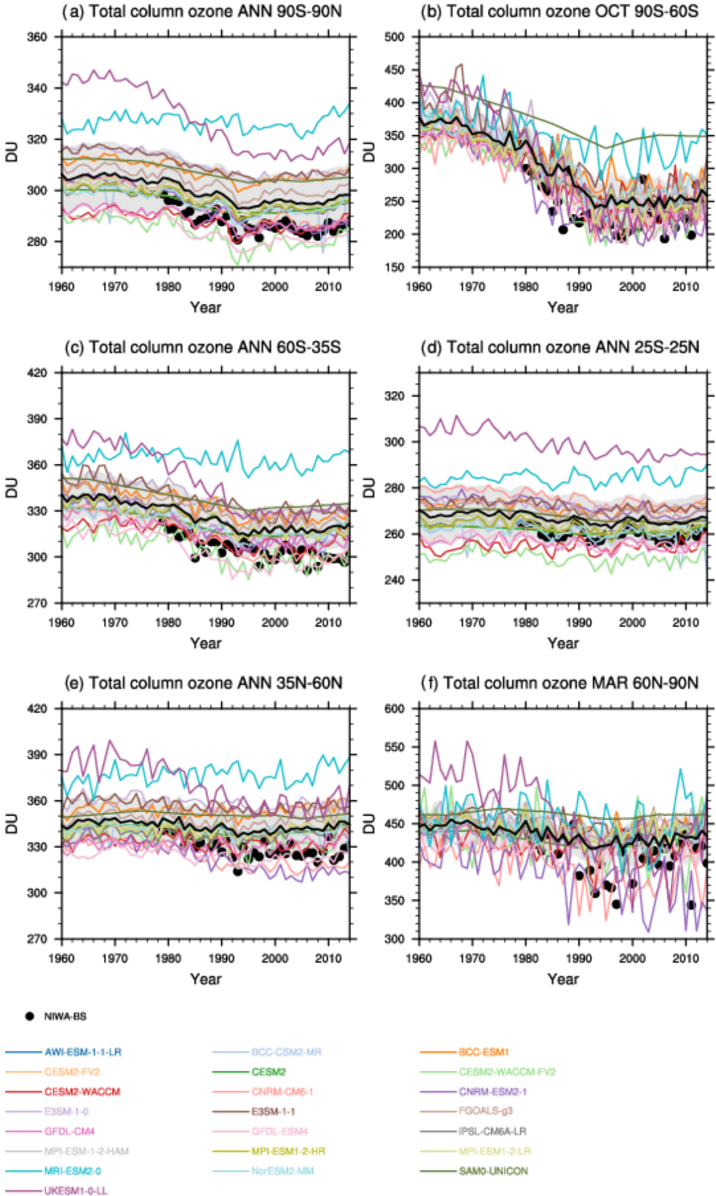
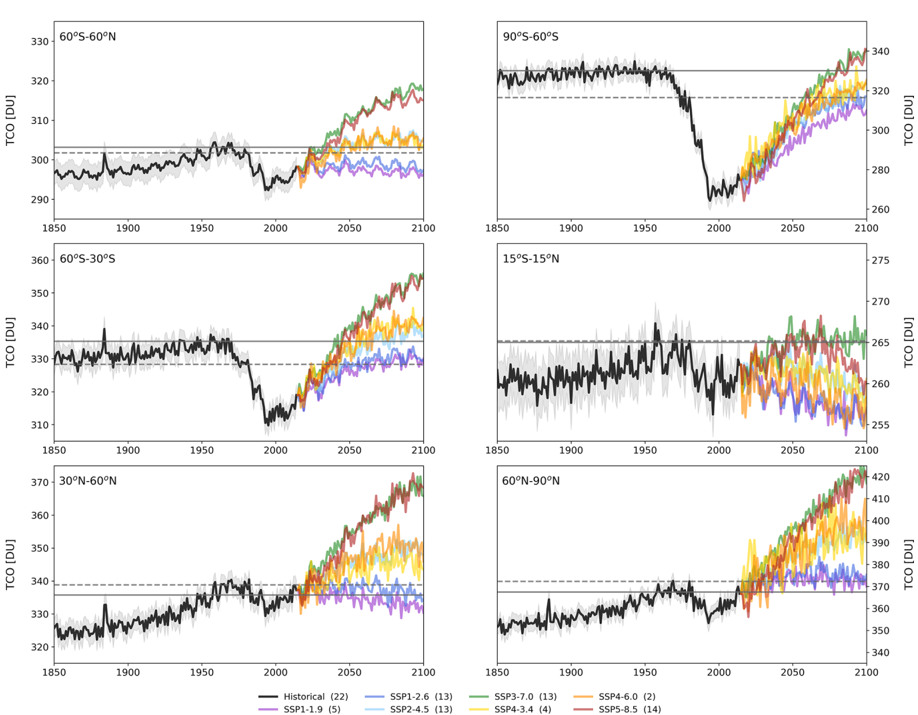
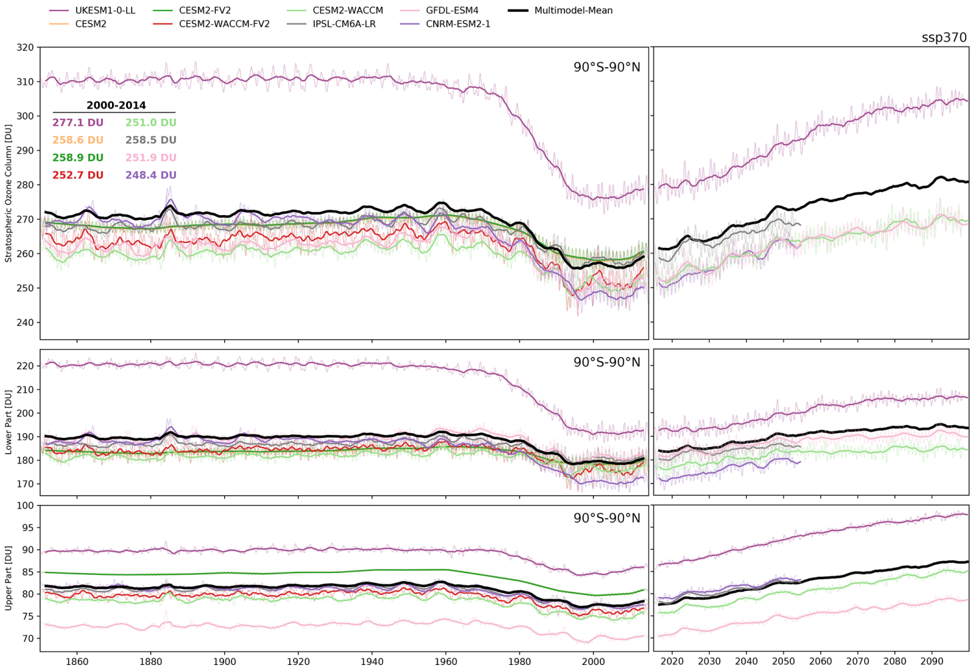
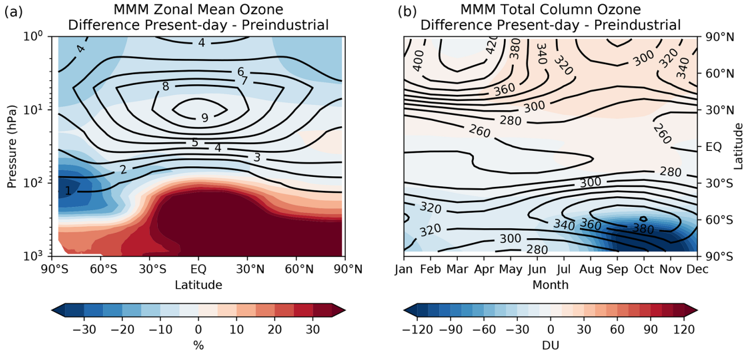
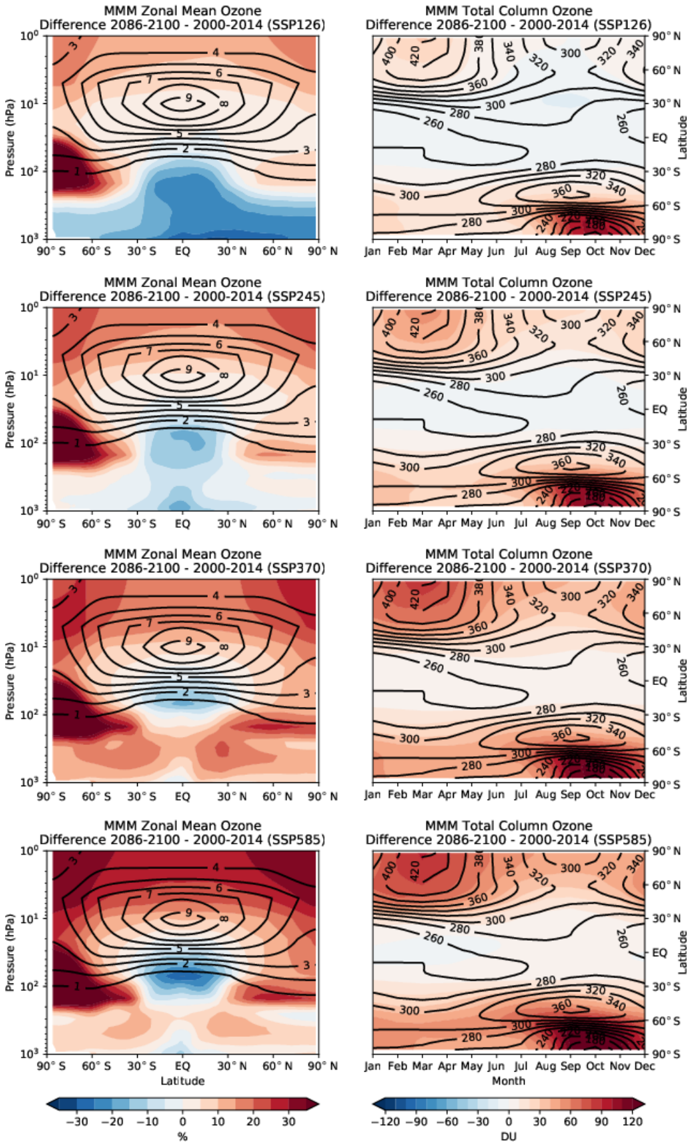
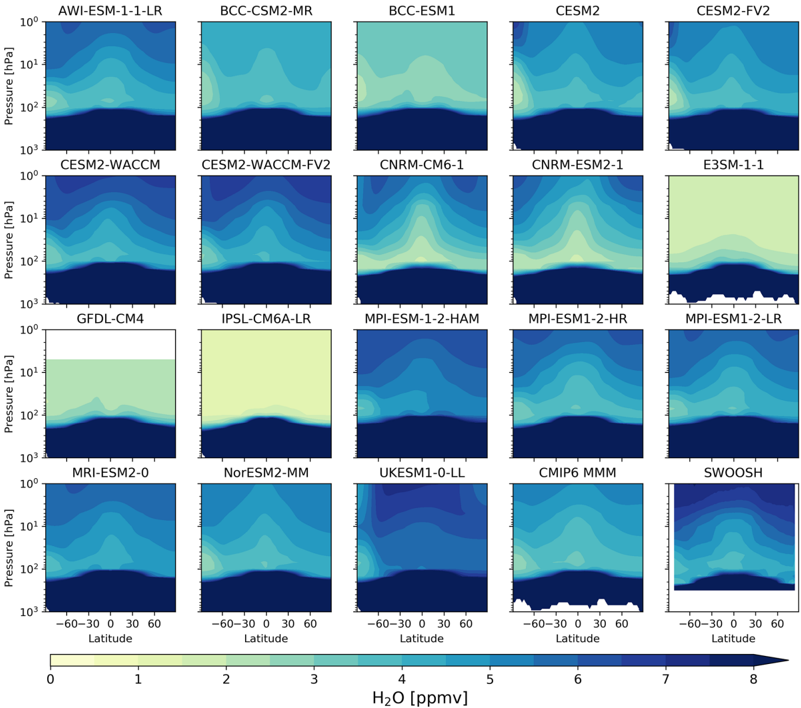
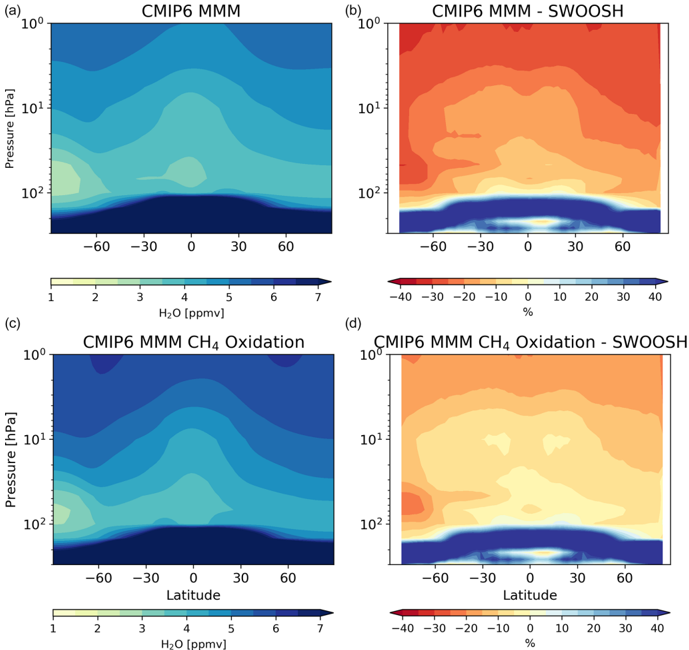
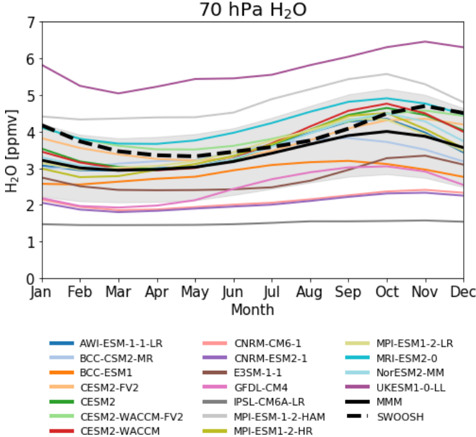
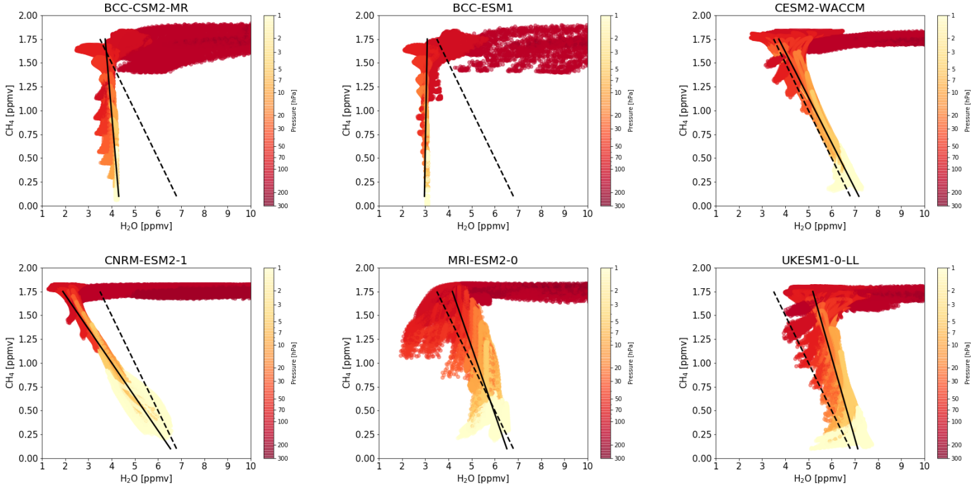
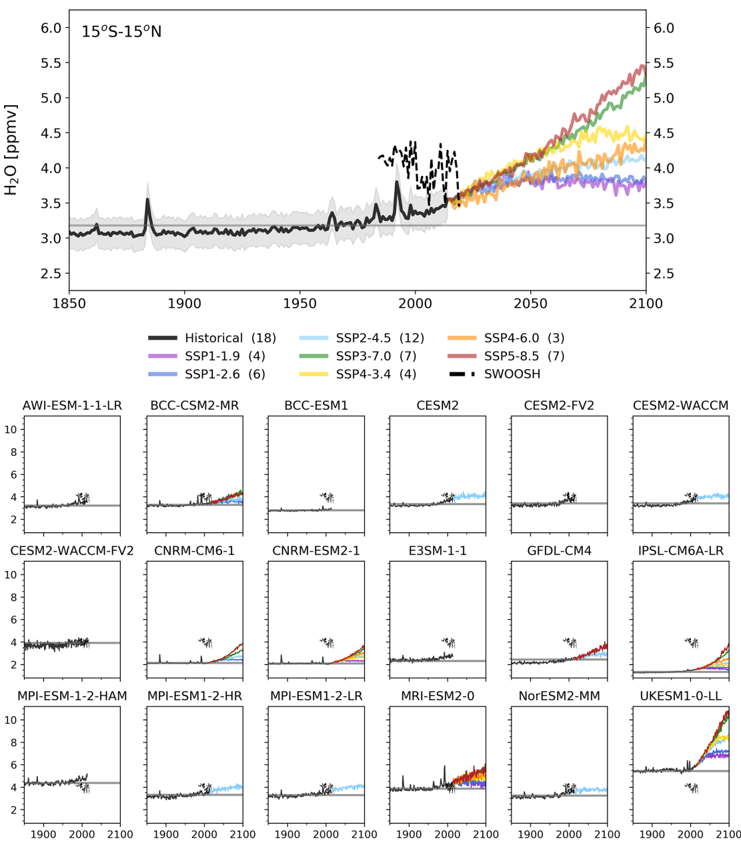
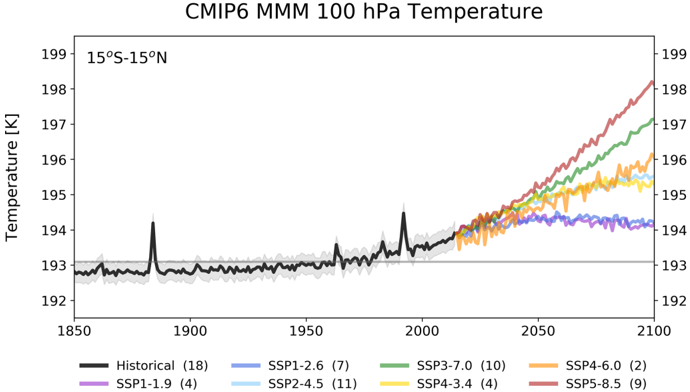
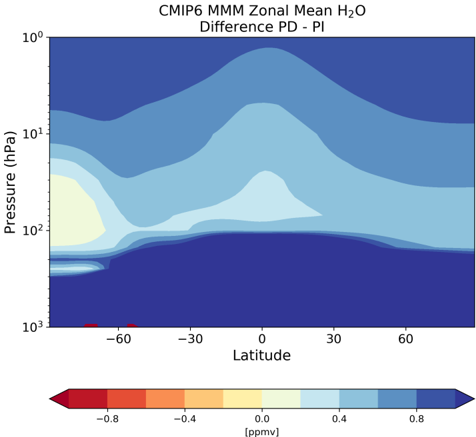
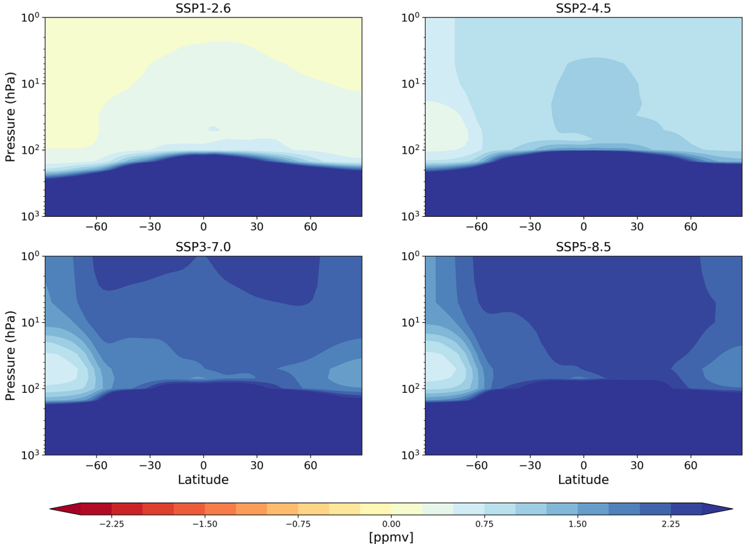
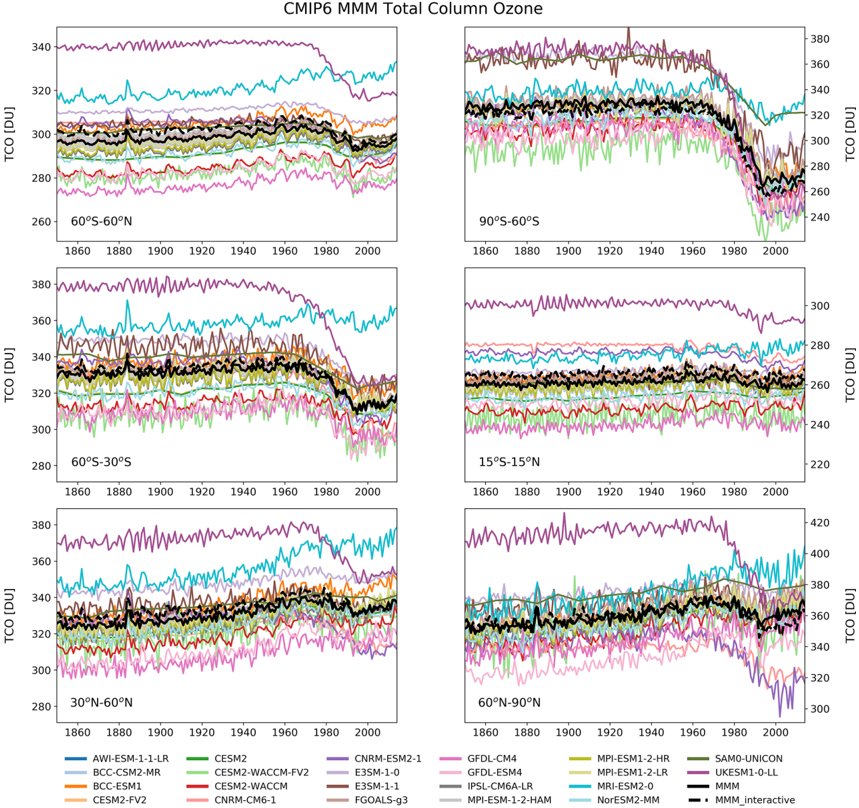
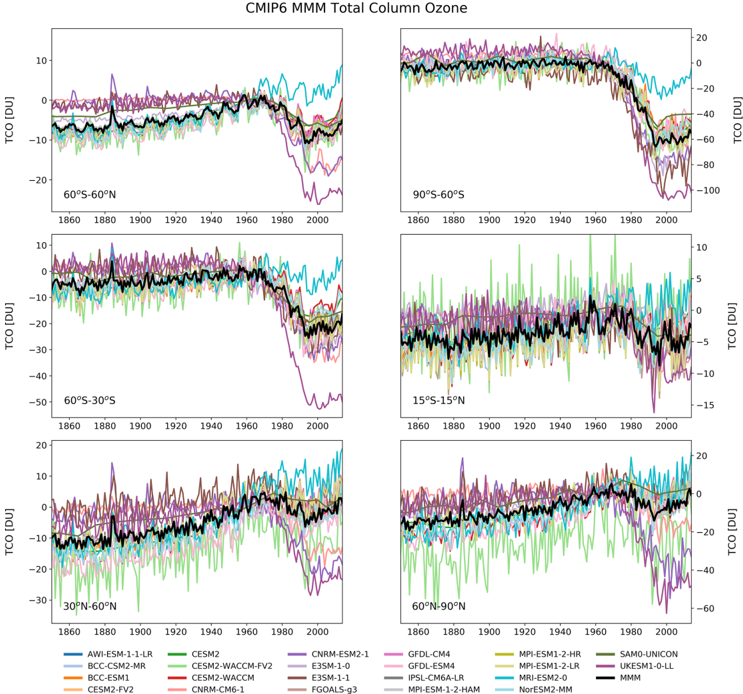
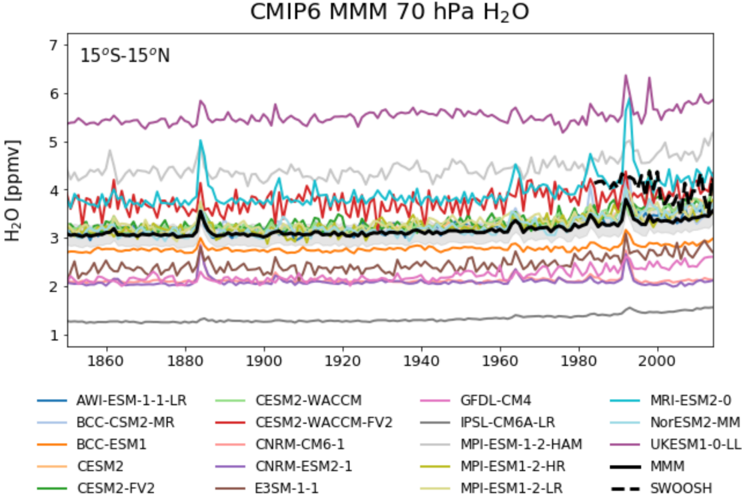
Stratospheric ozone and water vapour are key components of the Earth system, and past and future changes to both have important impacts on global and regional climate. Here, we evaluate long-term changes in these species from the pre-industrial period (1850) to the end of the 21st century in Coupled Model Intercomparison Project phase 6 (CMIP6) models under a range of future emissions scenarios. There is good agreement between the CMIP multi-model mean and observations for total column ozone (TCO), although there is substantial variation between the individual CMIP6 models. For the CMIP6 multi-model mean, global mean TCO has increased from ∼ 300 DU in 1850 to ∼ 305 DU in 1960, before rapidly declining in the 1970s and 1980s following the use and emission of halogenated ozone-depleting substances (ODSs). TCO is projected to return to 1960s values by the middle of the 21st century under the SSP2-4.5, SSP3-7.0, SSP4-3.4, SSP4-6.0, and SSP5-8.5 scenarios, and under the SSP3-7.0 and SSP5-8.5 scenarios TCO values are projected to be ∼ 10 DU higher than the 1960s values by 2100. However, under the SSP1-1.9 and SSP1-1.6 scenarios, TCO is not projected to return to the 1960s values despite reductions in halogenated ODSs due to decreases in tropospheric ozone mixing ratios. This global pattern is similar to regional patterns, except in the tropics where TCO under most scenarios is not projected to return to 1960s values, either through reductions in tropospheric ozone under SSP1-1.9 and SSP1-2.6, or through reductions in lower stratospheric ozone resulting from an acceleration of the Brewer–Dobson circulation under other Shared Socioeconomic Pathways (SSPs). In contrast to TCO, there is poorer agreement between the CMIP6 multi-model mean and observed lower stratospheric water vapour mixing ratios, with the CMIP6 multi-model mean underestimating observed water vapour mixing ratios by ∼ 0.5 ppmv at 70 hPa. CMIP6 multi-model mean stratospheric water vapour mixing ratios in the tropical lower stratosphere have increased by ∼ 0.5 ppmv from the pre-industrial to the present-day period and are projected to increase further by the end of the 21st century. The largest increases (∼ 2 ppmv) are simulated under the future scenarios with the highest assumed forcing pathway (e.g. SSP5-8.5). Tropical lower stratospheric water vapour, and to a lesser extent TCO, shows large variations following explosive volcanic eruptions.
Overview
The claims and statistics of this paper haven’t been checked yet.
Free: it reads the open-access text and checks the first 5 claims that cite a source we can check. Create a free account to check every claim.
Integrity signals
Registry
Cites
Statistics
Figures
Verification
Claims the paper makes
The claims and statistics of this paper haven’t been checked yet.
Free: it reads the open-access text and checks the first 5 claims that cite a source we can check. Create a free account to check every claim.
Claims other papers make about this one
Each is checked against this paper’s own text: does it say what the citing paper says it does?
The source backs part of the claim, not all of it — or backs it for a different population, condition or comparison.
In the citing paper
“However, recent climate model simulations [20–22], also reviewed by Bernhard et al. [23], suggest that under some scenarios of increasing greenhouse gas emissions, stratospheric O3 could exceed the 1980 baseline (the so-called “super-recovery”).”
From Changes in tropospheric air quality related to the protection of stratospheric ozone in a changing climate (2023) · cites this paper as [21]
Experimental — accuracy not yet measured
Self-check
Percentages, sums and reported differences re-computed from the paper’s own numbers.
The self-check needs the paper’s full text.
Citations
Cites
An Overview of CMIP5 and the Experiment Design
Taylor, K. E., Stouffer, R. J., & Meehl, G. A. (2012) · Bulletin of the American Meteorological Society · doi:10.1175/bams-d-11-00094.1 · Cited by 14,052
Eyring, V., Bony, S., Meehl, G. A., Senior, C. A., Stevens, B., Stouffer, R. J., & Taylor, K. E. (2016) · Geoscientific Model Development · doi:10.5194/gmd-9-1937-2016 · Cited by 11,981
Self-citationSummarizing multiple aspects of model performance in a single diagram
Taylor, K. E. (2001) · Journal of Geophysical Research: Atmospheres · doi:10.1029/2000jd900719 · Cited by 8,477
Riahi, K., van Vuuren, D. P., Kriegler, E., Edmonds, J., O’Neill, B. C., Fujimori, S., Bauer, N., Calvin, K., Dellink, R., Fricko, O., et al. (2017) · Global Environmental Change · doi:10.1016/j.gloenvcha.2016.05.009 · Cited by 6,607
Stratospheric sink for chlorofluoromethanes: chlorine atom-catalysed destruction of ozone
Molina, M. J., & Rowland, F. S. (1974) · Nature · doi:10.1038/249810a0 · Cited by 4,332
The RCP greenhouse gas concentrations and their extensions from 1765 to 2300
Meinshausen, M., Smith, S. J., Calvin, K., Daniel, J. S., Kainuma, M. L. T., Lamarque, J.-F., Matsumoto, K., Montzka, S. A., Raper, S. C. B., Riahi, K., et al. (2011) · Climatic Change · doi:10.1007/s10584-011-0156-z · Cited by 3,584
IPCC (2007): Climate Change The Physical Science Basis
Solomon, S. (2007) · AGU Fall Meeting Abstracts · Cited by 3,476
O’Neill, B. C., Kriegler, E., Ebi, K. L., Kemp-Benedict, E., Riahi, K., Rothman, D. S., van Ruijven, B. J., van Vuuren, D. P., Birkmann, J., Kok, K., et al. (2017) · Global Environmental Change · doi:10.1016/j.gloenvcha.2015.01.004 · Cited by 3,359
The Community Earth System Model Version 2 (CESM2)
Danabasoglu, G., Lamarque, J. ‐., Bacmeister, J., Bailey, D. A., DuVivier, A. K., Edwards, J., Emmons, L. K., Fasullo, J., Garcia, R., Gettelman, A., et al. (2020) · Journal of Advances in Modeling Earth Systems · doi:10.1029/2019ms001916 · Cited by 3,070
Self-citationHoesly, R. M., Smith, S. J., Feng, L., Klimont, Z., Janssens-Maenhout, G., Pitkanen, T., Seibert, J. J., Vu, L., Andres, R. J., Bolt, R. M., et al. (2018) · Geoscientific Model Development · doi:10.5194/gmd-11-369-2018 · Cited by 2,203
Research works printed but not linked: 1
- Stocker, T. F., Qin, D., Plattner, G.-K., Tignor, M., Allen, S. K., Boschung, J., Nauels, A., Xia, Y., Bex, V., and Midgley, P. M., Cambridge University Press, Cambridge, UK and New York, NY, USA, 2013.
Cited by
(2023) · Climate Change 2021 – The Physical Science Basis · doi:10.1017/9781009157896.008 · Cited by 637
Forster, P. M., Smith, C. J., Walsh, T., Lamb, W. F., Lamboll, R., Hauser, M., Ribes, A., Rosen, D., Gillett, N., Palmer, M. D., et al. (2023) · Earth System Science Data · doi:10.5194/essd-15-2295-2023 · Cited by 366
Tropospheric ozone in CMIP6 simulations
Griffiths, P. T., Murray, L. T., Zeng, G., Shin, Y. M., Abraham, N. L., Archibald, A. T., Deushi, M., Emmons, L. K., Galbally, I. E., Hassler, B., et al. (2021) · Atmospheric Chemistry and Physics · doi:10.5194/acp-21-4187-2021 · Cited by 289
Self-citationEffective radiative forcing from emissions of reactive gases and aerosols – a multi-model comparison
Thornhill, G. D., Collins, W. J., Kramer, R. J., Olivié, D., Skeie, R. B., O'Connor, F. M., Abraham, N. L., Checa-Garcia, R., Bauer, S. E., Deushi, M., et al. (2021) · Atmospheric Chemistry and Physics · doi:10.5194/acp-21-853-2021 · Cited by 181
Self-citationnpj Climate and Atmospheric Science
Friedel, M., Chiodo, G., Weber, K., Polvani, L. M., Daniel, J. S., Abraham, N. L., Davis, S. M., Deushi, M., Oshima, N., Horowitz, L. W., et al. (2019) · npj Climate and Atmospheric Science · doi:10.1038/41612.2397-3722 · Cited by 179
Self-citationZanis, P., Akritidis, D., Turnock, S. T., Naïk, V., Szopa, S., Georgoulias, A. K., Bauer, S. E., Deushi, M., Horowitz, L. W., Keeble, J., et al. (2022) · Environmental Research Letters · doi:10.1088/1748-9326/ac4a34 · Cited by 156
Self-citationExploring pathways for world development within planetary boundaries
van Vuuren, D. P., Doelman, J., Tagomori, I. S., Beusen, A. H. W., Cornell, S., Rockström, J., Schipper, A. M., Stehfest, E., Ambrósio, G., van den Berg, M., et al. (2025) · Nature · doi:10.1038/s41586-025-08928-w · Cited by 149
“Because stratospheric ozone (O 3 ) is not an IMAGE output, exogenous calculations, based on the same scenario assumptions, were used instead 33 .”
Stratospheric ozone, UV radiation, and climate interactions
Bernhard, G. H., Bais, A. F., Aucamp, P. J., Klekociuk, A. R., Liley, J. B., & McKenzie, R. L. (2023) · Photochemical & Photobiological Sciences · doi:10.1007/s43630-023-00371-y · Cited by 138
“Projections of TCO into the future are available from chemistry-climate models (CCMs), which were run for different future emissions scenarios as part of a coordinated, multi-model activity where all models follow the same protocols to perform a comparable set of simulations [11, 54].”
MethodTilmes, S., Visioni, D., Jones, A., Haywood, J., Séférian, R., Nabat, P., Boucher, O., Bednarz, E. M., & Niemeier, U. (2022) · Atmospheric Chemistry and Physics · doi:10.5194/acp-22-4557-2022 · Cited by 79
Self-citationStratospheric water vapor affecting atmospheric circulation
Charlesworth, E. J., Plöger, F., Birner, T., Baikhadzhaev, R., Ábalos, M., Abraham, N. L., Akiyoshi, H., Bekki, S., Dennison, F. W., Jöckel, P., et al. (2023) · Nature Communications · doi:10.1038/s41467-023-39559-2 · Cited by 101
Self-citationClimate change favours large seasonal loss of Arctic ozone
von der Gathen, P., Kivi, R., Wohltmann, I., Salawitch, R. J., & Rex, M. (2021) · Nature Communications · doi:10.1038/s41467-021-24089-6 · Cited by 100
Assessment of pre-industrial to present-day anthropogenic climate forcing in UKESM1
O’Connor, F. M., Abraham, N. L., Dalvi, M., Folberth, G., Griffiths, P. T., Hardacre, C. J., Johnson, B. T. T., Kahana, R., Keeble, J., Kim, B., et al. (2021) · Atmospheric chemistry and physics · doi:10.5194/acp-21-1211-2021 · Cited by 94
Self-citationHolland, P. R., O’Connor, G. K., Bracegirdle, T. J., Dutrieux, P., Naughten, K. A., Steig, E. J., Schneider, D. P., Jenkins, A., & Smith, J. A. (2022) · The Cryosphere · doi:10.5194/tc-16-5085-2022 · Cited by 82
The effect of interactive ozone chemistry on weak and strong stratospheric polar vortex events
Oehrlein, J., Chiodo, G., & Polvani, L. M. (2020) · Atmospheric Chemistry and Physics · doi:10.5194/acp-20-10531-2020 · Cited by 70
Self-citationDamany-Pearce, L., Johnson, B. T. T., Wells, A., Osborne, M., Allan, J., Belcher, C. M., Jones, A., & Haywood, J. (2022) · Scientific Reports · doi:10.1038/s41598-022-15794-3 · Cited by 74
The climate change perspective of photovoltaic power potential in Brazil
Zuluaga, C. F., Ávila-Díaz, A., Justino, F. B., Martins, F. R., & Cerón, W. L. (2022) · Renewable Energy · doi:10.1016/j.renene.2022.05.029 · Cited by 70
Madronich, S., Sulzberger, B., Longstreth, J. D., Schikowski, T., Andersen, M. P. S., Solomon, K. R., & Wilson, S. R. (2023) · Photochemical & Photobiological Sciences · doi:10.1007/s43630-023-00369-6 · Cited by 64
Stratospheric Moistening After 2000
Konopka, P., Tao, M., Ploeger, F., Hurst, D. F., Santee, M. L., Wright, J. S., & Riese, M. (2022) · Geophysical Research Letters · doi:10.1029/2021gl097609 · Cited by 58
“Considerable moistening of the northern lowermost stratosphere as projected by climate models (Dessler et al., 2013; Keeble et al., 2021) is evident in the reanalysis-based simulations but cannot be unambiguously confirmed by the MLS observations.”
BackgroundRole of Stratospheric Processes in Climate Change: Advances and Challenges
Tian, W., Huang, J., Zhang, J., Xie, F., Wang, W., & Peng, Y. (2023) · Advances in Atmospheric Sciences · doi:10.1007/s00376-023-2341-1 · Cited by 54
“Multiple chemistry–climate models project that the stratospheric ozone recovery will depend on the future climate change scenario (Dhomse et al., 2018; Keeble et al., 2021).”
BackgroundSelf-citationResponse of stratospheric water vapour to warming constrained by satellite observations
Nowack, P. J., Ceppi, P., Davis, S., Chiodo, G., Ball, W. T., Diallo, M., Haßler, B., Jia, Y., Keeble, J., & Joshi, M. (2023) · Nature Geoscience · doi:10.1038/s41561-023-01183-6 · Cited by 51
Self-citationAtmosphere–ocean–aerosol–chemistry–climate model SOCOLv4.0: description and evaluation
Sukhodolov, T., Egorova, T., Stenke, A., Ball, W. T., Brodowsky, C., Chiodo, G., Feinberg, A., Friedel, M., Karagodin-Doyennel, A., Peter, T., et al. (2021) · Geoscientific Model Development · doi:10.5194/gmd-14-5525-2021 · Cited by 50
Self-citationBednarz, E. M., Visioni, D., Kravitz, B., Jones, A., Haywood, J. M., Richter, J., MacMartin, D. G., & Braesicke, P. (2023) · Atmospheric Chemistry and Physics · doi:10.5194/acp-23-687-2023 · Cited by 47
Global Nitrous Oxide Assessment
United Nations Environment Programme (2024) · United Nations Environment Programme eBooks · doi:10.59117/20.500.11822/46562 · Cited by 42
A new perspective on permafrost boundaries in France during the Last Glacial Maximum
Stadelmaier, K. H., Ludwig, P., Bertran, P., Antoine, P., Shi, X., Lohmann, G., & Pinto, J. G. (2021) · Climate of the past · doi:10.5194/cp-17-2559-2021 · Cited by 40
“The AWI-ESM has been used in the recent CMIP6/PMIP4 intercomparisons (Brierley et al., 2020; Keeble et al., 2021; Kageyama et al., 2021) and was applied for the LGM (Lohmann et al., 2020).”
Self-citationAttribution of Stratospheric and Tropospheric Ozone Changes Between 1850 and 2014 in CMIP6 Models
Zeng, G., Morgenstern, O., Williams, J., O’Connor, F. M., Griffiths, P. T., Keeble, J., Deushi, M., Horowitz, L. W., Naïk, V., Emmons, L. K., et al. (2022) · Journal of Geophysical Research Atmospheres · doi:10.1029/2022jd036452 · Cited by 40
“These models have been evaluated for their suitabil-185 ity for simulating past ozone changes in both the stratosphere and the troposphere (Morgenstern186 et al., 2020; Morgenstern, 2021; Griffiths et al., 2021; Keeble et al., 2021).”
BackgroundMethodResultInfluentialSelf-citationMitigation needed to avoid unprecedented multi-decadal North Atlantic Oscillation magnitude
Smith, D. M., Dunstone, N., Eade, R., Hardiman, S. C., Hermanson, L., Scaife, A. A., & Seabrook, M. (2025) · Nature Climate Change · doi:10.1038/s41558-025-02277-2 · Cited by 36
“2b, vertical grey line), consistent with a general underestimation of stratospheric water vapour 60 .”
Using Climate Model Simulations to Constrain Observations
Santer, B. D., Po–Chedley, S., Mears, C. A., Fyfe, J. C., Gillett, N. P., Fu, Q., Painter, J. F., Solomon, S., Steiner, A. K., Wentz, F. J., et al. (2021) · Journal of Climate · doi:10.1175/jcli-d-20-0768.1 · Cited by 36
The Imminent Data Desert: The Future of Stratospheric Monitoring in a Rapidly Changing World
Salawitch, R. J., Smith, J. B., Selkirk, H. B., Wargan, K., Chipperfield, M. P., Hossaini, R., Levelt, P. F., Livesey, N. J., McBride, L. A., Millan, L. F., et al. (2025) · Bulletin of the American Meteorological Society · doi:10.1175/bams-d-23-0281.1 · Cited by 36
Multi-decadal variability controls short-term stratospheric water vapor trends
Tao, M., Konopka, P., Wright, J. S., Liu, Y., Bian, J., Davis, S., Jia, Y., & Ploeger, F. (2023) · Communications Earth & Environment · doi:10.1038/s43247-023-01094-9 · Cited by 35
Self-citationThe future ozone trends in changing climate simulated with SOCOLv4
Karagodin‐Doyennel, A., Rozanov, E., Sukhodolov, T., Egorova, T. A., Sedláčék, J., & Peter, T. (2023) · Atmospheric chemistry and physics · doi:10.5194/acp-23-4801-2023 · Cited by 35
Brown, H., Wagman, B., Bull, D., Peterson, K., Hillman, B., Liu, X., Ke, Z., & Lin, L. (2024) · Geoscientific model development · doi:10.5194/gmd-17-5087-2024 · Cited by 34
Ivanciu, I., Matthes, K., Wahl, S., Harlaß, J., & Biastoch, A. (2021) · Atmospheric chemistry and physics · doi:10.5194/acp-21-5777-2021 · Cited by 33
Weber, J., Keeble, J., Abraham, N. L., Beerling, D. J., & Martin, M. V. (2024) · npj Climate and Atmospheric Science · doi:10.1038/s41612-024-00678-2 · Cited by 32
Self-citationInfluence of Ozone Forcing on 21st Century Southern Hemisphere Surface Westerlies in CMIP6 Models
Revell, L. E., Robertson, F., Douglas, H., Morgenstern, O., & Frame, D. J. (2022) · Geophysical Research Letters · doi:10.1029/2022gl098252 · Cited by 31
“However, MRI-ESM-2-0 is known to underestimate Antarctic polar ozone depletion (Keeble et al., 2021; Morgenstern et al., 2020) therefore likely does not project future ozone changes accurately in this region.”
BackgroundSelf-citationLong-term trend of water vapor over the Tibetan Plateau in boreal summer under global warming
Yu, J., Li, Q., Ding, Y., Zhang, J., Wu, Q., & Shen, X. (2022) · Science China Earth Sciences · doi:10.1007/s11430-021-9874-0 · Cited by 29
“The improvement in the CMIP6 simulation of the specific humidity in the TP is due to its ability to well capture the meridional convergence characteristics of water vapor (Keeble et al., 2021; Dong and Dong, 2021).”
BackgroundSelf-citationZhao, Y., Li, J., Wang, Y., Zhang, W., & Wen, D. (2024) · Geophysical Research Letters · doi:10.1029/2023gl107713 · Cited by 28
“Moreover, the projected increase in stratospheric water vapor (Keeble et al., 2021), likely driven primarily by a warming troposphere resulting in increased upwelling radiation and ensuing enhanced tropopause Geophysical Research Letters 10.1029/2023GL107713 radiative heating and moistening…”
BackgroundInfluentialSatellite-observed strong subtropical ocean warming as an early signature of global warming
Yang, H., Lohmann, G., Stepanek, C., Wang, Q., Huang, R. X., Shi, X., Liu, J., Chen, D., Wang, X., Zhong, Y., et al. (2023) · Communications Earth & Environment · doi:10.1038/s43247-023-00839-w · Cited by 29
“AWI-ESM has been evaluated and widely used in the study of present and paleoclimate research 39,88,91 – 96 .”
MethodSelf-citationThe Evolution of the Hunga Hydration in a Moistening Stratosphere
Millán, L., Read, W. G., Santee, M. L., Lambert, A., Manney, G. L., Neu, J. L., Pitts, M. C., Werner, F., Livesey, N. J., & Schwartz, M. J. (2024) · Geophysical Research Letters · doi:10.1029/2024gl110841 · Cited by 19
“These hemispheric estimates agree with previous assessments (e.g., Douglass & Stanford, 1982; Rosenlof et al., 1997), which computed an asymmetry of 2% of the total burden (vs. 1.5 ± 0.7% from the MLS data).”
InfluentialGarfinkel, C. I., Harari, O., Ziv, S. Z., Rao, J., Morgenstern, O., Zeng, G., Tilmes, S., Kinnison, D. E., O’Connor, F. M., Butchart, N., et al. (2021) · Atmospheric chemistry and physics · doi:10.5194/acp-21-3725-2021 · Cited by 28
Self-citationDomingo, N. G. G., Fiore, A. M., Lamarque, J., Kinney, P. L., Jiang, L., Gasparrini, A., Breitner, S., Lavigne, É., Madureira, J., Masselot, P., et al. (2024) · One Earth · doi:10.1016/j.oneear.2024.01.001 · Cited by 22
Near-future rocket launches could slow ozone recovery
Revell, L. E., Bannister, M. T., Brown, T. F. M., Sukhodolov, T., Vattioni, S., Dykema, J. A., Frame, D. J., Cater, J. E., Chiodo, G., & Rozanov, E. (2025) · npj Climate and Atmospheric Science · doi:10.1038/s41612-025-01098-6 · Cited by 21
“Theozonelayerisshowingearlysignsofrecovery 7 , withareturnto1980levelsprojectedforthenextfewdecades,dependingon latitude and future greenhouse gas emissions 8,9 .”
Self-citationFiedler, S., Naïk, V., O’Connor, F. M., Smith, C., Pincus, R. L., Griffiths, P. T., Kramer, R. J., Takemura, T., Allen, R. J., İm, U., et al. (2024) · Geoscientific model development · doi:10.5194/gmd-17-2387-2024 · Cited by 21
Self-citationBjörklund, R., Vigouroux, C., Effertz, P., García, O., Geddes, A., Hannigan, J. W., Miyagawa, K., Kotkamp, M., Langerock, B., Nedoluha, G., et al. (2024) · Atmospheric measurement techniques · doi:10.5194/amt-17-6819-2024 · Cited by 21
Opinion: Why all emergent constraints are wrong but some are useful – a machine learning perspective
Nowack, P. J., & Watson‐Parris, D. (2025) · Atmospheric chemistry and physics · doi:10.5194/acp-25-2365-2025 · Cited by 23
“…(for observations and CMIP models) and the long-term climate change response (CMIP models) could be predicted well However, under abrupt-4 × CO 2 forcing, the function notably only held true after log-transforming the predictand before training, which apparently led to a quasi-linearization…”
Self-citationSmith, J. W., Haynes, P., Maycock, A. C., Butchart, N., & Bushell, A. C. (2021) · Atmospheric chemistry and physics · doi:10.5194/acp-21-2469-2021 · Cited by 21
Calatrava, A., Asorey, H., Astaloš, J., Azevedo, A., Benincasa, F., Blanquer, I., Bobák, M., Brasileiro, F., Codó, L., del Caño, L., et al. (2023) · Computer Science Review · doi:10.1016/j.cosrev.2023.100571 · Cited by 21
Changes in Stratospheric Dynamics Simulated by the EC‐Earth Model From CMIP5 to CMIP6
Serva, F., Christiansen, B., Davini, P., von Hardenberg, J., van den Oord, G., Reerink, T., Wyser, K., & Yang, S. (2024) · Journal of Advances in Modeling Earth Systems · doi:10.1029/2023ms003756 · Cited by 20
“High‐top models generally also benefit from a finer vertical discretization and more physically consistent parameterizations for dynamical and radiative processes in the upper atmosphere (Geller et al., 2013; Keeble et al., 2021).”
BackgroundArctic Stratosphere Circulation Changes in the 21st Century in Simulations of INM CM5
Vargin, P. N., Kostrykin, S. V., Volodin, E. M., Pogoreltsev, A. I., & Wei, K. (2021) · Atmosphere · doi:10.3390/atmos13010025 · Cited by 20
Influences of Antarctic Ozone Depletion on Southern Ocean Aerosols
Bhatti, Y., Revell, L. E., & McDonald, A. (2022) · Journal of Geophysical Research Atmospheres · doi:10.1029/2022jd037199 · Cited by 20
“CMIP6 simulations have been extensively validated against measurements (e.g., Eyring et al., 2016; Goyal et al., 2021; Keeble et al., 2021; Séférian et al., 2020; Schuddeboom & McDonald, 2021; T. Bracegirdle, Holmes, et al., 2020).”
Forster, P. M. D. F., Smith, C., Walsh, T., Lamb, W. F., Lamboll, R., Cassou, C., Hauser, M., Hausfather, Z., Lee, J., Palmer, M. D., et al. (2025) · Earth System Science Data Discussions · doi:10.5194/essd-2025-250-supplement · Cited by 19
Weakening of springtime Arctic ozone depletion with climate change
Friedel, M., Chiodo, G., Sukhodolov, T., Keeble, J., Peter, T., Seeber, S., Stenke, A., Akiyoshi, H., Rozanov, E., Plummer, D., et al. (2023) · Atmospheric Chemistry and Physics · doi:10.5194/acp-23-10235-2023 · Cited by 18
Self-citationQBO Phase Synchronization in CMIP6 Historical Simulations Attributed to Ozone Forcing
Butchart, N., Andrews, M. B., & JONES, C. D. (2023) · Geophysical Research Letters · doi:10.1029/2023gl104401 · Cited by 17
Climate forcing due to future ozone changes: an intercomparison of metrics and methods
Collins, W. J., O’Connor, F. M., Barker, C. R., Byrom, R., Eastham, S. D., Hodnebrog, Ø., Jöckel, P., Marais, E. A., Mertens, M., Myhre, G., et al. (2025) · Atmospheric chemistry and physics · doi:10.5194/acp-25-9031-2025 · Cited by 17
Self-citationHow Well Do CMIP6 Models Simulate the Greening of the Tibetan Plateau?
Liu, J., & Lü, Y. (2022) · Remote Sensing · doi:10.3390/rs14184633 · Cited by 17
Contzen, J., Dickhaus, T., & Lohmann, G. (2022) · Geoscientific model development · doi:10.5194/gmd-15-1803-2022 · Cited by 17
Self-citationPloeger, F., Birner, T., Charlesworth, E. J., Konopka, P., & Muller, R. H. (2024) · Atmospheric chemistry and physics · doi:10.5194/acp-24-2033-2024 · Cited by 16
Turnock, S. T., Akritidis, D., Horowitz, L. W., Mertens, M., Pozzer, A., Reddington, C. L. S., Wang, H., Zhou, P., & O’Connor, F. M. (2025) · Atmospheric chemistry and physics · doi:10.5194/acp-25-7111-2025 · Cited by 16
Self-citationThe Effect of Convective Injection of Ice on Stratospheric Water Vapor in a Changing Climate
Smith, J. W., Bushell, A. C., Butchart, N., Haynes, P., & Maycock, A. C. (2022) · Geophysical Research Letters · doi:10.1029/2021gl097386 · Cited by 16
“Current climate models in phase six of the Coupled Model Intercomparsion Project (CMIP6) show a large spread in stratospheric water vapor concentrations in the present day and in future projections (Keeble et al., 2021).”
BackgroundWACCM6 Projections of Polar Mesospheric Cloud Abundance Over the 21st Century
Yu, W., Yue, J., García, R. R., Mlynczak, M. G., & Russell, J. M. (2023) · Journal of Geophysical Research Atmospheres · doi:10.1029/2023jd038985 · Cited by 14
“…the simulation of middle atmospheric water vapor and temperature, CESM-WACCM6 is one of the most representative models in the CMIP6 model intercomparison (Keeble et al., 2021): the middle atmospheric water vapor and temperature in WACCM6 are close to the values of the multi-model means.”
MethodYamamoto, A. L. C., Corrêa, M. D. P., Torres, R. R., Martins, F. B., & Godin-Beekmann, S. M. (2024) · Theoretical and Applied Climatology · doi:10.1007/s00704-023-04821-6 · Cited by 14
“For TOC, the results provided are complementary to those of Keeble et al. (2021).”
InfluentialHertig, E., Jahn, S., & Kaspar‐Ott, I. (2023) · Earth s Future · doi:10.1029/2022ef003317 · Cited by 14
Why the lower stratosphere cools when the troposphere warms
Lin, J., & Emanuel, K. (2024) · Proceedings of the National Academy of Sciences · doi:10.1073/pnas.2319228121 · Cited by 13
Enhanced Climate Response to Ozone Depletion From Ozone‐Circulation Coupling
Lin, P., & Ming, Y. (2021) · Journal of Geophysical Research Atmospheres · doi:10.1029/2020jd034286 · Cited by 13
Exploring ozone–climate interactions in idealized CMIP6 DECK experiments
Wang, J., Chiodo, G., Ayarzagüena, B., Ball, W. T., Diallo, M., Haßler, B., Keeble, J., Nowack, P. J., Orbe, C., Vattioni, S., et al. (2025) · Atmospheric chemistry and physics · doi:10.5194/acp-25-17819-2025 · Cited by 12
“The inclusion of a stratospheric temperature adjustment under the assumption of fixed dynamical heating is necessary to compute radiative forcing in addition to the more straightforward instantaneous radiative forcing.”
InfluentialSelf-citationEvaluating the Ozone Valley over the Tibetan Plateau in CMIP6 Models
Zhang, K., Duan, J., Zhao, S., Zhang, J., Keeble, J., & Liu, H. (2021) · Advances in Atmospheric Sciences · doi:10.1007/s00376-021-0442-2 · Cited by 12
Self-citationBenito‐Barca, S., Ábalos, M., Calvo, N., Garny, H., Birner, T., Abraham, N. L., Akiyoshi, H., Dennison, F. W., Jöckel, P., Josse, B., et al. (2025) · Journal of Geophysical Research Atmospheres · doi:10.1029/2024jd042412 · Cited by 11
“As a consequence, total stratospheric ozone is expected to recover to pre‐ 1980 levels over the 21st century (Chipperfield et al., 2017; Dhomse et al., 2018; Keeble et al., 2021; WMO, 2022).”
Self-citationLangille, J. A., Rieger, L., Blanchard, Y., Blanchet, J., Bourassa, A., Degenstein, D. A., Huang, Y., Strong, K., Walker, K. A., Zawada, D. J., et al. (2025) · Bulletin of the American Meteorological Society · doi:10.1175/bams-d-23-0309.1 · Cited by 11
Stratospheric Aerosol Intervention experiment for the Chemistry–Climate Model Initiative
Tilmes, S., Bednarz, E., Jörimann, A., Visioni, D., Kinnison, D. E., Chiodo, G., & Plummer, D. A. (2025) · Atmospheric chemistry and physics · doi:10.5194/acp-25-6001-2025 · Cited by 11
“State-of-the-art chemistry–climate models with interactive chemistry that participated in CMIP6 performed reasonably well regarding the historical and future evolution of stratospheric species, including ozone (e.g., Keeble et al., 2021).”
Self-citationNo evidence of worsening Arctic springtime ozone losses over the 21st century
Polvani, L. M., Keeble, J., Banerjee, A., Checa-Garcia, R., Chiodo, G., Rieder, H. E., & Rosenlof, K. H. (2023) · Nature Communications · doi:10.1038/s41467-023-37134-3 · Cited by 10
Self-citationThe influence of future changes in springtime Arctic ozone on stratospheric and surface climate
Chiodo, G., Friedel, M., Seeber, S., Domeisen, D., Stenke, A., Sukhodolov, T., & Zilker, F. (2023) · Atmospheric Chemistry and Physics · doi:10.5194/acp-23-10451-2023 · Cited by 10
“Hence, unlike historic ozone depletion, future trends in springtime Arctic ozone are expected to be significant, particularly in high-emission scenarios (Keeble et al., 2021).”
BackgroundSelf-citationHow marine cloud brightening could also affect stratospheric ozone
Bednarz, E., Haywood, J., Visioni, D., Butler, A. H., & Jones, A. (2025) · Science Advances · doi:10.1126/sciadv.adu4038 · Cited by 10
The impact of increasing stratospheric radiative damping on the quasi-biennial oscillation period
Zhou, T., DallaSanta, K., Nazarenko, L., Schmidt, G. A., & Jin, Z. (2021) · Atmospheric chemistry and physics · doi:10.5194/acp-21-7395-2021 · Cited by 10
Ziv, S. Z., Garfinkel, C. I., Davis, S., & Banerjee, A. (2022) · Atmospheric chemistry and physics · doi:10.5194/acp-22-7523-2022 · Cited by 10
Self-citationCentury-long column ozone records show that chemical and dynamical influences counteract each other
Brönnimann, S. (2022) · Communications Earth & Environment · doi:10.1038/s43247-022-00472-z · Cited by 11
Arctic stratosphere changes in the 21st century in the Earth system model SOCOLv4
Vargin, P. N., Kostrykin, S. V., Koval, A. V., Rozanov, E., Egorova, T. A., Smyshlyaev, S. P., & Tsvetkova, N. (2023) · Frontiers in Earth Science · doi:10.3389/feart.2023.1214418 · Cited by 10
Qiu, W., Zhao, Q., Yang, S., Xing, X., Azorín-Molina, C., Zhang, G., Zha, J., & Deng, K. (2025) · Climate Dynamics · doi:10.1007/s00382-025-07900-8 · Cited by 9
Smale, D., Hannigan, J. W., Lad, S., Murphy, M., McGaw, J., & Robinson, J. (2023) · Journal of Quantitative Spectroscopy and Radiative Transfer · doi:10.1016/j.jqsrt.2023.108665 · Cited by 8
Archibald, A. T., Sinha, B., Russo, M. R., Matthews, E., Squires, F., Abraham, N. L., Bauguitte, S. J.-B., Bannan, T. J., Bell, T. G., Berry, D. I., et al. (2025) · Earth system science data · doi:10.5194/essd-17-135-2025 · Cited by 8
Self-citationRoy, C., Rathod, S., & Ayantika, D. C. (2023) · Geophysical Research Letters · doi:10.1029/2022gl101439 · Cited by 8
Statistical Downscaling of Precipitation in the South and Southeast of Mexico
Andrade‐Velázquez, M., & Montero-Martínez, M. J. (2023) · Climate · doi:10.3390/cli11090186 · Cited by 7
Projected future changes in bomb cyclones by the HighResMIP-PRIMAVERA multimodel ensemble
Gao, J., Minobe, S., Roberts, M. J., Haarsma, R., Putrasahan, D. A., Scoccimarro, E., Terray, L., & Vidale, P. L. (2024) · Climate Dynamics · doi:10.1007/s00382-024-07327-7 · Cited by 7
“The depletion of ozone is likely the main driver of this cooling (McLandress et al. 2010, 2011; Iglesias-Suarez et al. 2016), as the prescribed ozone forcing for the CGCMs remains below pre-1980s values until the late 21st century (Keeble et al. 2021).”
Technical note: Unsupervised classification of ozone profiles in UKESM1
Fahrin, F., Jones, D. C., Wu, Y., Keeble, J., & Archibald, A. T. (2023) · Atmospheric chemistry and physics · doi:10.5194/acp-23-3609-2023 · Cited by 7
Self-citationChatzopoulou, A., Tourpali, K., Bais, A. F., & Braesicke, P. (2025) · Photochemical & Photobiological Sciences · doi:10.1007/s43630-024-00675-7 · Cited by 7
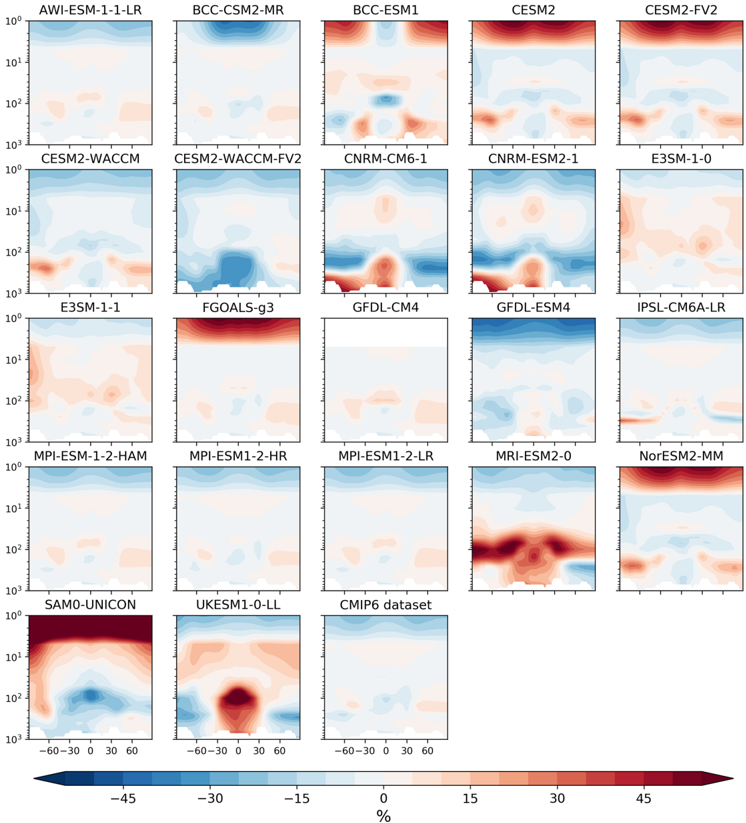
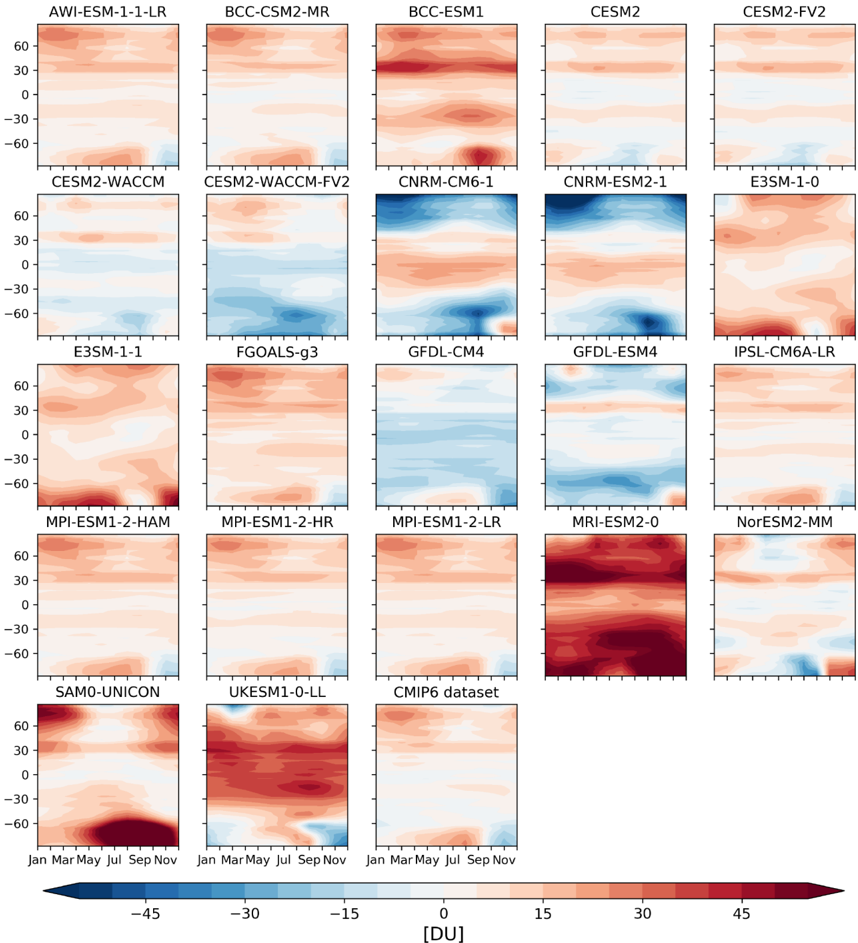
“Despite the good agreement between the CMIP6 MMM TCO and observations, there are substantial differences in the absolute levels of TCO simulations by individual models [57].”
Upper tropospheric moistening during the Asian summer monsoon in a changing climate
Singh, B. B., Krishnan, R., Sabin, T. P., Vellore, R. K., Ganeshi, N., & Srivastava, M. K. (2023) · Climate Dynamics · doi:10.1007/s00382-023-06896-3 · Cited by 7
“In a changing climate, robust quantification of UTLS water vapor variability remains a great challenge till date though models generally tend to project future moistening (Keeble et al. 2021).”
Signal‐To‐Noise Calculations of Emergence and De‐Emergence of Stratospheric Ozone Depletion
Robertson, F., Revell, L. E., Douglas, H., Archibald, A. T., Morgenstern, O., & Frame, D. J. (2023) · Geophysical Research Letters · doi:10.1029/2023gl104246 · Cited by 7
“0/WMO (2011) A1 scenario (Figure 1), and indeed, in all moderate-to-high GHG emissions scenarios (Hassler & Young, 2022; Keeble et al., 2021).”
BackgroundSelf-citationReply to: No evidence of worsening Arctic springtime ozone losses over the 21st century
von der Gathen, P., Kivi, R., Wohltmann, I., Salawitch, R. J., & Rex, M. (2023) · Nature Communications · doi:10.1038/s41467-023-37135-2 · Cited by 6
“Keeble et al.11 state “the CMIP6 MMM underestimates the observed decline in TCO Received: 15 March 2022 Accepted: 3 March 2023 Check for updates 1Alfred Wegener Institute, Helmholtz Centre for Polar and Marine Research, Potsdam, Germany.”
BackgroundChatzopoulou, A., Tourpali, K., Bais, A. F., & Braesicke, P. (2024) · Photochemical & Photobiological Sciences · doi:10.1007/s43630-024-00676-6 · Cited by 6
“…radiation simulations were provided by the models: CESM2-WACCM [42], CNRM-CM6-1-HR [43, 44], CNRM-ESM2-1 [45], GFDL-ESM4 [46], GISS-E2-1-G, GISS-E2-1-H [47], MRI-ESM2-0 [48], UKESM1-0-LL [49], IPSL-CM6A-LR [50, 51], MPI-ESM1-2-LR and MPI-ESM1-2-HR [52–55] (more details are given in Table 1 [33]).”
Opinion: Why all emergent constraints are wrong but some are useful – a machine learning perspectivePreprint
Nowack, P. J., & Watson‐Parris, D. (2024) · doi:10.5194/egusphere-2024-1636 · Cited by 6
Self-citationIndirect climate forcing from ozone depleting substancesPreprint
Collins, W. J., Daniel, J. S., Chipperfield, M. P., Cussac, M., Deushi, M., Faluvegi, G., Griffiths, P. T., Hodnebrog, Ø., Horowitz, L. W., Keeble, J., et al. (2026) · doi:10.5194/egusphere-2025-6033 · Cited by 6
Self-citationMoisture transport by convective overshoots in the tropical tropopause layer
Powell, C., Haynes, P., Ming, A., & Taylor, J. R. (2025) · Weather · doi:10.1002/wea.7689 · Cited by 5
Shift in cold-point tropopause trends derived from radiosonde, satellite and reanalysis data
Zolghadrshojaee, M., Tegtmeier, S., Davis, S., Kedzierski, R. P., & Haimberger, L. (2025) · Atmospheric chemistry and physics · doi:10.5194/acp-25-12213-2025 · Cited by 5
Self-citationKou‐Giesbrecht, S. (2025) · Journal of Geophysical Research Biogeosciences · doi:10.1029/2025jg009209 · Cited by 5
“ESMs with fully interactive strato-spheric chemistry have been used to project stratospheric O 3 recovery (Keeble et al., 2021).”
Volcanic eruptions disrupt ENSO teleconnections with land summer temperature
Zhang, X., Li, J., Xie, S., Liu, F., Shi, F., Gao, C., Zhang, H., & Dong, Q. (2025) · Nature Communications · doi:10.1038/s41467-025-64879-w · Cited by 5
“Climate models also demonstrate large inconsistencies in water vapor content that affects meridional temperature gradient and North Atlantic jet 50,57 , suggestive of the uncertainties in simulating mid-latitude climate anomalies following volcanic eruptions 33 .”
Protection without poison: why tropical ozone maximizes in the interior of the atmosphere
Match, A., Gerber, E. P., & Fueglistaler, S. A. (2025) · Atmospheric chemistry and physics · doi:10.5194/acp-25-4349-2025 · Cited by 5
Flash flood simulation based on distributed hydrological model in future scenarios
Liu, Q., Zhang, N., Wang, L., Yu, K., Wu, J., Wang, J., & Ma, M. (2025) · Frontiers in Earth Science · doi:10.3389/feart.2024.1537486 · Cited by 4
Decreasing importance of carbon-climate feedbacks in the Southern Ocean in a warming climate
Jarníková, T., Quéré, C. L., Rumbold, S. T., & Jones, C. (2025) · Science Advances · doi:10.1126/sciadv.adr3589 · Cited by 4
“This results in ozone loss ( ~ 1970 to 2000) followed by a slow recovery through to 2100, which is typical of the evolution of TCO in CMIP6 models [see figure 7 of ( 49 )].”
Weakening of the tropical tropopause layer cold trap with global warming
Bourguet, S., & Linz, M. (2023) · Atmospheric chemistry and physics · doi:10.5194/acp-23-7447-2023 · Cited by 4
Byrom, R., Myhre, G., Hodnebrog, Ø., Olivié, D., & Schulz, M. (2025) · Atmospheric chemistry and physics · doi:10.5194/acp-25-5683-2025 · Cited by 4
Self-citationApplicability Evaluation of Antarctic Ozone Reanalysis and Merged Satellite Datasets
Chen, J., Zhang, Y., Shi, H., Hu, H., & Xu, J. (2025) · Atmosphere · doi:10.3390/atmos16060696 · Cited by 3
“These datasets have been used to investigate the characterization of ozone variations and ozone depletion mechanisms [14,24,25].”
Yingli, N., Li, Y., Xia, Y., & Xie, F. (2025) · Global and Planetary Change · doi:10.1016/j.gloplacha.2025.105054 · Cited by 3
Metadata
- Authors
- Keeble, J., Hassler, B., Banerjee, A., Checa-Garcia, R., Chiodo, G., Davis, S., Eyring, V., Griffiths, P. T., Morgenstern, O., Nowack, P., Zeng, G., Zhang, J., Bodeker, G., Burrows, S., Cameron-Smith, P., Cugnet, D., Danek, C., Deushi, M., Horowitz, L. W., Kubin, A., Li, L., Lohmann, G., Michou, M., Mills, M. J., Nabat, P., Olivié, D., Park, S., Seland, Ø., Stoll, J., Wieners, K.-H., & Wu, T.
- Affiliations
- University of Cambridge (GB)
- Deutsches Zentrum für Luft- und Raumfahrt e. V. (DLR) (DE)
- Cooperative Institute for Research in Environmental Sciences (US)
- ETH Zurich (CH)
- NOAA Earth System Research Laboratory (US)
- University of Bremen (DE)
- National Institute of Water and Atmospheric Research (NZ)
- University of East Anglia (GB)
- Lanzhou University (CN)
- Victoria University of Wellington (NZ)
- Pacific Northwest National Laboratory (US)
- Lawrence Livermore National Laboratory (US)
- Centre National de la Recherche Scientifique (FR)
- Alfred-Wegener-Institut Helmholtz-Zentrum für Polar- und Meeresforschung (DE)
- Meteorological Research Institute (JP)
- NOAA Geophysical Fluid Dynamics Laboratory (US)
- Leibniz Institute for Tropospheric Research (DE)
- Chinese Academy of Sciences (CN)
- NSF National Center for Atmospheric Research (US)
- Norwegian Meteorological Institute (NO)
- Seoul National University (KR)
- Max Planck Institute for Meteorology (DE)
- China Meteorological Administration (CN)
- Corresponding author
- Keeble, James
- Hassler, Birgit
- Chiodo, Gabriel
- Davis, Sean
- Eyring, Veronika
- Griffiths, Paul T.
- Morgenstern, Olaf
- Nowack, Peer
- Zeng, Guang
- Bodeker, Greg
- Burrows, Susannah
- Cameron-Smith, Philip
- Deushi, Makoto
- Lohmann, Gerrit
- Mills, Michael J.
- Park, Sungsu
- Wieners, Karl-Hermann
- Wu, Tongwen
- ORCID
- Keeble, James
- Hassler, Birgit
- Banerjee, Antara
- Checa-Garcia, Ramiro
- Chiodo, Gabriel
- Davis, Sean
- Eyring, Veronika
- Griffiths, Paul T.
- Morgenstern, Olaf
- Nowack, Peer
- Zeng, Guang
- Zhang, Jiankai
- Bodeker, Greg
- Burrows, Susannah
- Cameron-Smith, Philip
- Danek, Christopher
- Deushi, Makoto
- Horowitz, Larry W.
- Kubin, Anne
- Li, Lijuan
- Lohmann, Gerrit
- Michou, Martine
- Mills, Michael J.
- Nabat, Pierre
- Park, Sungsu
- Seland, Øyvind
- Wieners, Karl-Hermann
- Wu, Tongwen
- Venue
- Atmospheric Chemistry and Physics
- Publisher
- Copernicus GmbH
- Published
- 2021-03-31
- Volume
- 21
- Issue
- 6
- Pages
- 5015-5061
- ISSN
- 1680-7316 (ISSN-L)
- 1680-7324
- OpenAlex
- W3006474784
- Cited by
- 170
- References
- 165
- Citations by year
- 2026: 18 · 2025: 36 · 2024: 16 · 2023: 45 · 2022: 30 · 2021: 24
- FWCI
- 10.07
- Type
- journal article
- Language
- en
- Open access
- gold
- doi.org
- Licence
- Locations
- Atmospheric chemistry and physics (publishedVersion, cc-by)
- Repository for Publications and Research Data (ETH Zurich) (publishedVersion, cc-by)
- UEA Digital Repository (University of East Anglia) (acceptedVersion)
- elib (German Aerospace Center) (acceptedVersion)
- Lanzhou University Institutional Repository (submittedVersion)
- HAL (submittedVersion)
- HAL (submittedVersion, other-oa)
- DOAJ (DOAJ: Directory of Open Access Journals) (submittedVersion, cc-by-sa)
- Helmholtz-Zentrum für Polar-und Meeresforschung (Alfred-Wegener-Institut) (submittedVersion)
- Lancaster EPrints (Lancaster University) (submittedVersion)
- NOAA Institutional Repository (submittedVersion, cc-by)
- OSTI OAI (U.S. Department of Energy Office of Scientific and Technical Information) (submittedVersion)
- Spiral (Imperial College London) (submittedVersion, cc-by)
- ETH Zürich Research Collection (cc-by)
- Funders
- Horizon 2020 Framework Programme
- Japan Society for the Promotion of Science (JP20K04070)
- Schweizerischer Nationalfonds zur Förderung der Wissenschaftlichen Forschung (PZ00P2_180043)
- U.S. Department of Energy (DE-AC02-05CH11231)
- Lawrence Livermore National Laboratory (DE-AC52-07NA27344)
- Topics
- Physical Sciences › Earth and Planetary Sciences › Atmospheric Science › Atmospheric Ozone and Climate
- Physical Sciences › Environmental Science › Global and Planetary Change › Climate variability and models
- Physical Sciences › Earth and Planetary Sciences › Atmospheric Science › Atmospheric chemistry and aerosols
- Keywords
- stratospheric ozone, stratospheric water vapor, total ozone, ozone-depleting substances, Brewer-Dobson circulation, SSP emission scenarios, Shared Socioeconomic Pathways, tropospheric ozone, stratosphere-troposphere exchange, CMIP6 model evaluation, stratospheric ozone depletion
About these checks
Registry, retraction, Cites and statistics results are computed, not judged, with one exception: a printed reference that no index lists is read once by a model before it counts as a citation error. Claims are extracted by a model and kept only when their quote appears verbatim in the text; each cited source is then checked, with a model’s help, for whether it says what the claim relies on. Those verdicts can be wrong — read the claim’s quote and the cited source before relying on one.
Statistics and arithmetic are recomputed, not judged.
Confidence bands are shown only for fields calibrated on our annotated test set. None is calibrated yet, so no band is shown.
What counts as a claim ›How we measure confidence ›How we check this ›
Are you an author, or do you see a problem with this page? Request a review
Data sources
Bibliographic data: Semantic Scholar, OpenAlex, Crossref.
Contains information from the Semantic Scholar Academic Graph Datasets, made available under the ODC Attribution License (ODC-BY 1.0).
Semantic Scholar’s data is described in: Kinney, R., et al. (2023). The Semantic Scholar Open Data Platform. arXiv:2301.10140.
