

Evaluating stratospheric ozone and water vapour changes in CMIP6 models from 1850 to 2100
Open accessPublished version of a preprint
The DOI matches its Crossref record; 231 of the 231 references it cites were found in a registry or an index.
Abstract
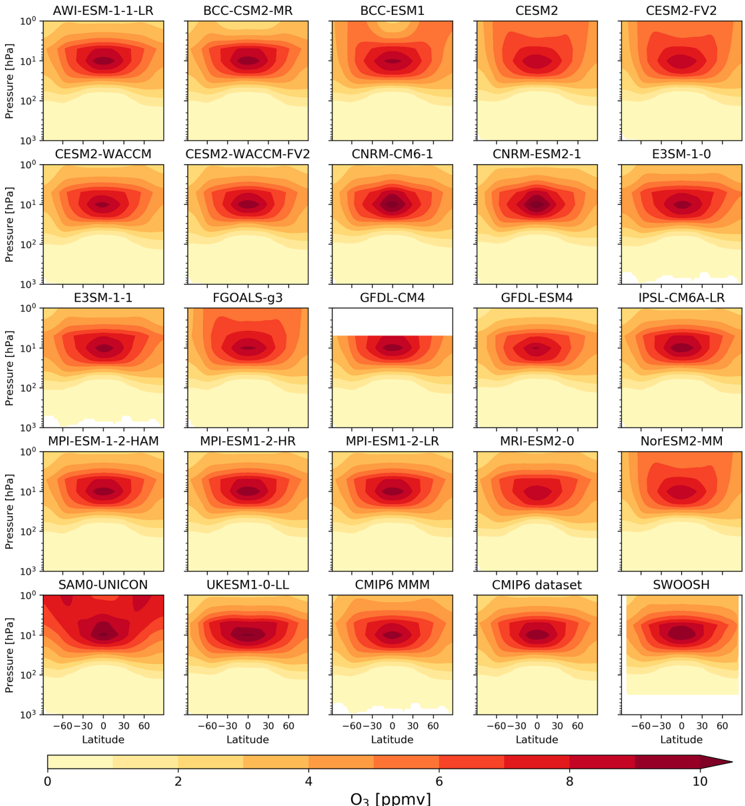
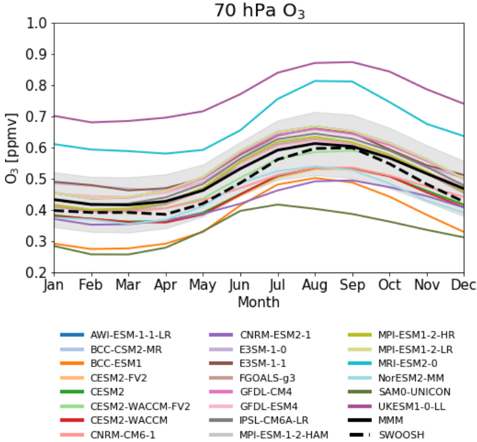
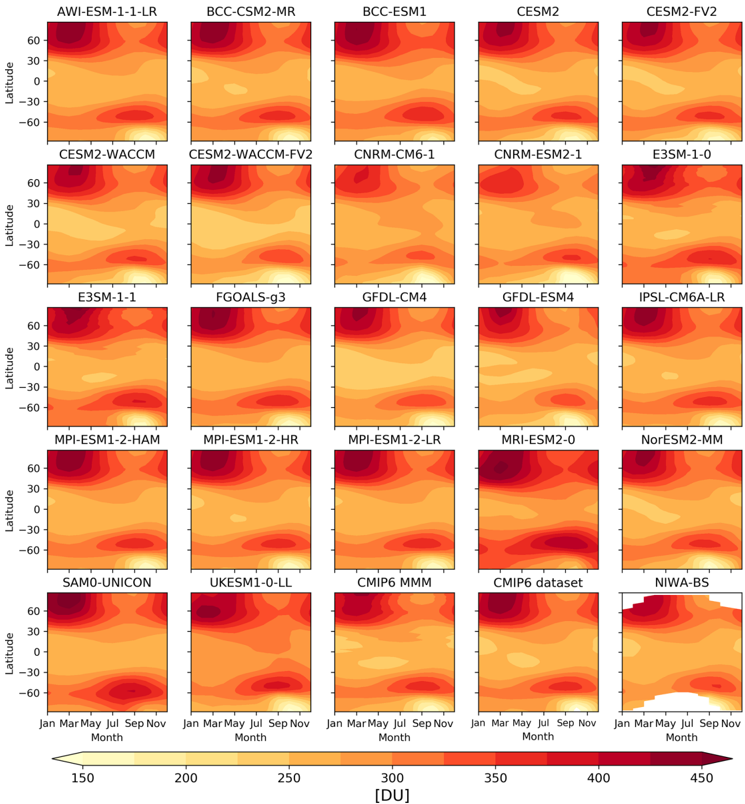
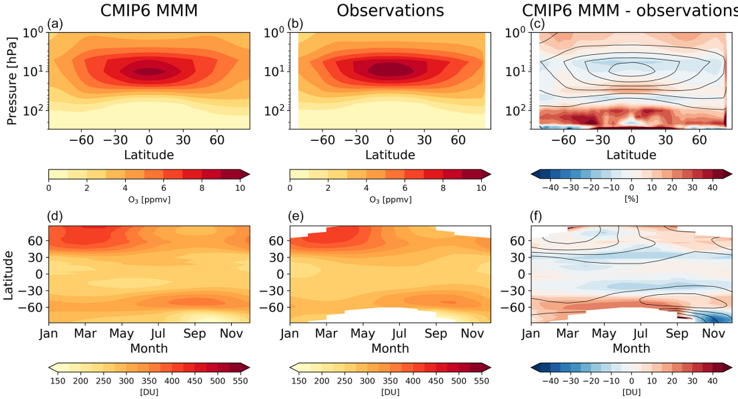
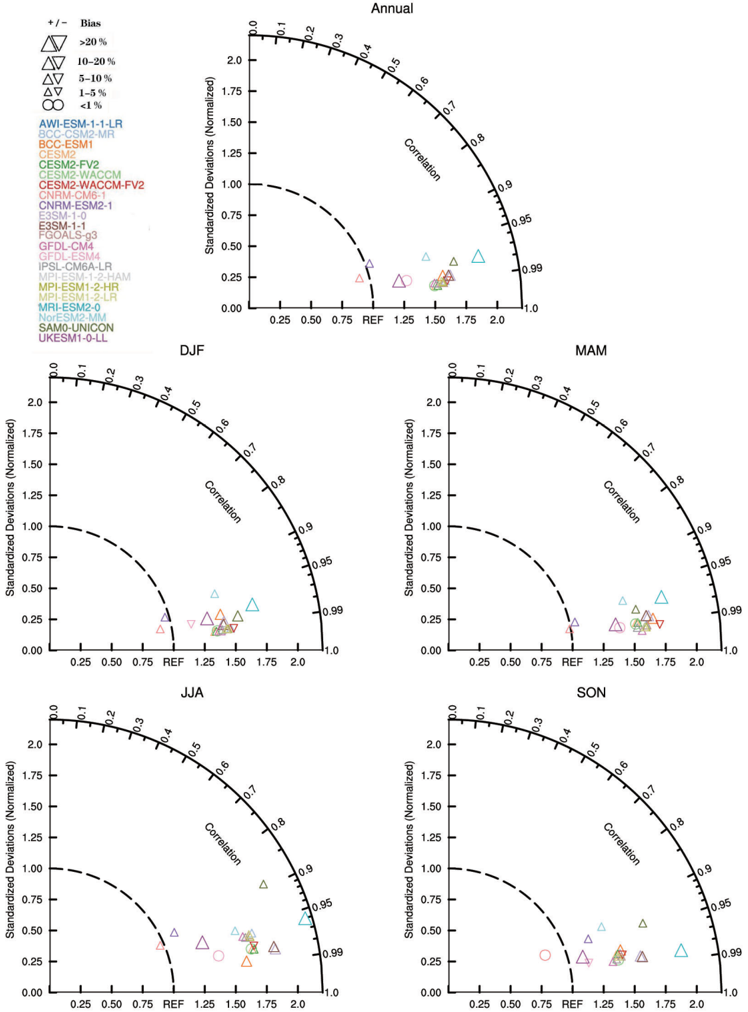
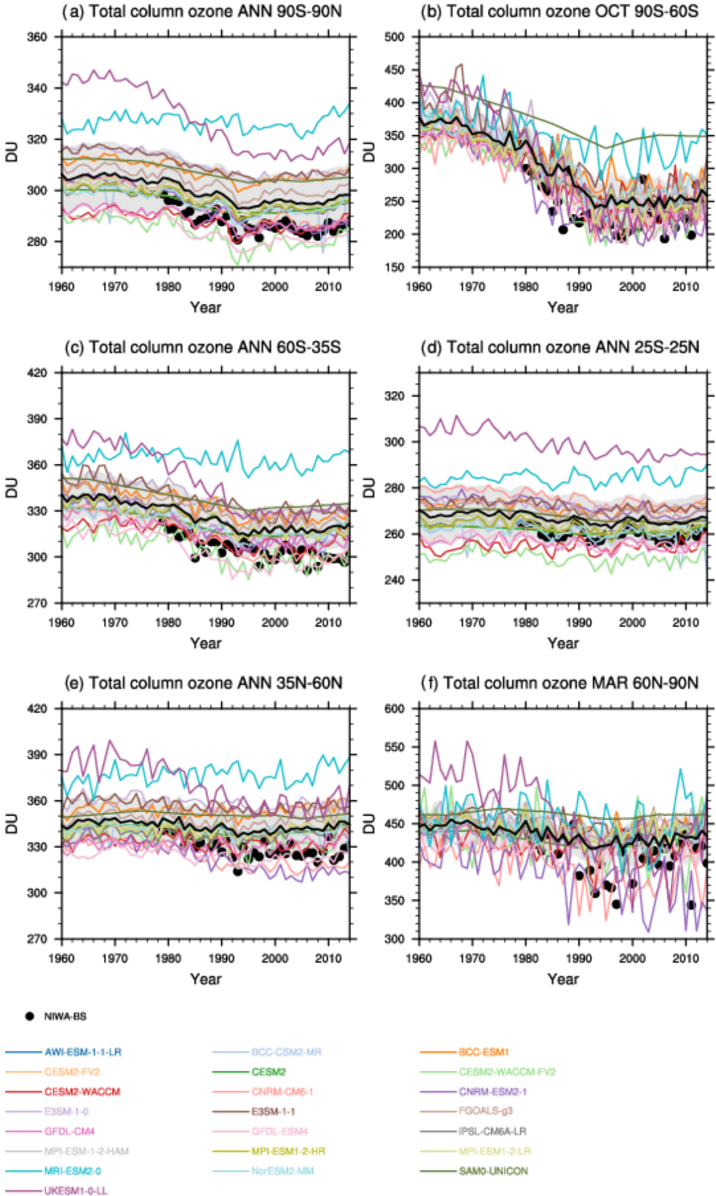
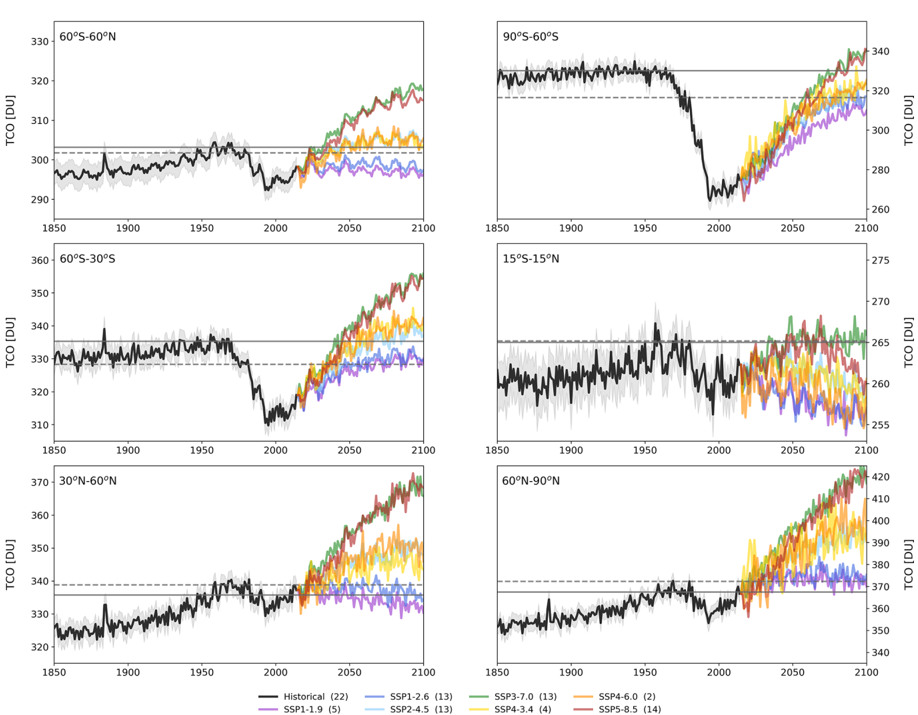
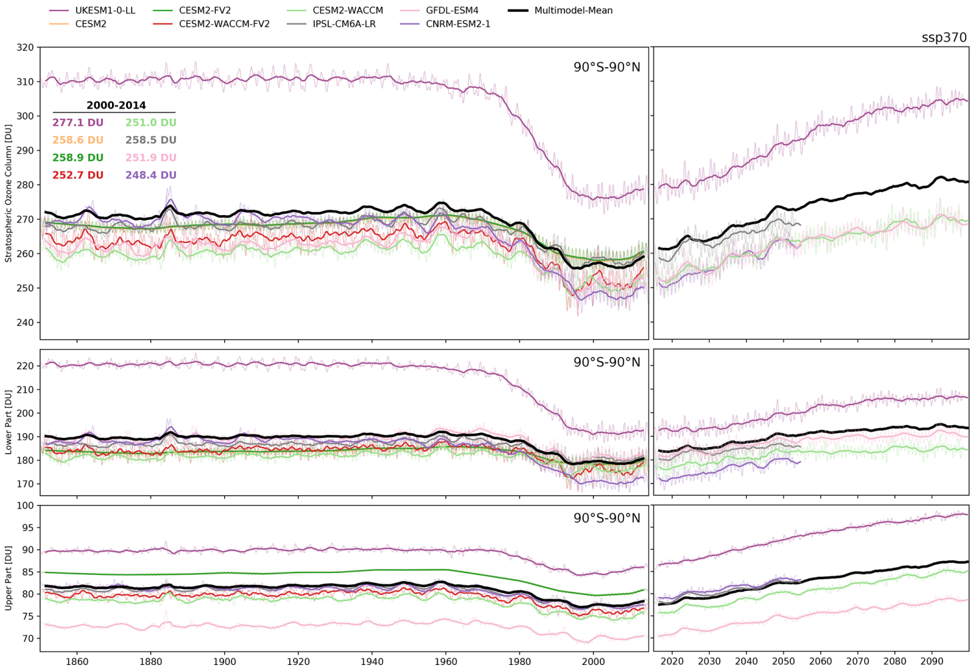
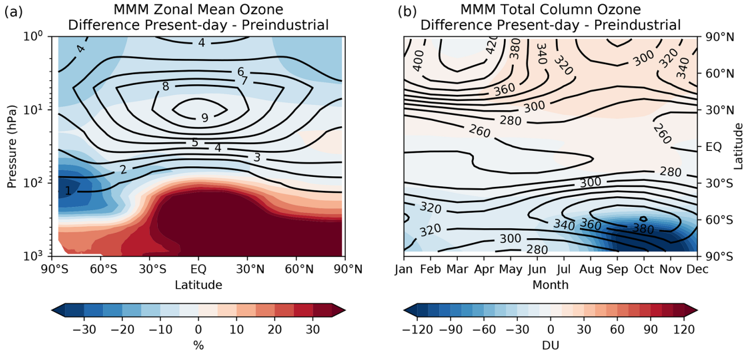
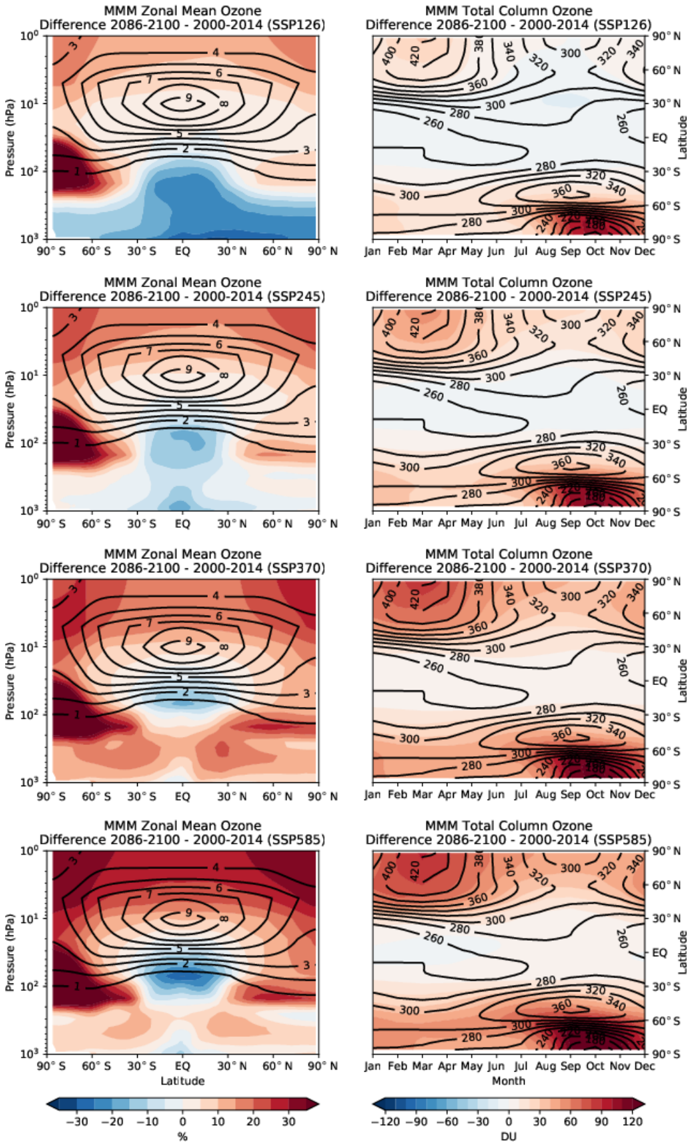
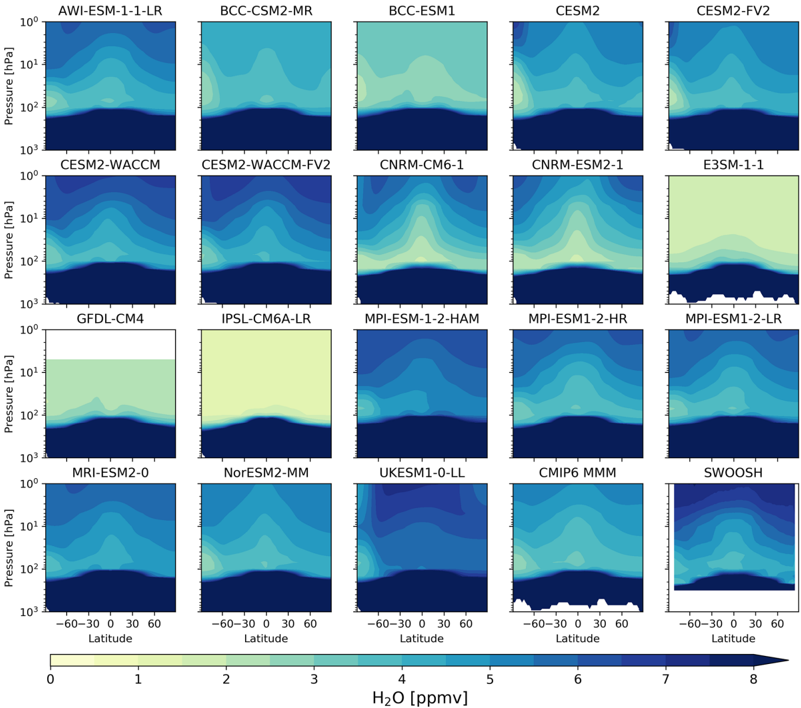
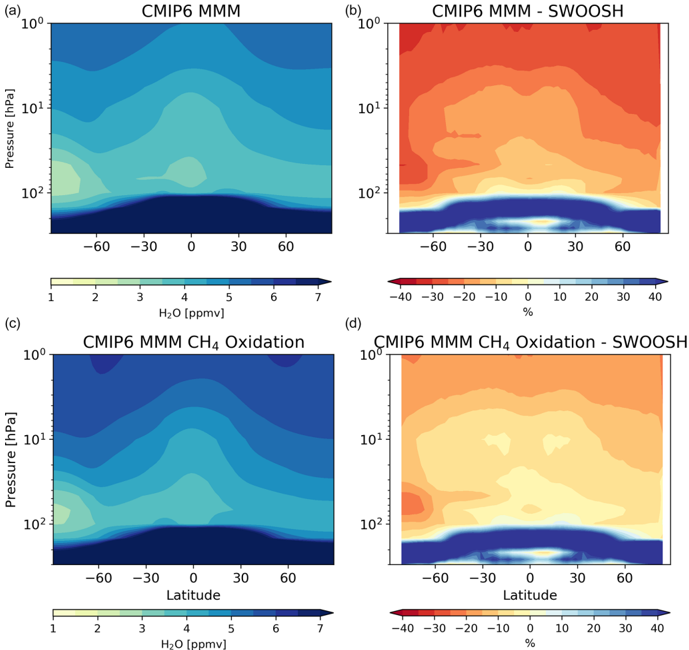
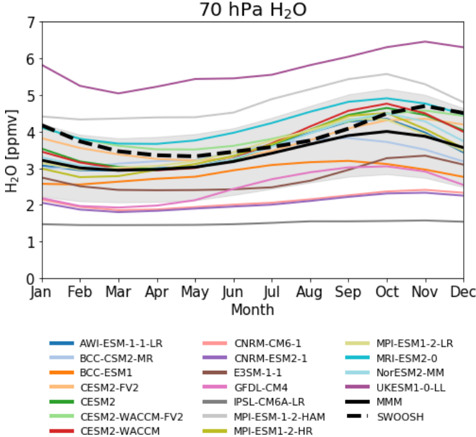
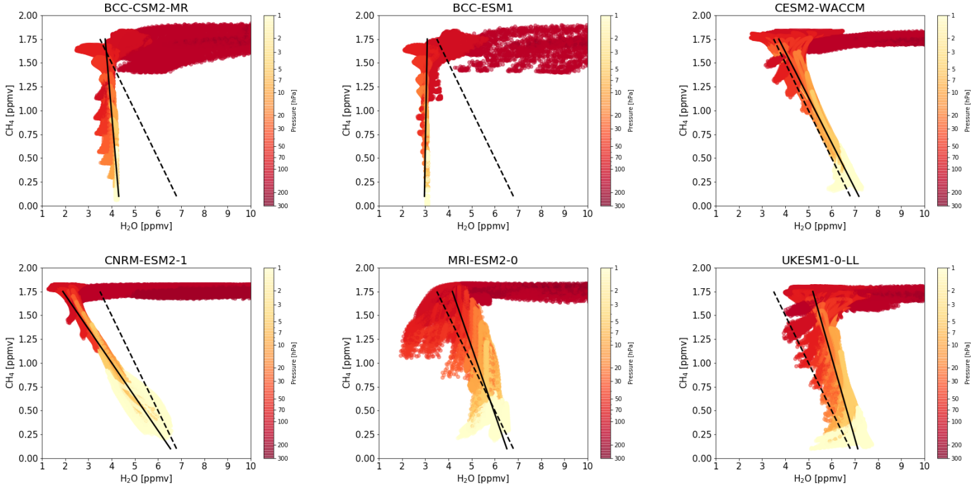
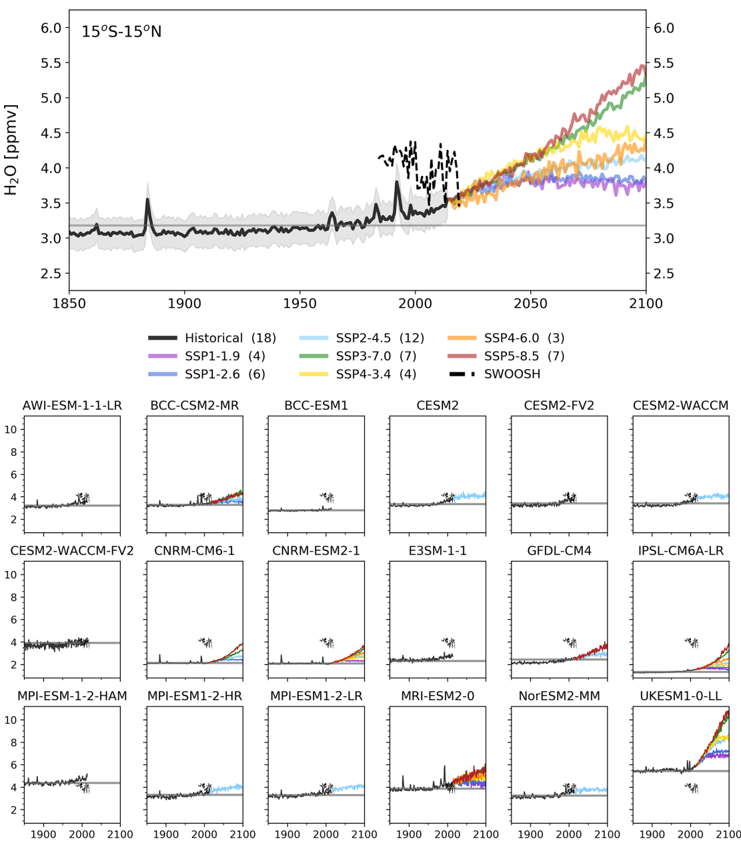
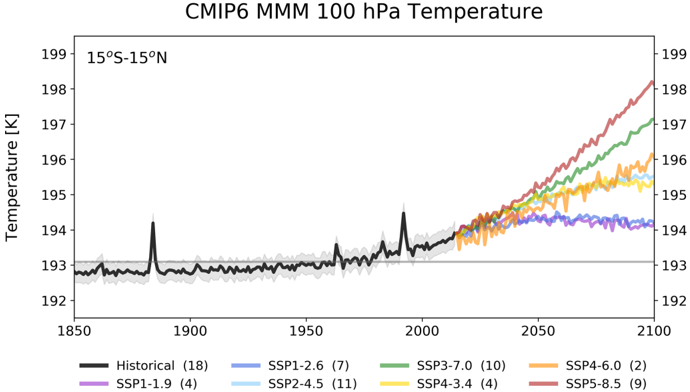
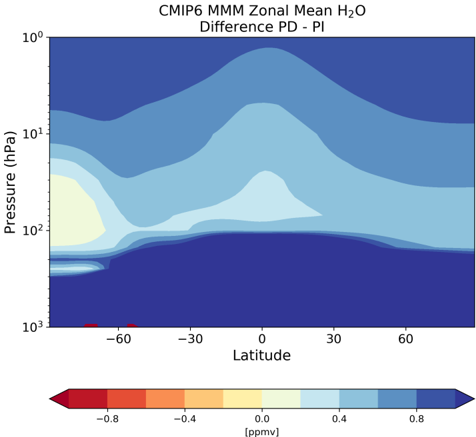
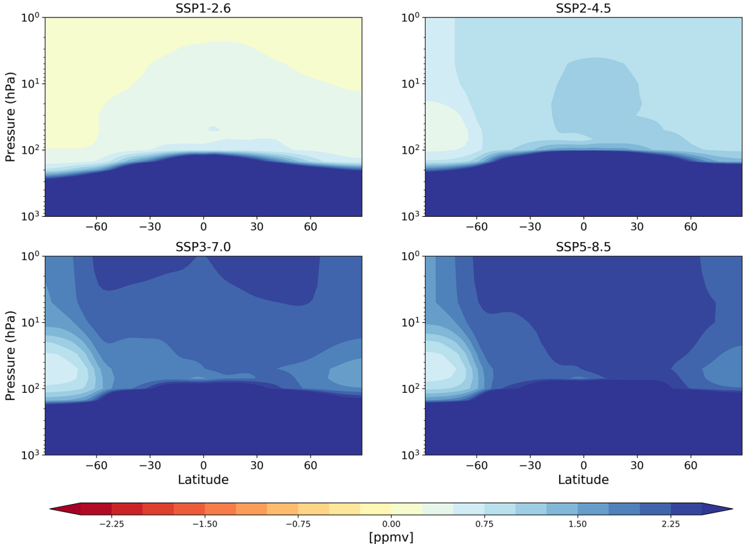
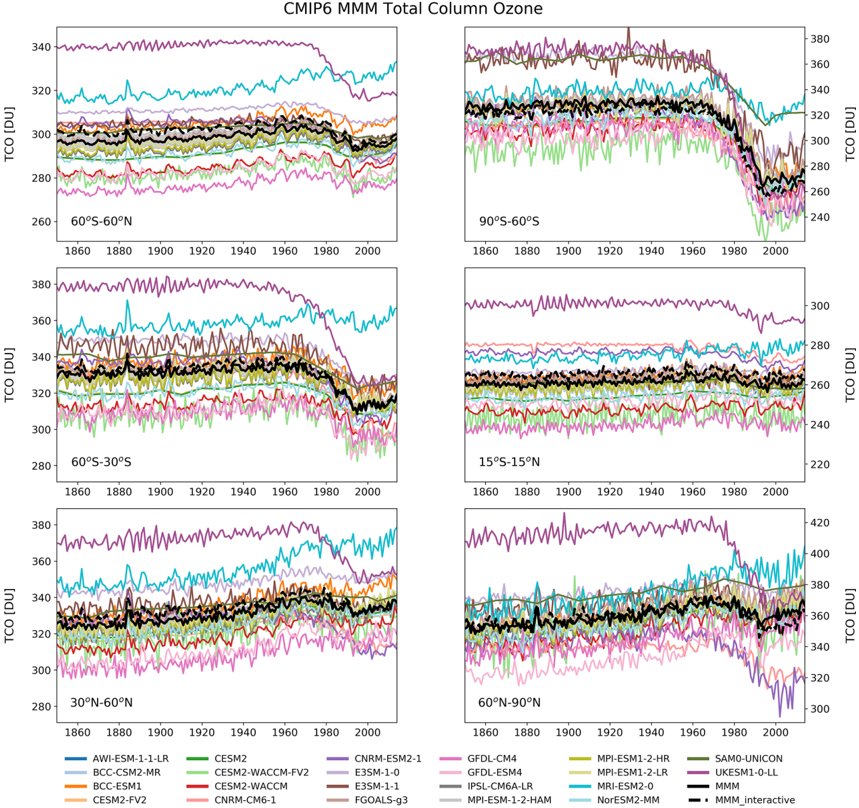
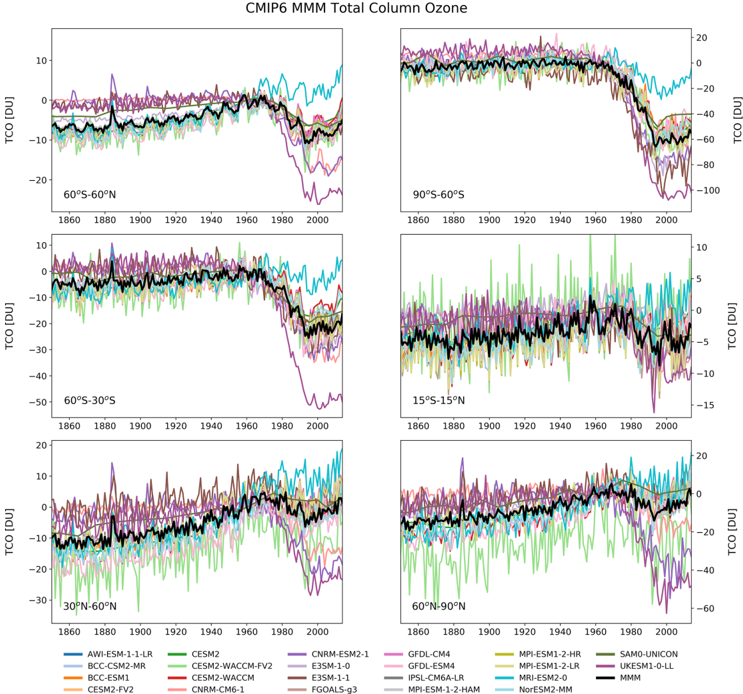
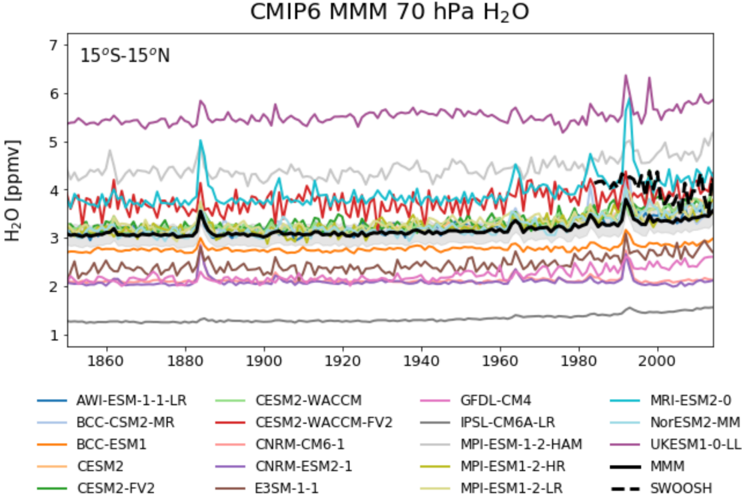
Stratospheric ozone and water vapour are key components of the Earth system, and past and future changes to both have important impacts on global and regional climate. Here, we evaluate long-term changes in these species from the pre-industrial period (1850) to the end of the 21st century in Coupled Model Intercomparison Project phase 6 (CMIP6) models under a range of future emissions scenarios. There is good agreement between the CMIP multi-model mean and observations for total column ozone (TCO), although there is substantial variation between the individual CMIP6 models. For the CMIP6 multi-model mean, global mean TCO has increased from ∼ 300 DU in 1850 to ∼ 305 DU in 1960, before rapidly declining in the 1970s and 1980s following the use and emission of halogenated ozone-depleting substances (ODSs). TCO is projected to return to 1960s values by the middle of the 21st century under the SSP2-4.5, SSP3-7.0, SSP4-3.4, SSP4-6.0, and SSP5-8.5 scenarios, and under the SSP3-7.0 and SSP5-8.5 scenarios TCO values are projected to be ∼ 10 DU higher than the 1960s values by 2100. However, under the SSP1-1.9 and SSP1-1.6 scenarios, TCO is not projected to return to the 1960s values despite reductions in halogenated ODSs due to decreases in tropospheric ozone mixing ratios. This global pattern is similar to regional patterns, except in the tropics where TCO under most scenarios is not projected to return to 1960s values, either through reductions in tropospheric ozone under SSP1-1.9 and SSP1-2.6, or through reductions in lower stratospheric ozone resulting from an acceleration of the Brewer–Dobson circulation under other Shared Socioeconomic Pathways (SSPs). In contrast to TCO, there is poorer agreement between the CMIP6 multi-model mean and observed lower stratospheric water vapour mixing ratios, with the CMIP6 multi-model mean underestimating observed water vapour mixing ratios by ∼ 0.5 ppmv at 70 hPa. CMIP6 multi-model mean stratospheric water vapour mixing ratios in the tropical lower stratosphere have increased by ∼ 0.5 ppmv from the pre-industrial to the present-day period and are projected to increase further by the end of the 21st century. The largest increases (∼ 2 ppmv) are simulated under the future scenarios with the highest assumed forcing pathway (e.g. SSP5-8.5). Tropical lower stratospheric water vapour, and to a lesser extent TCO, shows large variations following explosive volcanic eruptions.
Overview
The claims and statistics of this paper haven’t been checked yet.
Free: it reads the open-access text and checks the first 5 claims that cite a source we can check. Create a free account to check every claim.
Integrity signals
Registry
Cites
Statistics
Figures
Verification
Claims the paper makes
The claims and statistics of this paper haven’t been checked yet.
Free: it reads the open-access text and checks the first 5 claims that cite a source we can check. Create a free account to check every claim.
Claims other papers make about this one
Each is checked against this paper’s own text: does it say what the citing paper says it does?
The source backs part of the claim, not all of it — or backs it for a different population, condition or comparison.
In the citing paper
“However, recent climate model simulations [20–22], also reviewed by Bernhard et al. [23], suggest that under some scenarios of increasing greenhouse gas emissions, stratospheric O3 could exceed the 1980 baseline (the so-called “super-recovery”).”
From Changes in tropospheric air quality related to the protection of stratospheric ozone in a changing climate (2023) · cites this paper as [21]
Experimental — accuracy not yet measured
Self-check
Percentages, sums and reported differences re-computed from the paper’s own numbers.
The self-check needs the paper’s full text.
Citations
Cites
An Overview of CMIP5 and the Experiment Design
Taylor, K. E., Stouffer, R. J., & Meehl, G. A. (2012) · Bulletin of the American Meteorological Society · doi:10.1175/bams-d-11-00094.1 · Cited by 14,052
Eyring, V., Bony, S., Meehl, G. A., Senior, C. A., Stevens, B., Stouffer, R. J., & Taylor, K. E. (2016) · Geoscientific Model Development · doi:10.5194/gmd-9-1937-2016 · Cited by 11,981
Self-citationSummarizing multiple aspects of model performance in a single diagram
Taylor, K. E. (2001) · Journal of Geophysical Research: Atmospheres · doi:10.1029/2000jd900719 · Cited by 8,477
Riahi, K., van Vuuren, D. P., Kriegler, E., Edmonds, J., O’Neill, B. C., Fujimori, S., Bauer, N., Calvin, K., Dellink, R., Fricko, O., et al. (2017) · Global Environmental Change · doi:10.1016/j.gloenvcha.2016.05.009 · Cited by 6,607
Stratospheric sink for chlorofluoromethanes: chlorine atom-catalysed destruction of ozone
Molina, M. J., & Rowland, F. S. (1974) · Nature · doi:10.1038/249810a0 · Cited by 4,332
The RCP greenhouse gas concentrations and their extensions from 1765 to 2300
Meinshausen, M., Smith, S. J., Calvin, K., Daniel, J. S., Kainuma, M. L. T., Lamarque, J.-F., Matsumoto, K., Montzka, S. A., Raper, S. C. B., Riahi, K., et al. (2011) · Climatic Change · doi:10.1007/s10584-011-0156-z · Cited by 3,584
IPCC (2007): Climate Change The Physical Science Basis
Solomon, S. (2007) · AGU Fall Meeting Abstracts · Cited by 3,476
O’Neill, B. C., Kriegler, E., Ebi, K. L., Kemp-Benedict, E., Riahi, K., Rothman, D. S., van Ruijven, B. J., van Vuuren, D. P., Birkmann, J., Kok, K., et al. (2017) · Global Environmental Change · doi:10.1016/j.gloenvcha.2015.01.004 · Cited by 3,359
The Community Earth System Model Version 2 (CESM2)
Danabasoglu, G., Lamarque, J. ‐., Bacmeister, J., Bailey, D. A., DuVivier, A. K., Edwards, J., Emmons, L. K., Fasullo, J., Garcia, R., Gettelman, A., et al. (2020) · Journal of Advances in Modeling Earth Systems · doi:10.1029/2019ms001916 · Cited by 3,070
Self-citationHoesly, R. M., Smith, S. J., Feng, L., Klimont, Z., Janssens-Maenhout, G., Pitkanen, T., Seibert, J. J., Vu, L., Andres, R. J., Bolt, R. M., et al. (2018) · Geoscientific Model Development · doi:10.5194/gmd-11-369-2018 · Cited by 2,203
Research works printed but not linked: 1
- Stocker, T. F., Qin, D., Plattner, G.-K., Tignor, M., Allen, S. K., Boschung, J., Nauels, A., Xia, Y., Bex, V., and Midgley, P. M., Cambridge University Press, Cambridge, UK and New York, NY, USA, 2013.
Cited by
Items 101–200 of 229
Ma, Y., Abraham, N. L., Versick, S., Ruhnke, R., Schneidereit, A., Niemeier, U., Back, F., Braesicke, P., & Nowack, P. J. (2026) · Journal of Advances in Modeling Earth Systems · doi:10.1029/2025ms005459 · Cited by 3
“The bias in the ozone climatology produced by mloz is within 10% throughout the stratosphere, which is much smaller than the spread in ozone climatologies found across, for example, CMIP6 models (Keeble et al., 2021).”
InfluentialSelf-citationKeeble, J., Yiu, Y. Y. S., Archibald, A. T., O’Connor, F. M., Sellar, A., Walton, J. P. R. B., & Pyle, J. A. (2021) · Frontiers in Earth Science · doi:10.3389/feart.2020.592667 · Cited by 3
Self-citationMa, K., Liu, C., Xu, J., & Wang, F. (2023) · Journal of Oceanology and Limnology · doi:10.1007/s00343-023-2326-z · Cited by 3
“The CESM2-WACCM-FV2 model is based on CESM2-WACCM but several WACCM-specific adjustments were made for model consistency at FV2 resolution (Keeble et al. 2021).”
Nugent, J. M., Bretherton, C. S., & Blossey, P. N. (2025) · Earth and Space Science · doi:10.1029/2024ea003887 · Cited by 2
“Modeling studies of perturbed climates have found that warmer tropospheric temperatures increase the cold point temperature (Keeble et al., 2021) and that warmer sea surface temperatures lead to more intense convection and more frequent overshoots, especially over oceans (Aumann et al., 2018; Cheng…”
Evidence of tropospheric uplift into the stratosphere via the tropical western Pacific cold trap
Sun, X., Müller, K., Palm, M., Ritter, C., Ji, D., Röpke, T. B., & Notholt, J. (2025) · Atmospheric chemistry and physics · doi:10.5194/acp-25-6881-2025 · Cited by 2
ACCESS-MICAS: A Forecast-Based Tool for Event Attribution and Projection
Zhou, L., Hope, P. K., Lim, E., Young, G., Lott, F. C., Wedd, R., Ye, H., Wang, W. X. D., & Jones, D. A. (2025) · Journal of Climate · doi:10.1175/jcli-d-25-0042.1 · Cited by 2
Li, S., Zhang, J., Tan, Y., Wang, Z., & Zhang, C. (2026) · Journal of Climate · doi:10.1175/jcli-d-25-0185.1 · Cited by 2
Self-citationMarshall, G. J., Williams, R., Graff, L. S., Handorf, D., Karpechko, A. Y., Köhler, R. H., Levine, X. J., Orr, A., & Mooney, P. (2026) · Climate Dynamics · doi:10.1007/s00382-026-08081-8 · Cited by 2
“…work does not reveal a clear consistent difference in total column ozone between models with and without interactive ozone, we do not discuss this issue further other than to note that Keeble et al. (2021 ) state that this model, CESM2-WACCM, has a lower total column ozone than their CMIP6 MME.”
Weber, J., Wright, M. J., Collins, W. J., Shine, K. P., O’Connor, F. M., Folberth, G., Griffiths, P. T., & Abernethy, S. (2026) · Geophysical Research Letters · doi:10.1029/2025gl119900 · Cited by 2
“For example, while the stratospheric ozone column in the SSP370 base case recovers to its original 1950 value (Keeble et al., 2021) by ∼ 2100, the stratospheric ozone column in SSP370_low_1 × is ∼ 5 DU (1.6”
InfluentialSelf-citationBoschat, G., Lim, E., Mindlin, J., Breul, P., Butler, A. H., Karpechko, A. Y., Simpson, I. R., Calvo, N., Williams, R., & Watanabe, S. (2026) · Journal of Climate · doi:10.1175/jcli-d-26-0097.1 · Cited by 2
Sinnhuber, B., Chipperfield, M. P., Dinelli, B. M., Errera, Q., Friedl-Vallon, F., Funke, B., Godin-Beekmann, S. M., Hoffmann, A., Hólm, E. V., Höpfner, M., et al. (2026) · Bulletin of the American Meteorological Society · doi:10.1175/bams-d-24-0217.1 · Cited by 2
Xia, Y., Li, X., Hu, Y., Huang, Y., Zhao, C., Xie, F., Guo, J., Lan, J., Lin, Q., & Yuan, S. (2022) · Geophysical Research Letters · doi:10.1029/2022gl100919 · Cited by 2
“robust feature in climate models that increasing CO2 concentrations lead to stratospheric moistening, even if the magnitude of the response is highly model-dependent (Gettelman et al., 2010; Keeble et al., 2021).”
BackgroundAntarctic Ozone Loss Shapes Surface Cooling Pattern and Climate SensitivityPreprint
Wang, P., Solomon, S., Deser, C., Thompson, D. W. J., & Diffenbaugh, N. S. (2026) · Research Square · doi:10.21203/rs.3.rs-8544146/v1 · Cited by 2
Arctic Ozone Amplifies Stratospheric Circulation Extremes
Hong, H.-J., Reichler, T. J., & Hsu, H. (2025) · Journal of Climate · doi:10.1175/jcli-d-24-0446.1 · Cited by 1
Match, A., & Gerber, E. P. (2025) · Geophysical Research Letters · doi:10.1029/2024gl112409 · Cited by 1
“2), and Keeble et al. (2021, their Fig.”
Harzer, F., Garny, H., Davis, S., & Birner, T. (2025) · Journal of Climate · doi:10.1175/jcli-d-24-0530.1 · Cited by 1
Self-citationEvaluation of CMIP6 Model Performance in Simulating the Stratospheric Semiannual Oscillation
Li, X., Yuanyuan, H., Xia, Y., Tan, X., Li, S., Wen, K., Wang, X., Li, Y., & Xie, F. (2025) · Journal of Climate · doi:10.1175/jcli-d-25-0045.1 · Cited by 1
Can CMIP6 models simulate the ozone valley over the Tibetan plateau in boreal summer?
Shen, L., Rao, J., Yang, S., & Guo, D. (2025) · Climate Dynamics · doi:10.1007/s00382-025-07796-4 · Cited by 1
“Keeble et al. ( 2021 ) reported that the relatively coarse vertical resolution of the models may lead to discrep - ancies when performing interpolation according to CMIP6 specifications.”
Conditions Necessary for Chlorine Activation in the Midlatitude Summer Lower Stratosphere
Howar, L. V., Salawitch, R. J., Wilmouth, D. M., Hintsa, E. J., Hare, J. S., Hanisco, T. F., Clair, J. M. S., Delaria, E. R., Atlas, E., Schauffler, S. M., et al. (2025) · Journal of Geophysical Research Atmospheres · doi:10.1029/2025jd043786 · Cited by 1
“The abundance of ozone in the midlatitude lowermost stratosphere (LS) is controlled by stratospheric transport as well as photochemical loss (e.g., Garny et al., 2022; Keeble et al., 2021; Oman et al., 2010).”
Perny, K., Sukhodolov, T., Kuchař, A., Arsenović, P., Rosati, B., Brühl, C., Dhomse, S. S., Jörimann, A., Laakso, A., Mann, G. W., et al. (2026) · Atmospheric chemistry and physics · doi:10.5194/acp-26-10997-2026 · Cited by 1
“Furthermore, increases in the strato-spheric water vapour mixing ratio can be found due to the heating by volcanic aerosols leading to cold-point tropopause warming (Keeble et al., 2021; Kroll et al., 2021).”
Sensitivity of Upper Tropospheric Ozone to Its Precursors During the Asian Summer Monsoon
Roy, C., Mahajan, A. S., Ayantika, D. C., Ghude, S. D., & Govardhan, G. (2026) · Journal of Geophysical Research Atmospheres · doi:10.1029/2025jd044919 · Cited by 1
“While MRI‐ESM2 includes interactive chemistry, studies have noted a tendency to overestimate global ozone concentrations (Keeble et al., 2021; Shang et al., 2021; Yamamoto et al., 2024).”
The Net Effective Radiative Forcing From Ozone‐Depleting Substances and Its Uncertainty
Western, L. M., Shine, K. P., & Collins, W. J. (2026) · Geophysical Research Letters · doi:10.1029/2025gl119094 · Cited by 1
“One of the models, UKESM1, which has been known to see high levels of stratospheric ozone depletion (Keeble et al., 2021; Skeie et al., 2020), had a SARF of (cid:0) 0.33 W m (cid:0) 2 , much more negative than the other members.”
InfluentialIntensified Stratosphere–Troposphere Ozone Transport over Asia under a High-End Climate Trajectory
Luo, Y., Zhao, T., Yang, Q., Meng, K., Hou, X., Cao, L., Wang, H., Li, Z., Yang, K., Zhang, Y., et al. (2026) · Journal of Climate · doi:10.1175/jcli-d-25-0426.1 · Cited by 1
Chen, J., Zhang, Y., Shi, H., Xu, Y., & Xu, J. (2026) · Earth Systems and Environment · doi:10.1007/s41748-026-01236-x · Cited by 1
“Keeble et al. (2021) noted that MMM overestimates the climatically average total column ozone (TCO₃, in Dobson Units, DU) by 10–20 DU compared to observations, and significantly overestimates the decline trend during 1980–2000.”
Shi, H., Zhang, Y. S., Chen, J., Xu, J., & Xu, Y. (2026) · Sustainability · doi:10.3390/su18115713 · Cited by 1
Veenus, V., & Das, S. S. (2026) · Theoretical and Applied Climatology · doi:10.1007/s00704-026-06419-0 · Cited by 1
“Keeble et al. (2021) show that the total column ozone from multi-model mean from CMIP6 points to a recovery towards pre-industrial levels except in the tropics, and the acceleration of BDC is suggested as one of the reasons for the reduction.”
Díaz, L. B., Butler, A. H., Avisar, D., Bischof, S., Boehm, C., Boschat, G., Dow, W. J., Garfinkel, C. I., Grise, K. M., Khatri, H., et al. (2026) · Journal of Geophysical Research Atmospheres · doi:10.1029/2025jd046229 · Cited by 1
“Actions agreed upon in the Montreal Protocol and its amendments to substantially reduce ODS emissions are expected to lead to Antarctic ozone recovery by the mid‐to‐late 21st century (e.g., Keeble et al., 2021).”
Bednarz, E., Butler, A. H., Haywood, J., Henry, M., Jones, A., Kravitz, B., Lee, W., MacMartin, D. G., Maycock, A. C., Sekiya, T., et al. (2026) · Atmospheric chemistry and physics · doi:10.5194/acp-26-12751-2026 · Cited by 1
“5 scenario over the second part of the 21st century (Keeble et al., 2021), with differences in the projected trends, including their signs, across different models (Davis et al., 2026; also Fig.”
Dupuy, É., Akiyoshi, H., & Yamashita, Y. (2021) · Journal of Geophysical Research Atmospheres · doi:10.1029/2021jd035307 · Cited by 1
“Total column O3 is generally expected to return to 1980 values between 2030 and 2060, depending on the latitude and on the emissions scenarios assumed for other species (e.g., Amos et al., 2020; Bednarz et al., 2016; Dhomse et al., 2018; Eyring et al., 2013; Keeble et al., 2021).”
BackgroundYuan, X., Wang, Y., Li, Y., Liu, Y., Xu, W., Wang, L., & Deng, R. (2025) · Earth and Planetary Physics · doi:10.26464/epp2025006 · Cited by 1
Li, D., Wang, Z., Zhao, S., Zhang, J., Feng, W., & Chipperfield, M. P. (2026) · Atmospheric chemistry and physics · doi:10.5194/acp-26-77-2026 · Cited by 1
“A future weakening of the QBO”
Self-citationA systematic comparison of ACE-FTS δ D retrievals with airborne in situ sampling
Clouser, B., KleinStern, C., Desmoulin, A., Singer, C. E., Clair, J. M. S., Hanisco, T. F., Sayres, D. S., & Moyer, E. J. (2026) · Atmospheric measurement techniques · doi:10.5194/amt-19-1147-2026 · Cited by 1
Ma, Y., Abraham, N. L., Versick, S., Ruhnke, R., Schneidereit, A., Niemeier, U., Back, F., Braesicke, P., & Nowack, P. J. (2025) · Repository KITopen (Karlsruhe Institute of Technology) · doi:10.48550/arxiv.2509.20422 · Cited by 1
“The bias in the ozone climatology produced by mloz is within 10% throughout the stratosphere, which is much smaller than the spread in ozone climatologies found across, for example, CMIP6 models (Keeble et al., 2021).”
InfluentialSelf-citation(2021) · Climate of the past · doi:10.5194/cp-2021-60-rc2
Ozone hole impacts on surface temperatures under climate change
Braun, M. (2021) · Repository KITopen (Karlsruhe Institute of Technology) · doi:10.5445/ir/1000137397
(2021) · Geoscientific model development · doi:10.5194/gmd-2021-225-rc2
(2021) · Geoscientific model development · doi:10.5194/gmd-2021-225-rc1
(2021) · Atmospheric chemistry and physics · doi:10.5194/acp-2021-1003-rc1
Contzen, J. (2021) · Geoscientific model development · doi:10.5194/gmd-2021-225-ac2
Sukhodolov, T., Egorova, T. A., Stenke, A., et al. (2021) · Geoscientific model development · doi:10.5194/gmd-2021-35-rc2
Sukhodolov, T., Egorova, T. A., Stenke, A., et al. (2021) · Geoscientific model development · doi:10.5194/gmd-2021-35-rc1
(2022) · Atmospheric chemistry and physics · doi:10.5194/acp-2021-1003-rc2
(2022) · Atmospheric chemistry and physics · doi:10.5194/acp-2021-972-rc1
(2021) · Geoscientific model development · doi:10.5194/gmd-2021-225-cc1
Tilmes, S. (2022) · Atmospheric chemistry and physics · doi:10.5194/acp-2021-1003-ac1
(2022) · Atmospheric chemistry and physics · doi:10.5194/acp-2021-972-rc2
Ziv, S. Z. (2022) · Atmospheric chemistry and physics · doi:10.5194/acp-2021-972-ac2
Ziv, S. Z. (2022) · Atmospheric chemistry and physics · doi:10.5194/acp-2021-972-ac1
Sukhodolov, T. (2021) · Geoscientific model development · doi:10.5194/gmd-2021-35-ac1
(2022) · Atmospheric chemistry and physics · doi:10.5194/acp-2022-372-rc2
(2022) · The Cryosphere · doi:10.5194/tc-2022-121-rc1
(2022) · The Cryosphere · doi:10.5194/tc-2022-121-cc1
(2022) · Atmospheric chemistry and physics · doi:10.5194/acp-2022-423-rc1
(2022) · Atmospheric chemistry and physics · doi:10.5194/acp-2022-423-rc2
(2022) · The Cryosphere · doi:10.5194/tc-2022-121-rc2
Holland, P. R. (2022) · The Cryosphere · doi:10.5194/tc-2022-121-ac2
Holland, P. R. (2022) · The Cryosphere · doi:10.5194/tc-2022-121-ac1
Holland, P. R. (2022) · The Cryosphere · doi:10.5194/tc-2022-121-ac3
Fahrin, F. (2023) · Atmospheric chemistry and physics · doi:10.5194/acp-2022-423-ac2
Fahrin, F. (2023) · Atmospheric chemistry and physics · doi:10.5194/acp-2022-423-ac1
Evolution of total column ozone prior to the era of ozone depletion
Brönnimann, S. (2023) · Frontiers in Earth Science · doi:10.3389/feart.2023.1079510
“This result might be affected by the lack of observations in the southern mid-to-high latitudes prior to the 1950s but is in agreement with CMIP6 models (Keeble et al., 2021; Zeng et al., 2022).”
MethodResultInfluentialWeakening of springtime Arctic ozone depletion with climate change
Friedel, M., Chiodo, G., & Peter, T. (2023) · EGU General Assembly Conference Abstracts · doi:10.5194/egusphere-egu23-13525
Self-citationKaragodin‐Doyennel, A. (2023) · doi:10.5194/egusphere-2022-1260-ac1
Forster, P. M., Smith, C. J., Walsh, T., et al. (2023) · Earth system science data · doi:10.5194/essd-2023-166-cc3
Bourguet, S. (2023) · doi:10.5194/egusphere-2023-262-ac1
Forster, P. M. D. F. (2023) · Earth system science data · doi:10.5194/essd-2023-166-ac1
Author comment to referee report
Chiodo, G. (2023) · doi:10.5194/egusphere-2023-672-ac1
Self-citationPloeger, F. (2023) · doi:10.5194/egusphere-2023-2196-ac3
Ploeger, F. (2023) · doi:10.5194/egusphere-2023-2196-ac1
Ploeger, F. (2023) · doi:10.5194/egusphere-2023-2196-ac2
Amiramjadi, M., & Nowack, P. J. (2024) · EGU General Assembly Conference Abstracts · doi:10.5194/egusphere-egu24-17783
Self-citationJiang, Y.-J., Zhou, X., Chen, Q., Feng, W., Li, X., & Li, Y. (2024) · Atmospheric Research · doi:10.1016/j.atmosres.2024.107381
Zhao, P., & Ye, J. (2024) · Research Square · doi:10.21203/rs.3.rs-4318069/v1
Nowack, P. J. (2024) · doi:10.5194/egusphere-2024-1636-ac1
Self-citationAuthor Response to Reviewer Comments on egusphere-2024-2732
Turnock, S. T. (2025) · doi:10.5194/egusphere-2024-2732-ac2
Turnock, S. T. (2025) · doi:10.5194/egusphere-2024-2732-ac1
Seasonality of the Quasi-biennial Oscillation signal in water vapor in the tropical stratosphere
Lu, Q., Rao, J., Shi, C., & Garfinkel, C. I. (2026) · Atmospheric chemistry and physics · doi:10.5194/acp-26-5763-2026
“The Brewer-Dobson (BD) circulation in the stratosphere can directly affect the transport of water vapor from the tropical troposphere to the stratosphere (Holton et al. 1995; Butchart 2014; Keeble et al. 2021).”
Comment on egusphere-2024-3698
Collins, W. J. (2025) · doi:10.5194/egusphere-2024-3698-ac1
Metadata
- Authors
- Keeble, J., Hassler, B., Banerjee, A., Checa-Garcia, R., Chiodo, G., Davis, S., Eyring, V., Griffiths, P. T., Morgenstern, O., Nowack, P., Zeng, G., Zhang, J., Bodeker, G., Burrows, S., Cameron-Smith, P., Cugnet, D., Danek, C., Deushi, M., Horowitz, L. W., Kubin, A., Li, L., Lohmann, G., Michou, M., Mills, M. J., Nabat, P., Olivié, D., Park, S., Seland, Ø., Stoll, J., Wieners, K.-H., & Wu, T.
- Affiliations
- University of Cambridge (GB)
- Deutsches Zentrum für Luft- und Raumfahrt e. V. (DLR) (DE)
- Cooperative Institute for Research in Environmental Sciences (US)
- ETH Zurich (CH)
- NOAA Earth System Research Laboratory (US)
- University of Bremen (DE)
- National Institute of Water and Atmospheric Research (NZ)
- University of East Anglia (GB)
- Lanzhou University (CN)
- Victoria University of Wellington (NZ)
- Pacific Northwest National Laboratory (US)
- Lawrence Livermore National Laboratory (US)
- Centre National de la Recherche Scientifique (FR)
- Alfred-Wegener-Institut Helmholtz-Zentrum für Polar- und Meeresforschung (DE)
- Meteorological Research Institute (JP)
- NOAA Geophysical Fluid Dynamics Laboratory (US)
- Leibniz Institute for Tropospheric Research (DE)
- Chinese Academy of Sciences (CN)
- NSF National Center for Atmospheric Research (US)
- Norwegian Meteorological Institute (NO)
- Seoul National University (KR)
- Max Planck Institute for Meteorology (DE)
- China Meteorological Administration (CN)
- Corresponding author
- Keeble, James
- Hassler, Birgit
- Chiodo, Gabriel
- Davis, Sean
- Eyring, Veronika
- Griffiths, Paul T.
- Morgenstern, Olaf
- Nowack, Peer
- Zeng, Guang
- Bodeker, Greg
- Burrows, Susannah
- Cameron-Smith, Philip
- Deushi, Makoto
- Lohmann, Gerrit
- Mills, Michael J.
- Park, Sungsu
- Wieners, Karl-Hermann
- Wu, Tongwen
- ORCID
- Keeble, James
- Hassler, Birgit
- Banerjee, Antara
- Checa-Garcia, Ramiro
- Chiodo, Gabriel
- Davis, Sean
- Eyring, Veronika
- Griffiths, Paul T.
- Morgenstern, Olaf
- Nowack, Peer
- Zeng, Guang
- Zhang, Jiankai
- Bodeker, Greg
- Burrows, Susannah
- Cameron-Smith, Philip
- Danek, Christopher
- Deushi, Makoto
- Horowitz, Larry W.
- Kubin, Anne
- Li, Lijuan
- Lohmann, Gerrit
- Michou, Martine
- Mills, Michael J.
- Nabat, Pierre
- Park, Sungsu
- Seland, Øyvind
- Wieners, Karl-Hermann
- Wu, Tongwen
- Venue
- Atmospheric Chemistry and Physics
- Publisher
- Copernicus GmbH
- Published
- 2021-03-31
- Volume
- 21
- Issue
- 6
- Pages
- 5015-5061
- ISSN
- 1680-7316 (ISSN-L)
- 1680-7324
- OpenAlex
- W3006474784
- Cited by
- 170
- References
- 165
- Citations by year
- 2026: 18 · 2025: 36 · 2024: 16 · 2023: 45 · 2022: 30 · 2021: 24
- FWCI
- 10.07
- Type
- journal article
- Language
- en
- Open access
- gold
- doi.org
- Licence
- Locations
- Atmospheric chemistry and physics (publishedVersion, cc-by)
- Repository for Publications and Research Data (ETH Zurich) (publishedVersion, cc-by)
- UEA Digital Repository (University of East Anglia) (acceptedVersion)
- elib (German Aerospace Center) (acceptedVersion)
- Lanzhou University Institutional Repository (submittedVersion)
- HAL (submittedVersion)
- HAL (submittedVersion, other-oa)
- DOAJ (DOAJ: Directory of Open Access Journals) (submittedVersion, cc-by-sa)
- Helmholtz-Zentrum für Polar-und Meeresforschung (Alfred-Wegener-Institut) (submittedVersion)
- Lancaster EPrints (Lancaster University) (submittedVersion)
- NOAA Institutional Repository (submittedVersion, cc-by)
- OSTI OAI (U.S. Department of Energy Office of Scientific and Technical Information) (submittedVersion)
- Spiral (Imperial College London) (submittedVersion, cc-by)
- ETH Zürich Research Collection (cc-by)
- Funders
- Horizon 2020 Framework Programme
- Japan Society for the Promotion of Science (JP20K04070)
- Schweizerischer Nationalfonds zur Förderung der Wissenschaftlichen Forschung (PZ00P2_180043)
- U.S. Department of Energy (DE-AC02-05CH11231)
- Lawrence Livermore National Laboratory (DE-AC52-07NA27344)
- Topics
- Physical Sciences › Earth and Planetary Sciences › Atmospheric Science › Atmospheric Ozone and Climate
- Physical Sciences › Environmental Science › Global and Planetary Change › Climate variability and models
- Physical Sciences › Earth and Planetary Sciences › Atmospheric Science › Atmospheric chemistry and aerosols
- Keywords
- stratospheric ozone, stratospheric water vapor, total ozone, ozone-depleting substances, Brewer-Dobson circulation, SSP emission scenarios, Shared Socioeconomic Pathways, tropospheric ozone, stratosphere-troposphere exchange, CMIP6 model evaluation, stratospheric ozone depletion
About these checks
Registry, retraction, Cites and statistics results are computed, not judged, with one exception: a printed reference that no index lists is read once by a model before it counts as a citation error. Claims are extracted by a model and kept only when their quote appears verbatim in the text; each cited source is then checked, with a model’s help, for whether it says what the claim relies on. Those verdicts can be wrong — read the claim’s quote and the cited source before relying on one.
Statistics and arithmetic are recomputed, not judged.
Confidence bands are shown only for fields calibrated on our annotated test set. None is calibrated yet, so no band is shown.
What counts as a claim ›How we measure confidence ›How we check this ›
Are you an author, or do you see a problem with this page? Request a review
Data sources
Bibliographic data: Semantic Scholar, OpenAlex, Crossref.
Contains information from the Semantic Scholar Academic Graph Datasets, made available under the ODC Attribution License (ODC-BY 1.0).
Semantic Scholar’s data is described in: Kinney, R., et al. (2023). The Semantic Scholar Open Data Platform. arXiv:2301.10140.
