

Evaluating stratospheric ozone and water vapour changes in CMIP6 models from 1850 to 2100
Open accessPublished version of a preprint
The DOI matches its Crossref record; 231 of the 231 references it cites were found in a registry or an index.
Abstract
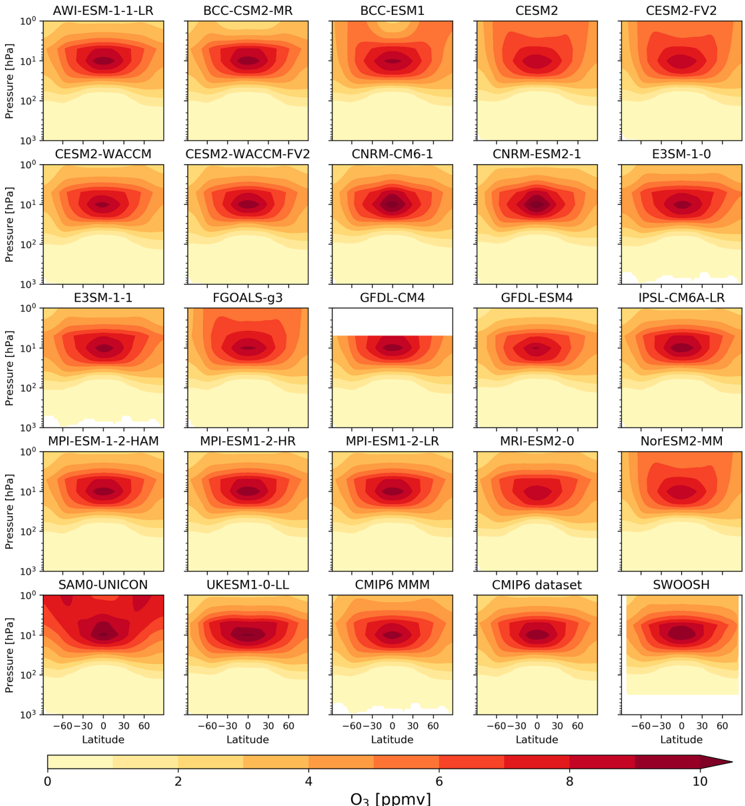
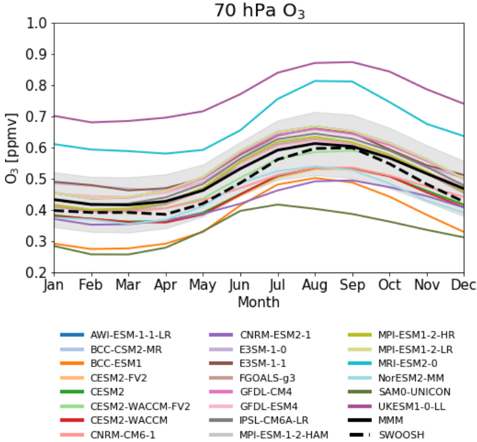
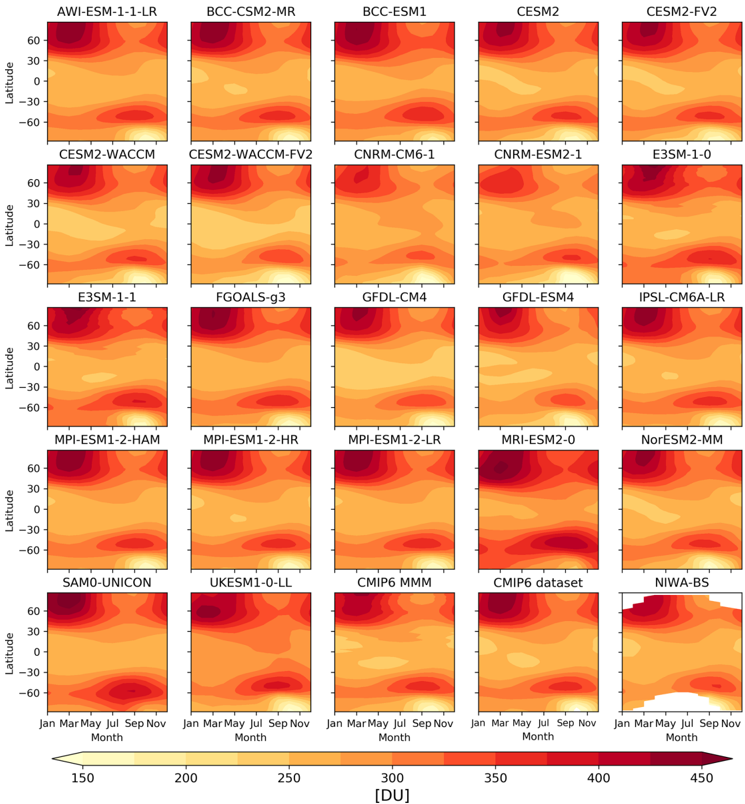
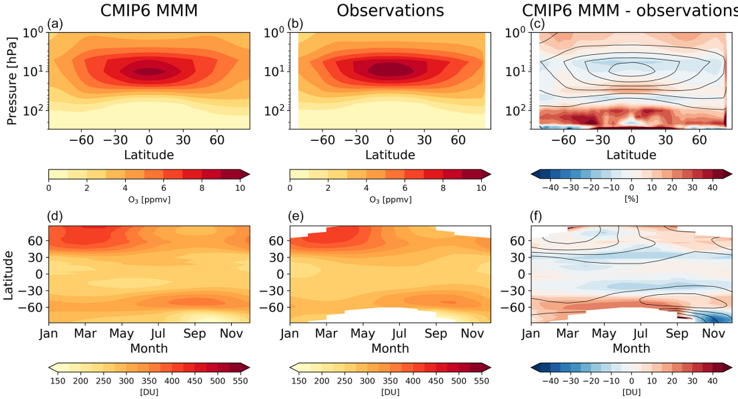
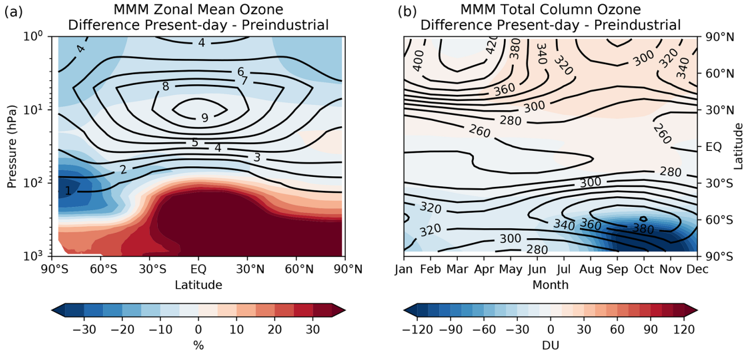
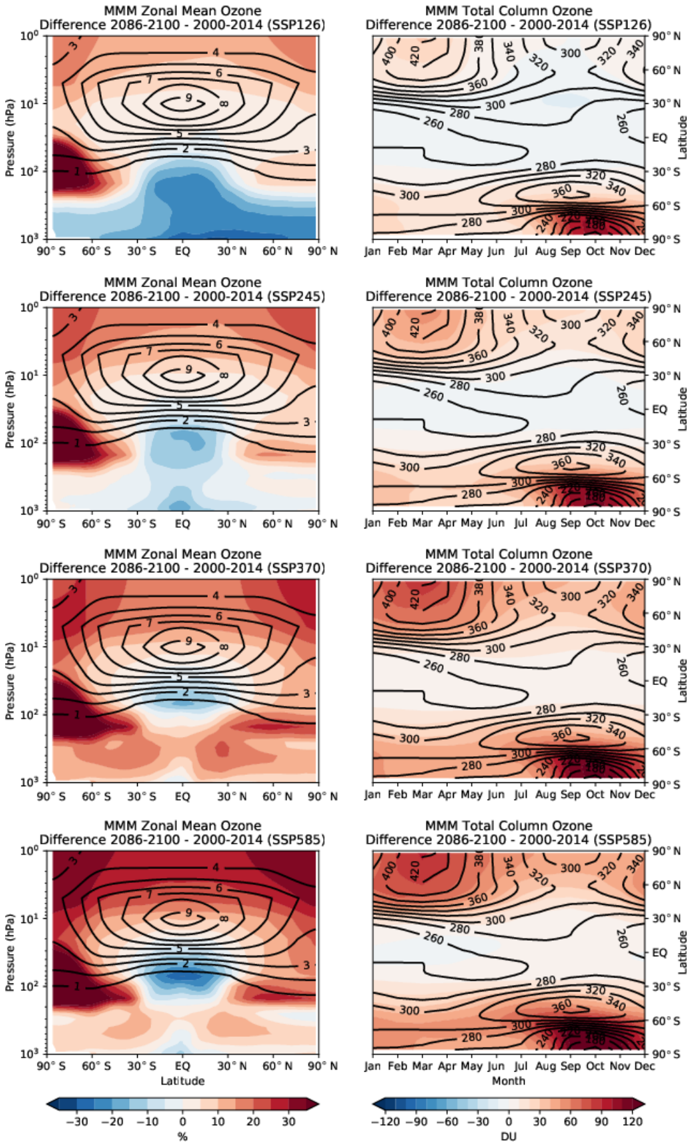
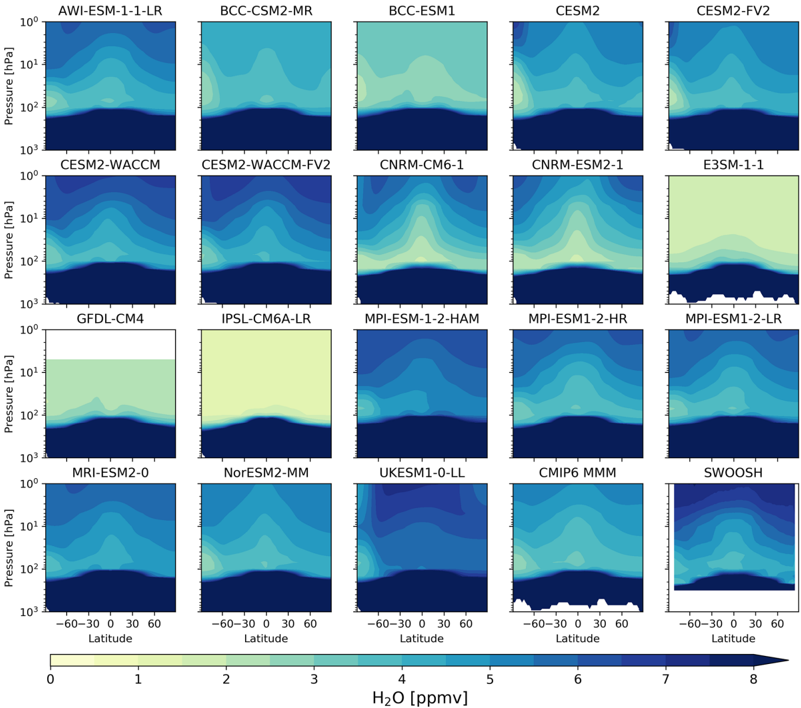
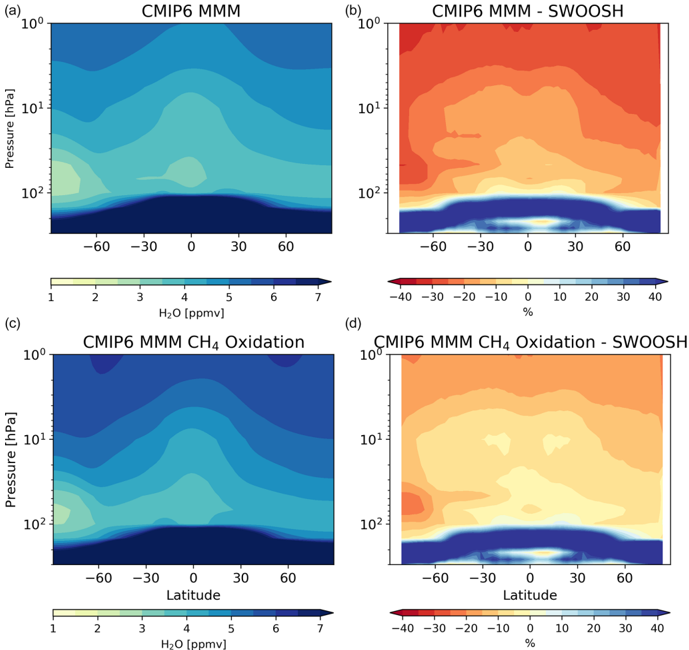
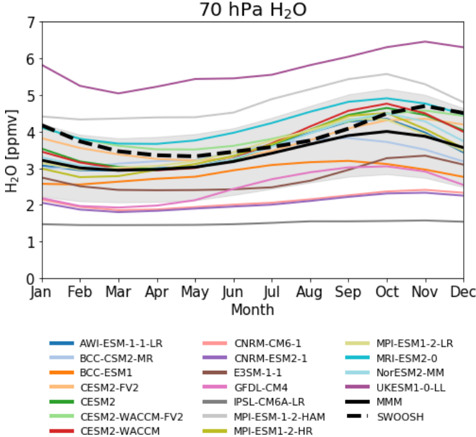
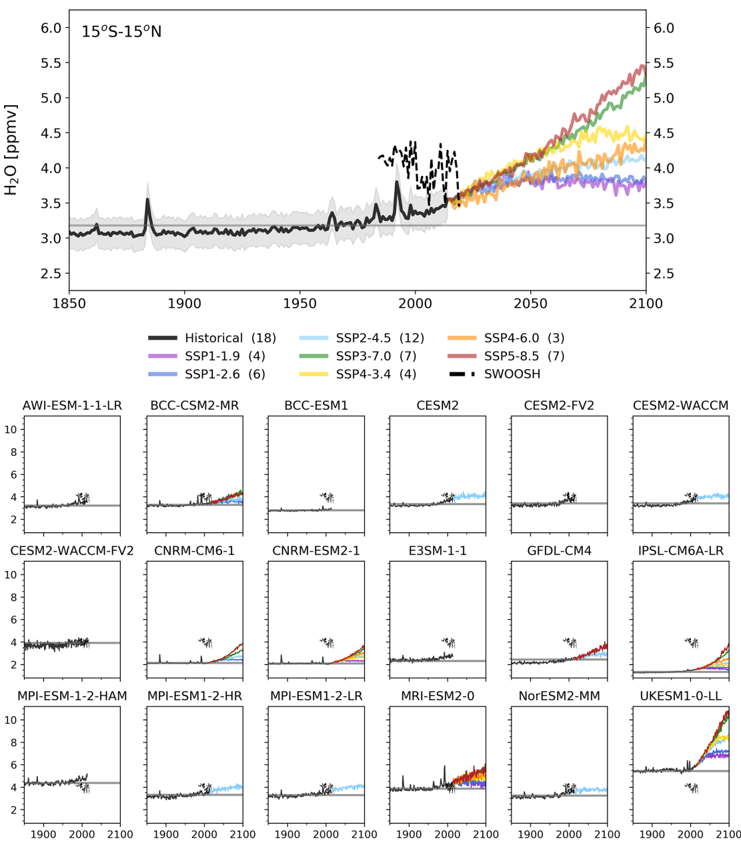
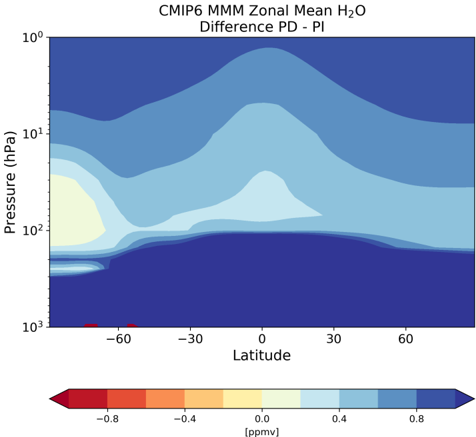
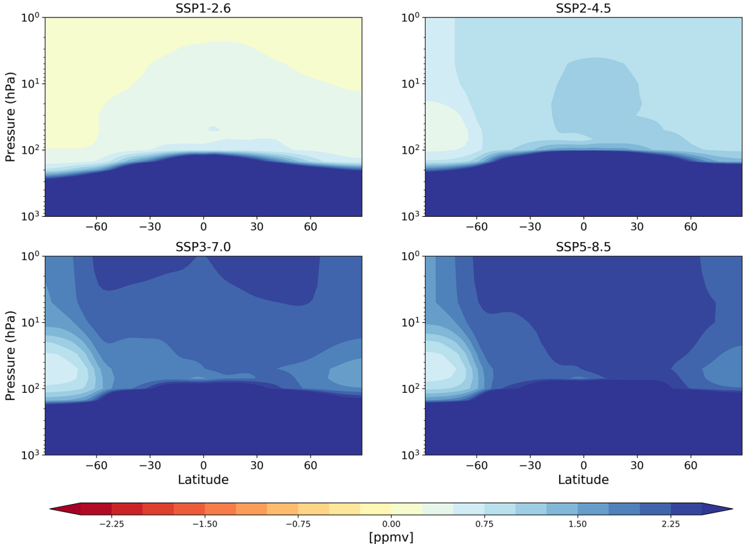
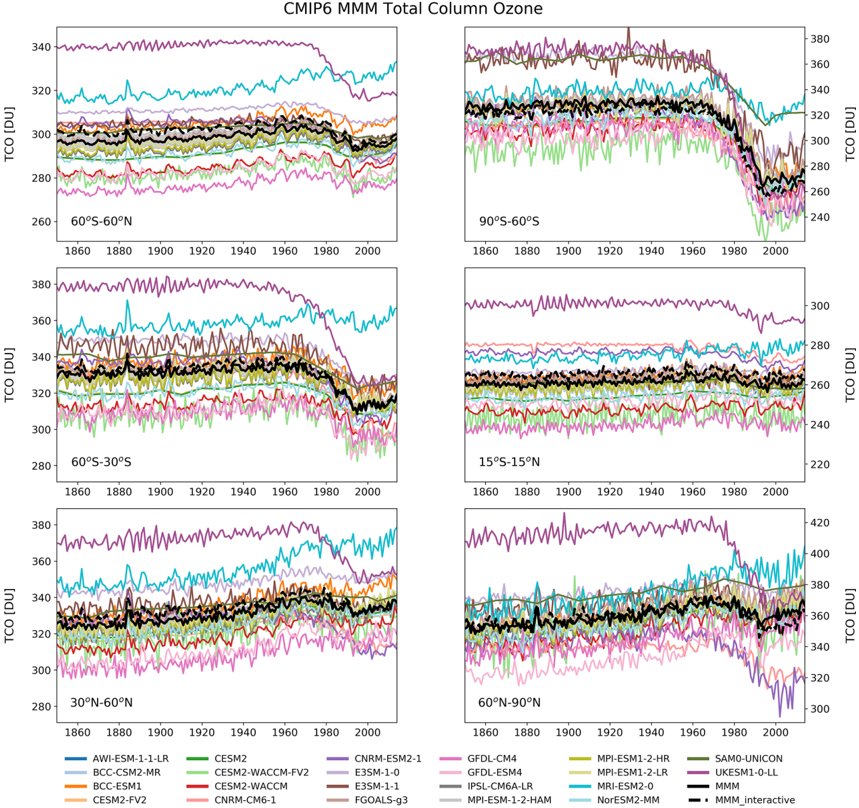
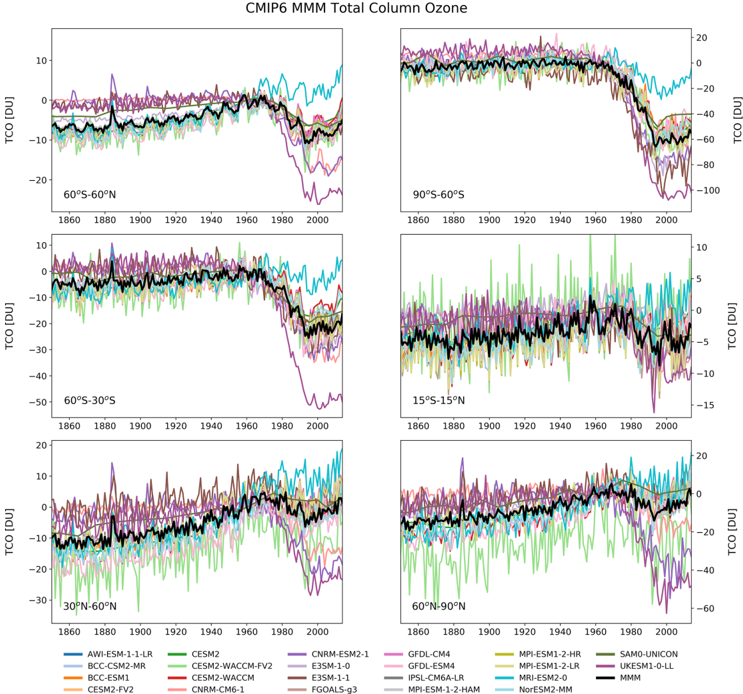
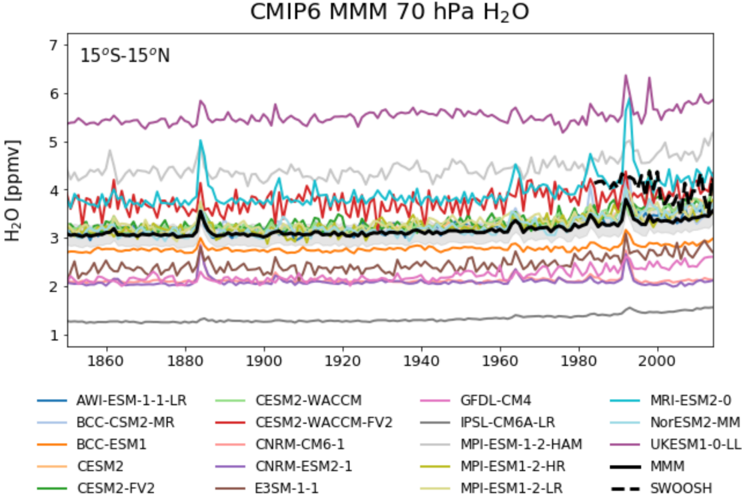
Stratospheric ozone and water vapour are key components of the Earth system, and past and future changes to both have important impacts on global and regional climate. Here, we evaluate long-term changes in these species from the pre-industrial period (1850) to the end of the 21st century in Coupled Model Intercomparison Project phase 6 (CMIP6) models under a range of future emissions scenarios. There is good agreement between the CMIP multi-model mean and observations for total column ozone (TCO), although there is substantial variation between the individual CMIP6 models. For the CMIP6 multi-model mean, global mean TCO has increased from ∼ 300 DU in 1850 to ∼ 305 DU in 1960, before rapidly declining in the 1970s and 1980s following the use and emission of halogenated ozone-depleting substances (ODSs). TCO is projected to return to 1960s values by the middle of the 21st century under the SSP2-4.5, SSP3-7.0, SSP4-3.4, SSP4-6.0, and SSP5-8.5 scenarios, and under the SSP3-7.0 and SSP5-8.5 scenarios TCO values are projected to be ∼ 10 DU higher than the 1960s values by 2100. However, under the SSP1-1.9 and SSP1-1.6 scenarios, TCO is not projected to return to the 1960s values despite reductions in halogenated ODSs due to decreases in tropospheric ozone mixing ratios. This global pattern is similar to regional patterns, except in the tropics where TCO under most scenarios is not projected to return to 1960s values, either through reductions in tropospheric ozone under SSP1-1.9 and SSP1-2.6, or through reductions in lower stratospheric ozone resulting from an acceleration of the Brewer–Dobson circulation under other Shared Socioeconomic Pathways (SSPs). In contrast to TCO, there is poorer agreement between the CMIP6 multi-model mean and observed lower stratospheric water vapour mixing ratios, with the CMIP6 multi-model mean underestimating observed water vapour mixing ratios by ∼ 0.5 ppmv at 70 hPa. CMIP6 multi-model mean stratospheric water vapour mixing ratios in the tropical lower stratosphere have increased by ∼ 0.5 ppmv from the pre-industrial to the present-day period and are projected to increase further by the end of the 21st century. The largest increases (∼ 2 ppmv) are simulated under the future scenarios with the highest assumed forcing pathway (e.g. SSP5-8.5). Tropical lower stratospheric water vapour, and to a lesser extent TCO, shows large variations following explosive volcanic eruptions.
Overview
The claims and statistics of this paper haven’t been checked yet.
Free: it reads the open-access text and checks the first 5 claims that cite a source we can check. Create a free account to check every claim.
Integrity signals
Registry
Cites
Statistics
Figures
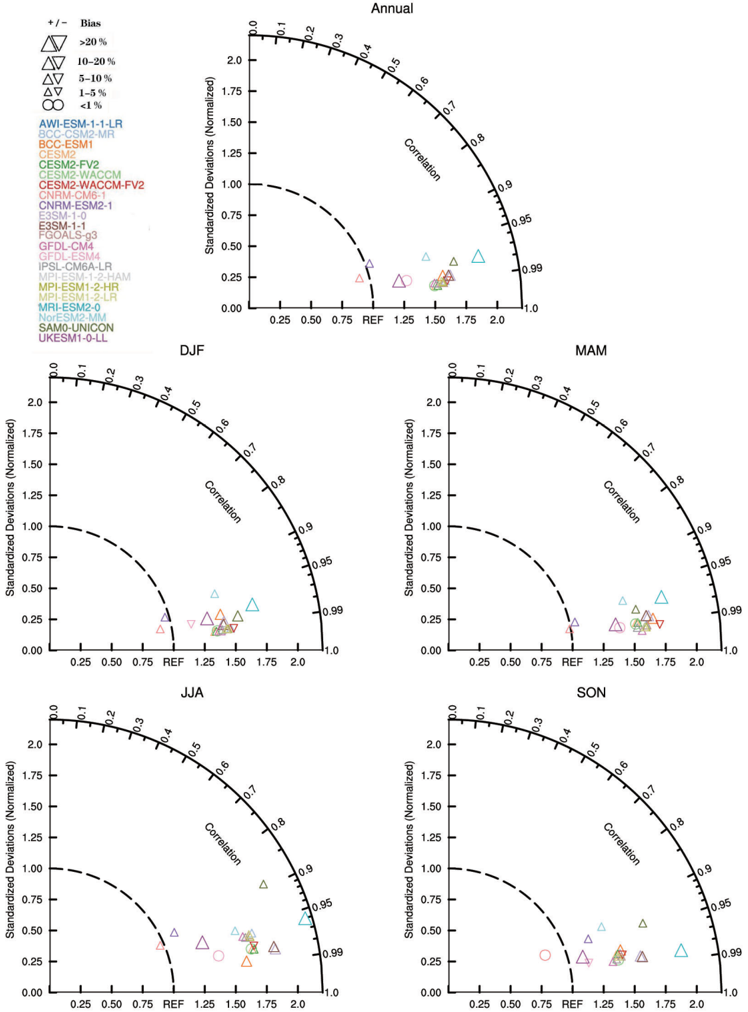
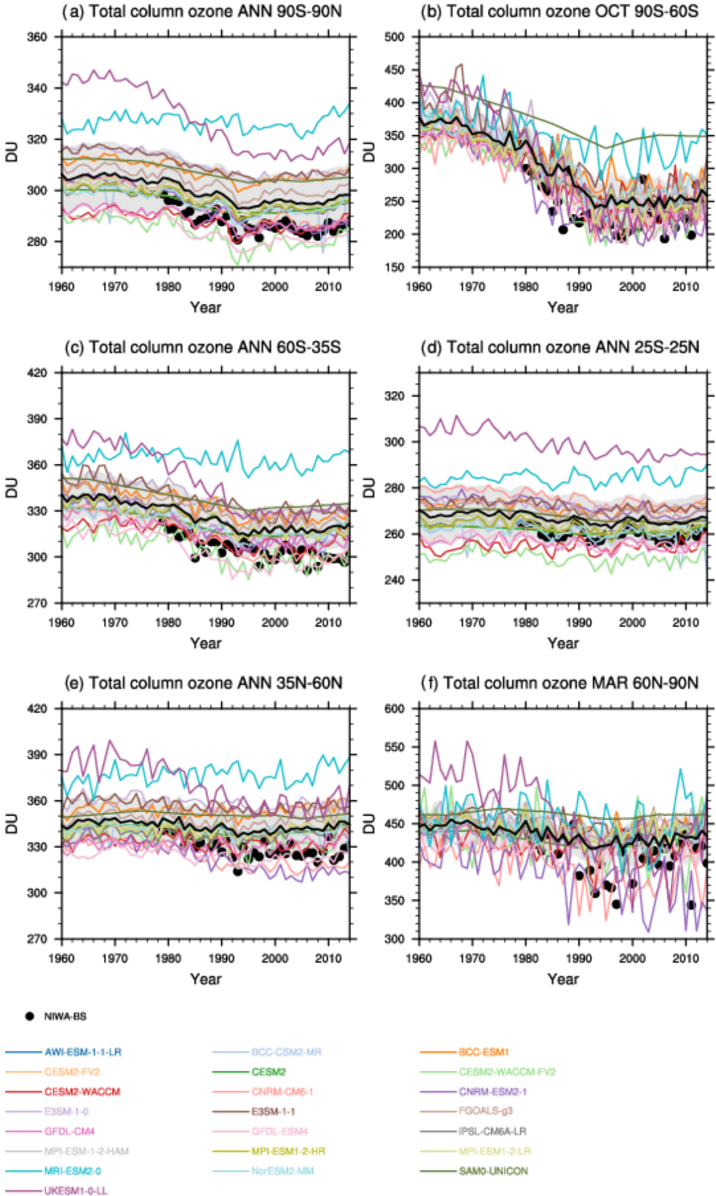
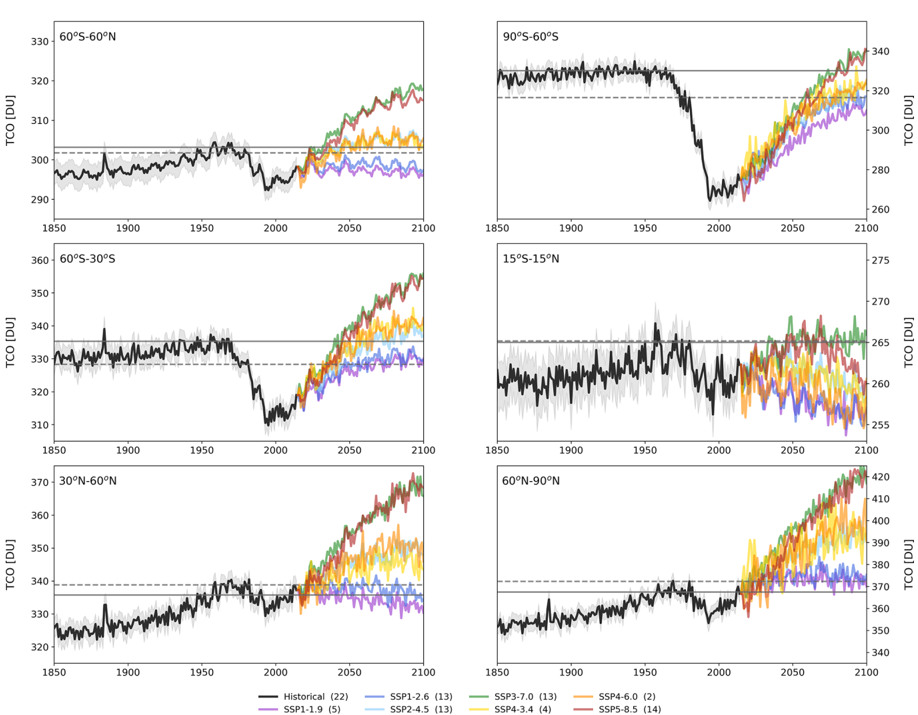
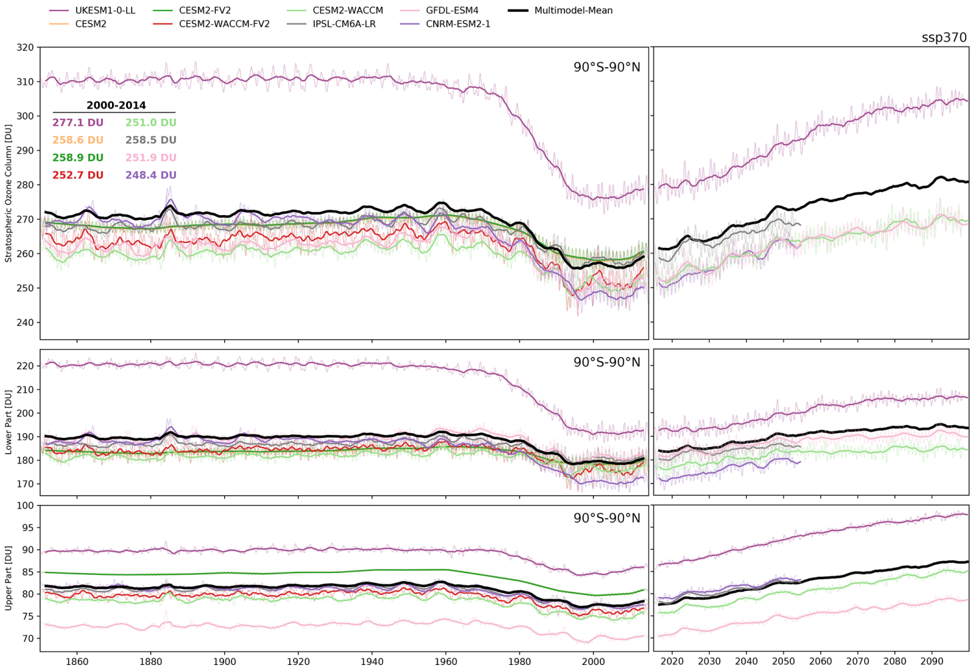
Verification
Claims the paper makes
The claims and statistics of this paper haven’t been checked yet.
Free: it reads the open-access text and checks the first 5 claims that cite a source we can check. Create a free account to check every claim.
Claims other papers make about this one
Each is checked against this paper’s own text: does it say what the citing paper says it does?
The source backs part of the claim, not all of it — or backs it for a different population, condition or comparison.
In the citing paper
“However, recent climate model simulations [20–22], also reviewed by Bernhard et al. [23], suggest that under some scenarios of increasing greenhouse gas emissions, stratospheric O3 could exceed the 1980 baseline (the so-called “super-recovery”).”
From Changes in tropospheric air quality related to the protection of stratospheric ozone in a changing climate (2023) · cites this paper as [21]
Experimental — accuracy not yet measured
Self-check
Percentages, sums and reported differences re-computed from the paper’s own numbers.
The self-check needs the paper’s full text.
Citations
Cites
An Overview of CMIP5 and the Experiment Design
Taylor, K. E., Stouffer, R. J., & Meehl, G. A. (2012) · Bulletin of the American Meteorological Society · doi:10.1175/bams-d-11-00094.1 · Cited by 14,052
Eyring, V., Bony, S., Meehl, G. A., Senior, C. A., Stevens, B., Stouffer, R. J., & Taylor, K. E. (2016) · Geoscientific Model Development · doi:10.5194/gmd-9-1937-2016 · Cited by 11,981
Self-citationSummarizing multiple aspects of model performance in a single diagram
Taylor, K. E. (2001) · Journal of Geophysical Research: Atmospheres · doi:10.1029/2000jd900719 · Cited by 8,477
Riahi, K., van Vuuren, D. P., Kriegler, E., Edmonds, J., O’Neill, B. C., Fujimori, S., Bauer, N., Calvin, K., Dellink, R., Fricko, O., et al. (2017) · Global Environmental Change · doi:10.1016/j.gloenvcha.2016.05.009 · Cited by 6,607
Stratospheric sink for chlorofluoromethanes: chlorine atom-catalysed destruction of ozone
Molina, M. J., & Rowland, F. S. (1974) · Nature · doi:10.1038/249810a0 · Cited by 4,332
The RCP greenhouse gas concentrations and their extensions from 1765 to 2300
Meinshausen, M., Smith, S. J., Calvin, K., Daniel, J. S., Kainuma, M. L. T., Lamarque, J.-F., Matsumoto, K., Montzka, S. A., Raper, S. C. B., Riahi, K., et al. (2011) · Climatic Change · doi:10.1007/s10584-011-0156-z · Cited by 3,584
IPCC (2007): Climate Change The Physical Science Basis
Solomon, S. (2007) · AGU Fall Meeting Abstracts · Cited by 3,476
O’Neill, B. C., Kriegler, E., Ebi, K. L., Kemp-Benedict, E., Riahi, K., Rothman, D. S., van Ruijven, B. J., van Vuuren, D. P., Birkmann, J., Kok, K., et al. (2017) · Global Environmental Change · doi:10.1016/j.gloenvcha.2015.01.004 · Cited by 3,359
The Community Earth System Model Version 2 (CESM2)
Danabasoglu, G., Lamarque, J. ‐., Bacmeister, J., Bailey, D. A., DuVivier, A. K., Edwards, J., Emmons, L. K., Fasullo, J., Garcia, R., Gettelman, A., et al. (2020) · Journal of Advances in Modeling Earth Systems · doi:10.1029/2019ms001916 · Cited by 3,070
Self-citationHoesly, R. M., Smith, S. J., Feng, L., Klimont, Z., Janssens-Maenhout, G., Pitkanen, T., Seibert, J. J., Vu, L., Andres, R. J., Bolt, R. M., et al. (2018) · Geoscientific Model Development · doi:10.5194/gmd-11-369-2018 · Cited by 2,203
Research works printed but not linked: 1
- Stocker, T. F., Qin, D., Plattner, G.-K., Tignor, M., Allen, S. K., Boschung, J., Nauels, A., Xia, Y., Bex, V., and Midgley, P. M., Cambridge University Press, Cambridge, UK and New York, NY, USA, 2013.
Cited by
Items 201–229 of 229
Wang, J. (2025) · doi:10.5194/egusphere-2025-340-ac2
Smale, D., Chipperfield, M. P., Querel, R., Nedoluha, G. E., Frieß, U., Robinson, J., Nichol, S. E., Heddell, S. G., Feng, W., Gomez, R. M., et al. (2025) · Journal of Atmospheric Chemistry · doi:10.1007/s10874-025-09478-1
“For the NO a pri - ori, we use monthly climatological profiles from the CESM2-WACCM CMIP6-SSP5–8.5 (1980–2020) chemical model simulation (Keeble et al. 2021).”
InfluentialStratospheric circulation trends and their impact on the climate system
Seviour, W. J. M., & Ábalos, M. (2025) · Elsevier eBooks · doi:10.1016/b978-0-443-15748-6.00010-1
The Stratosphere in the Southern Hemisphere
Waugh, D. W., Butler, A. H., & Revell, L. E. (2025) · Cambridge University Press eBooks · doi:10.1017/9781009352680.004
Nitrous oxide scenarios and abatement measures [Chapter 3]
Kanter, D., Zhang, X., Leclère, D., Chang, J., Winiwarter, W., Brownlie, W. J., Aziz, T., & Sutton, M. A. (2024) · NERC Open Research Archive (Natural Environment Research Council)
Jansen, M., Andrady, A. L., Bornman, J. F., Aucamp, P. J., Μπάης, Α., Banaszak, A., Barnes, P., Bernhard, G., Bruckman, L., Busquets, R., et al. (2023) · Research Online (University of Wollongong)
Long-Term Evolution of the Ozone Layer Under CMIP7 Scenarios
Tkachenko, M. A., & Rozanov, E. (2026) · Atmosphere · doi:10.3390/atmos17010092
“Previous CMIP6 simulations with the WACCM, MRI-ESM2, and UKESM models showed similar patterns of stratospheric ozone decline under continued greenhouse gas forcing [36], though the magnitudes varied by ± 30% across models, depending on their chemistry and circulation schemes.”
Tropical tropopause ozone modulated by tropopause height
Bourguet, S. (2026) · Atmospheric chemistry and physics · doi:10.5194/acp-26-2691-2026
“…to tropical tropopause ozone mixing ratios (Eyring et al., 2013b; Morgenstern et al., 2017), and we use our tropopause ozone budget to isolate the underlying drivers of modeled trends Finally, we discuss implications for tropical tropopause temperatures and lower stratospheric ozone trends .”
Evolution of Polar Stratospheric Clouds in the context of climate change
Leroux, M. (2024) · theses.fr (ABES) · doi:10.70675/409b1476z1fddz4b0bzaab7z362fc23bcc32
Forster, P. M. D. F., Walsh, T., Smith, C., Lamb, W. F., Lamboll, R., Cassou, C., Hauser, M., Hausfather, Z., Lee, J., Palmer, M. D., et al. (2026) · Earth System Science Data Discussions · doi:10.5194/essd-2026-287-supplement
Friedel, M., Chiodo, G., Weber, K., Polvani, L. M., Daniel, J. S., Abraham, N. L., Davis, S. M., Deushi, M., Oshima, N., Horowitz, L. W., et al. (2026) · npj Climate and Atmospheric Science · doi:10.1038/s41612-026-01398-5
Self-citationLi, S., Zhang, J., Son, S., Chen, Y., ZHANG, C., Wang, Z., & Tang, J. (2026) · Geophysical Research Letters · doi:10.1029/2025gl120757
“Overall, the combination of underestimated ozone forcing and uncertainties in the temperature response to GHG likely explains the discrepancies between model simulations and observations in the lower stratosphere (Keeble et al., 2021; Santer et al., 2017).”
Self-citationChim, M. M., Abraham, N. L., Aubry, T. J., Johnson, B. T. T., Garny, H., Solomon, S., & Schmidt, A. (2026) · Atmospheric chemistry and physics · doi:10.5194/acp-26-6781-2026
On the Role of Dynamical Uncertainties in the Spread of Arctic Ozone Recovery Projections
Benito‐Barca, S., Ábalos, M., Calvo, N., de la Cámara, Á., Ayarzagüena, B., Chiodo, G., Akiyoshi, H., Dennison, F. W., Jöckel, P., Josse, B., et al. (2026) · Geophysical Research Letters · doi:10.1029/2025gl120212
Self-citationAttribution of changes in winds over the Southern Ocean from 1950 to 2100
Jarníková, T., Jones, C., Rumbold, S. T., & Quéré, C. L. (2026) · Earth System Dynamics · doi:10.5194/esd-17-631-2026
“The ability of UKESM1 to simulate the historical and future evolution of ozone has been discussed in Keeble et al. (2021), Morgenstern et al. (2022) and Zeng et al., (2022), while representation of the SAM in CMIP6 models (including UKESM1) has been analysed by Morgenstern (2021).”
Aswathy, R. S., & Rajeev, K. (2026) · Climate Dynamics · doi:10.1007/s00382-026-08311-z
“…rate and can transport a considerable amount of water vapour, ice crystals, and pollutants to the lower stratosphere within a few hours (Luo et al. 2008 ; Keeble et al. 2021 ; Powell et al. 2025 ), in contrast to the freeze-drying of slow large-scale ascending airmass across the CPT (Brewer 1949 ).”
Gebreteklie, T., & Raju, U. J. P. (2026) · Journal of Atmospheric and Solar-Terrestrial Physics · doi:10.1016/j.jastp.2026.106939
Role of natural halogen chemistry on the evolution of global stratospheric ozone depletion
Villamayor, J., Fernandez, R. P., Meidan, D., Reynoso, A., Cuevas, C. A., Kinnison, D. E., & Saiz‐Lopez, A. (2026) · Nature Communications · doi:10.1038/s41467-026-76600-6
“…the CESM2-SLH setup used here, exhibit temperature biases in the Arctic lower stratosphere and are unable to reproduce Northern Hemisphere sudden stratospheric warmings unless constrained by prescribed meteorological fi elds, which exert a strong control on springtime ozone chemistry 45 – 48 .”
Expanding seaweed farming poses new risks to the ozone layerPreprint
Velletta, J., Villamayor, J., Fernandez, R., McHenry, J., Cuevas, C. A., Gasset, M., Sigmond, M., Baum, J. K., Mahajan, A. S., & Saiz‐Lopez, A. (2026) · Research Square · doi:10.21203/rs.3.rs-10524078/v1
The ATMOSFER campaign: synergistic observations for the preparation of the ESA FORUM missionPreprint
Ghysels, M., Palchetti, L., Viciani, S., Belotti, C., Barucci, M., Berthet, G., Asher, E., Hall, E. G., Fritz, A., Afchine, A., et al. (2026) · Earth System Science Data Discussions · doi:10.5194/essd-2026-557
Classifying the severity of the annual Antarctic ozone holePreprint
Kessenich, H. E., Seppälä, A., Smale, D., Revell, L. E., & Rodger, C. J. (2026) · Research Square · doi:10.21203/rs.3.rs-10840794/v1
Wan, F., Shen, L., Qu, M., Zhong, H., Li, M., & Jiang, Z. (2026) · Environmental Science & Technology · doi:10.1021/acs.est.6c04494
Evaluation of the E3SM Version 3 Stratosphere Performance
Yu, W., Hannah, W. M., Benedict, J. J., Tang, Q., Burrows, S. M., Park, M., Golaz, J., Rosenlof, K. H., Davis, S., Ray, E., et al. (2026) · Journal of Advances in Modeling Earth Systems · doi:10.1029/2025ms005612
“This dry bias in the overworld stratosphere ( < 100 hPa) is a common problem in global models and is often associated with cold biases near the tropical tropopause (Charlesworth et al., 2023; Keeble et al., 2021; J. W. Smith et al., 2021).”
InfluentialSelf-citationLeonard-Paterson, T. (2025) · Otago University Research Archive (University of Otago)
HighResMIPの過去再現と将来投影実験における爆弾低気圧
Gao, J. (2021) · Institutional Repositories DataBase (IRDB) · doi:10.14943/doctoral.k14647
Archibald, A. T. (2026) · Elsevier eBooks · doi:10.1016/b978-0-443-15748-6.00100-3
Tropopause structure and biases in climate models related to stratospheric water vapourPreprint
Ploeger, F., Mayer, A., Eckstein, H., Wang, H., Davis, S., & Birner, T. (2026) · doi:10.5194/egusphere-2026-6385
Self-citation
Metadata
- Authors
- Keeble, J., Hassler, B., Banerjee, A., Checa-Garcia, R., Chiodo, G., Davis, S., Eyring, V., Griffiths, P. T., Morgenstern, O., Nowack, P., Zeng, G., Zhang, J., Bodeker, G., Burrows, S., Cameron-Smith, P., Cugnet, D., Danek, C., Deushi, M., Horowitz, L. W., Kubin, A., Li, L., Lohmann, G., Michou, M., Mills, M. J., Nabat, P., Olivié, D., Park, S., Seland, Ø., Stoll, J., Wieners, K.-H., & Wu, T.
- Affiliations
- University of Cambridge (GB)
- Deutsches Zentrum für Luft- und Raumfahrt e. V. (DLR) (DE)
- Cooperative Institute for Research in Environmental Sciences (US)
- ETH Zurich (CH)
- NOAA Earth System Research Laboratory (US)
- University of Bremen (DE)
- National Institute of Water and Atmospheric Research (NZ)
- University of East Anglia (GB)
- Lanzhou University (CN)
- Victoria University of Wellington (NZ)
- Pacific Northwest National Laboratory (US)
- Lawrence Livermore National Laboratory (US)
- Centre National de la Recherche Scientifique (FR)
- Alfred-Wegener-Institut Helmholtz-Zentrum für Polar- und Meeresforschung (DE)
- Meteorological Research Institute (JP)
- NOAA Geophysical Fluid Dynamics Laboratory (US)
- Leibniz Institute for Tropospheric Research (DE)
- Chinese Academy of Sciences (CN)
- NSF National Center for Atmospheric Research (US)
- Norwegian Meteorological Institute (NO)
- Seoul National University (KR)
- Max Planck Institute for Meteorology (DE)
- China Meteorological Administration (CN)
- Corresponding author
- Keeble, James
- Hassler, Birgit
- Chiodo, Gabriel
- Davis, Sean
- Eyring, Veronika
- Griffiths, Paul T.
- Morgenstern, Olaf
- Nowack, Peer
- Zeng, Guang
- Bodeker, Greg
- Burrows, Susannah
- Cameron-Smith, Philip
- Deushi, Makoto
- Lohmann, Gerrit
- Mills, Michael J.
- Park, Sungsu
- Wieners, Karl-Hermann
- Wu, Tongwen
- ORCID
- Keeble, James
- Hassler, Birgit
- Banerjee, Antara
- Checa-Garcia, Ramiro
- Chiodo, Gabriel
- Davis, Sean
- Eyring, Veronika
- Griffiths, Paul T.
- Morgenstern, Olaf
- Nowack, Peer
- Zeng, Guang
- Zhang, Jiankai
- Bodeker, Greg
- Burrows, Susannah
- Cameron-Smith, Philip
- Danek, Christopher
- Deushi, Makoto
- Horowitz, Larry W.
- Kubin, Anne
- Li, Lijuan
- Lohmann, Gerrit
- Michou, Martine
- Mills, Michael J.
- Nabat, Pierre
- Park, Sungsu
- Seland, Øyvind
- Wieners, Karl-Hermann
- Wu, Tongwen
- Venue
- Atmospheric Chemistry and Physics
- Publisher
- Copernicus GmbH
- Published
- 2021-03-31
- Volume
- 21
- Issue
- 6
- Pages
- 5015-5061
- ISSN
- 1680-7316 (ISSN-L)
- 1680-7324
- OpenAlex
- W3006474784
- Cited by
- 170
- References
- 165
- Citations by year
- 2026: 18 · 2025: 36 · 2024: 16 · 2023: 45 · 2022: 30 · 2021: 24
- FWCI
- 10.07
- Type
- journal article
- Language
- en
- Open access
- gold
- doi.org
- Licence
- Locations
- Atmospheric chemistry and physics (publishedVersion, cc-by)
- Repository for Publications and Research Data (ETH Zurich) (publishedVersion, cc-by)
- UEA Digital Repository (University of East Anglia) (acceptedVersion)
- elib (German Aerospace Center) (acceptedVersion)
- Lanzhou University Institutional Repository (submittedVersion)
- HAL (submittedVersion)
- HAL (submittedVersion, other-oa)
- DOAJ (DOAJ: Directory of Open Access Journals) (submittedVersion, cc-by-sa)
- Helmholtz-Zentrum für Polar-und Meeresforschung (Alfred-Wegener-Institut) (submittedVersion)
- Lancaster EPrints (Lancaster University) (submittedVersion)
- NOAA Institutional Repository (submittedVersion, cc-by)
- OSTI OAI (U.S. Department of Energy Office of Scientific and Technical Information) (submittedVersion)
- Spiral (Imperial College London) (submittedVersion, cc-by)
- ETH Zürich Research Collection (cc-by)
- Funders
- Horizon 2020 Framework Programme
- Japan Society for the Promotion of Science (JP20K04070)
- Schweizerischer Nationalfonds zur Förderung der Wissenschaftlichen Forschung (PZ00P2_180043)
- U.S. Department of Energy (DE-AC02-05CH11231)
- Lawrence Livermore National Laboratory (DE-AC52-07NA27344)
- Topics
- Physical Sciences › Earth and Planetary Sciences › Atmospheric Science › Atmospheric Ozone and Climate
- Physical Sciences › Environmental Science › Global and Planetary Change › Climate variability and models
- Physical Sciences › Earth and Planetary Sciences › Atmospheric Science › Atmospheric chemistry and aerosols
- Keywords
- stratospheric ozone, stratospheric water vapor, total ozone, ozone-depleting substances, Brewer-Dobson circulation, SSP emission scenarios, Shared Socioeconomic Pathways, tropospheric ozone, stratosphere-troposphere exchange, CMIP6 model evaluation, stratospheric ozone depletion
About these checks
Registry, retraction, Cites and statistics results are computed, not judged, with one exception: a printed reference that no index lists is read once by a model before it counts as a citation error. Claims are extracted by a model and kept only when their quote appears verbatim in the text; each cited source is then checked, with a model’s help, for whether it says what the claim relies on. Those verdicts can be wrong — read the claim’s quote and the cited source before relying on one.
Statistics and arithmetic are recomputed, not judged.
Confidence bands are shown only for fields calibrated on our annotated test set. None is calibrated yet, so no band is shown.
What counts as a claim ›How we measure confidence ›How we check this ›
Are you an author, or do you see a problem with this page? Request a review
Data sources
Bibliographic data: Semantic Scholar, OpenAlex, Crossref.
Contains information from the Semantic Scholar Academic Graph Datasets, made available under the ODC Attribution License (ODC-BY 1.0).
Semantic Scholar’s data is described in: Kinney, R., et al. (2023). The Semantic Scholar Open Data Platform. arXiv:2301.10140.
