

Lipid Lowering Therapy and Circulating PCSK9 Concentration
Open accessThe DOI matches its Crossref record; 100 of the 100 references it cites were found in a registry or an index.
Abstract
Hypercholesterolemia, particularly an increase in low-density lipoprotein cholesterol (LDL-C) levels, contributes substantially to the development of coronary artery disease and the risk for cardiovascular events. As the first-line pharmacotherapy, statins have been shown to reduce both LDL-C levels and cardiovascular events. However, despite intensive statin therapy, a sizable proportion of statin-treated patients are unable to achieve the recommended target LDL-C levels, and not all patients can avoid future cardiovascular events. Proprotein convertase subtilisin/kexin type 9 (PCSK9) plays a key role in cholesterol homeostasis by enhancing the degradation of hepatic low-density lipoprotein receptor (LDLR). Owing to its importance in lipid metabolism, PCSK9 has emerged as a novel pharmacological target for lowering LDL-C levels. In this review, the potential role of circulating PCSK9 as a new biomarker of lipid metabolism is described. Next, previous studies evaluating the effects of lipid-modifying pharmacological agents, particularly statins, on circulating PCSK9 concentrations are summarized. Statins decrease hepatic intracellular cholesterol, resulting in increased LDLRs as well as increased PCSK9 protein. There is a clear dose-response effect of statin treatment on PCSK9 level, as increasing doses of statins also increase the level of circulating PCSK9. Finally, the available therapeutic strategies to inhibit PCSK9 are present. Monoclonal antibodies against PCSK9, in combination with statins, are one of the most promising and novel approaches to achieve further reduction of LDL-C levels and reduce the risk of cardiovascular events.
Overview
The claims and statistics of this paper haven’t been checked yet.
Free: it reads the open-access text and checks the first 5 claims that cite a source we can check. Create a free account to check every claim.
Integrity signals
Registry
Cites
Statistics
Figures
Verification
Claims the paper makes
The claims and statistics of this paper haven’t been checked yet.
Free: it reads the open-access text and checks the first 5 claims that cite a source we can check. Create a free account to check every claim.
Claims other papers make about this one
Each is checked against this paper’s own text: does it say what the citing paper says it does?
The check wasn’t confident either way, so it gives no verdict — never disputed.
In the citing paper
“However, this has not been confirmed in RCTs [266,479-481], or in meta-analyses of observational and randomized trials [482,483].”
From 2019 ESC/EAS guidelines for the management of dyslipidaemias: lipid modification to reduce cardiovascular risk (2019) · cites this paper as [266]
Experimental — accuracy not yet measuredIn the citing paper
“In both the SEAS and SHARP trials, a reduction in CV events was demonstrated in the simvastatin-ezetimibe arm vs. placebo [266,267].”
From 2019 ESC/EAS guidelines for the management of dyslipidaemias: lipid modification to reduce cardiovascular risk (2019) · cites this paper as [266]
In the citing paper
“Three modestly sized trials [479-481] and one large randomized trial (SEAS, which included 1873 patients treated with simvastatin 40 mg plus ezetimibe 10 mg or placebo) [266] failed to show a reduction in the clinical progression of aortic stenosis in patients with mild-to-moderate native valve aortic stenosis.”
From 2019 ESC/EAS guidelines for the management of dyslipidaemias: lipid modification to reduce cardiovascular risk (2019) · cites this paper as [266]
Self-check
Percentages, sums and reported differences re-computed from the paper’s own numbers.
The self-check needs the paper’s full text.
Citations
Cites
Evolocumab and Clinical Outcomes in Patients with Cardiovascular Disease
Sabatine, M. S., Giugliano, R. P., Keech, A. C., Honarpour, N., Wiviott, S. D., Murphy, S. A., Kuder, J. F., Wang, H., Liu, T., Wasserman, S. M., et al. (2017) · New England Journal of Medicine · doi:10.1056/nejmoa1615664 · Cited by 6,138
Sequence Variations in PCSK9, Low LDL, and Protection against Coronary Heart Disease
Cohen, J. C., Boerwinkle, E., Mosley, T. H., & Hobbs, H. H. (2006) · New England Journal of Medicine · doi:10.1056/nejmoa054013 · Cited by 3,181
Mutations in PCSK9 cause autosomal dominant hypercholesterolemia
Abifadel, M., Varret, M., Rabès, J.-P., Allard, D., Ouguerram, K., Devillers, M., Cruaud, C., Benjannet, S., Wickham, L., Erlich, D., et al. (2003) · Nature Genetics · doi:10.1038/ng1161 · Cited by 2,985
Efficacy and Safety of Alirocumab in Reducing Lipids and Cardiovascular Events
Robinson, J. G., Farnier, M., Krempf, M., Bergeron, J., Luc, G., Averna, M., Stroes, E. S., Langslet, G., Raal, F. J., El Shahawy, M., et al. (2015) · New England Journal of Medicine · doi:10.1056/nejmoa1501031 · Cited by 2,296
Niemann-Pick C1 Like 1 Protein Is Critical for Intestinal Cholesterol Absorption
Altmann, S. W., Davis, H. R., Zhu, L.-J., Yao, X., Hoos, L. M., Tetzloff, G., Iyer, S. P. N., Maguire, M., Golovko, A., Zeng, M., et al. (2004) · Science · doi:10.1126/science.1093131 · Cited by 1,577
Efficacy and Safety of Evolocumab in Reducing Lipids and Cardiovascular Events
Sabatine, M. S., Giugliano, R. P., Wiviott, S. D., Raal, F. J., Blom, D. J., Robinson, J., Ballantyne, C. M., Somaratne, R., Legg, J., Wasserman, S. M., et al. (2015) · New England Journal of Medicine · doi:10.1056/nejmoa1500858 · Cited by 1,509
Cohen, J., Pertsemlidis, A., Kotowski, I. K., Graham, R., Garcia, C. K., & Hobbs, H. H. (2005) · Nature Genetics · doi:10.1038/ng1509 · Cited by 1,381
Nicholls, S. J., Puri, R., Anderson, T., Ballantyne, C. M., Cho, L., Kastelein, J. J. P., Koenig, W., Somaratne, R., Kassahun, H., Yang, J., et al. (2016) · JAMA · doi:10.1001/jama.2016.16951 · Cited by 1,178
Drug Treatment of Lipid Disorders
Knopp, R. H. (1999) · New England Journal of Medicine · doi:10.1056/nejm199908123410707 · Cited by 845
Cited by
Mach, F., Baigent, C., Catapano, A. L., Koskinas, K. C., Casula, M., Badimon, L., Chapman, M. J., De Backer, G. G., Delgado, V., Ference, B. A., et al. (2020) · European Heart Journal · doi:10.1093/eurheartj/ehz455 · Cited by 8,961
Mach, F., Baigent, C., Catapano, A. L., Koskinas, K. C., Casula, M., Badimon, L., Chapman, M. J., De Backer, G. G., Delgado, V., Ference, B. A., et al. (2019) · Atherosclerosis · doi:10.1016/j.atherosclerosis.2019.08.014 · Cited by 4,854
U.S. FDA Approved Drugs from 2015–June 2020: A Perspective
Bhutani, P., Joshi, G., Raja, N., Bachhav, N., Rajanna, P. K., Bhutani, H., Paul, A. T., & Kumar, R. (2021) · Journal of Medicinal Chemistry · doi:10.1021/acs.jmedchem.0c01786 · Cited by 815
Chawla, S., Tessarolo Silva, F., Amaral Medeiros, S., Mekary, R., & Radenkovic, D. (2020) · Nutrients · doi:10.3390/nu12123774 · Cited by 185
Johns, D. G., Campeau, L.-C., Banka, P., Bautmans, A., Bueters, T., Bianchi, E., Branca, D., Bulger, P. G., Crevecoeur, I., Ding, F.-X., et al. (2023) · Circulation · doi:10.1161/circulationaha.122.063372 · Cited by 167
He, Y., Rodrigues, R. M., Wang, X., Seo, W., Ma, J., Hwang, S., Fu, Y., Trojnár, E., Mátyás, C., Zhao, S., et al. (2021) · Journal of Clinical Investigation · doi:10.1172/jci141513 · Cited by 165
“Statins’ effects are mediated via the inhibition of HMG-CoA reductase, but they can also regulate LDLR and PCSK9 expression (56).”
BackgroundDisorders of Lipid Metabolism in Chronic Kidney Disease
Bulbul, M. C., Dağel, T., Afşar, B., Ulusu, N. N., Kuwabara, M., Covic, A. C., & Kanbay, M. (2018) · Blood Purification · doi:10.1159/000488816 · Cited by 163
Poli, A., Barbagallo, C. M., Cicero, A. F. G., Corsini, A., Manzato, E., Trimarco, B., Bernini, F., Visioli, F., Bianchi, A., Canzone, G., et al. (2018) · Pharmacological Research · doi:10.1016/j.phrs.2018.05.015 · Cited by 134
Naturally Occurring PCSK9 Inhibitors
Adorni, M. P., Zimetti, F., Lupo, M. G., Ruscica, M., & Ferri, N. (2020) · Nutrients · doi:10.3390/nu12051440 · Cited by 92
“Interestingly, curcumin almost completely abrogated the PCSK9-inducing effect of lovastatin, suggesting that curcumin could counteract the effect of statin on circulating PCSK9 [123] and opening new perspectives on novel nutraceutical cholesterol-lowering combination approaches (Figure 1).”
Guidance for Pediatric Familial Hypercholesterolemia 2017
Harada‐Shiba, M., Ohta, T., Ohtake, A., Ogura, M., Dobashi, K., Nohara, A., Yamashita, S., Yokote, K., & Joint Working Group by Japan Pediatric Society and Japan Atherosclerosis Society for Making Guidance of Pediatric Familial Hypercholesterolemia (2018) · Journal of Atherosclerosis and Thrombosis · doi:10.5551/jat.cr002 · Cited by 96
Macchi, C., Banach, M., Corsini, A., Sirtori, C., Ferri, N., & Ruscica, M. (2019) · European Journal of Preventive Cardiology · doi:10.1177/2047487319831500 · Cited by 75
Rubino, J., MacDougall, D. E., Sterling, L. R., Kelly, S. E., McKenney, J. M., & Lalwani, N. D. (2021) · Journal of Clinical Lipidology · doi:10.1016/j.jacl.2021.05.002 · Cited by 69
Ikegami, Y., Inoue, I., Inoue, K., Shinoda, Y., Iida, S., Goto, S., Nakano, T., Shimada, A., & Noda, M. (2018) · npj Aging and Mechanisms of Disease · doi:10.1038/s41514-018-0026-2 · Cited by 53
“25,26 Statins decrease hepatic intracellular cholesterol, resulting in increased PCSK9 protein, as well as increased LDLR. 27 It is possible that PCSK9 inhibitors canceled the action of PCSK9 increased by statin treatment, resulting in the prevention of calci fi cation.”
Reduced plasma PCSK 9 response in patients with bacteraemia is associated with mortality
Rannikko, J., Jacome Sanz, D., Ortutay, Z., Seiskari, T., Aittoniemi, J., Huttunen, R., Syrjänen, J., & Pesu, M. (2019) · Journal of Internal Medicine · doi:10.1111/joim.12946 · Cited by 47
Iacocca, M. A., Wang, J., Sarkar, S., Dron, J. S., Lagace, T., McIntyre, A. D., Lau, P., Robinson, J. F., Yang, P., Knoll, J. H., et al. (2018) · Canadian Journal of Cardiology · doi:10.1016/j.cjca.2018.07.479 · Cited by 46
Wang, L., Wang, Z., Shi, J., Jiang, Q., Wang, H., Li, X., & Hao, D. (2018) · International Journal of Molecular Medicine · doi:10.3892/ijmm.2018.3797 · Cited by 38
“Firstly, although there is evidence for a role of hyperlipidemia in stroke, the results of several studies report that it is also associated with improved patient outcome following stroke as compared with that of individuals without hyperlipidemia (3-7).”
Marqués, P., Domingo, E., Rubio, A., Martínez‐Hervás, S., Ascaso, J. F., Piqueras, L., Real, J. T., & Sanz, M. (2021) · Biomedicine & Pharmacotherapy · doi:10.1016/j.biopha.2021.112460 · Cited by 38
PCSK9 as a Target for Development of a New Generation of Hypolipidemic Drugs
Kuzmich, N. N., Andresyuk, E., Porozov, Y. B., Tarasov, V. V., MIu, S., Preferanskaya, N., Veselov, V. V., & Alyautdin, R. N. (2022) · Molecules · doi:10.3390/molecules27020434 · Cited by 35
“According to Tsuyoshi Nozue [44], the main directions are: (1) Blocking of PCSK9/LDLR binding using mAb, adnectines, or either PCSK9/LDLR binding site mimetic peptides or small molecules.”
BackgroundPharmacology of Nutraceuticals with Lipid Lowering Properties
Poli, A., & Visioli, F. (2019) · High Blood Pressure & Cardiovascular Prevention · doi:10.1007/s40292-019-00311-x · Cited by 40
Al-hussaniy, H. A., Al-shammari, A. H., Sameer, H. N., & Oraibi, A. I. (2023) · Pharmacia · doi:10.3897/pharmacia.70.e109800 · Cited by 26
PCSK9 Expression in Epicardial Adipose Tissue: Molecular Association with Local Tissue Inflammation
Dozio, E., Ruscica, M., Vianello, E., Macchi, C., Sitzia, C., Schmitz, G., Tacchini, L., & Romanelli, M. M. C. (2020) · Mediators of Inflammation · doi:10.1155/2020/1348913 · Cited by 35
“Differently, statins may upregulate the expres- sion of PCSK9 via SREBP-2 [48].”
BackgroundSex differences in LDL-C response to PCSK9 inhibitors: A real world experience
Paquette, M., Faubert, S., Saint-Pierre, N., Baass, A. W., & Bernard, S. (2022) · Journal of clinical lipidology · doi:10.1016/j.jacl.2022.12.002 · Cited by 32
Vicente-Valor, J., García‐González, X., Ibáñez-García, S., Durán-García, M. E., de Lorenzo‐Pinto, A., Rodríguez, C., Méndez, I., Percovich-Hualpa, J. C., Alonso, A. H., & Sanjurjo‐Sáez, M. (2021) · Biomedicine & Pharmacotherapy · doi:10.1016/j.biopha.2021.112519 · Cited by 30
Szudzik, M., Hutsch, T., Chabowski, D. S., Zajdel, M., & Ufnal, M. (2024) · Scientific Reports · doi:10.1038/s41598-024-74193-y · Cited by 31
“LDLR moves cholesterol into hepatocytes, while PCSK9 degrades internalized LDLR, reducing their availability on the cell membrane 37,38 .”
Grewal, T., & Buechler, C. (2022) · International Journal of Molecular Sciences · doi:10.3390/ijms23031070 · Cited by 28
“However, statin-mediated SREBP activation also increases hepatic PCSK9 expression, causing systemic PCSK9 levels to rise by 6–39% during statin therapy [8].”
BackgroundInfluentialPre-germinated brown rice extract ameliorates high-fat diet-induced metabolic syndrome
Hao, C., Lin, H., Ke, L., Yen, H., & Shen, K. (2019) · Journal of Food Biochemistry · doi:10.1111/jfbc.12769 · Cited by 28
Sánchez-Pérez, H., Quevedo-Abeledo, J. C., Tejera-Segura, B., de Armas-Rillo, L., Rúa-Figueroa, Í., González-Gay, M., & Ferraz-Amaro, I. (2020) · Therapeutic Advances in Musculoskeletal Disease · doi:10.1177/1759720x20975904 · Cited by 19
Rongen, G. A. P. J. M., Marquet, P., & van Gerven, J. (2020) · European Journal of Clinical Pharmacology · doi:10.1007/s00228-020-03044-2 · Cited by 24
Alternative lipid lowering strategies: State-of-the-art review of red yeast rice
Buzzelli, L., Segreti, A., Gioia, D. D., Lemme, E., Squeo, M. R., Nenna, A., & Gioia, G. D. (2023) · Fitoterapia · doi:10.1016/j.fitote.2023.105719 · Cited by 25
Fularski, P., Hajdys, J., Majchrowicz, G., Stabrawa, M., Młynarska, E., Rysz, J., & Franczyk, B. (2024) · International Journal of Molecular Sciences · doi:10.3390/ijms25031637 · Cited by 28
“According to the ACC report from 2022, if inclisiran is to be administered, it should be used instead of PCSK9 mAb, as there is no evidence of additional benefits to support combining these agents [91].”
BackgroundUmbrella Review on Non-Statin Lipid-Lowering Therapy
Beshir, S. A., Hussain, N., Elnour, A. A., & Said, A. S. A. (2021) · Journal of Cardiovascular Pharmacology and Therapeutics · doi:10.1177/10742484211002943 · Cited by 23
“Some studies have even suggested an 80% to 90% reduction in cardiovascular disease.(29) The FDA approved evolocumab and alirocumab in 2015 following positive results of FOURIER(30) and ODYSSEY trial.”
BackgroundGhasempour, G., Zamani‐Garmsiri, F., Shaikhnia, F., Soleimani, A. A., Fard, S. R. H., Janani, L., Teimuri, S., Parvaz, N., Mohammadi, P., & Najafi, M. (2023) · Current Medicinal Chemistry · doi:10.2174/0929867330666230228120601 · Cited by 22
Vlad, C.-E., Foia, L. G., Popescu, R. M., Ivanov, I. C., Luca, M. C., Delianu, C., Toma, V., Stătescu, C., Rezuș, C., & Florea, L. (2019) · Journal of Diabetes Research · doi:10.1155/2019/6906278 · Cited by 22
“In addition, in the same two independent cohorts, Rogacev et al. observed that plasma PCSK9 values were correlated neither with baseline GFR values nor with LDL-C [6].”
BackgroundInfluentialToscano, A., Cinquegrani, M., Scuruchi, M., Pino, A. D., Piro, S., Ferrara, V., Morace, C., Gullo, A. L., Imbalzano, E., Purrello, F., et al. (2022) · Biomolecules · doi:10.3390/biom12040562 · Cited by 21
“The weaker LDL-C lowering effect of ezetimibe and exposure could explain this concept [22,23].”
BackgroundSonoda, T., Takumi, T., Miyata, M., Kanda, D., Kosedo, I., Yoshino, S., & Ohishi, M. (2018) · Journal of Atherosclerosis and Thrombosis · doi:10.5551/jat.44396 · Cited by 20
Krychtiuk, K. A., Lenz, M. W., Hohensinner, P. J., Distelmaier, K., Schrutka, L., Kastl, S., Huber, K., Dostal, E., Oravec, S., Hengstenberg, C., et al. (2021) · Journal of clinical lipidology · doi:10.1016/j.jacl.2021.02.005 · Cited by 20
Bizoń, A., Franik, G., & Madej, P. (2021) · Environmental Toxicology and Pharmacology · doi:10.1016/j.etap.2021.103612 · Cited by 19
Anti-Atherosclerotic and Anti-Inflammatory Effects of Curcumin on Hypercholesterolemic Male Rabbits
Majeed, M. L., Ghafil, F. A., Fatima, G., Hadi, N. R., & Mahdi, H. F. (2019) · Indian Journal of Clinical Biochemistry · doi:10.1007/s12291-019-00858-5 · Cited by 18
Association between plasma levels of PCSK9 and the presence of coronary artery disease in Japanese
Nose, D., Shiga, Y., Ueda, Y., Idemoto, Y., Tashiro, K., Suematsu, Y., Kuwano, T., Kitajima, K., Saku, K., & Miura, S. (2018) · Heart and Vessels · doi:10.1007/s00380-018-1218-1 · Cited by 20
Targeting fatty acid synthase reduces aortic atherosclerosis and inflammation
Meade, R., Ibrahim, D., Engel, C., Belaygorod, L., Arif, B., Hsu, F., Adak, S., Catlett, R., Zhou, M., Ilagan, M. X. G., et al. (2025) · Communications Biology · doi:10.1038/s42003-025-07656-1 · Cited by 16
“%) and PCSK9 inhibitors (50 – 65%),cardiovasculareventsarestillonlyreducedby30 – 60%inpatients who are treated with medications within these drug categories 32,33 .”
Elseweidy, M. M., Mohamed, H. E., Elrashidy, R. A., Atteia, H. H., & Elnagar, G. M. (2018) · Journal of Cardiovascular Pharmacology and Therapeutics · doi:10.1177/1074248418775377 · Cited by 16
Appropriateness of Dyslipidemia Management Strategies in Post-Acute Coronary Syndrome: A 2023 Update
Lucà, F., Oliva, F. G., Rao, C. M., Abrignani, M. G., Amico, A. F., Fusco, S. A. D., Caretta, G., Matteo, I. D., Nora, C. D., Pilleri, A., et al. (2023) · Metabolites · doi:10.3390/metabo13080916 · Cited by 20
“Statin treatment increases circulating PCSK9 serum levels; consequently, the greatest effect of these mAbs has been observed when used in combination with statins [80].”
BackgroundGrimm, J., Peschel, G., Müller, M., Schacherer, D., Wiest, R., Weigand, K., & Buechler, C. (2021) · Journal of Clinical Medicine · doi:10.3390/jcm10081621 · Cited by 16
“There is some evidence that ezetimibe may also induce PCSK9, whereas fibrates seem to lower its levels [39].”
BackgroundChan, M. L., Shiu, S. W. M., Cheung, C., Leung, A. Y. H., & Tan, K. C. B. (2022) · Endocrine Connections · doi:10.1530/ec-22-0019 · Cited by 18
“Statins also concomitantly induce PCSK9 expression which attenuates the impact of statins on LDLR abundance in hepatocytes (12).”
Razman, A. Z., Chua, Y.-A., Kasim, N. A. M., Al-Khateeb, A., Kadir, S. H. S. A., Jusoh, S. A., & Nawawi, H. M. (2022) · International Journal of Molecular Sciences · doi:10.3390/ijms232314971 · Cited by 15
Mechanisms of unusual response to lipid-lowering therapy: PCSK9 inhibition
Ouyang, M., Li, C., Hu, D., Peng, D., & Yu, B. (2022) · Clinica Chimica Acta · doi:10.1016/j.cca.2022.11.018 · Cited by 13
Teramoto, T., Usami, M., Takagi, Y., Baccara‐Dinet, M. T., & for the ODYSSEY Japan Investigators (2018) · Journal of Atherosclerosis and Thrombosis · doi:10.5551/jat.45070 · Cited by 14
Screening of PCSK9 and LDLR genetic variants in Familial Hypercholesterolemia (FH) patients in India
Reddy, L. L., Shah, S. A. V., Ponde, C. K., Dalal, J. J., Jatale, R. G., Dalal, R., Rajani, R. M., Pillai, S. K., Vanjani, C., & Ashavaid, T. F. (2021) · Journal of Human Genetics · doi:10.1038/s10038-021-00924-y · Cited by 12
“Thus, both PCSK9 and LDLR levels are increased by statins [30, 31].”
BackgroundLiang, J., Li, W., Liu, H., Li, X., Yuan, C., Zou, W., & Qu, L. (2022) · Frontiers in Pharmacology · doi:10.3389/fphar.2022.857092 · Cited by 14
“Several studies have shown that the effect of statin therapy on PCSK9 levels occurs in a clear dose–response manner (Nozue, 2017).”
BackgroundPCSK9: from molecular biology to clinical applications
Malo, J., Parajuli, A., & Walker, S. W. (2019) · Annals of Clinical Biochemistry International Journal of Laboratory Medicine · doi:10.1177/0004563219864379 · Cited by 12
Matta, A. G., Taraszkiewicz, D., Bongard, V., & Ferrières, J. (2020) · American Journal of Case Reports · doi:10.12659/ajcr.923722 · Cited by 12
“[16] reported a 35% increase in PCSK9 level after 8 weeks of treatment with 20 mg atorvastatin [17].”
BackgroundA Comprehensive Review on PCSK9 as Mechanistic Target Approach in Cancer Therapy
Saha, S., Singh, A., Kumar, P., Sonkar, A. B., Gautam, A. K., Verma, A., Maity, B., Tiwari, H., Sahoo, N. G., Keshari, A. K., et al. (2021) · Mini-Reviews in Medicinal Chemistry · doi:10.2174/1389557521666211202115823 · Cited by 12
Assani, M.-Z., Novac, M. B., Dijmărescu, A. L., Stroe-Ionescu, A.-Ş., Boldeanu, M. V., Siloşi, I., & Boldeanu, L. (2025) · Life · doi:10.3390/life15081287 · Cited by 14
Effects of Eicosapentaenoic Acid on Arterial Calcification
Saito, Y., Nakamura, K., & Ito, H. (2020) · International Journal of Molecular Sciences · doi:10.3390/ijms21155455 · Cited by 12
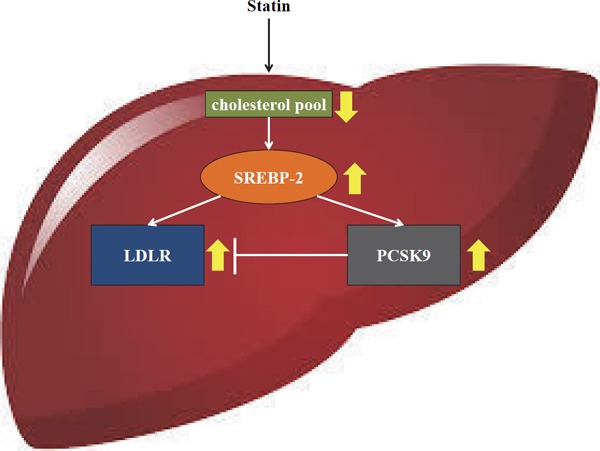
“Statins decrease intracellular cholesterol in the liver and increase PCSK9 as well as LDL receptors [64].”
BackgroundJiang, Y., Jin, M., Chen, J., Yan, J., Liu, P., Yao, M., Cai, W., & Pi, R. (2019) · European Journal of Pharmacology · doi:10.1016/j.ejphar.2019.172871 · Cited by 11
Furuhashi, M., Sakuma, I., Morimoto, T., Higashiura, Y., Sakai, A., Matsumoto, M., Sakuma, M., Shimabukuro, M., Nomiyama, T., Arasaki, O., et al. (2020) · Journal of Atherosclerosis and Thrombosis · doi:10.5551/jat.58396 · Cited by 11
Zrnić-Ćirić, M., Ostojić, M., Baralić, I., Kotur‐Stevuljević, J., Djordjevic, B. I., Markovic, S., Živković, S., & Stanković, I. (2021) · Nutrients · doi:10.3390/nu13030903 · Cited by 12
“In contrast, statins increase the expression of PCSK9 through the activation of SREBP-2, which may attenuate their beneficial effects [18,19].”
BackgroundPeláez, J. A. F., Martín-Reyes, R., Lázaro, A. M. P., Aceña, Á., Lorenzo, Ó., Martín-Ventura, J. L., Blanco‐Colio, L. M., González‐Casaus, M. L., Hernández‐González, I., Carda, R., et al. (2020) · Journal of Clinical Medicine · doi:10.3390/jcm9093037 · Cited by 11
“We also explored the potential role of PCSK9 in the genesis of CAE, but we did not find any significant relationship with its plasma levels.”
BackgroundInfluentialMyasoedova, V. A., Franchi, M., Giorgi, D. D., Bonomi, A., Valerio, V., Pirola, S., Andreani, N., Rusconi, V., Bertolini, F., Massaiu, I., et al. (2025) · Pharmacological Research · doi:10.1016/j.phrs.2025.107737 · Cited by 11
Boonkaew, B., Charoenthanakitkul, D., Suntornnont, N., Ariyachet, C., & Tangkijvanich, P. (2025) · World Journal of Hepatology · doi:10.4254/wjh.v17.i9.108259 · Cited by 12
Hasan, H. A., Madkour, M. I., Awadallah, S. M., Hassanein, M. M., Jahrami, H., & Faris, M. E. (2022) · Medicina · doi:10.3390/medicina58040503 · Cited by 11
“Proprotein convertase subtilisin/kexin type 9 (PCSK9)—a blood protein synthesized by the liver—works as an inhibitor of the pathway of the LDL-C receptor (LDLR) by targeting receptors in the lysosomal degradation pathway [20].”
BackgroundInfluentialGeranylgeranyl isoprenoids and hepatic Rap1a regulate basal and statin-induced expression of PCSK9
Wang, Y., Tinsley, B., Spolitu, S., Zadroga, J. A., Agarwal, H., Sarecha, A. K., & Özcan, L. (2024) · Journal of Lipid Research · doi:10.1016/j.jlr.2024.100515 · Cited by 10
Choi, I. J., Lim, S., Lee, D., Lee, W. J., Lee, K. Y., Kim, M., & Jeon, D. S. (2020) · The American Journal of Cardiology · doi:10.1016/j.amjcard.2020.07.032 · Cited by 11
Boonkaew, B., Satthawiwat, N., Pachane, B. C., Brett, L. M., Tangkijvanich, P., & Ariyachet, C. (2025) · Non-coding RNA Research · doi:10.1016/j.ncrna.2025.04.007 · Cited by 9
“Statins primarily function by inhibiting HMG-CoA reductase; however, they also influence the expression of LDLR and PCSK9 [58].”
Bohn, B., Lutsey, P. L., Tang, W., Pankow, J. S., Norby, F. L., Yu, B., Ballantyne, C. M., Whitsel, E. A., Matsushita, K., & Demmer, R. T. (2022) · Journal of Proteomics · doi:10.1016/j.jprot.2022.104788 · Cited by 9
Alshahrani, A. S., Kholaif, N., Al-Khnifsawi, M., ZARIF, H. A., & Mahzari, M. M. (2024) · Advances in Therapy · doi:10.1007/s12325-023-02764-y · Cited by 11
“Proprotein convertase subtilisin/kexin type 9 inhibitors (PCSK9i) promote hepatic uptake of LDL-C by LDLR [13, 14], and clinical trials have shown their efficacy in reducing LDL-C levels and improving cardiovascular outcomes [15, 16].”
Dyslipidemia: Current Perspectives and Implications for Clinical Practice
Majanović, S. K., Cvijanović, O., Detel, D., Jovanović, G. K., Bakula, M., Rahelić, D., Čaljkušić‐Mance, T., Šoić-Vranić, T., & Cvek, S. Z. (2021) · IntechOpen eBooks · doi:10.5772/intechopen.98386 · Cited by 13
Proprotein Convertase Subtilisin/Kexin 9 as a Modifier of Lipid Metabolism in Atherosclerosis
Poznyak, A. V., Sukhorukov, V. N., Eremin, I. I., Nadelyaeva, I. I., Gutyrchik, N. A., & Orekhov, A. N. (2023) · Biomedicines · doi:10.3390/biomedicines11020503 · Cited by 8
“This is a potential mechanism of limitation of the efficacy of statin-induced LDL-C reduction, which can explain the “6% rule for statins”, which states that the doubling of a statin dose brings only approximately 6% additional reduction in LDL-C level [49,50].”
BackgroundScreening for variable drug responses using human iPSC cohorts
Platani, M., Jiang, H., Davidson, L., Hariharan, S., Doyonnas, R., Lamond, A. I., & Swedlow, J. R. (2025) · PLoS ONE · doi:10.1371/journal.pone.0323953 · Cited by 8
“In addition, SCARB1, a cell surface HDL receptor that mediates HDL-cholesteryl ester uptake, as well as ApoE, a plasma protein that participates in the transport of cholesterol and other lipids between cells and has been linked to the effect of statins [31–39].”
Lu, F., Li, E., & Yang, X. (2023) · Heliyon · doi:10.1016/j.heliyon.2023.e19371 · Cited by 9
“Among them, ASOs are a class of short natural nucleic acid analogues that specifically bind to mRNA to induce its degradation or prevent its translation, which was shown to reduce PCSK9 mRNA by 60% and increase liver LDLR protein levels by 2–3 times in high-fat diet mouse models [86].”
BackgroundMethodStructural dynamics of LDL receptor interactions with E498A and R499G variants of PCSK9
Azhar, N. A. A., Chua, Y.-A., Nawawi, H. M., & Jusoh, S. A. (2025) · Journal of Molecular Modeling · doi:10.1007/s00894-025-06380-1 · Cited by 8
“These predictions support the functional relevance of the variants, as they reside in the C-terminal region known to interact with LDLR in endosomal low pH environments (Nozue, 2017).”
BackgroundPCSK9 Inhibitors: From Nature’s Lessons to Clinical Utility
Raal, F. J., CHILTON, R. J., Ranjith, N., Rambiritch, V., Leisegang, R. F., Ebrahim, I. O., van Tonder, A., Shunmoogam, N., Bouharati, C., Musa, M. G., et al. (2020) · Endocrine Metabolic & Immune Disorders - Drug Targets · doi:10.2174/1871530320666200213114138 · Cited by 8
Mester, P., Amend, P., Schmid, S. A., Wenzel, J. J., Höring, M., Liebisch, G., Krautbauer, S., Müller, M., Buechler, C., & Pavel, V. (2024) · Infectious Disease Reports · doi:10.3390/idr16040045 · Cited by 7
“PCSK9 levels are positively associated with serum cholesterol levels [7,43,44], and positive correlations of PCSK9 with CE 18:3 and 20:5 were observed in moderate COVID-19.”
Pharmacological management of cardiovascular risk in chronic inflammatory rheumatic diseases
Panoulas, V. F., & Kitas, G. D. (2020) · Expert Review of Clinical Pharmacology · doi:10.1080/17512433.2020.1766964 · Cited by 8
“Since statins increase circulating PCSK9, the best benefit of these mAbs is exhibited when used in combination [49].”
BackgroundDoes 24-h Activity Cycle Influence Plasma PCSK9 Concentration? A Systematic Review and Meta-Analysis
Kuo, W., Stevens, J. M., Ersig, A. L., Johnson, H. M., Tung, T., & Bratzke, L. C. (2020) · Current Atherosclerosis Reports · doi:10.1007/s11883-020-00843-x · Cited by 8
Liu, J., Liu, S., Lee, J., Zheng, H., Gurung, R. L., Ang, K., Wu, H., & Lim, S. C. (2025) · Diabetes Obesity and Metabolism · doi:10.1111/dom.16486 · Cited by 7
“Consistent with data in the literature, 26 – 28 we found that sex and statin usage were two major determinants of plasma PCSK9 variation in patients with type 2 diabetes (Table S3).”
Chen, R., Zhao, H., Zhou, J., Wang, Y., Li, J., Zhao, X., Li, N., Liu, C., Zhou, P., Chen, Y., et al. (2022) · Biomolecules · doi:10.3390/biom12101482 · Cited by 6
“Meanwhile, it should be emphasized that circulating levels of PCSK9 are largely determined by upstream gene expressions, and life-long exposure to elevated PCSK9 could not be effectively attenuated with lifestyle changes and conventional lipid-lowering medications [23,26].”
BackgroundKiyosue, A., Yasuda, S., Tomura, A., Usami, M., & Arai, H. (2023) · Circulation Journal · doi:10.1253/circj.cj-22-0445 · Cited by 6
Matta, A. G., Bongard, V., Bouisset, F., Taraszkiewicz, D., Rabès, J., & Ferrières, J. (2021) · Medical Science Monitor · doi:10.12659/msm.928784 · Cited by 6
“4% to 35% increase in the PCSK9 protein level was shown with the use of statins [28].”
BackgroundProprotein convertase subtilisin/kexin type 9 (PCSK9) and clinical outcomes in dialysis patients
Torino, C., Carbone, F., Pizzini, P., Mezzatesta, S., D’Arrigo, G., Gori, M., Liberale, L., Moriero, M., Michelauz, C., Frè, F., et al. (2024) · European Journal of Clinical Investigation · doi:10.1111/eci.14235 · Cited by 7
“While PCSK9 levels rise early after statins treatment begins—with a different extent depending on compound 31 —an ‘escape phe-nomenon’ occurs during prolonged statin therapy with PCSK9 downregulation and increase of circulating LDL cholesterol levels.”
Awadallah, S. M., Taneera, J., Mohammed, A. K., Unnikannan, H., & Sulaiman, N. D. (2020) · Diabetes & Metabolic Syndrome Clinical Research & Reviews · doi:10.1016/j.dsx.2020.10.028 · Cited by 7
Plasma Purification Treatment Relieves the Damage of Hyperlipidemia to PBMCs
Zhang, X., Gu, Y. H., Deng, H., Xu, Z. Q., Zhong, Z., Lyu, X. J., Jin, H. M., & Yang, X. H. (2021) · Frontiers in Cardiovascular Medicine · doi:10.3389/fcvm.2021.691336 · Cited by 6
“In patients receiving statin therapy, PCSK9 and LDLR were upregulated, and CD36 was downregulated (31).”
BackgroundEficacia y seguridad de los inhibidores de la PCSK9 en la vida real
González-Guerrero, A., Navarrete-Rouco, E., Benaiges, D., Steinhauer, E. G., Marcos, L., Oliveras, A., Recasens, L., & Pedro‐Botet, J. (2025) · Clínica e Investigación en Arteriosclerosis · doi:10.1016/j.arteri.2024.500755 · Cited by 5
Genomic data-driven framework for drug target discovery in atrial fibrillation
Tao, Y., Liu, Q., Wang, Y., Jiang, R., & Zhang, K. (2025) · Journal of Translational Medicine · doi:10.1186/s12967-025-07217-4 · Cited by 5
“The amino acid substitution is located in the prodomain region of PCSK9 , a structural domain that plays a critical role in facilitating protein folding, regulating secretory processes, and ensuring functional maturation of the enzyme [83].”
Ábel, T., Benczúr, B., & Csajbókné, É. C. (2026) · European Journal of Clinical Pharmacology · doi:10.1007/s00228-025-03965-w · Cited by 6
“Statin therapy increases circulating PCSK9 levels [19, 84– 86].”
Cholesterol and Cholesterol-Lowering Medications in COVID-19—An Unresolved Matter
Grewal, T., Nguyen, M. K. L., & Buechler, C. (2024) · International Journal of Molecular Sciences · doi:10.3390/ijms251910489 · Cited by 5
“Statin-mediated PCSK9 upregulation [175,176] paved the way for studies that identified SREBP2 as inducing PCSK9 expression.”
BackgroundAn, C.-Y., Pel, P., Bae, M., Park, C., Kwon, H., Lee, H. S., Lương, V. D., Kim, C., Lee, D., Choi, Y. H., et al. (2024) · Phytochemistry · doi:10.1016/j.phytochem.2024.114330 · Cited by 6
Vavlukis, M., & Vavlukis, A. (2019) · IntechOpen eBooks · doi:10.5772/intechopen.82520 · Cited by 6
“2 number of statin-treated patients do not achieve target LDL-C levels, even after maximal statin dose-treatment, or are intolerant to intensive statin therapy [2].”
BackgroundJack, A., Wahid, M. E. A., Kamaruddin, N. N., Din, L. H. M., Hajri, N. A., & Muhammad, T. S. T. (2021) · Saudi Journal of Biological Sciences · doi:10.1016/j.sjbs.2021.08.003 · Cited by 6
“…the most prescribed LDL-C lowering drug, molecular findings showed that statin treatment increased the expression of SREBP-2 and HNF1a which resulted in higher induction of PCSK9 than LDLR transcription alone which enhanced PCSK9 mediated LDLR degradation (Dong et al., 2010; Nozue, 2017) (Fig.”
BackgroundShi, L., Ye, Z., Gu, Q., & Li, Y. (2023) · Cellular and Molecular Biology · doi:10.14715/cmb/2023.69.12.41 · Cited by 4
“However, the car - diac function of the two groups was significantly impro - ved during the 4-week follow-up, and the improvement degree in the observation group was the most significant (P 0.05), which was in line with the results of literature (22).”
ResultInfluentialPamporis, K., Karakasis, P., Simantiris, S., Sagris, Μ., Bougioukas, K. I., Fragakis, N., & Tousoulis, D. M. (2023) · Clínica e Investigación en Arteriosclerosis · doi:10.1016/j.arteri.2023.11.003 · Cited by 4
Genetic Testing for Children with Familial Hypercholesterolemia
Nagahara, K., Tada, H., & Dobashi, K. (2025) · Journal of Atherosclerosis and Thrombosis · doi:10.5551/jat.rv22046 · Cited by 3
“On the other hand, statins simultaneously increase the expression of PCSK9 from SREBP-2 56) .”
Kunimura, A., Miura, K., Segawa, H., Torii, S., Kondo, K., Hisamatsu, T., Kadota, A., Fujiyoshi, A., Yano, Y., Nakagawa, Y., et al. (2022) · Journal of Atherosclerosis and Thrombosis · doi:10.5551/jat.63549 · Cited by 4
The association between lipid-lowering drugs and circulating concentration of PCSK9
Reiner, Ž. (2019) · European Journal of Preventive Cardiology · doi:10.1177/2047487319840179 · Cited by 3
Özkara, G., Aslan, E., Ceviz, A. B., Candan, G., Malikova, F., Eronat, A. P., Ser, Ö. S., Kılıçarslan, O., Küçükhüseyin, Ö., Bostan, C., et al. (2024) · Nucleosides Nucleotides & Nucleic Acids · doi:10.1080/15257770.2024.2316724 · Cited by 2
“[60,61] Therefore, the lack of a relationship between PCSK9 and serum lipid levels in our study may be due to the fact that patients with hyperlipidemic and/or type 2 diabetic in both patient groups received lipid-lowering statin and/or oral antidiabetic (metformin) medication.”
Łowicka, W., Graca, M., Szeliga, A., Szostak, A., Korta, K., Oluszczak, K., Szopińska, K., Dyląg, L., Śmigielska-Mikołajczyk, M. J., & Wawszkowicz, K. (2024) · Quality in Sport · doi:10.12775/qs.2024.19.54155 · Cited by 2
El-Mihi, K. A., Leonard, K., Nelson, R. C., Thiesen, A., Clugston, R. D., & Jacobs, R. L. (2025) · American Journal of Physiology-Gastrointestinal and Liver Physiology · doi:10.1152/ajpgi.00386.2024 · Cited by 3
An, C.-Y., Park, C. W., Pel, P., Khiev, P., & Chin, Y. (2025) · Phytochemistry · doi:10.1016/j.phytochem.2025.114752 · Cited by 2
Wang, Y., Zhang, Y., Bao, Z., Li, D., Jafari, S. M., & Pan, Q. (2026) · Advances in Colloid and Interface Science · doi:10.1016/j.cis.2026.103963 · Cited by 2
Corn, G., Lund, M., Andersson, N. W., Dohlmann, T. L., Hlatky, M. A., Wohlfahrt, J., & Melbye, M. (2024) · American Heart Journal · doi:10.1016/j.ahj.2024.04.018 · Cited by 2
Metadata
- Authors
- Nozue, T.
- Affiliations
- Yokohama Sakae Kyosai Hospital (JP)
- Corresponding author
- Nozue, Tsuyoshi
- Venue
- Journal of Atherosclerosis and Thrombosis
- Publisher
- Japan Atherosclerosis Society
- Published
- 2017
- Volume
- 24
- Issue
- 9
- Pages
- 895-907
- ISSN
- 1340-3478 (ISSN-L)
- 1880-3873
- PMC
- PMC5587514
- OpenAlex
- W2743198652
- Cited by
- 127
- References
- 100
- Citations by year
- 2026: 4 · 2025: 19 · 2024: 13 · 2023: 11 · 2022: 18 · 2021: 17 · 2020: 20 · 2019: 14 · 2018: 11
- FWCI
- 2.61
- Type
- journal article
- Language
- en
- Open access
- diamond
- doi.org
- Licence
- cc-by-nc-sa
- Locations
- Journal of Atherosclerosis and Thrombosis (publishedVersion, cc-by-nc-sa)
- Europe PMC (PubMed Central) (publishedVersion, cc-by-nc-sa)
- PubMed Central (publishedVersion, cc-by-nc-sa)
- PubMed (publishedVersion)
- Topics
- Health Sciences › Medicine › Cardiology and Cardiovascular Medicine › Lipoproteins and Cardiovascular Health
- Life Sciences › Biochemistry, Genetics and Molecular Biology › Biochemistry › Cholesterol and Lipid Metabolism
- Health Sciences › Medicine › Cardiology and Cardiovascular Medicine › Lipid metabolism and disorders
- Keywords
- PCSK9, statins, LDL cholesterol lowering, hypercholesterolemia, LDL receptor degradation, cholesterol homeostasis, PCSK9 inhibitors, PCSK9 monoclonal antibodies, lipid metabolism biomarkers, cardiovascular risk
- MeSH terms
- Ezetimibe, Proprotein Convertase 9, PCSK9 Inhibitors, Antibodies, Monoclonal, Hypolipidemic Agents, Humans, Hypercholesterolemia, Cholesterol, LDL, Niacin, Biomarkers, Hydroxymethylglutaryl-CoA Reductase Inhibitors, Gene Silencing, Lipid Metabolism, Fibric Acids
About these checks
Registry, retraction, Cites and statistics results are computed, not judged, with one exception: a printed reference that no index lists is read once by a model before it counts as a citation error. Claims are extracted by a model and kept only when their quote appears verbatim in the text; each cited source is then checked, with a model’s help, for whether it says what the claim relies on. Those verdicts can be wrong — read the claim’s quote and the cited source before relying on one.
Statistics and arithmetic are recomputed, not judged.
Confidence bands are shown only for fields calibrated on our annotated test set. None is calibrated yet, so no band is shown.
What counts as a claim ›How we measure confidence ›How we check this ›
Are you an author, or do you see a problem with this page? Request a review
Data sources
Bibliographic data: Semantic Scholar, OpenAlex, Crossref.
Contains information from the Semantic Scholar Academic Graph Datasets, made available under the ODC Attribution License (ODC-BY 1.0).
Semantic Scholar’s data is described in: Kinney, R., et al. (2023). The Semantic Scholar Open Data Platform. arXiv:2301.10140.
