

The DOI matches its Crossref record.
Structure of the CLC-1 chloride channel from Homo sapiens
Abstract
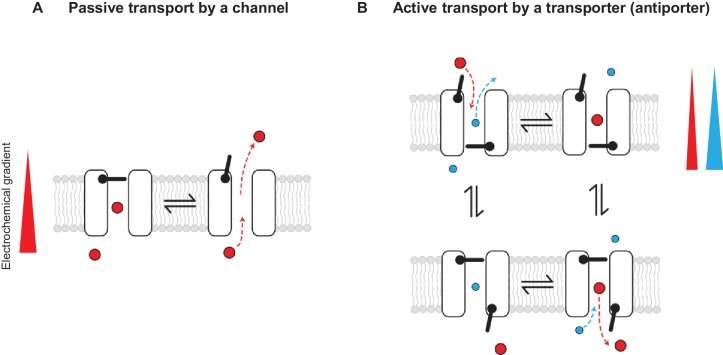
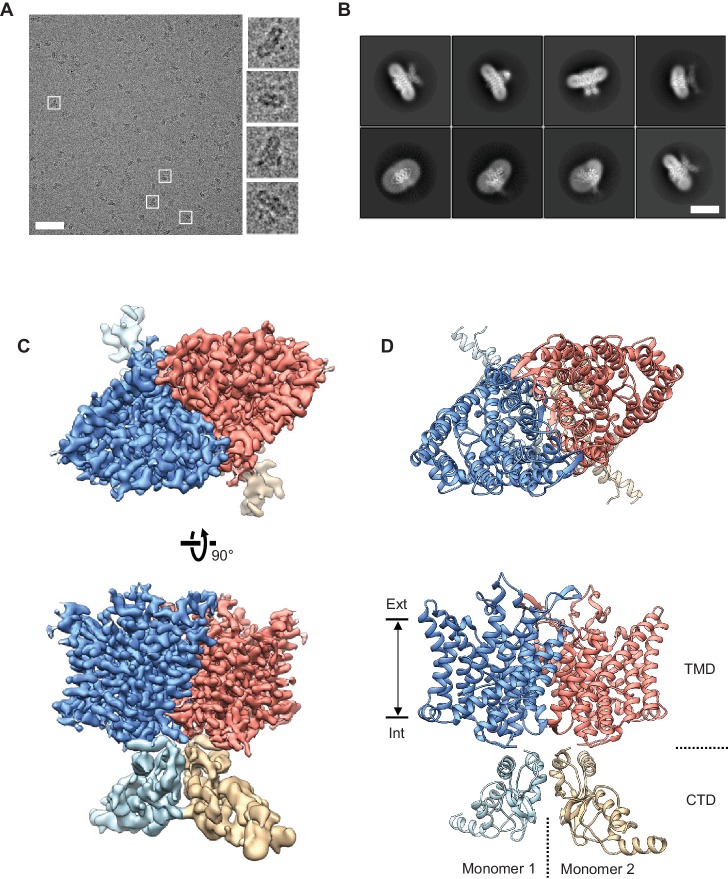
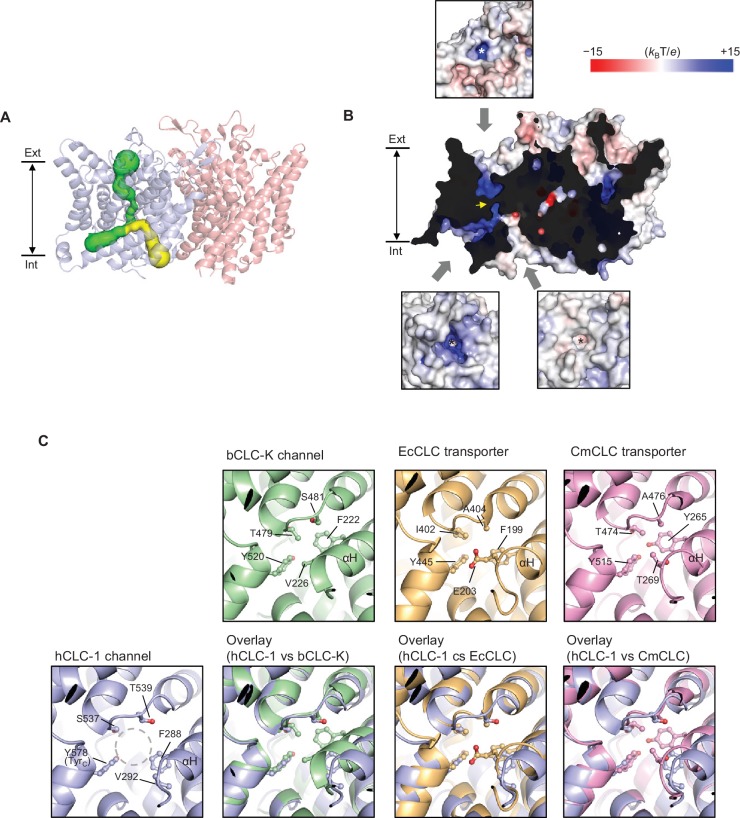
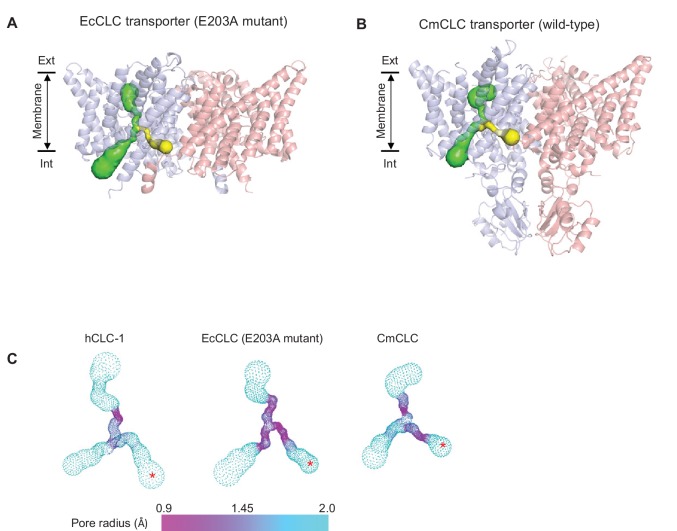
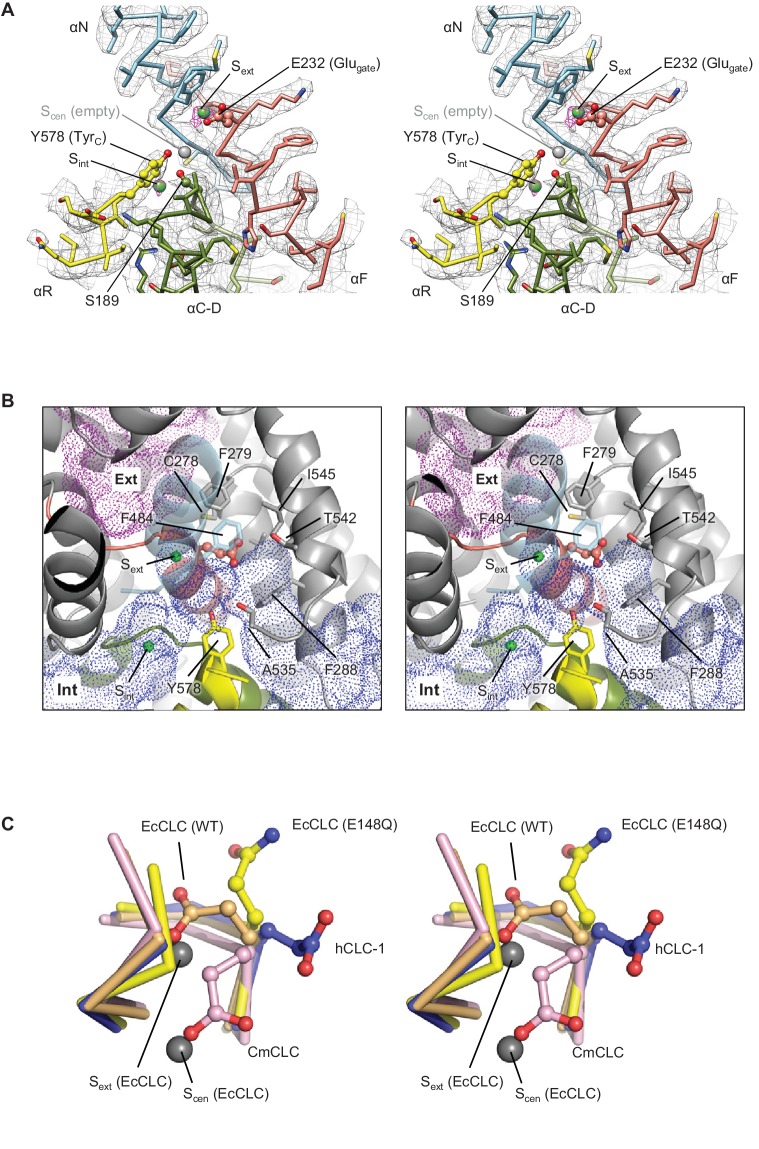
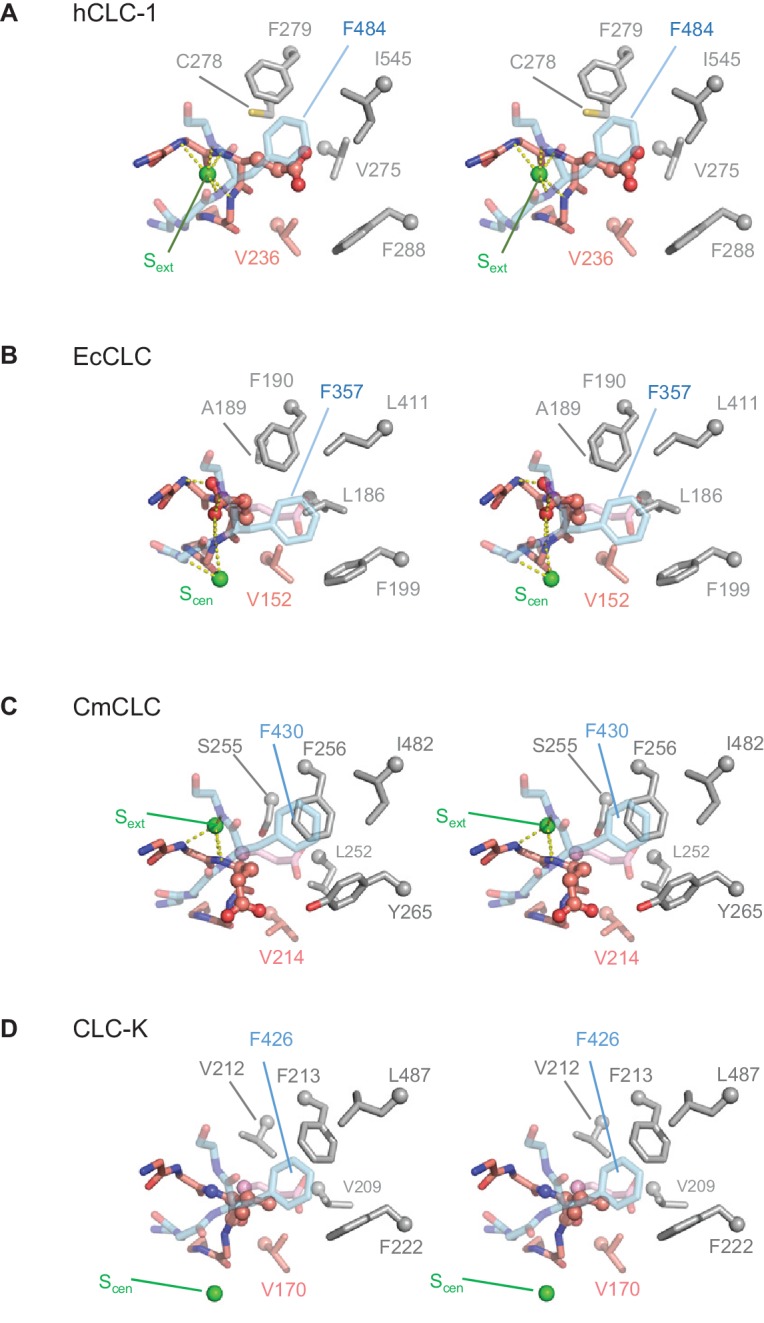
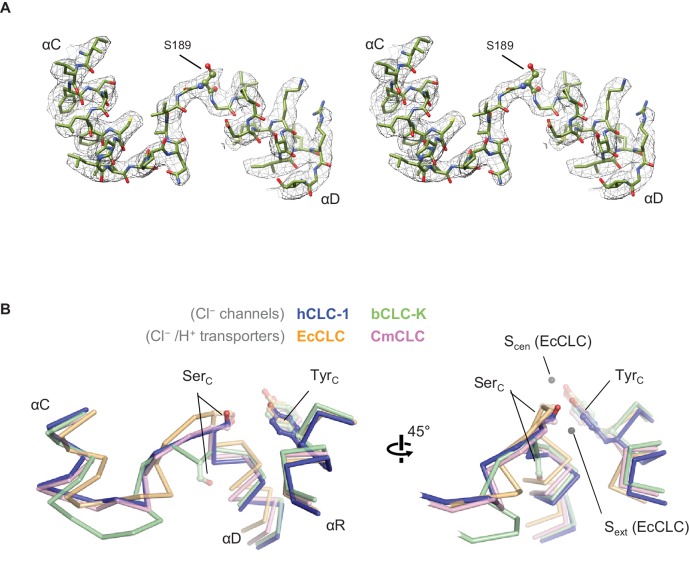
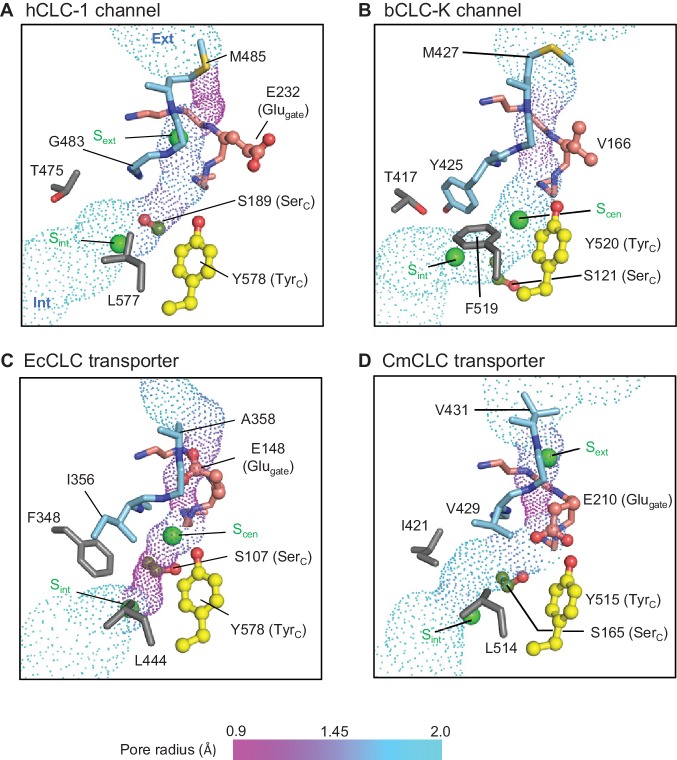
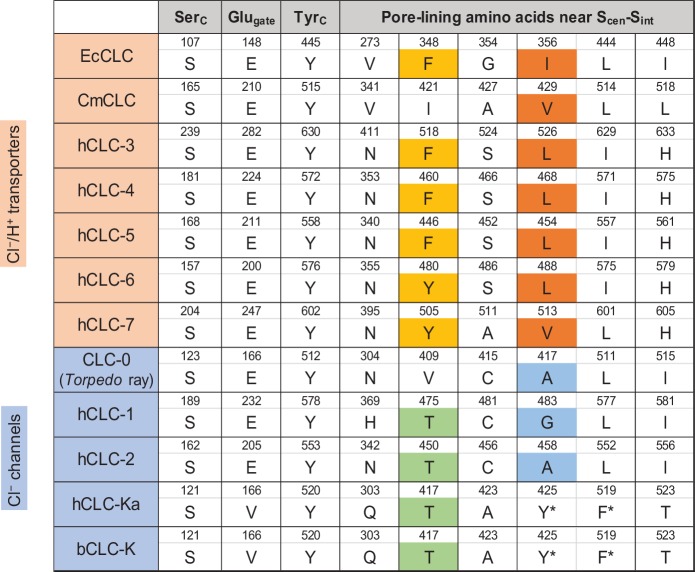
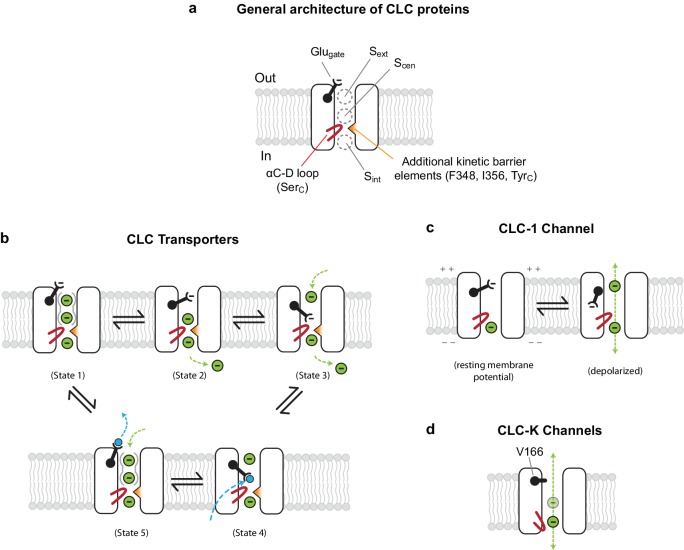
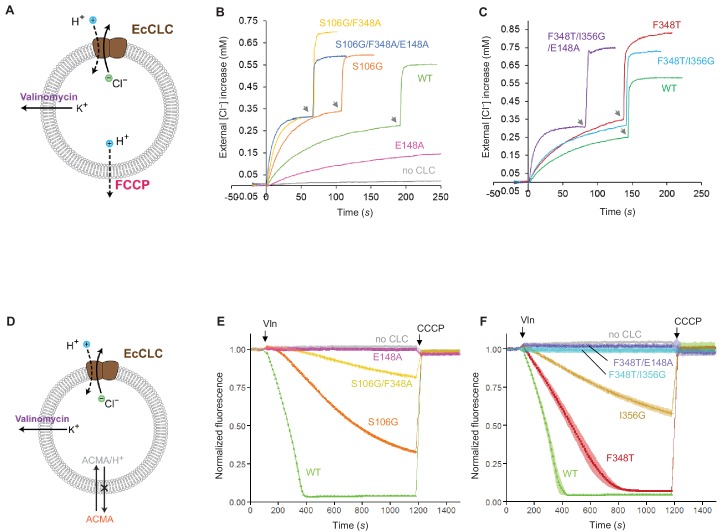
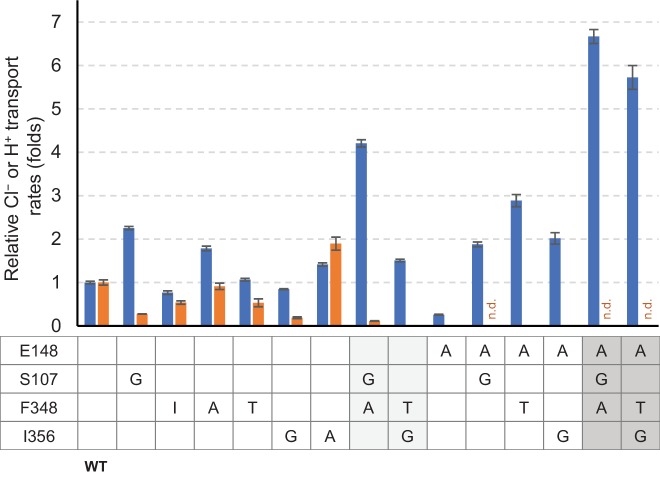
CLC channels mediate passive Cl− conduction, while CLC transporters mediate active Cl− transport coupled to H+ transport in the opposite direction. The distinction between CLC-0/1/2 channels and CLC transporters seems undetectable by amino acid sequence. To understand why they are different functionally we determined the structure of the human CLC-1 channel. Its ‘glutamate gate’ residue, known to mediate proton transfer in CLC transporters, adopts a location in the structure that appears to preclude it from its transport function. Furthermore, smaller side chains produce a wider pore near the intracellular surface, potentially reducing a kinetic barrier for Cl− conduction. When the corresponding residues are mutated in a transporter, it is converted to a channel. Finally, Cl− at key sites in the pore appear to interact with reduced affinity compared to transporters. Thus, subtle differences in glutamate gate conformation, internal pore diameter and Cl− affinity distinguish CLC channels and transporters.
Overview
The claims and statistics of this paper haven’t been checked yet.
Run the check — free, no account needed. It reads the open-access text and checks the sources it cites.
Integrity signals
Registry
Cites
Statistics
Figures
Verification
Claims the paper makes
The claims and statistics of this paper haven’t been checked yet.
Run the check — free, no account needed. It reads the open-access text and checks the sources it cites.
Claims other papers make about this one
Each is checked against this paper’s own text: does it say what the citing paper says it does?
In the citing paper
“A number of Cl− transporting CLCs have been structurally characterized, providing a deep mechanistic basis for understanding the fluoride riboswitch-associated CLCs (42–46).”
From Membrane exporters of fluoride ion (2021) · cites this paper as [46]
Self-check
Percentages, sums and reported differences re-computed from the paper’s own numbers.
The self-check needs the paper’s full text.
Citations
Cites
No references could be resolved yet.
Research works printed but not linked: 62
- Accardi, 2004, Ionic currents mediated by a prokaryotic homologue of CLC Cl- channels, The Journal of General Physiology, 123, 109, 10.1085/jgp.200308935 · DOI
- Accardi, 2004, Secondary active transport mediated by a prokaryotic homologue of ClC Cl- channels, Nature, 427, 803, 10.1038/nature02314 · DOI
- Accardi, 2006, Synergism between halide binding and proton transport in a CLC-type exchanger, Journal of Molecular Biology, 362, 691, 10.1016/j.jmb.2006.07.081 · DOI · Paper page
- Accardi, 2010, CLC channels and transporters: proteins with borderline personalities, Biochimica et Biophysica Acta (BBA) - Biomembranes, 1798, 1457, 10.1016/j.bbamem.2010.02.022 · DOI
- Baker, 2001, Electrostatics of nanosystems: application to microtubules and the ribosome, PNAS, 98, 10037, 10.1073/pnas.181342398 · DOI
- Basilio, 2014, Conformational changes required for H(+)/Cl(-) exchange mediated by a CLC transporter, Nature Structural & Molecular Biology, 21, 456, 10.1038/nsmb.2814 · DOI
- Chen, 2010, MolProbity: all-atom structure validation for macromolecular crystallography, Acta Crystallographica Section D Biological Crystallography, 66, 12, 10.1107/S0907444909042073 · DOI · Paper page
- Chovancova, 2012, CAVER 3.0: a tool for the analysis of transport pathways in dynamic protein structures, PLoS Computational Biology, 8, e1002708, 10.1371/journal.pcbi.1002708 · DOI
- Dutzler, 2002, X-ray structure of a ClC chloride channel at 3.0 A reveals the molecular basis of anion selectivity, Nature, 415, 287, 10.1038/415287a · DOI · Paper page
- Dutzler, 2003, Gating the selectivity filter in ClC chloride channels, Science, 300, 108, 10.1126/science.1082708 · DOI · Paper page
- Emsley, 2010, Features and development of Coot, Acta Crystallographica Section D Biological Crystallography, 66, 486, 10.1107/S0907444910007493 · DOI · Paper page
- Estévez, 2004, Functional and structural conservation of CBS domains from CLC chloride channels, The Journal of Physiology, 557, 363, 10.1113/jphysiol.2003.058453 · DOI
- Fahlke, 1996, Mechanism of voltage-dependent gating in skeletal muscle chloride channels, Biophysical Journal, 71, 695, 10.1016/S0006-3495(96)79269-X · DOI
- Fahlke, 1997, Pore-forming segments in voltage-gated chloride channels, Nature, 390, 529, 10.1038/37391 · DOI
- Feng, 2010, Structure of a eukaryotic CLC transporter defines an intermediate state in the transport cycle, Science, 330, 635, 10.1126/science.1195230 · DOI · Paper page
- Feng, 2012, Molecular mechanism of proton transport in CLC Cl-/H+ exchange transporters, PNAS, 109, 11699, 10.1073/pnas.1205764109 · DOI · Paper page
- Gadsby, 2009, Ion channels versus ion pumps: the principal difference, in principle, Nature Reviews Molecular Cell Biology, 10, 344, 10.1038/nrm2668 · DOI
- George, 1993, Molecular basis of Thomsen's disease (autosomal dominant myotonia congenita), Nature Genetics, 3, 305, 10.1038/ng0493-305 · DOI
- Goehring, 2014, Screening and large-scale expression of membrane proteins in mammalian cells for structural studies, Nature Protocols, 9, 2574, 10.1038/nprot.2014.173 · DOI
- Gradogna, 2010, A regulatory calcium-binding site at the subunit interface of CLC-K kidney chloride channels, The Journal of General Physiology, 136, 311, 10.1085/jgp.201010455 · DOI
- Ho, 2008, HOLLOW: generating accurate representations of channel and interior surfaces in molecular structures, BMC Structural Biology, 8, 49, 10.1186/1472-6807-8-49 · DOI
- Isom, 2010, Charges in the hydrophobic interior of proteins, PNAS, 107, 16096, 10.1073/pnas.1004213107 · DOI
- Jayaram, 2008, Ion permeation through a Cl--selective channel designed from a CLC Cl-/H+ exchanger, PNAS, 105, 11194, 10.1073/pnas.0804503105 · DOI · Paper page
- Jayaram, 2011, Structure of a slow CLC Cl⁻/H+ antiporter from a cyanobacterium, Biochemistry, 50, 788, 10.1021/bi1019258 · DOI
- Jentsch, 1990, Primary structure of Torpedo marmorata chloride channel isolated by expression cloning in Xenopus oocytes, Nature, 348, 510, 10.1038/348510a0 · DOI
- Khantwal, 2016, Revealing an outward-facing open conformational state in a CLC cl(-)/H(+) exchange transporter, eLife, 5, e11189, 10.7554/eLife.11189 · DOI
- Kimanius, 2016, Accelerated cryo-EM structure determination with parallelisation using GPUs in RELION-2, eLife, 5, e18722, 10.7554/eLife.18722 · DOI
- Koch, 1992, The skeletal muscle chloride channel in dominant and recessive human myotonia, Science, 257, 797, 10.1126/science.1379744 · DOI
- L'Hoste, 2013, Characterization of the mouse ClC-K1/Barttin chloride channel, Biochimica et Biophysica Acta (BBA) - Biomembranes, 1828, 2399, 10.1016/j.bbamem.2013.06.012 · DOI
- Lim, 2009, Intracellular proton-transfer mutants in a CLC cl-/H+ exchanger, The Journal of General Physiology, 133, 131, 10.1085/jgp.200810112 · DOI
- Lim, 2012, Intracellular proton access in a Cl(-)/H(+) antiporter, PLoS Biology, 10, e1001441, 10.1371/journal.pbio.1001441 · DOI
- Lobet, 2006, Ion-binding properties of the ClC chloride selectivity filter, The EMBO Journal, 25, 24, 10.1038/sj.emboj.7600909 · DOI
- Lorenz, 1994, Genomic organization of the human muscle chloride channel CIC-1 and analysis of novel mutations leading to Becker-type myotonia, Human Molecular Genetics, 3, 941, 10.1093/hmg/3.6.941 · DOI
- Ludewig, 1996, Two physically distinct pores in the dimeric ClC-0 chloride channel, Nature, 383, 340, 10.1038/383340a0 · DOI
- Lísal, 2008, The ClC-0 chloride channel is a 'broken' Cl-/H+ antiporter, Nature Structural & Molecular Biology, 15, 805, 10.1038/nsmb.1466 · DOI · Paper page
- Mastronarde, 2005, Automated electron microscope tomography using robust prediction of specimen movements, Journal of Structural Biology, 152, 36, 10.1016/j.jsb.2005.07.007 · DOI
- Meyer, 2006, Crystal structure of the cytoplasmic domain of the chloride channel ClC-0, Structure, 14, 299, 10.1016/j.str.2005.10.008 · DOI
- Miller, 1984, Dimeric structure of single chloride channels from Torpedo electroplax, PNAS, 81, 2772, 10.1073/pnas.81.9.2772 · DOI
- Miller, 2006, ClC chloride channels viewed through a transporter lens, Nature, 440, 484, 10.1038/nature04713 · DOI
- Nguitragool, 2006, Uncoupling of a CLC Cl-/H+ exchange transporter by polyatomic anions, Journal of Molecular Biology, 362, 682, 10.1016/j.jmb.2006.07.006 · DOI
- Niemeyer, 2009, Voltage-dependent and -independent titration of specific residues accounts for complex gating of a ClC chloride channel by extracellular protons, The Journal of Physiology, 587, 1387, 10.1113/jphysiol.2008.167353 · DOI
- Park, 2017, Structure of a CLC chloride ion channel by cryo-electron microscopy, Nature, 541, 500, 10.1038/nature20812 · DOI · Paper page
- Pettersen, 2004, UCSF Chimera--a visualization system for exploratory research and analysis, Journal of Computational Chemistry, 25, 1605, 10.1002/jcc.20084 · DOI
- Phillips, 2012, Surprises from an unusual CLC homolog, Biophysical Journal, 103, L44, 10.1016/j.bpj.2012.08.063 · DOI
- Picollo, 2005, Chloride/proton antiporter activity of mammalian CLC proteins ClC-4 and ClC-5, Nature, 436, 420, 10.1038/nature03720 · DOI
- Picollo, 2009, Basis of substrate binding and conservation of selectivity in the CLC family of channels and transporters, Nature Structural & Molecular Biology, 16, 1294, 10.1038/nsmb.1704 · DOI
- Pusch, 1995, Mutations in dominant human myotonia congenita drastically alter the voltage dependence of the CIC-1 chloride channel, Neuron, 15, 1455, 10.1016/0896-6273(95)90023-3 · DOI
- Rohou, 2015, CTFFIND4: Fast and accurate defocus estimation from electron micrographs, Journal of Structural Biology, 192, 216, 10.1016/j.jsb.2015.08.008 · DOI
- Rubinstein, 2015, Alignment of cryo-EM movies of individual particles by optimization of image translations, Journal of Structural Biology, 192, 188, 10.1016/j.jsb.2015.08.007 · DOI
- Rychkov, 1996, Concentration and pH dependence of skeletal muscle chloride channel ClC-1, The Journal of Physiology, 497 (Pt 2), 423, 10.1113/jphysiol.1996.sp021778 · DOI
- Saviane, 1999, The muscle chloride channel ClC-1 has a double-barreled appearance that is differentially affected in dominant and recessive myotonia, The Journal of General Physiology, 113, 457, 10.1085/jgp.113.3.457 · DOI
- Scheel, 2005, Voltage-dependent electrogenic chloride/proton exchange by endosomal CLC proteins, Nature, 436, 424, 10.1038/nature03860 · DOI
- Scheres, 2012, RELION: implementation of a Bayesian approach to cryo-EM structure determination, Journal of Structural Biology, 180, 519, 10.1016/j.jsb.2012.09.006 · DOI · Paper page
- Scholl, 2006, Barttin modulates trafficking and function of ClC-K channels, PNAS, 103, 11411, 10.1073/pnas.0601631103 · DOI
- Steinmeyer, 1991, Inactivation of muscle chloride channel by transposon insertion in myotonic mice, Nature, 354, 304, 10.1038/354304a0 · DOI
- Walden, 2007, Uncoupling and turnover in a cl-/H+ exchange transporter, The Journal of General Physiology, 129, 317, 10.1085/jgp.200709756 · DOI · Paper page
- Wang, 2016, Automated structure refinement of macromolecular assemblies from cryo-EM maps using rosetta, eLife, 5, e17219, 10.7554/eLife.17219 · DOI · Paper page
- Weinreich, 2001, Pores formed by single subunits in mixed dimers of different CLC chloride channels, Journal of Biological Chemistry, 276, 2347, 10.1074/jbc.M005733200 · DOI · Paper page
- Wollnik, 1997, Identification of functionally important regions of the muscular chloride channel CIC-1 by analysis of recessive and dominant myotonic mutations, Human Molecular Genetics, 6, 805, 10.1093/hmg/6.5.805 · DOI
- Zdebik, 2008, Determinants of anion-proton coupling in mammalian endosomal CLC proteins, Journal of Biological Chemistry, 283, 4219, 10.1074/jbc.M708368200 · DOI
- Zheng, 2017, MotionCor2: anisotropic correction of beam-induced motion for improved cryo-electron microscopy, Nature Methods, 14, 331, 10.1038/nmeth.4193 · DOI
- Zhou, 2001, Chemistry of ion coordination and hydration revealed by a K+ channel-Fab complex at 2.0 A resolution, Nature, 414, 43, 10.1038/35102009 · DOI
Cited by
Sorted by citations
Membrane exporters of fluoride ion
McIlwain, B. C., Ruprecht, M. T., & Stockbridge, R. B. (2021) · Annual Review of Biochemistry · doi:10.1146/annurev-biochem-071520-112507 · Cited by 69
Maggi, L., Bonanno, S., Altamura, C., & Desaphy, J.-F. (2021) · Cells · doi:10.3390/cells10061521 · Cited by 51
A large‐scale evolutionary and structural analysis of CLC channels and transporters
Mishra, A., Díaz Vázquez, G., & Robertson, J. L. (2025) · Protein Science · doi:10.1002/pro.70389 · Cited by 3
“Indeed, structural changes in the dimerization interface were observed in bCLC-K (Park et al., 2017), along with positioning changes of α H in hCLC-1 relative to transporter structures (Park & MacKinnon, 2018).”
Metadata
- Authors
- Park, E., & MacKinnon, R.
- Affiliations
- Laboratory of Molecular Neurobiology and Biophysics, Howard Hughes Medical Institute, The Rockefeller University, New York, United States
- Venue
- eLife
- Publisher
- eLife Sciences Publications, Ltd
- Published
- 2018-05-29
- Volume
- 7
- ISSN
- 2050-084X
- PMC
- PMC6019066
- Cited by
- 109
- References
- 0
- Language
- en
- Licence
- Funders
- Howard Hughes Medical Institute
- Jane Coffin Childs Memorial Fund for Medical Research (61-1513)
- Charles H. Revson Foundation (16-33)
About these checks
Registry, retraction, Cites and statistics results are computed, not judged, with one exception: a printed reference that no index lists is read once by a model before it counts as a citation error. Claims are extracted by a model and kept only when their quote appears verbatim in the text; each cited source is then checked, with a model’s help, for whether it says what the claim relies on. Those verdicts can be wrong — read the claim’s quote and the cited source before relying on one.
Statistics and arithmetic are recomputed, not judged.
Confidence bands are shown only for fields calibrated on our annotated test set. None is calibrated yet, so no band is shown.
What counts as a claim ›How we measure confidence ›How we check this ›
Are you an author, or do you see a problem with this page? Request a review
How to cite
Cite CoChat for the checks on this page, and the paper for its own findings.
- This page
- CoChat. (2026). Citation check: Structure of the CLC-1 chloride channel from Homo sapiens. https://app.cochat.ai/papers/10.7554/elife.36629
- The paper
- Park, E., & MacKinnon, R. (2018). Structure of the CLC-1 chloride channel from Homo sapiens. eLife. https://doi.org/10.7554/elife.36629
