

The DOI matches its Crossref record; 50 of the 50 references it cites were found in a registry or an index.
Visual attention modulates the integration of goal-relevant evidence and not value
Open accessPublished version of a preprint
Abstract
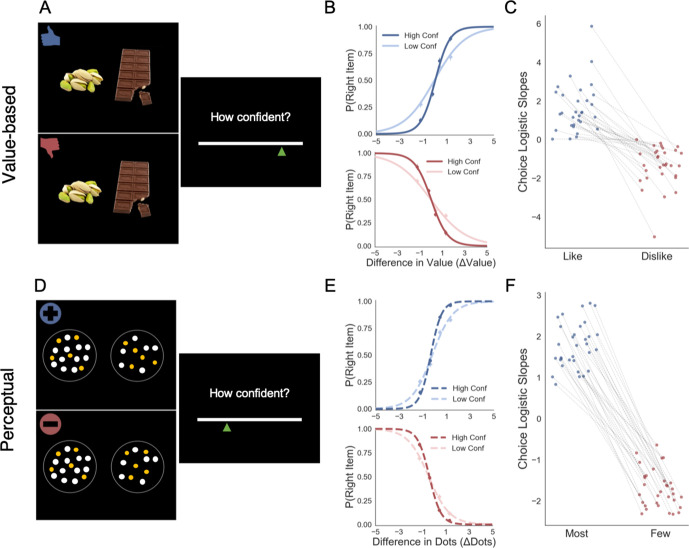
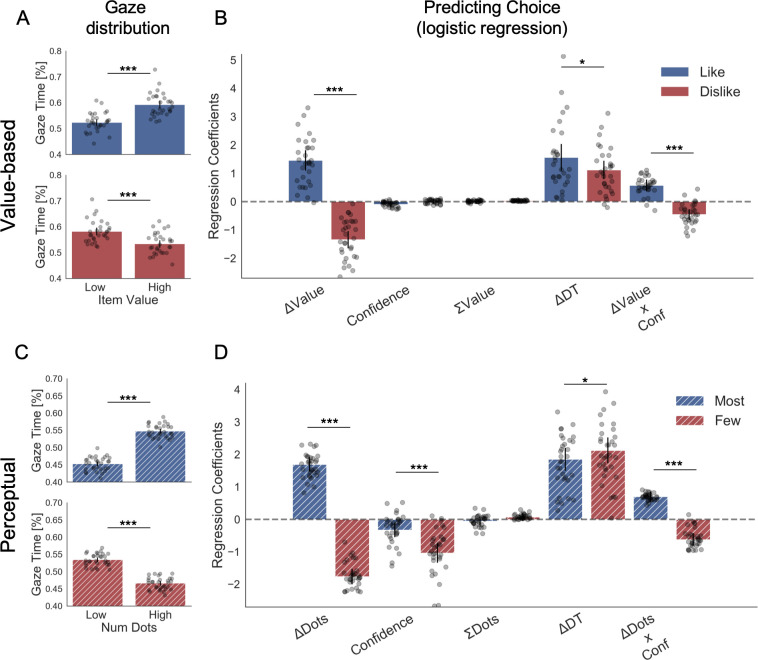
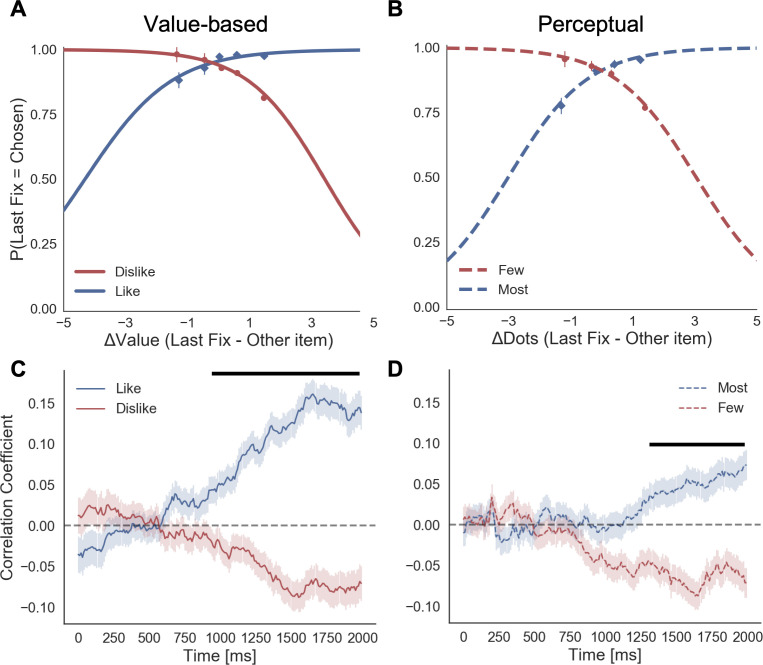
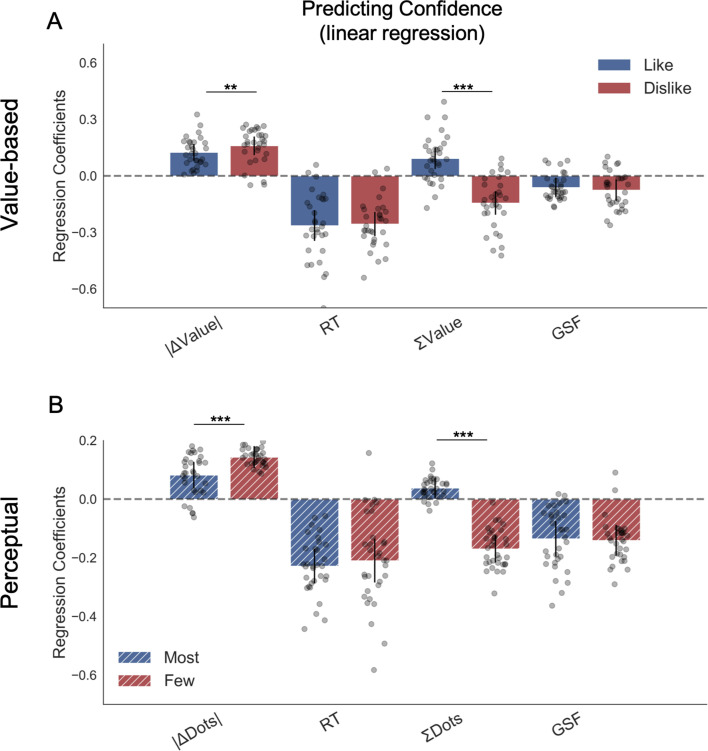
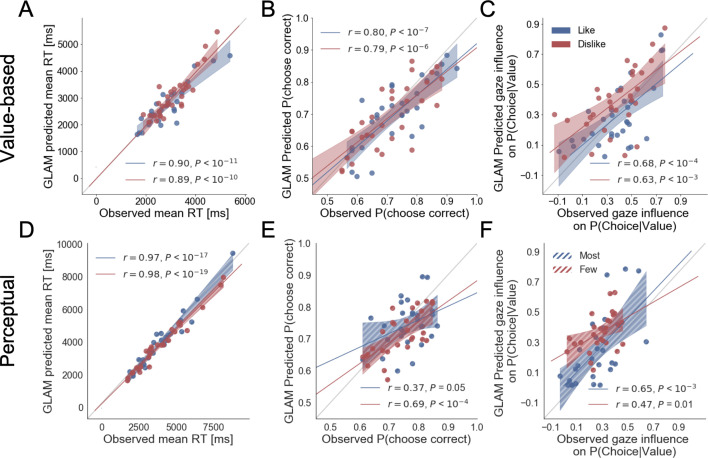
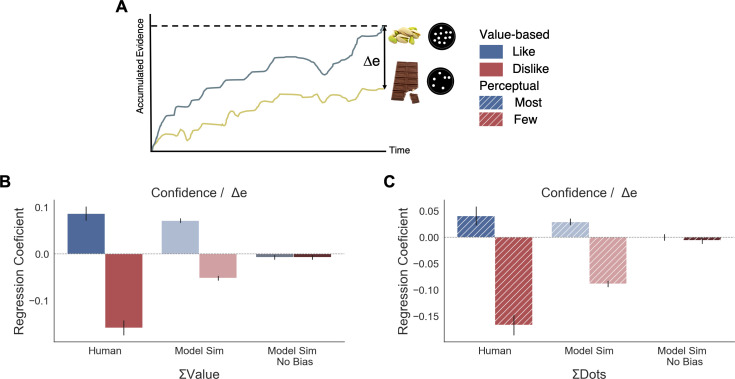
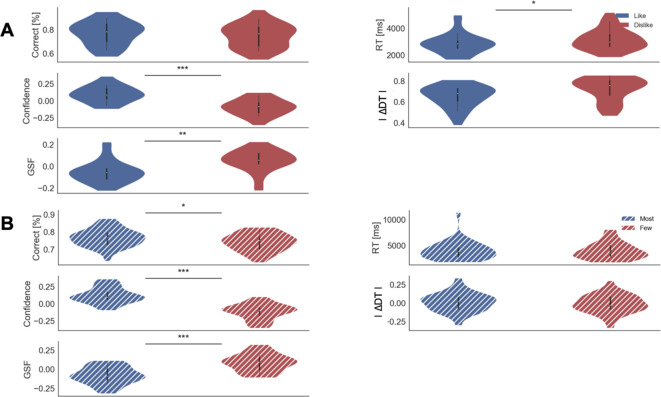
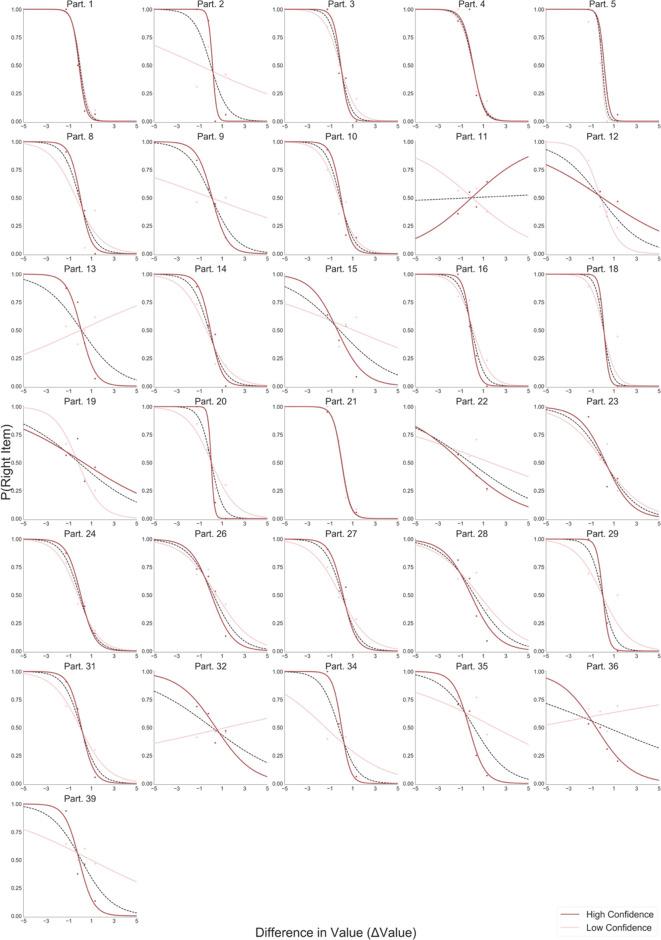
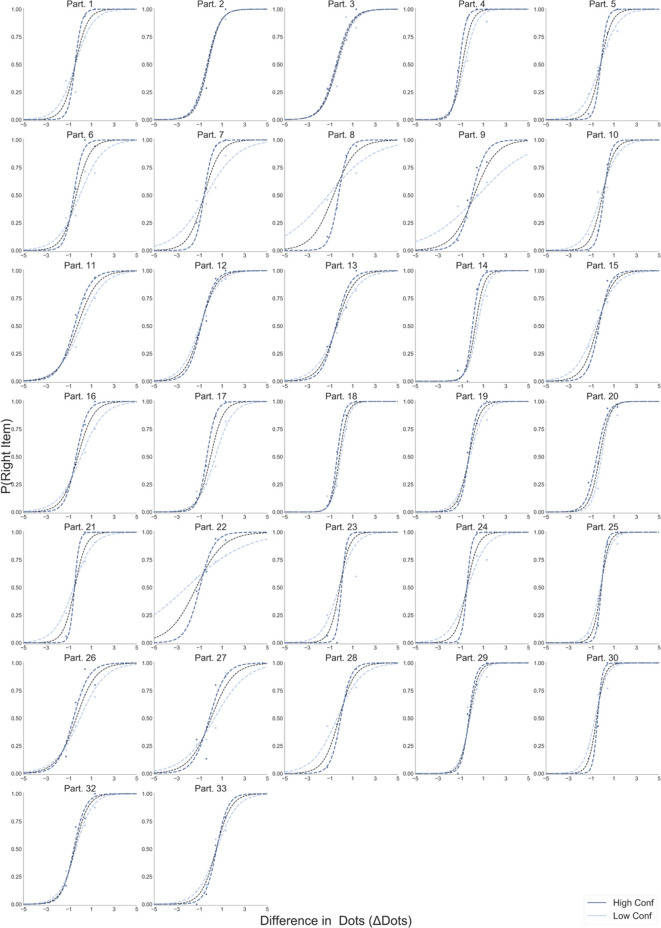
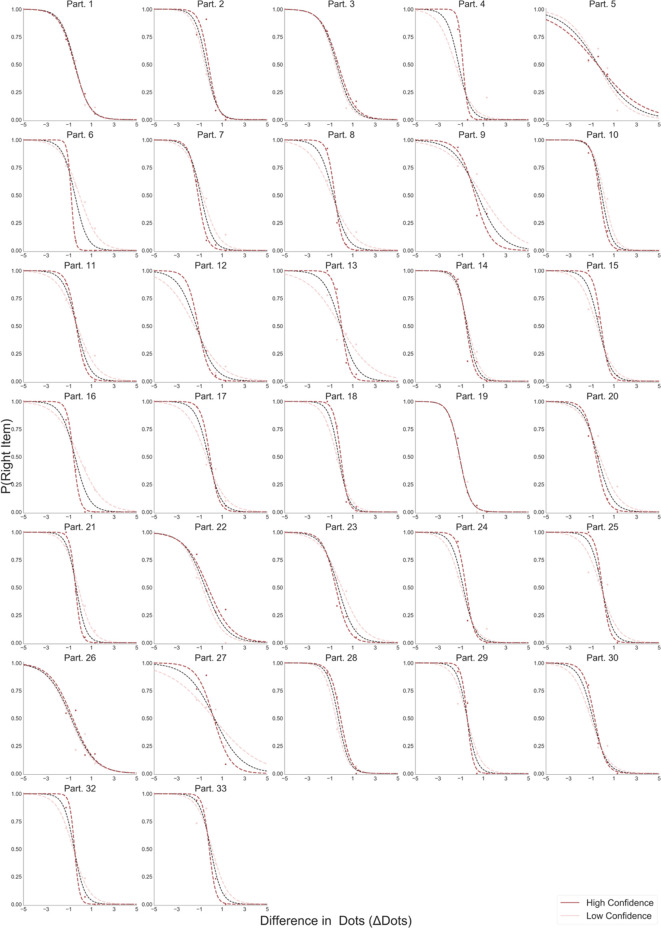
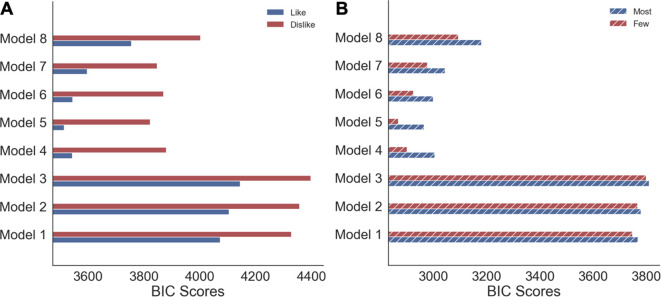
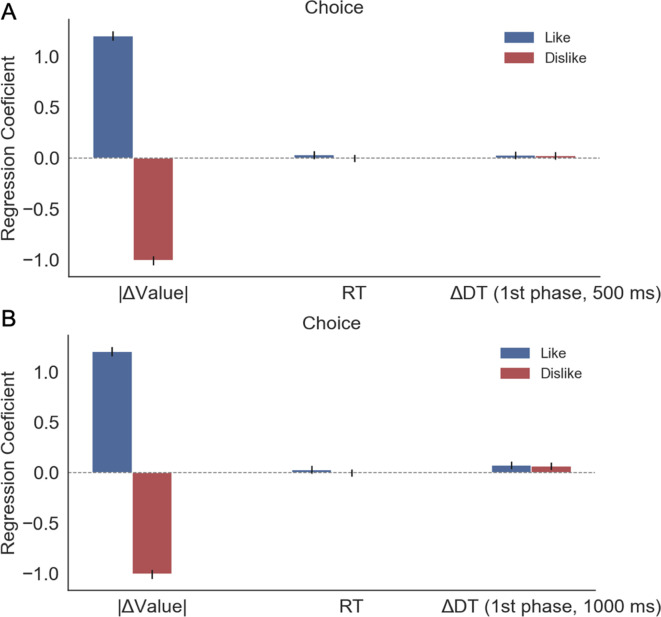
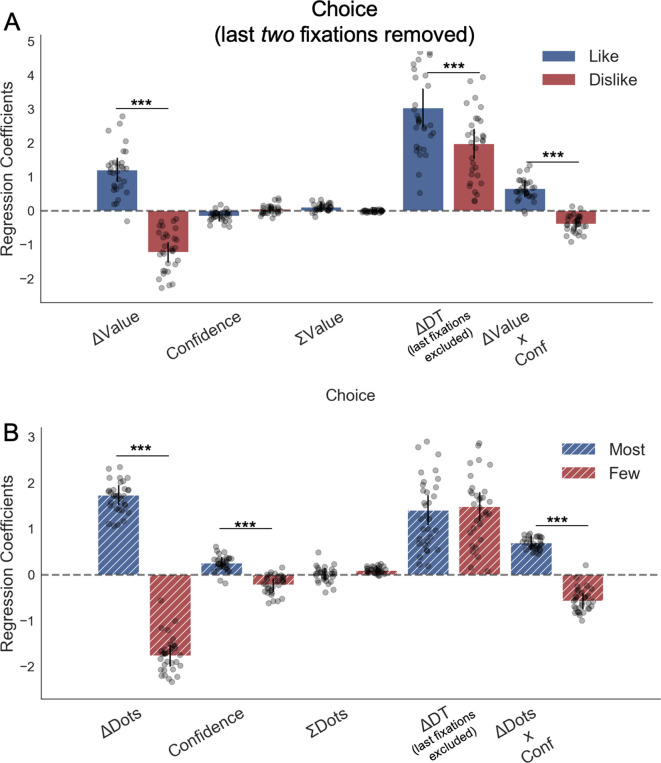
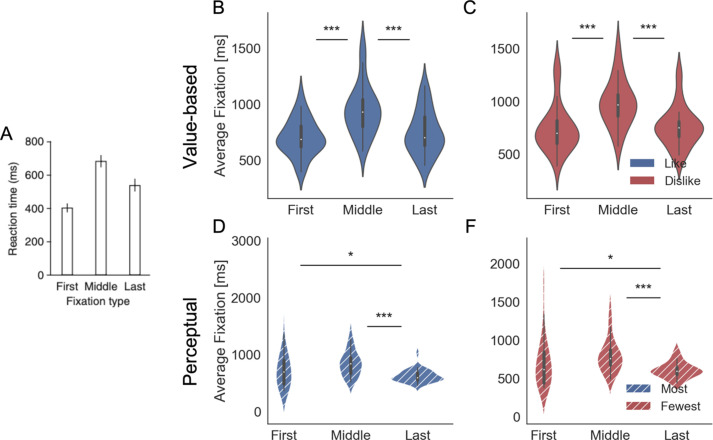
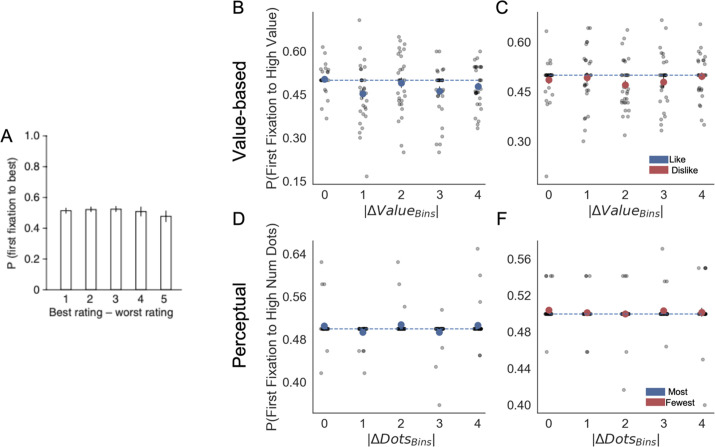
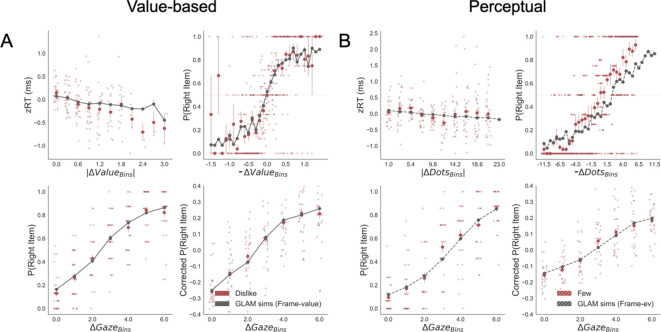
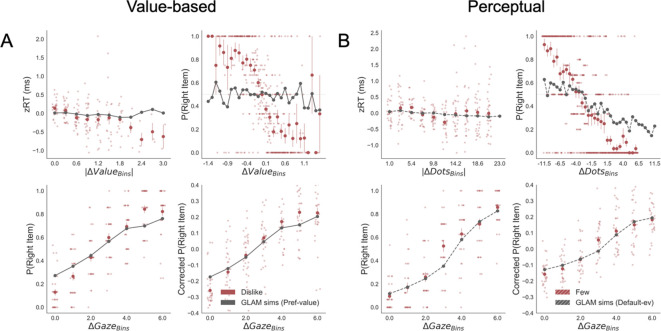
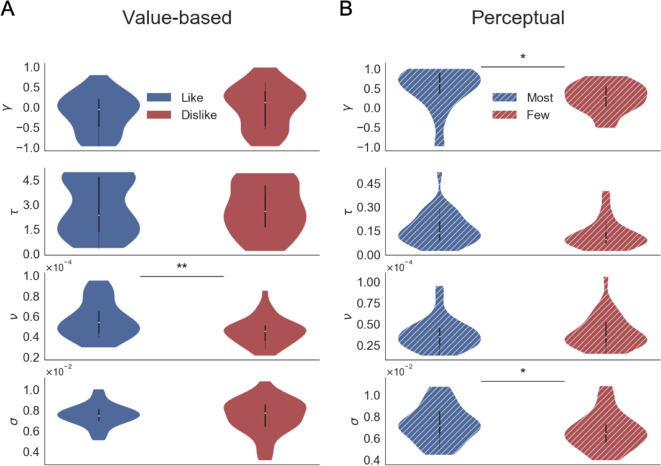
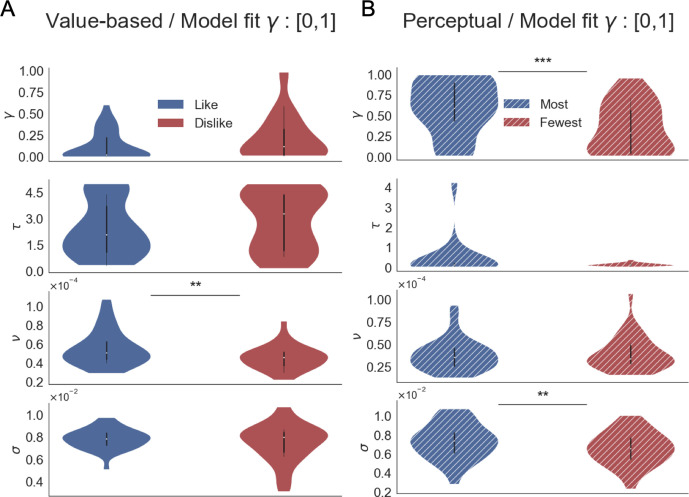
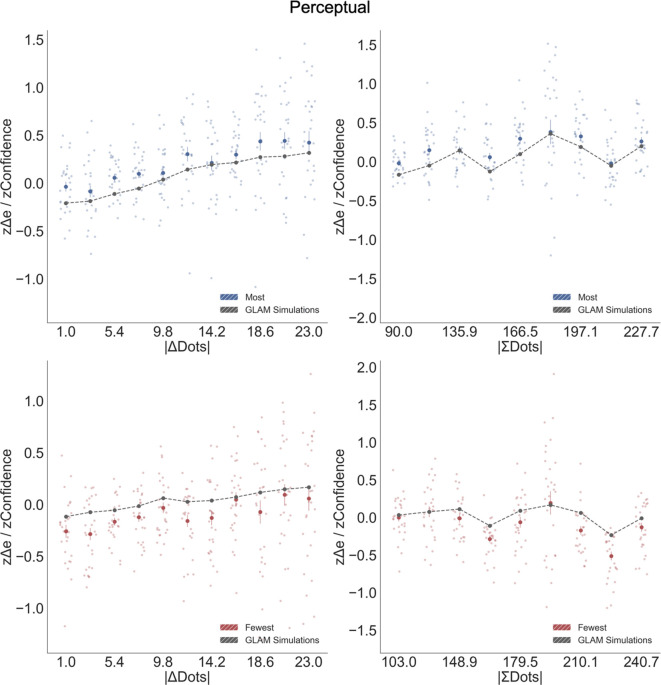
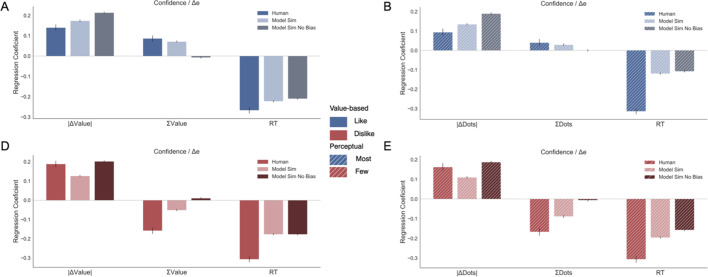
When choosing between options, such as food items presented in plain view, people tend to choose the option they spend longer looking at. The prevailing interpretation is that visual attention increases value. However, in previous studies, ‘value’ was coupled to a behavioural goal, since subjects had to choose the item they preferred. This makes it impossible to discern if visual attention has an effect on value, or, instead, if attention modulates the information most relevant for the goal of the decision-maker. Here, we present the results of two independent studies—a perceptual and a value-based task—that allow us to decouple value from goal-relevant information using specific task-framing. Combining psychophysics with computational modelling, we show that, contrary to the current interpretation, attention does not boost value, but instead it modulates goal-relevant information. This work provides a novel and more general mechanism by which attention interacts with choice.
Overview
The claims and statistics of this paper haven’t been checked yet.
Run the check — free, no account needed. It reads the open-access text and checks the sources it cites.
Integrity signals
Registry
Cites
Statistics
Figures
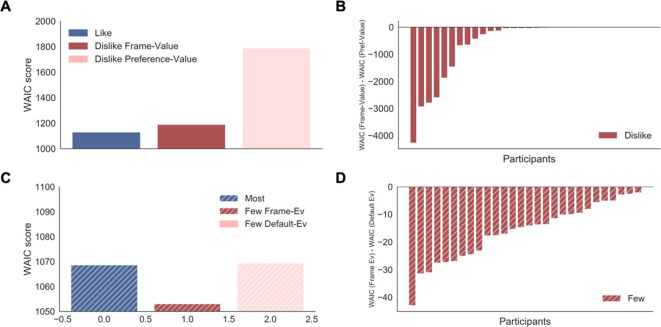
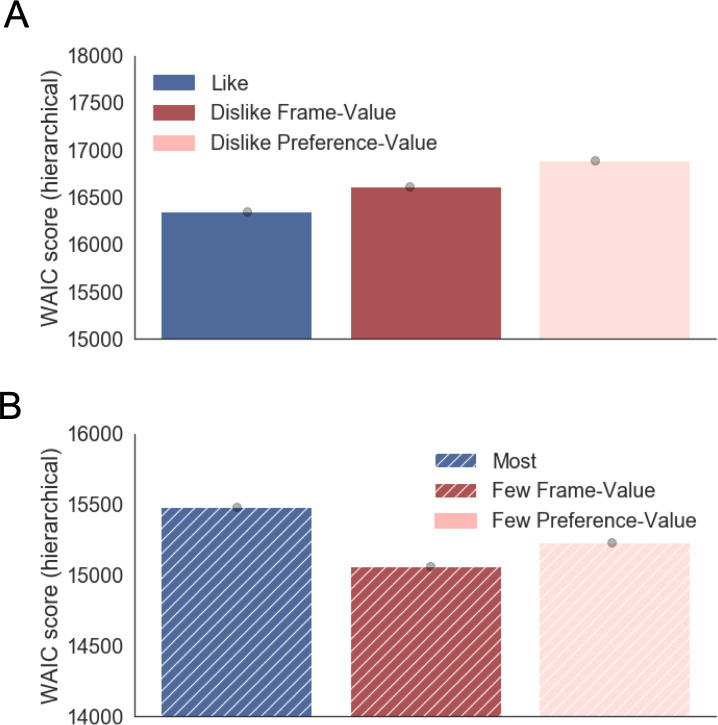
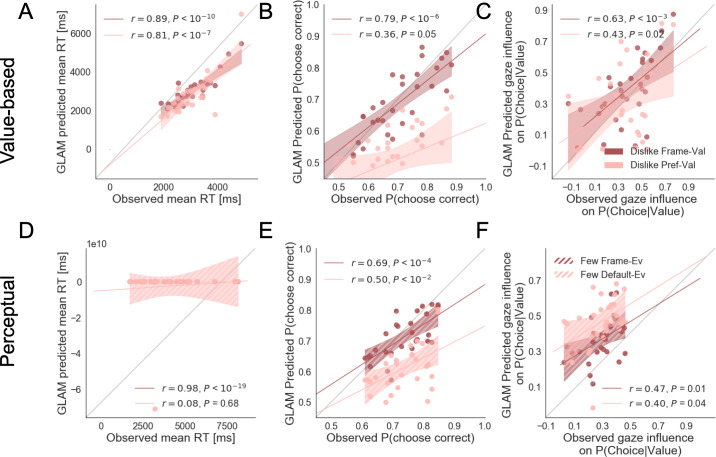
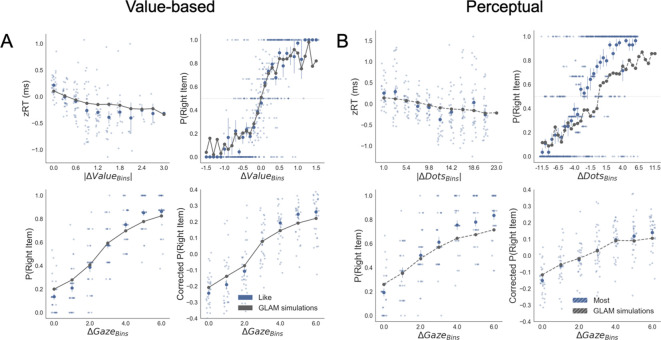
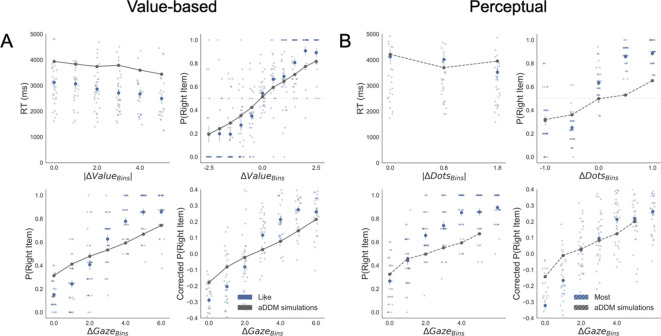
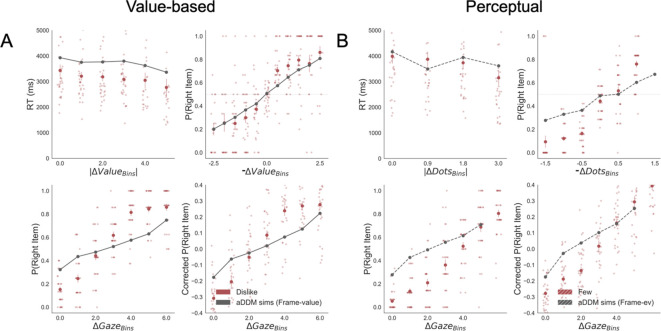
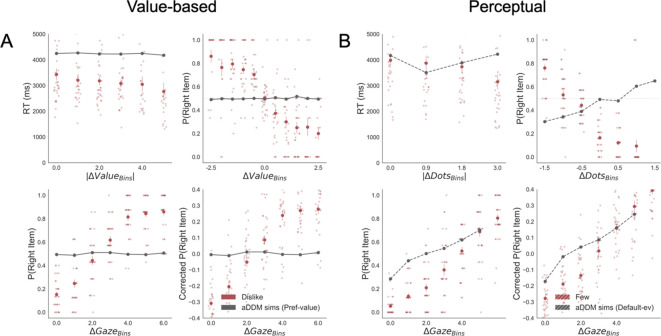
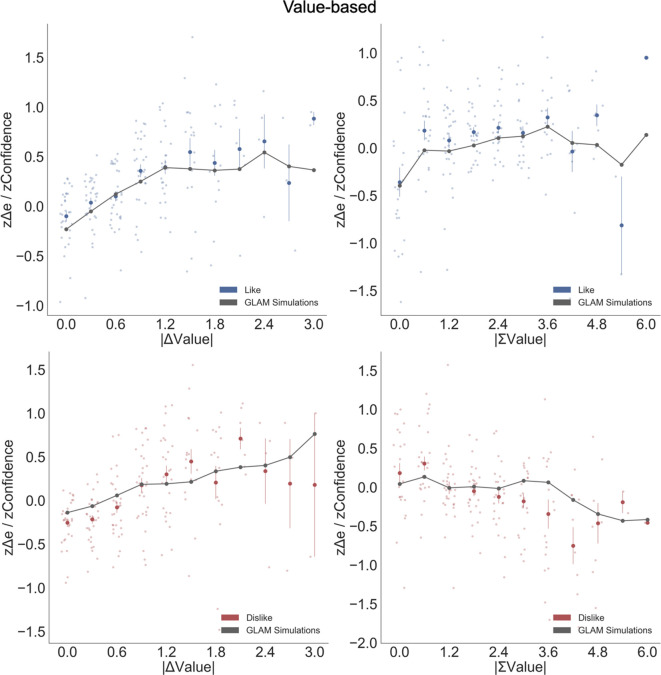
Verification
Claims the paper makes
The claims and statistics of this paper haven’t been checked yet.
Run the check — free, no account needed. It reads the open-access text and checks the sources it cites.
Claims other papers make about this one
Each is checked against this paper’s own text: does it say what the citing paper says it does?
The cited source says what the claim attributes to it.
In the citing paper
“Second, the PEB can be flipped, creating a negative evidence bias, if the decision is reframed as a search for the weaker response option (e.g., fewer dots or a disliked item; Sepulveda et al. 2020).”
From Metacognition and Confidence: A Review and Synthesis (2024) · cites this paper as Sepulveda et al. 2020
Self-check
Percentages, sums and reported differences re-computed from the paper’s own numbers.
The self-check needs the paper’s full text.
Citations
Cites
Fitting Linear Mixed-Effects Models Using lme4
Bates, D., Mächler, M., Bolker, B., & Walker, S. (2015) · Journal of Statistical Software · doi:10.18637/jss.v067.i01 · Cited by 86,835
Kahneman, D., & Tversky, A. (1984) · American Psychologist · doi:10.1037/0003-066x.39.4.341 · Cited by 6,544
Implications of rational inattention
Sims, C. (2003) · Journal of Monetary Economics · doi:10.1016/s0304-3932(03)00029-1 · Cited by 3,582
(2000) · doi:10.1017/cbo9780511803475 · Cited by 2,987
Measuring utility by a single-response sequential method
Becker, G. M., DeGroot, M. H., & Marschak, J. (1964) · Systems Research and Behavioral Science · doi:10.1002/bs.3830090304 · Cited by 2,720
Probabilistic programming in Python using PyMC3
Salvatier, J., Wiecki, T. V., & Fonnesbeck, C. (2016) · PeerJ Computer Science · doi:10.7717/peerj-cs.55 · Cited by 2,544
Advances in Behavioral Economics
(2004) · Princeton University Press eBooks · doi:10.1515/9781400829118 · Cited by 1,750
Frames, Biases, and Rational Decision-Making in the Human Brain
Martino, B. D., Kumaran, D., Seymour, B., & Dolan, R. J. (2006) · Science · doi:10.1126/science.1128356 · Cited by 1,687
Measuring Utility by a Single-Response Sequential Method (1964)
Becker, G. M., & DeGroot, M. H. (1974) · Springer eBooks · doi:10.1007/978-94-010-9276-0_16 · Cited by 1,579
Visual fixations and the computation and comparison of value in simple choice
Krajbich, I., Armel, C., & Rangel, A. (2010) · Nature Neuroscience · doi:10.1038/nn.2635 · Cited by 1,408
Cited by
Sorted by citations
Metacognition and Confidence: A Review and Synthesis
Fleming, S. M. (2024) · Annual Review of Psychology · doi:10.1146/annurev-psych-022423-032425 · Cited by 256
Fixation patterns in simple choice reflect optimal information sampling
Callaway, F., Rangel, A., & Griffiths, T. L. (2021) · PLoS Computational Biology · doi:10.1371/journal.pcbi.1008863 · Cited by 143
Webcam-based online eye-tracking for behavioral research
Yang, X., & Krajbich, I. M. (2021) · Judgment and Decision Making · doi:10.1017/s1930297500008512 · Cited by 120
Optimal policy for attention-modulated decisions explains human fixation behavior
Jang, A. I., Sharma, R., & Drugowitsch, J. (2021) · eLife · doi:10.7554/elife.63436 · Cited by 94
The elusiveness of context effects in decision making
Spektor, M. S., Bhatia, S., & Gluth, S. (2021) · Trends in Cognitive Sciences · doi:10.1016/j.tics.2021.07.011 · Cited by 79
Metadata
- Authors
- Sepulveda, P., Usher, M., Davies, N., Benson, A. A., Ortoleva, P., & De Martino, B.
- Affiliations
- Institute of Cognitive Neuroscience, University College London, London, United Kingdom
- Tel Aviv University (IL)
- University College London (GB)
- Princeton University (US)
- Venue
- eLife
- Publisher
- eLife Sciences Publications, Ltd
- Published
- 2020-11-17
- Volume
- 9
- ISSN
- 2050-084X (ISSN-L)
- PMC
- PMC7723413
- OpenAlex
- W3099802890
- Cited by
- 121
- References
- 50
- Citations by year
- 2026: 21 · 2025: 20 · 2024: 16 · 2023: 23 · 2022: 15 · 2021: 20 · 2020: 6
- FWCI
- 8.60
- Type
- journal article
- Language
- en
- Open access
- gold
- doi.org
- Licence
- Locations
- eLife (publishedVersion, cc-by)
- bioRxiv (Cold Spring Harbor Laboratory) (acceptedVersion, cc-by-nc-nd)
- PubMed Central (publishedVersion, cc-by)
- PubMed (publishedVersion)
- RePEc: Research Papers in Economics (submittedVersion)
- DOAJ (DOAJ: Directory of Open Access Journals) (submittedVersion, cc-by-sa)
- Funders
- Chilean National Agency for Research and Development (Graduate student scholarship - DOCTORADO BECAS CHILE/2017 - 72180193)
- Wellcome Trust (Sir Henry Dale Fellowship (102612 /A/13/Z))
- Topics
- Life Sciences › Neuroscience › Cognitive Neuroscience › Visual perception and processing mechanisms
- Social Sciences › Decision Sciences › General Decision Sciences › Decision-Making and Behavioral Economics
- Life Sciences › Neuroscience › Cognitive Neuroscience › Neural and Behavioral Psychology Studies
- Keywords
- visual attention, decision-making, value-based choice, perceptual decision making, task framing, food choice
- MeSH terms
- Adult, Attention, Choice Behavior, Decision Making, Eye Movements, Female, Food Preferences, Goals, Humans, Hunger, Male, Middle Aged, Young Adult
About these checks
Registry, retraction, Cites and statistics results are computed, not judged, with one exception: a printed reference that no index lists is read once by a model before it counts as a citation error. Claims are extracted by a model and kept only when their quote appears verbatim in the text; each cited source is then checked, with a model’s help, for whether it says what the claim relies on. Those verdicts can be wrong — read the claim’s quote and the cited source before relying on one.
Statistics and arithmetic are recomputed, not judged.
Confidence bands are shown only for fields calibrated on our annotated test set. None is calibrated yet, so no band is shown.
What counts as a claim ›How we measure confidence ›How we check this ›
Are you an author, or do you see a problem with this page? Request a review
