

The DOI matches its Crossref record; 50 of the 50 references it cites were found in a registry or an index.
Visual attention modulates the integration of goal-relevant evidence and not value
Open accessPublished version of a preprint
Abstract
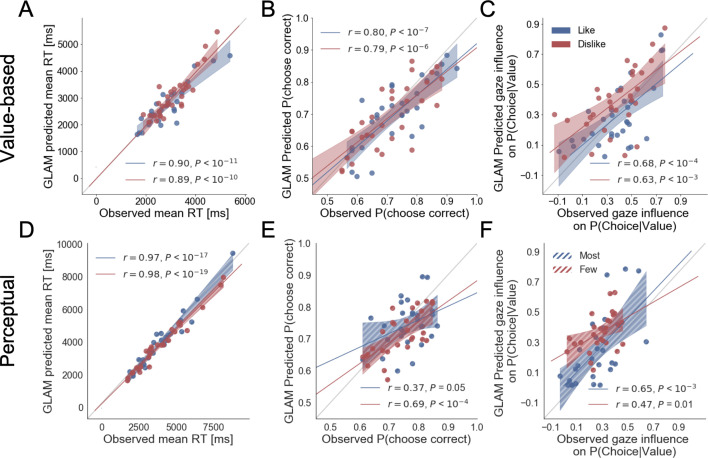
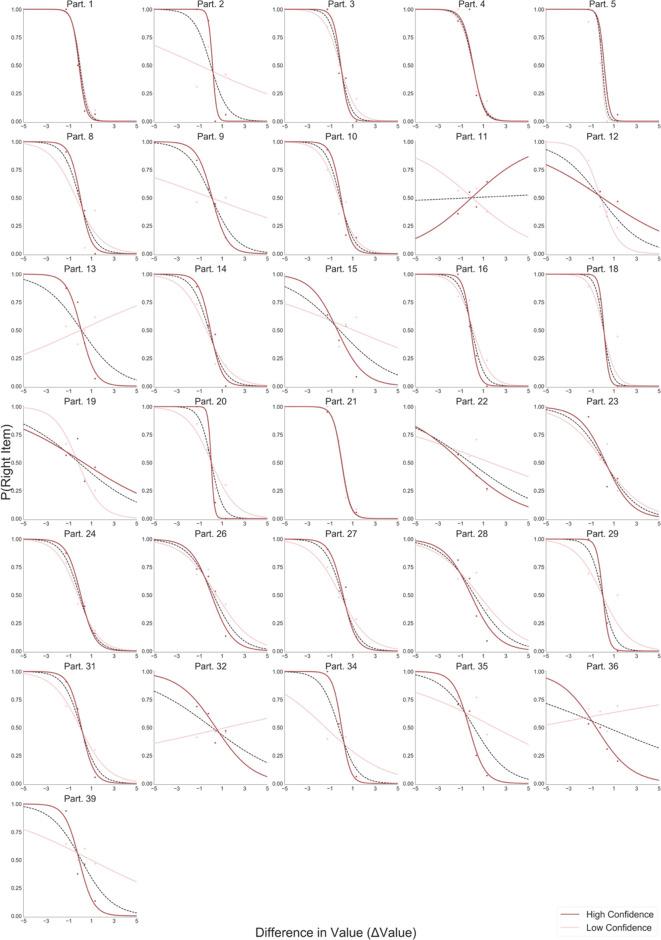
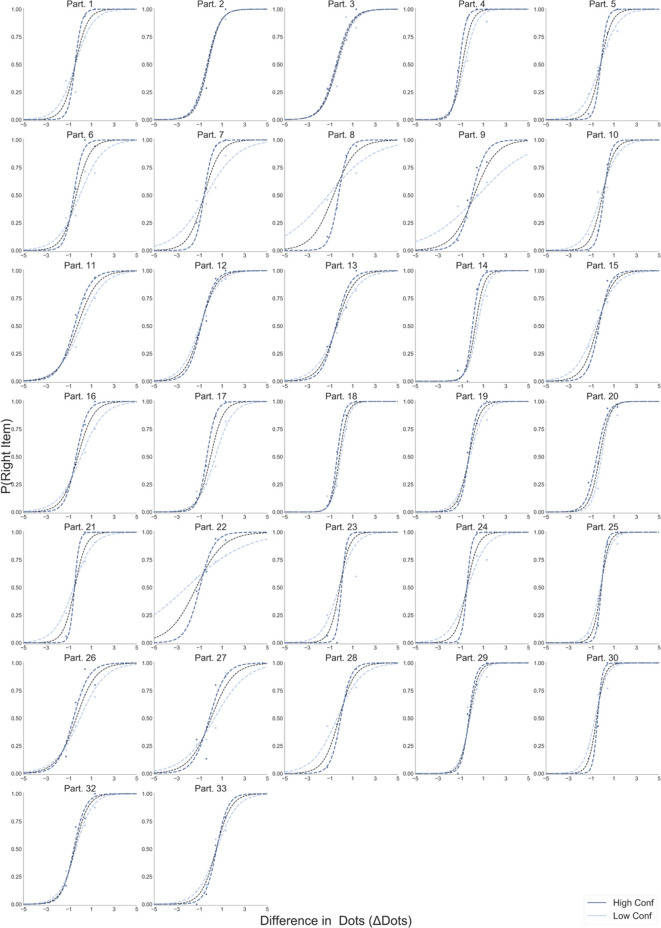
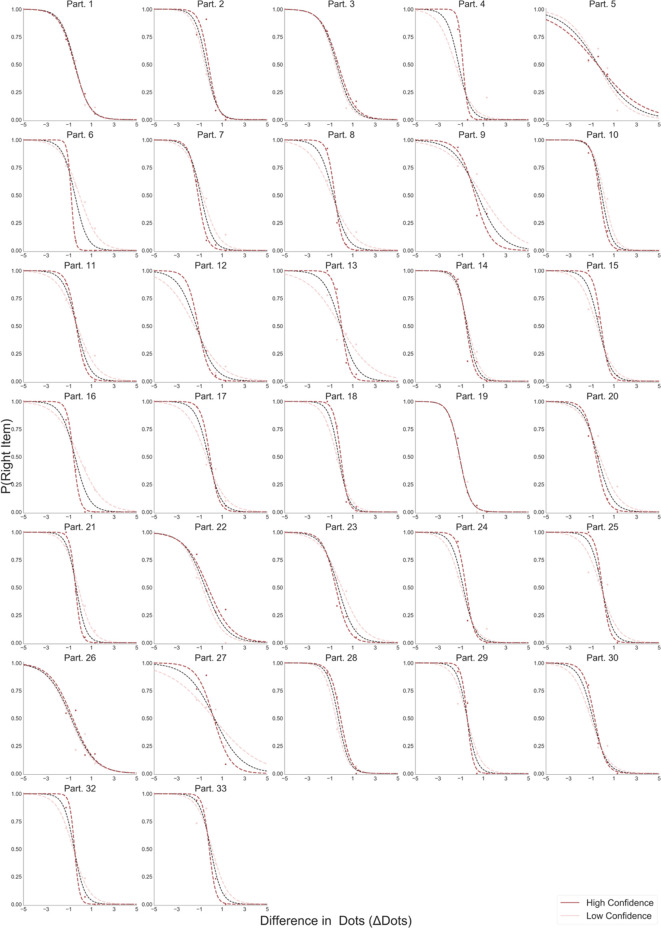
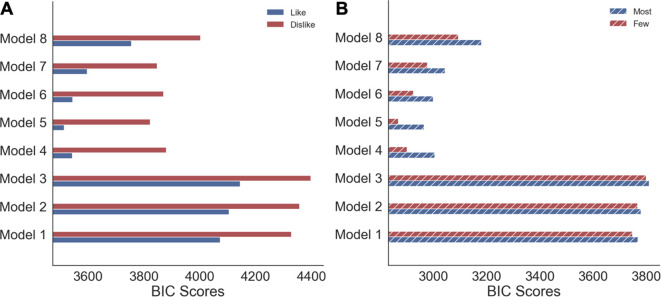
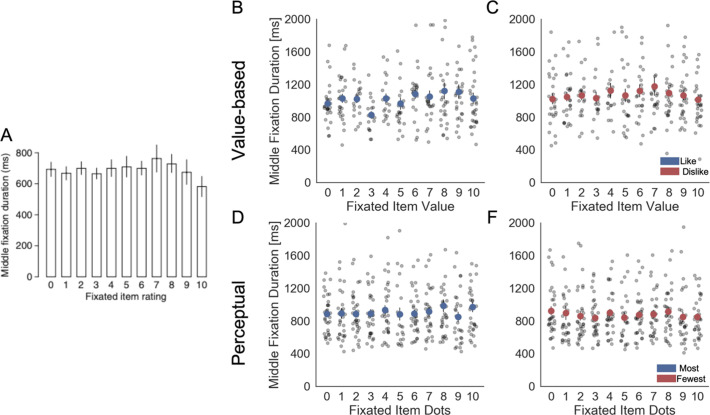
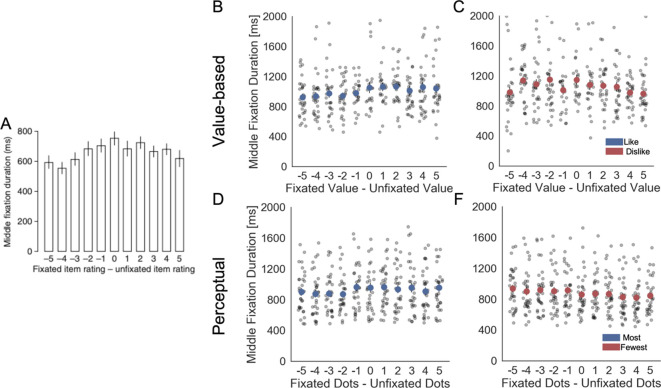
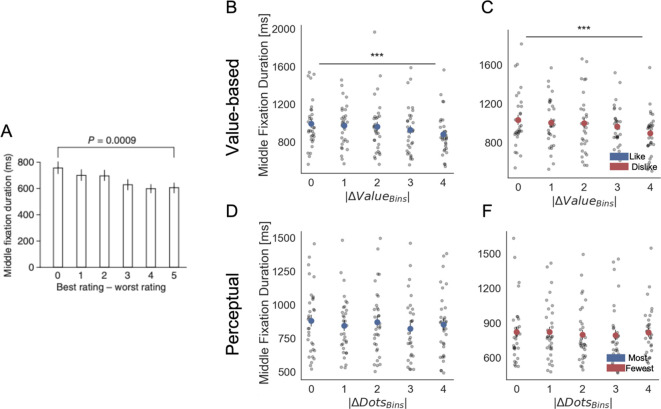
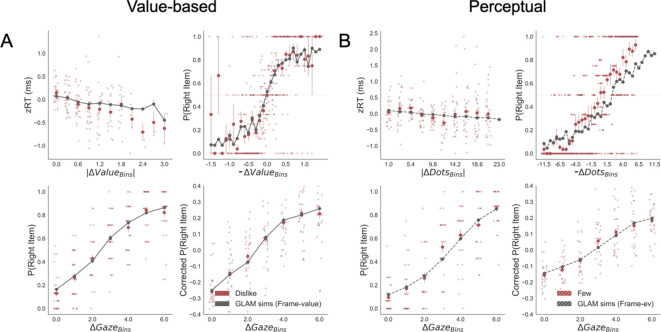
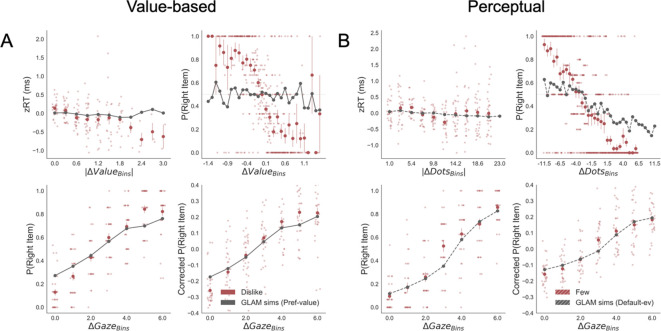
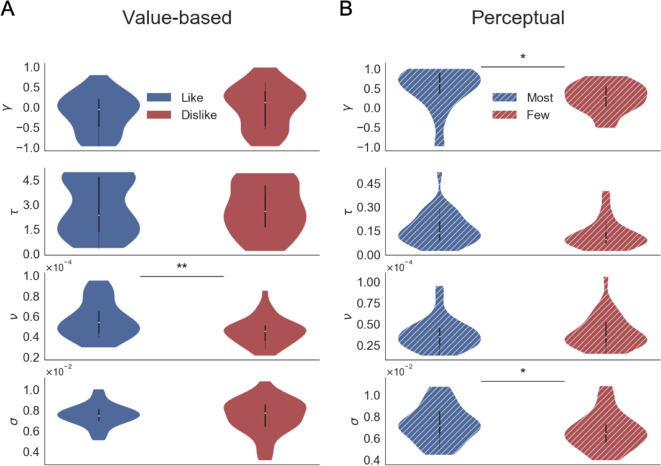
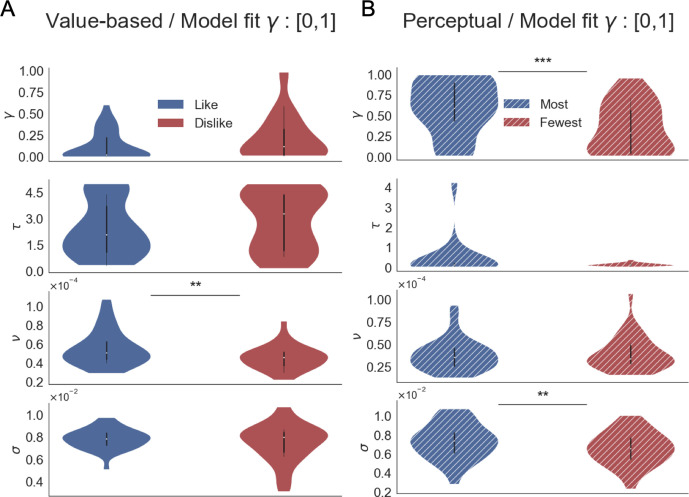
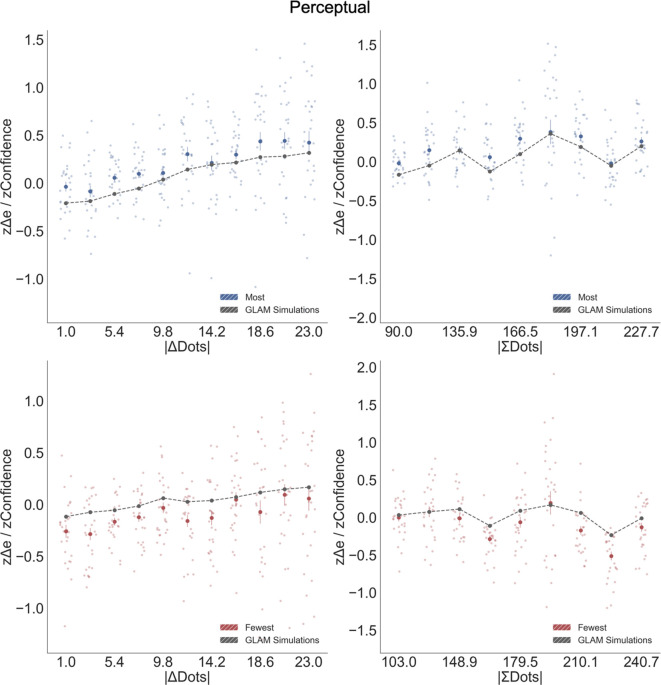
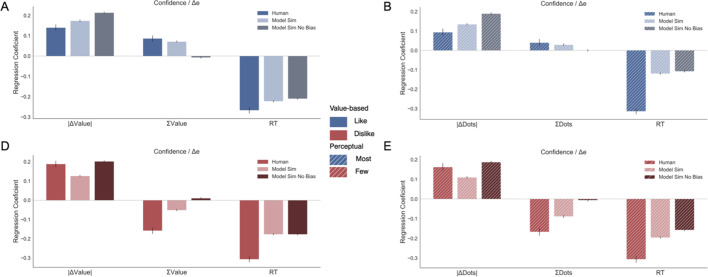
When choosing between options, such as food items presented in plain view, people tend to choose the option they spend longer looking at. The prevailing interpretation is that visual attention increases value. However, in previous studies, ‘value’ was coupled to a behavioural goal, since subjects had to choose the item they preferred. This makes it impossible to discern if visual attention has an effect on value, or, instead, if attention modulates the information most relevant for the goal of the decision-maker. Here, we present the results of two independent studies—a perceptual and a value-based task—that allow us to decouple value from goal-relevant information using specific task-framing. Combining psychophysics with computational modelling, we show that, contrary to the current interpretation, attention does not boost value, but instead it modulates goal-relevant information. This work provides a novel and more general mechanism by which attention interacts with choice.
Overview
The claims and statistics of this paper haven’t been checked yet.
Run the check — free, no account needed. It reads the open-access text and checks the sources it cites.
Integrity signals
Registry
Cites
Statistics
Figures
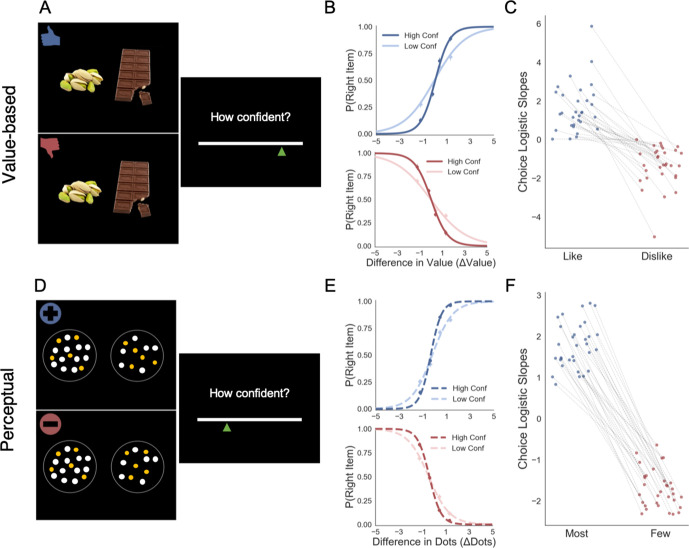
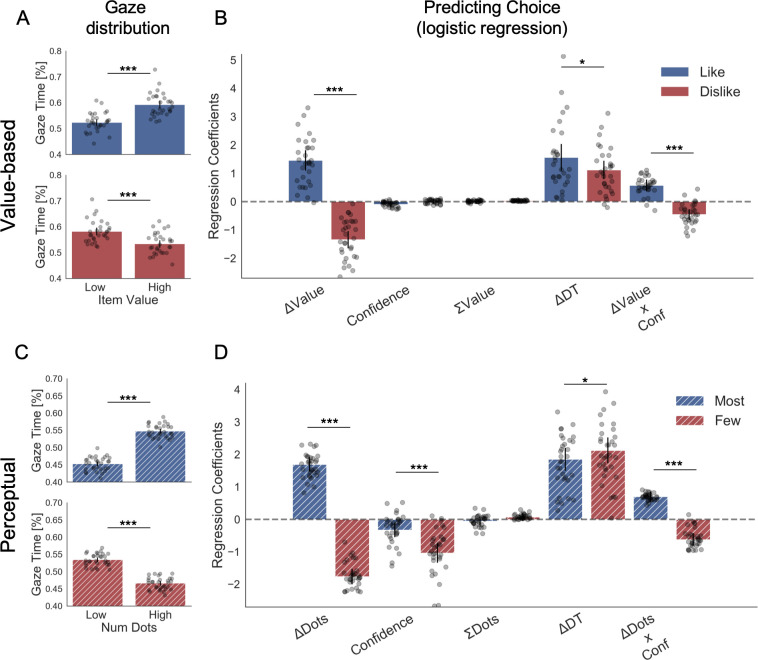
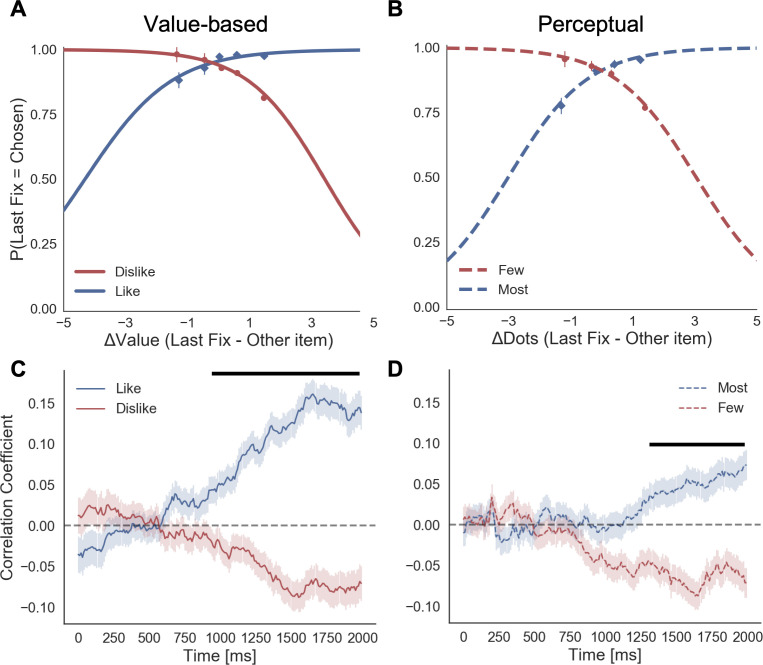
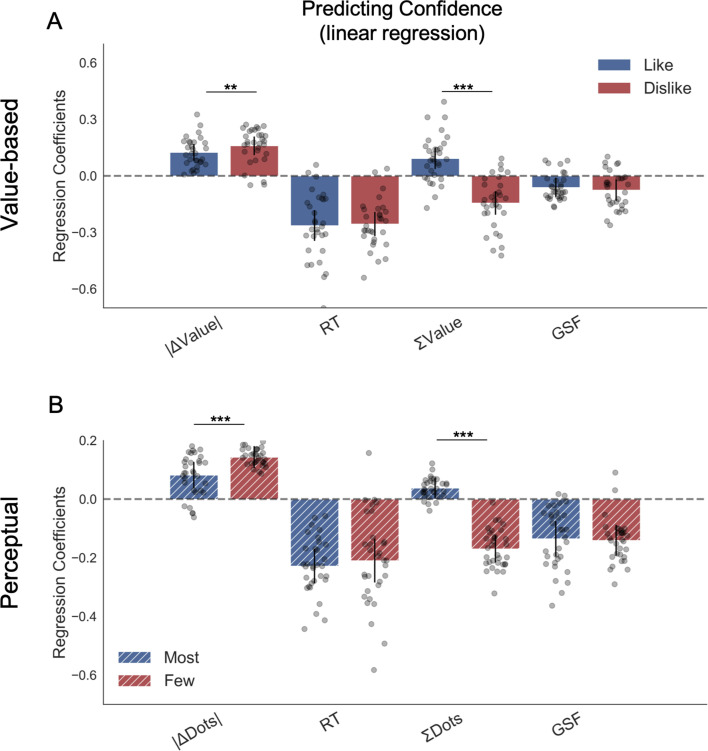
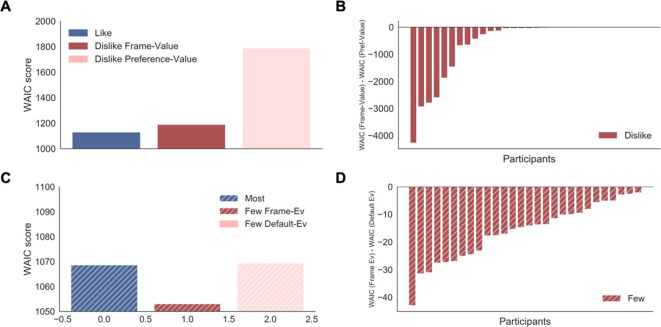
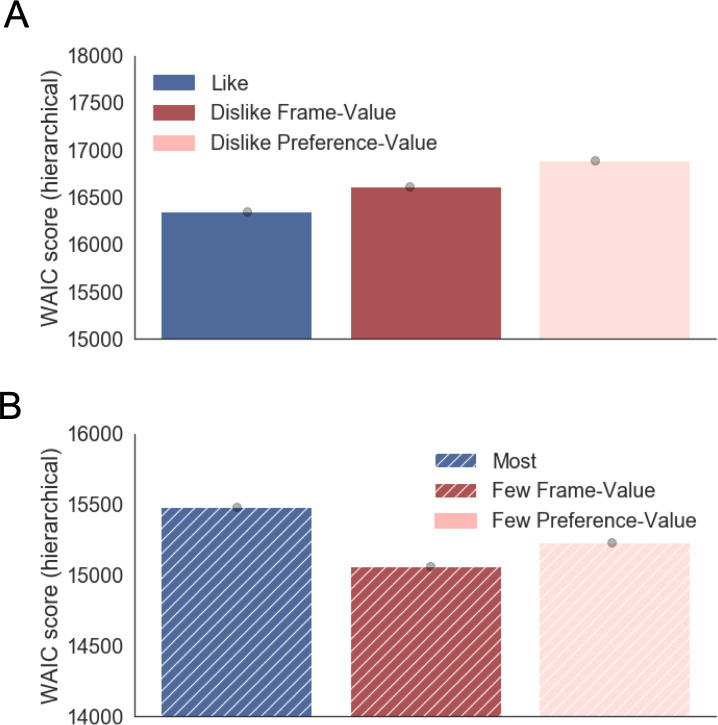
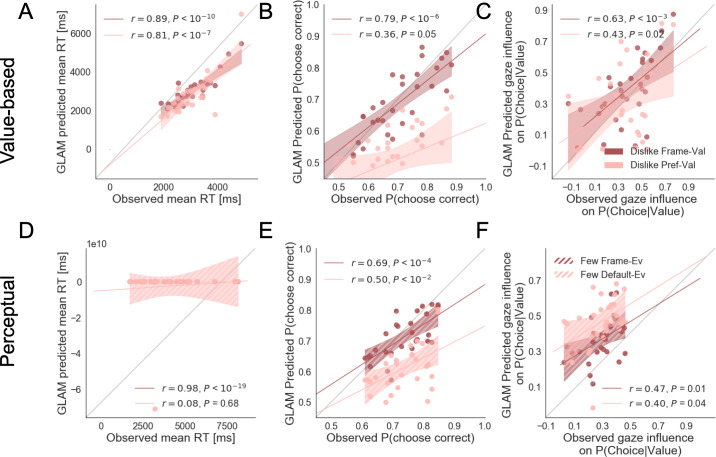
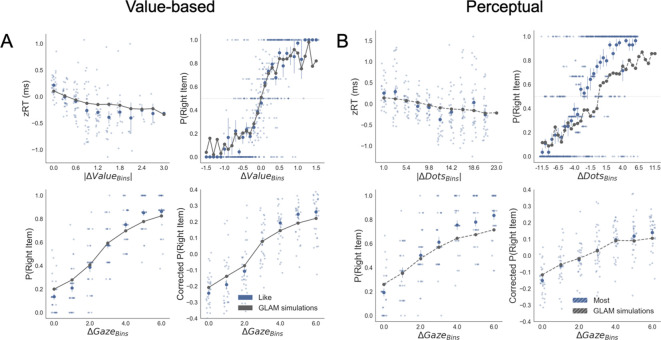
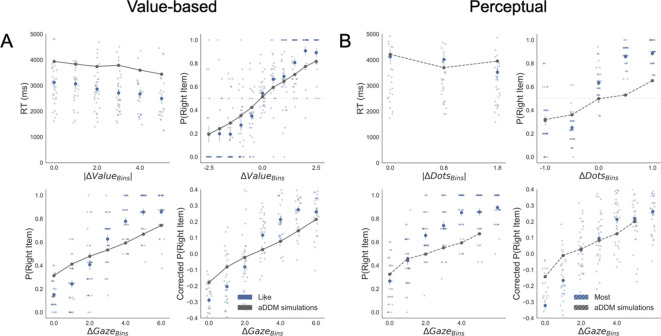
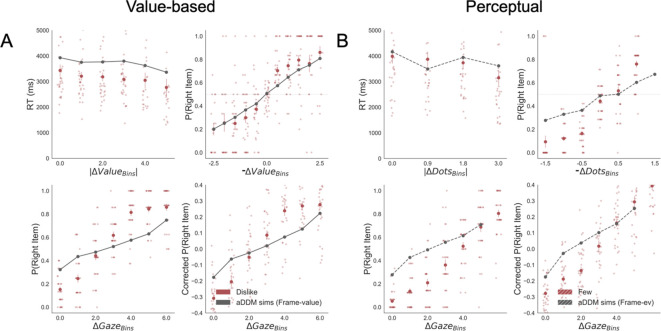
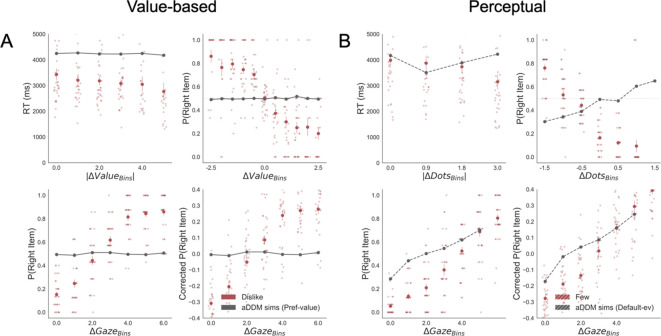
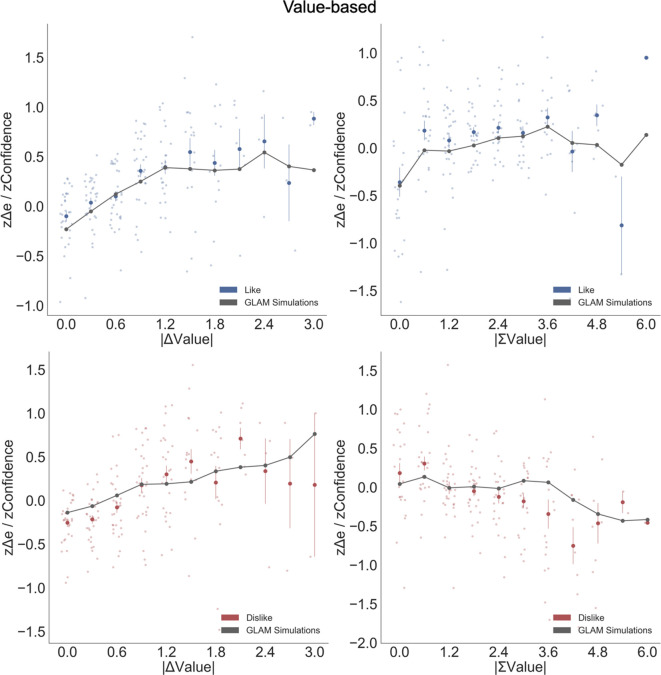
Verification
Claims the paper makes
The claims and statistics of this paper haven’t been checked yet.
Run the check — free, no account needed. It reads the open-access text and checks the sources it cites.
Claims other papers make about this one
Each is checked against this paper’s own text: does it say what the citing paper says it does?
The cited source says what the claim attributes to it.
In the citing paper
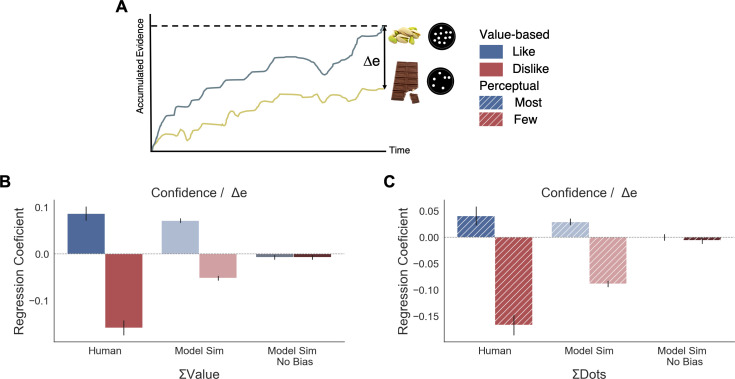
“Second, the PEB can be flipped, creating a negative evidence bias, if the decision is reframed as a search for the weaker response option (e.g., fewer dots or a disliked item; Sepulveda et al. 2020).”
From Metacognition and Confidence: A Review and Synthesis (2024) · cites this paper as Sepulveda et al. 2020
Self-check
Percentages, sums and reported differences re-computed from the paper’s own numbers.
The self-check needs the paper’s full text.
Citations
Cites
Fitting Linear Mixed-Effects Models Using lme4
Bates, D., Mächler, M., Bolker, B., & Walker, S. (2015) · Journal of Statistical Software · doi:10.18637/jss.v067.i01 · Cited by 86,835
Kahneman, D., & Tversky, A. (1984) · American Psychologist · doi:10.1037/0003-066x.39.4.341 · Cited by 6,544
Implications of rational inattention
Sims, C. (2003) · Journal of Monetary Economics · doi:10.1016/s0304-3932(03)00029-1 · Cited by 3,582
(2000) · doi:10.1017/cbo9780511803475 · Cited by 2,987
Measuring utility by a single-response sequential method
Becker, G. M., DeGroot, M. H., & Marschak, J. (1964) · Systems Research and Behavioral Science · doi:10.1002/bs.3830090304 · Cited by 2,720
Probabilistic programming in Python using PyMC3
Salvatier, J., Wiecki, T. V., & Fonnesbeck, C. (2016) · PeerJ Computer Science · doi:10.7717/peerj-cs.55 · Cited by 2,544
Advances in Behavioral Economics
(2004) · Princeton University Press eBooks · doi:10.1515/9781400829118 · Cited by 1,750
Frames, Biases, and Rational Decision-Making in the Human Brain
Martino, B. D., Kumaran, D., Seymour, B., & Dolan, R. J. (2006) · Science · doi:10.1126/science.1128356 · Cited by 1,687
Measuring Utility by a Single-Response Sequential Method (1964)
Becker, G. M., & DeGroot, M. H. (1974) · Springer eBooks · doi:10.1007/978-94-010-9276-0_16 · Cited by 1,579
Visual fixations and the computation and comparison of value in simple choice
Krajbich, I., Armel, C., & Rangel, A. (2010) · Nature Neuroscience · doi:10.1038/nn.2635 · Cited by 1,408
Cited by
Sorted by citations
Metacognition and Confidence: A Review and Synthesis
Fleming, S. M. (2024) · Annual Review of Psychology · doi:10.1146/annurev-psych-022423-032425 · Cited by 256
Fixation patterns in simple choice reflect optimal information sampling
Callaway, F., Rangel, A., & Griffiths, T. L. (2021) · PLoS Computational Biology · doi:10.1371/journal.pcbi.1008863 · Cited by 143
Webcam-based online eye-tracking for behavioral research
Yang, X., & Krajbich, I. M. (2021) · Judgment and Decision Making · doi:10.1017/s1930297500008512 · Cited by 120
Optimal policy for attention-modulated decisions explains human fixation behavior
Jang, A. I., Sharma, R., & Drugowitsch, J. (2021) · eLife · doi:10.7554/elife.63436 · Cited by 94
The elusiveness of context effects in decision making
Spektor, M. S., Bhatia, S., & Gluth, S. (2021) · Trends in Cognitive Sciences · doi:10.1016/j.tics.2021.07.011 · Cited by 79
A goal-centric outlook on learning
Molinaro, G., & Collins, A. G. E. (2023) · Trends in Cognitive Sciences · doi:10.1016/j.tics.2023.08.011 · Cited by 63
Frömer, R., & Shenhav, A. (2021) · Neuroscience & Biobehavioral Reviews · doi:10.1016/j.neubiorev.2021.12.006 · Cited by 57
Attentional economics links value-modulated attentional capture and decision-making
Pearson, D., Watson, P., Albertella, L., & Pelley, M. E. L. (2022) · Nature Reviews Psychology · doi:10.1038/s44159-022-00053-z · Cited by 51
Uncovering the computational mechanisms underlying many-alternative choice
Thomas, A. W., Molter, F., & Krajbich, I. M. (2021) · eLife · doi:10.7554/elife.57012 · Cited by 47
Sources of confidence in value-based choice
Brus, J., Aebersold, H., Grueschow, M., & Polanía, R. (2021) · Nature Communications · doi:10.1038/s41467-021-27618-5 · Cited by 44
Goals, usefulness and abstraction in value-based choice
Martino, B. D., & Cortese, A. (2022) · Trends in Cognitive Sciences · doi:10.1016/j.tics.2022.11.001 · Cited by 46
Towards a common conceptual space for metacognition in perception and memory
Mazancieux, A., Pereira, M., Faivre, N., Mamassian, P., Moulin, C. J. A., & Souchay, C. (2023) · Nature Reviews Psychology · doi:10.1038/s44159-023-00245-1 · Cited by 44
Humans actively sample evidence to support prior beliefs
Kaanders, P., Sepulveda, P., Folke, T., Ortoleva, P., & de Martino, B. (2022) · eLife · doi:10.7554/elife.71768 · Cited by 33
Self-citationValue certainty in drift-diffusion models of preferential choice.
Lee, D. G., & Usher, M. (2021) · Psychological Review · doi:10.1037/rev0000329 · Cited by 31
Self-citationCommon neural choice signals can emerge artefactually amid multiple distinct value signals
Frömer, R., Nassar, M. R., Ehinger, B., & Shenhav, A. (2024) · Nature Human Behaviour · doi:10.1038/s41562-024-01971-z · Cited by 37
Medial Frontal Cortex Activity Predicts Information Sampling in Economic Choice
Kaanders, P., Nili, H., O'Reilly, J. X., & Hunt, L. (2021) · The Journal of Neuroscience · doi:10.1523/jneurosci.0392-21.2021 · Cited by 27
An Empirical Test of the Role of Value Certainty in Decision Making
Lee, D. G., & Coricelli, G. (2020) · Frontiers in Psychology · doi:10.3389/fpsyg.2020.574473 · Cited by 33
Magnitude-sensitivity: rethinking decision-making
Pirrone, A., Reina, A., Stafford, T., Marshall, J. A. R., & Gobet, F. R. (2021) · Trends in Cognitive Sciences · doi:10.1016/j.tics.2021.10.006 · Cited by 29
The influence of visual attention on memory-based preferential choice
Weilbächer, R. A., Krajbich, I. M., Rieskamp, J., & Gluth, S. (2021) · Cognition · doi:10.1016/j.cognition.2021.104804 · Cited by 28
Metacognition and confidence: A review and synthesisPreprint
Fleming, S. M. (2023) · doi:10.31234/osf.io/ge7tz · Cited by 27
Humans actively sample evidence to support prior beliefs.
Kaanders, P., Sepúlveda, P., Folke, T., Ortoleva, P., & Martino, B. D. (2021) · UCL Discovery (University College London) · doi:10.17863/cam.83863 · Cited by 26
Self-citationHeuristics and optimal solutions to the breadth–depth dilemma
Moreno‐Bote, R., Ramírez‐Ruiz, J., Drugowitsch, J., & Hayden, B. Y. (2020) · Proceedings of the National Academy of Sciences · doi:10.1073/pnas.2004929117 · Cited by 24
Goal commitment is supported by vmPFC through selective attention
Holton, E., Grohn, J., Ward, H., Manohar, S., O’Reilly, J. X., & Kolling, N. (2024) · Nature Human Behaviour · doi:10.1038/s41562-024-01844-5 · Cited by 26
Peripheral Visual Information Halves Attentional Choice Biases
Eum, B., Dolbier, S. Y., & Rangel, A. (2023) · Psychology Science · doi:10.1177/09567976231184878 · Cited by 11
Neural and computational underpinnings of biased confidence in human reinforcement learning
Ting, C.-C., Salem-Garcia, N., Palminteri, S., Engelmann, J. B., & Lebreton, M. P. (2023) · Nature Communications · doi:10.1038/s41467-023-42589-5 · Cited by 24
Shevlin, B. R. K., & Krajbich, I. M. (2020) · PsyArXiv (OSF Preprints) · doi:10.1016/j.jmp.2021.102594 · Cited by 21
Experiential values are underweighted in decisions involving symbolic options
Garcia, B., Lebreton, M. P., Bourgeois‐Gironde, S., & Palminteri, S. (2023) · Nature Human Behaviour · doi:10.1038/s41562-022-01496-3 · Cited by 28
Information acquisition and decision strategies in intertemporal choice
He, L., Wall, D., Reeck, C., & Bhatia, S. (2023) · Cognitive Psychology · doi:10.1016/j.cogpsych.2023.101562 · Cited by 16
Risky decisions are influenced by individual attributes as a function of risk preference
Lee, D. G., D’Alessandro, M., Iodice, P., Calluso, C., Rustichini, A., & Pezzulo, G. (2023) · Cognitive Psychology · doi:10.1016/j.cogpsych.2023.101614 · Cited by 13
Uncertainty-modulated attentional capture: Outcome variance increases attentional priority.
Pearson, D., Chong, A., Chow, J. Y. L., Garner, K., Theeuwes, J., & Pelley, M. E. L. (2024) · Journal of Experimental Psychology General · doi:10.1037/xge0001586 · Cited by 15
Motivational signals disrupt metacognitive signals in the human ventromedial prefrontal cortex
Hoven, M., Brunner, G., de Boer, N. S., Goudriaan, A. E., Denys, D. A. J. P., van Holst, R. J., Luigjes, J., & Lebreton, M. P. (2022) · Communications Biology · doi:10.1038/s42003-022-03197-z · Cited by 15
Paradoxical evidence weighting in confidence judgments for detection and discrimination
Mazor, M., Charles, L., Maimon-Mor, R. O., & Fleming, S. M. (2023) · Attention Perception & Psychophysics · doi:10.3758/s13414-023-02710-8 · Cited by 23
Alternatives to Bayesian Updating
Ortoleva, P. (2024) · Annual Review of Economics · doi:10.1146/annurev-economics-100223-050352 · Cited by 15
Self-citationObject Detection Combining CNN and Adaptive Color Prior Features
Gu, P., Lan, X., & Li, S. (2021) · Sensors · doi:10.3390/s21082796 · Cited by 17
Marini, M., Sapienza, A., & Fabio Paglieri, A. (2022) · Journal of Behavioral Decision Making · doi:10.1002/bdm.2299 · Cited by 13
Preferences for seeking effort or reward information bias the willingness to work
Müller, T., Husain, M., & Apps, M. A. J. (2022) · Scientific Reports · doi:10.1038/s41598-022-21917-7 · Cited by 15
High overall values mitigate gaze-related effects in perceptual and preferential choices.
Ting, C.-C., & Gluth, S. (2025) · Journal of Experimental Psychology General · doi:10.1037/xge0001723 · Cited by 12
Bobadilla-Suarez, S., Guest, O., & Love, B. C. (2020) · Communications Biology · doi:10.1038/s42003-020-01315-3 · Cited by 15
A causal role for the right frontal eye fields in value comparison
Mitsumasu, A., Krajbich, I. M., Polanía, R., Ruff, C. C., & Fehr, E. (2021) · eLife · doi:10.7554/elife.67477 · Cited by 13
Attention biases the process of risky decision‐making: Evidence from eye‐tracking
Hu, M., Chang, R., Sui, X., & Gao, M. (2023) · PsyCh Journal · doi:10.1002/pchj.724 · Cited by 11
Choice-Induced Preference Change under the Value Refinement FrameworkPreprint
Lee, D., & Pezzulo, G. (2025) · bioRxiv · doi:10.1101/2022.07.15.500254 · Cited by 3
Mutual inclusivity improves decision-making by smoothing out choice’s competitive edge
Leng, X., Frömer, R., Summe, T., & Shenhav, A. (2024) · Nature Human Behaviour · doi:10.1038/s41562-024-02064-7 · Cited by 8
An Expert Guide to Planning Experimental Tasks For Evidence-Accumulation Modeling
Boag, R. J., Innes, R. J., Stevenson, N., Bahg, G., Busemeyer, J. R., Cox, G. E., Donkin, C., Frank, M. J., Hawkins, G. E., Heathcote, A., et al. (2025) · Advances in Methods and Practices in Psychological Science · doi:10.1177/25152459251336127 · Cited by 18
Self-citationEyes on the account size: Interactions between attention and budget in consumer choice
Amasino, D. R., Dolgin, J., & Huettel, S. A. (2023) · Journal of Economic Psychology · doi:10.1016/j.joep.2023.102632 · Cited by 7
A causal role for the right frontal eye fields in value comparisonPreprint
Krajbich, I. M. (2025) · OSF Preprints (OSF Preprints) · Cited by 8
Value construction through sequential sampling explains serial dependencies in decision making
Zylberberg, A., Bakkour, A., Shohamy, D., & Shadlen, M. N. (2024) · eLife · doi:10.7554/elife.96997.3 · Cited by 18
Judging the difficulty of perceptual decisions
Löffler, A., Zylberberg, A. D., Shadlen, M. N., & Wolpert, D. M. (2023) · eLife · doi:10.7554/elife.86892 · Cited by 7
Measuring utility with diffusion models
Berlinghieri, R., Krajbich, I., Maccheroni, F., Marinacci, M., & Pirazzini, M. (2023) · Science Advances · doi:10.1126/sciadv.adf1665 · Cited by 5
Two-Year-Olds’ Eye Movements Reflect Confidence in Their Understanding of Words
Dautriche, I., Goupil, L., Smith, K., & Rabagliati, H. (2022) · Psychological Science · doi:10.1177/09567976221105208 · Cited by 6
A confidence framing effect: Flexible use of evidence in metacognitive monitoring
Sakamoto, Y., & Miyoshi, K. (2024) · Consciousness and Cognition · doi:10.1016/j.concog.2024.103636 · Cited by 7
Ramírez‐Ruiz, J., & Moreno‐Bote, R. (2022) · Cognitive Science · doi:10.1111/cogs.13143 · Cited by 6
Value Certainty in Drift-Diffusion Models of Preferential ChoicePreprint
Lee, D. G., & Usher, M. (2020) · bioRxiv (Cold Spring Harbor Laboratory) · doi:10.1101/2020.08.22.262725 · Cited by 5
Self-citationCommon neural choice signals can emerge artifactually amidst multiple distinct value signalsPreprint
Frömer, R., Nassar, M. R., Ehinger, B., & Shenhav, A. (2022) · bioRxiv (Cold Spring Harbor Laboratory) · doi:10.1101/2022.08.02.502393 · Cited by 6
Reward-driven and memory-driven attentional biases automatically modulate rapid choicePreprint
Pelley, M. E. L., & Newell, B. R. (2023) · PsyArXiv (OSF Preprints) · doi:10.31234/osf.io/cgs98 · Cited by 4
Belief updates, learning and adaptive decision makingPreprint
Frömer, R., & Nassar, M. R. (2023) · doi:10.31234/osf.io/qndba · Cited by 5
Miyoshi, K., Webb, T. W., Rahnev, D., & Lau, H. C. (2023) · Elsevier eBooks · doi:10.1016/b978-0-12-820480-1.00049-8 · Cited by 10
Frömer, R., Callaway, F., Griffiths, T. L., & Shenhav, A. (2025) · Open Mind · doi:10.1162/opmi.a.3 · Cited by 4
How is emotional evidence from multiple sources used in perceptual decision making?
Ngai, H. H. T., Hsiao, J. H., Luhmann, C. C., Mohanty, A., & Jin, J. (2024) · Psychophysiology · doi:10.1111/psyp.14727 · Cited by 4
Variability and accessibility of information guide gaze dynamics in decision making.
Lee, D. G., Tsetsos, K., Pezzulo, G., Shahar, N., & Usher, M. (2025) · Decision · doi:10.1037/dec0000255 · Cited by 4
Self-citationIssue importance amplifies the effect of gaze on voting decisions.
Yang, X.-Z., Riggs, E. E., Coronel, J. C., & Krajbich, I. (2025) · Cognition · doi:10.1016/j.cognition.2025.106376 · Cited by 3
Salience effects in information acquisition: No evidence for a top-down coherence influence
Bröder, A., Scharf, S. E., Jekel, M., Glöckner, A., & Franke, N. (2021) · Memory & Cognition · doi:10.3758/s13421-021-01188-9 · Cited by 3
No camera needed with MR-based eye tracking
Krajbich, I. M. (2021) · Nature Neuroscience · doi:10.1038/s41593-021-00942-1 · Cited by 3
Value-directed information search in partner choice
Wang, H., Ma, J., & He, L. (2022) · Judgment and Decision Making · doi:10.1017/s1930297500009426 · Cited by 3
A common neural currency account for social and non-social decisionsPreprint
Arabadzhiyska, D. H., Garrod, O., Fouragnan, E. F., Luca, E. D., Schyns, P. G., & Philiastides, M. G. (2021) · bioRxiv (Cold Spring Harbor Laboratory) · doi:10.1101/2021.10.18.464762 · Cited by 3
The role of visual attention in opportunity cost neglect and consideration
Smith, S. M., Spiller, S. A., & Krajbich, I. M. (2025) · Cognition · doi:10.1016/j.cognition.2025.106145 · Cited by 2
Confidence bias prescribes the neurocomputational mechanism of decision-making
Sun, F., Ni, Y., Lu, W., Su, J., Wang, S., & Wan, X. (2025) · Cell Reports · doi:10.1016/j.celrep.2025.115563 · Cited by 2
Breaking the Tug-of-War: What Neuroeconomics Can Gain by Moving Past Competition-Only Models
Leng, X., Su, Y.-H., Frömer, R., & Shenhav, A. (2026) · Springer eBooks · doi:10.1007/978-3-032-02925-6_10 · Cited by 2
Decomposing Economic Choices with Drift-Diffusion Models
Krajbich, I. M., Fernandez, K., & Yang, X. (2026) · Springer eBooks · doi:10.1007/978-3-032-02925-6_9 · Cited by 2
Over-precise Predictions Cannot Identify Good Choice Models
Sifar, A., & Srivastava, N. (2022) · Computational Brain & Behavior · doi:10.1007/s42113-022-00146-1 · Cited by 2
Two-year-olds’ eye movements reflect confidence in their understanding of wordsPreprint
Dautriche, I., Goupil, L., Smith, K., & Rabagliati, H. (2021) · doi:10.31234/osf.io/pd6xh · Cited by 2
Presentation order but not duration affects binary risky choicePreprint
Molter, F., & Mohr, P. N. C. (2021) · doi:10.31234/osf.io/gcthj · Cited by 2
Belief updates, learning and adaptive decision making
Frömer, R., & Nassar, M. R. (2023) · Elsevier eBooks · doi:10.1016/b978-0-12-820480-1.00059-0 · Cited by 7
Dynamics of visual attention in exploration and exploitation for reward-guided adjustment tasks
Higashi, H. (2024) · Consciousness and Cognition · doi:10.1016/j.concog.2024.103724 · Cited by 1
Emotion ensemble judgement: Cognitive training for a positive perspective.
Ngai, H. H. T., & Jin, J. (2025) · British Journal of Psychology · doi:10.1111/bjop.12784 · Cited by 1
Ngai, H. H. T., & Jin, J. (2025) · Psychophysiology · doi:10.1111/psyp.70059 · Cited by 2
A supply and demand approach to information processing in decision-making
Lee, D. G. (2025) · Acta Psychologica · doi:10.1016/j.actpsy.2025.105254 · Cited by 1
High-value decisions are made quickly, with no consistent effect on accuracy
Pirrone, A., Sala, G., & Evans, N. J. (2025) · PNAS Nexus · doi:10.1093/pnasnexus/pgaf363 · Cited by 1
Confidence-accuracy dissociations in perceptual decision making
Rahnev, D. (2026) · Vision Research · doi:10.1016/j.visres.2026.108831 · Cited by 2
Context changes retrieval of prospective outcomes during decision deliberation
Göktepe-Kavis, P., Aellen, F. M., Cortese, A., Castegnetti, G., Martino, B. D., & Tzovara, A. (2024) · Cerebral Cortex · doi:10.1093/cercor/bhae483 · Cited by 2
Overt Visual Attention in the Formation of Preference Between Complex Lottery Options
Fan, X., Elsey, J., Wyngaard, A. J. G., Sampson, A. L., Yang, Y.-P., Emeric, E. E., Glickman, M., Usher, M., Levy, D. J., Stuphorn, V., et al. (2025) · Computational Brain & Behavior · doi:10.1007/s42113-025-00239-7 · Cited by 1
Self-citationMisspecified models create the appearance of adaptive control during value-based choice
Ritz, H., Frömer, R., & Shenhav, A. (2026) · Communications Psychology · doi:10.1038/s44271-025-00374-8 · Cited by 1
Attention or memory? Neurointerpretable agents in space and timePreprint
Bramlage, L., & Cortese, A. (2020) · arXiv (Cornell University) · doi:10.48550/arxiv.2007.04862 · Cited by 1
Goal-directed recruitment of Pavlovian biases through selective visual attentionPreprint
Algermissen, J., & den Ouden, H. E. M. (2022) · bioRxiv (Cold Spring Harbor Laboratory) · doi:10.1101/2022.04.05.487113 · Cited by 1
Judging the difficulty of perceptual decisionsPreprint
Löffler, A., Zylberberg, A. D., Shadlen, M. N., & Wolpert, D. M. (2023) · eLife · doi:10.7554/elife.86892.1 · Cited by 1
Overt visual attention modulates decision-related signals in the frontal cortexPreprint
Shevlin, B. R. K., Gwinn, R., Makwana, A., & Krajbich, I. M. (2025) · eLife · doi:10.7554/elife.103846 · Cited by 1
Behavioral signatures of post-decisional attention in preferential choicePreprint
Zylberberg, A. D., Krajbich, I. M., & Shadlen, M. N. (2026) · eLife · doi:10.7554/elife.110729 · Cited by 1
Sources of confidence in value-based choicePreprint
Brus, J., Aebersold, H., Grueschow, M., & Polanía, R. (2021) · PsyArXiv (OSF Preprints) · doi:10.31234/osf.io/3wnf7 · Cited by 1
The impassable gap between experiential and symbolic valuesPreprint
Garcia, B., Lebreton, M. P., Bourgeois‐Gironde, S., & Palminteri, S. (2022) · doi:10.31234/osf.io/d59tz
Judging the difficulty of perceptual decisionsPreprint
Löffler, A., Zylberberg, A. D., Shadlen, M. N., & Wolpert, D. M. (2023) · bioRxiv (Cold Spring Harbor Laboratory) · doi:10.1101/2023.02.13.528254
Information Acquisition and Evaluation in Decision Making: A General Computational FrameworkPreprint
Wall, D., & Bhatia, S. (2023) · doi:10.31234/osf.io/dcv4j
Judging the difficulty of perceptual decisionsPreprint
Löffler, A., Zylberberg, A. D., Shadlen, M. N., & Wolpert, D. M. (2023) · eLife · doi:10.7554/elife.86892.2
Judging the difficulty of perceptual decisions
Löffler, A., Zylberberg, A. D., Shadlen, M. N., & Wolpert, D. M. (2023) · eLife · doi:10.7554/elife.86892.3
Confidence and metacognitionPreprint
Miyoshi, K., Webb, T. W., Rahnev, D., & Lau, H. C. (2024) · PsyArXiv (OSF Preprints) · doi:10.31234/osf.io/y3drq
A Supply and Demand Approach to Information Processing in Decision-MakingPreprint
Lee, D. G. (2024) · doi:10.31234/osf.io/vc7jk
Value construction through sequential sampling explains serial dependencies in decision makingPreprint
Zylberberg, A., Bakkour, A., Shohamy, D., & Shadlen, M. N. (2024) · eLife · doi:10.7554/elife.96997.1
Symmetrical choices and biased confidence during uncertain personality trait judgments
Weise, L., Drueke, B., Gauggel, S., & Mainz, V. (2024) · PLoS ONE · doi:10.1371/journal.pone.0312858
Value construction through sequential sampling explains serial dependencies in decision makingPreprint
Zylberberg, A., Bakkour, A., Shohamy, D., & Shadlen, M. N. (2024) · eLife · doi:10.7554/elife.96997.2
The impact of inequality on social value orientation: an eye-tracking study
Wang, Q.-H., Wei, Z., Chen, W.-N., Na, Y., Gou, H.-M., & Liu, H. (2025) · Frontiers in Psychology · doi:10.3389/fpsyg.2025.1521101
Shevlin, B. R. K., Gwinn, R., Makwana, A., & Krajbich, I. M. (2025) · eLife · doi:10.7554/elife.103846.1
Frömer, R., Callaway, F., Griffiths, T. L., & Shenhav, A. (2025) · doi:10.31234/osf.io/2sqyt_v2
Metadata
- Authors
- Sepulveda, P., Usher, M., Davies, N., Benson, A. A., Ortoleva, P., & De Martino, B.
- Affiliations
- Institute of Cognitive Neuroscience, University College London, London, United Kingdom
- Tel Aviv University (IL)
- University College London (GB)
- Princeton University (US)
- Venue
- eLife
- Publisher
- eLife Sciences Publications, Ltd
- Published
- 2020-11-17
- Volume
- 9
- ISSN
- 2050-084X (ISSN-L)
- PMC
- PMC7723413
- OpenAlex
- W3099802890
- Cited by
- 121
- References
- 50
- Citations by year
- 2026: 21 · 2025: 20 · 2024: 16 · 2023: 23 · 2022: 15 · 2021: 20 · 2020: 6
- FWCI
- 8.60
- Type
- journal article
- Language
- en
- Open access
- gold
- doi.org
- Licence
- Locations
- eLife (publishedVersion, cc-by)
- bioRxiv (Cold Spring Harbor Laboratory) (acceptedVersion, cc-by-nc-nd)
- PubMed Central (publishedVersion, cc-by)
- PubMed (publishedVersion)
- RePEc: Research Papers in Economics (submittedVersion)
- DOAJ (DOAJ: Directory of Open Access Journals) (submittedVersion, cc-by-sa)
- Funders
- Chilean National Agency for Research and Development (Graduate student scholarship - DOCTORADO BECAS CHILE/2017 - 72180193)
- Wellcome Trust (Sir Henry Dale Fellowship (102612 /A/13/Z))
- Topics
- Life Sciences › Neuroscience › Cognitive Neuroscience › Visual perception and processing mechanisms
- Social Sciences › Decision Sciences › General Decision Sciences › Decision-Making and Behavioral Economics
- Life Sciences › Neuroscience › Cognitive Neuroscience › Neural and Behavioral Psychology Studies
- Keywords
- visual attention, decision-making, value-based choice, perceptual decision making, task framing, food choice
- MeSH terms
- Adult, Attention, Choice Behavior, Decision Making, Eye Movements, Female, Food Preferences, Goals, Humans, Hunger, Male, Middle Aged, Young Adult
About these checks
Registry, retraction, Cites and statistics results are computed, not judged, with one exception: a printed reference that no index lists is read once by a model before it counts as a citation error. Claims are extracted by a model and kept only when their quote appears verbatim in the text; each cited source is then checked, with a model’s help, for whether it says what the claim relies on. Those verdicts can be wrong — read the claim’s quote and the cited source before relying on one.
Statistics and arithmetic are recomputed, not judged.
Confidence bands are shown only for fields calibrated on our annotated test set. None is calibrated yet, so no band is shown.
What counts as a claim ›How we measure confidence ›How we check this ›
Are you an author, or do you see a problem with this page? Request a review
