

Why illness perceptions matter
Open accessThe DOI matches its Crossref record; 5 of the 5 references it cites were found in a registry or an index.
Abstract
ConclusionsUntreated depression in patients with physical illness causes distress, amplifies physical symptoms and is more predictive of functional impairment over time than severity of physical illness.For example, patients with rheumatoid arthritis who become depressed may present with increasingly painful joints in the absence of increased disease activity.Also, diabetic patients with depression have worse glucose control and are more likely to have diabetic complications.It is therefore important that all clinicians should be aware of the frequency of depression in physical illness, be able to recognise it and have an understanding of its management.References 1 Royal College of Physicians, Royal College of Psychiatrists.The psychological care of medical patients.London: RCP, RCPsych,
Overview
The claims and statistics of this paper haven’t been checked yet.
Free: it reads the open-access text and checks the first 5 claims that cite a source we can check. Create a free account to check every claim.
Integrity signals
Registry
Cites
Statistics
Figures
Verification
Claims the paper makes
The claims and statistics of this paper haven’t been checked yet.
Free: it reads the open-access text and checks the first 5 claims that cite a source we can check. Create a free account to check every claim.
Claims other papers make about this one
Each is checked against this paper’s own text: does it say what the citing paper says it does?
The source backs part of the claim, not all of it — or backs it for a different population, condition or comparison.
In the citing paper
“A change in illness perceptions can help to reduce everyday disability and improve functioning and quality of life (Petrie and Weinman, 2006).”
From The effectiveness of a body-affective mindfulness intervention for multiple sclerosis patients with depressive symptoms: A randomized controlled clinical trial (2017) · cites this paper as Petrie and Weinman, 2006
Experimental — accuracy not yet measuredThe cited source says what the claim attributes to it.
In the citing paper
“Furthermore, such expectations or health perceptions are a good predictor of outcome in a host of medical conditions.16,17”
From Impact of psychological factors in the experience of pain (2011) · cites this paper as [17]
In the citing paper
“After receiving a diagnosis of illness, individuals develop an organized pattern of cognitive and emotional representations of their own illness, which can be referred to as an illness perception (Petrie and Weinman, 2006).”
From The effectiveness of a body-affective mindfulness intervention for multiple sclerosis patients with depressive symptoms: A randomized controlled clinical trial (2017) · cites this paper as Petrie and Weinman, 2006
In the citing paper
“These beliefs can influence coping behavior (Leventhal et al., 1984), with negative illness perceptions being associated with poorer recovery and increased healthcare use, even after controlling for objective illness severity (Leventhal et al., 1984; Petrie and Weinman, 2006).”
From The effectiveness of a body-affective mindfulness intervention for multiple sclerosis patients with depressive symptoms: A randomized controlled clinical trial (2017) · cites this paper as Petrie and Weinman, 2006
Self-check
Percentages, sums and reported differences re-computed from the paper’s own numbers.
The self-check needs the paper’s full text.
Citations
Cites
The Brief Illness Perception Questionnaire
Broadbent, E., Petrie, K. J., Main, J., & Weinman, J. (2006) · Journal of Psychosomatic Research · doi:10.1016/j.jpsychores.2005.10.020 · Cited by 3,431
Self-citationThe revised illness perception questionnaire (IPQ-R)
Moss-Morris, R., Weinman, J., Petrie, K., Horne, R., Cameron, L., & Buick, D. (2002) · Psychology & Health · doi:10.1080/08870440290001494 · Cited by 2,949
Self-citationMarteau, T. M., & Weinman, J. (2006) · Social Science & Medicine · doi:10.1016/j.socscimed.2005.08.005 · Cited by 285
Self-citationModern worries, new technology, and medicine
Petrie, K. J. (2002) · BMJ · doi:10.1136/bmj.324.7339.690 · Cited by 101
Self-citationBotha-Scheepers, S. A., Riyazi, N., Kroon, H. M. J. A., Scharloo, M., Houwing‐Duistermaat, J. J., Slagboom, P. E., Rosendaal, F. R., Breedveld, F. C., & Kloppenburg, M. (2006) · Osteoarthritis and Cartilage · doi:10.1016/j.joca.2006.04.011 · Cited by 93
Research works printed but not linked: 9
- Leventhal H, Meyer D, Nerenz D. The common sense representation of illness danger. In: Rachman S (ed). Contributions to medical psychology, vol. 2. New York: Pergamon Press, 1980:17-30.
- Weinman J, Petrie KJ, Sharpe N, Walker S. Causal attributions in patients and spouses following a heart attack and subsequent lifestyle changes. Br J Health Psychol 2000;5: 263-73.
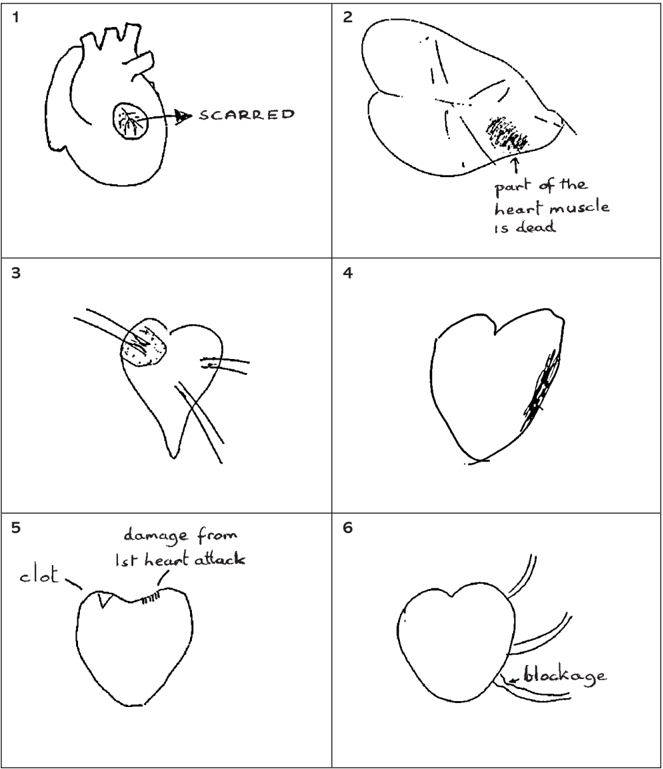
- Broadbent E, Petrie KJ, Ellis CJ, Ying J, Gamble G. A picture of health -myocardial infarction patients' drawings of their hearts and subsequent disability: a longitudinal study. J Psychosom Res 2004;57:583-7.
- Broadbent E, Ellis CJ, Gamble G, Petrie KJ. Using patient drawings to identify slow recovery following myocardial infarction. Psychosom Med (in press) 10
- Donkin L, Ellis CJ, Powell R et al. Illness perceptions predict reassurance following negative exercise testing result. Psychol Health 2006;21:421-30.
- Scharloo M, Kaptein AA, Weinman J et al. Patients' illness perceptions and coping as predictors of functional status in psoriasis: a 1-year follow-up. Br J Dermatol 2000;142: 899-907.
- Scharloo M, Kaptein AA, Weinman JA et al. Predicting functional status in patients with rheumatoid arthritis. J Rheumatol 1999;26: 1686-93.
- Frostholm L, Fink P, Christensen KS et al. The patients' illness perceptions and the use of primary health care. Psychosom Med 2005;67:997-1005.
- Petrie KJ, Cameron LD, Ellis CJ, Buick D, Weinman, J. Changing illness perceptions after myocardial infarction: an early inter- vention randomized controlled trial. Psychosom Med 2002;64:580-6.
Cited by
Items 401–473 of 473
Keeping pace: Living with heart failure and an implantable cardioverter defibrillator
Timmermans, I. (2018) · Utrecht University Repository (Utrecht University)
¿Qué saben los niños y niñas seropositivos para VIH/SIDA antes de la revelación del diagnóstico?
Herrera, A. M. T., Vásquez, Y. A., Bahamón, M. J., & Reyes-Ruíz, L. (2017) · Universidad Simón Bolívar eBooks · doi:10.17081/bonga.1139.c3
Al-Ghamdi, S. H., Ahmad, G., Ali, A. H. A., Bahakim, N. O., Alomran, S., Alhowikan, W., Almutairi, S., Basalem, T., & Aljuaid, F. F. (2019) · BMC Family Practice · doi:10.1186/s12875-019-1043-3
RetractedProstate Cancer Awareness Among Women: A Mixed-methods Systematic ReviewPreprint
Wiafe, E., Mensah, K. B., Mensah, A. B. B., Bangalee, V., & Oosthuizen, F. (2020) · Research Square · doi:10.21203/rs.3.rs-121896/v1
“As persons are faced with the experiences of a health condition, they will seek to make sense of this illness by acquiring knowledge (32),”
BackgroundEffect of Methane on the Synthesis of Precipitated Calcium Carbonate via Carbonation Process
Lahuri, H. M., Berahim, N. H., Onn, M. S., Noh, M. G. M., & Othman, R. (2019) · International Journal of Engineering & Technology · doi:10.14419/ijet.v7i4.14.27523
퇴원을 앞둔 노인 환자의 사회적 지지와 질병지각이 우울에 미치는 영향
염, 정., & 신, 용. (2017) · Korean Journal of Adult Nursing
Life After Colorectal Cancer: A Qualitative Study of Health and Illness Post-treatment
Edwards, J. E. (2020) · TSpace (University of Toronto)
A Group Intervention for Women Suffering from Endometriosis
Mor, L., Efraty, Y., Berkowitz, E., & Elizur, S. E. (2021) · SN Comprehensive Clinical Medicine · doi:10.1007/s42399-021-00983-4 · Cited by 1
Petit, A., Borgne, M. L., Albert, V., & Durand, M. (2021) · Journal of Back and Musculoskeletal Rehabilitation · doi:10.3233/bmr-200093
“The representation of the disease is defined as the set of thoughts, ideas, beliefs and attitudes about the nature of the disease; it is constructed by the person to make sense of his illness and is associated with the adoption of behaviors aimed at adapting or controlling the problem [12,14–16].”
Hilmayani, I. N., Chusniyah, T., & Suhanti, I. Y. (2021) · Flourishing Journal · doi:10.17977/um070v1i22021p100–105
Fay, S. D. (2015) · ScholarWorks (Walden University) · Cited by 1
Chui, A., Dainty, K. N., Kirsh, B. H., DAWSON, D. R., & Colquhoun, H. L. (2022) · Frontiers in Rehabilitation Sciences · doi:10.3389/fresc.2022.848575 · Cited by 2
“Other literature demonstrates that HCPs and patients often differ on beliefs about illness and its meaning (51) and on indicators of “successful” recovery (52).”
BackgroundSocial, R. D. I. D. P. Y. C. (2020) · Revista Digital Internacional de Psicología y Ciencia Social · doi:10.22402/j.rdipycs.unam.6.2.2020.327.245-526
Lawes-Wickwar, S., McBain, H. B., Hirani, S. P., Hurt, C. S., Dunlop, N., Solly, D., Crampton, B., Newman, S. P., & Ezra, D. G. (2020) · Research Square · doi:10.21203/rs.3.rs-32007/v1 · Cited by 1
“This is an important issue because causal beliefs can in uence the treatment patients seek and, ultimately, how successfully they manage their condition [26].”
Background(2020) · Revista Digital Internacional de Psicología y Ciencia Social · doi:10.22402/j.rdipycs.unam.6.2.2020
Faculté des sciences humaines et sociales, D. D. P.-L., Aberkane, S., & Badis, A. (2018) · Batna Journal of Medical Sciences (BJMS) · doi:10.48087/bjmsoa.2018.5110
Illness perceptions of Turkish Cypriot patients receiving haemodialysis: A qualitative study
(2021) · Journal of Renal Care · doi:10.1111/jorc.12377
Hilmayani, I. N., Chusniyah, T., & Suhanti, I. Y. (2021) · Flourishing Journal · doi:10.17977/um070v1i22021p100-105
da Silva, S. T. C. (2022) · Digital Library of Theses and Dissertations (Universidade de São Paulo) · doi:10.11606/d.5.2022.tde-19012023-125014
do Prado, F. V., Muniz, F. W. M. G., Fernandez, M. D. S., Sachetti, D. G., Rõsing, C. K., & Colussi, P. R. G. (2022) · Saúde e Desenvolvimento Humano · doi:10.18316/sdh.v10i3.8833 · Cited by 1
Illness perceptions: A review and implications for paediatric neuropsychologists
Evans, C., Josephs, L., & Scarff, K. (2017) · The Neuropsychologist · doi:10.53841/bpsneur.2017.1.4.48
ปัจจัยทำนายการดูแลตนเองของผู้ป่วยภาวะหัวใจล้มเหลวในเขตภาคกลาง ประเทศไทย
พินิจพันธ์, ก. (2020) · Chula Digiverse · doi:10.58837/chula.the.2020.900
โอฬารวัฒน์, เ., & จิตปัญญา, ช. (2018) · Chula Digiverse · doi:10.58837/chula.the.2018.955
Collaborating With Passion: Remind Me Why It Was Invited?
Meyer, J. P. (2022) · The Open Review · doi:10.47967/tor2022/vol8.16
Gaining Confdence Through Collaboration
Pascual, N. R. (2023) · The Open Review · doi:10.47967/tor2022col/vol8.13a
Embodiment in African Participatory Music Making
Day, N. K. (2022) · The Open Review · doi:10.47967/tor2022/vol8.10
Horwood, M., & Loades, M. E. (2022) · The Open Review · doi:10.47967/tor2022/vol8.11 · Cited by 2
Pulman, S. (2023) · The Open Review · doi:10.47967/tor2022col/vol8.15
Reece, R., & Merchant, S. (2022) · The Open Review · doi:10.47967/tor2022/vol8.06 · Cited by 2
Aigbe, E. O. (2022) · The Open Review · doi:10.47967/tor2022/vol8.12 · Cited by 1
Using ArcGIS StoryMaps to prepare learners for fieldwork
Maddison, J., Marsham, S., & Bevana, R. M. (2022) · The Open Review · doi:10.47967/tor2022/vol8.09
Effects of Attention and Congruence on Judging True and False COVID-19 News Headlines
Lê, P. H., & Blumenthal, J. V. (2022) · The Open Review · doi:10.47967/tor2022/vol8.08
Phd Support Groups: From Sceptic to True Believer
Collett, K. (2022) · The Open Review · doi:10.47967/tor2022/vol8.14
The Collaboration Pyramid – Inspiring Radical innovation That People are More Willing to Adopt
Neild, M. (2023) · The Open Review · doi:10.47967/tor2022col/vol8.17
Šantić, A., & Degmečić, D. (2024) · Diacovensia · doi:10.31823/d.31.4.5
Cruz, F. A. D., Yu, C. H., & Lao, B. T. (2024) · Journal of the American Association of Nurse Practitioners · doi:10.1097/jxx.0000000000001032 · Cited by 1
Особенности представлений о причинах болезни у женщин с гине-кологическими видами рака
Миров, Ю., & Валентиновна, М. О. (2024) · Психологические исследования · doi:10.54359/ps.v17i94.1581
Successful Adaptation to Type 2 Diabetes Mellitus (DM2): A Qualitative Study
Kumar, V., & Kohli, N. (2024) · Psychology and Developing Societies · doi:10.1177/09713336241286231
“…with a disease or experiences a health issue, they will attempt to make sense of the situation and manage it by drawing on their prior knowledge, experiences, and beliefs as well as those of people in their communities – at home, at work, and in other social settings (Petrie & Weinman, 2006).”
Santra, A., Roy, S., Goswami, M., & Chatterjee, D. (2025) · Journal of Human Behavior in the Social Environment · doi:10.1080/10911359.2025.2464702
“Individuals’ cognitive and emotional frameworks through which they perceive and understand their own illness are marked as illness perceptions (Petrie & Weinman, 2006).”
Duff, A., Dawson, P., Pavilidis, P., & Mawdsley, J. E. D. (2025) · Gastrointestinal Nursing · doi:10.12968/gasn.2024.0043
Allen, S. F., van Hemert, A. M., de Waal, M. W. M., & Feltz-Cornelis, C. M. V. D. (2025) · General Hospital Psychiatry · doi:10.1016/j.genhosppsych.2025.05.002 · Cited by 1
Joeliantina, A., Indriatie, I., Soelistyowati, E., & Hasanah, N. Z. (2025) · International Journal of Advanced Health Science and Technology · doi:10.35882/ijahst.v5i3.479
Kim, S. (2025) · Patient Education and Counseling · doi:10.1016/j.pec.2025.109230 · Cited by 1
Xu, J., Liu, Q., Ren, F., Sun, Z., Yang, B. X., Zhang, J., Liu, Y., Chen, B., & Jiang, X. (2025) · Research Square · doi:10.21203/rs.3.rs-7173257/v1
Schwartz‐Attias, I., Krulik, T., Roziner, I., & Ronen, T. (2025) · Journal of Pediatric Hematology/Oncology Nursing · doi:10.1177/27527530251381701
“Research has shown that individuals ’ ability to cope with illness is often shaped not by the objective severity of their condition but by their subjective perceptions of the illness — an aspect of their cognitive interpretation process (Benyamini et al., 2012; Petrie & Weinman, 2006).”
Rocholl, M., Ludewig, M., Brakemeier, C., John, S. M., & Wilke, A. (2021) · Figshare · doi:10.6084/m9.figshare.14558911
Rocholl, M., Ludewig, M., Brakemeier, C., John, S. M., & Wilke, A. (2021) · Figshare · doi:10.6084/m9.figshare.14558908
Wiafe, E., Mensah, K. B., Mensah, A. B. B., Bangalee, V., & Oosthuizen, F. (2021) · Figshare · doi:10.6084/m9.figshare.14551910
de Wit, M., Horreh, B., Daams, J. G., Hulshof, C. T. J., Wind, H., & de Boer, A. G. E. M. (2020) · Figshare · doi:10.6084/m9.figshare.13152295
de Wit, M., Horreh, B., Daams, J. G., Hulshof, C. T. J., Wind, H., & de Boer, A. G. E. M. (2020) · Figshare · doi:10.6084/m9.figshare.13152283
Rocholl, M., Ludewig, M., Brakemeier, C., John, S. M., & Wilke, A. (2021) · Figshare · doi:10.6084/m9.figshare.14558905
de Wit, M., Horreh, B., Daams, J. G., Hulshof, C. T. J., Wind, H., & de Boer, A. G. E. M. (2020) · Figshare · doi:10.6084/m9.figshare.13152289
Rocholl, M., Ludewig, M., Brakemeier, C., John, S. M., & Wilke, A. (2021) · Figshare · doi:10.6084/m9.figshare.14558902
Rocholl, M., Ludewig, M., Brakemeier, C., John, S. M., & Wilke, A. (2021) · Figshare · doi:10.6084/m9.figshare.14558914
Wiafe, E., Mensah, K. B., Mensah, A. B. B., Bangalee, V., & Oosthuizen, F. (2021) · Figshare · doi:10.6084/m9.figshare.14551913
Yosef, Y., Kiderman, A., CHINITZ, D. P., & Lahad, A. (2022) · Figshare · doi:10.6084/m9.figshare.21541995
Bergsten, U., Dehlin, M., Klingberg, E., Landgren, A. J., & Jacobsson, L. (2024) · Figshare · doi:10.6084/m9.figshare.26582492
Svensson, F., Birkner, S., & Exner, C. (2025) · Psychology Health & Medicine · doi:10.1080/13548506.2025.2604281 · Cited by 1
Germano, C. S., Tomishige, K. S., Maccione, R. M., Ottaiano, P. A., & Kasahara, N. (2026) · Journal of Health Psychology · doi:10.1177/13591053261430435
“These perceptions can be either positive or negative and can profoundly influence patients’ ability to recover and how frequently they seek healthcare services, even beyond the objective measures of disease severity (Leventhal et al., 1980, 1997; Petrie and Weinman, 2006).”
Sandberg, J., Sundh, J., Anderberg, P., Currow, D. C., & Ekström, M. P. (2026) · ERJ Open Research · doi:10.1183/23120541.01453-2025
“For healthcare professionals, understanding and addressing patients ’ expectations of daily symptoms is essential for delivering patient-centred care and aligning diagnostic and therapeutic strategies with individual needs [7].”
Li, Q., Su, H., Chen, Y., Zhang, L., & Zhou, Y. (2026) · Geriatric Nursing · doi:10.1016/j.gerinurse.2026.103946
Fadaei, Z., Tehrani, H. M., Pour, N. S. Y., Chan, S. W. Y., Garcia, A. J., & Habibi, M. (2026) · Discover Psychology · doi:10.1007/s44202-026-00692-w
“Illness perception varies across cultures [39], shaped by family, healthcare systems, cultural beliefs, and symptom expression [40].”
Jónsdottir, I., Steindórsdóttir, B. B., Kristjánsdóttir, N. S., & Gústavsson, S. M. (2026) · Research Square · doi:10.21203/rs.3.rs-9355971/v1
Ludewig, M., Wilke, A., Meyer, J., John, S. M., & Rocholl, M. (2026) · Occupational Health · doi:10.3390/occuphealth1020023
“In addition, they can be the starting point for interventions that lead to a change in health or coping behaviour by processing existing illness perceptions [2].”
InfluentialHattori, C., Kurihara, J., Shimada, S., Yamaguchi, N., Kobayashi, C., Aono, H., Takamatsu, Y., Tanaka, T., Yamanashi, H., Edmunds, W. J., et al. (2026) · International Journal of Infectious Diseases · doi:10.1016/j.ijid.2026.108914
Akalın, Ç., Şengül, İ., Şengül, D., Taş, H. İ., Nobrega, G. B., Ferreira, C. D. S., Ferreira, I. D., & Soares, J. M. (2026) · Revista da Associação Médica Brasileira · doi:10.1590/1806-9282.20260376
“If replicated, these findings suggest that interventions aimed at fostering adaptive vigilance—through psychoeducation, cognitive–behavioural strategies, or illness-perception–focused approaches—may improve clinical outcomes in women with IGM 16 .”
Shirai, T. (2026) · BMC Cardiovascular Disorders · doi:10.1186/s12872-026-06452-x
Vlastou, K., Beneka, A., Bebetsos, E., Basta, M., Tzagarakis, C., Karademas, E. C., Bouloukaki, I., Trivizadakis, D., & Simos, P. G. (2026) · Healthcare · doi:10.3390/healthcare14172843
“Greater illness coherence has been associated with more adaptive self-regulatory processes, greater engagement in health-promoting behaviors, and more favorable clinical outcomes across a wide range of chronic conditions [10,14,15,18,19].”
InfluentialLiu, M., Xiong, Z., Xu, Y., Shen, Q., Sun, X., Liu, S., Chen, X., & Xiong, X. (2026) · Frontiers in Nutrition · doi:10.3389/fnut.2026.1934582
“…to nutrition-related changes such as reduced food intake, weight loss, and loss of muscle mass. Patients’ interpretations of a particular health threat are jointly influenced by their previous illness experiences, symptom experiences, lifestyle habits, and overall perceptions of the disease (16).”
Acar, D. (2026) · Ayna Klinik Psikoloji Dergisi · doi:10.31682/ayna.1776854
Bouachtala, I., Chait, A., & Loukid, M. (2026) · Mental Illness · doi:10.1155/mij/5845373
Metadata
- Authors
- Petrie, K., & Weinman, J.
- Affiliations
- University of Auckland (NZ)
- King's College London (GB)
- Venue
- Clinical Medicine
- Publisher
- Elsevier BV
- Published
- 2006-11
- Volume
- 6
- Issue
- 6
- Pages
- 536-539
- ISSN
- 1470-2118 (ISSN-L)
- PMC
- PMC4952762
- OpenAlex
- W2320604122
- Semantic Scholar
- 37533ec4b0032f4a9c87d522813a8f4942380557
- Cited by
- 475
- References
- 4
- Citations by year
- 2026: 15 · 2025: 25 · 2024: 22 · 2023: 30 · 2022: 23 · 2021: 35 · 2020: 39 · 2019: 33 · 2018: 39 · 2017: 32 · 2016: 33 · 2015: 21 · 2014: 27 · 2013: 14 · 2012: 30
- FWCI
- 9.06
- Type
- journal article
- Language
- en
- Open access
- hybrid
- doi.org
- Licence
- cc-by-nc-nd
- www.elsevier.com/tdm/userlicense/1.0/ (tdm)
- www.elsevier.com/legal/tdmrep-license (tdm)
- creativecommons.org/licenses/by-nc-nd/4.0/ (vor, 6369 d)
- Locations
- Clinical Medicine (publishedVersion, cc-by-nc-nd)
- Europe PMC (PubMed Central) (publishedVersion)
- PubMed Central (publishedVersion)
- PubMed (publishedVersion)
- Research Portal (King's College London) (submittedVersion)
- Topics
- Health Sciences › Medicine › Psychiatry and Mental health › Mental Health Treatment and Access
- Health Sciences › Medicine › Psychiatry and Mental health › Psychosomatic Disorders and Their Treatments
- Health Sciences › Medicine › Endocrinology, Diabetes and Metabolism › Diabetes Management and Education
- Keywords
- depression, physical illness, illness perception, rheumatoid arthritis, diabetes mellitus, functional disability, pain, glycemic control, diabetes complications, comorbidities
- MeSH terms
- Adaptation, Psychological, Disease, Humans, Patients, Perception
About these checks
Registry, retraction, Cites and statistics results are computed, not judged, with one exception: a printed reference that no index lists is read once by a model before it counts as a citation error. Claims are extracted by a model and kept only when their quote appears verbatim in the text; each cited source is then checked, with a model’s help, for whether it says what the claim relies on. Those verdicts can be wrong — read the claim’s quote and the cited source before relying on one.
Statistics and arithmetic are recomputed, not judged.
Confidence bands are shown only for fields calibrated on our annotated test set. None is calibrated yet, so no band is shown.
What counts as a claim ›How we measure confidence ›How we check this ›
Are you an author, or do you see a problem with this page? Request a review
Data sources
Bibliographic data: Semantic Scholar, OpenAlex, Crossref.
Contains information from the Semantic Scholar Academic Graph Datasets, made available under the ODC Attribution License (ODC-BY 1.0).
Semantic Scholar’s data is described in: Kinney, R., et al. (2023). The Semantic Scholar Open Data Platform. arXiv:2301.10140.
