

mHealth innovations as health system strengthening tools: 12 common applications and a visual framework
Open accessThe DOI matches its Crossref record; 18 of the 19 references it cites were found in a registry or an index.
Abstract
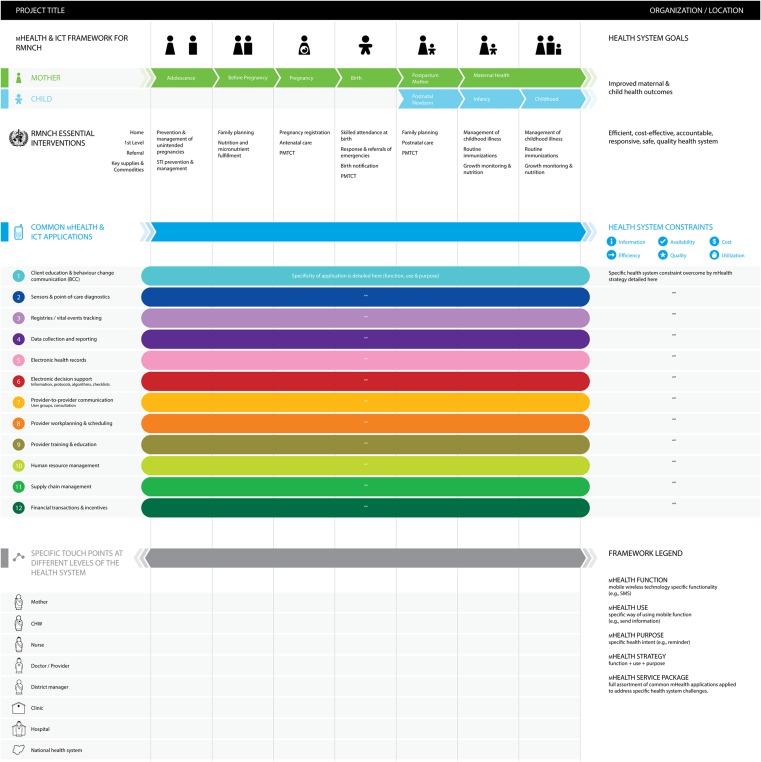
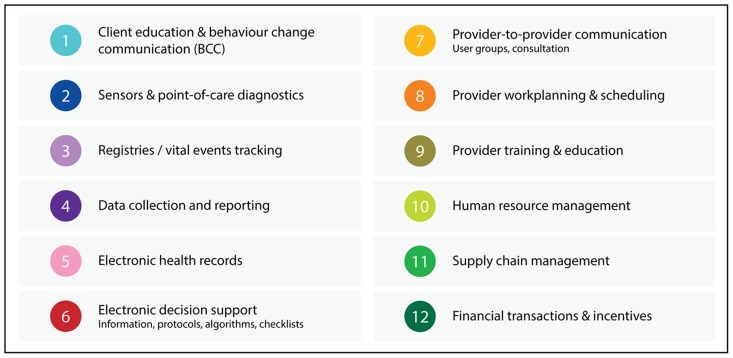
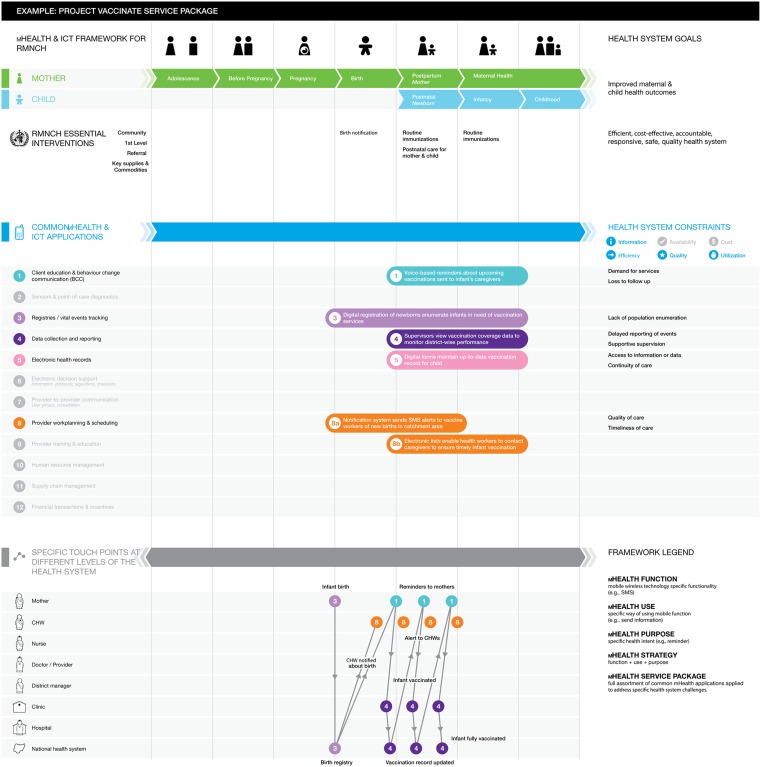
This new framework lays out 12 common mHealth applications used as health systems strengthening innovations across the reproductive health continuum.T he rapid proliferation of mHealth projects-albeit mainly pilot efforts-has generated considerable enthusiasm among governments, donors, and implementers of health programs.1 In many instances, these pilot projects have demonstrated conceptually how mHealth can alleviate specific health system constraints that hinder effective coverage of health interventions.Large-scale implementation or integration of these mHealth innovations into health programs has been limited, however, by a shortage of empirical evidence supporting their value in terms of cost, performance, and health outcomes.[1][2][3][4] Governments in low-and middleincome countries face numerous challenges and competing priorities, impeding their ability to adopt innovations.2 Thus, they need robust, credible evidence about mHealth projects in order to consider mHealth alongside essential health interventions, and guidance about which mHealth solutions they should consider to achieve broader health system goals.2 Their tolerance for system instability or failure can be low, even when the status quo may be equally, or more, unreliable.Current larger-scale effectiveness and implementation research initiatives are working to address the evidence gaps and to demonstrate the impact of mHealth investments on health system targets. 1 Other efforts are underway to synthesize such findings.5 MHEALTH AS A HEALTH SYSTEMS STRENGTHENING TOOLRecent mHealth reviews have proposed that innovators focus on the public health principles underlying mHealth initiatives, rather than on specific mHealth technologies.6 International agencies and research organizations have also endeavored to frame mHealth interventions within the broader context of health system goals or health outcomes.2 The term ''health system'' includes all activities in which the primary purpose is to promote, restore, or maintain health.7 Some elements of a framework for evaluating health systems performance by relating the goals of the health system to its essential functions have been proposed previously, which we believe can serve as a model for articulating and justifying mHealth initiatives and investments.7 Applying a health systems lens to the evaluation of mHealth initiatives requires different indicators and methodologies, shifting the assessment from whether the mHealth initiative ''works'' to process evaluation or proxy indicators of the health outcome(s) of interest.This new way of thinking would facilitate selection of mHealth tools that are appropriate for identified challenges.In other words, it would drive people to first identify the key obstacles, or constraints, to delivering proven health interventions effectively, and to then apply appropriate mHealth strategies that could overcome these health system constraints.8 Presenting mHealth as a range of tools for overcoming known health system constraints, as a health systems ''catalyst,'' may also improve communication between mHealth innovators and health program implementers.Communicating mHealth technologies as tools that can enhance delivery of life-saving interventions through improvements in health systems performance, such as coverage, quality, equity, or efficiency, will resonate with health decision-makers.7 Hence, rather than being perceived as siloed, standalone solutions, mHealth strategies should be viewed as integrable systems that should fit into existing health system functions and complement the health
Overview
The claims and statistics of this paper haven’t been checked yet.
Free: it reads the open-access text and checks the first 5 claims that cite a source we can check. Create a free account to check every claim.
Integrity signals
Registry
Cites
Statistics
Figures
Verification
Claims the paper makes
The claims and statistics of this paper haven’t been checked yet.
Free: it reads the open-access text and checks the first 5 claims that cite a source we can check. Create a free account to check every claim.
Claims other papers make about this one
Each is checked against this paper’s own text: does it say what the citing paper says it does?
The source backs part of the claim, not all of it — or backs it for a different population, condition or comparison.
In the citing paper
“Equipping frontline health workers with mobile phone applications may enhance the delivery of maternal, neonatal, and child health services as well as the accuracy of data capture and recording [16, 26, 35, 36].”
From Qualitative Assessment of the Feasibility, Usability, and Acceptability of a Mobile Client Data App for Community-Based Maternal, Neonatal, and Child Care in Rural Ghana (2016) · cites this paper as [16]
Experimental — accuracy not yet measuredThe cited source says what the claim attributes to it.
In the citing paper
“The twelve most common applications of mHealth as described by Labrique et al. [23] provides a robust framework that was applied in this study to categorize eHealth projects in Kenya.”
From Assessing the feasibility of eHealth and mHealth: a systematic review and analysis of initiatives implemented in Kenya (2017) · cites this paper as [23]
In the citing paper
“There was considerable variety in the quantity and quality of content across the application domains (8) under which we categorised the 76 publications in the review.”
From Assessing the impact of mHealth interventions in low- and middle-income countries – what has been shown to work? (2014) · cites this paper as [8]
In the citing paper
“Our review covers the scope of mHealth as postulated by Labrique et al. (8) as comprehensively as possible.”
From Assessing the impact of mHealth interventions in low- and middle-income countries – what has been shown to work? (2014) · cites this paper as [8]
In the citing paper
“Strategies using mHealth have been considered a strengthening tool to overcome health system constrains.26”
Self-check
Percentages, sums and reported differences re-computed from the paper’s own numbers.
The self-check needs the paper’s full text.
Citations
Cites
The world health report 2000 - Health systems: improving performance
Reinhardt, U. E., & Cheng, T.-M. (2000) · Europe PMC (PubMed Central) · doi:10.1590/s0042-96862000000800020 · Cited by 3,467
Lester, R. T., Ritvo, P., Mills, E. J., Kariri, A., Karanja, S., Chung, M. H., Jack, W., Habyarimana, J., Sadatsafavi, M., Najafzadeh, M., et al. (2010) · The Lancet · doi:10.1016/s0140-6736(10)61997-6 · Cited by 1,278 · cited 1×
“engage 1 or more actors (such as a pregnant woman, a husband, family, community)—influences health behaviors, such as adherence to medication or use of health services.(3,14) The”
BackgroundFree, C., Phillips, G., Watson, L., Galli, L., Felix, L., Edwards, P., Patel, V., & Haines, A. (2013) · PLoS Medicine · doi:10.1371/journal.pmed.1001363 · Cited by 1,187 · cited 1×
“engage 1 or more actors (such as a pregnant woman, a husband, family, community)—influences health behaviors, such as adherence to medication or use of health services.(3,14) The”
BackgroundThe World Health Report 2005 - make every mother and child count
Lerberghe, W. V., Manuel, A., Matthews, Z., & Wolfheim, C. (2005) · ePrints Soton (University of Southampton) · Cited by 1,015
Overcoming health-systems constraints to achieve the Millennium Development Goals
Travis, P., Bennett, S., Haines, A., Pang, T., Bhutta, Z., Hyder, A. A., Pielemeier, N. R., Mills, A., & Evans, T. (2004) · The Lancet · doi:10.1016/s0140-6736(04)16987-0 · Cited by 860
Bashshur, R., Shannon, G., Krupinski, E., & Grigsby, J. (2011) · Telemedicine and e-Health · doi:10.1089/tmj.2011.0103 · Cited by 490 · cited 1×
“The first part of the framework aims to address a previously identified challenge in mHealth: to systematically describe the constituent parts of an mHealth strategy or platform.(11) To do this, we define relationships between common applications of mHealth and ICT and the health systems constraints that they address.”
BackgroundTamrat, T., & Kachnowski, S. (2012) · Maternal and Child Health Journal · doi:10.1007/s10995-011-0836-3 · Cited by 312
E-imci: improving pediatric health care in low-income countries
DeRenzi, B., Lesh, N., Parikh, T., Sims, C., Maokla, W., Chemba, M., Hamisi, Y., S hellenberg, D., Mitchell, M., & Borriello, G. (2008) · Proceedings of the SIGCHI Conference on Human Factors in Computing Systems · doi:10.1145/1357054.1357174 · Cited by 166
Barrington, J., Wereko-Brobby, O., Ward, P., Mwafongo, W., & Kungulwe, S. (2010) · Malaria Journal · doi:10.1186/1475-2875-9-298 · Cited by 163
Mobile Phone Tools for Field‐Based Health care Workers in Low‐Income Countries
DeRenzi, B., Borriello, G., Jackson, J., Kumar, V. S., Parikh, T. S., Virk, P., & Lesh, N. (2011) · Mount Sinai Journal of Medicine: A Journal of Translational and Personalized Medicine · doi:10.1002/msj.20256 · Cited by 123
Research works printed but not linked: 3
- CommCare HQ [Internet]. Cambridge, MA: Dimagi; c2013 [cited 2013 Mar 13] CommCare accredited social health activist (ASHA); [about 1 screen]. Available from: http://www.commcarehq.org/users/commcare_asha/
- Dimagi [Internet]. Cambridge, MA: Dimagi; c2013 [cited 2013 Mar 13] E-IMCI is mobile device based job aid for implementers of IMCI; [about 1 screen]. Available from: http://www.dimagi.com/mobile-e-imci/
- MTN Press Office. MTN Group delivered satisfactory set of results to June 2012 [press release]. Johannesburg, South Africa: MTN; 2012 Aug 8 [cited 2013 Mar 14] Available from: http://pressoffice.mg.co.za/mtn/PressRelease.php?StoryID = 232675
Cited by
Items 301–400 of 598
Seneviratne, M. G., Hersch, F. B., & Peiris, D. (2018) · Australian Journal of Primary Health · doi:10.1071/py17070 · Cited by 13
Dewi, M. M., Djamil, M., & Anwar, M. C. (2019) · Journal of Health Promotion and Behavior · doi:10.26911/thejhpb.2019.04.02.02 · Cited by 11
“MHealth can provide information related to health projects that support one of them is a means of education and behavior change(Labrique et al., 2013).”
BackgroundConnecting mothers to care: Effectiveness and scale-up of an mHealth program in Timor-Leste
Thompson, S., Mercer, M. A., Hofstee, M., Stover, B. D., Vasconcelos, P., & Meyanathan, S. (2019) · Journal of Global Health · doi:10.7189/jogh.09.020428 · Cited by 13
Maphosa, V. (2022) · Cogent Public Health · doi:10.1080/27707571.2022.2095722 · Cited by 13
Larsen-Cooper, E., Bancroft, E., O’Toole, M., & Jezman, Z. (2015) · African Population Studies · doi:10.11564/29-1-714 · Cited by 15
Mobile Learning in Africa: Strategy for Educating the PoorPreprint
Oluwatobi, S. O., & Olurinola, O. (2015) · SSRN Electronic Journal · doi:10.2139/ssrn.2606562 · Cited by 19
Recent Finance Advances in Information Technology for Inclusive Development: A SurveyPreprint
Asongu, S. A., & Nwachukwu, J. C. (2017) · SSRN Electronic Journal · doi:10.2139/ssrn.2937212 · Cited by 11
“The interested reader can find some of these recent mobile health educational innovations in Labrique et al. (2013).”
BackgroundSafo, K. S., Opoku, D., Bonney, R. A., Serchim, C. K., & Mensah, K. A. (2025) · BMC Health Services Research · doi:10.1186/s12913-025-12245-3 · Cited by 15
Sylla, B., Somda, A. P., Nikiema, J. N., Savadogo, L. G. B., Diallo, G., & Méda, N. (2025) · npj Digital Medicine · doi:10.1038/s41746-025-02121-z · Cited by 15
“This distribution replicates the initial trends in digital health in low-income countries described by Labrique et al. 30 (2013).”
Dol, J., Aston, M. L., McMillan, D., Murphy, G. T., & Campbell-Yeo, M. L. (2021) · JMIR Research Protocols · doi:10.2196/27138 · Cited by 9
Kayastha, R., Mueller, S., Yadav, P. K., Kelman, I., Boscor, A., Saville, N. M., Arjyal, A., Baral, S., Fordham, M., Hearn, G. J., et al. (2021) · Frontiers in Public Health · doi:10.3389/fpubh.2021.645837 · Cited by 14
“…applications such as short message service (SMS), behavior change communication, Interactive Voice Response, and provider-to-provider communication (26), aiming to provide information and care across the full continuum of maternal health (adolescent through postpartum) and child health (postnatal…”
BackgroundSekandi, J. N., Murray, K., Berryman, C., Davis-Olwell, P., Hurst, C., Kakaire, R., Kiwanuka, N., Whalen, C. C., & Mwaka, E. (2022) · Interactive Journal of Medical Research · doi:10.2196/35062 · Cited by 15
“Globally, mHealth solutions have been deployed to address problems such as a shortage of health care workers [4,5], monitoring medication adherence [6,7], and improving quality of health care [8].”
Developing an App for Improving Access to COVID-19 Information in Underserved Communities
Maphosa, V. (2022) · International Journal of Information Engineering and Electronic Business · doi:10.5815/ijieeb.2022.03.03 · Cited by 14
“…outbreak of diseases easily. mHealth improves the efficiency of accessing health information, ultimately increasing knowledge of diseases and conditions that affect the public, improving physician and patient communication, and seamlessly coordinating operations for better healthcare outcomes [18].”
BackgroundDesigning a Mobile Game That Develops Emotional Resiliency in Indian Country
Vigil-Hayes, M., Collier, A. F., Castillo, G., Blackhorse, D., Awbery, N., & Abrahim, J.-P. (2019) · CHI Conference Extended Abstracts on Human Factors in Computing Systems (CHI EA) · doi:10.1145/3290607.3312790 · Cited by 10
Philbrick, W. C., MILNOR, J. R., Deshmukh, M., & Mechael, P. (2021) · Campbell Systematic Reviews · doi:10.1002/cl2.1153 · Cited by 14
“We will identify ICT interventions according to common types of ICT applications , adapting, in part, frameworks developed in the mHealth field, such as the mHealth and ICT Framework for Re-productive, Maternal Newborn and Child Health (RMNCH) (Labrique et al., 2013).”
MethodBartlett, L., Avery, L., Ponnappan, P., Chelangat, J., Cheruiyot, J., Matthews, R., Rocheleau, M., Tikkanen, M., Allen, M. L., Amendola, P., et al. (2021) · Family Medicine and Community Health · doi:10.1136/fmch-2020-000845 · Cited by 10
Self-citationHow to fight the COVID-19 global crisis
Miah, M. R., Rahman, A., Sayok, A. K., Samdany, A. A., & Hannan, M. A. (2021) · World Journal of Environmental Research · doi:10.18844/wjer.v11i2.5855 · Cited by 10
“This is a big challenge to infodemic databases (Tollefsen et al., 2004; Labrique et al., 2013; Irwin, 2020), for secure health (Wu, Xu & Kumari, 2017; UNICEF, 2020), on the priority of National Health Policy and Sustainable Development Goals 2030.”
BackgroundScope of mobile health in Indian health care system – the way forward
Ahamed, F., Palepu, S., Dubey, M., & Nongkynrih, B. (2017) · International Journal of Community Medicine and Public Health · doi:10.18203/2394-6040.ijcmph20171300 · Cited by 13
Mobile Health Apps in OB-GYN-Embedded Psychiatric Care: Commentary
Mehralizade, A., Schor, S., Coleman, C. M., Oppenheim, C. E., Denckla, C. A., Borba, C. P. C., Henderson, D. C., Wolff, J., Crane, S., Nettles-Gomez, P., et al. (2017) · JMIR mhealth and uhealth · doi:10.2196/mhealth.7988 · Cited by 9
“mHealth apps provide appointment tracking, mood/behavior tracking, community engagement, patient education, and support for behavior change [17].”
Ihesie, A., & Chukwuogo, O. (2017) · International Journal of Community Medicine and Public Health · doi:10.18203/2394-6040.ijcmph20174801 · Cited by 9
Sarma, S., Nemser, B., Cole-Lewis, H., Kaonga, N., Negin, J., Namakula, P., Ohemeng-Dapaah, S., & Kanter, A. S. (2018) · Global Health: Science and Practice · doi:10.9745/ghsp-d-16-00290 · Cited by 9
Scherr, T., Moore, C. P., Thuma, P. E., & Wright, D. W. (2020) · JMIR mhealth and uhealth · doi:10.2196/18413 · Cited by 9
“Previously insurmountable logistical challenges such as supply chain management [1], cold reagent storage [2,3], and disease surveillance [4] are being solved by a continuous stream of innovations [5,6].”
BackgroundMbuthia, F. W., Reid, M., & Fichardt, A. (2021) · International Journal of Africa Nursing Sciences · doi:10.1016/j.ijans.2021.100304 · Cited by 11
mHealth resources to strengthen health programs
L’Engle, K. L., Raney, L., & D'Adamo, M. (2014) · Global Health Science and Practice · doi:10.9745/ghsp-d-14-00013 · Cited by 9
“W e note with interest that the article ‘‘mHealthinnovations as health system strengthening tools: 12 common applications and a visual framework,’’ by Labrique et al.1 is the most viewed article in Global Health: Science and Practice to date.”
BackgroundHyppönen, H., Koch, S., Faxvaag, A., Gilstad, H., Nøhr, C. G., Harðardóttir, G. A., Andreassen, H., Bertelsen, P., Kangas, M., Reponen, J., et al. (2017) · TemaNord · doi:10.6027/tn2017-528 · Cited by 9
The Global Health Informatics landscape and JAMIA
Fraser, H., Zahiri, K., Kim, N. J., Kim, C., & Craig, S. (2023) · Journal of the American Medical Informatics Association · doi:10.1093/jamia/ocad024 · Cited by 9
Nigatu, T., Willems, H., Bongassie, L. A., Eyob, Y., Mengesha, C. K., Yihun, B. Y., Mohammed, M., Wendrad, N., Melkamu, G., Daka, D. W., et al. (2023) · BMC Medical Informatics and Decision Making · doi:10.1186/s12911-023-02385-z · Cited by 14
“Despite a high initial investment cost, eCHIS saves money in the long run [14], provides electronic decision support [15], facilitates faster referrals and patient tracking, minimizes duplication in recording and reporting, improves the quality of data, and enhances communication between providers,…”
BackgroundShekoni, O., Iversen, S. A., Jiménez-Díaz, G., Aune, A., Ubuane, P. O., Imam, Z. O., & André, B. (2024) · SAGE Open Medicine · doi:10.1177/20503121231224568 · Cited by 22
Construction and usability of community health nursing database in rural north‐eastern Thailand
Arakawa, N., Ota, K., Piyabanditkul, L., & Ishikawa, M. (2018) · International Nursing Review · doi:10.1111/inr.12471 · Cited by 8
Botha, A., Weiss, M. S., & Herselman, M. E. (2018) · International Conference on Artificial Intelligence, Big Data, Computing and Data Communication Systems (icABCD) · doi:10.1109/icabcd.2018.8465427 · Cited by 10
“Constituent Categories MHealth Application Type [44] MHealth intervene -tion Strategies [45] MHealth categories: [46] MHealth applications: [6] South African MHealth Strategy [4] Effective ness (Systemat ic review and Meta Analysis)”
BackgroundInfluentialIyawa, G. E., Herselman, M. E., & Botha, A. (2019) · International Journal of Reliable and Quality E-Healthcare · doi:10.4018/ijrqeh.2019040101 · Cited by 8
Knowledge management best practices among rice farmers in selected areas of Tanzania
Mtega, W. P., & Ngoepe, M. (2019) · Journal of Librarianship and Information Science · doi:10.1177/0961000619856087 · Cited by 12
Gaitán‐Rossi, P., Cerda, S. D. L., Navarro, A. C. P., Aguilar, A., García, M. R. V., & Vilar‐Compte, M. (2019) · Current Developments in Nutrition · doi:10.1093/cdn/nzz107 · Cited by 7
“Moreover, large-scale implementation of mHealth innovations has been limited by a shortage of empirical evidence, (although 87% of the countries in WHO are conducting ≥1 mHealth program, only 14% of them reported an evaluation [8]), supporting their value in terms of cost, performance, and health outcomes, as well as…”
BackgroundArnaert, A., Ponzoni, N., Debe, Z., Meda, M. M., Nana, N. G., & Arnaert, S. (2019) · Journal of Nursing Education and Practice · doi:10.5430/jnep.v10n3p57 · Cited by 9
“,[5] evidence exists that these interventions improve antenatal care (ANC) attendance, increase utilization of oral contraception,[6] promote the choice of delivery by a skilled birth attendant thereby reducing home deliveries,[7–9] and permit early detection and”
BackgroundCaplan, S., Lovera, A. S., Comas, E. V., & Attilus, J. (2020) · Journal of Transcultural Nursing · doi:10.1177/1043659620912315 · Cited by 10
“Our study findings address gaps in the literature pertaining to sociocultural considerations of voice-based mHealth interventions and the iterative methodology of sociocultural adaptation of an MHapp (Labrique et al., 2013), particularly in the Dominican Republic (Saigi-Rubio et al.”
BackgroundChan, N. H.-M., Merali, H. S., Mistry, N., Kealey, R., Campbell, D. M., Morris, S. K., & Santorino, D. (2021) · BMC Medical Informatics and Decision Making · doi:10.1186/s12911-021-01406-z · Cited by 10
Rothstein, J. D., Klemm, R., Niyeha, D., Smith, E., & Nordhagen, S. (2021) · Public Health Nutrition · doi:10.1017/s1368980020003742 · Cited by 7
Venkateswaran, M., Nazzal, Z. A. S., Ghanem, B., Khraiwesh, R., Abbas, E., Khader, K. A., Awwad, T., Hijaz, T., Isbeih, M., Mørkrid, K., et al. (2022) · JMIR Formative Research · doi:10.2196/34021 · Cited by 12
“Despite several demonstrated benefits of using DHIs such as improved service quality and coverage [4], data use and information exchange [5], and health outcomes [6,7], challenges such as increased workloads and stress for care providers have also been reported [1].”
BackgroundFerdous, T. E., Jaman, M. J., Siddique, A. B., Sultana, N., Hossain, T., Arifeen, S. E., & Billah, S. M. (2024) · Nutrients · doi:10.3390/nu16203429 · Cited by 11
“However, Bangladesh and many other LMICs have been piloting and scaling up digitalisation of the health systems informatics for some years now [18].”
BackgroundMethodInfluentialHan, R., Zeng, L., Lin, J., Xu, Q., Ma, J., Chen, X., Yu, D., Cheng, L. T., & Gao, L. (2025) · Journal of Clinical Nursing · doi:10.1111/jocn.70112 · Cited by 9
Okeke, E. B., Forman, D., Taylor, E., Hyde, E., Parente, F., Kanmodi, K. K., & Wordsworth, S. (2025) · BMC Digital Health · doi:10.1186/s44247-025-00227-8 · Cited by 14
“This aligns with the recommendations of Labrique et al. [29], who argue that digital tools must be integrated into broader health systems through sustained and iterative support to prevent abandonment after initial enthu-siasm wanes.”
Rossing, E., Ravn, H., Batista, C. S. P., & Rodrigues, A. (2016) · JMIR Research Protocols · doi:10.2196/resprot.5968 · Cited by 7
“Although the rapid proliferation of mHealth projects has generated enthusiasm [4], more evidence establishing their efficacy and effectiveness is needed [3,5,6].”
Mørkrid, K., Bogale, B., Abbas, E., Khader, K. A., Ward, I. A., Attalh, A., Awwad, T., Baniode, M., Frost, K. S., Frost, M. J., et al. (2021) · Trials · doi:10.1186/s13063-020-04980-1 · Cited by 7
Nishimwe, A., Nyssen, M., Ibisomi, L., & Conco, D. N. (2021) · Informatics for Health and Social Care · doi:10.1080/17538157.2020.1869007 · Cited by 6
Dunbar, E. L., Olsen, H. E., Salomon, E., Bhatt, S., Mutuku, R., Wasunna, B., Edwards, J., Kolko, B. E., & Holeman, I. (2021) · CHI Conference Extended Abstracts on Human Factors in Computing Systems (CHI EA) · doi:10.1145/3411763.3443438 · Cited by 8
“In the last decade, a growing body of work has established that digital health interventions can improve the coverage, quality, speed, and equity of care in hard-to-reach communities around the world [15, 17].”
BackgroundKaur, A., Ahuja, P., Jain, J., Singh, S., & Garg, A. (2022) · Business Perspectives and Research · doi:10.1177/22785337221091017 · Cited by 11
“…for example, mobile healthcare (mHealth). mHealth systems can strengthen healthcare quality and offer innovative business possibilities to information and communications technology and healthcare, states, private hospitals, high-tech suppliers, retailers, and workers (Labrique et al., 2013).”
BackgroundRafiq, M. T., Hamid, M. S. A., Hafiz, E., & Sakib, A. M. I. N. (2019) · Balneo Research Journal · doi:10.12680/balneo.2019.306 · Cited by 7
“Health related services via a mobile device are known as mHealth (9).”
BackgroundHeerdegen, A. C. S., Cellini, C. M., Wirtz, V. J., & Rockers, P. C. (2022) · Global Health Science and Practice · doi:10.9745/ghsp-d-22-00072 · Cited by 8
Wakelin, K. J., McAra‐Couper, J., Fleming, T., & Erlam, G. D. (2022) · New Zealand College of Midwives · doi:10.12784/nzcomjnl58.2022.2.11-18 · Cited by 11
“…video-calling health education and information to pregnant women/people and families (Chib, 2010; Evans et al., 2012; Fazal et al., 2020; Gelano et al., 2018; Labrique et al., 2013; LeFevre et al., 2017; Soltani et al., 2012; Speciale & Freytsis, 2013; Willcox et al., 2015; Willcox et al., 2019).”
BackgroundIrani, L., Verma, S., Mathur, R., Verma, R. K., Mohan, D., Dhar, D., Seth, A., Chaudhuri, I., Chaudhury, M. R., Purthy, A., et al. (2022) · BMJ Open · doi:10.1136/bmjopen-2021-052336 · Cited by 9
Lin, H., Wang, Y., Xing, Y., Han, Y., Zhang, C., Luo, T., & Chang, C. (2023) · Journal of Medical Internet Research · doi:10.2196/41911 · Cited by 9
A randomized controlled trial of personalized text messages for smoking cessation, China
Lin, H., Li, X., Zhang, Y., Wen, Z., Guo, Z., Yang, Y., & Chang, C. (2023) · Bulletin of the World Health Organization · doi:10.2471/blt.22.289051 · Cited by 7
Vision: mobile ehealth learning and intervention platform
Abdelrazek, M., Ibrahim, A. S., Cain, A., & Grundy, J. (2018) · IEEE/ACM International Conference on Mobile Software Engineering and Systems (MOBILESoft) · doi:10.1145/3197231.3197262 · Cited by 9
“The past decade has seen the adoption of Telemedicine, eHealth [3] and mHealth [4] as cost-effective alternatives to the traditional face-to-face interventions.”
BackgroundZeleke, A. A., Naziyok, T. P., Fritz, F., & Röhrig, R. (2018) · JMIR Research Protocols · doi:10.2196/10678 · Cited by 9
“The evidence from the systematic review is supposed to complement the available evidence on the impact of mHealth on demographic and health care data collections [29].”
BackgroundAuthentication and Usability in mHealth Apps
Teng, Z., Zhang, P., Li, X., Nock, W., Rodriguez-Cancio, M., White, J., Schmidt, D. C., Gilmore, D. M., & Nesbitt, J. C. (2018) · IEEE International Conference on e-Health Networking, Applications and Services (Healthcom) · doi:10.1109/healthcom.2018.8531158 · Cited by 8
“Combining mHealth techniques with other interventions may improve overall care [3].”
A current status of teleophthalmology in low- and middle-income countries: literature review
Yoon, S., Kim, H. Y. S., Kim, J., Kim, S., Seo, K. Y., & Kim, S. Y. (2019) · Journal of Global Health Science · doi:10.35500/jghs.2019.1.e41 · Cited by 7
Personalized medical alert system based on Internet of Things with DHIS2
Enciso, L., Sarmiento, S., & Zelaya-Policarpo, E. (2018) · Iberian Conference on Information Systems and Technologies (CISTI) · doi:10.23919/cisti.2018.8399323 · Cited by 7
“Por lo tanto, necesitan evidencia sólida y creíble sobre los proyectos de mHealth para considerar junto con intervenciones de salud esenciales y orientación sobre las soluciones de mHealth que deberían considerar para lograr metas más amplias del sistema de salud [2].”
BackgroundKlaff, R., Tundealao, S. T., Krenek, B., & Tamí‐Maury, I. (2023) · mHealth · doi:10.21037/mhealth-23-4 · Cited by 6
Santo, L. D., Rastagar, S. H., Hemat, S., Alami, S. O., Pradhan, S., Tharaldson, J., Dulli, L., & Todd, C. S. (2020) · Conflict and Health · doi:10.1186/s13031-020-00302-z · Cited by 6
Wasunna, B., & Holeman, I. (2021) · Oxford University Press eBooks · doi:10.1093/oso/9780198866244.003.0005 · Cited by 9
Strauss, J., Zhang, J., Jarrett, M. L., Patterson, B. A., & Ameringen, M. V. (2021) · Elsevier eBooks · doi:10.1016/b978-0-12-822201-0.00006-x · Cited by 13
Shaikh, A., Bhatia, A., Yadav, G. S., Hora, S., Won, C., Shankar, M., Heerboth, A., Vemulapalli, P., Navalkar, P., Oswal, K. C., et al. (2022) · Journal of Medical Internet Research · doi:10.2196/27952 · Cited by 8
“Though the proposed open ecosystem provides an unprecedented opportunity for growth and competition in the development of digital health tools, the lack of systematic approaches to evaluate and validate digital health interventions risks diluting the impact of the very large investments expected in this space [5-7].”
BackgroundInternational dimensions of clinical decision support systems
Magrabi, F., Cresswell, K. M., & Fraser, H. (2023) · Elsevier eBooks · doi:10.1016/b978-0-323-91200-6.00013-9 · Cited by 10
Leave no community behind: the digital divide
Hansen, C., Ringel, M., Evans, L., & Evans, J. (2023) · European Respiratory Society eBooks · doi:10.1183/2312508x.10001123 · Cited by 7
Senya, K., Ibrahim, A., Lindong, I., & Addo-Lartey, A. A. (2016) · Global Social Welfare · doi:10.1007/s40609-016-0078-9 · Cited by 6
Developing a Digital Marketplace for Family Planning: Pilot Randomized Encouragement Trial
Green, E. P., Augustine, A., Yebei, V. N., Hess, A.-K., & Kiwinda, L. V. (2018) · Journal of Medical Internet Research · doi:10.2196/10756 · Cited by 6
“The emergence of digital health tools—such as short message service (SMS), interactive voice response, and mobile phone apps—have created new opportunities to strengthen health systems and promote behavior change [11,12], but the evidence base for digital health remains weak.”
BackgroundUndergraduate Students’ Stress, Anxiety and Depression Remote Health Monitoring System
Liaw, M. A. W., & Olowolayemo, A. (2020) · International Journal on Perceptive and Cognitive Computing · doi:10.31436/ijpcc.v6i2.159 · Cited by 7
“The study in [35] listed several common mHealth and ICT applications in the healthcare area.”
BackgroundJiang, T., Yang, Y., Cao, N., Yin, Y.-P., & Chen, X. (2020) · BMJ Open · doi:10.1136/bmjopen-2020-037549 · Cited by 4
Information and communication technologies in neonatal health
Durán, P., Sommer, J., Otero, P., Daus, M., Benítez, S., Serruya, S. J., & de Francisco, L. A. (2020) · Revista Panamericana de Salud Pública · doi:10.26633/rpsp.2020.123 · Cited by 8
“These strategies can lead to a reduction of the costs related to the provision of educational materials, facilitate the access to educational interventions and address limitations and barriers (30,34,35).”
BackgroundDesiere, F., Kowalik, K., Fassbind, C., Assaad, R. S., Füzéry, A. K., Gruson, D., Heydlauf, M., Kotani, K., Nichols, J. H., Uygun, Z. O., et al. (2021) · The Journal of Applied Laboratory Medicine · doi:10.1093/jalm/jfab026 · Cited by 8
“provision of better and more direct information to people regarding health and illness, support of healthcare workers for diagnosis and treatment, and access to searchable databases and information across a broad spectrum of areas for healthcare managers (12, 14).”
BackgroundPerspectives on Global Public Health Informatics
Richards, J., Fraser, H., & Douglas, G. P. (2020) · Health informatics · doi:10.1007/978-3-030-41215-9_25 · Cited by 6
“1 Twelve core functions of mHealth applications [54] 25 Perspectives on Global Public Health Informatics”
BackgroundChadwick, J., Jaswal, N., Surya, J., Sivamani, C., Ramesan, V., & Saligram, N. (2025) · Journal of Medical Internet Research · doi:10.2196/79283 · Cited by 11
Nyatuka, D. R., Siva, F., Murugu, D. K., & Morris, L. D. (2026) · The Electronic Journal of Information Systems in Developing Countries · doi:10.1002/isd2.70052 · Cited by 8
“These technologies enhance data availability, coordination, sharing, and accountability across service delivery points (Labrique et al. 2013).”
Jabin, M. S. R., & Nyatuka, D. R. (2026) · Frontiers in Digital Health · doi:10.3389/fdgth.2026.1848840 · Cited by 9
“It extends existing approaches by explicitly foregrounding energy as a core infrastructural dependency and situating digital health systems within a broader ecosystem of interdependent components (1, 52, 53).”
Thomas, V., Kalidindi, B., Waghmare, A., Bhatia, A., Raj, T. D. S., & Balsari, S. (2023) · JMIR Formative Research · doi:10.2196/45250 · Cited by 10
“Subsequently, Labrique et al [44] developed the mHealth and Information Communication Technology (ICT) Framework to describe mHealth solutions for strengthening reproductive, maternal, newborn, and child health in health systems.”
BackgroundFirstSteps: a mHealth tool for children registration and monitoring
Eyitayo, J. S., Badejo, J. A., & Atayero, A. A. (2017) · 2017 International Conference on Computational Science and Computational Intelligence (CSCI) · doi:10.1109/csci.2017.312 · Cited by 5
Rangachari, P., Dellsperger, K. C., & Rethemeyer, R. K. (2019) · PubMed Central · Cited by 6
Boßung, V., & Kast, K. (2021) · Zeitschrift für Evidenz Fortbildung und Qualität im Gesundheitswesen · doi:10.1016/j.zefq.2021.05.004 · Cited by 6
Myths about Coronavirus: A Research Defense
Miah, M. R., Hasan, M. M., Hannan, M. A., Parisha, J. T., Uddin, M. J., Uddin, M. B., Rahman, A., Hossain, S., Sharif, M. A., Akhtar, F., et al. (2022) · Global Journal of Health Science · doi:10.5539/gjhs.v14n2p63 · Cited by 6
“Cyber criminals are providing false medical information, criminal’s cloud network and social media infodemic are running phishing scams (Butun et al., 2014; Alotaibi, 2019; Babamiri et al., 2019; Crawford and Smith, 2021; Bram et al., 2015; Butun et al., 2015; Cheng et al., 2020; Cinelli et al., 2020; Dhaka Tribune, 2…”
BackgroundKachimanga, C., Divala, T. H., Ket, J. C. F., Kulinkina, A. V., Zaniku, H. R., Murkherjee, J., Palazuelos, D., Abejirinde, I. O., & van den Akker, T. (2023) · JMIR Research Protocols · doi:10.2196/44066 · Cited by 11
“We will classify the mHealth tools based on the 12 “signal functions” defined by Labrique et al [31] (Table 1).”
MethodTao, X., Zhang, P., Zhang, X., Mao, L., & Peiris, D. (2023) · International Journal of Medical Informatics · doi:10.1016/j.ijmedinf.2023.105273 · Cited by 8
Understanding Health Information Seeking from an Actor-Centric Perspective
Batchelor, S. J., Waldman, L., Bloom, G., Rasheed, S., Scott, N., Ahmed, T., Khan, N. U. Z., & Sharmin, T. (2015) · International Journal of Environmental Research and Public Health · doi:10.3390/ijerph120708103 · Cited by 11
Management of mobile health projects in developing countries: An empirical study
Zalzala, A. M. S., & Roy, A. (2017) · IEEE International Forum on Research and Technology for Society and Industry (RTSI) · doi:10.1109/rtsi.2017.8065882 · Cited by 5
“[4] found that although mHealth projects have rapidly proliferated in recent years, most”
BackgroundRajasekera, J. R., Mishal, A. V., & Mori, Y. (2019) · Studies in big data · doi:10.1007/978-3-030-31672-3_6 · Cited by 6
Please call my contact person: mobile devices for a rescue mission during an emergency
Olaleye, S. A., Sanusi, I. T., Agjei, R. O., & Adusei‐Mensah, F. (2021) · Information Discovery and Delivery · doi:10.1108/idd-06-2020-0064 · Cited by 7
Emerging role of NGOs in social innovations: A paradigm shift
Deshmukh, M., Philbrick, W. C., & Mechael, P. (2024) · Elsevier eBooks · doi:10.1016/b978-0-443-18529-8.00045-7 · Cited by 6
Wagner, A. L., Xia, L., Pandey, P., Datta, S., Chattopadhyay, S., Mazumder, T., Santra, S., Nandi, U., Pal, J., Joshi, S., et al. (2018) · Maternal and Child Health Journal · doi:10.1007/s10995-018-2509-y · Cited by 5
“Several applications of mHealth have been put forward, including client education, point-of-care diagnostics, vital events tracking, and provider-to-provider communication (Labrique et al. 2013).”
BackgroundKoumpouros, Y., & Γεωργούλας, Ά. (2018) · Advances in healthcare information systems and administration book series · doi:10.4018/978-1-5225-8021-8.ch001 · Cited by 5
Vasudevan, L., Zeller, K., & Labrique, A. B. (2018) · Health informatics · doi:10.1007/978-3-319-61446-5_2 · Cited by 6
Self-citationLeBaron, V. T., Horton, B. J., Adhikari, A., Chapagain, S., Dhakal, M., Gongal, R. N., Kattel, R., Koirala, G., Kutcher, A. M., Hass, B., et al. (2022) · Frontiers in Pain Research · doi:10.3389/fpain.2022.910995 · Cited by 7
Perspectives on Global Public Health Informatics
Richards, J., Douglas, G., & Fraser, H. (2013) · Health informatics · doi:10.1007/978-1-4471-4237-9_31 · Cited by 7
Discussion of “Evidence-based Health Informatics: How Do We Know What We Know?”
Al-Shorbaji, N., Hanmer, L. A., Hussein, R., Magrabi, F., Moen, A., Moura, L., Park, H., & Scott, P. (2015) · Methods of Information in Medicine · doi:10.3414/me14-02-0119 · Cited by 6
“…recent publications have shown the potential of mHealth in i) strengthening health systems through utilizing 12 common mHealth applications [19], ii) prioritizing integrated mHealth strategies for UHC [20], and iii) Harnessing mHealth to overcome health system constraints and achieve UHC…”
BackgroundHongoro, D. J., Kengne, A. P., & Alaba, O. A. (2025) · SSM - Health Systems · doi:10.1016/j.ssmhs.2025.100076 · Cited by 10
Bridging the Gap in Training and Clinical Practice in Sub-Saharan Africa
Saleh, M. N., Naik, G., Mwirigi, A., Shaikh, A. J., Sayani, S., Ghesani, M. V., Asaria, S., Sohani, A. R., Sayed, S., Moloo, Z., et al. (2019) · Current Breast Cancer Reports · doi:10.1007/s12609-019-00322-6 · Cited by 6
Using an online community of practice to explore the informal use of mobile phones by health workers
Glenton, C., Nabukenya, J., Agarwal, S., Meltzer, M., Mukendi, E., Lwanga, I. N., Namitala, J., Reddy, S. K., Royston, G., Tamrat, T., et al. (2023) · Oxford Open Digital Health · doi:10.1093/oodh/oqac003 · Cited by 6
Coulibaly, A., Sogo, A. E., Chikvaidze, N., Capello, C., Gerbaba, T. K., & Kouanda, S. (2024) · Digital Health · doi:10.1177/20552076241298499 · Cited by 5
“20 Over the last few decades, several electronic clinical decision-support systems have been implemented in Burkina Faso, such as the Integrated electronic-Diagnostic Approach (IeDA), developed to improve provider ’ s adherence to protocols of Integrated Management of Childhood Illnesses.”
Radovich, E., Das, S., Karki, S., Bottomley, C., McCarthy, O., Shrestha, A., Penn‐Kekana, L., Shakya, R., Karmacharya, B. M., Shrestha, A., et al. (2025) · BMC Medical Informatics and Decision Making · doi:10.1186/s12911-025-02868-1 · Cited by 4
“EDSS use electronic health records to integrate clinical and demographic data with diagnostic and treatment algorithms that provide prompts to improve guideline adherence [3].”
Chapter 9: mHealth for Better Quality of Life, Healthier Lifestyles, and More Meaningful Lives
Narasimhadevara, A., & Rambhatla, R. (2020) · Springer eBooks · doi:10.1007/978-3-030-46355-7_14 · Cited by 4
Coulibaly, A., & Kouanda, S. (2023) · JMIR Research Protocols · doi:10.2196/37136 · Cited by 7
“The application of information and communication technologies in the health sector includes client education and behavior change, medical record management, electronic decision support, quality care in health services, human resource management, and supply chain management [16].”
An Improved Model for GUI Design of mHealth Context-Aware Applications
Quinde, M. J., & Khan, N. (2018) · Lecture notes in computer science · doi:10.1007/978-3-319-91803-7_23 · Cited by 5
“Some examples are the use of TB Detext [19] -a mobile application providing health workers with acces to up-to-date educational content about tuberculosis-, and the use of PDAs to provide nurses with access to tools and health information [5].”
Background
Metadata
- Authors
- Labrique, A. B., Vasudevan, L., Kochi, E., Fabricant, R., & Mehl, G.
- Affiliations
- Johns Hopkins University (US)
- United Nations Children's Fund (US)
- World Health Organization (CH)
- Corresponding author
- Mehl, Garrett
- Venue
- Global Health: Science and Practice
- Published
- 2013-08
- Volume
- 1
- Issue
- 2
- Pages
- 160-171
- ISSN
- 2169-575X (ISSN-L)
- PMC
- PMC4168567
- OpenAlex
- W2149328406
- Cited by
- 601
- References
- 19
- Citations by year
- 2026: 50 · 2025: 37 · 2024: 27 · 2023: 34 · 2022: 43 · 2021: 62 · 2020: 54 · 2019: 65 · 2018: 89 · 2017: 54 · 2016: 38 · 2015: 31 · 2014: 16 · 2013: 1
- FWCI
- 51.92
- Type
- journal article
- Language
- en
- Open access
- diamond
- doi.org
- Licence
- cc-by
- Locations
- Global Health Science and Practice (publishedVersion, cc-by)
- PubMed Central (publishedVersion, cc-by)
- PubMed (publishedVersion)
- Funders
- World Health Organization
- UNICEF
- Johns Hopkins University
- Topics
- Health Sciences › Health Professions › General Health Professions › Mobile Health and mHealth Applications
- Physical Sciences › Computer Science › Information Systems › ICT in Developing Communities
- Health Sciences › Health Professions › Health Information Management › Health, Technology, Consumer Behavior
- Keywords
- mobile health, health system strengthening, health system constraints, mobile health apps, visual framework, health system performance evaluation, health system goals, low- and middle-income countries
About these checks
Registry, retraction, Cites and statistics results are computed, not judged, with one exception: a printed reference that no index lists is read once by a model before it counts as a citation error. Claims are extracted by a model and kept only when their quote appears verbatim in the text; each cited source is then checked, with a model’s help, for whether it says what the claim relies on. Those verdicts can be wrong — read the claim’s quote and the cited source before relying on one.
Statistics and arithmetic are recomputed, not judged.
Confidence bands are shown only for fields calibrated on our annotated test set. None is calibrated yet, so no band is shown.
What counts as a claim ›How we measure confidence ›How we check this ›
Are you an author, or do you see a problem with this page? Request a review
Data sources
Bibliographic data: Semantic Scholar, OpenAlex, Crossref.
Contains information from the Semantic Scholar Academic Graph Datasets, made available under the ODC Attribution License (ODC-BY 1.0).
Semantic Scholar’s data is described in: Kinney, R., et al. (2023). The Semantic Scholar Open Data Platform. arXiv:2301.10140.
