

mHealth innovations as health system strengthening tools: 12 common applications and a visual framework
Open accessThe DOI matches its Crossref record; 18 of the 19 references it cites were found in a registry or an index.
Abstract
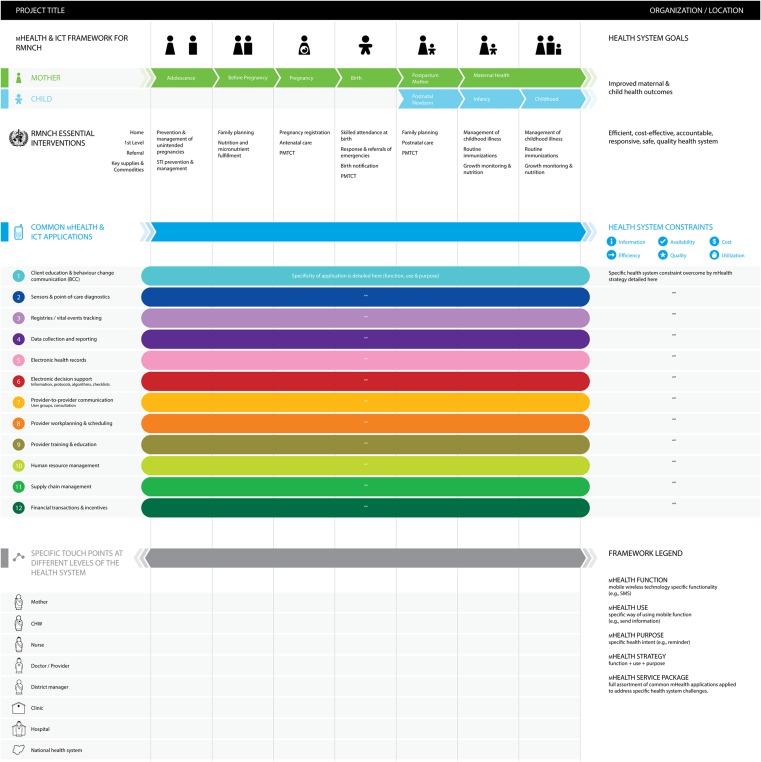
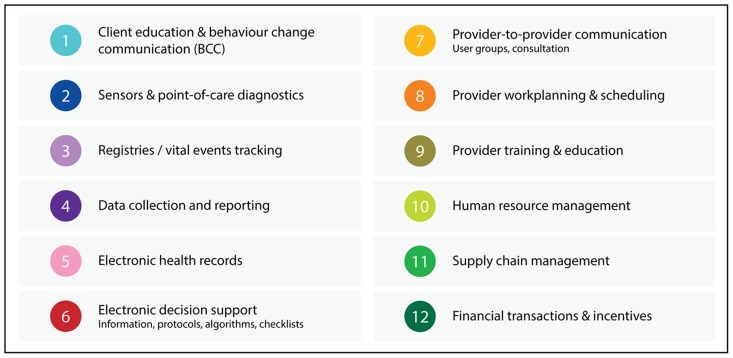
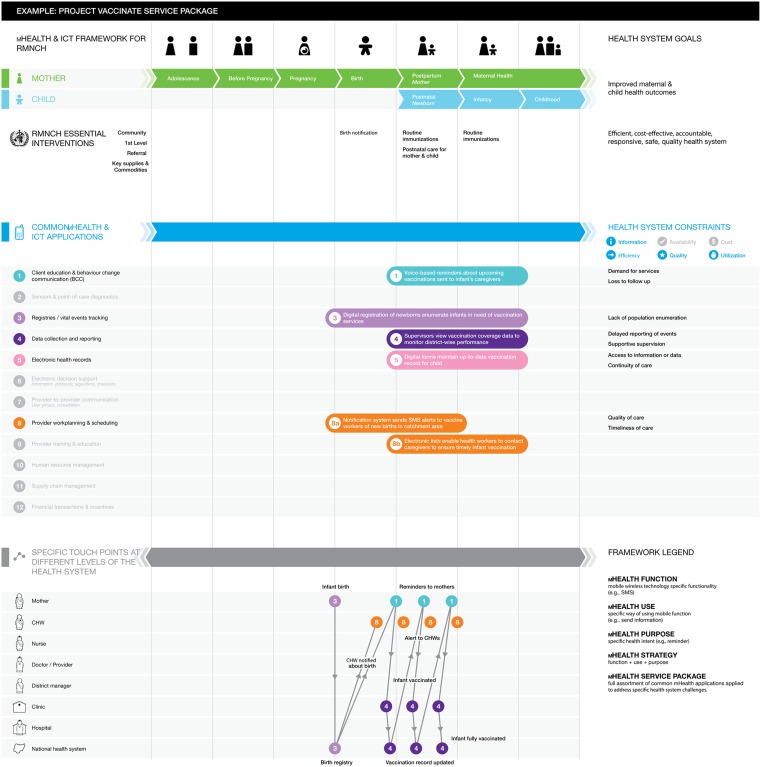
This new framework lays out 12 common mHealth applications used as health systems strengthening innovations across the reproductive health continuum.T he rapid proliferation of mHealth projects-albeit mainly pilot efforts-has generated considerable enthusiasm among governments, donors, and implementers of health programs.1 In many instances, these pilot projects have demonstrated conceptually how mHealth can alleviate specific health system constraints that hinder effective coverage of health interventions.Large-scale implementation or integration of these mHealth innovations into health programs has been limited, however, by a shortage of empirical evidence supporting their value in terms of cost, performance, and health outcomes.[1][2][3][4] Governments in low-and middleincome countries face numerous challenges and competing priorities, impeding their ability to adopt innovations.2 Thus, they need robust, credible evidence about mHealth projects in order to consider mHealth alongside essential health interventions, and guidance about which mHealth solutions they should consider to achieve broader health system goals.2 Their tolerance for system instability or failure can be low, even when the status quo may be equally, or more, unreliable.Current larger-scale effectiveness and implementation research initiatives are working to address the evidence gaps and to demonstrate the impact of mHealth investments on health system targets. 1 Other efforts are underway to synthesize such findings.5 MHEALTH AS A HEALTH SYSTEMS STRENGTHENING TOOLRecent mHealth reviews have proposed that innovators focus on the public health principles underlying mHealth initiatives, rather than on specific mHealth technologies.6 International agencies and research organizations have also endeavored to frame mHealth interventions within the broader context of health system goals or health outcomes.2 The term ''health system'' includes all activities in which the primary purpose is to promote, restore, or maintain health.7 Some elements of a framework for evaluating health systems performance by relating the goals of the health system to its essential functions have been proposed previously, which we believe can serve as a model for articulating and justifying mHealth initiatives and investments.7 Applying a health systems lens to the evaluation of mHealth initiatives requires different indicators and methodologies, shifting the assessment from whether the mHealth initiative ''works'' to process evaluation or proxy indicators of the health outcome(s) of interest.This new way of thinking would facilitate selection of mHealth tools that are appropriate for identified challenges.In other words, it would drive people to first identify the key obstacles, or constraints, to delivering proven health interventions effectively, and to then apply appropriate mHealth strategies that could overcome these health system constraints.8 Presenting mHealth as a range of tools for overcoming known health system constraints, as a health systems ''catalyst,'' may also improve communication between mHealth innovators and health program implementers.Communicating mHealth technologies as tools that can enhance delivery of life-saving interventions through improvements in health systems performance, such as coverage, quality, equity, or efficiency, will resonate with health decision-makers.7 Hence, rather than being perceived as siloed, standalone solutions, mHealth strategies should be viewed as integrable systems that should fit into existing health system functions and complement the health
Overview
The claims and statistics of this paper haven’t been checked yet.
Free: it reads the open-access text and checks the first 5 claims that cite a source we can check. Create a free account to check every claim.
Integrity signals
Registry
Cites
Statistics
Figures
Verification
Claims the paper makes
The claims and statistics of this paper haven’t been checked yet.
Free: it reads the open-access text and checks the first 5 claims that cite a source we can check. Create a free account to check every claim.
Claims other papers make about this one
Each is checked against this paper’s own text: does it say what the citing paper says it does?
The source backs part of the claim, not all of it — or backs it for a different population, condition or comparison.
In the citing paper
“Equipping frontline health workers with mobile phone applications may enhance the delivery of maternal, neonatal, and child health services as well as the accuracy of data capture and recording [16, 26, 35, 36].”
From Qualitative Assessment of the Feasibility, Usability, and Acceptability of a Mobile Client Data App for Community-Based Maternal, Neonatal, and Child Care in Rural Ghana (2016) · cites this paper as [16]
Experimental — accuracy not yet measuredThe cited source says what the claim attributes to it.
In the citing paper
“The twelve most common applications of mHealth as described by Labrique et al. [23] provides a robust framework that was applied in this study to categorize eHealth projects in Kenya.”
From Assessing the feasibility of eHealth and mHealth: a systematic review and analysis of initiatives implemented in Kenya (2017) · cites this paper as [23]
In the citing paper
“There was considerable variety in the quantity and quality of content across the application domains (8) under which we categorised the 76 publications in the review.”
From Assessing the impact of mHealth interventions in low- and middle-income countries – what has been shown to work? (2014) · cites this paper as [8]
In the citing paper
“Our review covers the scope of mHealth as postulated by Labrique et al. (8) as comprehensively as possible.”
From Assessing the impact of mHealth interventions in low- and middle-income countries – what has been shown to work? (2014) · cites this paper as [8]
In the citing paper
“Strategies using mHealth have been considered a strengthening tool to overcome health system constrains.26”
Self-check
Percentages, sums and reported differences re-computed from the paper’s own numbers.
The self-check needs the paper’s full text.
Citations
Cites
The world health report 2000 - Health systems: improving performance
Reinhardt, U. E., & Cheng, T.-M. (2000) · Europe PMC (PubMed Central) · doi:10.1590/s0042-96862000000800020 · Cited by 3,467
Lester, R. T., Ritvo, P., Mills, E. J., Kariri, A., Karanja, S., Chung, M. H., Jack, W., Habyarimana, J., Sadatsafavi, M., Najafzadeh, M., et al. (2010) · The Lancet · doi:10.1016/s0140-6736(10)61997-6 · Cited by 1,278 · cited 1×
“engage 1 or more actors (such as a pregnant woman, a husband, family, community)—influences health behaviors, such as adherence to medication or use of health services.(3,14) The”
BackgroundFree, C., Phillips, G., Watson, L., Galli, L., Felix, L., Edwards, P., Patel, V., & Haines, A. (2013) · PLoS Medicine · doi:10.1371/journal.pmed.1001363 · Cited by 1,187 · cited 1×
“engage 1 or more actors (such as a pregnant woman, a husband, family, community)—influences health behaviors, such as adherence to medication or use of health services.(3,14) The”
BackgroundThe World Health Report 2005 - make every mother and child count
Lerberghe, W. V., Manuel, A., Matthews, Z., & Wolfheim, C. (2005) · ePrints Soton (University of Southampton) · Cited by 1,015
Overcoming health-systems constraints to achieve the Millennium Development Goals
Travis, P., Bennett, S., Haines, A., Pang, T., Bhutta, Z., Hyder, A. A., Pielemeier, N. R., Mills, A., & Evans, T. (2004) · The Lancet · doi:10.1016/s0140-6736(04)16987-0 · Cited by 860
Bashshur, R., Shannon, G., Krupinski, E., & Grigsby, J. (2011) · Telemedicine and e-Health · doi:10.1089/tmj.2011.0103 · Cited by 490 · cited 1×
“The first part of the framework aims to address a previously identified challenge in mHealth: to systematically describe the constituent parts of an mHealth strategy or platform.(11) To do this, we define relationships between common applications of mHealth and ICT and the health systems constraints that they address.”
BackgroundTamrat, T., & Kachnowski, S. (2012) · Maternal and Child Health Journal · doi:10.1007/s10995-011-0836-3 · Cited by 312
E-imci: improving pediatric health care in low-income countries
DeRenzi, B., Lesh, N., Parikh, T., Sims, C., Maokla, W., Chemba, M., Hamisi, Y., S hellenberg, D., Mitchell, M., & Borriello, G. (2008) · Proceedings of the SIGCHI Conference on Human Factors in Computing Systems · doi:10.1145/1357054.1357174 · Cited by 166
Barrington, J., Wereko-Brobby, O., Ward, P., Mwafongo, W., & Kungulwe, S. (2010) · Malaria Journal · doi:10.1186/1475-2875-9-298 · Cited by 163
Mobile Phone Tools for Field‐Based Health care Workers in Low‐Income Countries
DeRenzi, B., Borriello, G., Jackson, J., Kumar, V. S., Parikh, T. S., Virk, P., & Lesh, N. (2011) · Mount Sinai Journal of Medicine: A Journal of Translational and Personalized Medicine · doi:10.1002/msj.20256 · Cited by 123
Research works printed but not linked: 3
- CommCare HQ [Internet]. Cambridge, MA: Dimagi; c2013 [cited 2013 Mar 13] CommCare accredited social health activist (ASHA); [about 1 screen]. Available from: http://www.commcarehq.org/users/commcare_asha/
- Dimagi [Internet]. Cambridge, MA: Dimagi; c2013 [cited 2013 Mar 13] E-IMCI is mobile device based job aid for implementers of IMCI; [about 1 screen]. Available from: http://www.dimagi.com/mobile-e-imci/
- MTN Press Office. MTN Group delivered satisfactory set of results to June 2012 [press release]. Johannesburg, South Africa: MTN; 2012 Aug 8 [cited 2013 Mar 14] Available from: http://pressoffice.mg.co.za/mtn/PressRelease.php?StoryID = 232675
Cited by
Items 501–598 of 598
The Human Factor in the Qualitative Analysis of m-Health Delivery
Zalzala, A. M. S. (2018) · International Conference on Innovation and Intelligence for Informatics, Computing, and Technologies (3ICT) · doi:10.1109/3ict.2018.8855756
“lack of infrastructure and usability issues, and most m-Health projects rapidly proliferating in recent years remain in pilot stage despite much potential [4, 5].”
BackgroundDesigning Experiences in Preventive Healthcare - CASE: Neosmart Health
Tuomas, T. (2020) · Theseus (Ammattikorkeakoulujen)
eHealth Interventions in Prenatal and Postnatal Care in Iran: A Systematic Review
Abdollahi, M., Gholian‐Aval, M., & Peyman, N. (2020) · DOAJ (DOAJ: Directory of Open Access Journals) · doi:10.22038/jmrh.2020.46319.1565
Chapter 8: Law, Technology, and Public Health
Scotto, D. (2020) · Springer eBooks · doi:10.1007/978-3-030-46355-7_13
Mukami, V., Millham, R. C., Puckree, T., & Fong, S. J. (2021) · Lecture notes in networks and systems · doi:10.1007/978-981-33-4073-2_18
Medrano, F. (2021) · Journal of Economics & Management Research · doi:10.47363/jesmr/2021(2)122 · Cited by 1
Approaches to Community Health Worker Training and Supervision
O’Donovan, J. (2021) · Oxford University Press eBooks · doi:10.1093/oso/9780198866244.003.0004 · Cited by 1
Nabukenya, J., & Ashaba, J. (2020) · Research Square · doi:10.21203/rs.2.12339/v2 · Cited by 4
Pinto, R. H. D. C. (2021) · Advances in psychology, mental health, and behavioral studies (APMHBS) book series · doi:10.4018/978-1-7998-7991-6.ch007
Kazienga, A., Tambo, E., & Giordano, S. (2017) · doi:10.2196/preprints.8766
Geniets, A., O’Donovan, J., Hakimi, L., & Winters, N. (2021) · Oxford University Press eBooks · doi:10.1093/oso/9780198866244.003.0001
Doukani, A. (2022) · Springer eBooks · doi:10.1007/978-3-030-48277-0_109-2
Mobile Health Applications Risk Management Framework
(2019) · International Journal of Bio-Medical Informatics and e-Health · doi:10.30534/ijbmieh/2018/01712019
“They are useful for diagnostics, behavioral prompts, reminders and continuous illness monitoring and self-management programs that extend beyond the boundaries of a physical clinic [2, 3, 4, 5].”
BackgroundBoroumand, B., Gombay, C., & Honarvar, R. (2016) · doi:10.2196/preprints.6006
Improving Global Health With Smartphone Technology: A Decade in Review of mHealth Initiatives
Nimkar, S., & Gilles, E. E. (2019) · IGI Global eBooks · doi:10.4018/978-1-5225-7909-0.ch004
mHealth for Maternal, Neonatal and Child Health in India – A Boon or Bane?
Patel, A. (2021) · Bharati Vidyapeeth Medical Journal · doi:10.56136/bvmj/2021_00043 · Cited by 1
Lin, H., Li, X., Zhang, Y., Wen, Z., Guo, Z., Yang, Y., & Chun, C. (2022) · SSRN Electronic Journal · doi:10.2139/ssrn.4190530
Towards a New Model for Chronic Disease Consultations
Randine, P., Cooper, J. G., Hartvigsen, G., & Årsand, E. (2022) · Linköping electronic conference proceedings · doi:10.3384/ecp187014
“Unclear definitions of the involved technologies [30] and the absence of a shared language in describing them make it harder to integrate apps and new services with health sector stakeholders [31].”
BackgroundTao, X., Zhang, X., Mao, L., Zhang, P., & Peiris, D. (2022) · SSRN Electronic Journal · doi:10.2139/ssrn.4166357
A Systems-Thinking Approach to the Training and Supervision of Community Healthcare Workers in Kenya
Winters, N., Geniets, A., & Lakati, A. S. (2022) · Oxford University Press eBooks · doi:10.1093/oso/9780198799498.003.0006
Doukani, A. (2022) · Springer eBooks · doi:10.1007/978-3-030-48277-0_109-4 · Cited by 1
Vamsee, K., Shah, P. B., Rajendhran, G., & Rajanandh, M. G. (2023) · Indian Journal of Pharmacy Practice · doi:10.5530/097483261324
Determinants of Mobile Telephone Usage for Healthcare Service Utilization
Aiyegbajeje, F. O., & Ajayi, D. D. (2020) · IBADAN JOURNAL OF THE SOCIAL SCIENCES · doi:10.36108/ijss/0202.81.0150
“The potential of mobile telephone technology to be incorporated into existing health-care systems has received widespread recognition in the literature (Ruxwana, 2007; UN, 2012; Labrique et al., 2013).”
BackgroundRashid, A., Abbasi, K. F., Khan, A., Muqeet, A., & Sayani, S. (2023) · doi:10.2196/preprints.53044
Patient-Specific Mobile Phone-Generated Reminders and Quality of Hypertension Care in Western Kenya
Kirui, N., Kamano, J. H., Savai, S. M., Misoi, L., Rono, S., & Were, M. C. (2024) · Studies in health technology and informatics · doi:10.3233/shti230966 · Cited by 1
A Quantitative Analysis of Patient-Facing Technologies for Patient Self-Reporting
Ding, M., Cho, Y., Jiang, Y., & Gong, Y. (2024) · Studies in health technology and informatics · doi:10.3233/shti231016
Diranzo-García, J., Estrems-Díaz, V., Garrido-Ferrer, J. F., Ruipérez, L. C., Zarzuela-Sánchez, V. M., & Hernández-Ferrando, L. (2024) · Revista Española de Cirugía Ortopédica y Traumatología · doi:10.1016/j.recot.2024.03.003
Rzepka, A., Edegger, K., Welte, S., Bertel, D., Mandl, A., & Schreier, G. (2024) · doi:10.2196/preprints.63739
David, N., & Tyndall, J. (2024) · The Electronic Journal of Information Systems in Developing Countries · doi:10.1002/isd2.12340
“The modified Tanahashi model (Labrique et al., 2013), has also highlighted how mobile health technologies can be crucial in enhancing all aspects of universal health coverage, including service coverage, population coverage, improving accountability procedures and financial protection for…”
Sargsyan, K., & Muradyan, A. A. (2024) · Sustainable development goals series · doi:10.1007/978-3-031-62332-5_16
Diranzo-García, J., Estrems-Díaz, V., Garrido-Ferrer, J. F., Ruipérez, L. C., Zarzuela-Sánchez, V. M., & Hernández-Ferrando, L. (2024) · Revista Española de Cirugía Ortopédica y Traumatología · doi:10.1016/j.recot.2024.12.006
Siesel, C., Lee, J., Phadnis, R., Davlin, S. L., Brevik, T., & Lea, V. A. (2025) · Oxford Open Digital Health · doi:10.1093/oodh/oqaf003
Self-Determined Health App Evaluation Questionnaire Development: Mixed Methods Study
Rzepka, A., Edegger, K., Welte, S., Bertel, D., Mandl, A., & Schreier, G. (2025) · JMIR Human Factors · doi:10.2196/63739 · Cited by 1
A Narrative Review of Appointment and Medication Adherence in Socio-Demographic Contexts
Osuoha, C. B., Njoku-Obi, T., David, C. I., Igiri, V. C., & Dozie, U. W. (2025) · African Journal of Health Nursing and Midwifery · doi:10.52589/ajbmr-wzpjvb9f
Osuoha, C. B., Njoku-Obi, T., Igiri, V. C., Dozie, U. W., & David, C. I. (2025) · African Journal of Biology and Medical Research · doi:10.52589/ajbmr-y0whetdv
Metaverse Technologies, Security, and Applications for Healthcare
Jindal, S., Chaudhary, S., Sharma, S., Rani, M., & Bajaj, S. (2025) · Wiley eBooks · doi:10.1002/9781394305292.ch13
Obeng, F., Boakye, S. A., Kpankyaano, B., Dadee-Seshie, D. S., Boateng, J. O., Zikpi, E. K., Okai, E. N., Boadu, A. W., Amenyo, O. K., & Dzomeku, J. (2025) · Cureus · doi:10.7759/cureus.86716 · Cited by 1
“By systematizing the risk stratification process, the app facilitates targeted interventions, caregiver counseling, and policy-level preventive strategies, in line with mHealth strategies shown to be effective in other public health domains [7,16,17, 18].”
Mobile Technologies in Infectious Disease Monitoring: Benefits and Limitations
Barański, J. (2025) · Przeglad Epidemiologiczny · doi:10.32394/pe/207617
“These digital platforms aim to improve the efficiency of epidemic response, enabling faster detection, tracking, and control of disease spread — particularly crucial in regions with limited access to traditional medical resources and infrastructure (8).”
The Effect of mHealth Interventions on Early Childhood Development: A Systematic Review
Tavassoli, G., Samimi, T., Farrokh‐Eslamlou, H., Afshar, H. L., Gozali, E., Timpka, T., & Rahimi, B. (2025) · Human Behavior and Emerging Technologies · doi:10.1155/hbe2/9566241 · Cited by 1
Gerlis, C., Berry, A., Thomas, R., Halls, S., Loizou, M., Swales, C., & Cramp, F. L. (2025) · BMJ Open · doi:10.1136/bmjopen-2024-095798 · Cited by 1
Quilter, E. E. V., Nyangacha, R. M., Kinyeru, E., Fuster‐Casanovas, A., Brigden, A., O'Hara, K. P., Atieno, D., Ruiz-Postigo, J. A., & Carrión, C. (2025) · doi:10.2196/preprints.81829
Women’s mobile connectivity: improving ANC care utilisation in developing countries
Amir‐ud‐Din, R., Zobia, N. S., Zafar, S., Muhammad, K., & Atif, M. (2025) · Discover Health Systems · doi:10.1007/s44250-025-00230-w · Cited by 3
“This aligns with mHealth’s capacity to strengthen supply-side capabilities as outlined in the twelve-application framework by Lab-rique et al. [20], which emphasizes decision-support tools for frontline workers.”
Mapping the landscape of Tuberculosis mobile apps in India
Singal, I., Alwani, A. A., & Kumar, R. (2025) · Indian Journal of Tuberculosis · doi:10.1016/j.ijtb.2025.09.003
Yadav, R. (2025) · Health Marketing Quarterly · doi:10.1080/07359683.2025.2561334
“While community health workers play a vital role in facilitating initial adoption, sustained use ultimately depends on end users, so the end user (the rural population) should be the primary focus (Labrique et al., 2013).”
Aleksandrenko, H. D., Chervak, O., Красникова, К. В., Shevchenko, M., & Yurochko, T. P. (2025) · Research Square · doi:10.21203/rs.3.rs-6640828/v1
Aifuobhokhan, J., Ogunjinmi, A., Agbarakwe, C. A., Oduguwa, D. O., Essiet, A. P., Osunkiyesi, T., & Modesire, A. (2025) · Research Square · doi:10.21203/rs.3.rs-7973881/v1
Carrillo, M. A., Kroeger, A., Cardenas Sanchez, R., Diaz Monsalve, S., & Runge‐Ranzinger, S. (2021) · Figshare · doi:10.6084/m9.figshare.13550643
Chan, N. H.-M., Merali, H. S., Mistry, N., Kealey, R., Campbell, D. M., Morris, S. K., & Santorino, D. (2021) · Figshare · doi:10.6084/m9.figshare.13719219
Moise, I. K., Ivanova, N., Wilson, C. O., Wilson, S., Halwindi, H., & Spika, V. (2023) · Figshare · doi:10.6084/m9.figshare.22625984
Grewal, A. K. (2025) · Lecture notes in networks and systems · doi:10.1007/978-981-97-7190-5_24
Chan, N. H.-M., Merali, H. S., Mistry, N., Kealey, R., Campbell, D. M., Morris, S. K., & Santorino, D. (2021) · Figshare · doi:10.6084/m9.figshare.13719216
Karnik, A. U. (2014) · DukeSpace (Duke University)
Khalil, I., Al-Badri, S. G., Hossain, M. I., Akter, M., Halder, L., Promi, S. A., Sayed, M. A., & Joy, A. D. (2026) · Journal of Clinical Neuroscience · doi:10.1016/j.jocn.2025.111828
Elepaño, A. G., Tan‐Lim, C. S. C., Bankhead, C. R., Dans, L. F., Fabian, N. M. C., Sanchez, J. T., Dans, A. L., & Pope, C. J. (2026) · JMIR Formative Research · doi:10.2196/69874
Telephone Communication, ICT Use, and Digitalization in Healthcare Performance
Manu, E. K., Dadzie, F. A., & Asongu, S. A. (2026) · World Affairs · doi:10.1002/waf2.70054
Introduction to Digital Health and Prevention
Saha, B., Singh, D., & Thakur, G. S. M. (2026) · IGI Global eBooks · doi:10.4018/979-8-3373-3531-5.ch001
A Review of the Use of Mobile Health Interventions in Patients with Inflammatory Bowel Disease
Zhang, Q., Zhou, J., Lei, W., & Tong, S. (2026) · Journal of Multidisciplinary Healthcare · doi:10.2147/jmdh.s562556
“This review also critically examines implementation challenges and regional disparities, particularly in Asian contexts where evidence remains scarce.”
A Comforting Presence? Emerging Technology’s Role in Palliative Home Care
Burner-Fritsch, I., Hriskova, K., & Busse, T. S. (2026) · Springer eBooks · doi:10.1007/978-3-032-13373-1_2
Advancing towards the digitalisation of official food safety control in Spain in the retail sector
Portaña, S., Rodríguez‐Sanz, M., Suppi, R., Bolao, A., Roig-Sagués, A. X., & Grau-Noguer, E. (2026) · Discover Food · doi:10.1007/s44187-026-00902-3
Megatrends and equity gaps in global digital health: A bibliometric review (2010–2025)
Borromeo, A. S., Manaloto, A. M., & Vicedo, R. V. (2026) · Health Policy · doi:10.1016/j.healthpol.2026.105621 · Cited by 2
Leading health service and policy needs: A community focused approach supporting public health
Jokwiro, Y., Jokwiro, A., & Williams, P. K. (2026) · Elsevier eBooks · doi:10.1016/b978-0-443-44073-1.00003-1
Données de santé, dynamiques et enjeux de souveraineté
Pinilla, E. (2023) · theses.fr (ABES) · doi:10.70675/267dba09z6c05z4a5dz830ezd278df3e3fa1
Moffett, B., Bitta, M. A., Williams, D., Doenz, J., Erskine, H. E., Mabia, C., Nkuna, T., Gomes, S., van Heerden, A. C., Marlow, M., et al. (2026) · doi:10.2196/preprints.98369
Kheya, T. H., & Minhaz, S. P. B. (2025) · International Conference on Computer and Information Technology (ICCIT) · doi:10.1109/iccit68739.2025.11490120
“With more than 180 million mobile connections in Bangladesh, smartphones provide a widely available platform for healthcare delivery, even in rural regions [8] [9].”
Wu, F., Soun, B., Zhan, B., Morton, A., & Yi, S. (2026) · BMJ Open · doi:10.1136/bmjopen-2025-115990
Virtualization of Care: Ethics, Inequality, and the Digital Turn in India’s Health Infrastructure
Bhagat, L., Sharma, D., & Sharma, S. (2026) · Development · doi:10.1057/s41301-026-00492-8
Saleh, J.-E. A. (2026) · BENTHAM SCIENCE PUBLISHERS eBooks · doi:10.2174/9798898815738126010013
Li, K., Shi, X., Zhang, L., Jiang, X., Liang, G., & Ding, Q. (2026) · Journal of Family Medicine and Primary Care · doi:10.4103/jfmpc.jfmpc_2239_25
“[33] Ultimately, the convergence of sensing and AI has catalyzed the “Proactive Health” paradigm.”
The Need for Drug Information Centers: From Rationale to Implementation and Impact
Pehlivanlı, A., Yaman, B. K., Akyel, H., Ozturk, B. B., & Başgut, B. (2026) · Elsevier eBooks · doi:10.1016/b978-0-443-26472-6.00155-8
Soma, G., Mercado, L., Rayo, J., Armstrong-Hough, M., Bernstein, S. L., Abroms, L. C., & Ngaruiya, C. (2026) · medRxiv · doi:10.64898/2026.06.01.26354650
Fadaei, S., Zamanzadeh, V., & Monjazebi, F. (2026) · International Journal of Emergency Medicine · doi:10.1186/s12245-026-01260-8
“Mobile health interventions can democratize access to clinical decision support, potentially reducing the expertise gap between tertiary centers and peripheral facilities [24].”
Izhar, M. D., Wahab, A., Istiono, W., & Mahendradhata, Y. (2026) · Global Health Action · doi:10.1080/16549716.2026.2684132 · Cited by 1
“Digital technology can strengthen healthcare systems [30] while still adapting to local and national guidelines [31].”
Quilter, E. E. V., Nyangacha, R. M., Kinyeru, E., Fuster‐Casanovas, A., Brigden, A., O’Hara, K., Atieno, D., Ruiz-Postigo, J. A., & Carrión, C. (2026) · JMIR mhealth and uhealth · doi:10.2196/81829
“A systems-level process evaluation will be essential to understand these dynamics and their implications for patient outcomes, including health economic considerations [63,64].”
Robles, L. F. O., Herrera, X. M., & Flores, J. A. G. (2026) · Research Square · doi:10.21203/rs.3.rs-9749635/v1
Moffett, B., Bitta, M. A., Williams, D., Doenz, J., Erskine, H. E., Mabia, C., Nkuna, T., Gomes, S., van Heerden, A. C., Marlow, M., et al. (2026) · JMIR Research Protocols · doi:10.2196/98369
“Kenya has been recognized as a regional leader in mobile health innovation, while South Africa has articulated national digital health strategies that support integration of digital tools within primary care systems [39,40].”
Pal, V., Kumar, I. S., Barua, K., Gohar, M., Srivastava, S., Mahajan, H., Singh, N. P., Chaudhary, R., Bansal, T., Gupta, T., et al. (2026) · BMC Health Services Research · doi:10.1186/s12913-026-15008-w
“…services, and mobile applications-have shown potential to overcome traditional barriers to healthcare access, particularly in low-and middle-income countries (LMICs) where health systems face constraints related to workforce shortages, geographic inaccessibility, and limited infrastructure [1–3].”
Duggirala, S., Kumpatla, S., Viswanathan, V., & Prasad, D. S. (2026) · Cureus · doi:10.7759/cureus.111833
“This gap reflects the interaction of overlapping structural, individual, behavioural, and health-system determinants influencing digital-health utilisation across diverse clinical and community settings [8-10].”
InfluentialInnovative estimation of digital reach for animated educational videos: a triangulated analysis
Payumo, J., Bello‐Bravo, J., Mugabo, A., Dao, C. L., Rajakumar, S. M. J., Lutomia, A. N., Medendorp, J. W., & Pittendrigh, B. R. (2026) · Cogent Social Sciences · doi:10.1080/23311886.2026.2682060
Yangchen, S., Dawa, T., Zangmo, C., Tshomo, D., & Gurung, M. S. (2026) · Frontiers in Public Health · doi:10.3389/fpubh.2026.1828261
Makhele, C., Duah, E., Morerwa, S., & Maluleke, K. (2026) · Health Science Reports · doi:10.1002/hsr2.72752
“Digital health emerged as a critical strategy for improving health system performance, particularly in low‐ and middle‐ income countries (LMICs) [34].”
Seleke, T. L. (2026) · Frontiers in Public Health · doi:10.3389/fpubh.2026.1862905 · Cited by 2
“Digital systems are more likely to succeed when embedded within existing service structures and supported by strong governance arrangements, staff capacity and political commitment (38, 50).”
Jha, K., Srivastava, A., Singh, R. P., Rachana, & Kaur, N. (2026) · IntechOpen eBooks · doi:10.5772/intechopen.1015450
Khan, M. N., Ali, T., Khan, M. S., Shah, S. S., Bashir, B., Khalil, A. T., Khan, A., Ahmad, S. J., & Junaid, M. (2026) · JMIR Research Protocols · doi:10.2196/90331 · Cited by 1
“Mobile health technologies serve as health system–strengthening tools supporting health care professional-to-health care professional communication, clinical decision-making, and coordination of patient care across levels of the health system [2].”
Mhlanga, N. L., Mabunda, S. A., Joshi, R., & Tesema, A. G. (2026) · PLOS Global Public Health · doi:10.1371/journal.pgph.0006746
“…of digital health technologies in NCD prevention and management, aligning with four of the twelve core functions described by Labrique et al. [44]: decision support through checklists and algorithms, provider-to-provider communication, patient education and communication, and access to…”
Aifuobhokhan, J., Ogunjinmi, A., Agbarakwe, C. A., Oduguwa, D. O., Essiet, A. P., Osunkiyesi, T., & Modesire, A. (2026) · BMC Medical Informatics and Decision Making · doi:10.1186/s12911-026-03716-6 · Cited by 1
“Ensemble methods with built-in class weighting (e.g., balanced Random Forest) were employed in 4 studies [39, 41, 46].”
InfluentialChen, M., Gao, W., Pan, Y., Wang, M., Yu, B., Li, D., Hu, H., Zheng, J., Zhang, L., & Gao, Y. (2026) · JMIR mhealth and uhealth · doi:10.2196/86783
Wang, N., Fan, F., Ou, Y., Huang, S., Cao, C., Huang, H. W., & Huang, H. (2026) · Journal of Medical Internet Research · doi:10.2196/88971
Kalanda, B. F. (2026) · International Journal of Community Medicine and Public Health · doi:10.18203/2394-6040.ijcmph20263157
Implementing mobile health applications in disaster zones: A systematic literature review
Bacela, S., & Olaitan, O. O. (2026) · South African journal of information management · doi:10.4102/sajim.v28i1.2122
Pathak, B. G., Mazumder, S., Bhatt, A., Hashmi, M., Singh, M., Madhur, T., Yadav, V., Bhonsle, S., Kumar, R., Nisar, Y. B., et al. (2026) · BMC Family Practice · doi:10.1186/s12875-026-03548-3
Myinga, G. G., & Kajirunga, A. (2026) · International Journal Of Engineering And Computer Science · doi:10.18535/ijecs.v15i10.5737
Manhas, R., Kapoor, A., Kaur, J., Rush, K. L., Li, E. P. H., Seaton, C. L., Kaur, D. H., Chawla, V., & Kapoor, A. (2026) · Indian Journal of Community Medicine · doi:10.4103/ijcm.ijcm_159_26
Aleksandrenko, H. D., Chervak, O., Krasnikova, K., Shevchenko, M., & Yurochko, T. P. (2026) · BMC Digital Health · doi:10.1186/s44247-026-00311-7
“The digital health landscape has rapidly evolved in recent years, with an increasing recognition of its potential to transform healthcare delivery models, particularly in low-and middle-income countries (LMICs) [3–5].”
Global Health at the Crossroads in 21st Century
Kumar, P., & Sahu, R. K. (2026) · IGI Global eBooks · doi:10.4018/979-8-2600-4881-8.ch001
Miranda, A. V., Irawan, A. S., Dethan, H. A., Basuki, A. D., & Munigar, A. S. (2026) · Elsevier eBooks · doi:10.1016/b978-0-443-45156-0.00007-8
Osborne, A., & Sesay, U. (2026) · Digital Health · doi:10.1177/20552076261501435
Tanming, T., Makmee, P., & Wongupparaj, P. (2026) · Clinical Gerontologist · doi:10.1080/07317115.2026.2752192
SMS for Life in Burundi and Zimbabwe: A Comparative Evaluation
Dimaguila, G. L. (2015) · Lecture notes in computer science · doi:10.1007/978-3-319-19156-0_24 · Cited by 1
Metadata
- Authors
- Labrique, A. B., Vasudevan, L., Kochi, E., Fabricant, R., & Mehl, G.
- Affiliations
- Johns Hopkins University (US)
- United Nations Children's Fund (US)
- World Health Organization (CH)
- Corresponding author
- Mehl, Garrett
- Venue
- Global Health: Science and Practice
- Published
- 2013-08
- Volume
- 1
- Issue
- 2
- Pages
- 160-171
- ISSN
- 2169-575X (ISSN-L)
- PMC
- PMC4168567
- OpenAlex
- W2149328406
- Cited by
- 601
- References
- 19
- Citations by year
- 2026: 50 · 2025: 37 · 2024: 27 · 2023: 34 · 2022: 43 · 2021: 62 · 2020: 54 · 2019: 65 · 2018: 89 · 2017: 54 · 2016: 38 · 2015: 31 · 2014: 16 · 2013: 1
- FWCI
- 51.92
- Type
- journal article
- Language
- en
- Open access
- diamond
- doi.org
- Licence
- cc-by
- Locations
- Global Health Science and Practice (publishedVersion, cc-by)
- PubMed Central (publishedVersion, cc-by)
- PubMed (publishedVersion)
- Funders
- World Health Organization
- UNICEF
- Johns Hopkins University
- Topics
- Health Sciences › Health Professions › General Health Professions › Mobile Health and mHealth Applications
- Physical Sciences › Computer Science › Information Systems › ICT in Developing Communities
- Health Sciences › Health Professions › Health Information Management › Health, Technology, Consumer Behavior
- Keywords
- mobile health, health system strengthening, health system constraints, mobile health apps, visual framework, health system performance evaluation, health system goals, low- and middle-income countries
About these checks
Registry, retraction, Cites and statistics results are computed, not judged, with one exception: a printed reference that no index lists is read once by a model before it counts as a citation error. Claims are extracted by a model and kept only when their quote appears verbatim in the text; each cited source is then checked, with a model’s help, for whether it says what the claim relies on. Those verdicts can be wrong — read the claim’s quote and the cited source before relying on one.
Statistics and arithmetic are recomputed, not judged.
Confidence bands are shown only for fields calibrated on our annotated test set. None is calibrated yet, so no band is shown.
What counts as a claim ›How we measure confidence ›How we check this ›
Are you an author, or do you see a problem with this page? Request a review
Data sources
Bibliographic data: Semantic Scholar, OpenAlex, Crossref.
Contains information from the Semantic Scholar Academic Graph Datasets, made available under the ODC Attribution License (ODC-BY 1.0).
Semantic Scholar’s data is described in: Kinney, R., et al. (2023). The Semantic Scholar Open Data Platform. arXiv:2301.10140.
