

mHealth innovations as health system strengthening tools: 12 common applications and a visual framework
Open accessThe DOI matches its Crossref record; 18 of the 19 references it cites were found in a registry or an index.
Abstract
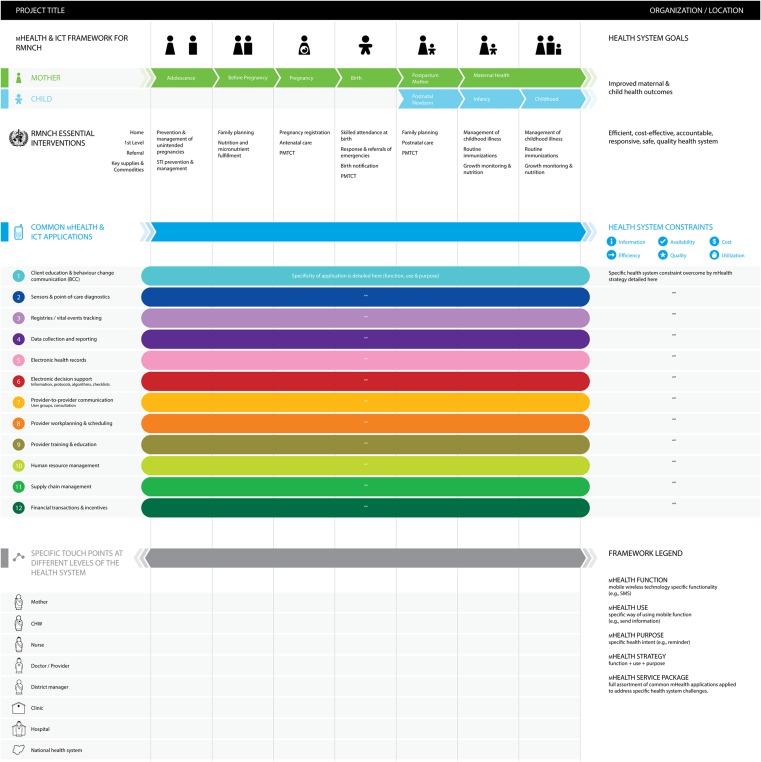
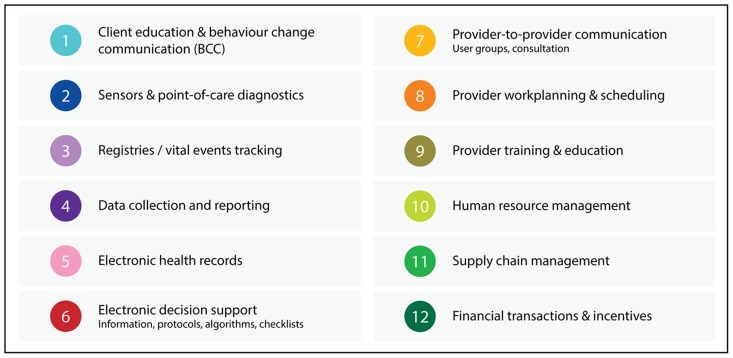
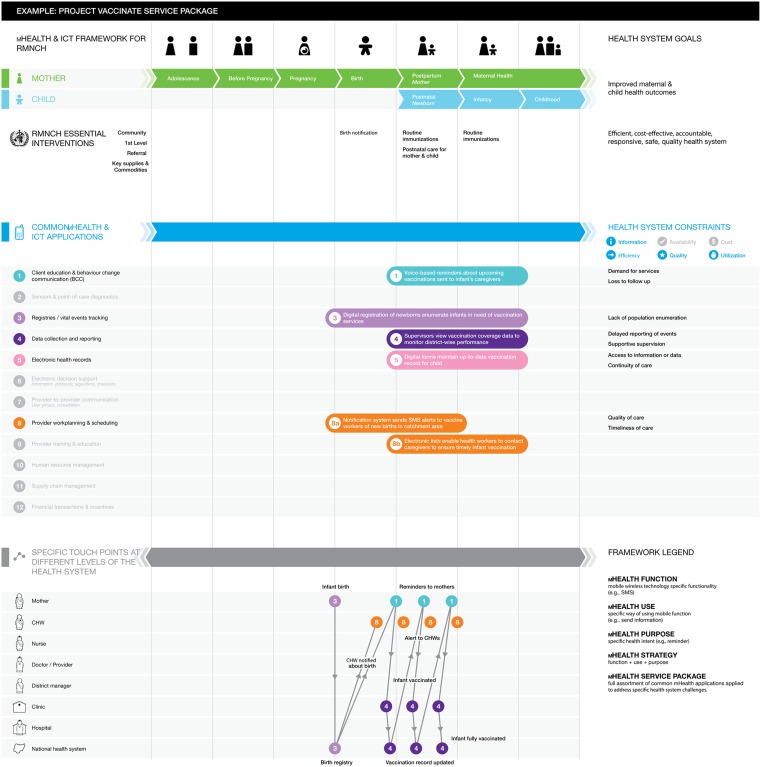
This new framework lays out 12 common mHealth applications used as health systems strengthening innovations across the reproductive health continuum.T he rapid proliferation of mHealth projects-albeit mainly pilot efforts-has generated considerable enthusiasm among governments, donors, and implementers of health programs.1 In many instances, these pilot projects have demonstrated conceptually how mHealth can alleviate specific health system constraints that hinder effective coverage of health interventions.Large-scale implementation or integration of these mHealth innovations into health programs has been limited, however, by a shortage of empirical evidence supporting their value in terms of cost, performance, and health outcomes.[1][2][3][4] Governments in low-and middleincome countries face numerous challenges and competing priorities, impeding their ability to adopt innovations.2 Thus, they need robust, credible evidence about mHealth projects in order to consider mHealth alongside essential health interventions, and guidance about which mHealth solutions they should consider to achieve broader health system goals.2 Their tolerance for system instability or failure can be low, even when the status quo may be equally, or more, unreliable.Current larger-scale effectiveness and implementation research initiatives are working to address the evidence gaps and to demonstrate the impact of mHealth investments on health system targets. 1 Other efforts are underway to synthesize such findings.5 MHEALTH AS A HEALTH SYSTEMS STRENGTHENING TOOLRecent mHealth reviews have proposed that innovators focus on the public health principles underlying mHealth initiatives, rather than on specific mHealth technologies.6 International agencies and research organizations have also endeavored to frame mHealth interventions within the broader context of health system goals or health outcomes.2 The term ''health system'' includes all activities in which the primary purpose is to promote, restore, or maintain health.7 Some elements of a framework for evaluating health systems performance by relating the goals of the health system to its essential functions have been proposed previously, which we believe can serve as a model for articulating and justifying mHealth initiatives and investments.7 Applying a health systems lens to the evaluation of mHealth initiatives requires different indicators and methodologies, shifting the assessment from whether the mHealth initiative ''works'' to process evaluation or proxy indicators of the health outcome(s) of interest.This new way of thinking would facilitate selection of mHealth tools that are appropriate for identified challenges.In other words, it would drive people to first identify the key obstacles, or constraints, to delivering proven health interventions effectively, and to then apply appropriate mHealth strategies that could overcome these health system constraints.8 Presenting mHealth as a range of tools for overcoming known health system constraints, as a health systems ''catalyst,'' may also improve communication between mHealth innovators and health program implementers.Communicating mHealth technologies as tools that can enhance delivery of life-saving interventions through improvements in health systems performance, such as coverage, quality, equity, or efficiency, will resonate with health decision-makers.7 Hence, rather than being perceived as siloed, standalone solutions, mHealth strategies should be viewed as integrable systems that should fit into existing health system functions and complement the health
Overview
The claims and statistics of this paper haven’t been checked yet.
Free: it reads the open-access text and checks the first 5 claims that cite a source we can check. Create a free account to check every claim.
Integrity signals
Registry
Cites
Statistics
Figures
Verification
Claims the paper makes
The claims and statistics of this paper haven’t been checked yet.
Free: it reads the open-access text and checks the first 5 claims that cite a source we can check. Create a free account to check every claim.
Claims other papers make about this one
Each is checked against this paper’s own text: does it say what the citing paper says it does?
The source backs part of the claim, not all of it — or backs it for a different population, condition or comparison.
In the citing paper
“Equipping frontline health workers with mobile phone applications may enhance the delivery of maternal, neonatal, and child health services as well as the accuracy of data capture and recording [16, 26, 35, 36].”
From Qualitative Assessment of the Feasibility, Usability, and Acceptability of a Mobile Client Data App for Community-Based Maternal, Neonatal, and Child Care in Rural Ghana (2016) · cites this paper as [16]
Experimental — accuracy not yet measuredThe cited source says what the claim attributes to it.
In the citing paper
“The twelve most common applications of mHealth as described by Labrique et al. [23] provides a robust framework that was applied in this study to categorize eHealth projects in Kenya.”
From Assessing the feasibility of eHealth and mHealth: a systematic review and analysis of initiatives implemented in Kenya (2017) · cites this paper as [23]
In the citing paper
“There was considerable variety in the quantity and quality of content across the application domains (8) under which we categorised the 76 publications in the review.”
From Assessing the impact of mHealth interventions in low- and middle-income countries – what has been shown to work? (2014) · cites this paper as [8]
In the citing paper
“Our review covers the scope of mHealth as postulated by Labrique et al. (8) as comprehensively as possible.”
From Assessing the impact of mHealth interventions in low- and middle-income countries – what has been shown to work? (2014) · cites this paper as [8]
In the citing paper
“Strategies using mHealth have been considered a strengthening tool to overcome health system constrains.26”
Self-check
Percentages, sums and reported differences re-computed from the paper’s own numbers.
The self-check needs the paper’s full text.
Citations
Cites
The world health report 2000 - Health systems: improving performance
Reinhardt, U. E., & Cheng, T.-M. (2000) · Europe PMC (PubMed Central) · doi:10.1590/s0042-96862000000800020 · Cited by 3,467
Lester, R. T., Ritvo, P., Mills, E. J., Kariri, A., Karanja, S., Chung, M. H., Jack, W., Habyarimana, J., Sadatsafavi, M., Najafzadeh, M., et al. (2010) · The Lancet · doi:10.1016/s0140-6736(10)61997-6 · Cited by 1,278 · cited 1×
“engage 1 or more actors (such as a pregnant woman, a husband, family, community)—influences health behaviors, such as adherence to medication or use of health services.(3,14) The”
BackgroundFree, C., Phillips, G., Watson, L., Galli, L., Felix, L., Edwards, P., Patel, V., & Haines, A. (2013) · PLoS Medicine · doi:10.1371/journal.pmed.1001363 · Cited by 1,187 · cited 1×
“engage 1 or more actors (such as a pregnant woman, a husband, family, community)—influences health behaviors, such as adherence to medication or use of health services.(3,14) The”
BackgroundThe World Health Report 2005 - make every mother and child count
Lerberghe, W. V., Manuel, A., Matthews, Z., & Wolfheim, C. (2005) · ePrints Soton (University of Southampton) · Cited by 1,015
Overcoming health-systems constraints to achieve the Millennium Development Goals
Travis, P., Bennett, S., Haines, A., Pang, T., Bhutta, Z., Hyder, A. A., Pielemeier, N. R., Mills, A., & Evans, T. (2004) · The Lancet · doi:10.1016/s0140-6736(04)16987-0 · Cited by 860
Bashshur, R., Shannon, G., Krupinski, E., & Grigsby, J. (2011) · Telemedicine and e-Health · doi:10.1089/tmj.2011.0103 · Cited by 490 · cited 1×
“The first part of the framework aims to address a previously identified challenge in mHealth: to systematically describe the constituent parts of an mHealth strategy or platform.(11) To do this, we define relationships between common applications of mHealth and ICT and the health systems constraints that they address.”
BackgroundTamrat, T., & Kachnowski, S. (2012) · Maternal and Child Health Journal · doi:10.1007/s10995-011-0836-3 · Cited by 312
E-imci: improving pediatric health care in low-income countries
DeRenzi, B., Lesh, N., Parikh, T., Sims, C., Maokla, W., Chemba, M., Hamisi, Y., S hellenberg, D., Mitchell, M., & Borriello, G. (2008) · Proceedings of the SIGCHI Conference on Human Factors in Computing Systems · doi:10.1145/1357054.1357174 · Cited by 166
Barrington, J., Wereko-Brobby, O., Ward, P., Mwafongo, W., & Kungulwe, S. (2010) · Malaria Journal · doi:10.1186/1475-2875-9-298 · Cited by 163
Mobile Phone Tools for Field‐Based Health care Workers in Low‐Income Countries
DeRenzi, B., Borriello, G., Jackson, J., Kumar, V. S., Parikh, T. S., Virk, P., & Lesh, N. (2011) · Mount Sinai Journal of Medicine: A Journal of Translational and Personalized Medicine · doi:10.1002/msj.20256 · Cited by 123
Research works printed but not linked: 3
- CommCare HQ [Internet]. Cambridge, MA: Dimagi; c2013 [cited 2013 Mar 13] CommCare accredited social health activist (ASHA); [about 1 screen]. Available from: http://www.commcarehq.org/users/commcare_asha/
- Dimagi [Internet]. Cambridge, MA: Dimagi; c2013 [cited 2013 Mar 13] E-IMCI is mobile device based job aid for implementers of IMCI; [about 1 screen]. Available from: http://www.dimagi.com/mobile-e-imci/
- MTN Press Office. MTN Group delivered satisfactory set of results to June 2012 [press release]. Johannesburg, South Africa: MTN; 2012 Aug 8 [cited 2013 Mar 14] Available from: http://pressoffice.mg.co.za/mtn/PressRelease.php?StoryID = 232675
Cited by
Items 201–300 of 598
McHenry, M. S., Fischer, L. J., Chun, Y., & Vreeman, R. (2017) · Global Health Promotion · doi:10.1177/1757975917715035 · Cited by 29
Ggita, J. M., Ojok, C., Meyer, A. J., Farr, K., Shete, P. B., Ochom, E., Turimumahoro, P., Babirye, D., Mark, D., Dowdy, D. W., et al. (2018) · The International Journal of Tuberculosis and Lung Disease · doi:10.5588/ijtld.17.0521 · Cited by 26
“Clinicians and public-health practitioners have been quick to experiment with mobile-health (mHealth) technologies like short-messaging services (SMS) for many indications, including supply-chain management, social support to promote medication adherence, and appointment reminders 4–6 .”
Gill, R. K., Ogilvie, G. S., Norman, W. V., Fitzsimmons, B. P., Maher, C., & Renner, R. (2019) · Journal of Medical Internet Research · doi:10.2196/13387 · Cited by 29
“The intersection of digital health with self-care is moving rapidly and being utilized in various aspects of health care [12-17].”
BackgroundRaffaelli, B., Mecklenburg, J., Overeem, L. H., Scholler, S., Dahlem, M. A., Kurth, T., Gonçalves, A. S. O., Reuter, U., & Neeb, L. (2021) · JMIR mhealth and uhealth · doi:10.2196/26401 · Cited by 27
“However, evidence of positive health outcomes through the use of mHealth is scarce [9].”
BackgroundScoping review: exploring the equity impact of current digital health design practices
Evans, L., Evans, J., Pagliari, C., & Källander, K. (2023) · Oxford Open Digital Health · doi:10.1093/oodh/oqad006 · Cited by 31
van Heerden, A. C., Msweli, S., & van Rooyen, H. (2015) · African Journal of AIDS Research · doi:10.2989/16085906.2015.1121881 · Cited by 25
Tokosi, T. O., Fortuin, J., & Douglas, T. S. (2017) · JMIR Research Protocols · doi:10.2196/resprot.8043 · Cited by 23
“Other databases to be considered within the study scope and objectives will include trial registers, SpringerLink, Wiley InterScience, Institute of Electrical and Electronics Engineers, Association for Computing Machinery Digital Library; and CiteSeer [29].”
Rassi, C., Gore‐Langton, G. R., Walimbwa, B. G., Strachan, C. E., King, R., Basharat, S., Christiansen-Jucht, C., Graham, K., & Gudoi, S. S. (2018) · PLoS ONE · doi:10.1371/journal.pone.0203554 · Cited by 26
“However, the role of well-designed pilot studies in conceptually demonstrating how health system constraints can be addressed is widely acknowledged [48,49].”
BackgroundPossibilities and Expectations for mHealth in the Pacific Islands: Insights From Key Informants
Umali, E., McCool, J. P., & Whittaker, R. (2016) · JMIR mhealth and uhealth · doi:10.2196/mhealth.4626 · Cited by 25
“The rapid spread of mobile technology (mobile phones) has become the impetus for the recognition of its potential to create economic opportunities and enhance developmental interventions through mobile tools [1-2].”
Doocy, S., Paik, K., Lyles, E., Tam, H. H., Fahed, Z., Winkler, E., Kontunen, K., Mkanna, A., & Burnham, G. M. (2017) · PubMed · doi:10.1371/currents.dis.e98c648aac93797b1996a37de099be74 · Cited by 23
Mehmood, A., Zia, N., Hoe, C., Kobusingye, O. C., Ssenyojo, H., & Hyder, A. A. (2018) · BMC Research Notes · doi:10.1186/s13104-018-3419-1 · Cited by 25
“Third, this hand-held based data collection tool uses innovative approach which could become a foundation for multicenter injury database [22].”
MethodWhy Should We Do Physical Activity? More Active People for a Healthier World
Demirci, N., Yıldırım, İ., Demirci, P. T., & Ersöz, Y. (2018) · International Journal of Disabilities Sports & Health Sciences · doi:10.33438/ijdshs.488292 · Cited by 28
“These rates increase with economic development due to changing transportation patterns, technology usage, urbanization and cultural values (Labrique et al., 2013).”
BackgroundCost effectiveness of mobile health for antenatal care and facility births in Nigeria
Bowser, D. M., Shepard, D. S., Nandakumar, A., Okunogbe, A., Morrill, T., Halasa, Y., Jordan, M., Mushi, F., & Boyce, C. (2018) · Annals of Global Health · doi:10.29024/aogh.2364 · Cited by 19
Sannino, G., Pietro, G. D., & Verde, L. (2019) · Springer eBooks · doi:10.1007/978-3-030-27844-1_11 · Cited by 30
Usmanova, G., Gresh, A., Cohen, M. A., Kim, Y. M., Srivastava, A., Joshi, C. S., Bhatt, D. C., Haws, R. A., Wadhwa, R., Sridhar, P., et al. (2020) · International Journal of Environmental Research and Public Health · doi:10.3390/ijerph17228333 · Cited by 25
“However, mHealth interventions have often languished as siloed pilot projects rather than being viewed (and evaluated) as scalable tools for overcoming health system constraints—“catalysts” for health systems strengthening [5].”
BackgroundNishimwe, A., Ibisomi, L., Nyssen, M., & Conco, D. N. (2022) · BMC Pregnancy and Childbirth · doi:10.1186/s12884-022-04393-9 · Cited by 30
“Many interventions on the use of mHealth for improving maternal and newborns’ health outcomes in subSaharan Africa mainly focused on timely access to health facilities including reminders for antenatal appointments and referrals of mothers [17].”
BackgroundAchieving the potential of mHealth in medicine requires challenging the ethos of care delivery
Ratanawong, J. P., Naslund, J. A., Mikal, J. P., & Grande, S. W. (2022) · Primary Health Care Research & Development · doi:10.1017/s1463423622000068 · Cited by 30
The Health Impact of mHealth Interventions in India: Systematic Review and Meta-Analysis
Joshi, V., Joshi, N. K., Bhardwaj, P., Singh, K., Ojha, D., & Jain, Y. K. (2023) · Online Journal of Public Health Informatics · doi:10.2196/50927 · Cited by 33
mHealth implementation in South Africa
Botha, A., & Booi, V. M. (2016) · IST-Africa Conference (IST-Africa) · doi:10.1109/istafrica.2016.7530667 · Cited by 27
“[28] are used to describe the domain in the following section.”
BackgroundMethodInfluentialConnected Health in Multiple Sclerosis: A Mobile Applications Review
Giunti, G., Guisado-Fernandez, E., & Caulfield, B. (2017) · Proceedings - IEEE Symposium on Computer-Based Medical Systems · doi:10.1109/cbms.2017.27 · Cited by 29
Ilozumba, O., Abejirinde, I. O., Dieleman, M. A., Bardají, A., Broerse, J. E. W., & Belle, S. V. (2018) · BMJ Open · doi:10.1136/bmjopen-2017-019345 · Cited by 25
“Furthermore, studies will need to be captured within one of the 12 common ICT application frameworks for maternal health proposed by Labrique et al.(25) These criteria are further discussed in the following section on study inclusion and exclusion.”
Hyatt, A., Lipson‐Smith, R., Morkunas, B., Krishnasamy, M., Jefford, M., Baxter, K., Gough, K., Murphy, D. G., Drosdowsky, A., Phipps‐Nelson, J., et al. (2020) · JMIR mhealth and uhealth · doi:10.2196/15593 · Cited by 23
“Effective communication between stakeholders regarding application function, underlying public health improvement purpose, and function within the health system is also optimal for implementation [28].”
BackgroundA feasibility study of a mental health mobile app in the Dominican Republic: The untold story
Caplan, S., Lovera, A. S., & Reyna, P. K. (2018) · International Journal of Mental Health · doi:10.1080/00207411.2018.1553486 · Cited by 25
Cho, I., & Kang, J. (2021) · International Journal of Nursing Studies · doi:10.1016/j.ijnurstu.2021.103949 · Cited by 25
Atukunda, E. C., Matthews, L. T., Musiimenta, A., Mugyenyi, G. R., Mugisha, S., Ware, N. C., Obua, C., & Siedner, M. J. (2021) · JMIR Formative Research · doi:10.2196/29214 · Cited by 28
“Others have suggested that mHealth interventions such as SMS text messaging, preloaded (or preinstalled) apps, and voice- and web-based portals may help individuals to improve eHealth literacy, internalize benefits of health services, and function as a decision-support tool at the point of care [20-22].”
Soong, A., Chen, J. C., & Borzekowski, D. L. G. (2015) · JMIR Research Protocols · doi:10.2196/resprot.4408 · Cited by 22
“The term mHealth refers to the “delivery of, and access to, health services and information” via mobile technologies [13].”
Frost, M. J., Tran, J. B., Khatun, F., Friberg, I. K., & Rodríguez, D. (2018) · Global Health Science and Practice · doi:10.9745/ghsp-d-18-00270 · Cited by 21
“health records, vital event registries, supply chain management, and financial transactions.(3) In May 2018, the World Health Assembly adopted a digital health resolution urging member states to assess and consider how to appropriately include digital technologies in their health systems.”
BackgroundPhilbrick, W. C., MILNOR, J. R., Deshmukh, M., & Mechael, P. (2022) · Campbell Systematic Reviews · doi:10.1002/cl2.1277 · Cited by 32
“We identified ICT interventions according to common types of ICT applications, adapting, in part, frameworks developed in the mHealth field, such as the mHealth and ICT Framework for Reproductive, Maternal Newborn and Child Health (RMNCH) (Labrique et al., 2013).”
MethodAli, O., Al‐Ahmad, A., & Kahtan, H. (2023) · Procedia Computer Science · doi:10.1016/j.procs.2022.12.216 · Cited by 24
“Technology can help better meet the individual needs of clients, thereby enhancing their medical and health service experience and representing the future direction of medicine [5].”
BackgroundNigatu, T., Meressa, S., Debela, T. F., Enyew, D. B., Bedada, A. N., Kebebew, S. D., Weldeab, A. N., Daka, D. W., Willems, H., & Alemu, T. (2023) · Frontiers in Digital Health · doi:10.3389/fdgth.2023.1162239 · Cited by 30
“Additional benefits include electronic decision support (19); faster referrals; patient tracking; minimization of duplication in recording and reporting; and enhancement of communication between providers (20, 21).”
BackgroundNguyen, L. H., LeFevre, A. E., Jennings, L., Agarwal, S., Mehl, G., Labrique, A. B., & Chava, L. D. (2015) · BMJ Innovations · doi:10.1136/bmjinnov-2015-000063 · Cited by 19
Self-citationPai, N. P., Daher, J., Prashanth, H., Shetty, A., Sahni, R. D., Kannangai, R., Abraham, P., & Isaac, R. (2018) · Sexually Transmitted Infections · doi:10.1136/sextrans-2017-053491 · Cited by 20
Yé, M., Kagoné, M., Sié, A., Bagagnan, C. H., Sanou, H., Millogo, O., Duclos, V., Tinto, I., & Bibeau, G. (2018) · Journal of Public Health · doi:10.1093/pubmed/fdy196 · Cited by 26
Data Classification for Secure Mobile Health Data Collection Systems
Katarahweire, M., Bainomugisha, E., & Mughal, K. A. (2020) · Development Engineering · doi:10.1016/j.deveng.2020.100054 · Cited by 20
Leveraging Digital Health for Global Chronic Diseases
Were, M. C., Kamano, J. H., & Vedanthan, R. (2016) · Global Heart · doi:10.1016/j.gheart.2016.10.017 · Cited by 19
“Figure 1 demonstrates a range of digital health systems that can be applied in global chronic disease management [2].”
BackgroundMethodLai, N. M., Lim, Y. S., Chaiyakunapruk, N., Lee, S. W. H., Liabsuetrakul, T., Sabbir, M., Mahmud, S. M. H., Siddiqi, U. R., Ahmed, T., Hasan, F. U. L., et al. (2025) · Child and Adolescent Mental Health · doi:10.1111/camh.70022 · Cited by 31
Kazi, A. M., Ahsan, N., Jamal, S., Khan, A., Mughis, W., Allana, R., Kazi, A. N., Kalimuddin, H., Ali, A., McKellin, W. H., et al. (2021) · International Journal of Medical Informatics · doi:10.1016/j.ijmedinf.2021.104600 · Cited by 26
Sowon, K., Maliwichi, P., & Chigona, W. (2022) · JMIR mhealth and uhealth · doi:10.2196/22093 · Cited by 25
“We sought to characterize the interventions according to the technology channel in use, the involvement of other stakeholders, mHealth application area as documented in Labrique et al [46], and location of implementation, whether urban or rural (Table 2).”
MethodLukkanalikitkul, E., Kongpetch, S., Chotmongkol, W., Morley, M., Anutrakulchai, S., Srichan, C., Thinkhamrop, B., Chunghom, T., Wiangnon, P., Thinkhamrop, W., et al. (2022) · JMIR Formative Research · doi:10.2196/37291 · Cited by 19
“This is especially true in low- and middle-income countries where mHealth interventions have been touted as solutions to a wide variety of health care challenges [14-16]; however, little is known about how they perform [17-19].”
BackgroundCan mobile health training meet the challenge of ‘measuring better’?
Winters, N., Oliver, M., & Langer, L. (2016) · Comparative Education · doi:10.1080/03050068.2017.1254983 · Cited by 21
“Approaches to classification differed across the 11 papers: 2 adopted, and 1 further review adapted, the framework advocated by Labrique et al. (2013). Two of the reviews did not include any classification scheme; these were excluded from our analysis. The remaining six developed their own classification scheme. (Thre…”
BackgroundMethodInfluentialExploring the Design of mHealth Systems for Health Behavior Change using Mobile Biosensors
Noorbergen, T. J., Adam, M. T. P., Attia, J. R., Cornforth, D. J., & Minichiello, M. (2019) · Communications of the Association for Information Systems · doi:10.17705/1cais.04444 · Cited by 29
Tripathi, V., Arnoff, E., Bellows, B., & Sripad, P. (2020) · mHealth · doi:10.21037/mhealth.2019.12.04 · Cited by 22
“For instance, the influential Information Communication Technology (ICT) Framework for Reproductive, Maternal, Child, and Adolescent Health (RMNCAH) does not include maternal health content beyond the postnatal period in its array of health topics amenable to ICT intervention (10).”
BackgroundKleczka, B., Kumar, P. A., Njeru, M. K., Musiega, A., Wekesa, P., Rabut, G., & Marx, M. (2019) · BMJ Global Health · doi:10.1136/bmjgh-2019-001422 · Cited by 21
“While computer-based electronic medical record (EMR) systems are used to provide routine data on clinical care in high-income countries, paper is still a commonly used interface for documentation in LMICs.18 Besides the challenges of implementing EMR systems in low-resource settings,19 little is known about the qualit…”
BackgroundInfluentialMariwah, S., Abane, A., Owusu, S. A., Kasim, A., Robson, E., Castelli, M., & Hampshire, K. (2021) · Global Public Health · doi:10.1080/17441692.2021.1874467 · Cited by 25
“…tend to mirror the ‘formal’mhealth interventions implemented in Africa and other parts of the world (Blaschke et al., 2009; Ekanoye et al., 2017; Labrique et al., 2013; LeFevre et al., 2017; Lin et al., 2012; Mahmud et al., 2010; Odendaal & Lewin, 2014; Zurovac et al., 2011; Zurovac et al.,…”
BackgroundAdcock, A. K., Haggerty, T. S., Crawford, A., & Espinosa, C. (2022) · mHealth · doi:10.21037/mhealth-21-27 · Cited by 19
Reynolds, C. W., Horton, M., Lee, H. E., Harmon-Gray, W.-M., Sieka, J. M., Lockhart, N. A., & Lori, J. R. (2023) · Annals of Global Health · doi:10.5334/aogh.4030 · Cited by 23
mHealth to improve implementation of TB contact investigation: a case study from Uganda
Gupta, A. J., Turimumahoro, P., Ochom, E., Ggita, J. M., Babirye, D., Ayakaka, I., Mark, D., Okello, D. A., Cattamanchi, A., Dowdy, D. W., et al. (2023) · Implementation Science Communications · doi:10.1186/s43058-023-00448-w · Cited by 18
“achieve various implementation objectives, such as facilitating communication between patients and providers, improving data collection, and guiding recommendations for evaluation and treatment [24].”
BackgroundDigitization and Integration of Sustainable Development Goals (SDGs) in Emerging Economies
Islam, Q. T., Ahmed, J. U., & Sayed, A. (2023) · Emerald Group Publishing Limited eBooks · doi:10.1108/978-1-80455-640-520231002 · Cited by 28
Kobayashi, M., Mwandama, D. A., Nsona, H., Namuyinga, R. J., Shah, M. P., Bauleni, A., Eng, J. V., Rowe, A. K., Mathanga, D. P., & Steinhardt, L. C. (2017) · American Journal of Tropical Medicine and Hygiene · doi:10.4269/ajtmh.16-0945 · Cited by 16
Lee, S., Begley, C. E., Morgan, R. O., Chan, W., & Kim, S. Y. (2018) · Telemedicine Journal and e-Health · doi:10.1089/tmj.2017.0278 · Cited by 22
Recreational Activities for with Disability: School-Aged Children and Adolescents
Demirci, P. T. (2019) · International Journal of Recreation and Sports Science · doi:10.46463/ijrss.533037 · Cited by 17
Stocks, J. B., Ibrahim, S., Park, L., & Huchko, M. J. (2022) · JMIR Public Health and Surveillance · doi:10.2196/28885 · Cited by 18
“Mobile phone–based health (mobile health [mHealth]) interventions appear to be promising solutions to many of the infrastructure- and access-related challenges faced by LMICs and nonurban communities [10,11].”
BackgroundMateria, F. T., Smyth, J. M., Puoane, T. R., Tsolekile, L. P., Goggin, K., Kodish, S. R., Fox, A. T., Resnicow, K., Werntz, S., & Catley, D. (2023) · BMC Public Health · doi:10.1186/s12889-023-16388-y · Cited by 19
“, mobile phones) to enhance delivery of health interventions [8].”
BackgroundWeimar, S. N., Martjan, R. S., & Terzidis, O. (2024) · Management Review Quarterly · doi:10.1007/s11301-024-00417-0 · Cited by 33
“…studies have attempted to classify digital health startups based on various dimensions, such as customer need (Herrmann et al. 2018), strategy (Labrique et al. 2013), value proposition (Gorski et al. 2016), other elements of the business model (Steinberg et al. 2015; Peters et al. 2015; Denoo…”
Mehmood, A., Chan, E., Allen, K. A., Al‐Kashmiri, A., Al-Busaidi, A., Abri, J. A., Al-Yazidi, M., Al-Maniri, A., & Hyder, A. A. (2017) · Global Health Action · doi:10.1080/16549716.2017.1380360 · Cited by 18
“…framework could be applied to improve trauma care systems and injury control through the use of point-of-care diagnosis, applications for awareness and behavioral change, TRs, electronic health records, decision support systems, provider-to-provider communications, training and education [17].”
BackgroundOdendaal, W., Lewin, S. A., McKinstry, B., Tomlinson, M., Jordaan, E., Mazinu, M., Haig, P., Thorson, A. E., & Atkins, S. A. (2020) · Global Health Action · doi:10.1080/16549716.2020.1717410 · Cited by 19
“Several studies confirm the need for integration, claiming that it may strengthen health system functioning [39] and promote the sustainability of the mHealth system [40].”
BackgroundHarnessing mobile technology to deliver evidence-based maternal-infant care
Chawla, D., Thukral, A., Kumar, P., & Deorari, A. K. (2021) · Seminars in Fetal and Neonatal Medicine · doi:10.1016/j.siny.2021.101206 · Cited by 18
Birth and death notification via mobile devices: a mixed methods systematic review
Vasudevan, L., Glenton, C., Henschke, N., Maayan, N., Eyers, J. E., Fønhus, M. S., Tamrat, T., Mehl, G. L., & Lewin, S. A. (2021) · Cochrane Database of Systematic Reviews · doi:10.1002/14651858.cd012909.pub2 · Cited by 16
“In these respects, the global proliferation of mobile phones and cellular network connectivity is increasingly being leveraged, especially in resource-limited settings, to drive development and use of digital civil registration applications (ITU 2016; Labrique 2012; Labrique 2013; Oomman 2013).”
BackgroundSelf-citationMishori, R., Anastario, M. P., Naimer, K., Varanasi, S., Ferdowsian, H. R., Abel, D., & Chugh, K. (2017) · Global Health Science and Practice · doi:10.9745/ghsp-d-16-00233 · Cited by 21
Hussein, R. (2015) · Journal of Medical Systems · doi:10.1007/s10916-015-0255-x · Cited by 19
Quanbeck, A. (2019) · JMIR mHealth and uHealth · doi:10.2196/13301 · Cited by 15
“Previous implementation research has focused on implementation frameworks and strategies [8-10], including frameworks specifically related to mHealth [11,12] and frameworks related to the definition and use of specific implementation strategies [10].”
McCool, J., Tanielu, H., Umali, E., & Whittaker, R. (2018) · JMIR mHealth and uHealth · doi:10.2196/mhealth.9033 · Cited by 15
“The use of mobile phones could potentially promote health and gender equity [5,6] and enhance community empowerment [7,8].”
BackgroundUnkels, R., Manzi, F., Kapologwe, N., Baker, U., Ahmad, A., Nabiev, R., Berndtsson, M., Baraka, J., Hanson, C., & Hirose, A. (2023) · PLOS Global Public Health · doi:10.1371/journal.pgph.0000972 · Cited by 18
“Digitalization at the first step of HMIS–where data is generated–has the potential to alleviate these problems [13].”
Choudhury, A., Shahsavar, Y., Sarkar, K., Choudhury, M., & Nimbarte, A. D. (2023) · Nutrients · doi:10.3390/nu15173699 · Cited by 27
“Moreover, another study discusses how mobile health innovations can play a pivotal role in enhancing maternal and child health in low-resource settings [86], emphasizing the need for context-specific interventions and sustainable, scalable solutions.”
BackgroundEndehabtu, B. F., Gelaye, K. A., Mengiste, S. A., & Tilahun, B. C. (2024) · Journal of Multidisciplinary Healthcare · doi:10.2147/jmdh.s438097 · Cited by 25
Slater, H., Waller, R., Briggs, A. M., Lord, S. M., & Smith, A. J. (2024) · Pain · doi:10.1097/j.pain.0000000000003326 · Cited by 16
Chen, S., Gong, E., Kazi, D. S., Gates, A. B., Karaye, K. M., Girerd, N., Bai, R., AlHabib, K. F., Li, C., Sun, K., et al. (2016) · Journal of Medical Engineering & Technology · doi:10.1080/03091902.2016.1213904 · Cited by 16
Barriers to Scale of Digital Health Systems for Cancer Care and Control in Last-Mile Settings
Bhatt, S., Evans, J., & Gupta, S. (2017) · Journal of Global Oncology · doi:10.1200/jgo.2016.007179 · Cited by 22
Merali, H. S., Chan, N. H.-M., Mistry, N., Kealey, R., Campbell, D. M., Morris, S. K., & Santorino, D. (2019) · BMJ Paediatrics Open · doi:10.1136/bmjpo-2019-000561 · Cited by 16
“Mobile technology is widely available in low-resource settings and may provide the most practical platform for an educational programme at relatively low cost.(17) The goal of this project is to develop and test a novel mobile application based on the HBB programme, entitled ‘HBB Prompt’.”
BackgroundICT and Women’s Health: An Examination of the Impact of ICT on Maternal Health in SADC States
Mlambo, C., Sibanda, K., Ntshangase, B. A., & Mvuyana, B. Y. C. (2022) · Healthcare · doi:10.3390/healthcare10050802 · Cited by 19
Foster, J. W., Miller, L., Isbell, S. D. D., Shields, T., Worthy, N., & Dunlop, A. L. (2015) · PubMed Central · doi:10.3978/j.issn.2306-9740.2015.12.01 · Cited by 15
“The use of mobile phone applications (mHealth) to provide health education and behavioral prompts is one of the twelve common mHealth functions identified by the World Health Organization as innovations to strengthen health systems (1).”
Background(2018) · doi:10.2196/medinform.8154 · Cited by 15
“A recent framework on mHealth as a health systems strengthening tool presented 12 common applications of mHealth, including to improve adherence to clinical protocols [7].”
MethodmHealth as a health system strengthening tool in China
Tian, M., Zhang, X., & Zhang, J. (2020) · International Journal of Nursing Sciences · doi:10.1016/j.ijnss.2020.07.001 · Cited by 15
“Table 1 Twelve common mHealth applications, descriptions, and examples of mobile phone functions [17].”
BackgroundInfluentialDigital Inclusion for Rural Growth: Internet Usage and Smart Villages Development
Doloi, H. K. (2025) · Asia-Pacific Journal of Rural Development · doi:10.1177/10185291251343357 · Cited by 36
Shirai, T., Bulandres, P., Choi, J.-A., D’Ortenzio, D., Moon, N., Musselman, K. E., & Gabison, S. (2020) · Disability and Rehabilitation · doi:10.1080/09638288.2020.1771780 · Cited by 15
“Through the use of mobile applications (apps), mHealth can improve HCP–patient communication, provide patient education, and promote disease management by enhancing knowledge through behavioural change [15,18].”
BackgroundMethodHmone, M. P., Li, M., Agho, K., Alam, N. A., Chad, N. J., & Dibley, M. J. (2023) · American Journal of Clinical Nutrition · doi:10.1016/j.ajcnut.2023.01.003 · Cited by 16
Singh, K., & Walters, M. R. (2024) · PLOS Digital Health · doi:10.1371/journal.pdig.0000403 · Cited by 18
Lechat, L., Bonnet, E., Queuille, L., Traore, Z. I., Somé, P., & Ridde, V. (2019) · International Journal of Health Policy and Management · doi:10.15171/ijhpm.2019.13 · Cited by 17
Abreu, F. D. L., Bissaco, M. A. S., da Silva, A. P., Boschi, S. R. M. D. S., Scardovelli, T. A., Santos, M. F., Rodrigues, C., & Martini, S. C. (2021) · Research on Biomedical Engineering · doi:10.1007/s42600-021-00154-3 · Cited by 19
Evans, L., Evans, J., Pagliari, C., & Källander, K. (2022) · JMIR Research Protocols · doi:10.2196/34013 · Cited by 30
“Improving digital health and the design of digital health tools has long been heralded as one of the many ways to tackle such inequities in part because of the increasing pervasiveness of digital technologies and in part because from its inception, digital health has been put forward to strengthen health care systems…”
Artificial intelligence assisted acute patient journey
Nazir, T. F., Rehman, M. M. U., Asghar, M. R., & Kalia, J. S. (2022) · Frontiers in Artificial Intelligence · doi:10.3389/frai.2022.962165 · Cited by 16
“Labrique and the team proposed a common framework for health-based that addressed all the essential components of the healthcare system, starting with communication, data collection and going all the way to financial transactions and incentives (Labrique et al., 2013).”
BackgroundLopez, E. A., Filho, O. A. C., & Ferrari, D. V. (2016) · American Journal of Audiology · doi:10.1044/2016_aja-16-0016 · Cited by 15
Ngabireyimana, E., Mutaganzwa, C., Kirk, C. M., Miller, A. C., Wilson, K. A., Dushimimana, E., Bigirumwami, O., Mukakabano, E. S., Nkikabahizi, F., & Magge, H. (2017) · Maternal Health Neonatology and Perinatology · doi:10.1186/s40748-017-0052-2 · Cited by 18
“Automated calculation tools, such as job aids or mHealth tools, could facilitate the completion of these assessments, provide clinical reminders, and video teaching and counseling supports, as has been successfully done in other taskshifted programs [38, 39].”
MethodChanges in Sitting Time and Sitting Fragmentation after a Workplace Sedentary Behaviour Intervention
Hutchinson, J., Headley, S., Matthews, T., Spicer, G., Dempsey, K., Wooley, S., & Janssen, X. (2018) · International Journal of Environmental Research and Public Health · doi:10.3390/ijerph15061148 · Cited by 14
“The workplace also presents opportunities to promote active commuting, and to build upon the rapidly growing practice of mobile health (or mHealth) to harness the potential of technology to help improve the health and wellbeing of all individuals [14].”
BackgroundMcHenry, M. S., Apondi, E., McAteer, C. I., Nyandiko, W. M., Fischer, L. J., Ombitsa, A. R., Aluoch, J., Scanlon, M., & Vreeman, R. (2018) · African Journal of AIDS Research · doi:10.2989/16085906.2018.1509101 · Cited by 16
Using Mobile Phones to Collect Patient Data: Lessons Learned From the SIMPle Study
Duane, S., Tandan, M., Murphy, A. W., & Vellinga, A. (2017) · JMIR Research Protocols · doi:10.2196/resprot.6389 · Cited by 16
“Text messaging or short message service (SMS) has become a ubiquitous method of communication displacing more traditional landline infrastructures [3].”
MethodLiang, X., Yang, J., Abdullah, A. S. M., He, Z., & Yang, L. (2020) · BioMed Research International · doi:10.1155/2020/8786467 · Cited by 13
“Prevention and intervention plans are most effective when they are familiar, easy to use, and individually customized [25].”
BackgroundDigitalization and official food safety inspections at retail establishments
Grau-Noguer, E., Suppi, R., Rodríguez‐Sanz, M., Serratosa, J., Bolao, A., Lundén, J. M., Hau, P., de Vasconcelos, F. M., Åberg, R., Blomgren, C., et al. (2023) · Food Control · doi:10.1016/j.foodcont.2023.109950 · Cited by 20
Wagner, A. L., Xia, L., Ghosh, A., Datta, S., Pandey, P., Santra, S., Chattopadhyay, S., Nandi, U., Mazumder, T., Joshi, S., et al. (2018) · PLoS ONE · doi:10.1371/journal.pone.0199607 · Cited by 17
Dol, J., Murphy, G. T., Aston, M. L., McMillan, D., & Campbell-Yeo, M. L. (2020) · Women and Birth · doi:10.1016/j.wombi.2020.05.004 · Cited by 16
Mobile instant messaging: New knowledge tools in global health?
Pimmer, C., Lee, A. W. S., & Mwaikambo, L. (2018) · Knowledge Management & E-Learning An International Journal · doi:10.34105/j.kmel.2018.10.019 · Cited by 18
Kerrigan, A. R., Kaonga, N., Tang, A., Jordan, M. R., & Hong, S. Y. (2018) · AIDS Care · doi:10.1080/09540121.2018.1549723 · Cited by 12
Zhang, P., Chen, H., Shang, J., Ge, J., Zhang, H., Ming-jun, X., Bian, C., Zhao, Y. W., Chen, M., & Hirst, J. E. (2021) · JMIR Formative Research · doi:10.2196/29644 · Cited by 15
“Specific features of these apps include health education and promotion, physical or biodata monitoring, reminders, web-based counseling, communication, appointment making, laboratory result checking, and payments [3].”
BackgroundMethodMobile Health in Maternal and Newborn Care: Fuzzy Logic
Premji, S. (2014) · International Journal of Environmental Research and Public Health · doi:10.3390/ijerph110606494 · Cited by 15
“Although these findings demonstrate promise for mHealth use in improving maternal and newborn health, the evidence informing these strategies lags behind [7,10], more so with respect to unintended”
BackgroundOu, L., Chen, A. C., & Amresh, A. (2023) · JMIR Pediatrics and Parenting · doi:10.2196/47334 · Cited by 14
“Mobile health (mHealth), as part of digital health interventions, uses mobile, wireless technologies to deliver information [9].”
BackgroundBene, B. A., Ibeneme, S., Fadahunsi, K. P., Harri, B. I., Ukor, N., Mastellos, N., Majeed, A., & Car, J. (2024) · Journal of Medical Internet Research · doi:10.2196/49163 · Cited by 16
“Health apps can be an effective tool to strengthen health systems worldwide, especially in low-and middle-income countries including those in sub-Saharan Africa [4,5,9].”
mHealth interventions for postpartum family planning in LMICs: A realist review
Chandrasekar, A., Warren, E. A., Free, C., Mbogua, J., Curtin, E. L., Gazeley, U., Wong, G., Church, K., & McCarthy, O. (2024) · PLOS Global Public Health · doi:10.1371/journal.pgph.0003432 · Cited by 21
Debeij, S. M., Aardoom, J. J., Haaksma, M. L., Stoop, W. A. M., van Isselt, E. F. V. D., & Kasteleyn, M. J. (2024) · JMIR Formative Research · doi:10.2196/57108 · Cited by 12
“Therefore, an MB should be adapted to the skills, wishes, and needs of the target population [42].”
BackgroundYé, M. (2016) · Journal of Healthcare Communications · doi:10.4172/2472-1654.100017 · Cited by 13
D'Souza, K. A., Zaidi, S. M. A., Jaswal, M., Butt, S., Khowaja, S., Habib, S. S., & Malik, A. A. (2017) · Journal of Infection and Public Health · doi:10.1016/j.jiph.2017.06.009 · Cited by 11
Metadata
- Authors
- Labrique, A. B., Vasudevan, L., Kochi, E., Fabricant, R., & Mehl, G.
- Affiliations
- Johns Hopkins University (US)
- United Nations Children's Fund (US)
- World Health Organization (CH)
- Corresponding author
- Mehl, Garrett
- Venue
- Global Health: Science and Practice
- Published
- 2013-08
- Volume
- 1
- Issue
- 2
- Pages
- 160-171
- ISSN
- 2169-575X (ISSN-L)
- PMC
- PMC4168567
- OpenAlex
- W2149328406
- Cited by
- 601
- References
- 19
- Citations by year
- 2026: 50 · 2025: 37 · 2024: 27 · 2023: 34 · 2022: 43 · 2021: 62 · 2020: 54 · 2019: 65 · 2018: 89 · 2017: 54 · 2016: 38 · 2015: 31 · 2014: 16 · 2013: 1
- FWCI
- 51.92
- Type
- journal article
- Language
- en
- Open access
- diamond
- doi.org
- Licence
- cc-by
- Locations
- Global Health Science and Practice (publishedVersion, cc-by)
- PubMed Central (publishedVersion, cc-by)
- PubMed (publishedVersion)
- Funders
- World Health Organization
- UNICEF
- Johns Hopkins University
- Topics
- Health Sciences › Health Professions › General Health Professions › Mobile Health and mHealth Applications
- Physical Sciences › Computer Science › Information Systems › ICT in Developing Communities
- Health Sciences › Health Professions › Health Information Management › Health, Technology, Consumer Behavior
- Keywords
- mobile health, health system strengthening, health system constraints, mobile health apps, visual framework, health system performance evaluation, health system goals, low- and middle-income countries
About these checks
Registry, retraction, Cites and statistics results are computed, not judged, with one exception: a printed reference that no index lists is read once by a model before it counts as a citation error. Claims are extracted by a model and kept only when their quote appears verbatim in the text; each cited source is then checked, with a model’s help, for whether it says what the claim relies on. Those verdicts can be wrong — read the claim’s quote and the cited source before relying on one.
Statistics and arithmetic are recomputed, not judged.
Confidence bands are shown only for fields calibrated on our annotated test set. None is calibrated yet, so no band is shown.
What counts as a claim ›How we measure confidence ›How we check this ›
Are you an author, or do you see a problem with this page? Request a review
Data sources
Bibliographic data: Semantic Scholar, OpenAlex, Crossref.
Contains information from the Semantic Scholar Academic Graph Datasets, made available under the ODC Attribution License (ODC-BY 1.0).
Semantic Scholar’s data is described in: Kinney, R., et al. (2023). The Semantic Scholar Open Data Platform. arXiv:2301.10140.
