

mHealth innovations as health system strengthening tools: 12 common applications and a visual framework
Open accessThe DOI matches its Crossref record; 18 of the 19 references it cites were found in a registry or an index.
Abstract
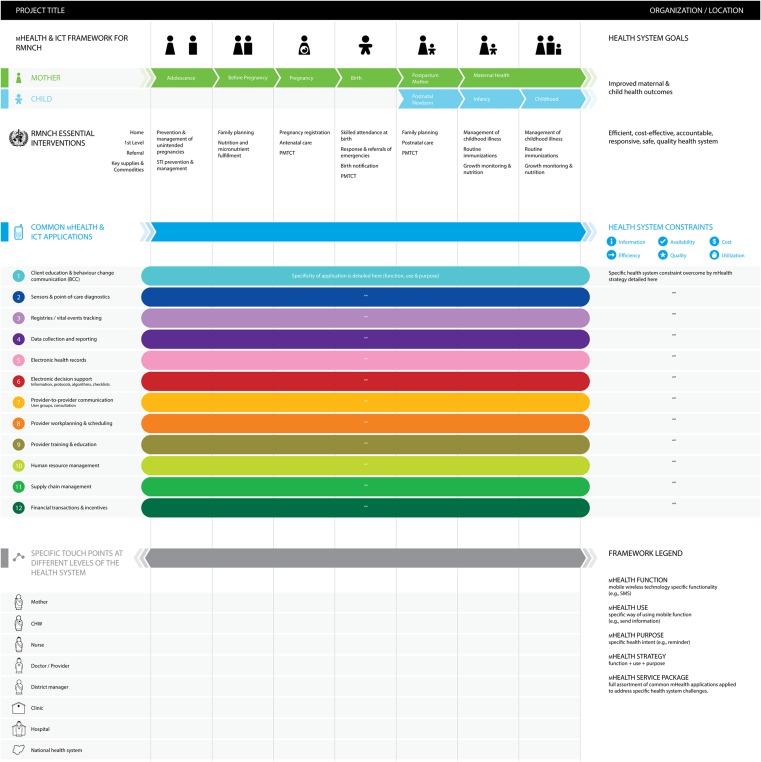
This new framework lays out 12 common mHealth applications used as health systems strengthening innovations across the reproductive health continuum.T he rapid proliferation of mHealth projects-albeit mainly pilot efforts-has generated considerable enthusiasm among governments, donors, and implementers of health programs.1 In many instances, these pilot projects have demonstrated conceptually how mHealth can alleviate specific health system constraints that hinder effective coverage of health interventions.Large-scale implementation or integration of these mHealth innovations into health programs has been limited, however, by a shortage of empirical evidence supporting their value in terms of cost, performance, and health outcomes.[1][2][3][4] Governments in low-and middleincome countries face numerous challenges and competing priorities, impeding their ability to adopt innovations.2 Thus, they need robust, credible evidence about mHealth projects in order to consider mHealth alongside essential health interventions, and guidance about which mHealth solutions they should consider to achieve broader health system goals.2 Their tolerance for system instability or failure can be low, even when the status quo may be equally, or more, unreliable.Current larger-scale effectiveness and implementation research initiatives are working to address the evidence gaps and to demonstrate the impact of mHealth investments on health system targets. 1 Other efforts are underway to synthesize such findings.5 MHEALTH AS A HEALTH SYSTEMS STRENGTHENING TOOLRecent mHealth reviews have proposed that innovators focus on the public health principles underlying mHealth initiatives, rather than on specific mHealth technologies.6 International agencies and research organizations have also endeavored to frame mHealth interventions within the broader context of health system goals or health outcomes.2 The term ''health system'' includes all activities in which the primary purpose is to promote, restore, or maintain health.7 Some elements of a framework for evaluating health systems performance by relating the goals of the health system to its essential functions have been proposed previously, which we believe can serve as a model for articulating and justifying mHealth initiatives and investments.7 Applying a health systems lens to the evaluation of mHealth initiatives requires different indicators and methodologies, shifting the assessment from whether the mHealth initiative ''works'' to process evaluation or proxy indicators of the health outcome(s) of interest.This new way of thinking would facilitate selection of mHealth tools that are appropriate for identified challenges.In other words, it would drive people to first identify the key obstacles, or constraints, to delivering proven health interventions effectively, and to then apply appropriate mHealth strategies that could overcome these health system constraints.8 Presenting mHealth as a range of tools for overcoming known health system constraints, as a health systems ''catalyst,'' may also improve communication between mHealth innovators and health program implementers.Communicating mHealth technologies as tools that can enhance delivery of life-saving interventions through improvements in health systems performance, such as coverage, quality, equity, or efficiency, will resonate with health decision-makers.7 Hence, rather than being perceived as siloed, standalone solutions, mHealth strategies should be viewed as integrable systems that should fit into existing health system functions and complement the health
Overview
The claims and statistics of this paper haven’t been checked yet.
Free: it reads the open-access text and checks the first 5 claims that cite a source we can check. Create a free account to check every claim.
Integrity signals
Registry
Cites
Statistics
Figures
Verification
Claims the paper makes
The claims and statistics of this paper haven’t been checked yet.
Free: it reads the open-access text and checks the first 5 claims that cite a source we can check. Create a free account to check every claim.
Claims other papers make about this one
Each is checked against this paper’s own text: does it say what the citing paper says it does?
The source backs part of the claim, not all of it — or backs it for a different population, condition or comparison.
In the citing paper
“Equipping frontline health workers with mobile phone applications may enhance the delivery of maternal, neonatal, and child health services as well as the accuracy of data capture and recording [16, 26, 35, 36].”
From Qualitative Assessment of the Feasibility, Usability, and Acceptability of a Mobile Client Data App for Community-Based Maternal, Neonatal, and Child Care in Rural Ghana (2016) · cites this paper as [16]
Experimental — accuracy not yet measuredThe cited source says what the claim attributes to it.
In the citing paper
“The twelve most common applications of mHealth as described by Labrique et al. [23] provides a robust framework that was applied in this study to categorize eHealth projects in Kenya.”
From Assessing the feasibility of eHealth and mHealth: a systematic review and analysis of initiatives implemented in Kenya (2017) · cites this paper as [23]
In the citing paper
“There was considerable variety in the quantity and quality of content across the application domains (8) under which we categorised the 76 publications in the review.”
From Assessing the impact of mHealth interventions in low- and middle-income countries – what has been shown to work? (2014) · cites this paper as [8]
In the citing paper
“Our review covers the scope of mHealth as postulated by Labrique et al. (8) as comprehensively as possible.”
From Assessing the impact of mHealth interventions in low- and middle-income countries – what has been shown to work? (2014) · cites this paper as [8]
In the citing paper
“Strategies using mHealth have been considered a strengthening tool to overcome health system constrains.26”
Self-check
Percentages, sums and reported differences re-computed from the paper’s own numbers.
The self-check needs the paper’s full text.
Citations
Cites
The world health report 2000 - Health systems: improving performance
Reinhardt, U. E., & Cheng, T.-M. (2000) · Europe PMC (PubMed Central) · doi:10.1590/s0042-96862000000800020 · Cited by 3,467
Lester, R. T., Ritvo, P., Mills, E. J., Kariri, A., Karanja, S., Chung, M. H., Jack, W., Habyarimana, J., Sadatsafavi, M., Najafzadeh, M., et al. (2010) · The Lancet · doi:10.1016/s0140-6736(10)61997-6 · Cited by 1,278 · cited 1×
“engage 1 or more actors (such as a pregnant woman, a husband, family, community)—influences health behaviors, such as adherence to medication or use of health services.(3,14) The”
BackgroundFree, C., Phillips, G., Watson, L., Galli, L., Felix, L., Edwards, P., Patel, V., & Haines, A. (2013) · PLoS Medicine · doi:10.1371/journal.pmed.1001363 · Cited by 1,187 · cited 1×
“engage 1 or more actors (such as a pregnant woman, a husband, family, community)—influences health behaviors, such as adherence to medication or use of health services.(3,14) The”
BackgroundThe World Health Report 2005 - make every mother and child count
Lerberghe, W. V., Manuel, A., Matthews, Z., & Wolfheim, C. (2005) · ePrints Soton (University of Southampton) · Cited by 1,015
Overcoming health-systems constraints to achieve the Millennium Development Goals
Travis, P., Bennett, S., Haines, A., Pang, T., Bhutta, Z., Hyder, A. A., Pielemeier, N. R., Mills, A., & Evans, T. (2004) · The Lancet · doi:10.1016/s0140-6736(04)16987-0 · Cited by 860
Bashshur, R., Shannon, G., Krupinski, E., & Grigsby, J. (2011) · Telemedicine and e-Health · doi:10.1089/tmj.2011.0103 · Cited by 490 · cited 1×
“The first part of the framework aims to address a previously identified challenge in mHealth: to systematically describe the constituent parts of an mHealth strategy or platform.(11) To do this, we define relationships between common applications of mHealth and ICT and the health systems constraints that they address.”
BackgroundTamrat, T., & Kachnowski, S. (2012) · Maternal and Child Health Journal · doi:10.1007/s10995-011-0836-3 · Cited by 312
E-imci: improving pediatric health care in low-income countries
DeRenzi, B., Lesh, N., Parikh, T., Sims, C., Maokla, W., Chemba, M., Hamisi, Y., S hellenberg, D., Mitchell, M., & Borriello, G. (2008) · Proceedings of the SIGCHI Conference on Human Factors in Computing Systems · doi:10.1145/1357054.1357174 · Cited by 166
Barrington, J., Wereko-Brobby, O., Ward, P., Mwafongo, W., & Kungulwe, S. (2010) · Malaria Journal · doi:10.1186/1475-2875-9-298 · Cited by 163
Mobile Phone Tools for Field‐Based Health care Workers in Low‐Income Countries
DeRenzi, B., Borriello, G., Jackson, J., Kumar, V. S., Parikh, T. S., Virk, P., & Lesh, N. (2011) · Mount Sinai Journal of Medicine: A Journal of Translational and Personalized Medicine · doi:10.1002/msj.20256 · Cited by 123
Research works printed but not linked: 3
- CommCare HQ [Internet]. Cambridge, MA: Dimagi; c2013 [cited 2013 Mar 13] CommCare accredited social health activist (ASHA); [about 1 screen]. Available from: http://www.commcarehq.org/users/commcare_asha/
- Dimagi [Internet]. Cambridge, MA: Dimagi; c2013 [cited 2013 Mar 13] E-IMCI is mobile device based job aid for implementers of IMCI; [about 1 screen]. Available from: http://www.dimagi.com/mobile-e-imci/
- MTN Press Office. MTN Group delivered satisfactory set of results to June 2012 [press release]. Johannesburg, South Africa: MTN; 2012 Aug 8 [cited 2013 Mar 14] Available from: http://pressoffice.mg.co.za/mtn/PressRelease.php?StoryID = 232675
Cited by
Items 101–200 of 598
Digital Technology and Mobile Health in Behavioral Migraine Therapy: a Narrative Review
Stubberud, A., & Linde, M. (2018) · Current Pain and Headache Reports · doi:10.1007/s11916-018-0718-0 · Cited by 53
“Several researchers propose means for assessing app quality and recommendations for mHealth development [11, 34 – 38].”
BackgroundSpann, A., & Stewart, E. A. (2018) · Human Technology · doi:10.17011/ht/urn.201811224834 · Cited by 59
Guillaume, D., Troncoso, E., Duroseau, B., Bluestone, J., & Fullerton, J. T. (2022) · JMIR Medical Education · doi:10.2196/32614 · Cited by 67
“Furthermore, this method mitigated the risk of publication bias, which could potentially limit the availability of research in a field that is novel and rapidly growing [11,22].”
BackgroundMethodYu, N., & Huang, Y.-T. (2020) · International Journal of Environmental Research and Public Health · doi:10.3390/ijerph17196967 · Cited by 60
“Labrique et al. introduced the general categories and descriptions of mHealth in detail [16].”
BackgroundKamwesiga, J. T., Tham, K., & Guidetti, S. G. E. (2016) · Disability and Rehabilitation · doi:10.3109/09638288.2016.1146354 · Cited by 56
“The mobile phone applications provided support for behavioural change among persons with HIV in India.[50] Mobile phones can be used for remote monitoring and diagnostic support, data collection and health-care delivery in remote communities.”
BackgroundInfluentialWagnew, F., Dessie, G., Alebel, A., Mulugeta, H., Belay, Y. A., & Abajobir, A. A. (2018) · Reproductive Health · doi:10.1186/s12978-018-0635-z · Cited by 64
Jennings, M. C., Pradhan, S., Schleiff, M., Sacks, E., Freeman, P. A., Gupta, S., Rassekh, B. M., & Perry, H. B. (2017) · Journal of Global Health · doi:10.7189/jogh.07.010902 · Cited by 48
Recent Advances in Finance for Inclusive Development: A SurveyPreprint
Asongu, S. A., & Moor, L. D. (2015) · SSRN Electronic Journal · doi:10.2139/ssrn.2575667 · Cited by 70
“The interested reader can find some of these recent mobile health educational innovations in Labrique et al. (2013).”
BackgroundGlass, J. E., McKay, J. R., Gustafson, D. H., Kornfield, R., Rathouz, P. J., McTavish, F. M., Atwood, A. K., Isham, A., Quanbeck, A., & Shah, D. (2017) · Journal of Substance Abuse Treatment · doi:10.1016/j.jsat.2017.03.011 · Cited by 47
The use of unmanned aerial vehicles for health purposes: a systematic review of experimental studies
Carrillo-Larco, R. M., Moscoso‐Porras, M., Taype-Rondán, Á., Ruíz-Alejos, A., & Bernabé‐Ortiz, A. (2018) · Global Health · doi:10.1017/gheg.2018.11 · Cited by 55
“Different technologies have been evaluated as potential means to improve healthcare [1, 2].”
BackgroundGreenleaf, A. R., Ahmed, S., Moreau, C., Guiella, G., & Choi, Y. (2018) · Contraception · doi:10.1016/j.contraception.2018.11.006 · Cited by 56
Feroz, A. S., Abrejo, F. G., Ali, S. A., Nuruddin, R., & Saleem, S. (2019) · Systematic Reviews · doi:10.1186/s13643-019-1033-5 · Cited by 50
Nurmatov, U. B., Lee, S. H., Nwaru, B. I., Mukherjee, M., Grant, L., & Pagliari, C. (2014) · Journal of Global Health · doi:10.7189/jogh.04.010407 · Cited by 46
Tarricone, R., Petracca, F., Cucciniello, M., & Ciani, O. (2022) · Health Economics · doi:10.1002/hec.4505 · Cited by 54
Zaidi, S., Shaikh, S. A., Sayani, S., Kazi, A. M., Khoja, A., Hussain, S. S., & Najmi, R. (2020) · JMIR mHealth and uHealth · doi:10.2196/16081 · Cited by 45
“In rural Uganda, an app called TB Detect enables health care providers to access TB-related educational material [5].”
BackgroundA systematic review of mobile health interventions in China: Identifying gaps in care
Yang, X., & Kovarik, C. (2019) · Journal of Telemedicine and Telecare · doi:10.1177/1357633x19856746 · Cited by 50
Moise, I. K., Ivanova, N., Wilson, C. O., Wilson, S., Halwiindi, H., & Spika, V. (2023) · BMC Pregnancy and Childbirth · doi:10.1186/s12884-023-05454-3 · Cited by 68
“, mobile phone and tablet apps and telehealth) have become vital health system strengthening tools globally [33, 34] mostly for overcoming healthcare service delivery challenges [35–40], and their use in pregnancy care has been augmented by the coronavirus crisis.”
BackgroundMeessen, B. (2018) · Global Health Science and Practice · doi:10.9745/ghsp-d-18-00271 · Cited by 66
“INTRODUCTION There is a strong movement promoting digital technologies as a means of strengthening health systems, in low- and middle-income countries (LMICs), including innovations for demand generation, better management of information, and improved efficiency of health workers.(1) However, the role and potential of…”
BackgroundAdam, M., Tomlinson, M., Roux, I. L., LeFevre, A. E., McMahon, S. A., Johnston, J. S., Kirton, A., Mbewu, N., Strydom, S.-L., Prober, C. G., et al. (2019) · BMC Health Services Research · doi:10.1186/s12913-019-4000-x · Cited by 59
Stroux, L., Martinez, B., Coyote, E., King, N., Hall‐Clifford, R., Rohloff, P. J., & Clifford, G. D. (2016) · Journal of Medical Engineering & Technology · doi:10.1080/03091902.2016.1223196 · Cited by 47
“of mHealth initiatives, their integration into the existing infrastructure, supporting and complementing resources available is crucial.[15] This includes working”
BackgroundKarageorgos, G. M., Andreadis, I., Psychas, K., Mourkousis, G., Kiourti, A., Lazzi, G., & Nikita, K. S. (2018) · IEEE Reviews in Biomedical Engineering · doi:10.1109/rbme.2018.2868896 · Cited by 53
“m-health applications [39]: 1) Citizen education and behavior change communication; 2) Data collection and reporting;”
BackgroundMehl, G. L., Tamrat, T., Bhardwaj, S., Blaschke, S., & Labrique, A. B. (2018) · BMJ Global Health · doi:10.1136/bmjgh-2017-000626 · Cited by 49
“United Nations Sustainable Development Goals (SDGs).(5) 6 Despite the global abundance of digital”
BackgroundSelf-citationHoleman, I., Evans, J., Kane, D., Grant, L., Pagliari, C., & Weller, D. (2014) · European Journal of Cancer Care · doi:10.1111/ecc.12250 · Cited by 42
Shuvo, T. A., Islam, R., Hossain, S., Evans, J. A., Khatun, F., Ahmed, T., Gazi, R., & Adams, A. M. (2015) · Innovation and Entrepreneurship in Health · doi:10.2147/ieh.s88809 · Cited by 50
“Some instances of eHealth applications in LMICs include increasing access to primary health care, providing realtime diagnosis and treatment, conveying health education, assisting in emergency medical response, and enabling data collection as part of disease surveillance.(10,11) While eHealth is highlighted as an exci…”
BackgroundInfluentialCash on delivery: Results of a randomized experiment to promote maternal health care in Kenya
Grépin, K. A., Habyarimana, J., & Jack, W. G. (2019) · Journal of Health Economics · doi:10.1016/j.jhealeco.2018.12.001 · Cited by 58
Ilozumba, O., Belle, S. V., Dieleman, M. A., Liem, L., Choudhury, M., & Broerse, J. E. W. (2018) · Frontiers in Public Health · doi:10.3389/fpubh.2018.00133 · Cited by 53
““Mobile health” interventions are often utilized for client education and behavior change, data collection and reporting, and human resource management (8).”
BackgroundMieras, L. F., Taal, A. T., Post, E. B., Ndeve, A. G. Z., & Van Hees, C. L. M. (2018) · Tropical Medicine and Infectious Disease · doi:10.3390/tropicalmed3030102 · Cited by 42
“In Labrique’s paper on mHealth innovations as health system strengthening tools, the focus is on mHealth applications as point of care decision support for health workers to enhance their capability in diagnosing, treating, and referring people with skin diseases [16].”
BackgroundDigital health, gender and health equity: invisible imperatives
Sinha, C., & Schryer-Roy, A.-M. (2018) · Journal of public health · doi:10.1093/pubmed/fdy171 · Cited by 35
Allsop, M. J., Powell, R. A., & Namisango, E. (2016) · BMJ Supportive & Palliative Care · doi:10.1136/bmjspcare-2015-001034 · Cited by 44
Athilingam, P. R., Clochesy, J. M., & Labrador, M. A. (2017) · CIN Computers Informatics Nursing · doi:10.1097/cin.0000000000000383 · Cited by 43
Alnasser, Y. S., Almasoud, N., Aljohni, D., Almisned, R., Alsuwaine, B., Alohali, R., Almutairi, O., & Alhezayen, R. (2018) · Annals of Medicine and Surgery · doi:10.1016/j.amsu.2018.09.007 · Cited by 47
Zeleke, A. A., Worku, A. G., Bogale, A. D., Otto‐Sobotka, F., Wilken, M., Lipprandt, M., Tilahun, B. C., & Röhrig, R. (2019) · JMIR mhealth and uhealth · doi:10.2196/10995 · Cited by 53
“Second, rigorous scientific research designs such as randomized controlled trials are few in number and type [17-20].”
BackgroundmHealth Interventions to Counter Noncommunicable Diseases in Developing Countries
Beratarrechea, A., Moyano, D., Irazola, V., & Rubinstein, A. (2017) · Cardiology Clinics · doi:10.1016/j.ccl.2016.08.009 · Cited by 40
Namisango, E., Ntege, C., Luyirika, E. B. K., Kiyange, F., & Allsop, M. J. (2016) · BMC Palliative Care · doi:10.1186/s12904-016-0092-9 · Cited by 40
“A visual framework, detailing mHealth innovations as health system strengthening tools [15], sought to provide a shared language around the description of mHealth applications.”
MethodAllsop, M. J., Namisango, E., & Powell, R. A. (2018) · Journal of Telemedicine and Telecare · doi:10.1177/1357633x18767187 · Cited by 43
Slater, H., Stinson, J., Jordan, J. M., Chua, J., Low, B., Lalloo, C., Phạm, Q., Cafazzo, J. A., & Briggs, A. M. (2020) · Journal of Medical Internet Research · doi:10.2196/18315 · Cited by 47
“On the basis of our impact evaluation of the adult painHEALTH website [30], digital platforms can operate as an important health strengthening tool [49], linking consumers/caregivers with their clinicians, services, and systems.”
Snoswell, C. L., Rahja, M., & LALOR, A. F. (2020) · Value in Health · doi:10.1016/j.jval.2020.09.006 · Cited by 54
Ebenso, B., Okusanya, B. O., Okunade, K. S., Akeju, D. O., Ajepe, A., Akaba, G. O., Yalma, R. M., Dirisu, O., Tukur, J., Abdullahi, M. K., et al. (2021) · Frontiers in Global Women s Health · doi:10.3389/fgwh.2021.670494 · Cited by 54
Nigussie, Z. Y., Zemicheal, N., Tiruneh, G. T., Bayou, Y. T., Teklu, G. A., Sebsibe, E., Eifler, K., Hodsdon, S. E., Emaway, D., Rosenblum, L., et al. (2021) · Global Health Science and Practice · doi:10.9745/ghsp-d-20-00685 · Cited by 44
mHealth Interventions for Health System Strengthening in China: A Systematic Review
Tian, M., Zhang, J., Luo, R., Chen, S., Petrovic, D., Redfern, J., Xu, D. R., & Patel, A. A. (2017) · JMIR mhealth and uhealth · doi:10.2196/mhealth.6889 · Cited by 46
“In this framework, there were two dimensions: (1) the function of mHealth intervention categorizing into one of the 12 mHealth tools proposed by Labrique et al [14], and (2) the corresponded health system frame work as developed by Hsiao and WHO [15,16].”
Borsari, L., Stancanelli, G., Guarenti, L., Grandi, T., Leotta, S., Barcellini, L., Borella, P., & Benski, A. C. (2018) · Journal of Immigrant and Minority Health · doi:10.1007/s10903-017-0669-2 · Cited by 39
Remote Patient Monitoring in IBD: Current State and Future Directions
Atreja, A., Otobo, E. O., Ramireddy, K., & Deorocki, A. (2018) · Current Gastroenterology Reports · doi:10.1007/s11894-018-0611-3 · Cited by 43
Zhang, P., Dong, L., Chen, H., Chai, Y., & Liu, J. (2018) · JMIR mhealth and uhealth · doi:10.2196/mhealth.9302 · Cited by 39
“They are client education and behavior change communication (subdivided into health education and counseling in this study), sensors and point-of-care diagnostics, registries and vital events tracking, data collection and reporting, electronic health records, electronic decision support, provider-to-provider communica…”
BackgroundMethodBolan, N. E., Sthreshley, L., Ngoy, B., Ledy, F., Ntayingi, M., Makasy, D., Mbuyi, M.-C., Lowa, G., Nemeth, L. S., & Newman, S. D. (2018) · Global Health Science and Practice · doi:10.9745/ghsp-d-18-00275 · Cited by 46
Alam, M. Z., Alam, M. M. D., Uddin, M. A., & Noor, N. A. M. (2020) · Journal of Marketing Communications · doi:10.1080/13527266.2020.1848900 · Cited by 50
“But, the success rate of project implementation and end-users’ adoption regarding mHealth is very low (Labrique et al. 2013).”
BackgroundRossman, A. H., Reid, H., Pieters, M. M., Mizelle, C., von Isenburg, M., Ramanujam, N., Huchko, M. J., & Vasudevan, L. (2021) · Journal of Medical Internet Research · doi:10.2196/23350 · Cited by 45
“We adapted a published mHealth framework for noncommunicable diseases to facilitate the narrative synthesis of the digital health strategies used in the included studies [4,60].”
Self-citationElectronic learning benefits and challenges in Malawi’s higher education: A literature review
Gama, L. C., Chipeta, G. T., & Chawinga, W. D. (2022) · Education and Information Technologies · doi:10.1007/s10639-022-11060-1 · Cited by 62
“Barteit et al. (2020) and Labrique et al. (2013) found very poor implementation of e-learning systems in developing countries beyond the pilot phase, mainly due to inadequate training of stakeholders, poor technological support, unmet expectations and inadequate allotment of financial resources.”
BackgroundBreitenstein, S. M., Brager, J., Ocampo, E. V., & Fogg, L. (2017) · Child Maltreatment · doi:10.1177/1077559517725402 · Cited by 49
mHealth Interventions in South Africa: A Review
Ojo, A. I. (2018) · SAGE Open · doi:10.1177/2158244018767223 · Cited by 50
Stanton, M. C., Molineux, A., Mackenzie, C. D., & Kelly‐Hope, L. A. (2016) · JMIR Public Health and Surveillance · doi:10.2196/publichealth.5064 · Cited by 42
Li, D. H., Brown, C. H., Gallo, C. G., Morgan, E., Sullivan, P. S., Young, S. D., & Mustanski, B. S. (2019) · Current HIV/AIDS Reports · doi:10.1007/s11904-019-00455-4 · Cited by 40
“…already exist in the literature, but they primarily focus on categorizing an intervention’s applications and functions (e.g., mHealth and ICT Framework [97]) or reporting on its core features and evaluation methods (e.g., CONSORT-EHEALTH [98], mHealth Evidence Reporting and Assessment [99]).”
BackgroundBenski, A. C., Schmidt, N. C., Viviano, M., Stancanelli, G., Soaroby, A., & Reich, M. R. (2020) · JMIR mhealth and uhealth · doi:10.2196/18543 · Cited by 49
“…LMICs [14]. mHealth can offer technical support to assist health care providers in data collection and retrieval, and, even more importantly, it can support the clinical practice of health care providers and improve the quality of care and interactions between patients and health care workers [15].”
Cervical cancer data and data systems in limited‐resource settings: Challenges and opportunities
Drummond, J., Were, M. C., Arrossi, S., & Wools‐Kaloustian, K. (2017) · International Journal of Gynecology & Obstetrics · doi:10.1002/ijgo.12192 · Cited by 40
Toombs, E., Kowatch, K. R., Dalicandro, L., McConkey, S., Hopkins, C., & Mushquash, C. J. (2021) · Journal of Telemedicine and Telecare · doi:10.1177/1357633x19899231 · Cited by 35
“These interventions can include treatment provided over the phone or video conferencing (telehealth), using mobile apps or text messaging services (mHealth), and web-based psycho-educational or chatbased services, each with varying usefulness in their ability to address health concerns.(10) Such distancebased services…”
BackgroundAmoakoh, H. B., Klipstein‐Grobusch, K., Grobbee, D. E., Amoakoh‐Coleman, M., Oduro‐Mensah, E., Sarpong, C., Frimpong, E., Kayode, G. A., Agyepong, I. A., & Ansah, E. (2019) · JMIR mhealth and uhealth · doi:10.2196/12879 · Cited by 38
“Among the many interventions currently being implemented to address MNCH challenges, mobile health (mHealth) interventions have been widely used in low- and middle-income countries [4] as a potential solution to maximize health worker (HW) impact, efficiency, and health outcomes [5,6] and improve service utilization […”
Diédhiou, A., Gilroy, K., Cox, C. M., Duncan, L., Koumtingue, D., Pacqué-Margolis, S., Fort, A. L., Settle, D., & Bailey, R. J. (2015) · Global Health Science and Practice · doi:10.9745/ghsp-d-14-00220 · Cited by 41
Examining the infusion of mobile technology by healthcare practitioners in a hospital setting
O’Connor, Y., & O’Reilly, P. (2016) · Information Systems Frontiers · doi:10.1007/s10796-016-9728-9 · Cited by 40
O’Donovan, J., Kabali, K., Taylor, C., Chukhina, M., Kading, J. C., Fuld, J. P., & O’Neil, E. (2018) · Human Resources for Health · doi:10.1186/s12960-018-0315-7 · Cited by 35
Recent Finance Advances in Information Technology for Inclusive Development: A Survey
Asongu, S. A., & Nwachukwu, J. C. (2017) · NETNOMICS Economic Research and Electronic Networking · doi:10.1007/s11066-018-9127-0 · Cited by 51
Application of Mobile Health Technologies Aimed at Salt Reduction: Systematic Review
Ali, S. H., Luo, R., Li, Y., Liu, X., Tang, C., & Zhang, P. (2019) · JMIR mhealth and uhealth · doi:10.2196/13250 · Cited by 40
“There are several key functions of mHealth, including health education, data collection, electronic data systems, and clinical decision support systems [22-24].”
Boyce, S. P., Nyangara, F. M., & Kamunyori, J. (2019) · Journal of Global Health · doi:10.7189/jogh.09.010811 · Cited by 35
Change Management and Digital Innovations in Hospitals of Five European Countries
Hospodková, P., Berežná, J., Barták, M., Rogalewicz, V., Severová, L., & Svoboda, R. (2021) · Healthcare · doi:10.3390/healthcare9111508 · Cited by 58
“We can point at the WHO guideline [6] presenting recommendations based on a critical evaluation of the evidence on emerging digital health interventions that are contributing to health system improvements, including an assessment of benefits, harms, acceptability, feasibility, resource use, and equity considerations,…”
MethodFeinberg, L. J., Menon, J. C., Smith, R. W., Rajeev, J. G., Kumar, R., & Banerjee, A. (2016) · Indian Heart Journal · doi:10.1016/j.ihj.2016.11.004 · Cited by 35
Wu, N., Gong, E., Wang, B., Gu, W., Nan, D., Zhang, Z., Chen, M., Yan, L. L., Oldenburg, B. F., & Xu, L.-Q. (2019) · JMIR mhealth and uhealth · doi:10.2196/13503 · Cited by 40
“There is an increasing body of evidence demonstrating that mHealth-based programs could improve health care service delivery and quality of care among people with chronic conditions [9-12].”
BackgroundShiferaw, S., Workneh, A., Yirgu, R., Dinant, G.-J., & Spigt, M. (2018) · BMC Medical Informatics and Decision Making · doi:10.1186/s12911-018-0704-9 · Cited by 31
“A relatively new framework proposed by Alain B suggests 12 examples of common mHealth applications related to Reproductive, Maternal, Newborn and Child Health [14].”
BackgroundInfluentialMapping the Landscape of Digital Health Intervention Strategies: 25-Year Synthesis
Liu, S., Ma, J., Sun, M., Zhang, C., Gao, Y., & Xu, J. (2025) · Journal of Medical Internet Research · doi:10.2196/59027 · Cited by 44
Joos, O., Silva, R., Amouzou, A., Moulton, L. H., Perin, J., Bryce, J., & Mullany, L. C. (2016) · PLoS ONE · doi:10.1371/journal.pone.0145238 · Cited by 39
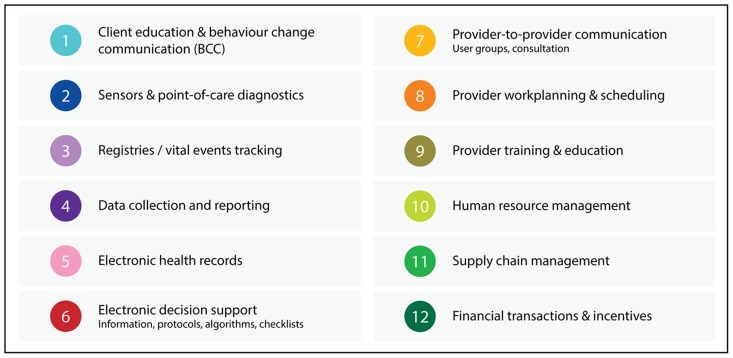
“mHealth applications are diverse and creative, although most fall within one of twelve domains: client education; point of care diagnostics; vital event tracking; data collection; electronic health records; decision support; provider communication; provider work planning; provider training; human resource management;…”
BackgroundPlastic and Reconstructive Surgery in Global Health: Let’s Reconstruct Global Surgery
Chung, K. Y. (2017) · Plastic & Reconstructive Surgery Global Open · doi:10.1097/gox.0000000000001273 · Cited by 31
Sanguansak, T., Morley, K., Morley, M., Thinkhamrop, K., Thuanman, J., & Agarwal, I. (2017) · Journal of Medical Internet Research · doi:10.2196/jmir.8330 · Cited by 40
“Others are directed to improving health care delivery systems through electronic decision support, data sensors, data collection, patient tracking, and electronic health records [1].”
Use of an electronic Partograph: feasibility and acceptability study in Zanzibar, Tanzania
Litwin, L., Maly, C., Khamis, A. R., Hiner, C., Zoungrana, J., Mohamed, K., Drake, M., Machaku, M. D., Njozi, M., Muhsin, S. A., et al. (2018) · BMC Pregnancy and Childbirth · doi:10.1186/s12884-018-1760-y · Cited by 36
Alshurafa, N. I., Jain, J., Alharbi, R., Iakovlev, G., Spring, B. J., & Pfammatter, A. F. (2018) · Proceedings of the ACM on Interactive Mobile Wearable and Ubiquitous Technologies · doi:10.1145/3287031 · Cited by 41
“The ease of access to information on mobile devices has increased the reach of health behavior change interventions and the potential for remote health monitoring [23, 38].”
Hunt, X., Tomlinson, M., Sikander, S., Skeen, S., Marlow, M., Toit, S. D., & Eisner, M. (2020) · Frontiers in Artificial Intelligence · doi:10.3389/frai.2020.543305 · Cited by 45
“However, as Labrique et al. (2013) note, rather than being seen as “silver bullet” stand-alone solutions, mHealth strategies should be fit for integration into existing health system functions.”
BackgroundGonsalves, L., L’Engle, K. L., Tamrat, T., Plourde, K. F., Mangone, E., Agarwal, S., Say, L., & Hindin, M. J. (2015) · Reproductive Health · doi:10.1186/s12978-015-0059-y · Cited by 39
“Programs using mobile phones have been used in many areas of health care and health promotion globally [11–15].”
MethodInformation and Communication Technologies and Global Health Challenges
Gutierrez, M. A., Moreno, R. A., & Rebelo, M. S. (2017) · Elsevier eBooks · doi:10.1016/b978-0-12-804591-6.00004-5 · Cited by 45
Beratarrechea, A. G., Diez‐Canseco, F., Irazola, V. E., Miranda, J. J., Ramírez‐Zea, M., & Rubinstein, A. (2016) · Progress in Cardiovascular Diseases · doi:10.1016/j.pcad.2016.03.003 · Cited by 36
Venkataramanan, R., Subramanian, S. V., Alajlani, M., & Arvanitis, T. N. (2022) · Digital Health · doi:10.1177/20552076221143236 · Cited by 43
“, 12 uses of mHealth technology can be identified with the most effective being the ability to modify the behavior and to provide information to both supply and demand-side stakeholders.(9) On the supply side, the community health workers could be trained to collect data, send reminders, and monitor the schedules rela…”
MethodE-health in low to middle income countries
Clifford, G. D. (2016) · Journal of Medical Engineering & Technology · doi:10.1080/03091902.2016.1256081 · Cited by 31
“[9] This includes working with frontline community health-care workers to ensure ownership and committed participation.”
BackgroundHuang, K., Lee, D., Nakigudde, J., Cheng, S., Gouley, K. K., Mann, D., Schoenthaler, A., Chokshi, S. K., Kisakye, E. N., Tusiime, C., et al. (2019) · Frontiers in Psychiatry · doi:10.3389/fpsyt.2019.00806 · Cited by 35
“%) when the eHealth interventions are well designed (using short modules [15–30 minutes/per module], includes five or more sessions, and includes multiple communication supports (e.g., 20 minutes/per contact) (42, 47, 49–50, 51, 56, 60); and (3) when social network/e-community and optional…”
BackgroundInfluentialZeleke, A. A., Naziyok, T. P., Fritz, F., Christianson, L., & Röhrig, R. (2020) · Journal of Medical Internet Research · doi:10.2196/21382 · Cited by 41
“These include health call centers; reminders to attend appointments; providing access to information and education for health care professionals, for example, access to electronic health care databases and clinical decision support systems; and supporting health monitoring and surveillance (eg, data collection and rep…”
BackgroundEba, K., Gerbaba, M. J., Abera, Y., Abate, D. T., Tsegaye, S., Abrar, M., Mohammed, A., Ahmed, I., Muktar, S., Zeleke, S., et al. (2023) · Pastoralism Research Policy and Practice · doi:10.1186/s13570-023-00281-9 · Cited by 28
MacLachlan, E., Atuyambe, L. M., Millogo, T., Guiella, G., Yaro, S., Kasasa, S., Bukenya, J. N., Nyabigambo, A., Mubiru, F., Tumusiime, J. K., et al. (2018) · Contraception · doi:10.1016/j.contraception.2018.08.007 · Cited by 28
“This aligns with previous findings from Kenya [16] and from early work with VHTs in Uganda [18]: that offering injectable contraception through CHWs seems to increase continuation by improving client satisfaction with the method and with contraceptive services overall.”
BackgroundResultMiranda, J. J., Moscoso‐Porras, M., Yan, L. L., Diez‐Canseco, F., Málaga, G., García, H. H., & Ovbiagele, B. (2017) · Journal of the Neurological Sciences · doi:10.1016/j.jns.2017.02.027 · Cited by 32
“Rapid growth in cell-phone use, Internet connectivity, and digital health technology in low-resource countries and regions [34] present newopportunities for improvements in healthcare delivery and population-based outcomes [35], including the engagement of frontline healthcare workers and community actors in mHealth-o…”
Innovative Healthcare Applications of ICT for Developing Countries
Ariani, A., Koesoema, A. P., & Soegijoko, S. (2017) · Understanding complex systems · doi:10.1007/978-3-319-55774-8_2 · Cited by 42
“m-Health technologies represent potentially powerful catalysts for strengthening health systems and improving communication between m-health innovators and health program implementers (Labrique et al. 2013).”
BackgroundAmoakoh, H. B., Klipstein‐Grobusch, K., Ansah, E., Grobbee, D. E., Yveoo, L., & Agyepong, I. A. (2019) · BMJ Global Health · doi:10.1136/bmjgh-2018-001153 · Cited by 37
Logie, C. H., Okumu, M., Hakiza, R., Musoke, D. K., Berry, I., Mwima, S., Kyambadde, P., Kiera, U. M., Loutet, M. G., Neema, S., et al. (2021) · JMIR Research Protocols · doi:10.2196/26192 · Cited by 30
“Mobile health (mHealth) strategies (digital media on mobile devices) have been efficacious in improving antiretroviral therapy adherence and HIV and sexually transmitted infection testing, and are relevant for the way youth learn and socialize [24-26].”
The impact of mHealth interventions on health systems: a systematic review protocol
Fortuin, J., Salie, F., Abdullahi, L., & Douglas, T. S. (2016) · Systematic Reviews · doi:10.1186/s13643-016-0387-1 · Cited by 34
“The applications that are used most often in mobile health are (1) client education and behaviour change, (2) sensors and point of care devices, (3) registries and vital event tracking, (4) data collection and reporting, (5) electronic health records, (6) electronic decision support, (7) provider-provider communicatio…”
BackgroundHackett, K. M., Kazemi, M., & Sellen, D. (2018) · Social Science & Medicine · doi:10.1016/j.socscimed.2018.06.014 · Cited by 33
Beratarrechea, A., Abrahams‐Gessel, S., Irazola, V., Gutierrez, L., Moyano, D., & Gaziano, T. A. (2019) · Journal of the American Heart Association · doi:10.1161/jaha.118.011799 · Cited by 26
“Strategies using mHealth have been considered a strengthening tool to overcome health system constrains.(26) A systematic review that evaluated the feasibility and effective use of mobile phone strategies by frontline health workers showed that CHWs are empowered by using mobile phone–based tools because these reinfor…”
MethodGimbel, S., Kawakyu, N., Dau, H., & Unger, J. A. (2018) · Current HIV/AIDS Reports · doi:10.1007/s11904-018-0416-x · Cited by 26
Muralidharan, S., Mohan, V., Anjana, R. M., Jena, S., Tandon, N., Allender, S., & Ranjani, H. (2017) · JMIR Research Protocols · doi:10.2196/resprot.8644 · Cited by 26
“This massive upswing and uptake of technology in the field of mobile technology renders mHealth as a liable opportunity to provide individual-level support beyond traditional clinic-based care technology [17,20-24].”
Abejirinde, I. O., Zweekhorst, M. B. M., Bardají, A., Abugnaba-Abanga, R., Apentibadek, N., Brouwere, V. D., van Roosmalen, J., & Marchal, B. (2018) · JMIR mhealth and uhealth · doi:10.2196/11468 · Cited by 40
“Digital health innovations have gained support as a means to improve health service delivery while strengthening health systems [1,2].”
RECOVER-E – a mobile app for patients undergoing total knee or hip replacement: study protocol
Stauber, A., Schüßler, N., Palmdorf, S., Schürholz, N., Bruns, D., Osterbrink, J., & Nestler, N. (2020) · BMC Musculoskeletal Disorders · doi:10.1186/s12891-020-3090-2 · Cited by 51
Rinawan, F. R., Susanti, A. I., Amelia, I., Ardisasmita, M. N., Widarti, Dewi, R. K., Ferdian, D., Purnama, W. G., & Purbasari, A. (2021) · BMC Public Health · doi:10.1186/s12889-021-11035-w · Cited by 70
“Thus, identifying the key obstacles in its implementation is an continuous process [22].”
BackgroundAdam, M., Chase, R. P., McMahon, S. A., Kuhnert, K.-L., Johnston, J. S., Ward, V. C., Prober, C. G., & Bärnighausen, T. (2021) · BMC Public Health · doi:10.1186/s12889-021-11043-w · Cited by 40
Zeng, Z., Wu, T., Lv, M., Qian, J., Chen, M., Fang, Z., Jiang, S., & Zhang, J. (2021) · International Journal of Clinical Pharmacy · doi:10.1007/s11096-021-01351-x · Cited by 28
“In recent years, mobile health (mHealth) technology, in the form of text messaging and mobile applications (apps), has become a promising way to influence the behavior of patients [10].”
BackgroundBiometric Fingerprint System to Enable Rapid and Accurate Identification of Beneficiaries
Storisteanu, D. M. L., Norman, T., Grigore, A., & Norman, T. (2015) · Global Health Science and Practice · doi:10.9745/ghsp-d-15-00010 · Cited by 25
Plaza García, I., Sánchez, C. M., Espílez, Á. S., García-Magariño, I., Guillén, G. A., & García-Campayo, J. (2017) · International Journal of Medical Informatics · doi:10.1016/j.ijmedinf.2017.05.018 · Cited by 25
Gong, E., Gu, W., Sun, C., Turner, E. L., Zhou, Y., Li, Z., Bettger, J. P., Oldenburg, B. F., Amaya-Burns, A., Wang, Y., et al. (2018) · American Heart Journal · doi:10.1016/j.ahj.2018.08.015 · Cited by 26
Role of mHealth in overcoming the occurrence of post-stroke depression
Miranda, J. J., Moscoso‐Porras, M., Toyama, M., Cavero, V., Diez‐Canseco, F., & Ovbiagele, B. (2017) · Acta Neurologica Scandinavica · doi:10.1111/ane.12832 · Cited by 31
Kansiime, W. K., Atusingwize, E., Ndejjo, R., Balinda, E., Ntanda, M., Mugambe, R. K., & Musoke, D. (2024) · BMC Family Practice · doi:10.1186/s12875-024-02430-4 · Cited by 42
“It allows for real-time data transmission, which is crucial for effective decision-making and response [43].”
Background
Metadata
- Authors
- Labrique, A. B., Vasudevan, L., Kochi, E., Fabricant, R., & Mehl, G.
- Affiliations
- Johns Hopkins University (US)
- United Nations Children's Fund (US)
- World Health Organization (CH)
- Corresponding author
- Mehl, Garrett
- Venue
- Global Health: Science and Practice
- Published
- 2013-08
- Volume
- 1
- Issue
- 2
- Pages
- 160-171
- ISSN
- 2169-575X (ISSN-L)
- PMC
- PMC4168567
- OpenAlex
- W2149328406
- Cited by
- 601
- References
- 19
- Citations by year
- 2026: 50 · 2025: 37 · 2024: 27 · 2023: 34 · 2022: 43 · 2021: 62 · 2020: 54 · 2019: 65 · 2018: 89 · 2017: 54 · 2016: 38 · 2015: 31 · 2014: 16 · 2013: 1
- FWCI
- 51.92
- Type
- journal article
- Language
- en
- Open access
- diamond
- doi.org
- Licence
- cc-by
- Locations
- Global Health Science and Practice (publishedVersion, cc-by)
- PubMed Central (publishedVersion, cc-by)
- PubMed (publishedVersion)
- Funders
- World Health Organization
- UNICEF
- Johns Hopkins University
- Topics
- Health Sciences › Health Professions › General Health Professions › Mobile Health and mHealth Applications
- Physical Sciences › Computer Science › Information Systems › ICT in Developing Communities
- Health Sciences › Health Professions › Health Information Management › Health, Technology, Consumer Behavior
- Keywords
- mobile health, health system strengthening, health system constraints, mobile health apps, visual framework, health system performance evaluation, health system goals, low- and middle-income countries
About these checks
Registry, retraction, Cites and statistics results are computed, not judged, with one exception: a printed reference that no index lists is read once by a model before it counts as a citation error. Claims are extracted by a model and kept only when their quote appears verbatim in the text; each cited source is then checked, with a model’s help, for whether it says what the claim relies on. Those verdicts can be wrong — read the claim’s quote and the cited source before relying on one.
Statistics and arithmetic are recomputed, not judged.
Confidence bands are shown only for fields calibrated on our annotated test set. None is calibrated yet, so no band is shown.
What counts as a claim ›How we measure confidence ›How we check this ›
Are you an author, or do you see a problem with this page? Request a review
Data sources
Bibliographic data: Semantic Scholar, OpenAlex, Crossref.
Contains information from the Semantic Scholar Academic Graph Datasets, made available under the ODC Attribution License (ODC-BY 1.0).
Semantic Scholar’s data is described in: Kinney, R., et al. (2023). The Semantic Scholar Open Data Platform. arXiv:2301.10140.
